The ‘Obama Doctrine’: Kill, Don’t Detain
(This article is re-posted from the Guardian)
In 2001, Charles Krauthammer first coined the phrase “Bush Doctrine”, which would later become associated most significantly with the legal anomaly known as pre-emptive strike. Understanding the doctrine with hindsight could lead to a further understanding of the legacy that the former administration left – the choice to place concerns of national security over even the most entrenched norms of due process and the rule of law. It is, indeed, this doctrine that united people across the world in their condemnation of Guantánamo Bay.

The ambitious desire to close Guantánamo hailed the coming of a new era, a feeling implicitly recognised by the Nobel peace prize that President Obama received. Unfortunately, what we witnessed was a false dawn. The lawyers for the Guantánamo detainees with whom I am in touch in the US speak of their dismay as they prepare for Obama to do the one thing they never expected – to send the detainees back to the military commissions – a decision that will lose Obama all support he once had within the human rights community.
Worse still, a completely new trend has emerged that, in many ways, is more dangerous than the trends under Bush. Extrajudicial killings and targeted assassinations will soon become the main point of contention that Obama’s administration will need to justify. Although Bush was known for his support for such policies, the extensive use of drones under Obama have taken the death count well beyond anything that has been seen before.
Harold Koh, the legal adviser to the US state department, explained the justifications behind unmanned aerial vehicles (UAVs) when addressing the American Society of International Law’s annual meeting on 25 March 2010:
“[I]t is the considered view of this administration … that targeting practices, including lethal operations conducted with the use of unmanned aerial vehicles (UAVs), comply with all applicable law, including the laws of war … As recent events have shown, al-Qaida has not abandoned its intent to attack the United States, and indeed continues to attack us. Thus, in this ongoing armed conflict, the United States has the authority under international law, and the responsibility to its citizens, to use force, including lethal force, to defend itself, including by targeting persons such as high-level al Qaeda leaders who are planning attacks … [T]his administration has carefully reviewed the rules governing targeting operations to ensure that these operations are conducted consistently with law of war principles … “[S]ome have argued that the use of lethal force against specific individuals fails to provide adequate process and thus constitutes unlawful extrajudicial killing. But a state that is engaged in armed conflict or in legitimate self-defense is not required to provide targets with legal process before the state may use lethal force. Our procedures and practices for identifying lawful targets are extremely robust, and advanced technologies have helped to make our targeting even more precise. In my experience, the principles of distinction and proportionality that the United States applies are not just recited at meeting. They are implemented rigorously throughout the planning and execution of lethal operations to ensure that such operations are conducted in accordance with all applicable law.”
The legal justifications put forward by Koh are reminiscent of the arguments that were used by John Yoo and others in their bid to lend legitimacy to unlawful practices such as rendition, arbitrary detention and torture. The main cause for concern from Koh’s statements is the implication that protective jurisdiction to which the US feels it is entitled in order to carry out operations anywhere in the world still continues under Obama. The laws of war do not allow for the targeting of individuals outside of the conflict zone, and yet we now find that extrajudicial killings are taking place in countries as far apart as Yemen, the Horn of Africa and Pakistan. From a legal and moral perspective, the rationale provided by the State Department is bankrupt and only reinforces the stereotype that the US has very little concern for its own principles.
Despite the legalities of what is being conducted, the actuality of extrajudicial killings, especially through UAVs is frightening. The recent revelations by WikiLeaks on the killing of civilians by US Apache helicopters in Iraq has strongly highlighted the opportunities for misuse surrounding targeting from the air. In the Iraq case, there were soldiers who were supposed to be using the equipment to identify so-called combatants, and yet they still managed to catastrophically target the wrong people. This situation is made even worse in the case of UAVs, where the operators are far removed from the reality of the conflict and rely on digital images to see what is taking place on the ground.
Conservative estimates from thinktanks such as the New American Foundation claim that civilian causalities from drone attacks are around one in three, although this figure is disputed by the Pakistani authorities. According to Pakistani official statistics, every month an average of 58 civilians were killed during 2009. Of the 44 Predator drone attacks that year, only five targets were correctly identified; the result was over 700 civilian casualties.
Regardless of the figures used, the case that extrajudicial killings are justified is extremely weak, and the number of civilian casualties is far too high to justify their continued use.
A further twist to the Obama Doctrine is the breaking of a taboo that the Bush administration balked at – the concept of treating US citizens outside of the US constitutional process. During the Bush era, the treatment of detainees such as John Walker Lindh, Yasser Hamdi and Jose Padilla showed reluctance by officials to treat their own nationals in the way it had all those of other nationalities (by, for instance, sending them to Guantánamo Bay and other secret prisons). The policy of discrimination reserved for US citizens showed that there was a line the US was not willing to cross.
At least, today, we can strike discrimination off the list of grievances against the current president. The National Security Council of the US has now given specific permission to the CIA to target certain US citizens as part of counter-terrorism operations. Specifically, Anwar al-Awlaki has been singled out for such treatment, as it has been claimed that he was directly involved in the planning of the Major Hasan Nidal killings and the Christmas Day bomber attacks. Indeed, it is claims such as this that bring the entire concept of targeted assassinations into question. The US would like us to believe that we should simply trust that they have the relevant evidence and information to justify such a killing, without bringing the individual to account before a court.
The assumption that trust should be extended to a government that has involved itself in innumerable unlawful and unconscionable practices since the start of the war on terror is too much to ask. Whatever goodwill the US government had after 9/11 was destroyed by the way in which it prosecuted its wars. Further, the hope that came with the election of Barack Obama has faded as his policies have indicated nothing more than a reconfiguration of the basic tenet of the Bush Doctrine – that the US’s national security interests supersede any consideration of due process or the rule of law. The only difference – witness the rising civilian body count from drone attacks – being that Obama’s doctrine is even more deadly.
Another look at the proposed downtown farmers market
A few weeks ago the Grand Rapids Press reported on a proposed plan by the local group Grand Action to build a year round farmers market at the south end of downtown Grand Rapids.
It was reported that Grand Action hired an out of town firm to do a feasibility study to determine if Grand Rapids was ready for such a proposal, as well as, a cost/benefit analysis. The company hired was Market Ventures Inc., which prepared a document on the details of the plan. One glaring omission from our read of the document shows that no residents, either of Heartside or the neighborhood just south east of the proposed site were included in the 125 interviews the company conducted. It seems that area residents should have been consulted considering that such a project would increase traffic, which always has consequences on any neighborhood.

The response so far has primarily been positive, with the GR Press endorsing the plan, along with numerous individuals who have expressed support online at MLive.com. In addition, there is a Facebook group that is also endorsing the proposal.
The most recent edition of MiBiz also featured a front-page story about the project proposed by Grand Action. In that article they site someone from Market Ventures, Local First, the Michigan Farm Bureau, Starting Block Inc., and David Frey, one of the co-chairs of Grand Action. The article mostly focuses on the business benefits of such a project with limited discussion about the benefits of having an additional venue to sell food. Farmers, residents and groups like the Great Grand Rapids Food Systems Council or Our Kitchen Table were perspectives not sought out by the reporter, even though they both do local food advocacy and food justice work.
So it seems that this proposal is moving forward based on the premise that Grand Rapids needs another farmers market and that Grand Action has “a proven track record of successful economic development projects.”
First, lets be clear that what is being proposed in just about a year-round farmers market. In fact, the farmers market is only one small piece of the proposal. The bulk of the space would be used for additional restaurants, bars and other “entrepreneurial” ventures. Second, does the downtown area need more bars and restaurants? If the so-called hub of this proposal is a farmers market, why not utilize the land for urban food production and classes on how to grow food. This could also provide employment opportunities for people and it provides important skills to a larger sector of the population.
A third question that could be asked is about whether or not such a proposal would increase traffic and parking demands. Increased traffic and parking spaces means additional air pollution and water contamination from surface run-off. Instead of having a centralized farmers market hub, why not develop numerous markets throughout the city, which would not only facilitate less car traffic, it would provide needed investments in neighborhoods, which might include more specialized markets depending on the ethnic make-up of each neighborhood. These neighborhood-based farmers markets could all include designated space for growing food, composting and educational classes/workshops for people who live in those areas. There could even be community kitchens constructed, which could provide greater opportiunities for people to share food and prepare meals in common, something that Our Kitchen Table has been proposing.
A fourth question that could be asked, and has been asked, is where will the funding for such a project come from? If there are State and Federal dollars involved, then shouldn’t the public have more of a role in determining what such a project will look like? Then there is the question of who will operate such a project and who will benefit financially?
If we look at previous Grand Action projects like the arena, the real beneficiary is the DeVos family, which owns both the professional hockey team and the arena football team. Will this project primarily benefit the elite sectors of the business community? If the public finances such a project, even if it is only part of the funding, shouldn’t the public have more say in what is ultimately proposed? Before we get behind such plans, it is important for a great community conversation to take place so that basic rights like eating healthy food will not be determined by a handful of individuals who have demonstrated that they are primarily motivated by profits.
The Tea Party Express Comes to Grand Rapids
On Saturday, about 1,000 people gathered at Riverside Park in Grand Rapids to greet the Tea Party Express, a touring group of people who are part of the national movement that has surfaced since the beginning of the health care debate.
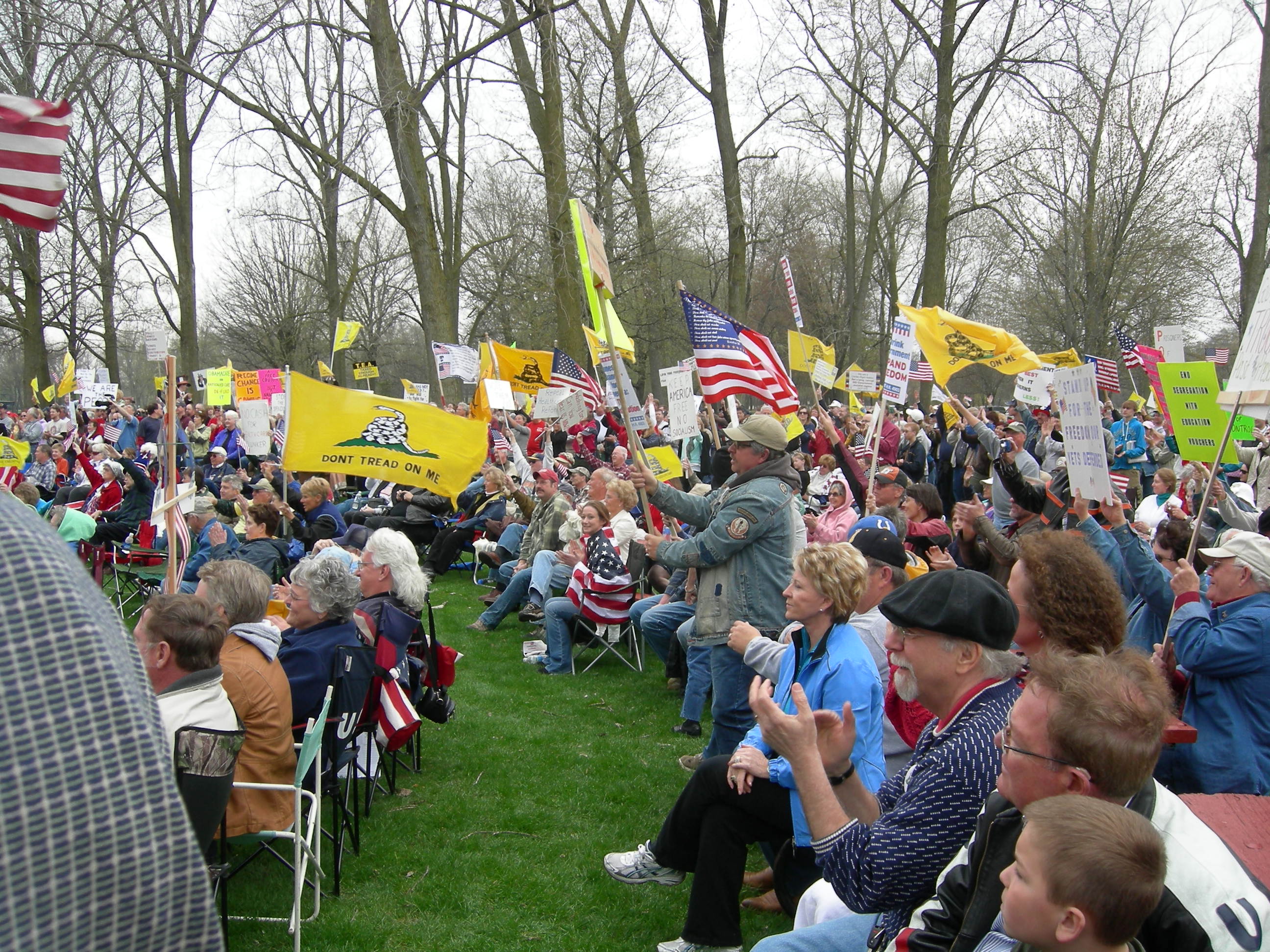
The West Michigan chapter of the Tea Party organized the rally where a series of speakers addressed the crowd before the Tea Party Express buses arrived.
Many of the speakers addressed themes like gun rights, Patriotism, supporting US troops, the Constitution and religion. None of the Tea Party members spoke for very long, but many of them expressed their displeasure with the US government, from President Obama to members of Congress. In fact, most speakers were clear that they were not happy with politicians from either party.
However, once members of the local Tea Party chapter had spoken, a whole litany of candidates took turns at the podium and all of them were running as Republicans. Gubernatorial candidates Mike Cox and Mike Bouchard were there. Both spoke about the importance of protecting the constitutional right to have guns and Bouchard even had a pistol on his hip. Pete Hoekstra was not in attendance, but his people were there handing out campaign literature.
Candidates for other State and federal seats also addressed the crowd. One candidate, Bob Overbeek, said he was limiting the amount of money he would receive from people to $1 per person and stated “we have to stop letting the wealthy determine who gets elected.” Overbeek even said, “if you want the Amway/Alticor twins in office then vote for them, but I am not for sale.” However, when looking at Overbeek’s platform he seems to embrace the same policies that most on the right, minus the campaign finance issue.
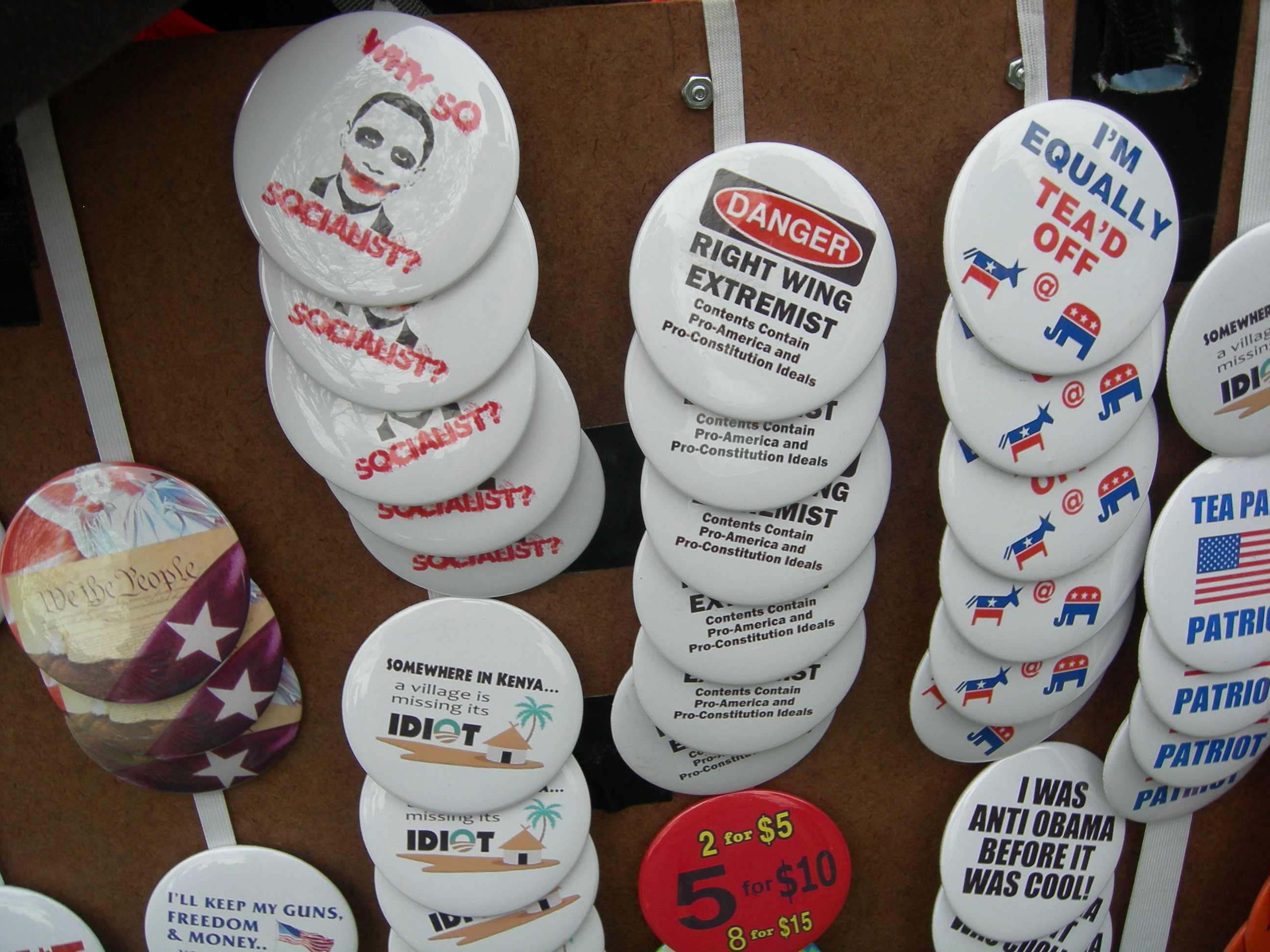
Eventually, three buses arrived with members of the Tea Party Express, the traveling group of people who are touring the country in order to give local chapters some support, but also to spread their message.
This part of the rally was like a patriotic road show, with singers, comedians and right wing media personality like Mark Williams. Not much substance was presented by those on tour, but the performers did get the crowd fired up with slogans and sound-bites.
The rally also consisted of vendors with buttons, t-shirts, books, CDs, DVDs and other items to promote the principles of the Tea Party. Many of the buttons and t-shirts were words and images critical of President Obama, with many of them claiming the administration to be socialist.
There were also tables for people to oppose the health care legislation, candidates wanting to get their name on the ballot and another table with people claiming to be the “political arm of the Tea Party.” We spoke with people from this table for several minutes and they told us that their role was to vet candidates for the Tea Party. We were told that there are 80 questions candidates must answer before they will endorse anyone, but those questions were not found on the group’s website. The website does say that they do not endorse Third Party candidates, so it seems clear that they are working within the confines of the Republican Party.
GR Press continues with fluff for Election Coverage
Today, the Grand Rapids Press posted a short story online about gubernatorial candidate Pete Hoekstra and his so-called “jobs campaign.”

The article highlighted Hoekstra’s visit to a Holland business owned by a life long friend whom the Press calls liberal, because he also supported Governor Granholm in the 2006 Election.
The Press story states, “Republican gubernatorial candidate Pete Hoekstra brought his “100 Jobs” campaign tour to de Boer Brothers Dutch restaurant.” The article also says that Hoekstra has been traveling around the state, “working at different jobs across the state to get input from business people and workers on what the state needs to improve the economically.”
What the Press writer never asks is how does doing someone’s job for a few hours help anyone understand how to improve the economy? The reporter also could have asked Hoekstra if this is just a PR tactic to appear like the candidate cares about working people?
There is nothing in the article about what Hoekstra’s plan is for dealing with the Michigan economy, job creation or helping working people out in general. On the Hoekstra for Governor site his 100 jobs campaign tour only provides little antidotes about what he did on these so-called jobs, but no hard information on what he would do as Governor in relation to the economy. In fact, Hoekstra has no platform information on his website as of this writing, just information on how to volunteer, donate money and biographical material.
On practical journalistic question to raise would be what has Hoekstra’s voting record on economic and labor issues been since he became the 2nd Congressional District Representative? We know that Hoekstra has voted for both NAFTA and CAFTA, trade agreements, which have cost Michigan workers thousands of jobs. A report from Jobs with Justice shows that as early as 2000 Michigan had already lost at least 46,000 jobs.
Hoekstra voted for the Wall Street Bailout, which has cost taxpayers an estimated $4.6 Trillion according to the Center for Media and Democracy. On top of that, Hoekstra has voted for almost every funding bill for the US wars in Iraq and Afghanistan, which according to the National Priorities Project, has meant that over $26 Billion in tax dollars have left the state to fund those wars.
These are basic questions that any journalist could be and should be asking of candidates who are running for office.
GRIID will continue to track local media coverage for Election 2010, analyze the coverage and when possible provide independent coverage of the candidates and ballot initiatives for voters in Western Michigan.
Democrats Pocket More Campaign Cash from Special Interests Ahead of 2010 Midterm Elections
(This article is a re-post from the site www.opensecrets.org)

The cost of the 2010 election cycle is on pace to break the record for a midterm election, set during the 2006 cycle. And across the board, Democrats, who now control the White House and both chambers of Congress, are on the receiving end of far more campaign cash than they were four years ago, according to a Center for Responsive Politics review of campaign finance data filed with the Federal Election Commission.
Many special interest groups sought to influence the direction of President Barack Obama and congressional Democrats’ ambitious legislative goals such as health care reform, financial regulation and energy policy targeting climate change.
People and political action committees categorized by the Center as part of the health sector gave 32 percent more to federal candidates, parties and committees last year compared to 2005, increasing to about $55 million. Of this sum, 58 percent went to Democrats, compared to just 33 percent flowing to Democrats in 2005. People and PACs within the energy sector donated 30 percent more last year than they did in 2005, the Center found, giving about $26 million in 2009. Nearly 50 percent of this amount went to Democrats, compared to just 24 percent going to Democrats in 2005.
Defense sector giving was 23 percent higher in 2009 than it was in 2005, at about $29 million last year, and contributions by people and PACs associated with ideological causes and single-issue groups were 21 percent higher last year compared to 2005, the Center found, increasing to $70 million.
Furthermore, defense sector contributions went from 37 percent to Democrats in 2005 to 58 percent to Democrats in 2009, and ideological and single-issue giving went from 54 percent to Democrats to 70 percent.
Contributions within the finance, insurance and real estate sector — where many large institutions have ceased to exist and the economic turmoil that began in late 2007 has made other companies more reticent to invest as heavily in federal politics — remained essentially unchanged from 2005 levels, the Center found, at about $110 million each year, the most of any sector during each year. Nonetheless, contributions from these interests increased from 42 percent to Democrats in 2005 to 56 percent in 2009. While hundreds of millions of dollars flowed into the war chests of candidates, political parties and special interest groups, these sums never exceeded the record amounts shelled out in 2007 and 2008, in which presidential candidates alone raised more than $1 billion.
The total amount contributed by the defense sector in 2009, for instance, was only about 80 percent of the sums these interests gave in 2008, the Center found. The labor sector’s $29 million in contributions last year were only about two-thirds of their 2008 total giving. And contributions by the health sector, energy sector and lawyers and lobbyists last year stood at roughly 50 percent of their 2008 levels, the Center found.
The Center for Responsive Politics categorizes all contributions from individuals and political action committees into 13 broad sectors. Of these, only one sector — construction — gave less money in 2009 than in 2005: $21.8 million versus $22.4 million. Even here, contributions to Democrats increased from 29 percent in 2005 to 46 percent in 2009. Here is a chart detailing how much each sector contributed in 2009, 2008 — a presidential election year, when contributions routinely spike — and 2005. The percent increase between 2005 and 2009 is also included:
| Sector | Total in ’09 | Total in ’08 | Total in ’05 | % Increase ’05-’09 |
| Health | $54,593,763 | $104,011,447 | $41,211,454 | 32% |
| Energy & Natural Resources | $25,544,120 | $47,689,559 | $19,591,854 | 30% |
| Defense | $10,157,723 | $12,800,376 | $8,270,745 | 23% |
| Ideological/Single-Issue | $70,447,579 | $197,493,916 | $58,184,877 | 21% |
| Labor | $28,769,077 | $45,046,404 | $24,712,305 | 16% |
| Other | $64,583,312 | $280,177,421 | $57,229,105 | 13% |
| Lawyers & Lobbyists | $71,853,034 | $150,570,075 | $63,791,013 | 13% |
| Agribusiness | $20,136,334 | $38,854,908 | $18,208,721 | 11% |
| Communications/Electronics | $32,876,109 | $84,703,267 | $30,523,923 | 7.7% |
| Misc Business | $61,739,996 | $176,162,645 | $57,517,728 | 7.3% |
| Transportation | $17,209,391 | $31,564,238 | $16,977,306 | 1.4% |
| Finance, Insurance & Real Estate | $110,040,845 | $264,034,470 | $109,987,626 | 0.05% |
| Construction | $21,802,851 | $52,907,284 | $22,352,458 | -2.5% |
And here is a chart detailing the percentage of contributions from each sector that went to Democrats each from 2005 through last year. The increase from 2005 to 2009 may vary from the numbers displayed for each year based on differences due to rounding.
| Sector | % Dem ’05 | % Dem ’06 | % Dem ’07 | % Dem ’08 | % Dem ’09 | Increase ’05-’09 |
| Health | 33% | 39% | 54% | 54% | 58% | 24% |
| Energy & Natural Resources | 24% | 25% | 38% | 32% | 46% | 21% |
| Transportation | 27% | 29% | 41% | 35% | 48% | 21% |
| Defense | 37% | 39% | 52% | 51% | 58% | 21% |
| Communications/Electronics | 50% | 58% | 67% | 72% | 69% | 18% |
| Construction | 29% | 31% | 38% | 35% | 46% | 18% |
| Misc Business | 38% | 41% | 53% | 52% | 56% | 17% |
| Agribusiness | 31% | 31% | 44% | 34% | 47% | 16% |
| Ideological/Single-Issue | 54% | 55% | 64% | 67% | 70% | 16% |
| Finance, Insurance & Real Estate | 42% | 45% | 53% | 48% | 56% | 15% |
| Lawyers & Lobbyists | 64% | 68% | 72% | 75% | 77% | 13% |
| Labor | 84% | 89% | 90% | 93% | 93% | 9% |
| Other | 47% | 54% | 55% | 57% | 54% | 7% |
Putting the T back in LGBT
Julie and Jo, her partner of 37 years. They have three married sons and four grandsons.
Putting the T back in LGBT
Dr. Julie Nemecek
Sunday April 18, 2010
10 a.m. Sermon followed by soup and salad lunch
12 noon Presentation
Plymouth UCC
4010 Kalamazoo Ave. SEYou don’t have to attend the worship service in order to participate in the presentation.

On Sunday, April 18, Rev. Dr. Julie Nemecek will deliver the sermon at Grand Rapids’ Plymouth Congregational United Church of Christ and share an hour long presentation following the service, Putting the T back in LGBT.
An ordained Baptist minister and Presbyterian Church elder, Nemecek served at an inner city Chicago church for 20 years before taking a position as a professor with a Christian university. A transexual, Nemecek lost her job there in 2007 when she took medical steps to find “congruency between her mind and her body.” The university labeled those steps as “unchristian behavior.”
GRIID spoke with Nemecek Friday morning; she explained why she brings her message to churches. “Some of the strongest resistance to equality as far as legislation and city ordinances comes from religious groups. It’s very important that there are voices from the faith community that can respond,” she said. “The research shows 80% of the general public support equality for LGBTQ people in employment or housing. Among conservative Christians, there is a flip flop, only 20%–but they are so vocal.”
When asked how members of the West Michigan community can support LGBTQ rights, reduce intolerance and erase the hate, Nemecek responded, “It’s important for straight allies to be willing to speak up. Silence is the greatest asset of those that would deny equality to LGBTQ people. Edmund Burke said, ‘All it will take for evil to prevail is for good people to do nothing.’ There are a lot of good people who believe equality for all Americans is important, especially when it is not a choice or a lifestyle, but who you are. Accepting people for who they are and making your voice known is the greatest thing that can happen.”
Nemecek also encourages straight people to join groups such as PFLAG to show their support. Plymouth UCC shows it support by openly and fully welcoming gay, lesbian, bisexual and transgender persons into its congregation. Its Open and Affirming Committee helps church and community members to understand and be involved in GLBT issues and formerly hosted a transgender support group.
Dr. Nemecek serves on the boards of Michigan Equality, Soulforce, Michigan Fairness Forum, and PFLAG Jackson as well as the advisory board of Trans Youth Family Allies (TYFA).
 The 2010 United States Social Forum (USSF) takes place in Detroit June 22 through 28. In anticipation, several West Michigan groups are taking action to spread the word and plan their involvement.

A Dearborn elementary school adjacent to Detroit's Marathon Refinery
Our Kitchen Table (OKT), a grassroots activist organization working for environmental justice and food security, is taking part in East Michigan Area Environmental Action Council‘s ReMedia Project. The OKT team, ReMedia West, will produce short documentaries to promote environmental justice that will be screened at the USSF on June 25. The group traveled to Detroitlast Tuesday where EMEAC members took them on an environmental justice tour of Detroit.
Grand Valley University’s Student Environmental Coalition (SEC) hosted Andrew Plisner, a USSF committee member, on Thursday evening for a discussion about how SEC’s work relates to social justice and today’s educational/cultural crisis.
 The Bloom Collective is hosting a USSF discussion group for local folks who want to learn more about the forum or share how they will be participating. This group will start off with meetings Friday April 16 and Friday April 23 from 1 – 2:30 p.m. at The Bloom Collective’s former space, 1134 Wealthy St. SE and Saturday May 1 at MayDay 2010, a May 1 celebration sponsored by Grand Rapids IWW at Grand Rapids’ MLK Park. People can come to any or all of the meetings.
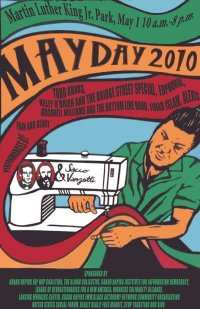 During MayDay 2010, Chinonye, chairperson of the USSF health, healing and environmental justice committee, will share a presentation about the USSF as well as performance. Chinonye is also member of the Calabar Theatre Company.
Are you or your group planning on attending the USSF? Let GRIID know. We are connected to the USSF Writers Group and will be covering the USSF live from Detroit.
Syndicated talk show Host Sean Hannity stopped in Grand Rapids yesterday as part of a book tour, with his newest rant Conservative Victory: Defeating Obama’s Radical Agenda.
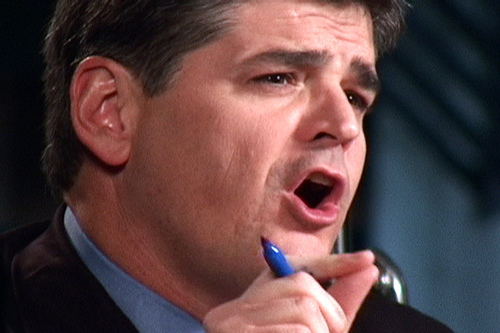
About 700 people showed up at Schuler Books in Kentwood to buy Hannity’s book and get a glimpse of the right-wing pundit. All of the major daily news outlets reported on Hannity’s visit and most of them treated it like a celebrity citing.
WOOD radio did not do a news story about Hannity’s stop in Grand Rapids, which makes sense at some level since their station airs the right-wing pundits show Monday-Friday from 3-6pm. The Clear Channel owned radio station did broadcast live from the bookstore and featured photos of the talk show host’s visit.
WOOD TV 8 had the shortest story of the three Grand Rapids-based TV stations, while WXMI and WZZM all provided longer stories.
The FOX 17 story was produced like political theater with a few comments from those who came to hear Hannity. One woman says he is a “true American.” The WXMI broadcast also mentions that a “lone dissenter” was outside the bookstore, but they never expressed what the person was objecting to.
The WXMI story did mention Hannity’s relationship to the Tea Party movement, but they don’t challenge him on the movement’s racist comments and increasing call for violence against the government. Hannity said of the Tea Party movement, “To see people, on their own, calling congress, calling the senate, to see people get motivated, to get involved in the government process, for people to say, ‘you know what? I care about the America we’re going to leave our children and grandchildren,’ is frankly inspiring to me.”
WZZM 13 did the best job of three TV stations by actually challenging Hannity on his message and whether or not it influences or inspires reactionary groups like the Hutaree militia. Hannity responded by saying, “Oh, God, I hope not. That’s not the people I’m seeing at town halls.”
However, the channel 13 reporter lets Hannity off the hook by not verifying any of the claims the talk show host has made not talking with an independent source to get a sense of what role the Hannity plays in the current anti-government currents.
The only local news agency to get input from a non-partisan and independent perspective was the Grand Rapids Press. They spoke with GVSU Professor Erika King who said, “Sean Hannity doesn’t pretend to be a neutral political observer. Nobody expects him to do that.” Not exactly a useful analysis for understanding the talk show host’s role in current politics.
Hannity however, has a long history of engaging in media distortions, lies and hate speech. According to Rory O’Connor, Hannity was fire from his first radio show (1987) because he made anti-gay/lesbian remarks. O’Connor notes in his book Shock Jocks: Hate Speech & Talk Radio, that Hannity has made numerous claims on air that are just simply lies. Some of those statements are, “It doesn’t say anywhere in the Constitution this idea of the separation of church and state.” Hannity has also claimed that the Democratic National Convention doctored the photos of tortured Iraqis at Abu Ghraib prison and in 2004 he fabricated a poll, which said that minorities supported the end of Social Security.
According to Media Matters, Hannity appeared at and broadcast live last year at a Tea Party Tax Day rally in Atlanta and this week the West Michigan Tea Party website featured Hannity’s visit to Schuler Books.
Media Matters also did a fact check on Hannity’s new book and found 20 falsehoods, smears and distortions. One of those examples deals with the racist language of the Tea Party:
While discussing the tea party movement, Hannity writes that the “lion’s share of the ideas coming out of the Tea Party protests are indeed positive, but they lack any kind of organizational unity.” In the next paragraph, Hannity positively cites Dale Robertson for challenging “Republicans in name only”:
The lion’s share of the ideas coming out of the Tea Party protests are indeed positive, but they lack any kind of organization unity — which is inevitable in such a decentralized, grassroots movement. We also see, within the movement, a good amount of single-issue advocacy — the kind of passionate activism that can have the power to ignite a movement, but cannot on its own sustain a new “revolution” unless it’s consolidated into a unified vision.
The Tea Party protests will continue, as I believe they should. They have been an indispensable catalyst to energize our troops to fight back. They have done more than that as well, supporting, for example, constitutionally conservative candidates against RINOs — Republicans in name only — such as helping to oust Florida’s Republican Party chairman. “We are turning our guns on anyone who doesn’t support constitutionally conservative candidates,” said Dale Robertson, who helped start the Tea Party movement two years ago. [Pages 193-194]
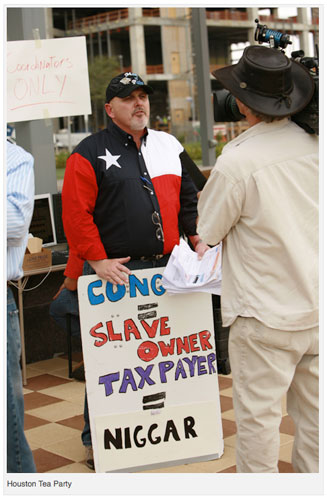
Hannity’s tea party leader was reportedly kicked out of tea party event for carrying sign with racial slur. The Washington Independent’s David Weigel reported on January 4 that “Dale Robertson, a Tea Party activist who operates TeaParty.org, is getting stung for an old photo — taken at the Feb. 27, 2009 Tea Party in Houston — in which he holds a sign reading ‘Congress = Slaveowner, Taxpayer = Niggar.’ ” Weigel also reported that “Josh Parker of the Houston Tea Party Society tells me that Robertson was booted out of the event for this sign.” Weigel included this picture:
It is unfortunate that the West Michigan news media did not apply some of the same investigative journalism skills with Hannity’s visit. Instead, the news media for the most part gave Hannity a free pass to say whatever he wanted without verifying his claims or the content of his latest book.
How Massey Energy Does Business
(This article was re-posted from the online news & information site CounterPunch)
Massey Energy Corp., owner of the Upper Big Branch Mine in West Virginia where at least 25 miners were killed April 5 in a methane gas explosion, apparently arranged for and purchased disability compensation insurance coverage only a month before the disaster, according to one source with inside knowledge about the company’s risk management operations.
Prior to that, the company, known for its aggressive challenges to workers’ comp claims, was self-insured for workers compensation.
But given the number of safety violations at its mines–there were 53 in March alone, 495 in 2009 and 1300 since 2005, at just the Upper Big Branch Mine and 2,074 over the past year at other mines owned by Massey across the Appalachian region–perhaps the money spent buying insurance to cover workers’ injury claims might have been better spent fixing chronic problems with methane gas build-ups in the mine. Then again, maybe the company felt that violation citations were no big deal–it has reportedly challenged two out of three instead of fixing them as a matter of course.
The company certainly has not shown particularly good judgment when it comes to its insurance decisions. Last year, despite noting in its annual report that its operations were “subject to certain events and conditions that could disrupt operations, including fires and explosions,” Massey Energy decided not to purchase business interruption insurance, according to Business Week magazine. With some analysts suggesting that the accident at the big West Virginia mine, where metalurgical coal used in the production of steel is extracted, could lead to a shutdown of that mine, and to a nearly 50% loss in overall corporate earnings this year, that decision could prove costly to Massey investors. The ratings agency Standard & Poors earlier this week placed the company, which already sports a junk-bond-level BB- credit rating, on watch for a downgrade, citing lost production, the “workers’ compensation liability and any impact potential lawsuits brought against the company may have.”
The accident could also prove costly for Massey CEO Don Blankenship, who only recently had the performance pay portion of his compensation package upped significantly by the company’s board of directors from $900,000 in 2009 to $1.5 million for 2010 and 2011. Blankenship reportedly would also be in line to receive 81,500 Massey shares if certain performance targets are met for the year, and another 32,250 shares if a second set of targets are met. Among the performance areas considered are financial results, sales volume, and safety performance, all of which are likely to be problematic this year in the wake of the West Virginia disaster.
Blankenship, a local boy who made good and became the first non-Massey family member to head the giant mining firm, has been aggressively anti-union, as has the entire company. A bitter strike by the United Mineworkers in 1984-85, in which the company, backed by the Reagan administration, brought in scab workers and hired private armed guards backed by West Virginia State Troopers to harass and intimidate unionized workers, lead to a breaking of the union at the company, which is now largely non-union, and across the country.
A call to Massey asking for comment had gone unanswered as of this posting.
Dave Lindorff is a Philadelphia-based journalist and columnist. His latest book is “The Case for Impeachment” (St. Martin’s Press, 2006 and now available in paperback). He can be reached at dlindorff@mindspring.com
 Grand Rapids Institute for Information Democracy