Today, the Grand Rapids Press published an article based upon a “conversation” between four pro-business advocates who had some advice for those running for the governor’s seat in Michigan. The message was, Michigan needs tax incentives in order for companies move to Michigan.

The Press reporter called the four people who took part in such a discussion “the state’s top economic developers.” These “experts” were Greg Main (CEO of the Michigan Economic Development Corporation), Birgit Klohs (The Right Place Program), Randy Thelan (Lakeshore Advantage) and Ron Kitchens (Southwest Michigan First).
This group of four had a conversation with no one present except reporters, which makes this a well crafted political move to get the news media to put the issue of business tax incentives on the table before the August 3rd Primary.
Look at it this way, if four or four hundred working people got together to talk about what elected officials need to do to lure workers to Michigan do you think the local news media would bother to show up? The chances that reporters would attend such a confab are slim to none and one of the reasons is because media outlets rely on businesses buying ad time/space, but don’t rely on working class people to do the same. Another reason is due to the fact that journalists in the US for the most part have internalized the basic pro-business/capitalist values, which believes that what makes wealth are business people. Workers, in this model, are necessary but don’t have much value since they don’t have the ideas or the vision to create jobs.
However, ask yourself if any rich businessman, made millions or billions because they did all the work? How much money could a factory owner make if he or she didn’t have workers? In the classical Marxist sense, workers make wealth because workers make products.
Beyond theoretical views of wealth creation, the Press story does not really provide any evidence that what the “economic experts” are advocating for is based on fact. When one looks at the organizations that each of the “experts” represent, it seems to me that these are well funded and well connected entities that figure out ways to make more money for those within their political circles. Look at the board of directors for Southwest Michigan First and you can see who will fundamentally benefit from their economic development plans.
Once you realize who makes up the circles of economic power within these development entities it make it easier to see through their public rhetoric. In the Press article, the CEO of Southwest Michigan First, Ron Kitchens, speaking about tax incentives says, “We’re in the people business. We do this so that human beings who have no jobs or who are underemployed today have opportunities. This is about changing peoples lives.” Wow, not only are business people wealth creators, they are just wonderful humanitarians.
Besides not questioning the rhetoric of these experts, the Press does not bother to balance their comments with the research of people like Greg LeRoy, author of the book The Great American Jobs Scam. LeRoy argues that corporations play states against each other in search of the best business incentives, incentives that the author documents amount to about $50 billion dollars a year. Therefore, the question shouldn’t be how do we provide incentives for businesses to come or to stay in Michigan, rather how do we hold businesses accountable to communities of working people and tax payers?
“What Was My Father’s Crime?” Afghan Tells Story of His Father’s Killing in a US Night Raid
This video is from Rethink Afghanistan.
BIG OIL’S EVER-EXPANDING INFLUENCE
(This article is re-posted from Open Secrets.)

Reports released Thursday by two major Washington, D.C., publications are highlighting the extent of the oil and gas industry’s political influence, which has increased in the wake of the BP oil leak in the Gulf of Mexico. An analysis by the Washington Post with data from the Center for Responsive Politics finds that three of every four lobbyists who represent oil and gas companies previously worked for the federal government. It’s an astounding number – one that puts the industry far ahead of the general lobbying field. According to the Center’s analysis, fewer than one in three registered lobbyists in 2009 had previously traveled through the revolving door between government and the influence industry — a rate less than half that of the oil and gas industry.
Democrats in Congress have sought to translate public anger at the oil spill and its primary agent, BP, into momentum for long-sought energy legislation. But with more than 600 registered lobbyists, Big Oil also has a potent weapon to yield in the debate. And according to a separate analysis released Thursday by Politico, the industry is making the most of its force. That report details a veritable spending spree by some of the oil and gas industry’s major players during the second quarter, including the American Petroleum Institute and BP. Most notably, the API nearly doubled the amount it spent on lobbying expenditures during the first three months of the year, increasing the total to $2.3 million. BP meanwhile spent $1.7 million on federal lobbying. Democrats announced on Thursday that they would drop comprehensive energy legislation from the agenda.
Does BP Have an ACE Up Its Sleeve on Climate Education?
(This article is re-posted from PRwatch.org.)
In May, PRWatch reported on a controversial new group, “Balanced Education for Everyone” (BEE), that is trying to stop public schools from teaching kids about climate change science. BEE argues that teaching climate change is too scary for kids and “unnecessary.” But BEE’s efforts also raised other questions, like what are kids learning about climate change in school, anyway, and who is influencing it?

It turns out that the issue of who is influencing climate change education in public schools has been flying under the radar screen. Especially now, as school budgets are being slashed and schools are increasingly desperate for resources, it is also an area ripe for corporate exploitation or influence, and that may be just what is happening.
Enter, “ACE”
In July of 2008, a new nonprofit organization called the “Alliance for Climate Education, Inc.” (ACE), zoomed onto the scene to suddenly become a huge player in the much-overlooked field of climate education. ACE offers high schools free multimedia assemblies on climate change that utilize “cutting-edge animation, music and video.” In short, this is not the usual low-budget presentation that school assemblies are known for.
On the surface, ACE’s effort seems laudable, but questions remain about the messages ACE is giving youth using the free access it achieves to kids during school hours. ACE’s featured web content on BP‘s oil spill in the Gulf of Mexico may be telling in this regard. The site does not even mention “BP,” although it concedes the unimpeachable fact that the spill is a “disaster.” Carefully-chosen images connected to the disaster include a swimming dolphin and a rescued pelican, alongside a clean-up worker and a photo of the effort to extinguish the Deepwater Horizon rig fire.
ACE’s site suggests a list of lukewarm activities young people can engage in to address their feelings of helplessness about the spill. “Get your hair cut,” ACE urges, and donate your hair to a group that makes hair-filled booms to soak up oil. (The government’s Deepwater Horizon Response office rejected the use of hair-filled booms in the Gulf months ago.) Another suggestion: “Find a beach and participate in Hands Across the Sand — a big demonstration in favor of protection of our coastal economies, oceans, marine wildlife and fishing industries.” Other ideas include “Write a letter to Congress and ask them to fully fund larger coastal restoration projects” and “share info online.” None of these activities would seem to interfere with the goals or sensibilities of big energy companies, including BP.
To read the full investigation by PR Watch, click here.
Dems Debate for 3rd Congressional Seat
Last night Democratic candidates vying for the 3rd Congressional District seat debated at an event hosted by the GVSU Hauenstein Center for Presidential Studies. An estimated crowd of about 150 came out to hear Paul Mayhue and Patrick Miles Jr. respond to questions from the audience.

The format was traditional in that candidates each had 2 minutes to respond to questions and no rebuttal time. This format generally means that candidates give vague answers to complex issues, but it doesn’t preclude candidates from directing people to more substantive analysis. Unfortunately, neither candidate seemed interested in substantive debate, which is reflected on the issue page of their respective websites and neither of the candidates referred to sources for members of the audience who were yearning for information that would provide detailed analysis or concrete strategies for change.
Miles came across as a moderate with an emphasis on his support for small business and economic development. The only statement he made that seemed to move the crowd was when he proposed that members of Congress take a 5% pay cut every year that they don’t balance the budget. This is a nice sentiment, but not likely to happen when Washington politics is driven by the acquisition of money.

Mayhue presented himself as an advocate and says that the main issue he has heard from people is the lack of jobs. Mayhue says that the country is plagued by corporate greed, exemplified by trade policies such as NAFTA, but the Democratic candidate offer no clear examples of how corporate greed is manifested nor how NAFTA has been bad for Michigan. He could have cited two excellent studies that provide details on the real impact on jobs loss by NAFTA, one report from Jobs with Justice and the other from the Economic Policy Institute.
When asked about whether or not they supported Arizona’s new immigration policy and their thoughts on immigration policy for the country as a whole Mayhue responded by saying that the legislation is decent, but that he has a problem with how the Arizona authorities will use reasonable suspicion to stop anyone they think might be undocumented. Miles did acknowledge that the federal Immigration policy over the last generation hasn’t worked well and that the Arizona law will not stand constitutionally, but he avoided saying whether or not he supported Arizona’s decision. He did say that if people were willing to go the legal route, learn English and get in line then he is in favor of people coming to the US.
Another question asked the candidates how their economic philosophy differs or is the same as the President’s. Mayhue says he supports the President’s economic plan, particularly the “reform package” for Wall Street, even Democratic Senator Russ Feingold and other critics charge that the reforms are only cosmetic in nature. Miles said he was concerned about the influence of Wall Street and thinks that deregulation was part of the problem that led to the 2008 economic crash.
The moderator followed up by stating that Congressman Ehlers voted for the bailout (Troubled Asset Relief Program TARP) and wanted to know how the candidates would have voted were they in Congress in 2008. Miles responded by saying that there were oversight and deregulation issues, but the bailout was a bipartisan effort to save the economy. Mayhue said he most likely would have voted for the bailout but would have fought for “rules.”
The next question asked where the candidates stood regarding the current US wars in Iraq and Afghanistan. Mayhue said he concurs with the administration and then said he wants to end the wars, which seemed like clear contradictions. Mayhue seemed to perpetuate this notion that Obama was anti-war and was working hard to phase the US out of these wars. The fact is that the President has escalated the US war in Afghanistan and there is no indication that Obama plans to withdraw most of the US troops from Iraq by August, a promise he made during the 2008 campaign and one that has been repeated since taking office.
Mayhue did say that he had issues with the cost of the wars and would rather see that money being spent in our communities. Mayhue could have made his case stronger if he cited the data from the National Priorities Project on the cost of the war to Grand Rapids, which as of today stands at $534 million and counting.
Miles reiterated the White House position that the mission in Afghanistan was to go after the Taliban and Osama bin Laden/al Qaeda, even though no serious military analyst in Washington believes that al Qaeda has any significant presence in Afghanistan. Miles also thought there could be more of an internationalization of the war, utilizing more NATO troops and fewer US. However, this ignores the fact that there is growing anti-war sentiment around the world and pressure for NATO countries to diminish their troops levels or pull out completely.
Asked what are the other major international issues the candidates would pay attention to, Miles said China, North Korea, Pakistan, and the Middle East. Mayhue said that terrorism is the most important international issue and that he agrees with Gates to retool the army to fight terrorism. Mayhue went on to refer to show bombers and other incidents of terrorism on US soil. He didn’t know how to deal with terrorism, but suggested maybe covert actions.
Listening to both candidates on their foreign policy positions was instructive. It seemed that neither of them had much of an understanding of foreign policy matters. Neither of them acknowledged the role the US plays in determining the policies of the WTO, World Bank or International Monetary Fund. Neither of them acknowledged the US military presence in virtually every country around the world nor the massive amounts of military aid or weapons sales, which dwarfs all other countries combined.
When asked what the candidates had to say about the BP oil disaster and the country’s energy future neither candidate had much to say. Both Mayhue and Miles felt that the BP oil disaster was due to lack of regulatory oversight and taking proper precautions. Mayhue said that we have to divorce ourselves from oil and create new energy and says that the new battery factory in Holland is a good example of the route we need to take. Miles also said we need to reduce our dependency on foreign oil. However, saying we need to reduce our dependency on foreign oil does not mean we reduce our dependency on oil. Neither candidate mentioned the problem of off shore drilling, coal mining and coal powered electricity and the effort to stop new coal power plants in Michigan.
Miles said he supported windmills in Lake Michigan, but Mayhe said he had concerns about what impact the windmills would have on the ecology of the Lake. Miles said that windmills and solar panels should be manufactured here, but neither candidate suggested that America needs to reduce levels of energy consumption.
When asked about Cap and Trade as a way of dealing with global warming, both candidates said they would support such a measure. However, there is plenty of good analysis that exposes the huge flaws in the Carbon trading system. A few good sources are Source Watch and Annie Leonard’s animated video called the Story of Cap and Trade.
The candidates also addressed No Child Left Behind, Bush era tax cuts and the Obama health care plan, but neither candidate really distinguished themselves on these issues. In fact, I left the debate feeling like neither candidate seemed very strong on issues, which seems to be somewhat irrelevant in electoral politics these days.
Several local Democratic insiders I talked to all acknowledged that Miles is the candidate that the Party is backing, which is evident based on the amount of money both candidates have raised to date. According to Open Secrets, Miles has raised over $318,000 to just under $10,000 for Mayhue.
There was little local news coverage of the debate, with the WZZM story providing just the Democratic candidates position wind mills in Lake Michigan and the Grand Rapids Press story is a paltry summary of the 1 hour debate. The debate was filmed and will be shown on WGVU, channel 35 tonight (Friday, July 23) at 9:30pm.
The Nexus between Economics and Domestic Violence
This afternoon the Domestic Violence Community Coordinated Response Team (DVCCRT) hosted a presentation by Dr. Christopher Maxwell, a university professor who spoke about the impact of the economic crisis, particularly home foreclosures, on intimate partner violence.

Dr. Maxwell, in his research clearly has determined that the massive level of home foreclosures is related to the increase in numbers of domestic violence. Having said that, the speaker made it clear that there is not a great deal of empirical evidence that makes that link, especially when looking at the current economic/foreclosure crisis. Recently, the Department of Justice has determined that it was important to provide funding to people like Dr. Maxwell who is now in the process of publishing a report that seeks to determine those connections.
In determining some parameters for his research he looked at three ways of measuring the data – employment, income and income/status incompatibility, meaning whether or not the differences in incomes between partners plays a role in domestic violence. He makes clear that usually none of these factors by themselves lead to domestic violence, rather a combination of these stress factors are determinants for an increase in domestic violence.
In looking at the literature on each of the determining factors, the speaker pointed out that having employment is not always a positive factor, since many people have multiple jobs in order to make ends meet, which also causes tensions in relationships and can lead to increased numbers of domestic violence.
Dr. Maxwell did acknowledge that there were cases in his research, which showed that turning times of economic stress that partners have become closer, relying on each other, thus developing stronger relationships. However, he said this was not the norm.
A question was asked about the impact of home foreclosure that are random in neighborhoods as opposed to those where there are clusters of foreclosures. Dr. Maxwell said that the consequences of multiple home foreclosures in neighborhoods have larger and lasting impact not only to the families that lost homes, but the families that remain since it causes social trauma for everyone in the neighborhood. Crime statistics tend to go up in neighborhoods that have multiple home foreclosures and remaining families have increased stress factors due to having a diminished sense of community.
The other area of research that Dr. Maxwell has invested years of work in is on the impact of social service intervention on whether or not domestic violence reoccurs with people who have had some sort of assistance or intervention and those that have not.
One of the points that he stressed was that intervention does not necessarily end domestic violence, but that it often will decrease the frequency of those acts of violence between intimate partners.
The research he presented (based on studies in 5 cities across the country) showed that there was a modest decrease in domestic violence based upon arrest and other forms of intervention. However, when interviewing victims of domestic violence roughly 70% said that there was a decrease in domestic violence when there was an intervention, whether or not it involved an arrest.
However, when prosecution, conviction and sentencing of domestic violence perpetrators were studied the data showed that disproportionately there was no indication that these forms of intervention reduced the number of repeat offenders.
When asked about the impact of political intervention, such as anti-foreclosure organizing, and whether or not that has a positive impact on families and intimate partners facing foreclosure, Dr. Maxwell said that this type of intervention does help those relationships. On the flip side of this, if people experience or perceive procedural injustice (that the system does not treat them fairly), does that contribute negatively to stress and domestic violence? Dr. Maxwell said that it does impact domestic relations because people will often say “why should I play by the rules when the system does not treat me fairly?”
While the presentation was limited and raised a lot of questions it did bring home the fact that there are layers of consequences to home foreclosure beyond just economics. It is important that we not only acknowledge this fact, but that we factor it in to whatever actions we take to support people who are faced with home foreclosure and what kind of organizing needs to happen that will take into consideration factors beyond economics.
Access to Clean Water is Most Violated Human Right
(This article by Maude Barlow is re-posted from Common Dreams.)
On 28 July, for the first time ever, the general assembly of the United Nations will hold a historic summit on the human right to water. It will consider and debate a resolution supporting the right to “safe and clean drinking water and sanitation” that was presented on 17 June by Pablo Solon, the Bolivian ambassador to the UN, and co-sponsored by 23 other countries. The desired outcome of the day is consensus on recognising the human right to water. However, some governments are withholding consensus and it appears likely that the resolution will have to be put to a vote, a process that has the potential to divide the world body along north/south lines.
When the 1948 universal declaration on human rights was written, no one could foresee a day when water would be a contested area. But in 2010, it is not an exaggeration to say that the lack of access to clean water is one of the greatest human rights violation in the world. Nearly 2 billion people live in water-stressed areas of the world and 3 billion have no running water within a kilometre of their homes. Every eight seconds a child dies of a waterborne disease, in every case preventable if their parents had money to pay for water. And it is getting worse as the world runs out of clean water. A new World Bank reports says that by 2030, global demand for water will exceed supply by more than 40%, a shocking prediction that foretells of terrible suffering.
For several years, international and local community groups fighting for water justice have been calling for a UN commitment that clarifies once and for all that no one should be denied water for life because of an inability to pay, especially in the light of the water markets now being set up, allowing the wealthy to appropriate dwindling water supplies for private profit. The fact that water is not now recognized as a human right has allowed decision-making over water policy to shift from the UN and governments to institutions such as the World Bank, the World Water Council and the World Trade Organisation, which favour market solutions.
Support for the human right to water has been steadily growing in recent years but several wealthy countries – notably the UK, US, Canada and Australia – have emerged as negative forces, finding excuses not to support the resolution in its current form. The new Conservative government of David Cameron is already on record that it will oppose this resolution unless it is amended to remove sanitation and only refer to “access” to clean water, not the human right to water itself. Canada hides behind the false claim that such a resolution might force it to share its water with the US; Australia has gone the route of water markets and so is unlikely to sign onto a commitment that would favour public ownership of water; and it disappointedly appears that the Obama administration is not charting a new course for his country when it comes to human rights obligations at the UN.
Nevertheless, there is great hope that 28 July will see a historic commitment of the nations of the world to once and forever recognise that every human on earth has the right to safe, clean drinking water and the dignity of good sanitation services. Will the crisis be solved the day after a successful vote on the human right to water? Of course not. The work to provide clean water in a world of diminishing supplies is just beginning.
But every now and then, humanity takes a collective step forward in its evolution. Such a time has come again and we must be up for this challenge.
Corporate Media Discover Private Spies
(This article by Jeremy Scahill is re-posted from Common Dreams.)

Stop the presses and call the government spokespeople back from Martha’s Vineyard. The corporate media have discovered that the United States is radically outsourcing national security and sensitive intelligence operations. Cable news channels breathlessly report on the “groundbreaking,” “exclusive” Washington Post series, Top Secret America, a two-year investigation by Dana Priest and William Arkin. No doubt there is some important stuff in this series. Both Arkin and Priest have done outstanding work for many years on sensitive, life-or-death subjects. And that is one of the main reasons why this series has, thus far, been incredibly disappointing. Its greatest accomplishment is forcing a discussion onto corporate TV years after it would have had an actual impact.
The misplaced hype surrounding the Post series speaks volumes to the ahistorical nature of US media culture. Next week, if the New York Times published a story on how there were no WMDs in Iraq, there would no doubt be cable news shows that would act like it was an earth-moving revelation delivered by Moses on the stone tablet of exclusive, groundbreaking journalism.
The Post does a fine job of exploring the scope of the privatization and providing some new or updated statistics. It also produces a few zingers from senior officials like Defense Secretary Robert Gates. “This is a terrible confession,” Gates said in Tuesday’s installment. “I can’t get a number on how many contractors work for the Office of the Secretary of Defense.” It was also hilarious to read CIA director Leon Panetta-who just gave Blackwater a brand new $100 million global CIA contract-act like he is anything other than a contractor addict. “For too long, we’ve depended on contractors to do the operational work that ought to be done” by CIA employees, Panetta told the Post. But replacing them “doesn’t happen overnight. When you’ve been dependent on contractors for so long, you have to build that expertise over time.” Panetta told the Post he was concerned about contracting with corporations, whose responsibility “is to their shareholders, and that does present an inherent conflict.” I wonder if the Blackwater guys working for Panetta can contain their laughter reading those statements. I imagine them taping a post-it note that says “Kick me” on Panetta’s back and then chuckling about it with the Lockheed contractors.
The Post is “doing their best to obfuscate what contractors really do for US intelligence. They’re eight years behind and still haven’t caught up…. there’s virtually nothing in their series about the broader picture-like what it means to have private for-profit companies operating at the highest levels of our national security.”
What is perhaps most telling about the Post series is how little detail is provided on the most sensitive operations performed by contractors: assassinations, torture, rendition and operational planning.
In reality, there is little in the Post series that, in one way or another, has not already been documented by independent journalist Tim Shorrock, author of the (actually) groundbreaking book, Spies for Hire: The Secret World of Intelligence Outsourcing. With the exception of some details and a lot of color, much of what I have read in the Post‘s series thus far I had already read in Shorrock’s book and his previous reporting for Salon, Mother Jones and The Nation. Shorrock was the reporter who first revealed the extent of the radical privatization of intel operations. In 2007, Shorrock obtained and published a document from the Office of the Director of National Intelligence showing that 70 percent of the US intelligence budget was spent on private contractors. Shorrock was way out in front of this story and, frankly, corporate media ignored it. When I was working on my book on Blackwater, which first came out in 2007, Shorrock provided me with some crucial insights into the world of privatized intelligence. Shorrock remains a valued colleague and source and the Post is just wrong to not credit him for the work he has done on this story. Everyone should read Shorrock’s latest story which includes an exclusive photo tour through the private intelligence community.

The Post and its reporters, Shorrock told me, “are doing their best to obfuscate what contractors really do for US intelligence. They’re eight years behind and still haven’t caught up. Basically their stories are throwing big numbers at readers-such as the fact that of 854,000 people with top security clearances, 265,000 are contractors. But that’s work that can be done by interns; there’s virtually nothing in their series about the broader picture-like what it means to have private for-profit companies operating at the highest levels of our national security.”
Much of the series reads like a description of the mundane work of analysts and IT people with the types of stats Shorrock mentioned thrown in. Of course, it is meant to feel insider-ish to read the description of the General Dynamics contractor tracking a white pick-up truck in Afghanistan suspected of being “part of a network making roadside bombs” and with a few clicks of the mouse revealing the history of the vehicle, the address and identity of the driver and a list of visitors to his house. But what about the ultra-sensitive work contractors do for the NSA or the highly secretive National Reconnaissance Office? “It’s very significant that, in their database, [the Post] eliminated information about what key contractors do for the agencies such as NSA,” says Shorrock. “There’s tons of data about these companies in their database, but not what they actually do.” (People wanting more information on contractors doing this work, such as Booz-Allen, SAIC, Northrop Grumman and others should check out the contractor database Shorrock developed with CorpWatch last year.)
Also, what about the contractors who have tortured prisoners, flown rendition flights and participated in lethal “direct actions” ie assassination operations?
According to the July 20 article in the Post‘s series: “Private contractors working for the CIA have recruited spies in Iraq, paid bribes for information in Afghanistan and protected CIA directors visiting world capitals. Contractors have helped snatch a suspected extremist off the streets of Italy, interrogated detainees once held at secret prisons abroad and watched over defectors holed up in the Washington suburbs. At Langley headquarters, they analyze terrorist networks. At the agency’s training facility in Virginia, they are helping mold a new generation of American spies…. Contractors kill enemy fighters. They spy on foreign governments and eavesdrop on terrorist networks. They help craft war plans. They gather information on local factions in war zones.”
Wow, an engaged reader might think after reading that, this will be fascinating. Now we are getting somewhere. But instead of revealing new details on these types of operations and naming names and employers and specific incidents, none of that is to be found. The discussion of torture and extrajudicial killings committed by private contractors is relegated to a whitewashing by the Post. “Contractor misdeeds in Iraq and Afghanistan have hurt U.S. credibility in those countries as well as in the Middle East,” Priest and Arkin write. “Abuse of prisoners at Abu Ghraib, some of it done by contractors, helped ignite a call for vengeance against the United States that continues today. Security guards working for Blackwater added fuel to the five-year violent chaos in Iraq and became the symbol of an America run amok.” [Emphases added.]
I’m sorry, Blackwater “added fuel” to “chaos?” “America run amok?” These are very strange descriptions of the take-away message from the massacre of seventeen innocent Iraqi civilians, the alleged murder of a bodyguard to the Iraqi vice president and night-hunting Iraqis as “payback” for 9/11. Not to mention the allegations of young prostitutes performing oral sex for a dollar, guns smuggled on private planes in dog food bags, hiding weapons from ATF agents and on and on. But more important, where in the Post series is the examination of the CIA assassination program that relied on Blackwater and other private contractors? Where is the investigation of Erik Prince’s hit teams that operated in Germany and elsewhere? What about the ongoing work of contractors in the drone bombing program? What about Blackwater contractors calling in air-strikes in Afghanistan or operating covertly in Pakistan?
Also, since when is torturing prisoners a “misdeed?” According to the Post, torture at Abu Ghraib “helped to ignite a call for vengeance against the United States.” This type of vapid description of the consequences of heinous crimes committed by America and its proxies has become like daily bread in corporate media outlets. The Post‘s focus on the calls for vengeance rather than the incredible uphill quest for justice in the US courts by the victims of this torture is telling. As is the total omission of the other torture facilities employed by the United States-some of which were revealed first by Dana Priest and the Washington Post.
Marcy Wheeler–another unfamous journalist who rarely gets credit from the corporate all-stars when she scoops them-described this aspect of the Post story on her EmptyWheel blog: “Abuse of prisoners happened. But apparently, only at Abu Ghraib, not at Bagram, not at Gitmo, not at firebases where detainees died. And the names of those contractors? Their role in the abuse? The WaPo stops short of telling you, for example, that a CACI interrogator was the one instructing the grunts at Abu Ghraib to abuse detainees. The WaPo also doesn’t tell you the CACI contractors never paid any price for doing so. The WaPo doesn’t mention that DOD believed they had no way of holding contractors accountable for such things (though the case of David Passaro, in which a detainee died, of course proved that contractors could be prosecuted).”
Perhaps the Post plans to publish a story called “Top Top Super Duper Triple-Decker Secret America” where the paper actually delves deep into the outsourcing of assassinations, torture, rendition, interrogation and “find fix and finish” operations. That would truly be ground-breaking. Until then, buy Tim Shorrock’s book and read Marcy Wheeler.
3rd Congressional Candidates on Immigration
There are some issues that will quickly get people talking and even turn into a heated debate. One of those issues, immigration, has been the source of much controversy, especially after Arizona’s decision to adopt a policy that allows law enforcement the right to stop anyone they suspect as being undocumented.

Since, Arizona adopted such a law other states have begun to follow suit, but recently the US Justice Department has sued the state of Arizona calling the law unconstitutional. This move by the Obama administration may suggest that they are pro-immigration, but others argue that the administration hasn’t done enough and even supports policies that are repressive.
During this election year immigration has become a major issue is some parts of the country and according to a study done by the Pew Research Center in early May found that a majority of those surveyed support what Arizona is doing. With that in mind we thought it important enough to take a look at what the 3rd Congressional Candidates have to say about immigration.
MLive has recently posted a Voter Guide, which includes a list of questions they posed to the candidates, one of which was on immigration. The question that the Grand Rapids Press asked was:
Should there be a path to citizenship for illegal immigrants currently in the country, or should the nation’s policy be to secure borders only and to rigorously enforce current immigration laws?
Justin Amash’s response to this question was:
The federal government must focus first on securing our borders. Unchecked immigration is a threat to national safety and security. The United States has always welcomed individuals who legally seek to enter our country to work or become citizens, but Congress and the president must make every effort to stop at the border those immigrants who attempt to break our laws.
Immigrants who are found to be here illegally should not be banned from legal citizenship, but they should get in line behind those who have already begun the citizenship process.
This statement by Amash is a slightly revised version of what he has posted on his website.
Bill Hardiman’s response was:
We must have respect for our laws, and a policy which seems to reward illegal actions is unacceptable. I believe this is primarily an enforcement issue. We must get serious about securing our borders.
There are things we can do pro-actively as well. We must look at an improved temporary guest worker program, which could be very beneficial. The H-2 temporary guest worker visa could be streamlined and increased to meet our agricultural employer needs. I believe most Americans are prepared to welcome people who play by the rules, and who demonstrate good faith in living as law-abiding citizens.
Many of our investment immigration visas go unused every year due to red tape and other logistical challenges. We should look at streamlining this process as well, which will allow for a greater influx of investment capital, and also create an environment where following the rules is rewarded.
Hardiman has no position on immigration at his webpage.
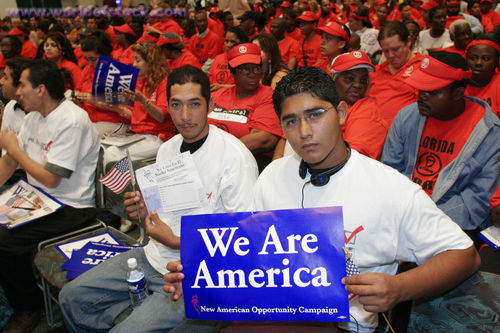
Steve Heacock’s response was a shorter version of what he has on his website, which is the longest of any of the candidates running for the 3rd Congressional District. Heacock says:
Immigration has a significant impact on national security, state and federal budgets, job creation, agriculture and our basic sense of who we are as a country. We have been and continue to be a symbol of hope for those from around the world who are looking for a better life. But our first obligation is to the safety and well being of our people.
- First, we must secure the border and stop the culture of unlawfulness at the border.
- Amnesty is not the answer and, as it has in the past, would likely only encourage further illegal immigration.
- We must enforce existing workplace and immigration laws.
- Temporary work permits should be used, on a test basis, for jobs that otherwise go unfilled. The family status issue would need to be addressed and we would need assurance that workers would return to their home country after expiration of permits.
- We also need to reform visa, immigration and citizenship services to recognize that we need knowledge workers that often can only be recruited from outside of our country. We harm only ourselves by sending people away just as they are creating intellectual property that can be commercialized.
Louise Johnson did not respond to the Press questionnaire, but she does have a position on immigration via her webpage. In fact, of all the candidates Johnson takes the strongest anti-immigration position and even uses the phrase “Illegal Aliens” as the heading for her position on this issue.
There is a process for becoming a citizen in this country. And it is a process worthy of the cause and the supreme benefits of being an American citizen. First apply for citizenship. Then allow the process to work. Meanwhile, we should provide government officials at every level the tools to enforce our immigration laws. However, local county governments should not have to house illegal aliens indefinitely in their local jails until the federal government decides to act and do it job. This is taxing our already overburdened local governments. The fact is, the federal government is not acting or doing its job. Especially in Arizona and the other border states. Still, a two- or three-week jail period until the federal government arrives on the scene appears reasonable. But our federal government must commit to following its own immigration laws and support states that have passed laws that TOTALLY obey and follow such federal laws, such as Arizona has. And before Arizona, Rhode Island!
Bob Overbeek’s response to the Press questionnaire is longer than what his website statement reads on the matter of immigration.
We need immigration reform in our country and we need a continued flow of immigrants to our country. Unless one is “native American,” one is an immigrant. This is one of the great strengths of our nation. I am fifth generation Dutch myself. We need federal policy that welcomes immigrants, and I believe that by harnessing immigrants we can smartly grow our workforce and our economy at the same time. We must ensure those who immigrate become part of our system and pay their fair share of taxes if they are to reap the benefits of our society. I don’t support amnesty; however, I want to make sure immigration reform proposals do three things: 1. Ensure there is a clear path to citizenship. 2. Make sure that path clearly states that immigrants must abide by the rule of law. 3. If they are employed that they are paying their fair share of taxes, because there is a cost to our freedom and supporting the system they benefit from.
Democratic candidate Patrick Miles Jr. has no position on this issue at his webpage, but his response to the Press questionnaire in no way can be considered liberal or progressive.
Federal immigration policy and enforcement have been a failure for a generation. But we must take the emotion and rhetoric out of the discussion and focus on the best solutions to this problem.
We are a nation of immigrants and of laws. No one should be rewarded for breaking the law. In the post-9/11 world, we must secure our borders and enforce immigration laws.
If illegal immigrants come forward, have clean records, pay back taxes or a fine, and learn English I am willing to consider giving them legalized status, but they must go to the end of the line in terms of gaining full citizenship behind those who are here legally.
The other Democratic candidate Paul Mayhue also has no information about immigration on his webpage. He did respond to the Press questionnaire and has a slightly more humane view on the matter than the rest of the candidates.
There should be a path to citizenship for people that are legally in the country. We as a country need to sort out the illegal immigrant issues and separate criminal activity from legal activity and respond accordingly to creating paths to citizenship. The borders should be secured for security reasons and threats to our national security. We should be careful about how rigorously we enforce the laws, the concept of arresting a person on reasonable suspicion goes against the grain of our US Constitution, probable cause and due process is how we need to treat this issue. We don’t need to arrest our way out of this issue, employers that hire illegal immigrants create problem in the American workforce.
First, it should be pointed out that all of the candidates use language, which suggests that their view of immigration translates into “illegal’s” (read Mexicans) who are crossing the southern border of the US. This is a very limited and reactionary view of immigration, since people from all around the world immigrate to the US every year.
Second, there is a double standard the US government applies for people applying for immigrant status. For example, for years if you showed up in the US with no documentation and were from Cuba, the US would almost always grant immigration status, but the same has response has not been applied to people coming from Mexico or Central America. This clearly indicates that politics rules immigration policy, not equal humane treatment.
Third, none of the responses that candidates gave reflect the harsh realities of people who come to the US and are undocumented. The risks that people take are tremendous and numerous people end up being sold into a form of wage slavery or are left to die in the desert. Once undocumented immigrants are detained they are often abused by US law enforcement personnel.
Fourth, the question that the Press asks about immigration frames it in such a way as to decontextualize it, thus make it more likely that candidates would respond to themes such as border security and legal issues as opposed to the rights that immigrants have and the positive contributions they have always made to this country.
What We Are Reading
Below is a list of books that we have read in recent weeks. The comments are not a review of the books, instead sort of an endorsement of ideas and investigations that can provide solid analysis and even inspiration in the struggle for change. All these books are available at The Bloom Collective, so check them out and stimulate your mind.
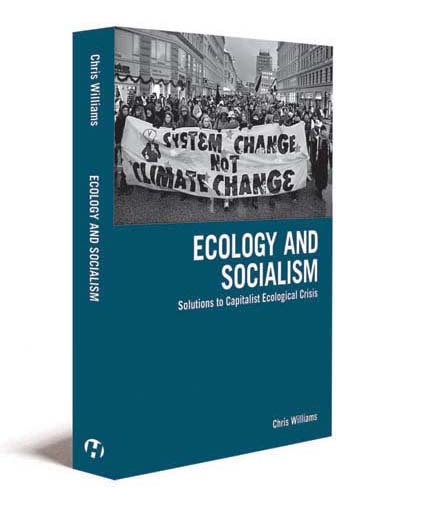
Ecology and Socialism: Solutions to Capitalist Ecological Crisis, by Chris Williams – This book provides an excellent analysis of the current ecological crisis we are faced with throughout the world, with an emphasis on global warming and the factors that contribute to this issue. However, unlike many books on the topic, Ecology and Socialism put at the root of the problem the economic system of Capitalism. And although the book did not provide enough “solutions” it does provide a good road map of possibilities for a future that cannot survive as long as Capitalism is the dominant economic model.
 Hopes and Prospects, by Noam Chomsky – This is Chomsky’s first full book of the Obama era and he does not disappoint. Chomsky provides us with sharp analysis of the US policy under “brand Obama” and demonstrates that there has been little difference in foreign policy besides rhetoric. Hopes and Prospects takes a close look at Israel/Palestine, Iraq, Afghanistan, the War on Terror, and Latin America. Chomsky’s keen sense of history always helps to frame the current policy with the trajectory of the American Empire.

Pornland: How Porn has Hijacked Our Sexuality, by Gail Dines – This new book provides a fresh analysis of the pornography industry that is beyond the tired debates about free speech and eroticism. Dines sees pornography as both a Capitalist enterprise with its constant need for new markets and as a source for tremendous harm. The harm that the author presents is both the harm caused to those used in the production of pornography and those who consume it. Dines makes a strong case that pornography has negatively impacted our ability to have healthy sexual relationships, because porn has moved from a marginal product to a mainstream commercial want.

The Floodgates of Anarchy, by Stuart Christie and Albert Meltzer – Reprinted from the late 1960’s, this book provides a lively collection of essays that presents the importance of political anarchism as a real and lasting solution for a liberated humanity. Christie and Meltzer bring years of experience to bare on the importance of class struggle and movement building as co-founders of the revitalized Anarchist Black Cross.
The Most Dangerous Man in America: Daniel Ellsberg and the Pentagon Papers – A powerful new documentary that looks at the individual courage of one man and the risk he took to challenge the US government. Daniel Ellsberg not only exposed the genocidal policies of the US government in South East Asia, he helped galvanize the anti-war movement of his day.

