If Chile can, why can’t we – Net Neutrality
(This article was written by an Aquinas student, Joe Spaulding)

On July 15, 2010 mainstream national news outlets like CNN, Fox, and MSNBC were focused on reporting which candidates were leading the horse race in primaries across the U.S., as well as the implications of a somewhat grass-roots initiated Tea Party movement that had been given a surge of strength at the cost of cohesion and stability by the conservative corporate elite on the upcoming elections in November (to be fair and balanced, Foxnews.com also had articles covering the average number of sex partners iPhone owners have and the tumor that was threatening one of the world’s largest breasts). News of the ongoing and perpetually devastating oil spill in the Gulf of Mexico and the continuation of bullets flying at and from American soldiers in Iraq and Afghanistan was present, but sitting on the media’s back-burner.
On that “unnewsworthy” mid-summer day the government of the nation of Chile passed a law guaranteeing its citizens protection from the malicious techniques of control previously available to the Internet Services Providers that supply the 7,387,000 of the country’s 16,454,143 citizens that are online. A few technology blogs like Endgaget picked up on the story within a couple of weeks, mostly taking the tone of neo-cosmopolitan internet geeks congratulating their overseas brethren with a dash American envy of Chilean exceptionalism, wondering why it was so easy for Chile to pass these protections, but so difficult in the U.S.
This type of protection is referred to in online communities as “Net Neutrality.” It means having ISPs be legally prohibited from favoring any specific Internet content by changing the speeds at which the data gets delivered. The deciding factor is if the Internet is viewed as a utility like electricity, water, and telephone service, or if it is viewed as an information service like cable TV. Utility companies hook you up to their networks, and don’t tell you how to use your power, water, or gas. Cable companies control what channels they let you have access to, as well as establish tiered pricing for varied content. In the late 1980s and early 1990s, Internet access was obviously a utility because the vast majority of the few online computers used a dial-up modem to access the online world. The advent of broadband brought two technologies that fell on either side of the FCC’s authority to ensure fair content delivery: DSL (which goes through phone lines) and Cable.
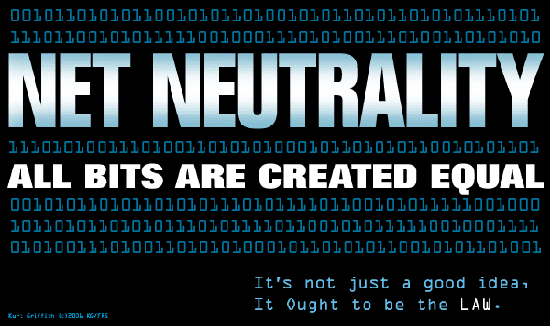
Net neutrality (or the oncoming lack of it) has massive and definite implications concerning access to information for every person on the planet, especially in countries like the U.S where a great deal of media – social, entertainment, commercial, and informative- is created, distributed from, and consumed. Senator Al Franken of Minnesota has stated that, “Net Neutrality is the 1st Amendment issue of our time.” The lack of coverage in the American media is indicative of a press that is either hateful of its readership or too tied down to corporate interests to spread word of legislation that might limit the power of their parent companies, or both. The New York Times will sometimes run a piece describing the concept, but almost never delves into the implications. Like so many stories deserving more attention, most of the text concerning net neutrality advocacy is in the margins: Tech blogs and social media aggregation sites like Reddit where Internet savvy individuals gather, socialize, and pool information.
The coverage of net neutrality is so sparse that it is not uncommon to find average citizens, politicians, and political science professors that have never heard of the terms. To understand the policy that was passed in Chile, and the effects an analogous policy could have on the U.S., it is probably best to understand the regulations regarding Internet access that make up the status quo in the U.S. Because few real regulations exist, this is a disappointingly simple task. The FCC has issued guidelines urging ISPs to not restrict any flow of any data unnecessarily, but has neither the criteria to determine what constitutes necessity, nor the power to enforce penalties for arbitrary limits on net traffic. When the FCC tried to fine Comcast for choking the bandwidth of users during peak download times in 2007 the Federal Court sided with Comcast. Until legislation makes it way through congress, the courts have transformed the FCC (when attempting to regulate ISPs) into a dog with a mild bark and no bite.
ISPs, their lawyers, and lobbyists use two ideas to try to derail fair access to the Internet; that throttling and choking bandwidth is necessary to ensure the continued flow of data without network downtimes, and that net neutrality undermines the free market in favor of government control. The first is ludicrous for two reasons. Primarily, if Comcast can afford to make a bid to purchase GE, they certainly can afford to upgrade their network capacity to handle the increased traffic. Second, because there are no real restrictions making arbitrary or malicious network manipulations illegal, there is no way to make sure ISPs do not use this power to extort money from content providers and internet subscribers alike or to block sites the ISP or its business associates find politically “unagreable.”
The second idea used to defend ISPs’ power to regulate content on the Internet is exactly backwards. Tech companies and ISPs will never need to develop more adequate network infrastructure if all that is needed to keep most of the network running smoothly is to turn down the parts of the Internet they like the least.
The beauty of the Internet in regards to American democracy is that because the content providers are the consumers of that content, the Internet helps bind all of the freedoms guaranteed by the First Amendment into a more cohesive unit. The closer freedom of speech is tied to freedom of the press, the more power rests in individual people and not telecommunications corporations. It’s extremely difficult for a person to make a blockbuster action flick that rakes in millions of dollars unless they start off with millions of dollars, but right now, anyone get a video of their cat being adorable to go viral online for free. AT&T, Verizon, and Comcast stand to make a lot of money if they can change this, and if they do it will be the average American that suffers. In any real democracy, free and fair access to information is as important to its survival as the air its citizens breathe. Congratulations Chile.
http://techdailydose.nationaljournal.com/2010/09/more-hostile-environment-for-n.php
http://www.savetheinternet.com/
http://www.freepress.net/policy/internet/net_neutrality
http://www.nytimes.com/2010/04/07/technology/07net.html
http://www.engadget.com/2010/07/15/chile-becomes-first-country-to-guarantee-net-neutrality-we-star/
3rd Congressional Race: No debates, no real news
Today, the Grand Rapids Press reported that both the Republican and Democratic candidates for the 3rd Congressional seat being vacated by Vern Ehlers can not come to an agreement on public debates.
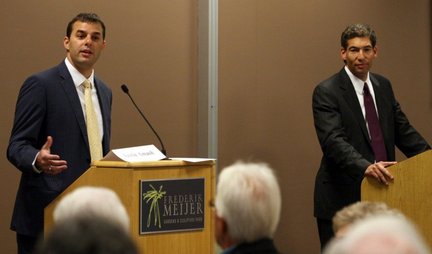
The Press articles states that there have been 2 debates since the August Primary, one being public and one being for members only (Kent County Medical Society). Press reporter Jim Harger cites both the Miles and Amash campaigns as being is disagreement about the terms of possible debates.
The article also cites several other sources, all of which have sent invitations to the candidates and all four of which say that Amash has refused or did not respond to the invitation to debate.
Clearly, debates are one way for the public to get access to information about the candidates, by hearing their responses to questions and possibly being able to ask questions themselves.
However, debates or the lack thereof, should not prevent the local news media from providing coverage of these candidates and their stance on issues. Since Labor Day, the GR Press has only run two stories on the 3rd Congressional race.
The first story was based on a debate between Amash and Miles from September 18 and the second story was about endorsements for Miles. In both cases, the Press reporters did not provide readers with any details of the candidate’s position on issues.
We are only five weeks away from the November 2nd vote and the Grand Rapids Press has an obligation to inform voters about where the 5 candidates stand on the critical issues of the day. The Press should not wait for debates in order to explore where the candidates stand on issues, they have the capacity to interview them, engage them and the public about what people want from Washington in terms of policy on economics, health care, the environment, war, spending, immigration, education, political corruption, civil rights, etc.
The Press will no doubt print a voters guide the week prior to Election Day, but as we have noted in the past, those voter guides only include responses to a few questions. The Press could at least provide the guide more than once before Election Day, which is exactly what they did with the ArtPrize Voters Guide, which was included in the Press three times – September 19th, 22nd and 23rd. As the only daily newspaper in Grand Rapids, they owe it to the public to provide the kind of information that will allow voters to make an informed decision.
True Majority and Pepsi
(This article by Russell Mokhiber is re-posted from CounterPunch.)

True Majority ought to change its name.
Try: The Pepsi Generation.
True Majority is the Ben & Jerry’s creation that has become a Democratic Party front group run by USAction.
And True Majority has entered a contest sponsored by the Pepsi – the liquid candy queen – the company that brought you the childhood obesity epidemic.
The contest is called: Pepsi Refresh.
Pepsi gives away $1.3 million a month to worth causes.
You enter your idea at the Pepsi Refresh website.
You pick a category.
TrueMajority and USAction entered for $250,000.
They want to use the money to explain to Americans what a good deal Obamacare is.
Wow kids, if you are 26 and under, you too can be covered by your parents health insurance!
And then every month, people vote on line for you or your competitors.
If you get the most votes, you get the money.
Right now, USAction is in fifth place.
Voting ends in eight days.

Michael Jacobson knows what Pepsi is trying to do here.
Jacobson is executive director of the Center for Science in the Public Interest, which put out a classic report a couple years ago titled Liquid Candy: How Soft Drinks Are Harming America’s Health.
“Junk-food makers, like alcohol and tobacco companies, often try to distract attention from the harm they wreak on public health by donating money to worthy charitable causes,” Jacobson said. “Giving away each month the equivalent of about what it costs to broadcast a 30-second commercial is a highly effective PR strategy.”
David Elliot of TrueMajority sent out an e-mail this week asking supporters to vote for TrueMajority’s entry.
With eight days left in the voting, USAction ranks fifth among the competitors in the $250,000 category.
We rang up Elliot and ask him if TrueMajority would take money from any corporation.
“Absolutely not,” Elliot said.
Defense contractors?
“Probably not,” Elliot said.
Were any moral qualms raised within the organization about entering a contest that inflicted such harm on the health of America’s children?
“Not at my level,” Elliot said.
Elliot defended the group’s action, saying that the money would be put to good use, to educate Americans what a great deal Obamacare is – especially for young people.
But Pepsi is actively damaging the health of young people.
And Obamacare is an insurance industry written bill that won’t control costs, won’t cover everyone, and keeps the insurance industry in control of the system.
That’s great – using Pepsi money to defend the insurance industry.
TrueMajority – Taking Democratic Party front groups to new lows.
Campaign finance update for Michigan House and Senate races
This year’s election cycle is breaking records across the country and the money raised in Michigan for state races is also on the rise.
According to the Michigan Campaign Finance Network (MCFN) “Candidates for the Michigan Legislature raised $20.9 million and spent $14.5 million through the post-primary campaign reports. That fundraising total is up by 8.3 percent compared to 2006, the last time candidates for both the House and Senate faced the electorate.”
When looking at the data MCFN has provided for the two state Senate races in West Michigan one race is financially tight, while the other one is lopsided. In the 28th District Senate race featuring Republican Mark Jansen it would appear that the Democrats are conceding that race. Jansen has raise $96,242 so far, with a total of $44,264 still in his money chest. The Democratic candidate Robin Golden has not raised a cent as of the last reporting period.
The 29th District Senate race is much closer. Republican Dave Hildenbrand has raised $269,927 so far with $134,353 left in his balance. The Democratic candidate David LaGrand has raised $141,536 so far with $30,649 left in his money chest. We can expected to see lots more money being raised and spent on ad campaigns in the remaining 5 weeks of the campaign.
In the State House races in West Michigan there are two races with candidates who are challenging incumbents and have raised no money. In the 74th District House race incumbent Dave Agema (R) has raised $38,828, while the Democratic challenger Leon Chase (D) has not raised any money to date. The same is the case in the 76th District House race where Democratic incumbent Roy Schmidt has raised $107,034, while the Republican challenger Marc Tonnemacher has raised no money.
This is not the case in the 75th District House race where there are no incumbents. Democratic candidate Brandon Dillon was not challenged in the primary and still has $37,561 in his campaign account. The Republican candidate Bing Goei barely beat out fellow Republican Jordon Bush in the Primary election, which has left Goei with only $696 left from the $60,275 he has raised.
According to MCFN the total amount of money raised so far across the state for House races is $10,151,168. In the state Senate races in Michigan a total of $10,755,281 has been raised so far. Combined that is over $20 million that has been raised. Imagine what that kind of money could do if it was spent on housing or other basic rights for people living in Michigan.
HCC to host Film series on the Middle East
The Grand Rapids-based group Healing Children of Conflict (HCC) will be hosting a film series beginning in October to raise awareness about the human cost of US policies in Iraq, Afghanistan and Palestine.
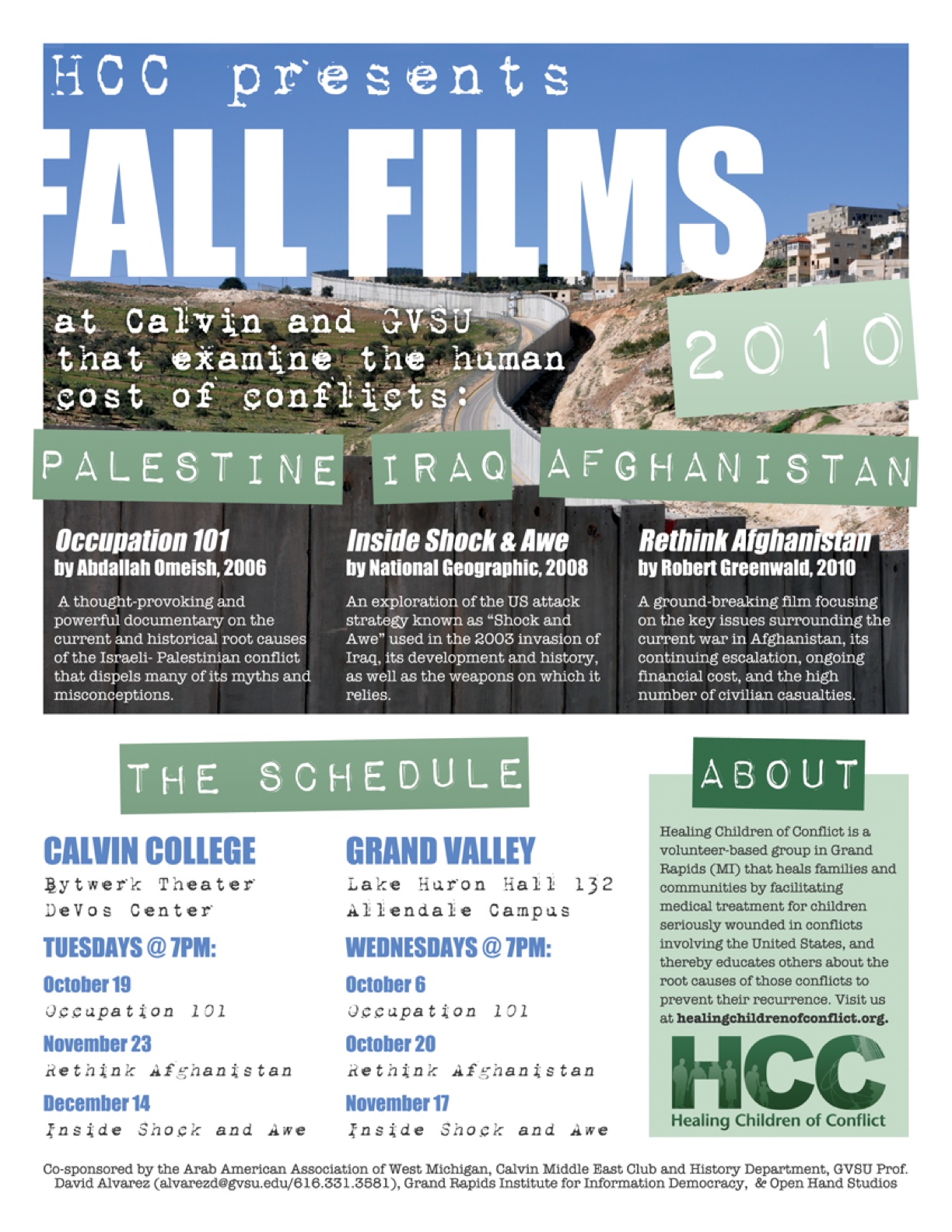
HCC works to provide medical assistance to children wounded from US military attacks in Afghanistan and Iraq, as well as US supported Israeli military attacks against Palestinians.
The film series will take place on both the Calvin College campus and the GVSU campus in Allendale.
Occupation 101 – an investigation into the historical roots of the Israeli/Palestinian conflict.
October 6, 7pm at GVSU Lake Huron Hall 132, Allendale Campus
October 19, 7pm at Calvin College Bytwerk Theater
Rethink Afghanistan – An hour-long look at the US occupation of Afghanistan, both the political and human consequences.
October 20, 7pm at GVSU Lake Huron Hall 132, Allendale Campus
November 23, 7pm at Calvin College Bytwerk Theater
Inside Shock and Awe – A People’s War Crimes Tribunal that investigates US war crimes committed against the people of Iraq since the 2003 US military invasion.
November 17, 7pm at GVSU Lake Huron Hall 132, Allendale Campus
December 14, 7pm at Calvin College Bytwerk Theater
There will be discussion following each film screening along with additional resources on each of these three topics.
Combating Global Warming through office furniture production?
Last week it was announced that the West Michigan office furniture company Steelcase was ranked #1 in the Home and Office Furniture Industry for its efforts in combating climate change.
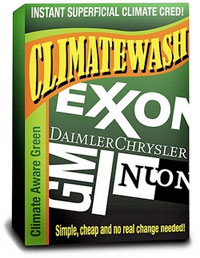
The New Hampshire group Climate Counts, has its own scorecard system to measure individual companies and how they are reducing greenhouse gases.
Steelcase was ranked number one in their industry sector because of their investment in wind energy production and the use of new bio-degradable packing for their products.
While these action may seem like the company is making changes that will reduce greenhouse gases it doesn’t address the more systemic problems of production and consumption.
Steelcase, like any other capitalist enterprise is committed to constant growth and is continually making new products. Office furniture is their main focus of production and in order for Steelcase to continue as a corporate entity they have to figure out ways to keep selling office furniture.
The question one could ask is how much office furniture do we actually need? Their products, like so many in the industrial world, are not built to last, thus perpetuating the need to consume. Steelcase is also always coming up with “new designs” so that consumers will always feel the need to upgrade their office furniture, even if the current furniture they own is fully functional.

Then there is the issue of cost. In looking at their products online I was a little shocked at the cost of items as simple as an office chair. Their Leap office chair goes for $849, which is the same amount of money that many working class people will make in a month.
Then there are newer products like walk stations. Walk stations are a mix between a treadmill and a work desk, which allows people to exercise while working at their computers. These items run a mere $4,000 plus. So, on top of the lack of longevity of their products, the costs contribute to a vicious cycle of economic dependency.
One other area that is not included in the award to the West Michigan office furniture manufacturer is resource extraction. While the company might be using bio-degradable packing material there is no acknowledgement of the resources used to make their furniture – wood, metal and plastics, all which contribute to deforestation, oil and mineral extraction. And this is not one of the criteria included when groups like Climate Counts does assessments of corporate behavior.
Climate Counts is a non-profit entity that is part of a growing sector of agencies that are designed to make the public feel as if the corporate world was actually doing something significant to challenge global warming.
Climate Counts sees “business as having the power to change the world,” thus they work in conjunction companies and ultimately act as a buffer against civil society that might demand more radical change.
In fact, Climate Counts does not see people as citizens or agents of change. People are nothing more than “consumers.” On their home page, Climate Counts states that they “fight climate change by helping consumers with their choices and voices to put pressure on the world’s largest companies to take corporate climate action.” But what does this actually mean?
One example that Climate Counts gives is getting McDonald’s to reduce some of its energy use at their fast food facilities in order to reduce global warming. Again, on the surface this might seem like a positive things, but if we were really serious about reducing carbon emissions fast food would not be part of our future. Fast food by its very nature is unsustainable.
The same can be said for the office furniture maker Steelcase, which if we were serious about what role it would play in truly reducing global warming then we would have to talk about the fact that it can not be a positive force for carbon reduction until it stopped making expensive, unsustainable products.
What we are reading
Below is a list of books that we have read in recent weeks. The comments are not a review of the books, instead sort of an endorsement of ideas and investigations that can provide solid analysis and even inspiration in the struggle for change. All these books are available at The Bloom Collective, so check them out and stimulate your mind.

Antonio Gramsci, by Antonio Santucci – For those who have never heard of the Italian political prisoner, socialist thinker and cultural critic, this book is an excellent introduction into the life and thought of Antonio Gramsci. The author provides readers with a window into the political writings of Gramsci, as well as his prison notebooks. Gramsci was imprisoned by the fascist Mussolini regime and died in prison at the age of 48. His writings and his commitment to anti-capitalist thinking is an inspiration and worth investigating even today.

Common Ground in a Liquid City: Essays in Defense of an Urban Future, by Matt Hern – This was a fascinating book to read. Hern, who lives in Vancouver, discusses a variety of issues that fall under the broad category of urban life. The author does this by reflecting on what is happening in his city when he travels abroad. His experiences around the world force him to come to terms with what makes a vibrant city and what capital forces are at work that want to gentrify urban communities. For anyone interested in thinking about the future of cities, particularly one that does not favor the “creative class,” this book is an excellent resource.
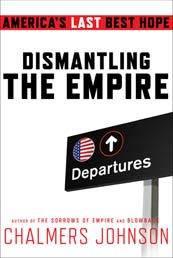
Dismantling the Empire: America’s Last Best Hope, by Chalmers Johnson – This is a collection of essays written by Johnson during the end of the Bush years and the beginning of the Obama administration. In many ways this new book by Johnson picks up where his trilogy left off, with a critical assessment of the US Empire. Like his other books, the author provide important analysis of how the US functions as an empire. The book ends with a 10-point plan to dismantle the US Empire and even though his suggests are new, they do articulate a clear need for disarmament, and end to torture and the dismantling of US military bases abroad.
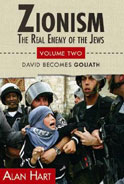
Zionism: The Real Enemy of the Jews Volume II, by Alan Hart – In this second volume, the former BBC reporter Alan Hart looks at the development of Israel after 1948 up to just before the 1967 War. Hart provides both personal experience as a reporter on Israel/Palestine and solid scholarly investigation into the role of the Zionist state. Hart’s access to Israeli leaders gives readers a first hand account of the relationship between Israel and the US prior to 1967. An important contribution to understanding the history of Israel and its policies.
The Rise of ‘Super PACs’ Continues, Leaving Voters in Dark as Attack Ads Fill Airwaves
(This article is re-posted from OpenSecrets.org.)

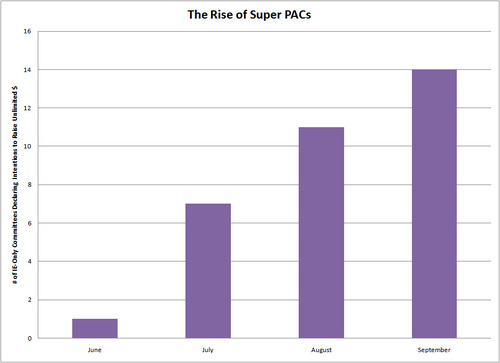
The proliferation of “super PACs” — political organizations armed with the ability to raise unlimited amounts of money from wealthy individuals and corporations and to spend huge sums explicitly advocating for or against candidates — continues at a staggering pace.
Thirty-three such committees have now registered their intention to raise unlimited sums for independent expenditures with the Federal Election Commission, according to a Center for Responsive Politics analysis of FEC data. High-level political operatives on both the left and the right have jumped into the fray, establishing these new “super PACs,” as OpenSecrets Blog has previously reported.
Two months ago, the FEC gave the official green light to special interest groups hoping to cash in on federal court rulings that loosened campaign finance rules. On July 22, the FEC gave its blessing to the conservative Club for Growth and the liberal Commonsense Ten, allowing them, and other groups like them, to form “super PACs,” officially known as “independent expenditure-only committees.” These committees can raise unlimited sums from individuals, corporations, unions and other groups. And with those massive war chests, they can run advertisements expressly advocating for or against federal candidates.
Some of these groups have yet to report raising a dime. Others have already raised millions of dollars — and are spending hundreds of thousands in competitive races across the country. One thing is clear: New groups of this sort continue to register with the FEC, and their influence will be felt during the final weeks of the campaign. (See a full list of these organizations later in the story.)
In previous election cycles, groups that wanted to run ads that expressly advocated for or against candidates faced more severe fund-raising restrictions. It was illegal for a person to contribute more than $5,000 per year to a political committee. This cycle, however, several legal opinions have transformed the campaign finance landscape and erased previous rules.
The Supreme Court’s January decision in Citizens United v. Federal Election Commission overturned a century-old ban on corporate and union treasury funds being used in politics. While corporations and unions cannot make direct campaign contributions from their treasury funds, these monies can be used to fund advertisements that overtly encourage voters to elect or defeat federal candidates.
Furthermore, in March, a federal court in SpeechNow.org v. Federal Election Commission ruled that the government’s cap on donations to political committees was unconstitutional — so long as those groups don’t make direct contributions to candidates and don’t coordinate with candidates when running independent advertisements.
The following table lists all committees that intend to raise unlimited contributions through Sept. 20, including the date each group officially informed the FEC of their desire to raise unrestricted sums of money in accordance with the SpeechNow.org and Citizens United rulings.
| FEC ID # | Committee Name | IE-Only Letter Filed |
|---|---|---|
| C00484287 | AFL-CIO WORKERS VOICES PAC | 9/20/2010 |
| C00488940 | NEW HOUSE INDEPENDENT EXPENDITURE COMMITTEE | 9/14/2010 |
| C00430876 | WORKING FOR US POLITICAL ACTION COMMITTEE INC | 9/10/2010 |
| C00488759 | AMERICAN WORKER INC, THE | 9/10/2010 |
| C00488742 | NATIONAL ASSOCIATION OF REALTORS CONGRESSIONAL FUND | 9/10/2010 |
| C00469890 | PATRIOT MAJORITY PAC | 9/9/2010 |
| C00488783 | SPEECHNOW.ORG | 9/9/2010 |
| C00473918 | WOMEN VOTE! | 9/8/2010 |
| C00488569 | COALITION TO PROTECT AMERICAN VALUES | 9/7/2010 |
| C00488494 | NEW PROSPERITY FOUNDATION; THE | 9/2/2010 |
| C00488502 | PROTECTING CHOICE IN CALIFORNIA 2010, A PROJECT OF PLANNED PARENTHOOD AFF OF CALIFORNIA | 9/2/2010 |
| C00488429 | CITIZENS FOR STRENTH AND SECURITY PAC | 9/1/2010 |
| C00488437 | CONCERNED TAXPAYERS OF AMERICA | 9/1/2010 |
| C00488403 | TEXAS TEA PARTY PATRIOTS PAC | 9/1/2010 |
| C00487470 | CLUB FOR GROWTH ACTION | 8/31/2010 |
| C00488338 | AMERICAN DENTAL ASSOCIATION PAC INDEPENDENT EXPENDITURES COMMITTEE | 8/31/2010 |
| C00423467 | VOTE OUT INCUMBENTS FOR DEMOCRACY | 8/30/2010 |
| C00488486 | COMMUNICATIONS WORKERS OF AMERICA WORKING VOICES | 8/30/2010 |
| C00483693 | SIERRA CLUB INDEPENDENT ACTION | 8/19/2010 |
| C00487785 | HEADQUARTERS CMTE W HOLLYWOOD/BEV HILLS/STONEWALL DEM CLUB/STONEWALL YOUNG DEMS LTD | 8/18/2010 |
| C00487744 | AMERICA’S FAMILIES FIRST ACTION FUND | 8/17/2010 |
| C00485854 | LOUISIANA TRUTH PAC | 8/11/2010 |
| C00486688 | FLORIDA IS NOT FOR SALE | 8/5/2010 |
| C00487280 | CONSERVATIVES FOR TRUTH | 8/2/2010 |
| C00486878 | PEOPLE’S MAJORITY | 8/2/2010 |
| C00486845 | LEAGUE OF CONSERVATION VOTERS VICTORY FUND | 7/30/2010 |
| C00482620 | ARIZONANS WORKING TOGETHER | 7/28/2010 |
| C00487199 | CITIZENS FOR ECONOMIC AND NATIONAL SECURITY | 7/28/2010 |
| C00484642 | COMMONSENSE TEN | 7/27/2010 |
| C00484295 | CALIFORNIANS FOR FISCALLY CONSERVATIVE LEADERSHIP | 7/23/2010 |
| C00485821 | AMERICANS FOR NEW LEADERSHIP | 7/9/2010 |
| C00487363 | AMERICAN CROSSROADS | 7/9/2010 |
| C00485011 | CLUB FOR GROWTH ADVOCACY INC | 6/17/201 |
Some of these organizations file monthly reports with the FEC, while others file quarterly. Only when such reports are filed do voters have a full accounting of the individuals, corporations and other groups funding the barrage of advertisements the groups are running. In many cases, disclosure of donors will not come until after Election Day.
Even with these seismic changes in the campaign finance landscape, some groups are still seeking to avoid any donor disclosure.
Several organizations — such as Crossroads Grassroots Political Solutions, or Crossroads GPS, a sister organization of the top conservative independent expenditure-only committee American Crossroads — have formed under section 501(c)4 of the U.S. tax code. This designation means the group’s donors will never be reported to the FEC or to the Internal Revenue Service and that its primary purpose is supposed to be the “promotion of social welfare.” Yet, so far, this designation hasn’t kept it from spending big bucks on political messages in hotly contested races.
Democrats have pushed for legislation, known as the DISCLOSE Act, which would require advertisements to include information about the top donors financing the ads. The measure also calls for the heads of organizations that run independent expenditures to appear in the ad to approve the message, like political candidates currently do.
That legislation passed the House earlier this summer. In July, Republicans successfully filibustered the bill in the Senate. Senate Majority Leader Harry Reid (D-Nev.) plans to bring the bill up for another vote in the Senate on Thursday, although it’s unclear if any Republicans have undergone a change of heart.
The Next Mexican Revolution
(This article by John Ross is re-posted from CounterPunch.)
As the 100th anniversary of the Mexican revolution steams into sight, U.S. and Mexican security agencies are closely monitoring this distant neighbor nation for red lights that could signal renewed rebellion. The most treacherous stretch for those keeping tabs on subversion south of the border is between September 15th the recently celebrated bicentennial commemorating the struggle for Mexico’s independence from Spain, and November 20th, the day back in 1910 that the liberal Francisco Madero called upon his compatriots to take the plazas of their cities and towns and rise up against the Diaz government.
At least ten and as many as 44 armed groups are currently thought to be active in Mexico and the two months between the 200th anniversary of liberation from the colonial yoke and the 100th of the nation’s landmark revolution, the first uprising of landless farmers in the Americas and a precursor of the Russian revolution, is a dramatic platform from which to strike at the right-wing government of President Felipe Calderon.
Among the more prominent armed formations is the Popular Revolutionary Army (EPR) which rose against the government in 1996 and is based in Guerrero and Oaxaca, and three distinct split-offs: the Democratic Revolutionary Tendency (TDR); the Justice Commandos – June 28th, thought to be linear descendents of the followers of guerrilla chieftain Lucio Cabanas who fought the government along the Costa Grande of Guerrero in the 1970s; and the Revolutionary Army of the Insurgent Peoples (ERPI) which also espouses Cabanas’s heritage and is active in the Sierra of Guerrero where Lucio once roamed.
Others on the list released two years ago by the CISEN, Mexico’s lead anti-subversion intelligence-gathering apparatus, include the largely-disarmed Zapatista Army of National Liberation (EZLN), an indigenous formation that rose in Chiapas in 1994; the Jose Maria Morelos National Guerrilla
Coordinating Body, thought to be based in Puebla; and the Jaramillista Justice Commandos that takes its name from Ruben Jaramillo, the last general of revolutionary martyr Emiliano Zapata’s Liberating Army of the South gunned down by the government in 1964, which has taken credit for bombings in Zapata’s home state of Morelos.
The TAGIN or National Triple Indigenous and Guerrilla Alliance, thought to be rooted in southeastern Mexico, boasted in a e-mail communiqué at the beginning of the year that a coalition of 70 armed groups have agreed on coordinated action in 2010.
Also in the revolutionary mix are an unknown number of anarchist cells, at least one of which takes the name of Praxides G. Guerrero, the first anarchist to fall 100 years ago in the Mexican revolution. Primarily operating in urban settings, anarchist cells have firebombed dozens of ATM machines and banks, new car showrooms, bullrings, and slaughterhouses (many anarchists are militant vegans) in Mexico City, Mexico state, Guadalajara, San Luis Potosi, and Tijuana. The U.S. Attorney General Eric Holder has just added Mexican anarchist groups to the Obama government’s terrorist lists.
Thus far, no group in this revolutionary rainbow has struck in 2010, and the window is narrowing if Mexico’s twin centennials are to be a stage upon which to launch new uprisings. If this is to be the year of the next Mexican revolution, the time to move is now.
Objective conditions on the ground are certainly ripe for popular uprising. At least 70% of the Mexican people live in and around the poverty line while a handful of oligarchs continue to dominate the economy – Mexico accounts for half of the 12 million Latin Americans who have fallen into poverty during the on-going economic downturn. Despite Calderon’s much scoffed-at claims that the recession-wracked economy is in recovery, unemployment continues to run at record levels. Hunger is palpable on the farm and in the big cities. Indeed, the only ray of light is the drug trade that now employs between a half million and a million mostly young and impoverished people.
Labor troubles, always a crucible of revolutionary dynamics, are on the rise. A hundred years ago, conditions were not dissimilar. The fall-out from the 1906-7 world depression that saw precious metal prices, the nation’s sustenance, fall off the charts sent waves of unemployment across the land and severely impacted conditions for those still working. As copper prices bottomed, workers at the great Cananea copper pit scant miles from the Arizona border in Sonora state, went out on strike and owner Colonel William Green called in the Arizona Rangers to take the mine back. 26 miners were cut down and the massacre gave birth to the Mexican labor movement.
In March 2010, President Calderon dispatched hundreds of federal police and army troops to Cananea to break a protracted, near two-year strike at the behest of the Larrea family, the main stockholders in Grupo Mexicano Industrial which was gifted with the copper pit, the eighth largest in the world, after it was privatized by reviled ex-president Carlos Salinas in 1989. Calderon’s hard-nosed labor secretary Javiar Lozano has threatened arrest of miners’ union boss Napoleon Gomez Urrutia, now in self-exile in Vancouver Canada.
Lozano is also deeply embroiled in take-no-hostages battles with the Mexican Electricity Workers Union (SME) over privatization of electricity generation here that has cost the union, the second oldest in the country founded during the last Mexican revolution, 44,000 jobs. A near death hunger strike by the displaced workers failed to budge the labor secretary and SME members now threaten to shut down Mexico City’s International Airport.
History is often colored with irony. The first important battles in the Mexican revolution were fought around Ciudad Juarez, Chihuahua, a key railhead on the U.S. border and a commercial lifeline to El Norte for dictator Porfirio Diaz. In skirmish after skirmish, the irregulars of Francisco Villa and Pascual Orozco challenged and defeated the dictator’s Federales and began the long push south to hook up with Emiliano Zapata’s southern army in Morelos state on the doorstep of the capitol.
Ciudad Juarez was devastated by the cruel battles between the revolutionaries and the dictator’s troops. Dead wagons plied the dusty streets hauling off the bodies of those who had fallen to be burnt out in the surrounding desert. Today, once again, Ciudad Juarez is the murder capitol of Mexico.
Over 1800 have been killed in this border city so far in 2010, a record year for homicides, as the homegrown Juarez drug cartel and its local enforcers, the “La Linea” gang, try to defend the “plaza”, the most pertinent drug crossing point on the 1964 mile border, from the Sinaloa cartel under the management of “El Chapo” Guzman, and his local associates “Gente Nueva” (“New People.”)
Much as today when the narco kings like “El Chapo” or his recently slain associate “Nacho” Coronel are vilified by the Mexican press and President Calderon as “traitors” and “killers” and “cowards”, 100 years back revolutionaries were cast as villains and vandals hell-bent on tearing down the institutions of law and order. Pancho Villa was universally dissed as a cattle rustler, a “bandido”, “terrorista”, and rapist. When Zapata, “the Attila of the South”, and his peasant army came down to Mexico City in 1914 to meet with Villa, the “gente decente” (decent people) locked up their homes and their daughters to protect them from the barbarian hordes.
Similarly, in 2010, the corporate press lashes out at the cartels and their pistoleros as crazed, drug-addled mercenaries who will shoot their own mothers if enough cash and cocaine are offered. Villa’s troops were no strangers to such accusations. “La Cucaracha”, the Villista marching song, pleads for “marijuana para caminar” (“marijuana to march.”)
All this duel centennial year, ideologically driven leftists here have been waiting with baited breath for a resurgence of armed rebellion such as in 1994 when the EZLN rose up against the “mal gobierno” in Chiapas, or in 1996 when the EPR staged a series of murderous raids on military and police installations – but the leftists may be barking up the wrong tree.
If revolution is to be defined as the overthrow of an unpopular government and the taking of state power by armed partisans, then the new Mexican revolution is already underway, at least in the north of the country where Calderon’s ill-advised drug campaign against the cartels (in which according to the latest CISEN data 28,000 citizens have died) has morphed into generalized warfare.
Although the fighting has been largely confined to the north, it should be remembered that Mexico’s 1910 revolution began in that geography under the command of Villa and Orozco, Venustiano Carranza, Alvaro Obregon, and Francisco Madero, and then spread south to the power center of the country.
Given the qualitative leap in violence, Edgardo Buscaglia, a keen analyst of drug policy at the prestigious Autonomous Technological Institute of Mexico now describes Calderon’s war as a “narco-insurgency” – a descriptive recently endorsed by U.S. Secretary of State Hillary Clinton. Daily events reported in the nation’s press lend graphic substance to the terminology.
Narco-commandos attack military and police barracks, carrying off arms and freeing prisoners from prisons in classic guerrilla fashion. As if to replay the 1910 uprising in the north, the narco gangs loot and torch the mansions of the rich in Ciudad Juarez. The narcos mount public massacres in northern cities like Juarez and Torreon that leave dozens dead and seem designed to terrorize the local populous caught up in the crossfire and impress upon the citizenry that the government can no longer protect them, a classic guerrilla warfare strategy.
One very 2010 wrinkle to the upsurge in violence: car bombs triggered by cell phones detonate in downtown Juarez, a technology that seems to have been borrowed from the U.S. invasion of Iraq (El Paso just across the river is home to several military bases where returning veterans of that crusade are housed.) Plastique-like C-4 explosives used in a July 15th car bombing that killed four in downtown Juarez are readily available at Mexican mining sites.
Further into the interior, commandos thought to be operating under the sponsorship of the Zetas cartel, have repeatedly shut down key intersections in Monterrey, Mexico’s third largest city and the industrial powerhouse of the nation, with stolen construction equipment and stalled buses and trailer trucks purportedly to clear surrounding highways of traffic for the movement of troops and weaponry into this strategic region.
Now the narco-insurrection has invaded the political realm as manifested by the assassination of the one-time ruling PRI party’s front-running candidate for governor of Tamaulipas state in July 4th elections. But party affiliation doesn’t seem to be a determining factor in this ambience of fear and loathing. The kidnapping of right-wing PAN party Padrino Diego Fernandez de Cevallos, one of the most powerful politicos in Mexico and a possible presidential candidate in 2012, must send chills up and down the spines of Calderon and his associates.
Who actually put the snatch on “El Jefe” Diego remains murky. The Attorney General’s office is now pointing fingers at the Popular Revolutionary Army, which is active in the Bajio region where the PANista was taken last May 14th. In 2007, the EPR claimed credit for the bombing of PEMEX pipelines in Guanajuato and Queretero in retaliation for the disappearances of two of its historical leaders.
The Mexican military has long calculated the eventual “symbiosis of criminal cartels with armed groups that are disaffected with the government” (“Combat Against Narco-Traffic 2008” issued by the Secretary of Defense.)
50,000 of the Mexican Army’s 140,000 troops and large detachments of Naval Marines are currently in the field against the narco-insurrectionists. With an eye to the eventual “symbiosis” of the drug gangs with armed guerrilla movements, the U.S. North Command which is responsible for keeping the North American mainland free of terrorists and regards Mexico as its southern security perimeter recently sent counter-insurgency trainers here to assess threats – their visit was confirmed at a Washington D.C. press conference July 21st by Under-secretary of Defense William Wechsler.
Meanwhile, the military is setting up new advance bases in regions where there have been recent guerrilla sightings such as the Sierra Gorda, strategically located at the confluence of Queretero, Guanajuato, and San Luis Potosi states.
Leftists who have been awaiting a more “political” uprising in 2010 are not convinced by Buscaglia’s nomenclature. A real revolution must be waged along ideological and class lines which the narco-insurrection has yet to manifest. Nonetheless, given the neo-liberal mindset of a globalized world in which class dynamics are reduced to market domination, the on-going narco-insurrection may well be the best new Mexican revolution this beleaguered nation is going to get.
3rd Congressional Candidates on the Economy
Many recent polls have shown that the number one concern for many Americans in the economy, which means jobs and the cost of living. This is particularly true for those who live in Michigan, where poverty rates continue to increase and unemployment stands between 13 – 15%.

Considering the seriousness of the economic crisis we thought it would be worth looking at where the 3rd Congressional District candidates stood on this issue. The election is just six weeks away and there has been very little coverage of the 3rd Congressional race. The Grand Rapids Press has only run 2 stories on this race since Labor Day, one on a debate between Miles and Amash, while the other article looked at GOP endorsements for Miles.
Since there has been no coverage of the candidate’s position on the economy and jobs since the Primary Election in early August we are relying on what they have posted on their websites.
Justin Amash (R) says he believes in the “free market” and places most of the blame on government taxes and government spending.
“Government actions to restrict trade, prop up failing companies, and discriminate against non-union workers have blocked real innovation and damaged the economy. Federal stimulus programs, combined with government efforts to manipulate the money supply, simply add to our skyrocketing debt and fuel further inflation. Government cannot “create” jobs—it can only shuffle jobs and resources from one place to another. Innovation and entrepreneurship create jobs, and both are blocked when the government tries to dictate artificial outcomes in society.”
Based on the rhetoric that the Amash campaign is using, he is advocating for a more Libertarian approach to the economy, where government should just get out of the way and allow the market to “create jobs.” However, such a position does not hold up when one looks at the impact that government deregulation of the economy has had with the economic crash since 2008.
Pat Miles (D) is putting his emphasis on helping small businesses, which he claims is what really creates jobs. Miles plan to “fix” the economy is:
• Lower small business taxes and increase their access to capital so they can create jobs.
• Allow companies which purchase American-made equipment or machinery to accelerate their depreciation expense to receive larger tax deductions and a faster return on their investment.
• Work to institute a temporary payroll tax holiday for small businesses to encourage companies to hire more workers, and to get money back into workers’ pockets.
• Expand research and development tax credits to spur innovation.
• Support new technologies and invest in the conversion to a clean energy economy to ensure the next generation of breakthroughs and manufacturing in this growing industry happens here in West Michigan (and reduces U.S. dependence on foreign oil).
• End tax breaks for big corporations when they ship American jobs overseas.
• Insist on fair and reciprocal trade agreements since West Michigan workers and products can compete with any in the world when there is a level playing field.
While it is encouraging that Miles was to see fair trade agreements it does not say that he would work to repeal or reform NAFTA or CAFTA, both of which have caused job loss in Michigan. It also seems clear that Miles supports more tax breaks for businesses so that it will “spur innovation” and “create jobs,” even though he provides no evidence that that is what tax breaks for businesses will do.
Interestingly enough, even though Miles is backed by some area unions, he says nothing about what he would do for working people. There is no mention of his stance on the Employee Free Choice Act, workers wages or benefits, nor the devastating levels of poverty that working class people are subjected to under the current economy in Grand Rapids.
The Libertarian candidate for the 3rd Congressional seat, James Rogers, takes a traditional Libertarian point of view – minimize the government’s role in the economy. Part of this Libertarian approach means no government subsidies to energy companies and no bailouts.
Ted Gerrard, the US Taxpayers Party candidate, put his emphasis on reducing the federal budget. He also says the government should:
“Reduce spending by 10% across the board; Government sells all interests in private companies (GM, Fanny, Freddy); Enforce immigration law, fully implement E verify for SSN’s; Equal environmental standards for all products sold in the US; and Human Rights standards for all products sold in the US.”
Like the other candidates Gerrard does not even mention working people, current unemployment and poverty levels in West Michigan.
The Green Party candidate, Charlie Shick, believes that job creation would occur with the repeal of “every free trade agreement in which the US in entered, unless the partner nation observes labor and environmental laws on par with our American system. Without this well of slave labor at their disposal, manufacturers and other industries would once again return to the American workforce.”
Shick also says that if elected he would bring the platform of the Green Party to DC, which has a much more progressive stance on economic justice and basic rights for all. Part of that platform would call for diverting much of the current military budget towards meeting basic family needs such as housing, health care and education.
Regardless of where people stand on the economy, it is clear that there is little public debate about it coming from any of the candidates.

