Six Facts No War Supporter Knows
(This article by David Swanson is re-posted from ZNet.)
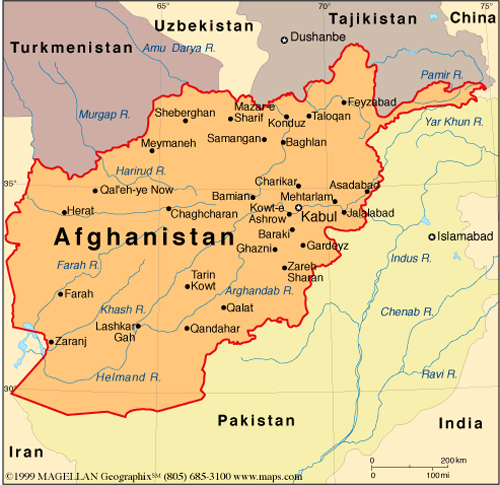
This coming week, the House of Representatives is expected to vote on $33 billion for war. A majority of Americans opposes this, but a sizable minority of Americans supports it. No one who supports it can be aware of any of the following six facts.
1. For many months, probably years, at least the second largest and probably the largest source of revenue for the Taliban has been U.S. taxpayers. We are giving the Taliban our money instead of investing it in useful things at home or abroad. “WARLORD, INC.: Extortion and Corruption Along the U.S. Supply Chain in Afghanistan,” is a report from the Majority Staff of the Subcommittee on National Security and Foreign Affairs in the U.S. House of Representatives. The report documents payoffs to the Taliban for safe passage of U.S. goods, payoffs very likely greater than the Taliban’s profits from opium, its other big money maker. And this is neither new nor unknown to top U.S. officials. But it must be unknown to Americans supporting the war. You can’t support a war where you’re funding both sides unless you want both sides to lose. We lock people away for giving a pair of socks to the enemy, while our own government serves as chief financial sponsor.
2. Our top consumer of oil is the U.S. military. We don’t just fight wars in areas of the globe that are coincidentally rich in oil, but fighting those wars is the single biggest way in which we burn oil. We pollute the air in the process of poisoning the earth with all variety of weaponry. According to the 2007 CIA World Fact Book, when oil consumption is broken down per capita, the U.S. military ranks fourth in the world, behind just three actual nations. There’s no way to care about the environment while allowing the money that could create renewable energy to be spent instead on an operation whose destructiveness is rivaled only by BP. We could have 20 green energy jobs at $50 K each for what it costs to send one soldier to Afghanistan. We’re fighting wars for the fuel to fight wars, even though the process is eating up the funds we could use to try to survive its side-effects.

3. Over half of every U.S. tax dollar is spent on wars, the military, and payments on debt for past wars and military spending. Here’s a pie chart that breaks it down for you. If you’re concerned about government spending, you can’t just be concerned with the minority of it that is carefully funded with taxes and off-setting cuts elsewhere. You have to also consider the single biggest item, the one that takes up a majority of the budget, large chunks of which are routinely funded off the books, borrowed from China, and passed with so-called “emergency supplemental” bills of the sort now before the House of Representatives, the sole purpose of which is to keep the money outside the budget. Numerous economic studies have shown that investing in the military, even at home, does less for the economy than tax cuts, which do less for the economy than investing in education, energy, infrastructure, and other areas. Its wars or jobs, we can’t have both. The labor movement has mostly (with some good exceptions) been silent on war spending, in part because jobs spending has been packaged into the same bill. Now it’s not. Now the House is confronted with a bill that spends on war the money that is needed for jobs, for housing, for schools, for green energy, for retirement. Will advocates of these raise their voices this week?
4. A leading, and probably the leading, cause of death in the U.S. military is suicide. U.S. troops are killing themselves in record numbers. One central reason for this is likely that these troops have no idea what it is they are risking their lives, and taking others’ lives, for. Can we expect them to know, when top officials in Washington don’t? When the President’s special representative to Afghanistan testified in the Senate recently, senators from both parties asked him repeatedly what the goal was, what success would look like, for what purpose the war went on. Richard Holbrooke had no answers. Senator Bob Corker (R-Tenn.) told the Los Angeles Times: “A lot of folks on both sides of the aisle think this effort is adrift. A lot of folks you’d consider the strongest hawks in the country are scratching their heads in concern.” Corker complained that after listening for 90 minutes to Holbrooke he had “no earthly idea what our objectives are on the civilian front. So far, this has been an incredible waste of time.”
5. The $33 billion about to be voted on cannot possibly be needed to continue the war in Afghanistan, because it is exclusively to be used for escalating that war. The President was publicly pressured by his generals several months ago to begin an escalation, but Congress has yet to fund it. To the extent that it has been begun unfunded, it can be undone. CNN reports: “Defense Secretary Robert Gates warned senators in June that military operations will need to be reduced for the rest of the year unless Congress approves additional funding for the wars in Iraq and Afghanistan.” This is nonsense. If this escalation funding were blocked, the war would remain at the level it was at before. And that’s if the Pentagon respects the authority of the Congress. The other alternative, openly indicated by Gates, is that the Pentagon will fund the escalation out of its standard budget. Congressman Alan Grayson has a bill called “The War Is Making You Poor Act” which would require that wars be funded out of the military budget, which would eliminate federal taxes on the first $35,000 anyone earned and reduce the national debt. How horrible would that be?
6. War would be the greatest evil on earth even if it were free. Watch this new video of a man whose father was shot and killed while sleeping in bed. More of our tax dollars at work. How many of these stories of what our military does can we write off? Our drones kill both civilians and “insurgents,” as do our night raids and check points. Or, maybe not the check points. General Stanley McChrystal said that of the amazing number of people we’ve killed at check points, none of them have been any threat. And the damage lasts in the places we destroy. Look at this new report on the damage done to the children of Fallujah. This is not because U.S. soldiers aren’t brave or their parents didn’t raise them well. It’s because these wars don’t involve pairs of armies on battlefields. We’re occupying countries where the enemies look like everyone except us.
Well, maybe our representatives know all of this and still fund wars because people who fund them tell them to. But what can we do about it? We vote whenever there’s an election, or at least some of us do. Isn’t that our role? What does this have to do with elections? It should have everything to do with them. When we call our congress members this week we should not just ask them to vote No on war money, we should demand it, and we should let them know that we will work to unelect them, even replacing them with someone worse (since you can’t get much worse), if they vote for this money. And we should spend August rewarding and punishing accordingly. Here are 88 candidates for Congress this year who have committed to not voting a dime for these wars. They are from every party and political inclination. They should be supported.
If this war funding can be blocked for another week it will be blocked until mid-September and perhaps for good. If we can get closer to doing that than we have before, we will have something to build on. Just holding a straightforward vote in which war opponents vote No and war supporters vote Yes, no matter how close or far we are from winning, will identify who needs to keep their job and who doesn’t. If most of the Yes votes are Republican, we will be able to confront the President with the opposition of his own party. We’re moving toward peace.
Get resources from http://defundwar.org
(The Christian Reformed Church Office of Social Justice sent out a Media Release for this event and we are re-posting it in full.)

Local organizers of an upcoming prayer vigil on the eve of the enactment of Arizona’s SB 1070 law say that the immigration system in the U.S. is broken and needs to be fixed — but Arizona’s law is not the solution. The event, hosted by three local faith groups fighting for immigration reform, will be held on Wednesday, July 28 at Ah Nab Awen Park: from 5:30pm – 6:30pm, overlooking the Gerald R Ford Museum where immigrants gather for naturalization ceremonies.
“We are speaking out against ‘enforcement only’ laws and praying for a more sensible, humane immigration law — one that creates paths to citizenship that keeps families and communities whole,” said event organizer Laura Rampersad, Regional Coordinator Justice for Our Neighbors-West Michigan, a program of United Methodist Committee on Relief (UMCOR) and the United Methodist Church that provides immigration legal assistance to the community. JFON is helping to sponsor the event. “We would like to gather to pray for the millions who have been excluded and cast aside by our country’s current immigration laws, and for whom there simply is no way to become a citizen.”
The prayer vigil is part of a nation-wide series of vigils for immigration reform called Isaiah 58, organized by the Interfaith Immigration Coalition. Isaiah 58 events, which have taken place across regions of the country for weeks, will culminate on July 29 when Arizona’s law is to go into effect.
Wednesday evening’s event, which is also sponsored by the Michigan Organizing Project and the Christian Reformed Church’s Office of Social Justice, will include prayers from many faith groups as well as an interactive prayer path — participants will be invited to create a footprint on a large cloth “path” that will symbolize their prayer for an undocumented immigrants. The path will then be delivered to Michigan lawmakers to show voters’ opposition to an Arizona-style bill that is being considered in the legislature.
“Immigrants, like all people, are made in the image of God,” says Kate Kooyman, a local representative from the Christian Reformed Church. “Michigan is a place that welcomes immigrants.”

Retrieving the belongings of those arrested for occupying Eagle Rock.
This is the first of a three-part series . Look for Part 2 on August 2.
Corporate greed, government corruption, the promise of new jobs . . . this familiar formula for destruction and injustice is yielding the predictable results right here, right now in Michigan’s Upper Peninsula. Rio Tinto/Kennecott Minerals has begun its destruction of Yellow Dog prairie’s pristine public lands and Eagle Rock, a sacred Ojibwa site, in Marquette County.
The destruction here means more than the loss of a beautiful view. The mine will irreversibly pollute the entire Yellow Dog Water Shed, which feeds into Lake Superior. The waters that have sustained fish, turtles, birds and human beings for thousands of years will become a toxic dump site within the next decade. Why? So Rio Tinto, a British company with an extensive history of destructive mining practices, human rights violations and labor abuses, can produce profits for its shareholders.
“The two hallmarks of Rio Tinto are, one, they violate indigenous rights more than any other mining company, and two, they violate workers’ rights, in Australia, Canada and Utah,” says Gabriel Caplett, a local resident who has worked hard to stop the mine. “They do not like unions and they like contracting the work out so they don’t have to pay benefits or deal with organizers.”
A bulldozer operator who was clearing the site complained he wasn’t given enough of a gas stipend to get to the job site without using his own money. He was also concerned that his wages for the work were going to get cut—Kennecott is proposing new wage cuts for the contractor’s currently working for them. Many of the other workers that Kennecott refers to as having “Marquette County addresses” we’re brought in from other states. While 200 to 300 contractors may be kept busy during the pre-construction phase, specialists from Canada and South Africa will be brought in to do the actual construction of the mine. If Kennecott follows the common practice of the industry, the promised 200 permanent jobs created for locals will dwindle by half.
Sadly, locals are divided on the issue. While many are active, vocal opponents, others need work and find it easy to dismiss the ruin of their own habitat. “There’s a nostalgia for the past here, when a mine would employ hundreds and hundreds of people for years and years,” Caplett says. “This mine will probably only be open for five to six years. The mining companies like to come in and get out quickly. They make more money that way. Today’s mines don’t employ a lot of people and, don’t pay a lot of taxes.”

The promise of employment is just one of the tactics Rio Tinto used to access the mining site. To get the legal ball rolling, they used a strategy they found successful in other states. They crafted new state law, HB 6432 section 632, under the ruse of involving environmental groups to create more protections. In essence, the new law permits mining companies to mine on any site, be it a protected wetland, forest, sacred site or vital water source. While the first pages of the legislation seem to offer environmental protections, exceptions added later on give mining companies free reign to ravage Michigan’s natural resources.
Even with the law changed in its favor, Rio Tinto feared public outcry. In 2008, the firm hired Matt Johnsonaway from his job in Governor Granholm’s office. From 2003 to 2008, as director of the Governor’s Office for the Upper Peninsula, Johnson was the Governor’s contact and communications point person on metallic sulfide mining.
“He was the one that citizens spoke to (about the mine) up until 2008. He could have used the information to his advantage. He could have influenced Granholm on it,” Caplett says. ”Now he works for the company. It’s another one of those revolving door stories.”
Similarly disturbing, a 2009 ballot proposal campaign that sought to better regulate mining throughout all of Michigan fizzled amid squandered funds and questionable leadership. “A ballot initiative could be a useful democratic tool for protecting our water, public land and economy if it weren’t too costly for the regular citizen to pull off in Michigan,” Caplett says.
Then there’s geologist Joe Maki, from the DEQ’s Office of Geological Survey. According to Headwaters, “In court proceedings regarding the DEQ’s approval, Maki admitted under oath that neither he nor his review team applied a central tenet of Michigan’s new metallic mining law in approving Kennecott’s application.”

Maki also purported that he had lost a report that analyzed the mine’s proposed design as dangerous. Most disturbing of all, Maki remains the person responsible for inspecting the Kennecott mine and others in the UP.
“There has never been a mine of this type in a water-rich area that has not polluted the environment. The water here is very clean. This is one of the cleanest and most sensitive aquifers in the lower 48,” Caplett says. “A (proposed) hydrology study by the US geological service never happened. There’s no baseline data. Impact will not be able to be measured. It’s really a shame. The Yellow Dog Plains are really quiet, still really gorgeous. There are blueberries, clean rivers. It is a unique place. It will not be that way much longer.”
For more information, visit Stand for the Land and Lake Superior Mining News. Or, attend the 3rd Annual Protect the Earth Gre
Today, the Grand Rapids Press published an article based upon a “conversation” between four pro-business advocates who had some advice for those running for the governor’s seat in Michigan. The message was, Michigan needs tax incentives in order for companies move to Michigan.

The Press reporter called the four people who took part in such a discussion “the state’s top economic developers.” These “experts” were Greg Main (CEO of the Michigan Economic Development Corporation), Birgit Klohs (The Right Place Program), Randy Thelan (Lakeshore Advantage) and Ron Kitchens (Southwest Michigan First).
This group of four had a conversation with no one present except reporters, which makes this a well crafted political move to get the news media to put the issue of business tax incentives on the table before the August 3rd Primary.
Look at it this way, if four or four hundred working people got together to talk about what elected officials need to do to lure workers to Michigan do you think the local news media would bother to show up? The chances that reporters would attend such a confab are slim to none and one of the reasons is because media outlets rely on businesses buying ad time/space, but don’t rely on working class people to do the same. Another reason is due to the fact that journalists in the US for the most part have internalized the basic pro-business/capitalist values, which believes that what makes wealth are business people. Workers, in this model, are necessary but don’t have much value since they don’t have the ideas or the vision to create jobs.
However, ask yourself if any rich businessman, made millions or billions because they did all the work? How much money could a factory owner make if he or she didn’t have workers? In the classical Marxist sense, workers make wealth because workers make products.
Beyond theoretical views of wealth creation, the Press story does not really provide any evidence that what the “economic experts” are advocating for is based on fact. When one looks at the organizations that each of the “experts” represent, it seems to me that these are well funded and well connected entities that figure out ways to make more money for those within their political circles. Look at the board of directors for Southwest Michigan First and you can see who will fundamentally benefit from their economic development plans.
Once you realize who makes up the circles of economic power within these development entities it make it easier to see through their public rhetoric. In the Press article, the CEO of Southwest Michigan First, Ron Kitchens, speaking about tax incentives says, “We’re in the people business. We do this so that human beings who have no jobs or who are underemployed today have opportunities. This is about changing peoples lives.” Wow, not only are business people wealth creators, they are just wonderful humanitarians.
Besides not questioning the rhetoric of these experts, the Press does not bother to balance their comments with the research of people like Greg LeRoy, author of the book The Great American Jobs Scam. LeRoy argues that corporations play states against each other in search of the best business incentives, incentives that the author documents amount to about $50 billion dollars a year. Therefore, the question shouldn’t be how do we provide incentives for businesses to come or to stay in Michigan, rather how do we hold businesses accountable to communities of working people and tax payers?
“What Was My Father’s Crime?” Afghan Tells Story of His Father’s Killing in a US Night Raid
This video is from Rethink Afghanistan.
BIG OIL’S EVER-EXPANDING INFLUENCE
(This article is re-posted from Open Secrets.)

Reports released Thursday by two major Washington, D.C., publications are highlighting the extent of the oil and gas industry’s political influence, which has increased in the wake of the BP oil leak in the Gulf of Mexico. An analysis by the Washington Post with data from the Center for Responsive Politics finds that three of every four lobbyists who represent oil and gas companies previously worked for the federal government. It’s an astounding number – one that puts the industry far ahead of the general lobbying field. According to the Center’s analysis, fewer than one in three registered lobbyists in 2009 had previously traveled through the revolving door between government and the influence industry — a rate less than half that of the oil and gas industry.
Democrats in Congress have sought to translate public anger at the oil spill and its primary agent, BP, into momentum for long-sought energy legislation. But with more than 600 registered lobbyists, Big Oil also has a potent weapon to yield in the debate. And according to a separate analysis released Thursday by Politico, the industry is making the most of its force. That report details a veritable spending spree by some of the oil and gas industry’s major players during the second quarter, including the American Petroleum Institute and BP. Most notably, the API nearly doubled the amount it spent on lobbying expenditures during the first three months of the year, increasing the total to $2.3 million. BP meanwhile spent $1.7 million on federal lobbying. Democrats announced on Thursday that they would drop comprehensive energy legislation from the agenda.
Does BP Have an ACE Up Its Sleeve on Climate Education?
(This article is re-posted from PRwatch.org.)
In May, PRWatch reported on a controversial new group, “Balanced Education for Everyone” (BEE), that is trying to stop public schools from teaching kids about climate change science. BEE argues that teaching climate change is too scary for kids and “unnecessary.” But BEE’s efforts also raised other questions, like what are kids learning about climate change in school, anyway, and who is influencing it?

It turns out that the issue of who is influencing climate change education in public schools has been flying under the radar screen. Especially now, as school budgets are being slashed and schools are increasingly desperate for resources, it is also an area ripe for corporate exploitation or influence, and that may be just what is happening.
Enter, “ACE”
In July of 2008, a new nonprofit organization called the “Alliance for Climate Education, Inc.” (ACE), zoomed onto the scene to suddenly become a huge player in the much-overlooked field of climate education. ACE offers high schools free multimedia assemblies on climate change that utilize “cutting-edge animation, music and video.” In short, this is not the usual low-budget presentation that school assemblies are known for.
On the surface, ACE’s effort seems laudable, but questions remain about the messages ACE is giving youth using the free access it achieves to kids during school hours. ACE’s featured web content on BP‘s oil spill in the Gulf of Mexico may be telling in this regard. The site does not even mention “BP,” although it concedes the unimpeachable fact that the spill is a “disaster.” Carefully-chosen images connected to the disaster include a swimming dolphin and a rescued pelican, alongside a clean-up worker and a photo of the effort to extinguish the Deepwater Horizon rig fire.
ACE’s site suggests a list of lukewarm activities young people can engage in to address their feelings of helplessness about the spill. “Get your hair cut,” ACE urges, and donate your hair to a group that makes hair-filled booms to soak up oil. (The government’s Deepwater Horizon Response office rejected the use of hair-filled booms in the Gulf months ago.) Another suggestion: “Find a beach and participate in Hands Across the Sand — a big demonstration in favor of protection of our coastal economies, oceans, marine wildlife and fishing industries.” Other ideas include “Write a letter to Congress and ask them to fully fund larger coastal restoration projects” and “share info online.” None of these activities would seem to interfere with the goals or sensibilities of big energy companies, including BP.
To read the full investigation by PR Watch, click here.
Dems Debate for 3rd Congressional Seat
Last night Democratic candidates vying for the 3rd Congressional District seat debated at an event hosted by the GVSU Hauenstein Center for Presidential Studies. An estimated crowd of about 150 came out to hear Paul Mayhue and Patrick Miles Jr. respond to questions from the audience.

The format was traditional in that candidates each had 2 minutes to respond to questions and no rebuttal time. This format generally means that candidates give vague answers to complex issues, but it doesn’t preclude candidates from directing people to more substantive analysis. Unfortunately, neither candidate seemed interested in substantive debate, which is reflected on the issue page of their respective websites and neither of the candidates referred to sources for members of the audience who were yearning for information that would provide detailed analysis or concrete strategies for change.
Miles came across as a moderate with an emphasis on his support for small business and economic development. The only statement he made that seemed to move the crowd was when he proposed that members of Congress take a 5% pay cut every year that they don’t balance the budget. This is a nice sentiment, but not likely to happen when Washington politics is driven by the acquisition of money.

Mayhue presented himself as an advocate and says that the main issue he has heard from people is the lack of jobs. Mayhue says that the country is plagued by corporate greed, exemplified by trade policies such as NAFTA, but the Democratic candidate offer no clear examples of how corporate greed is manifested nor how NAFTA has been bad for Michigan. He could have cited two excellent studies that provide details on the real impact on jobs loss by NAFTA, one report from Jobs with Justice and the other from the Economic Policy Institute.
When asked about whether or not they supported Arizona’s new immigration policy and their thoughts on immigration policy for the country as a whole Mayhue responded by saying that the legislation is decent, but that he has a problem with how the Arizona authorities will use reasonable suspicion to stop anyone they think might be undocumented. Miles did acknowledge that the federal Immigration policy over the last generation hasn’t worked well and that the Arizona law will not stand constitutionally, but he avoided saying whether or not he supported Arizona’s decision. He did say that if people were willing to go the legal route, learn English and get in line then he is in favor of people coming to the US.
Another question asked the candidates how their economic philosophy differs or is the same as the President’s. Mayhue says he supports the President’s economic plan, particularly the “reform package” for Wall Street, even Democratic Senator Russ Feingold and other critics charge that the reforms are only cosmetic in nature. Miles said he was concerned about the influence of Wall Street and thinks that deregulation was part of the problem that led to the 2008 economic crash.
The moderator followed up by stating that Congressman Ehlers voted for the bailout (Troubled Asset Relief Program TARP) and wanted to know how the candidates would have voted were they in Congress in 2008. Miles responded by saying that there were oversight and deregulation issues, but the bailout was a bipartisan effort to save the economy. Mayhue said he most likely would have voted for the bailout but would have fought for “rules.”
The next question asked where the candidates stood regarding the current US wars in Iraq and Afghanistan. Mayhue said he concurs with the administration and then said he wants to end the wars, which seemed like clear contradictions. Mayhue seemed to perpetuate this notion that Obama was anti-war and was working hard to phase the US out of these wars. The fact is that the President has escalated the US war in Afghanistan and there is no indication that Obama plans to withdraw most of the US troops from Iraq by August, a promise he made during the 2008 campaign and one that has been repeated since taking office.
Mayhue did say that he had issues with the cost of the wars and would rather see that money being spent in our communities. Mayhue could have made his case stronger if he cited the data from the National Priorities Project on the cost of the war to Grand Rapids, which as of today stands at $534 million and counting.
Miles reiterated the White House position that the mission in Afghanistan was to go after the Taliban and Osama bin Laden/al Qaeda, even though no serious military analyst in Washington believes that al Qaeda has any significant presence in Afghanistan. Miles also thought there could be more of an internationalization of the war, utilizing more NATO troops and fewer US. However, this ignores the fact that there is growing anti-war sentiment around the world and pressure for NATO countries to diminish their troops levels or pull out completely.
Asked what are the other major international issues the candidates would pay attention to, Miles said China, North Korea, Pakistan, and the Middle East. Mayhue said that terrorism is the most important international issue and that he agrees with Gates to retool the army to fight terrorism. Mayhue went on to refer to show bombers and other incidents of terrorism on US soil. He didn’t know how to deal with terrorism, but suggested maybe covert actions.
Listening to both candidates on their foreign policy positions was instructive. It seemed that neither of them had much of an understanding of foreign policy matters. Neither of them acknowledged the role the US plays in determining the policies of the WTO, World Bank or International Monetary Fund. Neither of them acknowledged the US military presence in virtually every country around the world nor the massive amounts of military aid or weapons sales, which dwarfs all other countries combined.
When asked what the candidates had to say about the BP oil disaster and the country’s energy future neither candidate had much to say. Both Mayhue and Miles felt that the BP oil disaster was due to lack of regulatory oversight and taking proper precautions. Mayhue said that we have to divorce ourselves from oil and create new energy and says that the new battery factory in Holland is a good example of the route we need to take. Miles also said we need to reduce our dependency on foreign oil. However, saying we need to reduce our dependency on foreign oil does not mean we reduce our dependency on oil. Neither candidate mentioned the problem of off shore drilling, coal mining and coal powered electricity and the effort to stop new coal power plants in Michigan.
Miles said he supported windmills in Lake Michigan, but Mayhe said he had concerns about what impact the windmills would have on the ecology of the Lake. Miles said that windmills and solar panels should be manufactured here, but neither candidate suggested that America needs to reduce levels of energy consumption.
When asked about Cap and Trade as a way of dealing with global warming, both candidates said they would support such a measure. However, there is plenty of good analysis that exposes the huge flaws in the Carbon trading system. A few good sources are Source Watch and Annie Leonard’s animated video called the Story of Cap and Trade.
The candidates also addressed No Child Left Behind, Bush era tax cuts and the Obama health care plan, but neither candidate really distinguished themselves on these issues. In fact, I left the debate feeling like neither candidate seemed very strong on issues, which seems to be somewhat irrelevant in electoral politics these days.
Several local Democratic insiders I talked to all acknowledged that Miles is the candidate that the Party is backing, which is evident based on the amount of money both candidates have raised to date. According to Open Secrets, Miles has raised over $318,000 to just under $10,000 for Mayhue.
There was little local news coverage of the debate, with the WZZM story providing just the Democratic candidates position wind mills in Lake Michigan and the Grand Rapids Press story is a paltry summary of the 1 hour debate. The debate was filmed and will be shown on WGVU, channel 35 tonight (Friday, July 23) at 9:30pm.
The Nexus between Economics and Domestic Violence
This afternoon the Domestic Violence Community Coordinated Response Team (DVCCRT) hosted a presentation by Dr. Christopher Maxwell, a university professor who spoke about the impact of the economic crisis, particularly home foreclosures, on intimate partner violence.

Dr. Maxwell, in his research clearly has determined that the massive level of home foreclosures is related to the increase in numbers of domestic violence. Having said that, the speaker made it clear that there is not a great deal of empirical evidence that makes that link, especially when looking at the current economic/foreclosure crisis. Recently, the Department of Justice has determined that it was important to provide funding to people like Dr. Maxwell who is now in the process of publishing a report that seeks to determine those connections.
In determining some parameters for his research he looked at three ways of measuring the data – employment, income and income/status incompatibility, meaning whether or not the differences in incomes between partners plays a role in domestic violence. He makes clear that usually none of these factors by themselves lead to domestic violence, rather a combination of these stress factors are determinants for an increase in domestic violence.
In looking at the literature on each of the determining factors, the speaker pointed out that having employment is not always a positive factor, since many people have multiple jobs in order to make ends meet, which also causes tensions in relationships and can lead to increased numbers of domestic violence.
Dr. Maxwell did acknowledge that there were cases in his research, which showed that turning times of economic stress that partners have become closer, relying on each other, thus developing stronger relationships. However, he said this was not the norm.
A question was asked about the impact of home foreclosure that are random in neighborhoods as opposed to those where there are clusters of foreclosures. Dr. Maxwell said that the consequences of multiple home foreclosures in neighborhoods have larger and lasting impact not only to the families that lost homes, but the families that remain since it causes social trauma for everyone in the neighborhood. Crime statistics tend to go up in neighborhoods that have multiple home foreclosures and remaining families have increased stress factors due to having a diminished sense of community.
The other area of research that Dr. Maxwell has invested years of work in is on the impact of social service intervention on whether or not domestic violence reoccurs with people who have had some sort of assistance or intervention and those that have not.
One of the points that he stressed was that intervention does not necessarily end domestic violence, but that it often will decrease the frequency of those acts of violence between intimate partners.
The research he presented (based on studies in 5 cities across the country) showed that there was a modest decrease in domestic violence based upon arrest and other forms of intervention. However, when interviewing victims of domestic violence roughly 70% said that there was a decrease in domestic violence when there was an intervention, whether or not it involved an arrest.
However, when prosecution, conviction and sentencing of domestic violence perpetrators were studied the data showed that disproportionately there was no indication that these forms of intervention reduced the number of repeat offenders.
When asked about the impact of political intervention, such as anti-foreclosure organizing, and whether or not that has a positive impact on families and intimate partners facing foreclosure, Dr. Maxwell said that this type of intervention does help those relationships. On the flip side of this, if people experience or perceive procedural injustice (that the system does not treat them fairly), does that contribute negatively to stress and domestic violence? Dr. Maxwell said that it does impact domestic relations because people will often say “why should I play by the rules when the system does not treat me fairly?”
While the presentation was limited and raised a lot of questions it did bring home the fact that there are layers of consequences to home foreclosure beyond just economics. It is important that we not only acknowledge this fact, but that we factor it in to whatever actions we take to support people who are faced with home foreclosure and what kind of organizing needs to happen that will take into consideration factors beyond economics.
Access to Clean Water is Most Violated Human Right
(This article by Maude Barlow is re-posted from Common Dreams.)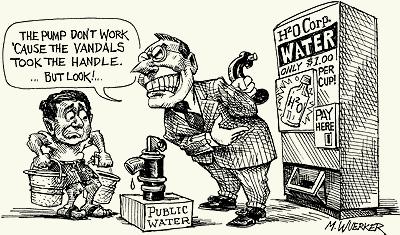
On 28 July, for the first time ever, the general assembly of the United Nations will hold a historic summit on the human right to water. It will consider and debate a resolution supporting the right to “safe and clean drinking water and sanitation” that was presented on 17 June by Pablo Solon, the Bolivian ambassador to the UN, and co-sponsored by 23 other countries. The desired outcome of the day is consensus on recognising the human right to water. However, some governments are withholding consensus and it appears likely that the resolution will have to be put to a vote, a process that has the potential to divide the world body along north/south lines.
When the 1948 universal declaration on human rights was written, no one could foresee a day when water would be a contested area. But in 2010, it is not an exaggeration to say that the lack of access to clean water is one of the greatest human rights violation in the world. Nearly 2 billion people live in water-stressed areas of the world and 3 billion have no running water within a kilometre of their homes. Every eight seconds a child dies of a waterborne disease, in every case preventable if their parents had money to pay for water. And it is getting worse as the world runs out of clean water. A new World Bank reports says that by 2030, global demand for water will exceed supply by more than 40%, a shocking prediction that foretells of terrible suffering.
For several years, international and local community groups fighting for water justice have been calling for a UN commitment that clarifies once and for all that no one should be denied water for life because of an inability to pay, especially in the light of the water markets now being set up, allowing the wealthy to appropriate dwindling water supplies for private profit. The fact that water is not now recognized as a human right has allowed decision-making over water policy to shift from the UN and governments to institutions such as the World Bank, the World Water Council and the World Trade Organisation, which favour market solutions.
Support for the human right to water has been steadily growing in recent years but several wealthy countries – notably the UK, US, Canada and Australia – have emerged as negative forces, finding excuses not to support the resolution in its current form. The new Conservative government of David Cameron is already on record that it will oppose this resolution unless it is amended to remove sanitation and only refer to “access” to clean water, not the human right to water itself. Canada hides behind the false claim that such a resolution might force it to share its water with the US; Australia has gone the route of water markets and so is unlikely to sign onto a commitment that would favour public ownership of water; and it disappointedly appears that the Obama administration is not charting a new course for his country when it comes to human rights obligations at the UN.
Nevertheless, there is great hope that 28 July will see a historic commitment of the nations of the world to once and forever recognise that every human on earth has the right to safe, clean drinking water and the dignity of good sanitation services. Will the crisis be solved the day after a successful vote on the human right to water? Of course not. The work to provide clean water in a world of diminishing supplies is just beginning.
But every now and then, humanity takes a collective step forward in its evolution. Such a time has come again and we must be up for this challenge.
 Grand Rapids Institute for Information Democracy