Michigan’s Oil Disaster: Another symptom of Capitalism
It has been several days now since the Enbridge owned & operated pipeline began spewing oil into the Kalamazoo River in southwest Michigan. The EPA now estimates that nearly 1 million gallons of oil have already contaminated the river and ecosystems that the river runs through.

As to be expected there is a tremendous amount of local news coverage, due in part to the onslaught of coverage of the BP oil disaster in the Gulf of Mexico. MLive has 32 stories posted since the oil disaster began just days ago and features a link to the archived stories on the main page for MLive/Grand Rapids.
After wading through the 32 stories it was clear that the bulk of the coverage on MLive was about the “leak,” political responses from Michigan, the “clean up,” and reactions from those who live on or near the river where the oil has been detected. There was one story from the Detroit Free Press with a promising headline that read, “Michigan oil spill, could this have been prevented?”
The article began by stating that the company that owns and operates the pipeline had received several notices about potential problems. “In one report, the federal Pipeline and Hazardous Materials Safety Administration raised concerns in January about Enbridge discontinuing the use of monitoring systems for corrosion inside Line 6B, saying its plans for ensuring pipe safety while a new monitoring system was brought on line didn’t meet standards.” However, the reporter did not continue any further investigation into the company’s history and whether or not they have failed to comply with regulations at other locations in North America.
An Associated Press story does provide some of this information in a story that was published on July 29, which clearly shows that Enbridge has a history of regulatory violations.
“Houston-based Enbridge Energy Co. spilled almost 19,000 gallons of crude oil onto Wisconsin’s Nemadji River in 2003. Another 189,000 gallons of oil spilled at the company’s terminal two miles from Lake Superior, though most was contained.
In 2007, two spills released about 200,000 gallons of crude in northern Wisconsin as Enbridge was expanding a 320-mile pipeline. The company also was accused of violating Wisconsin permits designed to protect water quality during work in and around wetlands, rivers and streams, the Wisconsin Department of Natural Resources said. The violations came during construction of a 321-mile, $2 billion oil pipeline across that state. Enbridge agreed to pay $1.1 million in 2009.”
Unfortunately, this kind of information has not appeared in the Grand Rapids Press or the numerous articles sourced on MLive specific to the recent oil spill into the Kalamazoo River. What one would have seen in the Grand Rapids Press on Thursday, July 29 was a full-page ad by Enbridge, with a statement from their CEO Pat Daniel. The thousand dollar (estimated cost for the ad) statement was similar to what the BP CEO said, which amounted to nothing more than a weak apology and assurances that the company has the well being of the people who live near the oil spill as their “top priority.”
Lets be clear at this point, Enbridge Energy Partners is a company that owns and operates oil and natural gas pipelines in the US and Canada. Their “top priority” is to make as much money as possible. Enbridge does not make the public or the environment, but their shareholders the “top priority” and this means to increase their market shares no matter what.

It is important for us to see companies like Enbridge and BP as nothing more than particular corporations that operate within a capitalist model, which is based upon growth. If growth drives the economic system then oil spills, environmental degradation and global warming should be seen for what they are – symptoms of a destructive system. For example, Enbridge is one of the partner companies in a $778 million “carbon capturing” project in Canada known as Project Pioneer. This project will include injecting carbon underground, despite widespread belief that carbon sequestration is highly problematic.
Sure, one can argue that if there was better regulation it might have prevented this particular oil spill into the Kalamazoo River, but since the system demands growth there will always be environmental disaster. You cannot sustain healthy eco-systems when oil, gas, coal and other polluting energy sources are extracted from the land.
Besides the lack of investigative journalism on the Enbridge oil disaster there is also no real discussion about the need to reduce our collective levels of energy consumption. Several environmental organizations such as Clean Water Action and the Michigan Environmental Council have responded to this disaster with calls for a shift to renewable energy. While a shift to renewable energy sources is critical, none of these environmental groups are calling for a reduction in energy consumption (individual consumption not included).
The problem with looking at a reduction in energy consumption means that society would have to make serious changes, since the economy is built around growth. However, if we are serious about wanting to prevent more oil spilling into the Gulf of Mexico or the Kalamazoo River then we need to question an economic system that is based on exponential growth.
LaDuke to speak at Protect the Earth gathering
This post was provided by Stand for the Land.
Third Annual Protect the Earth
Great Lakes Community Gathering and Annual Walk to Eagle Rock
July 30, 31, August 1
Featuring guest speakes including Winona LaDuke, annual walk to Eagle Rock, workshops, film showings and live entertainment including Joanne Shenandoah. Organized by Oshkinawe-Ogichidaag Akiing “New Warriors for the Earth” (NWE). Visit Standfortheland.com for more information.
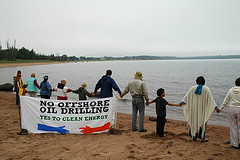
The third annual Protect the Earth Gathering will be held from July 30 through August 1st on the Pow-wow grounds and at the Keweenaw Bay Ojibwa Community College in Baraga, Michigan. This year’s events will also include an annual walk from the Yellow Dog River to Eagle Rock on the Yellow Dog Plains.
According to head organizer Jessica Koski (Keweenaw Bay Indian Community Member), “This event will bring together some of the most prominent environmental and indigenous rights leaders from across the region including Winona LaDuke; Al Gedicks; Lee Sprague, clean energy campaign manager for Michigan Sierra Club; and, Stuart Kirsch, and more.
A focused session on mining in the U.P. will present expert perspectives on metallic sulfide mining, treaty rights and Anishinaabe cultural concerns, international movements, and lessons from Wisconsin’s Native-Environmental alliance and grassroots efforts to stop the Crandon Mine.”
 Winona LaDuke will be the keynote speaker Friday night and Saturday. LaDuke is from the White Earth reservation in Minnesota. She is a mother, author, former Green Party vice presidential candidate, Harvard graduate and activist. Winona is a founding director of both the White Earth Land Recovery Program and Honor the Earth.
Grammy Award winning artist Joanne Shenandoah, an Iroquois singer, composer, actress and acoustic guitarist is the featured musical guest. A Protect the Earth Concert will also include local up-and-coming musician “E”, Wisconsin folksinger Skip Jones, and Ojibwe folksinger Bobbie Bullet.
“Protect the Earth is an opportunity to learn about issues facing the Great Lakes region, including climate change, biomass burning, petro-chemical plants and mining. It is a time to gather with old and new friends, Native and non-Native, to make our public voice loud and clear on some of the critical issues affecting our communities.
“I hope it leaves people informed, inspired and empowered to make a difference.” said NWE member Kalvin Hartwig (Sault Ste. Marie Chippewa).
Protect the Earth gatherings started in 1986, when the U.S Department of Energy was considering northern Wisconsin as the site for a nuclear waste dump. Jim Schlender, of the Great Lakes Indian Fish and Wildlife Commission organized a rally in opposition of the proposal, and the first rally was held at the Mole Lake Reservation in Wisconsin. The rally brought awareness to the DOE’s proposal, but also helped bring together people from all walks of life to work toward a common goal. From that day forward Protect the Earth became an important tradition in Wisconsin and played a very important role in the battle to protect the land and water from metallic sulfide mining.
In 2008, the Protect the Earth was handed over to citizen leaders in Michigan’s Upper Peninsula. New Warriors for the Earth (NWE) will carry on the tradition this year in 2010. NWE is a new Native and non-Native environmental organization dedicated to educating and empowering our communities to take action to protect Aki, Mother Earth. Its mission is to raise awareness about mining and other social-ecological injustices facing the Upper Great Lakes region and Mother Earth.
So, we welcome you to please join us again this year for the 3rd Annual Protect the Earth in Michigan’s beautiful UP. We have a wonderful fun-filled, action-packed weekend planned; including workshops and presentations, music, a film screening, food, prayer and a walk to Eagle Rock (don’t forget to bring your wild blueberry buckets!).”
A schedule, directions and lodging information can be found at standfortheland.com.
Vigil promotes justice for immigrants

Yesterday in Grand Rapids about 100 people came together to offer up written and verbal prayers for those in the immigrant community faced with separation from family, harassment and other forms of repression that confront them.
People representing the Christian Reformed Church, local Methodists, other Protestants, Catholics and members of the Jewish community shared prayers in both English and Spanish, prayers that called for dignity, respect and open arms for immigrants in West Michigan.
Kim deLong said, “Because families are the cornerstone of a healthy society, we pray for reforms in our family-based immigration system that reduce the time families must wait to be reunited.” This was one of many prayers that focused on the desire to keep immigrant families together.
Other speakers focused on the realities of migrant labor. Liz Balck, an immigration attorney said, “We pray for those who endure long days, hot sun, little water, and homesickness in order to put food on American tables. We pray for immigrants who travel across borders to fill jobs we rely on, and yet are shunned from participation in our culture and lifestyles.”
Some speakers focused on immigration policy and elected officials. “We pray that our leaders would examine solutions to address the root causes of migration, such as vast economic disparities between rich and poor nations. We pray for economic justice throughout the world. We do not believe that our lifestyle must be lived at the expense of the suffering of people in other countries. We do not accept that there are no better solutions than the policies we have today,” said Peter Vander Meulen, with the Office of Social Justice for the Christian Reformed Church.

Before he offered up a prayer, Vander Meulen said he was fielding phone calls all day, some of which were critical of the CRCs role as advocates for immigrants. “People asked me what we were doing getting involved in the immigration problem and I told them why aren’t you involved in trying to fix a system that is unjust and keep families apart?”
In addition to the verbal prayers that were offered, people were invited to write statements, prayers and desires on pieces of paper with images of feet. The pieces of paper where then attached to a long piece of material, which will eventually be sent to Michigan lawmakers as a way of telling them to not support a proposed bill on immigrant that would be similar to the one adopted by Arizona.
Afterwards, we had an opportunity to speak with Kate Kooyman, with the CRC Office of Social Justice and one of the organizers of the vigil.
Hoekstra votes for more Afghan war funding

Late Tuesday, the US House of Representatives voted 308 – 114 in favor of President Obama’s war surge in Afghanistan. This means the President got the additional $33.5 billion to go towards the additional 30,000 US troops now deployed in Afghanistan.
Twelve Republicans and 102 Democrats voted against the war-funding bill. Amongst those who opposed sending billions more for a failed war in Afghanistan was West Michigan Congressman Vern Ehlers, although since Ehlers has announced his retirement this vote doesn’t seem to have much significance.
Voting for additional war funding was 2nd Congressional District Representative Pete Hoekstra. Hoekstra, a GOP candidate for Governor in Michigan, is also now a leading member in the Tea Party Caucus. Joining Hoekstra in voting for the President’s war funding bill were 148 Democrats and 160 Republicans.
According to an Associated Press article the President urged passage of the war-funding bill, saying in a Rose Garden statement that it was needed “to ensure that our troops have the resources they need and that we’re able to do what’s necessary for our national security.” Like Bush before him, President Obama doesn’t clarify how a nearly 9-year occupation of Afghanistan is necessary for national security.
(This video interview is re-posted from Common Dreams.)
The Pentagon’s hunting for the sources behind the biggest leak in U.S. military history. The whistle-blowing website Wikileaks published some ninety thousand classified documents exposing cover-ups over the war in Afghanistan. Phyllis Bennis from the Washington Institute for Policy Studies provides her perspective on the latest Pentagon scandal and its consequences.
Immigration Rights Alert for Grand Rapids
Since the Grand Rapids Press posted a story about today’s planned prayer vigil in support of immigrant rights, there have been a large number of comments left on Mlive.

Most of the comments are critical of the planned vigil for this afternoon at Ah Nab Awen Park (5:30pm). However, there are also several comments from those who favor the new Arizona law to come today and protest the prayer vigil.
We encourage as many people who are able to come to stand in solidarity with people who are vulnerable to these laws and the racialized hatred that comes with it. Those of us who are privileged need to be willing to stand with people who are the targets of this hateful anti-immigration sentiment that exists in West Michigan.
Whether or not you are a person of faith, it is important for people to come today to send a message to people who think that immigrants threaten their way of life. More importantly, join us today to send a message to those at risk of racial profiling, police harassment, detention and deportation that we will not stand for these kinds of policies. Come stand in solidarity with all immigrants!
5:30 – 6:30pm
Ah nab Awen Park
What does it mean when candidates shift to the right?
Yesterday, the Grand Rapid Press published a story about how several Republican candidates for Governor in Michigan were moving to the right just before the August 3rd Primary. The print version of the Press was headlined, “Candidates sharpen focus,” with a subheading of “A week before primary, GOP governor hopefuls appeal to party base.”

The MLive version of the story had a much different headline, which read, “Several Republican candidates for governor move to the right in primary campaign, but not Snyder.” Interesting that there is such a clear difference in what is emphasized and how the different headlines frame the story.
Beyond the headlines the article provides readers with two example of this “move to the right” or “appeal to the party base.” The first example involves an endorsement from Arizona Sheriff Joe Arpaio of gubernatorial candidate Mike Bouchard. The Press reporter refers to Arpaio as “the Republican sheriff who has gained national attention for setting up “Tent City” outside of his county jail, and has been featured as a strong proponent of the new Arizona immigration law set to take effect this week.”
Using the terms “Tent City” and “a strong proponent of the new Arizona immigration law” hardly reflect the realities of the tactics and policies that Sheriff Arpaio uses to enforce his brand of the law. The Phoenix New Times refers to the lawman’s policies as a “Reign of Terror” and the San Diego Immigrant Rights Consortium has a long list of documented human rights violations and abuses under Sheriff Arpaio.
Besides being under investigation by the US Justice Department and the FBI, the conditions in Arpaio’s jail are unconstitutional, he threatens lawyers who challenge him, has roughly 2,700 lawsuits against him, conducts “crime suppression sweeps” in Latino communities and in 2009 forced a mother to give birth while handcuffed to her jail bed. Unfortunately these realities are not conveyed in the Press article about Arpaio’s endorsement of Bouchard.
The other example of candidates moving to the right is the announcement that Pete Hoekstra is now part of the newly formed Tea Party Caucus. However, the Press article does not explore the significance of this announcement, both at the local and national level, especially considering the Tea Party’s far right leanings on race, immigration, war and the economy.
Instead, our local daily monopoly paper decided it was more important to quote “political analyst” Craig Ruff from Public Sector Consultants who speculates why candidates move to the left or right before primaries. Once again, the Press fails to adequately explore the implication of far right policies and politicians for those living in West Michigan.
In this week’s Media Bites we look at one of the new ads for Axe body spray. Like previous Axe commercials this one also equates the use of their product by men as a way of making them more desirable to women. The absurdity of this ad is accentuated by the punch line, which says, “women get bored easy.” In addition, the commercial continues the main advertising mantra, which says that we are happier and more human when we consume products.
Afghan War Leaks Expose Costly, Deceitful March of Folly
(This article by Ray McGovern is re-posted from Common Dreams.)
The brutality and fecklessness of the U.S.-led war in Afghanistan have been laid bare in an indisputable way just days before the House of Representatives is scheduled to vote on whether to throw $33.5 billion more into the Afghan quagmire, when that money is badly needed at home.

On Sunday, the Web site Wikileaks posted 75,000 reports written mostly by U.S. forces in Afghanistan during a six-year period from January 2004 to December 2009. The authenticity of the material – published under the title “Afghan War Diaries” – is not in doubt.
The New York Times, which received an embargoed version of the documents from Wikileaks, devoted six pages of its Monday editions to several articles on the disclosures, which reveal how the Afghan War slid into its current morass while the Bush administration concentrated U.S. military efforts on Iraq.
Wikileaks also gave advanced copies to the British newspaper, The Guardian, and the German newsmagazine, Der Spiegel, thus guaranteeing that the U.S. Fawning Corporate Media could not ignore these classified cables the way it did five years ago with the “Downing Street Memo,” a leaked British document which described how intelligence was “fixed” around President George W. Bush’s determination to invade Iraq.
The Washington Post also led its Monday editions with a lengthy article about the Wikileaks’ disclosure of the Afghan War reports.
Still, it remains to be seen whether the new evidence of a foundering war in Afghanistan will lead to a public groundswell of opposition to expending more billions of dollars there when the money is so critically needed to help people to keep their jobs, their homes and their personal dignity in the United States.
But there may be new hope that the House of Representatives will find the collective courage to deny further funding for feckless bloodshed in Afghanistan that seems more designed to protect political flanks in Washington than the military perimeters of U.S. bases over there.
Assange on Pentagon Papers
Wikileaks leader Julian Assange compared the release of “The Afghan War Diaries” to Daniel Ellsberg’s release in 1971 of the Pentagon Papers. Those classified documents revealed the duplicitous arguments used to justify the Vietnam War and played an important role in eventually getting Congress to cut off funding.
Ellsberg’s courageous act was the subject of a recent Oscar-nominated documentary, entitled “The Most Dangerous Man in America,” named after one of the less profane sobriquets thrown Ellsberg’s way by then-national security adviser Henry Kissinger.
I imagine Dan is happy at this point to cede that particular honorific to the Wikileaks’ leaker, who is suspected of being Pfc. Bradley Manning, a young intelligence specialist in Iraq who was recently detained and charged with leaking classified material to Wikileaks.
An earlier Wikileaks’ disclosure – also reportedly from Manning – revealed video of a U.S. helicopter crew cavalierly gunning down about a dozen Iraqi men, including two Reuters journalists, as they walked along a Baghdad street.
Wikileaks declined to say whether Manning was the source of the material. However, possibly to counter accusations that the leaker (allegedly Manning) acted recklessly in releasing thousands of secret military records, Wikileaks said it was still withholding 15,000 reports “as part of a harm minimization process demanded by our source.”
After Ellsberg was identified as the Pentagon Papers leaker in 1971, he was indicted and faced a long prison sentence if convicted. However, a federal judge threw out the charges following disclosures of the Nixon administration’s own abuses, such as a break-in at the office of Ellsberg’s psychiatrist.
In public speeches over the past several years, Ellsberg has been vigorously pressing for someone to do what he did, this time on the misbegotten wars in Iraq and Afghanistan. Ellsberg also has praised Assange for providing a means for the documents to reach the public.
Ellsberg and other members of The Truth Telling Coalition established on Sept. 9, 2004, have been appealing to government officials who encounter “deception and cover-up” on vital issues to opt for “unauthorized truth telling.” [At the end of this story, see full text of the group’s letter, which I signed.]
Emphasizing that “citizens cannot make informed choices if they do not have the facts,” the Truth Telling Coalition challenged officials to give primary allegiance to the Constitution, and noted the readiness of groups like the ACLU and The Project on Government Oversight (POGO) to offer advice and support.
What’s New?
In a taped interview, Assange noted in his understated way that, with the Internet, the “situation is markedly different” from Pentagon Papers days. “More material can be pushed to bigger audiences, and much sooner.”
Also, the flow of information can evade the obstructions of traditional news gatekeepers who failed so miserably to inform the American people about the Bush administration’s deceptions before the Iraq War.
People all over the world can get “the whole wad at once” and put the various reports into context, which “is not something that has previously occurred; that is something that can only be brought about as a result of the Internet,” Assange said.
However, Assange also recognized the value of involving the traditional news media to ensure that the reports got maximum attention. So, he took a page from Ellsberg’s experience by creating some competitive pressure among major news outlets, giving the 75,000 reports to the New York Times, the Guardian and Der Spiegel. Beginning Sunday afternoon, all three posted articles about the huge dump of information.
Assange noted that the classified material includes many heart-rending incidents that fit into the mosaic of a larger human catastrophe. These include one depicted in Der Spiegel’s reportage of accidental killings on June 17, 2007, when U.S. Special Forces fired five rockets at a Koran school in which a prominent al-Qaeda functionary was believed to be hiding.
When the smoke cleared, the Special Forces found no terrorist, but rather six dead children in the rubble of the school and another who died shortly after.
Role of Pakistan
Perhaps the most explosive revelations disclose the double game being played by the Pakistani Directorate for Inter-Service Intelligence (ISI). Der Spiegel reported: “The documents clearly show that this Pakistani intelligence agency is the most important accomplice the Taliban has outside of Afghanistan.”
The documents also show ISI envoys not only are present when insurgent commanders hold war councils, but also give specific orders to carry out assassinations – including, according to one report, an attempt on the life of Afghan President Hamid Karzai in August 2008.
Former Pakistani intelligence chief, Gen. Hamid Gul, is depicted as an important source of aid to the Taliban, and even, in another report, as a “leader” of the insurgents. The reports show Gul ordering suicide attacks, and describe him as one of the most important suppliers of weaponry to the Talban.
Though the Pakistani government has angrily denied U.S. government complaints about Gul and the ISI regarding secret ties to the Taliban and even to al-Qaeda, the new evidence must raise questions about what the Pakistanis have been doing with the billions of dollars that Washington has given them.
Two Ex-Generals Got It Right
We have another patriotic truth-teller to thank for leaking the texts of cables that Ambassador (and former Lt. Gen.) Karl Eikenberry sent to Washington on Nov. 6 and 9, 2009, several weeks before President Barack Obama made his fateful decision to send 30,000 more troops to Afghanistan.
In a somewhat condescending tone, Eikenberry described the request from Gen. Stanley McChrystal, then commander of allied forces in Afghanistan, for more troops as “logical and compelling within his narrow mandate to define the needs” of the military campaign.
But then Eikenberry warned repeatedly about “unaddressed variables” like militants’ “sanctuaries” in Pakistan. For example, the ambassador wrote:
“More troops won’t end the insurgency as long as Pakistan sanctuaries remain … and Pakistan views its strategic interests as best served by a weak neighbor.”
In Eikenberry’s final try at informing the White House discussion (in his cable of Nov. 9), the ambassador warned pointedly of the risk that “we will become more deeply engaged here with no way to extricate ourselves.”
At the time, it seemed that Eikenberry’s message was getting through to the White House. On Nov. 7, Der Spiegel published an interview with National Security Adviser (former Marine General) James Jones, who was asked whether he agreed with Gen. McChrystal that a substantial troop increase was needed. Jones replied:
“Generals always ask for more troops; I believe we will not solve the problem with more troops alone. You can keep on putting troops in, and you could have 200,000 troops there and Afghanistan will swallow them up as it has done in the past.”
However, McChrystal and his boss, then-Central Command chief Gen. David Petraeus pressed the case for more troops, a position that had strong support from Defense Secretary Robert Gates, former Vice President Dick Cheney, key hawks in Congress and Washington’s neoconservative-dominated opinion circles.
After months of internal debate, President Obama finally caved in and gave McChrystal nearly all the troops that he had requested. (McChrystal has since been replaced by Petraeus as commander of forces in Afghanistan.)
Despite the fact that the Wikileaks disclosures offer fresh support for the doubters on the Afghan War escalation, Jones acted as the good soldier on Sunday, decrying the unauthorized release of classified information, calling Wikileaks “irresponsible.”
Jones also lectured the Pakistanis:
“Pakistan’s military and intelligence services must continue their strategic shift against insurgent groups. The balance must shift decisively against al-Qaeda and its extremist allies. U.S. support for Pakistan will continue to be focused on building Pakistani capacity to root out violent extremist groups.”
[Note: Okay; he’s a general. But the grammatical mood is just a shade short of imperative. And the tone is imperial/colonial through and through. I’ll bet the Pakistanis are as much swayed by that approach as they have been by Secretary of State Hillary Clinton’s admonitions not to be concerned about India – just terrorists.]
And regarding “progress” in Afghanistan? Jones added that “the U.S. and its allies have scored several significant blows against the insurgency.”
However, that’s not the positive spin that Joint Chiefs Chairman Adm. Mike Mullen was offering just four weeks ago. On his way to Kabul, again, Mullen spoke of “recent setbacks in the Afghan campaign.”
“We underestimated some of the challenges” in Marja, the rural area of Helmand province that was cleared in March by U.S. Marines, only to have Taliban fighters return. “They’re coming back at night; the intimidation is still there,” Mullen said.
Of the much more ambitious (and repeatedly delayed) campaign to stabilize the Taliban stronghold of Kandahar, Mullen said: “It’s going to take until the end of the year to know where we are there.”
Would you say yes to an additional $33.5 billion for this fool’s errand?
Notice all the letters about “illegal immigrants” in the Grand Rapids Press lately? Inevitably, the writers comment that SB 1070—the new, racist Arizona immigration law—is a just and equitable solution to dealing with the “problem” of undocumented workers in the U.S. “If they’re breaking the law, why not catch and deport them?” the letters demand. “These people come here to take advantage of us. They are taking our jobs, enjoying the rights of citizens, and are here illegally! It’s about time the government did something.”

Well, the United States is doing something. In fact, the United States created this so-called “problem”—and did so with what seems to be deliberate intent. Here are a few facts:
1. Ever hear of an attractive nuisance? That’s the swimming pool that someone builds but doesn’t put a fence around. Neighborhood kids are drawn to it. And they drown.
Think of the United States as an attractive nuisance. For decades, we’ve openly promised that everyone who comes here will prosper. At the same time, we spend more on our military than any other country in the world—yet, we seem completely unable to do what every piddling Eastern European country can do: secure its borders. Ever wonder why?
Answer: Because the government doesn’t want to. Because the capitalist system thrives on the backs of undocumented workers. Here is a labor force that can be exploited in every way imaginable. They can’t demand minimum wage for their work. They can’t complain about unsafe working conditions and unfair treatment. And sometimes, they can’t even leave a job if they want to: they are threatened with reporting, deportation, and separation from their families if they do.
When costs for labor are lower, profits are higher. It’s the American way, right?
And it’s not only unnamed sweatshops in back alleys that are profiting hugely from this captive labor force. In 2005, Wal-Mart was fined $11 million for violations in hiring undocumented workers to clean its stores. A mere drop in the bucket for a retail giant that cleared $285 billion that same year. The fine went down on the Wal-Mart books as a type of accounting error.
2. The business capitalists are not the only ones feasting on profits from undocumented workers. The U.S. government is, too—to the tune of about $7 billion a year. How? Through money taken from paychecks for Social Security.
This is pure cream for the government. These workers can never collect Social Security, and yet they are paying into the system. And, as we all know, Uncle Sam uses the Social Security “trust fund” as a private bank account. The current budget, formulated under the Bush Administration, allows the government to borrow $2 trillion in Social Security funds over the next ten years.
That extra $7 billion from exploiting “illegal immigrants” is going to come in very handy. Why turn off the tap?
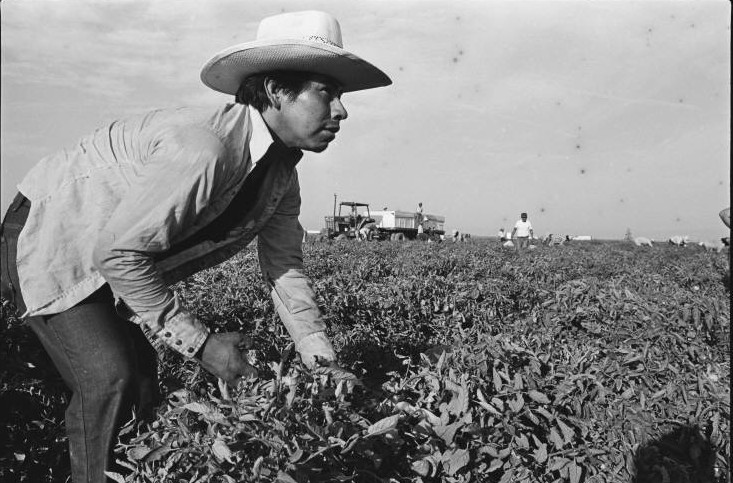
3. Next, let’s roll the dice and play the poverty game. Take a country that is largely agricultural, but has a system in place that has worked in precarious balance for centuries. How do you decimate that culture and economy in less than a decade?
With NAFTA and its evil twin, CAFTA: Two initiatives that allowed major U.S. corporations to invade places like Mexico and the Central American countries and take over—literally—with devastating consequences. For example, the 1994 economic crisis in Mexico was triggered by the start of NAFTA, devaluating the peso dramatically relative to the U.S. dollar. Today, thanks in large part to U.S. policies, 53 percent of Mexicans live on less than $2 a day, and the unemployment rate is currently over 40 percent. And some Central American countries have suffered even more.
But by removing trade barriers and dropping tariffs, U.S. companies have made fistfuls of dollars on these agreements. Industrialized farm operations, for example, have crushed the small-farm systems that existed in these countries. It became impossible for most Mexican and Central American farmers to make a living any longer. And it happened almost overnight.
So where could these people go in order to work, to feed and clothe their families? El Norte, of course. Where they supply unlimited cheap labor, Social Security padding, and even more profit for money-hungry corporations.
4. And that brings us back around to jobs—those jobs that are supposedly being stolen from the rest of us. In the last great Depression, there was similar outrage about how Latinos were stealing bread from the mouths of “real Americans”—and it led to the illegal deportation of hundreds of thousands of people from Texas and other border states. They were forced into Mexico—even if they didn’t come from there. And many of these people were actually American citizens. To date, the U.S. government has never even admitted any wrongdoing in this travesty.
Read the letters in the Grand Rapids Press, and you’ll see the same kind of mounting hysteria. Yes, there aren’t enough jobs to go around. Yes, the unemployment rate is rising. But you’d be hard pressed to find some well-fed Dutch American who’d be willing to take an undocumented immigrant’s job.
Most undocumented workers in this country live lives that are either slave-like or close to it. They are working double shifts in factories or at restaurants. They are plucking chickens and slaughtering beef in unregulated facilities. They are working fourteen-hour days as migrant farmers. They are sex slaves in prostitution rings.
I’d be unable to put it better than Dr. Daniel Groody, who wrote in his essay “Dying to Live”: “Immigrants die cutting North Carolina tobacco and Nebraska beef, chopping down trees in Colorado, welding a balcony in Florida, trimming grass at a Las Vegas golf course, and falling from scaffolding in Georgia….With an economic gun at their backs, they leave their homes because hunger and poverty pushes them across the border.”
So go ahead, Grand Rapids. Assert your rights! Pick any job that sounds good to you. I dare you.
But before you write another sanctimonious letter to the Press, think about the responsibility that each of us has for a situation that was created by our own country, is perpetuated by it, and profits from it every day.
 Grand Rapids Institute for Information Democracy