Adbusters and the Israeli Apartheid Wall
(This article, from Adbusters founder Kalle Lasn, is re-posted from The National Post.)
Why is Shoppers Drug Mart pulling 3,500 copies of Adbusters, my magazine, off its shelves?

A week ago, in the National Post, the Canadian Jewish Congress (CJC) accused Adbusters of anti-Semitism for publishing side-by-side photographs of the Gaza and Warsaw ghettos ( “Anti-Semitism on your magazine rack — courtesy of Adbusters,” Oct. 23). The CJC has since successfully lobbied senior management at Shoppers Drug Mart into pulling our magazine off the Canadian newsstands.
Here is the story from the Adbusters viewpoint.
In October 1939, the German Wehrmacht reached the city of Warsaw, and over the following months, the Jewish population was forced into a small section of the city called “the Jewish quarter.” The situation inside the ghetto was unbearable: Nazis controlled the movement of goods, basic utilities and even food. Each person was allotted a starvation diet of 250 calories per day.
Acts of rebellion were brutally suppressed. When two German soldiers were killed in a local restaurant, 106 men in the ghetto were shot in reprisal. Arrests and random executions were common. In April 1940, the ghetto was walled off on all sides.
Services such as hospitals and schools were derelict, relying on an ever-decreasing stream of supplies allotted by the Nazis. For a while, the supplies were supplemented by goods smuggled in through tunnels, but such services were eventually forced to close.
A resistance movement was organized during the Soviet advance, but it was brutally defeated and the Warsaw ghetto was razed to the ground.
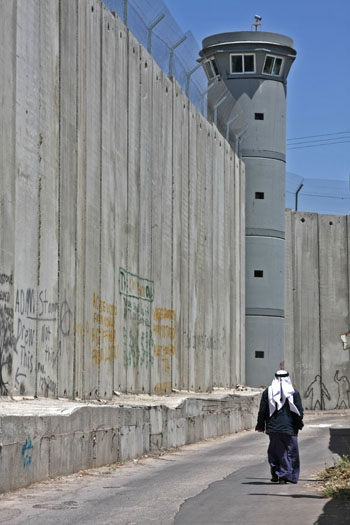
In September 2005, Israel dismantled its settlements in Gaza and withdrew its troops after 38 years of military occupation. For Israel, this marked an end to their occupation. For Palestinians confined in Gaza, however, the occupation had simply progressed into a new phase: the ghetto. The year 2005 marked the establishment of Gaza as an open air prison.
Israel controls the movement of all goods, including food and basic necessities, in and out of the Gaza strip. A study done by Johns Hopkins University in 2002 found that 17% of children aged 6-59 months suffer from chronic malnutrition, and almost half of women and children are anemic. Thirteen percent of children under five are stunted.
Israel controls all of Gaza’s borders and airspace. The long ocean border, once a viable source of income for Gazans through trade and fishing, is now strictly controlled. Humanitarian missions are turned away with lethal force.
Israel responds to every Palestinian provocation with disproportionate force. The Israeli response to the murder of three civilians by Palestinian rockets in 2008 was the wide-scale destruction of Gaza, the use of white-phosphorus munitions in the area of a UN school and the killing of over 1,000 civilians.
Comparing events today with events in Nazi-occupied Europe must never be done lightly. When events are so serious as to lend themselves to such comparisons, however, there is a moral imperative to speak up.
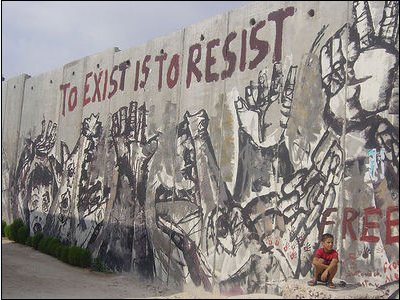
Though the stated goal of Israel has never been the complete destruction of the Palestinian people, many of the tactics and policies supported by the state of Israel are deeply troubling and worthy of an open public discussion.
Last week, in a move to silence criticism of Israeli policies, the Canadian Jewish Congress labelled Adbusters — and anyone who makes the above historical analogy — anti-Semitic. The CJC has lobbied Shoppers Drug Mart not to carry Adbusters. Three-thousand-five-hundred copies of Adbusters will no longer be sold at Shoppers Drug Mart’s 515 Canadian stores.
The Canadian Jewish Congress is not a representative voice of the full spectrum of Jewish perspectives. Last year, prominent Jewish Canadians including Naomi Klein, Ursula Franklin and Anton Kuerti signed an open letter criticizing the CJC’s use of “fear tactics” and condemning the “false charges of anti-Semitism against … groups and people exercising their democratic right to freedom of speech and association regarding legitimate criticism of the State of Israel.”
If you think that publishing side-by-side images of the Gaza and Warsaw ghettos is a valid expression of free speech, email the Canadian Jewish Congress and tell them to back off. And next time you walk by a Shoppers Drug Mart, go in and ask the manager to put Adbusters back on its shelves. In Canada, we should be free to choose from a diversity of viewpoints and decide for ourselves what is anti-Semitic and what is a legitimate critique of Israel’s occupation of Palestine.
Yesterday, we posted the findings of our 56-day study that looked at the Grand Rapids Press election coverage from the day after Labor Day through November 1st.
In that study we also did a comparison to see how much coverage the Press was giving to ArtPrize, since it was taking place in relatively the same time frame as the 2010 Election.
We found that there were almost twice as many ArtPrize articles in the print version of the Grand Rapids Press as there were of election articles, 153 to 87. We also found that comparatively there were 35 ArtPrize stories on the front page of the Press and only 18 election stories.
Big deal. So what’s the point? The point is that this should tell us something about the Grand Rapids Press and news coverage in an age of hyper-capitalism.
First, the most obvious thing about the newspaper’s decision to run more stories about ArtPrize than they did about electoral politics is that it makes clear what their priorities are. And the number one priority of the Grand Rapids Press is not to inform the public, it is to sell newspapers.
Of course this is their number one priority, since they are owned by a for profit company – Advance Publications. But it should be stated that the selling of newspapers is not just about news but about advertising. Indeed, the bulk of the revenue made by the Press is from advertising, not subscriptions and ArtPrize articles, particularly on the front page, helps to create a more positive consumer climate.
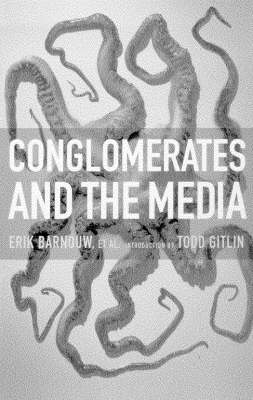
As media scholars like Erik Barnouw, Robert McChesney and Lesley Savan have demonstrated in numerous books over the years – newspapers, TV and radio stations always think about the content of their news and its relationship to the advertising. This means that for profit news agencies have to be careful not to provide news that makes us either feel too bad or makes us think in great detail about substantive issues. To do so could limit the public’s ability to be consumers.
Second, despite the fact that news agencies are driven by profits does not necessarily mean they can’t do good journalism. Often journalists and editors will say that they are just giving people what they want. And while it may be true that the public is demanding all ArtPrize all the time, that justification is not part of the widely accepted Principles of Journalism.
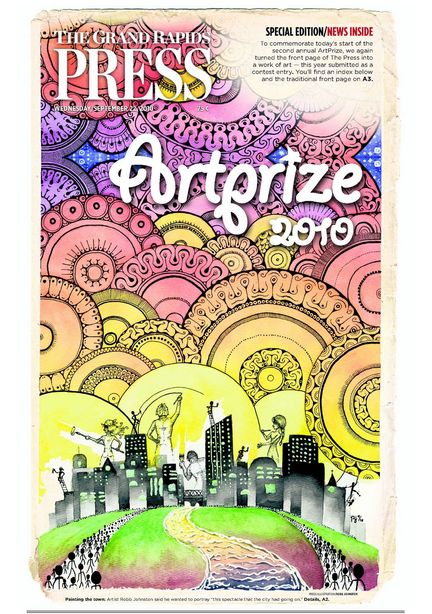
Lastly, the data begs the question that if the Press treated election coverage the same way they did ArtPrize coverage would that have an impact of the number and sophistication of voters on November 2nd?
For instance, if there were as many articles about candidate races as there were about ArtPrize, would that make a difference? If there were equally as many front-page stories about the election as there was about ArtPrize would there be more participation in elections? If the Press invited the public to design a front-page cover for the elections like they did for ArtPrize would that have made a difference? If the Press engaged the public in their election coverage the same way it engaged the public who came out to see ArtPrize entries would that encourage people to participate in the electoral process even more?
We may never know the answers to these questions, but it would be worth posing these questions to the Press editor Paul Keep. Send him an E-mail (pkeep@grpress.com) and ask him about the difference in the amount and quality of ArtPrize coverage versus Election coverage. If you get a response let us know and we could add your comments to this posting.
Holy Shit! Amway is a Pyramid Scheme?

Yesterday, it was reported on MLive that Amway has agreed to pay out $56 million to plaintiffs in a “class-action suit alleging the company and some of its top-level distributors operate an illegal pyramid scheme.”
The article goes on to say that the lawsuit, “alleged the company used unfair and illegal business practices that mislead distributors about their ability to make money and how much it would cost to be part of the business.”
However, despite the claims made in the lawsuit, Amway President Doug DeVos still does not want to admit to the allegations in the lawsuit. In an interesting display of journalism, the Grand Rapids Press included a letter that the Amway executives sent to the “Amway Community.”
The letter states that while the company has agreed to pay out $56 million and “the company and its IBO leaders take responsibility for all past issues,” it still denies any real wrong doing.
While one could argue that it shows that the Press is not afraid of exposing the wrong doings of the most powerful company in West Michigan, the way the Press presents the story suggests otherwise.
First, this story is archived in the Business section of MLive and not in general news where other crime stories are found. Make no mistake this is a crime story. It might be a “white collar” crime, but it is definitely crime. And to be realistic, which is worse, the guy who steals a few hundred bucks from the local party store or business practices which steal millions?
Second, the Press does not bother to seek out other sources for this story, but relies on Amway executives to tell us what we should believe. MLive did run a follow up article today, which cited two of the lawyers representing the plaintiffs, but they still don’t go far enough to seek out local or national sources that could speak to the allegations in the lawsuit.
Lastly, the Press fails to question the very nature of Amway’s business practices. So while this lawsuit identifies specific claims from specific plaintiffs about pyramid scheme practices, the Press misses the opportunity to ask the question, “Isn’t Amway fundamentally based on a pyramid scheme system?”
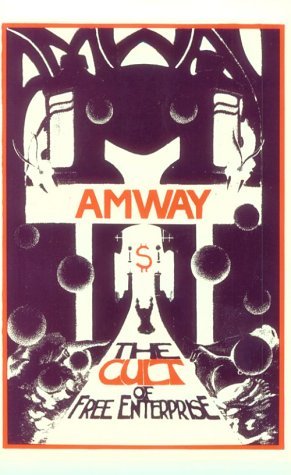
This is exactly what numerous former Independent Business Operators (IBOs) of Amway have been claiming for years. One of those former IMOs is Steve Butterfield who wrote the book Amway: The Cult of Free Enterprise. That the Press chose not to include voices like Steve Butterfield’s and not question how Amway has operated from the very beginning is a clear indicator that the Press is unwilling to challenge the power of the Ada-based company.
Today, GRIID has posted a 20-page report that looks at the Grand Rapids Press coverage of the most recent election.

The study covers the period from Labor Day 2010 through the day before the election. (Sept. 7 – November 1) We tracked all the articles that appeared in the print version of the Grand Rapids Press dealing with candidates and ballot issues specific to West Michigan and would be on the ballot for those voting in this part of the state.
As we have done with numerous other news studies around election coverage we ask the question that if the Grand Rapids Press was the only source that voters relied on, could they make an informed vote? Our conclusion is that for most candidates and ballot proposals the answer would be no. The only issue that the Press did a good job on during the 56-day study period was the statewide ballot proposal to hold another Constitutional Convention. Other than Proposal One, most of the stories were based on polling, attack ads, and horserace coverage, all of which most often did not provide voters with even basic issues on where candidates stood on key issues.
Here is a summary of our findings:
- There were a total of 87 Election articles during the 56-day study period.
- The races that received the most article were: 3rd Congressional (21), Governor’s race (19) and Proposal to have a Constitutional Convention (9)
- Area State races received limited coverage: 29th District Senate race (4 articles), 75th District House race (3) and no articles about the 28th and 30th Senate races or the 72nd, 73rd, 76th, 77th or 86th District House races.
- There was only 1 article about Proposal 2, 1 article about the Michigan Supreme Court candidates, 1 article about Secretary of State candidates and 1 article about the Attorney General candidates.
- Most of the stories about candidates focused on polling, political ads, debate schedules, public appearances, endorsements and personal attacks.
- Consequently, most of the stories had very little information on candidate platforms, issues or voting records for those running as incumbents or a higher office.
- Comparatively, there were 153 articles about ArtPrize during the same 56-day study period and 87 election articles.
- Election stories appeared on the front page of the Press 18 times during the study period, whereas ArtPrize stories were on the front page 35 times.
The entire report can be found on the GRIID site in the Reports section.
Elections and Wedding Dresses: Tuesday at the Grand Rapids Press
In the 1940 film “His Girl Friday,” a send-up of the newspaper business, an editor played by Cary Grant is attempting to make over the front page to fit in a breaking news story. Here’s his string of last-minute decisions:

No, no, never mind the Chinese earthquake for heaven’s sake…Look, I don’t care if there’s a million dead…No, no, junk the Polish Corridor…Take all those Miss America pictures off Page Six…Take Hitler and stick him on the funny page…No, no, leave the rooster story alone – that’s human interest.
Ah, yes, the rooster story. Those of us who have endured 15 months of the Grand Rapids Press under Editor Paul Keep know that rooster story very well. Except in our case, it’s been the arrow-wounded duck story….the injured bald eagle story…and the urban chickens debate, complete with chicken puns galore.
I think we can safely guess that Paul Keep has a thing about birds. What he doesn’t seem very interested in are hard news stories. Or elections, for that matter.
As GRIID has tracked the 2010 election cycle, it has documented the flimsy coverage of candidates, issues, and has also noted problems with individual features such as the Voters’ Guide, rife with paid political advertising and skimpy on information for crucial votes such as the ballot proposals.
What makes the whole thing even more inscrutable is how Keep continues to insist that local news is the Grand Rapids Press’s reason for being, as he explained in his December 24, 2009 column. A reader wrote in, “…the GR Press is failing to cover, let alone investigate, serious issues we now face in America,” and named several current national stories.
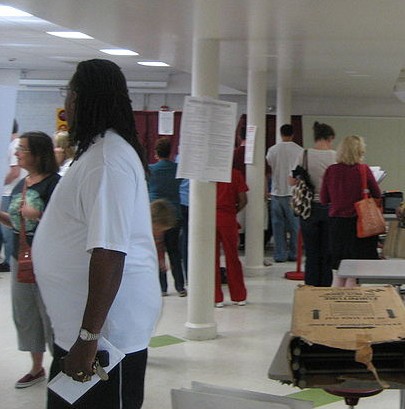
Editor Keep responded: While I understand your concerns, the issues you raised were not local issues, which is what the Grand Rapids Press reporters focus on. For coverage of national and international issues, we rely mainly on the Associated Press…The bulk of our news pages are focused on local news and information and it is in-depth local content you cannot find in other area media outlets.
OK. Now let’s talk disconnects. On Tuesday, November 2, Grand Rapids and Michigan voters had a number of important decisions to make. They had to choose a new governor. There were races for local district seats in the House of Representatives. There were critical State Supreme Court races. You’d think that there would be plenty of that “in-depth local content” to be explored in the newspaper that day.
Keep could have chosen to have a reporter recap the races, or print an abbreviated voters’ guide to help people at the polls. He could have done on-the-street interviews, or done a story about volunteers who work at polling places in the area. He could have covered predicted voter turnout, and how the local votes would have statewide or national effect. He did none of those things.
So apparently Paul Keep doesn’t consider local elections “local news.” Or perhaps, unlike the always-appealing rooster story, elections just lack that zing that he looks for in his above-the-fold stories. Elections don’t sell papers. So what does?
Princess Diana’s wedding dress.
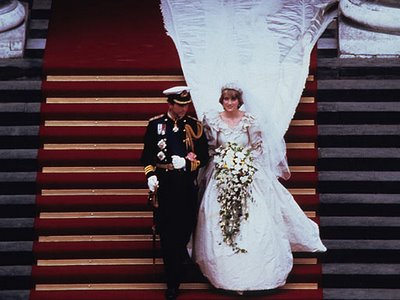
Incredibly, on the day of this long-talked-about midterm election, the front page, above- the-fold story in the Press was “The Most Famous Dress in the World.” Yes, the former Princess of Wales’ wedding dress has arrived in town, with its 25-foot silk train and its own personal attendants. On page 2, not missing a chance for follow-up, the Press ran a second story about die-hard Diana fans. Local fans, that is to say.
The other two front-page stories were about Wyoming banning medical pot and a protest at Central Michigan University.
Paging through the front section, I looked for something—anything—about the election. There were stories about teachers’ contracts. A rape trial. Vandalism by Calvin College students (they beheaded a fiberglass giraffe). Zeeland’s “fog” problem caused by pollution from a power plant cooling tower. Local homes sales falling again. On the always-buried-in-the-back national news page, there was a tiny AP wire story of one paragraph called “Tips for election watchers.” And that was that.
In the early 19th Century, Thomas Jefferson wrote quite a bit about the importance of an informed electorate and how democracy would not work without a free press. In one letter, he said, “The information of the people at large can alone make them safe as they are the sole depository of our political and religious freedom.” He also said, “Whenever the people are well-informed, they can be trusted with their own government; whenever things get so far wrong as to attract their attention, they may be relied on to set them to rights.”
It’s clear that without good, unbiased information, no one has true freedom to make up his or her own mind about how to change our country for the good of the people. But in the mind of Editor Paul Keep, this election was over before a single vote was cast. Time to move on to more “interesting” stories. As a Press headline writer might say, it’s clear our newspaper definitely laid an egg on this year’s election coverage. But you can be assured that it will keep you well informed about any wounded birds in the area for the foreseeable future.
Media Bites: Microsoft and “anti-consumerist” advertising
In this week’s Media Bites we take a look at a new Microsoft cell phone commercial that uses what appears to be an anti-consumerism message to sell us their new phone.
Elections Cannot Erase Injustice of the US Occupation of Afghanistan
(This article by Malalai Joya is re-posted from Common Dreams.)

One year ago Hamid Karzai was declared re-elected as president of Afghanistan, ending an election that had no legitimacy in the eyes of ordinary Afghans. The presidential election last year was a fraud, with ballot stuffing, vote buying and massive corruption reported by the world’s media. Even if the independent election commission had not cancelled the planned run-off between Karzai and his main challenger, Abdullah Abdullah, it would have represented only a choice of the “same donkey with a new saddle”. People had no incentive to participate as they knew that both main candidates would bring nothing positive for Afghan people.
Karzai had lost his popularity way before the 2009 election. This was due to the ever increasing corruption of the government, the never-ending crimes of the many fundamentalists and warlords in his regime, and the financial scandals and corruption of his brothers. In Kandahar people even started calling Ahmed Wali Karzai the “little Bush”, after the hated US president.
The vast majority of Afghans have lost all hope in Karzai. For us his words and actions have no value, and that includes his latest “peace negotiations” and other measures. Including killers like Mullah Omar and Gulbuddin Hekmatyar in the government is not about negotiating for peace, but completing the decades-old circle of warlordism and fundamentalism.
It’s important to say that these so-called elections haven’t damaged Afghanistan as much as the US and its Nato allies have, with their bombing and occupation. Wikileaks has exposed some of the truth about the civilian toll of this war against the Afghan and Iraqi peoples. Afghans hold the US and Nato, and their puppet Karzai, responsible for these war crimes. They claim to fight terrorism, but in fact they are the biggest terrorists in the eyes of our people because of their crimes and brutalities.
Unfortunately the Afghan people are not yet strong enough to drive out the US, overthrow the mafia government of Karzai and bring an end to the crimes of the Taliban and other fundamentalists. Our history proves that this resistance to occupation will continue until we have won our freedom. Until both the US and the fundamentalists – of both the Northern Alliance and Taliban brands – are driven out of power in Afghanistan, we cannot see a bright future. It is now more than five years since I was elected to the Afghan parliament. My experience of this “democratic process” was to see my microphone cut off, and to be threatened with death by other MPs – many of whom teamed up to remove me illegally from my seat. My case alone is enough to prove that women’s rights in Afghanistan have not truly been safeguarded – our situation was just invoked to justify the war.
In fact, it’s important to remember another document that Wikileaks exposed earlier this year: a CIA paper assessing western public opinion on the war that recommended using “testimonials by Afghan women” expressing fear about a Taliban takeover in the event of Nato pulling out. A Time cover story featuring the disfigured Bibi Aisha was a clear example of using the plight of women as war propaganda. The headline – “What happens if we leave Afghanistan” – could have, or should have, been “What happens while we are in Afghanistan”, because crimes of mutilation, rape and murder against women are commonplace today.
Many warlords and commanders aligned with Nato and Karzai carry out their sexist, misogynist crimes with impunity. Time could, for example, have done a cover story condemning the law signed by Karzai in 2009 that legalised crimes against Shia women, or about the shocking levels of women committing suicide by self-immolation.
We had another so-called parliamentary election in September, but I chose not to run. Any hope I had for using the ballot box to achieve change in Afghanistan is gone. Like last year’s presidential vote, September’s election was full of the buying and selling of votes – one province, Paktika, reported a turnout of 626%. This sort of thing is the reason elections in Afghanistan long ago became a bad joke.
Today there is an election in the US, and it is now two years since Barack Obama was elected president. His surge of troops has brought only a surge of violence, and his expansion of the war into Pakistan has claimed many innocent lives. Obama promised “hope” and “change”, but Afghans have seen only change for the worse. Here he is now seen as a “second Bush”.
The only change that can make us hopeful about the future is the strengthening and expansion of a national anti-fundamentalist and democracy-loving movement. Such a movement can be built only by Afghans. And while we want the world’s support and solidarity, we neither need nor want Nato’s occupying forces.
Malalai Joya is an Afghan politician and a former elected member of the Parliament from Farah province.
GVSU event to discuss Native American Depictions in the Media
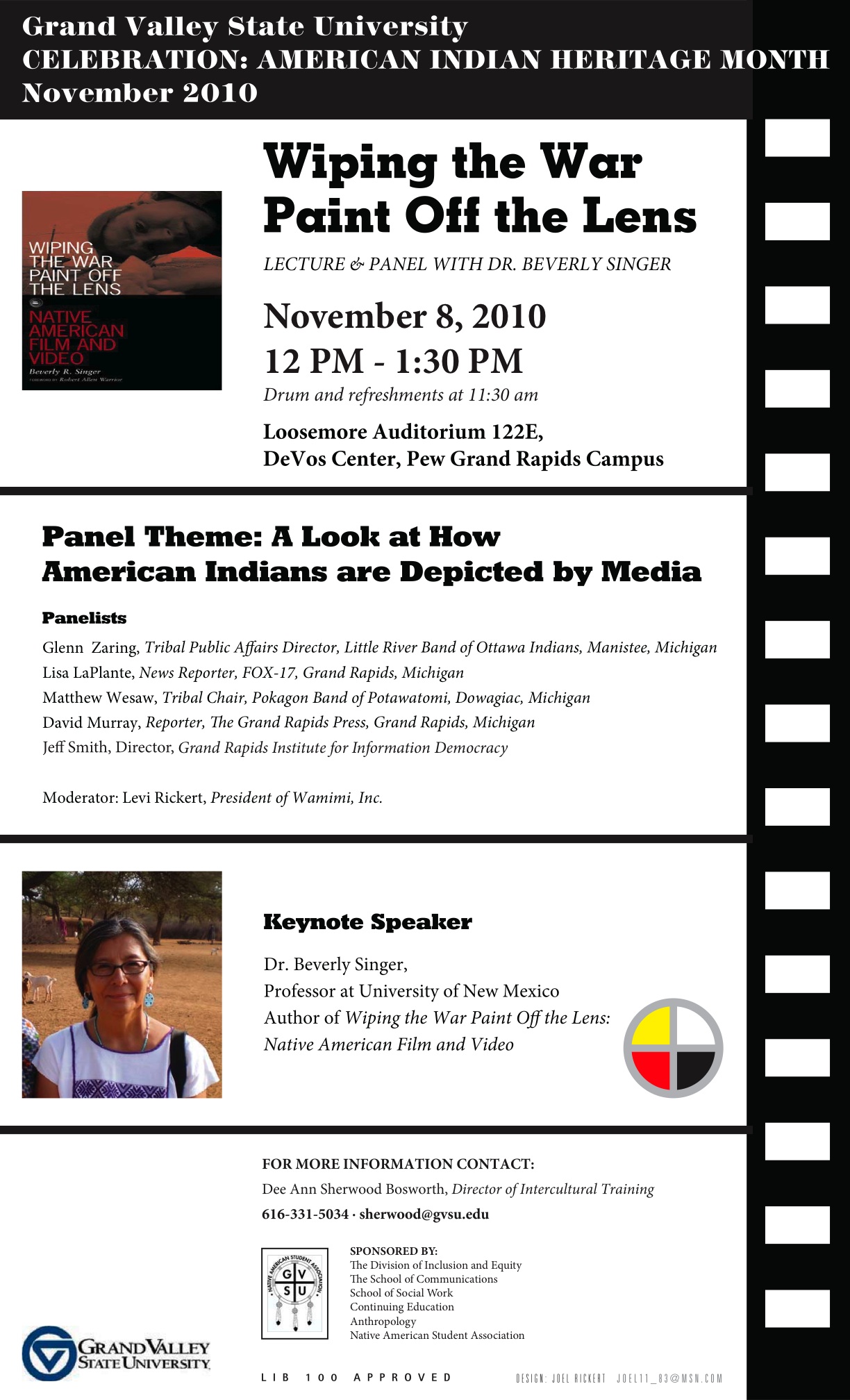
Next Monday, November 8, there will be an event at the downtown GVSU campus for American Indian Heritage Month.
The event will feature a presentation by Native American writer, filmmaker and university professor Beverly Singer. Dr. Singer is the author of the book, Wiping the War Paint off the Lens: Native American Film and Video.
After the lecture there will be a panel discussion with people from West Michigan continuing the discussion around how Native Americans are depicted in media. The panelists include:
- Glenn Zaring, Tribal Public Affairs Director, Little River Band of Ottawa Indians, Manistee, MI
- Lisa LaPlante, News Reporter, FOX-17, Grand Rapids, Michigan
- Matthew Wesaw, Tribal Chair, Pokagon Band of Potawatomi, Dowagiac, Michigan
- David Murray, Reporter, Grand Rapids Press, GR, MI
- Jeff Smith, Grand Rapids Institute for Information Democracy
The lecture by Dr. Singer begins at Noon, with drumming and refreshments at 11:30am.
The event will be held in the Loosemore Auditorium at the downtown Pew Cmapus of GVSU. For more information contact Dee Ann Sherwood Bosworth (616) 331-5034 or sherwood@gvsu.edu.
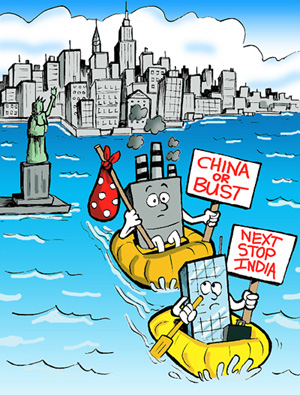
Yesterday, the Grand Rapids Press ran a front-page story about how “some” local businesses see China as an ally and not an enemy.
The article entitled, “Seeing Red,” was framed in part as one of the one contentious aspects of the election debate, particularly between 3rd Congressional candidates Justin Amash and Pat Miles.
First, it should be pointed out that the contention between Miles and Amash has more to do with their personal economic ties to China. Amash’s family does businesses in China and Miles until recently held a mutual fund in the Bank of China.
These personal investments, particularly that of Justin Amash are seen by some as another example of outsourcing, where US jobs are sent abroad because of cheap labor markets and minimal safety and environmental standards. What Amash and Miles have not talked about in this whole “debate over China” are trade policies nor the very nature of the neoliberal economic system much of the world operates in.
Second, the article, by Press reporter Ted Roelofs, follows a standard script about how we should view this issue. Roelofs cites local business people who argue that having factories or business ties to China is a good thing and is in fact what allows some local jobs to exist.
Then the article cites a local union organizer (and former Democratic Party chair) who says that China plays unfair and that she wishes the US government would protect “our markets.”

The union organizer is followed in the article by a corporate economist with the Upjohn Institute for Employment Research, who argues that if West Michigan companies want to survive they need to focus more on creating jobs that require “advanced education” instead of low-skilled labor.
The last source cited is with the furniture maker Herman Miller. Their representative says of China, “It represents a huge market opportunity for us. It would be impossible to do any kind of meaningful business if you didn’t have a presence there.” This last comment is particularly important and should tell us something about what the larger issue is in this story.
The problem is not so much about lax labor standards in places like China, or low wages or even trade practices. The issue with so many West Michigan businesses being in favor of sending jobs abroad is that it is in the nature of Capitalism to do so. Capitalism has no allegiance to countries or workers. It only has an allegiance to profits and growth.
Within a Free Market Capitalist framework it makes complete sense to seek out cheaper labor markets. This is not a new phenomenon, but one that has been hitting US-based unions hard the last 30 years.

However, since most of the unions in the US embrace Capitalism as their economic model the only argument they can make is to appeal to corporations to keep the jobs “American.” This suggests that companies like Bissell, Haworth and Wolverine World Wide have some allegiance to this country. Of course, these companies will use the local, state and federal systems when it suits their interests (tax breaks, subsidies, labor laws, etc), but their ultimate allegiance is to profits and shareholders. This is exactly why the quote from the Herman Miller representative was so important because it underscored the bottom line, which is expanding markets.
The claim made by the UAW organizer that China plays unfair is true at some level, but it fails to acknowledge that the US has had some of the most protectionist trade policies in the world. So, it’s ok for the US to subsidize farmers, which makes it difficult for farmers around the world to compete, but if other countries engage in any form of protectionism or economic incentives for businesses, then it is all of a sudden unfair.
The unions in the US should not be demonizing China, they should be building alliances with Chinese workers. If the unions in the US wanted to keep jobs in this country they should engage in factory occupations as a tactic instead of providing millions of dollars to Democratic candidates who embrace Capitalism as much as the Republicans do.
The elections are tomorrow and no matter who wins the issue of jobs and a failing economy will still be a major problem unless more people are willing to seriously examine the economic system we operate in. Yesterday’s Press article is just another example of their unwillingness to foster such an examination.
Grassroots Unionism Under Attack in Argentina
(This article by Marie Trigona is re-posted from ZNet.)
“Wherever union representation is democratic, combative or revolutionary, we must defend it. Wherever rank and file are attacked by the union bureaucracy we must defend them. Union bureaucracy is the use of union posts with the objective of curtailing unionist activity. Union bureaucracy seeks to squash any insubordination, even the most just of strikes.”
– Augustin Tosco, general secretary of Luz y Fuerza, combative labor organizer who fought for democratic union practices. He died in hiding, for fear he would be killed, after the Luz y Fuerza labor union was abolished in 1974.
The killing of a 23-year old labor activist has sparked massive protests in Argentina. Argentina’s rich labor history has been plagued with violent episodes: massacres against striking workers at the turn of the 20th century, the systematic disappearance of 30,000 activists under the dictatorship, the 38 deaths during Argentina’s 2001 popular rebellion, the 2002 police shooting of two unemployed activists Maximiliano Kosteki and Dario Santillan, and the death caused by a tear gas canister to the head of public school teacher Carlos Fuentealba in 2004. Mariano Ferreyra, an activist and student who was recently killed, sends an ominous reminder of the legacy of union bureaucracy and violence against workers.
Mariano Ferreyra was shot dead on October 20 in Argentina in a union dispute along Buenos Aires train lines. He was marching in solidarity with subcontracted train workers fired as part of cutbacks. Unionists from the main railway workers union broke up the protest against low wages and firings of subcontracted employees. As the protestors were ending the action, a group of unionists and other men began throwing rocks and running after the protestors. Television cameras showed a group of 40 men chasing after the protestors.
“The thugs from the green slate, guarded by the provincial police, were waiting for us along the train lines since early in the morning,” says Ariel Pintos, a subcontracted train employee shot in the leg at the protest. He told Pagina/12, “They chased us, yelling you’re going to pay for this, we’re going to kill you.”
Then, according to witnesses, as police stood by at least one man opened fired. Marcelo Adrian, a friend of the victim, says the corrupt union structure favors business interests. “The state is responsible, the bureaucratic unions… And the police that acted as accomplices. A group of 40 thugs from the Train Transport Union, Green list attacked us. It was a planned attack and there have been incidents of attacks against the subcontracted employees.” Three men have been arrested in connection to the shooting.
Mariano Ferreyra
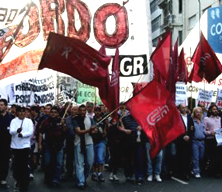
The death of Mariano Ferreyra has opened wounds of the pain and preventable death which was the result of corrupt union practices. Ferreyra’s commitment as an activist was celebrated at the massive march to repudiate his death. More than 25,000 protestors came out to repudiate the death of Ferreyra, demand an end to undemocratic union practices and demand justice for the death of the activist.
The victim was a member of Argentina’s Workers Party. He began his activist activity at the age of 14 in a neighborhood branch of the Trotskyist organization shortly after the popular rebellion of 2001. The young Ferreyra participated in the 2002 road blockade in the suburb of Avellaneda where two activists lost their lives. Police shot members of the movement of unemployed workers Maximiliano Kosteki and Dario Santillan inside the Avellenada train station. This event would mark the life of Ferreyra in his commitment to activism and later tie him to the fate of the two victims. Eight years later, Ferryra was killed only a few blocks away from where Kosteki and Santillan died.
A cameraman present at the events said that after Mariano was shot he heard a person cheer: “one less lefty.” No one has been arrested in connection with the killing.
Labor practices
The workers protesting along the train lines wanted to draw attention to a common labor practice called outsourcing. The firing of 140 workers sparked the protest on October 20. The temporary workers demanding that laid-off workers get permanent employment with the Roca Railroad.

Subcontracting, synonymous with neoliberal capitalism, has become a common practice in public as well as private companies in Argentina. Workers, are hired temporarily by outsource companies that provide service along the train lines. “Subcontracted workers are paid half as much as formal workers. They do not have the right to unionize or to make demands,” says Ruben Sobrero, president of the body of delegates from the Sarmiento train line.
Argentina’s train system was dismantled during the mass privatization of public services in the 1990’s. “Menem with the participation of the current union leadership privatized the train system and more than 90,000 workers were laid off,” explains Sobrero. Today concessionaries subsidized by the state run the train system which provides services for millions of passengers who ride from the surrounding suburbs to the nation’s capital. Dozens of fatal accidents occur each year as a result of passengers falling off of overcrowded trains.
“They make us to three times the amount of work as formal employees. Many young workers have permanently injured their lower backs and when they come back from medical leave they are fired. They don’t provide us with work boots or protective uniforms. They don’t even provide us with water when we are working along the train tracks,” said Ariel Pintos.
The Train Workers Union benefits from this system because they get a percentage of ticket sales and gain from supporting business interests. At least 600 workers have been fired by the private company that is government subsidized to run the train lines that lead from the capital to the suburbs. The “violet list,” as the opposition group in the Train Workers Union is called, have organized a campaign for the formal contracting of workers and an end to subcontracting along the train lines. “The leadership of the UF doesn’t want workers to block the railways because they’ll lose part of ticket sales. They also don’t want to see salary increases for workers because that would cut into the union funds from union dues,” says Alfredo Esteban de Lucas who is a metallurgical worker that constructs trains.
Union bureaucracy
“This incident marks a rise in union violence on part of what is called union bureaucracy, which use these tactics to stop workers from organizing independently,” says Sobrero as an elected representative of an opposition slate has been the target of union violence. These incidents of violence form part of the long tradition of the union structure in Argentina, where trade unionists use tactics to pressure workers not to vote for opposition slates.
In the past year alone, representatives from the growing movement of grassroots labor organizing have been victim to threats and physical attacks. Subway workers have organized an independent union since 2006. They have held a number of protests to demand that the Labor Ministry grant legal recognition of a democratically voted independent union, breaking from the UTA transport union. The ex-wife and children of Nestor Segovia, an elected subway union representative, were attacked by police and affiliates of the UTA transport union in their home during an alleged eviction notice in November, 2009. “Union bureaucracy is strong right now because the nation’s main union CGT and the government support the apparatus. When there’s a growing movement of workers that the apparatus can’t control, the bureaucracy reacts,” said Segovia, at the national day of protest.
The International Labor Rights Forum listed the Kraft Corporation in Argentina as one of the worst companies for the right to association. The Food and Beverage Union did not support the Kraft workers’ demands or intervene when 140 workers were fired from the plant, many of whom were elected representatives from an opposition slate. Last year casino workers have also had to fight violent attacks from the formal unions in their union organizing efforts to create an independent union organization.
The nation’s main train union (UF) had threatened to stop workers from protesting on October 20. Pablo Diaz, a representative from the UF who is now under arrest for the killing of Ferreyra, publicly stated on the day of the protest “We are not going to allow the train lines to be blockaded.” In September, the subcontracted train workers organized a press conference in the Constitution train station to report the firing of 140 workers. A group from the UF’s Green slate from interrupted the press conference, shouting and pushing subcontracted workers while the police watched.
Human rights groups, journalists and academics have called for reflections and reforms in union representation. “The events demand a reflection about the significance of the struggle to democratize union representation, which forms part of a transition from the model of neoliberal deregulation of worker protection toward protection for workers,” said the Center for Social and Legal studies in a public statement about the killing of Ferreyra.
Grassroots labor organizing
At the march the day after Ferreyra’s death, dozens of groups from opposition slates marched in their work uniforms. “Most of us here are from opposition slates, we are a large movement that is proposing a new way of organizing workers, where workers have participation in assemblies,” says Segovia. This movement, called grassroots unionism, has challenged the verticality and corruption of the formal structures which groups say tries to curtail workers’ protests. Segovia adds that the government and industrial leaders worry that workers may demand better salaries and working conditions as the Argentine economy has boomed since 2003. “Union democracy implies that rank and file workers have a voice to debate. A union delegate should represent the workers, as a union delegate I was voted to reflect what rank and file workers propose.”
The death of Mariano Ferreyra reflects Peronisms’s (of the ex-president Juan Peron) tradition of union bureaucracy and attacks against workers which has reared its ugly head, despite a government that has made progressive measures. However, the diversity of opposition slates and delegates assembly fighting for democratic union representation reflects a growing grassroots labor movement, which continues to grow despite corrupt and violence practices on the part of official union leadership.
Marie Trigona is a writer, radio producer and translator based in Argentina. She can be reached through her blog, www.mujereslibres.blogspot.com

