“War Is Scary as Hell”
Local folks met at Fuller Park today for the “War Is Scary as Hell” bike ride sponsored by Grand Rapids and Beyond for Peace and Justice for Afghanistan. The goal of the ride was to raise awareness about the human and financial costs of the US Occupation of Afghanistan as well as to point out that both Republicans and Democrats continue to vote for funding the Occupation, which began in 2001. In addition, both major party candidates running for congress, Justin Amash (R) and Pat Miles (D) support continuing US military involvement in Afghanistan.
The first stop was the Democratic campaign headquarters, 333 Fuller NE. As the citizen representative approached people who seemed to be in charge and politely began to explain the goals of the bike ride, she was basically told to shut up and get out. The print materials offered were put aside.
The next stop was the Republican campaign headquarters, 264 Leonard St. NW. Here a campaign volunteer welcomed two citizen representatives, took a look at the print materials handed to him and said, “You got that right. War is scary as hell. I know because I am a veteran.” This gentleman went on to state that he thought the US should get out of Afghanistan, that the American public was fooled into supporting the War in Iraq by Bush’s false claims of weapons of mass destruction and that the term “collateral damage” should not be used because the truth is that the US is killing innocent civilians. He also raised concerns about the costs our troops are paying in terms of lives lost, post traumatic stress disorder and crippling injuries. Before the citizen representatives left, he assured them that he would post the print materials.
While one shouldn’t read too much into the responses at each party headquarters it does make it clear that issues are not central to what political parties do. Both the Democrats and Republicans want their candidates to win, no matter how much they fail to represent the interests of many Americans on key issues such as war and military spending.
Here is the text of the materials left at both campaign headquarters today:
 War Is Scary as Hell.
The US military has now begun its 10th year of the Occupation of Afghanistan. During the past 9 years the US has engaged in a massive bombing campaign, search and destroy missions, assassination programs, destroyed people’s homes, destroyed people’s way of life and is now engaged in a bloody counter insurgency campaign.
The cost of these actions has been tremendous and statistics do not honestly convey the harsh realities of human suffering and loss of life.
· Tens of thousands of Afghanis have been killed by the US military.
· Hundreds of thousands of Afghanis have been displaced because of the US military.
· Tens of thousands of Afghanis have been detained by the US military.
· Hundreds of thousands of Afghanis have been wounded because of the US military.
· Hundreds of Afghanis have been tortured by the US military at places like Bagram.
This bloody 9-year US military occupation has also cost the lives of US soldiers.
· More than 1,300 US troops have been killed in Afghanistan
· Tens of thousands of US troops have been wounded in Afghanistan
· Tens of thousands of US troops will suffer for the rest of their lives because of the trauma of what they have participated in and witnessed in Afghanistan
· Tens of thousands of US families will bear the burden of the loss of a loved one.
· Tens of thousands more will struggle of watching a loved one struggle to cope after military action in Afghanistan!
This brutal and unjust US military occupation will also cost US
taxpayers over a Trillion dollars, both in direct military costs and hidden social costs which are nearly impossible to measure.
According to the National Priorities Project the cost of the US war in Afghanistan since 2001 has been $359 billion and counting http://www.costofwar.com/. For those of us living in Michigan that means that over $9.5 billion in taxes have left the state to fund this
brutal war and for people living in Grand Rapids it means over $188 million has left this community.
This is all money that could have stayed here to fund the public schools, provide adequate health care, provide jobs, student loans and funds for environmental clean up.
We are here today to tell you that this war, a war which is supported by both the Democrats and Republicans, is immoral, unjust and is only contributing to a growing anti-American sentiment around the world. Your political party’s support for this war is costing countless lives, costing countless dollars and putting all US citizens at a greater risk of being the target of anti-American rage.
It is because of this that we cannot and will not support your party or its candidates in Tuesday’s election.
If we could vote against the War on Tuesday we would, but unfortunately your party and your
candidates have not even made war and military spending an issue. In essence this makes your political party the War Party.
End the Occupation!
End the Killing!
Money for Health Care not for Warfare!
To download the full .pdf version, click here: war is scary as hell
Killing Reconciliation in Afghanistan
GVSU hosts 11th Conference on the Americas – Nov. 4-6
The Latin American Studies Depart of Grand Valley State University is hosting its 11th Conference on the Americas next week at the downtown campus in Grand Rapids.

The theme for this year’s conference is Creative Agents of Change: Facing Challenges in our Communities. The conference features a wide variety of presenters, film, music, art and panel discussions that deal with ways in which people creatively act and organize for change.
On Thursday, November 4 Harvard University Professor Doris Sommer with give the keynote lecture entitled, “What is Literature Good For?” Sommer is the author of numerous books, most notably Bilingual Games: Some Literary Investigations.
On Friday, the conference continues with a series of panels and presentations, but will conclude with a screening of the documentary Cartoneros. Cartoneros is about people who recycle cardboard in Buenos Aires, Argentina as a means of survival.
On Saturday, more panels and presentations are scheduled, with a second keynote lecture to be given by Argentine Professor Graciela de Marco. The title of her talk is “Women’s Movements and Democratization”
GVSU has a complete listing of the conference program online.
Help Stop Delivery of Caterpillar Bulldozers to Israel
(This Action Alert is re-posted from the US Campaign to End the Israeli Occupation.)

Earlier this week, Israel’s Channel 2 news reported that Caterpillar is delaying the delivery of tens of D9 bulldozers—valued at $50 million—to the Israeli military. The report speculated that this “sounds like an American military sanction.” Read an article in the Jerusalem Post about this report by clicking here.
This news comes in the midst of a civil trial in Israel brought by Cindy and Craig Corrie, of the Rachel Corrie Foundation for Peace and Justice, a US Campaign member group. The Corries’ daughter Rachel was killed by the Israeli military with a weaponized Caterpillar D9 bulldozer, as she nonviolently tried to prevent the demolition of a Palestinian home in the occupied Gaza Strip in March 2003. News reports have stated that Caterpillar will not deliver bulldozers to the Israeli military during the Corrie trial. For updates on the trial, please click here.
(On a related note, the Rachel Corrie Foundation has submitted a paper to the UN Universal Periodic Review, which will review the human rights record of the United States on November 5. To read its submission, which documents how the United States has failed to uphold its human rights laws in Rachel’s case, please click here.) To be honest, we’re not exactly sure what’s going on behind the scenes. In written communications with the US Campaign, Caterpillar refused to comment on the reports, but did not deny them.
At yesterday’s State Department briefing, Assistant Secretary Philip Crowley did not deny the U.S. government has delayed the delivery, going only so far as to say that he is “not aware of any contacts between the United States Government and Caterpillar, but perhaps it’s a question to ask Caterpillar.” Yes, the US Campaign had already tried that… to no avail. Whatever is happening, one thing is clear: This represents a major, positive step in our ongoing campaign to hold Israel accountable for its misuse of Caterpillar bulldozers, which are provided at U.S. taxpayer expense as military aid.
Learn more about how Israel misuses Caterpillar bulldozers to commit human rights abuses of Palestinians by clicking here. We have a small window of opportunity to act before pressure is brought to bear on the Obama Administration to allow the delivery of bulldozers to proceed. Here’s what you can do to make sure that the United States does not allow the delivery of these Caterpillar bulldozers to Israel, and to advance our boycott, divestment, and sanctions (BDS) campaign against Caterpillar:
1. Sign our petition to the Obama Administration asking it to stop the delivery of Caterpillar D9 bulldozers to the Israeli military, and to investigate Israel’s violations of U.S. laws committed with Caterpillar equipment. We and other organizations, such as the Rachel Corrie Foundation for Peace and Justice, the Israel/Palestine Mission Network of the Presbyterian Church, (U.S.A.), and Jewish Voice for Peace, are hoping to collect 10,000 petition signatures by next week to deliver to the Obama Administration. Sign now by clicking here.
2. If you belong to an organization, then please have it endorse our organizational letter to the Obama Administration. We will be accepting organizational endorsements of the letter until 6 pm (EST) Wednesday, November 3. Read and endorse the letter (organizations only) by clicking here.
4. Get TIAA-CREF to divest from Caterpillar. TIAA-CREF, one of the largest financial services in the United States, invests heavily in Caterpillar (over $250 million as of their last financial report). Sign a petition asking TIAA-CREF to divest from Caterpillar and other companies that profit from the Israeli occupation.
Endorsements dominate 3rd Congressional race coverage
Yesterday, the Grand Rapids Press ran yet another story about political endorsements in the 3rd Congressional District race between Justin Amash (R) and Patrick Miles (D).
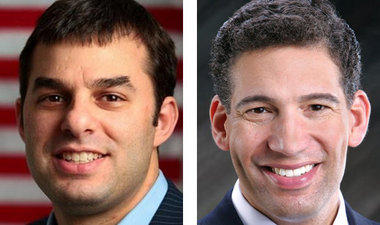
In the article Republicans are claiming that some of the people on the list that Miles has been making an issue aren’t really Republicans and therefore the Democrat’s claims don’t carry much weight.
As of today, the Grand Rapids Press has run a total of 19 articles on the 3rd Congressional race. Here are the articles in chronological order:
9/18 Congressional candidates debate senior issues
9/20 Longtime GOP backers favor Miles
9/25 Congressional candidates debate over debates
9/26 Amash camp says air attack off-target
9/30 Ehlers throws support to Amash
10/4 Miles lands education support
10/6 Business practices help fuel debate
10/7 China connections
10/7 Miles carries fight to Amash’s home turf
10/7 Paul Henry’s widow backs Miles
10/12 Miles sells China fund, issues challenge
10/15 Amash named rising star
10/17 Amash keeps financing edge over Miles
10/17 Pat Miles – profile
10/20 Miles touts more GOP supporters
10/21 Congressional candidates spar over TV claims
10/24 Justin Amash – profile
10/27 Republicans question Miles’ list of GOP support
Of these 19 articles 8 of them are about endorsements, 6 deal with the candidate’s claims about personal finance in China, 2 are profile pieces, 2 are about debates and one article is about campaign finances.
Therefore, the Grand Rapids Press has not reported once on where the candidates stand on the US economy, environmental issues, immigration, US foreign policy, health care or any other major issues of the day. Another example of the Press practicing horse-race coverage and not actual journalism.
Introducing the Corporate Reform Action Pack (CRAP)
This short video is an excellent response to the claims of the Waiting for Superman film that claims to have a solution to the public education crisis in the US. The video is produced by members of the online project called Failing Schools.
PAC money spending in the 2010 Michigan Elections
The decision by the U.S. Supreme Court in Citizens United v. Federal Election Commission gave corporations an opportunity to spend unlimited funds in US elections.

It has been reported in a variety of sources how this decision has played out on the federal level with one example of excess funds being used to influence the elections being the US Chamber of Commerce. However, what is less known is how the Citizens United v. Federal Election Commission has played out in the State of Michigan.
According to the Michigan Campaign Finance Network, “A new era has begun for Michigan political action committees.” New Political Action Committees (PACs) have been established in Michigan with the largest being the RGA Michigan PAC, which is associated with the Republican Governor’s Association.
Michigan connections to the RGA include the following:
• The Michigan Chamber of Commerce gave $5.4 million from its corporate treasury to RGA this year.
• Various individuals from around the country have given RGA MI PAC $8.4 million. Only $175,000 came from persons with Michigan addresses.
• RGA MI PAC sent $3 million to the campaign committee of Texas Gov. Rick Perry.
• Of the remaining $5.4 million, RGA MI PAC gave more than $4 million to the Michigan Republican Party. It appears to have retained $1.3 million.
Another of the big player PACs is the Business Leaders for Michigan PAC II. “The new corporate PAC received $20,000 from Meijer, Inc. and $5,000 each from an assortment of Michigan-based businesses. Its independent expenditures so far supported the senate campaigns of David Hildenbrand ($62,569) and Tonya Schuitmake ($23,741).”
However, PACs have been generous to the Democrats as well with five of the top ten PACs funneling money their way. Thos PACs include the Michigan House Democratic Fund ($2,912,473) and the UAW MI Voluntary PAC ($1,352,000).
The Michigan Campaign Finance Network has posted a list of the top 150 PACs and the amount of their contributions through 10/20/2010. The total these PACs have given to date is $43,964,413. Considering how devastated the Michigan economy and how many families are living in poverty, this amount of money going to influence elections should say something about the goal of political parties, which is to win at all cost.
What We Are Reading
Below is a list of books that we have read in recent weeks. The comments are not a review of the books, instead sort of an endorsement of ideas and investigations that can provide solid analysis and even inspiration in the struggle for change. All these books are available at The Bloom Collective, so check them out and stimulate your mind.
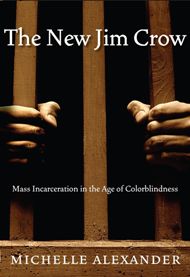
The New Jim Crow: Mass Incarceration in the Age of Colorblindness, by Michelle Alexander – This book not only adds to the analysis provided by the Sentencing Project over the past 20 years, it provides a framework for understanding how the US prison system is essentially a racial caste system. The New Jim Crow gives readers important analysis on why there are profound racial disparities within the so-called criminal justice system. Michelle Wallace’s book joins the important body of work on the Prison Industrial Complex and is an excellent companion to the work by Angela Davis.

The Crisis Caravan: What’s Wrong with Humanitarian Aid?, by Linda Polman – Not since Tom Barry & Deb Preusch’s book The Soft War has a writer done such a good job of exposing the multi-layered problems with what is generally called humanitarian aid. Journalist Linda Polman has seen first hand how humanitarian aid is used and misused in many parts of the world. Polman not only writes like an investigative journalist, she provides case studies to support her analysis. The chapter on the use of humanitarian aid in Afghanistan is particularly useful since it is an ongoing crisis.

Black Bloc, White Riot: Anti-globalization and the Genealogy of Dissent, by AK Thompson – Black Bloc, White Riot is a very interesting and challenging book that not only explores the racial dynamics at work in the anti-globalization movement it takes a series look at some of the important questions that people should be thinking about who engage in this kind of work. Thompson, who does workshops on direct action, explores questions surrounding what some call “global protest hoping,” gender & direct action, as well as the role of “local organizing” in making links to larger struggles against neoliberal economic policies and imperialist wars. An important book for people who do any kind of organizing work, particularly those involved in anti-globalization actions.

When Media Goes to War: Hegemonic Discourse, Public Opinion, and the Limits of Dissent, by Anthony DiMaggio – When Media Goes to War is an excellent sequel to DiMaggio’s first book Mass Media, Mass Propaganda. In this new volume the author takes a close look at the role that the major daily US commercial media played in the US occupation of Iraq, the War on Terror and other major US foreign policy issues. In addition, DiMaggio looks at how the US commercial media framed the public dissent against such policies, which sheds light on how they view the public and public opinion. When Media Goes to War is a very important contribution for anyone who wants to understand how the news media functions in this country.
A Look at the GR Press Voter Guide
Yesterday, the Grand Rapids Press sent out as an insert in the daily paper their 2010 Voter Guide. The print voter guide doesn’t contain as much information as the online guide, but it is worth critiquing as a stand-alone election information source.

The voter guide is 20-pages long with the front cover being just that, a cover with an image of gubernatorial candidates Rick Snyder and Virg Bernero. There are also eight different paid political ads: one from the Libertarian Party and the other 7 from individual candidates – Justin Amash, David LaGrand, Bing Goei, Mark Jansen, Roy Schmidt, Frank Hammond and Dave Hildenbrand.
There is something just not right about including paid political ad space in a voter guide. The voter guide should be just about information on the candidates and ballot proposals that people will decide on next week. What is especially problematic is having paid political ads from candidates placed right next to the information on specifics races. For instance, page 8 is taken up completely with information on the three candidates running for the 29th State Senate District – Dave Hildenbrand, David LaGrand and Bill Gelineau. Covering half of page 9 is an ad from David LaGrand. Having such ads right next to the information about the candidates and where they stand on certain issues just seems inappropriate and only contributes to claims of partisan bias from the Press.
Beyond the ads there is also the issue of not including the questions and answers from several of the races in this area. For instance, there are only candaidate questions and answers for the 29th District State Senate race, but for the 24th, 28th, 30th and 34th Districts there is only a brief candidate profile. The same is the case with the State House races, where only the 75th District race has responses from candidates to seven different questions. Of the 19 Kent County Commission races, only 5 have responses to just three questions.
Maybe the most disappoint omission was for the two statewide ballot proposals. In this instance the Press published a short blurb from an Associated Press reporter for Proposals 1 & 2, instead of actually printing the text of the ballot proposals as they will appear on the November 2nd ballot.
Then there is the issue of how questions are framed by the Press. For example, in the 3rd Congressional race one of the questions is, “Do you think the health care bill should be repeal? Why or Why not?” While the question is not unreasonable it doesn’t lend itself to providing much information on what candidates think about the role that government should play in determining whether or not people in this country have a right to adequate health care. In other words, the questions tend to be too limited.
Another example from the questions posed to the 3rd Congressional candidates is, “What more needs to occur at the federal level to aid the economic recovery?” Framing the question this way does not provide any easy opportunity for candidates to talk about what the federal government has done since the economic crash of 2008. Why not ask the candidates what they think about the government’s bailout of Wall Street, the so-called stimulus legislation (TARP) and the general role that government should play in how the economy runs?
Lastly, the Grand Rapids Press could practice more journalism by providing information to potential voters on the responses that candidates gave. For instance, the Press should be verifying the claims that candidates make in their responses to see whether or not they are based on facts.
In addition, when there are candidates running as incumbents or who have a voting record in a different capacity the Press should provide more information on how candidates have voted in the past, which would allow potential voters an opportunity to see what candidates have stood on issues in the past as well as what they are saying about issues before the election.
While one can claim that the Grand Rapids Press Voter Guide does provide people with some information on candidates and ballot proposals for next Tuesday’s election, it falls short in being a strong resource for people in order for them to make truly informed decisions on November 2nd.
What is ArtPrize?
(This article is by Richard Kooyman and re-posted from Facebook.)
 The second annual ArtPrize, the world’s largest art competition decided by popular vote just wrapped up in Grand Rapids, Michigan. 192 private and public venues juried 1713 artists and placed them in a three square mile section of the core downtown where 38501 registered voters then casted 465538 votes and picked the first place winner out of the top ten. The ten finalists divided a purse of $450,000 with the first prize receiving $250,000.
Since it’s inception there have been questions as to where does ArtPrize fit in the art world big picture. Questions like how does the competition design effect artists and the public and what does the foundation behind ArtPrize think about art and its place in society? And who are the people behind ArtPrize?
ArtPrize is the brain child of Rick DeVos, son of Dick and Betsy DeVos and heirs to the Alticor/Amway fortune. The Dick and Betsy Devos Foundation funds the prize money for ArtPrize and have been vocal supporters of the event. ArtPrize describes itself as a “radically open art competition” and “part social experiment” where the goal is to “reboot the conversation” between the public and artists about art.
As an artist I believe it is important to ask what is the ArtPrize social experiment and which conversations about art does it feel need to be “rebooted?”
To help answer those questions the first thing to do is to look at the Artprize website. It’s mission statement, now called a ‘Design Brief’ is filled with hip sounding catch phrases that suggest a blurring of the role between artist, viewer and community, blending fact and promotion into new, yet often vacuous descriptions. Pronouncements like “You = Creator” and “ Art is the focus of the competition but the Community is the event” hint at values designed to suggest a new reinterpretation of the arts. The ArtPrize message infers that the old way of thinking and talking about art should be replaced by a new dialog and presentation, a new agenda that pairs art with community and entrepreneurship.
Ask anyone who has attended ArtPrize what they think about it and you will get mostly positive impressions about how the event is good for the economy of Grand Rapids, good for children’s art exposure and a fun event filled with amazing sights. All these elements are true but seem ancillary to why ArtPrize was designed as a art competition decided by popular vote. Why did the Dick and Betsy DeVos Foundation, a Christian Evangelical Foundation, decided to provide the money for ArtPrize? And why was it designed to be solely a public vote? Was it simply a good idea to bring business to the area restaurants and hotels or was it a statement, even a referendum against the established ideas of art in society today?
Here is one answer to these questions. ArtPrize is an ultra conservative families new venture into the cultural art’s management business. Let me explain.
ArtPrize’s Definition of Art
While ArtPrize claims to be “radically” open to any artist who applies one still needs to be juried into a venue to show your work. A hand few of the 192 venues are juried by art professionals but the most are not and no information is given to the applicants about who is jurying their work and what their qualifications may be. ArtPrize never uses the words ‘jury’ or ‘juried’. Rather ArtPrize sells their event as a coming together of artists and venues, a “matching” as they say. The main reason for a public vote is explained on the AP web site as being fun – ”Who doesn’t love learning through play?”
ArtPrize says that if art is fun people will want to learn more about it. Before you teach anyone about art you need to define what art is, or what your definition of art is. What is the ArtPrize definition of Art?

The Acton institute, located also in Grand Rapids, calls itself a “ecumenical think-tank dedicated to the study of free- market economics informed by religious faith and moral absolutes” and is financially support by The Dick and Betsy DeVos Foundation. Betsy DeVos has been an Acton board member for over 10 years. In a recent Acton blog podcast titled, The Stewardship of the Arts, art was defined as a combination of 1) a mastery of skill and 2) the glorification of God.
The photographer Robert Mapplethorpe’s work was sited as an example of being bad art because while it contained the skill requirement of art it was morally depraved and therefore does not fulfill the second requirement of their definition. In an essay written for the Acton Institute Journal of Markets and Morality Trinity College Assistant Professor Nathan Jacobs suggests that to be a good Christian Steward of the Arts “may require withdrawing from the secular art world in favor of something wholly different.” A “rebooting” of the definition of art perhaps?
ArtPrize’s Role in the Privatization of Art
ArtPrize pride’s itself in providing a unique type of art competition. A competition, where the public decides who and what type of art is worthy of the top prize of $250,000. In the initial press release for ArtPrize Betsy DeVos said, “Dick and I share our son’s vision for encouraging everyone to explore the arts in a truly democratic way.”
The debate about the art professional’s role in art exploration was completely side stepped the first year of ArtPrize. Possibly feeling the art world’s skeptical look, in it’s second year they added 4 professional juried awards, sponsored by local corporations, to follow behind the public vote. While the first prize voted by the public is awarded $250,000 the 1st prize in professionally juried awards is only $5000, 50 times less in value as the public vote.

In a 1996 study by the Mackinac Center for Public Policy, the largest state based free market think tank in the country, called for the complete privatization of the arts. The Mackinac Center for Public Policy is located in Midland Michigan and is supported by The Dick and Betsy DeVos Foundation. In the study they declared government support for the arts as being not only a bad idea, but an unfair one.
“Art is highly personal and subjective. Forcing one person to subsidize another person’s art is inherently unfair. Talented Michigan artists, like other professionals, should look to the private sector for income, not to government, for their sustenance,” and that the solution for the sustainability for artists is in benevolent patrons. “Every year, private philanthropists donate nearly $10 billion to further artists’ visions of American culture. Artists whose work pleases their audiences will soon find voluntary support from such benevolent patrons.”
In recent years conservative think- tanks have been asserting effort to redefine art into pluralistic values of art and community and connecting everything to the free market. The ArtPrize website shows three equally sized circular graphics comprising the main elements of the competition: Venues, Artists, Public. Speaking about ArtPrize, Dick and Betsy DeVos repeatedly pluralized creativity with entrepreneurship. In a recent Grand Rapids Press interview Dick DeVos said that their main interest in funding ArtPrize is to support “innovation, creativity, and entrepreneurship.”
Redefining art on pluralistic values of creativity, morality, community and business trivializes the striving for excellence or professionalism in art, as if art alone isn’t enough. Modeling art solely to serve free enterprise devalues art. The very strength of contemporary art today, what makes it truly valuable to society, is the fact that it no longer has to serve religion, politics or business.

The DeVos’s type of entrepreneurial attitude about art values the free market over both government support of the arts and professional knowledge of the arts. The CATO Institute, a free market and individual liberty think tank begun by billionaire David Koch, is also supported by the Dick and Betsy DeVos Foundation. The CATO Institute’s Handbook for Congress calls for the complete privatization of the National Endowment for the Arts and the National Endowment of the Humanities and the total defunding of the Corporation for Public Broadcasting. The handbook states ”Government subsidies to the arts and humanities have an insidious, corrupting effect on artists and scholars.”
ArtPrize uses art and artists to stimulate the local economy of Grand Rapids. They say so clearly on their website, “Art is the focus of this competition, but community is the main event.” In 2009 it was estimated, in a Grand Valley University study that $7 million dollars was generated by local businesses off the backs of the artists who exhibited. Artists themselves have for years been applauding the fact that art is good for regional and national economies. But the danger is not the effect of art on business. The issue is how does business use the arts. Are private subsidies any less “insidious” than governmental support? Business, while being a guiding principle of the ArtPrize founders doesn’t completely explain the reason why the DeVos’s designed and administer an art competition such as ArtPrize. They seem to do it for a bigger reason. They do it to control how society will look at and enjoy the arts.
ArtPrize is a example of the social conservative’s new idea of Art’s Management
Dick DeVos in a recent television interview said “This isn’t just an art contest. It’s about changing the dynamics and conversation about creativity.”
It’s clear that there is a difference between how secular society and Christian society define art. If the secular/Christian debate about what is art cannot be won then at least arts organizations, the current gatekeepers and managers to what is shown or preformed can be controlled.
And how does someone go about controlling how art is managed? One way is to form the DeVos Institute of Art’s Management at the Kennedy Center. In May of 2010 Dick and Betsy DeVos gave $22.5 million dollars, the largest gift ever for art’s management in the United States or aboard, according to Michael Kaiser, President of the Kennedy Center for Performing Arts who said, “It has been abundantly clear to me that we spend a disproportionate share of professional arts training on performers and creators. In fact, billions of dollars are spent educating dancers, singers, pianists and actors. We spend a pittance on training the people who will employ them, who will find resources to support their work and will attract their audiences.”
The DeVos Institute of Arts Management will provided training and technical support for arts organizations including seminars in strategic planning, fundraising, program marketing and most importantly, board development. Boards make organizational strategy and hire artistic directors and staff to implement those strategies.
What do artists need and want from local, regional and national art’s organizations and what it will mean to move from a society where government and art professional institutions fund the arts to a society where arts funding may be completely privatized? And what effect will the DeVos’s social, political and religious beliefs have on the training of future art organizations?
It was recently announced that 35 West Michigan art’s organizations have signed up for a free two year training program, part of a national “ capacity-building” program presented by the DeVos Institute of Art’s Management. In a Grand Rapids Press interview Betsy DeVos said, “We just viewed this as a really powerful way to leverage creative talents for the benefit and enjoyment of all of us.” Do we as artists want a future where we are looked at as primarily entrepreneurs? A world where creativity becomes something more valuable when it is thought of as good business? Do we want local art’s organizations, locally funded, providing programming selected ultimately by local boards trained to look at the arts as a commodity to be “leveraged”?
Who ever controls the context by which art is shown or talked about can control the content of art and how we will talk about it. This is what ArtPrize does. This is something we all should be concerned about.


