US Drones Will Patrol Entire Southern Border
(This article is re-posted from Common Dreams.)
The US will today send another Predator drone on patrol flights along its border with Mexico, allowing authorities for the first time to monitor the entire frontier with the unmanned aircraft.

National Guardsmen will also arrive at the border this week as part of the Obama administration’s plan to strengthen security and combat smuggling.
With immigration a critical issue in midterm elections in November, the President, Barack Obama, last month signed into law a $US600 million ($674 million) bill aimed at reinforcing border security, including programs aimed at countering the smuggling of drugs and migrants.
His administration is also pressing for a comprehensive immigration reform measure that would probably allow many of the millions of illegal migrants in the US to legalize their status.
Many Republican politicians say no immigration measure can be considered unless the federal government can ensure security along the border to prevent a spillover from Mexico’s crime-ridden north and to prevent the arrival of more illegal migrants.
The Secretary of Homeland Security, Janet Napolitano, said the first unmanned aerial system flight from Corpus Christi in Texas would mean the whole border from California to Texas was now covered.
”Unmanned aerial capabilities will now cover the south-west border – from the El Centro sector in California all the way to the Gulf of Mexico in Texas – providing critical aerial surveillance assistance to personnel on the ground,” she said.
Ms Napolitano said the drone would begin flights today to provide ”critical aerial surveillance assistance to personnel on the ground”.
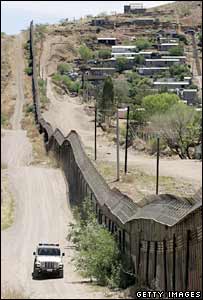
The US, deeply concerned by the raging drug war in Mexico, has allocated 1200 National Guard soldiers and 1500 new agents to the border. The first National Guardsmen were expected to arrive in Arizona this week. Texas is to receive 250 National Guard personnel, who will perform a support role until additional border patrol agents are hired and trained.
The Governor of Texas, Rick Perry, says the number of National Guard personnel is insufficient to provide adequate security. Mr Perry, a Republican seeking re-election, is asking for 1000 National Guardsmen to be paid for with federal funds and assigned just to Texas.
Ms Napolitano, a former Arizona governor, said that what ”we are seeing today is the most serious approach to border enforcement that I have seen in my career”.
The new border security law includes two additional Predator B unmanned aerial vehicles for the south-west border, which should be operational next year.
Ms Napolitano said those two drones and the one that will begin flying this week would give Customs and Border Protection a fleet of six to monitor the 3200-kilometre border.
The Press and the so-called US Troop Withdrawal from Iraq
As the nation gets ready to listen to President Obama tonight explain the US “withdrawal” from Iraq, the Grand Rapids Press has run a story on that theme.
Entitled, “Grand Rapids area residents who lost loved ones in Iraq war glad to see troops leave,” the story continues to read like so much of the coverage on Iraq over the past 8 years.
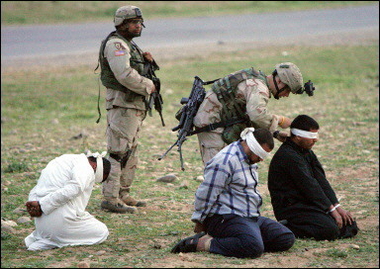
Press reporter Ted Roelofs talked to 3 military families and one Cascade Township resident about their thoughts on the US invasion/occupation of Iraq. The military families have mixed feelings, but primarily think that what their family members were doing in Iraq was noble.
The Cascade Township resident says he thinks the war in Iraq was a big mistake and “it hasn’t been worth the blood and it hasn’t been worth the dollars.” The Press article provides the cost in “blood” by giving the number of US soldiers who died in Iraq (4000 plus), but never mentions the number of Iraqi deaths, which some sources put at 1,366,350.
The Press reporter does not pursue the monetary cost of the war in Iraq, which according to the National Priorities Project is $744 billion and counting. Even this number could be considered low, since it does not factor in the costs at home because of the war. Economist Joseph Stiglitz estimates the costs to the US are more accurately estimated around $3 Trillion.
It should be noted that the Press does not speak to any of the number of individuals and organizations that have been resisting the US invasion/occupation of Iraq over the past 8 years, ever since the build up to war in the fall of 2002. Just because there is one person who says it was a policy mistake doesn’t provide balance, especially since that source also said that getting rid of Saddam was a good thing and that, “We have created a power vacuum that is very likely going to be filled by the Islamist fundamentalists.”
Continuing the Government View on Iraq
Beyond the limited perspectives in this story, what is really problematic about this Press article is that it continues to present the US invasion/occupation from the point of view of the US government.
As we have documented in numerous studies of local news coverage since 2002, others have documented that the national US news media has more or less embraced the US government propaganda on the US invasion/occupation of Iraq (see When Media Goes to War, by Anthony DiMaggio). It is incredible on one level that the major US media has accepted government propaganda on Iraq, but even more incredible since the whole WMD lie has been exposed.
This Press article continues with the line of propaganda, even though it may appear to have multiple views on this topic. The way that the article is framed is both simplistic and ultimately vindicates US policy towards Iraq over the past 8 years. The most only criticism provided in the story was that it was a mistake. By framing it as a mistake, the Press fails to avoid what the rest of the world pretty much feels, which is that the US invasion/occupation was both illegal and immoral.
Framing at as a mistake or taking at face value the comments of military families who think that what their sons/husbands did was honorable means we don’t have to seriously evaluate or come to terms with the motives/intent of the policy and its last legacy.
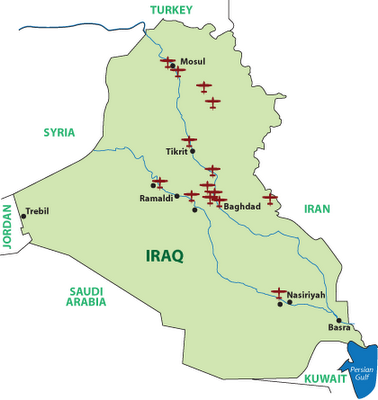
As many writers and analysts have demonstrated, the US invasion/occupation of Iraq has all along been about dominating Iraq’s oil resources, having permanent US military bases in a country that borders Iran and restructuring Iraq’s economy to fit the larger neo-liberal agenda. (See War Without End: The Iraq War in Context, The Shock Doctrine and Failed States: The Abuse of Power and the Assault on Democracy.)
The legacy of the 7-plus years of the US occupation is still unfolding, but we do know that the human and economic cost to Iraq and Iraqis has been tremendous. In an article by Patrick Cockburn, one of the few un-embedded reporters in Iraq, Cockburn identifies some of the ongoing violence as a result of the US occupation and which sectors of Iraqi society the US has backed.
The Press article is meant to put a local spin on the recent announcement by the Obama administration that its promise of troop withdrawal is going as planned. However, as many writers have pointed out, the US occupation is being rebranded since there will be at least 50,000 US troops remaining in Iraq, advisors, an increase in the amount of private military contractors (paid for by US tax dollars) and no intention of dismantling the numerous US bases that play such a vital role in determining US hegemony in the region.
There is certainly a great deal of things that one could point to in terms of the “failures” with the US occupation of Iraq, but one area that we must recognize is the role that the US commercial news media has played and continues to play in misinforming the American public.
Media Bites – Twix and Male Deception
In this week’s Media Bites we take a look at a recent Twix commercial, where a guy actively deceives a woman in order to get her to come home with him. The candy bar provides the guy with an opportunity to think about a better way to verbally convince her that he shares her passion about politics.
How Long Can Grand Rapids Hang On?
It’s almost time for Labor Day—the supposed tribute to the American worker. But across the country, and especially here in Grand Rapids, there’s not a lot to celebrate. Consider these issues:

Crippling unemployment levels. The “official” unemployment rate in the country is currently 9.5 percent. But Michigan’s unemployment rate is 13.1 percent. Grand Rapid’s unemployment rate this summer was 11.1 percent, but don’t get excited yet. We may have slightly lower unemployment than the state average, but we also are getting paid less for the same work.
Lowest salaries of any urban area in Michigan. It’s no secret that Michigan is limping ruinously behind the rest of the country in employment. But here in Grand Rapids, we have the lowest wages in the most depressed state in the country. The cross-country average wage is $20.90 an hour; the statewide average is an hourly wage of $20.64; in Grand Rapids, it’s $19.57. It’s quite a distinction to be fleeced more than anyone else in the United States.
Dwindling insurance coverage. Along with those dismal wages, Michigan has the fastest-growing rate of uninsured workers in the country. Folks in Grand Rapids are almost completely dependent on employee-offered insurance—that’s how over 81 percent of the insured get their benefits. But 7.8 percent of Michigan residents have no insurance at all. Thirty percent of those workers are employed for companies with 500 workers or more; companies that could easily provide benefits. But with a huge pool of available, and desperate, labor, why should the capitalists pay a dime more than they have to?
There are a few exceptions to this bleak picture, but it’s not good news for most of us. In fact, Grand Rapids citizens have an additional monetary burden: footing the bill for fat salary and benefit packages for City of Grand Rapids workers. The current average gross salary for Grand Rapids city workers is $60,801, way more than the median household income in 41 U.S. states, including, of course, Michigan. Along with those wages are excellent benefit packages—completely paid for, even after retirement.
A lack of living wages for the rest of us. Remember our slightly lower unemployment rate here in Grand Rapids? Just because we have jobs doesn’t mean the jobs are worth having. Starting in 2001, the area’s biggest employers, such as the furniture manufacturers, began massive layoffs. Companies like Steelcase laid off more than half its workforce; Electrolux in Greenville closed completely. And the available jobs now? They are not what anyone can consider adequate replacements. One jobs site states that two of the most common jobs available in Grand Rapids are for registered nurses and physical therapists, both of which require special degrees and certification. Another frequent hiring category? That would be for cashiers.
Part of this scenario is being created, of course, by the NAFTA/CAFTA stranglehold that allows U.S. jobs to be removed to other countries where workers are exploited via minimal wages and no benefits, equaling low overhead costs for the companies.
Another capitalist trick that’s popular in the Grand Rapids area is the “contract re-hire” scam. In this situation, manufacturers lay off long-term employees; wait until they are desperate; and then hire them back at much lower wages and sometimes without benefits. One local manufacturer that conducted a deep layoff 20 months ago is now offering their former workers a chance at their exact same jobs…but at 50 percent of what they were paid before, and without pensions or seniority.
Increasing household costs. Grand Rapidians are having to take their cashier jobs and figure out how to use them to cover increasing costs—since our current economic depression has not been accompanied by price deflation. Food prices in Michigan are up again, after falling slightly last year. But it’s our utility costs that are the current budget-busters. One example: our electric rates went up over 14 percent this year alone, and between 20 to 30 percent in the past 22 months. We can thank new state legislation that allows our utility companies to start charging consumers for increases before they have even received approval for the changes.
And city residents in Grand Rapids pay water costs that far exceed those in the comparable regions. Areas like Kentwood, for example, have the same water service as Grand Rapids residents, but pay less. Our water costs have increased 11.4 percent in the past year. You can find the reasoning, padded in incomprehensible double-speak, in a 245-page report online.
Outraged? Call manager Joellen Thompson at 456-4550 and see if she’ll return your call. But don’t hold your breath.
As we approach Labor Day, it’s painful to look at the Grand Rapids scenario: Nine years of economic downturns and layoffs, increasing taxes, increasing wages for city workers, slashed wages for everyone else, and price-gouging food and utility prices. People are scared to speak up, scared to object, and scared to stand up for their rights. Some hope that if this or that political party dominates in the upcoming election, things will change. They won’t. All politicians are the paid creatures of the capitalists—special interests and campaign contributions see to that.
But we do have one card left in our deck. That’s the choice to put a stop to this now. We can only do that collectively, with one voice, with one sense of purpose.
This Labor Day, think about how different life in Grand Rapids would be if you and your fellow workers could control production for the good of the people, not for the good of the CEOs at the top of the economic food chain. It’s time to choose, and time to act. We simply can’t hang on much longer.
3rd Congressional Race – Follow the Money
It has been nearly 4 weeks since the Primary Election and not much attention has been given to 3rd Congressional District race. There is just over 2 months left before the November 2nd vote and it is worth looking at the race to replace Congressman Vern Ehlers.

There are five candidates running for the 3rd Congressional District: Justin Amash (Republican), Pat Miles (Democrat), Charlie Shick (Green), Theodore Gerrard (US Taxpayers) and James Rogers (Libertarian).
If people are relying on the mainstream commercial media in the Grand Rapids area they would be somewhat familiar with both Miles and Amash, but the other three candidates are virtually unknown to most voters. The first time we noted any coverage of the other three candidates was in yesterday’s Grand Rapids Press, which mentioned that Charlie Shick was the Green Party candidate for the 3rd Congressional District in the Political Polpourri section.
This lack of local news exposure of candidates outside of the Republican and Democratic Party will no doubt continue until Election Day and local political debates are likely to exclude those candidates as well. Lack of exposure is also due to limited campaign funds. As of the last required campaign finance filing in late July, no money had been raised by Shick, Gerrard or Rogers. Money dictates attention in political races and it also can tell us a great deal about whom candidates give their allegiance to.
Follow the Money

When it comes to money raised so far Amash and Miles are pretty even, with Amash having raised $379,373 by July 14th and Miles $318,251, according to OpenSecrets.org. These number will increase tremendously between now and November 2nd, but for now lets look at who the major donors have been.
The single largest campaign contributor to date for Amash has been Michigan Industrial Tools ($25,250), which is owned by Amash’s family. The second largest contributor has been Amway/Alticor ($15,700), but if you included any and all DeVos connected entities you would have to add Windquest Group ($4,400) and DP Fox Ventures ($2,400). In fact, virtually everyone in the DeVos clan is endorsing Justin Amash, from Amway founder Richard DeVos to son’s Doug and Dick and even Artprize guru Rick DeVos.
Other major contributors to Amash’s campaign are Club for Growth ($14,200), which is a national ultra-conservative group committed to getting Republicans elected to Congress. Then there are several local businesses whom have contributed significantly to Amash’s campaign, such as Savory Foods ($9,600), Preusser Jewelers ($7,200) and local insurance company Coleman, Dugan & Hughes ($4,800). Other notable donors are S. Abraham & Sons ($3,500), Ellis Parking ($2,700) and the law firm of Warner, Norcross & Judd ($3,400).
For Pat Miles the biggest campaign contributor to date has been Dickinson Wright Llc ($9,500), a law firm with a long list of corporate clients. Besides the $9,500 they are listed as contributing they also have given another $5,500 listed as Dickinson Wright Pllc and another $4,650 listed as Dickinson, Wright et al., according to OpenSecrets.org. This would put that law firms total campaign contributions to Pat Miles at $19,650 as of July 14.
Other major contributor’s to Miles campaign are the law firm of Varnum ($8,250), Yesterdog ($4,500), the Wege Foundation ($4,000), Crystal Flash Energy ($2,400), Steelcase Inc. ($2,400) and the Microsoft Corporation ($2,400.) to name a few.
Clearly, a good percentage of the funds raised by both Amash and Miles to date are disproportionately from the elite sectors of West Michigan, which should be an indication to us about whom their allegiance will be to if elected.
Body Image: Loving your self, not the lie
Body Image Potluck Discussion
6 – 8 p.m. Thursday Sept 2
The Bloom Collective
Steepletown Center
671 Davis NW
(Corner of 5th & Davis)

This coming Thursday, Sept. 2, The Bloom Collective hosts a potluck discussion on Body Image. Men and women are invited to join the conversation which will touch on topics including how the media instills false, unrealistic standards of beauty and perfection and how advertisers profit from American’s universal low self-image to sell products we do not need.
When our body image is skewed, our entire lives can be impacted. Eating disorders, exercise addiction, depression and inability to function confidently in life can break down our mental health and our relationships with family and friends at home, school and work.
How do we deconstruct the media message of perfect beauty and no longer take it personally? How can we learn to love and accept our bodies when they don’t live up to the standards advertisers constantly throw in our faces?
This potluck discussion may not bring participants to that ultimate goal but hopefully an honest discussion about these dishonest standards will help each of us move forward towards loving the body we live in.
The Bloom Collective will provide vegan options and asks guests to bring a dish to pass. For information, email bloomcollective@gmail.com or visit http://www.thebloomcollective.org.
On the Fifth Anniversary of Katrina, Displacement Continues
(This article by Jordan Flaherty is re-posted from ZNet.)
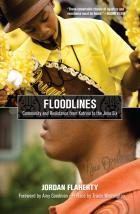
Poet Sunni Patterson is one of New Orleans’ most beloved artists. She has performed in nearly every venue in the city, toured the US, and frequently appears on television and radio, from Democracy Now to Def Poetry Jam. When she performs her poems in local venues, half the crowd recites the words along with her. But, like many who grew up here, she was forced to move away from the city she loves. She left as part of a wave of displacement that began with Katrina and still continues to this day. While hers is just one story, it is emblematic of the situation of many African Americans from New Orleanians, who no longer feel welcomed in the city they were born in.
Patterson comes from New Orleans’s Ninth Ward. Her family’s house was cut in half by the floodwaters and has since been demolished. Despite the loss of her home, she was soon back in the city, living in the Treme neighborhood. She spent much of the following years traveling the country, performing poetry and trying to raise awareness about the plight of New Orleans. But her income was not enough–her post-Katrina rent was twice what she had paid before the storm, and she was also putting up money to help her family rebuild as well as preparing for the birth of her son Jibril. “I wound up getting evicted from my apartment because we were still working on the house,” she said. “In the midst of it, you realize that you are not generating the amount of money you need to sustain a living.”
Patterson’s family had difficulty presenting the proper paperwork to receive federal rebuilding dollars–a problem shared by many New Orleanians. “We’re dealing with properties that have been passed down from generation to generation,” says Patterson. “The paperwork is not always available. A lot of elders are tired, they don’t know what to do.”
Just as the storm revealed racial inequalities, the recovery has also been shaped by systemic racism. According to a recent survey of New Orleanians by the Kaiser Family Foundation, forty-two percent of African Americans – versus just sixteen percent of whites – said they still have not recovered from Katrina. Thirty-one percent of African-American residents – versus eight percent of white respondents – said they had trouble paying for food or housing in the last year. Housing prices in New Orleans have gone up sixty-three percent just since 2009. Eleven billion federal dollars went into Louisiana’s Road Home program, which was meant to help the city rebuild. The payouts from this program went exclusively to homeowners, which cut out renters from the primary source of federal aid.
Even among homeowners, the program treated different populations in different ways. US District Judge Henry Kennedy recently found that the program was racially discriminatory in the formula it used to disperse funds. By partially basing payouts on home values instead of on damage to homes, the program favored properties in wealthier – often whiter – neighborhoods. However, the same judge found no legal obligation for the state to correct this discrimination for the 98% of applicants whose cases have been closed.
At approximately 355,000, the city’s population remains more than 100,000 lower than it’s pre-Katrina number, and many counted in the current population are among the tens of thousands who moved here post-Katrina. This puts the number of New Orleanians still displaced at well over 100,000 – perhaps 150,000 or more. A survey by the Louisiana Family Recovery Corps found that seventy-five percent of African Americans who were displaced wanted to return but were being kept out. Like Patterson, most of those surveyed said economic forces kept them from returning.
A Changed City
As New Orleans approaches the fifth anniversary of Katrina and begins a long recovery from the BP drilling disaster, the media has been searching for an uplifting angle. Stories of the city’s rebirth are everywhere, and there are reasons to feel good about New Orleans. The Saints’ Superbowl victory was a turning point for the city, and the HBO series Treme has gone a long way towards helping the story of the city’s vibrant culture and struggle for recovery get out to a wider audience. Music festivals like Jazz Fest and Essence Fest, which are so central to the city’s tourism-based economy, have brought in some of their largest crowds in recent years. Because of a combination of grassroots pressure, independent media, and federal investigations, the city’s corrupt police department seems to be on the cusp of real reform.
But despite positive developments in the city’s recovery, more than 100,000 New Orleanians received a one-way ticket out of town and still have received no help in coming back, and these voices are left out of most stories of the city. Many from this silenced population complain of post-Katrina decisions that placed obstacles in their path, such as the firing of 7,000 public school employees and canceling of their union contract shortly after the storm, or the tearing down of nearly 5,000 public housing units – two post-Katrina decisions that disproportionately affected Black residents.
Advocates have also noted that among those who are not counted in the statistics on displacement are the New Orleanians who are in the city, but not home. They fall into the category that international human rights organizations call internally displaced. The guiding principles of internal displacement call for more than return. UN principles number 28 and 29 call for, in part, “the full participation of internally displaced persons in the planning and management of their return or resettlement and reintegration.” They also state that, “They shall have the right to participate fully and equally in public affairs at all levels and have equal access to public services,” as well as to have their property and possessions replaced, or receive “appropriate compensation or another form of just reparation.”
In other words, these principles call for a return that includes restoration and reparations. As civil rights attorney Tracie Washington has said, “I’m still displaced, until the conditions that caused my displacement have been alleviated. I’m still displaced as long as Charity Hospital remains closed. I’m still displaced as long as rents remain unaffordable. I’m still displaced as long as schools are in such bad shape.” In the US, Katrina recovery has fallen under the Stafford Act, a law that specifically excludes many of these rights that international law guarantees.
Among those who are back in New Orleans but still displaced are members of the city’s large homeless population. In a report this week, UNITY of Greater New Orleans estimated from 3,000 to 6,000 persons are living in the city’s abandoned buildings. Seventy-five percent of these undercounted residents are Katrina survivors, most of whom had stable housing before the storm. Eighty-seven percent are disabled, and a disproportionate share are elderly.
Cultural Resistance
Sunni Patterson can’t remember a time when she wasn’t a poet. The words flow naturally and seemingly effortlessly from her. When she performs, it is like a divine presence speaking though her body. Her frame is small but she fills the room. Her voice conveys passion and love and pain and loss. Her words illuminate current events and history lessons – her topics ranging from the Black Panthers organizing in the Desire housing projects to domestic violence to injustice in Africa and war in the Middle East.
You can hear Sunni Patterson’s influence in the performances of many young poets in New Orleans. And in the work of Patterson, you can hear the history of community elders passed along, the chants of Mardi Gras Indians, and the knowledge and embrace of neighbors and family and friends. And Patterson is part of a large and thriving community of socially conscious culture workers. Since the late ’90s, you could find spoken word poetry being performed somewhere in New Orleans almost any night of the week. And many of these poets are also teachers, activists, and community organizers.
Now, like so many other former New Orleanians, she cannot afford to live in the city she loves. “I’m in Houston,” she says, seemingly stunned by her own words. “Houston. Houston. I can’t say that and make it sound right. It hurts me to my heart that my child’s birth certificate says Houston, Texas.”
One of the hardest aspects of leaving New Orleans has been the loss of her community. “In that same house that I grew up, my great grandmother and grandfather lived,” she says. “Everybody that lived around there, you knew. It was family. In New Orleans, even if you don’t know someone, you still speak and wave and say hello. In other cities, there’s something wrong with you if you speak to someone you don’t know.”
New Orleanians were displaced after the storm to 5,500 cities, spread across every US state. Although the vast majority of former New Orleanians are in nearby cities like Houston, Dallas, or Atlanta, many are still living in further locales from Utah to Maine. While she is sad to be gone from the city, Patterson wants to see the positive in the loss. “The good part is that New Orleans energy and culture is now dispersed all over the world,” she says. “You can’t kill it. Ain’t that something? That’s what I love about it. So we still gotta give thanks, even in the midst of the atrocity, that poetry is still being created.”
Commissioner White’s position on Urban Chickens
On Monday, Grand Rapids City Commissioner James White released a statement to clarify his position on the proposal to allow city residents to have chickens. White did not vote, since he was on vacation when the City Commission decided the matter, with a 3-3 tie.

Below is White’s response:
Introduction: After keeping an open mind to consider all sides; after conducting a site visit; after hearing from constituents, many of whom are only a half generation from farming; and after considering the role of our city in the region, I have concluded that chickens would not be appropriate for Grand Rapids. My reasoning is as follows:
Test one: In principle, a public policy should be applicable to all citizens. We can ask the test question: If everyone did it, would it be beneficial or detrimental? In my opinion, the chicken ordinance fails this test. As long as a few people have chickens, there is no detrimental impact. But if everyone got chickens, the city would be changed dramatically for the worse. Therefore, only a few people could benefit from the ordinance.
Test two: In principle, a public policy should be applicable to all similar cases. We can ask the test question: If someone wanted to have turkeys, on what logical ground would we deny them that right? In my opinion, the chicken ordinance fails this test. A chicken is a farm animal and so is a turkey. To apply an ordinance to one farm animal and not to another, could be criticized as subjective or inconsistent.
Test Three: In principle, a public policy should strengthen our city’s role as an urban core. We can ask the test question: Does the policy heighten or lessen our identity as an urban center? I believe the chicken ordinance fails this test because it lessens our identity as an urban core. Grand Rapids officially serves as the urban core for the federally designated Core Based Statistical Area (CBSA) for our west Michigan region. The CBSA is used by the Office of Management and Budget in Washington and the Census Bureau and related agencies for developing the federal budget, for accounting and for economic analysis. Grand Rapids is also the county seat and our city collects taxes on behalf of other jurisdictions. It is Grand Rapids that causes Kent County to be officially designated a ‘Central County.’ While Kentwood and East Grand Rapids may have chicken ordinances, they do not play the same role as Grand Rapids.
Test Four: In principle, a public policy should have meaningful public support. I have been persuaded that my Third Ward constituents are opposed to a chicken ordinance.
Alternatives: Our city has at least three ways of getting farm fresh and organic foods.
1. Our retailers are increasing available organic foods.
2. We have a fine farmers market, which may become year round.
3. We can join or form a buying club that buys directly from a specific farm.
At one level it is refreshing to see a substantive response from an elected official on this matter. Having said that I would like to take issue with his points.
First, the idea that if everyone one had chickens in the city it would be detrimental to the city does not hold water. White provides no evidence or argument of how it would be detrimental to the city. It probably isn’t practical for everyone in the city to have chickens in that some people are not capable of taking care of them based on their health, abilities, and space available to raise them. So, even the idea of everyone having them is sort of a false argument.
If everyone in the city composted in would not be a detriment to Grand Rapids. There would be less waste going to the landfill, more organic fertilizer would be created, and even if everyone was not gardening the compost could benefit those who do garden or surrounding farmers. Thus, the idea that if everyone were doing it, it would be bad is a weak argument. On the flip side, if everyone in the city had a car would the city be better off is a question that is not asked. People need transportation, but more cars means more pollution, more traffic jams, more parking space, and more dependence on fossil fuels.
In his second point White argues that the city has to be consistent in its policy, so if people raised chickens, why not turkeys. Again, in some ways he is creating a false premise. People are advocating for raising chickens in the city, because they are chicken and not pigs or turkeys. People who raise chickens know what that means and how viable it is in terms of space and care, so you can’t paint a broad brush and say that it would be inconsistent for people to raise one animal and not another.
We have a zoo in this city. Bears are not urban animals, not big cats or most of the other animals kept at the John Ball Zoo. Zoo supporters would argue they are there for educational purposes, which isn’t questioned by residents or elected officials. Chickens in the city also provide educational opportunities and they would provide healthy food for people.
Commissioner White’s third test seems to be his weakest. Just because the city of Grand Rapids is the “seat of Kent County” doesn’t have any relevance in this case. In fact, the commissioner argues against himself by pointing out that other communities in the greater Grand Rapids area allow people to have chickens. This begs the question, why won’t Grand Rapids allow it?
White’s attempting to make distinctions between urban and rural in many ways are part of the problem around sustainability. We need to change this way of thinking and not place narrow perceptions on what is urban and rural. It would be more sustainable for the future to think about communities as eco-systems and how to improve them. We need to abandon the urban/rural dichotomy that is really just a product of the industrial revolution and no longer necessary, especially if we want to be serious about the future.
Commissioner White’s last point about listening to constituents is an important one, but his comment on it is incomplete. We would all be served better by knowing how many people in the third ward he heard from on this matter and what their arguments against having chickens in the city are. If people are opposed to something based on faulty information then one could argue that it is a misinformed opinion.
If people were not following this issue closely or just relying on the local news media for clarification, then they would not have all the facts. Elected officials need to do a better job at engaging their constituents on these matters if democracy is to prevail.
The suggestions that Commissioner White offers up at the end of his statement on ways for people to get alternative organic foods are all possible and points 2 and 3 would be important actions for people to take. However, people would have more power and more direct input on obtaining organic foods if they were growing gardens and/or raising chickens in their back yards. Giving people to opportunity and support to have more power to make these kinds of choices is what the city should endorse not deny.
Green buildings and Sustainability
Yesterday, the Grand Rapids Press ran a short article in their Business section entitled, “Region’s ‘green’ building set for showcase.”

The article is about an upcoming tour of “green” or LEED certified buildings in the Grand Rapids area. The West Michigan Chapter of the U.S. Green Building Council is hosting the tour, which costs $60 a day or $100 for the 2-day tour on September 10-11. This “green” building tour is part of a weekend conference in Grand Rapids called GreenTown, something the Press article failed to mention.
The article does cite three different sources, a representative from Habitat for Humanity (Kent County), a CEO of a consulting firm and Grand Rapids Mayor George Heartwell. Heartwell is quoted as saying:
“Seven years ago, when I took office, members of the Chamber of Commerce were calling me a ‘tree hugger’ and were laughing about sustainability, (saying), ‘Ah, it’s a passing fad. It will be gone tomorrow. Well, in fact, now no more conservative body than the U.S. Chamber of Commerce has totally embraced the concept of sustainability and has recognized the city as the most sustainable mid-size city in the nation.”
This is an interesting comment from the Mayor, but it is also misleading in that there is no clarification of what he means by the Chamber “embracing the concept of sustainability.” Even if it was clear to readers what sustainability meant “embracing a concept” and practicing sustainability are two very different things.
It is true, as we reported in May of this year, the Chamber of Commerce gave the City of Grand Rapids a sustainability award. What we also pointed out in that previous article is that the bulk of the work of the US Chamber of Commerce and its local chapters advocates for policies that are inherently unsustainable.
The US Chamber of Commerce is rife with contradictions, when comparing their politics to that of sustainable policies. First, the Chamber is dominated by oil, pharmaceutical, automobile and other major polluting industries. Second, the Chamber has aggressively opposed climate change legislation in the US, even though the proposed legislation has been very weak.
Third, the Chamber has opposed virtually all pro-worker initiatives in recent decades, most recently the Employee Free Choice Act. Lastly, it is worth noting that the US Chamber of Commerce has spent more money lobbying Congress than any other entity since 1998, spending over $638 million to influence policy. Receiving a sustainability award from these corporate entities is like receiving a peace award from the Pentagon.
(Editor’s note – GRIID plans to be at the Greentown event and report on the content of what is shared.)

The National Priorities Project (NPP) just released data on the cost of the US wars in Iraq and Afghanistan based upon the Obama administration’s 2011 defense budget.
The NPP database allows you do determine how much money has left your community, your Congressional District and your State. The total amount of tax dollars leaving Grand Rapids to fund the war in Iraq and Afghanistan for 2011 is $83.9 Million.
Their database also allows you to determine what that kind of money could be spent on if it stayed in Garand Rapids. Here are some examples:
12,703 People Receiving Low-Income Healthcare for One Year – OR
74,470 Households with Renewable Electricity-Wind Power for One Year – OR
1,700 Firefighters for One Year – OR
7,657 Scholarships for University Students for One Year – OR
16,086 Students receiving Pell Grants of $5550 – OR
26,898 Children Receiving Low-Income Healthcare for One Year – OR
12,572 Head Start Slots for Children for One Year – OR
27,926 Households with Renewable Electricity – Solar Photovoltaic for One Year – OR
1,249 Elementary School Teachers for One Year – OR
11,651 Military Veterans Receiving VA Medical Care for One Year
The brutal and bloody reality of the US occupations of both Iraq and Afghanistan are reason enough to oppose such imperialist endeavors, but looking at the cost of these wars can be a useful educational and organizing tool.
For information on people organizing locally around this issue see the Facebook group Grand Rapids for Justice & Peace in Afghanistan.
 Grand Rapids Institute for Information Democracy