Continuing Negotiations on Korea Trade Deal Are a Good Sign
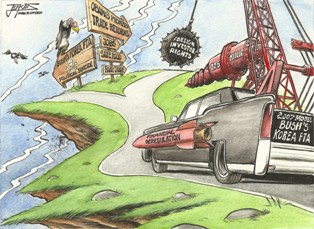
(This article is re-posted from Public Citizen’s Global Trade Watch. Potential job loss from the Korea Trade Deal would have a devastating impact on Michigan jobs. According to Public Citizen Michigan has lost 342,325 manufacturing jobs (or 42.4 percent) during the NAFTA-WTO period (1993-2009), according the Bureau of Labor Statistics.)
That the administration would not move forward with the same NAFTA-style Korea trade agreement that former President George W. Bush signed in 2007 is understandable, especially given that the recent election showed that perhaps the one issue that unites Americans across diverse demographics is opposition to more-of-the-same trade policy. More reasons include a recent study showing that export growth under past U.S. FTAs was less than half of that to non-FTA U.S. trade partners, and Bush-era reviews of this pact show it will increase the U.S. trade deficit.
Hopefully, the reason the administration is not yet ready to present a final trade agreement is that it has gotten the message that more than “cars and cows” need fixing in Bush’s 2007 trade pact text. By not locking into the current text today, the Obama administration has the opportunity to make the fundamental reforms that President Barack Obama promised during his election campaign, including to remove the investment rules that promote offshoring.
Among consumer groups, unions and Democrats in Congress, there is disbelief that the Obama administration could make the severe political and policy error of pushing a Bush NAFTA-style trade agreement with some side letters on various commercial disputes instead of making good on Obama’s campaign promises to remove the worst job-killing aspects of Bush’s trade deal. They dread that the administration might still do so, with the foreseeable political disaster ensuing. The U.S. Chamber of Commerce, GOP congressional leaders and others seeking more-of-the-same trade pacts want the administration to take ownership of another Bush trade pact that would simultaneously favor their offshoring agenda and put Obama’s re-election in peril.
Given the depth of the opposition to the NAFTA model in Congress and among the voting public, the political liability of an Obama flip-flop on his election trade reform commitments by pushing Bush’s NAFTA-style Korea deal without delivering the significant changes he promised, including to the job-offshoring investment rules, cannot be overstated. Ohio, Pennsylvania, Wisconsin, Michigan and Indiana are key to the party’s 2012 electoral prospects. Democrats won these states in 2008, largely lost them in 2010 and risk losing them again in 2012 if Obama takes ownership of a trade agreement the public views as a jobs-killer.
Background:
During the 2008 presidential campaign, candidate Obama pledged to chart a new course for American trade policy that could create jobs. In speeches, town hall meetings, answers to questionnaires, mailings and paid advertisements in key swing states, Obama said that he would exclude the damaging foreign investor rights and their private enforcement that threaten public interest safeguards and promote the offshoring of jobs. He said that he would include strong, enforceable labor and environmental protections. Here is a comparison of Obama’s campaign commitments on trade and Bush’s Korea FTA text.
The midterm elections featured an unprecedented 205 candidates campaigning on fair trade themes and against the export of U.S. jobs. (See a report on this, tables of candidates’ use of trade, and links to the 240 campaign television ads against unfair trade.) A recent NBC News-Wall Street Journal Poll found that a record number of Americans across stunningly diverse demographics think current U.S. trade policy has hurt them economically. Here’s our backgrounder on the economic implications of the Korea FTA. And here’s our memo on Obama and the Korea FTA that includes the polling data and political context.
The Korea FTA provides an excellent opportunity to implement Obama’s promised trade policy reforms to remove the worst job-killing aspects of Bush’s NAFTA-style deals. The current text includes the extraordinary investor rights that promote offshoring and expose domestic financial, environmental and health laws to attack in foreign tribunals. Signed before the financial crisis, the pact calls for financial services deregulation that is at odds with the lessons we’ve learned from the economic crisis and that may conflict with recent reforms made by both the U.S. and Korea. The pact also explicitly forbids reference to the International Labor Organization’s conventions that establish internationally recognized core labor standards. It remains unclear if any of these issues have been raised in the recent discussions between the U.S. and Korea.
Press Publisher says they are a “highly successful marketing services producer” during Econ Club luncheon
The Economic Club of Grand Rapids held one of their monthly luncheon gatherings in downtown Grand Rapids today. Their guest speaker was the publisher of the Grand Rapids Press, Dan Gaydou.

Gaydou’s talk was entitled, Adapting to the Changing Media Landscape, which some might have interpreted how the only daily newspaper in Grand Rapids has made adjustments in how in reports the news, but the head of the Press made it clear early on that news had little to do with what he wanted to impress upon the audience.
Gaydou began with a powerpoint slide with the headline Dealing with disruption in the marketplace, which right away set the tone for what he wanted to address. He then showed everyone a list of the media entities that the Press is part of, namely the Booth News chain. However, Gaydou failed to mention that Booth News is really part of the media conglomerate Advance Publications.
“The lingering economic crisis,” Gaydou said, “means that when people don’t buy goods, advertisers don’t by ad space, which negatively impacts revenue for the Press.” This business reality makes it clear why the Press also does so called news stories that essentially promote area businesses and a consumerist culture. The most recent evidence was the front page article on the front page of Saturday’s Press where the Press reporter told readers about local retailers who aren’t waiting til Black Friday to offer holiday sales. (Shoppers Feast Early)
Gaydou then said that the Press has been changed because of the digital revolution, which he thinks has been good for consumers. The Press’ Publisher spent time then hyping new technology, which he thinks with radically change our lives. Gaydou held up an iPad he says has revolutionized the way he accesses media. This notion of media technology is something that Gaydou felt the Press needed to “take hold of and make it theirs.”
The Press Publisher then told the audience, “Incremental change is over, we need to make drastic change or become irrelevant.” It seemed to this writer that what this meant is that newspapers have to become more than newspapers. Gaydou held up a copy of West MI Business Review, which he publishes and can be find on MLive.com. According to Gaydou this publication demonstrates their ability to be innovative.

Gaydou also talked about what he called “Adjustment Strategies,” where because of less revenue from traditional advertising they have needed to rethink how they operate. The Press’ Publisher says they have been quite successful and referred to a recent Editor and Publisher Magazine article which stated that of all the media markets in the US the Grand Rapids Press ranks seventh is sustainability and readership because they have made their online presence more than just a digital archive of what appears in print.
Gaydou also claimed that the Press has “Core Competencies.” One of those core competencies is that “the Press acts as an independent & credible source for local content.” Gaydou even referred to the Press as a Community Watchdog, but did not cite any examples of how they fulfill this function.
More importantly for those in attendance, Gaydou stressed the economic role his newspaper plays by saying, “We are a highly successful marketing services producer. Our marketing strength has never been better. Your business is a success because of the partnerships you have with us. We offer targeted direct marketing opportunities, search engine marketing, display ads, shopping data bases, text and video to help your businesses grow.” This was certainly the core of his talk and it went over well with the audience who was made up of the management class.
However, Gaydou did believe journalism should rise above that so as to look out for the interest of the community. “We care about the poor, the down and out, the person who is powerless to ask important questions.” Again, the Press’ Publisher offered up no evidence that they care about the poor and the powerless.
Gaydou concluded his talk by re-affirming the business and marketing aspect of what they do. “We are aiming at tomorrow, while mining today’s revenue. We are mastering the underlying analytics, strategizing around transition economics and doing more than repurposing, we are adding more content.” If you asked people what this had to do with journalism, what do you suppose they might say?
The Econ Club moderator only allowed time for one question from the audience. Someone asked Gaydou what the future was for investigative reporting? Gaydou said it is a core of what they do and cited the Hangar 42 Studios scandals that the Press reported on. Unlike other Econ Club events I have attended, no other media was present to do a story on Gaydou’s talk, which should tell us something about the supposed competition that exists between news entities in West Michigan.
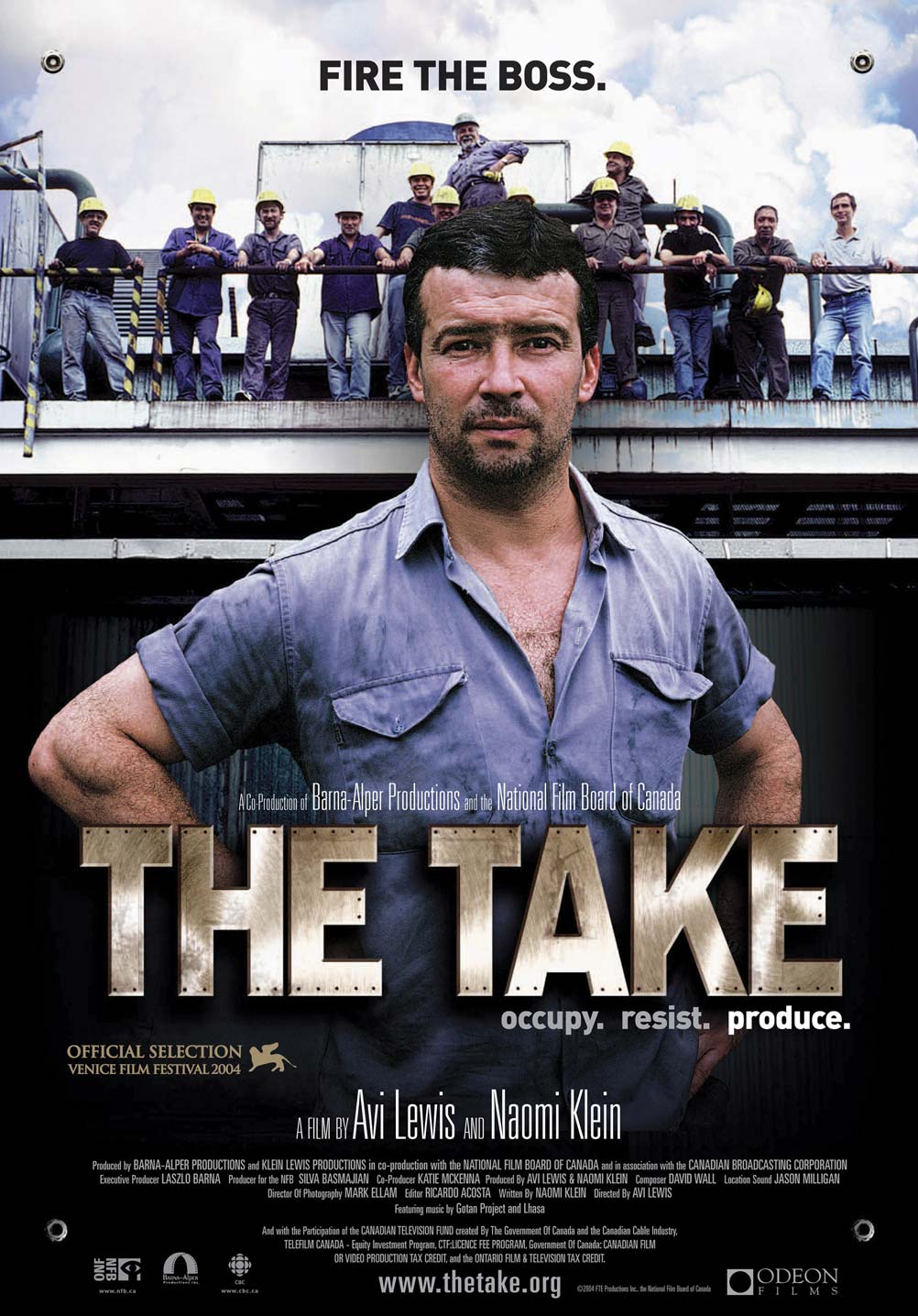
This Thursday (November 18), the Grand Rapids Chapter of the IWW will host a screening of the award winning film, The Take.
In the wake of Argentina’s dramatic economic collapse in 2001, Latin America’s most prosperous middle class finds itself in a ghost town of abandoned factories and mass unemployment. The Forja auto plant lies dormant until its former employees take action. They’re part of a daring new movement of workers who are occupying bankrupt businesses and creating jobs in the ruins of the failed system.
The Take demonstrates to all of us that despite the current economic crisis or any economic crisis working people do not have to accept what the system tells them. Naomi Klein and Avi Lewis shows us how thousands of Argentine people responded to the economic crash of 2001. Simply put, people said the system doesn’t work, so let’s occupy factories and take the over.
The film is free and open to the public. It will be screened at the:
IATSE HALL
Thursday, November 18
7pm
931 Bridge st nw
Grand Rapids, MI
The Press and Wyoming’s Medical Marijuana decision
(This article was submitted by Joe Spaulding.)
 When Jack Poll, the current Mayor of Wyoming, was running for election in 2009, the Grand Rapids Press editorial board gave him their endorsement, sighting, among other things, his opposal to the city’s notorious “crash tax.” The fees dispensed to anyone who was unfortunate enough to get in an accident within the city limits, regardless of who was at fault, were massively unpopular, nationally ridiculed, and laughingly unprofitable.
The fees were repealed within a year-and-a-half of being passed. Getting rid of them was a no-brainer, and the Press wasn’t sticking its neck out too far in supporting Poll for mayor. Unfortunately, Poll and the Wyoming city council have not learned from the mistakes of the recent past, and due to the Press’ cozy relationship with Poll, they have failed to take him to task for this.
On November 1, the GR Press published two articles discussing the state of Michigan’s recently passed medical marijuana law in terms of the City of Wyoming. The first described a Wyoming man, licensed by the state to be a medical marijuana patient and caregiver, who had his house broken into and plants and other property stolen in October. Due to the city’s ambiguous stance on the state’s law, he was reluctant to call the Wyoming Police to report the incident. Perhaps he was right to have his doubts. In an extravagant display of blaming the victim, as well as a hopelessly distorted view of public safety, Wyoming Police Chief James Carmody has stated that these types of robberies are a reason for the city to adopt a ban on medical marijuana.
The second Press article came a little later on in the evening, and was posted to mlive.com. It announced the city council’s decision to ban medical cannabis use, growing, and distribution in Wyoming city limits. The Press quoted Poll as saying “There’s a right way to do it. The state of Michigan did this the wrong way.” The article also mentions that the City Attorney stated fears that the city would be sued for being out of compliance with state law. Here is where the newspaper drops the ball. Instead of using tools available to anyone on the Internet (especially in Chile) to examine the validity of the City Attorney’s claims, the Press let his statement hang in the air as if the city’s ban has a 50/50 chance of surviving a court challenge. Within ten days, a Wyoming resident stepped up to sue the city over the obviously illegal ban.

The law, passed by the majority of Michigan voter’s (and 27 out of 28 districts in Wyoming), allows for any patient or caregiver charged with marijuana related legal violations to have those charges dismissed once his or her medical marijuana license is presented in court. Now that the city has banned medical cannabis, Poll is in a double bind – either he doesn’t encourage the arrest and prosecution of medical pot growers and patients, and the only effect the council has is discouraging otherwise law abiding citizens from assisting the already cash-strapped and over-burdened police, or the law faces challenge after challenge in court until it is innevitably overturned, costing the citizens of Wyoming thousands of dollars they do not have.
The other thing the Press failed to do was to hold Poll accountable for his evident disdain for Michigan’s initiative process (and by extension the voters and possibly the democratic process), as well as his doubts about the ability of the citizens of Wyoming (and probably all of Michigan) to determine what is best for their future. Poll talks about the medical cannabis law like it was passed by the Michigan legislature, and the Press never reminds its readers that the law is the will of the people of Michigan. Maybe the Press was afraid of looking like they were flip-flopping within a year of endorsing Poll for mayor. The end result being the will of 17,888 voters getting temporarily overturned by six city council members, and the cash-strapped, job-starved citizens of Wyoming being left paying for court costs of trials with forgone conclusions.
The 2010 Election: The Big Losers Are Immigrants

Now that the dust has settled and the pundits are still shuffling around clutching election returns in their hands, it’s time to take a closer look at how November 2 has impacted social justice issues in the U.S. We’ve heard endless talk ping-ponging back and forth about how and why the victors triumphed and the losers lost.
But nobody’s talking about the group that really stands to lose the most because of this election: immigrants. Victories in some states will swing legislatures toward more racist anti-immigration laws…while in other states, a single winning candidate is going to have a negative impact on the lives of people who are already living under the shadow of fear, prosecution, and reprisals.
Prior to the election, it had become clear that the current administration was not going to make genuine immigration reform a priority, as Obama had promised he would during his 2008 campaign. Instead, in a move to placate conservatives, the administration has actually allowed big increases in the number of deportations of undocumented workers over the past two years. While Democrats have been doing their under-the-table deals, many Republican and Tea Party candidates have been openly calling for state-by-state racism via unconstitutional laws like SB 1070. And the rallying cries for a witch hunt certainly won out this November.
One of the most surprising twists was in the campaign of Susana Martinez, the new governor of New Mexico. During her campaign, she announced that she would never sign a SB 1070 bill in her state. But now she’s also saying that she plans to repeal laws in New Mexico that have allowed undocumented workers to get drivers’ licenses—a crucial key to obtaining work—and that she will revoke all drivers’ licenses that have already been issued to this group of workers. In addition, she wants to terminate an in-state tuition lottery that allowed these workers to participate in lower-cost college classes. In a recent interview with CNN, Martinez, a Latina, said, “The borders with Mexico have to be shored up…the borders must be secured.” She also stated she is against any amnesty for undocumented workers, regardless of how long they’d lived in the U.S.

In Georgia, Mississippi, and Florida, newly elected governors have pledged to initiate SB 1070 measures. Georgia already has some of the harshest laws on the books—undocumented workers are virtually unable to get access to health care, college educations for their children, or any benefits, even though they pay into the state’s unemployment insurance through their jobs. Georgia’s constitution makes the governor the state budget director, so the office comes with a great deal of power to eliminate programs and fund state policing efforts. The incoming governor, Karen Handel, was not shy about her stand on undocumented immigrants. She blanketed the state during her campaign with a robocall that contained an endorsement from Arizona Governor Jan Brewer, one of the originators of SB 1070. Handel told voters “A Handel administration will say ‘bring it on’ to President Obama and pass legislation similar to what they have in Arizona.” And she now has the power of the purse to pursue this goal from the governor’s mansion.
In the South Carolina State Senate, Glenn McConnell has been planning to launch SB 1070 copycat legislation in January 2011. Now he has the support he needed—the newly elected governor, Nikki Haley, who announced on election night that she looks forward to signing McConnell’s bill into law. “We will see states across the country stepping up and protecting our citizens…that’s what Arizona has done,” Haley said in a speech in September.
Nebraska’s incumbent governor, Dave Heineman, ran his entire re-election campaign with a virulent anti-immigration plank. He plans to skirt around potential problems with SB 1070 challenges by focusing on broadening police powers at the city level to make it easier to arrest and question immigrants or people suspected of being immigrants. His unsuccessful opponent accused Heineman of appealing to “our lowest common denominator, our fear of difference.”
It’s hardly surprising that in Texas, the now-even-more-bigoted state legislature is already at work on 15 different anti-immigration bills. One of them would make it a state crime to cross the border into Texas without documentation. “Cross the line, do the time” is one slogan attached to this new intimidation tactic. And Texas lawmakers have been given plenty of clout with which to intimidate. Anti-immigrant candidates gained a landslide 50 seats in the state legislature on November 2. This caused one Tea Party blogger to crow, “Not since right after the Civil War have we had so many conservatives in the Texas House.” And really, that tells you all you need to know.
Up north in Wisconsin, State Representative Don Pridemore has just been waiting for an anti-immigrant majority in the State House to introduce an SB 1070-style law in his state. And now he has one. His bill would require everyone suspected of a crime to prove that he or she is not an undocumented immigrant; a 48-hour time window would be given to pull together proof before an arrest. Wisconsin residents would also be encouraged to file reports against and sue their city governments if they feel that undocumented workers were not being dealt with to the full extent of the law.
Pridemore has also stated he plans to put a stop to grass-roots sanctuary programs in Madison and other Wisconsin cities. He said about his legislation: “People are leaving Arizona as a result of their new immigration law, and I don’t want Wisconsin to be a magnet for these people because of the extensive state benefits we have.”
Here in Michigan, it’s very hard to determine exactly what we’re facing next. Rick Snyder kept his cards so close to his vest during the election that many people only knew he has a ten-point plan for reviving Michigan’s economy…but were somehow never able to pin him down on any details regarding those ten points. Snyder’s attitudes about immigration laws are equally obscure.
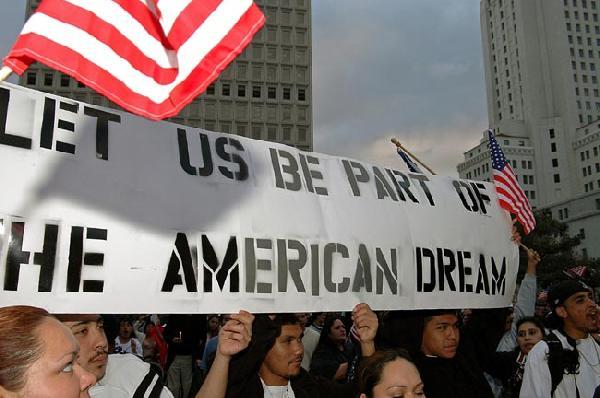
If you check the nonpartisan site, “On the Issues,” you’ll find that Snyder has no documented stance on 21 of the 25 topics that the watchdog group tracks, including immigration issues. In July, Snyder did say he wanted to “increase incentives for legal immigration, because legal immigrants will boost the economy and create jobs.” No details about what the incentives might be, how they would be “increased,” or even a hint of a stance on undocumented workers.
Piecemeal challenges to Arizona’s legislation are winding their way through the molasses-like waters of the legal process. Meanwhile, states are still free to put into place any laws they want regarding undocumented immigrants. It’s a window of opportunity to sharpen the hunt for members of a population who only want citizenship, dignity, honest work, and the right to remain in their own homes—the same things that the U.S. has been giving to immigrants since the 18th century. Current restrictive policies and massive backlogs are denying them those rights. Now state governments across the country will be driving them deeper into hiding and lives of fear. Our government has failed them on every level. Their best hope is that American citizens will reject this ongoing persecution and stand with them in solidarity until their human rights are secured.
Wage Theft epidemic spurs nationwide protests

(This article is re-posted from Common Dreams.)
Activists in more than 30 cities, organized by Interfaith Worker Justice and backed by labor groups, are staging a National Day of Action Against Wage Theft on November 18. “As the crisis for working families in the economy has deepened, so too has the crisis of wage theft,” says Interfaith Worker Justice (IWJ) Executive Director Kim Bobo, perhaps the country’s leading reformer addressing the ongoing scandal.
As much as $19 billion is stolen from American workers annually in unpaid overtime and minimum wage violations and, in some cases, through the human trafficking of legal immigrant workers. The latest case to come to light involves alleged horrendous conditions for immigrant workers reportedly hoodwinked in Mexico by a food services contractor for the New York State Fair and kept in near-slavery conditions of $2 an hour.
Indeed, the scandal surfaced when some of these legal guest workers showed up several weeks ago at a Syracuse area clinic, severely dehydrated and malnourished after allegedly being kept in virtual imprisonment in a trailer at the fair and at other locations; they were reportedly being denied thousands of dollars in legal wages owed them while working about 100 hours a week at fairs for months, according to legal filings and Danny Postel, communications coordinator for Interfaith Worker Justice.
“It’s one of the most shocking cases of wage theft,” Postel says.
The contractor, Pantelis Karageorgis, is the target of a labor standards class-action lawsuit filed last month by Farmworker Legal Services and a Labor Department investigation. But criminal charges by the U.S. Attorney’s office have been dropped— “dismissed without prejudice”—and instead a modest settlement involving some back payment for the workers is being hammered out, knowledgeable sources say. In These Times spoke to the vendor’s attorney Thursday seeking comment, but didn’t hear back as of this writing.
While Obama’s Labor Department under Hilda Solis has been winning high marks for adding new inspectors and its tough rhetoric, as well promoting outreach to workers victimized by wage theft, the on-the-ground enforcement remains uneven. One reason: the under-funded, outgunned Wage and Hour Division has a spotty record for cooperating with local advocates and workers’ centers.
Kim Bobo says, in a tempered statement:
Interfaith Worker Justice is pleased with the new DOL leadership’s commitment to wage theft enforcement…Nonetheless, given the crisis of wage theft around the country, the partnerships between the Wage and Hour Division and local workers centers need to be strengthened, and a Wage and Hour Director should be nominated who can develop aggressive and creative approaches to stopping and deterring wage theft.
In fact, one activist notes in blunter terms “The Wage and Hour Divison is way behind OSHA in having a culture of aggressively targeted investigations.”
Today’s OSHA, of course, despite some new inspectors, is widely viewed as still failing to effectively protect workers. With just a thousand inspectors to oversee abuses and wage theft affecting over 20 million low-wage workers — the primary but not the sole victim of a crime affecting white-collar workers, too — the Wage and Hour Division hasn’t been able to turn around yet the willful flouting of labor laws essentially encouraged by the Bush Labor Department’s years of neglect. (The problem is only worsened by the grossly under-manned state labor agencies, which, a new study by Ohio Policy Matters finds, have less than 700 total investigators enforcing minimum wage and related labor laws in the over 40 states surveyed.)
Indeed, as Ted Smukler, IWJ’s policy director sums up, “Secretary Solis is using her bully pulpit and hired 250 additional investigators, but Obama needs to get a Wage and Hour administrator confirmed [there’s only an acting director] and they could be doing a lot more in enforcement.”
Whatever the Department of Labor is attempting to do in this arena, it’s clearly not had much of a deterrent effect. A new IWJ video underscores the scope of the continuing unstopped corporate crime wave (see above).
Cincinnati workers bilked out of overtime pay?
The failure to effectively enforce wage theft has allowed employers to underpay and stiff workers with impunity. For instance, one alleged scheme by owners of a Cincinnati animal hospital reportedly involved paying immigrant workers overtime, but then demanding the pay be returned to the owners in the form of cash kickbacks.
Daniel Sherman, the director of the Cincinnati Interfaith Workers Center, contends, “It’s one of the most egregious examples of wage theft”—but hardly unique in his area. He contends, “The law is not very strong and it is not pursued.”
As the Cincinnati Enquirer reported late last month:
Three undocumented workers say they were extorted into kicking back $24,000 in overtime pay to the owners of an animal hospital under the threat that if they didn’t come up with the money they’d be deported.
Those workers and advocates for immigrants say the practice is not uncommon in Greater Cincinnati and is a growing problem.
The former employees of the Hamilton Avenue Animal Hospital and Clinic in Pleasant Run and the Sycamore Animal Hospital in Symmes Township say veterinarians Michael Cable and his daughter, Stephanie Cable, first accepted their payments in personal checks but later required them to pay in cash.
Two of the workers placed a hidden camera in the Sycamore Animal Hospital on Montgomery Road and filmed themselves three different times giving cash to Stephanie Cable. One worker rented the apartment above the animal hospital and installed the camera from there.
Jose Aguilar and another worker, Salvador Martinez, 20, gave the Enquirer the video, pay stubs and a series of canceled checks that had been deposited into the animal hospital’s account at Huntington Bank…
The video provided by the workers shows three men paying Stephanie Cable cash.
“Hey, Steph – how much I need pay back for overtime this check?” asks Aguilar in the video.
“Uh, I think it’s in my car – I really need to start bringing my bag in,” Stephanie Cable says on the video.
In one scene, she takes the money from a man and quickly puts it in her back pocket….
But the attorney for the Cables, Steve Goodin, told In These Times, “The Cables have categorically denied that they were extorting or threatening to deport their employees.” Because of pending investigations, he says, he can only say about the alleged labor law violations: “We’re urging everyone not to rush to judgment,” noting that there was a bomb threat aimed at the owners after the Enquirer story appeared.
Yet it’s also clear the Cables are planning to mount an aggressive defense: they’ve already filed a criminal complaint with the county sheriff against the workers who arranged the filming for allegedly violating wiretapping and trespass laws, although Goodin concedes a criminal prosecution seems unlikely. They’re also planning a civil suit on similar grounds. Still, he says of the owners, “They were friendly with these guys.”
He also argues that an earlier 2007 settlement the Cables made with the Department of Labor for allegedly underpaying overtime to 19 former employees—in which they admitted no guilt but paid about $9,200—is completely unrelated to these latest violations.
Workers’ advocates: Employers act with near impunity
Whatever the merits of the new charges against these owners, advocates at these privately-funded workers’ centers often affiliated with IWJ, including Daniel Sherman in Cincinnati and Rebecca Fuentes in Syracuse, regularly field complaints from the victims of employers who routinely ignore labor laws with little fear of timely or effective punishment.
As one national activist told In These Times privately, the Department of Labor usually has to go to court to enforce its own regulations, and so “the smart [employers]” just wait for the interminable legal process to play itself out or get dropped altogether—assuming any enforcement efforts are even started.
As a result, Sherman and other advocates report, new abuses keep cropping up. In yet another case of labor trafficking, for example, he learned just last month about 12 immigrant laborers working about 120 hours a week for $1,000 a month each, housed at the warehouse where they worked—and who were essentially forced to sleep inside just four hours a night.
Sherman’s organization only discovered the abuse after one worker jumped out of a warehouse window and escaped to a church for help. “The church called us,” he says, and he in turn contacted the Department of Labor to pursue labor law violations– and the FBI, to investigate human trafficking. But he’s not confident that there will be any prosecutions for trafficking because the threatened and intimidated workers were theoretically free to leave.
But in another recent case, Sherman says, the employer just pulled a gun on two immigrant workers who complained about not getting paid. No criminal or legal actions have yet been pursued because the families of the workers are too scared, he observes.
‘Perfect conditions’ for ‘slave-like situations’ at New York State Fair
The allegations made against the New York food vendor illustrate some of the ways employers can purportedly intimidate and abuse workers. In a startling affidavit filed by a federal Immigration and Customs Enforcement (“ICE”) agent that accompanied the arrest of Pantelis Karageorgis in September (again, the charges have been dropped at the request of the prosecutor), Special Agent Thomas Kirwin outlines some of the alleged tricks of the labor trafficking trade used against employees hungry for work. The agent’s affidavit and the original class-action lawsuit filed by Nathaniel Charny as the lead counsel of Farmworkers Legal Services on behalf of four named workers and others paint quite an ugly picture.
And the local workers’ rights advocate, Rebecca Fuentes, who helped discover and expose the alleged Syracuse worker abuse, points out, “The guest worker visa program is very flawed, and it ties workers to one employer. That creates perfect conditions for almost slave-like situations,” like those facing the apparently starving New York State Fair workers. (She also claims that, at least in her region, the federal Department of Labor is more responsive than the state labor department, which dawdles for months in the face of serious wage theft complaints – a pattern afflicting many weak state labor departments.)
The food-stand employees were recruited this past summer in Mexico with allegedly “fraudulent” promises of a relatively well-paying job, complete with written contracts, as legal guest workers under the H-2B visa program. They were hired as workers in the Karageorgis firm’s Greek food concession stands that accompanied some carnivals and fairs in the United States.
Starting in Buffalo in August, then moving to Syracuse, agent Kirwin reported, the workers arrived with no food or money, were allowed to get their meals solely by eating at the concessions stands only once or twice a day, and were housed in trailers on the fair sites, working 16 or more hours each day. “On the last day of the [Syracuse] fair, the employees worked 24 hours consecutively,” he noted about the state government-sponsored fair. “At the conclusion of the fair in Syracuse, the defendant paid each of the employees $260.”
Yet by some estimates, for the months of nonstop work at a promised $10.71 per hour and extra overtime pay, the workers actually should have each received closer to $30,000. But for approximately 280 hours of work in just a three-week period, each worker got a mere $360, Kirwin stated.
When the employees complained about not getting their full wages, Karageorgis allegedly made a variety of threats, including potentially firing them, cutting their pay even further, or having them deported—and barring them from ever working in the U.S. again. Kirwin added, “The defendant, who traveled with the Employees the entire time, routinely berated and sought to demean them, calling them, for example, `pussies’ if they complained about illness or injury.”
One of the sadder ironies of the entire case is that some of these victims, also cited in the civil suit, such as Adonai Vasquez, started working for the vendor, Peter’s Fine Greek Food, Inc., as far back as July, 2008. But they kept returning on different work trips for as little as $1 or $2 an hour—despite the previously broken promises of $10 to $12 per hour in wages. This is the reality of the “race to the bottom” in the Wild West-style globalized economy: Immigrants are literally starving to work in the United States.
The still-pending civil suit filed in October alleges, “For a period at least as far back as six years from the date of commencement of this action, there have been hundreds of Mexican national treated in the same violative fashion in regards to the payment of wages.”
At the same time, the lawsuit claims, “Upon information and belief, Defendants [Karageorgis and his firm], grossed more than $500,000 in the past fiscal year.”
Even though one of Karegeorgis’s lawyers, Dawn Cardi, was unable to comment as of this writing, the ICE agent’s affidavit recounts Karageorgis’s version of events. The Greek food entrepreneur explained his operation: his agents recruit workers in Mexico and he submits their legal paperwork to U.S. labor and immigration authorities. But he claimed to be surprised to learn that they were promised $10.71 an hour. He conceded to Kirwin he hadn’t yet paid his workers in full, but intended to do so—while somehow asserting that none of them ever worked in Buffalo for him and thus they weren’t owed money for that work. He also denied making any threats against his workers, except that he’d notify his attorney if they quit.
But the observant immigration agent also noticed that Karegeorgis wasn’t short of cash at the time of his arrest. “He had in his pants’ pockets three bulky wads of cash and also had a briefcase that he said contained money, the security of which he was concerned about,” Kirwin noted dryly. Despite the defendant’s claims, Kirwin added, the agent requested that the food merchant “be dealt with according to law.”
So far, though, he seems unlikely to face any criminal prosecution.
Activists to demand reform around country
It’s small wonder, then, with employers apparently stealing wages with so much impunity, that a groundswell by activists is building to take action, even in a still-weakened regulatory climate. At a preview for next week’s events, for instance, hundreds of workers and allies marched in Minneapolis last Saturday demanding fair wages, an end to wage theft and safe working conditions for retail cleaning workers at major stores, including Supervalu and Target.
The worsening economy makes it even easier to rip off workers desperate for work, the protesters declared (hat tip to Workday Minnesota). “Corporations are responsible for pitting cleaning companies against each other which results in plummeting wages and increased workloads,” said Veronica Mendez, an organizer with Center for Workers United in Struggle, a IWJ-affiliated labor-faith coalition. “The only way to stop this is for these retail chains to meet with workers to establish fair standards. These poor working conditions affect everyone in our communities…”
Interfaith Worker Justice and its allies have ambitious plans for its nationwide local protests next Thursday:
Events on the National Day of Action Against Wage Theft will include protests at businesses guilty of wage theft to demand back wages for workers and events at which political leaders, workers, faith leaders, community groups, and labor unions will present new initiatives to end wage theft.
In Houston, a worker center will release a local report on wage theft and will send a “Justice Bus” around the city to call attention to local businesses that steal their workers’ wages. Other innovative local events include a text messaging campaign, a “Worst Employers” Awards ceremony, “Know Your Rights” workshops for workers, a jazz funeral for lost wages and a Thanksgiving-themed auction and a dramatization against wage theft in Memphis.
Yet the Republican take-over of the House and rising anti-union sentiment have already changed one of their primary legislative goals. The coalition’s call for action includes this sweeping reform priority:
On September 29, Congressman Phil Hare (D-IL) introduced the Wage Theft Prevention and Community Partnership Act (H.R. 6268), which would authorize the U.S. Department of Labor (DOL) to establish a competitive grant program to prevent wage theft. The bill would expand the efforts of enforcement agencies and community organizations to educate workers about their rights and the remedies available to them, while educating employers about their responsibilities under the law.
“That’s dead,” one knowledgeable activist admitted. “He lost the election.”
What We Are Reading
Below is a list of books that we have read in recent weeks. The comments are not a review of the books, instead sort of an endorsement of ideas and investigations that can provide solid analysis and even inspiration in the struggle for change. All these books are available at The Bloom Collective, so check them out and stimulate your mind.

Dancing with Dynamite: Social Movements and States in Latin America, by Benjamin Dangl – This book is a great sequel to Dangl’s first book on Latin American social movements, The Price of Fire. Like the first book Dangl provides sharp analysis of social movements in Latin America, not from the halls of academia, but as someone who has spent significant time talking with and observing movements from below. What makes this book so important is Dangl’s assessment of how popular movements in Latin America interact with the State. The author believes that their strength and ability to makes changes is because these movements have remained independent of political parties and know when it makes sense to endorse state actions and when to fight the state. A useful book for those seeking to understand the impact social movements have on making change in Latin America.

The 500 Years of Resistance Comic Book, by Gord Hill – Native writer and comic book author Gord Hill has given us a gem with The 500 Years of Resistance Comic Book. Hill depicts through words and drawings how numerous Native communities have resisted conquest over the past 5 centuries, with examples from the Incas, Mapuche, Pueblo, Apache, AIM and the Zapatistas. Hill pulls no punches in showing that this resistance has often resulted in Native people using force to defend their communities and the land they inhabited. The book also includes an introductory essay by Native American activist and scholar War Churchill.

Gaza in Crisis: Reflections on Israel’s War Against the Palestinians, by Noam Chomsky & Ilan Pappe – This is a collection of essays and interviews with two of the most outspoken authors on Israeli policy towards the Palestinians. Chomsky & Pappe have spent the last 40 years critiquing and challenging Israeli state policy often at personal risk. The book deals with Israel’s campaign of ethnic cleansing in 1947-48 all the way up to the 2008-09 assault on Gaza. For anyone looking to understand what drives Israeli policy against the Palestinians this book is an excellent choice that will answer important questions.

Debt, The IMF, and the World Bank: Sixty Questions, Sixty Answers, by Eric Toussaint & Damien Millet – The global economy is often times difficult to wrap one’s head around, especially when it involved the role of the IMF and the World Bank. Toussaint and Millet have done us a great service in laying out a critique of these institutions in a sixty questions and answers framework. In addition, the author present relevant information on the issue of debt that has been imposed on poorer, often called “developing countries.” This is an excellent populist text that would be useful for both educators and organizers alike.
Movie Review: The Tillman Story
Like a good American I did what we all do on holidays, I went to the movies. However, instead of going to be entertained I went to be challenge by a powerfully produced documentary that exposes yet another lie by the US government.
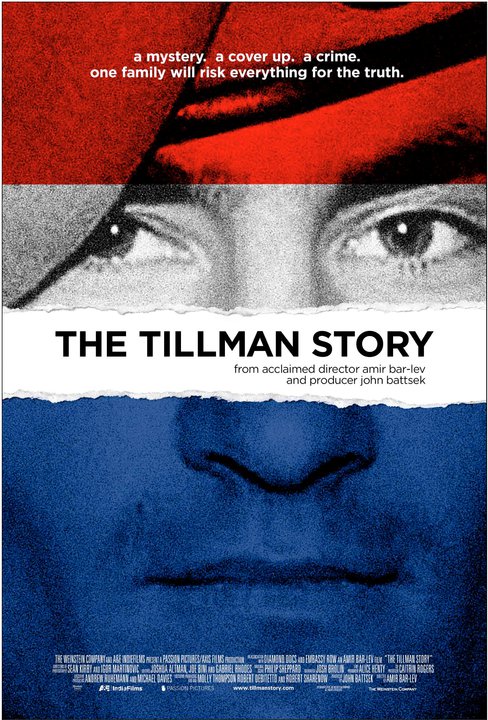
Last night I saw the recently release documentary film, The Tillman Story. The Tillman Story is about Pat Tillman, an professional football player who left the game to join the military after 9/11. Tillman was the consummate all American hero, who not only was killed by his fellow soldiers, but was used by the government to sell the War on Terror.
The documentary tracks both the life of Pat Tillman and the military cover up that began immediately after his death. Tillman was first deployed in Iraq in 2003 and was involved in the bogus rescue of Private Jessica Lynch. Tillman’s brother, who joined the military with his brother said that after being in Iraq for just a few weeks, Pat told him while they watch US planes bomb residential areas of Baghdad, “this war is fucking illegal.”
Disillusioned with what he saw in Iraq, Tillman was then deployed to Afghanistan to conduct search missions on the Taliban. Tillman and his squad were sent to a village and along the way were separated from half of that squad. Tillman and other soldiers heard gunfire and set out on foot over a mountain ridge to see what was happening. When Tillman came over the ridge his fellow squad members opened fire and viciously killed him.
The documentary takes you down the difficult road that his family would have to travel to get the truth about what happened. Initially, Tillman’s family and wife were told he died fighting the enemy, but once questions were asked the story began to unravel.
This is an incredible story of government and military cover up that after two years was first investigated because Tillman’s father sent a letter to government officials accusing them of lying. The government then wanted to put the blame at the feet of a lower level officer, until an AP reporter was given a military memo that demonstrated that high-ranking officials knew that Tillman was killed by his fellow troops.
The documentary ends with a powerful narrative and scenes from a Congressional hearing where several US Generals, including Stanley McCrystal and Defense Secretary Donald Rumsfeld boldly lied to members of Congress about what they knew and when they knew it.
This is a must see film for anyone who thinks the war in Afghanistan is for a noble cause and it is an important film for those already opposed since it provides another powerful resource to build greater opposition.
Local events in solidarity with the stand against the SOA
 The School of the Americas (SOA), in 2001 renamed the Western Hemisphere Institute for Security Cooperation (WHISC) in 2001, is a combat training school for Latin American soldiers, located at Fort Benning, Georgia.
Initially established in Panama in 1946, it was kicked out of that country in 1984 under the terms of the Panama Canal Treaty. Frequently dubbed the “School of Assassins,” the SOA has left a trail of blood and suffering in every country where its graduates have returned.
According to SOA Watch,“The past 59 years, the SOA has trained over 60,000 Latin American soldiers in counterinsurgency techniques, sniper training, commando and psychological warfare, military intelligence and interrogation tactics. These graduates have consistently used their skills to wage a war against their own people. Among those targeted by SOA graduates are educators, union organizers, religious workers, student leaders, and others who work for the rights of the poor. Hundreds of thousands of Latin Americans have been tortured, raped, assassinated, ‘disappeared,’ massacred, and forced into being refugees by those trained at the School of Assassins.”
From Nov. 15 to 21, people seeking to close the school will gather at the gates of Fort Benning for the “Convergence of Hope,” as they have since 1990. Locally, The Bloom Collective is sponsoring two film/discussion events in solidarity with the Fort Benning protests:
 11 a.m. Monday Nov. 15 Film, Hidden in Plain Sight, and Campus March at GVSU Allendale campus, 2204 Kirkhoff. This event is free.
- 6:30 p.m. Thursday Nov. 18 Film & Discussion, Guns and Greed at The Bloom, 671 Davis NW. Suggested donation $3 to $5 includes a light supper with vegan options.

Guns and Greed features “Powerful statements from Students against Sweatshops, labor leaders, veterans and church people participating in protests at the gates of Fort Benning, Georgia and at a Washington DC protest of World Bank and IMF policies.”
Hidden in Plain Sight explores the link between U.S. foreign policy and 20th century Latin Americas bloodstained history. It features interviews of both SOA supporters and critics, and shows footage of soldiers and victims.
You can also view Hidden in Plain Sight on line. Both are available at The Bloom Collective.
Students aren’t Tweeting in London, they are protesting
(This article is re-posted from ZNet.)

Students have finally had enough. Fees were introduced in 1998 and we hardly heard a squeak; they were bumped up to over £3,000 in 2006 and no one revolted. But today students smashed their way into the Tory party campaign HQ in a show of anger against a political elite they believe have abandoned them.
Around 200 protesters, who had taken part in the 50,000 strong demonstration against cuts in education, broke through police lines and smashed windows to enter the building, occupying it for several hours before being forced out by the police.
This kind of radical action shows that some students are disillusioned with the National Union of Students protest and lobby model. With the Lib Dems doing a U-turn on their pledge to vote against an increase in fees, and Labour discredited as a champion of students, students have been left feeling that there is no one left to lobby.
There has been a significant segment of the student movement that has been pushing for more drastic action for a while. What has changed is that that segment has swelled to include a much wider section of the student community.
Several commentators and indeed the NUS have said that the Millbank occupation was not a student-led action and that anarchist agitators are behind it. Images of black-hooded youths have added to this belief. Speaking to the people inside the building, however, revealed a different story. Those dressed in black were students too, and several fresh-faced, excited students said this was their first demonstration. Meanwhile, Philippe Clem from Hull University said: “I’ve never been on a protest before … we just came to join the march, but we just got swept up in this. It’s amazing.”

The crowd of students outside the building, lighting fires and shouting their support for those inside, swelled to over a thousand. This tells a different story to the one told by those wishing to discredit the protest as just a small bunch of troublemakers kicking off. The fact that the building was only a few hundred metres from the end rally supports the claims of those inside that this was unplanned.
Some of the people inside were obviously more seasoned activists, Robert Briggs, 28, of Kings College London, said: “This is nothing, this is a spark, but it is important for people to see that they can do something, that they are not totally powerless.”
The issue at the heart of the protest was the proposed increase in fees up to £9,000 a year. Alison Bent, 19, of Sussex University said, “I really don’t know how I’m going to cope. I’ve always wanted to come to uni, so I had to do it, but it is really scary.” Anger towards the Lib Dems was also evident with effigies of Nick Clegg hoisted high and placards demanding “I want my vote back”.
Recent events in Greece and France where students played a large part in the unrest over public sector cuts appeared to have inspired today’s actions. Chants of “Greece, France, now here too!” echoed through the HQ as people stormed up the stairs.
There is a very real possibility that this could motivate people looking to fight the cuts to other public services to look beyond just protesting and lobbying. Across the country there have been meetings and protests already, with speakers at rallies calling for poll tax style revolts.
No doubt Polly Toynbee will be looking on disapprovingly – she has argued that students are low on the pecking order of pain inflicted by the coalition government. And she is right that students are largely from middle class backgrounds and so won’t be as hard hit by austerity as many others. But her argument assumes that there is only a certain amount of space in society for protest. If the students are successful, her argument goes, then others will face more severe cuts. Quite the opposite: if the students make some headway, others will be spurred on to push their agendas more forcefully.

