Local Buy Nothing Day Events in Grand Rapids

For years now there has been an international effort to address to the push towards more consumption by organizing Buy Nothing Day. Buy Nothing Day traditionally happens on the day after Thanksgiving, or what marketers call Black Friday.
This year the Buy Nothing campaign has been expanded for a whole week and there are numerous groups around the world who are organizing a variety of activities to draw attention to the human and ecological disasters connected to over-consumption.
The Bloom Collective is hosting an opportunity for people in West Michigan to both discuss and opt out of the hyper-marketing frenzy of holiday shopping. On Saturday, November 27th the Bloom Collective will be hosting a Really, Really Free Market from 1 – 5pm at the Bloom space at 671 Davis on the northwest side of Grand Rapids.
The really, Really Free Market is an opportunity for people to give away items they no longer need and to get items they might need. It is an exchange of goods that does not require the corporate market and it fosters a greater sense of community and inter-dependence than relying on corporations to provide us with “goods.”

Then at 3pm the Bloom Collective will be hosting a potluck discuss after watching the documentary Shop Til You Drop: The Crisis of Consumerism. Shop ‘Til You Drop challenges us to confront the questions: Are we too materialistic? Are we willfully trashing the planet in our pursuit of things? And what’s the source of all this frenetic consumer energy and desire anyway?
Saturday, November 27
1 – 5pm Really, Really Free Market
3 – 5pm Film and potluck discussion
Bloom Collective
671 Davis NW
The Non-Profit Industrial Complex in Grand Rapids
In his farewell speech to the nation, President Dwight Eisenhower warned US citizens of the impending dangers of what he called the military industrial complex. Eisenhower knew that the Pentagon’s relationship with the private weapons manufacturers could cripple democracy.
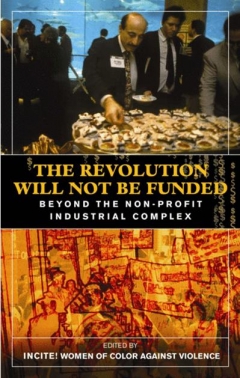
Since the early 1960s, another alliance has grown that also threatens the potential for social change and social justice in this country. Wealthy sectors and individuals have hidden some of their wealth in foundations, both as a way of avoiding taxes, but more importantly as a means of social control.
Collectively, US foundations give away billions of dollars to a broad spectrum of efforts that are generally labeled as beneficial to the community in which it was given. However, that idea has come under increasing scrutiny by community activists and organizers, and was the topic of a major conference in 2004 entitled The Revolution Will Not Be Funded: Beyond The Non-Profit Industrial Complex.
At that conference, organizers and grassroots scholars discussed ways in which the non-profit/NGO structure often obstructs radical movement building. The conference led to a book by the same titled and was put together by the radical women of color organization, INCITE!
They women of INCITE! identified the Non-Profit Industrial Complex as a relationship between the State, the owning classes, foundations and the non-profit/NGO, social service and sometimes social justice organizations. These relationships often result in the surveillance, control, derailment, and everyday management of political movements. For the women of INCITE! the state and private power uses non-profits to:
- Monitor and control social justice movements;
- Divert public monies into private hands through foundations;
- Manage and control dissent in order to make the world safe for capitalism;
- Redirect activist energies into career-based modes of organizing instead of mass-based organizing capable of actually transforming society;
- Allow corporations to mask their exploitative and colonial work practices through “philanthropic” work;
- Encourage social movements to model themselves after capitalist structures rather than to challenge them.
For anyone who has worked in the non-profit world these tactics are quite evident and most often quite frustrating. At the same time, this kind of analysis is far from the halls of the non-profit world and quite often the leadership of such organizations embraces this kind of thinking as the correct way to approach social problems.
The Non-Profit Industrial Complex in Grand Rapids
An example of this kind of thinking was reflected in the most recent edition of the area private sector publication MiBiz. The weekly business publication included an insert for the week of November 22nd entitled “Non-Profit Organizations: The business of advocacy.”
The insert contained numerous articles on the non-profit sector including stories about getting young professionals to join boards of directors for non-profits. However, the most important articles were by three women who are in three different capacities within the non-profit industrial complex.
The first article was by an employee of Founders Bank & Trust, Julie Ridenour. Ridenour writes about the strong history of public/private initiatives in Grand Rapids and uses as a recent example ArtPrize. Here the writer states, “The event was funded through the generosity of the DeVos Family.” She goes on to say, “ It’s a great example of a young entrepreneur using his business initiative to bring cultural and economic prosperity to our city.”
As we have stated in previous critiques of ArtPrize the people who were primary economic winners with ArtPrize are the downtown businesses and property owners, which represents a small class of people whom the DeVos family has a cozy relationship with. And where do we see how the city has prospered culturally with something like ArtPrize, when the emphasis is on commodification of art and not promoting real cultural diversity.
The Grand Rapids Community Foundation president, Diana Sieger, wrote a second article in the MiBiz insert that continued with this same logic. Seiger talked about the work of the community foundation and stressed that non-profits are successful when they are run like businesses. The only difference is that instead of profit, the non-profit world’s profit is “community change.”
One example that Sieger cites is the educational collaboration between the Kent School Services Network, Spectrum Health, the state and Network 180 to reduce absenteeism in Kent County. While one could argue that absenteeism can be problematic, just getting kids to school is not a very lofty goal.
The last article in this trio was from the director of the West Michigan Environmental Action Council (WMEAC), Rachel Hood. Hood talks about the work of WMEAC and cites three projects they have worked on which highlight the non-profit’s mission. One of those projects was the Stormwater Initiative.
The Stormwater Initiative involved the City of Grand Rapids, MSU, the Frey Foundation and Coca Cola Enterprises. Yes, you read that correctly, Coca Cola Enterprises. The WMEAC director goes on to say how this was a win-win for all partners involved. For Coca Cola Enterprises she writes, “Coca Cola is able to reuse its syrup barrels as part of its corporate social responsibility program. Community groups get a value-add for members and homeowners get a free or low-cost rain barrel.”

GRIID wrote about this problematic partnership between WMEAC and Coca Cola last year, but it is worth repeating here. Coca Cola, in addition to manufacturing products that contribute to poor health around the world the company actually siphons off public water resources at the expense of local communities. This “theft” of water is happening is dramatic fashion around the world and in countries like India.
Besides expropriation of public water sources Coca Cola has a horrible track record in Colombia, where union organizers have been murdered for trying to organize workers in Coca Cola plants.
In both issues, water expropriation and murder of union organizers, grassroots social justice groups have called for boycotts of Coca Cola. Boycotts are an appropriate response to the kinds of policies and practices that the Coca Cola company is engaged in. When non-profits collaborate with corporations like Coca Cola it not only makes it harder for grassroots campaigns to be effective, it “allows corporations to mask their exploitative and colonial work practices through philanthropic work,” as is identified by INCITE!
As an organization that has been focused on water quality and water rights issues, WMEAC has the capacity to be a leader in challenging the real practices of corporations like Coca Cola. If WMEAC was interested in capacity building, they could develop a solidarity campaign with people in India who are fighting the ongoing privatization of public water by the global soda giant.
Unfortunately, more often than not this is the nature of non-profits, to not challenge corporate and private power. Non-profits spend too much time chasing funding sources, sources that often come with strings attached, so that they can pay staff salaries instead of doing the work that they originally set out to do.
This critique of the Non-Profit Industrial Complex does not mean that non-profits don’t do important work, but it does provide us with an opportunity to discuss how social change comes about. If we follow the historical models that radical historian Howard Zinn chronicles in A People’s History of the United States, then that model would be that social change comes about though social movements that were independent of both and economic and political centers of power.
What We Are Reading
Below is a list of books that we have read in recent weeks. The comments are not a review of the books, instead sort of an endorsement of ideas and investigations that can provide solid analysis and even inspiration in the struggle for change. All these books are available at The Bloom Collective, so check them out and stimulate your mind.

In Deep Water: The Anatomy of a Disaster, The Fate of the Gulf, and How to End our Oil Addiction, by Peter Lehner – This is the first book that honestly takes a look at the BP oil disaster that continues to unfold since the underwater well exploded earlier this year. Lehner does an excellent job at providing readers with sufficient background information, how the oil industry functions at the federal level and what the long-term ecological implications are of the largest single oil spill in US history will have in the Gulf. Unfortunately the book has a weak ending on how “we” will end our addiction to oil. Lehner is operating on the assumption that the mainstream environmental groups do, which is that we can easily transition from oil to renewable energy, without challenging the current levels of energy consumption or the capitalist framework energy production operates in.

Bringing It to the Table: On Farming and Food, by Wendell Berry – Bringing It to the Table is a collection of the best of farmer/poet Wendell Berry’s writing over the past three decades. With growing attention to food production in the US and the emphasis on eating locally, people would be well served be Berry’s earth-based wisdom that comes from years of practicing sustainable agriculture. Berry not only provides practical information on the importance of farming, but provides honest table talk about the urgency for all of us to develop a stronger relational awareness with the food that we eat. Few writers have been able to bring practice and analysis on the topic of food like Berry and this collection of essays can serve as sort of a handbook or guide for how we move forward with what we eat.

Words & Money, by Andre Schiffrin – Words & Money is a refreshing look at some of the current trends within the media business, both in the US and Europe. Schiffrin, the publisher of The New Press, not only provides readers with a sharp critique of how the commercial media in the US has failed the public in recent decades, he provides some interesting models from outside the US on how media, particularly news media, could function so that the profit motive does not cast a shadow over news content. Schiffrin also offers up some new ideas and new models that are currently not being used abroad, but could lead to some interesting approaches to producing independent media that truly serves the public interest.

The Pornography of Meat, by Carol J. Adams – This book is a fabulous sequel to Adams’ first book The Sexual Politics of Meat, which she wrote in 1990. The Pornography of Meat continues the analysis from Adams’ first book by making the link between how we objectify the bodies of animals in order to consume them, which is the same thing we do to women’s bodies in advertising in order to “consume them.” Adams provides over 100 visual examples in the book which supports her analysis of how women’s and animal’s bodies have become commodities for us to consume and that that commodification is often sexualized. Adams makes a strong case for vegetarianism by looking at the harm done to animals through a feminist lens.

After the Greek Uprising – a documentary video by ZNet – In May 2009, Z staff traveled to Athens to talk with people about the December uprising and its implications for long-term organizing toward revolutionary change. They interviewed people in the large anti-authoritarian movement, as well as participants in the uprising, and members of a neighborhood occupation. The documentary includes footage from the uprising and various areas of political action around Athens. It also has scenes from a well-attended B-Fest conference, which focused on how to move forward. After the Greek Uprising provides an inspiring example of how revolutionary change can occur and would be a useful resource for those in the US in terms of what kinds of tactics and strategies were employed that made the uprising effective.
Media Bites – Call of Duty and the normalization of war
In this week’s Media Bites we take a look at the recent commercial promo for the new Call of Duty first person shooter video game, Black Ops. The ad injects real world people into the spot to suggest that anyone who plays the game will feel like they are in the midst of war.
However, the commercial and the game itself does not only provides a false self of reality, particularly for what US soldiers truly experience, it also serves as a tool to normalize the use of violence and war as a means of resolving conflicts.
Cigarette Makers Aggressively Recruit Smokers in Foreign Countries

Michigan residents are enjoying the health benefits of its now 8-month old smoke-free free policy, one of 27 states in the country with such a policy and the number is likely to increase in the coming years.
This type of aggressive policy changes in the US has resulted in Big Tobacco looking more and more over seas for new markets, particularly in developing countries that don’t have strong public health rules, particularly when it comes to regulation of tobacco sales.
PRWatch states the following:
Global cigarette makers like Philip Morris (PM) and British American Tobacco (BAT) are getting more aggressive in their efforts to recruit new smokers in developing countries to replace those who are either quitting, dying or failing to take up the addiction in the U.S. and other developed nations.
Tobacco companies use marketing tactics in foreign countries that they could never get away with using in the U.S. In Indonesia, for example, cigarette ads still appear on television and billboards, companies target kids by putting cartoon characters on cigarette packs, and stores still sell cigarettes to children.

As governments try to crack down on these objectionable marketing behaviors, cigarette makers fight back using lawsuits and time-worn, but effective PR techniques. Philip Morris International has been especially aggressive in fighting marketing restrictions overseas. The company has deployed a $5 million campaign in Australia to fight a government plan that would require cigarettes be marketed in plain brown or white packages. PM designed the campaign to make it look like it was coming from small store owners, and got help financing it from competitors like BAT and Imperial Tobacco.
The companies also argue that higher cigarette taxes will stimulate smuggling, but tobacco industry documents reveal that global tobacco companies are not only complicit in cigarette smuggling, but that they oversee it, and even depend on it to gain access to closed markets.
The Center for Public Integrity has also just released a new report on tobacco company efforts abroad, entitled Smoke Screen: Big Tobacco’s Global Lobbying Campaign. The report looks at global trends with detailed sections on what is happening in Russia, Mexico and Uruguay.
Editorializing on the War on Drugs

The “war on drugs” is probably one of the most understood US policies ever since the Nixon administration gave it that name. Statistically, despite the billions of dollars for interdiction programs overseas and at the US border, illegal drug trafficking has increased in recent decades.
Today’s Grand Rapids Press editorial addresses one aspect of this issue, specifically the status of the investigation into the local missionaries whose plane was shot down in 2001.
The Press editorial is right to express concerns that justice has not been done in this case, since the 16 CIA officers who were reprimanded did not really face any serious consequences for the death of Veronica Bowers and her daughter.
The editorial mentions the 2008 inspector general report, which lays out the details of the incident that led to CIA contractors shooting down the missionary family’s plane. Included in that report was an acknowledgement that the CIA initially lied about the circumstances as a means of attempting to cover up the story.

The editorial also mentions that the Brower family received $8 million in a legal settlement with the government, but that “That may be politically expedience. It’s hardly justice.” The Press editorial ends by stating that halting drug trafficking is a laudable goal, but that there needs to be more checks and balances.
While we would agree that there needs to be more accountability when US government agents act maliciously, but the failure of the editorial misses a major point here, which is that the US Drug War is at best a farce.
Numerous political analysts and former US DEA agents who have been on the front lines of the US war on drugs have testified and documented the massive failure of this policy. Michael Levine, who worked with the DEA for 20 plus years in Latin America wrote the book Deep Cover: The Inside Story of How DEA Infighting, Incompetence and Subterfuge Lost Us the Biggest Battle of the Drug War. Another noted former DEA agent is Celerino Castillo who wrote the book Powderburns: Cocaine, Contras & the Drug War. What both Levine and Castillo argue is that not only is the US war on drugs a failure, but that it was never intended to actually go after the primary drug traffickers in Latin America, because they were often CIA assets.

The idea that the CIA collaborates with major drug traffickers is the topic of one of the best investigations into the US war on drugs, The Politics of Heroin: CIA Complicity in the Global Drug Trade. This book by Alfred McCoy documents over four decades of US involvement in the global drug trade. The author argues that the US was often directly involved in the drug trade as a means to generate funds for covert wars, whether those wars were in Afghanistan, Southeast Asia or Latin America.
This notion that the CIA has been directly involved in the global drug trade would help in our understanding of the death of local missionary Veronica Bower and her daughter.
The US has been telling the American public that they are committed to winning the war on drugs in Latin America, yet there has been no evidence that the amount of cocaine has diminished in recent decades.
You will remember in 2000 when then President Clinton allocated $1.3 billion to fight the drug war in Latin American with a policy knows as Plan Colombia. Plan Colombia has not only failed to reduce drug production in Colombia, it has led to the deaths of thousands of innocent civilians. The Washington Office on Latin America published a report this past summer, which documents what a monumental failure Plan Colombia has been, particularly since it has resulted in countless deaths and has further militarized the region.
So while it is appropriate for the Press to editorialize on the lack of justice in the case of local victims of the war on drugs they should be equally outraged about US drug war policies that are in no way laudable. Indeed, the Press might want to have their reporters investigate the local connections and consequences to the so-called War on Drugs.
West Michigan Company sends more jobs to Mexico
Yesterday the Grand Rapids Press reported that the Grand Haven-based company Haldex Brake Products will shut down its factory and move the rest of its production to Monterrey, Mexico.

The Press reports that the “company stated the decision to consolidate activities at its facility in Mexico was based on the significant manufacturing infrastructure and increasing amount of automotive and commercial vehicle activity in the region.” The article also said that the company will offer “severance pay, benefits continuation and out-placement services,” although it did not provide any comments from the 41 workers which just lost their jobs.
The Press reporter did not offer up any independent reasons for the company sending more jobs to Mexico, they just accepted the rationale offered by Haldex. The reporter could have provided some historical context so that readers would know exactly when Haldex first set up operations in Monterrey, Mexico and how many jobs have left West Michigan.
There is also no discussion about the North American Free Trade Agreement (NAFTA) and how that trade policy provided incentives for a company like Haldex to move its operation from the US to Mexico, such as tax breaks and weaker labor and environmental standards.
According to Public Citizen, “Michigan lost over 342,325 manufacturing jobs (or 42.4 percent) during the NAFTA-WTO period (1993-2009).” This would be useful information for readers of the Press, so that they understand that this recent decision by Haldex is not an isolated one, but part of a 16-year process of job loss in Michigan.
Providing this kind of context could also be useful for the public in determining future trade agreements as well as contributing to any possible reforms or repeals of existing trade agreements. The Obama administration took office with the claim of revisiting and reforming existing trade agreements, but has yet to do anything concretely in that arena.
A November 9 poll showed that a majority of voters oppose free trade or NAFTA-like policies and believe it is a major factor in US job loss. The poll showed that both Democratic and Republican voters are opposed to such Free Trade Agreements (FTA), so there doesn’t seem to be any reason why future FTA can’t be defeated or negotiated in such a way that will actually be a benefit to workers and protecting the environment at the same time.
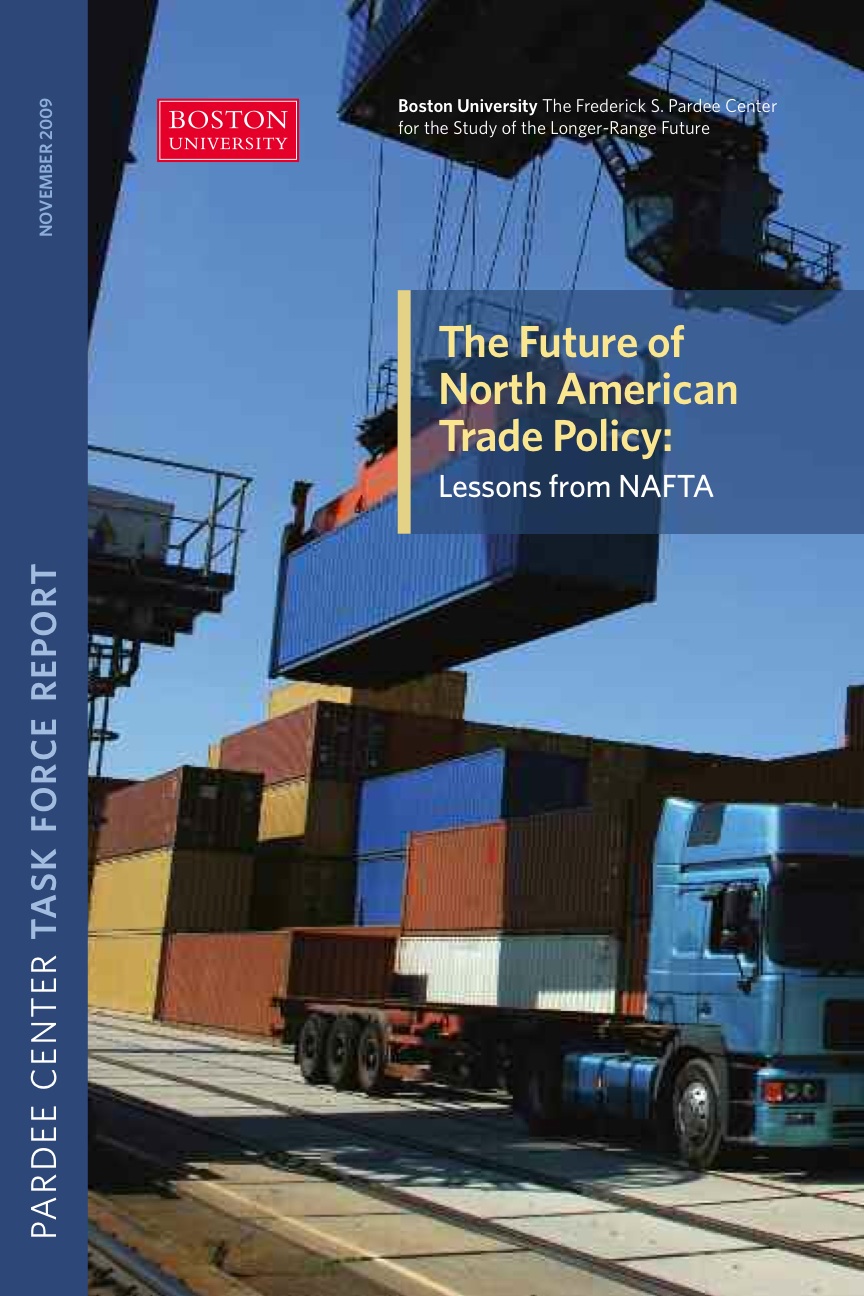
Lastly, it would be beneficial for the Press to provide the public with more information and more resources to further investigate trade policies, especially since so many working families are impacted by these decisions in West Michigan. There are a couple of good reports that have come out in the past year that we would recommend. The first is a report from Boston University entitled, The Future of North American trade Policy: Lessons from NAFTA. The other report, produced by the Carnegie Endowment for International Peace, is entitled Rethinking Trade Policy for Development: Lesson from NAFTA under Mexico.
US Military bases in the Middle East under Obama
(This article by Nick Turse is re-posted from Tom Dispatch.)
The construction projects are sprouting like mushrooms: walled complexes, high-strength weapons vaults, and underground bunkers with command and control capacities — and they’re being planned and funded by a military force intent on embedding itself ever more deeply in the Middle East.

If Iran were building these facilities, it would be front-page news and American hawks would be talking war, but that country’s Revolutionary Guards aren’t behind this building boom, nor are the Syrians, Lebanon’s Hezbollah, or some set of al-Qaeda affiliates. It’s the U.S. military that’s digging in, hardening, improving, and expanding its garrisons in and around the Persian Gulf at the very moment when it is officially in a draw-down phase in Iraq.
On August 31st, President Obama took to the airwaves to announce “the end of our combat mission in Iraq.” This may, however, prove yet another “mission accomplished” moment. After all, from the lack of a real Iraqi air force (other than the U.S. Air Force) to the fact that there are more American troops in that country today than were projected to be there in September 2003, many signs point in another direction.
In fact, within days of the president’s announcement it was reported that the U.S. military was pouring money into improving bases in Iraq and that advance elements of a combat-hardened armored cavalry regiment were being sent there in what was politely dubbed an “advise and assist” (rather than combat) role. On September 13th, the New York Times described the type of operations that U.S. forces were actually involved in:
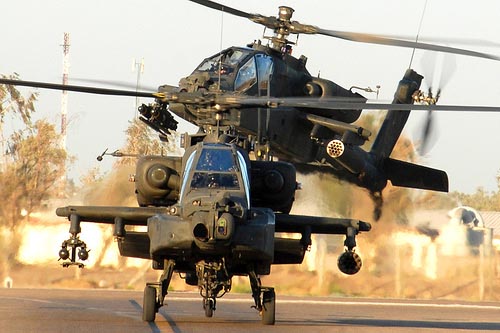
“During two days of combat in Diyala Province, American troops were armed with mortars, machine guns, and sniper rifles. Apache and Kiowa helicopters attacked insurgents with cannon and machine-gun fire, and F-16’s dropped 500-pound bombs.”
According to the report, U.S. troops were within range of enemy hand grenades and one American soldier was wounded in the battle.
Adhering to an agreement inked during George W. Bush’s final year in office, the Obama administration has pledged to withdraw all U.S. troops from Iraq by the end of 2011. U.S. military commanders have, however, repeatedly spoken of the possibility of extending the U.S. military’s stay well into the future. Just recently, Secretary of Defense Robert Gates let the Iraqi government know that the U.S. was open to such a prospect. “We’re ready to have that discussion if and when they want to raise it with us,” he said. As the British Guardian’s Martin Chulov wrote last month, “[T]he U.S. is widely believed to be hoping to retain at least one military base in Iraq that it could use as a strategic asset in the region.”
Recent events, however, have cast U.S. basing plans into turmoil. Notably unnerving for the Obama administration was a deal reportedly brokered by Iran in which Shia cleric Moqtada al-Sadr — whose forces had repeatedly clashed with U.S. troops only a few short years ago — threw his support behind Prime Minister Nouri al-Maliki, currently vying for a second term in office. This was allegedly part of a regional agreement involving Syria and Lebanon’s Hezbollah that could leave the U.S. military out in the cold. A source informed the Guardian that “Maliki told [his new regional partners that] he will never extend, or renew [any bases] or give any facilities to the Americans or British after the end of next year.”
Even if the U.S. was forced to withdraw all its troops from Iraq, however, its military “footprint” in the Middle East would still be substantial enough to rankle opponents of an armed American presence in the region and be a drain on U.S. taxpayers who continue to fund America’s “empire of bases.” As has been true in recent years, the latest U.S. military documents indicate that base expansion and upgrades are the order of the day for America’s little-mentioned garrisons in the nations around Iraq.
One thing is, by now, clear: whatever transpires in Iraq, the U.S. military presence in the Persian Gulf and surrounding environs will be formidable well into the future.
Middle Eastern Mega-Bases
As the “last” U.S. combat troops withdrew from Iraq under the glare of TV lights in the dead of night and rolled toward Kuwait, there was plenty of commentary about where they had been, but almost none about where they were going.
In the Gulf War of 1991, the U.S. military helped push Saddam Hussein’s invading Iraqi army out of Kuwait only to find that the country’s leader, Sheikh Jaber al-Ahmed al-Sabah, refused to return home “until crystal chandeliers and gold-plated bathroom fixtures could be reinstalled in Kuwait City’s Bayan Palace.” Today, the U.S. military’s Camp Arifjan, which grew exponentially as the Iraq War ramped up, sits 30 miles south of the refurbished royal complex and houses about 15,000 U.S. troops. They have access to all the amenities of strip-mall America, including Pizza Hut, Pizza Inn, Taco Bell, Starbucks, Hardees, Subway, and Burger King. The military talks little about its presence at Arifjan, but Army contracting documents offer clues about its intentions there. A recent bid solicitation, for example, indicated that, in the near future, construction would begin there on additional high strength armory vaults to house “weapons and sensitive items.”
In addition to Camp Arifjan, U.S. military facilities in Kuwait include Camps Buehring and Virginia, Kuwait Naval Base, Ali Al Salem Air Base, and Udairi Range, a training facility near the Iraqi border. The U.S. military’s work is also supported by a Defense Logistics Agency (DLA) distribution center in Kuwait, located not on a U.S. base but in the Mina Abdulla industrial zone about 30 miles south of Kuwait City.
Unlike other DLA hubs, which supply U.S. garrisons around the world, the Kuwaiti facility is contractor owned and operated. Made up of a walled compound spanning 104 acres, the complex contains eight climate-controlled warehouses, each covering about four acres, one 250,000-square-foot covered area for cargo, and six uncovered plots of similar size for storage and processing needs.
Typical of base upgrades in Kuwait — some massive, some modest — now on the drawing boards, recent contracting documents reveal that the Army Corps of Engineers intends to upgrade equipment at Kuwait Naval Base for the maintenance and repair of ships. In fact, the Department of Defense has already issued more than $18 million in construction contracts for Kuwait in 2010.
The U.S. military also operates and utilizes bases and other facilities in the nearby Persian Gulf nations of Qatar, Bahrain, the United Arab Emirates, and Oman.
During the 1930s, the British Royal Air Force operated an airfield on Oman’s Masirah Island. Today, the U.S. Air Force and members of other service branches have settled in there, operating from the island as well as other facilities by special agreement with the sultanate. The Air Force is also supported in Oman by “War Reserve Materiel” storage and maintenance facilities, operated by defense contractor Dyncorp, in Seeb, Thumrait, and Salalah Port.
From 2001 to 2010, the U.S. military spent about $32 million on construction projects in Oman. In September, the Army upped the ante by awarding an $8.6 million contract to refurbish the Royal Air Force of Oman’s air field at Thumrait Air Base.
U.S. efforts in Bahrain are on a grander scale. This year, the U.S. Navy broke ground on a mega-construction project to develop 70 acres of waterfront at the port at Mina Salman. Scheduled for completion in 2015, the complex is slated to include new port facilities, barracks for troops, administrative buildings, a dining facility, and a recreation center, among other amenities, with a price tag of $580 million.
There are similar expenditures in neighboring Qatar. In 1996, lacking an air force of its own, Qatar still built Al Udeid Air Base at a cost of more than $1 billion with the goal of attracting the U.S. military. It succeeded. In September 2001, U.S. aircraft began to operate out of the facility. By 2002, the U.S. had tanks, armored vehicles, dozens of warehouses, communications and computing equipment, and thousands of troops at and around Al Udeid. In 2003, the U.S. moved its major regional combat air operations center out of Saudi Arabia and into neighboring Qatar where the government was ready to spend almost $400 million on that high-tech command complex.
From then on, Al Udeid Air Base has served as a major command and logistics hub for U.S. regional operations including its wars in Iraq and Afghanistan. Last year, the Pentagon awarded a $52 million contract to further upgrade its airfield capabilities, a $44 million deal to upgrade other facilities there, and a $6 million contract for expanded warehousing capacity. Nor does the building boom there show any signs of abating. A report by the Congressional Research Service issued earlier this year noted:
“The Obama administration requested $60 million in FY2010 military construction funds for further upgrades to U.S. military facilities in Qatar as part of an ongoing expansion and modernization program that has been underway since 2003 at a cost of over $200 million. The administration’s FY2011 military construction request for Qatar is $64.3 million.”
Jordan’s Bunker Mentality
The Pentagon has also invested heavily in Jordanian military infrastructure. One major beneficiary of these projects has been the international construction firm Archirodon which, between 2006-2008, worked on the construction of the King Abdullah II Special Operations Training Center (KASOTC). It is a state-of-the-art military and counterterrorism training facility owned and operated by the Jordanian government, but built in part under a $70 million U.S. Army Corps of Engineers contract.
In 2009, when that 1,235-acre $200 million Jordanian training center was unveiled, King Abdullah II gave the inaugural address, praising the facility as a world-class hub for special forces training. General David Petraeus, then-head of the U.S. Central Command overseeing the Greater Middle East, was also on hand to laud the facility as “a center of excellence not only for doctrinal development and refinement of TTPs [technology, tactics and procedures], but for strengthening the regional security network emerging in this area.”
Between 2001 and 2009, the Army awarded $89 million in contracts for Jordanian construction projects. This year, it inked deals for another $3.3 million (much of it for improvements to KASOTC). Recently, the Army also issued a call for bids for the construction of subterranean complexes at three locations in Jordan, the largest of them approximately 13,000 square feet. Each of these underground bunkers will reportedly boast a command-and-control operations center, offices, sleeping quarters, cafeterias, and storage facilities. The project is set to cost up to $25 million.
1,001 Arabian Contracts
According to a 2009 Congressional Research Service report, from 1950 to 2006 Saudi Arabia purchased almost $63 billion in weapons, military equipment, and related services through the Pentagon’s Foreign Military Sales (FMS) program. Just last month, the U.S. announced that it would conclude new arms deals with the Saudis which would equal that sum — not in another half century but in the next 15 to 20 years. Labeled a move to counter Iranian power in the region, the deal for advanced tactical fighter aircraft and state-of-the-art helicopters garnered headlines. What didn’t were the longstanding, ongoing U.S. military construction efforts in that country.
Between 1950 and 2006, Saudi Arabia experienced $17.1 billion in construction activity courtesy of the Pentagon. In the years since, according to government data, the Department of Defense has issued more than $400 million in construction contracts for the kingdom, including $33 million in 2010 for projects ranging from a dining hall ($6 million) to weapons storage warehouses and ammunition supply facilities (nearly $1 million).
Bases and “the Base”
In his 1996 “Declaration of War Against the Americans Who Occupy the Land of the Two Holy Mosques,” Osama bin Laden wrote:
“The presence of the USA Crusader military forces on land, sea and air of the states of the Islamic Gulf is the greatest danger threatening the largest oil reserve in the world. The existence of these forces in the area will provoke the people of the country and induces aggression on their religion, feelings, and prides and pushes them to take up armed struggle against the invaders occupying the land.”
Since then, the U.S. and bin Laden’s rag-tag guerrilla force, al Qaeda (“the Base”), have been locked in a struggle that has led to further massive U.S. base expansions in the greater Middle East and South Asia. At the height of its occupation, the U.S. had hundreds of bases throughout Iraq. Today, hundreds more have been built inAfghanistan where, in the 1980s, bin Laden and other jihadists, backed and financed by the CIA, the Saudis, and the Pakistanis, fought to expel the Soviet occupiers of that country.
As early as 2005, the U.S. military was floating the possibility of retaining some of its Afghan bases permanently. In Iraq, plans for similar permanent garrisons have recently been thrown into doubt by the very government the U.S. helped install in power. Whatever happens in either war zone, however, one thing is clear: the U.S. military will still be deeply dug into the Middle East.
While American infrastructure crumbles at home, new construction continues in oil-rich kingdoms, sultanates, and emirates there, courtesy of the Pentagon. It’s a building program guaranteed to further inflame anti-American sentiment in the region. History may not repeat itself, but ominously — just as in 1996 when bin Laden issued his declaration — most Americans have not the slightest idea what their military is doing with their tax dollars in the Persian Gulf and beyond, or what twenty-first century blowback might result from such activities.
Ending Male Violence Against Women, a workshop with Jackson Katz

Yesterday, the West Michigan based Center for Women in Transition hosted a workshop at the GVSU campus in Allendale with long-time anti-sexist activist Jackson Katz. The workshop brought together students, social workers and people who work in sexual assault and rape prevention work.
Katz began the workshop by framing the issue of gender violence as problematic because it usually gets referred to as an issue of particular concern for women. The problem with this is that it means that men and masculinity will often be ignored.
This is what is called the absent referent, where the dominant group continues to go unacknowledged and unexamined. When we think about race, we tend to ignore White people. When we think of sexual orientation, we usually ignore heterosexuals. Katz believes that until gender issues become issues of primary concern for men, the levels of sexual assault and domestic violence will not change in this country.
Katz next addresses the issue of rape and to further illustrate the idea of how rape is framed as a women’s issue, he asks everyone what percentage of rape are committed by women. Of course, that number is less than 1%, which means the overwhelming percentage of rape committed in the US is done by men. Therefore, Katz said rape should primarily be a men’s issue.

Katz continues with this line of thinking by talking about how women and girls are taught what to do to reduce the risks of rape. Again, the culture doesn’t talk about the perpetrators and what we need to do to prevent men from committing rape.
The issue is further complicated when one thinks about how personal the issue of sexual assault and rape is. Katz said since rape and sexual assault is so prevalent that virtually everyone is affected at a personal level. We all have family members who have been victims, friends, neighbors and co-workers who have been directly impacted by sexual assault. Therefore, it is important for all of us to confront these issues on a personal level as well as a systemic level.
Next Katz talked about language and sexual assault and has the group do an exercise by reading a short article called Violence Against Women. The issue that Katz wanted to raise here is that when we talk about rape and sexual assault the language for perpetrators is usually de-gendered, such as truck drivers, businessmen or co-worker. When news coverage reports on this issue we never read, “Male students rapes woman on campus.” What we usually see is “female student raped on campus.” Therefore, male behavior is minimized or ignored and women are made the focus. This idea of how women become the focus after a sexual assault is committed by looking at how we culturally scrutinize female behavior. What kind of clothing was she wearing, why did she go there alone, what did she do to provoke this guy, etc.? So, we put our focus on the female victims of sexual assault instead of putting the focus on male perpetrators and their behavior.
Bystanders
After the first break Katz then shifted the discussion to what are role is as bystanders, which he refers to as friends, co-workers, neighbors, relatives, etc. The reason he thinks that looking a bystanders is an important focus for preventing male violence is that if we can get bystanders to take action, where men can hold other men accountable, then there will be a reduction of male perpetrated sexual violence.
In the Bystander approach to preventing male violence against women, Katz then talked about the work he has done in developing and using what he calls Mentoring for Violence Prevention or the MVP program.

Katz then leads the group through a couple of scenarios. The first deals with a situation in a typical high school hall way where a guy pushes his girlfriend into the lockers and how bystanders respond. The group talks first about what are the reasons why people might not respond or challenge the behavior. We also talk about what kinds of messages are sent to the girlfriend when we don’t act or intervene and what kinds of messages are being sent to the guy who is hurting his girlfriend when we don’t act?
A second scenario is where a guy is showing male friends pictures on his cell phone of his ex-girlfriend, explicit photos. If you are one of the guys what do you do? People discussed how this is an increasingly common reality where particularly young people are using social media sources to use and abuse women and girls by posting words and pictures that demean them.
What Katz tries to impress upon those in the workshop is the importance of having these kinds of discussions about what we can do and what our options are when we encounter these dynamics. Katz believes that when we discuss these issues people will not only come up with concrete ideas for action, but they will realize that there are more people who also object to these kinds of abusive male behaviors and therefore do not feel as isolated.
Media and Masculinity
The last session of the workshop dealt with a topic that most people know Katz for – how media portrays men and masculinity. Katz shows examples from some of his own work, particularly the documentary film Tough Guise. One point that Katz makes about how media portrays men and boys was to rephrase the idea that the violence men and boys engage in is “learned behavior.” He says that this phrase is somewhat misleading in that it removes our focus from who is teaching this behavior, meaning the media. The media, which produce these images and messages about male behavior, are the entities that teach destructive male behavior.

The next clip he shows is from the documentary Hip Hop: Beyond Beats and Rhymes, which looks at misogyny, masculinity, and homophobia in rap & Hip Hop music. The first part was with the producer of the film who talked about his own journey with the normalization of female objectification in music videos. The second clip dealt with the hyper-sexual representation of women in music videos and how women at Spellman College confronted the rapper Nellie about his music video Tip Drill.

A third clip that Katz showed was from Jeanne Kilbourne’s film Killing Us Softly 4. In this clip Kilbourne takes to task how advertising perpetuates male stereotypes particularly how violent male behavior is normalized in ads. Kilbourne also makes the point that even though increasingly advertising is objectifying men and men’s bodies as well, the social cost of this media objectification is not the same for men as it is for women. Objectification of men in media does not contribute to or normalize violence against men like it does with the objectification of and male violence towards women.

The last clip that Katz shows is from the documentary Mickey Mouse Monopoly, a clip that looks at how girls are represented in Disney films. These images show how Disney has for decades been representing women and girls as highly sexualized and seductive characters that often need to be rescued. There is a particularly interesting critique of the film Beauty and the Beast.
Katz finished the workshop by offering up a variety of resources that people could use if they wanted to explore these issues in more details. Many of these resources can be accessed from both the websites of Jackson Katz and Jeanne Kilbourne, but if people are looking for books and documentary films they could find these resources locally at the Bloom Collective.
Students blast the SOA
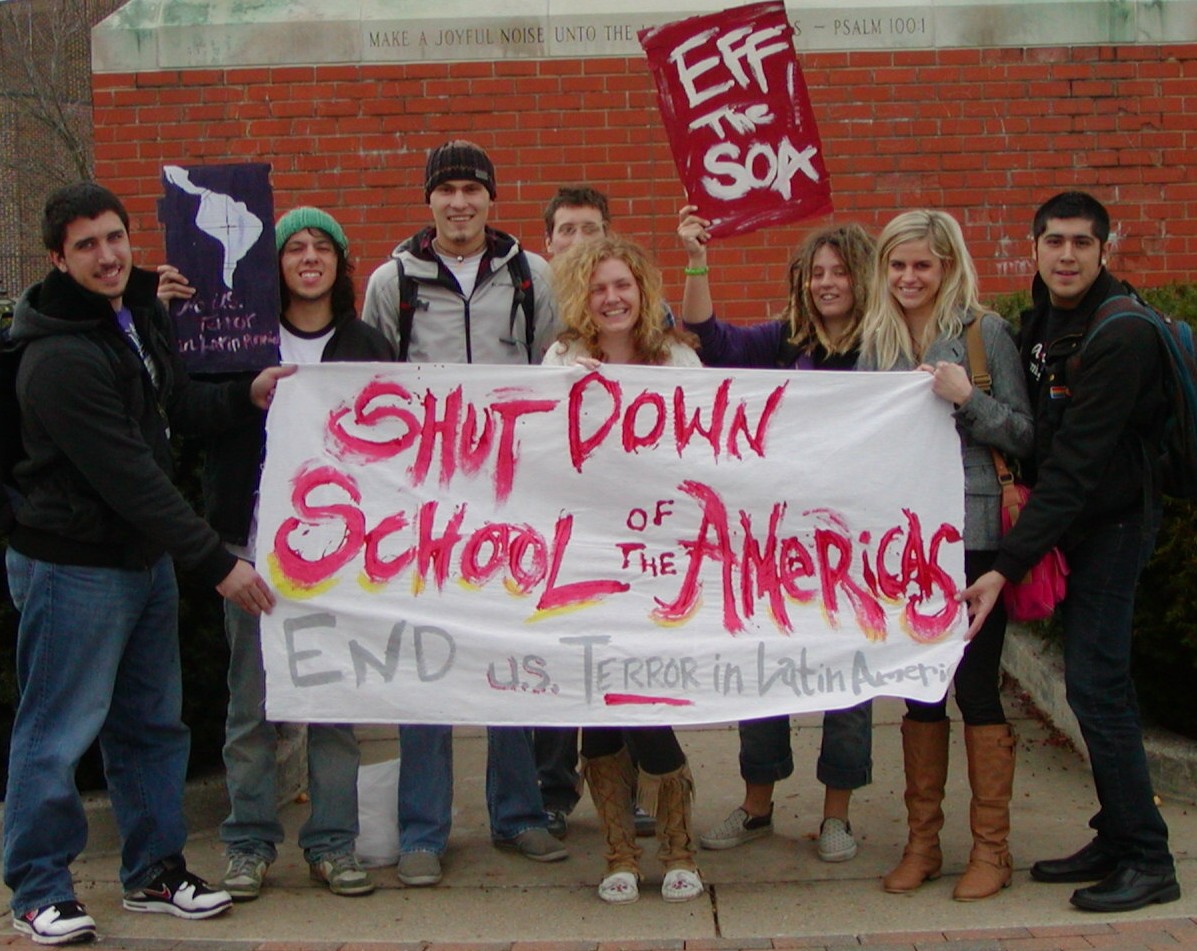 A group of about 30 Grand Valley State University Students and a few professors met on the Allendale campus Nov. 15 to watch the film Hidden in Plain Sight. The feature-length documentary looks at U.S. policy in Latin America as furthered by the US Army’s School of the Americas (SOA), which trains Latin American soldiers in Fort Benning, Georgia. Continuing public pressure resulted in Congress closing the school in 2001—only to reopen it under a new name, Western Hemisphere Institute for Security Cooperation.
The film documented the atrocities that graduates of the school have inflicted on the poor populations of many Latin American countries through graphic photographs and video coverage as well as interviews with torture survivors and family members of people who were raped, killed and disappeared. In addition, experts on US foreign policy, Latin American human rights organizers, former and current US military and members of congress all substantiated that the school is responsible for training Latin American militaries how to torture, assassinate, murder and use all violent means available to repress poor people in their own countries when they dare speak up for their rights.
Following the film, students and faculty expressed their shock and anger over the US role in funding, training and providing direct support for the violent repression of our Latin American neighbors.
Zulema Moret, head of the GVSU Latin American Studies department, started the conversation by recalling her own experiences as a college student in Argentina. “We need to show this movie all over campus, many times,” she said. “I suffered personally with my people, with my friends at the university when I was a student. All the training the military were receiving for torture of our people was coming from the SOA. We need to be fighting it, without violence, but fighting it.”
Student reactions included anger over an American system that funds violence so that a small percentage of corporate shareholders can reap profits and shock that protests of the SOA in Fort Benning were also met with  repressive military response. Hundreds of nonviolent protestors have received federal prison sentences.
“My reaction is anger,” one student said. “This is not what I want my country doing. It’s not in our interest but for the few, one or two percent. It’s the system that we have that is the problem. They are doing this in our name with our tax dollars on US soil. People who stood up (against it) got shut down. There is a whole system of oppression in our country. If anyone is under attack for freedom of speech, we are all under attack.”
“It seems incredibly blind and unjust to take a country’s resources, get their own people to kill anyone who objects and then tell them to stay in their countries,” another student said. “Corporations can go across borders freely and not get groped in the groin. We allow goods and trade but we stop people.”
“The SOA is an outrage but blame has to be put over the whole system, the interconnect with Wall Street, WalMart, Target—all the things we take part in,” said another. “We get new iPods, new phones and don’t realize the interconnectedness. The whole reason is to exploit this labor for consumer goods. We’re so consumed by our consumerism that we don’t even realize.”
The group agreed that taking individual action such as boycotting stores that make profits on the backs of workers in sweat-shops was a portal to systemic change but that a more organized movement was needed.
“Even if we as individuals make these choices, they (SOA) are still there,” a student said. “These are good starting points but action needs to continue beyond that.”
Ideas put forth included creating independent media, building parallel community systems and direct action. “Small changes within the system are band-aids. Band-aids are good but we really need to change the whole system,” one said. “We can start by educating people in our student organizations. If students in our community don’t know what’s going on out there, how can people in other places know?”
“Every social movement in this country–women’s suffrage, civil rights–were not something voted on,” said another. “A small group of people got motivated, organized and said ‘We care about this. How can we organize and have this policy adopted by our nation? How can we mobilize people and make change?’ That’s how change has come about throughout history. How can we make it so it’s not a just a conversation? Change has to come from below.”
Two students present shared that they are taking direct action by traveling to Georgia this upcoming weekend to join the “Convergence of Hope,” an annual protest at the gates of Fort Benning sponsored by SOA Watch.
At the conclusion of the discussion, a group of students took action by marching through the GVSU campus to raise awareness about the SOA and US military sponsored repression in Latin America.
The discussion will continue at 6:30 p.m. Thursday Nov. 18 with a public screening of Guns and Greed at The Bloom Collective, 671 Davis NW. The suggested donation $3 to $5 includes a light supper with vegan options.

