Levin releases report on private security contractors in Afghanistan
On Friday, the Senate Armed Services Committee released a report on the role of private security contractors operating in Afghanistan.
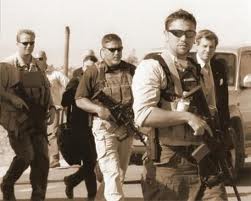 Michigan Senator Carl Levin is the chair of this committee and he released a statement on Friday to announce the release of the report. In his statement Levin says:
“The committee’s investigation uncovered a significant amount of evidence that a number of security contractors working under Department of Defense contracts and subcontracts funneled U.S. taxpayer dollars to Afghan warlords and strongmen linked to murder, kidnapping, and bribery, as well as to Taliban and anti-Coalition activities. It also revealed wasted resources, dangerous performance failures, and wide gaps in government oversight that allowed such failures to persist.”
The 89 – page report (some of which is blacked out – like most declassified US government documents) also has 12 conclusions, 3 of which are highlighted in Levin’s statement. Those three conclusions are:
- Conclusion 1: “The proliferation of private security personnel in Afghanistan is inconsistent with the counterinsurgency strategy.”
- Conclusion 2: “Afghan warlords and strongmen operating as force providers to private security contractors have acted against U.S. and Afghan government interests.”
- Conclusion 4: “Failures to adequately vet, train and supervise armed security personnel have been widespread among Department of Defense private security contractors, posing grave risks to U.S. and coalition troops as well as to Afghan civilians.”
At the end of his released statement, Senator Levin says, “We need to shut off the spigot of U.S. dollars flowing into the pockets of warlords and powerbrokers who act contrary to our interests and contribute to the corruption that weakens the support of the Afghan people for their government. Our commanders have taken first steps toward identifying abuses and I am hopeful that they will act aggressively to fix the problem.”
What Senator Levin fails to acknowledge is that the warlords he is referring to were some of the same men who the US trained and funded during the counter-Soviet occupation of Afghanistan in the 1980’s. Many of these same men are close to or make up part of the Karzai administration, which the US has backed over the past 8 years.
In addition, Levin and the Senate Armed Services Committee do not take ownership for the lack of oversight of how US tax dollars are being used by private security contractors in Afghanistan, especially since most of those Senate members voted for said funds.
Lastly, it should be pointed out that Levin never clarifies what “our interests” are in US occupation of Afghanistan, now in its 10th year. Maybe the liberal Senator should ask himself if Afghan civilians who are being killed, tortured, detained and terrorized by US soldiers and private security contractor care about US interests in their country.
Looking at Columbus Day through Native Eyes
Yesterday, students, faculty and the community members were invited to an event held on the GVSU campus called Rethinking Columbus. The event was organized by people from the local Native American community and was designed to get the audience to rethink their views on Columbus Day.
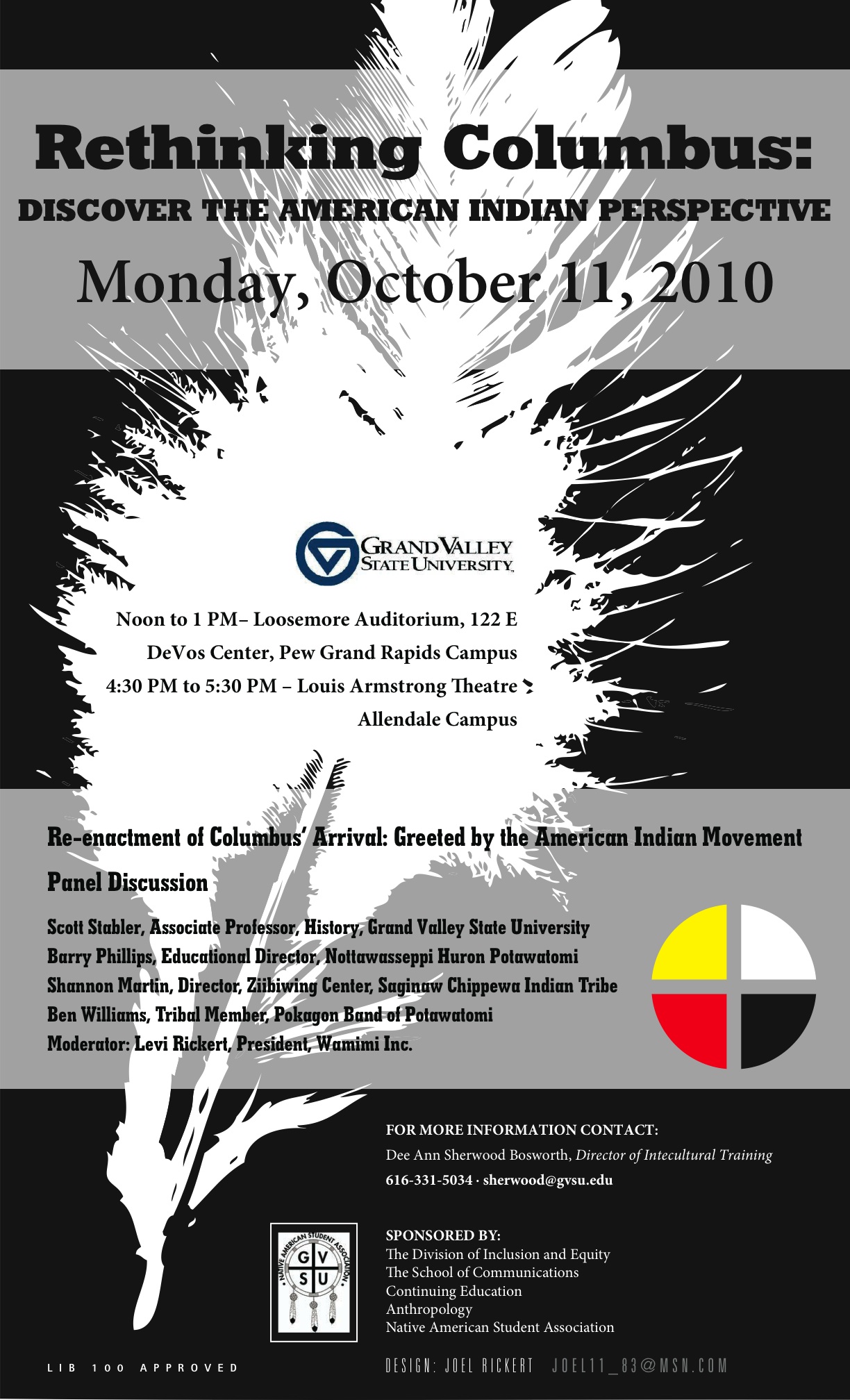
The event began with a short play written by Dee Ann Sherwood Bosworth who is the Director of Intercultural Training at GVSU. The was a re-interpretation of Columbus’s “arrival in the New World,” where he was greeted by members of the American Indian Movement (AIM).
In the play Columbus is asked for his passport and green card. Upon hearing that Columbus believes he is in India, the Native people tell him that he is lost and should just get back on his boat and leave. The play wove in aspects of the historical record of the genocide that was perpetrated against Indigenous people with the European conquest and how Native people have survived that history, most recently through the formation and work of the American Indian Movement.
After the play there was a panel discussion, consisting of Shannon Martin with the Saginaw Chippewa Indian Tribe, Barry Phillips a Nottawasseppi Huron Potawatomi, Ben Williams with the Pokagon Band of Potawatomi and Scott Stable, a history professor at GVSU. The panel discussion was moderated by Levi Rickert.
Levi began by asking panelists what the “celebration” of Columbus Day means for Native people. Shannon Martin told the audience that the perpetuation of that history needs to be seriously reconsidered. “As Native people we need to have our own show and tell for how Native people have been treated throughout US history. One problem is that the burden of truth telling falls to the Native communities, since it is not honestly represented through the current education system.”
Barry Phillips responded to that question by saying there are a growing number of educators that want to teach history from a Native perspective, but they don’t know where to get information, so “we need to get that information to those who are teaching our children.”
Ben Williams said we need to seriously investigate the history of conquest and the meaning of Columbus Day. “It is appalling that Columbus is still being celebrated by groups like the Knights of Columbus.”
Levi asked Scott Stabler how Columbus Day even came about in the US It was a way to gain votes amongst the Italian community in some communities but did not become an official holiday until FDR made October 12 a national holiday in 1937. In 1971 the US Congress made Columbus Day the 2nd Monday of October in order to have a 3 day weekend.
The next question asked of the panelists was what are some of the alternatives to celebrating Columbus Day. Barry Phillips said, “Many of us believe it shouldn’t be celebrated at all.” Shannon Martin stated, “we need to establish Indigenous People’s Day in Grand Rapids, we have to change the focus of the day, to really celebrate Indigenous heritage and history.” She also stated that many countries in Latin America have renamed the day and call it Indigenous People’s Day. Ben Williams thinks these changes are necessary but said it will be a slow process, “since it will not be a priority for politicians to want to change the holiday.” Scott Stabler mentioned that at some campuses Indigenous People’s Day is already celebrated, but as long as it is a federal and state holiday there will continue to be a huge gap.
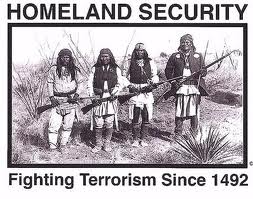
The next question posed to the panelists was how this ugly history impacts the present? Barry Phillips believes there has been a generational impact, from theft of land to boarding schools. “We are still feeling the effects of genocide today.” Ben Williams thinks that there are parallels to today. “Columbus was a terrorist and that is the language we need to use.” For Shannon Martin the genocide is still continuing, “not with the search for gold and spices, but with oil. And it will keep continuing until truth telling is part of the education system.”
After the panel discussion, the audience was invited to ask questions or make comments. A local Native American activist Roger Williams stated, “Until America changes nothing will happen in this country…….whether it is media or sports mascots, these things all impact us. Until we demand change, nothing will happen. Respecting our spirituality is key, so when you all go back to your churches, be advocates for us so that your people respect our beliefs.
Another Native woman told the crowd that their prophecies say that “progress” and “over consumption” will happen and be the fall of this world, but it also says that people can unite, especially when other people come to them for understanding and knowledge.
Both the play to the panel discussion provided valuable information about the genocidal history of the US, but they also provided powerful messages about the resiliency of Native culture and the respect for all living beings.
Holding Media Accountable on Sexual Assault Reporting
Over the past 10 years GRIID has worked with the Kent County Sexual Assault Prevention Action Team. Part of that work has consisted of documenting how local news media reports on sexual assault.

After conducting numerous studies on this issue the Action Team came up with a list of recommendations (see GRIID Media Activist Toolkit page 12) on how the news media can report on this issue in the future. In addition, GRIID participated in helping to create a reporting guide for journalists with the Michigan Coalition Against Domestic and Sexual Violence.
These resources provide reporters with information and ideas on how best to report on this critical issue in our community. Despite these resources being available, some reporters still continue to engage in reporting that reflects a lack of understanding on these issues.
This was the case with a recent story that appeared in the Muskegon Chronicle and on MLive.com. The article includes a comment from a resident who lived near the bus stop, where a child was abducted and assaulted by a man. The comment was putting blame on the mother of the victim, which may be that person’s opinion, but is not relevant to the story and it promotes victim-blaming attitudes.
Members of the Kent County Sexual Assault Prevention Action Team make it a point to contact reporters when they see this kind of coverage as a way of encouraging reporters to think about these issues and to hold them accountable for the potential influence they have on public opinion. Here is the letter that one of the Action Team members sent to the reporter.
Dear Ms. Peters,
I am the coordinator of the Kent County Sexual Assault Prevention Action Team and would like to encourage you to stop promoting victim-blaming attitudes in news coverage of violence.
“Who would have a baby out there alone?” Jones said. “You don’t send a baby out there without her mom.”
This comment from your article regarding the child that was abducted and assaulted from a Muskegon bus stop is not at all relevant to the story, hurtful to the victim and her family, and supports the attitude of blaming the victim, or in this case the victim’s mother, rather than the man that assaulted the child. I do not believe that is was the intention of this article, however, that is the point that was made.
It will take our entire community to change victim blaming attitudes and as a journalist you could have a very powerful role to bring about this change. I have attached a resource that offers some suggestions for journalists that may be helpful to you.
Thank you for your consideration.
Best Regards,
Amy Endres Bercher
Journalist Anand Gopal speaks at Calvin College
(This article first appeared on the Rapidian.)
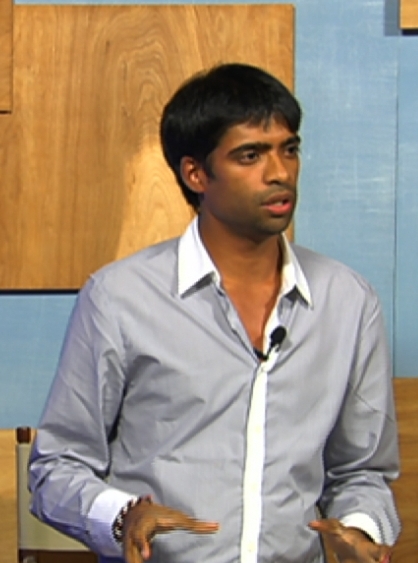
Renowned free-lance journalist Anand Gopal gave a startling talk Friday night to a crowd of around fifty people at Calvin College. Gopal, who has reported from Afghanistan for the last three years was full of current information, having just left the war stricken country four days ago.
Gopal’s reporting has been from not only the perspective of the U.S. military, but Afghan civilians, as well as embedding with Taliban insurgents.
The reporter began his talk by sharing a story in which he traveled into the mountains to meet with a Taliban leader. Upon meeting him, Gopal said the leader asked him a number of questions, including why United States citizens voted for Barack Obama if he was only going to send more troops to fight in Afghanistan, and why we allow our women to walk around without any restrictions? Gopal said he told the Taliban leader that both of those questions were far too complex for one person to answer.
One of the highlights of Gopal’s talk was the historical context he was able to provide. He went into great detail about how in 2001, after the US invaded, most of the Taliban surrendered within a month or two. Many of them fled into Pakistan he said. After a short time many wanted to come back to their lives, and vowed to abstain from participating in any kind of politics within Afghanistan. Gopal said that US policy makers refused that request. “If that happened today we would jump on it,” he added.
Gopal said that 2010 has been a record setting year in Afghanistan in terms of violence. “2009 was before that, 2008 before…each year sets a new record”.
Gopal shared a number of stories from Afghan civilians and Taliban insurgents to underline his point about how detrimental US policy has been in the country. One such story was about a man who was a Taliban commander at the time of the United States invasion. The commander and his 43 troops surrendered to Afghan militia forces almost immediately in the hopes of getting amnesty and vowing to abstain from political life. Gopal said that despite the fact that this man had already surrendered all his weapons, the militia believed he had more. Gopal said they hung him upside down by his ankles for eighteen days and whipped him. Eventually his family went and bought weapons from the black market to hand over to the militia to have him freed. This man was arrested two more times, and tortured by US forces as well as Afghan militia. Each time in order to have him freed, Gopal said the family had to pay money or give weapons to Afghan forces.
“These men who tortured him were allies of US Special Forces,” Gopal said. “The Taliban came back to get rid of these militia forces.”
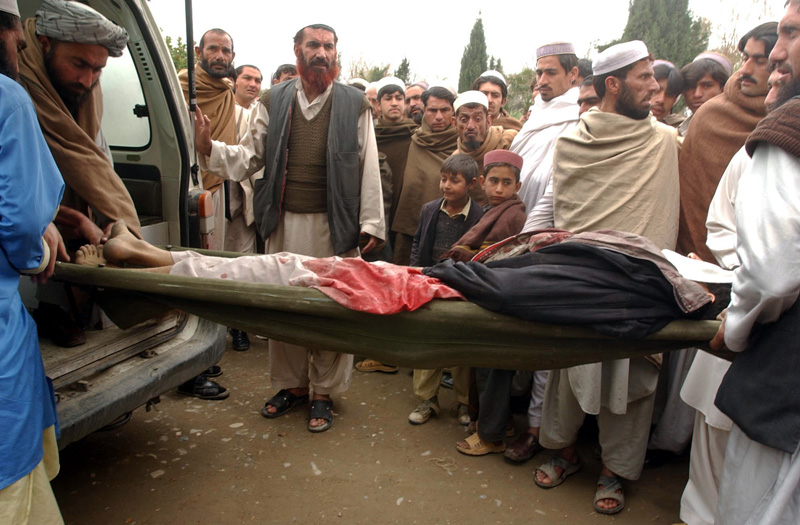
Another story Gopal shared was about a 13 year old boy whose parents were killed in a US air strike. Gopal said that the boy found the severed head of his mother in the rubble of the destroyed building. The boy was so traumatized he carried the head around with him and would not let go of it. Eventually a tribal elder came to the boy and suggested that the honorable thing to do would be to bury his mother’s head and then take revenge. The boy was trained as a suicide bomber and given the mission of assassinating an Afghan government official. Gopal said the boy went into the building where the official worked and was spotted just before detonating. He is now 17 years old and in an Afghan prison.
As far as current policy, Gopal said he does not see any chance that the Obama Administration’s plan for a July 2011 withdrawal will happen. “The Afghan security forces will not be ready”. Gopal added that he recently visited an Afghan military outpost and what he saw left him with very little hope. “There were only 17 soldiers there…most of them were too stoned to fire their guns.
An important point that Gopal made was in regards to the United States fighting the Taliban as part of the global War on Terror. He made it clear that the Taliban’s interests are strictly on a local level. “I have never met a Taliban member who has talked about attacking America.” He also said that while he views the Taliban as a despicable regime, many of America’s allies, such as Saudi Arabia, do not have better human rights records.
Gopal said it is not only his belief, but the hope of many Afghan civilians that the best outcome at this point would be a negotiated settlement between all the interested parties, which include the US, the Taliban insurgents, members of Afghan president Karzai’s government, and members of the Pakistani government.
“A negotiated settlement and withdrawal [of US troops] could give Afghanistan a chance of peace for the first time in 30 years.”
Disclosure: I was a part of the group that contacted Anand Gopal about speaking in Grand Rapids
DINNER & A MOVIE: Rethink Afghanistan
 BLOOM DINNER & A MOVIE:
Rethink Afghanistan
6:30 pm Thursday Oct. 14
The Bloom Collective
671 Davis NW (Corner of 5th & Davis)
$3-$5 suggested donation
This coming Thursday evening, The Bloom Collective kicks off its Dinner and a Movie series with the widely acclaimed film, Rethink Afghanistan. October 2010 marks the 9th Anniversary of the US Occupation of Afghanistan.
While mainstream media has lulled Americans into ignoring the brutality and violence that this occupation brings to the Afghani people on a daily basis, this film intelligently lays out the facts and figures that prove the only rational solution is a negotiated peace. For example, did you know the US spends more than $1 million per soldier per year to fund this war?
As the film’s website states, “This ground-breaking, full-length documentary focuses on the key issues surrounding the War in Afghanistan, raising critical questions that Congress and the American people need to address.” The documentary can also be viewed free online in parts.
The Bloom Collective will serve a light supper (with vegan options) before the film begins. Afterwards, folks will discuss ways to take action for peace in Afghanistan.
The Tea Party Does Not Exist
(This article by Paul Street and Anthony DiMaggio is re-posted from ZNet.)

Recent developments demonstrate that the Tea Party is not the powerful national force that it’s been made out to be. The organization’s meager levels of participation (documented in my and Paul Street’s past research) has finally come back to haunt the Tea Party in the run-up to the midterm elections, as it has been unable to organize outside of scattered local electioneering, largely in favor of Republican interests. In short, the Tea Party does not exist – at least not in the form depicted in the mass media and in political commentary.
Perhaps most indicative of the failure of local chapters to organize are two factors: the collapse of the pre-election National Tea Party conventions and the failure of Tea Partiers to organize and win primaries outside of smaller states. The fall 2010 National Tea Party convention in Las Vegas, although originally planned for July, was postponed, allegedly due to the unforgiving summer heat. Organizers promised the convention would take place in mid-October immediately prior to the midterms, although reporting in September concluded that the entire event had been cancelled. This was not the first time that the Tea Party suffered from a lack of participation at the cross-national level. The first national Tea Party rally in Nashville in February 2010 was generally poorly attended, with just 600 representatives from across the entire country. Some may claim that the low turnout was due to exorbitant costs ($549 to attend, plus travel, food, and lodging expenses), but this defense fails to explain why the Tea Party organized LibertyXPO was an abject failure, despite advertising free attendance. LibertyXPO, a national organization seeking to galvanize Tea Partiers, saw the collapse of its planned September 10th 2010 D.C. convention, which was consciously timed to coincide with the equally lackluster 2010 9-12 D.C. rally. LibertyXPO suffered from incredibly low attendance, and failed to raise even the $40,000 it originally sought to cover conference expenses, despite having spent almost an entire year networking with local Tea Party leaders and groups. Similarly, the 2010 9-12 D.C. rally planned for two days after the LibertyXPO meeting saw a turnout of just a few thousand protestors. In contrast, critics on the political left were framing the anti-war movement as essentially dead in late 2007, when just twenty to thirty thousand demonstrators rallied in Washington D.C. The Tea Party’s far weaker D.C. turnout in the run-up to the midterms – just 10 to 15 percent the size of the 2007 D.C. anti-war protest – should be evaluated just as critically by those on the right as the anti-war movement was assessed by those on the left. At a time when massive attendance and activism at national conventions and rallies was most needed, Tea Partiers were refusing to engage in the sort of action that would bring about a genuine mass movement.
As a national federation, the Tea Party has largely been ineffective. The Tea Party’s failure to organize likely relates to its low level of resources and weak organizing at the local level – documented throughout this chapter – but also demonstrated in the 2010 primary results. The Tea Party was much more likely to succeed in electing primary candidates in small states characterized by small populations and far smaller voter turnouts. The “movement” was largely unsuccessful on the national level, however, as a 2010 Wall Street Journal article titled “Big States Dilute Tea Party Strength” suggested. As the paper reported during the primary season, the Tea Party benefitted from “little of either” in terms of monetary resources and wide-reading political organization.

The poor performance of Tea Party candidates in large states, in addition to the failure of the group to organize local chapters into a national force, stands in dramatic contrast to the massive support for mediated rallies and events that claim the Tea Party banner, but are manufactured from the top-down. A stark example is the August 2010 Glenn Beck-Sarah Palin “Restoring Honor” rally, which coincided with the anniversary of Martin Luther King’s “I Have a Dream” speech. Reports suggested turnout at this Washington D.C. rally of 100,000 or more – the only Tea Party rally in 2010 that even came close to the hundreds of thousands of anti-war protestors who regularly appeared in Washington between 2003 and 2005. Of course, the massive attendance of Beck’s rally suggests that the Tea Party phenomenon itself is largely a media creation, considering that Tea Partiers could not be bothered to show up in large numbers for their own convention and other national rallies when they failed to headline prominent national figures such as Beck and Palin. The Las Vegas Tea Party convention and LibertyXPO rally required sustained and mass based local activism (coordinated at the national level) to draw a mass large turnout, whereas Beck and Palin merely needed to employ their megaphone at Fox News to attract demonstrators. The failures of the LibertyXPO and Las Vegas convention is strong evidence that, contrary to the common media narrative, Tea Party supporters are not participating in local chapters on a substantial level.
Our analysis is reinforced by another study done by Fairness and Accuracy in Reporting, which found the marginalization of left social gatherings during the media’s preoccupation with the Tea Party. Julie Hollar found in her analysis that the fall 2009 march on Washington D.C. with tens of thousands of gay, lesbian, bisexual, and transgender activists received significantly less coverage than the Tea Party marches in April. Similarly, the February 2010 Nashville Tea Party Convention received far more attention than the U.S. Social Forum, (a convention leftist and socialist activists) which drew 15,000 to 20,000 attendees (compared to the 600 at the Tea Party convention), but received just 1.5 percent of the coverage of the Tea Party convention in a sample of ten national news outlets.
The national media has played an important role not only in exaggerating the power of the Tea Party in relation to other social movements. Reporters have also masked the Tea Party’s failures when they raise serious questions about the group’s power as a movement. The collapse of the Tea Party’s LibertyXPO convention in Washington D.C. in the fall of 2010, for example, was largely ignored in national reporting. A Lexis-Nexis search finds that neither the New York Times nor the Washington Post bothered to run a single story on the meeting’s collapse in September 2010, while directing strong attention to the earlier, although comparatively lightly attended Nashville conference earlier in the year. Additionally, coverage of the collapsed October 2010 Tea Party convention in Las Vegas was almost completely ignored at a time when reporters preferred the narrative of an ascendant and insurgent Tea Party – rising up from the grassroots against establishment politics. The failed Las Vegas convention was covered in just one story in the New York Times, and one story in the Washington Post in the last two weeks of September, when the story was originally reported by alternative media.
By downplaying the failure of the Tea Party to organize as a coherent national movement, the U.S. establishment press further reinforced the already-prominent view that the Tea Party is a vigorous, broad-based national phenomenon. The fact that Republicans will be picking up a large number of seats this fall is more the product of public anger at a two party system that has been unable or unwilling to ease public suffering in the worst economic crisis since the depression. It is to be expected, then, that Americans will come out to punish the party in power in light of its half-hearted attempts to stimulate a sagging economy and protect a workforce increasingly under assault from budget cuts and downsizing. We shouldn’t let the Tea Partiers false image as an “insurgent,” “grassroots” “movement” obscure this basic reality.
March to Count the Cost of 9 years of war in Afghanistan takes places in Grand Rapids
Yesterday, about 20 people participated in an event for the 9th anniversary of the US occupation of Afghanistan.

Organized by people calling themselves Grand Rapids for Justice & Peace in Afghanistan, the anti-war march began at the now closed Central High School. Organizer Mike Saunders stated the location was picked in part because it was a reflection of the spending priorities, where money was leaving the Grand Rapids community while funding for public education is dwindling.
Before the march began John Kroondyk talked about how military recruiters target students through JROTC programs in schools and the disproportionate focus on students from communities of color. Kroondyk said that even though there isn’t a military draft, many working class students end up going into the military in what amounts to an “economic draft.”
Once the group left Central High they marched through neighborhoods going door to door the leave informational flyers on the cost of the 9-year US occupation of Afghanistan for Grand Rapids taxpayers.

The march moved east and made a stop at the cemetery on the corner of Fulton and Eastern. At the cemetery people read the names of Afghan civilians who have been killed since 2001 and US soldiers who have died during combat in Afghanistan. After each name was read a gong was struck to dramatize the loss of human life.
In addition to the list those who have died, people heard some comments from a Vietnam veteran who counsels soldiers who are suffering from Post Traumatic Stress Disorders (PTSDs). PTSD is such a serious problem for those who have served in Afghanistan that it often ends in suicide. In fact, the rate of suicides for US veterans who have served in Afghanistan and Iraq has equaled or surpassed the number killed in combat in those two countries.
As the group moved south through Grand Rapids people could see the housing stock in worse condition and many houses were boarded up. Despite the poverty many people showed support for those marching and willingly took flyers. The group distributed 400 informational flyers along the march route.
When the group arrived at the Baxter Community Center again the comments that were shared focused on the monetary costs to Grand Rapids of the 9-year US occupation of Afghanistan. According to the National Priorities Project since 2001 $185 million dollars has left this community to fund the war in Afghanistan. Had that money stayed in Grand Rapids it could have provided funding for low-income health care to 25,617 people.

The march ended up at Martin Luther King Jr. Park and as the people arrived they were greeted by an audio recording from one of Dr. King’s speeches where he condemned militarism. “A country that continues to spend year after year more money on war than on programs of social uplift is approaching spiritual death.”
At the park Cole Dorsey from the local chapter of the IWW told people that this US government, both Republicans and Democrats, doesn’t care about Afghanis. He also said that this war was a war of imperialism to protect the interests of capital. Cole then told people about numerous opportunities to learn more about what US policy in Afghanistan and actions they could take to resist such policies.
People wrote on a large roll of paper with ideas about how they would like to see the millions of dollars be used right here instead of leaving Grand Rapids to fund the war in Afghanistan. The group intends to take this information to the Grand Rapids City commission. People can get that information and information about other efforts by going to the Facebook page for the group Grand Rapids for Justice and Peace in Afghanistan.
Interview with Anand Gopal on Afghanistan

We had a chance today to sit down with Anand Gopal and talk about what he has seen in Afghanistan during the past three years he has lived there working as a reporter and writer.
Anand is in Grand Rapids today for a lecture he is giving at Calvin College. (7pm tonight) In this interview we discussed the history of US involvement, the current US occupation, the reality of Afghan women, opium production and the Karzai government.
Muslim Scholar addresses Interfaith audience in Grand Rapids

Yesterday, I attended the keynote talk at a conference organized by the Kaufman Interfaith Institute on the campus of Calvin College. The keynote speaker was Dr. Omid Safi, a professor, author and Muslim scholar.
During the introductory remarks it was mentioned that Dr. Safi was the first Muslim to be a keynote speaker, despite the fact that this interfaith event has been held since 1991, although not on an annual basis.
The title of Dr. Safi’s talk was Islam Beyond the Headlines. He began his remarks by saying that we are living in difficult days. “Americans are struggling in many ways, economically and without health care.” In North Carolina, where Dr. Safi lives, roughly 10% of the population that is actively looking for work cannot find work.
Dr. Safi then put the difficult days in context by saying, “We are seeing the crumbling of an American Empire. The US is the most heavily militarized society in the world, even while our roads crumble and basic social services are limited.” He went on to say that the country’s excessive spending on militarism while people’s basic needs are not being met is what will drive the end of the American Empire, a sentiment shared by Dr. King who said, “a nation that continues year after year to spend more money on military defense than on programs of social uplift is approaching spiritual death.”
Dr. Safi then spoke about how the US public’s perception of Islam has been constructed in recent months, with much of the headlines in August and September focusing on the opposition to the Mosque that was being built at “ground zero” and the Christian pastor who wanted to have a public burning of the Koran.
He said that when talking with the US news media he asked them why even bothered to report on the pastor? They told him it was because their editors wanted them to make it news because it would get people’s attention. Dr. Safi asks why are the news media not focusing on the good actions of Muslims, Jews and Christians around the country? “This is not to overlook ugliness,” he said, “but as people of faith we are called to have faith in the things that are unseen……the good deeds that we do every day.”

Dr. Safi then tells the audience how his kids come home and ask him, “why do people say that your daddy is a terrorist?” His son, who looks like his mother (blonde hair and blue eyes), is Muslim and every day in school he gets to hear what his classmates think about Muslims. The kind of stereotyping that exists for Muslims has on become worse since 9/11. Dr. Safi said, “If the actions of the 19 Arab/Muslim men who committed acts of terror on 9/11 makes all Arabs & Muslims terrorists, that equates to collective punishment.”
The speaker went on to say that much of what motivates action against the US is global poverty, which is not a new things, but the gap between the haves and have nots is larger than at any other time in the modern world. “Poverty is an unacceptable reality for people of faith, since the Creator has provided enough of what is necessary for all of us to go without.”
Dr. Safi said, “people of faith have a responsibility to do more than just quarantine the evil in the world, we have to do whatever we can to eliminate it.” One of the best examples of a person of faith that does this for Dr. Safi is Martin Luther King Jr. However, when he speaks about King to students, they say act bored by what the perceive Dr. King represents. “This is due to King being made into an icon, which has allowed us to not hear the critical words of King. King was a prophet and the prophetic tradition challenges us about the fundamentals of our faith.”
“We can either idolize Dr. King one day a year or we can manifest King’s message by standing against war and militarism today.” Dr. Safi mentions King’s triplets of evil – racism, militarism and capitalism. “We cannot keep spending the amount of money of weapons while people starve and have not health care.”
When addressing how people of faith ought to think about militarism, Dr. Safi stated, “When people are killed by bombs or bullets it is the same as killing the living, breathing scriptures. Our faith tradition treats the written scriptures with great reference, often wrapping the book in clothe and this is how we need to treat human beings, with the same reverence.”
He began hi concluding remarks by speaking about the importance of love in the religious traditions and said that love is necessary for justice to occur. “Unless our spiritual quest is directly linked to social justice, neither of them will do well.” Dr. Safi said that Islam teaches that we have to come to the aide of the oppressed and oppressor. “You come to the aide of the oppressor by stopping him from continuing oppressive behaviors and policies.”
He ended his presentation with a re-telling of Dr. King’s interpretation of the Good Samaritan story. Dr. King said the question shouldn’t just be “should I stop to help someone victimized, the question should be what do we do about the system that victimizes people.”
In some ways the speaker made some important points that challenged our stereotypes about Islam, questioned US militarism and called people of faith to act with justice and compassion. However, nothing that Dr. Safi said could be considered terribly radical. He framed his comments within a very conciliatory fashion and even used humor to disarm the crowd.
Despite his talk being very moderate, the first could of questions that were posed to him were from people who clearly felt threatened by Islam and its practitioners. The first person asked if Dr. Safi could have given this same talk in Iran. Dr. Safi, who is Iranian, stated that he could give this talk but would probably be arrested. Having said that he made the point that just because other countries may not respect freedom of speech the same way it is respected in the US doesn’t mean that people here shouldn’t speak out about injustice.
Other people asked why Muslims don’t speak out again Islamic terrorism? Dr. Safi said that they did, that he does on a regular basis, but that the media doesn’t report on it. These questions and other comments made by some of those in attendance clearly reflected the unwillingness to hear Muslim voices or to examine US exceptionalism.
US Soldiers Speak Out Against the Occupation of Afghanistan

On the 9th anniversary of the US invasion/occupation of Afghanistan the group Rethink Afghanistan has produced a new short video with a perspective we rarely see in the commercial media.
The video is with US military veterans who are speaking out against the US occupation in Afghanistan, all of which who have been deployed to fight in this brutal war of occupation.
 Grand Rapids Institute for Information Democracy