What We Are Reading
Below is a list of books that we have read in recent weeks. The comments are not a review of the books, instead sort of an endorsement of ideas and investigations that can provide solid analysis and even inspiration in the struggle for change. All these books are available at The Bloom Collective, so check them out and stimulate your mind.

The Obama Syndrome: Surrender at Home, War Abroad, by Tariq Ali – In this short volume prolific writer and activist Tariq Ali makes a strong case that the Obama administration has done just what the title of his book suggests – surrendering to the economic and social power structures in the US (Wall Street, health insurance companies) and continuing the same basic foreign policy objectives as previous administrations with imperialist policies abroad. Ali doesn’t believe that Obama and the people around him every had any intention of pursuing any of the changes that were put forth in the 2008 campaign rhetoric, instead the author believes that Obama was the right choice for those who benefit from both US domestic and foreign policies. An important contribution for those who want to honestly assess US policy under the current administration.

Dreams of Freedom: A Ricardo Flores Magon Reader, edited by Chaz Bufe and Mitchell Cowen Verter – For those who are not familiar with the life and work of the great Mexican anarchist Ricardo Flores Magon, this book is essential reading. This collection of Magon’s writings covers his writings on a variety of topics: racism, war, feminism, class war, the Mexican Revolution and of course anarchism. Magon was a prolific writer, an organizer, a dissident and a newspaper editor. Magon was arrested and died in a US prison in 1922, but this collect of his writings has the capacity to keep his memory alive and inspire new generations to work for revolutionary change.

The Anti-American Manifesto, by Ted Rall – Writer and political cartoonist Ted Rall has written a very interesting book that will unfortunately no get much attention outside of the left/independent media. The Anti-American Manifesto provides readers with plenty to think about in terms of what is not work in this country. Rall makes his case that democracy here is a joke and that engaging in reformist politics is a waste of time. Using good analysis and biting humor the author forces us to think about how change should come about in the US and why it is vital for those who want social justice to change their tactics.
Skin Trade – A documentary film by ARME Production – This is one of the documentaries that is both inspiring and disturbing. Skin Trade takes a look at the fur industry, their deceptive marketing campaigns and the harsh reality of how animals are brutalized for profit.
Beyond Talking About Racism in Grand Rapids
A few weeks ago people in West Michigan had a wonderful opportunity to have a conversation about racism. The play Lines: The Lived Experience of Race, written and directed by Stephanie Sandberg was preformed at Actors Theater in late September/early October.

Lines was based on interviews that Sandberg did with roughly 160 people in the community about their experience of racism. The play was divided into themes, like discrimination, education, gentrification on Wealthy St. and police profiling.
The way Lines was constructed not only highlighted individual experiences of racism, it exposed the larger problem of institutional or structural racism. The commentary was powerful and indicting. It was powerful because of the way it challenged the audience to confront the still deeply entrenched reality of racism in West Michigan and it was indicting because it forced us White folks who like to think care about communities of color that whatever we are doing now just isn’t working.
As a matter of transparency, I was one of the individual’s highlighted in the play and I participated in a talk back session after one of the performances. I can only speak about the content of the discussions after the show I attended. In some ways I thought that it was good, but primarily the comments made by White people afterwards still communicated a tremendous amount of privilege.
For example, one person said that the play dealt with heavy stuff and that “we can’t always be carrying that heaviness around. We need to take a vacation from the issue and sometimes just enjoy ourselves.” In one sense I understand the intent of the statement, but it fails to acknowledge that people of color don’t have the luxury of “going on vacation” from racism.
This for me underscored how deeply entrenched White privilege is in this society, since even people who came to a play about racism still didn’t get it. One aspect of White privilege is our unwillingness to confront the harsh realities of what communities of color face every second of every day.

The ugliness of racism and White privilege certainly needs to be discussed and Lines certainly gave us an excellent opportunity to have those discussions. However, talk must eventually be translated into action and that action must be geared to transforming society from one of White privilege and institutional racism to one of racial justice. Therefore, I want to make a few observations/proposals about how we could move in that direction.
1. All institutions must make racial justice and integral part of their work and mission. By this I don’t mean tokenism or just having people of color on your board of directors, I mean seriously coming to terms with how these institutions can challenge the deeply entrenched forms of institutional racism in this community. For example, communities of color disproportionately living in poverty, which means have higher rates of unemployment, underemployment and are facing housing foreclosures. If the work of religious institutions, government and the plethora of non-profits that inhabit Grand Rapids does not change this really then how can they say they are committed to racial equality?
We cannot be content by sending people to the Institutes for the Healing of Racism and think that somehow absolves us of having to actually do something to challenge institutional racism. We can’t just hang out with people of color and think makes of champions of racial justice.
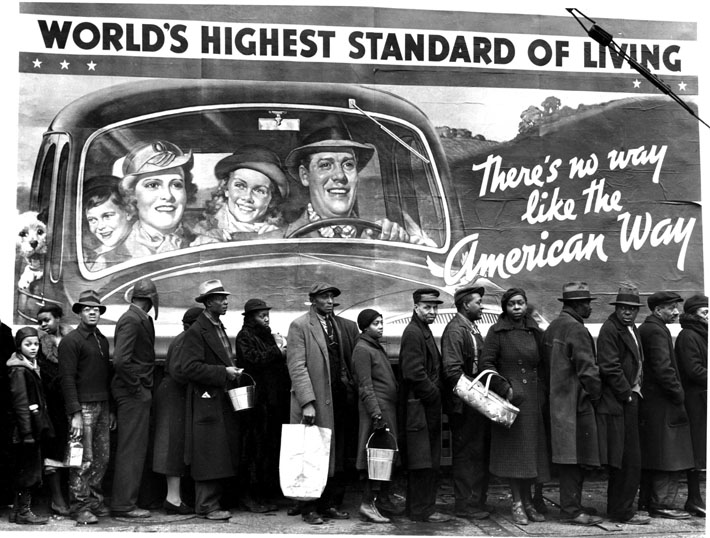
2. We all must challenge institutions that by their very nature perpetuate institutional racism. Here is where I am sure to make enemies, but such is life. One example of an institution that perpetuates institutional racism is the Chamber of Commerce. This is an association of area businesses that promotes economic policy and practices that disproportionately benefit White people. Can people of color be members of the local Chamber of Commerce……absolutely! Heck, they even offer their own version of the Institutes for the Healing of Racism. However, the power that the Chamber of Commerce can leverage on economic issues mostly benefits White people.
3. We all must think about racism as more than a White/Black issue. Other communities of color are equally affected by institutional racism. For example, Latino communities are disproportionately made up of people who work for substandard wages picking our food, serving our food and cleaning up after us in the service industry. On top of the economic hardships they must endure we have the audacity to claim “they take jobs from us” or are nothing more than “illegal aliens.”
Lastly, since we must give in to the temptation to take a vacation from racism, we need to think about how racism works in the less obvious ways. For example, look at the hundreds of thousands of people who participated in the event we all know as ArtPrize. Lots of people came to downtown Grand Rapids to look at art and to enjoy the commercial district. However, we have to ask ourselves who were the primary beneficiaries of this seemingly benign cultural event? Which businesses made money and how were race relations negotiated during that three-week spectacle? What if next year ArtPrize were to use the intersection of Franklin and Eastern as its focal point? Would that mean a massive amount of financial investment in that part of the city? Would it benefit many of the current residents who live in that area? The answers to these questions should tell us something about how entrenched institutional racism is in this city.
The Bloom Hosts Canning How-To Sunday

Canning How-To
1 – 5 p.m. Sunday Oct. 24
The Bloom Collective
Steepletown Center
671 Davis NW (Corner of 5th & Davis)
You don’t have to stay for the entire four hours to participate. Come, can and go!
Are you mad as hell that America’s food and agriculture industries (1) grow GMO foods that can make you sick, (2) use processing methods that delete nutrients and insert harmful additives, (3) are a major cause of climate change, soil death and water pollution, and (4) target kids and adults with foods that cause obesity, diabetes and heart disease?
Here’s your chance to take some direct action. Learn how to can your own food. Canning is easy and safe. You don’t have to worry about those six-syllable food additives poisoning your family. And, canning your own takes you one more step away from the capitalist economic system.
You can learn the basics of canning at this Sunday’s free workshop sponsored by The Bloom Collective. From 1 to 5 p.m., experienced home canners from The Bloom, Our Kitchen Table and the GR Free School will show folks how to can applesauce. Bring your own produce, jars, lids, a cutting board and knife.
For information, visit www.thebloomcollective.org or email bloomcollective@gmail.com.
If you can’t make it to the workshop, check out this free online Guide to Preserving Food safely provided by the MSU Extension.
Statewide efforts in sexual assault prevention
Yesterday, people from all over the state came together in Lansing for a statewide sexual violence prevention grantee meeting. This meeting consisted of health professionals across the state to talk about the sexual assault prevention projects they all have recently been funded to implement in their communities.

The funding for these projects comes from the Center for Disease Control and is funneled through the Michigan Dept of Community Health Violence and Injury Prevention Section. It is important for the public to know about these efforts for two reasons. First, while there have been in the past a great deal of focus on providing funding for programs for victims of sexual assault there is a growing emphasis being put on prevention. Secondly, anytime programs are being funded with tax dollars it is important for the public to know how those funds are being spent and whether or not they are accomplishing the goals & objectives of the grants allocated. This is what the radical women of color organization INCITE! would refer to as community accountability.
The first presenter was from the Houghton area with a project called Dial Help. This project has recently seen an increase in awareness and volunteers, with roughly 30 people offering their time and talent for the projects. Some of the community partners with Dial Help are the local campus, Health Department, students groups, and local law enforcement. One of the new aspects of the project is a requirement for anyone involved in organized sports to participate in an informational session on sexual assault prevention. They also have used media to promote their efforts, particularly a poster campaign.
The second presenter was also from the Upper Peninsula from the Diane Peppler Resource Center. This project partners heavily with local tribal communities but also is now working with Mackinac Island. The reason for doing work with Mackinac Island is because the island is in the top 10 of locations in the country for reported sexual assault, assaults targeted at workers who come to the Island during the tourist season. The other aspect of their grant-funded project is to do peer-focused educational projects for teens.
The next presenter was from the Kent County Health Department, which has been a recipient of these sexual assault prevention grant funds for the past 10 years. The presenter listed the numerous community partners they have been able to develop over the last decade, with not only help in geting the word out about the projects, but also providing greater access to county wide data on sexual assault and sexual assault prevention.
Their projects have included working with students, mostly through the Yo Puedo Program. This has included youth produced media campaigns on healthy relationships and sexual assault prevention. Here is one example of a youth produced video on sexual assault.
They have also been working on using sports based programs to target athletes and coaches on the importance of sexual assault prevention. The newest component of the project is a workplace project, which will include a toolkit for businesses created by the Health Department modeled on the Corporate Alliance to End Partner Violence.
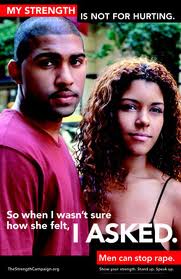
The fourth presenters were from Calhoun County’s Sexual Assault Services. This group also has numerous community partners, but is confronted with a large geographic area that poses some problems. Beyond the community partners this project is really focused on working in the school systems. This includes providing resources to administrators, teachers, students and parents. They also conduct trainings with students and provide services. Another challenge they face, which is incorporated into the project, is cultural competence, especially since they work with four different school districts with lots of cultural diversity.
The fifth presenters were from the St. Clair County Child Abuse/Neglect Council. Their project is called Working Together Works, which involved both the educational system and the broader community. They spoke about their extensive community partners, with law enforcement, the courts and a neighborhood-based crime prevention project. The main goal of this campaign is to reduce the numbers of first time sexual offenders, thus the focus is with young males. Engaging young males takes place with juvenile offender programs, youth groups and in the school system through presentations and the use of theater.
The community education aspect of the project involves a Women’s Expo at a local shopping mall, a community advocate recognition event and an event called the Roof Sit. This involves a local radio DJ sitting on a roof top for 1 week and presenting lots of information about sexual assault prevention and community resources.
Following a break there were presenters were from Haven in Oakland County. They are also focusing on primary prevention in the community through a variety of avenues, like parents. They feel that the more they can do with parents early on they can prevent young boys from becoming perpetrators of sexual assault. They have recently had to hired new staff and they have been developing relationship and collaborative partners. Student participation is also a component and they have found that working with the sports team and athletes.
The sixth presenters were with a group called The Underground Railroad Inc., based in Saginaw. This project has identified all the programs and services that already existed so as to avoid duplicating existing services. They do a great deal of work in the schools and recently have made inroads into some of the parochial schools. They have also created a toolkit used by service providers and educators. The use of the toolkit led to numerous projects with students, such as a media campaign and a student pledge to prevent violence campaign.
The next presenter was from Women’s Aid Service based in Alma, Michigan. They have also developed numerous community partners and work within the educational systems, including Alma College. This project has also done a great deal of work with the faith community by attending the Ministerial Alliance.
The next to last presenter was from the Women’s Resource Center of Northern Michigan. The presenter stated that this new grant has really revitalized people, because so much of the work and energy was for services for victims and now they can do more work around prevention. They really believe that a primary goal should be to eliminate the services they provide for victims and do whatever they can to prevent sexual assault. One of the focuses of this project is to work on developing the role of bystanders, so that people become engaged in intervening to prevent violence in their community. The Women’s Resource Center also works in the education system and has done numerous projects with students.
The last presenter was a new grantee from the YWCA West Central MI. This project has also developed strong community partners such as the Hispanic Center and the Kent County Sexual Assault Prevention Action Team. The focus of their project will be to expand the amount of groups in the community to work on violence prevention, with an emphasis on prevention and services for young women of color. This emphasis will also include education around sexism and racism within the work of violence prevention. One component of the project with youth will be to meet with Federal Legislators as a way to impact policy.
After lunch staff members of MPHI discussed their role in assisting these statewide funded projects. They also presented some information on ways to use photo-voice as a way of collecting information, data and perspectives on sexual assault prevention from the community.
Hearing all the work being done around the state on the issue of sexual assault prevention not only providing those in attendance with a better understanding of the scope of the work being done on this critical issue, but it also provided an opportunity for people to share best practices and ideas for implementing crucial programs in the community.
A Celebration of Killing

Recently GRIID has been in correspondence with Amanda Stuart, a local parent who made contact with Stop Targeting Our Kids (STOK) after going with her child’s school to see The US Army’s Spirit of America performance at the Van Andel arena. GRIID had a chance to interview her about that experience.
Amanda, can you tell us about how the event you took your child to see was promoted? What did you expect it to be?
I volunteered to drive for the class field trip. It was promoted to the teacher as an educational event on U.S. history. I don’t think she realized it was U.S. Army sponsored. I didn’t know who the event sponsor was until we arrived. The only thing I saw ahead of time was a glimpse of a poster with the photo of someone in a revolutionary war uniform. It made me wonder if this would be a history of the U.S. through the history of war. Another parent and I spoke with the teacher about it ahead of time.
Describe some of the content of the event/show?
I was presented as a pep rally for the U.S. Army and its war history, complete with loud music, lights show, machine gun fire and soldiers in fatigues throwing free t-shirts to pump up the crowd.
What disturbed you most about the messages that the US military was sending, particularly to children?

I thought they might try to glorify the army and war and skim over the killing and dying. They did not skim over the killing and dying. They included the killing and dying and tried to glorify those aspects as well. There was a whole musical number about the U.S. flag being something worth killing and dying for. The narration said war is a way the nation reaches its goals without mentioning any of the peaceful ways goals are met. Soldiers playing WWII soldiers talked about planning to kill as many Germans as they could without bothering to examine the reasons. That specifically was probably the most disturbing because I was sitting beside a child whose mother was born in Germany and part of my own family comes from Germany. The crowd was in a cheering frenzy throughout much of the performance. It was nauseating.
Would you say that the event you attended was a form of propaganda? and do you feel like you were misled about what you were going to see?
This was definitely U.S. Army propaganda. In fact, one of the questions that I wrote down during the show as I was noting critical thinking questions for the class was: “What does the word propaganda mean and were there any aspects of propaganda in the show?” As the show began, the announcer read the names of the schools in attendance. I’m sure Army recruiters were scheduled for visits to those schools to follow-up on the excitement of the performance. If I were to describe the performance without assigning a place, someone might mistake it for a spectacle put on by a military dictatorship.
As a parent what lessons did you learn from this experience and what would you want other parents to think about when presented with this kind of information?
We teach children to solve their own problems with their words, not by hurting others. Peace begins there. War is not a backdrop for happiness. We have to expect the same peaceful resolution of conflict from adults that we try to teach to our children. Another parent in attendance told me that she thinks normal people should know the difference between military and civilian killing. I don’t see a difference. Killing is killing. Even if I were someone who says military murder is not really murder, too many civilians end up dying in the crossfire for any of it to be justified.
IWW screens “Plunder: The Crime of Our Time”
 Grand Rapids IWW Free Movie Night
PLUNDER: The Crime of Our Time
7 p.m. Thurs. Oct. 21
Trinity United Methodist Church
1100 Lake Dr. SE Grand Rapids
“When plunder becomes a way of life for a group of men,they create for themselves, in the course of time,a legal system that authorizes it,and a moral code that glorifies it.”– Political economist Frederic Bastiat, The Law [1850]
“I used to think of Wall Street as a financial center.I now think of it as a crime scene.”– Filmmaker Danny Schecter, Plunder (2009)
According to its promotional Web site, Plunder: The Crime of Our Time explores how the financial crisis was built on a foundation of criminal activity, showings how Wallstreet scammers recklessly put trillions of dollars and the world economy at risk.
This pyramid of fraud led to the massive foreclosures affecting 10 million homeowners, rising unemployment, economic collapse and increasing hardships worldwide. It connects the dots identifying who the victims and beneficiaries are in what “may well turn out to be the greatest nonviolent crime against humanity in history,” As Graydon Carter, editor, Vanity Fair states, ” . . . never before have so few done so much to so many.”
The film reveals the complicity of the major media outlets, which failed to sound the alarm or investigate wrong doers. It’s also a call to action: if action is not taken real lessons will not be learned or applied and another crisis may be looming as the underlying problems are still there.
“This is a story that must be told if economic justice is to have any meaning,” says Schechter, “Plunder demands a full investigation into who is responsible for the crisis and an appropriate punishment . . . This crisis is not about the unintentional mistakes of a greedy few but a crime that effects us all.”
View the trailer:
How “Breast Cancer Awareness” Campaigns Hurt
 (This article is re-posted from PR Watch.org)
October is Breast Cancer Awareness month. Pink ribbons abound at department stores, grocery stores, gas stations, shopping malls and many other places. But the big “awareness” push may be misplaced. After all, lung cancerkills twice as many women each year as breast cancer — more women every year in the U.S. die from lung cancer than from breast, uterine, and ovarian cancers combined. In 2009 alone, 31,000 more women died of lung cancer than breast cancer. But there aren’t any ribbons, theme-colored products, corporate promotions, colored car magnets, festivals or fundraisers to make people aware of lung cancer’s devastating toll, or to support lung cancer victims or raise money for a cure.
Why not?
Sex Sells
Because female breasts are sexy, and sex sells. Lungs and other organs — and theircancers — just don’t have the same zing. Lung cancer may be the country’s number one cancer killer, but people are unlikely to flock to buy weird and inappropriate “lung cancer awareness” products like a colored “lung cancer awareness” hand gun, a “colon-cancer awareness” floating beer pong table or a bile-colored “pancreatic awareness” toaster. Lungs, pancreases, colons, prostates and other hard-working internal organs are just plain unattractive marketing tools — they don’t sell stuff. They are asexual, and hidden, and we like them that way. Not so with breasts. Female breasts conjure up buying power like few other organs, and the “breast cancer awareness” theme gives corporate America a legitimate “in” to link female breasts to sales of just about anything — a winning combination for marketing purposes.
People also tend to blame lung cancer victims for their own disease, since smoking causes lung cancer. Never mind that cigarette companies engaged in 50 years of fraud and deception in advertising their products, or that they magnify the addictiveness of cigarettes by free-basing nicotine and performing other hidden chemical hanky-panky with tobacco. It’s all the smoker’s fault for getting cancer.
And What About Men?
Virtually all breast cancer awareness campaigns are silent about the fact that breast cancer also affects men. Men are at a diagnostic disadvantage for the disease because they are not urged to conduct self-exams or get screening mammograms the way women are. Ignorance about male breast cancer leads to long delays in diagnosis, reducing men’s survival rate. Since the public is repeatedly told that breast cancer is a woman’s disease, men have difficulty accepting the diagnosis when they are affected, even to the point of keeping their diagnoses secret. Male breast cancer victims also face a terrible stigma from society. One public health clinic refused to give a man a mammogram because he was a man. A neighbor of mine whose whose husband died of breast cancer (and who enlightened me about the toll the disease takes in men) told me that after his diagnosis, her husband’s own friends jokingly derided him for having a “woman’s disease.”
When it comes to men, “breast cancer awareness” promotions as they are currently conducted, with their over-the-top emphasis on women’s breasts, do more harm than good.
So It’s All About Women’s You-Know-Whats (Snicker!)
 These days, many breast cancer promotions have cringeworthy, degrading overtones that convey all the respect of drunken sailors at a strip club. A southern California company called “Save the Ta Tas” (phone 1-877-MY-TATAS), sells T-shirts with embarrassing slogans like “Caught you lookin’ at my Ta Tas” and “I love my big Ta Tas.” The company donates a small portion of sales from these items for research. A television commercial shows a woman wearing a skimpy bikini walking next to a swimming pool. Men gawk at her chest. The camera zooms in to focus on her jiggling breasts and a message fills the screen, “You know you like them. Now it’s time to save the boobs.” The ad invites viewers to attend an event called “The Boobyball Party.” Hard Rock Hotels are advertising “Get into Bed for a Cure.” There’s even a horrifyingly-named “Beat the Hell Out of Breast Cancer” festival in Bryan, Texas, which offers promotional bracelets that say, “I Love Boobies.” Flanigan’s Boathouse in Malvern, Pennsylvania offers a happy hour called “Tips for Tits.”
Ugh.
Alcohol Un-Awareness
Alcohol manufacturers have started offending breast cancer survivors by using femalebreast cancer to sell liquor. California’s Marin Brewing Company sponsors “BreastFest.”The Russian River Brewing Company in Santa Rosa, California has “All Hopped Up for the Cure,” and Sweetwater Brewery in Atlanta minces no words with its ““Beer for Boobs”festival, promoted with the snickering tag line, “It’s all about the boobs!” Delta Airlines’ October in-flight magazine asks airline customers to “join Delta in the fight against breast cancer” by purchasing a pink martini made with Skyy Vodka and Minute Maid Pink Lemonade for $7. The Chambord liquor company urges people to “pink your drink”, saying that “by adding a splash of Chambord to any cocktail, you’re supporting breast cancer awareness year-round.”
Liquor companies persist in linking their products to breast cancer awareness even though the National Cancer Institute warns that “even moderate drinking has been shown to increase the risk of breast cancer,” and theAmerican Cancer Society says “The use of alcohol is clearly linked to an increased risk of developing breast cancer.”
Barbara Brenner, Executive Director of Breast Cancer Action, sums it up by saying, “Anybody trying to sell alcohol to promote breast cancer awareness should be ashamed of themselves.”
Time for Self-Examination
Come October we are inundated with often mindless, embarrassing, even harmful and degrading pink cause marketing promotions. October, then, is a good time to urge consumers to look critically at marketing campaigns that persuade us to buy products by leveraging the emotions generated by a deadly disease, or employing sexual overtones to sell products. At the very first sign of pink, consumers need to start asking critical questions like “Is the product being sold actually good for us?” “Is the promotion appropriate?,” “How would a breast cancer victim — male or female feel toward this promotion? Would they consider it offensive?” and “Could I do more good if I donated money directly to a reputable disease research organization instead of spending it on this product?”
Chances are the answers to those questions will help consumers see that they’ve been taken for a ride on an often inappropriate and sometimes offensive rising tide of corporate pink.
The Press takes a “clean up” tour with Enbridge

What happens when a major energy company, which was responsible for one of numerous environmental catastrophes, invites the media to a “clean up” tour? Answer: the news media takes them at their word.
This is a conclusion that any sane person would come to after reading yesterday’s Grand Rapids Press article entitled, “Enbridge gives tour to show most of the oil from Kalamazoo River spill has now been cleaned up.”
Reporter Chris Killian begins the article by describing what he believes is a recovering eco-system along Talmadge Creek. He states at one point, “Life is slowly returning to normal at ground zero of one of the worst oil spills in Midwest history.” Now, I don’t know what kind of environmental knowledge this reporter has, but I’m not sure that just looking at an eco-system is enough evidence to make the kind of value judgment that the reporter does.
Beyond the reporter’s own observations the only other source he relied on for this story was someone from Enbridge’s management team. Not surprising since the occasion for the Press reporter’s visit to the Talmadge Creek was to take a “tour” of the area affected by the oil spill.
Sure the article mentions EPA requirements for the clean up, but no one from the EPA was interviewed for the story in terms of how the clean up is going. The Press writer did not speak to any of the local residents, local biologists or environmental groups as to their assessment of the short-term impact of the Enbridge caused oil spill. Instead they just took the word of the company that caused the disaster in the first place.

We have noted this kind of coverage in the Press in recent months, such as a story in August based on an interview with the CEO of Enbridge. In this most recent article they even used clean up data that was also provided by Enbridge, again without any verifications of whether or not the data is accurate or independent data from a different source.
This type of reporting is completely unacceptable, especially considering that Enbridge has been responsible for at least 610 documented spills, according to a report put out by Tar Sands Watch. At a minimum, the reporter should have been painfully clear up front that his story was based on a tour hosted by the company and for the media. Maybe a disclaimer at the beginning of the article would have been in order.
Direct Action for Social Change Potluck/Discussion
 Direct Action for Social Change
Potluck Discussion
2 -4 p.m. Sat. Oct. 16
The Bloom Collective
671 Davis NW (corner of 5th & Davis)
Free! Bring a dish to pass. The Bloom will provide vegan options.
On October 16, 1859, abolitionist John Brown and several followers seized the United States Armory and Arsenal at Harpers Ferry. Their intention was to arm slaves and start a slave revolution that would end slavery in the United States. The raid on Harper’s Ferry failed and Brown was executed for treason. However, the actions of Brown’s men brought national attention to slavery.
Brown had grown tired of pacifist abolitionists. He proclaimed, “These men are all talk. What we need is action—action!” He has been lauded as “one of the most perceptive human beings of his generation,” the man who “killed slavery, sparked the civil war, and seeded civil rights” and “an American who gave his life that millions of other Americans might be free.”
In honor of John Brown, The Bloom Collective will host a potluck discussion Saturday about the role direct action has played in bringing about change throughout history and how direct action is still relevant today.
In this 2009 Democracy Now! video clip from “The People’s History of the United States,” Howard Zinn and actors Harris Yulin and James Earl Jones share John Brown’s legacy:
(This video is re-posted from The Nation.)
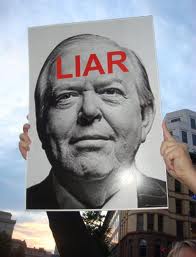
There’s no doubt that the reported $6 million a year Dobbs raked in while bashing undocumented immigrants at CNN has helped him amass real estate, and boosted his family’s profile in the elite world of horse shows. But without undocumented immigrants, just who would look after Dobbs’s properties?
 Grand Rapids Institute for Information Democracy