PAC money spending in the 2010 Michigan Elections
The decision by the U.S. Supreme Court in Citizens United v. Federal Election Commission gave corporations an opportunity to spend unlimited funds in US elections.

It has been reported in a variety of sources how this decision has played out on the federal level with one example of excess funds being used to influence the elections being the US Chamber of Commerce. However, what is less known is how the Citizens United v. Federal Election Commission has played out in the State of Michigan.
According to the Michigan Campaign Finance Network, “A new era has begun for Michigan political action committees.” New Political Action Committees (PACs) have been established in Michigan with the largest being the RGA Michigan PAC, which is associated with the Republican Governor’s Association.
Michigan connections to the RGA include the following:
• The Michigan Chamber of Commerce gave $5.4 million from its corporate treasury to RGA this year.
• Various individuals from around the country have given RGA MI PAC $8.4 million. Only $175,000 came from persons with Michigan addresses.
• RGA MI PAC sent $3 million to the campaign committee of Texas Gov. Rick Perry.
• Of the remaining $5.4 million, RGA MI PAC gave more than $4 million to the Michigan Republican Party. It appears to have retained $1.3 million.
Another of the big player PACs is the Business Leaders for Michigan PAC II. “The new corporate PAC received $20,000 from Meijer, Inc. and $5,000 each from an assortment of Michigan-based businesses. Its independent expenditures so far supported the senate campaigns of David Hildenbrand ($62,569) and Tonya Schuitmake ($23,741).”
However, PACs have been generous to the Democrats as well with five of the top ten PACs funneling money their way. Thos PACs include the Michigan House Democratic Fund ($2,912,473) and the UAW MI Voluntary PAC ($1,352,000).
The Michigan Campaign Finance Network has posted a list of the top 150 PACs and the amount of their contributions through 10/20/2010. The total these PACs have given to date is $43,964,413. Considering how devastated the Michigan economy and how many families are living in poverty, this amount of money going to influence elections should say something about the goal of political parties, which is to win at all cost.
What We Are Reading
Below is a list of books that we have read in recent weeks. The comments are not a review of the books, instead sort of an endorsement of ideas and investigations that can provide solid analysis and even inspiration in the struggle for change. All these books are available at The Bloom Collective, so check them out and stimulate your mind.
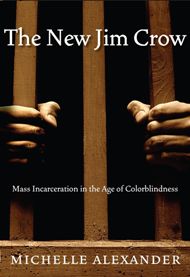
The New Jim Crow: Mass Incarceration in the Age of Colorblindness, by Michelle Alexander – This book not only adds to the analysis provided by the Sentencing Project over the past 20 years, it provides a framework for understanding how the US prison system is essentially a racial caste system. The New Jim Crow gives readers important analysis on why there are profound racial disparities within the so-called criminal justice system. Michelle Wallace’s book joins the important body of work on the Prison Industrial Complex and is an excellent companion to the work by Angela Davis.
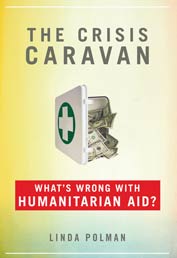
The Crisis Caravan: What’s Wrong with Humanitarian Aid?, by Linda Polman – Not since Tom Barry & Deb Preusch’s book The Soft War has a writer done such a good job of exposing the multi-layered problems with what is generally called humanitarian aid. Journalist Linda Polman has seen first hand how humanitarian aid is used and misused in many parts of the world. Polman not only writes like an investigative journalist, she provides case studies to support her analysis. The chapter on the use of humanitarian aid in Afghanistan is particularly useful since it is an ongoing crisis.
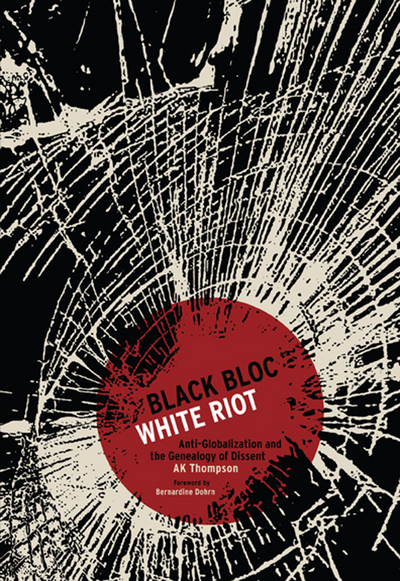
Black Bloc, White Riot: Anti-globalization and the Genealogy of Dissent, by AK Thompson – Black Bloc, White Riot is a very interesting and challenging book that not only explores the racial dynamics at work in the anti-globalization movement it takes a series look at some of the important questions that people should be thinking about who engage in this kind of work. Thompson, who does workshops on direct action, explores questions surrounding what some call “global protest hoping,” gender & direct action, as well as the role of “local organizing” in making links to larger struggles against neoliberal economic policies and imperialist wars. An important book for people who do any kind of organizing work, particularly those involved in anti-globalization actions.
When Media Goes to War: Hegemonic Discourse, Public Opinion, and the Limits of Dissent, by Anthony DiMaggio – When Media Goes to War is an excellent sequel to DiMaggio’s first book Mass Media, Mass Propaganda. In this new volume the author takes a close look at the role that the major daily US commercial media played in the US occupation of Iraq, the War on Terror and other major US foreign policy issues. In addition, DiMaggio looks at how the US commercial media framed the public dissent against such policies, which sheds light on how they view the public and public opinion. When Media Goes to War is a very important contribution for anyone who wants to understand how the news media functions in this country.
A Look at the GR Press Voter Guide
Yesterday, the Grand Rapids Press sent out as an insert in the daily paper their 2010 Voter Guide. The print voter guide doesn’t contain as much information as the online guide, but it is worth critiquing as a stand-alone election information source.
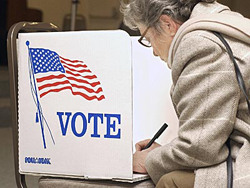
The voter guide is 20-pages long with the front cover being just that, a cover with an image of gubernatorial candidates Rick Snyder and Virg Bernero. There are also eight different paid political ads: one from the Libertarian Party and the other 7 from individual candidates – Justin Amash, David LaGrand, Bing Goei, Mark Jansen, Roy Schmidt, Frank Hammond and Dave Hildenbrand.
There is something just not right about including paid political ad space in a voter guide. The voter guide should be just about information on the candidates and ballot proposals that people will decide on next week. What is especially problematic is having paid political ads from candidates placed right next to the information on specifics races. For instance, page 8 is taken up completely with information on the three candidates running for the 29th State Senate District – Dave Hildenbrand, David LaGrand and Bill Gelineau. Covering half of page 9 is an ad from David LaGrand. Having such ads right next to the information about the candidates and where they stand on certain issues just seems inappropriate and only contributes to claims of partisan bias from the Press.
Beyond the ads there is also the issue of not including the questions and answers from several of the races in this area. For instance, there are only candaidate questions and answers for the 29th District State Senate race, but for the 24th, 28th, 30th and 34th Districts there is only a brief candidate profile. The same is the case with the State House races, where only the 75th District race has responses from candidates to seven different questions. Of the 19 Kent County Commission races, only 5 have responses to just three questions.
Maybe the most disappoint omission was for the two statewide ballot proposals. In this instance the Press published a short blurb from an Associated Press reporter for Proposals 1 & 2, instead of actually printing the text of the ballot proposals as they will appear on the November 2nd ballot.
Then there is the issue of how questions are framed by the Press. For example, in the 3rd Congressional race one of the questions is, “Do you think the health care bill should be repeal? Why or Why not?” While the question is not unreasonable it doesn’t lend itself to providing much information on what candidates think about the role that government should play in determining whether or not people in this country have a right to adequate health care. In other words, the questions tend to be too limited.
Another example from the questions posed to the 3rd Congressional candidates is, “What more needs to occur at the federal level to aid the economic recovery?” Framing the question this way does not provide any easy opportunity for candidates to talk about what the federal government has done since the economic crash of 2008. Why not ask the candidates what they think about the government’s bailout of Wall Street, the so-called stimulus legislation (TARP) and the general role that government should play in how the economy runs?
Lastly, the Grand Rapids Press could practice more journalism by providing information to potential voters on the responses that candidates gave. For instance, the Press should be verifying the claims that candidates make in their responses to see whether or not they are based on facts.
In addition, when there are candidates running as incumbents or who have a voting record in a different capacity the Press should provide more information on how candidates have voted in the past, which would allow potential voters an opportunity to see what candidates have stood on issues in the past as well as what they are saying about issues before the election.
While one can claim that the Grand Rapids Press Voter Guide does provide people with some information on candidates and ballot proposals for next Tuesday’s election, it falls short in being a strong resource for people in order for them to make truly informed decisions on November 2nd.
What is ArtPrize?
(This article is by Richard Kooyman and re-posted from Facebook.)
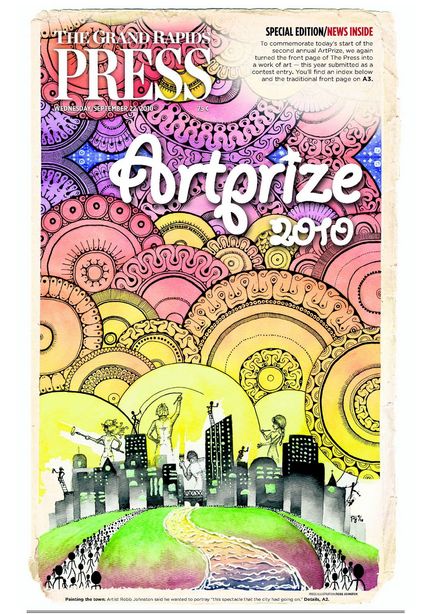 The second annual ArtPrize, the world’s largest art competition decided by popular vote just wrapped up in Grand Rapids, Michigan. 192 private and public venues juried 1713 artists and placed them in a three square mile section of the core downtown where 38501 registered voters then casted 465538 votes and picked the first place winner out of the top ten. The ten finalists divided a purse of $450,000 with the first prize receiving $250,000.
Since it’s inception there have been questions as to where does ArtPrize fit in the art world big picture. Questions like how does the competition design effect artists and the public and what does the foundation behind ArtPrize think about art and its place in society? And who are the people behind ArtPrize?
ArtPrize is the brain child of Rick DeVos, son of Dick and Betsy DeVos and heirs to the Alticor/Amway fortune. The Dick and Betsy Devos Foundation funds the prize money for ArtPrize and have been vocal supporters of the event. ArtPrize describes itself as a “radically open art competition” and “part social experiment” where the goal is to “reboot the conversation” between the public and artists about art.
As an artist I believe it is important to ask what is the ArtPrize social experiment and which conversations about art does it feel need to be “rebooted?”
To help answer those questions the first thing to do is to look at the Artprize website. It’s mission statement, now called a ‘Design Brief’ is filled with hip sounding catch phrases that suggest a blurring of the role between artist, viewer and community, blending fact and promotion into new, yet often vacuous descriptions. Pronouncements like “You = Creator” and “ Art is the focus of the competition but the Community is the event” hint at values designed to suggest a new reinterpretation of the arts. The ArtPrize message infers that the old way of thinking and talking about art should be replaced by a new dialog and presentation, a new agenda that pairs art with community and entrepreneurship.
Ask anyone who has attended ArtPrize what they think about it and you will get mostly positive impressions about how the event is good for the economy of Grand Rapids, good for children’s art exposure and a fun event filled with amazing sights. All these elements are true but seem ancillary to why ArtPrize was designed as a art competition decided by popular vote. Why did the Dick and Betsy DeVos Foundation, a Christian Evangelical Foundation, decided to provide the money for ArtPrize? And why was it designed to be solely a public vote? Was it simply a good idea to bring business to the area restaurants and hotels or was it a statement, even a referendum against the established ideas of art in society today?
Here is one answer to these questions. ArtPrize is an ultra conservative families new venture into the cultural art’s management business. Let me explain.
ArtPrize’s Definition of Art
While ArtPrize claims to be “radically” open to any artist who applies one still needs to be juried into a venue to show your work. A hand few of the 192 venues are juried by art professionals but the most are not and no information is given to the applicants about who is jurying their work and what their qualifications may be. ArtPrize never uses the words ‘jury’ or ‘juried’. Rather ArtPrize sells their event as a coming together of artists and venues, a “matching” as they say. The main reason for a public vote is explained on the AP web site as being fun – ”Who doesn’t love learning through play?”
ArtPrize says that if art is fun people will want to learn more about it. Before you teach anyone about art you need to define what art is, or what your definition of art is. What is the ArtPrize definition of Art?

The Acton institute, located also in Grand Rapids, calls itself a “ecumenical think-tank dedicated to the study of free- market economics informed by religious faith and moral absolutes” and is financially support by The Dick and Betsy DeVos Foundation. Betsy DeVos has been an Acton board member for over 10 years. In a recent Acton blog podcast titled, The Stewardship of the Arts, art was defined as a combination of 1) a mastery of skill and 2) the glorification of God.
The photographer Robert Mapplethorpe’s work was sited as an example of being bad art because while it contained the skill requirement of art it was morally depraved and therefore does not fulfill the second requirement of their definition. In an essay written for the Acton Institute Journal of Markets and Morality Trinity College Assistant Professor Nathan Jacobs suggests that to be a good Christian Steward of the Arts “may require withdrawing from the secular art world in favor of something wholly different.” A “rebooting” of the definition of art perhaps?
ArtPrize’s Role in the Privatization of Art
ArtPrize pride’s itself in providing a unique type of art competition. A competition, where the public decides who and what type of art is worthy of the top prize of $250,000. In the initial press release for ArtPrize Betsy DeVos said, “Dick and I share our son’s vision for encouraging everyone to explore the arts in a truly democratic way.”
The debate about the art professional’s role in art exploration was completely side stepped the first year of ArtPrize. Possibly feeling the art world’s skeptical look, in it’s second year they added 4 professional juried awards, sponsored by local corporations, to follow behind the public vote. While the first prize voted by the public is awarded $250,000 the 1st prize in professionally juried awards is only $5000, 50 times less in value as the public vote.

In a 1996 study by the Mackinac Center for Public Policy, the largest state based free market think tank in the country, called for the complete privatization of the arts. The Mackinac Center for Public Policy is located in Midland Michigan and is supported by The Dick and Betsy DeVos Foundation. In the study they declared government support for the arts as being not only a bad idea, but an unfair one.
“Art is highly personal and subjective. Forcing one person to subsidize another person’s art is inherently unfair. Talented Michigan artists, like other professionals, should look to the private sector for income, not to government, for their sustenance,” and that the solution for the sustainability for artists is in benevolent patrons. “Every year, private philanthropists donate nearly $10 billion to further artists’ visions of American culture. Artists whose work pleases their audiences will soon find voluntary support from such benevolent patrons.”
In recent years conservative think- tanks have been asserting effort to redefine art into pluralistic values of art and community and connecting everything to the free market. The ArtPrize website shows three equally sized circular graphics comprising the main elements of the competition: Venues, Artists, Public. Speaking about ArtPrize, Dick and Betsy DeVos repeatedly pluralized creativity with entrepreneurship. In a recent Grand Rapids Press interview Dick DeVos said that their main interest in funding ArtPrize is to support “innovation, creativity, and entrepreneurship.”
Redefining art on pluralistic values of creativity, morality, community and business trivializes the striving for excellence or professionalism in art, as if art alone isn’t enough. Modeling art solely to serve free enterprise devalues art. The very strength of contemporary art today, what makes it truly valuable to society, is the fact that it no longer has to serve religion, politics or business.

The DeVos’s type of entrepreneurial attitude about art values the free market over both government support of the arts and professional knowledge of the arts. The CATO Institute, a free market and individual liberty think tank begun by billionaire David Koch, is also supported by the Dick and Betsy DeVos Foundation. The CATO Institute’s Handbook for Congress calls for the complete privatization of the National Endowment for the Arts and the National Endowment of the Humanities and the total defunding of the Corporation for Public Broadcasting. The handbook states ”Government subsidies to the arts and humanities have an insidious, corrupting effect on artists and scholars.”
ArtPrize uses art and artists to stimulate the local economy of Grand Rapids. They say so clearly on their website, “Art is the focus of this competition, but community is the main event.” In 2009 it was estimated, in a Grand Valley University study that $7 million dollars was generated by local businesses off the backs of the artists who exhibited. Artists themselves have for years been applauding the fact that art is good for regional and national economies. But the danger is not the effect of art on business. The issue is how does business use the arts. Are private subsidies any less “insidious” than governmental support? Business, while being a guiding principle of the ArtPrize founders doesn’t completely explain the reason why the DeVos’s designed and administer an art competition such as ArtPrize. They seem to do it for a bigger reason. They do it to control how society will look at and enjoy the arts.
ArtPrize is a example of the social conservative’s new idea of Art’s Management
Dick DeVos in a recent television interview said “This isn’t just an art contest. It’s about changing the dynamics and conversation about creativity.”
It’s clear that there is a difference between how secular society and Christian society define art. If the secular/Christian debate about what is art cannot be won then at least arts organizations, the current gatekeepers and managers to what is shown or preformed can be controlled.
And how does someone go about controlling how art is managed? One way is to form the DeVos Institute of Art’s Management at the Kennedy Center. In May of 2010 Dick and Betsy DeVos gave $22.5 million dollars, the largest gift ever for art’s management in the United States or aboard, according to Michael Kaiser, President of the Kennedy Center for Performing Arts who said, “It has been abundantly clear to me that we spend a disproportionate share of professional arts training on performers and creators. In fact, billions of dollars are spent educating dancers, singers, pianists and actors. We spend a pittance on training the people who will employ them, who will find resources to support their work and will attract their audiences.”
The DeVos Institute of Arts Management will provided training and technical support for arts organizations including seminars in strategic planning, fundraising, program marketing and most importantly, board development. Boards make organizational strategy and hire artistic directors and staff to implement those strategies.
What do artists need and want from local, regional and national art’s organizations and what it will mean to move from a society where government and art professional institutions fund the arts to a society where arts funding may be completely privatized? And what effect will the DeVos’s social, political and religious beliefs have on the training of future art organizations?
It was recently announced that 35 West Michigan art’s organizations have signed up for a free two year training program, part of a national “ capacity-building” program presented by the DeVos Institute of Art’s Management. In a Grand Rapids Press interview Betsy DeVos said, “We just viewed this as a really powerful way to leverage creative talents for the benefit and enjoyment of all of us.” Do we as artists want a future where we are looked at as primarily entrepreneurs? A world where creativity becomes something more valuable when it is thought of as good business? Do we want local art’s organizations, locally funded, providing programming selected ultimately by local boards trained to look at the arts as a commodity to be “leveraged”?
Who ever controls the context by which art is shown or talked about can control the content of art and how we will talk about it. This is what ArtPrize does. This is something we all should be concerned about.
The Press doesn’t question Israeli military propaganda tour as it comes through Grand Rapids

On Saturday, the Grand Rapids Press ran a story in the religion section about two Israeli soldiers who were in town on a speaking tour.
The Press reporter presents the two men as very human, by quoting both of them, telling readers a bit about their childhood years and their desire to live in peace. The article gives the impression that these soldiers really struggle with the difficult circumstances they find themselves in at time, since Hamas and other “Palestinian terrorist groups” hide behind civilians. “They know … we’re not going to fire,” Bernstein said. “At times it does feel like were fighting with two hands tied behind our backs.”
There is no indication from the story that the Press reporter asked any questions of the soldiers or challenged them in any way. There was no mention of the fact that the Israeli military illegally occupies the West Bank and Gaza, something the global community (besides Israel and the US) has condemned for decades.
The reporter did not ask the soldiers about the 2008/2009 Israeli assault on Gaza that killed over 1,000 Palestinian civilians, destroyed homes, hospitals and schools as was documented in the United Nations Goldstone Report.

The Press reporter also did not look into the fact that there are a group of Israeli soldiers, who, when faced with the same hard decisions as the two men who visited Grand Rapids, decided not to be deployed in the occupied territories. These soldiers are part of a group called Courage to Refuse and they provide a sharp contrast to the stories and claims made by the Israeli soldiers on tour.
The Press article does mention that these soldiers were on speaking tour through a group called Stand With Us. After reading through the Stand With Us website it seems pretty clear that this is an organized and well funded effort to win over public opinion in favor of Israel. The website paints Israel as the victim in the conflict and that when the Israel military acts it is only for the safety and security of its citizens.
One simple question that could be asked of the Press reporter and editors is if they would write a similar article about Palestinians on tour who might be speaking out against the Israeli occupation. Would they humanize the Palestinians in the same way? Would they not question the claims made by the Palestinians and would they not seek out other perspectives to provide some “balance” for its readers?
IDF soldiers silence Israeli apartheid at local church
As Israel’s apartheid occupation of Gaza continues, more Americans are hearing reports of its brutal Zionist policies. These reports are slowly eroding the American public’s perception of this close United States military ally. To silence those reports, Zionist PR experts are fueling the fire of Christian fundamentalism (some of which are Christian Zionists) and its focus on the end times, where, according to its extreme and literal interpretations of scripture, Israel plays a pivotal role as “God’s chosen people.”
The Zionists are also raising political clout to ensure that the powerful Israeli lobby in Washington DC doesn’t lose influence. The American Israel Public Affairs Committee (AIPAC) remains one of the most powerful lobbying groups in Washington DC, a group so powerful that not once has funding or support for Israel been denied over the past 35 years. Indeed, during that same time span, the US has vetoed dozens of United Nations resolutions condemning Israel for war crimes and other breaches of International law as well as refuted the Goldstone report that detailed the brutal war crimes Israel committed during the December 2008-January 2009 Operation Cast Lead, which resulted in the deaths of more than 1,400 civilians in Gaza (12 Israelis, ten of them soldiers, lost their lives during this month-long attack on the occupied territory).
Now that we have an African American president in office, a president who has recently and quite timidly raised concerns about Israel’s expanding settlements, an influential Christian Pro-Israeli organization, Christians United for Israel (CUFI), is taking their message to African American churches. Along with the Zionist front-group, Stand With Us, they are sponsoring Israeli soldiers on a speaking tour through Europe and United States. Two of those soldiers brought their message to Grand Rapids on Sunday October 17, specifically to an African American church, Word of Faith Christian Center, 3030 Eastern Ave. SE, in Wyoming. As the refrains of “Prepare the way for the coming of the son,” the sanctuary filled with folks who had been hoodwinked into believing that the Israeli military is a present day army of God.
“It was clear to me what was going on there. It was part of the Pro Israeli lobby making inroads into the American political system in not so subtle ways,” said one African American man attending the service who was not a congregation member. “What was most disturbing, while not surprising, was that politicians always find a use for black people.’This is what we can use them for next.’ You can get people to do whatever you want them to do if you convince them ‘this is what God wants’ them to do. If Black America’s Christian faithful believe that these people wearing these funny caps are the people of the Bible from 2,000 years ago, then everything Israel does is holy and cannot be challenged.”
Indeed, much of what Israel is doing during its illegal occupation of Gaza and the West Bank needs to challenged. The human rights abuses here have 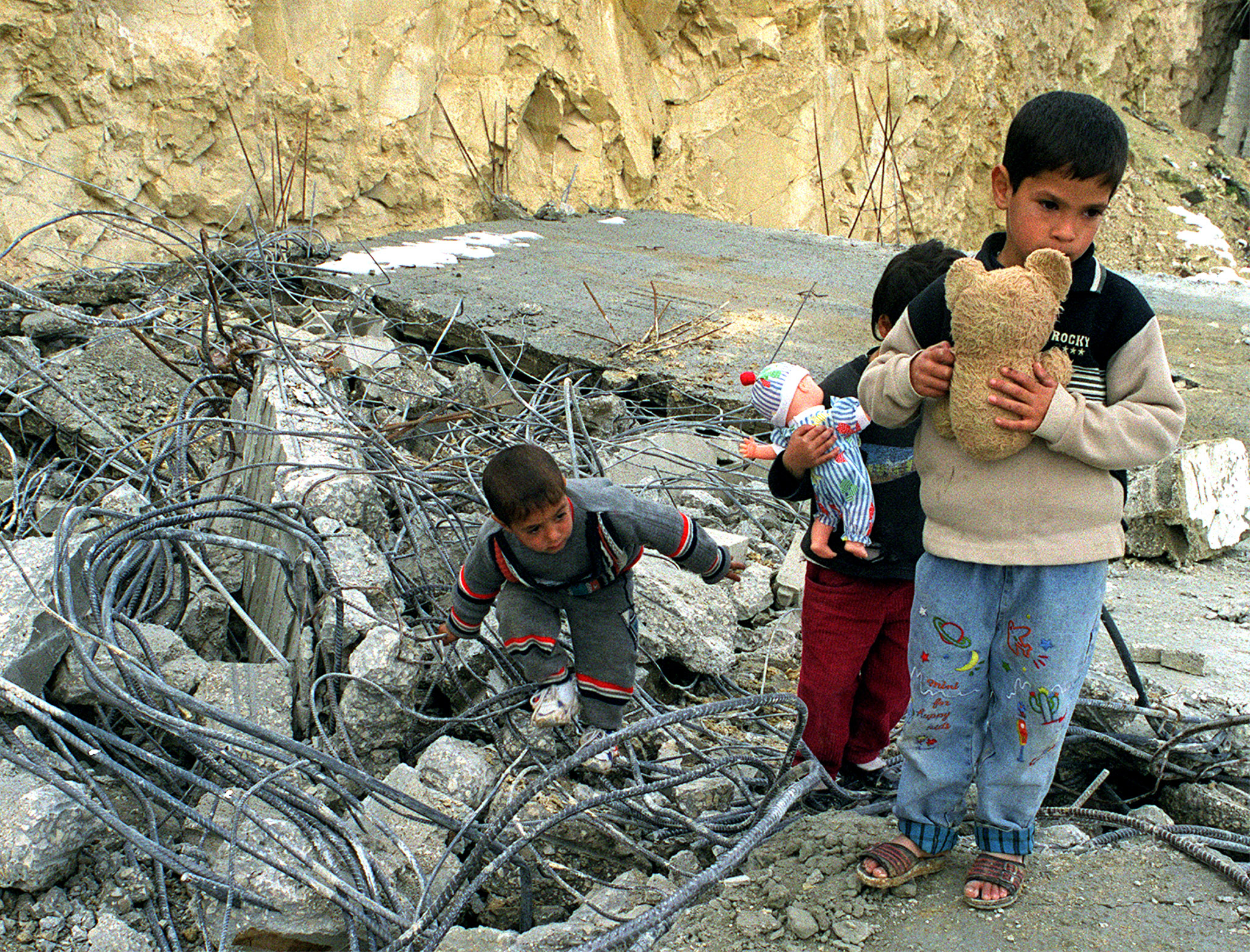 reduced a healthy, hard working people into a population of refugees living in tents. Those who still have homes never know when an Israeli bulldozer might come to demolish it. Towering cement walls, which dwarf the former Berlin Wall, separate families from each other and from their places of employment.
Checkpoints restrict movement to school, work and medical care. Palestinians are often detained at them for eight or ten hours and routinely beaten and arrested. Because of the damage Israeli military strikes have made to infrastructure, access to clean water, electricity, education and medical care are spotty at best. And, while children go hungry, Israel blocks humanitarian aid.
Of course, this in not the picture the slightly built, congenial, handsome and articulate soldiers presented to the congregation. They claimed checkpoints were no different than going through security at O Hare International Airport in Chicago. And, they rewrote recent history to portray a peace-seeking Israeli populace that is constantly under attack by rockets and suicide bombers.
“They work very hard to create an image that you can be killed at any minute by a suicide bomber or a stray missile, then when asked about visiting (Israel), they tell you it’s the safest place, no one’s ever had an issue ,” said Nidal Kanaan, a Palestinian American who attended the service. “There was a big difference between their rehearsed comments and their (responses during the ) Q and A, which was very interesting to see. It was propaganda and lies and the church seemed to buy into it without reservation.
Historically, another group used propaganda and an ideology/military power to ethnically cleanse a people, very disturbing. Not once did they (the soldiers) ever say ‘Palestine’ or ‘Palestinian people’ only “civilians.” They refused to acknowledge our presence.”
The first soldier, a former commander and decorated paratrooper, told how he was born on a kibbutz, grew up in small town near Haifa where Jews, Christians and Muslims “all live side by side in a good neighborly fashion.” He then shared how suicide bombers turned this idyllic life into a life of terror. “Suicide bombers are something ordinary, at shopping malls, on the buses, all the places where young people go to have fun,” he claimed. However, during the question and answer portion of the evening, as Kanaan pointed out, both soldiers assured the audience that tourists were safer in Israel than on the streets of Chicago or Philadelphia.
The soldiers went on to “debunk” Israel’s murder of nine people aboard one of the Humanitarian Aid Flotilla boats, Mavi Marmara. They claimed the murdered peace activists aboard the flotilla were all members of a terrorist group who were killed in self-defense. The soldiers lied that humanitarian aid flows freely into Gaza and the West Bank. And they dishonestly asserted that Israel seeks a peaceful two-state solution when in fact their actions prove their intention is to have free reign and total control of the region.
In retelling his experience during Operation Cast Lead, one soldier said, “Israel said enough is enough. Hamas is a worldwide terrorist organization with headquarters in hospitals. They use ambulances as a getaway car. IDF (Israeli Defense Forces) never fires at medical aid and never prevents medical aid. Guys when you’re out there its a whole different world. It’s horrible. I gotta be honest, it’s scary.”
 According to the Goldstone report, a report commissioned by the United Nations Human Rights Council, Operation Cast Lead deliberately targeted schools, mosques and civilians. Israeli military blocked rescue parties from reaching the wounded, used human shields and killed fleeing civilians waving white flags. Former president Jimmy Carter wrote, “The Goldstone committee examined closely the cause of deaths of the 1,387 Palestinians who perished, and the degree of damage to the various areas. The conclusion was that the civilian areas were targeted and the devastation was deliberate.”
The soldier’s song and dance worked its charm, well, miraculously. Congregation members praised them, applauded them and hotly defended them against concerns brought up during the question and answer portion. And, at the close of the service, they passed the plate. Seems having air power second only to the US and $3 billion in US Aid (annually) isn’t enough to silence a broken, poverty-stricken, hungry and homeless Palestinian people.
The same soldiers from the Stand With Us tour made a subsequent stop at the University of Michigan on October 20th. Here’s how students there upstaged the deceitful presentation.
Iraq War documents provide more evidence of US brutality

On Friday, the group Wikileaks released some 400,000 documents on human rights abuses and US military actions in Iraq between 2004 – 2009. These newly released documents reveal the US military and private contractors engaged in war crimes on a massive scale. However, if one was to rely on the mainstream press coverage this is not the perspective one would get.
Yesterday, the Associated Press (AP) article in the Grand Rapids Press used the recently released documents as a way of justifying an ongoing US military occupation of Iraq by saying, “They appear to support arguments by some experts that the U.S. should keep thousands of troops there beyond their scheduled departure in 2011, to buy more time for Iraq to become stable.”
The AP article gives the impression that the US engaged in no wrong-doing and even prevented torture of prisoners. However, if one actually reads the documents it is painfully clear that the US committed human rights violations on a massive scale.
Independent journalist Robert Fisk writes that the documents show that the US was responsible for prisoner abuse, torture, rape and murder. Fisk also notes that the documents show the US killed hundreds of thousands of Iraqi civilians, many at checkpoints and that private military contractors engaged in widespread abuse as well.
Josh Stieber, an Iraq War Veteran who participated in the 2007 “Surge” speaks to the recently released Iraq War documents and says they provide further evidence for US citizens to demand real accountability for the war crimes committed in our name.
Democracy Now invited Vietnam era whistleblower Daniel Ellsberg, the man who released the Pentagon Papers in 1971 to talk about the significance of these new documents on the real role of the US in Iraq.
Another good source of coverage on this issue has been Al Jazeera TV, which has some of the best and most in-depth coverage of the new WikiLeaks documents so far. Here is one report on the role of US torture in Iraq.
Codes of Gender film at the Bloom Collective this Thursday
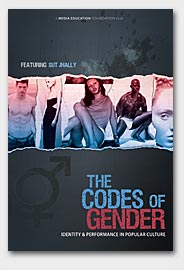
This Thursday the Bloom Collective will host a screening of the MEF documentary Codes of Gender: Identity and Performance in Pop Culture.
Written and directed by MEF Executive Director Sut Jhally, The Codes of Gender applies the late sociologist Erving Goffman’s groundbreaking analysis of advertising to the contemporary commercial landscape, showing how one of American popular culture’s most influential forms communicates normative ideas about masculinity and femininity.
In striking visual detail, The Codes of Gender explores Goffman’s central claim that gender ideals are the result of ritualized cultural performance, uncovering a remarkable pattern of masculine and feminine displays and poses. It looks beyond advertising as a medium that simply sells products, and beyond analyses of gender that focus on biological difference or issues of objectification and beauty, to provide a clear-eyed view of the two-tiered terrain of identity and power relations.
The event begins at 6:30 with food provided by the Bloom Collective. The film starts at 7pm, followed by discussion.
Suggested donation of $3 – 5.
Codes of Gender
Thursday, October 28 6:30pm
Steepletown Center 671 Davis NW
Election Ads Breed Apathy and Ignorance
(This article was submitted by Aquinas College student Joe Spaulding)
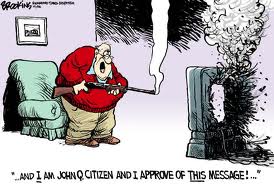 Post-structuralist philosopher Michael Foucault talked about how what he called the “repressive hypothesis” – the idea that the nature of power is purely repressive, and individuals can empower themselves by fighting whomever is in charge.
His book The History of Sexuality Vol. 1 was specific to government and individual power over sex, but he uses that specific example to show that the repressive hypothesis is pretty terrible at accurately describing the nature of power relations. He also argues that the public’s acceptance of the repressive hypothesis as a true concept, can be used to further control them. Because people think they have the ability to resist, they are actually easier to control.
During the over-bloated onslaught of inescapable campaign ads, the American public is set to fall victim to the perilous political trappings of the repressive hypothesis once again. There are a few reasons for this, as well as a few implications, but the good news is, as long as people are mindful and observant, they should be able to help keep real democracy alive in America.
Most people know campaign ads should not be taken at face value, and politicians should not be taken at their word, especially when they are running for office. If a person is particularly partisan, they might see through what they perceive as the lies in the ads of the opposition, while meeting the candidate they favor half-way with claims that might be stretching the truth.

As shown by the growing dissatisfaction with the two major political parties as well as the two party system itself, most people aren’t decisively partisan. Not being blinded by ideology, most people can tell that the ads for candidates from both parties for every office worth running ads for are filled with both boastful and insulting lies.
The truth is so blatantly distorted in political ads that it’s difficult not to immediately recognize the dishonesty and hypocrisy. People can watch an ad accusing candidates of caring more about workers in China than in the U.S., and they know that is not be true for virtually every person running for every office here. When someone like Republican candidate for governor Rick Snyder claims he “created thousands of jobs” in his ads, most people know he wasn’t personally and solely responsible for those thousands. If the politicians in the ads didn’t get to hold an office of power after the election, these ads would simply be a rhetorical spitting contest not far from the dozens.
Why do lies matter if everyone can see through them? Because recognizing a lie makes a person feel satisfied and intelligent, and individuals that are those things are less likely to suspect they are able to be deceived This, rationally enough, makes them much easier to deceive The nature of this particular deception is one of masking. The thinly veiled lies in political ads create the illusion that the differences between Democratic and Republican candidates are vast enough to distort the truth over. They provide the framework necessary to convince masses of voters that the only standard that matters in the ballot box is selecting the lesser of two evils.

Make no mistake, if Pat Miles and Justin Amash, or Rick Snyder and Virg Bernero were so different, they wouldn’t need to spend millions of dollars trying to convince you those differences are real between 30 Rock and The Office or during the 7th inning stretch of the National League Championship Series final game.
The other aspect of campaign ads that has deeper impacts than the ones that are initially obvious is their pervasiveness. Billboards can be seen on the way to work, radio ads can be heard on the same trip or on the job site itself, online ads are visible at home and work as well, and television ads are as common as televisions themselves. This provides a huge psychological disincentive to researching candidates on an individual’s own time. Why would people want to spend the precious few moments they have out of earshot and line-of-sight of political ads looking up politicians’ positions? When individuals have this sentiment, and it is combined with the idea that they have seen through the obvious lies in ads, they end up dually deceived. They think they understand the candidates well and are extremely disinclined to check if their understanding is less than accurate. Political ads simultaneously breed ignorance and the acceptance of ignorance.
The pervasiveness and thinly masked deception that come with the political ad season will once again have the effect of pacifying the American public into accepting the two party system, and keeping them further alienated from their government. The traditional media will continue to do little more than report on which candidate’s tidal wave of airtime is having the best effect in the polls. At the very least, unstoppable ads will convince many that they only have two options at the ballot box; this undemocratically disempowers Libertarian, Socialist, Green, and other parties’ candidates and their supporters.
There are structural barriers to overcoming this desecration of democracy, like our winner-take-all/non-proportional representation elections, but they have no chance of being overcome until individual citizens take it upon themselves to put up with the garbage of political ads, and do the research themselves.
The real-time access to information the internet provides gives people today the tools to better understand who is being elected to govern them. People need to not be content that they saw through an obvious lie on a prime-time 30 second spot. They need to dig deeper to see what candidates’ positions really are, but they also need to vote their conscience. The old “I don’t know anything about this third party candidate’s policies because the have no ads” excuse doesn’t fly in the online age.
Traditional partisan politics has resulted in watering down bills that the public needed to be robust, fights over cutting taxes for those that need it least, and inaction at times when action was necessary. Obviously, and importantly, people, once they have informed themselves, need to vote. Things probably won’t change a great deal with a single election, but change will become evident in every new election over time. As long as people continue to put in the effort despite disincentives, we can make both Michigan and America more democratic.
We could learn a few things from the French Resistance
(This article by Mike Whitney is re-posted from CounterPunch)

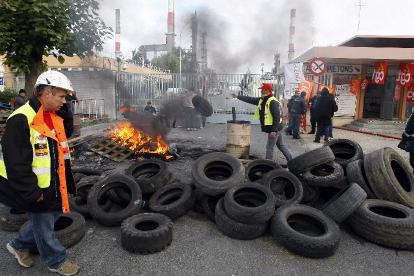
Thank God for France. While American liberals tremble at the idea of sending an angry e mail to congress for fear that their name will appear on the State Department’s list of terrorists, French workers are on the front lines choking on tear gas and fending off billyclubs in hand-to-hand combat with Sarkozy’s Gendarmerie. That’s because the French haven’t forgotten their class roots. When the government gets too big for its britches, people pour out onto to the streets and Paris becomes a warzone replete with overturned Mercedes Benzs, smashed storefront windows, and stacks of smoldering tires issuing pillars of black smoke. This is what democracy looks like when it hasn’t been emasculated by decades of propaganda and consumerism. Here’s a blurp from the trenches:
Headline:
“French Energy Sector Crippled by Nationwide Strike… French energy facilities are close to total disruption in the wake of nationwide strike against the raise of the retirement age…..France has been hit by numerous protests across the country against a controversial pension reform that would rise the retirement age to 62 from 60….On October 22 morning 80 protesters blockaded Grandpuits oil refinery outside Paris, key supplier for Charles de Gaulle and Orly international airport.” (The Financial)
Shut ’em down. Take note, Tea Party crybabies who moan about restoring “our freedoms” while stuffing the backyard bunker with seed corn and ammo. Glenn Beck won’t save you from the “mean old” gov’mint. Liberty isn’t free anymore. If you want it, get out of the barko-lounger and organize. The amount of freedom that any nation enjoys is directly proportionate to the amount of blood its people spilled fighting the state. No more, no less. The man who is willing to accept the blunt force of a cop’s truncheon on his back is infinitely more praiseworthy than the leftist/rightist scribe crooning from the bleachers. The state isn’t moved by lyrical editorials or prosaic manifestos. It responds to force alone, which is why it takes people who are willing to “throw themselves on the gears” of the apparatus and stop it from moving forward. Unfortunately, most of those people appear to live in France.
The resistance is steadily building in France. The budding rebellion is cropping up everywhere—“secondary schools, train stations, refineries and highways have been blockaded, there have been occupations of public buildings, workplaces, commercial centers, directed cuts of electricity, and ransacking of electoral institutions and town halls…” And the big unions are calling for more strikes, more agitation, more ferment.
For more than a week, transportation has been blocked across the France due to the protests by students and workers. Sarkozy’s popularity has plummeted. 65% of people surveyed don’t like the way the French president is handling the strikes. 79% of the people would like to see Sarkozy negotiate with the Union on terms and conditions, but he won’t budge. Thus, the cauldron continues to boil while the prospect of violence rises.
“STRIKE, BLOCKADE, SABOTAGE”
This is from an anonymous striker:
“In each city, these actions are intensifying the power struggle and demonstrate that many are no longer satisfied with the order imposed by the union leadership. In the Paris region, amongst the blockades of train stations and secondary schools, the strikes in the primary schools, the workers pickets in front of the factories, people create inter-professional meetings and collectives of struggle are founded to destroy categorical isolation and separation. Their starting point: self-organization to meet the need to take ownership over our struggles without the mediation of those who claim to speak for workers.
We decided Saturday to occupy the Opera Bastille. This was to disturb a presentation that was live on radio, to play the trouble makers in a place where the cultural merchandise circulates and to organize an assembly there. So we met with more than a thousand people at the “place de la nation”, with banners stating “the bosses understand only one language: Strike, blockade, sabotage.” (end of communique)
The action was met with predictable police violence and mass arrests.
The pension turmoil is not limited to France either. US pension funds are underfunded by nearly $3 trillion. Will US workers be as willing as their French counterparts to face the beatings (to defend “what’s theirs”) or will they throw up their hands and appeal to Obama for help?
There’s no question that Washington elites have joined with Wall Street to offload the massive debts from the financial meltdown onto workers and retirees. Nor is their any doubt that they will invoke (what Slavoj Zizek calls) a “permanent state of economic emergency” to justify their actions. That will allow them to move ahead with so-called “austerity measures” that are designed to impoverish workers and strip popular government programs of their funding. The trend towards “belt-tightening” merely masks the ongoing class war which is aimed at restoring a feudal system of royalty and serfs.
This is from an article by economist Mark Weisbrot:
“If the French want to keep the retirement age as is, there are plenty of ways to finance future pension costs without necessarily raising the retirement age. One of them, which has support among the French left – and which Sarkozy claims to support at the international level — would be a tax on financial transactions. Such a “speculation tax” could raise billions of dollars of revenue – as it currently does in the U.K. – while simultaneously discouraging speculative trading in financial assets and derivatives. The French unions and protesters are demanding that the government consider some of these more progressive alternatives.”
But the retirement age is not really the issue at all. This is about union busting and “putting people in their place.” It’s about “who will call-the-shots” and in whose interests will society be run.
The French are fighting back against this “oligarchy of racketeers” and the ripoff system they represent, while, namby-pamby Americans are neutralized by signing their umpteenth petition or venting their spleen at a Palin rally.
Vive la France. Vive la Résistance.
 Grand Rapids Institute for Information Democracy