Wal-Mart doesn’t give a shit about people going hungry in America
Yesterday, MLive.com posted a brief article on the new campaign by Wal-Mart, which claims it wants to fight hunger in America.

The MLive article tells people about an online campaign that Wal-Mart is promoting, where by just clicking on the site you can determine which community across the country will receive $1 million dollars to fight hunger. As of today, Grand Rapids had more hits than any other city.
The Wal-Mart campaign has identified the food hardship rate for the 100 largest communities in America, according to the Food Research and Action Center. Being identified as one of the 100 largest communities for food hardship in the country should be cause for major concern and would have been a more relevant story for the Press reporter to take. Instead, we are just told that Grand Rapids is in the lead and doesn’t that just sound more positive?
Stealing a lot from the poor and giving a little back
The whole notion that Wal-Mart wants to fight hunger in America would make any reasonable person burst out in laughter. Thinking that the largest company in the world wants to actually fight hunger in America tells us something about how well propaganda works in this country. Here are several reasons why Wal-Mart is not committed to fighting hunger in the US.
- Wal-Mart is the wealthiest company in the world with over $14 billion in profits last year alone. The company makes that kind of an annual profit because it has destroyed many local businesses and pays its workers poverty level wages. In 2008, Wal-Mart CEO H. Lee Scott Jr. made a $29,682,000 salary, which according to United for a Fair Economy is 1,314 times more than the salary of an average full-time Wal-Mart worker.
- If Wal-Mart paid its workers a livable wage they could seriously reduce the number of people needing food assistance in the United States. Wal-Mart also constantly violates worker pay agreements and is currently facing about 80 individual lawsuits from workers and 4 class action lawsuits for worker violations.
- Wal-Mart gets millions in tax breaks every year from communities across the country when they broker deals to build new stores. In addition, Wal-Mart use state and federal tax loopholes to pay less in taxes and get all kinds of subsidies. For example, Wal-Mart has been taking advantage of a tax loophole that the federal government closed years ago, paying rent to itself then deducting it from state taxes in about twenty-five states. Data from filings with the Securities and Exchange Commission show that on average Wal-Mart has paid only about half the statutory state rates over the past decade.” (2008 Wal-Mart Watch Report)
- Wal-Mart is a company, like any other company, that is committed to maximizing their profits. You cannot simultaneously end hunger and make a profit. Besides not paying workers in the US a livable wage, Wal-Mart profits off the misery of millions globally by selling products made in sweatshop conditions. Thus, Wal-Mart is also contributing to hunger around the world by benefiting off a neoliberal global economic system.
- Wal-Mart’s board of directors is made up of a group of economic elites who are also committed to maximizing profits and maintaining inter-corporate relations, which allows them to be a united front against government and public scrutiny. Look at who sits on Wal-Mart’s Board of Directors and ask yourself if these people are committed to fighting hunger.
There are many more reasons to discredit the claim that Wal-Mart wants to fight hunger in America, but we think you get the point. Wal-Mart recognizes they are despised by millions of people throughout the country, so this new campaign is really a PR effort to paint themselves as a “responsible” corporation.

This tactic of “funding community projects” is not a new one employed by corporations. Robber Barons like Carnegie and Rockefeller did the same thing 100 years ago as a means to prevent working class rebellion against their obscene wealth in the face of widespread poverty.
Currently, companies like Chase Bank, Pepsi and Wal-Mart are also trying to con the public into thinking they care about our communities by offering funds for local projects. We need to see these efforts for what they are, elaborate public relations ploys to divert our attention from how they continue to amass incredible amounts of wealth while more and more people fall into poverty.
Several Lawmakers Invested in L-3 Communications, Maker of Airport Body-Scanning Machines
(This article is re-posted from OpenSecrets.org. L-S Communications is also a major military contractor and has a facility in Muskegon, MI.)
 A handful of federal lawmakers are invested in one of the companies behind the controversial full-body scanning machines now in more than 60 U.S. airports. The individual investments are worth thousands, and in some cases tens or hundreds of thousands, of dollars.
According to a Center for Responsive Politics review of the most recent personal financial disclosure filings, eight members of Congress — three Democrats and five Republicans — owned at least $2,000 worth of stock in L-3 Communications, which is one of the two main contractors involved in the full-body scanning machines.
Sen. John Kerry (D-Mass.) disclosed possessing the most stock in L-3 Communications — with a minimum investment of at least $500,000 and a maximum value of $1 million. The L-3 Communications stock is fully owned by his wife, Teresa Heinz, according to federal financial disclosure reports.
Members of Congress file annual personal financial disclosures detailing their assets and liabilities, as well as those of their spouses and dependent children. These forms also allow lawmakers to describe the value of their holdings and debts in broad ranges, so it’s impossible to know exactly how much the holdings of Kerry’s family, or any other lawmaker’s household, are worth.
Republican Reps. Michael Castle (R-Del.) and Michael McCaul (R-Texas) both disclosed possessing between $16,002 and $65,000 worth of L-3 Communications stock in 2009.
And Rep. Judy Biggert (R-Ill.) was the member of Congress with the next most valuable holdings in L-3 Communications, worth between $15,001 and $50,000.
Here is a table of all eight lawmakers whose 2009 personal financial disclosure forms, which were filed in May, noted holdings in L-3 Communications, along with the minimum and maximum value of these holdings, according to the Center’s research.
| Name | Value |
| Sen. John Kerry (D-Mass.) | $500,001 to $1,000,000 |
| Rep. Michael Castle (R-Del) | $16,002 to $65,000 |
| Rep. Michael McCaul (R-Texas) | $16,002 to $65,000 |
| Rep. Judy Biggert (R-Ill.) | $15,001 to $50,000 |
| Rep. Ron Klein (D-Fla.) | $1,001 to $15,000 |
| Rep. Robert Scott (D-Va.) | $1,001 to $15,000 |
| Sen. Jon Kyl (R-Ariz.) | $2,173 |
| Rep. Kenny Marchant (R-Texas) | $2,086 |
The government’s investment in full-body scanners has broadened since the “underwear bomber’s” failed terrorism attempt last Christmas. Days later, L-3 Communications was awarded a $165 million contract for the machines, and another company, RapiScan, was also awarded a $173 million contract.

Both companies have seen significant jumps in their federal lobbying expenses since just a few years ago, and both are employing officials with well-heeled government connections, as OpenSecrets Blog previously reported.
For instance, RapiScan utilizes the services of Michael Chertoff, the secretary of Homeland Security under Republican President George W. Bush. And former Republican Sen. Alfonse D’Amato (R-N.Y.) and Linda Daschle, the wife of former Senate Majority Leader Tom Daschle (D-S.D.), are both actively lobbying for L-3 Communications.
Shell’s Arctic Drilling Will Destroy Our Homeland and Culture
(This article by Rosemary Ahtuangaruak is re-posted from Climate Story Tellers.)
This week families across the country will be celebrating Thanksgiving—sharing food and telling stories. Here is my story about our food and culture that would be destroyed if Shell Oil gets the permit to drill for oil in our homeland—the Beaufort and Chukchi Seas.

Since 1986 I lived in Nuiqsut, an Inupiat community on the Beaufort Sea coast of Arctic Alaska. In 1991 I graduated from the University of Washington Medex Northwest Physician Assistant program and was employed as a health aide in Nuiqsut for 14 years. Nearly 8 years ago I helped to found REDOIL (Resisting Environmental Destruction on Indigenous Lands) to represent my interests.
I have raised my family in Nuiqsut. I have one daughter, four sons, two granddaughters, and four grandsons. I live a very traditional lifestyle—hunting, fishing, whaling, gathering, and teaching our family and community members the traditional and cultural activities as my elders taught me. We hunt and eat various birds, including ptarmigan, ducks and geese; fish, including char, salmon, whitefish, dolly varden, grayling, pike, trout, and cisco; land mammals, including caribou, moose and muskox; and marine mammals, including bearded seals, walrus, beluga and bowhead whales. We harvest berries, plants roots and herbs. We work together in harvesting plants and animals.
We have extensive sharing traditions that unite our families and communities. Other communities share their harvest with my family and we share our harvest with others. These sharing patterns have given us much of the variety of foods that we eat. We also share our harvest with those in need. My mother taught me the land hunting skills that she learned from her parents and family. Other family members taught me how to hunt whales and other marine mammals. I have family ties that bind me to Nuiqsut and other communities in the Arctic, and exposure to hunting and gathering is an important part of these ties.
Whales Give Us Food and Bind Our Communities
Inupiat communities across the Arctic coast of Alaska primarily depend on Bowhead whales for subsistence food and our culture is tied intimately with the whales and the sea. Nuiqsut whalers hunt for bowhead whales in the Beaufort Sea during the fall. We await the migration of the whales from Camden Bay for this hunt. The crews go to Cross Island in August. My sons help the crews with their preparation. My ex–husband has gone whaling from Cross Island with his uncle a few times.

There is a feast in the village after a successful whale hunt. Everyone is invited to the captain’s home to eat whale meat and other food, tea and coffee. I have participated in several of these feasts in Nuiqsut. These feasts are a time of celebration, when stories are told about the hunt.
We have a unique sharing system to divide the harvested whale among the crew striking the whale and the crews helping to land and butcher the whale. The whalers also set aside a portion of the whale meat to share with those in need. Part of the catch is saved for feasting. We share the feast three times during a year, at the blanket toss—a traditional celebration during the summer, Thanksgiving and Christmas. Sharing of the whale binds our communities. Whale meat feeds families throughout the long, dark winter, and provides nourishment, warmth and fuel for our daily activities during the Arctic winter.
The foods we eat are important to our lives and health. We have activities associated with our harvesting throughout the year, such as skin sewing, sinew preparation, and craft making. The teaching of the activities and stories continues throughout the year with each generation sharing family hunting stories.
Shell’s Drilling Plan Will Affect Wildlife That We Depend On For Survival

Shell’s proposals to drill for oil and gas in the Chukchi and Beaufort Sea are detrimental to the traditional and cultural activities of our family and village. We depend on traditional foods that migrate through both Beaufort and Chukchi Seas. Any harm from Shell’s activities to our resources, including bowhead whales, seals, fish and caribou, threatens our food and our health.
I am concerned that Shell’s exploration drilling, icebreaking, aircraft and helicopter flights, and other noisy activities in the Beaufort and Chukchi Seas will keep whales from their feeding areas or otherwise harm them. Any changes in the whale populations could affect our hunting. We educate our families that a whale hunt must be respectful and quiet. If the noise from Shell’s drilling and icebreaking causes whales to be farther offshore, I am concerned that this would place more wear on our equipment and put the whalers at greater risk. We have been taught not to put things in the water that may cause the whales to turn away from the hunting grounds. I fear that water discharges from drillships or the presence of drilling muds in the water where Shell conducts its activities could cause whales to avoid our hunting grounds.
If the whale hunts are less successful, I fear that the community will suffer, as it has in the past during times of shortage. To give an example, in the early 1990s there was seismic activities and exploration drilling in Camden Bay that severely affected our whaling. The following winter, I heard of an unusually high rate of domestic violence in Nuiqsut and increases in suicide attempts and in suicides. I heard of and witnessed increases in drug and alcohol use as well. As a community health aid, I listened to people’s stories of how difficult it was to hunt without success. That winter was the worst I spent as a community health aide and the experience prompted me to speak out at meetings about oil development.
We also depend on caribou for our subsistence food. I am concerned that helicopters and aircraft associated with Shell’s offshore drilling will affect caribou along the coast, and make the caribou avoid hunting areas, including traditional migratory routes and areas used for insect relief.
Due to ongoing oil development on land caribous are already affected. We have a hunting cabin 8 miles from Nuiqsut. This cabin is across the river from the Alpine oilfield, and the activity levels around the cabin are so high that we travel up fish creek and other tributaries, away from the cabin, in order to hunt geese and caribou. I feel that the overflights have caused the caribou to avoid the area near our hunting cabin. My second youngest son was brought to the same area where his dad hunted his first caribou. My son shot a caribou there, but the wounded animal fled from a helicopter that was flying overhead, and moved into a water filled gravel pit, created for development of the Alpine oilfield, and drowned where we could not get to it. The loss of that caribou eliminated my son’s desire to attempt to hunt for the rest of the summer.
Oil and Gas Activities Threaten Our Traditional Way Of Life
I embrace the traditional and cultural activities that I learned from my elders and extended family members. Sharing and passing these traditions onto my children, grandchildren and families is very important to me. I fear that industrial oil and gas activities, including those put forward in Shell’s drilling plans, are changing our natural environment and thereby affecting my ability to live, share, and pass on our traditional way of life. Increased contact with unnatural activities causes a cascade of reactions. Taking the next generation hunting and fishing in areas that now feature signs and sounds of industrial activity—gravel placement, flight activity, personnel activity—is not the same.
I have seen first hand how the Alpine oilfield affected our cultural camp at Nigliq and on the Colville River. There is a growing need to work in cultural camps that teach the next generation our hunting traditions. But teaching the young harvesters our traditions is getting harder because of oil and gas development that drives animals away from our camp. For example, the caribou herds are kept miles away by traffic, including freighter flights, helicopters, and airboats. When industrial activities that conflict with traditional and cultural activities are permitted to dominate our landscape, traditional usage of the areas that has persisted for generations loses out to expanding oil and gas infrastructure.
The disconnect between our concerns and continual government permitting of oil and gas activities in our region is stark. Generations of our people have discussed and put together comments, mitigation measures, restrictions, and prevention attempts. Yet the government has not prevented the loss of traditional and cultural activities, impacts that the Council on Environmental Quality for the Bush administration told us were illegal. State and Federal Governments push the permitting process without looking at the losses created for us. We pushed for deferral and permanent restrictions of industrial activities during our whaling at Cross Island and we were kept out of meetings that changed these discussions. That also was illegal, yet the Obama administration has only allowed industrial activities to continue. National Marine Fisheries Service has stated that oil and gas activities should be postponed until baseline data could be obtained. Yet no new information exists to guide decisions. We fought for restrictions that were not honored.
Words on papers create real loss to our stomachs and the rest of the process of sharing, teaching, celebrating, and learning. Hotdogs offered by industry in their meetings cannot replace the loss of our traditional and cultural foods and activities.
When Will The Government Honor Our Concerns?
http://www.youtube.com/watch?v=zRsjTuNMHY8&feature=player_embedded
Earlier this month there were federal government hearings in several Inupiat communities including Barrow, Kotzebue, Point Hope, Point Lay and Wainwright to hear our concerns about Shell’s Arctic drilling. I attended the hearing in Barrow, where I’ve been living since May of this year. We had about 60 people attend the Barrow hearing and overwhelmingly the statements were in opposition to Shell’s drilling plan. The hearing showed the continued concerns of the lack of ability to respond to a spill, lack of taking the concerns of the people into meaningful consultation, the lack of willingness to protect our traditional and cultural activities, and the continued stress and strain this is causing to our people. The risks of the process stay with us and the benefits are taken elsewhere. None of it is worth the risk to harvesting, sharing, celebrating, consuming, teaching, constructing crafts, preparing foods, planning, feasting, dancing, and singing.
Oil companies have a long tradition of making promises and then breaking them by cutting costs to increase profits. Recently I read about a detailed study reported in The New York Times that concluded, “Arctic is not ready for such deep–sea drilling operations.” This is very worrisome for me. But I don’t need to know this from The New York Times—I live here in the Arctic and I know how dangerous it would be to drill for oil in the frozen Arctic Seas.
We want to be Inupiat into the future not just residents in an industrialized area destroyed by Shell’s offshore oil drilling. Our animals, land and seas in the Arctic are already severely stressed by climate change. We don’t want Shell’s dangerous offshore drilling to add to our difficulties. I urge President Obama to hear our concerns and deny Shell the permit to drill for oil in the Beaufort and Chukchi Seas.
What Michigan Kids Learn About Thanksgiving
Every year about this time, Michigan children trail home with construction-paper turkeys and coloring pages of the “first Thanksgiving.” Their heads have been stuffed with stories about Pilgrims putting on a big party for their Indian friends.

But in the Michigan Department of Education (MDE) curriculum standards, only Grade 5 students might have Thanksgiving as a required lesson. Fifth grade is the year that Michigan students learn about American Indian life across the continent, and then abruptly switch over to White history when they reach 1620. You might think that they’d kick off with the feast at Plymouth Rock. But the curriculum notes state, “study relations with American Indians: King Phillip’s War,” starting out, as it were, with a bang.
So why is Thanksgiving a universal feature of November class work? Because teachers find that holiday lessons provide one way to handle student excitement over an upcoming vacation. In other words, it’s a behavior-modifier. A child tracing his hand to make a picture of a turkey isn’t going to be dancing around in anticipation of freedom from school.
Teachers seek out their own lessons and activities for this type of teaching…and the overall quality of canned, downloadable Thanksgiving materials is awful. Many of the Thanksgiving “stories” available on teachers’ resource sites are overtly racist. Most of them provide no true American Indian perspective of the holiday. And the accompanying materials—such as coloring pages—are wildly inaccurate, like the one shown here of a young Indian girl at the first Thanksgiving feast.
Is a White perspective justified? Some teachers might tell you that it is. After all, the primary documents for this event come from two White men: Governor Bradford and Edward Winslow.
But here’s something interesting: when you actually read the accounts, you’ll find that Bradford makes no mention of a feast at all. He just notes that the harvest was successful and that the colony has enough provisions to winter over. Winslow describes how the men went on a hunting trip for turkeys so that “we might after a more special manner rejoice together.” He tells how they “exercised” their arms in target shooting, and “many of the Indians coming amongst us, and among the rest their greatest King Massasoyt, with some nintie men, whom for three dayes we entertained and feasted, and they went out and killed five Deere, which they brought to the Plantation and bestowed upon our Governour…”
And that’s the entire first-hand story. No planned joint celebration; no intention of including Indians as guests; no mention of a religious intent for the feast. Today, almost all of the Thanksgiving stories for elementary school children offer about a chronology that’s much embroidered and expanded from the real account. The Pilgrims landed. The first winter was hard, although they did find ten large baskets of corn and other items to sustain them as they built their houses. Illness swept through the colony, along with hunger. The next spring, Samoset suddenly appeared. Along with Squanto, he befriended the Pilgrims, taught them some farming tricks and gave them other advice that helped them have a good harvest. The Pilgrims decided to hold a big feast to celebrate. They invited their Indian friends to share in their bounty.
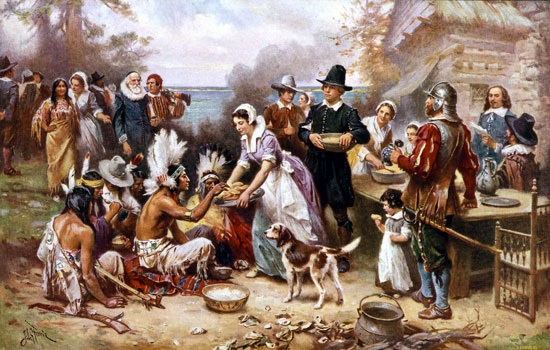
Here’s an excerpt from one story that teachers can download and ask students to read. It’s written with an old-fashioned style, to make it sound like a first-hand account:
So they had the first Thanksgiving party, and a grand one it was! Four men went out shooting one whole day, and brought back so many wild ducks and geese and great wild turkeys that there was enough for almost a week. There was deer meat also, of course, for there were plenty of fine deer in the forest. Then the Pilgrim mothers made the corn and wheat into bread and cakes, and they had fish and clams from the sea besides.
The friendly Indians all came with their chief Massasoit. Every one came that was invited, and more, I dare say, for there were ninety of them altogether. Kind as the Indians were, you would have been very much frightened if you had seen them.
They were dressed in deerskins…They had their faces painted in all kinds of strange ways, some with black stripes as broad as your finger all up and down them. But whatever they wore, it was their very best, and they had put it on for the Thanksgiving party. Each meal, before they ate anything, the Pilgrims and the Indians thanked God together for all his goodness
Here’s another story from a Thanksgiving teaching unit, complete with dialogue but using the same general information:
“Let us gather the fruits of our first harvest and rejoice together,” said Governor Bradford.
“Yes,” said Elder Brewster, “let us take a day upon which we may thank God for all our blessings and invite to it our Indian friends who have been so kind to us.”
The Pilgrims said that one day was not enough; so they planned to have a celebration for a whole week. The great Indian chief, Massasoit, came with ninety of his bravest warriors, all gaily dressed in deerskins, feathers, and fox tails, with their faces smeared with red, white, and yellow paint. As a sign of rank, Massasoit wore a string of bones and a bag of tobacco around his neck. In his belt he carried a long knife. His face was painted red, and his hair was daubed with oil.
There were only eleven buildings in the whole of Plymouth village, four log storehouses, and seven little log dwelling-houses, so the Indian guests ate and slept out of doors. This did not matter for it was one of those warm weeks in the season that we call Indian summer.
To supply meat for the occasion four men had already been sent out to hunt wild turkeys. They killed enough in one day to last the company almost a week. Massasoit helped the feast along by sending some of his best hunters into the woods. They brought back five deer which they gave to their pale face friends, that all might have enough to eat. Under the trees were built long, rude tables on which were piled baked clams, broiled fish, roasted turkey, and venison. The young Pilgrim women helped serve the food to the hungry redskins.
The first things you probably notice in reading these two stories are the incredibly racist descriptions of the Indians: they are frightening in appearance; they wear scary clothing and are armed; they are referred to as “redskins” in one of the accounts.
But in fact, these are actually the less offensive details of the accounts. The underlying White subtext is a much more effective tool in demeaning the Indians and advancing a sense of White superiority. It’s the Puritans who plan the feast and do the bulk of the work in these accounts. They have cooked an entire range of delicacies, from turkey to geese to fish clams to bread and cakes. The Indians show up as guests, bringing a token gift of five deer, and it’s implied that they bring the deer mainly so that they themselves will have enough to eat. The Indians give thanks to the White men’s god along with the Puritans, as if they obviously recognize the superiority of the White man’s religion. The Indians had made a big effort to dress in their finest clothing because it was such an honor to eat with the Puritans. It was not a problem for the Indians to sleep outdoors because the weather was warm—no breach of hospitality was intended. One story also introduces the racist term “Indian summer.”
Many Michigan teachers might object that they would never use one of these reading selections in their classrooms. But these two stories are posted on one of the most popular teaching-unit sites. Some teachers might insist that they do present an Indian perspective by teaching more about the Wampanoag culture and offering an explanation that the good will between the Puritans and the Indians was short-lived. (That brings us to the Pequot Massacre and then King Phillip’s War, which occurred only a generation later).
In one of these more “Indian-centric” teaching units, the story does explain more about the Wampanoag culture and credits the Indians with the colonists’ survival. But the Thanksgiving story feels oddly similar:
“Captain Miles Standish, the leader of the Pilgrims, invited Squanto, Samoset, Massasoot (the leader of the Wampanoags), and their immediate families to join them for a celebration, but they had no idea how big Indian families could be. As the Thanksgiving feast began, the Pilgrims were overwhelmed at the large turnout of ninety relatives that Squanto and Samoset brought with them. The Pilgrims were not prepared to feed a gathering of people that large for three days. Seeing this, Massasoit gave orders to his men within the first hour of his arrival to go home and get more food. Thus it happened that the Indians supplied more food, some of which we still eat today: Five deer, wild turkey, fish, beans, squash soup and berries. Captain Standish sat at one end of the long table and the Clan Chief Massosoit sat at the other end. For the first time the Wampanoag were sitting at a table to eat instead of on mats or furs spread on the ground.”
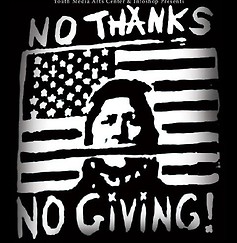
Here again is the invitation initiated by the White colonists…the feeling of White superiority (the Indians get to eat at a table for the first time!)…and as for the large group of Indians, the explanation was that they were overly enthusiastic and brought too many relatives and friends with them.
But to understand how twisted our White perspective is, it’s necessary to get a true Indian explanation of the event. One excellent example can be found at Oyate, a site dedicated to offering an Indian perspective so “that our lives and histories are portrayed honestly, and so that all people will know our stories belong to us.” In an article titled “Deconstructing the Myths of ‘The First Thanksgiving’,” authors Judy Dow and Beverly Slapin give an account drawn on their knowledge from their own nations. Dow, an Abenaki, offers a unique perspective because a direct account of Samoset’s exists in the oral traditions of this people.
Here are just a few of the points the authors address:
• The term “Pilgrim” was not in use until the American Revolution, in a first-wave effort to infuse this entire story with a sense of Christian morality.
• The corn that the Puritan hunting party brought back to their settlement was seed corn belonging to the Wampanoag. It was stolen, not “found.” The scouting party also stole items from homes, according to their own account. Worst of all, they robbed graves, taking beads and important spiritual objects that had been buried with a child.
• Samoset didn’t appear out of nowhere. The Abenaki often played a diplomatic role among the Eastern woodland tribes, and Samoset, an Abenaki chief, had been asked by Massasoit to discover the intentions of the colonists at Plymouth. Squanto (real name: Tisquantum), who had been enslaved by an English crew and later escaped, offered to live with the colonists so he could send reports back to Massasoit.
• And as for that “invitation” to a great feast, Winslow’s account turns out to be exactly accurate, although it’s not complete without the Indian side of the story. The colonists’ gunshots indicated to the nearby Wampanoag that the White men were forming a war party. Massasoit assembled a party of 90 men—dressed in war gear (not party clothes) and with no women and children with them—to approach the settlement. When the chief saw a celebration was underway, he ordered some of his hunters to bring deer, turkeys, and other food as gifts. It was the Indians who provided the bulk of the food for the harvest feast, not the Puritans.
It’s well worth reading the entire article, found here. It’s too bad that more Michigan teachers don’t use this material. The instruction of the “Thanksgiving story” in Michigan as well as across the United States, despite some pasted-over attempts to update the information, remains a perfect expression of White supremacy and is infused with an expression of American imperialism. That’s not a lesson that any child should learn.
Local Buy Nothing Day Events in Grand Rapids

For years now there has been an international effort to address to the push towards more consumption by organizing Buy Nothing Day. Buy Nothing Day traditionally happens on the day after Thanksgiving, or what marketers call Black Friday.
This year the Buy Nothing campaign has been expanded for a whole week and there are numerous groups around the world who are organizing a variety of activities to draw attention to the human and ecological disasters connected to over-consumption.
The Bloom Collective is hosting an opportunity for people in West Michigan to both discuss and opt out of the hyper-marketing frenzy of holiday shopping. On Saturday, November 27th the Bloom Collective will be hosting a Really, Really Free Market from 1 – 5pm at the Bloom space at 671 Davis on the northwest side of Grand Rapids.
The really, Really Free Market is an opportunity for people to give away items they no longer need and to get items they might need. It is an exchange of goods that does not require the corporate market and it fosters a greater sense of community and inter-dependence than relying on corporations to provide us with “goods.”

Then at 3pm the Bloom Collective will be hosting a potluck discuss after watching the documentary Shop Til You Drop: The Crisis of Consumerism. Shop ‘Til You Drop challenges us to confront the questions: Are we too materialistic? Are we willfully trashing the planet in our pursuit of things? And what’s the source of all this frenetic consumer energy and desire anyway?
Saturday, November 27
1 – 5pm Really, Really Free Market
3 – 5pm Film and potluck discussion
Bloom Collective
671 Davis NW
The Non-Profit Industrial Complex in Grand Rapids
In his farewell speech to the nation, President Dwight Eisenhower warned US citizens of the impending dangers of what he called the military industrial complex. Eisenhower knew that the Pentagon’s relationship with the private weapons manufacturers could cripple democracy.
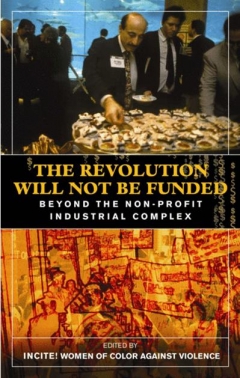
Since the early 1960s, another alliance has grown that also threatens the potential for social change and social justice in this country. Wealthy sectors and individuals have hidden some of their wealth in foundations, both as a way of avoiding taxes, but more importantly as a means of social control.
Collectively, US foundations give away billions of dollars to a broad spectrum of efforts that are generally labeled as beneficial to the community in which it was given. However, that idea has come under increasing scrutiny by community activists and organizers, and was the topic of a major conference in 2004 entitled The Revolution Will Not Be Funded: Beyond The Non-Profit Industrial Complex.
At that conference, organizers and grassroots scholars discussed ways in which the non-profit/NGO structure often obstructs radical movement building. The conference led to a book by the same titled and was put together by the radical women of color organization, INCITE!
They women of INCITE! identified the Non-Profit Industrial Complex as a relationship between the State, the owning classes, foundations and the non-profit/NGO, social service and sometimes social justice organizations. These relationships often result in the surveillance, control, derailment, and everyday management of political movements. For the women of INCITE! the state and private power uses non-profits to:
- Monitor and control social justice movements;
- Divert public monies into private hands through foundations;
- Manage and control dissent in order to make the world safe for capitalism;
- Redirect activist energies into career-based modes of organizing instead of mass-based organizing capable of actually transforming society;
- Allow corporations to mask their exploitative and colonial work practices through “philanthropic” work;
- Encourage social movements to model themselves after capitalist structures rather than to challenge them.
For anyone who has worked in the non-profit world these tactics are quite evident and most often quite frustrating. At the same time, this kind of analysis is far from the halls of the non-profit world and quite often the leadership of such organizations embraces this kind of thinking as the correct way to approach social problems.
The Non-Profit Industrial Complex in Grand Rapids
An example of this kind of thinking was reflected in the most recent edition of the area private sector publication MiBiz. The weekly business publication included an insert for the week of November 22nd entitled “Non-Profit Organizations: The business of advocacy.”
The insert contained numerous articles on the non-profit sector including stories about getting young professionals to join boards of directors for non-profits. However, the most important articles were by three women who are in three different capacities within the non-profit industrial complex.
The first article was by an employee of Founders Bank & Trust, Julie Ridenour. Ridenour writes about the strong history of public/private initiatives in Grand Rapids and uses as a recent example ArtPrize. Here the writer states, “The event was funded through the generosity of the DeVos Family.” She goes on to say, “ It’s a great example of a young entrepreneur using his business initiative to bring cultural and economic prosperity to our city.”
As we have stated in previous critiques of ArtPrize the people who were primary economic winners with ArtPrize are the downtown businesses and property owners, which represents a small class of people whom the DeVos family has a cozy relationship with. And where do we see how the city has prospered culturally with something like ArtPrize, when the emphasis is on commodification of art and not promoting real cultural diversity.
The Grand Rapids Community Foundation president, Diana Sieger, wrote a second article in the MiBiz insert that continued with this same logic. Seiger talked about the work of the community foundation and stressed that non-profits are successful when they are run like businesses. The only difference is that instead of profit, the non-profit world’s profit is “community change.”
One example that Sieger cites is the educational collaboration between the Kent School Services Network, Spectrum Health, the state and Network 180 to reduce absenteeism in Kent County. While one could argue that absenteeism can be problematic, just getting kids to school is not a very lofty goal.
The last article in this trio was from the director of the West Michigan Environmental Action Council (WMEAC), Rachel Hood. Hood talks about the work of WMEAC and cites three projects they have worked on which highlight the non-profit’s mission. One of those projects was the Stormwater Initiative.
The Stormwater Initiative involved the City of Grand Rapids, MSU, the Frey Foundation and Coca Cola Enterprises. Yes, you read that correctly, Coca Cola Enterprises. The WMEAC director goes on to say how this was a win-win for all partners involved. For Coca Cola Enterprises she writes, “Coca Cola is able to reuse its syrup barrels as part of its corporate social responsibility program. Community groups get a value-add for members and homeowners get a free or low-cost rain barrel.”

GRIID wrote about this problematic partnership between WMEAC and Coca Cola last year, but it is worth repeating here. Coca Cola, in addition to manufacturing products that contribute to poor health around the world the company actually siphons off public water resources at the expense of local communities. This “theft” of water is happening is dramatic fashion around the world and in countries like India.
Besides expropriation of public water sources Coca Cola has a horrible track record in Colombia, where union organizers have been murdered for trying to organize workers in Coca Cola plants.
In both issues, water expropriation and murder of union organizers, grassroots social justice groups have called for boycotts of Coca Cola. Boycotts are an appropriate response to the kinds of policies and practices that the Coca Cola company is engaged in. When non-profits collaborate with corporations like Coca Cola it not only makes it harder for grassroots campaigns to be effective, it “allows corporations to mask their exploitative and colonial work practices through philanthropic work,” as is identified by INCITE!
As an organization that has been focused on water quality and water rights issues, WMEAC has the capacity to be a leader in challenging the real practices of corporations like Coca Cola. If WMEAC was interested in capacity building, they could develop a solidarity campaign with people in India who are fighting the ongoing privatization of public water by the global soda giant.
Unfortunately, more often than not this is the nature of non-profits, to not challenge corporate and private power. Non-profits spend too much time chasing funding sources, sources that often come with strings attached, so that they can pay staff salaries instead of doing the work that they originally set out to do.
This critique of the Non-Profit Industrial Complex does not mean that non-profits don’t do important work, but it does provide us with an opportunity to discuss how social change comes about. If we follow the historical models that radical historian Howard Zinn chronicles in A People’s History of the United States, then that model would be that social change comes about though social movements that were independent of both and economic and political centers of power.
What We Are Reading
Below is a list of books that we have read in recent weeks. The comments are not a review of the books, instead sort of an endorsement of ideas and investigations that can provide solid analysis and even inspiration in the struggle for change. All these books are available at The Bloom Collective, so check them out and stimulate your mind.

In Deep Water: The Anatomy of a Disaster, The Fate of the Gulf, and How to End our Oil Addiction, by Peter Lehner – This is the first book that honestly takes a look at the BP oil disaster that continues to unfold since the underwater well exploded earlier this year. Lehner does an excellent job at providing readers with sufficient background information, how the oil industry functions at the federal level and what the long-term ecological implications are of the largest single oil spill in US history will have in the Gulf. Unfortunately the book has a weak ending on how “we” will end our addiction to oil. Lehner is operating on the assumption that the mainstream environmental groups do, which is that we can easily transition from oil to renewable energy, without challenging the current levels of energy consumption or the capitalist framework energy production operates in.

Bringing It to the Table: On Farming and Food, by Wendell Berry – Bringing It to the Table is a collection of the best of farmer/poet Wendell Berry’s writing over the past three decades. With growing attention to food production in the US and the emphasis on eating locally, people would be well served be Berry’s earth-based wisdom that comes from years of practicing sustainable agriculture. Berry not only provides practical information on the importance of farming, but provides honest table talk about the urgency for all of us to develop a stronger relational awareness with the food that we eat. Few writers have been able to bring practice and analysis on the topic of food like Berry and this collection of essays can serve as sort of a handbook or guide for how we move forward with what we eat.

Words & Money, by Andre Schiffrin – Words & Money is a refreshing look at some of the current trends within the media business, both in the US and Europe. Schiffrin, the publisher of The New Press, not only provides readers with a sharp critique of how the commercial media in the US has failed the public in recent decades, he provides some interesting models from outside the US on how media, particularly news media, could function so that the profit motive does not cast a shadow over news content. Schiffrin also offers up some new ideas and new models that are currently not being used abroad, but could lead to some interesting approaches to producing independent media that truly serves the public interest.

The Pornography of Meat, by Carol J. Adams – This book is a fabulous sequel to Adams’ first book The Sexual Politics of Meat, which she wrote in 1990. The Pornography of Meat continues the analysis from Adams’ first book by making the link between how we objectify the bodies of animals in order to consume them, which is the same thing we do to women’s bodies in advertising in order to “consume them.” Adams provides over 100 visual examples in the book which supports her analysis of how women’s and animal’s bodies have become commodities for us to consume and that that commodification is often sexualized. Adams makes a strong case for vegetarianism by looking at the harm done to animals through a feminist lens.

After the Greek Uprising – a documentary video by ZNet – In May 2009, Z staff traveled to Athens to talk with people about the December uprising and its implications for long-term organizing toward revolutionary change. They interviewed people in the large anti-authoritarian movement, as well as participants in the uprising, and members of a neighborhood occupation. The documentary includes footage from the uprising and various areas of political action around Athens. It also has scenes from a well-attended B-Fest conference, which focused on how to move forward. After the Greek Uprising provides an inspiring example of how revolutionary change can occur and would be a useful resource for those in the US in terms of what kinds of tactics and strategies were employed that made the uprising effective.
Media Bites – Call of Duty and the normalization of war
In this week’s Media Bites we take a look at the recent commercial promo for the new Call of Duty first person shooter video game, Black Ops. The ad injects real world people into the spot to suggest that anyone who plays the game will feel like they are in the midst of war.
However, the commercial and the game itself does not only provides a false self of reality, particularly for what US soldiers truly experience, it also serves as a tool to normalize the use of violence and war as a means of resolving conflicts.
Cigarette Makers Aggressively Recruit Smokers in Foreign Countries
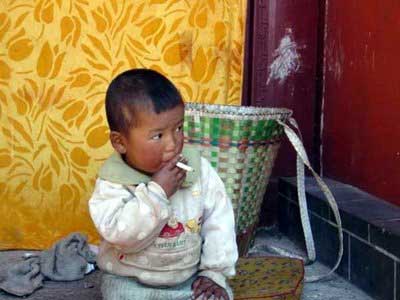
Michigan residents are enjoying the health benefits of its now 8-month old smoke-free free policy, one of 27 states in the country with such a policy and the number is likely to increase in the coming years.
This type of aggressive policy changes in the US has resulted in Big Tobacco looking more and more over seas for new markets, particularly in developing countries that don’t have strong public health rules, particularly when it comes to regulation of tobacco sales.
PRWatch states the following:
Global cigarette makers like Philip Morris (PM) and British American Tobacco (BAT) are getting more aggressive in their efforts to recruit new smokers in developing countries to replace those who are either quitting, dying or failing to take up the addiction in the U.S. and other developed nations.
Tobacco companies use marketing tactics in foreign countries that they could never get away with using in the U.S. In Indonesia, for example, cigarette ads still appear on television and billboards, companies target kids by putting cartoon characters on cigarette packs, and stores still sell cigarettes to children.

As governments try to crack down on these objectionable marketing behaviors, cigarette makers fight back using lawsuits and time-worn, but effective PR techniques. Philip Morris International has been especially aggressive in fighting marketing restrictions overseas. The company has deployed a $5 million campaign in Australia to fight a government plan that would require cigarettes be marketed in plain brown or white packages. PM designed the campaign to make it look like it was coming from small store owners, and got help financing it from competitors like BAT and Imperial Tobacco.
The companies also argue that higher cigarette taxes will stimulate smuggling, but tobacco industry documents reveal that global tobacco companies are not only complicit in cigarette smuggling, but that they oversee it, and even depend on it to gain access to closed markets.
The Center for Public Integrity has also just released a new report on tobacco company efforts abroad, entitled Smoke Screen: Big Tobacco’s Global Lobbying Campaign. The report looks at global trends with detailed sections on what is happening in Russia, Mexico and Uruguay.
Editorializing on the War on Drugs

The “war on drugs” is probably one of the most understood US policies ever since the Nixon administration gave it that name. Statistically, despite the billions of dollars for interdiction programs overseas and at the US border, illegal drug trafficking has increased in recent decades.
Today’s Grand Rapids Press editorial addresses one aspect of this issue, specifically the status of the investigation into the local missionaries whose plane was shot down in 2001.
The Press editorial is right to express concerns that justice has not been done in this case, since the 16 CIA officers who were reprimanded did not really face any serious consequences for the death of Veronica Bowers and her daughter.
The editorial mentions the 2008 inspector general report, which lays out the details of the incident that led to CIA contractors shooting down the missionary family’s plane. Included in that report was an acknowledgement that the CIA initially lied about the circumstances as a means of attempting to cover up the story.

The editorial also mentions that the Brower family received $8 million in a legal settlement with the government, but that “That may be politically expedience. It’s hardly justice.” The Press editorial ends by stating that halting drug trafficking is a laudable goal, but that there needs to be more checks and balances.
While we would agree that there needs to be more accountability when US government agents act maliciously, but the failure of the editorial misses a major point here, which is that the US Drug War is at best a farce.
Numerous political analysts and former US DEA agents who have been on the front lines of the US war on drugs have testified and documented the massive failure of this policy. Michael Levine, who worked with the DEA for 20 plus years in Latin America wrote the book Deep Cover: The Inside Story of How DEA Infighting, Incompetence and Subterfuge Lost Us the Biggest Battle of the Drug War. Another noted former DEA agent is Celerino Castillo who wrote the book Powderburns: Cocaine, Contras & the Drug War. What both Levine and Castillo argue is that not only is the US war on drugs a failure, but that it was never intended to actually go after the primary drug traffickers in Latin America, because they were often CIA assets.

The idea that the CIA collaborates with major drug traffickers is the topic of one of the best investigations into the US war on drugs, The Politics of Heroin: CIA Complicity in the Global Drug Trade. This book by Alfred McCoy documents over four decades of US involvement in the global drug trade. The author argues that the US was often directly involved in the drug trade as a means to generate funds for covert wars, whether those wars were in Afghanistan, Southeast Asia or Latin America.
This notion that the CIA has been directly involved in the global drug trade would help in our understanding of the death of local missionary Veronica Bower and her daughter.
The US has been telling the American public that they are committed to winning the war on drugs in Latin America, yet there has been no evidence that the amount of cocaine has diminished in recent decades.
You will remember in 2000 when then President Clinton allocated $1.3 billion to fight the drug war in Latin American with a policy knows as Plan Colombia. Plan Colombia has not only failed to reduce drug production in Colombia, it has led to the deaths of thousands of innocent civilians. The Washington Office on Latin America published a report this past summer, which documents what a monumental failure Plan Colombia has been, particularly since it has resulted in countless deaths and has further militarized the region.
So while it is appropriate for the Press to editorialize on the lack of justice in the case of local victims of the war on drugs they should be equally outraged about US drug war policies that are in no way laudable. Indeed, the Press might want to have their reporters investigate the local connections and consequences to the so-called War on Drugs.
 Grand Rapids Institute for Information Democracy