West Michigan Company sends more jobs to Mexico
Yesterday the Grand Rapids Press reported that the Grand Haven-based company Haldex Brake Products will shut down its factory and move the rest of its production to Monterrey, Mexico.

The Press reports that the “company stated the decision to consolidate activities at its facility in Mexico was based on the significant manufacturing infrastructure and increasing amount of automotive and commercial vehicle activity in the region.” The article also said that the company will offer “severance pay, benefits continuation and out-placement services,” although it did not provide any comments from the 41 workers which just lost their jobs.
The Press reporter did not offer up any independent reasons for the company sending more jobs to Mexico, they just accepted the rationale offered by Haldex. The reporter could have provided some historical context so that readers would know exactly when Haldex first set up operations in Monterrey, Mexico and how many jobs have left West Michigan.
There is also no discussion about the North American Free Trade Agreement (NAFTA) and how that trade policy provided incentives for a company like Haldex to move its operation from the US to Mexico, such as tax breaks and weaker labor and environmental standards.
According to Public Citizen, “Michigan lost over 342,325 manufacturing jobs (or 42.4 percent) during the NAFTA-WTO period (1993-2009).” This would be useful information for readers of the Press, so that they understand that this recent decision by Haldex is not an isolated one, but part of a 16-year process of job loss in Michigan.
Providing this kind of context could also be useful for the public in determining future trade agreements as well as contributing to any possible reforms or repeals of existing trade agreements. The Obama administration took office with the claim of revisiting and reforming existing trade agreements, but has yet to do anything concretely in that arena.
A November 9 poll showed that a majority of voters oppose free trade or NAFTA-like policies and believe it is a major factor in US job loss. The poll showed that both Democratic and Republican voters are opposed to such Free Trade Agreements (FTA), so there doesn’t seem to be any reason why future FTA can’t be defeated or negotiated in such a way that will actually be a benefit to workers and protecting the environment at the same time.
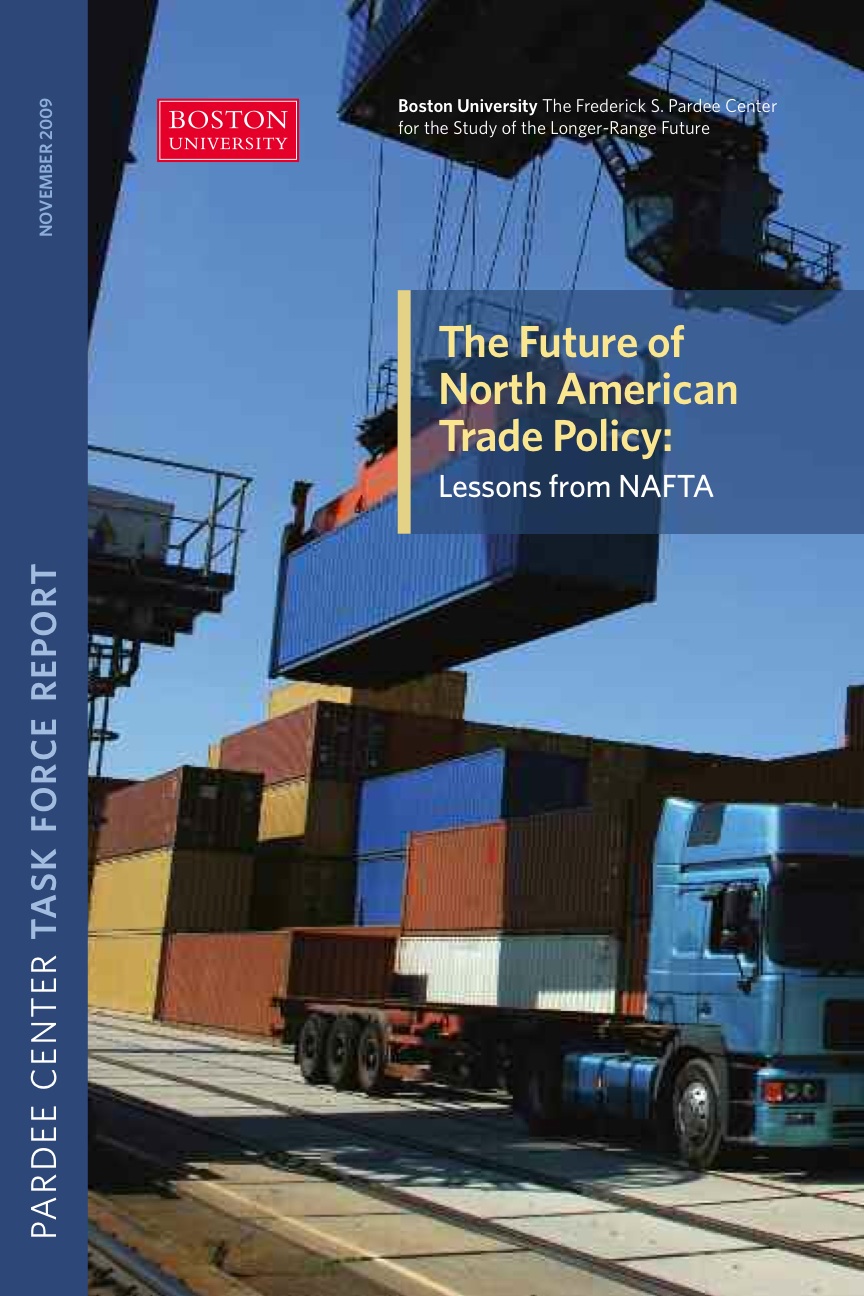
Lastly, it would be beneficial for the Press to provide the public with more information and more resources to further investigate trade policies, especially since so many working families are impacted by these decisions in West Michigan. There are a couple of good reports that have come out in the past year that we would recommend. The first is a report from Boston University entitled, The Future of North American trade Policy: Lessons from NAFTA. The other report, produced by the Carnegie Endowment for International Peace, is entitled Rethinking Trade Policy for Development: Lesson from NAFTA under Mexico.
US Military bases in the Middle East under Obama
(This article by Nick Turse is re-posted from Tom Dispatch.)
The construction projects are sprouting like mushrooms: walled complexes, high-strength weapons vaults, and underground bunkers with command and control capacities — and they’re being planned and funded by a military force intent on embedding itself ever more deeply in the Middle East.

If Iran were building these facilities, it would be front-page news and American hawks would be talking war, but that country’s Revolutionary Guards aren’t behind this building boom, nor are the Syrians, Lebanon’s Hezbollah, or some set of al-Qaeda affiliates. It’s the U.S. military that’s digging in, hardening, improving, and expanding its garrisons in and around the Persian Gulf at the very moment when it is officially in a draw-down phase in Iraq.
On August 31st, President Obama took to the airwaves to announce “the end of our combat mission in Iraq.” This may, however, prove yet another “mission accomplished” moment. After all, from the lack of a real Iraqi air force (other than the U.S. Air Force) to the fact that there are more American troops in that country today than were projected to be there in September 2003, many signs point in another direction.
In fact, within days of the president’s announcement it was reported that the U.S. military was pouring money into improving bases in Iraq and that advance elements of a combat-hardened armored cavalry regiment were being sent there in what was politely dubbed an “advise and assist” (rather than combat) role. On September 13th, the New York Times described the type of operations that U.S. forces were actually involved in:
“During two days of combat in Diyala Province, American troops were armed with mortars, machine guns, and sniper rifles. Apache and Kiowa helicopters attacked insurgents with cannon and machine-gun fire, and F-16’s dropped 500-pound bombs.”
According to the report, U.S. troops were within range of enemy hand grenades and one American soldier was wounded in the battle.

Adhering to an agreement inked during George W. Bush’s final year in office, the Obama administration has pledged to withdraw all U.S. troops from Iraq by the end of 2011. U.S. military commanders have, however, repeatedly spoken of the possibility of extending the U.S. military’s stay well into the future. Just recently, Secretary of Defense Robert Gates let the Iraqi government know that the U.S. was open to such a prospect. “We’re ready to have that discussion if and when they want to raise it with us,” he said. As the British Guardian’s Martin Chulov wrote last month, “[T]he U.S. is widely believed to be hoping to retain at least one military base in Iraq that it could use as a strategic asset in the region.”
Recent events, however, have cast U.S. basing plans into turmoil. Notably unnerving for the Obama administration was a deal reportedly brokered by Iran in which Shia cleric Moqtada al-Sadr — whose forces had repeatedly clashed with U.S. troops only a few short years ago — threw his support behind Prime Minister Nouri al-Maliki, currently vying for a second term in office. This was allegedly part of a regional agreement involving Syria and Lebanon’s Hezbollah that could leave the U.S. military out in the cold. A source informed the Guardian that “Maliki told [his new regional partners that] he will never extend, or renew [any bases] or give any facilities to the Americans or British after the end of next year.”
Even if the U.S. was forced to withdraw all its troops from Iraq, however, its military “footprint” in the Middle East would still be substantial enough to rankle opponents of an armed American presence in the region and be a drain on U.S. taxpayers who continue to fund America’s “empire of bases.” As has been true in recent years, the latest U.S. military documents indicate that base expansion and upgrades are the order of the day for America’s little-mentioned garrisons in the nations around Iraq.
One thing is, by now, clear: whatever transpires in Iraq, the U.S. military presence in the Persian Gulf and surrounding environs will be formidable well into the future.
Middle Eastern Mega-Bases
As the “last” U.S. combat troops withdrew from Iraq under the glare of TV lights in the dead of night and rolled toward Kuwait, there was plenty of commentary about where they had been, but almost none about where they were going.
In the Gulf War of 1991, the U.S. military helped push Saddam Hussein’s invading Iraqi army out of Kuwait only to find that the country’s leader, Sheikh Jaber al-Ahmed al-Sabah, refused to return home “until crystal chandeliers and gold-plated bathroom fixtures could be reinstalled in Kuwait City’s Bayan Palace.” Today, the U.S. military’s Camp Arifjan, which grew exponentially as the Iraq War ramped up, sits 30 miles south of the refurbished royal complex and houses about 15,000 U.S. troops. They have access to all the amenities of strip-mall America, including Pizza Hut, Pizza Inn, Taco Bell, Starbucks, Hardees, Subway, and Burger King. The military talks little about its presence at Arifjan, but Army contracting documents offer clues about its intentions there. A recent bid solicitation, for example, indicated that, in the near future, construction would begin there on additional high strength armory vaults to house “weapons and sensitive items.”
In addition to Camp Arifjan, U.S. military facilities in Kuwait include Camps Buehring and Virginia, Kuwait Naval Base, Ali Al Salem Air Base, and Udairi Range, a training facility near the Iraqi border. The U.S. military’s work is also supported by a Defense Logistics Agency (DLA) distribution center in Kuwait, located not on a U.S. base but in the Mina Abdulla industrial zone about 30 miles south of Kuwait City.
Unlike other DLA hubs, which supply U.S. garrisons around the world, the Kuwaiti facility is contractor owned and operated. Made up of a walled compound spanning 104 acres, the complex contains eight climate-controlled warehouses, each covering about four acres, one 250,000-square-foot covered area for cargo, and six uncovered plots of similar size for storage and processing needs.
Typical of base upgrades in Kuwait — some massive, some modest — now on the drawing boards, recent contracting documents reveal that the Army Corps of Engineers intends to upgrade equipment at Kuwait Naval Base for the maintenance and repair of ships. In fact, the Department of Defense has already issued more than $18 million in construction contracts for Kuwait in 2010.
The U.S. military also operates and utilizes bases and other facilities in the nearby Persian Gulf nations of Qatar, Bahrain, the United Arab Emirates, and Oman.
During the 1930s, the British Royal Air Force operated an airfield on Oman’s Masirah Island. Today, the U.S. Air Force and members of other service branches have settled in there, operating from the island as well as other facilities by special agreement with the sultanate. The Air Force is also supported in Oman by “War Reserve Materiel” storage and maintenance facilities, operated by defense contractor Dyncorp, in Seeb, Thumrait, and Salalah Port.
From 2001 to 2010, the U.S. military spent about $32 million on construction projects in Oman. In September, the Army upped the ante by awarding an $8.6 million contract to refurbish the Royal Air Force of Oman’s air field at Thumrait Air Base.
U.S. efforts in Bahrain are on a grander scale. This year, the U.S. Navy broke ground on a mega-construction project to develop 70 acres of waterfront at the port at Mina Salman. Scheduled for completion in 2015, the complex is slated to include new port facilities, barracks for troops, administrative buildings, a dining facility, and a recreation center, among other amenities, with a price tag of $580 million.
There are similar expenditures in neighboring Qatar. In 1996, lacking an air force of its own, Qatar still built Al Udeid Air Base at a cost of more than $1 billion with the goal of attracting the U.S. military. It succeeded. In September 2001, U.S. aircraft began to operate out of the facility. By 2002, the U.S. had tanks, armored vehicles, dozens of warehouses, communications and computing equipment, and thousands of troops at and around Al Udeid. In 2003, the U.S. moved its major regional combat air operations center out of Saudi Arabia and into neighboring Qatar where the government was ready to spend almost $400 million on that high-tech command complex.
From then on, Al Udeid Air Base has served as a major command and logistics hub for U.S. regional operations including its wars in Iraq and Afghanistan. Last year, the Pentagon awarded a $52 million contract to further upgrade its airfield capabilities, a $44 million deal to upgrade other facilities there, and a $6 million contract for expanded warehousing capacity. Nor does the building boom there show any signs of abating. A report by the Congressional Research Service issued earlier this year noted:
“The Obama administration requested $60 million in FY2010 military construction funds for further upgrades to U.S. military facilities in Qatar as part of an ongoing expansion and modernization program that has been underway since 2003 at a cost of over $200 million. The administration’s FY2011 military construction request for Qatar is $64.3 million.”
Jordan’s Bunker Mentality
The Pentagon has also invested heavily in Jordanian military infrastructure. One major beneficiary of these projects has been the international construction firm Archirodon which, between 2006-2008, worked on the construction of the King Abdullah II Special Operations Training Center (KASOTC). It is a state-of-the-art military and counterterrorism training facility owned and operated by the Jordanian government, but built in part under a $70 million U.S. Army Corps of Engineers contract.
In 2009, when that 1,235-acre $200 million Jordanian training center was unveiled, King Abdullah II gave the inaugural address, praising the facility as a world-class hub for special forces training. General David Petraeus, then-head of the U.S. Central Command overseeing the Greater Middle East, was also on hand to laud the facility as “a center of excellence not only for doctrinal development and refinement of TTPs [technology, tactics and procedures], but for strengthening the regional security network emerging in this area.”
Between 2001 and 2009, the Army awarded $89 million in contracts for Jordanian construction projects. This year, it inked deals for another $3.3 million (much of it for improvements to KASOTC). Recently, the Army also issued a call for bids for the construction of subterranean complexes at three locations in Jordan, the largest of them approximately 13,000 square feet. Each of these underground bunkers will reportedly boast a command-and-control operations center, offices, sleeping quarters, cafeterias, and storage facilities. The project is set to cost up to $25 million.
1,001 Arabian Contracts
According to a 2009 Congressional Research Service report, from 1950 to 2006 Saudi Arabia purchased almost $63 billion in weapons, military equipment, and related services through the Pentagon’s Foreign Military Sales (FMS) program. Just last month, the U.S. announced that it would conclude new arms deals with the Saudis which would equal that sum — not in another half century but in the next 15 to 20 years. Labeled a move to counter Iranian power in the region, the deal for advanced tactical fighter aircraft and state-of-the-art helicopters garnered headlines. What didn’t were the longstanding, ongoing U.S. military construction efforts in that country.
Between 1950 and 2006, Saudi Arabia experienced $17.1 billion in construction activity courtesy of the Pentagon. In the years since, according to government data, the Department of Defense has issued more than $400 million in construction contracts for the kingdom, including $33 million in 2010 for projects ranging from a dining hall ($6 million) to weapons storage warehouses and ammunition supply facilities (nearly $1 million).
Bases and “the Base”
In his 1996 “Declaration of War Against the Americans Who Occupy the Land of the Two Holy Mosques,” Osama bin Laden wrote:
“The presence of the USA Crusader military forces on land, sea and air of the states of the Islamic Gulf is the greatest danger threatening the largest oil reserve in the world. The existence of these forces in the area will provoke the people of the country and induces aggression on their religion, feelings, and prides and pushes them to take up armed struggle against the invaders occupying the land.”
Since then, the U.S. and bin Laden’s rag-tag guerrilla force, al Qaeda (“the Base”), have been locked in a struggle that has led to further massive U.S. base expansions in the greater Middle East and South Asia. At the height of its occupation, the U.S. had hundreds of bases throughout Iraq. Today, hundreds more have been built inAfghanistan where, in the 1980s, bin Laden and other jihadists, backed and financed by the CIA, the Saudis, and the Pakistanis, fought to expel the Soviet occupiers of that country.
As early as 2005, the U.S. military was floating the possibility of retaining some of its Afghan bases permanently. In Iraq, plans for similar permanent garrisons have recently been thrown into doubt by the very government the U.S. helped install in power. Whatever happens in either war zone, however, one thing is clear: the U.S. military will still be deeply dug into the Middle East.
While American infrastructure crumbles at home, new construction continues in oil-rich kingdoms, sultanates, and emirates there, courtesy of the Pentagon. It’s a building program guaranteed to further inflame anti-American sentiment in the region. History may not repeat itself, but ominously — just as in 1996 when bin Laden issued his declaration — most Americans have not the slightest idea what their military is doing with their tax dollars in the Persian Gulf and beyond, or what twenty-first century blowback might result from such activities.
Ending Male Violence Against Women, a workshop with Jackson Katz

Yesterday, the West Michigan based Center for Women in Transition hosted a workshop at the GVSU campus in Allendale with long-time anti-sexist activist Jackson Katz. The workshop brought together students, social workers and people who work in sexual assault and rape prevention work.
Katz began the workshop by framing the issue of gender violence as problematic because it usually gets referred to as an issue of particular concern for women. The problem with this is that it means that men and masculinity will often be ignored.
This is what is called the absent referent, where the dominant group continues to go unacknowledged and unexamined. When we think about race, we tend to ignore White people. When we think of sexual orientation, we usually ignore heterosexuals. Katz believes that until gender issues become issues of primary concern for men, the levels of sexual assault and domestic violence will not change in this country.
Katz next addresses the issue of rape and to further illustrate the idea of how rape is framed as a women’s issue, he asks everyone what percentage of rape are committed by women. Of course, that number is less than 1%, which means the overwhelming percentage of rape committed in the US is done by men. Therefore, Katz said rape should primarily be a men’s issue.

Katz continues with this line of thinking by talking about how women and girls are taught what to do to reduce the risks of rape. Again, the culture doesn’t talk about the perpetrators and what we need to do to prevent men from committing rape.
The issue is further complicated when one thinks about how personal the issue of sexual assault and rape is. Katz said since rape and sexual assault is so prevalent that virtually everyone is affected at a personal level. We all have family members who have been victims, friends, neighbors and co-workers who have been directly impacted by sexual assault. Therefore, it is important for all of us to confront these issues on a personal level as well as a systemic level.
Next Katz talked about language and sexual assault and has the group do an exercise by reading a short article called Violence Against Women. The issue that Katz wanted to raise here is that when we talk about rape and sexual assault the language for perpetrators is usually de-gendered, such as truck drivers, businessmen or co-worker. When news coverage reports on this issue we never read, “Male students rapes woman on campus.” What we usually see is “female student raped on campus.” Therefore, male behavior is minimized or ignored and women are made the focus. This idea of how women become the focus after a sexual assault is committed by looking at how we culturally scrutinize female behavior. What kind of clothing was she wearing, why did she go there alone, what did she do to provoke this guy, etc.? So, we put our focus on the female victims of sexual assault instead of putting the focus on male perpetrators and their behavior.
Bystanders
After the first break Katz then shifted the discussion to what are role is as bystanders, which he refers to as friends, co-workers, neighbors, relatives, etc. The reason he thinks that looking a bystanders is an important focus for preventing male violence is that if we can get bystanders to take action, where men can hold other men accountable, then there will be a reduction of male perpetrated sexual violence.
In the Bystander approach to preventing male violence against women, Katz then talked about the work he has done in developing and using what he calls Mentoring for Violence Prevention or the MVP program.

Katz then leads the group through a couple of scenarios. The first deals with a situation in a typical high school hall way where a guy pushes his girlfriend into the lockers and how bystanders respond. The group talks first about what are the reasons why people might not respond or challenge the behavior. We also talk about what kinds of messages are sent to the girlfriend when we don’t act or intervene and what kinds of messages are being sent to the guy who is hurting his girlfriend when we don’t act?
A second scenario is where a guy is showing male friends pictures on his cell phone of his ex-girlfriend, explicit photos. If you are one of the guys what do you do? People discussed how this is an increasingly common reality where particularly young people are using social media sources to use and abuse women and girls by posting words and pictures that demean them.
What Katz tries to impress upon those in the workshop is the importance of having these kinds of discussions about what we can do and what our options are when we encounter these dynamics. Katz believes that when we discuss these issues people will not only come up with concrete ideas for action, but they will realize that there are more people who also object to these kinds of abusive male behaviors and therefore do not feel as isolated.
Media and Masculinity
The last session of the workshop dealt with a topic that most people know Katz for – how media portrays men and masculinity. Katz shows examples from some of his own work, particularly the documentary film Tough Guise. One point that Katz makes about how media portrays men and boys was to rephrase the idea that the violence men and boys engage in is “learned behavior.” He says that this phrase is somewhat misleading in that it removes our focus from who is teaching this behavior, meaning the media. The media, which produce these images and messages about male behavior, are the entities that teach destructive male behavior.

The next clip he shows is from the documentary Hip Hop: Beyond Beats and Rhymes, which looks at misogyny, masculinity, and homophobia in rap & Hip Hop music. The first part was with the producer of the film who talked about his own journey with the normalization of female objectification in music videos. The second clip dealt with the hyper-sexual representation of women in music videos and how women at Spellman College confronted the rapper Nellie about his music video Tip Drill.

A third clip that Katz showed was from Jeanne Kilbourne’s film Killing Us Softly 4. In this clip Kilbourne takes to task how advertising perpetuates male stereotypes particularly how violent male behavior is normalized in ads. Kilbourne also makes the point that even though increasingly advertising is objectifying men and men’s bodies as well, the social cost of this media objectification is not the same for men as it is for women. Objectification of men in media does not contribute to or normalize violence against men like it does with the objectification of and male violence towards women.

The last clip that Katz shows is from the documentary Mickey Mouse Monopoly, a clip that looks at how girls are represented in Disney films. These images show how Disney has for decades been representing women and girls as highly sexualized and seductive characters that often need to be rescued. There is a particularly interesting critique of the film Beauty and the Beast.
Katz finished the workshop by offering up a variety of resources that people could use if they wanted to explore these issues in more details. Many of these resources can be accessed from both the websites of Jackson Katz and Jeanne Kilbourne, but if people are looking for books and documentary films they could find these resources locally at the Bloom Collective.
Students blast the SOA
 A group of about 30 Grand Valley State University Students and a few professors met on the Allendale campus Nov. 15 to watch the film Hidden in Plain Sight. The feature-length documentary looks at U.S. policy in Latin America as furthered by the US Army’s School of the Americas (SOA), which trains Latin American soldiers in Fort Benning, Georgia. Continuing public pressure resulted in Congress closing the school in 2001—only to reopen it under a new name, Western Hemisphere Institute for Security Cooperation.
The film documented the atrocities that graduates of the school have inflicted on the poor populations of many Latin American countries through graphic photographs and video coverage as well as interviews with torture survivors and family members of people who were raped, killed and disappeared. In addition, experts on US foreign policy, Latin American human rights organizers, former and current US military and members of congress all substantiated that the school is responsible for training Latin American militaries how to torture, assassinate, murder and use all violent means available to repress poor people in their own countries when they dare speak up for their rights.
Following the film, students and faculty expressed their shock and anger over the US role in funding, training and providing direct support for the violent repression of our Latin American neighbors.
Zulema Moret, head of the GVSU Latin American Studies department, started the conversation by recalling her own experiences as a college student in Argentina. “We need to show this movie all over campus, many times,” she said. “I suffered personally with my people, with my friends at the university when I was a student. All the training the military were receiving for torture of our people was coming from the SOA. We need to be fighting it, without violence, but fighting it.”
Student reactions included anger over an American system that funds violence so that a small percentage of corporate shareholders can reap profits and shock that protests of the SOA in Fort Benning were also met with  repressive military response. Hundreds of nonviolent protestors have received federal prison sentences.
“My reaction is anger,” one student said. “This is not what I want my country doing. It’s not in our interest but for the few, one or two percent. It’s the system that we have that is the problem. They are doing this in our name with our tax dollars on US soil. People who stood up (against it) got shut down. There is a whole system of oppression in our country. If anyone is under attack for freedom of speech, we are all under attack.”
“It seems incredibly blind and unjust to take a country’s resources, get their own people to kill anyone who objects and then tell them to stay in their countries,” another student said. “Corporations can go across borders freely and not get groped in the groin. We allow goods and trade but we stop people.”
“The SOA is an outrage but blame has to be put over the whole system, the interconnect with Wall Street, WalMart, Target—all the things we take part in,” said another. “We get new iPods, new phones and don’t realize the interconnectedness. The whole reason is to exploit this labor for consumer goods. We’re so consumed by our consumerism that we don’t even realize.”
The group agreed that taking individual action such as boycotting stores that make profits on the backs of workers in sweat-shops was a portal to systemic change but that a more organized movement was needed.
“Even if we as individuals make these choices, they (SOA) are still there,” a student said. “These are good starting points but action needs to continue beyond that.”
Ideas put forth included creating independent media, building parallel community systems and direct action. “Small changes within the system are band-aids. Band-aids are good but we really need to change the whole system,” one said. “We can start by educating people in our student organizations. If students in our community don’t know what’s going on out there, how can people in other places know?”
“Every social movement in this country–women’s suffrage, civil rights–were not something voted on,” said another. “A small group of people got motivated, organized and said ‘We care about this. How can we organize and have this policy adopted by our nation? How can we mobilize people and make change?’ That’s how change has come about throughout history. How can we make it so it’s not a just a conversation? Change has to come from below.”
Two students present shared that they are taking direct action by traveling to Georgia this upcoming weekend to join the “Convergence of Hope,” an annual protest at the gates of Fort Benning sponsored by SOA Watch.
At the conclusion of the discussion, a group of students took action by marching through the GVSU campus to raise awareness about the SOA and US military sponsored repression in Latin America.
The discussion will continue at 6:30 p.m. Thursday Nov. 18 with a public screening of Guns and Greed at The Bloom Collective, 671 Davis NW. The suggested donation $3 to $5 includes a light supper with vegan options.
Continuing Negotiations on Korea Trade Deal Are a Good Sign
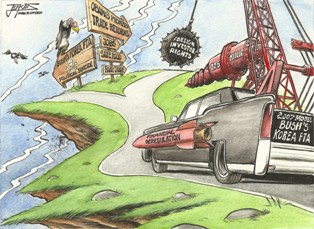
(This article is re-posted from Public Citizen’s Global Trade Watch. Potential job loss from the Korea Trade Deal would have a devastating impact on Michigan jobs. According to Public Citizen Michigan has lost 342,325 manufacturing jobs (or 42.4 percent) during the NAFTA-WTO period (1993-2009), according the Bureau of Labor Statistics.)
That the administration would not move forward with the same NAFTA-style Korea trade agreement that former President George W. Bush signed in 2007 is understandable, especially given that the recent election showed that perhaps the one issue that unites Americans across diverse demographics is opposition to more-of-the-same trade policy. More reasons include a recent study showing that export growth under past U.S. FTAs was less than half of that to non-FTA U.S. trade partners, and Bush-era reviews of this pact show it will increase the U.S. trade deficit.
Hopefully, the reason the administration is not yet ready to present a final trade agreement is that it has gotten the message that more than “cars and cows” need fixing in Bush’s 2007 trade pact text. By not locking into the current text today, the Obama administration has the opportunity to make the fundamental reforms that President Barack Obama promised during his election campaign, including to remove the investment rules that promote offshoring.
Among consumer groups, unions and Democrats in Congress, there is disbelief that the Obama administration could make the severe political and policy error of pushing a Bush NAFTA-style trade agreement with some side letters on various commercial disputes instead of making good on Obama’s campaign promises to remove the worst job-killing aspects of Bush’s trade deal. They dread that the administration might still do so, with the foreseeable political disaster ensuing. The U.S. Chamber of Commerce, GOP congressional leaders and others seeking more-of-the-same trade pacts want the administration to take ownership of another Bush trade pact that would simultaneously favor their offshoring agenda and put Obama’s re-election in peril.
Given the depth of the opposition to the NAFTA model in Congress and among the voting public, the political liability of an Obama flip-flop on his election trade reform commitments by pushing Bush’s NAFTA-style Korea deal without delivering the significant changes he promised, including to the job-offshoring investment rules, cannot be overstated. Ohio, Pennsylvania, Wisconsin, Michigan and Indiana are key to the party’s 2012 electoral prospects. Democrats won these states in 2008, largely lost them in 2010 and risk losing them again in 2012 if Obama takes ownership of a trade agreement the public views as a jobs-killer.
Background:
During the 2008 presidential campaign, candidate Obama pledged to chart a new course for American trade policy that could create jobs. In speeches, town hall meetings, answers to questionnaires, mailings and paid advertisements in key swing states, Obama said that he would exclude the damaging foreign investor rights and their private enforcement that threaten public interest safeguards and promote the offshoring of jobs. He said that he would include strong, enforceable labor and environmental protections. Here is a comparison of Obama’s campaign commitments on trade and Bush’s Korea FTA text.
The midterm elections featured an unprecedented 205 candidates campaigning on fair trade themes and against the export of U.S. jobs. (See a report on this, tables of candidates’ use of trade, and links to the 240 campaign television ads against unfair trade.) A recent NBC News-Wall Street Journal Poll found that a record number of Americans across stunningly diverse demographics think current U.S. trade policy has hurt them economically. Here’s our backgrounder on the economic implications of the Korea FTA. And here’s our memo on Obama and the Korea FTA that includes the polling data and political context.
The Korea FTA provides an excellent opportunity to implement Obama’s promised trade policy reforms to remove the worst job-killing aspects of Bush’s NAFTA-style deals. The current text includes the extraordinary investor rights that promote offshoring and expose domestic financial, environmental and health laws to attack in foreign tribunals. Signed before the financial crisis, the pact calls for financial services deregulation that is at odds with the lessons we’ve learned from the economic crisis and that may conflict with recent reforms made by both the U.S. and Korea. The pact also explicitly forbids reference to the International Labor Organization’s conventions that establish internationally recognized core labor standards. It remains unclear if any of these issues have been raised in the recent discussions between the U.S. and Korea.
Press Publisher says they are a “highly successful marketing services producer” during Econ Club luncheon
The Economic Club of Grand Rapids held one of their monthly luncheon gatherings in downtown Grand Rapids today. Their guest speaker was the publisher of the Grand Rapids Press, Dan Gaydou.

Gaydou’s talk was entitled, Adapting to the Changing Media Landscape, which some might have interpreted how the only daily newspaper in Grand Rapids has made adjustments in how in reports the news, but the head of the Press made it clear early on that news had little to do with what he wanted to impress upon the audience.
Gaydou began with a powerpoint slide with the headline Dealing with disruption in the marketplace, which right away set the tone for what he wanted to address. He then showed everyone a list of the media entities that the Press is part of, namely the Booth News chain. However, Gaydou failed to mention that Booth News is really part of the media conglomerate Advance Publications.
“The lingering economic crisis,” Gaydou said, “means that when people don’t buy goods, advertisers don’t by ad space, which negatively impacts revenue for the Press.” This business reality makes it clear why the Press also does so called news stories that essentially promote area businesses and a consumerist culture. The most recent evidence was the front page article on the front page of Saturday’s Press where the Press reporter told readers about local retailers who aren’t waiting til Black Friday to offer holiday sales. (Shoppers Feast Early)
Gaydou then said that the Press has been changed because of the digital revolution, which he thinks has been good for consumers. The Press’ Publisher spent time then hyping new technology, which he thinks with radically change our lives. Gaydou held up an iPad he says has revolutionized the way he accesses media. This notion of media technology is something that Gaydou felt the Press needed to “take hold of and make it theirs.”
The Press Publisher then told the audience, “Incremental change is over, we need to make drastic change or become irrelevant.” It seemed to this writer that what this meant is that newspapers have to become more than newspapers. Gaydou held up a copy of West MI Business Review, which he publishes and can be find on MLive.com. According to Gaydou this publication demonstrates their ability to be innovative.

Gaydou also talked about what he called “Adjustment Strategies,” where because of less revenue from traditional advertising they have needed to rethink how they operate. The Press’ Publisher says they have been quite successful and referred to a recent Editor and Publisher Magazine article which stated that of all the media markets in the US the Grand Rapids Press ranks seventh is sustainability and readership because they have made their online presence more than just a digital archive of what appears in print.
Gaydou also claimed that the Press has “Core Competencies.” One of those core competencies is that “the Press acts as an independent & credible source for local content.” Gaydou even referred to the Press as a Community Watchdog, but did not cite any examples of how they fulfill this function.
More importantly for those in attendance, Gaydou stressed the economic role his newspaper plays by saying, “We are a highly successful marketing services producer. Our marketing strength has never been better. Your business is a success because of the partnerships you have with us. We offer targeted direct marketing opportunities, search engine marketing, display ads, shopping data bases, text and video to help your businesses grow.” This was certainly the core of his talk and it went over well with the audience who was made up of the management class.
However, Gaydou did believe journalism should rise above that so as to look out for the interest of the community. “We care about the poor, the down and out, the person who is powerless to ask important questions.” Again, the Press’ Publisher offered up no evidence that they care about the poor and the powerless.
Gaydou concluded his talk by re-affirming the business and marketing aspect of what they do. “We are aiming at tomorrow, while mining today’s revenue. We are mastering the underlying analytics, strategizing around transition economics and doing more than repurposing, we are adding more content.” If you asked people what this had to do with journalism, what do you suppose they might say?
The Econ Club moderator only allowed time for one question from the audience. Someone asked Gaydou what the future was for investigative reporting? Gaydou said it is a core of what they do and cited the Hangar 42 Studios scandals that the Press reported on. Unlike other Econ Club events I have attended, no other media was present to do a story on Gaydou’s talk, which should tell us something about the supposed competition that exists between news entities in West Michigan.
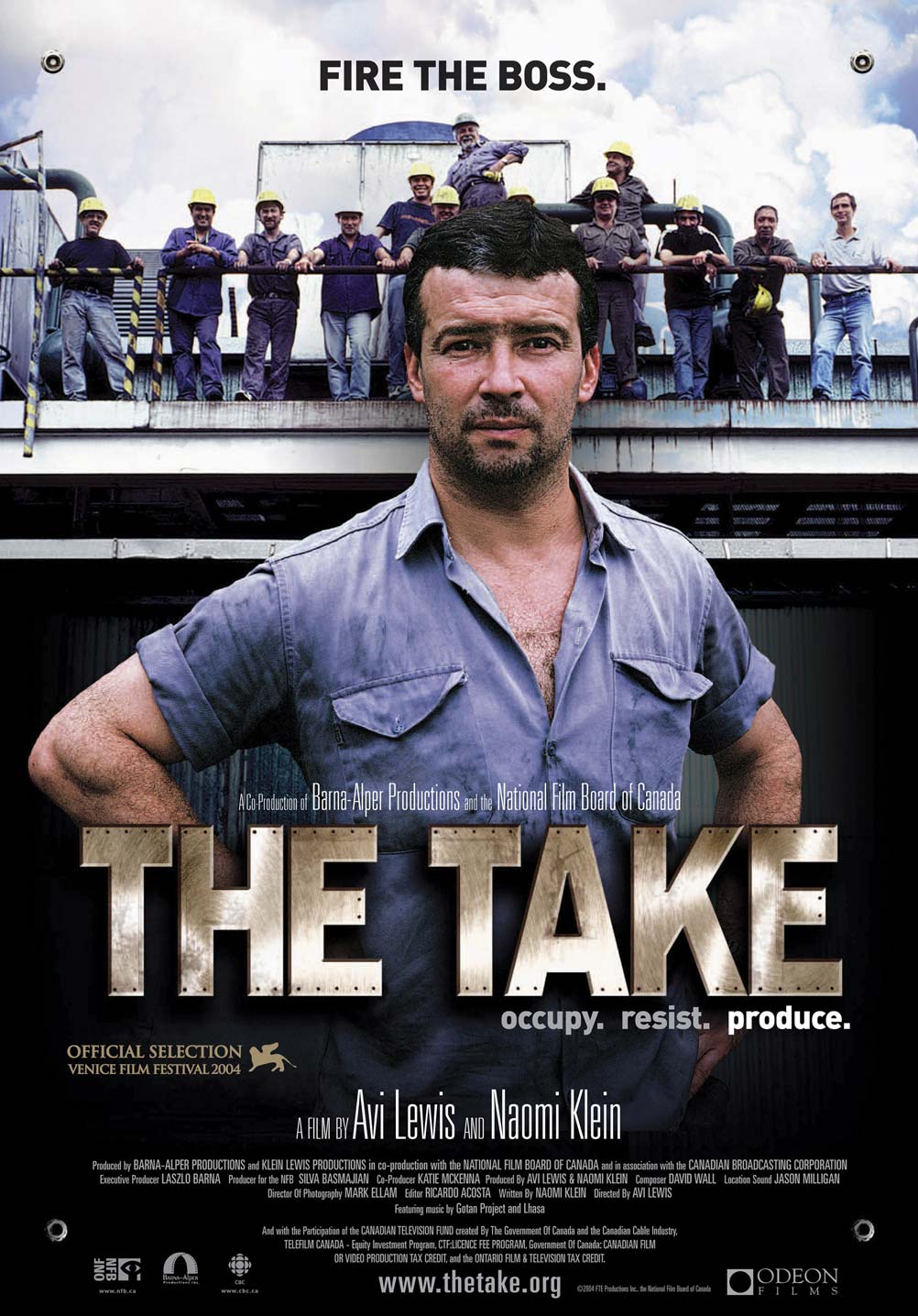
This Thursday (November 18), the Grand Rapids Chapter of the IWW will host a screening of the award winning film, The Take.
In the wake of Argentina’s dramatic economic collapse in 2001, Latin America’s most prosperous middle class finds itself in a ghost town of abandoned factories and mass unemployment. The Forja auto plant lies dormant until its former employees take action. They’re part of a daring new movement of workers who are occupying bankrupt businesses and creating jobs in the ruins of the failed system.
The Take demonstrates to all of us that despite the current economic crisis or any economic crisis working people do not have to accept what the system tells them. Naomi Klein and Avi Lewis shows us how thousands of Argentine people responded to the economic crash of 2001. Simply put, people said the system doesn’t work, so let’s occupy factories and take the over.
The film is free and open to the public. It will be screened at the:
IATSE HALL
Thursday, November 18
7pm
931 Bridge st nw
Grand Rapids, MI
The Press and Wyoming’s Medical Marijuana decision
(This article was submitted by Joe Spaulding.)
 When Jack Poll, the current Mayor of Wyoming, was running for election in 2009, the Grand Rapids Press editorial board gave him their endorsement, sighting, among other things, his opposal to the city’s notorious “crash tax.” The fees dispensed to anyone who was unfortunate enough to get in an accident within the city limits, regardless of who was at fault, were massively unpopular, nationally ridiculed, and laughingly unprofitable.
The fees were repealed within a year-and-a-half of being passed. Getting rid of them was a no-brainer, and the Press wasn’t sticking its neck out too far in supporting Poll for mayor. Unfortunately, Poll and the Wyoming city council have not learned from the mistakes of the recent past, and due to the Press’ cozy relationship with Poll, they have failed to take him to task for this.
On November 1, the GR Press published two articles discussing the state of Michigan’s recently passed medical marijuana law in terms of the City of Wyoming. The first described a Wyoming man, licensed by the state to be a medical marijuana patient and caregiver, who had his house broken into and plants and other property stolen in October. Due to the city’s ambiguous stance on the state’s law, he was reluctant to call the Wyoming Police to report the incident. Perhaps he was right to have his doubts. In an extravagant display of blaming the victim, as well as a hopelessly distorted view of public safety, Wyoming Police Chief James Carmody has stated that these types of robberies are a reason for the city to adopt a ban on medical marijuana.
The second Press article came a little later on in the evening, and was posted to mlive.com. It announced the city council’s decision to ban medical cannabis use, growing, and distribution in Wyoming city limits. The Press quoted Poll as saying “There’s a right way to do it. The state of Michigan did this the wrong way.” The article also mentions that the City Attorney stated fears that the city would be sued for being out of compliance with state law. Here is where the newspaper drops the ball. Instead of using tools available to anyone on the Internet (especially in Chile) to examine the validity of the City Attorney’s claims, the Press let his statement hang in the air as if the city’s ban has a 50/50 chance of surviving a court challenge. Within ten days, a Wyoming resident stepped up to sue the city over the obviously illegal ban.

The law, passed by the majority of Michigan voter’s (and 27 out of 28 districts in Wyoming), allows for any patient or caregiver charged with marijuana related legal violations to have those charges dismissed once his or her medical marijuana license is presented in court. Now that the city has banned medical cannabis, Poll is in a double bind – either he doesn’t encourage the arrest and prosecution of medical pot growers and patients, and the only effect the council has is discouraging otherwise law abiding citizens from assisting the already cash-strapped and over-burdened police, or the law faces challenge after challenge in court until it is innevitably overturned, costing the citizens of Wyoming thousands of dollars they do not have.
The other thing the Press failed to do was to hold Poll accountable for his evident disdain for Michigan’s initiative process (and by extension the voters and possibly the democratic process), as well as his doubts about the ability of the citizens of Wyoming (and probably all of Michigan) to determine what is best for their future. Poll talks about the medical cannabis law like it was passed by the Michigan legislature, and the Press never reminds its readers that the law is the will of the people of Michigan. Maybe the Press was afraid of looking like they were flip-flopping within a year of endorsing Poll for mayor. The end result being the will of 17,888 voters getting temporarily overturned by six city council members, and the cash-strapped, job-starved citizens of Wyoming being left paying for court costs of trials with forgone conclusions.
The 2010 Election: The Big Losers Are Immigrants

Now that the dust has settled and the pundits are still shuffling around clutching election returns in their hands, it’s time to take a closer look at how November 2 has impacted social justice issues in the U.S. We’ve heard endless talk ping-ponging back and forth about how and why the victors triumphed and the losers lost.
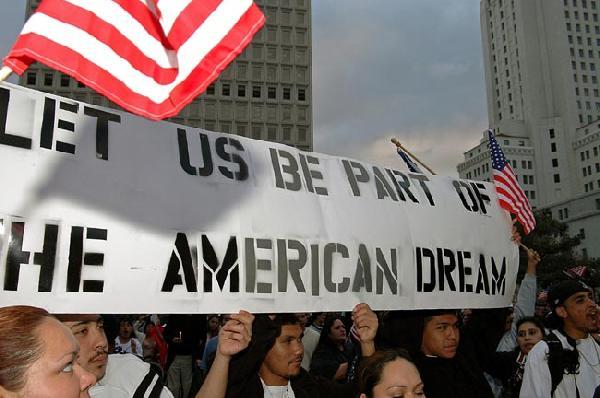
But nobody’s talking about the group that really stands to lose the most because of this election: immigrants. Victories in some states will swing legislatures toward more racist anti-immigration laws…while in other states, a single winning candidate is going to have a negative impact on the lives of people who are already living under the shadow of fear, prosecution, and reprisals.
Prior to the election, it had become clear that the current administration was not going to make genuine immigration reform a priority, as Obama had promised he would during his 2008 campaign. Instead, in a move to placate conservatives, the administration has actually allowed big increases in the number of deportations of undocumented workers over the past two years. While Democrats have been doing their under-the-table deals, many Republican and Tea Party candidates have been openly calling for state-by-state racism via unconstitutional laws like SB 1070. And the rallying cries for a witch hunt certainly won out this November.
One of the most surprising twists was in the campaign of Susana Martinez, the new governor of New Mexico. During her campaign, she announced that she would never sign a SB 1070 bill in her state. But now she’s also saying that she plans to repeal laws in New Mexico that have allowed undocumented workers to get drivers’ licenses—a crucial key to obtaining work—and that she will revoke all drivers’ licenses that have already been issued to this group of workers. In addition, she wants to terminate an in-state tuition lottery that allowed these workers to participate in lower-cost college classes. In a recent interview with CNN, Martinez, a Latina, said, “The borders with Mexico have to be shored up…the borders must be secured.” She also stated she is against any amnesty for undocumented workers, regardless of how long they’d lived in the U.S.
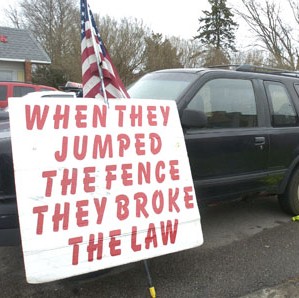
In Georgia, Mississippi, and Florida, newly elected governors have pledged to initiate SB 1070 measures. Georgia already has some of the harshest laws on the books—undocumented workers are virtually unable to get access to health care, college educations for their children, or any benefits, even though they pay into the state’s unemployment insurance through their jobs. Georgia’s constitution makes the governor the state budget director, so the office comes with a great deal of power to eliminate programs and fund state policing efforts. The incoming governor, Karen Handel, was not shy about her stand on undocumented immigrants. She blanketed the state during her campaign with a robocall that contained an endorsement from Arizona Governor Jan Brewer, one of the originators of SB 1070. Handel told voters “A Handel administration will say ‘bring it on’ to President Obama and pass legislation similar to what they have in Arizona.” And she now has the power of the purse to pursue this goal from the governor’s mansion.
In the South Carolina State Senate, Glenn McConnell has been planning to launch SB 1070 copycat legislation in January 2011. Now he has the support he needed—the newly elected governor, Nikki Haley, who announced on election night that she looks forward to signing McConnell’s bill into law. “We will see states across the country stepping up and protecting our citizens…that’s what Arizona has done,” Haley said in a speech in September.
Nebraska’s incumbent governor, Dave Heineman, ran his entire re-election campaign with a virulent anti-immigration plank. He plans to skirt around potential problems with SB 1070 challenges by focusing on broadening police powers at the city level to make it easier to arrest and question immigrants or people suspected of being immigrants. His unsuccessful opponent accused Heineman of appealing to “our lowest common denominator, our fear of difference.”
It’s hardly surprising that in Texas, the now-even-more-bigoted state legislature is already at work on 15 different anti-immigration bills. One of them would make it a state crime to cross the border into Texas without documentation. “Cross the line, do the time” is one slogan attached to this new intimidation tactic. And Texas lawmakers have been given plenty of clout with which to intimidate. Anti-immigrant candidates gained a landslide 50 seats in the state legislature on November 2. This caused one Tea Party blogger to crow, “Not since right after the Civil War have we had so many conservatives in the Texas House.” And really, that tells you all you need to know.
Up north in Wisconsin, State Representative Don Pridemore has just been waiting for an anti-immigrant majority in the State House to introduce an SB 1070-style law in his state. And now he has one. His bill would require everyone suspected of a crime to prove that he or she is not an undocumented immigrant; a 48-hour time window would be given to pull together proof before an arrest. Wisconsin residents would also be encouraged to file reports against and sue their city governments if they feel that undocumented workers were not being dealt with to the full extent of the law.
Pridemore has also stated he plans to put a stop to grass-roots sanctuary programs in Madison and other Wisconsin cities. He said about his legislation: “People are leaving Arizona as a result of their new immigration law, and I don’t want Wisconsin to be a magnet for these people because of the extensive state benefits we have.”
Here in Michigan, it’s very hard to determine exactly what we’re facing next. Rick Snyder kept his cards so close to his vest during the election that many people only knew he has a ten-point plan for reviving Michigan’s economy…but were somehow never able to pin him down on any details regarding those ten points. Snyder’s attitudes about immigration laws are equally obscure.
If you check the nonpartisan site, “On the Issues,” you’ll find that Snyder has no documented stance on 21 of the 25 topics that the watchdog group tracks, including immigration issues. In July, Snyder did say he wanted to “increase incentives for legal immigration, because legal immigrants will boost the economy and create jobs.” No details about what the incentives might be, how they would be “increased,” or even a hint of a stance on undocumented workers.
Piecemeal challenges to Arizona’s legislation are winding their way through the molasses-like waters of the legal process. Meanwhile, states are still free to put into place any laws they want regarding undocumented immigrants. It’s a window of opportunity to sharpen the hunt for members of a population who only want citizenship, dignity, honest work, and the right to remain in their own homes—the same things that the U.S. has been giving to immigrants since the 18th century. Current restrictive policies and massive backlogs are denying them those rights. Now state governments across the country will be driving them deeper into hiding and lives of fear. Our government has failed them on every level. Their best hope is that American citizens will reject this ongoing persecution and stand with them in solidarity until their human rights are secured.
Wage Theft epidemic spurs nationwide protests

(This article is re-posted from Common Dreams.)
Activists in more than 30 cities, organized by Interfaith Worker Justice and backed by labor groups, are staging a National Day of Action Against Wage Theft on November 18. “As the crisis for working families in the economy has deepened, so too has the crisis of wage theft,” says Interfaith Worker Justice (IWJ) Executive Director Kim Bobo, perhaps the country’s leading reformer addressing the ongoing scandal.
As much as $19 billion is stolen from American workers annually in unpaid overtime and minimum wage violations and, in some cases, through the human trafficking of legal immigrant workers. The latest case to come to light involves alleged horrendous conditions for immigrant workers reportedly hoodwinked in Mexico by a food services contractor for the New York State Fair and kept in near-slavery conditions of $2 an hour.
Indeed, the scandal surfaced when some of these legal guest workers showed up several weeks ago at a Syracuse area clinic, severely dehydrated and malnourished after allegedly being kept in virtual imprisonment in a trailer at the fair and at other locations; they were reportedly being denied thousands of dollars in legal wages owed them while working about 100 hours a week at fairs for months, according to legal filings and Danny Postel, communications coordinator for Interfaith Worker Justice.
“It’s one of the most shocking cases of wage theft,” Postel says.
The contractor, Pantelis Karageorgis, is the target of a labor standards class-action lawsuit filed last month by Farmworker Legal Services and a Labor Department investigation. But criminal charges by the U.S. Attorney’s office have been dropped— “dismissed without prejudice”—and instead a modest settlement involving some back payment for the workers is being hammered out, knowledgeable sources say. In These Times spoke to the vendor’s attorney Thursday seeking comment, but didn’t hear back as of this writing.
While Obama’s Labor Department under Hilda Solis has been winning high marks for adding new inspectors and its tough rhetoric, as well promoting outreach to workers victimized by wage theft, the on-the-ground enforcement remains uneven. One reason: the under-funded, outgunned Wage and Hour Division has a spotty record for cooperating with local advocates and workers’ centers.
Kim Bobo says, in a tempered statement:
Interfaith Worker Justice is pleased with the new DOL leadership’s commitment to wage theft enforcement…Nonetheless, given the crisis of wage theft around the country, the partnerships between the Wage and Hour Division and local workers centers need to be strengthened, and a Wage and Hour Director should be nominated who can develop aggressive and creative approaches to stopping and deterring wage theft.
In fact, one activist notes in blunter terms “The Wage and Hour Divison is way behind OSHA in having a culture of aggressively targeted investigations.”
Today’s OSHA, of course, despite some new inspectors, is widely viewed as still failing to effectively protect workers. With just a thousand inspectors to oversee abuses and wage theft affecting over 20 million low-wage workers — the primary but not the sole victim of a crime affecting white-collar workers, too — the Wage and Hour Division hasn’t been able to turn around yet the willful flouting of labor laws essentially encouraged by the Bush Labor Department’s years of neglect. (The problem is only worsened by the grossly under-manned state labor agencies, which, a new study by Ohio Policy Matters finds, have less than 700 total investigators enforcing minimum wage and related labor laws in the over 40 states surveyed.)
Indeed, as Ted Smukler, IWJ’s policy director sums up, “Secretary Solis is using her bully pulpit and hired 250 additional investigators, but Obama needs to get a Wage and Hour administrator confirmed [there’s only an acting director] and they could be doing a lot more in enforcement.”
Whatever the Department of Labor is attempting to do in this arena, it’s clearly not had much of a deterrent effect. A new IWJ video underscores the scope of the continuing unstopped corporate crime wave (see above).
Cincinnati workers bilked out of overtime pay?
The failure to effectively enforce wage theft has allowed employers to underpay and stiff workers with impunity. For instance, one alleged scheme by owners of a Cincinnati animal hospital reportedly involved paying immigrant workers overtime, but then demanding the pay be returned to the owners in the form of cash kickbacks.
Daniel Sherman, the director of the Cincinnati Interfaith Workers Center, contends, “It’s one of the most egregious examples of wage theft”—but hardly unique in his area. He contends, “The law is not very strong and it is not pursued.”
As the Cincinnati Enquirer reported late last month:
Three undocumented workers say they were extorted into kicking back $24,000 in overtime pay to the owners of an animal hospital under the threat that if they didn’t come up with the money they’d be deported.
Those workers and advocates for immigrants say the practice is not uncommon in Greater Cincinnati and is a growing problem.
The former employees of the Hamilton Avenue Animal Hospital and Clinic in Pleasant Run and the Sycamore Animal Hospital in Symmes Township say veterinarians Michael Cable and his daughter, Stephanie Cable, first accepted their payments in personal checks but later required them to pay in cash.
Two of the workers placed a hidden camera in the Sycamore Animal Hospital on Montgomery Road and filmed themselves three different times giving cash to Stephanie Cable. One worker rented the apartment above the animal hospital and installed the camera from there.
Jose Aguilar and another worker, Salvador Martinez, 20, gave the Enquirer the video, pay stubs and a series of canceled checks that had been deposited into the animal hospital’s account at Huntington Bank…
The video provided by the workers shows three men paying Stephanie Cable cash.
“Hey, Steph – how much I need pay back for overtime this check?” asks Aguilar in the video.
“Uh, I think it’s in my car – I really need to start bringing my bag in,” Stephanie Cable says on the video.
In one scene, she takes the money from a man and quickly puts it in her back pocket….
But the attorney for the Cables, Steve Goodin, told In These Times, “The Cables have categorically denied that they were extorting or threatening to deport their employees.” Because of pending investigations, he says, he can only say about the alleged labor law violations: “We’re urging everyone not to rush to judgment,” noting that there was a bomb threat aimed at the owners after the Enquirer story appeared.
Yet it’s also clear the Cables are planning to mount an aggressive defense: they’ve already filed a criminal complaint with the county sheriff against the workers who arranged the filming for allegedly violating wiretapping and trespass laws, although Goodin concedes a criminal prosecution seems unlikely. They’re also planning a civil suit on similar grounds. Still, he says of the owners, “They were friendly with these guys.”
He also argues that an earlier 2007 settlement the Cables made with the Department of Labor for allegedly underpaying overtime to 19 former employees—in which they admitted no guilt but paid about $9,200—is completely unrelated to these latest violations.
Workers’ advocates: Employers act with near impunity
Whatever the merits of the new charges against these owners, advocates at these privately-funded workers’ centers often affiliated with IWJ, including Daniel Sherman in Cincinnati and Rebecca Fuentes in Syracuse, regularly field complaints from the victims of employers who routinely ignore labor laws with little fear of timely or effective punishment.
As one national activist told In These Times privately, the Department of Labor usually has to go to court to enforce its own regulations, and so “the smart [employers]” just wait for the interminable legal process to play itself out or get dropped altogether—assuming any enforcement efforts are even started.
As a result, Sherman and other advocates report, new abuses keep cropping up. In yet another case of labor trafficking, for example, he learned just last month about 12 immigrant laborers working about 120 hours a week for $1,000 a month each, housed at the warehouse where they worked—and who were essentially forced to sleep inside just four hours a night.
Sherman’s organization only discovered the abuse after one worker jumped out of a warehouse window and escaped to a church for help. “The church called us,” he says, and he in turn contacted the Department of Labor to pursue labor law violations– and the FBI, to investigate human trafficking. But he’s not confident that there will be any prosecutions for trafficking because the threatened and intimidated workers were theoretically free to leave.
But in another recent case, Sherman says, the employer just pulled a gun on two immigrant workers who complained about not getting paid. No criminal or legal actions have yet been pursued because the families of the workers are too scared, he observes.
‘Perfect conditions’ for ‘slave-like situations’ at New York State Fair
The allegations made against the New York food vendor illustrate some of the ways employers can purportedly intimidate and abuse workers. In a startling affidavit filed by a federal Immigration and Customs Enforcement (“ICE”) agent that accompanied the arrest of Pantelis Karageorgis in September (again, the charges have been dropped at the request of the prosecutor), Special Agent Thomas Kirwin outlines some of the alleged tricks of the labor trafficking trade used against employees hungry for work. The agent’s affidavit and the original class-action lawsuit filed by Nathaniel Charny as the lead counsel of Farmworkers Legal Services on behalf of four named workers and others paint quite an ugly picture.
And the local workers’ rights advocate, Rebecca Fuentes, who helped discover and expose the alleged Syracuse worker abuse, points out, “The guest worker visa program is very flawed, and it ties workers to one employer. That creates perfect conditions for almost slave-like situations,” like those facing the apparently starving New York State Fair workers. (She also claims that, at least in her region, the federal Department of Labor is more responsive than the state labor department, which dawdles for months in the face of serious wage theft complaints – a pattern afflicting many weak state labor departments.)
The food-stand employees were recruited this past summer in Mexico with allegedly “fraudulent” promises of a relatively well-paying job, complete with written contracts, as legal guest workers under the H-2B visa program. They were hired as workers in the Karageorgis firm’s Greek food concession stands that accompanied some carnivals and fairs in the United States.
Starting in Buffalo in August, then moving to Syracuse, agent Kirwin reported, the workers arrived with no food or money, were allowed to get their meals solely by eating at the concessions stands only once or twice a day, and were housed in trailers on the fair sites, working 16 or more hours each day. “On the last day of the [Syracuse] fair, the employees worked 24 hours consecutively,” he noted about the state government-sponsored fair. “At the conclusion of the fair in Syracuse, the defendant paid each of the employees $260.”
Yet by some estimates, for the months of nonstop work at a promised $10.71 per hour and extra overtime pay, the workers actually should have each received closer to $30,000. But for approximately 280 hours of work in just a three-week period, each worker got a mere $360, Kirwin stated.
When the employees complained about not getting their full wages, Karageorgis allegedly made a variety of threats, including potentially firing them, cutting their pay even further, or having them deported—and barring them from ever working in the U.S. again. Kirwin added, “The defendant, who traveled with the Employees the entire time, routinely berated and sought to demean them, calling them, for example, `pussies’ if they complained about illness or injury.”
One of the sadder ironies of the entire case is that some of these victims, also cited in the civil suit, such as Adonai Vasquez, started working for the vendor, Peter’s Fine Greek Food, Inc., as far back as July, 2008. But they kept returning on different work trips for as little as $1 or $2 an hour—despite the previously broken promises of $10 to $12 per hour in wages. This is the reality of the “race to the bottom” in the Wild West-style globalized economy: Immigrants are literally starving to work in the United States.
The still-pending civil suit filed in October alleges, “For a period at least as far back as six years from the date of commencement of this action, there have been hundreds of Mexican national treated in the same violative fashion in regards to the payment of wages.”
At the same time, the lawsuit claims, “Upon information and belief, Defendants [Karageorgis and his firm], grossed more than $500,000 in the past fiscal year.”
Even though one of Karegeorgis’s lawyers, Dawn Cardi, was unable to comment as of this writing, the ICE agent’s affidavit recounts Karageorgis’s version of events. The Greek food entrepreneur explained his operation: his agents recruit workers in Mexico and he submits their legal paperwork to U.S. labor and immigration authorities. But he claimed to be surprised to learn that they were promised $10.71 an hour. He conceded to Kirwin he hadn’t yet paid his workers in full, but intended to do so—while somehow asserting that none of them ever worked in Buffalo for him and thus they weren’t owed money for that work. He also denied making any threats against his workers, except that he’d notify his attorney if they quit.
But the observant immigration agent also noticed that Karegeorgis wasn’t short of cash at the time of his arrest. “He had in his pants’ pockets three bulky wads of cash and also had a briefcase that he said contained money, the security of which he was concerned about,” Kirwin noted dryly. Despite the defendant’s claims, Kirwin added, the agent requested that the food merchant “be dealt with according to law.”
So far, though, he seems unlikely to face any criminal prosecution.
Activists to demand reform around country
It’s small wonder, then, with employers apparently stealing wages with so much impunity, that a groundswell by activists is building to take action, even in a still-weakened regulatory climate. At a preview for next week’s events, for instance, hundreds of workers and allies marched in Minneapolis last Saturday demanding fair wages, an end to wage theft and safe working conditions for retail cleaning workers at major stores, including Supervalu and Target.
The worsening economy makes it even easier to rip off workers desperate for work, the protesters declared (hat tip to Workday Minnesota). “Corporations are responsible for pitting cleaning companies against each other which results in plummeting wages and increased workloads,” said Veronica Mendez, an organizer with Center for Workers United in Struggle, a IWJ-affiliated labor-faith coalition. “The only way to stop this is for these retail chains to meet with workers to establish fair standards. These poor working conditions affect everyone in our communities…”
Interfaith Worker Justice and its allies have ambitious plans for its nationwide local protests next Thursday:
Events on the National Day of Action Against Wage Theft will include protests at businesses guilty of wage theft to demand back wages for workers and events at which political leaders, workers, faith leaders, community groups, and labor unions will present new initiatives to end wage theft.
In Houston, a worker center will release a local report on wage theft and will send a “Justice Bus” around the city to call attention to local businesses that steal their workers’ wages. Other innovative local events include a text messaging campaign, a “Worst Employers” Awards ceremony, “Know Your Rights” workshops for workers, a jazz funeral for lost wages and a Thanksgiving-themed auction and a dramatization against wage theft in Memphis.
Yet the Republican take-over of the House and rising anti-union sentiment have already changed one of their primary legislative goals. The coalition’s call for action includes this sweeping reform priority:
On September 29, Congressman Phil Hare (D-IL) introduced the Wage Theft Prevention and Community Partnership Act (H.R. 6268), which would authorize the U.S. Department of Labor (DOL) to establish a competitive grant program to prevent wage theft. The bill would expand the efforts of enforcement agencies and community organizations to educate workers about their rights and the remedies available to them, while educating employers about their responsibilities under the law.
“That’s dead,” one knowledgeable activist admitted. “He lost the election.”
 Grand Rapids Institute for Information Democracy