New report on Koch brother’s vast political influence
In recent months one family name that seems to keep popping up in political discussions around budget cuts and anti-union legislation is Koch.
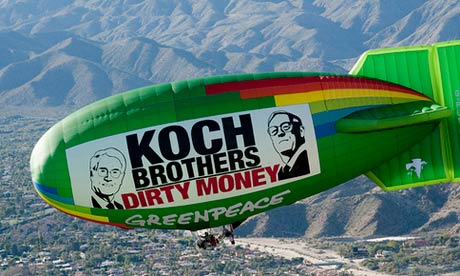
There have been a series of stories written about the influence peddling that the Koch brothers are engaged in since they were exposed as funders of Wisconsin Governor Walker by the Center for Media and Democracy.
In addition, SourceWatch has done a fine job of providing lots of background information on one of the Koch family’s favorite front groups, Americans for Prosperity. Americans for Prosperity has been funding numerous other Astroturf groups and even has a hand in organizing the Tea Party.
Just two weeks ago Andy Kroll, writing for Mother Jones magazine, posted a solid investigative piece about what the Koch brothers are up to in Michigan. Kroll wrote that along with the Mackinac Center for Public Policy and the DeVos/Price families, the Koch’s are also funding the anti-worker/pro-business policies of Michigan Governor Rick Snyder.
When you thought that there influence couldn’t go any further, the Center for Public Integrity (CPI) has just published a new report entitled Koch’s web of influence.
The report looks at the Koch family industries and what affect they have had on public policy on issues such as the environment and EPA rulings, federal financial and tax policies, ethanol fuel production, global warming policies, energy industry tax breaks, national security policies and financial regulation.
Their influence is far reaching and the new CPI report demonstrates that we ignore their influence at our own peril. We encourage you to read the entire report and to watch this short video on the lobbying influence of Koch Industries.
2011 Reportcard on Banks and Mountaintop Removal
(This article is re-posted from the Rainforest Action Network)
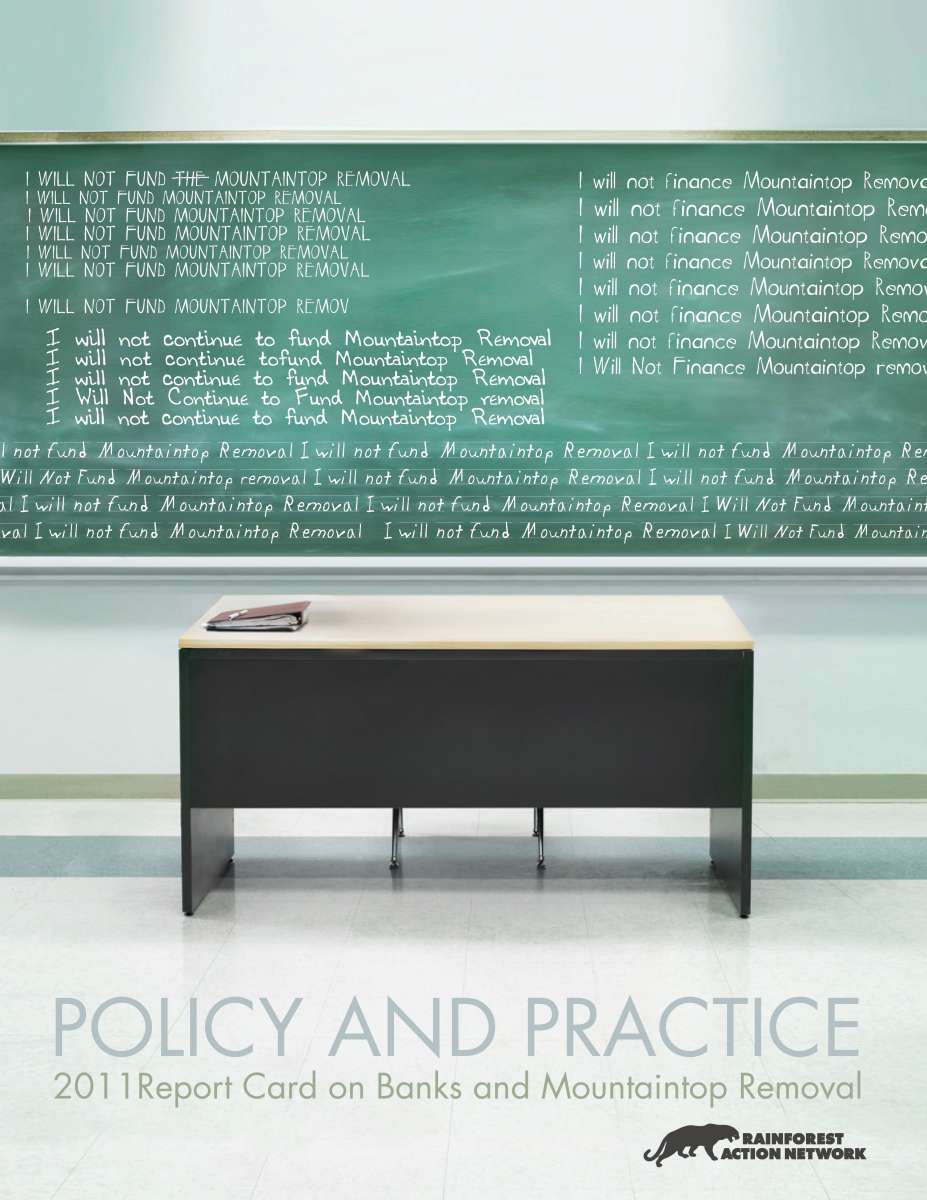
Rainforest Action Network and the Sierra Club’s 2011 report card, Policy and Practice, ranks ten of the world’s largest banks on their financing of mountaintop removal (MTR) coal mining projects and lending policies. The report card reviews the financing practices of Bank of America, Citi, Credit Suisse, Deutsche Bank, GE Capital, JPMorgan Chase, Morgan Stanley, PNC, UBS and Wells Fargo.
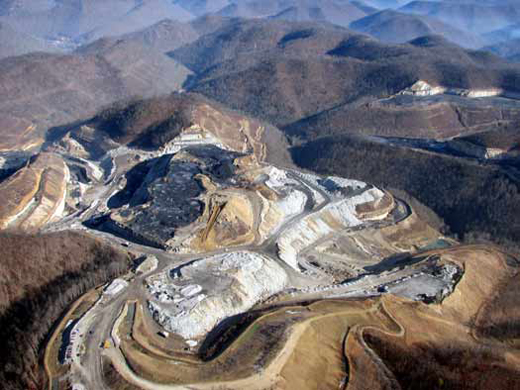
Mountaintop removal is a mining practice where explosives are used to remove the tops of mountains to expose thin seams of coal. Once blasted, the earth from the mountaintop is typically dumped into neighboring valleys, which poses significant threats to water quality in Appalachia and undermines the objectives and requirements of the Clean Water Act. According to a 2005 environmental impact statement, nearly 2,000 miles of Appalachian streams have already been buried or contaminated.
Several banks in the U.S. and in Europe have adopted policies that limit, and even end their financing of this environmentally devastating practice. However, what impact do these policies have in practice? In 2010, Rainforest Action Network and Sierra Club took a first look at these MTR policies. This year’s version of the report card takes a second look at these banks and their mountaintop removal policies to see how they’ve progressed from 2010 to 2011. The report card reviews each bank’s current position on MTR coal mining and awards a ‘grade’ based on the strength of the performance threshold, scope of due diligence and public transparency.
The report card calls for the ten banks reviewed to strengthen their policies and cease their financial support for MTR. The ‘best practice’ recommended in the report card is a clear exclusion policy on commercial lending and investment banking services for all coal companies who practice mountaintop removal coal extraction.
Banks and financial institutions are key sources of financing for companies that practice mountaintop removal. However, with growing public opposition as well as regulatory and legislative scrutiny of the practice banks have been forced to address the issue with enhanced lending policies.
Regulatory & Financial Risk of MTR
From a regulatory perspective, the report shows that of all the MTR permits reviewed in 2010 by the EPA, 99 were denied or withdrawn, 84 are still pending and 18 have been approved. The report also finds that in 2010 coal production figures for the MTR sector declined; with mining giants, like Arch coal, moving away from Central Appalachia coal production, and focusing on new opportunities in Wyoming’s Powder River Basin and on the West Coast with export terminals.
Key findings:
Top Three Financiers of MTR: PNC, Citi, UBS (in first, second and third place respectively).
Number of Deals in 2010 Between Banks and MTR Operators: Since January 2010, the ten banks examined in this report card have provided financing for 16 loan and bond underwriting deals to companies practicing mountaintop removal coal mining. This represents more than $2.5billion.
Best Performing Bank: Credit Suisse. In 2010 the bank made its policy public and transparent. The bank has no exposure to coal-mining companies that practice mountaintop removal extraction.
Worst Performing Banks: Citi—despite announcing a public policy on MTR extraction in 2009, the bank has since doubled its exposure to the sector. UBS—immediately after announcing a policy stating that it “needs to be satisfied that the client is committed to reduce over time its exposure to this form of mining,” the bank acted as an advisor on the Massey-Alpha combination deal. That deal created the largest single mountain top removal company in the country, responsible for fully 25% of coal production from MTR mines.
CEO Pay Soars While Workers Pay Stalls
(This article by Paul Street is re-posted from ZNet.)
A recent article in USA Today (the thin nationwide paper that gets distributed for free with your “continental breakfast” at Comfort Inn) epitomizes the limits of what right-wing, paranoid-style propagandists like Sean Hannity and Glenn Beck call “left wing bias” in American mass media. Titled “CEO Pay Soars While Workers’ Pay Stalls,” the story seems calculated to spark left-populist outrage across the country. It reports that:
“CEOs didn’t have to cry poor for long. The heads of the nation’s top companies got the biggest raises in recent memory last year after taking a hiatus during the recession.”
“At a time most employees can barely remember their last substantial raise, median CEO pay jumped 27% in 2010 as the executives’ compensation started working its way back to pre-recession levels…Workers in private industry, meanwhile, saw their compensation grow just 2.1% in the 12 months ended December 2010….”
“Two years of scaling back amid tough economic times proved temporary as three-quarters of CEOs got raises in 2010 — and, in many cases, the increases were substantial.”
“….The big increases in executive compensation are difficult for workers to swallow, given that many Americans are struggling just trying to find a job or make ends meet…”
Here are some of the most remarkable American 2010 CEO incomes reported on USA Today’s web version of the report: P. Daummon (Viacom) – $84,469, 515; Ray Irani (Occidental Petroleum) – $76,107, 101; Michael White (DirectTV) – $32,932, 618; John Lundgren (Stanley Black&Decker) – $32,570,596; Robert Iger (Walt Disney)- $28,017, 414; Samuel Palmisano (IBM) – $25,180,681; Howard Schultz (Starbucks) – $21,733,013….all quite remarkable to glean when it is understood that 19 million Americans (6.3 percent) live in extreme poverty, with cash incomes of less than half of the federal government’s notoriously inadequate poverty level – at less than roughly $11,000 for a family of four.
USA Today reporters Matt Krantz and Barbara Hansen explain that part of the outsized CEO compensation has to do with significant increases in the value of stock share prices in a period when executive pay is significantly comprised of company stock options. “Many CEOs receive roughly the same number of shares or options each year, “Krantz and Hansen note, “so when the value of those shares rises, so do pay packages.” But this only deepens the reporters’ seeming sense of discomfort with the gap between what working people get and what top corporate officers “earn,” since company profits (and stock prices) are rising out of proportion to actual economic activity/growth: “Yet the fact that CEOs’ pay is rising along with stock prices underscores the disconnect between pay and companies’ true underlying performance… While companies in the S&P 500 boosted profit 47% last year, much of that was due to cost-cutting and layoffs, not from the creation of businesses and growth….Revenue, a gauge of the money flowing into businesses for selling goods and services, grew at a much slower pace than profit — and ended the year up just 7%.”

I am glad that USA Today reported this disturbing data, but this last statement goes to the nub of the story’s deep, capitalist conservatism, consistent with the private ownership of the mass media. It reflects a core false assumption that no seriously radical left journalist would accept: that a working American capitalist profits system is one that produces good paying jobs and economic growth for all Americans, including the nation’s working class majority. But when has Hannity and Beck’s (and Obama’s) cherished capitalism ever been about the creation of good jobs and lives for working people and the broad mass of citizens in the U.S. or any other specific country? My Webster’s New Twentieth Century Dictionary (unabridged) usefully defines cap/i-tal-ism, n. as: “the economic system in which all or most of the means of production and distribution as land, factories, railroads, etc., are privately owned and operated for profit, originally under fully competitive conditions; it has been generally characterized by a tendency toward concentration toward concentration of wealth, and, in its later phases, by the growth of great corporations, increased government control, etc.” Notice, please, the absence of any reference in that definition to various things that are routinely identified with capitalism in American political and intellectual discourse – democracy, human freedom, free trade, trade per se, and/or a “free market,” characterized by widespread competition and/or little or no government interference. Notice also the absence of any reference to any commitment to job creation in any specific nation or indeed in any location at all. Capitalism is about profit for the owners of capital, period, to be attained through any number of un-specified means, including simple and complex dispossession of land and materials, chattel slavery (for centuries prior to its outlawing in 1863-65 in the U.S.), the hiring of workers, the firing of workers, the slashing of wages, the “out-sourcing” of labor tasks across nations, the de-skilling of workers, the automation of labor tasks, purely speculative investment, monopoly-/oligopoly formation and pricing, the dismantlement of competing firms, sectors, and industries, the endless eco-cidal pollution and perversion of the natural environment, the appropriation of public assets, the cutting and theft of wages and benefits, … etc…the list goes on.
When the profits system (capitalism) is properly understood for what it is really and only about (investor profit and nothing more) at the end of the day, then there is nothing paradoxical about its failure to serve working people and the common good in the U.S. or anywhere else. If corporate profits are high, the system is working for its architects and intended beneficiaries – capitalists. Its great capital-agglomerating corporations are working as they are supposed to under U.S. law, which holds (under the terms of the Michigan Supreme Court’s ruling in the Dodge v. Ford Motor Company 204 Mich. 459, 170 N.W. 668. [Mich. 1919]) that “managers have a legal duty to put shareholder’s interests above all others and no legal authority to serve any other interests.”
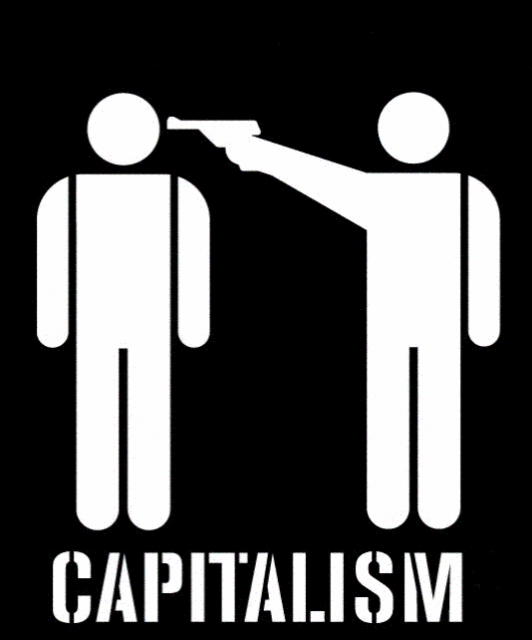
That is what the profits system’s “true underlying performance” is all about: the bottom line for the investor class. As the great American Marxist Paul Sweezy noted in a 1989 essay titled “Capitalism and the Environment,” the direct “purpose of capitalist enterprise has always been to maximize profit, never to serve social ends.” Benefits to the broader community flowing from such enterprise have always been incidental, contingent, and subject to reversal when those who might have momentarily and indirectly gained from its operation become obstacles to its “single-minded pursuit of profit, in which [no capitalist] can refuse to join on pain of elimination” – thanks to inter-capitalist competition that compels businesses who wish to survive and thrive to accumulate ever more capital.
In an article last January bearing the curious title “Profits are Booming, Why Not Jobs?” the New York Times reported that corporate “earnings” had exploded “even as 15 million Americans remain mired in unemployment, a number without precedent since the Great Depression,” and while the citizenry experiences “record levels of foreclosures and indebtedness.” Times business writer Michael Powell found numerous logical reasons for the American profits-jobs disconnect:
* Some big American firms were showing higher profits simply because their competition had collapsed. (Following the financial collapse of 2008, for example, the Wall Street giants Goldman Sachs and Morgan Chase no longer had to compete with Bear Stearns, Lehman Bros. and Merrill Lynch. Many jobs disappeared with the departure of the defeated firms.)
* Many companies were sitting on capital and storing up liquidity like never before in the wake of the financial collapse, Powell found. Firms who no longer believe they can borrow quickly had decided to keep a lot more cash on hand for precautionary purposes. Low interest rates produced by the recession create an incentive for many companies to simply “exploit the spread between a zero funds rate and rates on Treasury bonds” and thereby to “mark profits without selling much or hiring anyone.”
*Many companies were producing abroad, in order to garner the profits dividend afforded by dramatically lower wages, salaries, and benefits in “developing” counties like India and China.
* A large reserve army of unemployed workers was a profits boon for corporate America. Desmond Lachman, a former managing director at Salomon Smith Barney who works as a “scholar” at the influential right-wing policy group the American Enterprise Institute, spoke about this in candid terms. “Corporations,” Lachman told Powell, “are taking huge advantage of the slack in the labor market — they are in a very strong position and workers are in a very weak position,” he said. “They are using that bargaining power to cut benefits and wages, and to shorten hours.”
That’s not unemployment as an anomaly for capitalist profits, its joblessness as a source of them, straight out of Karl Marx. There is contradiction in the American profits-jobs disconnect, but the contradiction is not internal to the profits system. It exists, rather in the conflict between the selfish, amoral, and borderless logic of capital and the material and social needs of ordinary people within the U.S.
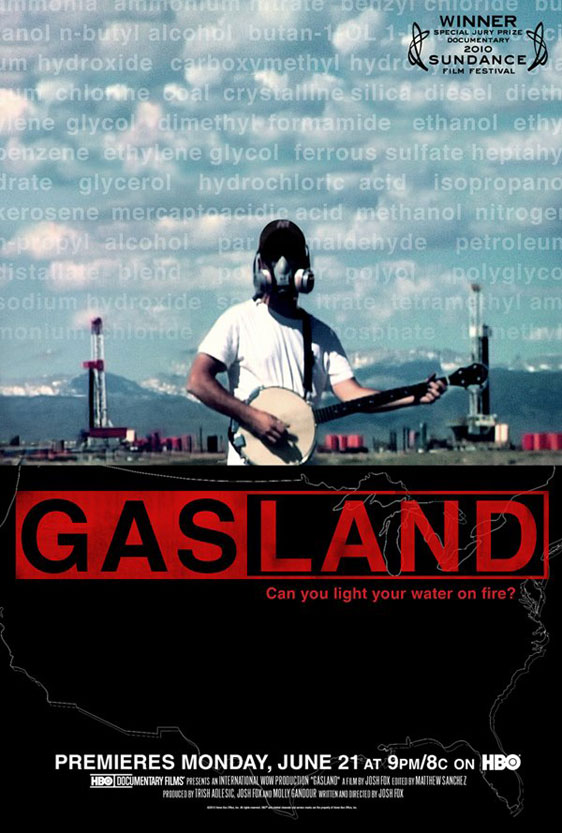
The Bloom Collective is hosting a public screening of the award winning documentary film Gasland this Saturday 3pm. Gasland was nominated for an Oscar for best documentary and exposes the practice of what is called fracking.
US energy companies are extracting natural gas through a process called fracking. They drill holes, detonate explosives underground to create cracks and send a toxic chemical/water mix into the holes creating devastating results for anyone who lives nearby. Gasland humanizes the victims of this practice and unwraps the devious web of politicians and corporations that have conspired to make this happen—even right here in Michigan.
Following the film there will be a discussion. People are invited to bring food and there is a suggested donation of $3.
Gasland at the Bloom Collective
Saturday, April 9
3 PM
671 Davis NW, Grand Rapids (lower level)
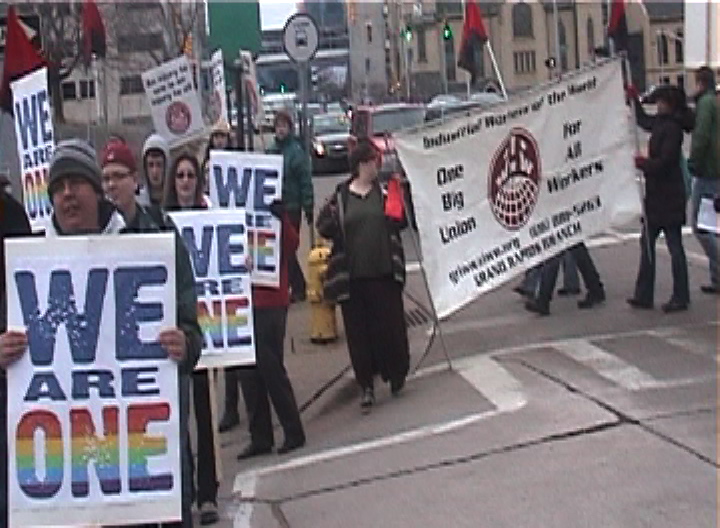
Earlier today about 400 people gathered near the State building in Grand Rapids as part of the national We Are One demonstrations against federal and state policies attacking working people and local communities.
People gathered on the corner of Michigan and Ottawa street holding a variety of signs attempting to draw attention to the austerity measures that are being imposed upon people in Michigan by Governor Snyder.
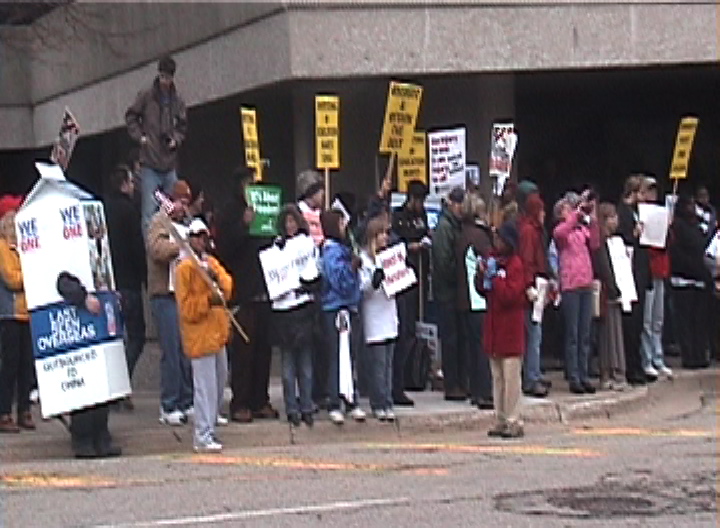
There were people representing the teachers unions, firefighters, environmental groups, UAW, SEIU, government employees, the Kent-Ionia Labor Council, students and faculty from GVSU and the IWW.
Most people stayed on the sidewalk trying to get the attention of those driving past, with many motorists honking horns in support. Some people chanted and others sang solidarity songs.
This writer spoke with some union members who are upset with the Snyder administration for ending the State film industry incentives, which had provided some union workers with jobs either in film production or stage/set building.
There were also people handing out flyers from a variety of interests. On flyer from the We Are One group was advertising another march scheduled for Tuesday, April 19 at 4:30 PM beginning at the Spirit of Solidarity Monument (by the entrance to the Ford Museum). This action will coincide with the 100th Anniversary of the Grand Rapids furniture workers strike of 1911.
Another flyer was being circulated by the Grand Rapids branch of the IWW. Their flyer provided some analysis of the anti-worker policies being enacted by Governor Snyder. In addition, the flyer was advocating for a General Strike to take place as a means of making our demands and fighting against the draconian policies of the government and its corporate paymasters.
We also had the chance to interview a few people to get their response to what is happening in Michigan. We interviewed students representing GVSU and the LGBT contingent of GVSU, Greg Shotwell with Soldiers of Solidarity and Shannon Williams with the IWW.
In February we posted a third article on the possibility that Grand Rapids may privatize the water and sewage system. In that article we noted that Grand Rapids Mayor George Heartwell had already had conversations with two French multinational corporations with regard to water privatization.

We also noted that the two companies Veolia and Suez both have a long track record of making profits more important that environmental integrity and human access to clean water. We now have yet another reason to oppose signing over our local water rights to Veolia.
Last week we noted that March 30 was an international day in support of the Boycott, Divestment and Sanctions (BDS) campaign against the state of Israel. Upon further investigation into the BDS campaign we discovered that Veolia, one of the two French multinationals in conversation with the City of Grand Rapids, is the target of the BDS campaign.
Veolia has several divisions besides water, one of which is transportation. Veolia is one of several companies that are collaborating on a rail project in Israel/Palestine called the Jerusalem Light Rail Project (JLR). The JLR is being targeted by the international BDS campaign because the rail will serve as another tool in Israel’s illegal occupation of Palestinian land.
According to one BDS website the JLR project would, “link illegal settlements in East Jerusalem with Israel. Not only do the settlements contravene article 49 of the 4th Geneva Convention forbidding an occupier transferring its own civilians into the territory it occupies, but in most cases the establishment of the Israeli settlements involved war crimes too. The tramway tightens Israel’s hold on occupied East Jerusalem, ties the settlements more firmly into Israel and undermines chances of a just peace for the Palestinian people.” In addition, Veolia operates bus lines for Israeli settlers, running them between illegal settlements and Israel.

Derail Veolia
With mounting evidence against Veolia’s role in project that violates the Geneva Convention (In April 2010 the UN Human Rights Council declared the JRL and its operation to be illegal A/HRC/RES/13/7) a specific campaign to stop the project (Derail Veolia) has emerged.
This campaign not only has the support of numerous national and international organizations, the campaign has also sought to end other transportation and water contracts. For instance, a Swedish faith-based coalition was able to get the city government of Stockholm to end its contract with Veolia after the company had operated the metro in that city for 10 years.
This campaign has also won other victories by getting communities in places like the UK, Australian, Ireland and even the corporation’s home country of France to end contracts with the multinational.
The Derail Veolia campaign has been effective at some level, but more pressure needs to be put on the company in order for them to pull out of the Jerusalem Rail Line project all together.
People who live and work in the Grand Rapids community can support this kind of action for solidarity with the people of Palestine. We should tell the Grand Rapids City officials that we not only do not want our water to be privatized, we also object to Grand Rapids contracts with a corporation that contributes to the oppression of Palestinians and violates the Geneva Convention.
Levin supports Obama’s decision to bomb Libya
Last week, Michigan Senator Carl Levin released a statement in support of US President Barack Obama’s decision to bomb the country of Libya.

Levin begins his comments by noting that Obama has “carefully helped assemble a broad military coalition supported by a U.N. resolution.” It is true that a United Nations resolution was passed in support of a No-Fly zone, but such a statement from Levin is overly simplistic.
First, it should be stated that 5 of the 15 UN Security Council members abstained from the vote, specifically Brazil, China, Germany, India and the Russian Federation. Some of these countries called for an immediate ceasefire and dialogue with Libya.
Second, the US and other NATO countries are already in violation of the UN Security Council resolution they signed on to. In a recent article Noam Chomsky points out that the US France and the UK interpreted the UN resolution as a justification for aggressive military action. Chomsky goes on to say:
“The blatant disregard of UN 1973, from the start began to cause some difficulties for the press as it became too glaring to ignore. In the NYT, for example, Karim Fahim and David Kirkpatrick (March 29) wondered “how the allies could justify airstrikes on Colonel Qaddafi’s forces around [his tribal center] Surt if, as seems to be the case, they enjoy widespread support in the city and pose no threat to civilians.” Another technical difficulty is that UNSC 1973 “called for an arms embargo that applies to the entire territory of Libya, which means that any outside supply of arms to the opposition would have to be covert” (but otherwise unproblematic).”

Levin then goes on to state, “while the military mission is focused on saving lives, we must also pursue the broader goal of a future for Libya that belongs not to a tyrant, but to the Libyan people.” This ignores the US support for Qaddafi when he came to power since 1969. According to Bill Blum, author of Killing Hope, the US supported Qaddafi throughout the 1970s and into the early 80s, but that support turned to antagonism during the Reagan years. The US did attempt to assassinate Qaddafi on several occasions and did get the UN to impose sanctions on Libya from 1992 – 1999. However, the sanctions were motivated by a legal case where in Libya shot down a commercial airplane. Levin’s statement about Libya belonging to its people is somewhat hollow, especially since there has been no historical evidence that the US has taken action to support civil society since Qaddafi came to power.
Levin concludes his statement by saying, “President Obama has been cautious in weighing the considerations and conditions for the use of military force, and I am confident he will continue to do so in considering the many questions surrounding the supply of weapons to the opposition forces.”
This concluding comment by Levin is either intentionally misleading or overly naïve. When has the US ever militarily intervened with supplying weapons that led to a positive and peaceful outcome? Some examples might be the US supply of weapons to Colombia and Turkey since the early 1990s. In both cases state repression increased against insurgent forces in both countries resulting in tens of thousands being killed with US weapons.
More importantly, the US decision to begin bombing Libya from planes and naval ships has had a non-peaceful effect on other countries in the region. As Phyllis Bennis points out in a March 24 posting, the US bombing of Libya has resulted in harsh crack downs by other Arab regimes against indigenous uprisings. Bennis also points out that the US bombing campaign does not have the support of the African Union (AU), a point which neither Obama or Levin are willing to acknowledge.
So it seems that Senator Levin, despite his claims to “progressive” credentials is endorsing yet another military campaign by the Obama administration. Further evidence that US war policies are fundamentally bi-partisan in nature.
Sexual Assault Awareness Month Events Announced
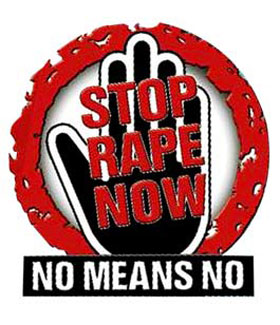
The West Central Michigan branch of the YWCA and the Kent County Sexual Assault Prevention Coalition have announced local activities and resources for Sexual Assault Awareness Month.
 The events that have been organized are:
Eyes Wide Open Information Tables April 4 – 8
GVSU student group Eyes Wide Open will have an information table in the Kirkoff Center from 10AM – 2PM
Guyland: The Perilous World Where Boys Become Men – April 5
1:00 PM Book talk by Michael Kimmel, author and professor of sociology at the State University of New York at Stony Brook.
Calvin College
Commons Lecture Hall in the Commons Annex
Talk with Bob Hall – April 7
6 –7:30 PM Allendale Campus/Cook-Dewitt Center
Nationally-known presenter and founder of “Learning to Live with Conflict, Inc.”,
Bob Hall, will bring his message of non-violent sexuality, respect within relationships, and clear communication to GVSU’s campus. His talk will be repeated at 8-9:30 PM.
Denim Day Kickoff Event – April 12 5:00-6:15 PM at the YWCA 25 Sheldon downtown Grand Rapids. Includes Yo Puedo Art Exhibit, Interactive Theater performance by GVSU Theater group, screening of the film “Breaking Our Silence: The Gloucester Men Speak Out Against Domestic Abuse.”
PROM NIGHT III: Dating Violence Forum – April 28
5:00 – 7:30 PM hosted by Girls Inc.® at the YWCA West Central Michigan 25 Sheldon Blvd.
In addition to the events the YWCA and the Sexual Assault Prevention Coalition are providing resources for the community to stop rape and sexual assault. Among those resources is information to engage bystanders so that people will not allow sexual assault to happen even if it is not directly affecting them.
In addition the YWCA now provides sexual assault services for people with disabilities. For more information on these services or any of the events for Sexual Assault Awareness Month contact the YWCA at 616-459-4652.
Corporations and the Arab Net Crackdown
(This article by Tim Karr and Clothilde de Coz is re-posted from Foreign Policy in Focus.)
Springtime in the Arab world is looking bleaker now that despots in Libya, Bahrain, and Yemen and reactionary elements in Egypt have gained an upper hand against the pro-democracy protesters who have inspired the world. And the Internet, hailed sometimes in excess as a potent tool for these movements, has itself come under increasing fire from these and other autocratic states seeking to crush popular dissent.
In Libya, the Gaddafi regime plunged the nation into digital darkness during the first week of March, where it has remained. In Bahrain, the kingdom reacted swiftly to pro-democracy demonstrations by filtering sites that let locals share cell phone videos, blocking YouTube pages containing videos of street protests, and taking down a large Facebook group that called for more demonstrations. And even in Egypt, despite the departure of Mubarak, the interim military authority has taken a harsh stand against pro-democracy activists, while trying to stop the sharing of looted state security files, which reveal the extent to which the government uses the Web to spy on Egyptians. These accounts of Internet abuse have not gone unnoticed. Less known, however, is the degree to which U.S. and European companies have enabled the crackdown.
Corporate Enablers
Egypt’s Internet crackdown appears to have been aided by Narus, a Boeing-owned surveillance technology provider that sold Telecom Egypt “real-time traffic intelligence” software that filters online communications and tracks them to their source.
Israeli security experts founded Narus to create and sell mass surveillance systems for governments and large corporate clients. It is known for creating NarusInsight, a supercomputer system that is allegedly being used by the National Security Agency and other entities to provide a “full network view” of suspected Internet communications as they happen.
Narus has also provided surveillance technology to Libya, according to James Bamford, author of 2008’s The Shadow Factory. In 2005, the company struck a multimillion-dollar agreement with Giza Systems of Egypt to license Narus’ Web-sleuthing products throughout the Middle East. Giza Systems services the Libyan network. British-owned Vodafone shut down its Egypt-based cellphone network following a request from the Mubarak regime and then restored it only to send pro-Mubarak propaganda to text-messaging customers across the country. When digital rights groups like AccessNow.org protested Vodafone’s actions, the company stated that it could do nothing to stop those texts, because it was forced to abide by the country’s emergency laws.
Bahrain reportedly filtered and blocked websites using “SmartFilter” software supplied by the U.S. company McAfee, which Intel acquired late last year. Despite widespread reports of its use, company executives claim that they have “no control over, or visibility into how an organization implements its own filtering policy.” Cisco Systems, a leading manufacturer of Deep Packet Inspection (DPI) systems, a content-filtering technology that allows network managers to inspect, track, and target content from users of the Internet and mobile phones, is a major partner in Bahrain. In 2009, the San Jose, California-based company joined with the kingdom to open an Internet Data Center in Bahrain’s capital “as an essential component in the drive to improve government services to the populace.” The extent to which Cisco’s own DPI products are part of this deal remains to be seen. Executives at Cisco would not return our requests for comment on the nature of its involvement in Bahrain.
Nokia and Siemens also support Libya’s cell phone network. A joint venture between these two firms was heavily criticized in 2009 for reportedly assisting the Iranian regime’s crackdown against cyber-dissidents. It’s difficult to know whether they assisted the Libyan government, since Nokia Siemens’ PR didn’t return our call, either.
Leading by Action
In mid-February, Secretary of State Hillary Clinton spoke about a new U.S. Internet freedom policy designed to help democracy movements gain access to open networks and speak out against authoritarian regimes. As part of this initiative, the State Department will provide tens of millions of dollars in new grants to support “technologists and activists working at the cutting edge of the fight against Internet repression.”
Secretary Clinton spoke of the Obama administration’s belief in our universal “freedom to connect,” something the White House sees as a natural extension of our longstanding rights to free speech, assembly, and association.
Yet it’s hard to claim the moral high road and lecture other countries on the importance of online freedom when U.S. companies are exporting DPI systems and other technology to regimes intent on spying on their own people and turning the open Internet into a means of repression.
Asking Clinton’s deputy director James Steinberg about this inconsistency during a House Foreign Affairs Committee hearing in February, Rep. Chris Smith (R-NJ)brought up Narus’ dealings with the Mubarak regime. “It is an awful tool of repression,” Smith said, “and Narus, according to these reports, is enabling this invasion of privacy.” Rep. Bill Keating (D-MA) continued the questioning, going so far as to say that “people are losing their lives based on this technology.” Keating called on Steinberg to investigate U.S. companies that sell DPI technology overseas. In a subsequent press statement, Keating pledged to introduce legislation “that would provide a national strategy to prevent the use of American technology from being used by human rights abusers.”
Earlier this month, Sen. Dick Durbin (D-IL) who sits on the Senate Foreign Relations Committee, penned a Politico op-ed slamming the U.S. technology industry for “failing to address serious human rights challenges.” He wrote, “If U.S. companies are unwilling to take reasonable steps to protect human rights,” Durbin wrote, “Congress must step in.”
Pledges to act are encouraging, but far less so than action itself. As of now, we have seen little of substance to defend our freedom to connect against companies and their despotic clients that seek to take it away.
Bradley Manning: Ruled by Conscience, Not Law
Alleged WikiLeaks source Bradley Manning again made headlines recently, this time for being forced to strip naked in his prison cell at the US Marine base in Quantico, Virginia. Continuing to pay for his alleged crimes, Army Private Bradley Manning is locked in solitary confinement while being subjected to sleep deprivation and other humiliation tactics. But is it right for him to be forced to pay such a cost?
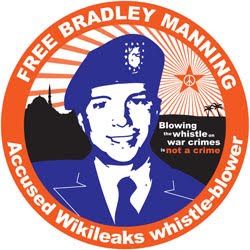
After public outcry at this act of humiliation, as well as harsh comments from the now-fired State Department spokesman PJ Crowley, many more people are aware of the abuse of Manning and are rallying for him to be treated justly. Nevertheless the media most often portray Manning as someone who indiscriminately stole the hundreds of thousands of secret documents without reason. But from what is known about Manning, this is utterly false.
Manning’s apparent motive in leaking the secret documents was not vindictiveness, but a sincere belief that public awareness would help right wrongs. In the partially released chat logs that are purportedly between Manning and hacker Adrian Lamo (who turned Manning in), Manning writes:
I want people to see the truth . . . regardless of who they are . . . because without information, you cannot make informed decisions as a public . . . I don’t believe in good guys vs bad guys anymore . . . I only [see] a plethora of states acting in self-interest . . . with varying ethical and moral standards of course, but self-interest nonetheless.
This supports what friends and family have said about Manning’s moral convictions and political ideas. Always intelligent and opinionated, Manning then started to get into politics in high school. Frontline correspondent Martin Smith, who interviewed Manning’s family and friends, recently told NPR: ”He opposed the war in Iraq and talked about that with friends. And he also start[ed] to get a reputation for being somewhat hot-headed.”
For Manning, whose job allowed him to spend hours digging through military databases while stationed in Iraq, the abuses of power he uncovered perhaps collided with those opinions. Documented abuses of power, including possible war crimes committed by the American military in Iraq and US diplomatic manipulations around the world, as well as the infamous Collateral Murder video showing the killing of Iraqi civilians and Reuters journalists by the crew of a US military helicopter. All of these could have been what pushed Manning into the realm of principled law-breaking. In defense of such law-breaking, historian and political activist Howard Zinn writes: ”Can a decent society exist. . . if people humbly obey all laws, even those that violate human rights? And when unjust laws and policies become the rule, should not the state (in Plato’s words) ‘be overthrown’?” Manning felt he had to do his part to bring about this “decent society,” even at great personal risk, which is currently being borne out in his imprisonment.

Meanwhile, human rights activists continue to advocate for an end to the military’s campaign of discrimination, torture, and humiliation against Manning. The military accuses Manning of thirty-four charges related to the document leak. At this time, Manning has not been convicted of any crimes, but a pre-trial hearing is tentatively set for late May 2011. Many see the punitive measures Manning is being subjected to as an effort by the Obama administration to intimidate other potential whistleblowers, saying quite clearly, “Your actions will not be tolerated”. While candidate Obama pledged to protect whistleblowers, his actions as president contradict his promise, as his administration deals with whistleblowers more harshly than any prior administration.
Others suggest that the treatment of Manning for such crimes is an attempt to wear down his resistance in order to implicate WikiLeaks founder Julian Assange, because if evidence of collaboration between Manning and Assange is unearthed, the US can then charge and prosecute Assange. These suspicions seem warranted and would explain the lengths to which the US government has gone to imprison the 5’2″ physically harmless man in the conditions usually reserved for Supermax prisoners.
The military’s treatment of Manning is not so different in character from the corruption and war crimes he has been accused of exposing, as both are morally wrong and unlawful. In a public letter, around 300 of the nation’s leading law educators have decried the abuse of Manning as a direct violation of the Fifth and Eighth Amendments, which protect due process and prohibit cruel and unusual punishment. Manning’s lawyer will also use Article 13 of the Uniform Code of Military Justice in Manning’s case, according to which he is not to be “subjected to punishment or penalty other than arrest or confinement upon the charges pending against him.” The US military and the Obama administration are ignoring these foundational laws, while simultaneously upholding other laws in an effort to further their own self-protection. The US government continues to imprison Manning for allegedly breaking laws that, in comparison, pale utterly to their law breaking he may have exposed and their law breaking they are using to imprison him.
Beyond the legal questions of the Manning case, the moral issues are at stake as well. Is breaking the law to expose such unlawful acts as corruption, war crimes, and backdoor dealings wrong? Our political tradition often upholds laws as a foundation for moral decision, yet this is often not the case. Departing from this tradition, whistleblowers adhere not to the laws made and upheld by corrupt institutions and people but to a higher law, a moral code. This is right. Laws are made to protect people, not serve as cover ups and a retaliatory means to condemn whistleblowers, so when these laws are being abused, it is the right of the people to seek to alter the law. The laws of our country should serve those who seek to right the wrongs at great personal risk, for it is these people who challenge our unjust laws that keep our democracy and freedoms alive and growing. Bradley Manning was willing to put himself at risk to right wrongs, and we owe it to him and every other whistleblower to hold our government accountable.

