Radical Journalist, Author, Activist, Friend – The Loss of John Ross
Today I read the sad news that John Ross, writer, poet, activist and chronicler of the Zapatistas, died today in Mexico.
It is hard to believe, since just 10 months ago he sat in my living room, warming himself next to the woodstove. I remember listening to John share stories about his political battles, music, sports, social movements and his writing, all in that manner that people who spent time with him came to know.

John was a no bullshit kind of person, an at times in your face kind of person, but also an extremely compassionate person. When I say compassionate, I don’t mean the fluffy kind, I mean the kind that mixes rage and justice. John was a fighter and his compassion was reflected in his writing, his spoken word and his never-ending commitment to stand with those who stood for something.
I first came across John Ross’s work when he wrote about the Zapatista uprising in Mexico with his book Rebellion from the Roots. Ross followed up that book with The Annexation of Mexico and two more books on the Zapatistas; The War Against Oblivion and Zapatistas: Making Another World Possible.

John also wrote an incredible book called Murdered by Capitalism, which is part autobiography, part reflections on the US Left. His last book, El Monstruo is sort of a “people’s history” of Mexico City.
People in Grand Rapids were fortunate to hear John speak and read from his work on two different occasions in Grand Rapids. We brought him to town in the fall of 2004, just prior to the US Presidential election and John (who had just come back from Iraq) was calling on people to engage in mass demonstrations against the war no matter who won the election. John knew all to well that electoral politics in the US was just a shuffling of people that represented power.
I ran into John in the Zapatista community of Oventic, a small village perched in the mountains of Chiapas, Mexico in 2001. It was during the New Year’s eve celebration and John was in his element, not just because he was chronicling the EZLN struggle, but because he was part of the struggle providing international solidarity for those the neoliberal henchmen of the world would like us to forget about.
John was in Grand Rapids again last year while on tour with his last book. He spoke on campuses and at community events and even in his late seventies could make you tired with his passion for intellectual sparing and sarcastic humor.
We are grateful for his humanity, for his passion and his notorious smile. We will miss you John, but your memory will live with us.
(John Ross read some of his poetry last year at Hugo Claudin’s space in Grand Rapids. Lindsay McHolme enshrined his persona in this short video where he reads the poem The Revolution is not like a faucet.)
New Type of Ads Trick Viewers, Help Circumvent DVRs

(This article is re-posted from PRwatch.)
Advertisers are using a new technique to trick DVR users and people who mute TV ads into watching their ads. The new ads, called “interstitial ads,” “podbusters” or “DVR busters,” are designed to look and feel just like the shows viewers are watching. They often feature the same actors, in character, and may use brief, insipid out-takes from the real show to lure unsuspecting viewers into watching them.
Advertisers run podbusters late in the show, around the time that cliffhanger-endings are keeping viewers on the edge of their seats. Examples of DVR busters include Tina Fey starring in an ad for American Express during her show, 30 Rock, and commercials seen near the end AMC’s Mad Men that feature actors from the show in an office environment and wearing 60’s fashions, to make people think the show has started again. By the time people realize they are really watching an ad and not the show, the commercial is almost over.
Mike Rosen, an executive with a media agency, explains that ads that mimic shows viewers really like help transfer the positive feelings people have about those shows to the products being advertised on them.
Which Dr. King will you celebrate?
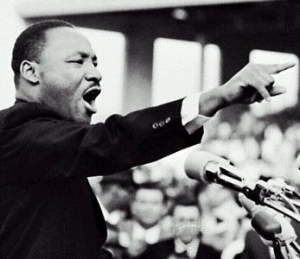
Today is the 25th anniversary of the US government’s decision to make Dr. Martin Luther King Jr’s birthday a federal holiday. During the past twenty-five years the memory and legacy of Dr. King has at times been honored, misunderstood and even co-opted.
Quite often both government and commercial media reflections on King are limited to recycling his “I Have a Dream” speech or simply focusing on his position dealing with racial justice. Last year GRIID posted a piece that highlighted the last few years of Dr. King’s life, which advocated a more radical transformation of American society. King not only called for racial justice, he was also highly critical of US militarism and the economic system of capitalism.
“We are now making demands that will cost the nation something. You can’t talk about solving the economic problem of the Negro without talking about billions of dollars. You can’t talk about ending slums without first saying profit must be taken out of slums. You’re really tampering and getting on dangerous ground because you are messing with folk then. You are messing with the captains of industry….Now this means that we are treading in difficult waters, because it really means that we are saying that something is wrong…with capitalism…here must be a better distribution of wealth and maybe America must move toward a Democratic Socialism.”
Dr. King clearly evolved from his work in the south in the 1950s to his work in the North in later part of the 1960s, culminating in his denunciation of the Vietnam War, his work on the Poor People’s Campaign and his support for the sanitation workers strike in Memphis where he was assassinated in April of 1968.
Over the years Grand Rapids has celebrated the holiday in a variety of ways, some which truly honor the legacy of Dr. King, while others co-opt his legacy. For instance, every year there is a “march” that begins at GRCC and walks downtown to Fountain St. Church. The “march” is often led by students who are members of JROTC, a program that is fundamentally a recruiting tool for the US military, which disproportionately targets minority students. Considering King’s denunciation of war/militarism and his commitment to non-violence it seems to this writer that having JROTC students lead a march in his honor bastardizes King’s message.
This year there are numerous events planned in Grand Rapids this year that seek to “honor” the legacy of Dr. King, but one that is a clear example of attempting to co-opt his message. Monday morning the Grand Rapids Urban League is hosting its 11th Annual Dr. Martin Luther King Jr. Corporate Breakfast. Besides the complete contradiction in the idea of King with a corporate breakfast, the event will honor the legislative career of Vern Ehlers. This raises the question, “how could the GR Urban League honor a man that supported war, unbridled capitalism and did not make racial justice a priority during his time in Congress?”
This irony was played out at the national level as well when the Defense Department’s general counsel Jeh Johnson recently stated that Dr. King would probably support the current US War on Terror. Johnson specifically mentioned Iraq and Afghanistan in a speech at a Pentagon celebration of Dr. King. Fortunately the folks at Rethink Afghanistan have produced this video as a sharp response to such a gross misappropriation of the message of Dr. King.
Media Alert: MetroPCS is a Net Neutrality Violator
(This Media Alert is re-posted from the group Save the Internet.)

When we access the Internet on our phones — as more of us do every day — we expect to be able to go wherever we want, whenever we want.
But a terrible new service plan from MetroPCS — the fifth-largest U.S. mobile phone carrier — is the latest phone industry attack on Net Neutrality. The company is limiting users’ ability to access certain websites and services, unless they pay extra for the privilege.
Free Press just alerted the FCC to this blatant violation of Net Neutrality.1 Please click here to tell the FCC to launch an investigation.
Here’s what MetroPCS’s new pricing scheme looks like:
- Customers purchasing the most expensive plan will have to pay extra to access Netflix, Skype or any website using “advanced HTML” on their phones.
- Those with the cheapest data option won’t be able to access any of these online services, except for YouTube — despite its similar data usage.
It gets worse. MetroPCS’s plans disproportionately affect people of color and urban communities, whom the company recognizes as a major portion of its customer base, and who largely depend on mobile phones to access the Internet.2
There is a way that we can stop MetroPCS’s discriminatory practices. Last month, the FCC adopted weak rules that leave mobile Internet users virtually unprotected from these types of abuses, with two big exceptions: They prohibit the blocking of websites and competing video and voice communication applications on mobile phones. Yet that’s exactly what MetroPCS is doing.
The FCC must now take action to protect the public and enforce these new rules. If the agency does nothing, we could see a domino effect in which larger carriers like AT&T and Verizon introduce their own forms of mobile blocking and discrimination. We can’t let that happen.
The FCC must take MetroPCS to task before other carriers follow suit. Tell the FCC: Enforce your new rules. Investigate MetroPCS’s outrageous, anti-Net Neutrality practices.
Mobile Internet users should have the freedom to access any sites or services they want. The FCC must respond to our concerns3, protect our online rights and investigate MetroPCS now.
New Media We Recommend
Below is a list of new materials that we have read/watched in recent weeks. The comments are not a “review” of the material, instead sort of an endorsement of ideas and investigations that can provide solid analysis and even inspiration in the struggle for change. All these books are available at The Bloom Collective, so check them out and stimulate your mind.

What Would It Mean to Win? – This book is a collection of essays put together by the Turbulence Collective and deal primarily with issues around current anti-capitalist and social change movements. The authors deal with a variety of aspects related to movements and movement building and raise questions around the idea of winning. Are the movements that are fighting against globalization, war, global warming winning and what would it even look like if they were winning? The essays are thought provoking and important for anyone who is serious about wanting to make radical change in the world. An added bonus is many of the graphics included involve lego characters.
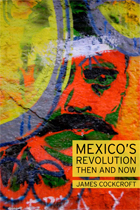
Mexico’s Revolution Then and Now, by James Cockcroft – Cockcroft, author of numerous books on Mexico in both English and Spanish, has put together a short text that makes the argument that Mexico is faced with very similar conditions today as it was one hundred years ago just before the revolution of 1910. The author looks at themes such as class conflict, Neo-liberalism, immigration, imperialism and resistance. For anyone interested in learning about both the 1910 revolution and the current political climate this book is a great introduction.

Policing America’s Empire: The United States, The Philippines, and the Rise of the Surveillance State, by Alfred McCoy – Like his book the Politics of Heroin, Policing America’s Empire is ground breaking work by Al McCoy. This 650-page volume looks at the kind of colonial system that the US set up in the Philippines after the 1898 invasion/occupation. The detail that the author provides is impressive, but more importantly McCoy argues that what the US was able to accomplish in the Philippines was a test case for policing, intelligence gathering and black-operations that would be used in other countries around the world.
This Land Is Our Land: The Fight to Reclaim the Commons, produced by the Media Education Foundation – This new documentary is an important contribution to understand the idea of what the commons are and how the current corporate/capitalist economic model threats its very existence. With an excellent historical overview, this film not only helps us understand the origins of the notion of the commons, it also provides important analysis of how it has been taken over in recent decades and how people and communities are fighting back to reclaim the commons. This is important for anyone concern about public space and the rights that people have to water, air, land and food.

On January 12, the Grand Rapids Press posted an article by Shandra Martinez plus an update by Chris Knape about an important announcement from Steelcase: the closing of the Kentwood East seating plant and two other manufacturing facilities. The loss of 750 jobs, including 400 in Kentwood. And the moving of these jobs to two sites in Mexico: Tijuana and Reynosa.
The article included a statement from Steelcase president and CEO Jim Hackett, who said, “”We continue to make improvements to our industrial system, which have left us with excess capacity to support current and anticipated future demand.” He added that the company had to be “as fit as possible in the highly competitive environment in which we operate.”
Steelcase spokeswoman and apologist Jeanine Holquist then tidied up with additional quotes in both the article and in an explanatory update, reiterating that Steelcase had excess manufacturing capacity, “so our space continues to exceed the need.”
Since Steelcase just announced a month ago that it had stronger sales and earnings than expected in its third quarter, Holquist also had some tap-dancing to do. Explaining that the shifts to Mexico will save the company $35 million annually, Holquist threw out this bone to workers here: “West Michigan will remain the most significant node in our manufacturing.”
Here are five things that the reporters for the Grand Rapids Press could have, but didn’t, ask or include in its initial reporting of the situation:

1. An explanation of “excess manufacturing capacity.” An obvious choice would be to challenge this statement, particularly from a local point of view. Steelcase has closed a number of buildings in the past few years, including its pretentious pyramid office building and, more importantly to workers, its 206-acre manufacturing campus adjacent to the headquarters building. At the same time, it has established manufacturing facilities in Mexico, among other locations. Suddenly, the facilities here have become “excess.” The Press reporters could have asked “why?” but they didn’t.
2. Examining the NAFTA factor. Pinning Holquist down on the “excess manufacturing capacity” quote could have led to interesting revelations about how NAFTA may have led to Steelcase’s abandonment of the West Michigan area. It fits as part of a general deindustrialization of the United States.
Since NAFTA was initiated in 1994, net manufacturing employment in this country has declined by more than 5 million jobs. Companies have also used the threat of moving jobs across borders to undercut union negotiations. NAFTA has authored other disasters, such as the decimation in Mexico of the ejidos, communal land holdings by villages, which have crumpled under U.S. capitalist acquisitions. It’s caused destruction of the country’s agricultural system by agribusiness. Although Canada initially seemed to enjoy gains from NAFTA, it too is feeling the trade agreement’s downside as U.S. corporations, greedy for larger profit margins, are pulling jobs from Canada and moving them to locations with cheaper labor forces and fewer regulations. NAFTA is also seen as a way of undermining Canadian control of Canada, lowering demand for Canadian-made products and weakening the country’s social programs.
But from a purely capitalist viewpoint, NAFTA’s elimination of tariffs makes shifting jobs both possible and profitable. Since Steelcase states it is going to reduce its costs by $35 million a year, and it has facilities in place in Mexico, are those gains going to come from the cheaper labor, the elimination of benefits, and fewer manufacturing regulations made possible by NAFTA? This question went unasked.

3. Questions about Steelcase’s resistance to unionization. Since the Steelcase scenario all through the last decade might have played out very differently had workers been unionized, the corporation’s role in discouraging and breaking up union organization activities could have cast a different light on the current situation. Exploring this issue was an obvious, but overlooked, piece of the puzzle by the Press reporters.
Most notably, in 1993, a strong effort to unionize among the manufacturing workers at Steelcase was squelched, partly with threats of massive layoffs by then-president Jerry Myers. Myers, the first CEO of the company who was neither a family member or a longtime Steelcase employee, was highly unpopular for his vision of a “leaner, internationally competitive company.”
Prior to his advent, both white-collar and blue-collar employees had been used to relative transparency in the way that their wages, benefits, and information about the company’s planning were handled. But Myers began implementing harsh work rules in the manufacturing sites, cutting back on benefit packages, and slashing profit-sharing checks. Workers initiated meetings with the Teamsters and the UAW to protect their job security.
Myers retaliated with threats of widespread job cuts, and did not reveal that the company was actually showing signs of emerging from the recession of the early 90s, an upswing that then continued through most of the decade. The entire stand-off came to an end with the firing of Myers in 1994, termed a “resignation.” The layoffs that came afterward were minimal and most were short-term. Plant employees felt this was a sign that they did not need to unionize after all.
What most workers did not realize at the time was that they may have been played. The company was weathering a crisis due to a death in the family that released nearly 1 million shares of the company’s privately held stock, shares which were sold to “outsiders,” or non-family members. This ultimately led to the company going public in 1998—and a public stock offering would have been much less profitable if the company had a unionized work force.
To replace Myers, Steelcase brought in Jim Hackett—who went right ahead with Myers’ plans, taking Steelcase “‘back to basics’ through a number of Myers’s cost-cutting and international expansion initiatives [that] were left in place.”
4. Pinning down Steelcase’s actual intentions for its West Michigan work force. It’s pretty hard to see Steelcase’s presence evaporating from the West Michigan scene and still choke down the idea that it will remain “the most significant node in our manufacturing,” as Jeanine Holquist stated.
Significance is relative. Once the largest employer in the area, Steelcase has led its now-skeletal work force through one shock wave after another in the past 10 years. In 2001, the company eliminated 1,100 jobs from its Grand Rapids operations, including a full 10 percent of its manufacturing workers. Wages and salaries were “restructured” and mostly reduced. Later that same year Jim Hackett approved a 5 percent raise for himself and other top executives in the firm.
More layoffs for the area followed. In 2002, 150 jobs here were cut. Six years later, in 2008, the company announced the elimination of 300 jobs in the area. In between, these numbers have apparently been augmented by ongoing job eliminations and terminations at the company which have flown mostly under the media radar. After today’s announced job eliminations, the company will have “just under 3,000 employees” in both blue- and white-collar positions here in Grand Rapids. That’s down from over 9,000 employees a decade ago. The math shows that the job-loss bleeding has been ongoing.
The Grand Rapids Press reporters could have asked the hard question: Will Steelcase even be here in five years? Ten years? And just how much more will the company disrupt the lives of residents here in its endless quest to provide investors with increasing profits year after year?
5. Including the voice of the workers. As is the case with most of the Grand Rapids Press’s reporting, the article contained only the corporate point of view, the capitalists’ rationalizations for their decisions, and the barest information about the company’s future plans.
The coverage of this announcement is silent about the workers themselves—both those who will be losing their jobs and those who will be expected to continue working in an environment of distrust and insecurity. The Grand Rapids Press needs to give these folks a platform or at least present their side of this story.
Soon there will be more unemployed workers, more families without incomes, added to the thousands of people in this area who have lost good-paying jobs over the past years because of Steelcase’s corporate gamesmanship. They must have something to say, and it would be valuable to reach beyond the corporate double-talk and let them speak.
Can “Tattoos on the Heart” Erase Injustice in the ‘Hood?
 Fr. Gregory Boyle SJ, Jesuit priest and executive director of Homeboy Industries, delivered the Jan. 12 January Series presentation, Tattoos on the Heart: The Power of Boundless Compassion.
With the wit of a wizened comedian and an obvious heart for his work, Boyle shared a series of anecdotes that illustrated his ministry to people involved in gang life in Los Angeles, California.
The first observation made upon entering the Ladie’s Literary Club, one of the remote locations broadcasting the talk live, was that all but one person attending was White. Perhaps attendance at the main auditorium and other locations was more representative of other ethnicities. This left the writer to wonder if this ministry, like many other outreach programs to African American youth, was more focused on helping individuals find a way to “be productive citizens” of our White dominated society rather than addressing the systemic causes of gang activity.
 Homeboy Industries is the largest such outreach to people involved in gangs in North America, serving more than 1,000 people each month. According to its Web site, it provides wrap-around support services that include “case management, education, job training, employment counseling, legal services, mental health counseling, twelve step meetings, and tattoo removal … Many gang members have visible tattoos that inhibit their ability to secure employment, thus we offer free tattoo removal.”
Because of the difficulty in placing people who have been involved with gangs or have felony records, Homeboy Industries employs hundreds of clients in its screen print, merchandise sales, bakery and restaurant, the Homegirl Café.
“We stand at the margins with the powerless, the voiceless, those who have burdens more than they can bear, those to whom dignity is denied, the easily despised and readily left out, the demonized so that the demonizing will stop,” Boyle said. “No kinship, no justice. No kinship, no peace. If kinship were our (world’s) goal, we would no longer be promoting justice, we would be celebrating it.”
While Boyle’s whole heart is obviously in his work and his presentation left no doubt that he has real love and concern for those he works to help, his use of gang dialect and specific anecdotes to elicit laughter from the predominantly white audience seemed to perpetuate a paternalistic “us-versus-them” mentality.
Why do young people join gangs in the first place? According to Boyle, it is because of a “lethal lack of hope.” He did not go further during this talk to cite where that lack of hope originates. Neither does the Web site mention systemic issues such as racism, white privilege, classism, lack of employment offering a living wage, lack of access to nutritious foods, environmental racism or lack of access to quality education. In addition, there is the whole issue of a prison industrial complex that makes huge profits on the backs of our minority populations.
 GRIID made a call to Detroit community organizer, Yusef Shakur, to discuss these omissions. A former gang member, Shakur returned to his Detroit neighborhood after serving a prison sentence. He has since worked not only as a community organizer but also as a Head Start teacher, youth mentor and business owner.
“I always heard people condemn me for being a gang banger but no one asked me ‘Why?’ For the most part, gang culture is the by-product of social decay, the social let-down of human beings. It’s a reflection of family breakdown. All those aspects we find within our communities, we find within ourselves,” Shakur said. “We are imitating the society we live in. Most young men growing up in a hostile urban environment take on the characteristics of their environment. (An environment with) a lack of consistent resources: social, economical, political and cultural. The fundamental answer is creating a strong foundation. After years and years of indoctrination, you become immune to being shot. You see your homeboys get shot . . . Trauma occurs psychologically. It spiritually damages to the point they grow up in a hopeless environment and that hopelessness takes root in their souls.”
(Shakur recounts his journey from gang member to community organizer in his autobiography, The Window to My Soul.)
Greg Boyle no doubt is doing great work in Los Angeles. In his talk, he mentioned that Los Angeles is home to 86,000 gang members. Turning around 1,000 lives a month could be called a miracle. However, we need more than a miracle. We need to build movements that confront the systems engendering classism, racism and all the other “isms” creating this “lethal lack of hope” within our nation’s urban centers.
IWW to host screening of The Corporation in Grand Rapids 1/20
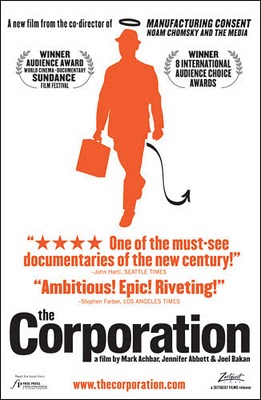
The Grand Rapids branch of the Industrial Workers of the World (IWW) we be hosting a screening of the documentary film The Corporation.
Provoking, witty, stylish and sweepingly informative, THE CORPORATION explores the nature and spectacular rise of the dominant institution of our time. Part film and part movement, The Corporation is transforming audiences and dazzling critics with its insightful and compelling analysis. Taking its status as a legal “person” to the logical conclusion, the film puts the corporation on the psychiatrist’s couch to ask, “What kind of person is it?” The Corporation includes interviews with 40 corporate insiders and critics – including Noam Chomsky, Naomi Klein, Milton Friedman, Howard Zinn, Vandana Shiva and Michael Moore – plus true confessions, case studies and strategies for change.
The screening will be on Thursday, January 20 at 6pm in the IATSE Labor Hall located at 931 Bridge St, NW in Grand Rapids. The screening is free and open to the public. There will be a discussion after the film.
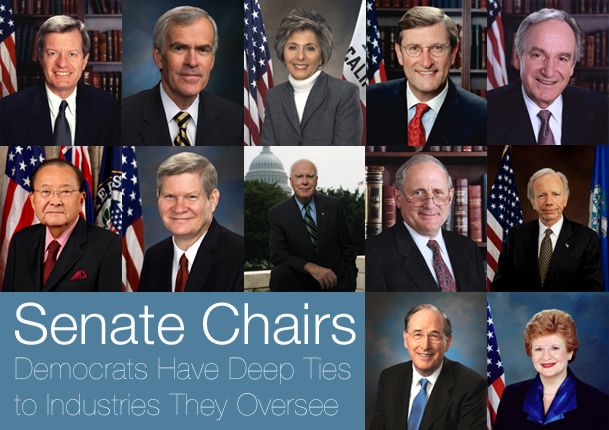
Last week the Center for Public Integrity published a new report entitled Senate Chairs: Democrats Have Deep Ties to Industries They Oversee.
The report looks at 12 Democratic Senators, which chair major committees, their top PAC (Political Action Committee) contributors, whether or not their former staff work as registered lobbyists, budget earmarks and campaign promises.
Both Michigan Senators Debbie Stabenow and Carl Levin are part of the report, since both of them chair major committees – Levin the Senate Armed Services Committee and Stabenow the Agriculture, Nutrition and Forestry Committee. Here are some of the findings on both Stabenow and Levin.
Top PAC Contributors
Mylan Inc., a pharmaceutical company — at least $30,000
UAW, the International Union, United Automobile, Aerospace and Agricultural Implement Workers of America (better known as the United Auto Workers) — at least $27,500

DaVita Inc., a kidney care and dialysis provider — at least $25,000
New York Life Insurance Co., an insurance and investment firm — at least $22,500
Real Estate Roundtable, a public policy group made up of real estate trade associations — at least $22,500
United Steelworkers, a 1.2 million-member labor union for metals, manufacturing, paper and forestry products, chemical industry, health care, pharmaceuticals, public services, mining and energy, and utilities workers — at least $22,500
PACs gave at least $1.4 million to Stabenow’s campaign account and her America’s Leadership leadership PAC
Revolving Door
Patrick Cavanagh, a former Stabenow director of constituent communications, is now vice president for federal affairs at the American Coalition for Clean Coal Electricity
Raphael Goodstein, a former legislative correspondent for Stabenow, is legislative director for the American Automotive Policy Council, a coalition of the Chrysler Group, Ford Motors, and General Motors to promote American automobiles
Noushin Jahanian, after seven years as policy director and chief counsel to Stabenow, now lobbies for The Washington Tax Group on behalf of Yum! Brands, Monsanto Company, Applied Materials Inc., and Oerlikon Solar USA
Lisa Layman, who was senior policy adviser to Stabenow from 2005 to 2007, is director of government law and strategies at Brown Rudnick, lobbying for Apotex Corporation, Hospira Inc., and Norwalk Hospital of Norwalk, Conn.
Alexander “Sander” Lurie, Stabenow’s chief of staff and legislative director from 2001 to 2007, is a principal at SNR Denton, lobbying clients including Allstate Insurance Co., Marsh & McLennan Cos., Sara Lee, and UCare, a nonprofit health insurance company
Mat Young, a former economic policy director for Stabenow, is director of congressional and political affairs at the American Institute of CPAs
Earmarks
Between 2008 and 2010, Stabenow obtained more than $744 million in earmarks, according to Taxpayers for Common Sense
In 2010, she obtained in excess of $186 million in earmarks, including $2.4 million to A123Systems Inc. for an advanced lithium ion phosphate battery system for army vehicles, $1.6 million to AAR Mobility Systems for air mobility shelters and communications systems for the National Guard, and $800,000 to Calumet Electronics for highly integrated siloxane optical interconnect for military avionics. All three companies are headquartered or have major operations in Michigan
Campaign Promises
In a release, Stabenow pledged a bipartisan push to write “a new farm bill that once again recognizes the importance of America’s agricultural economy and rural communities”
Top PAC Contributors

Butzel Long Tighe Patton, a law firm that lobbies for a range of clients including Guam Shipyard and the Workers United labor union — at least $15,048
Amalgamated Bank, the only bank in the U.S. wholly owned by a labor union — at least $15,000
Service Employees International Union, the 2.2 million-member union of service workers — at least $12,500
Laborers’ International Union of North America, the labor union for the construction industry — at least $12,500
PACs gave at least $1.1 million to Levin’s campaign account
Revolving Door
Jason Hill, a former healthcare legislative aide to Levin, is now director of federal government relations for Wal-Mart
Carla Kish, a legislative assistant to Levin in the early 1980s, is a lobbyist at The Margolin Group and represents the County of Los Angeles, Planned Parenthood of California, and the Tarzana Treatment Centers
Marda J. Robillard, who worked for Levin from 1978 to 1986, is now vice president at Van Scoyoc Associates, where she lobbies for Anheuser-Busch Companies, Prince William County, Va., and the Center for Responsible Lending
William J. Weber, a former Levin legislative assistant, is a partner at the Baker Hostetler firm, lobbying for Catalyst Paper Corporation, Federated Investors, Inc., and the Colgate-Palmolive Company
Earmarks
Between 2008 and 2010, Levin obtained over $834 million in earmarks, according to Taxpayers for Common Sense
In 2010, he obtained more than $243 million in earmarks, including $1.6 million for Raytheon Company’s Troy, Mich., location for Hybrid Electric Drive All Terrain Vehicles, $2 million for GE Aviation Systems LLC in Grand Rapids, Mich. for Precision Engagement Technologies for Unmanned Systems, and $3.2 million for L-3 Communications’ Combat Propulsion Systems division in Muskegon, Mich., for Heavy Fuel Engine Family for Unmanned Systems, all defense contractors
Media & Propaganda: The 20th Anniversary of the US War in the Gulf
For the 20th anniversary of the US War in the Persian Gulf, Al Jazeera has produced an excellent investigation into the role of the US media during the building of that war and during the war.

The Al Jazeera video is important not just because it sheds light on history, but because it provides insight for how we all should critically view the current news coverage of the US occupations of Iraq and Afghanistan.
For anyone who wants to find out more about the US media coverage of the 1991 Gulf War here are some additional resources:
Second Front: Censorship and Propaganda in the Gulf War, by John MacArthur
The Center for Media and Democracy has an excerpt from the book Toxic Sludge is Good For You: Lies, Damn Lies and the PR Industry http://www.prwatch.org/books/tsigfy10.html
Fairness and Accuracy in Reporting also has a good archive of analysis of the major US news outlet coverage of the US war in the Persian Gulf http://www.fair.org/index.php?page=18®ion_id=23
GRIID documented the local TV coverage of the US war/invasion on Afghanistan in 2001 and the local TV/newspaper coverage of the US invasion of Iraq in 2003. These reports demonstrate how the shift in coverage in the 1991 Gulf War became a standard for how the US government deals with news media and how news media tends to be a mouthpiece for government propaganda.
 Grand Rapids Institute for Information Democracy