Documentary on Bullying to screen at GVSU 1/18
How often would you think that Lesbian, Gay, Bisexual or Trans-gender students get harassed or bullied in the middle or high school on any given day? According to a 2009 survey of students by the Gay, Lesbian and Straight Education Network, 9 out of 10 LGBT students said they were harassed and two thirds said they felt unsafe at school.
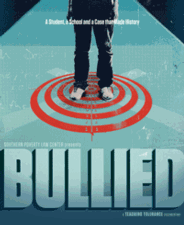
This is the context for the documentary film Bullied, which will be shown at GVSU next week. Bullied is about the story of Jamie Nabozny, who as a student in Ashland, Wisconsin was harassed and bullied for years.
The film is a mix of interviews and re-enactments of the life experiences of Nabozny. We see his struggles as a middle school student who gets called names, which later turns to physical abuse. Jamie had been out since he was in middle school, so he had the support of his family. However, despite numerous meetings with the school’s principal, there was never any action taken to hold the students responsible for the bullying accountable and the school never developed a policy on how to deal with this serious problem.
Jamie struggles with the abuse, runs away from home and even takes an overdose of sleeping pills. Jamie went through a period of home schooling, but when he went to high school he was back in the classroom.
High school was no different, except that the verbal and physical abuse escalated. Jamie was beaten so badly one time that he required surgery to repair the damage done by the students. Eventually Jamie speaks to a counselor who suggests that he consider filing a lawsuit against the school district.
Jamie and his family decided to go through with the lawsuit, which was initially thrown out of court. However, the Wisconsin Court of Appeals ruled in his favor and the trial went forward.
The film re-enacted the courtroom proceedings based on transcripts from the trial. The use of both re-enactment and personal testimonies about what happened in the courtroom are powerful. Jamie won the case and set a precedent that would impact the nation.
The film is produced by the Southern Poverty Law Center as part of their Teaching Tolerance work and they are offering free copies of the film for anyone who wants one. GVSU’s College of Education Inclusion Committee is hosting a screening of the film on Tuesday, January 18 at 6:30pm in the Loosemore Auditorium located in the downtown Pew Campus. Following the movie a panel will discussion the implications for local schools and students. For more information, please email Clayton Pelon at pelonc@gvsu.edu.
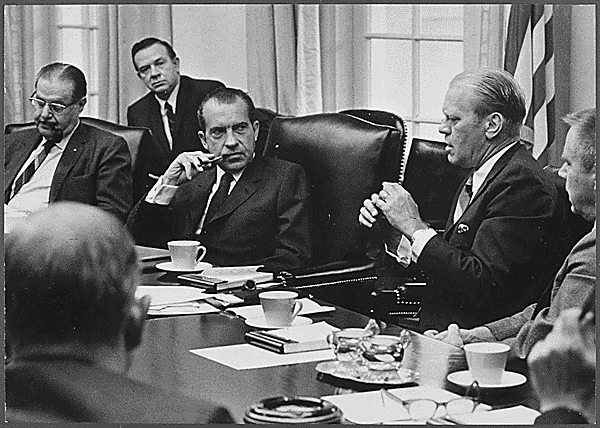
In this GR People’s History Project short we critique the official history of the legacy of former President Gerald Ford. The official version of history on Ford is that he “healed a nation” by pardoning former President Richard Nixon. However, there is plenty of new information and declassified documents that suggest otherwise.
This video argues that Ford actively covered up any serious investigation of the war crimes committed under the Nixon administration and that Ford himself continued the US Imperial Project.
Guantanamo Still Open as 9th Anniversary Looms
(This article is re-posted from Common Dreams.)
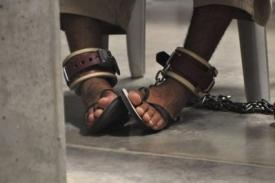
Almost nine years ago to the day, a prison for “war on terror” detainees opened its doors in a remote US base at Guantanamo Bay, Cuba. And despite grand promises, it is unlikely to shut any time soon.
“At this point, it is clear that Guantanamo will not be closed during this presidential term, or maybe even the next one, despite administration claims that it remains committed to the goal,” Columbia University professor, Matthew Waxman, told AFP.
On January 11, 2002, about 20 prisoners arrived at the base, hooded, handcuffed and clothed in distinctive orange prison garb. They were put on display for the world to see, behind the bars of the prison erected on the military base rented from Cuba since the beginning of the 20th century.
Guantanamo quickly became a notorious symbol for the worst of the US excesses in the war on Al-Qaeda launched in the days that followed the September 11, 2001 attacks on the United States.
And rights groups around the world celebrated when new President Barack Obama swore just after his inauguration on January 22, 2009 to shut down the prison, opened by his predecessor George W. Bush.
But two years later some 173 prisoners still languish behind its doors. And Obama’s room for maneuver has been severely curtailed amid a fierce debate over the future of its high-profile foreign inmates.
“The Obama administration has learned that it cannot close Guantanamo without much more cooperation from Congress and from other countries, and that additional support is not forthcoming,” Waxman added.
Just last week, Obama signed into law under protest a huge defense bill which effectively blocks his bid to close the Guantanamo jail.
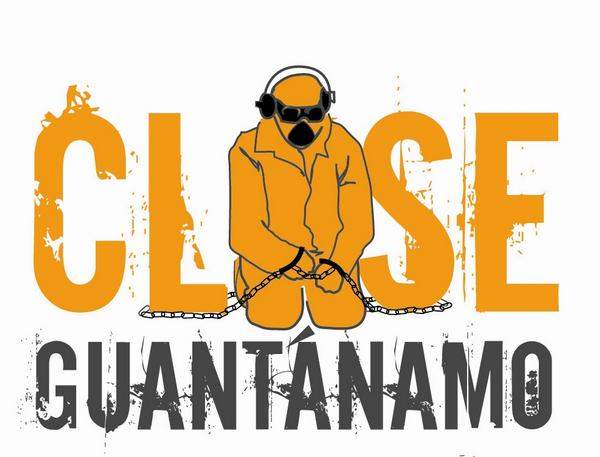
The 725.9-billion-dollar defense spending plan includes language that makes it virtually impossible to shutter the prison by building a substitute jail or relocating prisoners to the US mainland.
Though he did not explicitly threaten to bypass the restrictions, Obama issued a statement voicing his strong opposition to them, and vowed to try to overturn the measures and ensure they were not expanded in future.
But some Guantanamo opponents believe Obama is hiding behind a convienent excuse.
“The defense authorisation act is not making it impossible to close Guantanamo, the president can use the Department of Justice’s funds to transfer detainees into federal courts in the US for prosecution,” argued Andrea Prasow, from Human Rights Watch.
She added that federal courts — which have already tried their fair share of high-profile terrorism case — were “by far the most reliable place to prosecute people.”
“He has continuously said that he intended to close it. This is something that we believe this administration is committed to. Congress is making it very difficult but not impossible,” she added.
Other activists charge that Obama, still battling the economic downturn and faced with an emboldened Republican party in Congresss after its mid-term electoral gains, is stepping away from the fight.
“He gave up on closing Gitmo a while ago,” criticized Tom Parker, a spokesman from Amnesty International.
“The problem was that closing Gitmo required a great deal of moral courage, required taking a political risk to do the right thing. I think the reality is that we saw that President Obama didn’t have the political courage to follow through on his moral convictions,” he said.
The Republicans’ blocking of the funding needed to shut down the jail and transfer the remaining prisoners onto the mainland was now merely an excuse, he argued.
“The reality is that it is just an excuse and the Obama administration has failed to grapple with this, it failed to take difficult decisions when they had the political path to do so.”
His opinion was shared by Benjamin Wittes, an expert with the Brookings Institution think-tank in Washington.
“As political opposition to his Guantanamo plans mobilized, rather, he became paralyzed,” Wittes told AFP.
“And that paralysis is nowhere better typified than in his passivity in the face of increasingly aggressive congressional efforts to micro-manage the disposition of individual Guantanamo cases.
“If the president doesn’t draw the line somewhere or otherwise rearrange the policy landscape he will end up with zero control over a set of policy questions over which the president simply must retain control.”
Obama could have chosen to veto last week’s legislation. But instead he vowed to try to overturn the measures.
“My administration will work with the Congress to seek repeal of these restrictions, will seek to mitigate their effects, and will oppose any attempt to extend or expand them in the future,” he said.
But activists remain unconvinced. “I think that anybody that thinks that a reelected president Obama will bring a fresh impetus to do the right thing that went wrong in the Bush administration in a second is fooling themselves,” said Amnesty’s Parker.
“President Obama came into office on a mandate for change, a promise of change, and what he exactly delivered on this issue is continuacy.”
AT&T’s Man in the White House
(This article by Tim Karr is re-posted from Save the Internet.)

When President Obama said he was going to “bring change to Washington,” no one expected William Daley to be his choice to get the job done.
Obama’s incoming chief of staff is about as corporate friendly as any Democratic insider can be, which is saying a lot.
For supporters of an open Internet, Daley’s appointment raises the prospect that the president will break all promises to defend Net Neutrality at the urging of a chief of staff determined to cozy up with industry and protect the status quo.
The outlook for any progress under Daley is dim.
Daley currently serves as a top executive at J.P. Morgan Chase & Co — concerning those who had hoped to see this president rein in a reckless financial sector.
Daley once told the New York Times that the Obama administration had “miscalculated” by moving too far to the left on health care reform — concerning those who had hoped the president would fight Republican efforts to repeal the law.
Daley served as a special counsel to President Clinton in 1993, helping the administration’s successful push to ratify NAFTA — concerning those across the labor movement, who delivered supporters to Obama by the busload.
It’s worse for advocates of open and democratic media. From 2001 through 2004, Daley led lobbying efforts for SBC Communications, Inc. His first assignment was to lock in the company’s local monopolies while allowing it to charge extortionate rates for competitors seeking to share SBC’s lines, defying a basic communications principle known as “common carriage.”
He was a top executive at SBC as the company laid the groundwork for its 2005 takeover of AT&T Corporation, after which it rebranded the merged entity as AT&T Inc. During that time, Daley worked very closely with Randall Stephenson, who has since risen through the ranks to become AT&T CEO and chairman.
He joined Stephenson and former AT&T CEO Ed Whitacre in a 2002 meeting to lobby the FCC’s top brass for industry deregulation. Daley, Stephenson and Whitacre wanted the FCC to declare that high-speed Internet access would no longer be considered a “telecommunications service,” but rather an “information service.” The regulatory change would give phone and cable companies broad latitude to raise prices, stifle competition and control consumer choice on the Web.
An all-too-compliant FCC obliged later that year, removing high-speed Internet access services from regulation under common carriage. Daley supported this radical move, which reversed the long-held rule establishing nondiscriminatory communications networks as essential to economic opportunity and innovation. (Read Aparna Sridhar’s 2010 report for a good history of this deregulatory process).

In so doing, the FCC undercut its own ability to keep Internet providers from gutting Net Neutrality and interfering with our right to connect to any website, service or application on the Web.
AT&T Stakes Its Claim to the Oval Office
Now companies like Comcast and AT&T are vying to be the Internet’s new gatekeepers — creating special lanes for their own websites and services, or for those of a few big corporate partners, while leaving the rest of us on a digital dirt road.
However you look at it, there are very few degrees that separate Daley from his successor at AT&T, James Cicconi, who now leads lobbying efforts for the communications giant.
Daley’s appointment to the White House brought praise from the U.S. Chamber of Commerce, where Cicconi serves as a director. The Chamber marches in lockstep with AT&T in opposing Net Neutrality. Working together, the two groups have been very effective in buying up opposition to Net Neutrality among Democrats and Republicans alike.
AT&T is the largest single corporate contributor to congressional campaigns, since 1989 giving more than $45 million in donations to both Republican and Democratic candidates. It spent nearly $13 million on DC lobbyists just in 2010.
AT&T has staked out the legislative branch. With Daley to start work in days, it can now make a claim to the White House, too.
Thus far, AT&T-funded Republicans have introduced one bill, designed to strip the FCC of its power to protect the open Internet. The president was expected to veto this and other anti-Net Neutrality legislation should it make its way to his desk.
But with Daley at his side, how long will it be before Obama caves?
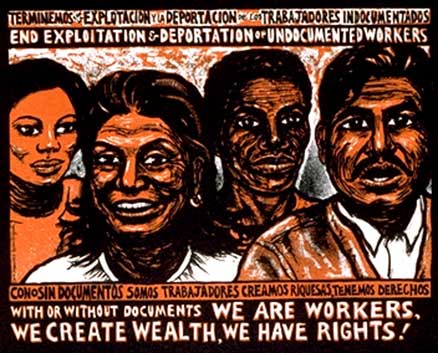
Anti-Immigration Legislators seek to alter 14th Amendment

On Wednesday it was announced that six state legislators from Arizona, Georgia, Oklahoma, Pennsylvania, and South Carolina were submitting a proposed legislative amendment that would drastically alter the 14th Amendment to the US Constitution.
Not surprising is the fact that one of these legislators is from Arizona, a state which has led an effort to make it even more difficult for documented and undocumented immigrants to have a chance at making a life for themselves and their families in the US.
Then on Thursday, Iowa Republican Steve King added his name to the list of legislators wanting to alter the 14th Amendment and introduced H.R. 140, the “Birthright Citizenship Act of 2011.” Congressman King issued the following statement to clarify his support for this legislation:
“The current practice of extending U.S. citizenship to hundreds of thousands of ‘Anchor Babies’ every year arises from the misapplication of the Constitution’s citizenship clause and creates an incentive for illegal aliens to cross our border. The ‘Birthright Citizenship Act of 2011’ ends this practice by making it clear that a child born in the United States to illegal alien parents does not meet the standard for birthright citizenship already established by the Constitution. Passage of this bill will ensure that immigration law breakers are not rewarded, will close the door to future waves of extended family chain migration, and will help to bring an end to the global ‘birth tourism’ industry.”
Numerous national civil liberties and immigrant rights groups have responded rapidly to such a draconian measure. The National Council of La Raza said, “These thoughtless and unnecessary proposals take our country in the wrong direction—away from inclusion and away from our core American values. The citizenship clause is a bedrock principle of civil rights and part of what makes us all Americans. Never in our nation’s history have we amended the Constitution to take away someone’s rights, and we should not do so now.”
The National Immigration Law Center responded in part by saying, The legislators who threaten to roll back this sacred value do more than play fast and loose with the Constitution; they suggest that we as a society should treat some American children less favorably than other American children. The National Immigration Law Center stands with civil rights, children’s advocacy, and faith organizations, as well as millions of American parents, who condemn this attack on babies.”
Lastly, Lucas Guttentag, Director of the ACLU Immigrants’ Rights Project, said, “It would be hard to concoct a proposal that is more misguided and contrary to the sacrosanct guarantee of the 14th Amendment. Equality under the law for every person born in the United States is one of the Constitution’s central engines of equality and fundamental to our society.”
GRIID will continue to monitor this proposed legislation and post additional analysis as this unfolds. In the meantime there is an online petition being circulated by the National Council of La Raza.
Crime Coverage: Race and Class factors in reporting
I was asked to give a presentation today to a group of Calvin students on how crime coverage in news media influences public perception. What follows are the points and examples used in that presentation.

There is the old TV news statement, “If it bleeds it leads,” a statement that tends to be misunderstood. In conversations with people over the years of doing local news analysis people would often say that crime was big new because that is what viewers wanted. However, this is just not the case and there is no evidence to support such a notion.
The reality is that news entities, particularly broadcast news do lots of crime stories for a variety of reasons. First, most news stations have police scanners in the newsroom and are monitoring police activity in order to have reporters on the scene as crimes are unfolding.
Second, crime coverage is easy to produce. The story is sort of there for reporters to just fill in the blanks. You have police line and other visuals that make it a compelling story, plus you have built in people to interview – police, witnesses, victims and sometimes suspects.
Look at this example of a crime story from channel 8 a few years ago. The story is typical in that it is short and does not provide much context for viewers, which often can lead to confusion, stereotypes and maybe even fear.
After viewing this story can you honestly say you knew what it was about? What value does it provide for public safety? How do you perceive the suspect in this story and the role of the police?
Race and Crime
A third aspect of how crime coverage is produced that is worth mentioning has to do with location and representation. More often than not crime coverage is presented as an urban issue, which statistically is somewhat misleading……..However, it is more convenient for the 3 Grand Rapids-based TV stations to report on urban crime since they are also in the city. News stations have time constraints, so reporting on urban crime is also a practical matter.
However, this focus on urban crime can lead to misinformation, particularly when it comes to racial representation. From 1998 through 2006 GRIID used to monitor 4 and a half hours of local TV news. We published numerous reports on race representation and in all of those reports we looked at race representation in crime coverage.
Statistically, the racial make up of people who were the subjects of news stories generally were 90% Caucasian, 6-8% African American and the rest of the percentages were made up of Latinos, Asian-Americans, Arab-Americans and Native American. However, when we looked at the representation of crime suspects in news stories the percentages changed drastically and were generally 45-50% Caucasian, 35-40% African American and 10-15% Latino. Here Caucasian representation dropped from the overall news representation, but for African American and Latino the numbers go way up.
How do these dynamics influence public perception? If viewers disproportionately see African American and Latino crime suspects in high numbers, but little non-crime representation from either group, does that increase the chances that people may perceive African Americans and Latinos as more likely to engage in criminal behavior?
When it comes to specific stories, there can also be a bias in reporting, particularly how a story is framed. Look at this story from several years ago by WZZM 13 and think about how the story is framed as well as their use of police footage in the story.
Does the reporter treat the comments from the African American leaders differently than the police chief? Do you think that the police footage used was edited? If it was edited, was that the decision of the police or the news station? How does the use of the police footage influence public perception about crime and who commits it? Lastly, how does the community benefit from viewing this kind of footage?
Street Crime vs Corporate Crime
Another area that should be discussed when the issue of crime coverage is raised has to do with the difference between White collar crime or Corporate crime and street crime. Both are very real, but more often than not people don’t think of corporate criminal acts when they think of crime.
The fact that corporate crime is not often the subject of news coverage says something about how reporters, editors and news directors internalize the values of a system, which do not question this clear class difference. This is not to say that corporate crimes never get reported (think of Enron), but they do get reported less frequently and are often framed differently.
According to the information compiled by the group Corporate Crime Reporter (CCR), corporate crime should be equally (if not more so) a focus of news coverage. The research of CCR shows that on average street crimes cost society around $4 billion dollars in the US each year. Comparatively, corporate crime costs us all hundreds of billions of dollars. Think about the 2008/09 Wall Street Bailout, which cost taxpayers $700 billion and counting.
Some will say that another major difference between street and corporate crime is that corporate crime is not violent. Again, the CCR research shows that roughly 16,000 people are killed each year from street crime, but 56,000 Americans die every year from either on the job or from workplace caused illness (such as asbestosis).
Lastly, there is the issue of access and influence. People who commit street crimes do not tend to have access to people in power – lawyers, judges, law-makers. People in the corporate world and even those who commit corporate crime do have access to political power, so much so that they have even been able to re-write laws that actual favor the kinds of practices that most of American society would consider criminal.
If news agencies were to begin to adopt a similar approach to reporting on corporate crime as they do with street crime, imagine what that might look like. Would we see lead stories about landlords who exploit tenets? How about a crime watch style of story where we are all told to be on the look out for some guy in a business suit, because he might be responsible for toxins in your food or water. And how about violent crime coverage such as profiling or investigating into private contractors that are making billions by profiting off of war? Would the TV stations use graphics with the outline of a body to convey the brutal nature of such crimes?
Several years ago the Project for Excellence in Journalism published a report that demonstrated that not only are viewers sick of so much crime coverage, they actually wanted more stories about positive things happening in their communities. Crime coverage does not need to continue to be reported on the way most of it is done now and the burden of proof lies at the feet of news agencies to demonstrate to all of us what the public benefit is to such reporting.
Daniel Ellsberg and WikiLeaks: Film and discussion will explore implications for social change
Daniel Ellsberg Film & WikiLeaks Potluck Discussion
2 – 4 p.m. Sat. Jan. 15
The Bloom Collective
671 Davis NW, Grand Rapids
(Corner of 5th & Davis)
Bring a dish to pass. Vegan options provided. $3-$5 suggested donation.

A 2010 release, the film The Most Dangerous Man in America: Daniel Ellsberg and The Pentagon Papers takes viewers back to 1971 when Detroit native and Pentagon analyst Dr. Daniel Ellsberg leaked The Pentagon Papers to the Washington Post and 17 other newspapers. This secret history of U.S. involvement in Vietnam revealed that the nation’s leaders, Republican and Democratic alike, had lied, “proclaiming their desire for peace while seeking a wider war, declaring fidelity to democracy while sabotaging elections, and exhibiting a sweeping callousness to the loss of both Vietnamese and American lives,” as the film’s website says.
From 1964 to 1967, Ellsberg worked in the Pentagon and then for General Edward Lansdale in Viet Nam. In 1969, he began attending anti-war events. His epiphany came while listening to a speech by draft resister, Randy Kehler, who later did time in prison for refusing to serve in the military.
“It was the example he was setting with his life. How his words in general showed that he was a stellar American, and that he was going to jail as a very deliberate choice—because he thought it was the right thing to do,” Ellsberg recalled. “There was no question in my mind that my government was involved in an unjust war that was going to continue and get larger. Thousands of young men were dying each year. I left the auditorium and found a deserted men’s room. I sat on the floor and cried for over an hour, just sobbing.”*
Ellsberg was eventually charged with espionage, theft and conspiracy—he faced a maximum sentence of 115 years. However, when the presiding judge discovered that the government had illegally gathered the evidence against him, the case was dismissed.
 Times have changed. The Patriot Act and increased legal latitude given to the military as far as torture, rendition and assassination don’t bode well for Julian Asange and Bradley Manning. Even so, Wikileaks continues to deliver more sordid details about US Foreign Policy on a daily basis.
Join The Bloom Collective for a discussion about the US government documents that are posted on WikiLeaks, the US government response to this information, how corporate media is spinning the story and, in spite of that spin, the implications for radical social change.
View the trailer:
*Source: Thomas, Marlo et al. (2002). The Right Words at the Right Time. New York: Atria books.
Wyoming eighth-grader empowers her peers to make safer choices
PPWNM Safer Choices
12 – 4 p.m. Jan. 16, 23, 30 and Feb. 6
Plymouth UCC
4010 Kalamazoo SE, Grand Rapids
Free plus students receive a $25 gift certificate and book
Pre-registration required
Last spring, eighth-grader Ellie Grossman came home angry after her first day in sex education class at Wyoming Newhall Middle School. The curriculum was an abstinence only program, Willing to Wait, taught by staff of the Pregnancy Resource Center (PRC), a Grand Rapids pro-life organization offering testing and counseling to people with unplanned pregnancies.
“The curriculum they were teaching is pretty typical of what’s offered in the majority of West Michigan schools,” says Ellie’s mom, Stacy Grossman. “It’s very morality based. The problem Ellie had was that she didn’t think it was right that these people should tell her how she should think or behave–or to abstain from sex until or unless she was married. It left her gay and lesbian friends out of the equation. She asked me, ‘What about people who never get married or what if I’m like you and don’t get married until I’m 30? This is just wrong.’ Ellie felt there was no dialog, just a lecture on how to think, what to do and making her feel guilty if she were to choose to have sex. She knew a friend in her class who had had sex and wondered how he was feeling sitting there through it.”
Numerous studies* have proven that abstinence only sex education has the same results as no sex education at all. The Willing to Wait curriculum also demonized condom use by highlighting failure rates, leaving Ellie’s friends asking among themselves, “Why bother even wearing them?”
“Ellie said a kid would ask a question and the presenter would ignore it. The kids felt shamed. She asked me, ‘Isn’t sex supposed to be a great thing? They made me feel like its awful and horrible.’ The curriculum was withholding information, telling kids they weren’t capable of making good choices,” Stacy relates. “Has anyone ever been able to make better decisions when they are less informed?”
Considering the following statistics*, it’s hard to conceive why local schools and community organizations continue to throw away money on a failed approach:
- The teen pregnancy rate has increased in Michigan and nationwide for the past two consecutive years after 14 years of declines.
- Teen pregnancy and STI rates in Kent and Muskegon Counties are consistently higher than the rates for the State of Michigan as a whole.
- More than 40 percent of Michigan high school students report having had sexual intercourse.
- 218,000 teen births in Michigan cost taxpayers an estimated $5.8 billion from 1991–2004.
- An estimated 50% of sexually active people will contract an STI by age 25.
On the bright side, many more studies have found that comprehensive sex education encourages teenagers to delay sexual activity and engage in protective behaviors if they do become sexually active.
Armed with this data and information provided by Planned Parenthood of Western and Northern Michigan (PPWNM), Stacy and Ellie went to the Wyoming Public Schools reproductive health committee meeting the following week. Stacy says it was Ellie’s passionate presentation about the need for more comprehensive education about sex that swayed the committee and then the school board to vote out the abstinence only curriculum and vote in Safer Choices, Planned Parenthood’s comprehensive sex education program. Safer Choices is now taught in all of the district’s schools.
While Ellie doesn’t think her part was such a big deal, Stacy does. In fact, the new program will not only lower teen pregnancy rates but literally save lives, considering the rising rates of HIV transmission among teenagers in Kent County.
Ellie and Stacy have now broadened their focus to all school districts throughout West Michigan. Mother and daughter are active in a newly formed group, Parent Protection Connection, which provides support and resources for parents and students who want to see comprehensive sex education taught in their schools. The group now has more than 20 parents representing eight different school districts. “Our goal is to educate and advocate for medically accurate, developmentally appropriate and culturally sensitive sex education in schools,” Stacy says.
Stacy and Ellie also helped arrange for an upcoming session of the PPWNM Safer Choices program to be held in their church, Plymouth UCC, 4010 Kalamazoo SE. The free four-week program will meet Sundays from noon to 4 p.m. January 16, 23, 30, and February 6.
“Comprehensive sex education teaches abstinence plus birth control plus information. It’s trusting kids to make healthy choices. It teaches refusal skills, how to develop healthy relationships instead of preaching ‘Don’t have sex!’ And, it’s been proven to work,” Stacy says. “Sex education is not a bumper sticker to be preached but a skill to be learned.”
For information and registration for this and other Safer Choices classes, visit the (PPWNM) Website, call (616) 774-7005 or stop by the PPWNM offices at 425 Cherry St. SE in Grand Rapids. For information or to become involved with Parent Protection Connection, email stacysg@gmail.com.
*Sources: Centers for Disease Control and Prevention, Guttmacher Institute, Michigan Department of Community Health, The National Campaign to Prevent Teen and Unplanned Pregnancy
Leaked EPA Memos May Explain Massive Bee Die-Off
(This article is re-posted from PRWatch.)

The Center for Media Democracy’s guest blogger, Jill Richardson, has done some ground-breaking reporting on the potential cause of the massive bee die-off. According to Jill‘s investigation, leaked U.S. Environmental Protection Agency (EPA) memos reveal that the agency gave conditional approval to pesticides now in wide use, without requiring adequate proof that they are safe to use around honeybees.
In the wake of the new information, beekeepers are starting to blame the country’s massive die-off of honeybees on the pesticides. A leaked EPA memo dated November 2, 2010, discusses Bayer CropScience’s efforts to legalize use of its pesticide clothianidin on mustard seed and cotton crops. EPA gave conditional approval for the chemical in 2003 and let Bayer start selling it, but told the company that they needed to complete further safety testing by a certain deadline to get full approval.

The additional testing was to assure the chemical was safe to use around honeybees. Bayer failed to do the testing for years, and instead sought and received an extension of the conditional permit to use the chemical. When Bayer finally performed the study, they did it in another country, and on crops that aren’t grown much in the U.S. Bayer also used bees that were located on a small patch of treated crops surrounded by thousands of acres on untreated crops — a design that handed Bayer the result it wanted by making the chemical appear safe to use. EPA deemed the defective study acceptable and gave full registration to clothianidin in 2007.
In November, 2010, when Bayer asked to extend use of the pesticide to more types of crops, EPA still did not comment on the inadequacy of Bayer’s study. Beekeepers are incensed at this information, and along with others are asking why EPA allows pesticides to go onto the market before they have been adequately safety tested. They also wonder how sound the science around such studies can be when they are performed by the pesticide makers’ themselves.
How Modern Day Mad Men Are Making Our Kids Fat and Sick
(This article by Kelle Louaillier, executive director of Corporate Accountability International, Other Words, is re-posted from Alternet.)
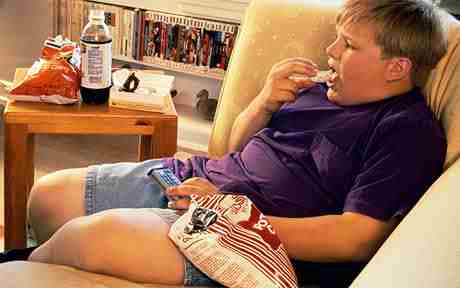 The television series Mad Men, set in the early 1960s, shocks young parents today with scenes of children riding in station wagons without seat belts and putting dry cleaning bags over their heads for fun. Thank goodness we know so much more about keeping our kids healthy, we chuckle.
But as any one of the smooth advertising executives from the show would tell you, don’t underestimate the power of a well-crafted sales pitch.
Today, one of the most troubling and fastest growing threats to our children’s health is their diet. Pediatricians have seen an astounding jump for their patients in dangerous, diet-related ailments, such as cardiovascular disease, Type 2 diabetes, and asthma.
The best-documented cause is the increased consumption of fast food. It’s a trend propelled in large part by sophisticated and pervasive advertising aimed at children too young to understand the difference between marketing and facts. Don Draper would be proud.
The American Academy of Pediatrics believes that “advertising directed toward children is inherently deceptive and exploits children under eight years of age.” This past June, a study published in the journal Pediatrics reported that children significantly preferred the taste of food when it was packaged with cartoon characters, and that effect was magnified for calorie-dense, nutrient-poor foods.
 Food and beverage corporations certainly know that advertising works. That’s why these corporations spend more than a half billion dollars each year on advertisements for fast food and toy giveaways targeting teens and children. Despite the attention paid to the childhood epidemic of diet-related disease, they aren’t slowing down their marketing.
In November, Yale University researchers found that preschoolers were exposed to 21 percent more fast food advertisements in 2009 than in 2003. The study from the Rudd Center for Food Policy & Obesity also concluded that large fast food chains only offer parents healthy alternatives for their children 15 percent of the time. Experts consider it the most comprehensive study of fast food nutrition and marketing ever conducted.
Five years before the Yale Rudd Study, the Institute of Medicine, part of the National Academies, concluded that television ads sponsored by food and beverage corporations succeed in getting children to consume large amounts of unhealthy food, leading to a dramatic increase in childhood obesity and diabetes.
The Institute recommended that Congress should step in if the food and beverage industry doesn’t change its ways. Advertising Age said the report could be “a watershed on the scale of the 1964 surgeon general’s report on tobacco.”
It certainly feels like societal attitudes have made a clear shift from viewing the marketing of junk food to kids as an accepted practice to something to be shunned, or even resisted.
By adopting voluntary codes to reduce it, the industry tacitly acknowledges that marketing junk food to kids is wrong. But these steps have proved less than half-hearted and, predictably, ineffective.
For our part, my organization launched a campaign in March to convince McDonald’s to retire Ronald McDonald, its iconic advertising character, and the suite of predatory marketing practices of which the clown is at the heart. A study we commissioned by Lake Research Partners found that more than half of those polled say they “favor stopping corporations from using cartoons and other children’s characters to sell harmful products to children.”
Local elected officials are joining the cause, too. Los Angeles recently voted to make permanent a ban on the construction of new fast food restaurants in parts of the city. San Francisco has limited toy giveaway promotions to children’s meals that meet basic health criteria. The idea is spreading to other cities.
Elected leaders will find growing support for taking action. People now realize that protecting our children from diet-related disease requires protecting them from junk food advertising. There’s nothing mad about that.
###
If you are looking for a way to protect your community’s children from fast food and junk food marketers, contact the local grassroots group, Stop Targeting Our Kids (STOK), stokaction@gmail.com.
 Grand Rapids Institute for Information Democracy
