The “Good News” of making weapons in Michigan

The state business journal MiBiz announced today in their e-newsletter Michigan Loves Manufacturing that the General Dynamics Corporation plant in Sterling Heights, Michigan was awarded a “$44 million contract to make tanks for the Kingdom of Saudi Arabia’s tank program.”
The announcement was based on a brief media release by General Dynamics that the MiBiz e-newsletter linked to in the News You Can Use section. No doubt the editors of MiBiz consider this “good” news since it means $44 million dollars for a weapons manufacturing company with factories in Michigan.

One can certainly argue from a business point of view that this additional $44 million dollars will keep people employed in Michigan and might even create some new jobs. One could also argue that this money helps the tax base in Michigan because that $44 million is being spent in the state.
However, the News You Can Use information on General Dynamic’s new weapons contract doesn’t provide the public with a complete picture of what this means. First, since this is a contract for tanks that will be used by the Kingdom of Saudi Arabia it is most likely being funneled through the Pentagon. This means the $44 million contract is being paid for by US taxpayers.
Second, even if the contract is directly between General Dynamics and the Kingdom of Saudi Arabi, why is this “good news?” While Saudi Arabia has been a political ally of the US since FDR developed a friendship with the royal family, Saudi Arabia is no democracy or a country that practices or promotes human rights. Human Rights Watch has been documenting Saudi human rights abuses for decades and provides amble evidence that should give any US taxpayer concern over the General Dynamic contract to provide them with tanks.
Saudi Arabia is also not a stabilizing force in the Middle East as is evidenced in its recent military involvement in the Yemeni suppression of rebel forces. The Saudi government is even forcibly returning Yemeni refugees who are fleeing the violence, which as one commentator noted is a violation of international law.

Lastly, such news from the business press does not factor in the level of political influence that a company like General Dynamics has on determining these contracts for weapons manufacturing. According to the Center for Responsive Politics, General Dynamics has given over $12.5 million dollars to political candidates since 1990, money that has been equally given to Republicans and Democrats. In addition, general Dynamics spends millions annually on Lobbying, with a total of $7.5 influencing Congress in 2010 alone.
So before we naively accept the notion that new weapons contracts are “good news” for Michigan it would be good to have all the facts before we start dancing in the streets.
New Media We Recommend
Below is a list of new materials that we have read/watched in recent weeks. The comments are not a “review” of the material, instead sort of an endorsement of ideas and investigations that can provide solid analysis and even inspiration in the struggle for change. All these books are available at The Bloom Collective, so check them out and stimulate your mind.

Revolutionary Women: A Book of Stencils, edited by Queen of the Neighborhood – Too often when people refer to or mention popular movement people they tend to still be men. This collection of short biographies makes the point that in whatever movement over the past 2 hundreds years there have been passionate and articulate women who have engaged in revolutionary action. The book features 30 women, such as Lucy Parsons, Harriet Tubman, Emma Goldman, Marie Equi, Haydee Santamaria Cuadrado, Ani Pachen, Anna Mae Aquash, Comandante Ramona, Malalai Joya and many more. Each description of these women comes with a full-page stencil image. This is a feminist book that, in the words of the editor, “delivers a swift kick to the groin of deep-rooted patriarchal history.

Fear of the Animal Planet: The Hidden History of Animal Resistance, by Jason Hribal – What do animals do when they are abused and have their freedom stripped from them? They fight back! Fear of the Animal Planet is ground breaking, not just because it has numerous stories about animals fighting back against their abusers, but because it articulates the fact that animals have agency, they have the capacity to feel, to reason and to act. This book will not only appeal to the animal rights reader, but to anyone who really wants to understand how animals who are captive in zoos, circuses and marinas respond to abuse and deprivation. A sobering book, which also inspires.

Challenging Authority: How Ordinary People Change America, by Francis Fox Piven – This is an excellent introduction into the idea that what has brought about radical social change in this country has been through the commitment and efforts of ordinary people. For anyone who has read Piven’s book Poor People’s Movements, this book is an excellent companion. Piven, who is currently under attack from the likes of Glen Beck, look at how ordinary people have made changed and influenced policy in the US through what she calls Disruptive Power. The book is only 150 pages, but provides excellent examples and analysis of the power that ordinary people have demonstrated in this country in bringing about change.
The Other Side of Immigration (DVD), by Roy Germano – This documentary, which is based on interviews with 700 Mexicans, is an excellent resource for people who care about immigrant and human rights. The film doesn’t just look at immigration, it asked the hard questions about why people are coming from Mexico. Listening to people talk about the economic changes in the past 20 years, the inability to make a living working the land and the lack of opportunities, it becomes clear that what motivates most Mexicans to come to the US is to seek a better life and to provide for their families. The film is in both English and Spanish with lots of extras based on the director’s interviews.
The Legacy of Dr. King in the 21st Century: Michael Eric Dyson addresses packed house at GVSU
Last night Rev. Michael Eric Dyson spoke on the Allendale campus of GVSU as part of the university’s MLK week. Rev. Dyson, who is the author of numerous books on a range of topics dealing with race, culture, gender, philosophy and theology, spoke for over an hour about the legacy of Dr. Martin Luther King Jr.
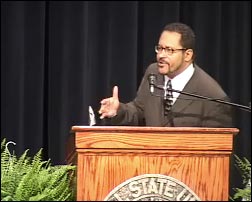
Rev. Dyson dazzled the audience with his oratory skills, his use of humor, irony and sarcasm. But Dyson was not on campus to entertain, he was there to shed light on the significance of Dr. King in the 21st Century. Dyson at times demonstrated his analytical skills, his cultural critique and his preaching style as he didn’t hesitate to raise his voice to underscore a point about what Dr. King called this country to become.
Dyson said that the legacy of Dr. King is strong, but it is vulnerable to a lot of misinformation and romance. He is often cited in conservative circles around the quote where people should be judged by the content of their character. A quote, which is often taken out of context from his, I Have a Dream Speech.
Dyson then pointed out that the people who often use the quote act as if all the impediments to racial justice that Civil Rights movement fought against are gone so that all that matters is content of one’s character. These people, who think we live in a post racial era, are the same ones who are critical of race, gender, sexual orientation and other issues of justice, according to Dyson.
Rev. Dyson then pointed out that King believed in the possibility of America, but he never hesitated to challenge America. “Everyone quotes King and wants to attach themselves to King and his Dream. However, few talk about King being a critic of America and his criticism of race, poverty, culture and militarism.”
At the time of the, I Have a Dream speech, Dyson said that Kennedy was a bystander and did not respond to the challenge of the 1963 march on Washington. However, Dyson also pointed out that the March organizers should be scrutinized as well, especially since Black women were not allowed to speak that day.
Dyson talked about King’s improvising at the March on Washington much in the same way that a jazz player improvises. However, Dyson points out that King most likely improvised in his speech because Mahalia Jackson from the stage said, “Tell them about the dream.” King did and appealed to America to fulfill its rhetoric about democracy and equality.
Dyson went on to say that in addition to mis-use of Dr. King there are people who continue to romanticize about the history of this country. He referred to the recent GOP reading of the US Constitution, where they omitted the parts about Blacks being referred to as three-fifths human. Dyson also mentioned the effort to remove the word “nigger” from Mark Twain’s the Adventures of Huckleberry Finn. Dyson admonished the audience to “Leave it in so that teachers will have to talk about race and racism and this history.”
“The Right,” Dyson said, “wants to trash King, but they fail to acknowledge that the government was hounding him constantly with wire taps, threats, and character assassination.” Dyson said that King loved America, but that doesn’t mean you can’t criticize something you love.
The speaker went on to say that the reason why some sectors despise King is because he was dangerous. He was dangerous, according to Dyson, because he put a “floodlight on the problems of America and people then wanted to blame him for shinning the light on the underside of this country.”
Dyson talked about King’s position on Vietnam, a position that was criticized by many in the civil rights community. King challenged the rich and the economic system that reduced millions to poverty. These criticisms made up what King called the “evil triplets” of racism, militarism and economic injustice.
King was not a perfect person, but this culture wants to hold Black men to a different standard, according to Rev. Dyson. He gives the example of Michael Vick the NFL quarterback who served time in prison for his participation in dog fighting. Dyson points out that dog fighting is part of the White southern culture in this country, but one rarely hears that point. He then mentions that TV pundit Tucker Carlson said that Vick should have been executed for what he did to dogs. Dyson responded, “If this is what you think, then what do you think that Black people should do to the White people who have brutalized them for so long?”
Dyson then spoke a bit about President Barack Obama and how people want to compare the two men. Rev. Dyson said, “Obama is Pharoah, not Moses!” He qualified his statement by saying that the Obama administration has deported more people than any other President, that unemployment remains high and that he has escalated the war in Afghanistan and the US military budget.
Dyson acknowledged that Obama has been under attack from the Right, but that this is no excuse to neglect his base. He said that Obama takes Black people for granted, like every Democratic President before him and points out that Obama didn’t go to UN conference on Racism, hasn’t madding funding for African nations a priority, or appointing Blacks to his cabinet.
Rev. Dyson concluded his remarks by stating that we have to extend the legacy of Dr. King. We need to use the same floodlights to expose the problems of class in this country and the realities of working people. He said, “we need to defend the rights of “our LGBT brothers & sister against the hate and discrimination they face on a daily basis.” Dyson said we need to extend the legacy of Dr. King and speak out about ageism, and made the point that instead of dissin’ on Black youth for Rap music “let’s deal with the conditions that young people live in and maybe they will stop using the lyrics they use.” Lastly, he said let’s extend King’s legacy and challenge the misogyny and patriarchy in our society. “Let’s acknowledge and lift up the multitude of women who have and continue to be at the forefront of social justice movements in this country.”
Healing Children of Conflict Film Series starts February 1

The local group Healing Children of Conflict (HCC) will be hosting its second film series beginning February 1 at Calvin College.
The focus of this film series is on the Israeli/Palestinian conflict. HCC is currently working on assisting children who have been wounded as a result of the Israeli military attacks on Palestine and the effects of the economic embargo.
The film series will take place in the Bytwerk Theater at Calvin College with all four films beginning at 7pm. This films series is free and open to the public. There will be discussions that will follow each of the films.
February 1: Occupation 101 – A thought-provoking documentary on the root causes of the Israeli-Palestinian conflict that dispels many of its misconceptions.
March 29: Peace, Propaganda and the Promised Land – A striking comparison of media coverage of the crisis in the Middle East, zeroing in on how distortions in US coverage reinforce false perceptions of the Israeli-Palestinian conflict.
April 19: Until When – An intimate portrait of a Palestinian family’s life in Dheisheh Refugee Camp, Bethlehem, during the second Intifada.
May 10: Little Town of Bethlehem – Three faiths, three men, and their ongoing struggle to sustain non-violent alternatives despite the sustain violence that has dehumanized all sides.
Here is a trailer for the first film Occupation 101:
“Students are dying. They want us to help them.”
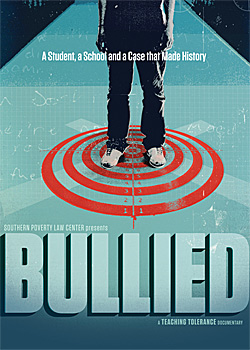 Suicide is the third leading cause for people ages 15 to 24 in the United States. Thirty percent of teen suicides are committed by LGBTQ teens (That’s three times as many as by straight teens). More often than not, these suicides are the result of bullying. When you consider that 86% of gay and lesbian students report being bullied; 66% of bullying victims polled believe that professionals–teachers, school administration and school counselors–responded poorly and only 10 – 20% of bystanders witnessing bullying incidents take action to stop the bullying, it’s easy to see we have a crisis on our hands.
These numbers were projected on the screen before the showing of the Southern Poverty Law Center’s documentary, Bullied: A Student, a School and a Case That Made History, sonsored by the GVSU College of Education at GVSU Loosemore Auditorium Tuesday evening. The film put a face on these numbers. When he was five years old, Jamie Nabozny told his grandmother that he was a “homosexual,” a word he could barely pronounce. At age seven, he came out to his mom. His was a loving, supportive two-parent (heterosexual) family.
When Jamie entered Ashland Junior High School as a seventh grader, the bullying began. Every day when he went to school, he faced unrelenting verbal taunts and mild physical abuse: shoving, his books and papers thrown around, being pushed up against the lockers.
After one particularly tough day, he attempted suicide by taking a bottle full of pills and ended up in the emergency room. His parents went to the school to ask them to help stop the bullying. The junior high principal’s response, “Boys will be boys.”

Jamie Nabozny during his high school years
In high school, the bullying escalated. He tried to hide from his tormentors, but wasn’t always successful. He endured physical violence regularly, to the point that he was hospitalized and had to have surgery after one particularly violent beating. Again, his parents went to the school principal. His attackers were let off without even a verbal reprimand. The high school principal’s response, “That’s what happens when you hit on the hockey team.” (Jamie did not “hit on” his fellow students.)
Jamie ran away and landed at a teen shelter in Minneapolis. A legal advisor there suggested that he and his parents sue the school district. They did and they won. The landmark case has set a precedent and served as a warning to schools across the nation that not keeping LGBTQ students safe from bullying can be very expensive. (Jamie won $900,000.)
After the film, WGVU’s Shelley Irwin moderated a panel of four experts. Her first question, was the film relevant? Denise Brogan-Kator, interim executive director of Equality Michigan, said the film’s message was particularly relevant in Michigan as we are one of only five states that does not have laws against bullying. Seems our legislators are afraid to include language that refers to LGBTQ youth. “We are going to hurt kids because we aren’t going to protect the queers. That just makes me nuts,” Brogan-Kator said. “Bullying is bad, period. Everybody should be safe. But if you include everybody without naming them, you include and protect no one. LGBTQ youth are the principal target of bullying in today’s schools. Studies have shown that the number one target are students who are gay or perceived to be gay. If you break the gender norms, you are a target. These kids are dying. Is it relevant? My god, is it relevant.”
Michele Coyne, a consultant to schools on bullying prevention, added that kid bullies become adult bullies, child abusers and perpetrators of domestic violence. “60% of kids who are considered bullies in grades six through nine will have a conviction by age 24. This is not a surprise,” she said. “It’s not only the victim who is hurt. The bullies and the bystanders don’t fare much better.
She has witnessed bullies harassing classmates they perceive as gay as early as third grade. “Kids with sexual minority parents, they are also considered to be targets.”
Kay Waters, a Grand Rapids school counselor noted that while bullying issues are being addressed, schools still have a long ways to go. “Educators need to have that open ear, be sensitive and model respect for all students. (We need to do) more than identify the problem, we have to continue to work together to find answers.”
Sue Verduin-Miller, a Grand Rapids school social worker, agreed. “It takes courage at times. It’s very easy for adults who are bothered to become bystanders who are quiet. If a person is aware of harassment and they are afraid to speak up, chances are there are a lot of other people nearby who are afraid to speak up. Acceptance of bullying depends on silence and isolation.”
When dealing with bullies, school staff needs to provide ongoing follow-up. Taking action only once or twice creates a situation where the bullies want to reassert themselves. “We need comprehensive school programs. There are good ones out there but most schools aren’t bothering to implement them,” Coyne said. “When we start hearing words being coined like ‘bullicide,’ it’s time.”
Equality Michigan offers school administrators and teachers free training in how to create safe schools. Its curriculum is youth approved by Michigan’s legislature. “We will come into your schools and educate you on how to implement programs,” she said.
Irwin asked what the parents’ role is. Waters replied that even when parents want to do their best for their kids, they are hampered because they don’t know what their rights are. Even so, parents remain their children’s best advocate. Verduin-Miller added that schools often do not follow-up when a parent does bring up issues.
Parents often are not aware their child is being bullied. They may shrug off a child’s complaints as being normal conflicts all kids face growing up. VerDuin-Miller stressed the importance of really listening to what children are saying and finding support if bullying is suspected.
Indicators of bullying include faking illness to get out of school, bedwetting or odd behavior like making up reasons to go in a certain school door. “Parents are hungry for information and not just the parents of victims, but parents of bystanders, too,” Coyne said. “They give a kid courage and moral fortitude to step in and help someone else. Teach your kids that it’s just not acceptable to pick on people. Help your children develop strong self esteem and self worth so A) they don’t bully and B) they step in.”
While it would have been even more enlightening had the panel included a college student who had experienced bullying during high school, overall, the four went a long ways in presenting important information to the audience, which included many education majors. They also shared these resources: Schools Where Everyone Belongs: Practical Strategies for Reducing Bullying by Stan Davis; Nobody Left to Hate: Teaching Compassion after Columbine by Elliot Aronson; A Silent Crisis: Creating Safe Schools for Sexual Minority Youth; and the Web site tolerance.org.
“The young people whose lives are no longer in existence because they took a bottle of pills or tied a rope around their necks, those young people are lost from us forever,” Brogan-Kator said. “What do we do about that? We be aware. We take Jamie’s lesson into the world with us. You can’t back down when somebody tells you ‘Don’t worry about it.’ These are kids’ lives.”
Anti-Union legislation introduced in Michigan

Last week members of the State Representative Commerce Committee introduced legislation that could make Michigan a “Right to Work” state. But don’t let the language fool you. Right to Work is just code for anti-union.
On January 13th, House Bill 4054 was introduced by Representatives Knollenberg, Jacobsen, MacMaster, McMillin, Lund, Genetski and LaFontaine. The bill is designed to change legislation that has been in place since 1939 when Michigan adopted labor laws reacting to the demands of working people who were fighting for better legal protections against employers.
This new legislation would undermine even further the protections that working class people have and is designed as a clear attack against organized labor. There are currently 22 states in the country that have right to work laws.

However, this proposed legislation should not come as a surprise, particularly to people in West Michigan. The local business elite, through the West Michigan Regional Policy Forum have made making Michigan a “Right to Work” state one of their top priorities at both of the last gatherings here in Grand Rapids. At last year’s forum they even invited anti-labor activist Rick Berman to conduct a workshop on how to an anti-union/right to work campaign.
So far there has been little news coverage concerning this legislation and the larger unions in the state have done little in response besides create education flyers for distribution. (Like the 2 flyers you can download from this posting.)
There is no timeline for when HR 4054 will be voted on, but people can follow this issue by going to the Michigan legislative page for updates. If we hear about any organized efforts to fight this legislation we will post that information in the future.
A local grass roots nonprofit working for environmental justice and urban food security, Our Kitchen Table (OKT) has received a $360,000 grant from the The W.K. Kellogg Foundation “to strengthen the capacity of southeast urban neighborhood residents in Grand Rapids, Michigan, to address food and environmental health disparities impacting vulnerable children, families, and individuals by creating resident owned gardens and managed Healthy Food Demonstration Sites.” The grant will extend over a three-year period with the goal of neighborhood residents taking over the work for themselves.
OKT has been addressing environmental justice and food security issues in the Grand Rapids area for the past several years. The grant will expand their

Urban gardeners learn about compost at one of OKT's “Steps to Growing Healthy Urban Food Gardens” workshops last summer.
programs to many more area residents with the hope of making a real and lasting impact on people’s health in Grand Rapids’ urban neighborhoods.
OKT’s objectives for the grant funded project include planting and maintaining 100 neighborhood-based food gardens. OKT focuses on helping individuals and families plant those gardens in their own spaces. Education and training components will teach adults and children how healthy foods help manage both diet related illnesses (diabetes, heart disease and obesity) and environmental health issues (asthma and lead poisoning).
Twenty trained community Urban Fellows/Peer Educators will teach even more community members about food self-reliance, food security and having access to a nutritional neighborhood-based food system. Other objectives include establishing resident owned and managed Healthy Food demonstration sites and training both adults and children how to safely address environmental hazards associated with food gardening.
The project will focus on four Grand Rapids neighborhoods: Eastown, Baxter, SECA and Garfield Park. These neighborhoods have been identified as being at highest risk for food insecurity as well as environmental health issues, including lead poisoning.
In 2010, OKT offered the Grand Rapids community many educational and gardening opportunities including a food summit, food garden walking and bicycle tours and a series on healthy urban food gardening.
Anyone interested in starting a food garden or engaging with the program can contact Lisa Oliver King for more information at lisak1@aol.com.
Comcastrophe: FCC approves Comcast/NBC merger

(This Media Alert is from the national group Free Press.)
The decision was handed down moments ago and you should be mad as hell.
The FCC just blessed the merger of Comcast, the nation’s largest cable and home Internet provider, with NBC Universal. The Justice Department approved the merger, too, leading to the unprecedented consolidation of media and Internet power in the hands of one company.
There’s no way to sugarcoat it. Wherever you live, the Comcast-NBC merger is a disaster.
Letting one company control the pipes and the content that flows over those pipes is a formula for abuse. Comcast-NBC could soon hike up rates, take away your favorite channels or even stop you from watching your favorite shows online. Comcast has already targeted Netflix and other companies that compete with its video and Internet offerings.

The merger lays waste to then-candidate Barack Obama’s 2008 promise, when he said, “I strongly favor diversity of ownership of outlets and protection against the excessive concentration of power in the hands of any one corporation, interest or small group. I strongly believe that all citizens should be able to receive information from the broadest range of sources.”
We at Free Press believe that, too. But unlike the president and his FCC chairman, we’re not caving to corporate pressure. Free Press is working with our allies and activists to fight for more open, democratic and diverse media.
Here’s how you can help:
1. First, let Washington know that there are consequences to blessing this bad deal. You can tell everyone that this merger is a disaster by Tweeting about it, spreading the word via Facebook, and sharing this e-mail with others.
2. Next, join our national network of local Comcast watchdogs. Sign this pledge to protect your community against future Comcast abuses, and we’ll connect you to a growing network of activists in your area and beyond.
3. Finally, support the Free Press Action Fund so we can mobilize a broad coalition to stem the tide of new media mergers sure to follow in the wake of Comcast-NBC.
Today’s deal, combined with the FCC’s recent loophole-ridden, fake “Net Neutrality” rule, sets the stage for Comcast to turn the Internet into something that looks like cable TV. This administration has a long list of weak compromises to corporate lobbyists during its first two years. But today’s merger is particularly alarming.
You might be saying, “I’m not a Comcast customer, so I’m not worried.” But Comcast will jack up the prices that other cable and online distributors pay for NBC content, and you’ll pay higher prices — we promise.
You might be saying, “I can just get a new Internet provider if I don’t like it.” But there’s almost no broadband competition. And as TV, radio, phone and other services increasingly become Internet-based, cable will be the only connection that’s fast enough to deliver high-quality media and services to most Americans.
You might be saying, “Why should I care about a business deal between two giant companies?” But this merger is certain to be the first domino to fall in a series of mega-media mergers. The FCC’s blessing of Comcast-NBC will embolden companies like AT&T or Verizon to try to gobble up content providers like Disney and CBS, creating a new era of media consolidation where even fewer companies control the content you watch and all the ways you watch it.
The Comcast-NBC merger is truly catastrophic for the public, and for the future of media, technology and democracy
The Significance of Baby Doc’s Return to Haiti
(This article was written and submitted by Joe Spaulding.)
In 2004, the Bush Administration committed an egregious act against Democracy that was so well hidden and efficiently executed that when Eric Alterman and Mark Green wrote The Book on Bush: How George W. (Mis)leads America, their 400 page, thoroughly well-researched, and extremely accurate hit job highlighting the negative consequences of policies championed and enacted by Bush and his cabinet members during his presidency, they completely overlooked it. Respected scholar and law professor Ilan Peleg also failed to mention it in his critique of Bush’s foreign policy The Legacy of George W. Bush’s Foreign Policy: Moving Beyond Neoconservatism.
These were books written by skilled researchers that were looking ferociously for information to paint George W. Bush in a negative light. On February 29, 2004, Jean-Bertrand Aristide, the democratically elected president of Haiti was kidnapped at gunpoint by U.S. agents, forced onto a U.S. jet, and flown to the Central African Republic. During the flight the lives of his family and the people of Haiti were threatened if he did not sign a slip of paper claiming he willfully abdicated his office. On the plane he used a smuggled cell phone to call Rep. Maxine Waters and Randall Robinson (a man who struggled to get the U.S. to enact sanctions against South Africa during Apparthied) and inform them that he was overthown by a U.S. backed coup. He has not been allowed to return to Haiti since, and his Lavalas Party is banned from elections.
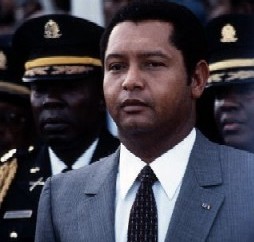
Jean-Claude “Baby-Doc” Duvalier was the president of Haiti from 1971-1986, when he was overthrown by a popular uprising. He was a drug-running thug who used fear, torture, rape, and assasinations to maintain order in Haiti. The Tonton Macoute, his father’s death squad/secret police answered to his every call and executed people he percieved as threats. His presidency was tolerated and even supported by the Reagan and Nixon Administrations because he vocally denounced Communism. The aid the U.S. sent to Duvalier to help the Haitian people not starve to death was stolen by Baby Doc and used to let him live comfortably in Paris when he was exiled after 1986. On January 16, 2011, Jean-Claude Duvalier returned to Haiti without being arrested.

The media coverage of Baby Doc’s return has been abysmal, and this potentially has serious consequences for Haiti. Mac McCelland at Mother Jones has writen a short article that makes no mention of Aristide, and only has a brief mention of Baby Doc’s human rights abuses, which implies Haitians are welcoming Duvalier back with open arms. An AP article at NPR.org makes brief mention of the Tonton Macoute’s human rights abuses but also ignores Aristide completely.
The BBC World Service tried to construct Baby Doc as harmless and also failed to mention the Aristide or the Lavalas Party. Jacqueline Charles at the Miami Harald mentioned neither Duvalier’s crimes nor Aristide’s kidnapping, but she did make it sound like Haitians were very receptive to Baby Doc’s return. Clarens Renois at the Sydney Morning Herald actually writes the word “Aristide” once, but overlooks his specific story to simply point out he was another exiled president.
On the ground in Haiti, the people are mostly interested in the return of Baby Doc in as much as it takes away the government’s ability to justify the continued exile of Aristide. This is not a narrative that entities interested in the spread of neoliberal structural adjustment policies want the world to hear, because it brings into question the idea that opening up free markets in developing countries is the only way to lead them to democracy.
Duvalier has more than demonstrated his willingness to siphon aid funds from the U.S. and IMF while imposing policies on Haitians that allowed their exploitation by American and European corporations. The U.S. has demonstrated it’s bipartisan willingness to extend aid to regimes that will not try to raise the minimum wage, provide access to education and health care for all citizens, or nationalize industries like Aristide did.
The same corporate interests that control the majority of the mainstream media (and in the near future all of the media if we do not get some real net neutrality protections soon) and influence our politicians have a lot to lose if Aristide is allowed to return to Haiti. They will be trying their hardest to convince the global public that Haitians do not want him back.

About 300 people walked silently in the cold today at the GVSU Allendale campus to kickoff a week of events commemorating the birth of Dr. Martin Luther King Jr.
As people wove through the campus they walked past signs that provided a chronology to the life of Dr. King. Some signs also included statements from Dr. King while others highlighted actions that he participated in during his short lived 39 years.
The silent walked ended and people filed in doors to hear the words of one of the founding members of the Student Non-Violent Coordinating Committee (SNCC), Judy Richardson. Judy was a graduate of Moorhead College is a co-producer of the Eyes on the Prize series and author of the recently released book Hands on the Freedom Plough: Personal Accounts of Women in SNCC. The civil rights activist is also the director of the documentary Scarred Justice: The Orangeburg Massacre 1968.
After making a few opening comments, Richardson then shows a clip from the film, a clip which provides a context for the community of Orangeburg where the students massacre took place in 1968.
According to Richardson, the majority of the population in the area was Black, but White people controlled all the power, both politically and economically. This White Supremacist power structure was threatened when students began to confront the owner of a segregated bowling alley.
Students began asking questions about how a local businessman could exclude people from his business. After four days of protests the campus was under lockdown, with local and state police, along with National Guardsman. Police open fire without warning killing 3 college students, one high school student and wounding 28 others. Journalists that Richardson interviewed for the documentary said that all the students were shot in the back.
During the interview process they came across two White journalists who wrote a book about the massacre. One went into the hospital to interview those wounded and told the hospital personal that he was with the Bureau. The hospital thought he was with the FBI, when in fact he was the Bureau chief for the LA Times in Atlanta. Gaining access to the medical reports proved that students were shot from behind, suggesting they were all running away when police & National Guardsmen opened fire on the demonstrators.
Richardson said that the film premiered at the annual event to commemorate the massacre at South Carolina State College. She also spoke about the film production process and particularly the interview they did with Bill Barley. Barley was with the Governor’s office at the time of the shooting and was willing to talk about what had happened. When the film crew arrived at his house Barley was somewhat embarrassed since he didn’t know Judy was a Black woman. Matters were complicated when Barley told them he collects Confederate Flags. However, Richardson said that he was very forthright with what he had to say, which was to tell the truth about what happened that day in 1968.

Richardson also talked about how this event was history that had been hidden and until recently rarely talked about as part of the freedom struggle of the 1960s. She said that the Orangeburg massacre was never part of the larger public consciousness in the same way that the 1970 Kent State shootings were. Crosby, Stills, Nash and Young did not produce a song about Black students being shot in the back.
The filmmaker also talked about how the current Mississippi Governor Haley Barbour, when asked about race relations at that time said he didn’t remember it being “that bad in the 1960s.” Barbour also stated that the White Citizen’s Council were a “positive force in the community.” Richardson pointed out that the White Citizens Council were the ones bankrolling the activities of the local KKK chapters.
For instance, in Yazoo City, Mississippi, where Medgar Evers was doing organizing work, Blacks who had signed a petition had their names published in a newspaper ad, along with death threats and job loss. “This is why,” Richardson said, “it is so important to remember history and to recover it. If we don’t we end up with people learning about the civil rights struggle through films like Mississippi Burning.” Mississippi Burning was a 1988 film that depicted FBI agents as the real heroes and risk takes of the freedom struggle in Mississippi.
After her comments Richardson listened to comments and questions from the audience. Several people asked the speaker “what they could do” or “what lessons should we learn from this history about the struggle for civil rights?” This is always a difficult question for anyone to answer, since it assumes they can tell people what to do. However, Richardson did a great job of getting people to think about the importance of becoming educated about this part of history. She also felt that it was important for people to act, to organize, to start something for change or seek out groups that are already doing that work. Richardson really stressed the importance of popular education or study groups and cited A People’s History of the United States as a great text for reclaiming that history.
There were also several GVSU students who talked about being punished for skipping class to come to this hear Richardson, since the university does not give students the day off or have a policy of allowing students to attend events, even if it means missing classes. Someone from the university responded and invited students to be part of a committee to address this matter, but this writer had visions of students having a sit-in or occupying the administrative building to demand that the school have a clear and committed policy on celebrating MLK Day. Such an action would be a “lesson learned” from the kind of history that Judy Richardson shared with people on this day.
 Grand Rapids Institute for Information Democracy

