The Lessons of 9/11 – according to Senator Levin
For those who think that Republicans and Democrats are worlds apart on US foreign policy, one only needs to look at how both parties view 9/11.

Virtually no member of Congress would publicly offer a critique of US policy since 9/11, not if they wanted to get re-elected. The virtual consensus in Washington is that the US was totally justified in attacking, invading and occupying Afghanistan after the terrorist attacks of 9/11/2001.
Afghanistan’s crime was that it would not turn over Osama bin Laden to the US. Indeed, the Taliban government was willing to turn over bin Laden, but to a neutral country to be tried in an international court, according to Noam Chomsky in his book 9 – 11 and former CIA analyst Michael Scheuer’s book Imperial Hubris.
Since the October 2001 US invasion/occupation of Afghanistan, the US has continued to justify its actions because of the claim that al Qaeda is in Afghanistan. However, even General Petraeus admitted during a CNN interview on May 10, 2009, that there was no al Qaeda presence in Afghanistan. The US is and has been fighting the nationalist insurgent movement known as the Taliban.
The justification for this ongoing foreign policy that has devastated Iraq, Afghanistan and to a lesser degree Pakistan over the past 10 years not only comes from the more hawkish members of Congress, it is a position that “liberal” members, like Carl Levin, have taken.
Senator Levin recently released a statement for the 10th anniversary of 9/11 entitled, Learning the Lessons of the Post-9/11 Decade. Levin talks about visiting the Pentagon after it was hit 10 years ago and then, “Most important, we’ve severely degraded al Qaeda’s ability to threaten us.” The only evidence that Senator Levin offers on his claim that al Qaeda is weak is the death of bin Laden and a comment from Defense Secretary Leon Panetta to say recently that we are “within reach of strategically defeating al Qaeda.” While the death of bin Laden may have been a blow to al Qaeda, there is no evidence that they are any less of a threat than before.
Levin goes on to say that the US has improved the intelligence sharing capabilities since 9/11 and that the US borders are more secure. In addition, he says the US must figure out ways to not allow terrorist groups to launder money anonymously, so that they will not be able to buy weapons so easily. This completely ignores the fact that the US is the number one trafficker of weapons worldwide. If this country were serious about weapons falling into the hands of “terrorists,” a serious reduction in arms sales would be in order.
Levin ends his post-9/11 comments by talking about the unity of the American people he felt when President Obama announced that bin Laden had been killed. “The unity we felt that night, joining thousands of people celebrating the news, was just as powerful as the unity we felt at the Pentagon on the day of the attacks. It was a great reminder that, in mourning or celebration, our nation is strongest when it is united.”
Such jingoistic sentiment is fairly meaningless to people in this country who are unemployed or underemployed while the rich get richer and Congress continues to spend more money on war than on social programs and working families.
In addition to what Levin said, it is also worth pointing out what he didn’t say as it relates to 10 years since 9/11. Levin doesn’t mention the human cost of the wars in Iraq and Afghanistan, his continued support for government surveillance and the Patriot Act and the ongoing intimidation and abuse of Arab Americans and Americans who are Muslims.
The lesson that we can learn from Senator Levin on the 10th anniversary of 9/11 is that he continues to be committed to the imperialist policies of this country.
Never Forget Their Crimes, Always Deny Ours
(This article by Paul Street is re-posted from ZNet.)
We are Good
“We must never forget.” So proclaims a solemn parade of United States politicians, pundits, and propagandists preparing for an orgy of narcissistic national self-righteousness, self-pity and patriotism to mark the ten-year anniversary of 9/11/2001.
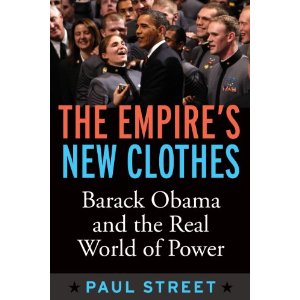
“We must never forget” the terrible bright September day a decade ago when a great, democratic, and benevolent nation was attacked by evil people who hated our “freedom.”
We “must never forget” how we were so unjustly assaulted and how we vowed to defend our country and its noble values with a bold and just military response to Evil.
We “must never forget” because we must always be on guard to defend our exceptional nation and its inspiring beliefs and institutions, its excellent “free market” economy and other virtues that make us the greatest nation of all time – “the beacon to the world of how life should be,” as Senator Kay Bailey Hutchinson (R-TX) described the U.S. in a speech in support of Congress authorizing George W. Bush to invade Iraq.
We “must never forget” how splendid we are. As Bill Clinton’s Secretary of State Madeline Albright once explained, “the United States is good…We try to do our best everywhere.”
Of course, in properly appreciating that goodness, good Americans are expected to dutifully forget the United States’ long record of inflicting massive military mayhem on officially designated enemies and defenseless civilians abroad. Right thinking citizens understand without asking that crimes are committed by evil others, never by noble “America.” Bad things are done by “them,” never by “us.” “They” have malevolent intent but “we” are good, driven by gracious and gallant goals and ideals. The only victims worthy of acknowledgement and compassion are those assaulted by “our” officially designated enemies. The larger number murdered and maimed by us and/or our clients and allies (e.g., Palestinians killed and suffering under U.S.-sponsored Israeli occupation and apartheid and dissidents murdered and muzzled by U.S. client states like Saudi Arabia, Bahrain, Columbia, and Honduras) do not merit sympathy or consideration. They do not exist.
So Much to Fail to Remember
There is so much we must fail to remember, compared to the only two times the U.S. has been assaulted on its own soil – during the War of 1812 (by the British Empire) and (al Qaeda) on September 11, 2001. (I exempt Pearl Harbor since it took place on Hawaii, stolen from its native inhabitants forty four years prior to the Japanese attack). We are expected to loyally overlook: the United States’ savage racist elimination of native peoples’ and civilizations from “frontier” territory claimed by white settlers (celebrated in Theodore Roosevelt’s multi-volume Winning of the West as a great “feat of power” over dangerous “savages” that furthered the Darwinian “spread of English-speaking people over the world’s waste spaces”); the military theft of much of the American Southwest and California from Mexico during the 1846-1848 Mexican War (the first in which a U.S. army invaded another country and occupied its capital); the U.S. butchering of 600,000 Filipino natives (labeled “niggers,” “Apaches,” and “barbarians” by their “’turkey-shooting” executioners) between 1899 and 1902 (4,300 Americans were lost); the bloody U.S.- re-imposition of de facto slavery and colonial rule on Haiti during and after World War One (justified by “the Negro race’s” inherent unsuitability for democracy, according to Woodrow Wilson’s Secretary of State Robert Lansing); the mass-murderous U.S. atom-bombing of Hiroshima and Nagasaki, justified by Washington as necessary to defeat Japan when the White House and high American military command knew very well that Japan was exhausted and seeking surrender.
“From the end of World War Two through the present,” John Pilger noted in 2007, the U.S. Empire caused “the extinction and suffering of countless human beings. The United States attempted to overthrow fifty governments, many of them democracies, and to crush thirty popular movements fighting tyrannical regimes. In the process, twenty-five countries were bombed, causing the loss of several million lives and the despair of millions more” None of this is to be remembered – even registered (see below) – by good Americans.
The officially non-existent victims of American benevolence since 1945 include:
- 3 million mostly peasant Indochinese (chiefly Vietnamese, Cambodians, and Laotians) killed in a massive, multi-pronged U.S. assault between 1962 and 1975 (58,000 U.S. soldiers died in this one-sided attack, encouraging U.S. president Jimmy Carter to claim that “the destruction was mutual” during the so-called Vietnam War).
- Hundreds of thousands of Latin Americans killed and maimed by authoritarian governments (including “Third World fascist” regimes in Brazil, Chile, Argentina, Paraguay, Honduras, Guatemala, El Salvador, and Nicaragua) and paramilitaries funded, supported, and equipped by the U.S.
- 300 Iranian civilian air passengers (including 90 children) blown out of the sky (on Iranian Air Flight 655) by the U.S. Navy in Iranian air space from Iranian territorial waters by the U.S. warship Vincennes on July 3, 1988. (The commander of the Vincennes William C. Rogers III was subsequently rewarded with a Combat Action ribbon and the prestigious Legion of Merit “for exceptionally meritorious conduct.” Scott Lustig, the U.S. air-warfare coordinator who directed the attack received the Navy Commendation Medal. The medal citation noted his ability to “quickly and precisely complete the firing procedure.” The U.S. later settled the incident for $61.1 million in the International Court of Justice).
- More than 1.25 million Iraqis killed, mostly from bombing, so that the U.S. could punish the renegade behavior of its former client Saddam Hussein in the so-called Persian Gulf War of 1991 – an operation that cost the lives of less than 200 U.S. troops. (The body count included many thousands of surrendered troops slaughtered while in full retreat from Kuwait on the infamous “Highway of Death” in the night of February 26-27, 1991, A reporter described the highway scene as “ a blazing Hell” and “a gruesome testament,” noting that “To the east and west across the sand lay the bodies of those fleeing”).
- More than 1 million Iraqis killed by a U.S-imposed weapon of mass destruction called “economic sanctions” between 1991 and March 2003.
- More than 2 million Iraqis, Afghans, Pakistanis, Yemenis and other predominantly Muslim and Arab people killed in criminal U.S. wars of occupation, revenge, and petroleum-control since 9/11/2011.
“The Price is Worth it”
Last May on the Public Broadcasting System’s “News Hour,” Madeline Albright applauded the death of the former U.S. client Osama bin Laden. The just-murdered bin Laden had “killed not only Americans but a lot of other people,” Albright noted. The PBS anchor interviewing Albright appeared to find nothing remarkable about that comment. It was a telling non-reaction. A reasonably civilized news culture would have been shocked by righteous expressions of concern for innocent victims from a person (Albright) who as Secretary of State said the following to CBS News about the killing of more than half a million Iraqi children by the U.S.-led sanctions: “this is a very hard choice, but the price – we think the price is worth it.”
Beneath that statement lay a deeply racist and imperial mindset that “prices” the lives of Arab children as no greater than those of insects when compared to the need to advance the inherently noble global objectives of America – the inherently excellent nation that, Albright once claimed, “stands taller and sees farther” than all the rest. Seven years after Albright uttered her noxious judgment on national television, the Pentagon’s computer program for estimating civilian deaths likely to result from the invasion of Iraq in March of 2003 used an interesting term to designate the ordinary Iraqis to be killed: “bug-splat.”
“Why Didn’t We Attack Sweden?”
One does not exonerate the mass-murderer bin Laden by acknowledging the wisdom of a comment he made after 9/11. If al-Qaeda’s goal was not to punish the U.S. for its imperial role in the oil-rich Middle East but rather to express hatred for Western freedom and democracy, bin Laden asked, then “why didn’t we attack Sweden?” Like many other Western Europeans, after all, Scandinavians enjoy more freedom and democracy than do the corporate-managed residents of the U.S., where policy and society are savagely subordinated to “the unelected dictatorship of money” and politics remain “the shadow cast on society by big business” (John Dewey) in a nation where the top 1 percent owns more than 40 percent of the wealth (along with a larger share of the elected officials) and bottom 40 percent owns essentially nothing (0.3 percent of American net worth).
Imperial Revenge
Many U.S. military personnel in the 21st century have described their actions in the Middle East and Southwest Asia as “revenge for 9/11” – a common motivational theme in the preparation of 21st century U.S. imperial gendarmes to kill “Hajis.” American troops, officers, intelligence operatives, and pilots have for a decade now been encouraged to take out their hatred for bin Laden and Muslims more generally on innocent men, women, and children across the Middle East and Southwest Asia.
The American petro-imperial revenge machine reached its gory apex, perhaps, in April of 2004. That’s when the U.S. Marines responded to the killing of four American (Blackwater) mercenaries in the Iraqi city of Fallujah with a quasi-genocidal assault that included the bombing (including hyper-lethal cluster-bombing), mortaring, napalming, gassing, and shooting of civilians, the destruction of hospitals and clinics, and the targeting of ambulances. U.S. snipers boasted of killing “anyone they could get in their site.” This assault alone considerably out-did al Qaeda’s 9/11 death count.
Blowing Up Afghan Children v. Scaring New Yorkers
Another one of many episodes in the long record of wanton U.S. imperial violence since 9/11 took place in May of 2009. That’s when U.S. air-strikes killed more than 140 civilians in Bola Boluk, a village in western Afghanistan’s Farah Province. Ninety-three of the dead villagers torn apart by U.S. explosives were children. Just 22 were males 18 years or older. As the New York Times reported:
“In a phone call played on a loudspeaker on Wednesday to outraged members of the Afghan Parliament, the governor of Farah Province, Rohul Amin, said that as many as 130 civilians had been killed, according to a legislator, Mohammad Naim Farahi….”
“ ‘ The governor said that the villagers have brought two tractor trailers full of pieces of human bodies to his office to prove the casualties that had occurred,’ Mr. Farahi said.”
“ ‘Everyone at the governor’s office was crying, watching that shocking scene.’ Mr. Farahi said he had talked to someone he knew personally who had counted 113 bodies being buried, including those of many women and children. Later, more bodies were pulled from the rubble and some victims who had been taken to the hospital died, he said.”
U.S. President Barack Obama and his Secretary of State Hillary Clinton refused to apologize for the mass aerial destruction of Afghan children. By contrast, Obama had just offered a full presidential apology to New York City and fired a White House official after that official scared New Yorkers with an ill-advised Air Force One photo-shoot flyover of Manhattan. The flight had briefly reminded people below of 9/11.
Frightening New Yorkers called for a full presidential apology and the discharge of a White House staffer. Blowing up 93 Afghan children did not elicit an apology. Nobody was fired or disciplined.
No Apologies
Here at least Obama stayed true to one of his campaign statements. During his rock-star visit to adoring crowds in Berlin in the summer of 2008, CNN’s Candy Crowley asked the next president if “there’s anything that’s happened in the past 7 1/2 years that the U.S. needs to apologize for in terms of foreign policy.” Obama responded bluntly: “No, I don’t believe in the U.S. apologizing…I think the war in Iraq was a mistake…But, hindsight is 20/20, and I’m much more interested in looking forward rather than looking backwards. …The U.S,” Obama made sure to ad, “remains overwhelmingly a force of good in the world.”
True to his comment to Crowley, Obama refused (during a June 2009 White House visit by Chile’s president Michele Bachelet) to consider an official U.S. apology for the United States’ central role in Latin America’s Nine Eleven – the September 11, 1973 coup that overthrew Chile’s democratically elected government and installed the mass-murderous fascist dictatorship of Augusto Pinochet. Obama justified his refusal with the claim that “I’m interested in going forward, not looking backward,” the same language he used to rationalize not investigating and prosecuting the George Bush II administration’s war and human rights crimes. For good measure, Obama added that “the United States has been an enormous force for good in the world” even if “there have been times where we’ve made mistakes.” Under Obama as under U.S. presidents since Reagan, the White House and Pentagon continue to refuse to apologize for Iranian Flight 655.
Even While it Was Happening It Never Happened
Of course, Latin America’s 9/11 never really happened as far as the dominant U.S. political and intellectual culture is concerned. I misspoke when I wrote (above) that “good Americans are expected to forget” (the United States’ long history of murder abroad). The deeper truth is that we are not supposed to ever register any parts of that record in the first place. You have to know that something occurred in the first place to forget it. But in the U.S, and indeed across much of the West, the record of ongoing U.S. criminality is airbrushed out from official history and the mass culture even as it occurs. It is instantaneously tossed down George Orwell’s “memory hole.” As Harold Pinter noted in his acceptance of the 2005 Nobel Prize in Literature, dominant Western cultural authorities behave as if past U.S. imperial violence did not exist. Even while it was happening,” Pinter added, “it never happened. It didn’t matter. It was of no interest.”
If anyone cares, this is how the Nazis dealt with Germany’s imperial crimes: as if they’d never happened. A relentless propaganda campaign claiming (among other things) that poor, persecuted Germany had done nothing to produce its Versailles victim-hood and to provoke hostility and attack from outside helped fuel Adolph Hitler’s rise to power and his scheme to achieve the global hegemony that fell to the American Superpower during and after World War II.
Radical Feminism & Art subject of film this Wednesday 9/14
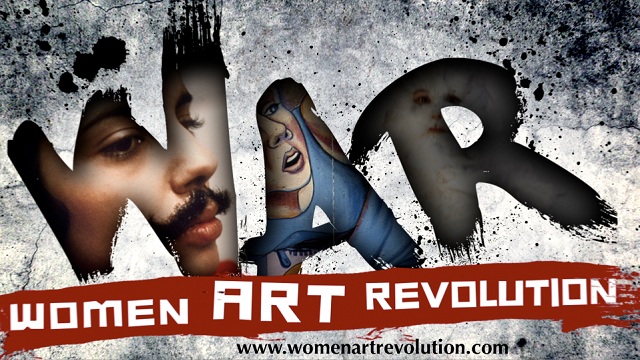
“Through intimate interviews, art, and rarely seen archival film and video footage, !Women Art Revolution reveals how the Feminist Art Movement fused free speech and politics into an art that radically transformed the art and culture of our times.”
This powerful film that looks at the work of Judy Chicago, the Guerrilla Girls and many more feminists who made radical art in order to challenge patriarchy, racism and war will be show Wednesday, September 14 at 6pm in the Wealthy Theater.
Women Art Revolution is a stark contrast to the superficial, enterprise culture of ArtPrize. A discussion will take place after the film.
Naomi Klein debunks “ethical oil” at Tar Sands Protest
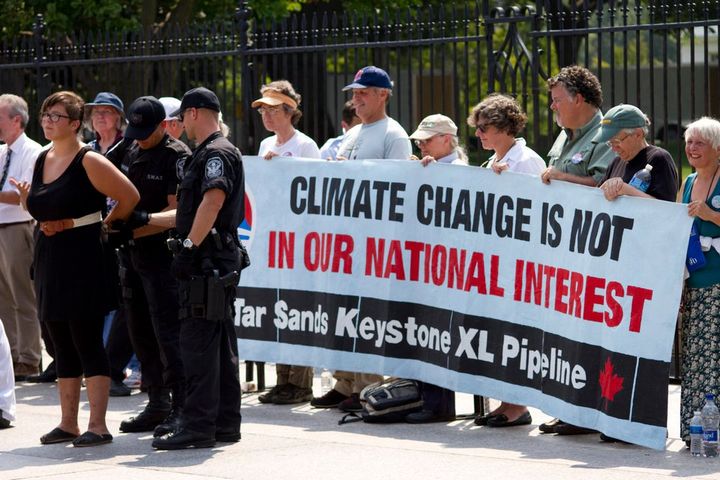
The anti-tar sands oil actions in DC that ended last week did not get the Obama administration to commit to taking a stand against the Keystone pipeline project that would bring the Canadian Tar Sands oil through the US to the Gulf Coast.
Naomi Klein, author of the critical books No Logo and The Shock Doctrine, spoke at one anti-Tar Sands rally in DC and exposed the lies that the oil companies, the Canadian and the US governments are spreading about one of the worst environmental projects in modern history.
Anti-Bullying Legislation: Michigan Hate Crime Conference 2011

During the lunch break the speaker was Jamie Nabozny, the subject of the recent documentary Bullied. Before Nabozny spoke, he showed a clip from the documentary, a clip that dealt with the witnesses at his trial.
During his remarks Nabozny addressed several issues around his experience and the realities of bullying in the US. Nabozny stated that prevention was key and that as a society we need to begin as early as pre-school age to teach respect. The speaker stressed the point that many efforts at prevention only exist for a few years, which ultimately is ineffective since there is an ongoing turnover of students and that every generation needs constant anti-bullying education.
Nabozny also said there needs to be a comprehensive response to dealing with bullying. He stated that schools not only need clear policies in place, but there needs to be work done with victims, perpetrators and bystanders. Nabozny said it was obvious that schools work with victims, but he said too often perpetrators and bystanders are ignored.
What the speaker said about perpetrators is that often they themselves are victims of abuse, unstable family circumstances and sometimes they have not come to terms with their own sexual orientation. Nabozny said that some of the guys that bullied him for being gay, later came out as gay, which he suggests is why LGBTQ students are sometimes targeted for harassment and assault. Those who struggle with being public about their identity will sometimes act out against those who are public about being LGBTQ as a way of sending a message that they in no way identify as such.

Nabozny then said that bystanders are also an important population to target. First, it is important to get students who are bystanders involved, because the more they report incidents of bias, harassment or assault, the more likely it is that the school administration will take action. Once bystander students take action it sends a strong message to perpetrators that this kind of behavior will not be tolerated and that there are people who support those who are victims. Nabozny also said that students who are also bystanders to assault and harassment are themselves traumatized, which is yet another reason to empower these students to take action.
Nabozny ended his comments by stating that it is critical that Michigan pass anti-bullying legislation, but he needs to be legislation that is clear and comprehensive so that all public institutions will need to comply and so that there is a strong mechanism of accountability.
Benton Harbor, Governor Snyder and the Whirlpool connection
This new video does a good job of visually communicating what has been happening in Benton Harbor in recent years. The video connects the dots with the organized effort to shift tax money from Benton Harbor to St. Joseph and the power structure in that area, including the Whirlpool Corporation.
The video also makes the link between the de-funding of Benton Harbor, the Snyder imposed Emergency Financial Manager, the new private Golf Course on former public land and the tax breaks that the Whirlpool Corporation has received in recent years.
Michigan Hate Crimes Conference 2011: Hate Groups in Michigan

The Michigan Civil Rights Commission and the Michigan Alliance Against Hate Crimes hosted a conference on hate crimes today in East Lansing, with several keynote speakers and breakout sessions dealing with various aspects of hate crimes.
According to the Director of the Michigan Civil Rights Department, Michigan leads the country in the amount hate groups that either are based in the state and/or groups that come to Michigan to harass and intimidate.
Before the first speaker addressed the audience, those in attendance were subjected to a message from Michigan Governor Rick Snyder. The message was mostly a welcome to those in attendance and a thank you to those who do the work in communities across the state. Snyder did say that his office was committed to passing anti-bullying legislation, since Michigan is one of the few states in the country that does not have such legislation. However, the kind of legislation that Snyder wants to pass would not have any teeth and would be a watered down version of what most of the country has adopted.

The opening plenary speaker was Rick Eaton with the Simon Wiesenthal Center. Eaton spent some time providing the audience some historical background on hate groups, such as the KKK in Michigan. The current manifestation of the Klan is the United White Knights of the Ku Klux Klan, which operates mostly on the east side of the state.
He then spoke about the American Nazi Party, which has chapters in several Michigan communities. Another White Supremacist group is White Honor, which is affiliated with the American Nazi Party. On their website, White Honor has numerous manuals that provide information on weapons manufacturing and other violence-based documents on how to promote their philosophy of hate.
Eaton also mentions that National Socialist Movement, which is based in Detroit. Eaton spoke about the rally they held in Toledo, which was confronted by anti-racist activists. However, the police targeted the anti-racist activists, with several being convicted and sentenced to jail time.
The speaker also addressed the number of Skinhead groups that are based in Michigan, such as the Hammerskins and Volksfront. Many of the skinhead groups promote their messages through music and concerts that appeals to younger audiences.
Then there are Christian Identity groups in Michigan, many of which had a strong relationship with various militia groups. Eaton cited numerous books that the Christian Identity groups use as inspiration.
Eaton ends by identifying emerging groups that are based in Michigan, such as anti-government, anti-tax, militia and Sovereign Citizens. These groups were “dormant” during the Bush years for a variety of reasons, but with the election of a Barack Obama they have increased their activity.
Some of their activity has been purely in the form of paper activism, where they publish handouts and flyers or legal documents to target law enforcement and judges who they have identified as enemies to their cause. Some of these groups are associated with the Patriot Broadcasting Network, Moorish Public Trust and the Hutaree Militia. Eaton was utilizing much of the data on hate groups identified by the Southern Poverty Law Center.
Eaton also argued that it was important for people to know that these groups exist and that awareness was half the battle. He also mentioned that every participant received a CD in their packets that have more details and data on these kinds of hate crimes entitled, Digital Terrorism & Hate 2011.
Sign Petitions to Recall Snyder This Saturday and Next Saturday

Don’t forget to stop by the Fulton Street Farmers’ Market on Saturday, September 10 between 8AM to 2PM. Activists from the campaign to recall the governor will have a station set up where you can sign a petition to place the recall of the governor on next February’s ballot.
The same group will be at the Farmers’ Market on Saturday, September 17, between 8AM and 2PM. These are the two best chances for Grand Rapids residents to sign petitions before the September deadline.
The Fulton Street Farmers’ Market is located at 1147 Fulton Street SE.
Koch Brothers’ donors includes the DeVos family
(This article is re-posted from OpenSecrets.org)

Research by the Center for Responsive Politics has helped Mother Jones profile the secret donors of the billionaire Koch brother’s charity organization. Audio recordings obtained by the investigative news organization captured Charles and David Koch at a tightly guarded fund-raiser in June thanking 32 of the “great partners” who donated more than $1 million to the Charles G. Koch Charitable Foundation, which, by law, isn’t required to publicly disclose its funders. Those individuals have also been among the biggest spenders in Washington.
A few of the notable supporters of the Koch organization include:
- The DeVos family, who have donated $2.82 million to political campaigns since the 1990 election cycle. Rich DeVos is owner of the NBA’s Orlando Magic and cofounder of Amway.
- Dick Farmer, the CEO of the Cintas Corporation, who, along with his wife, donated more than $1.1 million to Republicans during the 2002 election cycle alone. He also served as a bundler for Republican John McCain’s 2008 presidential bid.
- Joe Craft, who is head of the coal company Alliance Resource Partners, which gave $2.43 million to outside spending groups during the 2010 election cycle.
See the full list on Gavin Aronsen’s post at Mother Jones: “Exclusive: The Koch Brothers’ Million-Dollar Donor Club.”
Notably, people and political action committees associated with energy and chemical conglomerate Koch Industries have donated $9.6 million to political campaigns and committees since 1989, according to the Center’s research. The company also spends millions on lobbying, having spent $8 million last year alone.
This Day in Resistance History: Sitting Bull’s Railway Speech

On September 8, 1883, the Sioux leader Sitting Bull made a speech to government officials, railroad barons, and the U.S. military in honor of the completion of the Northern Pacific Railway. And on this one occasion, after a long and bloody attempt to defend his people and their lands from White invaders, Sitting Bull seized the chance to express his opinion of those he had opposed for so long against tremendous odds.
Some context: The lands of northern Montana and Idaho had not drawn as many settlers as other parts of the U.S. west, and for good reason. The harsh prairie environment included scalding summer heat, winter temperatures ranging from 10 to 40 degrees below zero, relentless winds without any tree breaks to slow them down, and a lack of water. But to the Sioux, these lands were perfect. The prairie tableland meant that they could ride their horses during hunting at top speeds. The buffalo provided for most of their food and clothing needs. They were able to hunt at will, and move to fresh hunting grounds when they wished.
Even with a relatively small invasion of Whites, the balance of this life was upset. Sitting Bull summed up the problem, a set of differences that went far beyond culture:
White men like to dig in the ground for their food. My people prefer to hunt the buffalo…White men like to stay in one place. My people want to move their tepees here and there to different hunting grounds. The life of white men is slavery. They are prisoners in their towns or farms. The life my people want is freedom.
But the settlers kept coming. In 1870, there were 5,000 of them, and another 15,000 soldiers at various forts. In 1880, 117,000 Whites lived in territory all around the government-mandated Sioux Reservation, plowing the fields up to plant wheat and destroying buffalo migration paths. By 1885, the number of settlers had doubled to 234,000.
The U.S. government did not just want the Sioux hunting grounds. They also wanted the Black Hills, where gold had been discovered in 1874. These lands are sacred to the Sioux, and when pushed to sell them, the Sioux Nation retaliated. General Custer was sent to drive back the two most important leaders, Sitting Bull and Crazy Horse, onto the reservation, leaving other Sioux lands undefended. The resulting Battle of Little Big Horn was a stunning defeat for the United States. This was a culmination of wars between the United States and the Sioux Nation that had been ongoing since 1862, the same year that the Homestead Act was passed.

One of the biggest raids on Indian lands was the confiscation of huge tracts that were transferred to the railroads. After the Battle of Little Big Horn, Sitting Bull led his people north to Canada, remaining there until 1881. By the time of his return, the railroad was close to completion; the containment of Indians on their reservations was ongoing; random raids and massacres of various bands that attempted to move to traditional hunting lands had become a feature of Indian life. And well underway was the systematic starvation of the Sioux through the U.S. government’s “Buffalo Harvest” program.
The buffalo, essential to the survival of the Sioux way of life, were being eradicated from the prairies. Hunters were paid a bounty to kill as many as possible. Huge mountains of buffalo skulls were common features on the prairies of the Dakotas and Montana. The purpose of this program was described by an army officer to reporter John F. Finerty: “Better [to] kill the buffalo than have him feed the Sioux.” The intention was not only to break the spirit of the Sioux Nation but also to force Indians to subsist on handouts from the government.
And it worked. Sitting Bull, on his return to Montana, watched 300 of his tribespeople starve to death during the winter of 1883 at Fort Peck. Neither the medical treatment nor food rations promised by the government were available to prevent this.
It was in this context that the Northern Pacific Railway, with incredible audacity, decided it would be a nice touch to their railroad completion celebration to have Sitting Bull deliver a speech. In Bury My Heart at Wounded Knee, it describes Sitting Bull’s surprising acceptance of the offer.

The ceremony was lavish, featuring the joining of the two ends of the railroad with a solid gold spike. Guests of honor included former President Ulysses S. Grant, Secretary of State Henry Teller, the governors of every state that the railway connected, Northern Pacific president Henry Villard, and the bankers and investors who would rake in the profits from their venture. Other guests included diplomats from Germany, Great Britain, and the Netherlands. Plus the defeated leader of the Sioux Nation, Sitting Bull, who had submitted a draft of his speech in advance for approval. The remarks had been co-written with a young Army officer who spoke Sioux and made extensive “suggestions” for Sitting Bull’s remarks.
Sitting Bull rode at the head of the parade with his army chaperone by his side. But when it was time for him to speak, the audience was surprised when the famous Indian warrior spoke in Sioux, not in English. Sitting Bull looked directly to the U.S. Secretary of State, to Grant, to the generals and railroad barons who sat before him. “I hate all White people,” he said. “You are thieves and liars. You have taken away our land and made us outcasts.” He went on to describe all the atrocities that his nation had endured at the hands of the United States. He would stop periodically to smile, and the audience applauded enthusiastically, assuming he was welcoming them and complimenting their great achievement. Sitting Bull would bow in return, then resume his scathing assessment of the White man’s corruption and dishonesty. Only the panic-stricken Army officer who had helped Sitting Bull draft the speech could understand him, and knew it was pointless to interrupt. Sitting Bull received a standing ovation at the end of his speech.
“I wish it to be remembered that I was the last man of my tribe to surrender my rifle,” Sitting Bull told the officers at Fort Buford when he turned himself in. In 1883, this great leader was an outcast, had starved nearly to death, and was a prisoner of U.S. policies. But he understood that his only path was continued resistance. With bullets, warriors, and even provisions taken from him, Sitting Bull still had his anger, his sense of justice, and the words that rendered his enemies into fools.

