Reporting on unemployment statistics
Yesterday, MLive posted a very brief story on new unemployment data for the state of Michigan.
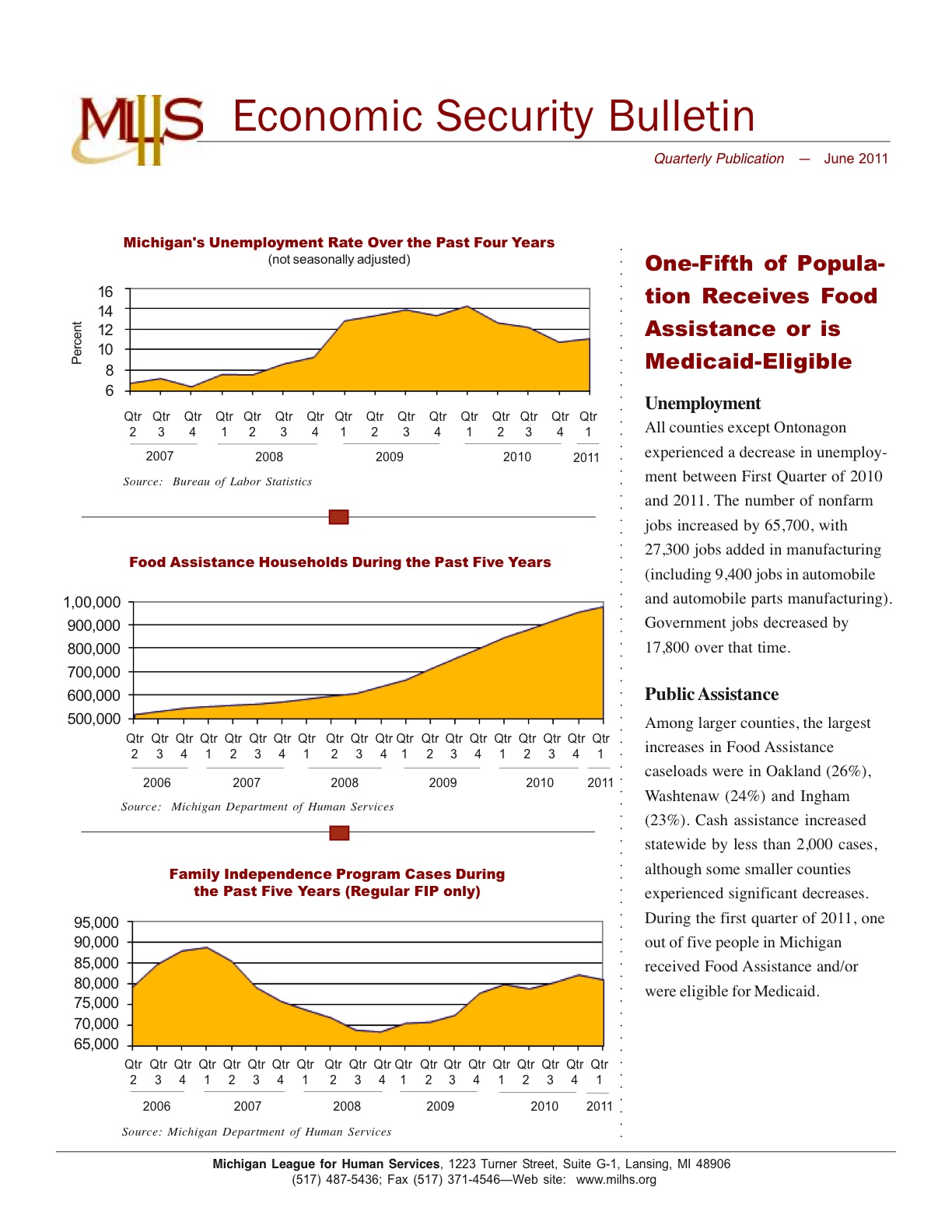
The 100-word article’s headline read, “Unemployment drops in Michigan but families still struggling, report says.”
The article points out that unemployment is down in every county in the state except one, but then points out that those seeking food assistance is up by 15.5 percent statewide.
The Grand Rapids Press reporter never provides any data for Kent County or the surrounding counties, which would make the story more relevant for area readers. According to the Michigan League for Human Services report the unemployment numbers for Kent County are down 2.6%, from 11.4% to 8.8%. The actual number of unemployed in Kent County, according to the study, is 26,879.
In terms of food assistance, the numbers show that there was an 18.8% increase in people seeking help with food. According to the report the number of households seeking food assistance every month went up from 47,634 households to 56,604 households.
The Press writer could have easily provided some of these numbers, but chose not to. In fact, the report also has statistics on those participating in the Family Independence Program, families with children in child day care and those receiving Medicaid. In addition, the report provides a breakdown of trends in employment sectors from 2010 to 2011.
All of this data is certainly relevant and would raise numerous questions for any competent reporter. One simple, yet important question would be if unemployment numbers are down, why are more households seeking food assistance?
One conclusion that could be drawn is that many people who are employed don’t make a livable wage. People earning the minimum wage of $7.40 an hour cannot survive in this economy. The living wage vs minimum wage calculator page for Kent County shows the huge discrepancy. A living wage, where people are paid based on real need, provides a breakdown of the average monthly expenses and then calculates what a living wage would be compared to a minimum wage.
Statistics can be useful tools, but they can also be misleading without adequate context. Just because unemployment statistics are down for Michigan, doesn’t mean that things are better for working class people nor is it a reflection that the “economy” is making a comeback.
New Media We Recommend
Below is a list of new materials that we have read/watched in recent weeks. The comments are not a “review” of the material, instead sort of an endorsement of ideas and investigations that can provide solid analysis and even inspiration in the struggle for change. All these items are available at The Bloom Collective, so check them out and stimulate your mind.
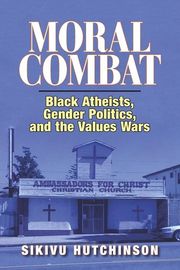
Moral Combat: Black Atheists, Gender Politics and the Values Wars, by Sikivu Hutchinson – What kind of analysis would you be likely to read from a Black feminist who is also an educator and an atheist? Damn fine analysis. Sikivu Hutchinson not only provides interesting insight into contemporary Black politics, she provides analysis through the rare lens of a Black atheist. Hutchinson’s critique is far reaching, but what I found particularly interesting was the level of policing that takes place within the Black community against those who dare to question the role of the Black Church. The author talks about the intimidation she face growing up to embrace Christianity with the Black community but also the internal questioning and censorship that many Black people face who challenge the primacy of religious belief. This book was not only enlightening, but in some ways ground breaking.

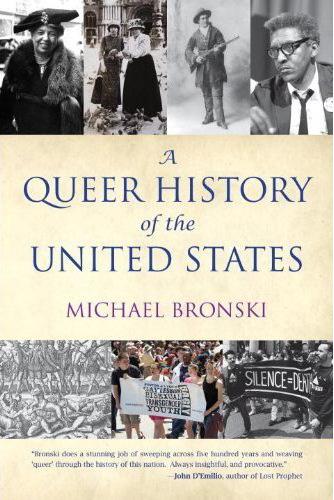
A Queer History of the United States, by Michael Bronski – Like Vicki Eaklor’s book Queer America: A People’s GLBT History of the United States, Bronski’s attempt to reclaim and uncover the history of the LGBTQ community is an invaluable resource. Bronski’s volume is much broader than Eaklor’s, in that he covers the US from the time of the first European colonists. Bronski also does something that Eaklor does not spend much time on, which is a keen sense of how literature and other forms of art were an expression of how American the LGBT community has been through the entire history of this country. In addition, Bronski provides important analysis of the more contemporary LGBT movements, especially those that were more focused on liberation, both sexual and social. Bronski makes a strong case for the position that whatever right the LGBTQ community enjoys now it was the result of the more radical sectors within its history such as the Gay Liberation Front, the Gay Activist Alliance and ACT UP. An important contribution that should be included to the body of work started by Howard Zinn’s A People’s History of the United States.

People of the Pines: The Warriors and the Legacy of Oka, by Geoffrey York and Loreen Pindera – The People of the Pines is the story of the courage of the Mohawk people in eastern Canada in 1990. The community of Oka was planning to build a golf course on traditional Mohawk land and the Mohawk people fought back. They Mohawk community not only objected verbally, they organized and engaged in direct action that led to a two and one half month stand-off between Mohawk warriors and the Canadian police/military. This book is not only important because it documents a contemporary example of Euro-American conquest, but it also demonstrates that people can organize and fight back. An important history lesson for all who claim to care about indigenous struggles.

That Infernal Little Cuban Republic: The United States and the Cuban Revolution, by Lars Schoultz – There have been numerous books written on the history of US relations with Cuba since the 1959 revolution, but few have the depth and substance that long-time writer Lars Schoultz brings to this subject. The 700 page volume is a bit overwhelming, but the author’s style of writing and keen sense of history makes up for the length. Schoultz methodically breaks down the history of US relation with Cuba beginning with the Truman administration as a means of providing some context before the 1959 revolution. The author then uses each sequential US administration as a framework for the chapters of That Infernal Little Cuban Republic. One should be clear however, that this book is not written to provide a critique of the Cuban revolution itself, rather it provides a detailed analysis of how the US has responded to Cuba since 1959. Schoultz makes it painfully clear that the US has done everything in its power to undermine the Cuban revolution and to punish the Cuban people as an example for the rest of the world that real independence and autonomy from the US will not be tolerated.
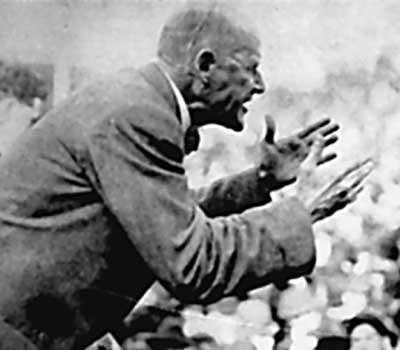
Ninety-three years ago today labor organizer and Presidential candidate Eugene Debs was arrested in Cleveland, Ohio for “intent to interfere with the operation or success of the military or naval forces of the United States.”
The arrest of Debs came about because of a series of speeches he had given where he condemned the US involvement in World War I. On June 16, 1918 Debs gave a speech in Canton, Ohio where he lambasted the war.
“Wars throughout history have been waged for conquest and plunder…. And that is war, in a nutshell. The master class has always declared the wars; the subject class has always fought the battles.”
Debs was speaking in public on June 30, 1918 in Cleveland at meeting of Socialists, again denouncing the war. It was right after this meeting that Debs was arrested and charged with sedition and violating the Espionage Act, which essentially made it illegal to publicly condemn the war.
During his trial Debs chose to represent himself and refused to call any witnesses saying, “I have been accused of obstructing the war. I admit it. I abhor war. I would oppose war if I stood alone.” Debs was found guilty and sentenced to 10 years in prison.
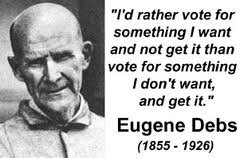
While in prison Debs ran as a Presidential candidate for the Socialist Democratic Party in 1920 and despite being in prison he received nearly a million votes. World War I eventually ended, but President Wilson chose not to pardon Debs, but Warren G. Harding finally let Debs go on Christmas Day of 1921.
However, the White House made it clear that they were not pardoning Debs, they still believed he was guilty, but released him because he was an old man in not in good health. When Debs returned to his hometown of Terra Haute, Indiana he was greeted by 50,000 people.
Debs died in 1926 at the age of 70, but his legacy lived on in the countless people who have resisted war in the US ever since. If Debs were alive today he would condemn the ongoing US wars of conquest in Iraq, Afghanistan and Libya. Debs would not only see these wars as wars of conquest he would acknowledge that they were wars that benefited Wall Street and he would call upon working class people to not fight in wars that served the rich.
Local government consolidation study group still at odds with One Kent Coalition proposal
Two weeks ago we reported that the lack of transparency on the part of the One Kent Coalition was making it nearly impossible for a study group to move forward on making recommendations about whether or not there should be local government consolidation that would involve the City of Grand Rapids and the County of Kent.
Since then the Kent County Commissioners passed a resolution to withdraw from the study group and about two-thirds of the area townships have followed suit. Yesterday’s meeting by local leaders was designed to have the three people who set up the study group – Mayor Heartwell (Grand Rapids), Sandi Frost Parish (Kent County) and Nyal Deems of the One Kent Coalition – address the concerns from the June 14 meeting.

Heartwell began by acknowledging that the County Government and other area townships have all formally expressed their displeasure and lack of trust in the process and the timeline. Heartwell also believes that the September deadline is also unrealistic. For Grand Rapids Mayor George Heartwell there are two fundamental questions that need to be addressed: 1) Is it the consolidation of government that should be given serious consideration, and 2) Is the One Kent proposal a legitimate proposal?
Heartwell said that clarifying the charge of the group was not enough and according to the people he had appointed they were willing to end their participation after the meeting if more information is not given and changes in the process takes place.
Heartwell then presents a document clarifying his and the City’s position. One of the main points is to acknowledge that consolidation of area services has worked well so far. He then says that transparency has not been part of the One Kent proposal like the Green Grand Rapids process. Heartwell suggests that this group divorces the idea of local government consolidation from the One Kent Proposal. This process deserves more time and investigation. He proposes that a new planning committee be appointed to begin a serious process.
Heartwell then asks those involves in the One Kent Coalition if they are willing to go along with this proposal and adopt a timeline that would allow for adequate public involvement and conversation. None of the One Kent Coalition members present responded to Heartwell’s invitation.
The main spokesperson for the One Kent Coalition, Nyal Deems, then addressed the group. The former Mayor of East Grand Rapids seemed surprised by the direction of the meeting and thinks that the charge of this group was clear from the beginning. Deems takes the position that the county and city government is now backing out of participating in the process, without acknowledging the reasons why.
Deems says that the One Kent Coalition had sent out information and sought input to maybe a dozen people, with little response back. He thinks the idea that they didn’t seek input “was silly.” He also dismisses the claims that the right people were not involved and invited to be involved in this process. Deems says that several formers GR mayors and county commissioners have said this issue should be looked into and that maybe the private sector should get involved. So the One Kent Coalition came into being to make the idea of local government consolidation a reality.
Deems also said the group feels that the vote should happen in 2012 during the Presidential Election. This would allow people plenty of time to have a “dialogue” about the issue.
“As we looked at the issue of local consolidation we looked at four areas of similar size, such as Indianapolis, which did consolidate. This could be a good decision and it would be a tremendous benefit to improve the global economic growth of our region,” said Deems.
Deems then rather sarcastically states that Michigan is the only state that had a decrease in population in the last 10 years and that the economic situation will get worse unless action happens now, which is why the One Kent Coalition has moved forward. Deems then said, “there is no one in the group who will stand to make a dime off of this proposal.”
The One Kent Coalition spokesperson was clearly on the defensive, but he really never addressed any of the concerns that people raised at the last meeting, such as a lack of transparency, where the group’s money was coming from and whether or not they had already hired a lobbyist to push forward with their proposed legislation.
The Mayor of Kentwood, Richard Root, then defends the One Kent Coalition proposal and says that the proposal from Heartwell should not divorce itself from the One Kent Proposal. He says that the area “philanthropists” need to be acknowledged and that “we owe them the effort they put forward,” which is reflected in “the names of the people on the buildings” in this area. “To not pay attention to it when some of the most successful business people in the country are involved in this process,” would be a mistake according to Root.
Nyal Deems then says that in recent discussion the One Kent Coalition members said they don’t have a “hard deadline.” They thought September so that the “state legislature can do what they need to do, so that it can it get on the November, 2012 ballot.” Of course they were thinking this way because they want to make this happen as quickly as possible.
Another study group member, Mary Alice Williams, said that the proposed legislation has already acknowledged that local government consolidation is the way to go, so this study group only would be used in helping to tweak that proposal. She said that the question of whether or not to consolidate is not even on the table, but it seems to be an either or proposition. When people haven’t been involved in drafting the legislation then she has “serious reservations in being involved in this process.”
Heartwell then said that maybe the use of the word “divorce” was too strong. However, he wants it to be inclusive, with neighborhood organizers and One Kent Coalition members. “The problem is that there is a timeline and a framework for a vote in 2012,” said Heartwell. He also thinks this would be an open-ended process that would involve not a few dozen, but hundreds of people.
Deems then uses a line that the One Kent members have been using all along in that this process “would ultimately be decided by the voters,” as if that group has demonstrated any real interest in the democratic process. Deems insists that the legislation needs to be done in the next few months, but this “doesn’t preclude more public dialogue between now and the 2012 election. If the state legislative process is delayed until May of 2012, then it would not give the public enough time to have dialogue about this issue.” Deems was hoping that maybe there would be recommendations this group could come up with that would help the process and push forward the legislative process. However, Deems failed to see that people were questioning the process since it did not even allow for them to have a serious question about whether or not local government consolidation should occur.
Several participants, including Wyoming Mayor Curtis Holt propose that a group should continue and seriously have the discussion about local government consolidation. He and others say they should operate autonomously of the One Kent Group and operate on a different timeline that would allow serious investigation and public input into this issue.
Holt then asks Deems if they would be supportive of this proposal. The Wyoming Mayor then asked him if he was the chairmen, the spokesperson, or the President of the One Kent Coalition. Deems, in an almost comical fashion said, “we are not hierarchical. I am the spokesperson for this coalition and we are just people who get together to meet.” Does Mr. Deems really expect the public to believe that members of the One Kent Coalition, which includes the likes of Dick and Betsy DeVos, that they just meet like any common neighborhood group?
The absurdity of this meeting was further underscored when the study group facilitator Steve Crandall says he was hired by the three groups (One Kent, Grand Rapids and Kent County) to move this discussion forward. Several members quickly pointed out that the City and the County had offered up no money to Mr. Crandall, thus exposing the lack of transparency and honesty in this process.
After two hours and 15 minutes the group finally agreed to move forward as an autonomous entity and to devote the entire next meeting to laying out the goals of the group and the process in which they will operate. These meetings are open to the public, so anyone can attend the next meting, which will be held on Wednesday, July 13at 4:00PM in room 202E of the downtown campus at GVSU.
(This article by Paul Street is re-posted from ZNet.)
Deletion of essential context and information is one of the many ways in which American corporate news media works to take the risk of American democracy for the rich and powerful. Take a recent front-page Chicago Tribune story titled “Obama Looks to Lock Up Big Money.” Tribune Washington Bureau correspondents Tom Hamburger and Matea Gold note that President Barack Obama’s re-election team has “launched an invigorated effort to draw money from wealthy donors,” thereby “buttressing the campaign against a potential decline in contributions from the everyday supporters who helped fuel a massive fundraising haul in 2008.” The increased emphasis on “deep pocketed backers comes, Hamburger and Gold add, “amid uncertainty about whether Obama will be able to re-energize the small money donors who made up about half of the $745 million he raised in the 2008 campaign.” The page 2 continuation headline of their article reads “Big Money Donors on Obama Radar.’ 1
It’s a nasty, plutocratic story. Team Obama 2012 has devised a new money-tapping entity called the Obama Victory Fund (OVF), a joint venture of Obama’s Chicago-based re-election campaign and the Democratic (party’s) National Committee (DNC). One becomes a “Presidential Partner” by giving $75,000 (the maximum that “contributors” are allowed to give to the DNC for the 2012 election cycle) of one’s spare change to the OVF. Federal election law prohibits individuals from giving (investing) more than $5000 to (in) a candidate in an election cycle. But they can give (invest) up to fifteen times that amount to (in) joint candidate and party committees.
Presidential Partners are “one of three major [Obama fundraising] programs” that offer wealthy political investors “special access to campaign officials in exchange for [large] contributions.”
Along with events like a recent $15,000-a-plate dinner Obama held with Wall Street executives at an elite Manhattan restaurant, these sorts of programs threaten, Hamburger and Gold note, to “undercut the image [Obama] has tried to craft.”[2] The reporters do not say what that image is, but they are clearly referring to the branding of as a friend and champion of the poor and working people in their struggle with the wealthy “special interests” the corporate Democrats seek to identify with the Republican Party when talking to ordinary citizens.
Non-Change Comes from the Top Down
This is a fine and useful report as far as it goes, which is not very far. There are two very big and overlapping things missing from the Tribune’s account. The first critical thing not addressed is the rather important (one would think) question of why the Obama campaign anticipates a significant fall in small donations. The answer to that question (and no small part of the answer to the related question of why Democrats turned out so poorly in the mid-term congressional elections of November 2010) is that president Obama has coldly contradicted his own progressive-sounding and people-friendly campaign rhetoric about change coming from the bottom up by acting in accord with the top-down dictates of the nation’s de facto dictatorship of money. With its monumental bailout of hyper-opulent financial overlords, its refusal to nationalize and cut down the parasitic too-big (too powerful)-to-fail financial institutions that paralyzed the economy, its passage of a health reform bill that only the big insurance and drug companies could love (consistent with Rahm Emmanuel’s advice to the president: “ignore the progressives”), its cutting of an auto bailout deal that rewarded capital flight, its undermining of serious global carbon emission reductions at Copenhagen, its refusal to advance serious public works programs (green or otherwise), its disregarding of promises to labor and other popular constituencies (remember Obama’s immediately abandoned campaign pledge to advance the union re-legalizing Employee Free Choice Act?) and other betrayals of its “progressive base” (the other sides of the coins of promises kept to its corporate sponsors), the “Obama, Inc.” administration has epitomized the cynical essence of the other Golden Rule: “those who have the gold rule.” As William Greider noted in the spring of 2009, “People everywhere [have] learned a blunt lesson about power, who has it and who doesn’t. They [have] watched Washington run to rescue the very financial interests that caused the catastrophe. They [have] learned that government has plenty of money to spend when the right people want it.” The “right people” are those who already have the most money.

It’s another lesson in an old tutorial. Every four years, the radical historian Laurence Shoup noted in early 2008, many Americans invest their hopes in an electoral process that does not deserve their trust. These voters hope that a savior can be installed in the White House – someone who will raise wages, roll back war and militarism, provide universal and adequate health care, rebuild the nation’s infrastructure, produce high-paying jobs, fix the environmental crisis, reduce inequality, guarantee economic security, and generally make daily life more livable. But the dreams are regularly drowned in the icy waters of historical and political “reality.” In the actuality of American politics and policy, the officially “elect-able” candidates are vetted in advance by what Shoup called “the hidden primary of the ruling class.” By prior Establishment selection, all of the “viable” presidential contenders are closely tied to corporate and military-imperial power in numerous and interrelated ways. They run safely within the narrow ideological and policy parameters set by those who rule behind the scenes to make sure that the rich and privileged continue to be the leading beneficiaries of the American system. In its presidential as in its other elections, U.S. “democracy” is “at best” a “guided one; at its worst it is a corrupt farce, amounting to manipulation, with the larger population projects of propaganda in a controlled and trivialized electoral process. It is an illusion,” Shoup claimed– correctly in my opinion – “that real change can ever come from electing a different ruling class-sponsored candidate.”3
“What’s the Dollar Value of a Starry Eyed Idealist?”
Which brings us to the second thing missing from the Tribune report: Obama was a gold-plated deep pockets candidate in the last presidential election cycle. Big money donors have always been “on Obama’s radar” throughout his political career.[4] Obama’s presidential record matches the record-setting corporate campaign funding he quite eagerly sought and received during the presidential race[5]and during his campaign for the U.S. Senate in 2004. As is well known, big money campaign sponsors are not in the business of handing over the White House to progressive enemies of American wealth, empire and inequality, incorporated. Obama’s strong connection to wealthy patrons like Goldman Sachs, General Dynamics, and Exelon and a host of politically connected corporate lobbyists was predicated on his well-heeled backers’ calculation that the Obama phenomenon offered no significant popular or democratic threat to elite financial interests and that its central figure was someone with whom concentrated wealth could productively work in securing its interests and advancing its agenda. As Ken Silverstein noted in an important 2006 Harper’s article that told the story of Obama’s early vetting by the money and politics class in 2003 and 2004, early in his national political career Obama was found to be a safe candidate for concentrated wealth. “On condition of anonymity,” Silverstein reported, “one Washington lobbyist I spoke with was willing to point out the obvious: that big donors would not be helping out Obama if they didn’t see him as a ‘player.’ The lobbyist added: ‘What’s the dollar value of a starry-eyed idealist?’” 6
“A Parallel Public Financing System”: The Myth of Obama’s Small Donor Base
But the biggest problem for Hamburger and Gold’s article is that the notion of Obama as a small-money candidate of “grassroots” donors in 2008 is flatly false. As the nonpartisan Campaign Finance Institute (CFI) showed in a late November 2008 study, Obama’s base of small donors was almost exactly the same percent as the openly plutocratic George W. Bush’s in 2004 – Obama had 24 percent and Bus had 25 percent. “The myth is that money from small donors dominated Barack Obama’s finances,” said CFI director Michael Malbin, acknowledging that his organization also was initially fooled. Compiling total contributions from the same individuals, the CFI the Institute discovered that rather than the 50 percent plus commonly reported during the campaign (and reported to this day by Hamburger and Gold), just a quarter of Obama’s total take came from people whose total donations added up to less than $200. The critical word here is “total.” As the veteran national and foreign affairs correspondent and Los Angeles Times editorial board member Andrew Malcom noted on the Los Angeles Times’ blog in late November of 2008:
“It comes down to which definition of ‘small donor’ you accept: Someone who donated to the Obama campaign by scraping together $199, period. Or someone who donated $199 to the Obama campaign several times, perhaps totaling close to the $4,600 legal limit for the primary and general elections. In aggregate, that would vault him/her out of the small donor category that was so useful to the political campaign’s public relations campaign portraying the donor base as about two times as broad as it really was. The reported numbers show that Obama actually received 80% more money from large donors (those giving $1,000 or more total) than from small donors. Through the Democratic National Convention, the Institute estimates, Obama received $119 million from genuine small donors, an impressive sum, to be sure. But not as impressive as the $210 million he’d raised by then from bundlers and large donors….Now, we’ll see how broad-based news coverage of this real reality is.”7
More than three years later, the Los Angeles Times’ sister paper the Chicago Tribune still hasn’t heard the news on candidate Obama’s plutocratic reality in 2008.
The myth of Obama’s small donor base was disseminated in no small part by the Obama campaign itself, seeking to justify its decision to blow through the spending limits required by the presidential public financing system. The “small donor” story was useful for a richly plutocratic campaign that coldly broke its promise to use the public financing system if its Republican opponent was willing to honor its spending limits. John McCain would have gone with the public system.[8]By early April of 2008, Washington Post reporters Mathew Mosk and Alec McGillis noted, Obama’s marketers had come up with an ingenious solution to the stark conflict between rhetoric and reality in their candidate’s public financing position. Obama claimed that his presidential campaign had created “a parallel public financing system” based on what that the Post called “a wave of modest donations from homemakers and high school teachers.”
“Small givers,” Obama said at an April 2008 fundraiser, “will have as much access and influence over the course and direction of our campaign as has traditionally been reserved for the wealthy and powerful.” This promise struck Mosk and McGillis as difficult to fulfill. They noted that people “with wealth and power” had “played a critical role in creating Obama’s record-breaking fundraising machine, and their generosity earned them a prominent voice in shaping his campaign.” Of particular interest, they found that Obama had received support from “seventy-nine ‘bundlers,’ five of them millionaires,” who had “tapped their personal networks to raise at least $200,000 each. They have helped the campaign recruit more than 27,000 to write checks for $2,300, the maximum allowed.”9
Such are the absurdities of the United States’ fake-democratic political culture, the essence of which was once lucidly captured by the formerly left Christopher Hitchens as “the manipulation of populism by elitism.”
SELECTED NOTES
1 Tom Hamburger and Matea Gold, “Obama Looks to Lock Up Big Money,” Chicago Tribune, June 25, 2011, Section 1, 1-2.
2 Hamburger and Gold, “Obama Looks to Lock Up Big Money.”
3 Laurence H. Shoup, “The Presidential Election 2008,” Z Magazine (February 2008), p. 31.
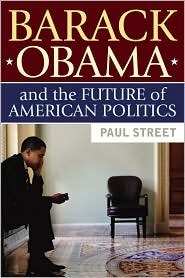
4 For details and sources, see Paul Street , Barack Obama and the Future of American Politics (Paradigm, 2008), xxii-xiv, 12-22.
5 “Obama Breaks Fundraising Records,” Voice of America News, October 21, 2009, at www1.voanews.com/english/news/a-13-2008-10-21-voa47-66601732.html; Street, Barack Obama and the Future of American Politics, 19–22.
6 Ken Silverstein, “Barack Obama, Inc.: The Birth of a Washington Machine,” Harper’s (November 2006).
7 Andrew Malcom, “Obama’s Small Donor Base Image is a Myth, New Study Reveals,,” LA Times, November 28, 2008) http://latimesblogs.latimes.com/washington/2008/11/obama-money.html
8 For details and sources, Street, Barack Obama and the Future, 19-22.
9 Matthew Mosk and Alex McGillis, “Big Donors Among Obama’s Grass Roots,” Washington Post, 11 April, 2008, p. A1.
Hip-Hop and Forbes: Parallels of Image and Inequality
(This commentary by Jared A. Ball is re-posted from Black Agenda Report)
 “The Blackness on top only masks the deepening levels of Blackness at the bottom.”
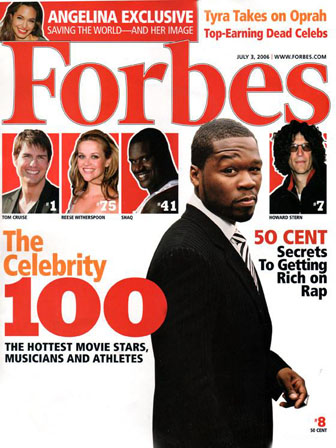
The newly released Forbes list of Top 25 money earners in music and the newly released report from the National Urban League of Black inequality in the United States should be paired and used by even the most ardent lovers of hip-hop as proof of one very powerful lesson: The Blackness on top only masks the deepening levels of Blackness at the bottom. Hip-hop, the broader entertainment industry, and the presidency of Barack Obama all, as much as anything else in this country, splendidly demonstrate the point: Heavily promoted Blackness masks Black suffering while enriching a mostly White, male elite.
The Forbes list shows the problem in microcosm. The success of a few rappers hasn’t helped the rest of the hip-hop community any more than the election of the first Black president has helped Black people. And in neither case do the rewards of a select few compare to that which they create for their respective betters. In fact, in each case the respective betters are all mostly housed on Wall Street where each do better than their more highly promoted and meticulously selected blacker representatives. So, for instance, and according to Forbes, the highest earning rap group, the Black Eyed Peas, earned roughly $61 million over the last 12 months. But this is not even half what the top earning band made over that same last year; U2 pulled in about $195 million. And neither amount amounts to much compared to the revenues generated by the owner of the label that owns both of these groups. Vivendi, the parent company of Universal Music Group, was well over $40 billion in 2010.
As it is below, so it is above. In the macrocosm, according to a recent National Urban League study, the standard of living gap between White and Black Americans has actually worsened during the time of the Blackest face in the highest place, the Obama presidency. So just as the highest earning Black musicians bring in less than has about half of their richest counterparts, Black America’s standard of living is only about 70% that of Whites and dropping. And even when the highest earning rap group is often referred to as “multi-racial” and “multi-ethnic,” and even though it’s fronted by a White woman they still can’t close these divides! Even when the president is Black and fronted by White corporations Black inequality persists, and gets worse!

And for real? As big as hip-hop is globally none of the other 5 Black faces on that Forbes list are strictly hip-hop. Jay-Z and P. Diddy make more of their money through other ventures, Beyonce, Usher and Rihanna are pop singing, sometime actors. Hip-hop isn’t even on the list. It’s as broke as the communities that produced it. But just as it would take the accumulated sum of all those other 5 Black faces on that Forbes list to reach the top White group, the Urban League report shows that the accumulated sum of a Black president leaves Black people still having less than half the access to health care as Whites but still twice the unemployment. And all those top Black musicians still leaves the bulk in hip-hop needing equal pay and health care themselves, just ask the Grassroots Artist Movement (G.A.ME) who have been trying to organize around that for years.
But the real point is that in the end, as Jim Hightower pointed out recently, the biggest thieves walk off with it all with no questions asked, like the hedge fund manager who made $2.4 million an hour last year, or all those major corporations who pay no taxes while we are forced to watch schools close and teachers blamed. It is always a good exercise to compare popularly touted individual success stories with the conditions of the communities they’ve escaped.
We are constantly told that the reason Michigan is in such a dire financial state is because we don’t have a “business-friendly” environment.
This has been the mantra of the last four Governors of Michigan and it was reflected in the policy decisions to further deregulate the state culminating in the elimination of the Michigan Business Tax this year under Governor Rick Snyder.
The claim by Snyder, individual business owners, the Chamber of Commerce and groups like the West Michigan Policy Forum is that limited or no business tax will attract new companies thus creating new jobs that will have a trickle down effect in generating local and state revenues.
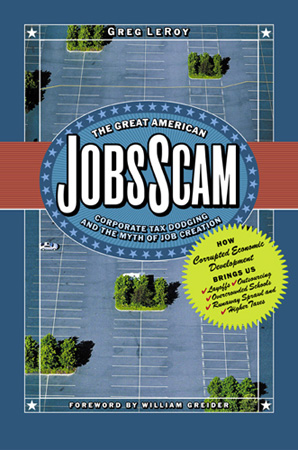
Not only has this notion been factually dismissed by authors such as Greg LaRoy in his well documented book The Great American Job Scam: Corporate Tax Dodging and the Myth of Job Creation, the very idea that eliminating business taxes will make it impossible for states to be fiscally responsible. A new report by the Boston-based group United for a Fair Economy can help shed some light on this reality.

According to the report Flip It to Fix It: An Immediate, Fair Solution to State Budget Shortfalls, “At the core of the budget crisis facing states are regressive state tax structures (comprised of the major state and local taxes) that are unfair, unsound, and unsustainable by design.”
The researchers at United for Fair Economy state that of the current state tax structure was inverted, which would mean that business pay more of the share of taxes that states could eliminate their deficit. The report goes on to state, “The inversion exercise takes a state’s current distribution of state and local taxes by income quintile (lowest 20 percent, second 20 percent, middle 20 percent, fourth 20 percent, top 20 percent) and flips it at the 50th percentile mark, thereby making a regressive structure progressive.
This resulting progressive tax structure has major benefits to states.
- It raises significant revenue. If every state inverted its tax structure, states would raise a combined $490 billion, wiping out deficits with cash to spare to invest in economy-enhancing activities.
- It is unmatched in its economic efficiency, which encourages steady and strong economic activity and widespread prosperity over time.
- It provides commonsense equity, with wealthy families contributing a greater share of their income in taxes than low- and middle-income families.
The report also provides a state by state breakdown of the current and inverted tax structure to show how states could eliminate their budget deficits – as is reflected in this graph.
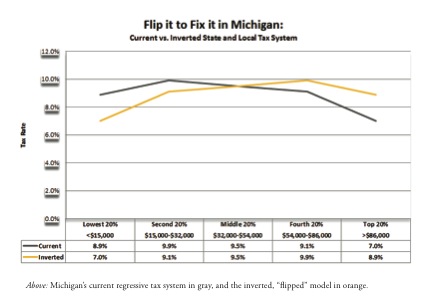
Inverting the current tax structure is not being proposed by even most progressive organizations and since the current administration and legislative body seems bent on turning more of the public sector over to the private sector that such a policy will not even be considered in the near future.
Advertisers to blame for childhood obesity in US according to American Academy of Pediatrics
According to a new statement by the American Academy of Pediatrics (AAP) the amount of time kids spend watching media and the targeted junk food ads as contributed significantly to childhood obesity in the US.

MLive posted a story today announcing the new statement by the AAP, which provides a pretty good summary of the findings and ends with a list of actions steps the association is calling for:
• A ban on junk-food advertising during TV shows geared for children.
• A ban on interactive ads and games for children and teens through cell phones, digital TV and other media.
• Federal funding for research into the effects of media use on children.
• More ads and video games promoting healthy food choices.
The action suggestions are a welcomed contribution to the fight against childhood obesity and they are important for a greater understanding on what role media has in the lives of children.
It would have been useful if the MLive writer had talked to the local TV stations to get a response to this new study from the AAP, especially since they all air lots of ads for unhealthy junk foods during children’s TV programs. We contacted channel’s 8, 13 and 17 on this issue, but have not received a response from any of the stations.
In addition, the MLive story does not provide other resources available for parents, teachers and community members concerned about this issue. There is an excellent study on how food and beverage marketers target children from the Center for Digital Democracy and a great toolkit for advocates from the Berkley Media Studies Group. For educators there are great resources to teach media literacy about junk food ads, particularly the lessons plans you can access from the Media Awareness Network.
Lastly, it would have been useful for those with MLive to talk with area pediatrics in West Michigan in order to put a local spin on the issue or the group Stop Targeting Our Kids (STOK) who have been confronting issues around media and children for the past 2 years.
Texas Gov. Rick Perry’s National Day of Divisiveness
(This article is re-posted from PRWatch.)
Texas Governor Rick Perry plans to host a “National Day of Prayer and Fasting” on Saturday, August 6 at Reliant Stadium in Houston, Texas, in an event is billed as a “non-denominational, apolitical Christian prayer meeting.” Despite the “apolitical” label, the event has some political undertones, particularly since Perry has been flirting with a run for the Republican presidential nomination and currently serves as chair of the Republican Governors Association. Perry has invited the other 49 U.S. state governors to the event. The portrayal of the event as a “nondenominational” ceremony is a misnomer, too, since the event will be exclusively Christian, and no other belief systems will be represented.
Controversial Host
Controversy surrounding Perry’s Day of Prayer is growing quickly. The event is hosted and funded — including the rental of Houston’s huge stadium — by the Tupelo, Mississippi-based American Family Association (AFA), which the Southern Poverty Law Center (SPLC) labels as an anti-gay hate group. A June 11 editorial in the Houston Chronicle opposing Perry’s Day of Prayer said “There could hardly be a more divisive, unforgiving group than the American Family Association,” to host the event.

The AFA makes no attempt to hide its disdain towards gays and other members of society it considers inferior. In 2010, Bryan Fischer, AFA’s Director of Issue Analysis for Government and Public Policy, said, “Homosexuality gave us Adolph Hitler, and homosexuals in the military gave us the Brown Shirts, the Nazi war machine and six million dead Jews.” Fischer has also openly attacked native Americans. In a February, 2011 blog post (pdf), Fischer wrote that native Americans are morally and culturally inferior because of their refusal to accept Christianity. He wrote, “In all the discussions about the European settlement of the New World, one feature has been conspicuously absent: the role that the superstition, savagery and sexual immorality of native Americans played in making them morally disqualified from sovereign control of American soil.” Moreover, Fischer blamed high rates of poverty and alcoholism among native Americans on their refusal to accept Christianity, writing, ” …Many of the tribal reservations today remain mired in poverty and alcoholism because many native Americans continue to cling to the darkness of indigenous superstition instead of coming into the light of Christianity and assimilating into Christian culture.”
AFA’s president, Tim Wildmon, dismisses SPLC’s labeling of AFA as a hate group, saying AFA’s stand on homosexuality represents the beliefs of “a lot of people who have traditional values.” He adds that the purpose of the Day of Prayer is to pray for an end to the “debasement of our culture.” Translation: to pray for an end to America’s increasing acceptance of homosexuality.
Questionable Endorsers
The Rev. John Hagee, pastor of the Cornerstone Church in San Antonio, Texas, is listed as an event endorser. He is the guy who said in a 2006 interview that Hurricane Katrina was God’s retribution against New Orelans for planning a gay pride parade. Like Harold Camping, the elderly radio pastor who gained fame in May, 2011 through his absurd failed global apocalypse PR campaign, Hagee preaches about the Rapture and the second coming of Jesus Christ. Hagee predicted on television that the world will end within 20 years. Hagee openly endorsed John McCain for the Republican presidential nomination in 2008. Another event endorser, David Barton, is a religious activist in Texas, and also a political consultant to the RNC, who says the United States is a “Christian nation” and calls the separation of church and state “a myth.”
In appearances across the U.S., Barton has assured pastors that they are permitted to use their pulpit to endorse political candidates, even though doing so violates IRS rules. Perry’s Day of Prayer is causing concern among progressive Houston-area clergy, so much so that they wrote a letter criticizing the event for breaching the wall of separation between church and state, for excluding non-Christians, and for the event’s partnership with AFA. In their letter, Houston Clergy Council members wrote, “We ask that Rick Perry leave the ministry to us and refocus his energy on the work of governing our state.” They point out that Perry’s event is inappropriate, particularly given the religious diversity of the Houston area.
The “Day of Prayer” event is drawing considerable national attention to Perry, coincidentally just as he considers a run for the Republican presidential nomination. Despite this, and the obvious ties between some event backers and the Republican party, Perry denies that the event is politically motivated. Whatever Rick Perry says, though, if he does declare he is running for president, he can credit this controversial event with boosting his name recognition throughout the country.
The Holland City Council Vote and Talent Retention
Last week’s Holland City Council no vote on an anti-discrimination ordinance has continued to have ripple effects from all sides of this debate.
On Saturday is was reported that a member of Holland’s Human Relations Commission resigned in protest because of the decision by the City Council to vote no on the anti-discrimination ordinance. Other people upset by the vote have begun a boycott of Holland businesses and on the other side of the fence a group has said they will finance efforts to unseat 3 of the 4 city council members who voted for the ordinance.
There have also been a series of articles in the Grand Rapids Press concerning how the Holland City Council vote will impact the local business climate. Last Thursday there was an article that included comments from some area business who think the vote doesn’t promote a welcoming environment. A representative from a consulting firm was quoted as saying, “I’m concerned about Holland’s ability to keep and attain talent because, in the future, there will be a talent war.”
MLive also posted an additional article on Thursday about the issue of attracting “talent” to communities like Holland, which also included a plug for a forum held at the Amway headquarters on Friday morning, where the Mayor’s of Holland, Muskegon and Grand Rapids would be debating the importance of attracting a creative class to West Michigan.
The Press then published a story on Friday about that same forum on retaining talent that was hosted by the Grand Rapids Chamber of Commerce and is a project of the various West Michigan chambers. The article mostly summarizes what each of the area mayors had to say about how you attract and retain talent in one’s community. There was some disagreement on how to attract and retain talent, but there were no voices questioning the very idea of talent retention or even a serious look at what that means.
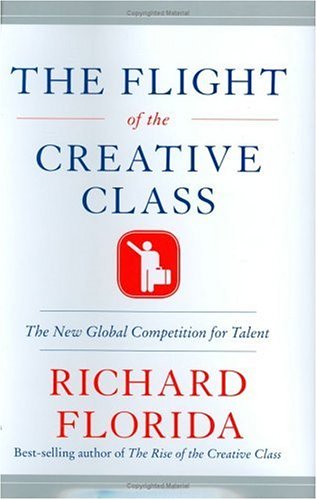
Many people are aware of the idea of talent retention and the creative class through the work of Richard Florida, author and speaker who works for the Martin Prosperity Institute. The Martin Prosperity Institute, which appeals to hip, young professionals, is nothing more than a slick representation of contemporary neo-liberal capitalism. In other words, how can we help you to become prosperous on the backs of others. Florida and his colleagues at the Martin Prosperity Institute talk about the creative class and culture, but they casually ignore any serious conversation about the fact that their formula will exclude a huge sector of society…….namely working class people.
You see all this discussion about how to retain talent is predicated on the lack of interest in retaining working class people. The thousands of people who live in poverty in Grand Rapids alone are not be courted, recruited and are not the subject of talent retention. They are merely used for their labor to do tasks that apparently do not require talent or creativity, like pick the food we eat, scrub the floors, change the linen, pick up the trash, take care of the elderly and tend to the lawns of West Michigan.

The very idea of a creative class is in itself misleading. If we are going to apply the term class to people in this society, then we only have 2 classes – the ownership/capitalist class and the working class. Sure there is some diversity within the working class in terms of income levels, but ultimately those who do not have economic and political power are part of the working class.
The Holland City Council Vote and Talent Retention
This brings us back to the Holland City Council vote. I am all in favor of such a vote passing in Holland. Having said that, I also think it is important to raise serious questions about the benefit and intent of such an ordinance.
It is important to have an ordinance that would provide some legal recourse for people who are discriminated against. Grand Rapids passed an anti-discrimination ordinance in the mid-90s but people in the LGBT community still face serious discrimination in this community.
In Mayor Heartwell’s comments at the talent retention forum on Friday he admitted that such an ordinance is more symbolic than anything else. However, what he said has less to do with protecting and respecting people’s rights than the role such an ordinance plays in promoting business interest. Heartwell said the ordinance was more about marketing. “What cities can do to attract talent has more to do with place-making. If you create a vibrant area where people want to be, then I think (recruitment) happens.”
So a question that could be asked is, “should cities attract members of the LGBT community because it makes good business sense?” If this is the case then what are we really gaining? Another way to ask the question is, “what about working class members of the LGBT community that are not part of the creative class, will they be welcomed and recruited?”
It is important to recognize at this point that the ideas of Richard Florida are not really new ideas, they are old ideas that are simply repackaged. As a result of the social movements of the 1960s and 70s many businesses realized that if they just started to include women and racial minorities on their boards that this would gain them some points within those circles.
Coca Cola was one of the first businesses to attract more African Americans to leadership positions, in part as a response to the Civil Rights struggle, but more because they are based in one of the largest Black cities in the US (Atlanta) and because they wanted to attract more African American consumers. Coca Cola has been fairly successful in being a more inclusive company in terms of who sits on the board of directors and who has been the CEO in recent decades. However, Coca Cola is a company that makes tremendous profit from selling a product that is fundamentally unhealthy for human consumption, exploits workers worldwide, is complicit in serious human rights violations and destroys ecosystems.
The question is, is the ultimate goal of passing an anti-discrimination ordinance about justice or is it about promoting and enhancing business interests? It seems clear from the news coverage and the interests of groups working to retain talent in West Michigan that their interest has more to do with the profit motive than with justice and it is a question that deserves serious discussion.
Both Vicki Eaklor in her book Queer America: A People’s GLBT History of the United States and Michael Bronski’s A Queer History of the United States document the tension that has always existed within the LGBT community around whether or not their struggle was merely to be accepted/included in a heterosexist society or to struggle for greater liberation, both sexual and social liberation.
Are we to be content that companies like Herman Miller offer same sex partner benefits or do we question the necessity and sustainability of a company that manufacturers and markets office chairs that range from $500 to $5,000? These are the kind of questions and conversations that are vital to the future of social justice and they are the kinds of questions cannot be lost amidst the simplistic talent retention chatter currently underway.
 Grand Rapids Institute for Information Democracy