(This article by David Rosen is re-posted from CounterPunch.)

June 27th was National HIV Testing Day. It commemorated the 30th anniversary of the first official recognition of HIV/AIDS by the U.S. Centers for Disease Control. Three decades ago, an unknown malady emerged on the world-historical stage. First in clinics and hospitals in San Francisco, Los Angeles and New York, and then spreading throughout the country, previously healthy gay men were reporting peculiar symptoms that, ultimately and inevitably, led to painful deaths.
Today, HIV/AIDS is a worldwide pandemic. The UNAIDS Global Report 2010 estimates that at the end of 2009 approximately 31 million adults and 2.5 million children were living with the disease. While there is no known cure for the disease, the U.S. and other advanced countries offer a “cocktail” of powerful drugs (known as protease inhibitors) that fights the infection. These drugs help reduce the HIV virus and keep the immune system as healthy as possible, decreasing the complications that may develop.
In the U.S., an estimated 1.1 million people live with the disease. The principle modes of transmission involve: unprotected male-to-male anal sexual intercourse; injection drug use; unprotected heterosexual sexual intercourse; and other means like contaminated medical syringes.
Nearly half (500,000) of those infected in the U.S. are African-Americans. A recent study by the Black AIDS Institute, “Deciding Moment: The State of AIDS in Black America,” notes: “Every year, 56,000 Americans become infected with HIV. Nearly one out of two newly infected people are Black.”
While New York, California and Florida have numerically greater numbers of people living with AIDS, Washington, DC, is the nation’s AIDS capital. Measured on the basis of those infected per 100,000 of the population, Washington has an estimated 119.8 AIDS cases compared to New York’s 24.6, Florida’s 23.7 and California’s 10.2.
While President Obama issued a video message encouraging Americans to get tested for HIV/AIDS to commemorate for National HIV Testing Day and First Lady Michelle Obama visited an HIV/AIDS clinic in Botswana (and even helped paint it) during her recent trip to Africa, these gestures seem pathetic as Washington faces an HIV/AIDS epidemic.
* * *

HIV/AIDS is ravaging minority communities in the U.S., especially the African-American and Hispanic. Black Americans account for 12.6 percent of the U.S. population; when those who identify with more than one race are included, the total is 13.6 percent. Hispanics/Latinos have become the nation’s largest “minority” group, accounting for 16.3 percent of the population. However, African-Americans account for:
§ 45 percent of new HIV infections;
§ 46 percent of people living with HIV;
§ 48 percent of all new AIDS diagnoses; and
§ 57 percent of all HIV-related deaths.
Digging deeper, these figures get even more alarming:
§ Black women account for 61 percent of the HIV infections among women – this is nearly 15 times greater than the rate for white women.
§ Black youth aged 13 to 19 years are only 17 percent of U.S. teenager population, but represent 68 percent of all new AIDS diagnoses among teens.
§ 46 percent of Black gay and bisexual men are infected with HIV, compared to 21 percent of white men and 17 percent of Hispanic males.
This situation is grimmest in Washington, DC. The District has a population of just over 600,000 pepole of which nearly 50 percent are black and 9 percent are Hispanic. A June 2011 D.C. Department of Health report found that the number of HIV/AIDS cases qualified as an epidemic under World Health Organization (WHO) criteria. Among its findings for 2009 are:
§ An estimated 16,721 Washingtonians over the age of 12 were living with HIV/AIDS;
§ 75.2 percent of these with HIV/AIDS were African-American;
§ Residents between 40 and 49 years of age have the highest infection rate among District residents (7,393 per 100,000 residents).
The level of HIV/AIDS in Washington represents 3.2 percent of the population, an infection level greater than in many developing nations. The WHO places an epidemic rate at anything greater than 1 percent of the population.
It must be noted that over the last few years, the number of new HIV/AIS cases in Washington fell by 50 percent. In 2005 the number of deaths from HIV and AIDS was 326 and by 2009 it had fallen to 153 death. DC Mayor Vincent Gray took credit for these developments. “We are getting people diagnosed earlier and into care and treatment faster for their health,” he said, “thereby reducing the chances that others will get infected.”
A comparable pattern is found in New York City. As of yearend 2009, 108,886 people were reported living with HIV/AIDS, of which two-thirds were male. However, nearly 90 percent were minority people, including 52.4 percent Africian-Amerian and 35.5 Hispanic.
Amidst the intensifying economic restructurting and calls by (white) Republicans for fiscal austerity, one can only wonder if we will see a reduction in national (and especially federal) efforts to prevent the spead of HIV/AIDS. Sadly, the likely reduction in preventive efforts will lead to an increase in the number of those infected with HIV/AIDS, especially within minority communities.
* * *
“We pause to mark the thirty years we have been fighting HIV/AIDS,” President Obama recently proclaimed. “As we remember people in our own lives we have lost and stand by those living with HIV/AIDS, we must also rededicate ourselves to finally ending this pandemic – in this country and around the world.”
In July 2010, the Obama administration introduced the National HIV/AIDS Strategy, the nation’s first comprehensive AIDS plan. It is organized around three core goals: to reduce new HIV infections; to increase access to care and improving health outcomes for people living with HIV; and to reduce HIV-related disparities and health inequities.
The U.S. spends $19 billion annually on domestic HIV/AIDS prevention, care and research. Last year, the U.S. Dept. of Health and Human Services allocated $30 million in a major initative to develop better HIV/AIDS prevention methods. The announcement was met with a ho-hum shrug by AIDS activists. Michael Weinstein of the AIDS Healthcare Foundation expressed the widely shared assessment: “This will be another report that will gather dust on the shelves of the Library of Congress.”
Sadly, any new federal effort will likely have only a marginal impact on the continuing spread of HIV/AIDS within the African-American community. Afrcan-Americans have been disproportionately affected by HIV/AIDS since the epidemic’s beginning and this disparity has only deepened over time.
HIV/AIDS among gay and bisexual black men is more than double that of white men, but the transmission patterns vary between both groups. The “down low” phenomenon has been much commented upon within the African-American media, but heterosexual transmission and injection drug use accounts for a greater share of infections among black men than white men; white men are more likely to have been infected through unprotected homoerotic anal sex.
Most disturbing, newly infected black gay and bisexual men are younger than their white counterparts; those aged 13–29 account for 52 percent of new infections among blacks compared to 25 percent among whites.
Social issues will likely play a secondary role in the 2012 election. Jobs, jobs and the deficit will increasingly dominate politial discource. Politicans are sharpening their knives aggressively in their quest for budgetary expendables. As 235 years of American history has taught us, the poorer and darker you are, the more expendable you are.
While Obama has maintained a relatively consistent support for gay rights (e.g., his effort to end Don’t Ask/Don’t Tell), issues like abortion rights, immigration and gay marriage (i.e., “marriage equality”) have been causalities of his compromiser’s half-step shuffle. In key domestic policy challenges, most acutely exemplified in the health-insurance battle, financial reform struggle and the BP-Gulf disaster, the “good” was sacrificed for the “possible” and the vast majority of Americans came out the loosers in the political sausage-making process.
Short of another major HIV/AIDS crisis similar to that which beset the U.S. in the early ’80s, the country will absorb the likely increase in HIV/AIDS infections over the next few years, especially within African-American and Hispanic communities. This will be one of the unintended consequences of new austerity economics imposed by Republican and complicit Democratic budget cut.
For eleected officials, and the corporate lobbyists who really run Washington, the lives of the poor, especially black and Hispanic, are merely collateral damage in the class war they are waging to maximize profit. Their efforts fit perfectly with the new 21st century American ethos, one in which prejudice has replaced reason and self-interest trumps the social good.
New Media We Recommend
Below is a list of new materials that we have read/watched in recent weeks. The comments are not a “review” of the material, instead sort of an endorsement of ideas and investigations that can provide solid analysis and even inspiration in the struggle for change. All these items are available at The Bloom Collective, so check them out and stimulate your mind.
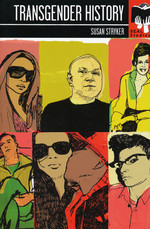
Transgender History, by Susan Stryker – This book is not only educational and informative on the history of transgender struggles it demonstrates that in many ways trans people have been at the front lines of much of the contemporary fight for gay liberation. Susan Stryker does an amazing job dissecting this history and making a strong case that Trans history needs to be explored more by everyone and not just the LGBT community. What gets left out of much commentary on the Stonewall uprising is that it was Queens and Trans people who were taking the strongest actions against police brutality. More than that Stryker points out that several years before Stonewall there was another uprising in San Francisco at Compton’s Cafeteria and again it was the Trans community taking on the cops. The book is also invaluable because it spends a significant amount of time getting readers to think beyond the traditional gender binaries. A must read for anyone community to LGBT Liberation.

The Arab Revolt and the Imperial Counterattack, by James Petras – The Arab Spring is still in progress, but after 6 months it is important to have some solid analysis of what is taking place. Historian James Petras provides excellent insight into the Arab Revolt and more importantly for those of us in the US he sheds light on the response from the Obama administration. Petra looks at the historical US relationships in the Middle East and makes clear that the current administration has been consist with all previous administrations since WWII. Petras then frames the US response over the last 6 months as an imperial counterattack against the popular democratic uprisings throughout the Middle East, whether it is Egypt, Tunisia, Gaza and Libya. The book is only 78 pages, but it packs a punch and is a great resource for understanding how the US is responding to the Arab Spring and what it is doing to try to undermine these popular uprisings.

The John Carlos Story, by John Carlos – Many of us in the US are familiar with the famous photo of John Carlos and Tommie Smith giving the Black Power sign while standing on the Olympic medal platform in Mexico City in 1968. However, many of us do not know the reasons behind the athletes’ actions and how it was part of a much larger campaign for global human rights. The John Carlos Story not only illuminates this powerful moment in history it also tells the story of a man who is not limited to that moment. John Carlos reveals much about his childhood and his fight against racism and injustice. Carlos was part of a growing group of athletes in the US and around the world that used sports as a platform for social justice and radical politics. The book was written with left sports writer Dave Zirin who has been advocating for years that sports have always been a venue for radical politics in the US. After reading The John Carlos Story one would be hard pressed not to agree with Zirin’s assessment. An important book about a man filled with passion and determination to fight for what he believed was the right thing to do.
Not Just A Game: Power Politics and American Sports (DVD) – Left sports writer Dave Zirin narrates this power new documentary about how sports has always been a window into American sports. Zirin breaks down this larger topic into the areas of US sports and militarism, sexism, racism and the courage of athletes to bring social justice and radical politics into the mainstream of sports. Zirin looks at amazing courage of athletes like Billy Jean King, Curt Flood, Pat Tillman, Kathy Switzer, Martina Navratilova, Jack Johnson, Jackie Robinson and Muhammad Ali. Moving stories, courageous people and a great resource for looking at the intersectionality of justice issues.
(This article by Todd Heywood is re-posted from Michigan Messenger.)
Two Michigan state Senators (one being Mark Jansen) have proposed legislation which would allow counseling students to decline to counsel some clients because doing so would violate their “sincerely held religious belief or moral conviction.”
The legislation is a response to the ongoing case of former Eastern Michigan University student Julea Ward. Ward was removed from a counseling program after refusing to counsel a gay student about his relationships. She said she could not do that as it would be encouraging or validating a “lifestyle” she did not condone of believe in because of her Christian faith. Ward transferred the student to another counselor, but soon found herself being booted from the university. She sued in federal court, but thus far the courts have ruled that EMU’s counseling education program was within its rights to boot her.
But Detroit Democratic Sen. Tupac Hunter says Ward was “discriminated against” by the university. That is why he agreed to co-sponsor the legislation with Grand Rapids area Republican Sen. Mark Jansen.
“[Ward] was met with I feel an inappropriate response whereby she was penalized for having her own moral conviction,” Hunter told the Michigan Messenger. “The legislation was crafted to do exactly what it says. To prohibit an individual who is in one of those programs who has a value conflict from being discriminated against.”
Similar “conscience” bills has been introduced in the state legislatures in previous years which would have allowed pharmacists and doctors to decline to provide services based on moral convictions. Those bills have always died in the legislative process. Opponents of the legislation noted that if passed it would have allowed, for example, a Catholic pharmacist to refuse to fill a prescription for birth control pills or the so-called “morning after pill.”
While Hunter says the legislation is not about allowing counselors to discriminate against gays, but rather is broadly structured to respect the moral convictions and religious beliefs of counseling students. But he said he sees limits to the legislation.
Asked if a white nationalist who was an adherent of a brand of Christianity called Christian Identity would be allowed to invoke their sincerely held religious beliefs to refuse to counsel a person of color, Hunter replied, “No. That is where I draw the line.
“You pose a scenario that some one could suggest that’s like being discriminated against because of sexuality,” said Hunter. “When I believe that there is a moral value, what I believe, that is one thing. To say that, you know, that sexuality is on the same level as an issue of racism, that is a debate we need to have.”
Hunter said the Bible prohibits homosexual activity but does not support racism. Asked if under his scenario he weren’t setting universities and colleges up to be the arbitrators of which religious values were and were not valid, Hunter said, “No.”
Civil rights activists were quick to pounce on the legislation and the Detroit senator’s statements.
“All respected mental health organizations say that homosexuality is not a disease that can be treated,” says Wayne Besen, executive director of Truth Wins Out, a national organization that works to counter the effects of ex-gay counseling or reparative therapy promoted by many churches. “Any counseling that rejects coming out as an option is by nature inappropriate, unhealthy and damaging to the client. Furthermore, the counseling should be about the client, not the self-serving needs of the therapist.”
Equality Michigan, an LGBT rights group based in Detroit, opposes the legislation.
“What is frightening about Senator Hunter’s bill is that just about any bias could be argued to qualify as a ‘sincerely held religious belief or moral conviction,’” says Emily Dievendorf, policy director of Equality Michigan. “Any bias would, under this bill, allow counselors to refuse help to individuals seeking their guidance. It is shameful and sad that the desire to hurt the gay community was the motivation for the bill in the first place. Creating broad flexibility in our law to permit discrimination endangers all people. If this bill becomes law, we will see individuals in crisis being refused counseling due to their race, religion, sexual orientation, gender identity, sex, socio-economic status – you name it.”
“This would set a very dangerous precedent. If the Christian therapist can reject gay clients, why can’t a fundamentalist mail carrier elect not to deliver letters advertising concerts for the Gay Men’s Chorus? What is happening in Michigan could create a chaotic and divisive situation where fundamentalists are exempt from laws that govern the general public,” says Besen. “The law is meant to protect a person’s right to worship according to conscience. Unless the counselor is forbidden from such worship, his or her rights are not being violated. The counseling profession by nature is one where an expert provides advice to people with whom they may personally disagree. If a client is told by such a perceived expert that they are unfit to be treated, such unprofessional behavior and moral judgement can damage the client.”
Dievendorf also raises safety concerns associated with denying services to counseling clients.
“This bill also threatens lives through potential delays in access to counseling and even lacks requirements to document the personal bias that is supposed to enable counselors to deny treatment,” she said. “Imagine the potential psychological harm when a client is denied or delayed services because of a counselor’s personal distaste – will we see more self-harm or suicides? We all know how harmful discrimination can be. Senator Hunter is now trying to promote it.”
Six words to describe Grand Rapids
It was announced during the 4th of July celebration that the Amway corporation, along with MLive and the Grand Rapids Press have teamed up to offer yet another contest.

The contest is called My GR 6 and is designed to get people to submit a 6-word phrase that best describes the City of Grand Rapids. The winner of this contest will be showered with $10,000 worth of local prizes that have been donated by some of the larger local businesses and entertainment venues.
Already there has been a significant media buzz around the issue and lots of people submitting their 6 word statements. First, I want to state upfront that there are a lot of things happening in this community that are beneficial, creative and truly support what the famous educator/activist Scott Nearing called “the good life.” What Nearing meant by the good life was social justice, ecological integrity and economic simplicity.
Second, while this project may get people to reflect fondly on the positive attributes of this city, it will not likely get much critical reflection. Some obvious criticisms are that this new “contest,” which was hatched by some marketing personnel with the Amway Corporation, should raise red flags for anyone who hasn’t completely bought into the PR generated history of the Ada-based company, its founders and their families.
The Amway Corporation and the DeVos & Van Andel families have a long history of influencing Grand Rapids both economically and politically. Using the wealth these families made off the backs of workers and those who bought into the pyramid-scheme sales structure, the Amway families have purchased property in the downtown part of Grand Rapids and played a major role in the re-construction of that part of the city.
These assets that Amway family members have acquired has provided them significant leverage in determining what kind of development was to occur, such as hotels, the arena, convention center and medical mile.
In addition to the property assets they possess, they have also leveraged what happens in the city through the political process, whether that has been through major contributions to the Republican Party or area candidates running for office at all levels. They have also influence downtown development through support and participation in such groups as the DDA and Grand Action.
More recent participation in cultural institutions such as the Art Museum, the Public Museum, UICA and the now popular ArtPrize have also provided tremendous clout to the Amway families who have become much better at using the wealth they made from other people to create a much friendlier buffer between unbridled greed and a growing class of people living in poverty.
“Grand people, great faith, generous giving.” Richard and Helen DeVos MyGR6 phrase
The Third and last point to raise here is that while it is certainly important to point out the positive elements of what makes up Grand Rapids, it too often means that we do not look at the negative and even destructive forces in this city. Not directing our gaze or our creativity toward these very real elements of this city is exactly what the Amway families want us to give our attention to.
So, in keeping with the spirit of the MyGR6 contest, I would like to offer up 6 words to get us to think about the not so pleasant realities that permeate our city.

Poverty – Last week we reported on the new unemployment statistics for Kent County, which currently has 8.8% of unemployment. What the statistics don’t reveal is that there are thousands of people living in poverty in Grand Rapids, both the unemployed and underemployed. This means that thousands of people are faced with the possibility of being evicted, not being able to pay utility bills, forced to rely on food pantries and purchase cheap foods, which is often unhealthy food. Living in poverty often leads to people living under significant stress and coping with depression.
In the neighborhood that I have lived in for 26 years, this kind of poverty also has led to abusive landlords who take advantage of those in poverty by taking their monthly rent but not investing is a safe and healthy environment. This is part of My Grand Rapids!
Racism – It is not a secret that Grand Rapids in one of the most racially segregated cities in the country. In addition to the segregation, communities of color are still disproportionately treated as second-class citizens. The poverty rates are higher for Black and Latino/a communities and there is a disproportionately higher rate of incarceration for these two communities of color.
I also know numerous people in the Arab American community who continue to receive threats and verbal assaults on a daily basis. The same is true for all communities of color and those that are also part of recent immigrant communities, who constantly live in fear of harassment from both individuals and cops. Grand Rapids is home to thousands of migrant workers who make poverty wages and endure harsh working conditions even though they provide the labor that brings us most of our food. This is part of My Grand Rapids!
Sexism – According to the Kent County Sexual Assault Prevention Action Team, there are significant numbers of women and children who are sexually assaulted on a monthly basis in Grand Rapids. Grand Rapids is no different from the rest of the country in that roughly 30% of the women who live in this community will be sexually assaulted in their lifetime. This is not a marginal number, but the number does not convey the realities of the ongoing trauma that those who are victims of sexual assault experience throughout their entire lives, which includes some of my closest friends and those I work with. This is My Grand Rapids!
Homophobia – While it is true that the City of Grand Rapids passed an anti-discrimination ordinance in the mid – 1990s, there is still significant discrimination against members of the LGBTQ community. This discrimination is faced in the areas of housing, employment, health services and within religious institutions. After months of research and interviews with people in the LGBTQ community for the People’s History Project, it is clear that Grand Rapids has a long way to go to not only respect people in the gay community, but to provide social, cultural and public space for them to feel safe and welcomed. This is My Grand Rapids!
Pollution – For some, Grand Rapids is known as a “green” city. However, despite some progress being made around environmental issues, Grand Rapids is still a community with an unsustainable amount of pollution. Air pollution is problematic for everyone, but particularly for people with asthma and other respiratory issues. Communities of color and working class neighborhoods are disproportionately closer to the highways that run through this city and are exposed to more air pollution caused from vehicle exhaust.
Grand Rapids doesn’t have adequate green space and needs to improve the urban canopy of trees significantly. Water pollution has improved in some areas but we need to drastically reduce both the amount of contaminants going into water and the amount of water consumed in this city. Grand Rapids does not as of yet have a plan for dealing with composted matter, does not allow people to raise chickens and is still far off from being a city where bicycle and mass transit are the dominant forms of transportation.
Exploitation – The economy of Grand Rapids operates within a Capitalist model and is even celebrated as a place of famous entrepreneurs – ie., the Amway families. This means that we have significant concentrations of wealth in the hands of a few, while working people are exploited on a daily basis.
The “captains of industry” have mechanisms they have created to dictate what happens in Grand Rapids, such as the Chamber of Commerce, the Right Place Program, the DDA and other business programs that exist to push forth a corporate agenda. We can see this — what Michael Barker calls soft power — with the power of business schools at local universities as well as the clout that wealthy families exert through their numerous foundations.
In fact, writers like Barker would argue that Amway’s creation and participation in the MyGR6 contest is a form of soft power because it ultimately supports a system which only benefits a certain sector of the population. If we truly want Grand Rapids to be a grand city, then we need to have critical dialogue followed by the kind of systemic change that would not allow so few to have power over so many.
The Afghan War after bin Laden
(This article by Jim Naureckas is re-posted from Fairness & Accuracy in Reporting.)
With Osama bin Laden dead, can the United States finally bring an end to the Afghan War, its longest-lasting foreign military conflict? It’s an obvious question, since the invasion of Afghanistan was largely portrayed as an effort to catch the leader of the group that carried out the September 11 attacks.
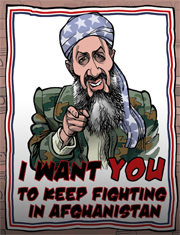
Corporate media did sometimes address this issue. On ABC (5/4/11), Christiane Amanpour asked in regard to bin Laden’s killing, “And many people are saying, well, does this require the U.S. to leave Afghanistan right now?” She answered her question: “The job is not finished there. You’ll talk to the commanders. We’ll talk to them, it’s the Taliban there who are waging war against the United States, and that job is not finished.” When anchor Robin Roberts noted that many Arabs were calling for the U.S. to get out of Afghanistan, Amanpour replied, “It looks like they won’t be able to yet.”
On NBC (5/8/11), the New York Times’ Elisabeth Bumiller cited Pentagon sources: “Right now what they’re saying is that just getting Osama bin Laden does not change the calculus completely here. The Taliban are still a threat.” Time’s Richard Stengel echoed her: “Well, the big picture is the military folks are telling Obama, ‘Look, our biggest fear is we’ve actually made advances over there,’ right?… ‘And I don’t want you to pull back now.’”
CBS’s Katie Couric (60 Minutes, 4/15/11) asked Defense Secretary Robert Gates, “What would you say to the majority of Americans who say, now we’ve got bin Laden, now it’s time for the troops to come home?” Gates replied: “I would say that we are getting the upper hand. We have over the last 18 months put in place, for the first time, the resources necessary to ensure that this threat does not rebuild, does not reemerge once we’re gone.” He called the idea of withdrawing troops ahead of the Pentagon’s schedule “premature.”
What was missing from these and most other corporate media discussions of bin Laden and Afghanistan was any recognition of the part that country played in the Al-Qaeda leader’s strategic vision. For bin Laden, the U.S. invasion of Afghanistan was not a threat to his plan for the triumph of his brand of right-wing Islam—it was the central element of that plan.
Abdul Bari Atwan, editor of the London-based Arabic newspaper Al-Quds al-Arabi, was one of the few journalists based in the West to interview bin Laden, spending three days with him in the mountains of Afghanistan in 1996. Atwan told how bin Laden explained his long-term strategy in a 2007 Australian Broadcasting Corporation interview (8/24/07):
He told me personally that he can’t go and fight the Americans and their country. But if he manages to provoke them and bring them to the Middle East and to their Muslim worlds, where he can find them or fight them on his own turf, he will actually teach them a lesson.
According to Atwan, bin Laden expressed disappointment with the pullout of U.S. troops from Somalia:
He told me, again, that he expected the Americans to send troops to Somalia, and he sent his people to that country to wait for them in order to fight them. They managed actually to shoot down an American helicopter where 19 soldiers were killed, and he regretted that the Clinton administration decided to pull out their troops from Somalia and run away. He was so saddened by this. He thought they would stay there so he could fight them there. But for his bad luck, according to his definition, they left, and he was planning another provocation in order to drag them to Muslim soil.
In a video message released in 2004 (WashingtonPost.com, 11/1/04), bin Laden recalled his “experience in using guerrilla warfare and the war of attrition to fight tyrannical superpowers as we alongside the Mujahedeen bled Russia for 10 years until it went bankrupt and was forced to withdraw in defeat.” He suggested that it would be easy to do the same thing to the United States:
All that we have to do is to send two Mujahedeen to the farthest point East to raise a piece of cloth on which is written Al-Qaeda in order to make the generals race there to cause America to suffer human economic and political losses without their achieving for it anything of note other than some benefits to their private companies.
Bin Laden cited estimates that the September 11 attacks, which cost Al-Qaeda $500,000, had cost the United States more than $500 billion in destruction and military expenditures—“meaning that every dollar of Al-Qaeda defeated a million dollars.” He noted that insurgents “recently forced Bush to resort to emergency funds to continue the fight in Afghanistan and Iraq, which is evidence of the success of the bleed-until-bankruptcy plan, with Allah’s permission.”
Surely the fact that bin Laden’s explicit strategy was to bog the United States down in expensive wars in Muslim countries has a bearing on whether to continue these wars. But the central role the Afghan War and other Mideast conflicts played in bin Laden’s plan to undermine the U.S. was virtually never mentioned in discussions of whether his death meant that U.S. troops could come home.
One prominent exception was Washington Post columnist Ezra Klein (5/3/11), who wrote a column around Al-Qaeda expert Daveed Gartenstein-Ross’ contention that bin Laden was “enormously successful”:
Bin Laden, according to Gartenstein-Ross, had a strategy that we never bothered to understand, and thus that we never bothered to defend against. What he really wanted to do—and, more to the point, what he thought he could do—was bankrupt the United States of America. After all, he’d done the bankrupt-a-superpower thing before.
What bin Laden learned from his fight against the Soviets in Afghanistan, Klein wrote, was that “superpowers fall because their economies crumble, not because they’re beaten on the battlefield,” and that they “are so allergic to losing that they’ll bankrupt themselves trying to conquer a mass of rocks and sand.”
But, noted Klein, “it isn’t quite right to say bin Laden cost us all that money…. We didn’t need to respond to 9/11 by trying to reshape the entire Middle East, but we’re a superpower, and we think on that scale.” He concluded: “We can learn from our mistakes.”
Rachel Maddow, citing Klein, made a similar argument on her MSNBC show (5/3/11):
Osama bin Laden’s stated goal for the 9/11 attacks was to cause us to spend ourselves into oblivion. His goal was to do something cheap and radical and traumatizing that would cause us to react in a way that bankrupted us. So that what they couldn’t take down by force or by ideological competition, we would take down ourselves by panic.
CNN talkshow host Eliot Spitzer (In the Arena, 5/3/11) also stressed the huge costs of the reaction to the September 11 attacks: “One economist estimates that 9/11 cost the U.S. economy a total of $2.5 trillion, which is roughly similar to our tally…. These huge expenditures have had profound effects on the way we live our lives.” Turning to Richard Quest, “CNN’s money guru,” Spitzer said of bin Laden: “He has changed our priorities, and that may be one of the biggest impacts he ever had. Do you think he wanted that?”
Quest responded: “Of course he did. That was all part of the plan. The plan was to bring down capitalism as we know it.” But Quest stressed, in regard to the money the U.S. has spent in reaction to September 11, “you have no choice…. You had to spend the money. The war was not chosen, the war was brought to your doorstep.”
Surely, if bin Laden could follow the discussion of his death in U.S. media, he would be much happier with Quest’s take than with Klein’s.
In an afternoon session at the Socialism Conference, I attended a lecture by journalist Anand Gopal. Anand (who spoke in Grand Rapids last year) began his talk by telling the story of a village just outside of Kabul that was under the control of the Taliban. The US convinced a man to go to this village to act as Governor. He didn’t leave the government building for fear of being attacked.

After a period of time, he contacted the US military and told them that he would like to go to other villages to give a lecture on good governance since he now had a better understanding of what Afghanis need. The US military was excited and pleased to hear this news, so they came and got this man and took him to another village via helicopter. After the helicopter had dropped the man off, it began to fly away and was shot down because the man they delivered was working for the Taliban.
This story by Gopal was to illustrate a point about how much of a disconnect there is for the US military in terms of what is happening on the ground and how ineffective the counter-insurgency really is.
Anand then said he wanted to frame his talk around 5 major questions:
- How is the war going right now? Gen. Petraeus has recently said that the US military campaign has finally turned a corner and is making headway. The Taliban response, according to Gopal, was to orchestrate a massive jailbreak from Kandahar, assassinate a major drug trafficker and increase attacks. The Taliban attacks are higher than any other time since 2001, which certainly indicates that the counter-insurgency campaign is not being effective.
- What is the purpose of this war? Originally the reasons given were to make Americans feel safe and to defeat Al Qaeda. Anand said that he was in Afghanistan when bin Laden was killed and he got lots of calls from international media on how local Afghanis were responding. He said they were going about their lives in normal fashion because not only do Afghanis not care about bin Laden, they see the real enemy as the foreign occupier. Unfortunately since the US has invested so much in a victory, they are going to stay until they can determine there is a victory. This will mean permanent bases, putting in power a client state and maybe remove all troops by 2014.
- What is the status of women? Gopal began by referring to the Time magazine article, with a picture of an Afghai woman on the cover whom Time says was the victim of Taliban violence. Anand went to the village where this woman was from and found out is that it was an act of domestic violence, thus making the Time story a propaganda piece. The reality is harsh for women in Afghanistan, according to Gopal, but it hasn’t always been that way. There were significant gains for women after 1979 just before the Soviet occupation. The US created the Mujahideen in the 1980s, which ended up being one of the most misogynist groups on the planet. Their views towards women became law after the Soviets left the country and have been practiced ever since. For Gopal, the US has done more to destroy the lives of women than help them. Right now the lives of women are worse, because they still live under oppressive local policies, but they also live with the realities of war.
- What happens if the US leaves? There is a good chance that there will be civil war; however, the longer the US stays, the more likely there will be a civil war. The reason, says Gopal, is the creation of an Afghani militia force that is similar to what they did with the Sunnis in Iraq. The problem with this is that they are corrupt and violent (a view which is supported by a report from the Afghanistan Analysts Network). He told the story of seeing a video while staying with militia forces in April/May of this year. The video showed militia members taking a taxi cab driver to a town square, stripping him down and raping him with a stick. Ultimately what the US created militia is doing is further fragmenting Afghan society.
- What does the future look like for Afghanistan? The only way to avoid the kind of future described in point four would be to have a real opposition group, but the only opposition group is the Taliban. Gopal also believes that there won’t be much of anything else as long as the occupation continues. “As long as the occupation continues and the US commits human rights violations against civilians, things will not improve in Afghanistan and the Taliban will only grow in numbers and gain more support.
After the presentation by Gopal, there was open discussion, numerous comments and questions from those present. Some of the issues raised dealt with the presence of mercenaries, US bases, how to revive an anti-war movement in the US, the Arab Spring impact on Afghanistan and the possibility of a regional peace settlement.
Gopal felt that regional players are necessary for a peaceful solution, but Pakistan is too fragmented and India actually doesn’t want peace, according to an Indian intelligence officer who spoke with Gopal.

On the issue of the lack of a US anti-war movement and Afghanistan, several people mentioned that too many people still have allegiance to the Democrats and have are “conceding” Obama’s complete withdraw of US troops by 2014 as a sign of “hope.” Many people in the room thought this was ridiculous and that there was the possibility of re-building an anti-war movement that made stronger connections with the current economic crisis and developed more solidarity with US soldiers/veterans.
In fact, there were several Afghan and Iraq war veterans in the audience who thought that it is important to make connections with veterans but that it is more difficult since the number of US troops in Afghanistan is still not as big as Iraq or Vietnam and more of the war is being fought by drones and other hi-tech means, which removes more of the human element from the brutal realities of the war.
However, one person did mention that some soldiers who know that there counter-insurgency missions are a complete failure are not really going out on patrol, but are just logging out with their units in what was termed as a form of passive resistance. Another person made the point that the harsh treatment of Bradley Manning sent a strong message to other soldiers that dissent would not be tolerated. However, this means that if more people joined the Free Bradley Manning campaign, it might build solidarity with soldiers by sending a message that there is significant support for soldier dissent.
Revolution and Imperialism in the Middle East
Last night ended with a plenary session on the Middle East, which included five panelists – Ali Abunimah, Glenn Greenwald, Ahmed Shawki, Beesan Kassab and Mostafa Omar.
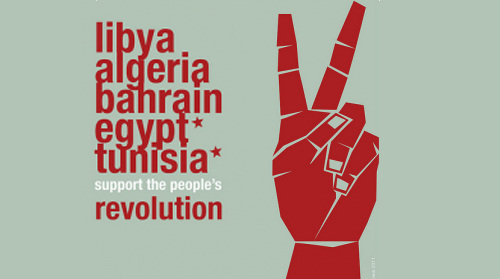
Omar spoke first about a Tunisian man who burned himself alive, but was misreported in the US. The Tunisian man was a street vendor who was a college graduate and couldn’t find work. He was forced to sell whatever he could on the street and out of desperation took his own life. The US Press reported that he was an independent entrepreneur who was protesting the Tunisia’s crack down of the free market. For Mostafa Omar this story illustrates the lens in which most US journalists see the Arab Spring.
He spoke about the economic conditions of many of the workers with examples of janitors and substitute teachers who are fighting for job security. Omar said that the majority of those who responded to a poll said that the main reason for participating in the uprising was as a resistance to the economic conditions, whereas only 16% said they wanted a Western-style electoral democracy.
Omar then pointed out that there are three major forces of counter-revolution in the Middle East that we all need to pay attention to. First is the US/Israel. Omar gave an example of how the US has been actively working against the uprising in Egypt. Senators John Kerry and John McCain met with military leaders in Egypt after Mubarak was deposed and 2 days later the military attacked the protestors with tear gas from the US that was made in 2011. The second counter-revolutionary forces is Saudi Arabia, which Omar calls the director of regional counter-revolution on behalf of the US. Saudi Arabia is pumping millions into the country to lessen the public desire for revolution. Lastly, the Egyptian ruling class, which is continuing to repress the working class, is also a major counter-revolutionary force.
Omar ended his comments by saying that currently there are 8500 workers on strike in the Suez Canal, a place where weapons have been trafficked to support Israel’s oppression of Palestine. If this strike succeeds, it could have tremendous ramifications not only for the workers but for regional solidarity.
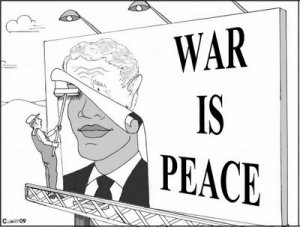
Glenn Greenwald, with Salon.com, spoke next and addressed the challenges around the US led war in Libya. This war begun by the Obama administration has shaped public opinion in some very interesting ways, according to Greenwald. He points out that many of those who opposed the Bush wars are now defending the Obama war in Libya as a “humanitarian intervention.”
Now that we are 3 months into this US war in Libya, there is more evidence of the commonality it has with all other wars. The first thing that was evident was the humanitarian reasoning given by Obama in a speech he delivered to the US public 9 days after he deployed US troops to Libya. The second thing this war has in common with others is a very strong military commitment with very limited purpose. The original purpose was to provide support for a no-fly zone, which is no longer the case.
The third commonality is that the person we demonize was once an ally. This is not the first time, since the Reagan administration also demonized Gaddafi in the 1980s, but then came back into the fold in the US War on Terror in 2001. Under Obama, Gaddafi is once again being demonized. The last commonality is the extremely manipulative rhetoric used by the US administration, particularly the polarizing language of being either for the rebels or for the “genocidal terror of Gaddafi.”
Greenwald also noted how the war is purely illegal in that it not only violates the US Constitution, but it violates a Vietnam era piece of legislation that says that the US cannot engage in military aggression abroad for more than 60 days unless there is a Congressional vote. It has already been 90 days.
Greenwald ended by saying that the bi-partisan nature of this war will be part of the legacy of this administration, along with drone wars. He also mentioned a CIA report provided by WikiLeaks, which showed that the main weapon against anti-war sentiment was a president that was the opposite of the character of Bush, but would continue the same policies.
Ali Abunimah who edits on the online site called Electronic Intifada spoke next and addressed the current status of the Gaza Flotilla, which was attacked by Greek Commandos at the behest of the US. Earlier in the week the Obama administration even announced that he supported attacks against the unarmed Flotilla.
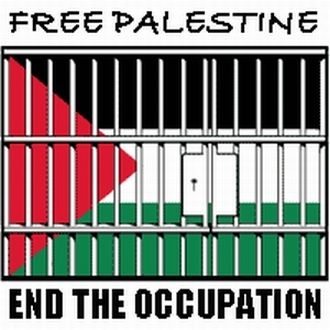
Ali then shifts the focus to Egypt and makes it clear that the revolutionaries in Egypt have also been supporters of Palestinian resistance and have in many ways gained their inspiration from that resistance. He also points out that you cannot support anti-imperialism in the Arab world and not be against Israeli oppression.
He goes on to mention the potential power of the May 15 Nakba protests along the Syrian border. These were people marching for their civil rights and using non-violent means and they were not supported by the Obama administration. However, despite all of the existing plans and ongoing repression of Palestinians their spirit is not broken. One example of how the resistance continues is the growing effectiveness of the BDS movement (Boycott, Divestment & Sanctions movement) that is worldwide.
Egyptian activist and organizer Bessan Kassab spoke next. She also spoke about US imperialism in Egypt and particularly points out Egypt’s participation in the Camp David Accord signing under Sadat in 1978. This relationship between the US and Egypt has continued ever since.
Bessan also pointed out that many of the Egyptians who participated in the revolution were young working class people who rose up out of frustration against the economic conditions in the country. When the Egyptian military finally deposed the Mubarak regime, the military said they are committed to all the international agreements that had previously been signed, like Camp David. Bessan stated that the Egyptians on the ground will not honor that agreement.
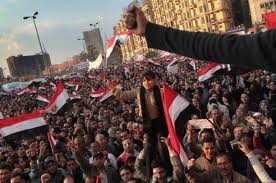
She concluded by saying that the Egyptian revolutionaries are committed to a real revolutionary future in Egypt, to fighting imperialism, Zionism and are in support of armed resistance. Her point about an armed resistance was to say that Palestinians don’t need our sympathy, they need weapons to defend themselves.
The last speaker was Ahmed Shawki, an editor with Haymarket Books. Ahmed was in Egypt during part of the uprising and mentions the period before Mubarak fell. He mentions one night in Tahrir Square, where the hired thugs attacked the people revolting with clubs, swords and molotov cocktails. He didn’t know if people would make it out alive, but said it was a testimony to people willing to fight for what they really believe in.
He then talked about the need for ongoing support for a creation of organizations in Egypt, popular organizations, labor organizations, etc. The US is backing the Egyptian military to dismantle and prevent these kinds of organizations from coming into fruition, according to Ahmed.
Ahmed then shifts to discuss the potential and possibility for the same kind of revolutionary resistance in the US. The level of poverty and disillusionment in the US means that there is the possibility of revolution across the country. He said the task of revolutionaries in this country is to find ways to engage people who are desperate and disillusioned and see the necessity of being part of a struggle. He ends by quoting Frederick Douglas on the need to fight and struggle in this country:
“If there is no struggle, there is no progress. Those who profess to favor freedom, and yet depreciate agitation, are men who want crops without plowing up the ground. They want rain without thunder and lightning. They want the ocean without the awful roar of its many waters. This struggle may be a moral one; or it may be a physical one; or it may be both moral and physical; but it must be a struggle. Power concedes nothing without a demand. It never did and it never will!”

This afternoon’s session of the 2011 Socialism Conference gave us a chance to hear Arun Gupta, a writer for the Indypendent.
He began his talk by giving out Doritos to everyone in the room, in order to de-construct this so-called food item. According to Arun Doritos corners 32% of the corn chip market.
Doritos are engineered to stimulate all the human senses. It has a day-glow orange, which tells our brains that this is a cheesy food. Certain acids within the product stimulate the salivary glands. Doritos also stimulates one of the flavor senses – sweet, sour, salty, bitter and umami.

Next there is a dry/toasted corn taste, which has been around since the beginning of human evolution where humans have an association of food with fire. Doritos break down quickly in terms of how much we have to chew them, with the average being 10 chews per ship compared to most real foods, which require 20 chews. It is as some critics call the baby food of adults.
Once you have digested it, it stimulates the high fat stimuli within the body which gives you some pleasure, but also wants you consume more of it. You also have this orange powder on our fingers, which we often lick off, thus engaging yet another one of the human senses. Fritos Lays in effect has engineers a food that is more like a drug in the form of a process food.
Doritos doesn’t cost much to produce, but creates tremendous profits taken from the consumer. Doritos is a great example of how the agro-industrial food system uses international capital as a means to make massive profits.
We don’t really know where the corn comes from that Frito Lays uses in the production of Doritos, but it likely comes from the US, which is a highly subsidized GMO corn. For a 99 cents bag of corn chips, it costs Frito Lays about 1 cent a bag for the food costs. Corn Flakes for example costs about 2 cents a box of cereal, since most of the money goes into marketing and packaging.

Another aspect worth thinking about is the idea that Doritos is also patented, which provides a form of monopoly capitalism. Some companies have tried to compete with Doritos, but since that product is patented they cannot reproduce it.
Another component of the agro-Industrial food system is that it is a de-peasantization of the land, where small farmers are forced off the land. Corn production is a good example of how this has happened in the last 100 years and more recently with NAFTA and Mexico.
Gupta then talks about the few companies that control every aspect of the Agro-Industrial Complex, which would include the seed/grain companies, massive growers, processors, distributors and marketers. With this kind of monopolization, Gupta points out that we don’t really have a free market system. This begins with colonialism, but even more so in the last 100 years with industrial agriculture. Industrial agriculture was designed initially for domestic production there were eventually huge reserves, which has led to a desire of the US to export these food reserves abroad, even if it wasn’t food that fit into the diet of other countries. The US has used food as a weapon of foreign aid and “development” projects.
With this kind of development we also see the rise of the institutions like the World Bank and the IMF, which forced other countries to open their markets to the global grain cartel. The World Bank for instance would impose these structural changes to local markets in order for them to get bank loans. One example is the World Bank forced Haiti to stop growing their own rice so that the US could flood that market with US grains, thus making Haiti even more dependent on the Agro-Industrial Complex.
Now we see more of an emphasis on bio-mass, since there has been a new speculative market for trading in bio-mass for fuels. This has not only translated in an increase in the price for basic food items, it has meant that more of the Agro-Industry is now controlled and financed by companies like Goldman Sachs. This dynamic caused massive problems and even riots in 2008 with the global financial crash since many people around the world could no longer afford basic food items.
What we need to do is to push the idea that food is a public good. Essentially this means that everyone has a right to healthy, real food. This is a necessary step to counter the Agro-Industrial Complex. Another step that needs to happen is to reclaim local food systems and food production. Small-scale farming could work if countries like the US shifted the money spent on subsidizing the Agro-Industrial Complex and gave it to local and small farmers.
The other problem is commodity fetishism, where were extract food out of a social context. He points out some contradictions within veganism or the fact that some food experts say we should support Wal-Mart’s sale of organic items such as milk and yogurt, which is a flawed approach to achieving food justice. (buying organic foods from Wal-Mart is promoted in the film Food Inc.) With veganism the problem can arise where people will consume a tremendous amount of soy products and soy production globally has caused a tremendous amount of both ecological destruction and labor exploitation.
In many was Gupta did an incredible job of deconstructing the inherently destructive nature of the global agro-industrial complex. The only area that he did not spend some time on was the role that marketing plays in getting us all to consume food-stuff like Doritos. Since companies like Frito Lays spend so little on food costs and more on marketing it would be useful to look at the techniques used to manipulate the public into desiring products like Doritos.
The Fight for LGBT Liberation
(This is the first in a series of article of the next few days while we attend the Socialism 2011 Conference in Chicago.)

The first session we attended was on the issue of LGBT Liberation that was led by Zakiya Khabir, an organizer from California. Zakiya began by mentioning recent victories, particularly the New York Marriage equality vote. She also mentions that more countries have adopted LGBT friendly policies and acknowledges the increase of gay and lesbian characters on US TV programming (although not bisexual or trans characters).
However, Zakiya states that there are still huge barriers and even an increase in attacks against the LGBT community, as was reported in a Southern Poverty Law Center report last year. In addition, there are current efforts to repeal LGBT rights ordinances and an increase in violence against gay communities around the world, as is evidenced in Uganda recently. Having said that Zakiya notes that the view that the “western world” is more tolerant is not really true.
The presenter then provides a brief overview about how cultures throughout history have embraced same sex relationships, especially Indigenous cultures. The notion of gender and sexuality constructs was a more recent reflection of humanity, according to Zakiya, who stated that older cultures did not have these kinds of strict designations for men and women.
Zakiya also spends some time talking about the rise of monogamous marriage, particularly within European culture, which also spread due to European colonialism. Monogamy not only became the heterosexual norm for relationships, it spread around the world because of the European colonialism. As Europeans imposed their own cultural norms on much of the rest of the world, non-monogamous relationships became suspect and even criminalized. The presenter also points out that the rise and growth of capitalism also contributed to the growth of homophobia, since Capitalism also changed gender roles through industrialization.
Zakiya then asks what does this issue mean for socialists and those who are committed to social justice? She mentions that there are roots of socialism and anarchism that have embraced and advocated not only for LGBT rights, but for the state to stay out the sexual lives of people. This was clearly one of the messages of people like Emma Goldman.

The presenter then shifts her comments to the issue of Marriage Equality as a manifestation of LGBT Liberation. She says that the battle could take the form of either a state by state battle or the repeal of the 1996 law passed under Clinton known as DOMA, the Defense of Marriage Act.
Zakiya points out that you can still get fired from jobs in 29 states because of your sexual orientation. The reality is even worse for people who identify as Trans, according to the presenter.
A different strategy that is advocated for is to support candidates and particularly President Obama. Zakiya criticizes the Human Rights Campaign and their call for people to support the Obama’s re-election and other Marriage Equality candidates – all five of them. This criticism was also seen at a recent fundraiser for Obama where Gay rights activists were protesting.
Zakiya also mentions that LGBT rights need to be woven into other struggles and cites the recent SlutWalks that have generally included information about violence against Trans people. There is also evidence of more collaboration within both the labor and immigration movements.
The rest of the session was spent with questions and comments from those in attendance. Several people addressed issues around the lack of adequate health care for the LGBTQ community as well as efforts around the country to criminalize the LGBTQ community.
However, most of the conversation was centered around the need to shift the movement’s strategy from marriage equality to a more radical critique that involves direct action. One way to do this would be to connect the fight against austerity to LGBT issues. Several people emphasized how budget cuts have to be part of LGBT struggles, since they disproportionately impact the LGBT community.
Another participant made the point that there seem to be a fair amount of folks in the LGBT community who are more interested in just assimilating themselves into the dominant culture as opposed to participating in broader liberation struggles. This comment led others to acknowledge that many of the national LGBT organizations tend to affirm this emphasis on assimilation. Several people said we can’t wait for Obama to make changes for us, we need to do it on our own. Another person said, “Lets not spend our money on elections, but on building a movement!”
As an example of how assimilation is manifested, was with the national groups like GLAAD, the Gay & Lesbian Alliance Against Defamation. This weekend the president of GLAAD along with several board members resigned because of conflict of interest where GLAAD issued a statement supporting AT&T and T-Mobile’s merger plans. AT&T is a major financial contributor GLAAD and other national LGBT organizations. This underscores the need for a more radical movement that understands the Gay Liberation history and does not advocate for assimilation.
In response to this, one person states that we should not have fights between what writer Sherry Wolf calls “Gay Inc.” groups and the movement. We should hold them accountable, but put energy on the issues. Another person also agreed that we shouldn’t fight these groups, but we need to take our own positions and make our own statements and create our own strategies that are more radical than the Gay Inc. groups.
(This article by Bruce Dixon is re-posted from Black Agenda Report)
Last week’s rollout of “Rebuilding the American Dream” with Van Jones as front man backed by MoveOn.Org was all that and a bag of blue organic corn chips. It had great production values, good music and a snazzy hi-tech web site. There were volleys of focus-group tested buzzwords… “rewarding hard work,” “redeeming the dream,” rekindling hope,” and “standing up for the middle class.” Spokesperson Van Jones threatened to sue Fox News and the NAACP deemed him “a treasure” Corporate media flogged it and Democrats blogged it.

Like the Obama campaign of 2008, Rebuilding the Dream was supposed to be the vehicle citizens would use to make the Democratic party respond to its voters on Main Street rather than its funders on Wall Street. And just like the Obama 2008 campaign, the web site of Rebuild the Dream prominently features a button inviting all the “Join the Movement.”
But is Rebuilding the Dream a new people’s movement? Or is it just another exercise in corporate branding and re-branding? Discussing a different example of political branding back in 2009 we said that”
A brand is a symbol used to evoke manufactured desires, to elicit real or imagined chills, thrills, memories or convenient attitudes in an audience. In the black community, branding electoral campaigns.. with the stamp of the Freedom Movement is old stuff that’s been done for decades. The 2007-2008 Obama campaign carried this about as far as anybody could, declaring that it WAS “the movement” so often and insistently that many folks who’d never experienced such a thing — along with a few who really should know better — seemed to believe it. But Advertising Age, the journal of the multibillion dollar marketing industry knew the truth. It awarded the Obama campaign its 2008 Brand of the Year Award.
Eventually, brands do wear thin. They need retooling, tummy tucks, facelifts. Brand Obama is no exception. After two years of record unemployment and foreclosures, service cutbacks, privatizations, austerity, with corporate welfare and old wars continuing and new ones breaking out, frustration is rising and the new car smell is definitely gone.
Marketing suits are not original thinkers. They like to do what’s already worked. So they looked for a clean cut, articulate, youngish black man with a “progressive” resume who could make earnest speeches and raise money. That would be Van Jones. The fact that Jones has been attacked by right wing clowns like Glenn Beck, Bill O’Reilly and Fox News earns Jones a degree of credibility in some circles. But not everybody is buying it.
“There’s something about Van Jones…” Atlanta-based freelance writer and former Capitol Hill staffer Yvette Carnell wrote on Facebook that “…gets my spidey senses tingling.” In a copyrighted Atlanta Post article, Carnell detailed her aversion to Jones and his new project. Rebuilding the Dream, she says, aims to cleanse the tainted Obama brand by
“…shifting the responsibility of governance from Obama to the American people…. we should all agree that the responsibility of governing rests with the people we elected; members of Congress and the President.
The people made their choice at the ballot box, now it’s up to our elected officials to carry out their end of the bargain. If not, then what are they doing on Capitol Hill and Pennsylvania Avenue anyway? If they are not responsible for translating their campaign promises into legislation, then we’d all be better off setting up tent cities in Washington D.C. and coalescing around a direct democratic model.”
There’s nothing direct or democratic about Van Jones’ marriage to MoveOn.Org, the other big name behind Rebuilding The Dream. “…He’s joining forces with an email fundraising scheme.” said economist Doug Henwood of Left Business Observer. “They’re strictly a one-way operation – you get emails, send them money, they decide the issues. How do they decide what (issues) to concentrate on? It’s not an organization, really.”
Actually MoveOn.Org is a pretty well-oiled organization, just a profoundly undemocratic one that prefers to focus exclusively on Republican wrongdoing while it ignores Democrats engaging in the same criminal acts. When MoveOn.Org helped bring thousands to Washington for a week of lobbying Congress during the Bush administration, it pointedly summoned crowds only to the offices of targeted Repubicans, while ignoring and absolutely refusing to confront powerful and senior Senate and House Democrats who supported Bush’s war.
Rebuilding the Dream seems set to follow in MoveOn’s footsteps. Jones has lots to say about budget cuts at home, but nothing to say about ending the $3 billion a week drain caused by the wars in Iraq and Afghanistan alone, and less than nothing about the bombing of black civilians in Libya and Somalia or brown ones in Pakistan. When Bush invaded Iraq, Van Jones condemned it. But like good career-minded Democrats everywhere Jones is silent as the black president mercilessly bombs Africans in Libya and claims it isn’t a war. Van Jones can rattle on and on about confronting and answering the Tea Party, or the oil industry. But when President Obama allowed Democratic control of the House pass at the end of 2010, the year of the Deepwater Horizon disaster, without introducing a single piece of legislation to restrict or effectively regulate offshore drilling, Van Jones was silent.
The story line that depicts Van Jones as a fountain of innovative environmental and social justice ideas during his brief term as the Obama administration’s “green jobs czar” is more smoke than substance, making both Jones and the president look better than they actually are. If the Obama administration were even remotely serious about creating a “green jobs sector, why did the president and his advisors, including Van Jones, throw away the chance to re-dream the auto industry during the time they had absolute executive control over the vast research, manufacturing and economic power of General Motors? With no possibility of congressional interference, Obama and his green jobs czar could have deployed regiments of scientists and engineers to create better battery technologies, ordering the US Post Office to buy electric trucks and subsidizing the cost and infrastructure too for electric trains, buses and cars.
Heating homes, commercial spaces and offices is the single biggest carbon contributor in the US, accounting for about a quarter of all emissions. The green jobs czar, under Obama’s authority, could have put a few factories and platoons of researchers to work devising new building and insulating materials, and colleges to work training people to retrofit homes and offices, an ongoing green jobs program.
Instead GM management was relieved of its retiree health care liabiliites, which were placed on workers themselves — the union. Non-union GM and supplier plants before the takeover remained non-union. Wages and beneifts were two-tiered to divide younger against older workers and the enterprise handed back to the same mismanagers who crashed it once to go back and manufacture the same mega-polluting, planet destroying machines as before.
Democratic leaning media like The Nation, in lockstep with the direction of Rebuilding The Dream, are breathlessly asking Van Jones what the next step in confronting or building what they call “a liberal alternative” to the Tea Party will be. That’s the fight Van Jones wants to pick — his brand against theirs, diveting attention away from the results we have a fundamental right to expect from our elected officials.
It’s not a movement strategy. It’s a marketing campaign. And Van Jones isn’t a movement leader. He’s just been re-branded.
 Grand Rapids Institute for Information Democracy