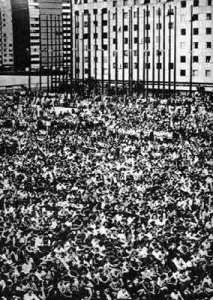
Forty-three years ago today, over 300 Mexican students were killed while protesting in what is called the La Plaza de las Tres Culturas at Tlatelolco, Mexico City.
This massacre took place just days before the 1968 Olympics, which the students were using as a platform to tell the whole world about the injustices they and millions of other Mexicans faced. The student occupation of the national university (UNAM) had been going on for months before the military repression took place.
For decades the government tried to cover up what the Mexican army did on October 2, 1968. There have been numerous attempts to investigate the crimes committed that day, but no government official was willing to let the truth come out.
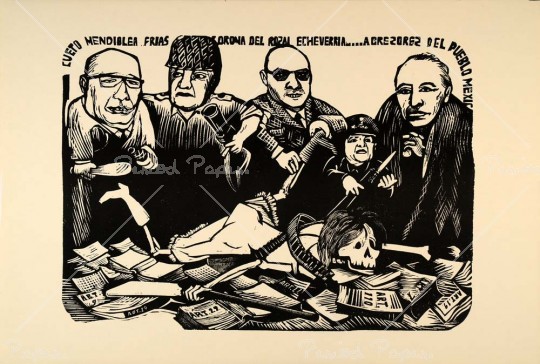
There still is much that is hidden in regards to what happened that day and who gave the orders within the Diaz Ordaz regime, but today we have a great deal more information that has been obtained through the declassification of documents.
The US-based National Security Archives has been able to obtain numerous documents related to the 1968 student massacre. Many of these documents are from the CIA or the Johnson administration and their assessment of what was happening. The US government was claiming that the students were pawns of the Soviet Union, while others express concern for how the student “agitation” will negatively impact the 1968 Olympics.
There are other declassified documents, which demonstrate that the US government was aware of and in support of the military takeover of the university in Mexico City that was being occupied by the students.
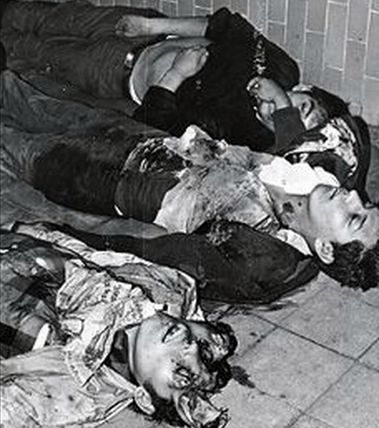
Beginning in 2006, the National Security Archive was able to finally get access to several Mexican government documents, which sheds further light on the Tlateloco massacre. With these new documents, we now have a complete list of the students killed that day. In addition, the National Security Archives now has a blog with regular updates on the ongoing investigation in the 1968 student massacre, but the blog is only in Spanish.
This horrendous massacre is deeply important to the Mexican people, but it should be of importance to those of us in the US as well. The US government knew of the repression that would be unleashed on the Mexican students just days before the beginning of the 1968 Olympics, but did nothing to prevent the massacre from taking place.
One other reason that Americans might think about what took place is because of what John Carlos, the great US track runner who used the 1968 Olympics as a platform for drawing attention to the treatment of Blacks in the US said earlier this summer at a conference. He said that while the actions that US athletes took during the 1968 Olympics were important, the most important thing we should remember was the sacrifices that the hundreds of Mexican students made to promote freedom and liberty.
I’ll end with this wonderful Mexican corrido song about the October 2, 1968 massacre, entitled Ni Perdon, Ni Olvido! (Don’t Forgive and Don’t Forget!)
The Art Prize Top Ten—Top of What Standard?

It’s happened again, only this time the pattern is even clearer than usual. What entries made it into the top ten at ArtPrize? The gigantic, the cute, the pieces with “local” appeal, with entertainment value, and works that pander specifically to the conservative sensibility of the area. Plus, as usual, a couple of artworks with legitimate content and value. At least, that’s how I see it breaking down.
Concerns that GRIID has presented in the past all apply to this year’s event and selections. There is, for one thing, a serious lack of diversity among the artists—all but one is White. Another concern is how only certain downtown locations seem to be drawing the visitors and the votes, and other nearby areas, such as Heartside, don’t have the same number of venues and are not drawing visitors. As in the two past years, all of the Top Ten winners are confined to the small area of prize locations in the immediate downtown area—the Ford Museum, the Art Museum, the B.O.B., etc. It’s no coincidence, therefore, that the city’s convention and visitor’s bureau just commissioned a study of the economic impact of ArtPrize for downtown businesses. A preliminary study showed that the first ArtPrize generated between $5 to $7.5 million of business for downtown GR. That fits neatly into the DeVos plan of how “creative class” attractions will generate a new well of dollars for their family’s next generation.

So let’s look at these highly predictable Top Ten vote-getters.
First, let’s talk about great big animals. Remember the Loch Ness monster? This year’s Animals-Interacting-With-Water entry is called “Grizzlies on the Ford.” It’s a group of bears catching fish and wading next to the Gerald R. Ford Museum. The bears are carved from wood, and are highly reminiscent of those big wooden pieces that guys in the UP carve with chainsaws and sell at roadside stands. Maybe that rang some nostalgic bells with the folks who voted for it.
“Mantis Dreaming” is technically a better piece, but it’s still a gigantic animal from an artist who has entered three of them so far in this competition. His artistic statement includes the line, “We all have a butterfly that we want to catch.” Yuck.
Then there’s “Ocean Exodus,” displayed in what I have come to think of as the Steam Pig Memorial Exhibit Space. The artist says that the piece is “in progress” and “will get bigger.” Why add this comment? Maybe just in case it’s not big enough now to capture the necessary dimensions of an ArtPrize win. (Remember, the credo of AP seems to be, “The Bigger, The Better.”) The work also looks suspiciously like it was recycled from his piece “A Matter of Time” from 2010. This sculpture does display a lot of technical expertise, but occupying its place in front of the B.O.B,, I couldn’t help but wonder if its main value was generating more diners for Gilly’s seafood restaurant and bar. (“Look, Marge, they have octopus on the menu!”)
Finally in the animal category, there’s “Rusty,” a very large and very deranged-looking dog guarding a big, shiny ball. I think it might actually make small children fearful of entering the Grand Rapids Public Museum. That thing would have given me nightmares when I was five.
For pure entertainment value of the Rob Bliss variety, we have “Under Construction,” which features the artist and members of his family standing as living bronze statues on a construction site. I would like to think this was a tribute to the working class, but the artist statement makes it clear it’s a tribute to capitalism: “Presenting a scene that is common in West Michigan; things are constantly changing, rebuilding, improving. We see new buildings, new festivals, and new people.” I’d guess that most people voted for it, however, in the same way that they would vote for the entertainment of watching the guards outside of Buckingham Palace. “Did he move, Marge? I swear, I saw him move!”
In the category of “I couldn’t do that if I tried” is “Metaphorest,” a very big and very boring mosaic that seems lifeless in comparison with the artist’s mural for the Children’s Museum. It also looks unfinished, since large parts of the surface are painted rather than tiled. But did I mention it is big? And that counts for something.
There were two artworks I felt were intriguing and different in this Top Ten group. One, “The Tempest II,” looks from a distance a bit like a rough and peeling plaster wall. But instead, it is a paper sculpture, filled with shadows and light on its layered surfaces. It seems to have something to say about how even what appears to be permanent is in fact ephemeral.
Probably one of the most striking works in ArtPrize, and the best of the Top Ten in my eyes is “Rain.” A kinetic sculpture with a slow, deliberate movement, it has a hypnotic effect on the viewer. The gold and silver catch the light and give the impression of a segment of a rainstorm in sunlight, captured and held in a perfect square.
But if there’s a special award to those who really knew their audience and went for the jugular to garner votes, it has to be divided between the final two pieces from the Top Ten. “President Gerald Ford Visits ArtPrize” has a fiberglass resin Ford gazing at a bronze bust of himself. (“Look, Marge! Isn’t that a cute idea?”) There’s a similar work, much more evocative, called “Conversation With Myself” in this year’s ArtPrize entries. But the portrait of Ford is highly representational, and features our hometown-boy-made-good, if you can call a president who was appointed and then failed to get elected a success. (Ford is the only President to fall into this category unless, of course, you count George W. Bush). How could it lose? During ArtPrize, the sculptor has busied himself with creating a sculpture of Betty Ford. Maybe so that Jerry doesn’t look so utterly narcissistic.
And finally there is “Crucifixion,” a cathedral-sized (nine feet by thirteen feet) mosaic of Jesus on the cross. If this doesn’t win one of the top awards, it may make up for it if the DeVos family ends up purchasing it. After all, it’s the most obvious piece of pure Christian iconography in the Top Ten, and the DeVoses the only people around here with a house big enough to hang it in.
Business as usual at ArtPrize: the “golden rectangle” loaded for bear (literally) with oversized works that look more like escapees from a craft fair than an art museum. Appealing to the masses isn’t all that difficult, it seems, once you know the formula…although, Mia, that that crucifix is really beneath you.
Salvadoran speaker in Grand Rapids October 6

The US/El Salvador Sister Cities Project is coming to Grand Rapids on Thursday, October 6.
The Midwest tour will have Agustin Menjivar, who is the President of the Association of Communities for the Development of Chalatenango. Agustin has been a long time activist and is currently involved in an anti-mining campaign.
Mining projects, dominated by the company Pacific Rim, are destroying communities throughout El Salvador and contaminating the water. There have been campaigns to defeat mining projects in El Salvador for years as is well documented at CISPES and in an article in a recent issue of Monthly Review. Mining projects have increased dramatically in El Salvador due to the changes brought about by the 2005 signing of the Central America Free Trade Agreement known as CAFTA.
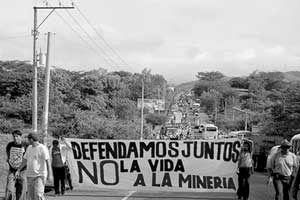
Agustin Menjivar will talk about the work being done in El Salvador on Thursday, October 6 on the GVSU downtown campus. The US/El Salvador Sister Cities tour is sponsored by the GVSU School of Social Work and the Padnos International Center.
There are 2 different presentation on October 6, both of which are in the Eberhard Center. The presentation will be in Spanish, but translation will be provided. The public is welcome to attend both talks.
Thursday, October 6
9 – 11AM and 6 – 7:30PM
Eberhard Center Auditorium
GVSU downtown campus
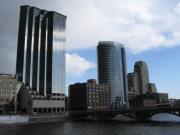
As the Occupy Wall Street action enters its third week, there have been announcements of similar actions being planned across the country.
Recently, an Occupy Grand Rapids facebook page was created that states:
Born from frustration with corporate greed and control over politics and the excessively increasing disparity between the wealth of 99% of the populace and the 1% elite, this is for protests in Grand Rapids in solidarity with the Occupy Wall St. protests and banking protests across the world.
There hasn’t been much additional information or dialogue on this site, but it is a clear indication that people want to organize an action in solidarity with Occupy Wall Street.
There is also an Occupy Michigan and Occupy Detroit groups also started online, which is another reflection of the growing effort to say to those in power that people have had enough of the corruption, greed, militarism and environmental destruction being carried out by the state and the capitalist class.
Here is a recent short video that shows how much the Occupy Wall Street action is spreading across the country.
GVSU hosts men against violence event in Allendale
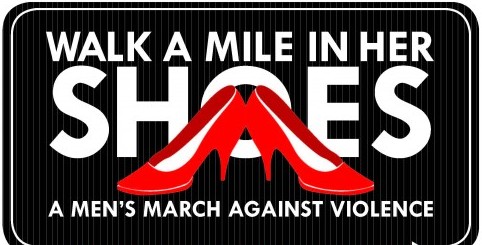
Last night about 150 GVSU students, faculty and staff gathered on the Allendale campus to take a stand against sexual assault, sexual coercion and rape.
The event, Walk a Mile in Her Shoes, is an international event designed to get men to think about the reality that women face everyday in terms of sexual harassment, sexual assault and rape by men.
The male students who attended last night event were invited to wear high heel shoes and walk a mile on campus as a means to sensitize them to the difficulties of being a woman in a male dominant society.
Before the students went on that walk they were presented with some information about the realities of living in what feminist Diana H. Russell calls a “rape culture.” According to data from a national fraternity association that has taken a stand against sexual assault:
- 1 out of 4 college women are sexually assaulted
- 50% of sorority women experience some form of sexual coercion
- 10.3% of college rapes happen in a fraternity house
- 90% of sorority women who are sexually assaulted know their assailants
Students were told that men are so privileged that they are generally unaware of these facts and the reality that their fellow female classmates, teachers and girlfriends face on a daily basis.
The students then walked around on all 3 floors of the Kirkof building since the weather did not permit them to walk outside as they had originally intended. Other students witnessed the men walking in high heel shoes and holding signs address sexual assault and this writer witnessed numerous students engaging those walking in conversation about the purpose of the event.
When the students returned to the room where the event began they were presented with more information on how we are all socialized to objectify women, especially through the dominant culture represented in media. Students looked at and discussed media representation of women in magazine ads, TV commercials and movie clips, in order to understand how objectification of women is normalized in media.
Part of the purpose of the event was to start a men’s group on campus to take a stand against violence. Some of the men involved in this event and the GVSU Women’s Center are planning other activities and opportunities for men to become involved. If you are a male student at GVSU and are interested, contact MarcQus Wright at wrighmar@gvsu.edu or call 616-331-4296.
After the event was over I had a chance to interview two of the men involved in organizing Walk a Mile in Her Shoes.
Some Breaks in the Blackout of Wall Street Protests
This article is re-posted from Fairness & Accuracy in Reporting.
After a FAIR Action Alert (9/23/11) criticized the virtual media blackout of the Occupy Wall Street protests, corporate news coverage has increased–sparked largely by the escalating police brutality at the ongoing demonstration. (See FAIR Blog, 9/23/11, for a sample of the messages sent by FAIR activists to the network nightly news shows.)
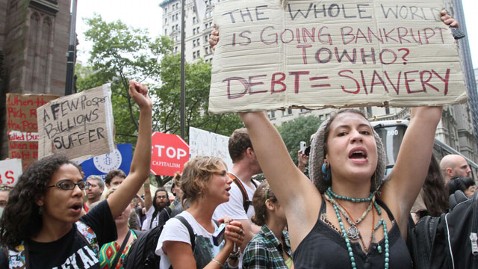
On ABC World News Sunday (9/25/11), anchor David Muir read this short item while playing footage of cops assaulting protesters:
And here in New York, protests continued against the big banks and the bailout that helped the banks, Wall Street, they say, not Main Street. It turned ugly this weekend when protesters marching through Lower Manhattan clashed with police. One man right there brought down forcefully by an officer. About 80 people were arrested, in fact. The protesters posted this video on the Internet.
NBC Nightly News aired a somewhat longer report the next day (9/26/11), with correspondent Ron Allen actually traveling downtown to the protest encampment in Liberty Plaza. His report included this “he said, she said”: “The protesters charge that the police used excessive force. The police say that anyone who resists arrest can expect to encounter some level of force, but nothing excessive.” The following morning’s Today show (9/27/11) briefly aired footage of a police official pepper-spraying nonviolent demonstrators in the face, noting that “the NYPD calls the officer’s actions appropriate.”
Some journalists seemed strikingly reluctant to take videotaped evidence of police violence at face value. CNN anchor Ali Velshi (9/26/11) introduced footage of a police assault by dismissively saying that protesters were “now screaming abuse after they were arrested over the weekend.” After the footage of a cop violently subduing a protester, co-anchor Carol Costello noted, “Of course, what you can’t see is what came before the fight”–a disclaimer that could be made of every single piece of videotape that CNN runs.
A September 27 New York Times piece (FAIR Blog, 9/28/11) seemed to defend the police force’s brutal response, with reporter Joseph Goldstein depicting a police department concerned about “terrorism” and the “destruction and violence” that supposedly accompany “anticapitalist demonstrations.” Such police worries, according to Goldstein, “came up against a perhaps milder reality on Saturday, when their efforts to maintain crowd control suddenly escalated”–an oddly passive way to introduce the use of pepper spray and body slams against nonviolent demonstrators.
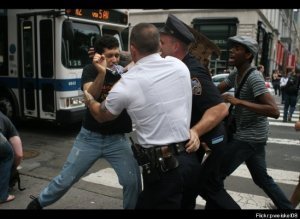
“Even as the members of Occupy Wall Street seem unorganized and, at times, uninformed, their continued presence creates a vexing problem for the Police Department,” Goldstein wrote–though his acceptance of media myths about violent demonstrators (Extra!, 1-2/00, 3-4/00; FAIR Action Alert, 7/25/00) makes the reporter seem less informed than the protesters he patronizes.
Similar condescension was on display in another New York Times piece (“Gunning for Wall Street, With Faulty Aim,” 9/25/11), with reporter Ginia Bellafonte deriding the “intellectual vacuum” of the protests, with “its apparent wish to pantomime progressivism rather than practice it.” Bellafante described one protester as a “half-naked woman… with a marked likeness to Joni Mitchell and a seemingly even stronger wish to burrow through the space-time continuum and hunker down in 1968.”
The Times did, however, print a column by Jim Dwyer (9/28/11) that grappled seriously with the police brutality on display in the videos of the march. “If a nightstick were substituted for pepper spray, a conventional weapon instead of an exotic one, the events on 12th Street would bear a strong resemblance to simple assault,” Dwyer noted straightforwardly.
Perhaps the harshest critic of police violence in corporate media was MSNBC‘s Lawrence O’Donnell, who devoted a remarkable segment to the issue on September 26. Pointing to footage of police tackling a person carrying a video camera, O’Donnell noted:
The reason that man is being assaulted by the police is because of what he has in his hand. He’s holding a professional grade video camera. Since the Rodney King beating was caught on an amateur video camera, American police officers have known video cameras are their worst enemy. They will do anything they can to stop you from legally videotaping how they handle their responsibility to serve and protect you.
Another outstanding moment in corporate media coverage was filmmaker Michael Moore’s appearance on CNN (9/26/11). Host Piers Morgan gave Moore a rare opportunity to actually articulate some of the grievances that have prompted the Occupy Wall Street demonstrations in the first place:
The main thing is, number one, is that the rich are getting away with a huge crime. Nobody has been arrested on Wall Street for the crash of 2008. They’re not paying their fair share of the taxes. And now with the Citizens United case of the Supreme Court, they get to buy politicians up out in the open….
It all points to, are we going to live in a democracy that’s run by the majority of the people, or are we going to be living in a kleptocracy, where the kleptomaniacs down on Wall Street, who have stolen people’s pension funds, they’ve wrecked people’s lives, millions have been thrown out of their homes, millions are without health insurance, millions have lost their jobs?
Still, as late as this week, some in the media establishment were continuing to debate whether the Occupy Wall Street protests were worth covering at all. NPR ombud Edward Schumacher-Matos devoted a column (9/26/11) to the network’s decision not to air any reports on the demonstration:
We asked the newsroom to explain their editorial decision. Executive editor for news Dick Meyer came back: “The recent protests on Wall Street did not involve large numbers of people, prominent people, a great disruption or an especially clear objective.”
The next day, the previously unimportant non-news was worth covering after all, as Schumacher-Matos wrote (9/27/11):
The Occupy Wall Street protests have persisted into this week, so the newsroom has decided to include a segment on tonight’s All Things Considered.
FAIR thanks all media activists who wrote to news outlets and helped to change their minds about the newsworthiness of the Occupy Wall Street demonstrations. There’s still a long way to go.
Kellogg’s claims it’s committed to climate change, again
Today, in their Michigan Loves Manufacturing e-blast, MiBiz included what appeared to be a story entitled, “Kellogg Company recognized for commitment to addressing climate change, named to Carbon Disclosure Leadership Index.”
When you click on this headline it doesn’t take you to a MiBiz story. The link takes you to a Kellogg’s Media Release from the company’s PR department.
The media release talks about how the Carbon Disclosure Project gave the Battle Creek Company a high mark in their reporting on carbon emissions. The Media Release also states, “Kellogg is committed to reducing its energy use, greenhouse gas (GHG) emissions and water use by 15 to 20 percent by 2015.”
While this announcement may seem noble in the eyes of some, carbon emissions must be reduced by at least 80% of current levels by 2050 on a planetary scale in order for humanity to avoid a point of no return on global warming. Kellogg’s doesn’t seem to be making a big enough effort for that to happen, which really isn’t their intent.
Kellogg’s, like all corporations are primarily motivated by profit and perpetual growth. One of the tools they use to expand profits and distribution of products is to present themselves as being “Green” or “sustainable.” However, these are just smart marketing tools but don’t carrying any weight in actually making change towards reducing carbon emissions and avoiding climate catastrophe.
The Carbon Disclosure Project (CDP) also plays a role in perpetuating the notions that companies can continue to make huge profits, expand their operations and still be “sustainable.” This was the message of an international business conference that CDP hosted earlier this month, with the message “Forging Sustainable, Profitable Business Growth.”
This kind of deception is rampant within the corporate world and Kellogg has been participating in this kind of deceit for some time. In March we ran a story looking at their claims to sustainable palm oil use, where they we touting their certification from the Roundtable on Sustainable Palm Oil. However, numerous environmental groups such as Friends of the Earth and Rainforest Action Network have challenged this so-called certification process and exposed this business roundtable as fundamentally a front group for agribusiness and their desire to be seen as ecologically responsible.
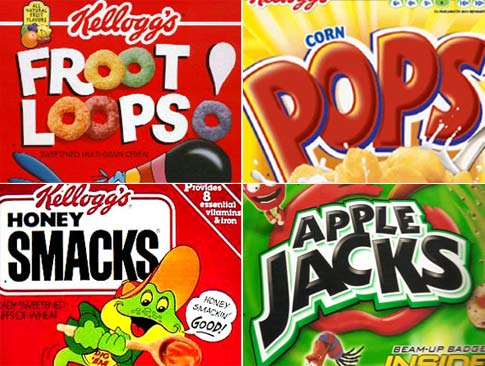
Kellogg’s claim to be taking action on climate change is just as deceitful and ultimately is a false solution. Does the cereal company really expect us to think that peddling sugar-laden products to kids can ever be sustainable?
Business press reporting is cheerleading for multinational corporation operating in Grand Rapids
Earlier this year we posted a story about the possibility that Grand Rapids might privatize its water system with the French company Veolia. This proposal did not come to fruition, but the energy and water management-company is back in the news in West Michigan.

MiBiz reported last week that Veolia plans to increase its operations in the Great Lakes area, while maintaining Grand Rapids as its “hub of operations.” “We want to create a platform for growth in the Great Lakes,” said Veolia’s Grand Rapids Manager Jim Monterusso. “For anything in the Great Lakes, we want it bolted onto Grand Rapids.”
According to the MiBiz article Veolia has already just opened a landfill gas-to-energy facility in Wisconsin that the company can monitor from their Grand Rapids office. The real goal of course with any for profit entity is growth, which Veolia’s Grand Rapids spokesperson makes clear when he says, “A lot of capacity is available for growth. We can serve a lot more customers than we do. The most sexy for us is the off-pipe projects on industrial or other properties in Grand Rapids and other nearby places, like Holland and Muskegon.”
While management always thinks growth is sexy, the reality is that Veolia is not a friend of local autonomy of human rights.
Veolia is one of the largest water privatization companies in the world and according to a report by Public Citizen, the company has an atrocious environmental record in Europe, Asia, Africa, Latin America and right here in the US.
In addition to energy and water profiteering, Veolia has a division that works on transportation systems. One of those projects is in Israel and is called the Jerusalem Light Rail Project (JLR).
According to the international Boycott, Divestment and Sanctions (BDS) campaign, the JLR project would, “link illegal settlements in East Jerusalem with Israel. Not only do the settlements contravene article 49 of the 4th Geneva Convention forbidding an occupier transferring its own civilians into the territory it occupies, but in most cases the establishment of the Israeli settlements involved war crimes too. The tramway tightens Israel’s hold on occupied East Jerusalem, ties the settlements more firmly into Israel and undermines chances of a just peace for the Palestinian people.” In addition, Veolia operates bus lines for Israeli settlers, running them between illegal settlements and Israel.
The awful environmental practices and the lack of respect for human rights by Veolia are not mentioned in the article by MiBiz. Instead, the local business press seems to be cheerleading for the growth and expansion of a company that has little regard for environmental protection and basic human rights.
New report on Michigan campaign finance spending in 2010
The Michigan Campaign Finance Network has just released a new study of the 2010 election campaign spending for the mitten state.

The new report, 2010 Citizen Guide to Michigan Campaign Finance, is a 98 page report with information on campaign spending for all 2010 candidates and ballot initiatives in Michigan.
According to a Media Release, “Independent spenders overshadowed candidates’ committees in financing Michigan’s most prominent 2010 election campaigns.” The Media Release also highlights some of the areas of campaign finance spending in Michigan, where transparency was limited and where the public can clearly see how the US Supreme Court’s decision Citizens United impacted how money was spent.
“We’ve entered an era when a small group of undisclosed financial backers can drive an election outcome without leaving any fingerprints,” said Rich Robinson of the Michigan Campaign Finance Network. “That is absolutely poisonous for democracy. And anyone who believes that kind of financial support is given for selfless reasons is delusional. Top-tier political donors are investors, and they get a return on their investment.”
Robinson went on to say, “Transparency and accountability gets lip-service in Lansing, but nobody is stepping up to address the deplorable lack transparency and accountability in Michigan political campaigns. Apparently, officeholders and stakeholders are betting that citizen ignorance and apathy is a permanent condition. Unless citizens start acting like citizens, and demand accountability, they can count on being left in the dark for a good long time.”
The Michigan Campaign Finance Network has once again provided the public with important information on how money influences the electoral process in Michigan. In addition, the report underscores why investing lots of energy on the electoral process for making change seems to be a dead end.
The environmental cost of urban development in one Grand Rapids neighborhood
In the interest of full disclosure, the following information is about a development project that is taking place across the street from where I have lived for the past 27 years. The pictures you see here are a progression of the urban deforestation that has taken place in the past 24 hours.
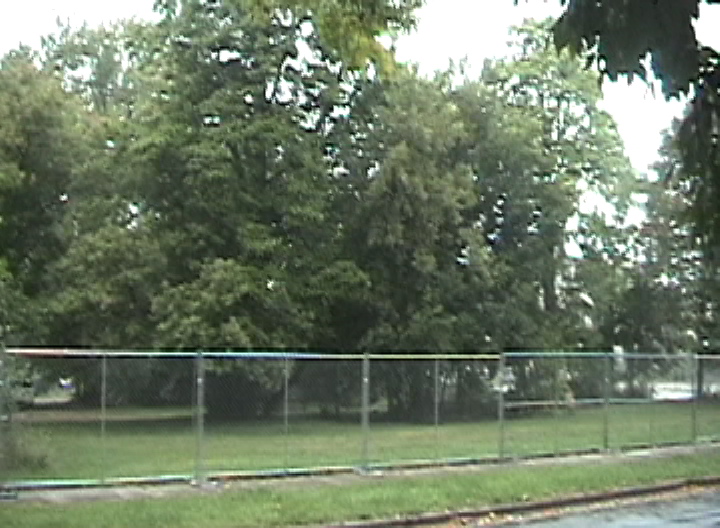
Within the past 24 hours a crew of men have been working on the 400 block of LaGrave Avenue, which is located between Wealthy and Logan Street.
For the past 25 years this block of land has been mostly vacant, with a couple of houses being torn down during that time. Grass and clusters of full-grown trees have occupied most of the space within this city block.

Within these past 24 hours several dozen trees have been cut down and turned into mulch. Granted, there were a few trees that were dead or dying, but the bulk of the trees were healthy and provided a marvelous canopy in an otherwise concrete dominated area.
Over the years I have seen these tree be home to numerous small mammals and a host of birds. Every year there are hundreds of black crows that have used the cluster of trees as a stopping off point on their journey to who knows where. I have seen robins, cardinals, finch, blue jays and sparrows call this urban space home. There have even been times when both peregrine falcons and hawks have landed in this area, quiet possibly because of the large number of fully developed trees.

In addition, I have witnessed years of play that have taken part in this city block, with children climbing trees, neighbors eating berries from the mulberry tree and homeless men and women finding solace under them when seeking a respite from the hot sun.
In the past 24 hours almost every one of these trees have been cut down in preparation for a development project that will include residential and business construction. The development project is being undertaken by the Inner City Christian Federation (ICCF).

Earlier this year, while meeting with the executive director of ICCF, I asked what was going to happen to all the trees in the 400 block of LaGrave SE. He told me that they were all going to be cut down, because they were “ghetto trees.” The non-profit director went on to say that what he meant by this was that they were trees that just came up on their own, meaning they were not planted by humans.
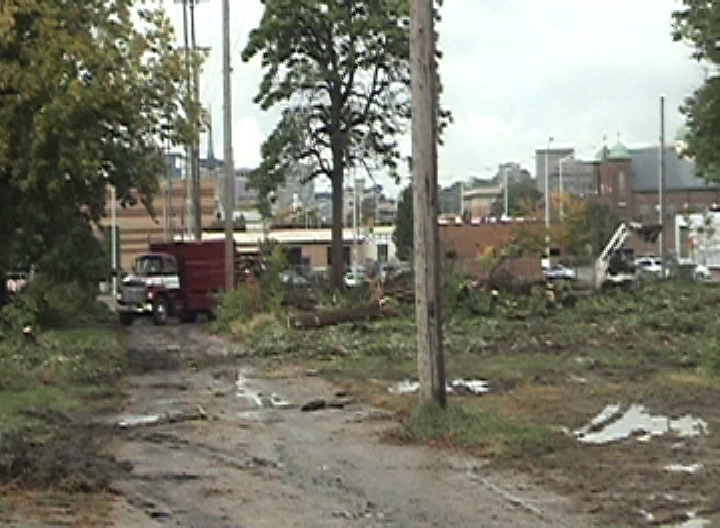
Now, I don’t know about you, but trees don’t need humans. In fact, from an ecological point of view it is the other way around…….humans could not survive without trees.
I’m not against new housing being but across from the house I have lived in for 27 years, but I am not in support of development projects that unnecessarily cut down trees in the process. This is a sad day for Grand Rapids.

