Media Alert: NewsHour and the One Percent
This Media Alert is re-posted from Fairness & Accuracy in Reporting.

With protesters around the country speaking out against income inequality, public television’s flagship newscast made time on October 26 for the pro-inequality side to be heard, featuring a guest who invoked a phony Abraham Lincoln quote to make his case.
NewsHour anchor Jeffrey Brown explained that in the segment correspondent Paul Solman “gets a contrarian view, suggesting inequality in a free market system may not be as bad as advertised.”
The guest was New York University law school professor Richard Epstein, who presented a John Stossel-style view of the economy: “Inequality creates an incentive for people to produce and to create wealth,” raising taxes on the wealthy would harm the economy, and the “fundamental truth is the tax system is more redistributive than it was before… and the regulatory burden on the economy is vastly greater.” PBS should have disclosed that Epstein is also a director at Global Economics Group, a corporate consulting firm that advises on issues like financial regulation and employment law.
When asked if the top one percent have too much control over the political system, Epstein replied: Of course they have a disproportionate impact, but that doesn’t mean that they control it. They also ought to have it.
The last thing you would want to do in any kind of sensible society is to have a set of rules in which one man/one vote dictates over every issue.
The piece closes with Epstein invoking Abraham Lincoln: I’m going to quote Abraham Lincoln, because I like to do that–which is, he said, quite rightly, that you do not make the poor rich by making the rich poor.
The NewsHour should, at the very least, tell its viewers that this quote is a well-traveled hoax. It’s been falsely attributed to Lincoln for the better part of a century, and has been debunked almost as long. The New York Times (8/19/92) and CNN (8/19/92) pointed out that Lincoln hadn’t said those words when Ronald Reagan misquoted him in a 1992 speech. In 1996, Rush Limbaugh admitted that he too had falsely attributed the quote to Lincoln (Extra!, 4/10).
Even better, the NewsHour could explain to viewers why it’s so eager to present segments that portray economic inequality as no big deal. Brown’s introduction called this a “contrarian” view, but defending inequality is hardly contrarian in elite media–including on the NewsHour.
On September 21 Solman presented a segment featuring American University economics professor Robert Lerman, who was critical of a previous NewsHour broadcast for apparently being too one-sided: “It would be nice if there was more equality, but let’s not overdo it.” Lerman’s point was that seniors enjoy vast riches in the form of Social Security and Medicare (FAIR Blog, 9/23/11). The segment included a visit to a nursing home, where Solman informed one resident that “Medicare is like a stash of wealth that you’re now drawing on.”
Public broadcasting is supposed to be dedicated to showcasing viewpoints that “would otherwise go unheard” in commercial media. Voices championing inequality are heard loud and clear in the corporate media; public television should be doing something different.
ACTION:
Tell the PBS NewsHour to issue a correction explaining that guest Richard Epstein invoked a false Abraham Lincoln quote to support his pro-inequality argument. And ask the show why it is so eager to feature one-on-one interviews with guests who downplay–if not outright celebrate–economic inequality.
CONTACT:
PBS NewsHour
Phone: 703-998-2150
Ex-Lobbyist Becomes Top Obama Surrogate
This article is re-posted from OpenSecrets.org.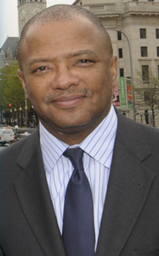
K Street and Capitol Hill veteran Broderick Johnson is joining the re-election campaign of President Barack Obama as a senior adviser.
Johnson clocked more than a decade of experience in the U.S. House of Representatives, as an attorney, during the 1980s and 1990s. Between 1998 and 2000, he served in senior roles in the Clinton White House, including acting as the president’s principal liaison to the House. And after working for President Bill Clinton, Johnson became a top lobbyist for BellSouth Corp. and AT&T.
During his time in the private sector in Washington, Johnson has also worked for Wiley, Rein & Fielding, the Oliver Group, Bryan Cave Strategies, Bryan Cave LLP and the Collins-Johnson Group, according to research by the Center for Responsive Politics.
In addition to AT&T, Johnson’s clients over the years have included numerous political heavy weights, federal lobbying records show, such as Anheuser-Busch, Bank of America, the Biotechnology Industry Organization, Comcast, Fannie Mae, FedEx, Ford, JPMorgan Chase, Microsoft, Shell Oil, Time Warner and Verizon.
Federal records indicate that he has also lobbied on behalf of the Commonwealth of Puerto Rico, the GEO Group (the private prison industry giant) and TransCanada Corp. — although TransCanada spokesman Terry Cunha told Politico Monday that the company’s “government relations operation did not look to and receive lobbying support from Broderick Johnson,” despite what lobbying records show, as the energy company has sought Obama administration approval for its controversial Keystone XL pipeline project.
Over the years, Johnson has also been a political heavy weight in his own right — donating tens of thousands of dollars, mainly to Democratic causes.

According to research by the Center for Responsive Politics, during the 2008 election cycle, Johnson donated $53,850 to federal candidates and committees, with 91 percent of that money aiding Democrats. (The rest went to a nonpartisan political action committee.) During the 2010 election cycle, he donated $81,000 — all to Democrats. And so far this year, he has donated $19,000 to Democrats and $900 to the PAC of his former employer Bryan Cave LLP.
Johnson, a native of Baltimore, Md., has also served on the board of directors of the Center for American Progress Action Fund and is the husband of National Public Radio host Michele Norris.
Former Bush Lawyer & Florida Lobbyist Among Obama’s Elite Bundlers
Eleven years ago, Barry Richard served as the lead litigation counsel in Bush v. Gore, the high-stakes legal case surrounding Florida’s recount that effectively delivered the presidency to Texas Gov. George W. Bush. Richard, a lifelong Democrat and attorney at Greenberg Traurig, is married to Allison Tant, who herself was a state-level lobbyist at Holland & Knight in Florida for eight years. Now, the duo is raising big bucks for President Barack Obama and the Democratic National Committee.
In August, the pair hosted a fund-raiser for the Obama Victory Fund — the joint fund-raising committee that benefits Obama and the DNC — at their home in Tallahassee, Fla. (see screenshot of online invite, right). DNC Chairwoman Debbie Wasserman Schultz, who is also a Florida Congresswoman, was in attendance.
According to information released by the Obama campaign earlier this month, Tant is officially among Obama’s elite fund-raisers, bringing in between $50,000 and $100,000 during the third quarter. (Richard’s name does not appear on the campaign’s list of bundlers, which it calls “volunteer fund-raisers.” Notably, the campaign does not provide specific dollar amounts its bundlers have raised, only broad ranges.)
According to a review of campaign finance data by the Center for Responsive Politics, this year, Tant has donated the legal maximum of $5,000 to Obama, while Richard has donated $3,300. During the 2008 election cycle, Tant donated $2,300 to Obama, while Richard donated $1,750. (Neither was named by the campaign as official bundlers four years ago.)
By the Center’s tally, more than 350 bundlers have raised at least $56 million for the Obama campaign and DNC so far this year — or about $1 out of every $3 the groups have raised, as OpenSecrets Blog previously reported.
Richard did not immediately respond to a request by OpenSecrets Blog for comment for this story.
FBI “Mapping”: Racial Profiling on a People-Wide Scale
This article by Glen Ford is re-posted from BlackAgendaReport.com
Until the events of 9/11, Black America seemed to be winning lots of battles in the fight against racial profiling. The term “Driving While Black” had become almost a household word due to heavy media exposure of wildly disproportionate stops of Black drivers by police on Interstate highways.
Racial profiling had become politically and socially unacceptable, with few public advocates even among law and order Republicans. And then the Twin Towers came down. Almost instantaneously, racial profiling was back, with a vengeance – directed most dramatically against people who “appeared” to be Muslim, whatever that looks like, but with renewed vigor against African Americans, the historical targets.
The FBI, which was never a respecter of the rights of darker peoples, repositioned itself to aggressively pre-empt any threat to national security. That means going after people even when there is no evidence of a crime. Although it remained against the rules for FBI agents to launch investigations based solely on race, religion of ethnicity, those factors could be taken into account. It was a loophole big enough to drive a busload of Knights of the Ku Klux Klan through.
By asserting that certain racial, religious and ethnic groups – Blacks, Muslims (especially Black Muslims) and Latinos – were more prone to crime and acts of terror, the FBI cold justify all manner of methods to massively penetrate these groups in the interest of national security.
The vocabulary changed to suit the mission. Ethnic, racial and religious communities became “domains” in FBI parlance, large geographic and social spaces in which national security demanded that the Bureau make itself acutely “aware.” Thus, the new strategy was called “domain awareness” – meaning, the FBI’s job was to learn everything about the people who lived in these ethnic, religious and racial “domains.” All that was required to launch massive intelligence gathering campaigns against, say, Black people in the state of Georgia, Arabs in the Detroit area, Chinese and Russians in the San Francisco Bay Area, or almost any group in New York City, was the invocation of a vague criminal or national security “threat.”
Like magic, threats started appearing all over the place. In October 2009, the Atlanta office of the FBI sent out a threat “alert” about supposed “Black Separatist” groups. It turned out that the alert involved peaceful protests and support of a congressional candidate, but the FBI set about collecting information on the growth of the entire Black population in the Atlanta area, the better to understand the “domain.” The FBI has used the presence of street gangs like MS13 in some Latino communities to launch domain-wide dragnets of information on area Hispanic populations. Muslims of any extraction – but especially Black American Muslims – are considered domains worthy of endless mapping.
According to the ACLU, which is urging people to tell the FBI “Don’t Map Me or My Community,” the Bureau is studying racial and ethnic “behaviors.” That means “behaving while Black” – or behaving while Latino, or behaving while Muslim. The FBI also studies racial, ethnic and religious “facilities” – that is, the places where people…exist. The ACLU says the FBI’s own behavior is unconstitutional. It also seems very much like the FBI is preparing to put the people it is studying under some kind of siege.
New Media We Recommend
Below is a list of new materials that we have read/watched in recent weeks. The comments are not a “review” of the material, instead sort of an endorsement of ideas and investigations that can provide solid analysis and even inspiration in the struggle for change. All these items are available at The Bloom Collective, so check them out and stimulate your mind.

That’s Revolting: Queer Strategies for Resisting Assimilation, edited by Mattilda Bernstein Sycamore – That’s Revolting shows us what the new queer resistance looks like. The collection is a fistful of rocks to throw at the glass house of Gaylandia. That’s Revolting uses queer identity and struggle as a starting point from which to reframe, reclaim, and re-shape the world. The collection challenges the commercialized, commodified, and hyper-objectified view of gay/queer identity projected by the mainstream (straight and gay) media by exploring queer struggles to transform gender, revolutionize sexuality, and build community/family outside of traditional models. A fabulous collection of articles and interviews. Highly recommended.

Will the Last Reporter Please Turn Out the Lights: The Collapse of Journalism and What Can Be Done to Fix It, edited by Robert McChesney – In Will the Last Reporter Please Turn out the Lights, media analysts Robert W. McChesney and Victor Pickard have assembled thirty-two illuminating pieces on the crisis in journalism, revised and updated for this volume. Featuring some of today’s most incisive and influential commentators, this comprehensive collection contextualizes the predicament faced by the news media industry through a concise history of modern journalism, a hard-hitting analysis of the structural and financial causes of news media’s sudden collapse, and deeply informed proposals for how the vital role of journalism might be rescued from impending disaster.

The Resilient Gardener: Food Production and Self-Reliance in Uncertain Times, by Carol Deppe – The Resilient Gardener is both a conceptual and a hands-on gardening book, and is suitable for gardeners at all levels of experience. Resilience here is broadly conceived and encompasses a full range of problems, from personal hard times such as injuries, family crises, financial problems, health problems, and special dietary needs (gluten intolerance, food allergies, carbohydrate sensitivity, and a need for weight control) to serious regional and global disasters and climate change. It is a supremely optimistic as well as realistic book about how resilient gardeners and their gardens can flourish even in challenging times and help their communities to survive and thrive through everything that comes their way — from tomorrow through the next thousand years.

Life in Occupied Palestine (DVD) – In Life in Occupied Palestine, Anna Baltzer, a graduate of Columbia University and the Jewish-American granddaughter of Holocaust refugees, documents her experience as a volunteer with the International Women’s Peace Service in the West Bank. Baltzer provides a straightforward account of the Israeli-Palestinian conflict, while chronicling the almost unbearable living conditions of Palestinians under the Occupation.
Tell Chevron and GM to stop sponsoring hate speech on the radio
This Action Alert is from the group human rights group Cuentame.
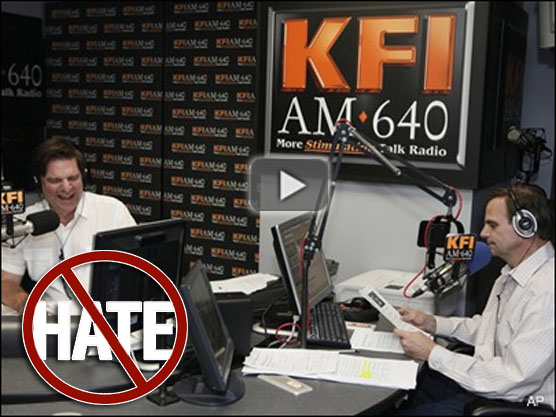
The John & Ken show on KFI (AM 640) is hate radio. The language used on the show, recently attacking the Latino community, is on par with that of Rush Limbaugh or Michael Savage, and it reaches over a million listeners each week. As with most radio shows, John & Ken’s substantial paychecks are funded by the advertisers who buy time on KFI, like GM Cadillac and Chevron.
On September 1st, John & Ken gave out the personal phone number of DREAM Act supporter Jorge-Mario Cabrera and urged listeners to contact him. Jorge-Mario received close to 500 calls with many of the callers repeating John and Ken’s exact words, and then wished death upon Mr. Cabrera and/or threatened his life and his physical safety.
Watch the video and hear a sample of what he heard (WARNING: Explicit Language)
This is the direct result of how John & Ken talk about people they disagree with, particularly Latinos. And every day advertisers pay to keep this toxic rhetoric on the air. GM and Chevron are now aware of this but they still refuse to take their advertising dollars out.
Sign the petition demanding they stop sponsoring hate!
This is the direct result of how John & Ken talk about people they disagree with, particularly Latinos. And every day advertisers pay to keep this toxic rhetoric on the air. GM and Chevron are now aware of this but they still refuse to take their advertising dollars out. You can call them and demand they do so:
GM: 1-313-556-5000
Chevron: 1-925-842-3232
Guards of the Status Quo and the Occupy Movement
This article by Bruce Levine is re-posted from ZNet.

“In a highly developed society, the Establishment cannot survive without the obedience and loyalty of millions of people who are given small rewards to keep the system going: the soldiers and police, teachers and ministers, administrators and social workers, technicians and production workers, doctors, lawyers. . . . They become the guards of the system, buffers between the upper and lower classes. If they stop obeying, the system falls.”
—Howard Zinn, from “The Coming Revolt of the Guards,” A People’s History of the United States,
For those of us who have demonstrated and marched in the Occupy movement, it is obvious that the police and the corporate press serve as guards—buffers between the vast majority of the American people and the ruling “corporatocracy” (the partnership of giant corporations, the wealthy elite, and their collaborating politicians). In addition to the police and the corporate press, there are millions of other guards employed by the corporatocracy to keep people obedient and maintain the status quo.
Even a partial revolt of the guards could increase the number of protesters on the streets from the thousands to the millions. When did Zinn predict the revolt would occur, and how can this revolt be accelerated?
The Other Guards
I am a clinical psychologist, and Zinn is correct that mental health professionals also serve as guards who are given small rewards to keep the system going. The corporatocracy demands that psychiatrists, psychologists, social workers, and other mental health professionals assist people’s adjustment to the status quo, regardless of how dehumanizing the status quo has become. Prior to the 1980s, mental health professionals such as Erich Fromm (1900–1980) were concerned by this “adjustment to what?” problem. However, in recent years there has been decreasing awareness among mental health professionals about their guard role, even though today some of the best financial packages offered to us are from the growing U.S. prison system and U.S. military.
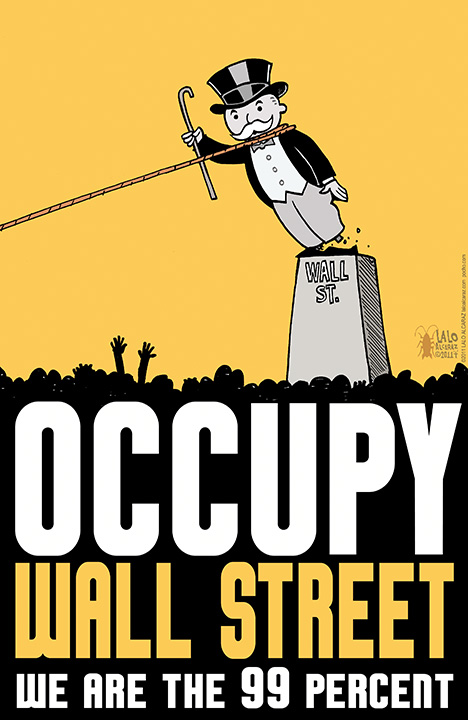
Most guards also perform duties besides “guard duty.” The police don’t just protect the elite from the 99 percent; they also provide people with roadside assistance. And mental health professionals also perform “non-guard duty” roles such as improving family relationships. Guards certainly can perform duties helpful for the non-elite, but the elite would be foolish to reward us guards if we didn’t serve to maintain their system.
Many teachers went into their profession because of their passion for education, but they soon discover that they are not being paid to educate young people for democracy, which would mean inspiring independent learning, critical thinking, and questioning authority. While teachers may help young children learn how to read, they are employed by the corporatocracy to socialize young people to fit into a system that was created by and for the corporatocracy. The corporatocracy needs its future employees to comply with their rules, to passively submit to authorities, and to perform meaningless activities for a paycheck. William Bennett, U.S. Secretary of Education under Ronald Reagan, was clear about the role of schools, “The primordial task of the schools is transmission of the social and political values.”
If you are comfortably at the top of the hierarchy, you reward guards to make your system work. In addition to the police, the corporate press, mental health professionals, and teachers, there are clergy, bureaucrats, and many other guards in the system, all of whom are given small rewards to pacify and control the population. Some guards have rebelled from their pacification and control roles, most have not.
When Will the Revolt of the Guards Occur?
Howard Zinn predicted the revolt of the guards would occur when guards recognize that they are “expendable.”
Historically, the elite’s strategy is to pay what is necessary to fill guard jobs, and when the time is ripe, reduce the rewards of guards and ultimately eliminate the guards. Union teachers—similar to union prison guards who’ve been replaced by non-union guards in for-profit prisons—have discovered that they too are expendable. It is logical for the elite to first use teachers to pacify young people, then use corporate-collaborator politician guards to reduce the rewards of teachers, and finally replace teachers with various technologies (such as computer programmed instruction) that the elite can profit from.
While the corporatocracy once paid us mental health professionals fairly well to provide therapy to help people adjust to the status quo, we now receive relative chump change for therapy, and it’s clear that psychotherapists and counselors are expendable. Mental health professionals are increasingly pressured by insurance corporations to treat the “maladjusted” with drugs, which create wealth for drug corporations and reduces labor costs for health insurance corporations. Today, a psychiatrist can still make good money prescribing drugs, but in the future, the corporatocracy will likely reduce rewards to its drug dispensers. That future is here in the U.S. military, as troops in combat zones in Iraq and Afghanistan are, without prescriptions, given psychiatric drugs by military medics.

So, law enforcement officers, beware. Cameras and other surveillance technology are becoming increasingly inexpensive, and law enforcement labor costs will increasingly be replaced by inexpensive Orwellian surveillance.
How to Accelerate the Revolt of the Guards
For guards, it is not easy coming out of denial of our role and our fate. As Upton Sinclair observed, “It is difficult to make a man understand something when his salary depends on his not understanding it.”
To accelerate the revolt of obedient guards, I recommend two strategies: (1) create unpleasant dissonance about their role as guards; in other words, put guards in some pain for their unquestioning obedience that maintains the system. (2) offer encouragement for even small acts of rebellion against their guard role; small acts of rebellion may well be major financial risks.
It is my experience that guards are far less defensive when they are “off-duty.” So, if you are at protest demonstration, don’t try to lecture police about their role as a guard for the system or stroke them for any act of humanity. When we guards we are on duty, we are extremely vigilant about being manipulated. Off-duty, we are more receptive.
If you have social contact with off-duty law enforcement officers, you might ask them “Wouldn’t it be more satisfying putting the handcuffs on some billionaire tax dodger than arresting some small-time pot user?” I’ve asked police officers if they’ve heard of Jonathan Swift’s quote, “Laws are like cobwebs, which may catch small flies, but let wasps and hornets break through.” On-duty police will respond with “no comment” or a blank stare, but some off-duty cops will smile and even agree. And should off-duty police ever tell you an anecdote in which they ignored a law designed to catch a small fly, give them encouragement.
For off-duty corporate journalists, you might talk to them about how much you admire journalists such as Bill Moyers, former press secretary of Lyndon Johnson, and Chris Hedges, former New York Times reporter, for their rebellion from the their guard role. Remind journalists of their expendability, as the corporate media is increasingly eliminating reporters for the sake of profitability. And if they give you anecdotes in which they created tension with their editor by challenging the system, be encouraging.
If you know any mental health professionals, ask them if they think insurance companies care at all about either patients or providers. They will likely laugh, and say that insurance companies care only about their profits, and most will agree that other giant corporations care only about their profits. You might ask them, “Just how unjust does a society have to become before helping people adjust to it with behavior modification and medication is immoral?” If they have validated their patients’ pain over an increasingly undemocratic and authoritarian society and helped them constructively rebel against a dehumanizing system, encourage these stirrings of rebellion.
Most teachers despise the tyranny created by “No Child Left Behind” and “Race to the Top” with its fear-based standardized test preparations and computerized learning programs. Ask teachers, “Is it possible that you, like manufacturing workers, are also expendable?” You might also ask them, “Have you ever told parents of a disruptive kid that it is possible to effectively teach their child without any medication if there were fewer children in the classroom, which would allow their child to receive the attention and structure necessary?” Certainly give teachers encouragement if they have put their job in jeopardy by explaining the purpose of schools in the corporatocracy to any of their anti-authoritarian and alienated students.
In order to rouse more guards to revolt, we should not let obedient guards “off the hook” for their refusal to question, challenge, and resist illegitimate authority. Do not say, “Hey, I understand, you are just doing your job.” Guards must be confronted with the reality of the misery that results from blind obedience. Guards must deal with the reality that history looks unkindly on those who “just followed orders.” And guards must be given confidence that there are revitalizing satisfactions and new community that will emerge for them when they join the revolt of the guards.

In 1990, the Grand Rapids Pride Celebration invited AIDS Quilt founder Cleve Jones to speak about his work to educate the public about HIV/AIDS.
Jones, who was a close friend of the late Harvey Milk, spoke with Bryan Ribbens about his experience of being in Grand Rapids in the video below.
This video, like many other archival materials, is part of the Grand Rapids People’s History Project and will be hosted online at a new wordpress site that will go live after our premier screening of the People’s History of the LGBTQ Community in Grand Rapids film on Thursday, November 17.
For more information of the film screening go to http://www.facebook.com/event.php?eid=177037795707401.
Occupy the System
This article by Jeffrey St. Clair and Joshua Frank is re-posted from CounterPunch.
 There is an anger running rampant across the country. Some on the right are calling it class warfare. People are enraged. Jobs are scarce, the rich continue to get richer while the poor continue to struggle to make ends meet. Indeed, it should be classified as economic warfare, Americans are sick and tired of being pushed around. It is time to shove back.
Pizza man Herman Cain is right. The problem resides in the White House. Herman Cain is wrong. The problem resides on Wall Street. They are, in fact, the same problem: a goulish economic system that enriches the wealthy and impoverishes everyone else, a system that pillages the natural world and tramples on basic human liberties, a system that treats corporations as people and people as commodities.
The victims of neoliberal economics are easy to spot. So too are the perpetrators and profiteers of privatized markets. In many ways the occupations sprouting up around the country remind us of the outpouring of opposition to the WTO that jammed up the streets of Seattle in the late-1990s. Like that organic movement, the current protests are grassroots, and fueled, not by overt political motivations, but by a sense of justice.
Like the Battle for Seattle, Occupy America is taking place during a time when a Democrat resides in the White House. There is little question that President Clinton recklessly pursued a free trade agenda that endangered the American workforce and ravaged the environment. But today President Obama’s motivations are a bit more cavalier. While he speaks of job creation and jumpstarting the struggling economy, he simultaneously ensures his pals on Wall Street that their power and profits will remain intact.

President Clinton, like his predecessor, is largely responsible for the dire economic situation we now face. It was Clinton and his Treasury Secretary Robert Rubin that pushed for increased deregulation, which ended up shifting jobs, and entire industries, overseas.
Rubin even pushed for Clinton’s dismantling of Glass-Steagall, testifying that deregulating the banking industry would be good for capital gains, as well as Main Street. “[The] banking industry is fundamentally different from what it was two decades ago, let alone in 1933,” Rubin testified before the House Committee on Banking and Financial Services in May of 1995.
“[Glass-Steagall could] conceivably impede safety and soundness by limiting revenue diversification,” Rubin argued.
While the industry saw much deregulation over the years preceding Clintontime, the Gramm-Leach-Biley Act of 1999, which eliminated Glass-Steagall, extended and ratified changes that had been enacted with previous legislation. Ultimately, the repeal of the New Deal era protection allowed commercial lenders like Rubin’s Citigroup to underwrite and trade instruments like mortgage backed securities along with collateralized debt and established structured investment vehicles (SIVs), which purchased these securities. In short, as the lines were blurred among investment banks, commercial banks and insurance companies, when one industry fell, like mortgage lenders, others could too.
What Clinton began, President Bush only escalated with an extreme capitalist vigor. Alan Greenspan stayed as head of the Federal Reserve, continuing to press forward with his libertarian agenda of deregulation and damaging austerity measures. When Greenspan retired, Ben Bernanke, another Wall Street ally, took the Bank’s helm, and was kept in place by President Obama.
Obama wasted little time bailing out the greed-infested financial sector. When Obama took office he in 2009 he nominated Rubin-trained economist Timothy Geithner, former president of the Federal Reserve Bank of New York, to serve as Treasury Secretary. Geithner, if anything, is an insider among insiders and Wall Street’s main man in DC.
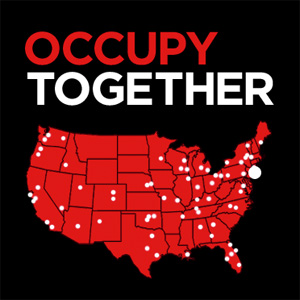
It was certainly not the hope and change Obama supporters had voted for, especially in a time when the economy was suffering and jobs were scarce. Obama’s modest stimulus program did little to sustain job growth and was nowhere near the scale of the New Deal’s robust Works Progress Administration. In short, Obama has been an economic disaster for the majority of Americans, sans the Wall Street crowd that continues to profit and is protected under the guise of “too big to fail”.
Did you really expect something different from the man who begged Joe Lieberman to serve as his mentor in the senate?
It’s this entrenched, systematic refusal to challenge the status quo that is driving the animosity and outrage across the country. Wall Street is being upheld and indeed enabled by both the Democrats and Republicans, including, at the top of the stinking pile, President Obama and his administration.
The Democrats are a prosthetic party, a hollow shell for the detritus of New Deal liberalism, that maintains popular allegiance through blind inertia. For the past thirty years at least, the Democrats have functioned less as a political party driven by a tangible ideology than as a low-fat franchise of Wall Street and the defense contractors. From war to neoliberal economics, the new Democrats have pursued brutal policies, often inflicted most grievously at the party’s most devoted constituents: Hispanics, blacks, labor and the unemployed.
There’s a Wilsonian quality to Obama: trim, aloof, pedantic and shank-you-in-the-back dangerous. Obama has never wanted to be seen socializing with the poor or working class stiffs. He doesn’t even want them in his orbit, except as props behind his teleprompter. In his first three years in office, the closet the president came to such a pedestrian parlay was his famous beer summit with the Cambridge cop who manhandled Henry Louis Gates. Come to think of it, that meeting was a twofer, since it was also one of Obama’s few close encounters with a voice from black America as well.
Making the connection between the continued economic disparities on Main Street and the policies that fuel this divide is paramount to bringing about real change. As such, it’s time to Occupy Washington and make this, not only an electoral issue, but also a very real threat to our government’s consolidated power.
Obama’s first term has revealed the utter vacuity of our political system and the prodigious level of corruption eating away at the sinews of the empire. Democracy itself is being degraded. From bank bailouts and war to indemnification of corporate criminals and assassination orders against American citizens, the most urgent matters of government are now hatched without public debate in the secret chambers of power. The majestic hypocrisy of the Democrats in a time of deepening economic and environmental crisis has inflamed the spectrum of outrage now sweeping America. But where does the movement go from here?
The 99% movement needs to forsake protest for a sustained resistance and disruption of the status quo. After all, the object isn’t reform—we’re far, far beyond that–but radical, systemic change. Its structure should remain enigmatic, diffuse, protean—too slippery to be captured and co-opted by Democrats looking to hijack its momentum. In order to maintain its integrity and political power, the 99% movement must publicly shun any perilous alliance with Democratic front groups such as MoveOn and the Sierra Club. It should reject the coruscated cant of faux leftists like Bernie Sanders, Van Jones and Rachel Maddow and instead give full-voice to the intrinsic rage of the outsiders, the disenfranchised and destitute, the left behind, the new American preterite.
It’s time for the nation to hear the spooky vibrations of a home-grown and organic movement on the march, a swarming mass of discontent that will make the financial aristocrats and their low-rent political grifters tremble in their sleep.
Let’s run the bastards out of town.
This article is re-posted from iwatchnews.org.

Out go all the U.S. troops by year’s end, President Obama said Friday about Iraq. And in go the contractors, along with some familiar contracting problems, say other government officials and independent experts.
As the United States pulls out its remaining 50,000 or so troops after a decade of conflict costing around $1 trillion, many of the soldiers’ non-fighting functions will be pursued by a force of State Department-funded government contractors expected to near 15,000.
That preliminary estimate, now being circulated by the administration among lawmakers on Capitol Hill, would represent an overwhelming share of the official remaining U.S. presence in the unsettled country. But even after wide publicity about past contracting abuses and waste, new scandals may trail behind this persistent deployment, according to a commission created by Congress to study the missteps so far.
“After a decade of war, the government remains unable to ensure that taxpayers and warfighters are getting good value for contract dollars spent,” Dov S. Zakheim, a former Pentagon comptroller and a member of the congressionally-created Commission on Wartime Contracting, told the Senate Armed Services committee a day before Obama’s announcement.
In an August report, prepared after a three-year study of contracting in Iraq and Afghanistan, the commission estimated that between $30 billion and $60 billion has been lost to waste and fraud so far in those conflicts, representing 15 to 30 percent of all that Washington has spent on contractor-provided security, civil reconstruction, training, and other nation-building work.
The commission warned that additional billions may be lost in the years ahead if Defense Department and State Department contracting authorities let remaining management problems fester or fail to safeguard contractor programs and projects that remain uncompleted.

“The Commission sees no indication that Defense, State, and USAID [Agency for International Development] are making adequate plans to ensure that host nations will be able to operate and maintain U.S.- funded projects on their own,” it reported.
Although some waste can be attributed to Iraq’s pervasive culture of corruption, many of the war’s contracting shortcomings stemmed from poor foresight, planning, and management by Washington that has not been adequately addressed, the commission said.
“Clearly, if the State Department until now has had trouble managing its contracts, and there is no question it has had some, I don’t know how it is going to manage all of this,” Zakheim testified. Katherine V. Schinasi, a colleague on the commission and former analyst at the General Accountability Office, said, “we’ve seen enough poor outcomes from State Department contracting that we were not in agreement” with the department’s positive assessment of its own abilities to undertake a wider role.
“The hard reality is that changing values, doctrine, expectations, practices, and other aspects of organizational culture in a vast and complex enterprise [like the Defense Department] is like herding icebergs,” Zakheim added, calling it “a slow process requiring heroic exertions, sustained attention, and unrelenting leadership.”
The handoff in Iraq from U.S. military forces to contractors has been under way for some time, but many of the estimated 16,054 U.S.-origin contractor employees remaining on the Defense Department’s payroll there in late summer may leave those assignments in coming months. They have provided training, base support, security, translation, logistics, construction and transportation for the U.S. troops that Obama said will be home by Christmas.
According to a preliminary estimate given at the Senate hearing, the State Department plans a persistent presence in Iraq of roughly 17,000 U.S.-paid workers, of which 14,000 may be contractors. On Friday, White House officials, speaking on background at a briefing for reporters, projected that 4,500 to 5,000 of these will be employed in guarding three U.S. diplomatic posts in Irbil, Basra, and Baghdad.
Zakheim, commenting generally about the government’s policies before the withdrawal announcement, testified that “we rely on contractors too heavily, manage them too loosely, and pay them too much.” He said the documented waste in past Iraq and Afghanistan contracts demonstrated that federal agencies still are not preparing properly for future contingencies.
He also said contractors still are not properly held accountable for their lapses, through suspensions, debarments, or prosecution. “Staffing shortages have led to a Defense Contract Audit Agency backlog of nearly $600 billion [worth of transactions], delaying recovery of possible overpayments,” Zakheim said. Some multi-billion dollar contracts are still not being opened to multiple bidders, he added, calling this “not at all reasonable” a decade after the U.S. intervention in Iraq and Afghanistan began.
Frank Kendall, the Pentagon’s top acquisition and logistics official and the senior official there overseeing the transition from military to State Department control, affirmed in prepared testimony that his department was initially “unprepared to manage” the contractors used in Iraq. It lacked the right policies, failed to employ the right contracting officers, and exercised poor management and oversight, he said.
Kendall noted, however, that annualized Army debarments of contractors increased from 94 to 178 over the past four years; the number of Army contracting officers has been increased; and new contracting policies have been written.
“There is a lot of risk in the transition” to State, Kendall added in response to questions from Sen. Kelly Ayotte (R-N.H.). “We are in decent shape” after a year of work, but “I’m sure there will be problems…The State Department has never done anything this big,” Kendall said.
Responding to questioning from Sen. Claire McCaskill (D-Mo.) about the risks associated with shifting projects to local control, Kendall also said “we agree with your concern: We have not done as much, I think, in the past as we should about the sustainability of our projects [once they are turned over to the local government], so it is definitely a priority for our projects going forward.”
This article is re-posted from Narco News.
A paramilitary service company’s plan to develop a nearly 1,000-acre military and law-enforcement training facility near the California border with Mexico is now in the process of being scuttled by a foreclosure action on the property.

At least $1 million is still owed on the property by the company, called Wind Zero, according to the current notice of default obtained by Narco News — and some sources familiar with the foreclosure process indicate the amount owed, including interest and penalties, exceeds $1.5 million.
“The note [loan] on the property is in default, and we are going through the foreclosure process,” confirms Stewart Cowan, a San Diego attorney representing the note holder, Donna Perrine, who sold the 944-acre site to Wind Zero in 2007.
A check of public records for the Wind Zero property shows that the owner also is in arrears on 2010 taxes owed to Imperial County, Calif., to the tune of nearly $2,800. David Black, a senior planner with Imperial County, says he is not aware of either the foreclosure or the taxes owed with respect to the Wind Zero project.
“I was the project planner for that project, but I have not kept up on the foreclosure or tax matters,” Black says. “If they come in to apply for building permits, then it might become an issue. But nothing has been done on the (Wind Zero) project since they received approval in December of last year.”
The proposed Wind Zero project, which would be developed in three phases at a cost of up to $100 million (some $15 million for Phase 1), has been billed by Wind Zero as a privately operated, state-of-the-art training center that would employ up to 200 people and serve as economic boon to the small California border towns of Nomirage and Ocotillo, located in Imperial County some 80 miles east of San Diego and less than a dozen miles from the Mexican border.
The paramilitary training center is slated to include numerous shooting ranges allowing for some 57,000 rounds of ammunition to be fired off daily; a mock-up of an urban neighborhood for practices assaults; a 6-mile dual-use race track for teaching defensive and offensive driving (and for private-pay recreational use); an airstrip and multiple heliports; and enough housing and RV camper space (along with a 100-room hotel) to accommodate a small battalion of warriors.
Shell Game
Despite the money problems apparently afflicting the Wind Zero project, opponents of the development indicate that there is still some concern that a paramilitary front company, such as an affiliate of Xe (formerly Blackwater), could still purchase the property out of foreclosure and proceed with the project.
In fact, the planned Wind Zero training center is not unlike a similar project proposed several years ago in southern California by Xe, then called Blackwater (which, like Wind Zero, was founded by former Navy SEALs). Blackwater pulled the plug on that controversial project in early 2008 due to community opposition.

“There have been rumors floating around that Wind Zero [led by former Navy SEAL Brandon Webb] has some type of affiliation with Xe, and that it is possible Wind Zero could sell it’s interest in the project,” says Larry Silver of the California Environmental Law Project. Silver is representing the Sierra Club and the Desert Protective Council in a lawsuit against Wind Zero and Imperial County, Calif. — which has sanctioned the development of Wind Zero’s paramilitary training center.
Attorney Cowan concedes that there is nothing to prevent a company like Xe, or an affiliate of Wind Zero, from buying the note due on the property where the Wind Zero training center is slated to be constructed.
“They could show up at the courthouse in Imperial County and buy the note at the foreclosure auction,” he says.
Narco News attempted to contact Wind Zero top gun Webb, but phone calls were not returned. According to prior media reports, Webb insists Wind Zero is not affiliated with Xe, but rather he considers the East Coast company to be a competitor.
Webb addressed the issue in an interview with the San Diego Reader in January of this year.
From the Reader story:
Anger over Wind Zero’s proposal intensified in June 2007 when Brian Bonfiglio, Blackwater’s vice president, showed up at a presentation that Wind Zero chief executive Webb was giving at a community meeting.
“There’s been a lot of negativity about this Blackwater [Xe] issue,” Webb says during a January 17 phone interview. “There’s this big conspiracy that we’re a shadow company for Blackwater, but it’s ridiculous. [Bonfiglio] showed up at the meeting, and I didn’t even know until afterwards. If we were associated, then the worst thing I could do would be to bring a member of Blackwater to a community meeting.”
Broker in the Weeds

However, sources told Narco News that in late September, about a month after the notice of default on the Wind Zero site was recorded, a broker from Texas by the name of David Keener contacted Cowan to make an offer on the property.
Cowan confirms that he was contacted by Keener, whom, he says, “made an offer on the property that was considerably less than the value of the note.”
“Donna [Perrine, the holder of the note] rejected the offer, and there was no deal made with Keener,” Cowan adds.
In a check of Texas corporation records, Narco News discovered that Keener is listed as the registered agent for MDJ Texas Reality Holdings LLC. Those same records show that MDJ is affiliated with a company called Holland Park Capital of Austin, Texas, whose registered agent is an individual named Mark Jansen.
A Form D Notice of Exempt Offering of Securities filing that Wind Zero lodged with the U.S. Securities and Exchange Commission in July 2009 lists Jansen as an executive officer and director of Wind Zero.
Narco News was unable to reach Jansen for comment. However, Keener, when contacted in Texas, did confirm that he knows Jansen and had a business relationship with him. However, Keener says he is now the sole owner of MDJ and it is no longer affiliated with Holland Park Capital.
Keener also says he was not representing either Jansen or Arlington, Va.-based Xe in the bid to acquire the Wind Zero property in Southern California.
Xe is owned by USTC Holding LLC, which counts as members of its board of directors former Bush Administration U.S. Attorney General John Ashcroft, former Clinton Administration General Counsel Jack Quinn, and retired U.S. Navy Admiral Bobby R. Inman. Listed as a director of Wind Zero is former Navy Captain and RAND Senior Management Systems Analyst John Birkler , according to Wind Zero’s 2009 Form D filing with the SEC.
RAND bills itself as a nonprofit, nonpartisan think tank, but, in reality, it has a long history of close ties to the military and private-sector warfare complex. RAND media spokesman Warren Robak told Narco News previously that “John Birkler and his involvement with Wind Zero is a private matter — it has nothing to do with RAND.”
Keener would say only that he was representing in his bid for the Wind Zero property “an investor from the East Coast who was familiar with the [Wind Zero] project.”
The environmental groups represented by Silver and the Quechan Indian Tribe (the land slated for the Wind Zero project is the site of a tribal burial ground) filed their separate lawsuits earlier this year in California Superior Court seeking a judicial order that will undue Imperial County’s approval for the planned Wind Zero project.
Silver says the Sierra Club and Desert Protective Council have no plans to drop their lawsuit, even if the Wind Zero property is sold — given the concern that a third party affiliated with either Wind Zero or Xe may still seek to purchase the property out of foreclosure (at a significantly reduced price) and move forward with the project under the existing development agreement with Imperial County.
“There is a hearing in the case set for Nov. 10, and we are prepared to ask the court to set aside the approval for the project,” Silver says. “If the judge says no, then we plan to appeal.”
 Grand Rapids Institute for Information Democracy