DeVos-led group GR A250 continues to want to control the narrative about the history of the US
In an April post on GRIID I warned people about how Doug DeVos and the GR A250 Committee was trying to dictate the narratives for the 175th anniversary of Grand Rapids and the 250 anniversary of the founding of the US. In the April blog post I wrote:
When it comes to the dominant narrative about the founding of the US, we all know what we were taught in grade school, particularly about the Revolutionary War. The Zinn Education Project has been working hard to provide teaching tools for educators and the community at large so that we can challenge the dominant narratives about the history of the US, specifically as it gears up for the 250th anniversary of the founding of this country.
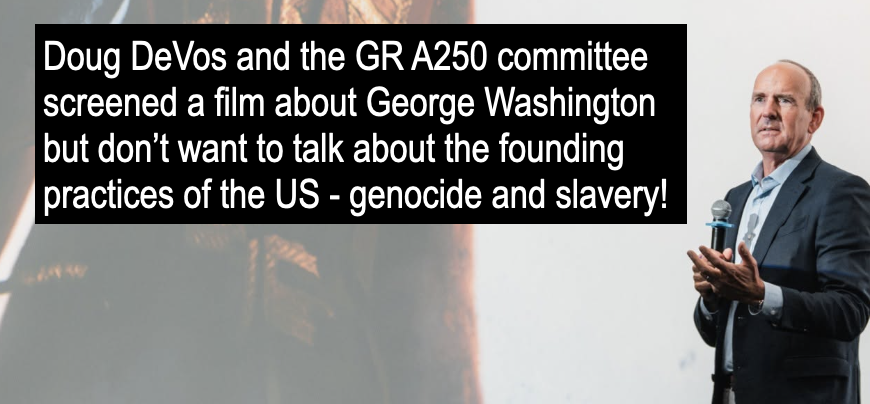
In a recent GR A250 Facebook page post that committee hosted a screening of a new film called Young Washington. In that Facebook post the GR A250 committee wrote about Young Washington, stating:
The film offered a powerful look at the formative experiences that shaped one of America’s most influential leaders, highlighting timeless themes of character, perseverance, leadership and service.
This may seem like a harmless attempt to enlighten people about the formative years of George Washington’s life, but it fails to address larger and more structural issues about the founding of the US.
If we wanted to be honest about George Washington we could introduce people to Jerry Fresia’s book, Toward an American Revolution: Exposing the Constitution & Other Illusions. Fresia begins his book talking about the wealth of the founders, beginning with George Washington, where he writes:
His will of 1789 revealed that he owned 35,000 acres in Virginia and 1,119 acres in Maryland. He owned property in Washington valued (in 1799 dollars) at $19,132, in Alexandria at $4,000, in Winchester at $400, and in Bath at $800. He also held $6,246 worth of US securities, $10,666 worth of shares in the James River Company, $6,800 worth of stock in the Bank of Columbia, and $1,000 worth of stock in the Bank of Alexandria. His livestock was valued at $15,653. As early as 1773, he had enslaved 216 human beings who were not emancipated until after he and his wife had both died.
George Washington was one example of what the first Chief Justice of the US – John Jay – said, “Those who own the country ought to govern it.”
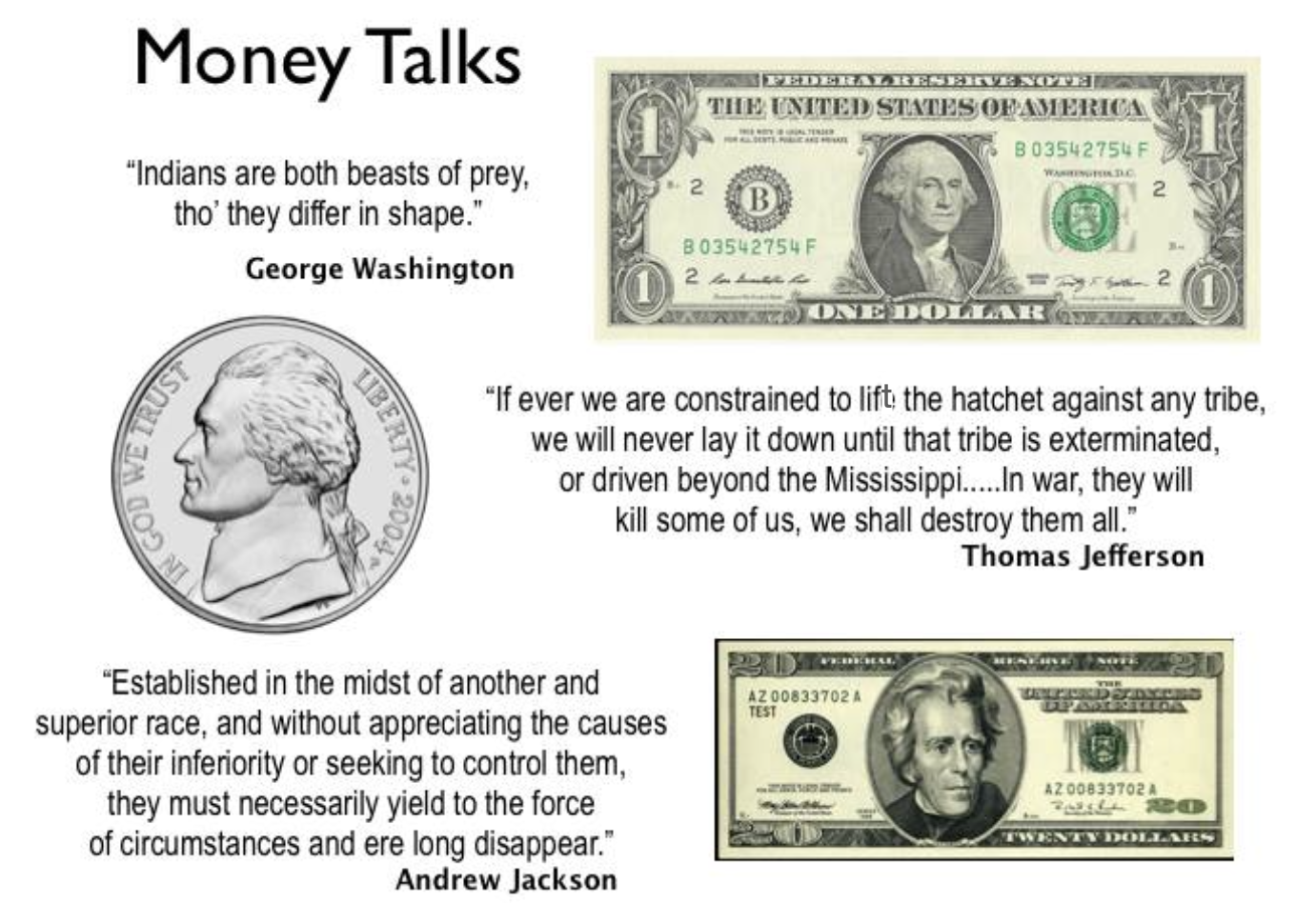
However, focusing on personalities can also distract us from the historical roots of the founding of the US. If we are being honest, then we have to come to terms with the fact that the US was founded on the genocide of Indigenous nations and the enslavement of Africans who were forcibly brought to the US for the sole purpose of being chattel slaves for founding fathers such as Washington and Jefferson.
If we want to look at the 250th anniversary, which centers around the Declaration of Independence and the Revolutionary War, then we need to look beyond what we were taught in 8th grade social studies class and engage in further inquiry about the founding of the US. Here are some suggested books and other materials:
Books:
The First American Revolution: Before Lexington and Concord, by Ray Raphael
Founders: The People Who Brought You A Nation, by Ray Raphael
Founding Myths: Stories That Hide Our Patriotic Past, by Ray Raphael
The Counter-Revolution of 1776: Slave Resistance and the Origins of the United States of America, by Gerald Horne
Teaching Materials:
Beyond Loyalists and Patriots https://www.zinnedproject.org/materials/beyond-loyalists-and-patriots/
“Founding” Documents We Don’t Learn About https://www.zinnedproject.org/materials/founding-docs-we-dont-learn-about/
Race, Class, and the Constitutional Convention https://www.zinnedproject.org/materials/constitutional-convention/
The Color Line https://www.zinnedproject.org/materials/color-line-colonial-laws


Trackbacks
Comments are closed.