This article is re-posted from Narco News.
A paramilitary service company’s plan to develop a nearly 1,000-acre military and law-enforcement training facility near the California border with Mexico is now in the process of being scuttled by a foreclosure action on the property.
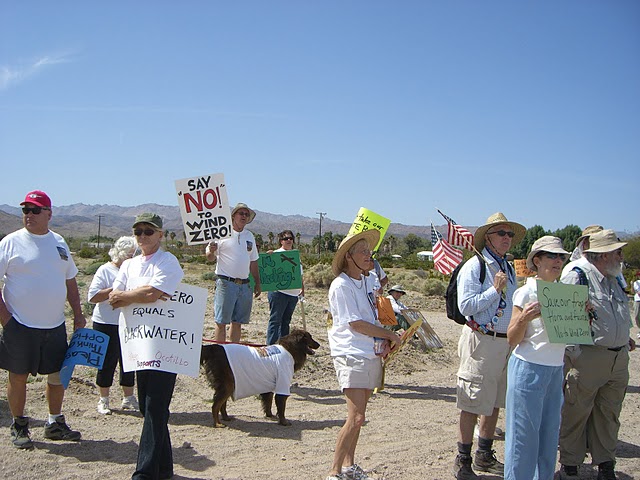
At least $1 million is still owed on the property by the company, called Wind Zero, according to the current notice of default obtained by Narco News — and some sources familiar with the foreclosure process indicate the amount owed, including interest and penalties, exceeds $1.5 million.
“The note [loan] on the property is in default, and we are going through the foreclosure process,” confirms Stewart Cowan, a San Diego attorney representing the note holder, Donna Perrine, who sold the 944-acre site to Wind Zero in 2007.
A check of public records for the Wind Zero property shows that the owner also is in arrears on 2010 taxes owed to Imperial County, Calif., to the tune of nearly $2,800. David Black, a senior planner with Imperial County, says he is not aware of either the foreclosure or the taxes owed with respect to the Wind Zero project.
“I was the project planner for that project, but I have not kept up on the foreclosure or tax matters,” Black says. “If they come in to apply for building permits, then it might become an issue. But nothing has been done on the (Wind Zero) project since they received approval in December of last year.”
The proposed Wind Zero project, which would be developed in three phases at a cost of up to $100 million (some $15 million for Phase 1), has been billed by Wind Zero as a privately operated, state-of-the-art training center that would employ up to 200 people and serve as economic boon to the small California border towns of Nomirage and Ocotillo, located in Imperial County some 80 miles east of San Diego and less than a dozen miles from the Mexican border.
The paramilitary training center is slated to include numerous shooting ranges allowing for some 57,000 rounds of ammunition to be fired off daily; a mock-up of an urban neighborhood for practices assaults; a 6-mile dual-use race track for teaching defensive and offensive driving (and for private-pay recreational use); an airstrip and multiple heliports; and enough housing and RV camper space (along with a 100-room hotel) to accommodate a small battalion of warriors.
Shell Game
Despite the money problems apparently afflicting the Wind Zero project, opponents of the development indicate that there is still some concern that a paramilitary front company, such as an affiliate of Xe (formerly Blackwater), could still purchase the property out of foreclosure and proceed with the project.
In fact, the planned Wind Zero training center is not unlike a similar project proposed several years ago in southern California by Xe, then called Blackwater (which, like Wind Zero, was founded by former Navy SEALs). Blackwater pulled the plug on that controversial project in early 2008 due to community opposition.

“There have been rumors floating around that Wind Zero [led by former Navy SEAL Brandon Webb] has some type of affiliation with Xe, and that it is possible Wind Zero could sell it’s interest in the project,” says Larry Silver of the California Environmental Law Project. Silver is representing the Sierra Club and the Desert Protective Council in a lawsuit against Wind Zero and Imperial County, Calif. — which has sanctioned the development of Wind Zero’s paramilitary training center.
Attorney Cowan concedes that there is nothing to prevent a company like Xe, or an affiliate of Wind Zero, from buying the note due on the property where the Wind Zero training center is slated to be constructed.
“They could show up at the courthouse in Imperial County and buy the note at the foreclosure auction,” he says.
Narco News attempted to contact Wind Zero top gun Webb, but phone calls were not returned. According to prior media reports, Webb insists Wind Zero is not affiliated with Xe, but rather he considers the East Coast company to be a competitor.
Webb addressed the issue in an interview with the San Diego Reader in January of this year.
From the Reader story:
Anger over Wind Zero’s proposal intensified in June 2007 when Brian Bonfiglio, Blackwater’s vice president, showed up at a presentation that Wind Zero chief executive Webb was giving at a community meeting.
“There’s been a lot of negativity about this Blackwater [Xe] issue,” Webb says during a January 17 phone interview. “There’s this big conspiracy that we’re a shadow company for Blackwater, but it’s ridiculous. [Bonfiglio] showed up at the meeting, and I didn’t even know until afterwards. If we were associated, then the worst thing I could do would be to bring a member of Blackwater to a community meeting.”
Broker in the Weeds

However, sources told Narco News that in late September, about a month after the notice of default on the Wind Zero site was recorded, a broker from Texas by the name of David Keener contacted Cowan to make an offer on the property.
Cowan confirms that he was contacted by Keener, whom, he says, “made an offer on the property that was considerably less than the value of the note.”
“Donna [Perrine, the holder of the note] rejected the offer, and there was no deal made with Keener,” Cowan adds.
In a check of Texas corporation records, Narco News discovered that Keener is listed as the registered agent for MDJ Texas Reality Holdings LLC. Those same records show that MDJ is affiliated with a company called Holland Park Capital of Austin, Texas, whose registered agent is an individual named Mark Jansen.
A Form D Notice of Exempt Offering of Securities filing that Wind Zero lodged with the U.S. Securities and Exchange Commission in July 2009 lists Jansen as an executive officer and director of Wind Zero.
Narco News was unable to reach Jansen for comment. However, Keener, when contacted in Texas, did confirm that he knows Jansen and had a business relationship with him. However, Keener says he is now the sole owner of MDJ and it is no longer affiliated with Holland Park Capital.
Keener also says he was not representing either Jansen or Arlington, Va.-based Xe in the bid to acquire the Wind Zero property in Southern California.
Xe is owned by USTC Holding LLC, which counts as members of its board of directors former Bush Administration U.S. Attorney General John Ashcroft, former Clinton Administration General Counsel Jack Quinn, and retired U.S. Navy Admiral Bobby R. Inman. Listed as a director of Wind Zero is former Navy Captain and RAND Senior Management Systems Analyst John Birkler , according to Wind Zero’s 2009 Form D filing with the SEC.
RAND bills itself as a nonprofit, nonpartisan think tank, but, in reality, it has a long history of close ties to the military and private-sector warfare complex. RAND media spokesman Warren Robak told Narco News previously that “John Birkler and his involvement with Wind Zero is a private matter — it has nothing to do with RAND.”
Keener would say only that he was representing in his bid for the Wind Zero property “an investor from the East Coast who was familiar with the [Wind Zero] project.”
The environmental groups represented by Silver and the Quechan Indian Tribe (the land slated for the Wind Zero project is the site of a tribal burial ground) filed their separate lawsuits earlier this year in California Superior Court seeking a judicial order that will undue Imperial County’s approval for the planned Wind Zero project.
Silver says the Sierra Club and Desert Protective Council have no plans to drop their lawsuit, even if the Wind Zero property is sold — given the concern that a third party affiliated with either Wind Zero or Xe may still seek to purchase the property out of foreclosure (at a significantly reduced price) and move forward with the project under the existing development agreement with Imperial County.
“There is a hearing in the case set for Nov. 10, and we are prepared to ask the court to set aside the approval for the project,” Silver says. “If the judge says no, then we plan to appeal.”
Senator Stabenow announces plan for more corporate subsidies
Yesterday, Michigan Senator Debbie Stabenow announced a new $5 billion dollar subsidy to Michigan companies that would manufacture bio-based products.

One story appeared on MLive, which in many ways mimicked the Press Release that Senator Stabenow’s office sent out on October 24.
The MLive story presents the announcement from Senator Stabenow as a benefit for Michigan in two ways. First, it suggests that this $5 billion subsidy would create jobs for Michigan and it would “reduce our dependence on foreign oil.”
The only sources cited in the MLive article were Senator Stabenow, one of her aides, a company spokesperson from Zeeland Farm Services and the Zeeland Chamber of Commerce.
Besides having limited voices in this story, the MLive writer did not ask any questions or verify any of the claims made in the story.
One claim made was that the $5 billion tax incentive/subsidy would create jobs in Michigan. There is no evidence presented that tax subsidies create more jobs and if one was to look at the only company cited in the article that would give an indication that the subsidies are not necessarily creating jobs, but it is assisting Zeeland Farm Services to expand as a company.
The MLive story touts Zeeland Farm Services as a family run business, but doesn’t acknowledge that the company has grown significantly since the recent push in the US to produce more bio-fuels.
Zeeland Farm Services have purchased several out of state companies in recent years, including an ethanol plant in Nebraska and in Cambridge. The Zeeland based company also entered into a joint venture with Renew Energy in Wisconsin to use the waste from bio-fuel production as livestock feed.

What the MLive story or the Press Release from Senator Stabenow does tell us is that Zeeland Farm Services has a history of receiving taxpayer subsidies, especially since the push for bio-fuels increased in 2005. According to the Environmental Working Group, soybean subsidies in Michigan have total $589,798,311 from 1995 – 2010.
However, one of the consequences of such a push to turn corn or soybeans into fuel, resulted in food price increases globally that has had serious consequences for the world’s poor. Food First provides a clear example of how the bio-fuels push was devastating to agriculture in Africa and how there has been a drastic consolidation of bio-fuel plants ownership, where fewer companies control more of that industry.
The MLive story and Senator Stabenow also celebrate the soy-based products that are currently being made in Michigan, such as seats and gaskets for the auto industry. Why is that something we are also supposed to celebrate. How is perpetuating the auto industry a sustainable means of transportation?
The MLive story also doesn’t question the notion that taxpayers should subsidize corporations to increase their profits. Isn’t this a fundamental distortion of capitalism? Capitalists are always telling the government to let the free market operate without government intervention, when the reality is that corporations are always willing to take taxpayer money that will increase their profits and allow them to expand their businesses.
Lastly, it should be mentioned that as Chair of the Agriculture, Nutrition and Forestry Committee, Senator Stabenow is presiding over the next round of negotiations with the Farm Bill. Stabenow seems to be leaning towards continuing huge subsidies to agribusiness based on the hearing that took place in Michigan this past Spring.
Public Screening of END:CIV this Thursday at the DAAC
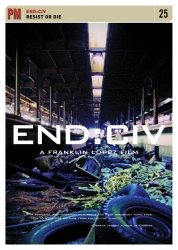
END:CIV examines our culture’s addiction to systematic violence and environmental exploitation, and probes the resulting epidemic of poisoned landscapes and shell-shocked nations. Based in part on Endgame, the best-selling book by Derrick Jensen, END:CIV asks: “If your homeland was invaded by aliens who cut down the forests, poisoned the water and air, and contaminated the food supply, would you resist?”
The causes underlying the collapse of civilizations are usually traced to overuse of resources. As we write this, the world is reeling from economic chaos, peak oil, climate change, environmental degradation, and political turmoil. Every day, the headlines re-hash stories of scandal and betrayal of the public trust. We don’t have to make outraged demands for the end of the current global system — it seems to be coming apart already.
But acts of courage, compassion and altruism abound, even in the most damaged places. By documenting the resilience of the people hit hardest by war and repression, and the heroism of those coming forward to confront the crisis head-on, END:CIV illuminates a way out of this all-consuming madness and into a saner future.
Backed by Jensen’s narrative, the film calls on us to act as if we truly love this land. The film trips along at a brisk pace, using music, archival footage, motion graphics, animation, slapstick and satire to deconstruct the global economic system, even as it implodes around us. END:CIV illustrates first-person stories of sacrifice and heroism with intense, emotionally-charged images that match Jensen’s poetic and intuitive approach. Scenes shot in the back country provide interludes of breathtaking natural beauty alongside clearcut evidence of horrific but commonplace destruction.
END:CIV features interviews with Paul Watson, Waziyatawin, Gord Hill, Michael Becker, Peter Gelderloos, Lierre Keith, James Howard Kunstler, Stephanie McMillan, Qwatsinas, Rod Coronado, John Zerzan and more.
Thursday, October 27
7:00PM
Division Avenue Arts Collective (DAAC)
115 S. Division, Grand Rapids
There is a $5.00 fee to see this film, since it is a fundraiser for eco-activist and political prisoner Marie Mason.
Noam Chomsky addresses Occupy Boston
On Saturday, Noam Chomsky addresses a crowd at Occupy Boston. Chomsky pays tribute to his late friend Howard Zinn, provides some historical background on class warfare and gives his own assessment about the current movement to challenge power in the US. The video is about 38 minutes.
A convergence of radical art and radical politics – Occupy GR and the Beehive Collective
On Saturday I had the opportunity to participate in two different activities that were aiming for the same goals.

Starting at noon at Monument Park in downtown, Occupy Grand Rapids had its ongoing presence along with a serious speakers and open mic slots.
The open mic slots allowed people to speak about why they were participating in this collective action and what their ideas are for what it could become. Some people talked about their own experiences, some talked about specifics issues and some read poetry that spoke to the power of this grassroots movement.
People talked about their own economic situation, concerns about the environment, unemployment and the need to expand this movement to include more than those who have been showing up so far. There were people from Kalamazoo who came up for the afternoon, as well as some one from El Salvador who share his own experience of living under oppression.
There were also time slots where people did either skill shares or people presented critiques of the current economic/political climate. The first skill share was done on the theme of consensus, where the presenters talked about basic principles of consensus, the roles that different people play during the consensus process and some examples of how this decision-making process has worked.
The examples provided about consensus being an effective means of decision-making on a large scale were important for people to hear. The examples provided were the 1999 WTO protests in Seattle and other anti-globalization actions, such as the large-scale actions against the Free Trade Area of the Americas (FTAA) meetings. In addition, the example of 1930s Spain was discussed, where workers essentially took over the country and used consensus to govern the country. The presenter also pointed out that many indigenous cultures used consensus as an effective decision-making process prior to the European Conquest.
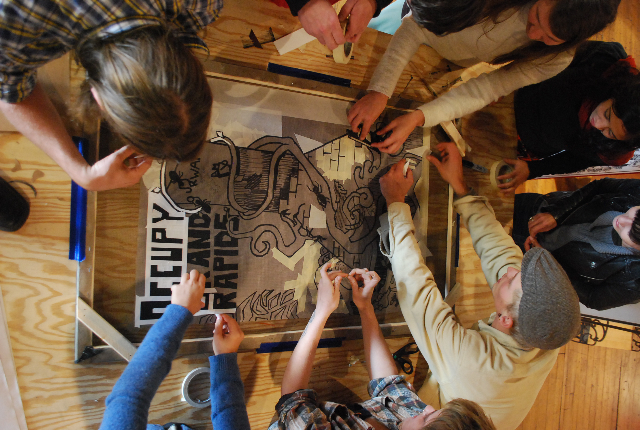
In addition to consensus, people presented on racism, Wall Street documents, Marxism, local Indigenous history and media education & analysis.
At one point I left the Occupy Grand Rapids gathering and went to the Red Hydrant Studio to be part of a workshop that the Beehive Collective was conducting on radical banner making.
The workshop began with an exercise in collective decision-making and collective creation of art. One of the Beehive members then walked the group through a Mind Mapping process, where people talked a bit about what Grand Rapids meant to them, both the negative and positive aspects. The goal of this was to make a banner that the group could give to the Occupy Grand Rapids group to use in whatever way they chose to.
In many ways, the Mind Mapping was sort of a local power analysis, where people identified individuals and companies that had political and economic power in Grand Rapids. People indentified the DeVos, Van Andel, Prince and Meijer families as a local representation of the 1%.
People also identified segregation, gentrification, pollution, poverty, religion, homelessness and ecological destruction as negative aspects of Grand Rapids. Some of the positive elements identified that could be symbolically represented on a banner were the Grand River, neighborhoods, gardens, urban animals and the indigenous history.
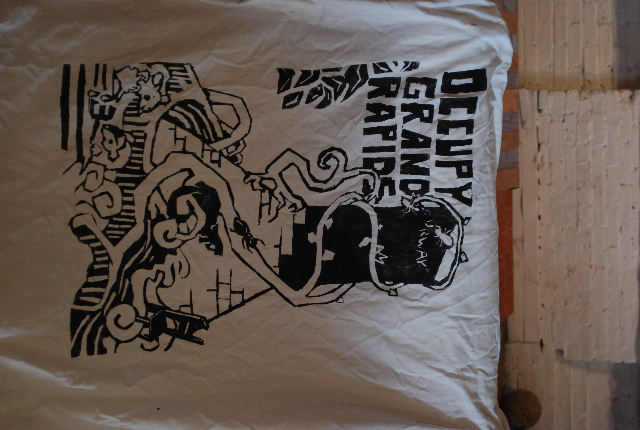
Once the ideas were put on paper, people were then asked to talk about these identifiers were connected or inter-related. People said that the local elite owned a great deal of property, had their names on everything, dictated politics and had the support of some sectors of the Christian community. Other people also acknowledged that there are members of the 99% that either defend the local 1% or aspire to be like them.
Once the Mind Mapping and discussion was over, people came up with ideas about how to represent the dismantling of local power and the creation of authentic community. About 30 people participated in this process that lasted about 4 hours.
Back at Occupy Grand Rapids, people were sharing literature, ideas and food provided by Food Not Bombs. All throughout the afternoon people held up signs along the Division/Fulton intersection and were often greeted with supportive feedback. At the interior of Monument Park people discussed the failures of capitalism and ideas for how to transform society.
Like the artwork created at Red Hydrant Studio that day, the practice of democracy at Occupy Grand Rapids was creating a community of resistance.
On October 13, a Walker police officer named Trevor Slot was killed during a chase to arrest two bank robbers. In the 8 days following, the Grand Rapids Press ran 50 articles about Slot on its website.

In addition to the news articles covering the details of the pursuit as they were released and interviews with various people from Slot’s wife to his colleagues, we have learned: that Officer Slot gave out trophies and ice cream to the t-ball team that he coached; that he was “loveable and funny;” that he used to work on the Lowell police force; that he was talking to his wife on the phone when he was called in on the pursuit; that three Grandville intersections will be closed for his funeral procession; and that the Northview school provided counseling for students who were unable to cope with the news of the officer’s death. The Press felt that each of these details required its own separate article.
On October 21, the day of Slot’s funeral, there wasn’t just one article covering the event. Instead, the Press posted individual articles about the motorcade procession, the color guard, the eulogies, plus a complete video of the funeral service. The impression of a hero, even a celebrity figure, was created expanding each detail of the service into a complete story of its own.
But there has been another significant police story that the Grand Rapids Press has been covering at the same time. The family of Matthew Bolick has decided to sue the East Grand Rapids Police Department for gross negligence in the death of their son on November 16, 2009. To date, there has been one article posted about this lawsuit, which included the actual police film footage from the attempted arrest.

In the eight days following Matthew Bolick’s death in 2009, the Press generated only 11 articles about it. There were no glowing articles about Matthew’s life; no video of his funeral. In fact, many of the articles didn’t even feature Bolick, but instead seemed written to emphasize the police’s professionalism and integrity. One opens with the sentence, “To colleagues and community members, East Grand Rapids Public Safety Sgt. Brian Davis and Officer Gary Parker were well-trained and showed the utmost level of character and integrity on and off the job.”
This article goes on to describe Parker’s declaration that they were sorry “it turned out the way it turned out,” and states that Matthew Bolick was tazed “three or four times.” Although there is one sentence that says the family could not imagine why it took multiple taser shots for two officers to subdue someone who was 5 feet, 6 inches and only weighed 130 pounds, reassurances abound that “the officers responded in an objectively reasonable manner and did this according to department guidelines.” There are several paragraphs describing each officers’ background and careers in glowing detail. There is one single sentence telling us that Matthew Bolick was working at UPS so he could complete his college education.
In another article, we are told that Matthew Bolick was “not a monster.” After this backhanded assurance, the story quickly switches to the police viewpoint of the incident, emphasizing that the officers followed correct procedure, that Bolick was out of control, and that the Bolick house had been searched—the article doesn’t state, but certainly implies, for drugs.

Even an article that appears from its headline to question the safety of tasers is essentially a police-quoted essay about why they are “important tools” in fighting crime. It reports that Matthew Bolick was “combative” and struck an officer in the face, making the tazing necessary. The Press coverage makes no reference to the lack of safe use of these weapons in the hands of the police. Amnesty International has reported that between 2001 and 2008 alone, 351 people died because of tazings from police officers. But the Press’s instinctive stance appears to be to protect police actions even in a shocking case like this one.
The medical examiner’s eventual assessment of Matthew Bolick’s death was that he died from “excited delirium syndrome,” not from the tazing and rough treatment by the officers.
It was emphasized that the officers only used the taser “several times” and had gone out of their way to avoid hurting Matthew. They were cleared of all criminal charges.
The police videos tell a different story. These were posted with the article describing the family’s lawsuit against the EGRPD.
Matthew Bolick had returned home to East Grand Rapids from California for the Thanksgiving holiday, and was exhibiting psychotic symptoms. On the night of his death, Bolick’s father called the police for help because he was afraid his son would hurt himself—he was hearing voices and had broken the glass in a picture window.
Stephen Bolick advised the police that his son had been acting strangely but told them he was not on drugs. The autopsy proved him right—despite veiled hints afterward by police that Bolick was high, Matthew Bolick had nothing in his system but Ibuprofen.
The video of the death is disturbing to watch. Parker, a large man, threatens “I will taze you in a heartbeat,” and tells Matthew Bolick to lie down on the ground. Matthew struggles and the officer tells him, “If you run, I will shoot you,” and then tazes Matthew for the first time. Matthew screams, flails, and apparently hits the officer in the face in order to escape. Parker mocks him by saying, “You want more? You want more?” Despite the tazings, Matthew manages to get up and start running, with the officers in pursuit. As Matthew flails his arms wildly while running to evade the police, the officer taunts, “Hit me one more time. Hit me one more time.”
Brian Davis, the senior officer at the scene, does not appear to intervene in any way, except to shout orders like, “Get him down!” After Bolick is on the kitchen floor, his head wrapped in a towel, and appears to be cooperating after several taser hits, he’s asked, “Why are you so mad?” As he lies moaning but barely moving, police alternate between ordering him to calm down and threatening him with more tazings. This doesn’t mesh with the police claim that Bolick reacted “in a very violent manner” and that the police wanted to take him peacefully but that Matthew “wasn’t going to have it that way.”
Over a ten-minute period, Parker used his taser 19 times. Each firing contained a charge of 50,000 volts, and several were “drive stuns,” to deliver maximum pain. Davis continued with tazings even after Matthew was on the ground and was handcuffed. This treatment, the lawsuit says, created such immense mental and physical stress that Bolick’s heart failed.
It’s been revealed that the night of November 16 was the first time that any East Grand Rapids Police officer had used a taser. It’s also clear from the video that these officers had received no training—or at least were not applying any training—about how to deal with a psychotic subject.
An EGR Police Department spokesperson said about the lawsuit, “To suggest we’re responsible for the death…it’s outrageous.”
The death of a police officer is undoubtedly news. The death of a vulnerable citizen repeatedly attacked by the police with 50,000-volt charges is also news. Compare the coverage, in both quantity and content, of these two stories and see if you think that the Grand Rapids Press is offering unbiased reporting about incidents concerning our local police departments.
If you see some inequity or slanting of details to make one party look better than another, write to Editor Paul Keep at pkeep@grpress.com. His response will probably be to mock you in one of his “the buck doesn’t stop here” Sunday columns, but at least you’ll know your opinion has registered.
About that Iraq Withdrawal
This article by Glen Greenwald is re-posted from Salon.com.
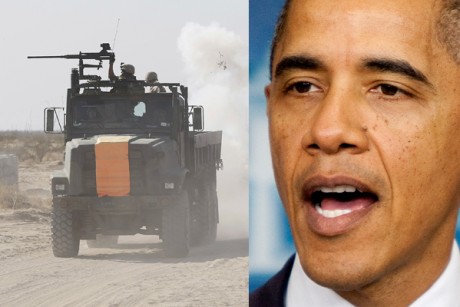
President Obama announced today that all U.S. troops will be withdrawn from Iraq by the end of the year, and this announcement is being seized upon exactly the way you would predict: by the Right to argue that Obama is a weak, appeasing Chamberlain and by Democrats to hail his greatness for keeping his promise and (yet again) Ending the War. It’s obviously a good thing that these troops are leaving Iraq, but let’s note three clear facts before either of these absurd narratives ossify:
First, the troop withdrawal is required by an agreement which George W. Bush negotiated and entered into with Iraq and which was ratified by the Iraqi Parliament prior to Obama’s inauguration. Let’s listen to the White House itself today: “’This deal was cut by the Bush administration, the agreement was always that at end of the year we would leave. . . .’ an administration official said.” As I said, it’s a good thing that this agreement is being adhered to, and one can reasonably argue that Obama’s campaign advocacy for the war’s end influenced the making of that agreement, but the Year End 2011 withdrawal date was agreed to by the Bush administration and codified by them in a binding agreement.
Second, the Obama administration has been working for months to persuade, pressure and cajole Iraq to allow U.S. troops to remain in that country beyond the deadline. The reason they’re being withdrawn isn’t because Obama insisted on this, but because he tried — but failed — to get out of this obligation. Again, listen to the White House itself:
The Status of Forces Agreement between the United States and Iraq expires at the end of the year. Officials had been discussing the possibility of maintaining several thousand U.S. troops to train Iraqi security forces, and the Iraqis wanted troops to stay but would not give them immunity, a key demand of the administration. . . .
“The Iraqis wanted additional troops to stay,” an administration official said. “We said here are the conditions, including immunities. But the Iraqis because of a variety of reasons wanted the troops and didn’t want to give immunity.”

The Obama administration — as it’s telling you itself — was willing to keep troops in Iraq after the 2011 deadline (indeed, they weren’t just willing, but eager). The only reason they aren’t is because the Iraqi Government refused to agree that U.S. soldiers would be immunized if they commit serious crimes, such as gunning down Iraqis without cause . As we know, the U.S. is not and must never be subject to the rule of law when operating on foreign soil (and its government and owners must never be subject to the rule of law in any context). So Obama was willing (even desirous) to keep troops there, but the Iraqis refused to meet his demands (more on that fact from Foreign Policy‘s Josh Rogin).
Third, there will still be a very substantial presence in that country, including what McClatchy called a “small army” under the control of the State Department. They will remain indefinitely, and that includes a large number of private contractors.
None of this is to say that this is bad news (it isn’t: it’s good news), nor is it to say that Obama deserves criticism for adhering to the withdrawal plan (he doesn’t). It would just be nice if these central facts — painfully at odds with the two self-serving narratives that started being churned out before the President even spoke — were acknowledged.
I believe the country has not even gotten close to coming to terms with the magnitude of the national crime that was the attack on Iraq (I think that’s why we’re so eager to find pride and purpose in the ocean of Bad Guy corpses our military generates: tellingly, the only type of event that generates collective national celebrations these days). Needless to say, none of the responsible leaders for that attack have been punished; many continue to serve right this very minute in key positions (such as Vice President and Secretary of State); and (other than scapegoated Judy Miller) none of the media stars and think-tank “scholars” who cheered it on and enabled it have suffered an iota of stigma or loss of credibility. The aggressive war waged on Iraq began by virtue of a huge cloud of deceit and propaganda; perhaps it could end without that.

UPDATE: Over at Wired, Spencer Ackerman documents the ongoing reality in Iraq and writes: “President Obama announced on Friday that all 41,000 U.S. troops currently in Iraq will return home by December 31. ‘That is how America’s military efforts in Iraq will end,’ he said. Don’t believe him.” Digby adds that the administration ”clearly didn’t want this outcome and lobbied hard to get the Iraqis to push back the deadline” and thus concludes: “after everything our government has done in this region over the past few years, I think these facts argue for skepticism rather than celebration.” But as we’ve seen over and over, nothing is less welcome that these sorts of clouding facts that get in the way of a political celebration.
UPDATE II: Here’s the headline and first couple paragraphs on the “Iraq withdrawal” from National Journal:
Watch to see whether these facts are included or ignored in the prevailing narrative about this event.
UPDATE III [Sat.]: This Washington Post article provides more details about the private contractor force being assembled by the State Department (h/t Teri49):
The State Department is racing against an end-of-year deadline to take over Iraq operations from the U.S. military . . . . Attention in Washington and Baghdad has centered on the number of U.S. troops that could remain in Iraq. But those forces will be dwarfed by an estimated 16,000 civilians under the American ambassador — the size of an Army division.
Think Progress previously described the State Department’s efforts to block oversight actions with regard to its new private army.
Stabenow’s re-election campaign and the 1%
The November 2012 election is a little over a year away and that means that candidates are feverishly raising money. This is particularly the case with incumbent candidates like Michigan Senator Debbie Stabenow.

According to the Center for Responsible Politics, Stabenow has already raised $6,363,392, an amount far exceeding that of any other candidate. Former 2nd Congressional Representative Pete Hoekstra is second in fund raising for the Senate seat, with just over $1 million raised so far.
Stabenow, who is chair of the Agriculture, Nutrition and Forestry Committee, has raised a significant amount of money from big donors, many of which represent the worst of corporate America.
The Top 20 of campaign donors to Stabenow’s 2012 re-election bid is a who’s who of corporate criminals. The top donor is JP Morgan Chase & Co., which has donated $67,400 as of the last filing deadline. JP Morgan Chase has a long history of corporate theft, profited off of the recent housing foreclosure scam and is the subject of a farm worker divestment campaign.
Another major corporate contributor to Senator Stabenow in the 2012 election cycle is the Blackstone Group. The Blackstone Group is a private investment banking firm with ties to AIG and Kissinger Associates, which has donated $45,700.
Other major corporate donors to Senator Stabenow’s re-election bid are:
Vestar Capital Partners $39,950
General Motors $39,950
DTE Energy $37,250
Ford Motor Company $32,875
Morgan Stanley $24,700
Dow Chemical $26,200
Merrill Lynch $23,850
CMS Energy $22,800
Other notable donors to Senator Stabenow are NorPac ($22,200), a Pro-Israeli Lobby and EMILY’s List, a pro-choice candidate funder.
Looking over the list of donors so far it is safe to say that Senator Stabenow is currently being funded by the 1% in our society, with financial institutions, the auto industry and energy corporations the primary donors.
This funding data translates into the fact that Senator Stabenow will likely make decisions as a Senator based upon the policy outcomes that best serve the interests of these corporate donors. Therefore, Senator Stabenow will serve the interests of the 1% over the rest of us, the 99%.
Occupy Humanity, Abolish Whiteness
This article by Mike King is re-posted from CounterPunch.
 We can only truly transform ourselves through the process of transforming social relationships and social structures. We can only transform those social relationships and structures collectively – across race, across class, across gender and sexuality, across nation as well. Transforming those relationships collectively means evolving ourselves in struggle along with other people. For white people this means engaging in struggle with other people we don’t ordinarily work with, people we don’t necessarily live near, people we may not feel we understand, people subjected to forms of oppression the most experienced of us have only a very partial understanding of.
White people have power by default in this society (in ways they usually take for granted or do not recognize). This privilege is unavoidable in the present, an accumulation of past injustices that we are born into. It is a crown we never earned, but also a dead weight on our spirit that we all feel, whether we are successful at tracing its source or not. The potentially liberating part of this is the fact that that power gives you a choice – the choice to either muddle along cocooned in comfort and privilege or to cast off whiteness, embrace humanity and build a new day. This is only possible by making yourself vulnerable, by recognizing, actively engaging and overcoming your own limitations and discomforts, and shedding the accumulated muck of the present society that now hangs off of us – by pursuing common struggle with people of color. This process revolves around trust – trusting others as well as trusting ourselves. James Baldwin puts this as clearly as possible, in a way that helps white people see themselves historically and to understand race in a way that doesn’t revolve around guilt and shame – but in a plain understanding:
“The person who distrusts himself has no touchstone for reality – for this touchstone can only be oneself. Such a person interposes between himself and reality nothing less than a labyrinth of attitudes. And these attitudes, furthermore, though the person is usually unaware of it (is unaware of so much!), are historical and public attitudes. They do not relate to the present any more than they relate to the person. Therefore, whatever white people do not know about Negroes (sic) reveals, precisely and inexorably, what they do not know about themselves.”

– James Baldwin, The Fire Next Time (1962)
Baldwin encapsulates the problem of whiteness and identifies distrust as a key – distrust of oneself and distrust of others. Recognizing white privilege is a first step to simply being aware of the world and this distrust. Using that privilege to undermine the social relations that create that inequality is a radical act we must take up as white people within this movement if we are to become a real threat to the established order.
Widespread anger at social conditions, periodic rebellions and protests around discrete injustices, isolated movements, various forms of counter-culture, small-scale utopian projects or lifestyle politics always exist, but rarely transform society by themselves. Moments that have transformative potential are products of intense crisis coupled with broad based movements that feed off of each other. We are living through one of these crises now, and the Occupy movement seems to be a first step down what will be a very long road that will hopefully lead to a different society. As the Zapatistas say, we learn that road by walking it together. This requires openness, humility, the desire to learn from the most oppressed, and a commitment to becoming something greater than you are now.
The process of making social change is always a learning process, in this country it is always white people that have the biggest learning curve. As a white man this is a curve I am familiar with, and one I am most definitely still on, one that is longer than I thought it would be when I started to climb it. By no means do I fancy myself some kind of Sherpa, I write this out of a simple frustration at the contradictions that I see, to a certain extent within myself as well. There is a need to address white privilege within the movement in a way that seeks the overall transformation of the movement by abolishing white privilege through struggle and the development of a praxis that builds a deeper humanity starting today.
The Occupy movement needs to make the demands of people of color the core demands of the movement. Police violence, profiling, over-policing in certain neighborhoods and the war on drugs, as well as economic, educational and health inequalities, and an overall lack of social power – all of these issues and more – need to be paramount in the Occupy movement. White people need to make these their issues, because they are their issues if we want to create a just society. These are the forms of oppression that are primary in maintaining the existing order, more than student loan debt, more than a lack of middle class jobs, more than alienation. This is not to say that the concerns of white people are not important because they are white – that is not the argument. We need to build bridges with communities of color by supporting their demands and putting in work to address white supremacy and racialized inequality. The call for Jubilee – or universal debt cancellation – that came out of Occupy Chicago, is an example of demands that affect people across class and race. We need to work together while remaining aware that this doesn’t mean we are all in the same position in society.

It is important to try and understand the experiences of others and the need to build active solidarity without trying to equate our struggles or ignore inequality or difference. So, say you are college educated and you are unemployed, I can empathize, I have been in that position. I can bear witness to the fact that that sucks. I now have an advanced degree and for the moment have pretty precarious employment opportunities. But because I have words like “precarious” in my fucking vocabulary, I have the ability to do things besides make minimum wage. I, like you, am pissed off about my current state of affairs nonetheless. I have caught enough whiffs of Suze Orman to know that putting groceries on unpaid credit card bills all the time and having unpaid monthly student loan interest that exceeds my monthly income is not a long-term strategy for “life success.” With all of that said, I know other people have it worse. It is not a matter of silencing yourself, it is a matter of not silencing others. It is a matter of becoming more than you are by not treating people like less than your equal.
The point is that we need to transform ourselves, and we can only transform ourselves through trusting others to lead with us and to put the demands of people of color, and the most oppressed generally, at the head of our agenda. A lot of us are anti-authoritarian or anarchists or people who believe in direct democracy. We are often suspicious of anything that alludes to leadership. We are often distrustful of demands for voice and power that come from people that may or may not share our political self-definitions, or organizing style or speaking style, or meeting and facilitation style, etc. I feel that way sometimes, sometimes there are reasons to be concerned. I don’t see anything that vaguely suggests such a concern here. I don’t see any people of color trying to take over Occupy spaces, or impose any form of authoritarianism, or liberalism. In fact I see very much the opposite.
Consensus as it exists in many Occupies that are mostly white spaces are a form of tyranny in that they silence minority voices and demands, in the same unspoken and normalized way that white privilege usually operates, to the extent that parliamentary procedures, ill-defined hand gestures, and unending meetings don’t push people of color away first. I think we need to be aware of the historical attitudes that Baldwin speaks of. These attitudes aren’t yours unless you make them yours. I think we also need to be aware of the fact that people of color are trusting us just by being here, they are showing a degree of faith in us and putting themselves out there just by showing up to these spaces and engaging. We need to be reciprocating that trust.

The history of the white Left’s relation to the struggles of people of color are complicated, in many cases undermining those struggles or failing to make common cause. The trade union movement was largely a white man’s movement for much of its history, getting themselves the American Dream at the same time that Chicano labor was brought here for exploitation without the possibility of citizenship in the Bracero Program and black people were fleeing 100 years of post-slavery sharecropping in the South. The women’s movement in the 70s was largely framed around the needs of middle class white women. When the FBI started assassinating and framing Black Panther leaders a far-too-large swath of the white Left failed to come to their side, making apologies for the State in their wanton destruction of the black struggle. Older people of color have taught me this history – that white people get pissed off about this or that, but when the draft board is no longer after them, or when they get bored, or when things get risky, or when the graduate, or when they get older, or when they have kids, get married, whatever – they fall out and they leave people hanging – oftentimes literally. We don’t need to replicate this or to nip a necessary de-colonial struggle in the bud with our privilege and blindness.
On the other end are white people who shed their self-ignorance in struggle. People like John Brown. People like Andrew Goodman and Michael Schwerner, who were killed by the KKK alongside James Chaney, simply trying to register black Mississippians to vote. David Gilbert is doing life in prison for his efforts in the Black Liberation struggle. No one is asking you to give your life or to go to prison. If we are trying to build a new society that eradicates inequality then we need to start by putting the demands of the most oppressed at the top of the list. Nobody is asking you to go on a John Brown suicide mission against white supremacy, but it is only by killing off your whiteness that you give yourself the ability to grow and we give ourselves the collective capacity to win. Again, I don’t write this from some exalted position. Several white radicals older than me, far better people than me, have told me repeatedly that this means constant work that does not end. Whiteness is not abolished in a workshop, it is abolished in struggle. Even if we eventually win, the struggle against the baggage of history will continue. All of this talk of struggle, transformation, new societies and winning is but a naïve fantasy if we don’t take up this struggle with all of our effort now. On the other hand, we have been handed the perfect circumstances for building a new society, so long as we draw from the best of our history, and push this struggle farther.
No one is asking you to blindly submit to other people’s wishes. But, so long as white people continue to wear the historical attitudes that Baldwin speaks of and so long as we continue to see and treat each other in terms of the existing social relations with their accompanying unaddressed privileges, so long as we have the worst expectations of people, then we will continue to mire in this mess of a society that we say we want to leave behind. We can only walk down this road to a better world if we trust each other, if we trust ourselves. Treason to whiteness is loyalty to humanity.
Super Congress hauls in super donations as special interests try to influence budget cuts
This article is re-posted from iwatchnews.org.
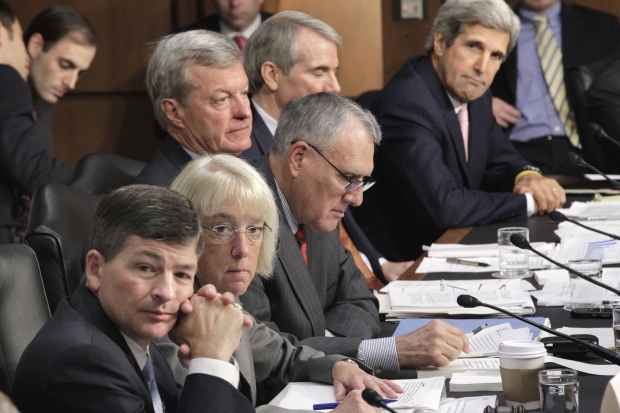
Members of the congressional Super Committee have received more than $300,000 from 93 special interests in just six weeks since they were appointed, according to an analysis of FEC data by iWatch News. More than a third of the money came from health-related interests as the committee of 12 debates serious cuts to Medicare and Medicaid.
The donations from political action committees slightly favored the Republicans on the panel (officially titled the Joint Select Committee on Deficit Reduction; unofficially dubbed the Super Congress). Republicans got 84 donations for $181,000; Democrats received 63 donations totaling $121,000.
The analysis covered Aug. 11, the day the committee was formally announced, through Sept. 30, the end of the third quarter reporting period. And those dollar amounts will likely increase when the Senate contributions, which are not filed electronically, are submitted to the FEC.
Formed as part of a compromise in late July between Republicans and Democrats in Congress, the committee faces a serious uphill task: they must come up with $1.5 trillion or more in budget savings, enough to match increases in the government’s ability to borrow enough money to pay its bills through the beginning of 2013. It requires a bipartisan majority of at least seven of the committee’s 12 members to recommend legislation to be presented to the whole Congress for an up-or-down vote by Dec. 23.
The select panel has until the day before Thanksgiving to finish its work.
As the committee seeks trillion-dollar spending cuts, interest groups have weighed in heavily with letters, lobbying efforts and, of course, campaign cash.
Of the 93 special interest groups who donated via their PACs to the members during this period, seven gave at least $10,000. They were:

FedEx, the shipping giant — $10,500
Pfizer, the pharmaceutical manufacturer — $10,000
The National Beer Wholesalers Association, a trade association for beer companies — $10,000
The American Dental Association, the trade association for dentists around the nation — $10,000
Walt Disney Productions, the entertainment conglomerate — $10,000
Chevron, the oil giant — $10,000
The Associated General Contractors of America, the trade association of the construction industry — $10,000
Fresenius Medical, a major dialysis provider— $10,000
A mix of health and pharmaceutical companies made up at least $111,500 of the donations, by far the biggest business sector. One focus of the Super Committee is to find ways to save money on health care, which many have speculated means potential cuts into Medicare and Medicaid.
Fresenius Medical provides a good example for how companies may be attempting to influence the Super Committee members. Fresenius is one of the largest dialysis providers in the world, operating over 1,800 clinics in the U.S. alone.
With the number of Medicare patients receiving dialysis (and, accordingly, the Medicare expenses for renal disease treatment) going up in recent years, the reimbursement rules and procedures for these treatments have already been a hot topic among those seeking to improve Medicare. A CMS rulemaking process is already under way for a quality incentive program. Should the Super Committee propose changes to Medicare, Fresenius and other dialysis companies could see a major impact to their bottom lines.
In the six weeks since the committee was announced, Fresenius made three donations to committee members Reps. Chris Van Hollen ($1,000) and Jim Clyburn ($5,000), along with Sen. Max Baucus ($4,000). The last time the company had donated to either Van Hollen or Clyburn was in June of 2008; in January of this year the company gave $5,000 to Baucus’ Glacier PAC.
Fresenius is a member of the Kidney Care Partners trade group and donated $5,000 in June to the group. Abbott Laboratories, another member in the kidney association, made six donations for $7,500 to Super Committee members during this time period.
Shortly after the Super Committee was launched, Kidney Care Partners wrote a letter to the committee, urging Congress to allow kidney patients enrolled in the new health exchanges to have their dialysis paid for by private, primary insurance for up to 30 months. Currently, when a patient is diagnosed with kidney failure, they are automatically enrolled in Medicare, regardless of age. “It is incumbent upon all Americans to work towards a more cost efficient and intelligent health care system,” reads the letter . “Public health care dollars are precious and should be wisely and efficiently spent.”
Kidney Care Partners spokesman John Jonas said Medicare cuts affect the dialysis industry more than other areas because upwards of 80 percent of its business is from Medicare. “We feel Medicare cuts very strongly. We’re particularly vulnerable, and there’s no alternative.”
Jane Kramer, vice president for public affairs and communications at Fresenius, told iWatch News in a statement that the company “frequently engages members of Congress and Administration representatives to ensure that they understand the unique nature of dialysis and the various issues that impact the treatment of individuals with end stage renal disease.”
“By engaging with policy makers directly, we are able to provide them with a perspective to which they may not otherwise have access. In turn, this helps better inform their decisions on critical issues such as access to quality care for all Americans, including those with chronic kidney disease,” the statement said.
Not all members of the committee are raising big bucks around their committee membership. Sen. John Kerry, a Massachusetts Democrat, promised last month that he would raise no money until the committee’s work is completed in late November. Meanwhile, Sen. Jon Kyl announced in February that he will not seek re-election when his term ends in 2012.
Total received from PACs to Super Committee members, 8/11-9/30:
Rep. Dave Camp, R-Mich. — $90,000
Rep. Xavier Becerra, D-Calif. — $38, 500
Rep. Jim Clyburn, D-S.C. — $36,500
Rep. Fred Upton, R-Mich. — $36,150
Sen. Max Baucus, D-Mont. — $29,000*
Rep. Jeb Hensarling, R-Texas — $22,500
Sen. Pat Toomey, R-Pa. — $18,000*
Rep. Chris Van Hollen, D-Md. — $17,500
Sen. Rob Portman, R-Ohio — $10,000*
Sen. John Kyl, R-Ariz. — $5,000*
Sen. Patty Murray, D-Wash. — $0*
Sen. John Kerry, D-Mass. —
 Grand Rapids Institute for Information Democracy