International Climate Summit begins in Durban today

Today, in South Africa, the newest round of international talks begin on the issue of global warming and climate justice, hosted by the United Nations.
While representatives from governments around the world meet there will be grassroots meetings and actions to challenge the nations of the world, which many feel are not doing anything concrete to further climate justice and to seriously address the urgent need to drastically reduce global carbon emissions.
Mary Robinson, Founder of the Climate Justice Foundation, said recently, “People are suffering because of the impact of climate change, those who are suffering most are not responsible, so the rich world has to take it’s responsibility, we have to have a continuation of Kyoto, a track that leads to a fair, ambitious and binding agreement and we have to do it here in Durban.”
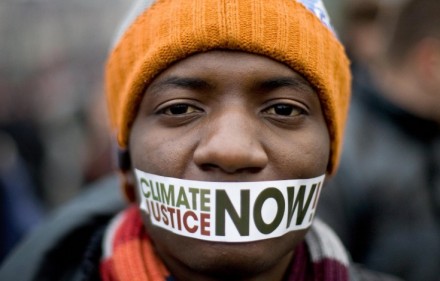 Many grassroots organizations and climate justice organizations don’t have faith that the nations of the world, particularly the rich nations like the US, will allow for any serious outcomes from the Climate Summit in Durban.
Media coverage in the US will likely be limited and disproportionately from the perspective of the Obama administration. As a counter to commercial media coverage of the Climate Summit over the next 2 weeks we encourage people to check out independent, grassroots voices and perspectives. There are great materials and analysis on climate justice such as a guide from the Indigenous Environmental Network, False Solutions to Climate Change.
Other great resources can be found at Climate Justice Now, Mobilization for Climate Justice West, Climate Justice Action, the World People’s Conference on Climate Change and the Rights of Mother Earth and Via Campesina.
EPA releases list of worst polluters in the US and Michigan
Last week the Center for Public Integrity (CPI) reported on the EPA’s “secret watch list of companies that are major polluters in the United States.
CPI stated, “the EPA has posted the September and October watch list on its website.” They go on to write:
“The agency also has begun to publish watch lists that include serious or chronic violators of the Clean Water Act, governing the release of pollutants in waterways, and Resource Conservation and Recovery Act, involving hazardous waste disposal.
The EPA cited iWatch News’ request for the Clean Air Act watch list, later published for the first time as part of a series on air pollution afflicting hundreds of communities, and said the agency would publish the lists as a demonstration of its commitment to transparency. However, important details on why each polluter is on the list will continue to be kept confidential, the agency said.”
It seems that transparency for the Environmental Protection Agency is not a high priority. Why are they not providing details to communities about the pollution and the polluters all across the country that could have harsh effects on people?
We looked at the watch lists, which are posted on the EPA site and provides the names of companies and facilities in violation of the Clean Air Act, the Clean Water Act and the Hazardous Waste (RCRA) for September and October of 2011. Here is a listing of companies in Michigan on those lists.
MI companies/facilities in violation of the Clean Air Act – Sept & Oct. 2011
Alchem Aluminum Inc., Coldwater, MI
Alchem Aluminum Inc, Saginaw, MI
Dow Corning, Midland, MI
EES Coke, Ecorse, MI
Hyundai America Technical Center, Superior Twp, MI
Lacks Industries Inc., Kentwood, MI
Marquette County Solid Waste Management, Marquette, MI
Marysville Ethanol, Marysville, MI
Montgomery Aggregate Products, Sault St. Marie, MI
Morton Salt, Manistee, MI
Severstal Dearborn, Dearborn, MI
White Pine Electric Power, White Pine, MI
EQ Belleville, Belleville, MI
Escanaba Power Plant, Escanaba, MI
Heavy Metal Scrap, Battle Creek, MI
Holcim Inc., Dundee, MI
R J Torching Inc, Flint, MI
Wyandotte Municipal Power Plant, Wyandotte, MI
MI companies/facilities in violation of the Clean Water Act – Sept & Oct. 2011
Alma WWTP, Alma, MI
Buena Vista Twp WWTP, Saginaw, MI
Detroit WWTP, Detroit, MI
Grosse ISL Twp WWTP, Grosse ISL, MI
Marquette WWTP, Marquette, MI
PCA – Filer City Nill, Filer City, MI
Three Rivers WWTP, Three Rivers, MI
South Lyon WWTP, South Lyon, MI
Warren WWTP, Warren, MI
MI companies/facilities in violation of the Hazardous Waste (RCRA) – Sept & Oct. 2011
Certified Metal Finishing Inc, Benton Harbor, MI
Electro Plating Service Inc, Deroit, MI
Electro Plating Service Inc, Madison Heights, MI
EQ Resource Recovery Inc. Romulus, MI
KC Jones Plating Adhesive & Sealant, Warren, MI
Metal and Welding Industries Inc, Detroit, MI
Michner Plating Inc, Jackson, MI
Regal Recycling Inc, Howell, MI
VEMCO Inc, Grand Blanc, MI
VEMCO Inc, Grand Rapids, MI
SP Kish Industries, Charlotte, MI
New Media We Recommend
Below is a list of new materials that we have read/watched in recent weeks. The comments are not a “review” of the material, instead sort of an endorsement of ideas and investigations that can provide solid analysis and even inspiration in the struggle for change. All these items are available at The Bloom Collective, so check them out and stimulate your mind.

Truths Among Us: Conversations on Building a New Culture, by Derrick Jensen – This is the third collective of interviews conducted by Derrick Jensen put into book form. Like the first two, Truths Among Us is a fabulous collection of interviews that are an eclectic mix of topics with an incredible group of people. In one interview Jensen is talking with Richard Drinnon about the historical and cultural significance of US policy towards Native Americans. Drinnon, the author of Facing West: The Metaphysics of Indian-Hate and Empire Building, speaks powerfully about what the US has done to both indigenous people and the land. Drinnon also makes the point that the genocidal policy towards native communities is inextricably tied to the ecocide committed against the land and all the species that inhabit it. In another interview, Jensen talks with Judith Herman who makes the link between the trauma that domestic violence victims experience and the trauma experienced by people during war. Other themes addressed in this book are the cultural impact of media, urban living, capitalism and patriarchy. Every interview is a gem. Highly recommended.
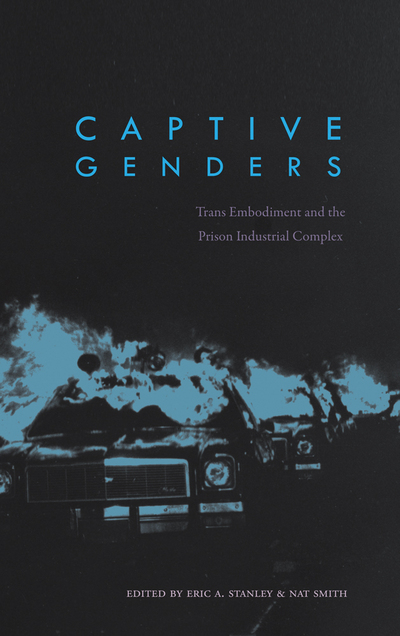
Captive Genders: Trans Embodiment and the Prison Industrial Complex, edited by Eric A. Stanley & Nat Smith – In this collective of over two dozens essays, readers are challenged to think both about the often oppressive nature of a male/female binary society and the prison industrial complex. People who are challenging gender norms, particularly the Transgender community, communicate in this book that they are not only victimized by the hetero-dominative society, but by the legal system that is identified as the prison industrial complex. taking the groundbreaking analysis that Angela Davis has done around the prison industrial complex, Captive Genders applies a Transgender lens in their analysis that is both enlightening and inspiring. The contributors to this collection demonstrate that to be gender non-conforming is criminal in this society and that reality is amplified when you factor in race, class, immigration status and health issues like HIV/AIDS. Captive Genders is an amazing book and should be required reading not only for those concerned about LGBTQ issues, but those who care about intersectional justice and systemic analysis.

Save the Humans?: Common Preservation in Action, by Jeremy Brecher – Jeremy Brecher is the author of numerous books such as Globalization from Below, Global Visions, In the Name of Democracy and the amazing text Strike!, which is a detailed account of the history of labor strikes in the US. As someone who has admired Brecher’s scholarship over the years it was delightful to read Save the Humans, which is more of a autobiographical work by someone who has not only written about organized resistance, but someone who has been actively involved in that resistance. In many ways this book provides a kind of intellectual boost to how I understood his previous books, because now I have better insight into the person and his own trajectory of change from childhood to now. Along the way the author also provides teachable moments about organizing, tactics and strategies that also make Save the Humans a delightful read.
Somos Una America: Shut Down the School of the Americas (DVD) – This is the most latest documentary on the public opposition to the US Army School of the Americas (SOA), located at Ft. Benning, Georgia. The film provides not only a summary of the organized opposition to the terrorist training camp, it also looks at recent developments. Some of the recent developments have been an increase in soldiers from Mexico and Colombia, because of the ongoing counter-insurgency campaigns in both of those countries. In addition, the film looks at the countries which have discontinued sending troops to the SOA and the organized cross-border efforts between SOA activists from the US with communities fighting militarization throughout the Americas. The DVD also includes several short films, mostly in Spanish, but important resources for anyone interested in human rights.
World AIDS Day event this Thursday in Grand Rapids
This Thursday, people are invited to participate in World AIDS Day and remember all those we have lost to HIV/AIDS.
The event at the downtown Grand Rapids GVSU campus will feature two speakers.
Todd Heywood is an investigative reporter based in Lansing, Michigan. Todd runs the personal blog TheConversationStartsHere.net, and works full-time for the American Independent News Network. His work appears on MichiganMessenger.com. He is HIV-positive and openly gay. Todd will speak on the criminalization of HIV/AIDS.
Pamela Lynch is a nationally respected leader in the practice and principles of Harm Reduction theory. Pam has been influential in the establishment of several syringe access programs right here in the state of Michigan. Over the past fifteen years Pam’s dedication to the practice of Harm Reduction has brought her to programs in Chicago, IL, Detroit, MI, New York, NY, and Newark, NJ. Pam lives in Traverse City, MI, and tirelessly advocates for the rights of people who use drugs on a local, statewide and national level.
The event is free and open to the public. Co-sponsors of the event include The Red Project, the LGBT Resource Center at GVSU, the Multicultural Affairs office, the Women’s Center and the Kirkoff College of Nursing.
Thursday, December 1
Criminalization of HIV/AIDS 4:00PM
Harm Reduction 6:30PM
Both talks are in room 215 of the Eberhard Center
GVSU Pew Campus
The Death of Fred Meijer: Canonizing a member of the 1%
All of the Grand Rapids-based media today joined in unison to pay tribute to Fred Meijer, the former CEO of Meijer Inc.
Most of the coverage refers to his “pioneering” the hyper-market or the superstore concept, while the rest of the coverage discussed his philanthropy and how much he loved Grand Rapids.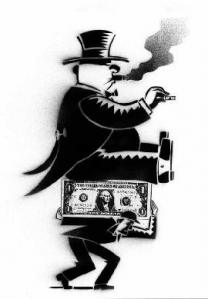
MLive coverage includes a story on his death, but separate stories on the company, reflections from one of their columnists and an excerpt from his biography. WOOD TV 8 has several stories and a photo album highlighting the life of this multi-billionaire and the rest of the major daily commercial outlets have joined in on the cheerleading.
It stands to reason that the local news media would gush over a man worth over $5 billion dollars since every one of these news outlets relies heavily on advertising dollars from Meijer. But reliance on advertising money is only part of the reason for the celebration of a billionaire in local media. The other major factor is that commercial media not only internalizes the values of the economic system, they are also deeply entrenched in it. This is a point we made about why the local media will never understand Occupy Grand Rapids.
Meijer, like DeVos and Van Andel, is a name that is all over spaces in this community such as gardens, the PBS station, the civic theater, the lobby at the Ford Museum and many other spaces. The Meijer name on these public spaces is designed in part to get the public to be reminded of how wonderful rich men are in this community, and it is also a way to silence any critical voices.
Becoming a Billionaire
There was an interesting line in the WZZM 13 story, which was attributed to Fred Meijer himself. “We don’t want to make more money we want customer [sic] to have better value.” This line is supposed to represent the ethos of the Meijer Corporation, but if one looks at this statement with a critical lens there is a different message. Meijer made his billions off selling products made mostly out of the US, buying at a high volume rate, receiving massive subsidies and tax-breaks whenever they put a new store in and downsizing the workforce.
Like Wal-Mart, Meijer is based on high volume, which means they dictate the price of products they buy. They also sell lots of cheap items made in countries like China, where labor standards are based on sweatshop conditions. In addition, most of what is sold in Meijer stores are non-necessary items, like cheap plastic crap. Even most of the food that is sold in Meijer stores is more accurately food-stuff, which has contributed tremendously to an unhealthy society.
Essentially, the statement “We don’t want to make more money we want customer [sic] to have better value” is a lie. What drives Meijer policy is making a profit and a pretty hefty one. We reported earlier this year that since 2007, Fred Meijer’s wealth grew 150%, so that by 2010 he was worth $5 billion. What is astounding about this growth is that it happened at a time when the economy tanked and millions of people fell into poverty.
Some will say that Meijer has been a generous philanthropist evidenced by the fact that he has shared his wealth. Such a notion ignores the function of foundations and philanthropy in a capitalist system, in that it is primarily designed to divert public attention from the tremendous wealth gap we have in this society. If the rich did not “donate” money to certain projects, we all might be more inclined to take that wealth back. That’s right… take it back, because it is money made from the labor of working people.
What is not discussed in today’s coverage is what else Meijer has done with its money. Besides, directing wealth to projects that protect the status quo, Meijer has used his money and his company’s money to influence politics. According to the Michigan Campaign Finance Network, Meijer Inc. spent over $300,000 in each of the past 2 years with their state Political Action Committee. According to Opensecrets.org, Meijer has contributed primarily to Republican candidates in recent election cycles. Meijer has also contributed millions of dollars over the years to influence food policy at the federal level, with over $80,000 in influence spending in the current election cycle alone.
Like the rest of the 1% in this society, we are constantly told that Grand Rapids would not be where it is today if it were not for people like Fred Meijer. I agree with this statement, but from a different point of view. Grand Rapids might not have the kind of deeply entrenched poverty that we currently experience if there were real economic justice. Imagine if the $5 billion that Meijer is worth were given back to the people to end poverty and homelessness. Until that kind of revolutionary act is taken, I will not chime in with the rest of the media and canonize part of the 1%.
Occupy the Democratic Party? No way!
This article by Dan LaBotz is re-posted from ZNet.
At a moment when Occupy faces severe police repression and cold weather, and as we are various pressures are beginning to build with the objective of taking our movement into the Democratic Party both extending our movement to the streets and rethinking our future,. While our movement so far has remained politically independent and non-partisan, newspaper articles and commentaries suggest that the Occupy movement should give up its “utopian” demands for a different and better society and its “amorphous” participatory democracy and enter into the Democratic Party in order to have an impact on society. We will increasingly hear calls for Occupy to become a new “rainbow coalition” within the Democratic Party, a coalition that can at best capture the party and at least move it to the left. Yet history suggests that nothing could be worse for our movement than entering the Democratic Party where youthful ideals are transformed into cynical winks, where movement activists are corrupted and turned into party hacks, the place where for a hundred years movements have gone to die.
Even as Democratic Party mayors are sending in the riot police to clear Occupy out of the parks, analysts and consultants from Democratic Party think-tanks and foundations are scouting movement activists and a few Democratic Party politicians have come down to rub shoulders with Occupiers. With many traditional liberal groups—labor, immigrants, environmentalists, and others—feeling disappointed in the performance of President Barack Obama and Democrats in the Congress, party leaders feel a desperate need to find new energy and they are strategizing ways to capture the Occupy movement and to channel its exuberance into the November 2012 elections. We will face throughout the next year a series of arguments from without and then from within about why Occupy belongs in the Democratic Party, and we should understand why that would be a disaster for our movement.
A Variety of Arguments for the Democrats
We read in Newsday, for example, that Pennsylvania Gov. Ed Rendell recently told a Harvard University seminar that Occupy activists should “start registering voters, start playing towards the 2012 election. Not just the presidential, but congressional and Senate elections and state legislative elections. That’s where they can make real change.” This argument—that only electoral politics leads to “real change”—will be the mantra of Occupy’s seducers, growing louder every week as we head toward the elections.
The argument for cooperation between Occupy and Progressive Democrats is made in a soft and more subtle way in an editorial by Paul Rosenberg published in Al Jazeera. He suggested that Progressive Democrats should see Occupy as an ally in fighting the corporate wing of their party. Someone will soon take that a little farther and suggest that Occupy should enter the Democratic Party and ally with the Progressives and old time liberals to fight the corporations for control of the party. We have another, stronger version of this argument from Van Jones, the former green jobs czar for Obama. Jones says he wants 2,000 candidates running under the “99% banner.” While he doesn’t say so explicitly, these will presumably be 99%ers running in the Democratic Party. MoveOn.org, once a voice for the anti-war movement, before it moved on to become a fundraiser for the Democratic Party, is now working to co-opt Occupy, as Steve Horn pointed out in a TruthOut article. They too want to drag Occupy into the Democratic Party, liberal mainstream.
Jesse Jackson, traveling around the country and bringing his passionate oratory to the defense of the Occupy movement has compared Occupy to the Civil Rights movement of the 1950s and 1960s, but has so far avoided arguing that Occupy should get involved in politics. It is unlikely that he will refrain much longer, since he has built his career on work with and within the Democratic Party. When in the 1980s the Democrats were losing steam, Jackson organized the Rainbow Coalition of African American, Latino and labor voters, and, though it became something of an independent force, he led it into the Democratic Party, arguing that a party needs “two wings to fly,” a left wing and a right wing. Today as the Democratic Party flails around like a one-winged, right-winged, rightward gyrating chicken, Jackson would like to see Occupy become the Democrat’s new left wing, turning the Democrats once again from a neo-conservative to a moderate center-left party.
Union Officials and Workers Not the Same
The AFL-CIO and Change to Win federations represent yet another pressure on Occupy to become part of the Democratic Party operation. AFL-CIO President Richard Trumka and the federation’s executive board have recognized the power of the Occupy movement which has taken on the task that the unions long neglected, namely: speaking out on behalf of all working people. Trumka has recently come to the defense of Occupy, and has adopted our language, talking about the 99% instead of the 10% of actually union-organized workers. Trumka and other union leaders see in Occupy a way to revive activism in their unions, but they want that activism to be directed toward reelecting President Barack Obama and putting more Democrats in Congress. While the Occupy movement and rank-and-file workers have everything in common—the need for economic justice, democracy, and a new and different kind of politics—union officialdom has its own agenda focused on the Democrats.
The Service Employees International Union (SEIU), one of the largest in the country, is working assiduously to co-opt Occupy into the Democratic Party, according to Glenn Greenwald of Salon.com. SEIU suggests Obama and the Democrats represent the Occupy movement’s goals. Greenwald writes, “But whatever else is true, the notion — advanced by SEIU — that it’s the Democratic Party and the Obama White House working to bring about these changes and implant these values of the 99% is so self-evidently false as to be insulting…to try to cast the Democratic Party and the Obama administration as the vessel for the values and objectives of the Occupy movement is just dishonest in the extreme: in fact, it’s so extreme that it’s very unlikely to work.”
And Not Just Arguments
We should be clear that the invitation to enter the Democratic Party is not merely an intellectual and political one. The Democratic Party, the labor unions, the foundations and think-tanks, the various NGOs and all sort of other organizations offer not only ideas: they will also be offering jobs and in some cases careers. Ambitious young idealists and some middle aged and older ones too will be invited to come on the staff of the party or one of its front groups. Seasoned politicos will argue that a job with the party or with one of the other organizations working for the party represents a real chance to put Occupy’s politics into practice. What really counts, they will argue, is electing politicians and passing legislation. Doing that work, they’ll suggest, is a valuable contribution to society, and there’s no reason that it shouldn’t be well paid. At a moment when jobs are hard to find, the party and its various arms will offer jobs of all sorts, some of them paying good salaries and carrying expense accounts or providing cars. Occupy activists will be invited to enter another world with its own élan, excitement and energy, a place which offers both opportunities to make a career and to meet attractive and interesting people. For some the material attractions will weight as heavily as the arguments. Those who take these jobs and make careers out of them will be the ones to similarly fish leaders out of future movements and take them into the Democratic Party.
The Democratic Party is Not a Park
What would happen if Occupy were to enter the Democratic Party? The Democratic Party is not a park, not a public space to be occupied. The Democratic Party exists to bind working people, the poor, and small business to the program of corporations and banks. The Democratic Party is a hierarchical organization made up of powerful politicians with strong ties to government, banks and corporations, and the military. It is financed by corporations and wealthy individuals who provide millions, though it has also proven successful in raising funds from millions of ordinary Americans. Its program is written by the politicians along lines proposed by corporate consultants. On a daily basis, year in and year out, the Democratic Party, working in the White House, the Congress and in state legislatures puts forward legislation intended to keep the capitalist system working and to serve the banks and corporations.
We should remember that this Democratic Party failed to bring an immediate end to the wars in Iraq and Afghanistan, rejected single-payer health care, increased the round-up and deportation of undocumented immigrants, bailed out the banks while letting the foreclosures continue and unemployment soar, and allowed the increase of police power and the loss of civil rights to continue. We should remember that this Democratic Party and Obama’s White House brought us Secretary of the Treasury Timothy Geithner, the man who proven to be the bankers’ best friend. This Democratic Party gave us Secretary of Education Arne Duncan, the enemy of public schools and teachers’ unions. This is the Democratic Party that Occupy is asked to join, the one where hope dimmed and change never took place.
The idea that Occupy might enter the Democratic Party and join with progressives to change it is an old strategy that has failed before. During the 1960s, Michael Harrington, leader of the group that became the Democratic Socialists of America (DSA), argued that if socialists and people from the civil rights and anti-war movements entered the Democratic Party they could change its direction. Yet during a half century of work as progressives in the Democratic Party, despite their considerable influence in labor and liberal factions of the party, DSA utterly failed to move the Democrats to the left. In fact, under the influence of the banks and corporations, the organizations which in fact own the Democratic Party, it moved considerably to the right, so that today the Democrats stand to the right of Richard Nixon’s Republican Party of the 1970s. The pro-Soviet Communist Party and some pro-Chinese Maoist groups pursued similar strategies (the Maoists with a one-foot-in-one-foot out variation) and with no more success.
If Occupy activists either individually or in large numbers enter the Democratic Party, we should think about the impact it would have on the movement, as has happened from time to time in some large cities where Democratic Party mayors won support from the left. Many talented organizers, writers, and speakers would be sucked out of the movement for months at least, but probably for years because they would find their lifestyle and their political objectives transformed. With leading activists raptured up into the Democratic Party, there would be roles left unfulfilled in the movement, and the movement’s dynamism and its energy would decline. At the same time, because people had come out of Occupy, they would still have influence within Occupy, and Democratic Party organizing goals, methods, and styles would also transform our weakened movement into a kind of shadow of the party. Not a pretty picture to contemplate.
Larger Movements Derailed
The idea that the Democrats could be a vehicle for progressive social change was attempted on a larger scale over the last hundred years by farmers, workers, and the African American community, and while they had some impact on the party and through it on American society, by and large the result was the death of those movements. The Populist farmers movement of the late nineteenth century entered the Democratic Party in 1896, enticed by William Jennings Bryan’s “cross of gold speech.” After that date the movement which had succeeded in several states in forcing changes in legislation and which had had an impact on the courts and their decisions, ceased to be a factor in American life.
Similarly in the 1930s, the great labor upheaval that began in the 1934 sit-down strikes had led to the creation of local labor parties and union proposals to create a labor party, a party for working people. Franklin Delano Roosevelt, who had been elected as a moderate in 1932, moved to the left long enough to capture the Socialist Party, the Communists, and the new Congress of Industrial Unions. The old left and labor movements, particularly their leaderships, became deeply involved in the Democratic Party and during the World War II period became transformed into partners of the corporations and the government. By the 1950s the AFL-CIO had become largely an extension of the Democratic Party’s political operation, no longer a vehicle as it had been in the 1930s for workers’ struggles for a better life.
The African American civil rights movement which began in 1956 became a powerful force not only for blacks’ rights but also progressive change in the United States. By 1965 the civil rights movement had succeeded in winning the Voting Rights Act and the Civil Rights Act and in ending de jure segregation in the South. From that time on, President Lyndon Baines Johnson and other politicians of that era opened the door of the Democratic Party to African Americans, bringing them into the party, and closing the door on civil rights progress. Once the Democrats had captured the civil rights movement, progress toward solving the more complicated problems of racism in the North was virtually abandoned. Every movement that entered the Democratic Party became stuck in the quicksand. Few escape. Bones of former activists litter the landscape.
All of those movements—Populists, 1930s labor, and African American civil rights—were far larger and more powerful than Occupy is today. If they could not transform the Democratic Party, there is little chance that we could. Meanwhile, however, entry into the Democratic Party is likely to domesticate the movement and thwart its potential to spark the kind of alternative political force this country so desperately needs.
The Role of the Institutional Left
What might be called the “institutional left”—the Democratic Socialists of America, some old line Communists, some labor officials, groups of influential university professors, intellectuals and authors—play a key role as the gate keepers of the Democratic Party on the left. They work to encourage labor and social movement activists to enter the Party, and they work to keep them from leaving. Their arguments, of course, are not all the same, but they have the same impact ultimately.
They argue—and have argued for decades—that unless we support the Democratic Party, the far right will come to power ushering in an era of reaction or perhaps even fascism. To stop this, they argue, we must enter and strengthen the Democratic Party as a bulwark against the radical right. To work for third parties or to abstain from electoral politics, they argue, undermines the democratic forces and strengthens the right and fascism. Yet the Democratic Party, far from being a bulwark against the right, has drifted over into the right. Democrats, like Republicans, represent corporate interests. Democrats, and not just the blue dog Democrats either, have adopted virtually the same austerity politics as the Republicans. Some Democrats do espouse pro-labor, feminist, pro-choice, pro-LGBT rights positions, but the rightward drift of the party means that their positions are often ignored.
Left intellectuals have played and continue to play a key role in drawing leftward moving people in society back into the Democratic Party and in keeping those who get in from leaving. For example, since the 1960s Richard Cloward, now deceased, and Frances Fox Piven argued that the left should build social movements that would force the Democrats to the left, but should not challenge Democrats electorally from outside the party. Intellectuals like Piven have made strong arguments intended to both build social movements, but also to keep them operating as a pressure group on the Democrats rather than as an independent force.
The institutional left often argues that leftists who are not in the Democratic Party are betraying the struggle for African American rights, women’s rights, or some other group’s rights. Failure to be in the Democratic Party, they argue, will lead to Republican victories which will both bring bad legislation and turn the Supreme Court and other Federal courts over to the rightwing. If we on the left fail to continue to build an independent pole and if we allow the Democratic Party to smother our movement, we will find that frustration with austerity, ongoing unemployment and economic stagnation is likely to promote extreme right wing forces in the absence of a genuine left alternative. Yet the truth is that all the great reforms in the history of our country were won not through the establishment parties, but rather through independent mass movements.
The argument of last resort is always lesser-evilism: the Democrats are not as bad as the Republicans. We must work and vote for the lesser evil. When I hear this argument, I think of an equestrian astride two horses straining at full gallop, the man with one foot on the back of each, riding his team—over a cliff. Which is the lesser evil? What does it matter? Horses and rider are going over the cliff. Today we have two parties—Republicans and Democrats—both serving the banks and corporations, both riding toward the cliff of economic crisis and disaster for us. At the last moment, as in some early silent movie, the horses may turn away leaving the poor rider to go over the precipice and into the abyss.
Voting for the lesser evil, voting for a party and for candidates in whom you do not believe has a terribly destructive impact on the individual. When we step into the voting booth, stand before the ballot, and lift the pen or touch the button and vote for something in which we do not believe, we take responsibility for destroying a little piece of our integrity, of our conscience, of our soul. We give our backing, our bona fides to something we know is not good, not right, not the best path for our country. We violate ourselves, or permit ourselves to be violated by the lesser evil argument. Don’t do it.
Occupy as a Political Force
We may not have a party political alternative, but we do need to understand our Occupy movement as apolitical force.
The idea that Occupy has to enter the Democratic Party to have political influence and power is ridiculous. In the first two months of its existence, precisely because it has been independent, it has had an enormous influence on society, on the media and on politics. Occupy has challenged the Republican and Democratic parties and the entire political system. Our encampments, our demonstrations, and out ideas have led millions to identify with our movements. Today most Americans are on our side, as numerous polls have shown. We must continue to be an independent movement, but we must throw our weight around in a more self-conscious fashion, using it to fight against rightwing policies and to push for policies that provide jobs, housing, education, and health care for all Americans.
There is some truth in the notion that we need power in the formal political sense. A working peoples’ political party—one led by, made up of and fighting for working people and all the exploited, oppressed and disenfranchised—would make a huge difference in this country. Unfortunately we do not at this moment in American history have the makings of such a party. While several left parties—the Socialist Party, the Green Party, and the Peace and Freedom Party in California—have many good people and good ideas, they do not represent the political expression of the Occupy movement, the labor movement, the African American, Latino, women’s and gay movements. That is we do not today have a political party of the 99%.
Why, you might ask, would we want a party? Wouldn’t a party inevitably succumb to the corruption of government and the bankers and corporations who dominate the political sphere? There is certainly that danger. If, however, a powerful social movement arose—the Occupy movement perhaps, the 99% movement—and if it were committed to dismantling the economic power of the banks and corporations while building the political party of the so-called middle class, working people and the poor, as well as of all those who suffer discrimination and exploitation, we might, we just might be able to break the power of the 1%.
Ours would have to be a party with a different conception of government, far more democratic and participatory. A different government altogether, based on our communities, workplaces, and social centers. Ours would have to be a party prepared to reorganize the economy, to reshape the culture, to remold our values from below. Ours would have to be a party led—and led in the most democratic sense—by ordinary workers, by people of color, by women, gays and lesbians. Ours would have to be a party of immigrants, those with documents and the undocumented. Ours would have to be the party of real equality, not only political and social, but also economic equality. Ours would be the party that took power away from the 1% but also redistributed economic and political power among the rest of the highly unequal 99%. Could we build such a movement and such a political party? I think we can. In any case, we have no other choice than to try.
Public Health Groups Launch Global Campaign Against Abbott Labs’ Monopoly on Critical AIDS Medicine
This article is re-posted from Public Citizen.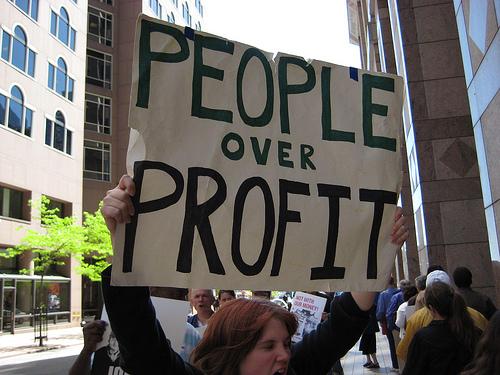
Public health groups in a dozen countries Thursday will launch a global campaign to challenge Abbott Laboratories’ monopolistic hold on Kaletra (lopinavir+ritonavir), a critical HIV/AIDS medicine. The goal is to spur competition by generic drugmakers and thereby lower the medicine’s price, as well as to free up its components for new and improved combination treatments.
In countries from the U.S. to Vietnam, Brazil to Indonesia, health groups are aiming to break Abbott’s monopoly control over Kaletra. Campaigners say Abbott’s high price for Kaletra is blocking expansion of AIDS treatment, and its anti-competitive practices are impeding new drug innovation.
The new campaign comprises an unprecedented global effort to fight Big Pharma’s political power and improve access to lifesaving medicines.
In the United States, Vietnam and Indonesia, groups will ask their governments to authorize generic competition under rules providing for the government use of patents. In Brazil and India, lawyers will file formal challenges to Abbott’s patent claims, arguing that the company has not met national standards for patentability and therefore is not entitled to its patent monopoly. Colombian health advocates are pursuing a lawsuit for a compulsory license authorizing generic competition, as the government of Ecuador and health advocates in Thailand seek to expand licenses already in effect. Peruvian groups will ask Abbott to abandon new patent applications (a demonstration is planned before the Ministry of Health). Treatment providers in Sint Maarten (Kingdom of the Netherlands) and Malaysia and health groups in China are filing request letters with Abbott seeking licenses to permit generic competition. More than 300 Vietnamese health groups have signed a similar letter to Abbott.
“Freeing these drugs for competition and co-formulation could save countless lives,” said Peter Maybarduk, director of the Global Access to Medicines Program at Public Citizen. “These medicines can be manufactured cheaply where patent barriers can be overcome. Licensing and competition could spur the development of new and improved ritonavir-based combination treatments against HIV/AIDS. If patent holders and the pharmaceutical industry will not negotiate, then health advocates will pursue compulsory measures to break their monopolies on lifesaving medicines.”
Kaletra, also known as Aluvia, is a key part of HIV/AIDS treatment worldwide, especially for patients that have developed resistance to older drugs. An early-stage U.S. federal grant led directly to the invention of Kaletra’s essential component ritonavir.
Ritonavir can work as an effective booster with other drugs, but Abbott’s anti-competitive policy commonly prevents it from being used to enhance the effectiveness and lower the cost of other medicines. Today, Abbott asserts a high-priced monopoly in many countries, compromising the finances of public HIV/AIDS programs and limiting the world’s ability to expand HIV treatment and prevention. Despite the public’s investment in ritonavir, Abbott’s product tying likely has slowed HIV/AIDS drug innovation.
Expanding access to AIDS medications is now doubly important, as new scientific research shows that antiretrovirals serve a prophylactic purpose and can bring the epidemic to a halt. Earlier this week, Secretary of State Hillary Clinton unveiled a call for an “AIDS-free generation.” That depends in significant part on massively expanding distribution of AIDS drugs.
Generic competition has driven down global prices for AIDS drugs from more than $10,000 a year per person to less than $100. Yet, Abbott prices Kaletra at $400 in the world’s poorest countries, and much higher – from $1,000 to around $4,000 – in other developing nations. In the U.S., Abbott priced ritonavir alone at nearly $8,000 last year.
“The high cost of patented medicines is a major strain on our health systems,” said Sindi Putri, a treatment advocate in Indonesia. “This global day of action will launch competition campaigns in many countries, so we can work together for access.”
Ten years ago, the members of the World Trade Organization (WTO) affirmed that WTO patent rules “should be interpreted and implemented in a manner supportive of WTO members’ right to protect public health and, in particular, to promote access to medicines for all.” But the political power of the pharmaceutical industry has made it difficult for countries to use the safeguards available under patent rules. After Thailand issued compulsory licenses on AIDS, cancer and heart disease medicines, Abbott retaliated by withdrawing plans to sell several new drugs in the country, and the U.S. government attacked Thailand on a trade watch list. Many countries are hesitant to stand against this pressure.
“Acting in concert around the world, we will be better able to fight Abbott’s abuses,” said Luz Marina Umbasia, a lawyer who works on behalf of Colombian treatment groups. “This day of action marks our campaign’s beginning. We will be expanding; working for access and open competition for more medicines and with allies in new countries as we move forward.”
For more information, visit: http://www.citizen.org/Kaletra-campaign.
This Day in Resistance History: Colonists vs Indians 2.0

On November 24, 1656, the colony of Maidstone on Long Island passed some laws concerning the Algonquian Lenape, the natives of the area. No one, the General Council ruled, would be able to rent land to an Indian. Any Indian camping within the outskirts of the village of Maidstone would be charged with a crime. The law went on:
It is alsoe ordered that noe Indian shall travel up and downe or carrie any burdens in or through our Towne on the Sabbath Day. Whoever is found so doing, shall be liable to corporall punishment.
Any person who believed in the Thanksgiving story—an image of neighborly hospitality and harmony, of the generous Puritans inviting their Indian neighbors to a feast of turkey, venison, corn, and other delicacies—might think, “Wow. Things really went downhill between 1621 and 1656.”
That person would be wrong. In point of fact, the Maidstone ordinances were business as usual in 17th Century New England.
As we’ve written in the past, our largely fictitious Thanksgiving story actually runs along both racist and imperialist lines. In this legend, the Pilgrims plan the feast and the Indians are the guests. The Indians are honored to attend and bring their revered leader King Massasoit. The food is provided by the Pilgrims. In actuality, the Wampanoag contingent was a war party. They were responding to the Puritans firing off guns and stealing seed corn from a nearby Indian village. It was the Indians who brought the venison, the turkeys, the other wild fowl, and most of the other food served at the celebration. And of course, they also provided the stewed corn that had been stolen from them. They somehow managed to sit calmly while watching their crops for the next year being devoured by a group of White people who had become the bane of their existence.
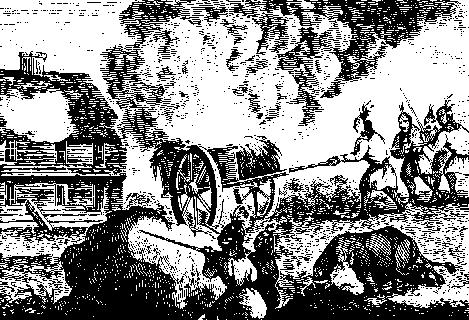
When the first English settlers arrived at Plymouth, they assumed that the land belonged to them, and treated the Indians as encroachers on their infant colony. This attitude of White supremacy can be found in even the earliest of dealings with the Wampanoag. In 1621, for example, the Plymouth colonists drew up a treaty that nine sachems in the immediate area were required to sign, pledging their loyalty to King James. To the colonists, this meant that the Indians were subjects of the king; to the Indians, it meant that they would not wage war against King James’s representatives.
Only two years later, Miles Standish led a party to Wessagussett, asking to parlay with the sachem Obtakiest. Under the pretense of friendship, Standish and his men turned on the Indians, killing several warriors and attempting to murder or capture the sachem.
All of the area tribes then dismantled their camps, disappeared into the forests, and refused to trade furs with the Plymouth colonists. William Bradford wrote, apparently puzzled, “We had much damaged our trade, for there where we had the most skins, the Indians are run away from their habitations.” As for the Indians, they gave a new name to the Pilgrims: Wotawquenange, or “the cutthroats.”
The dealings of the Dutch with the Indians did not go much better. Under Dutch law, settlers were obliged to buy land from the local Indians, not just seize what they wanted. But even these transactions were misunderstood by the invading colonists. The Dutch were under the impression they were buying land with beads and blankets—land that they then would have complete control over.
But the Indians viewed the trade goods as gifts of goodwill. They believed that the settlers were asking their permission to share the land, which they freely did. When the Indians continued to hunt and camp on land that the Dutch had “bought,” the Dutch tried more aggressive methods instead.
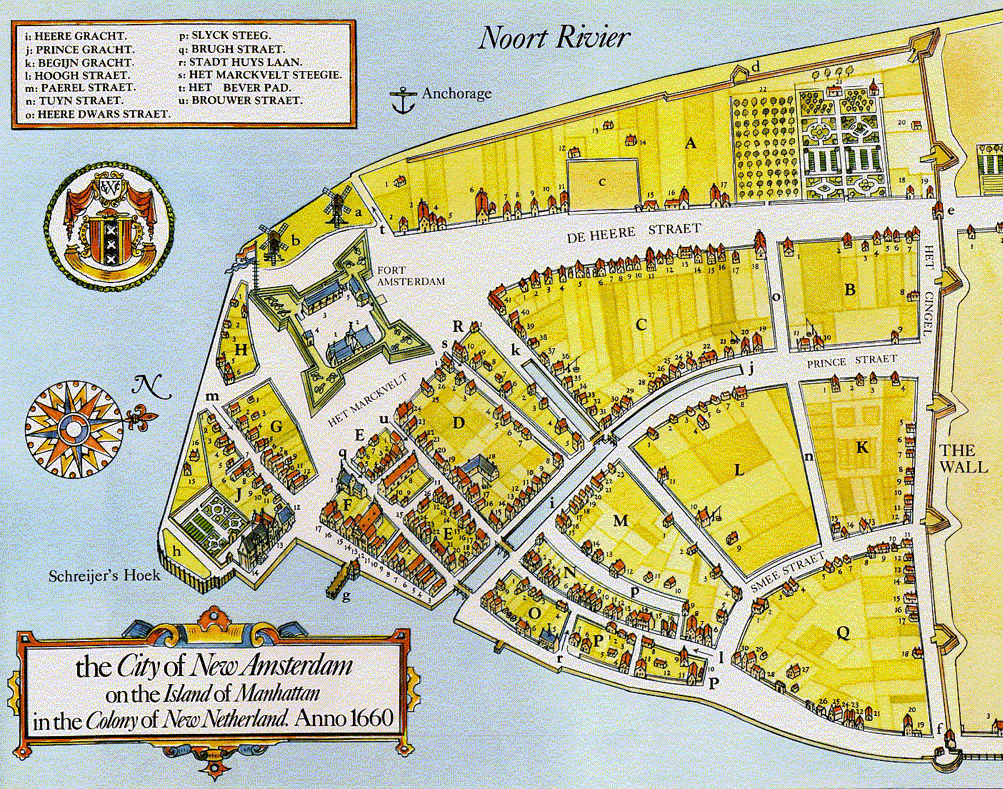
In 1643, as just one example, the then-governor of New Amsterdam, Willem Kieft, attempted to get the Indian “problem” under control by ordering a band of Lenape in the outlying areas of Manhattan off the island. At the time, the Lenape were sheltering on Manhattan after losing a battle with the Mohican and the Mohawk. They refused to return to the mainland, where the enemy’s allied forces were waiting for them.
Enraged, Kieft had 120 of the band killed, including many of the warriors. The Lenape retaliated, forcing the Dutch to flee their farms to their fort at New Amsterdam. One-third of the Indian warriors were killed during the battle. This spurred two years’ worth of raids by the Lenape, and Kieft lost his job.
Petrus (known in our history as Peter) Stuyvesant was sent by the Dutch to replace Kieft. He famously “bought” the entire island of Manhattan from the Indians for what has been described as $24 of trade goods (the actual value was closer to $1,000, still a stunning bargain). But he remained as puzzled as earlier colonists that his purchase did not allow him exclusivity over all of the land he had specified in his purchase.
And so the Dutch and English colonists turned to their courts, creating laws that the Indians found inexplicable—especially since they did not understand the concept of ownership over land to begin with.
The type of laws issued in Maidstone showed the true attitude of the colonists—that they were within their rights to take what they decided was theirs and to mete out punishments to those who attempted originally to share their lands in friendship. They had no vision of themselves as robbers or invaders, no understanding of how their actions might appear to the Indians who had welcomed them as guests in their homeland.
By the 1670s, any pretense of sociability, of shared meals and shared trust, was no longer showing up in colonial reports. King Philip’s War, fought in 1675 and 1676, was the Indians’ long-restrained response to decades of humiliating treatment. The Indian warriors killed 600 of the fighting colonists. Half of the 180 settlements in New England were damaged or destroyed. Their economic losses exceeded the actual value of their property. But the Indians fared much worse.
Already weakened by European diseases that had wiped out whole bands and tribes, the Indians suffered huge human losses in the war. Three thousand allied Indian warriors were killed during King Philip’s War. Many of King Philip’s surviving warriors were sold as slaves to other tribes. Eventually, the remaining Indians were driven from most of their settlements in New England.
Imperialism on the part of settlers ran unchecked through the late 1800s, when Indians across the United States were slaughtered and survivors imprisoned on reservations. Turns out the punitive law passed on Long Island 355 years ago today is a better snapshot of our early attitude toward the natives of North America than any feast of turkey and stolen seed corn can possibly represent.

Here is the film we debuted last week. With some minor corrections and a new ending, you can now watch the entire film. For those who want to purchase a copy of the DVD ($5), contact us at jsmith@griid.org.
The film will permanently be hosted online at http://grandrapidslgbthistory.com/, along with all the archival material, which we are still collecting and posting. Thanks again to everyone who helped make this project a success.
[vimeo 33274790]Grand Rapids LGBTQ History: Video of 1992 Network hosted discussion on the lessons since Stonewall
Below is the most recent archival video we have posted on the Grand Rapids LGBTQ People’s History Project site.
In this 1992 video, we see two presentations, one by Dennis Komac and the other by Holly VanScoy on lessons learned since the 1969 Stonewall uprising. Both of them present very compelling analysis, which is then followed by a lively discussion about the other 20 or so people in the room.
This archival video is another great example of how people were so engaged on these issues in Grand Rapids. It is also a great example of how their analysis informed their actions.
 Grand Rapids Institute for Information Democracy