
It was 75 years ago that the autoworkers in Flint Michigan engaged in a sit-down strike and factory occupation to win their demands. This action not only made the UAW a force to be reckoned with, it gave inspiration to other workers to engage in similar actions.
On December 30, 1936, workers at Fisher Body No. 1 in Flint discovered that the company was stockpiling dies (to outlast an expected strike) and occupied the plant. For several weeks, they governed themselves in their own committees that were a model of democracy unknown in the official union structure. When cops tried to stop supporters from bringing food into the plant, a fight of several hours resulted in the strikers chasing them off.
According to Labor historian Sharon Smith, “The first injunction against the strikers was issued on January 2 by Judge Edward Black. But that injunction was never enforced because strikers disclosed that Black owned $219,000 worth of GM shares.”
On January 11, 1937, the liberal New Deal Governor Murphy ordered the National Guard into Flint. Thousands of industrial unionists poured into Flint to protect the sit-downers by preventing the “friend of labor” politician from using the Guard.
The police attempted to enter the plant on January 11, 1937. The strikers inside the plant turned the fire hoses on the police while pelting them with car parts and other miscellany as members of the women’s auxiliary broke windows in the plant to give strikers some relief from the tear gas the police were using against them. The police made several charges, but withdrew after six hours.

The strike lasted 44 days and resulted in GM signing a contract with the workers. It was a tremendous victory, not only because workers won their demands, but it signaled to the rest of the country that workers had power by using the direct action tactic of the sit-down strike.
In Grand Rapids in 1937, there were two strikes that resulted in worker victories. The first strike lasted only four days at the Attwood Brass Works and in June of that year a 5-week strike brought the Royal Furniture Company to the bargaining table.
However, many of the larger unions and business unions were threatened by the tactic of the sit-down strike and began discouraging their union members for using such a tactic. Sit-down strikes give workers autonomy and builds workplace democracy, which too often business unions don’t want.
With growing concerns from business leaders over the power of striking workers, legislation was introduced and eventually passed in 1947, known as the Taft-Hartley Act. This legislation essentially made it illegal for workers to engage in a sit-down strike and took away their most powerful weapon.
In recent years there has been a resurgence of the use of sit-down strikes and factory occupations. Shortly after the economic crash in Argentina in 2001, thousands of workers began occupying factories and turning them into worker-run entities. These efforts are beautifully documented in the film The Take.
In December of 2008, workers at the Republic Windows and Doors factory in Chicago also occupied their workplace after Bank of America would not give the company any new loans and the company refused to give workers any severance pay. Those workers won back pay and inspired millions around the world.
Here is a video in 2 parts, which looks at the 1937 Flint strike with interviews of some who participated in that historic strike.
This article by Glen Ford is re-posted from Black Agenda Report.
The Republicans savaged each other with a cannibalistic gusto envenomed by mega-doses of anonymous Super PAC money. At the end, a heap of battered clowns lay bleeding on the straw-strewn Iowa barn floor, a farm team not ready for the big leagues with Obama.
Mitt Romney’s 8-vote Iowa caucuses edge over national nonentity Rick Santorum and libertarian Ron Paul is the best evidence yet that the Tea Party phenomenon has crippled the GOP’s ability to herd the White nationalist American masses into any corral that smells of Wall Street. Romney’s corporate persona and money, the kind of credentials that once drew small town Jaycees and other Republican worker bees like nectar, have lost their mass appeal in the White Heartland. A deeper atavism is at play in Republican ranks, a far less malleable strain of reaction that is no respecter of the GOP establishment’s brand of bling – which is one reason Mitt can barely buy a break.
The Lords of Finance Capital, who, like their multinational corporations, have no home team (or national) loyalties, put their money on Barack Obama last time around and have profited beyond their most speculative dreams. Obama may not have saved finance capital from terminal decline, but he temporarily rescued Wall Street from its inherent self-destruct mechanisms (contradictions) through what they hope is a permanent umbilical to the American State. Their early investment in candidate Obama bought them resurrection from the 2008 meltdown and a pipeline in perpetuity to the financial innards of the U.S. treasury. It’s the sweetest deal ever bribed or brokered. Why in the world would Wall Street consider for one second trading in Obama for whatever wounded animal emerges from the Republican presidential menagerie?
A factoid in the January Harpers magazine Index brings the point home. According to the Center for Responsive Politics, employees of the investment firm Bain Capital, co-founded by Romney, donated $69,500 to their former boss’s campaign. They gave considerably more to Obama: $119,900. That’s about the ratio of Wall Street’s lopsided contributions to Obama in 2008 – before he funneled tens of trillions of the dollars into their coffers. This marriage has been consummated.
On the foreign front, where most of Wall Street’s money is made, Obama has in less than three years managed to renew the U.S. global offensive that was shattered by the Iraqi resistance under Bush’s watch, with catastrophic damage to American prestige in the world. Where Bush the Cowboy managed to isolate the U.S. from its imperial allies, the First Black President has led NATO to become an expeditionary force under American tutelage with the 7-month bombing campaign against Libya, and blunted the Arab Spring through deepening ties to autocracies in the Persian Gulf. The Empire is on a roll in service of multinational capital. Cosmetic regime change in Washington would not serve Wall Street’s purposes.
Especially with the advent of the Occupy Wall Street movement, the last thing the smart cookies among the Lords of Capital need is to associate themselves with Republican presidential contenders’ crude and fawning wealth-worship. Far better to fill up Obama’s billion dollar campaign war chest and swallow hard while he makes mildly populist noises that give voters the impression they have a stake in the presidential election exercise – that the 1% don’t really rule.
The Republican candidates are tightly locked in their clown fight-cages, as Glenn Greenwald recently wrote in The Guardian UK: “Because Obama has governed as a centrist Republican, these GOP candidates are able to attack him as a leftist radical only by moving so far to the right in their rhetoric and policy prescriptions that they fall over the cliff of mainstream acceptability, or even basic sanity.”
White madness will feed Black fears. In the saddest of historical ironies, the group hurt worst by Wall Street’s crimes will once again wind up on the same side as Wall Street’s money in the presidential race. Some will even fantasize that Obama will show his “true, Black” side in his second term. The Republicans aren’t the only ones that are crazy.
To kick off the 25th anniversary of the January Series at Calvin College, today’s speaker was Sherry Turkle. Turkle, a professor at MIT, addressed the theme of her most recent book Alone Together: Why We Expect more from Technology and Less from Each Other.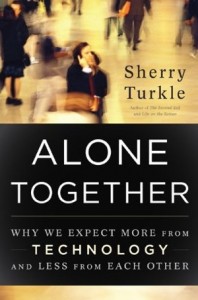
Turkle began her talk by stating that 15 years ago she sensed a tremendous amount of optimism when the Internet was first becoming part of our daily lives. Fifteen years later she feels less optimistic about digital technology in our lives.
The main thing that she did not see was the growth of hand held digital technology. Turkle thinks that it allows us to “bail out of a human social world. People are so often online that is boggles the mind. People are texting with one hand while pushing their kids on the swing with the other hand. People are texting while driving, while on dates and people are even texting during funerals.”
Turkle says that people do it because in some ways it has become the social norm. But Turkle also says that our relationship with digital technology is such that adults and youth are now sleeping with cell phones and people are becoming anxious when their phones ring/vibrate.
The MIT professor however, acknowledged that hand held devices are not the only cause for concern. Turkle stated that it is how we have come to think of our relationship with digital technology that we need to come to terms with. The companies that promote the newest digital technology have certainly marketed digital life as if it were better than our real lives.
Turkle says that she saw an ad recently for Second Life, which said, “Finally, a place to love your body, friends and life.” She also mentioned an dd for Wii tennis, which said, “the way tennis was meant to be played.”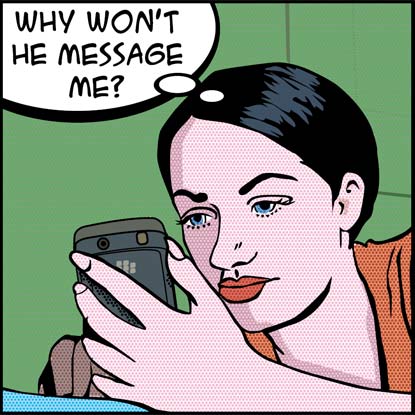
Interestingly, in Second Life people often look better, younger and wealthier than they do in real life. “Technology,” according to Turkle, “is most seductive when its affordances meet our human needs.” However, this notion that the digital world is better than the real world is more of a reflection about how we see ourselves. Turkle said we are lonely, but fearful of intimacy, which is why the digital world is so appealing. We can communicate with people, but from a distance that doesn’t require us to be vulnerable.
The MIT professor went on to say that we have a technology that distracts us from doing what we say is really important to a lot of us. Turkle said it is even ironic that many of us are “too busy communicating to really connect.”
Turkle gave examples about how teens deal with living in a digital world. She said that many of them won’t speak on the telephone. They say it is much too slow, it makes it hard to say goodbye and it just takes too long. However, Turkle says this is the case with those on corporate boards and in academic circles. “We are using technology to dial down human contact. People find lots of meaning by being in touch with lots of people, without having to really know them well.”
Turkle also says that we imagine that e-mail and texting will give us more control over our time, which most often isn’t true. She said we are measuring ourselves by how much digital communication we have. We are pressured to respond immediately, which almost always means in short answers, like we are on a cable news show.
Where Turkle has spent a great deal of her recent research is on how digital technology impacts youth going through adolescence. She stated that young people might come into adulthood without ever having to be alone with themselves. Turkle says it is important for children to “separate” from their families both physically ad emotionally, but with digital technology they can communicate with their parents as often as they want. Part of adolescence, according to Turkle, is that awkwardness of trying to figure out who you are. With digital technology we are less likely to discover who we are since we can always be distracted.

Turkle says that philosophically the digital world says, “I share therefore I am. Your contact list becomes a mechanism for validation. In this way you are reducing people to getting what you need, without it being a consensual, intentional interaction. What is not being cultivated is being alone, to develop our own identities. If we don’t teach our children to be alone, they will only end up being lonely.”
Turkle defines the way we are interacting with digital technology as a form of addiction. However, addiction is too narrow a notion, since we usually associate the solution to addiction as going cold turkey. Turkle doesn’t feel that people will give up their use of this technology and it can make us feel hopeless or as passive victims instead of finding real solutions. “We are in trouble not because it was invented, but because we have not reflected enough on its significance in our society. We need to have a conversation about the use of this technology. You are not a Luddite if you want to have a conversation about this technology.”
Turkle began to wrap up her comments by saying we are at a moment of opportunity. Does the digital technology truly serve our human purposes? “Just because we grew up with the Internet we think it is all grown up. It is time to make the necessary corrections.”
One thing that concerns Turkle is the general failure to acknowledge that the Internet never forgets. Once something is posted or sent it doesn’t go away. There are no real delete buttons. Mark Zuckerberg, creator of Facebook, recently said that privacy is no longer a relevant subject. Turkle thinks that privacy and the ability to dissent are ore critical now than ever, despite the musings of Zuckerberg..
Turkle concluded her talk by telling the audience about how she and her Grandmother would go downstairs to get the mail every day. He Grandmother always said that no one can look at your mail, it’s a federal offense if they do. However, digital messages are not private and are not protected. “I’m not sure where to take my daughter to teach her about privacy and dissent. We all need space for privacy and reflection and that is increasingly difficult in the digital world.”
Fascist America? Not Exactly
This article by Paul Street is re-posted from ZNet.
Imagine if the United States really was, as a number of my fellow leftists claim to think, “a fascist state.”[1] To fit the description, it wouldn’t be enough for the U.S. to be plagued by:
- the fierce co-joining of state and corporate/financial power
- the persistence and deepening of harsh racial inequality and oppression
- stark class disparity (in a country where the top 1 percent owns more than a third of the wealth and the top 20 percent owns 84 percent) producing grotesque hyper-opulence for the rich and powerful Few alongside deep poverty for tens of millions among of the Many
- a viciously narrow one-and-a-half party system whose two wings are equally captive to “the unelected dictatorship of money”
- a largely defeated and pathetically tamed labor movement
- millions of stateless workers whose lack of legal status renders them super-exploitable by employers
- a giant military system and war machine that maims and murders millions of innocents abroad
- a significant mass of the citizenry that relies on war and empire to make a living and functions as a mercenary population for the elite
- an ongoing history of waging illegal wars of aggression abroad
- an authoritarian disabling of functioning democratic institutions at home
- a pandemic of irrational thought and anti-intellectualism
- the violent government suppression and ubiquitous surveillance of domestic dissent
- the regular use of military methods and technologies in domestic policing
- government assault on basic civil liberties (including the right not to be indefinitely detained without facing charges and without legal representation) and human rights at home and abroad
- right wing propaganda systems that (among other things) conflate the right-centrist pseudo-liberalism of business Democrats like Barack Obama with socialism and even “Marxism”
- a massive incarceration and criminalization system that keeps a very disproportionately black and Latino army of more than 2 million Americans behind bars and marks more than 1 in 3 adult black males with the lifelong stigma of a felony record
- an intellectual class and university and media systems that supinely serve the corporate and financial elite and that elite’s state
- the systematic marginalization of radicals and genuine dissenters
- the savage concentration of news, information, communication, and cultural institutions into the hands of a tight corporate oligopoly, with corresponding authoritarian ideological consequences
- a narcissistic culture of hyper-masculinized nationalism that justifies war and empire with claims of special American “greatness”
- a political culture that blames the disadvantaged for their own position at the bottom of the nation’s ever-steeper pyramids of class, race, and ethnicity.
All of these things and more of a terrible and authoritarian nature can be discerned by those willing to see in the contemporary U.S. They are largely consistent with the notion of a “fascist America.” It’s not for nothing that many contemporary Hitler-worshipping European fascists look with favor upon the U.S. as a kind of role model.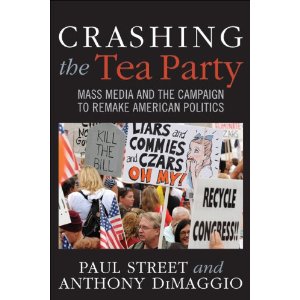
Still, there would have to be more for the U.S. to fit the description “fascist state.” To be really fascist, the U.S. would have to be under the thrall of a charismatic dictator who had undertaken a conscious, explicit, and rapid assault on nominally democratic bourgeois-electoralist and representative institutions. That dictator would be supported by a highly mobilized mass of millions of dedicated, proto-militarized, and everyday (largely lower middle class/petit-bourgeois) authoritarians ready to do his bidding at home and abroad. This marching fascist multitude would seek to honor the sanctified Nation State (fatherland) by physically assaulting liberals, radicals, trade unionists, racial minorities, gays and lesbians, libraries, universities, civil society groups, and all political parties other than the ruling regime’s.
In a fascist America, the Occupy Movement would have been lucky to have lasted one night in a single city park before Fuhrer (let’s say) Beck’s minions would have run protestors off with broken bones and worse, herding many into buses and trains to be sent to work camps. There Occupiers would toil under armed guard alongside mostly black prisoners in the making of war materials. It is unthinkable that they would have lasted in their parks for many weeks and even received a considerable amount of half-way favorable media coverage, with journalists freely reporting that more than two thirds of the population supported the movement’s goals.
Untold thousands of Muslims would have been murdered inside the U.S. (not just in the Middle East and Southwest Asia) and sent to giant internment camps. Books would be burning in the streets. Barnes&Nobles outlets would not be allowed to carry volumes from Noam Chomsky, Ralph Nader, and Howard Zinn or even books by Michael Moore, who would have been whisked off (along with the liberal Rachel Maddow, perhaps) to an unnamed federal detention center in the Upper Peninsula of Michigan (the staff at “Democracy Now” would reside in Guantanamo). Elections would be dispensed with. Much of the media would be shut down. The parts that remained would be subject to ruthless centralized control from ideological authorities (some transferred over from FOX News) in Fortress Washington. Democracy and justice activists would have to meet secretly and would live in constant danger of beating, torture, and disappearance.
The “grassroots” core of the nation’s hard right wouldn’t be a bunch of comfortably retired white Republican Tea Partiers who claim to support the “free market” but who want to close the borders and keep their Medicare and Social Security[2] and who don’t particularly enjoy collective action. Instead, they would be younger, steely-eyed, truncheon-wielding, jackboot-wearing shock troops who love nothing more than rugged mass head-cracking action against various perceived liberal, racial, radical, and national enemies of the Founding Fathers’ land at home and abroad. The nation would be on a war footing, poised to invade not just distant Middle Eastern or Asian states but its immediate neighbors Canada and Mexico.
That’s what a truly “fascist America” would look like. It obviously hasn’t arrived and it’s unlikely to appear anytime soon. The hypothetical scenarios I just laid out amount largely to the transplantation into contemporary America of developments that are rooted in the toxic historical subsoil of interwar Europe (particularly of course in Italy and above all Hitler’s Third Reich Germany), the real and time and place for serious discussion of actual historical fascism. Even it could actually access it, the American ruling class doesn’t particularly need that particular mode of rule, which is less stable and durable than the current, considerably softer neoliberal regime of corporate-managed fake-democracy, whereby most of the population is generally de-mobilized, individualized, and fragmented and popular governance is slow-cooked to death through a million plutocratic, state-capitalist cuts. Under the American model of elite-managed shadow democracy, the reign of the Few masquerades as popular self-determination and “the free market” instead of lurking behind the explicitly repressive and holy State.
Even if real historical fascism could be translated across times and place to the modern U.S. it would be largely redundant for America’s powers that be. The American elite already gets the basic regressive and authoritarian outcomes of fascism – increased exploitation and division of the working class, deepening concentration of wealth and power, the disabling of political democracy and social justice, the marginalization of dissent and critical thought, and the advance of stupendous and lucrative militarism and empire – without having to unleash the full brutality of fascist dictatorship.
So why do some radicals and progressives like to throw the word fascism around with great bravado in connection with the contemporary U.S.? Beyond simple sociopolitical and historical ignorance (and I think fascism is a fairly complex historical subject matter), I think many of them may do it for an understandable shock effect. The parallels between contemporary and ongoing authoritarian/racist/classist/sexist/corporatist/ nationalist/imperialist Americanism – see my opening bullet points – and the Third Reich (and for that matter and to a lesser degree with the Soviet Empire of 1928-1991) are no laughing matter. The contemporary U.S. may not be a fascist totalitarian state. But it is highly questionable whether it deserves any longer to be considered a democracy. As veteran left-liberal political scientist Sheldon Wolin argued four years ago on the eve of the fake-progressive corporate imperialist Barack Obama’s ascendancy, the U.S. may have “morphed into a new and strange kind of political hybrid, one where economic and state powers are conjoined and virtually unbridled.” Wolin’s chilling book Democracy Incorporated described a mass-incarceration-ist and militarized nation, “where citizens are politically uninterested and submissive – and where elites are eager to keep them that way. At best,” Wolin argued, “the nation has become a ‘managed democracy’ where the public is shepherded, not sovereign [emphasis added]. At worst it is a place where corporate power no longer answer to state controls” and where “unchecked economic power risks verging on total power and has its own unnerving pathologies.” In Wolin’s view, Cheney-Bush America had the potential to become modern history’s third great totalitarian formation, succeeding the brown fascism of Hitler’s Germany and the red fascism of Stalin’s Russia.
Particularly “unnerving” to me is the possibility that this formation could be the most sophisticated and powerful species of authoritarian rule yet developed. As the brilliant Australian propaganda critic Alex Carey noted back in the Reagan-Thatcher era, the greatest and most potent long-term threat to “the liberal-democratic freedoms we are all supposed to enjoy” has not come from the 1984 “left” but rather in the deceptively “un-coercive” form of “a widespread social and political indoctrination, an indoctrination which promotes business interests as everyone’s interests and in the process fragments the community and closes off individual and critical thought.” The critical homeland and headquarters of this indoctrination and the deadly, oxymoronic and Orwellian “corporate-managed democracy” it breeds was of course the outwardly liberal and ostensibly freedom-loving United States, where the art and science of “taking the risk out of democracy” (what Noam Chomsky and Edward S. Herman later and famously termed “manufacturing consent”) – something different and arguably even more dangerous than the open and explicit bludgeoning of democracy – was, for various historical reasons, carried to new levels (see Alex Carey, Taking the Risk Out of Democracy: Corporate Propaganda Versus Freedom and Liberty (Urbana, IL: University of Illinois Press, 1997).
Alongside the ever more imminent ecological self-destruction imposed by the profits system and the ever-present danger of nuclear war, this great authoritarian threat (potentially “totalitarian” by Wolin’s account) underlines the desperately “fierce urgency of now” (Dr. Martin Luther King, Jr.) when it comes to expanding the great American democracy upsurge that broke out last year in Madison, Wisconsin, Columbus, Ohio, Zucotti Park and more than 850 Occupy sites across the nation and world. On that note, I will now depart to see what kind of sand I can throw into the authoritarian gears of the fake-democratic Iowa Caucus extravaganza on this very cold evening of January 3, 2012.
New Research Reveals Widespread Tracking and Behavioral Targeting on Children’s Websites
GRIID is reposting this story as an example of why it is important for parents and communities in general to understand how advertisers and other corporations target children. This article is re-posted from the Center for Digital Democracy.
In comments filed today with the Federal Trade Commission, the Center for Digital Democracy (CDD), along with sixteen consumer, health, privacy, and child advocacy groups, endorsed the Commission’s proposals to update the Children’s Online Privacy Protection Act (COPPA) rules.
The groups supported the agency’s recommendations for critical changes in its regulations aimed at addressing contemporary data collection and marketing practices. CDD also released an analysis of tracking and targeting techniques employed by the leading child-targeted websites, which found that the great majority of the sites (81%) engage in some form of tracking through the use of such “persistent identifiers” as flash cookies, web bugs, and other online data collection tools. Nearly half of the sites (48%) appear to be using behavioral targeting technologies.
Behavioral targeting is becoming a pervasive practice across the web. The practice is based on building profiles of individual users by tracking behaviors on one or more websites and combining that data with information from a variety of other sources (e.g., IP addresses, search history, registration, etc.) in order to deliver marketing or advertising to an individual online.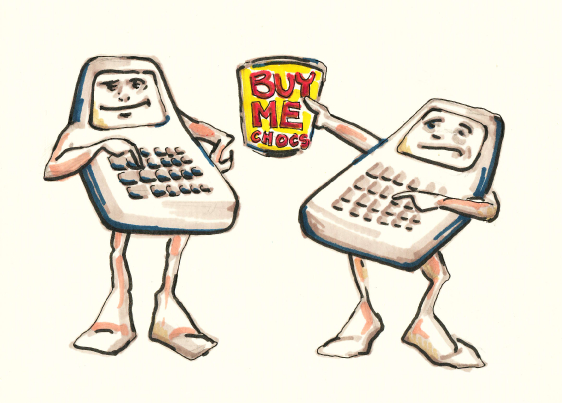
“The online data collection practices we originally identified in the 1990s have been eclipsed by a new generation of tracking and targeting techniques, as online data collection in this era of Big Data,” commented Kathryn Montgomery, Professor of Communication at American University, who, along with CDD Executive Director, Jeff Chester, spearheaded the campaign to pass COPPA in 1998. “It is imperative that the rules be changed if they are going to continue protecting children’s privacy in the growing digital marketplace.”
“Given children’s limited cognitive abilities and the sophisticated nature of contemporary digital marketing and data collection, strong arguments can be made that behavioral targeting is an inappropriate, unfair, and deceptive practice when used to influence children under 13,” the groups explained in their comments. “At the very least, marketers should be constrained from engaging in such practices without obtaining meaningful, prior consent from parents.”
However, as the comments point out, children’s websites are fully engaged in these new forms of individualized targeting, but are not adequately informing parents of the practices. A separate analysis of the privacy policies on the top children’s websites, commissioned by CDD, found that many of the websites fail to provide accurate, clear, and complete information that parents need to make informed decisions. Most of the policies do not adhere to COPPA requirements for user-friendly explanations, but instead couch their practices in obscure, difficult to understand legalese. As a consequence, parents have no way of knowing or understanding the nature and extent of data collection and use on these sites.
“These findings demonstrate that children’s privacy is not being taken seriously by many of the leading U.S. online content providers targeted at young people,” commented Jeff Chester.
The comments were filed in response to the FTC’s notice of proposed amendments to the COPPA rule, issued in September of this year. The groups supported most of the Commission’s proposals, underscoring several of particular importance and urgency, including:
• Expanding the definition of “Personal Information” to include such data as screen and user names; persistent identifiers associated with cookies and similar technologies; photographs, videos, and audio files uploaded by users.
• Ensuring COPPA’s privacy protections cover the expanding array of digital platforms, including mobile devices, geo-location-based services, and Internet-connected games.
• Revising the “Notice” requirements in order to improve transparency of data collection and marketing and ensure that parents can access user-friendly information about a company’s privacy policies in order to make informed decisions about their children’s privacy.
“COPPA’s flexible language was designed to ensure it would cover emerging technology and software applications as the digital landscape continued to grow,” explained Angela Campbell, Professor at the Institute of Public Representation at Georgetown Law, and lead attorney filing comments on behalf of the groups. “The FTC’s proposed safeguards on location and mobile information are especially timely, given the dramatic increase in children’s use of these devices.”
The Center for Digital Democracy is a nonprofit group working to educate the public about the impact of digital marketing on public health, consumer protection, and privacy. It has played a leading role at the FTC and in Congress to help promote the development of policy safeguards for behavioral targeting and other online data collection practices.
The comments were prepared by the Institute for Public Representation, a public interest law firm and clinical education program at Georgetown Law.
The following organizations also signed on to the filing: American Academy of Child and Adolescent Psychiatry, American Academy of Pediatrics, Benton Foundation, Berkeley Media Studies Group/Public Health Institute, Center for Commercial-Free Childhood, Center for Science in the Public Interest, Children Now, Consumer Action, Consumer Federation of America, Consumer Watchdog, Praxis Project, Privacy Rights Clearinghouse, Public Health Advocacy Institute at Northeastern University School of Law, Public Health Law and Policy, Rudd Center for Food Policy & Obesity at Yale University, and World Privacy Forum.
GRIID Winter Classes begin week of January 16
This is just a reminder that GRIID is offer two new classes for the winter semester beginning the week of January 16. We still have space available for both classes, so join us for stimulating conversation and education that leads to action.
On Mondays, beginning January 16, we are offering a class entitled Beyond a Rights-based Model: Radical LGBTQ Politics. Using Dean Spade’s book, Normal Life: Administrative Violence, Critical Trans Politics and the Limits of Law, we will explore the limits of a rights-based approach to change and investigate a more systemic change focused organizing model. The class and book will emphasize contemporary LGBTQ organizing, but the analysis applies to any popular social justice movements. We will also use the analysis to assess what is happening in West Michigan around rights-based organizing.

On Wednesdays, beginning January 18, we are offering the second class entitled, A History of US Policy Towards Native Americans. We will be using a variety of sources, but the main text for the class is, A Little Matter of Genocide: Holocaust and Denial in the Americas 1492 to the Present. This book by native scholar Ward Churchill, provides well-sourced details of a genocidal policy that began with the European invasion of North America up until today. We will also explore the significance of this policy on a local level and what it means today in West Michigan.
Both classes are 8 – weeks long and cost for each is $20, which doesn’t include the cost of the books. However, we welcome anyone even if they can’t afford the class. Classes will take place in one of the community rooms at the Steepletown Center located at 671 Davis NW in Grand Rapids.
There are downloadable PDF documents for each class, which we encourage people to share. For more information contact Jeff Smith at jsmith@griid.org.
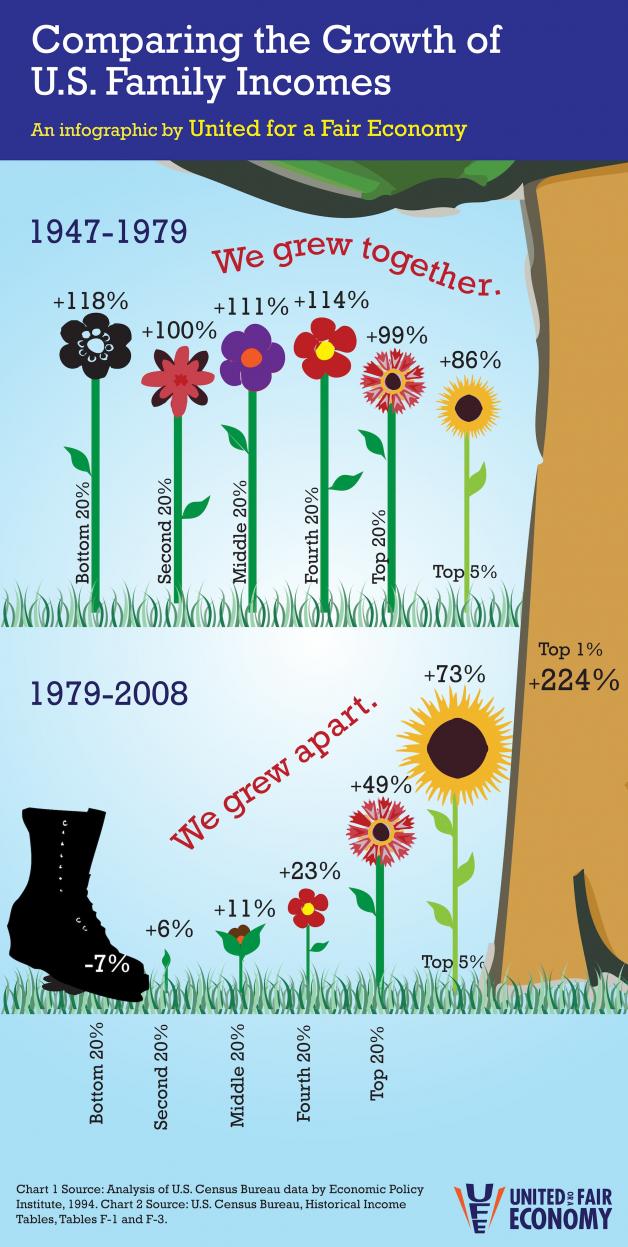
Comparing Growth of US Family Incomes
This graphic is re-posted from United for a Fair Economy.
Top 25 Censored Stories of 2011
This list of the top 25 Censored Stories is re-posted from Project Censored.
1. More US Soldiers Committed Suicide Than Died in Combat
For the second year (2010) in a row, more US soldiers killed themselves (468) than died in combat (462). “If you… know the one thing that causes people to commit suicide, please let us know,” General Peter Chiarelli told the Army Times, “because we don’t know.” Suicide is a tragic but predictable human reaction to […]
2. US Military Manipulates the Social Media
The US military is developing software that will allow it to secretly manipulate social media sites by using fake online personas to influence internet conversations and spread pro-American propaganda. A Californian corporation has been awarded a contract with US Central Command (CENTCOM), which oversees US armed operations in the Middle East and Central Asia, to develop an […]
3. Obama Authorizes International Assassination Campaign
The Obama administration has quietly put into practice an ‘incomplete idea’ left over from the Bush II presidency: creating a de facto ‘presidential international assassination program.’ Court documents, evidence offered by Human Rights Watch and a special United Nations report allege that US citizens suspected of encouraging “terror” had been put on “death lists.” These […]
A new worldwide spike in agricultural commodity and food prices is generating both predictable and extraordinary fall-outs. The search for causes once again leads to a conjuncture of flawed policies in trade, environment, finance and agriculture that is likely to produce more dangerous volatility in years to come. Over the past year, food prices around […]
5. Private Prison Companies Fund Anti–Immigrant Legislation
Over the past four years roughly a million immigrants have been incarcerated in dangerous detention facilities in our taxpayer-financed private prison system where children were abused, women were raped and men died from lack of basic medical attention. Arizona’s Governor Jan Brewer received substantial campaign financing from Corrections Corporation of America (CCA) and GEO Group, […]

Earlier this year the Federal Trade Commission (FTC) investigated Internet search engine giant Google for illegally collecting personal data such as passwords, emails and other online activities from unsecured Wi-Fi networks in homes and businesses across the United States and around the rest of the world. Google has claimed the data was accidentally picked up […]
7. U.S. Army and Psychology’s Largest Experiment–Ever
In the January 2011 issue of American Psychologist, the American Psychology Association (APA) dedicated 13 articles to detailing and celebrating a $117 million collaboration with the US Army called Comprehensive Soldier Fitness (CSF). It’s being marketed as a resilience training to reduce if not prevent adverse psychological consequences to soldiers who endure combat. Because of […]
8. The Fairytale of Clean and Safe Nuclear Power
Nuclear power presents a security threat of unprecedented proportions: It’s capable of a catastrophic accident that can kill hundreds of thousands of people, with a byproduct that is toxic for millennia. To call nuclear power “clean” is an affront to science, common sense and the English language itself, yet industry backers, inside and outside of […]
9. Government Sponsored Technologies for Weather Modification
Rising global temperatures, increasing population and degradation of water supplies have created broad support for the growing field of weather modification. The US government has conducted weather modification experiments for over half a century, and the military-industrial complex stands poised to capitalize on these discoveries. One of the latest programs is HAARP, the High Frequency […]
10. Real Unemployment: One Out of Five in US
The corporate media wants America to feel secure during a time of unemployment crisis, but people deserve to know what is really happening rather than being told a statistical lie. The January 2011 unemployment rate released by the Bureau of Labor Statistics (BLS) stated that the unemployment rate had dropped to 9% from 9.4%, conveying […]
11. Trafficking of Iraqi Women Rampant
Human trafficking occurs throughout the world but has become increasingly more prevalent in the country of Iraq due to the instability produced by the Iraq War. Many Iraqi women and girls are widowed or orphaned by wartime casualties. Currently, more than 50,000 Iraqi women have fled to Jordan and Syria and are trapped in sexual […]
12. Pacific Garbage Dump—Did You Really Think Your Plastic Was Being Recycled?
Many people do not realize that there is a swirling mass of plastic in the middle of the Pacific ocean that qualify as the planet’s largest garbage dump. The 5 Gyres Project estimates that there are 315 billion pounds of plastic in the oceanright now. Much of the world’s trash has accumulated in part of […]
13. Will a State of Emergency Be Used to Supersede Our Constitution?
A program dating back to the Eisenhower era of emergency measures for an America devastated in a nuclear attack is now converted to bestow secret powers on the president for anything he considers an emergency. The National Emergency Centers Establishment Act (HR 645), recently introduced in Congress, calls for the establishment of “national emergency centers” […]
14. Family Pressure on Young Girls for Genitalia Mutilation Continues in Kenya
In Kamunera location of Mt. Elgon District in Kenya, more than 100 girls were rescued by the Maendeleo ya Wanawake organization before facing genital mutilation, a practice still widespread in spite of government attempts to end the practice. Female genital mutilation (FGM), which involves the partial or total removal of external female genitalia, is a […]
15. Big Polluters Freed from Environmental Oversight
The Obama administration has distributed out billions of dollars in stimulus money to some of the nation’s biggest polluters and granted exemptions from basic environmental errors. The administration’s main goal in Energy Secretary Steven Chu words was to “get the money out and spent as quickly as possible”. They are trying to boost the economy […]
16. Sweatshops in China Are Making Your iPods While Workers Suffer
Although Apple claims to be a socially responsible company, some of its suspected Chinese suppliers, such as Foxconn, Dafu and Lian Jian Technology, routinely violate China’s “Law on the Prevention and Control of Occupational Diseases.” A report from China’s Institute of Public and Environmental Affairs, “The Other Side of Apple,” criticized the company for harmful environmental […]
17. Superbug Bacteria Spreading Worldwide
Lethal superbugs that do not respond to any known drugs are emerging. The World Health Organization states that the New Delhi, or NDM-1, superbug was recently found in UK patients who had traveled to countries such as India or Pakistan and has reached a critical point. These superbugs are resistant to carbapenem antibiotics, a major […]
18. Monsanto Tries to Benefit from Haiti’s Earthquake
In May 2010, six months after an earthquake destroyed Haiti, the American multinational corporation Monsanto donated to the country 60 tons of corn and vegetable hybrid seed. The United States Agency for International Development (USAID) took charge of the seed distribution. A month later, on 4 June 2010, around 10,000 Haitian farmers demonstrated against Monsanto’s […]
19. Oxfam Exposes How Aid Is Used for Political Purposes
In a new report entitled “Whose Aid is it Anyway?”, Oxfam has found that “billions of dollars in international aid, which could have transformed the lives of many people in some of the poorest countries in the world, was spent on unsustainable, expensive and dangerous aid projects that international donor governments used to support their […]
20. US Agencies Trying to Outlaw GMO Food Labelling
Concern is growing over the health impact of growing and eating genetically modified organisms (GMOs). The World Health Organization has identified allergenicity, antibiotic resistance, gene transfer, outcrossing, GM genes introduced into the wild population, gene stability, susceptibility of non-target organisms (insects) and loss of biodiversity as potential issues of using GM seeds. Currently, most health […]
21: Lyme Disease: An Emerging Epidemic
Lyme disease is one of the most political and controversial epidemics of our time. The disease originates from a bacteria transmitted through the bite of a tick and can remain hidden, mimicking other diseases such as Multiple Sclerosis, ALS, ADHD and other neurological conditions, thus it is often called “the great imitator”. And it is […]
22. Participatory Budgeting – A Method to Empower Local Citizens & Communities
“Participatory Budgeting” (PB) is a process that allows citizens to decide directly how to allocate all or part of a public budget, typically through a series of meetings, work by community “delegates” or representatives and ultimately, a final vote. It was first implemented in the city of Porto Alegre, Brazil, in 1990, and has since […]
23. Worldwide Movement To Ban or Charge Fees For Plastic Bags
Shoppers worldwide are using 500 billion to one trillion single-use plastic bags per year. The average use time of a plastic bag is 12 minutes. Plastic bags pollute our waters, smother wetlands and entangle and kill animals. This eventually affects our health because larger animals eat small, plastic-laden creatures and plastics work their way up […]
24. South Dakota Takes Extreme Measures to Be the Top Anti–Abortion State
South Dakota is taking extreme action against any person who performs an abortion within the state’s borders. The South Dakota House is taking up a bill to redefine “justifiable homicide” that may “make it legal to kill doctors who perform abortions,” Mother Jones reports. A bill backed by the GOP could, in theory, allow a […]
President Obama’s undeclared and congressionally unauthorized war against Libya may be compounded by the crime of spreading toxic uranium oxide in populated areas of that country. Concern is being voiced by groups such as the International Coalition to Ban Uranium Weapons, which monitors the military use of so-called depleted uranium (DU) anti-tank and bunker-penetrating shells. […]
College Football Bowl Games, Lobbying and Corporate branding
Ah, I remember the days when college football bowls games were just simply called the Rose Bowl or the Sugar Bowl. Those days are long gone.
Money has always influenced college sports in one way or another, with boosters giving money and gifts to athletes for recruiting purposes or scholarship money to someone who could run fast with a ball. However, in recent years college football has evolved to a whole new commercial level with corporate sponsorship of bowl games.
There are dozens of college football bowl games, all of which involve universities getting paid to play in them. In addition, the bowl games themselves have become an opportunity for corporations to get lots of advertising and branding of their names.
For instance, there are six games being played today, all of which are traditional bowl games like the Rose Bowl. However, now most of these games are named after the corporate sponsor. In today’s matchup between MSU and Georgia, the game is called the Outback Bowl, named after the restaurant chain. There is also the TicketCity Bowl, Taxslayer Bowl, the Capital One Bowl, the Tostitos Fiesta Bowl and the Rose Bowl sponsored by Vizio.
After today the remaining games include such sports-friendly names as Discover Orange Bowl, the AT&T Cotton Bowl and my favorite, the Godaddy.com Bowl. The University of Michigan is also in a bowl game this year and will play Virginia Tech in the Allstate Sugar Bowl.
Allstate seems to have been the real winner for this year’s college football season, since they are also the corporate sponsor to the championship game between LSU and Alabama, also known as the Allstate BSC Championship Game.
According to an investigation by the Center for Responsive Politics, corporations sponsoring these games are not unaccustomed to spending money to get what they want.
“AllState Insurance, which has its name on two marquees — the AllState National Championship and the AllState Sugar Bowl — has disbursed $2.62 million lobbying the federal government this year. Pepsi Co., which is sponsoring the Tostitos Fiesta Bowl, has spent $2.61 million, and credit card company Discover, of the Discover Orange Bowl, has laid out about $960,000 on federal lobbying.”

The Center for Responsive Politics also looked at how much universities lobbied the federal government in 2011 and discovered that the schools in the major college football games also collectively spent millions to influence Washington.
According to the Center’s report U of M outspent the rest of the schools. “But it’s the University of Michigan Wolverines that has spent the most lobbying the federal government this year, laying out $400,000. The mighty Maize and Blue marches all over its Sugar Bowl rival Virginia Tech, which anted up just $80,000.”
If one looks at regional and national news media, the college football bowl season will receive constant coverage. At the top of MLive today is an update about the MSU/Georgia game, but how often does the public get information about the lobbying being done by universities and corporations that sponsor these games?
A People’s History of the LGBTQ community in Grand Rapids film screening this Sunday 1/8
If you missed it the first time, A People’s History of the LGBTQ community in Grand Rapids is being screened again at Plymouth UCC.
The 1 hour and 40 minutes film chronicles the LGBTQ community in Grand Rapids from the 1950s to the present, with an emphasis on the 1980s and 90s. Viewers will learn about groups such as Dignity and Aradia that both formed in the 1970s, followed by the formation of the Lesbian and Gay Network of West Michigan, which organized the first Pride Celebrations and a campaign to get the City of Grand Rapids to pass an anti-discrimination ordinance in 1994.
In addition, there are chapters on organizing around HIV/AIDS, the Religious Right, GVSU and the growth of LGBTQ groups in recent decades.
The screening will be hosted by Plymouth United Church of Christ, one of the first congregations in West Michigan to become and open and affirming church. This screening is free and open to the public, with discussion to follow the film.
A People’s History of the LGBTQ Community in Grand Rapids Film
Sunday, January 8
6:00 PM
Plymouth UCC
4010 Kalamazoo SE, Grand Rapids
In addition, there is an online archive for a People’s History of the LGBTQ community in Grand Rapids. The film was produced by the Grand Rapids Institute for Information Democracy with the support of the LGBT Resource Center at GVSU.
 Grand Rapids Institute for Information Democracy