Occupy the Super Bowl: Now more than just a slogan
This article by left sports writer Dave Zirin is re-posted from his blog Edge of Sports.
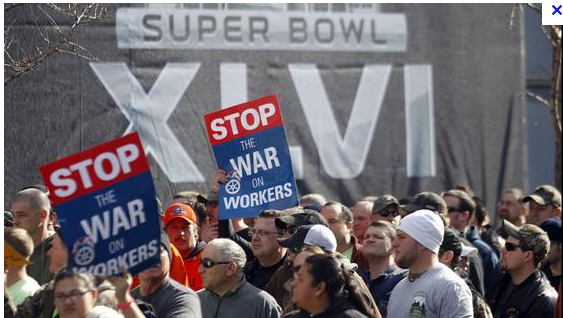
The sheer volume of the Super Bowl is overpowering: the corporate branding, the sexist beer ads, the miasma of Madison Avenue produced militarism, the two-hour pre-game show. But people in the Labor and Occupy movements in Indiana are attempting to drown out the din with the help of a human microphone right at the front gates of Lucas Oil Stadium.The Republican-led state legislature aims to pass a law this week that would make Indiana a “Right to Work” state. For those uninitiated in Orwellian doublespeak, the term “Right to Work” ranks with “Operation Iraqi Freedom” and “Fair and Balanced” as an phrase of grotesque sophistry. In the reality-based community, “Right to Work” means smashing the state’s unions and making it harder for non-union workplaces to get basic job protections This has drawn peals of protest throughout the state, with the Occupy and labor movement front and center from small towns to Governor Mitch Daniels’s door at the State House. Daniels and friends timed this legislation with the Super Bowl. Whether that was simple arrogance or ill-timed idiocy, they made a reckless move. Now protests will be a part of the Super Bowl scenery in Indy.
The Super Bowl is perennially the Woodstock for the 1%: a Romney-esque cavalcade of private planes, private parties, and private security. Combine that with this proposed legislation, and the people of Indiana will not let this orgy of excess go unoccupied. Just as the parties start a week in advance, so have the protests. Over 150 people – listed as 75 in USA Today, but I’ll go with eyewitness accounts – marched through last Saturday’s Super Bowl street fair in downtown Indianapolis with signs that read, “Occupy the Super Bowl” “Fight the Lie” and “Workers United Will Prevail.” Occupy the Super Bowl has also become a T-shirt, posted for the world to see on the NBC Sports Blog.
The protests also promise to shed light on the reality of life for working families in the city of Indianapolis. Unemployment is at 13.3%, with unemployment for African American families at 21%. Two of every five African American families with a child under 5 live below the anemic poverty line. Such pain amidst the gloss of the Super Bowl and the prospect of Right to Work legislation is, for many, a catalyst to just do something.
April Burke, a former school teacher and member of a local Occupy chapter, said to me, “I see Right to Work for what it is: an attack on not only organized labor but on all working class people… Because strong unions set the bar for wages, RTW laws will effectively lower wages for all. Rushing the passage of RTW in the State of Indiana on the eve of the Super Bowl is an insult to the thousand of union members who built Lucas Stadium as well as the members of the National Football League Players Association who issued a statement condemning the RTW bill.”
As April mentioned, the NFLPA has spoken out strongly against the bill. When I interviewed Player Association president DeMaurice Smith last week, he said,
“When you look at proposed legislation in a place like Indiana that wants to call it something like ‘Right to Work,’ I mean, let’s just put the hammer on the nail. It’s untrue. This bill has nothing to do with a ‘right to work.’ If folks in Indiana and that great legislature want to pass a bill that really is something called ‘Right to Work’ have a constitutional amendment that guarantees every citizen a job. That’s a ‘right to work’. What this is instead is a right to ensure that ordinary working citizens can’t get together as a team, can’t organize, and can’t fight management on an even playing field. So don’t call it “Right to Work”. If you want to have an intelligent discussion about what the bill is, call it what it is. Call it an anti-organizing bill. Fine… let’s cast a vote on whether or not ordinary workers can get together and represent themselves, and let’s have a real referendum.”
But Gov. Mitch Daniels, who was George W. Bush’s budget director didn’t get this far by feeling shame or holding referendums. This is the same Mitch Daniels who said in 2006,”I’m not interested in changing any of it. Not the prevailing wage laws, and certainly not the right to work law. We can succeed in Indiana with the laws we have, respecting the rights of labor, and fair and free competition for everybody.” In other words, he’s that most original of creatures: a politician who lies.
If Daniels signs the bill before the big game, demonstrations sponsored by the AFL-CIO in partnership with the Occupy Movement will greet the 100,000 people who can afford the pilgrimage to Lucas Oil Field. The NFLPA, I’ve been told by sources, will also not be silent in the days to come. As Occupy protester Tithi Bhattacharya said to me, “If the bill becomes law this week then it is very important for all of us to protest this Sunday. We should show the 1% that the fate of Indiana cannot be decided with the swish of a pen by corporate politicians – the Super Bowl should be turned into a campaign for justice and jobs.”
Occupy the Super Bowl. Now it’s more than just a slogan.
[BTW: I like the Giants, 24-20]
Noted author Norman Finkelstein spoke to audience at GVSU
Last night, author Norman Finkelstein addressed a crowd of roughly 250 at the downtown campus of GVSU. The event was hosted by the student group Peace M.E.ans, which is committed to education and dialogue around the conflict between the Palestinians and Israel.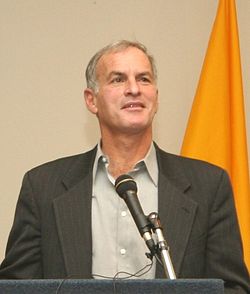
Finkelstein began by talking a bit about his own history of being involved in the Israeli/Palestinian conflict. He said that the June 1982 Israeli invasion of Lebanon was what motivated to pursue this issue both academically and politically.
He next addressed the notion that some people believe that he is obsessed with the topic of Israel/Palestine, but Finkelstein clearly stated that this issue is still a serious problem and that since the Palestinians can’t give up, neither should we.
Finkelstein spoke about the longevity of this conflict and stated that its origin was with the Balfour Declaration of 1917, the same year as the Russia Revolution. However, unlike communism, the Israeli/Palestinian conflict still continues. In some ways, Finkelstein says, the conflict seems rather “insane.”
The speaker stated that with the ongoing discussion about jump starting the peace process, Finkelstein thinks that the conflict needs to truly be resolved and we should do away with ridiculous clichés like “Peace Process.”
Finkelstein also believes that the majority of Americans at least are aware of the fact that there is a serious problem between Israelis and Palestinians. What has changed in recent years is that more people recognize that Israel has a greater burden of responsibility for the conflict.
The noted author then stated that he believes that there is a greater chance to resolve this conflict than there has been in recent years. First, some of their strongest allies in the region, such as Turkey, have distanced themselves from Israel. The current President of Turkey recognizes that the population of his country supports the Palestinian struggle. Another traditional ally of Israel, Egypt, has also shifted its position since the overthrow of the three decades dictatorship of Mubarak.
Finkelstein then said another reason why there is a strong chance for resolving the conflict is because Israel’s political stock has declined. He referred to an annual BBC poll of worst countries in the world and the list always includes Iran, North Korea, Pakistan and Israel.
Another reason why the timing is ripe for resolving the conflict is the fact that virtually every country supports the Palestinians right to have their own state. Finkelstein even said that the majority of US citizens polled agreed to a Palestinian state. Despite the public support for Palestinian statehood, President Obama opposes it, both major parties, the US House and Senate and all the major news agencies in the US. Finkelstein believes that with all the major political institutions and major media in opposition to Palestinian statehood it is amazing that the majority of Americans think otherwise.
Finkelstein also stated that there has been a shift amongst American Jews who are having a difficult time justifying Israeli policy.
The speaker then shifts to this notion of how Israel continues to engage in war and devastation, citing the Israeli support for the US invasion of Iraq in 2003, the bombing of Lebanon in 2006, the Israeli war on Gaza……..and now they want a war with Iran. Finkelstein, speaking as if he is utterly astounded, spoke about the audacity of Israel’s desire to go to war with Iran, despite the fact that they are still burying bodies in Gaza.
To illustrate the brazen disregard for human rights that Israel has, he mentions a resolution the UN passed, implementing a ceasefire in Lebanon. For the next three days after this ceasefire resolution Israel drops 1 million cluster bomblets on civilians. In 2009, Finkelstein also said Israelis dropped phosphorous bombs on Palestinians, even hospitals.
Finkelstein said the time is now to present reasonable and uniform solutions to the American people before you lose them. A one state, two state or a secular state solution? Finkelstein says this seems very confusing to many people, so we need to present a reasonable goal to the public.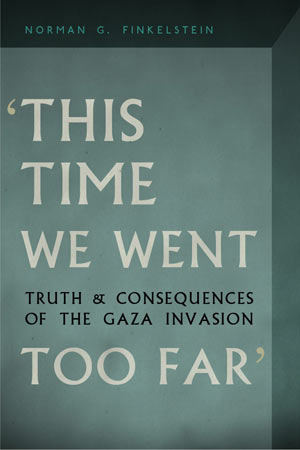
The solution that Finkelstein presented is in part based on what others have thought about a solution. Finkelstein says he looked to Gandhi, who faced a similar situation, when the British was occupying India. Gandhi thought that the only thing that would work in India was a non-violent revolution, which Finkelstein believes is the only viable strategy that Palestinians can use to end the Israeli occupation.
Gandhi said that politics is not about influencing public opinion it is about getting people to take action because they already known what is wrong. Therefore, when people engage in civil disobedience it can motivate others to want to do the same. Finkelstein said that we have to move beyond our collective indignation and take action against injustice.
First, politics is not about what you support, it is about what the public is willing to support. Politics is not about you personal moral code, especially if you want to build a political movement.
The obvious answer to what should be done about the Israel/Palestinian conflict is a full Israeli withdrawal from the territories occupied since 1967 and a resolution to the Palestinian refugee right of return. There is virtually a global consensus on these matters based on UN General Assembly Resolutions. Everyone votes for it with the exception of the US, Israel and sometimes a few island nations in the south Pacific.
If you turn to the International Court of Justice it is clear what should be done, since they clearly state that you cannot obtain land through violence and force. Also, under international law you cannot transfer one population to the land of the occupied group, such as what the Israelis have done with the settlements. Both Amnesty International and Human Rights Watch have stated that the Palestinian refugees have a legal right of return to the lands now occupied by Israel.
You can draw three conclusions from this matter. First, despite the claim of these dynamics being controversial, they are not controversial within the international community. Secondly, from a legal point of view Israel doesn’t have a leg to stand on. International law is behind the Palestinians on these major aspects of the conflict. Third, and related to the first two, is the fact that Israel is a state. This means they have the same rights and responsibility as all states to follow international law. So, if you want to assert the illegal occupation of Israel, the illegality of the settlements and the right of refugee return, you must also recognize the right of Israel to exist and maintain its pre-1967 borders.
Therefore, Finkelstein believes that the only realist position to take is to stand behind international law and accept the pre-1967 borders. There is no point to take the position that the 1948 means in which Israel won statehood was unjust, so we want them to leave that land altogether. So, the Palestinians need to accept the Israeli state, is the argument. However, Finkelstein states that Israel signed peace agreements with Egypt in 1979 and Jordan in 1994 and both those countries did not agree to acknowledge Israel’s right to exist. So why are they doing this with the Palestinians.
Finkelstein spoke for over 2 hours straight, which seemed hard on many of the audience members. For this writer, what was difficult to hear was a different kind of argument and focus from Finkelstein. He strayed from his usual assault on Israeli and US policy towards Palestinians and he didn’t spend adequate time on the current US administration’s policies that have continued Israel’s assault on Gaza, construction of settlements and pushing for war with Iran.
It was a side of Finkelstein that one would not get from his books and his previous lectures and it left this writer a bit confused.
Capitalist Chaos at the Grand Rapids Press
When you’ve got a failing business, what’s the classic solution, according to capitalist wisdom?
1. Remove any policy impediments that would halt massive layoffs.
2. Hire a hatchet man to replace your old-guard management. Give him a hatchet.
3. Start by eliminating your most experienced (and therefore best-paid) workers.
4. Make hollow promises that those who take on more work will survive another round of layoffs. See who can stand up to the stress.
5. If possible, re-form your company so you can pretend that changes are being made because of a major business shift, not to fatten your bottom line.
6. Put the hatchet into overtime. Get rid of everyone above a certain pay grade. Cut middle management to the bone. Keep your youngest and cheapest employees.
7. Under the banner of the “new” company, hire in young workers at a pittance of what you used to pay and give them two or three times the workload that people in their position formerly had. Also, sell off expensive assets.
8. Preserve the salaries and bonuses of your top executives. But put any executives you want to get rid of into jobs in which they will clearly self-destruct.
Welcome to the remade Grand Rapids Press, run by its “new” owner, MLive Media Group. Have we just seen the capitalist step-by-step “reorganization” plan above used as its road map? Judge for yourself:
According to Rob Kirkbride, a former reporter who blogs about newspaper topics, the Press used to have two “cornerstone pledges” to their employees: no jobs would be eliminated because of the economy or because of changes to technology. Kirkbride writes, “Booth Newspapers, which owned the Press, changed its policy a couple of years after I left and they have not stopped cutting jobs since.” This was about the same time that Mike Lloyd retired and Paul Keep was brought on as Press editor.
The first staffers to go were some of the most popular reporters and columnists, like Tom Rademacher and Ruth Butler. Other familiar bylines started to disappear, returning occasionally to freelance. The hatchet fell like a guillotine, however, when the “new” MLive Media Group made cuts in all eight of its newspaper staffs: 550 jobs were lost across the state, including 146 here in Grand Rapids. As Dan Gaydou, formerly publisher of the Press and now president of MLive Media Group, said adroitly in a statement, “We’ve been clear since the moment we announced the launch of MLive Media Group that we’d be a smaller company as a result of the transition.” No kidding.
And to twist the knife in even deeper, Gaydou added “…all these employees are eligible to apply for new jobs within MLive Media Group and Advance Central Services Michigan, and we have and will continue to encourage them to do so.” I’d interpret that as: it may be possible to get a job again, as long as you’re willing to put up with a massive pay cut and probably be forced to take on additional responsibilities as well.
Those saying “no thanks” to the offer included Ed Golder, an award-winning op/ed writer for the Press, who packed his bags and accepted a job directing communications at the Department of Natural Resources in December.
So, as the blood is mopped up, what will the new Grand Rapids Press look like?
The Press has put Julie Hoogland, a former education editor, into an equivalent of Paul Keep’s job. Instead of a managing editor, there are going to be three “managing producers of content” who will be taking stories from reporters and transferring them into online media and print.
Paul Keep has been named executive editor of the print versions of all eight newspapers now controlled by the new organization. Given the MLive Media Group’s emphasis on their web presence, this job appears to be the equivalent of the Inuit putting one of their elderly onto an ice floe to drift off and die. After all, it’s clear to everyone in the business that print newspapers are on life support.
Who’s left to do the reporting? The Press has retained a few of its most skilled writers, including Shandra Martinez, Jim Hargar, John Serba, and Jeffrey Kaczmarczyk (probably one of the best writers the Press has ever employed). John Gonzalez, who used to be the overlord of a whole entertainment department, has been bumped to an entertainment reporter position. But many of the survivors are the greenest (and therefore probably less-well-paid) of the former staff reporters.
These include Troy Reimink, who often seems incapable of separating objective reporting from personal commentary and injects frat-boy humor into news stories. The surviving staff also includes Garret Ellison, who last year posted a story about an Occupy Grand Rapids protest that some attendees claimed was false or exaggerated. Even after posted film footage showed that certain details of Ellison’s story did not seem to match what happened at the event, the Press allowed the story to stand—probably because Ellison’s spin appealed greatly to its conservative readership base.
Ellison has also thrown notable online tantrums when readers try to tell him that he has misspelled something. But he won’t have to worry about his lack of grammar and spelling skills any longer. That’s because the Press staff no longer includes any copy editors.
Anyone who has ever worked in any kind of publishing knows that writing without editing is madness. And with a young, inexperienced staff, it’s a kind of madness that truly points to how low costs are much more important now at the Press than any kind of journalistic integrity. Although the suits like Gaydou and Keep are lining up to crow about their new, improved product, details are already leaking out about the craziness of the business model these capitalists have created.
A retired reporter from Lapeer, who runs an excellent blog site called Free From Editors, wrote on January 9, 2012 about an applicant for one of those MLive reporting jobs. At the interview, the prospective employee was told that driving the Press’s web traffic was the job’s focal responsibility. He was also told, “Reporters will self-edit.”
I admit, when I read that line, I shuddered. There are very few people left at the current Press who are even capable of self-editing, and they are seasoned enough to know that it’s a bad idea. There are also plenty of prima donnas who seem to believe that even their typos are marks of their genius, and now they’ll never get a chance to hone their craft.
According to the blog story, MLive reporters will be given backpacks, laptops, and smartphones. They are expected to shoot videos of every source on the smartphone, and then shoot the whole bundle with an article to HQ to keep feeding the website. And—this really shows how the stated MLive “commitment to print” is a string of empty words—the interviewee was told that the print version of the paper was not a priority and would “just end up filling itself.”
It was also made clear in the interview that reporters were expected to work themselves into a frenzy, not writing and filing carefully investigated stories but “producing content.” There is also a hint that the compensation was dismal when balanced against the amount of work expected. Or, as the interviewee noted, the whole thing is “a nightmare, honestly…the stress level is through the effing roof up there.”
Brand-new staffers will not even work in a newsroom. The Press sold its newsroom/office building downtown to Michigan State University for a cool $12 million. What they have provided for employees is an office they are calling a “hub,” although from the video of the place, it’s clear it’s nothing more than a drop-in way station. Its sterile blue and white rows of countertops are reminiscent of a robot-run factory from a 1960s cartoon like The Jetsons. I suspect that the true Press hub will probably be some hipster bar like Hopcat, where exhausted reporters will be downloading their stories and videos over beers and crack fries.
More freedom in a job is always desirable, but there’s also value in connecting with and learning from more experienced staff members. In the chilly atmosphere of the “hub,” it’s hard to imagine anyone will want to hang around for long. So consistent, casual interaction there seems unlikely.
Many readers sense that worse days are coming. In comments made on a Sunday column by Paul Keep in which Keep sings the praises of the print editions he’ll oversee, one reader from Kalamazoo sarcastically noted that he dropped his Gazette subscription when his paper “had been blown down the street by the slightest of breezes.” Another savvy reader pointed out that there would no longer be any investigative reporting, just AP wire stories and stuff rehashed from other web sites. “You have hurt the local communities,” the reader told Keep. “They are angry. You expect them to be grateful?”
For years, the Grand Rapids Press has been, in my opinion, a mediocre paper at best, with an occasional news series or reporter standing out from the rest. I’ve often wondered what it would look like at rock bottom. With no copy editors, few experienced reporters, the cheapest available staff overworked to the point of collapse, and an emphasis on quantity over quality, it appears I’m about to find out.
MLive Media Group hub photo used by permission from Ari B. Adler from his site Here Comes Later: http://aribadler.wordpress.com/
More attacks on organized labor from the Michigan Legislature
Yesterday, MLive posted a story about a series of bills that have moved from the House Committee on Oversight, Reform & Ethics to the Michigan House of Representatives, bills that reflect further attacks against working class people and organized labor.
House Bill 5023 would “prohibit strikes by certain public employees; to provide review from disciplinary action with respect thereto; to provide for the mediation of grievances and the holding of elections; to declare and protect the rights and privileges of public employees; to require certain provisions in collective bargaining agreements; and to prescribe means of enforcement and penalties for the violation of the provisions of this act.”
The House Committee on Oversight, Reform & Ethics is a 6-member committee, with the 4 Republicans voting in favor of the proposed legislation and the 2 Democrats voting against. The MLive story claims that the proposed legislation is in part a response to the teacher strike at Central Michigan University last year and is designed to prevent such actions in the future. The right to strike in the US has been under attack since WWII and was dealt a large blow with the passing of the Taft-Hartley Act in 1947. The ability to strike is the only real power that unions have, which is no doubt why House Bill 5023 is on the table.
There are three other House Bills that are part of this package of bills that cleared the House Committee and is headed to the State House for a vote. All three of the additional bills build on the anti-union focus of House Bill 5023.
First, there is House Bill 5024, which states, “An act to create a commission relative to labor disputes, and to prescribe its powers and duties; to provide for the mediation and arbitration of labor disputes, and the holding of elections thereon; to regulate the conduct of parties to labor disputes and to require the parties to follow certain procedures; to regulate and limit the right to strike and picket; to protect the rights and privileges of employees, including the right to organize and engage in lawful concerted activities; to protect the rights and privileges of employers; to make certain acts unlawful; and to prescribe means of enforcement and penalties for violations of this act.”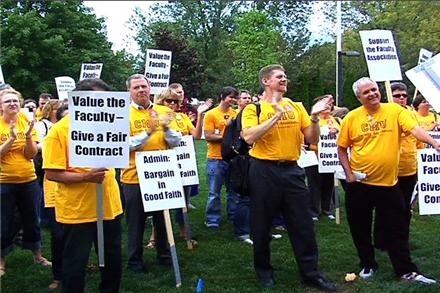
House Bill 5025, which deals with the collection of union dues, states, “An act to regulate the time and manner of payment of wages and fringe benefits to employees; to prescribe rights and responsibilities of employers and employees, and the powers and duties of the department of labor; to require keeping of records; to provide for settlement of disputes regarding wages and fringe benefits; to prohibit certain practices by employers; to prescribe penalties and remedies; and to repeal certain acts and parts of acts.”
Lastly, House Bill 5026, which essentially will make it easier for employers to hire people to replace striking workers (what should be referred to as scabs), states, “An act relating to solicitations for employment; to prohibit recruitment of or advertising for employees to take the place of employees engaged in a labor dispute without stating that the employment offered is in place of employees involved in a labor dispute; to prohibit the importation of strikebreakers; and to provide penalties for violations of this act.”
The Michigan Education Association is referring to these bills as anti-union and draconian, but no other major union has as of yet released a statement about these proposed pieces of legislation.
All four of these bills were sponsored by Republicans, with some of those GOP State Legislators adding their names to more than one of these bills. For instance, Rep. Lisa Lyons, who represents Alto, sponsored House Bill 5023, but she also is a co-sponsor to House Bills 5024, 5025 and 5026. Other recent anti-union/anti-worker legislation she has voted for were amending workers’ compensation law and ending domestic partner benefits for public employees.
House Bill 5024 was introduced by Rep. Tom McMillen from Rochester Hills, Michigan. In addition to introducing House Bill 5024 he is a co-sponsor to House Bills 5023 and 50 25. McMillin has also recently voted for ending domestic partner benefits for public employees and amending the worker’s compensation law.
Rep. Earl Poleski introduced House Bill 5025, but is also a co-sponsor of House Bills 5023. House Bill 5026 was introduced by Rep. Amanda Price, who has also co-sponsored House Bills 5023, 5024 and 5025. Price, who represents Park Township in West Michigan, also recently voted for amending the worker’s compensation law and ending domestic partner benefits for public employees.
Other legislators who co-sponsored at lest one of these four bills are Al Pscholka, who is considered one of the masterminds behind the public-park-into-private-golf-resort plan down in Benton Harbor and Dave Agema, who has introduced anti-immigration legislation and was the primary sponsor of the legislation to end domestic partner benefits for state employees.
If we hear of any efforts to fight these anti-union legislative proposals we will update our readers with that information.
Local Media Directory Updated on GRIID
Special thanks to Kate Wheeler for her help in updating the local media directory.
We just updated our Local Media Directory and we wanted our readers to know this. It had been outdated for a variety of reasons, but with all the new changes at the Grand Rapids Press/MLive we felt it was time to update the directory as best we could.
The directory is useful if you or your organization wants to get the word out about events, actions and campaigns you are working on, but it is also a tool to hold the local media accountable. This is particularly the case since all the local radio stations in West Michigan will be renewing their licenses with the Federal Communications Commission (FCC) this November (2012) and it provides the public with an opportunity to weigh in on whether or not those stations are truly serving the public interest.
All area TV stations will be renewing their license with the FCC in November of 2013 and it is never to early to challenge these stations on news content, particularly since this is a major election year. TV stations also have an obligation to air a minimum of 3 hours per week of Children’s Educational Programming. You can find out information about election ads, children’s programming, paid political ads and public service announcement requirements by visiting any station and asking to see their public file. They are obligated by the FCC to let anyone view those files. If you write a formal complaint and send it as an e-mail or regular mail those stations must put a copy in their public file so that the FCC knows how many complaints have been filed.
There is a good online resource for broadcast license renewal put together by The Prometheus Radio Project, which provides good tips for holding broadcasters accountable.
Interview with La Isla Foundation co-founder Jason Glaser & Benefit Show at the Pyramid Scheme 1/31
Earlier today we had a chance to sit down with Jason Glaser, President and co-founder of La Isla Foundation.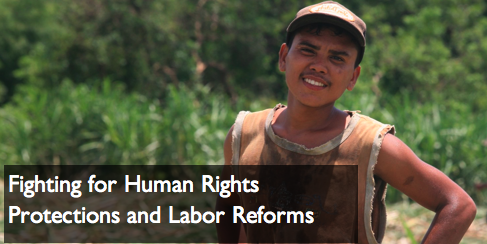
During our interview Jason talked about how he got involved in human rights work in Nicaragua, the mission of the foundation, the reality for sugar cane workers in that Central American country, the abuses in the agro-industrial sector and the international policies that create such injustices for working people around the world.
Jason talked about how the push for bio-fuels in the US and Europe has led to countless human rights abuses in countries like Nicaragua. La Isla Foundation not only does educational programs, they support and assist in organizing workers and they expose the industrial agricultural system that has helped to create the human rights crisis in that country.
La Isla Foundation Benefit Show
Tuesday, January 31st
7:30PM
Pyramid Scheme in downtown Grand Rapids
All ages are welcome and a minimum donation of $10 is requested at the door.
For more information check out https://www.facebook.com/events/178099492289277/
A Social Justice Quiz
This article by Bill Quigley & Sam Schmitt is re-posted from CounterPunch.
Question One. The combined pay of the 299 highest paid CEOs in the US is enough to support how many median salary jobs?
45,000? 83,000? 102,325?
Two. The median net worth of black households in the US is $2,200. What is the median net worth of white households in the US?
$4,400? $44,000? $97,000?
Three. The US Department of Housing and Urban Development issues a national survey every year listing fair market rents for every county in the US. HUD also suggests renters should pay no more than 30 percent of their income on housing costs. In how many of the USA’s 3068 counties can someone who works full-time and earns the federal minimum wage pay 30% of their income and find a one-bedroom apartment at the fair market rental amount?
19? 368? 1974?
Four. How much must the typical U.S. worker earn per hour to rent a two-bedroom apartment if that worker dedicates thirty percent of his income, as HUD suggests, to rent and utilities?
$9.39? $14.63? $18.46?
Five. The wealthiest 1 percent of the US has a net worth which is how many times greater than the median or typical household’s net worth?
50? 150? 225?
Six. Which of these countries puts the highest percentage of their people in jails and prisons?
China? Iran? Iraq? Germany? Russia? USA?
Seven. In 2012, the US will pay out about $620 million for old age Social Security benefits to 45 million families. How much is budgeted for military spending by the US in 2012?
$310 billion? $620 billion? $836 billion?
Eight. The US is number one in the world in military spending. How much more does the US spend compared to the top 15 countries in the world in military spending?
More than any 2 other countries combined? More than any 5 other countries combined? More than all the rest of the 15 top military spending countries combined?
Nine. How many people in the world live on less than $1.25 a day?
150 million? 500 million? Over 1 billion?
Ten. How many people in the world live without electricity?
500 million? One billion? One and half billion?
Eleven. The US government donates over $30 billion a year in official development assistance (foreign aid) to poor countries. Where does that rank the US government in percentage of giving among the richest 23 countries?
First? Tenth? Nineteenth?
Twelve. The US government donates over $30 billion a year to poor countries. How much do US consumers spend on pets and pet supplies each year?
$10 billion? $30 billion? $67 billion?
Thirteen. The poverty rate among children in the US is over 20 percent. How does US compare with the rest of the 30 nations surveyed by the Organization for Economic Cooperation and Development?
First? Tenth? Twenty-sixth?
Answers to Social Justice Quiz 2012:
One. The combined pay of the top 299 CEOs is enough to support 102,325 average jobs. Source: Corporate Paywatch.
Two. The median net worth of white households in the US is $97,900. Source: Economic Policy Institute.
Three. Except for eleven counties in Illinois and another eight in Puerto Rico, there is no county in the US where a one bedroom fair market rate apartment is available to a person working full-time at the minimum wage. Source: The National Low Income Housing Coalition.
Four. The typical worker must earn $18.46 an hour to rent a two bedroom apartment. Source: National Low Income Housing Coalition.
Five. In the last numbers reported, the top 1 percent had net worth 225 times greater than the median or typical household’s net worth, the highest ever recorded. Source: Economic Policy Institute.
Six. The rate of incarceration per 100,000 people is: USA 730, Russian 534, Iran 334, China 122, Iraq 101, and Germany 86. Source: International Centre for Prison Studies, University of Essex.
Seven. $836 billion. Over $713 billion on military programs and another $123 for veterans affairs. Source: US Office of Management and Budget, Fiscal Year 2012.
Eight. The US spends $100 billion more on our military than the next highest 15 countries combined. More than China, UK, France, Russia, Japan, Saudi Arabia, Germany, India, Italy, Brazil, South Korea, Australia, Canada and Turkey combined. Source: Stockholm International Peace Research Institute, 2011 Yearbook.
Nine. 1.4 billion people live on less than $1.25 a day. Source: United National Development Program, Human Development Report 2010.
Ten. One and half billion people, more than one of every five people in the world, live without electricity. Source: United Nations Development Program, Human Development Report 2011.
Eleven. US government ranks 19th out of 23 countries in assistance to poor nations, giving about two-tenths of one percent of US gross national income to poor countries. Source: Global Issues: Foreign Aid for Development Assistance.
Twelve. US consumers spend $67 billion each year on pets, pet products and services. Source: US Census Bureau 2012 Statistical Abstract.
Thirteen. The US poverty rate among children ranks the US 26th among 30 nations in the rate of poverty among children. Source: Poverty among children. OECD.
Acknowledging but not addressing child poverty in the Mayor’s State of the City Address
On Saturday, Grand Rapids Mayor George Heartwell gave his annual State of the City Address to a crowd of 500 people gathered at convention center. The focus of this years address was children.
Mayor Heartwell acknowledged that despite all the solid area programs that addressed child well-being, that all the measurements indicate that child well-being is declining. Here are the statistics the Mayor provided.
“Did you now that 36.7% of all children in Grand Rapids live below the poverty line? Nearly four out of ten children live in poverty! What does that mean? Four of ten children experience persistent hunger. Four of ten children live in housing that is unhealthy or unsafe. Four of ten children don’t have the resources they need to succeed in school: books in the home; routine access to the internet; paper, pencils, calculators. Four of ten children can’t afford the enrichment experiences that their more affluent friends have. Four of ten children probably have substandard medical and dental care, if they have any at all.”
The Grand Rapids Mayor stated that he met with 43 people in recent months, people he referred to as “sages,” to find out what they thought about what needed to be done to address the awful condition of so many children in this city. Heartwell said he met with, “College and University Presidents, to titans of business and industry, to local elected officials, philanthropists and foundation directors, non-profit professionals, parents and…of course, children.”
A summary of what the Mayor learned and is recommending is as follows: First, the Mayor wants the community as a whole to have conversations about children, record the ideas on how to address the problems they face and send them to the Community Research Institute at Grand Valley State University.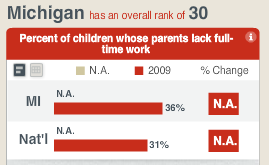
Second, the Mayor highlights the work of the Upward Bound program, which offers poor children an opportunity to get to college. Heartwell said that the program could serve more kids if there was more federal funding. The Mayor then tells the crowd gathered that he went to a local Business man and asked if he would find more funding for the program.
A third program is a college scholarship program through the Grand Rapids Foundation. A fourth idea is top promote more literacy and to get more parents to read to their kids. A fifth idea discussed was a new educational model at the Kent Intermediate School District, where best practices are being shared amongst area high schools.
Lasting, the Mayor offers up a suggestion from Michigan Governor Snyder’s Education Achievement Authority. This is a proposal to have state entity manage local schools that are struggling.
In many ways one has to respect the Mayor for his passion and what motivates his intentions. It seems clear that he truly wants children in Grand Rapids to not live in poverty, to have the opportunity to get a good education, have good homes and a healthy lifestyle.
Where all of this falls apart seems to be the unwillingness to acknowledge the reasons for the 36.7% of Grand Rapids children living in poverty. All the good intentions in the world won’t make a difference with this reality. All the money we spend to improve educational opportunities and all the efforts we put into literacy will not fundamentally reduce poverty.
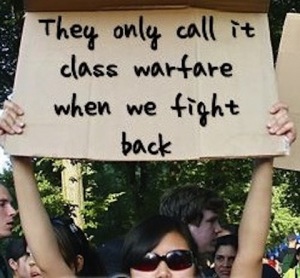
Poverty is a result of the economic system of capitalism. The parents of these children living in poverty are unemployed or underemployed and do not make wages that are adequate for a family to live on. Children live in poverty because their parents live in poverty, something which the Mayor did not address.
The Mayor did not address the fact that housing foreclosures are still occurring at high rates or that unemployment benefits are dwindling. The Mayor did not address that disproportionately high numbers of Black and Latino youth are dropping out of school and ending up in the Prison Industrial Complex. The Mayor also did not address the incredible wealth gap that exists in this city, with a small percentage of people with tremendous wealth, while a growing number of people are the working class poor.
This same failure to look at the root causes of child poverty was how the Kids Count Michigan data on child poverty in Kent County was addressed last week. Everyone was acknowledging that there is a growing number of children living in poverty, but no one was asking why.
The Mayor ended his speech by quoting Dr. Martin Luther King Jr. The comment by Dr. King spoke to the interdependence of all humanity.
“As long as there is poverty in the world I can never be rich, even if I have a billion dollars. As long as diseases are rampant and millions of people in this world cannot expect to live more than twenty-eight or thirty years, I can never be totally healthy even if I just got a good checkup at Mayo Clinic. I can never be what I ought to be until you are what you ought to be. This is the way our world is made. No individual or nation can stand out boasting of being independent. We are interdependent.”
This is a nice quote from Dr. King, but it doesn’t address the totality of what King thought about poverty and the economic system that causes poverty. Here is what King had to say about poverty and capitalism:
“We are now making demands that will cost the nation something. You can’t talk about solving the economic problem of the Negro without talking about billions of dollars. You can’t talk about ending slums without first saying profit must be taken out of slums. You’re really tampering and getting on dangerous ground because you are messing with folk then. You are messing with the captains of industry….Now this means that we are treading in difficult waters, because it really means that we are saying that something is wrong…with capitalism…here must be a better distribution of wealth and maybe America must move toward a Democratic Socialism.”
It seems to this writer that poverty cannot truly be addressed until we start messing with people, people King identifies as members of the capitalist class – the Captains of Industry.
Twitter Enables Censorship, Boycotts Begin
This article is re-posted from Common Dreams.
Social media website Twitter announced Thursday that it will begin blocking certain messages (tweets) on a country-to-country basis. Twitter has been known as a vehicle for free speech as well as a source for social and political organizing — notably during the protests in 2011 from the Egyptian uprising to Occupy Wall Street. Governments will now request Twitter to take down certain ‘illegal’ tweets, which will be blocked from its citizens but may still be visible by users outside of the censored country. Many have now raised concerns that this will open the door for repressive governmental censorship, in some ways defeating the benefits of Twitter all together.
This is a sudden reverse in policy for Twitter who has previously boasted its capacity for free speech.
Users across the world are beginning the protest and a Twitter boycott has been planned for tomorrow.
The UK Independent reports:
In a statement published online the San Francisco-based company told users that it could now “reactively withhold content from users in a specific country.” Twitter defended the technology as a way of ensuring the maximum possible audience could view its content whilst adhering to specific laws in different countries.
Previously when Twitter was forced to delete a tweet it would be taken down worldwide. Now individual tweets can be blocked in specific countries with Twitter promising to flag when a comment is taken offline.
An example Twitter gave was Germany where glorification of Nazism or publishing Hitler’s Mein Kampf, for example, is illegal. If a tweet broke German law, Twitter could block users in Germany from reading the tweet but continue to allow others worldwide to see it. […]
Free speech advocates expressed concerns that the new technology would encourage repressive governments to insist that Twitter take down critical content especially given the website’s role in helping to organize mass protests during last year’s Arab Spring.
“Whilst censoring tweets that break the law in individual countries is preferable to taking down the content altogether, we’re going to be monitoring this very closely to ensure that Twitter’s commitment to free speech isn’t watered down,” said Mike Harris, head of advocacy at Index on Censorship.
UK’s Sky News reports:
The move to censor certain tweets is a significant change from its position during the Arab Spring in 2011, where protesters in Tunisia, Egypt and elsewhere used Twitter to co-ordinate demonstrations.
As the protests gathered momentum last January, Twitter signaled it would take a hands-off approach to censoring content in a blog post entitled The Tweets Must Flow.
“We do not remove tweets on the basis of their content,” the blog post read.
It added: “Our position on freedom of expression carries with it a mandate to protect our users’ right to speak freely and preserve their ability to contest having their private information revealed.”
But now a new blog post by Twitter said: “Starting today, we give ourselves the ability to reactively withhold content from users in a specific country while keeping it available in the rest of the world.”
A boycott of Twitter has now been planned and will go into affect tomorrow. Huffington Post writes:
Twitterers have a message: Tomorrow, turn off the tweets.
Users of the social media site are planning a Twitter boycott to protest the company’s new ability to censor tweets on a country-by-country basis. […]
Some users are calling on fellow Twitterers to silence their tweets on January 28 as a way of expressing their opposition to Twitter’s plan. They are using the hashtag #TwitterBlackout to organize the boycott, and tweets tagged with the hashtag are rolling in at a clip of about 12 per minute. The tweets span a range of languages, including English, German, Spanish and Arabic.
The protest follows less than two weeks after thousands of websites, including Wikipedia, Google, and Reddit, protested two controversial anti-piracy bills, the Stop Online Piracy Act and the Protect IP Act, by shutting down or posting notices outlining the downsides of the proposed legislation. Google alone managed to secure more than 7 million signatures for an online petition opposing the bills, and tweets about SOPA and PIPA numbered in the hundreds of thousands the day of the protest.
Yet this online protest, and others like it, have relied on Twitter as a means of communicating between protestors and buttressing support for their movements.
This article by Roger Bybee is re-posted from Common Dreams.
The Occupy movement forcefully injected a long-taboo topic—America’s appalling “banana republic”-level economic disparities—into the mainstream political debate.
That inequality has immense implications, from falling wages, to deteriorating healthcare coverage, the overgrown financial sector, and the decline of America’s productive base. Such sweeping inequality, deeply rooted in our economic and political system of legal payoffs and policy paybacks, has been intensified by union-busting and globalization.
But even many of America’s most liberal mainstream politicians and pundits have narrowed the debate over inequality, perhaps out of a desire to shield President Obama from any pressure coming from his left. The issue of tax inequities has soared in importance, exposing the privileged status enjoyed by CEOs and hedge fund and private equity executives like Mitt Romney. But other crucial dimensions of inequality painfully experienced by ordinary Americans have been crowded out.
For example, the liberal and likable Lawrence O’Donnell, host of MSNBC’s The Last Word, declares in a TV ad that all the talk about “class war” amounts to a battle over a proposed 4 percent increase in tax rates for the super-rich. Really, Lawrence?
The richest 1 percent did not triple their share of the nation’s income during the last three decades—to the current 24 percent—simply through the tax system alone. Nor did the tax system allow the wealthiest 1 percent to capture nearly 9/10 of productivity gains in recent years, representing a $3 billion upward shift in income.
American media employ a disproportionately large share of pundits who either deny or defend the riches accruing to America’s “job creators”—ranging from the outraged George Will to the sly discounting of the problem by NPR’s Adam Davidson. They are accompanied by a chorus of leading voices—Thomas Friedman and Fareed Zakaria, to name just two, who gloss over the inequities caused by global corporate supremacy.
Even the supposedly liberal pundits—E.J. Dionne, Howard Fineman, Jonathan Alter, Ezra Klein and Richard Wolffe, among others—are remarkably confined in their discussions of inequality. They almost never refer to the 35-year campaign of union-busting by Corporate America, in which 90 percent of union organizing drives are greeted with high-pressure resistance from management, according to Christopher Martin’s 2003 book on media coverage of labor, Framed!.
The crucial fact that 31,358 workers get fired in a typical year while trying to unionize their workplace, according to author Philip Dine, is almost uniformly omitted from liberal pundits’ explanations of U.S. inequality. Only in their coverage of public-employee battles in Wisconsin did MSNBC hosts like Rachel Maddow and Ed Schultz discuss union-busting and its role in pushing down wages and eliminating workers’ voice on the job.
The other central weapon in the class war against workers—the threat or actual relocation of production to brutal low-wage conditions found in Mexico and China—has been almost entirely absent from the comments of MSNBC hosts and guests.
John R. MacArthur, publisher of Harper’s and author of the superb 2000 book on NAFTA,“The Selling of Free Trade, believes that too many liberal and progressive commentators and pundits have been afraid of criticizing President Obama on a fundamental issue of loyalty to working-class interests. “The so-called liberal media and even its leftish fringe are almost all in the bag for Obama,” said MacArthur, whose book extensively details the almost-unanimous endorsement of NAFTA by the US press corps in 1992 and 1993.
“Obama has been terrible on these issues of globalization,” says MacArthur, pointing to his abandonment of his promise to re-negotiate NAFTA. (The President has even failed to enforce the weak side agreements on labor and environmental issues, following in the footsteps of Bill Clinton and George W. Bush).
Yet the liberal politicians and media voices who should be challenging the role of free-trade and union-busting in driving down wages and increasing inequality have almost uniformly remained silent. While liberal on a wide variety of issues, pundits like Dionne and Wolffe continue to adhere to the free-trade faith without examining its consequences in lost jobs, depressed wages and devastated factory towns.
Others seem to be operating from the notion that any criticism of Obama will weaken his chances for re-election. “Meanwhile, Obama’s raising money from all the corporate interests who benefit [from free trade],” MacArthur notes. “People who should be speaking out—like Sen. Sherrod Brown [D-Ohio]—are just not doing it.”
Auto bailout far from ideal
To be a bit more specific: Obama’s “bailout” of the auto industry has been portrayed by liberals, especially Ed Schultz, as an unalloyed success. Led by Wall Street financier Steven Rattner, the program caused tens of thousands of GM and Chrysler workers to lose their jobs; federal funds allowed a Chrysler engine-production unit to be shifted from Kenosha, Wis. to Saltillo, Mexico; the number of GM cars imported into the country from Mexico, China, and elsewhere is almost doubled; and no vacant plants were converted to the domestic manufacturing of mass transit equipment.
The valid criticisms of the bailout, raised by the Rev. Jesse Jackson, auto industry expert Prof. Harley Shaiken and others have been borne out, but nonetheless almost entirely forgotten. In his State of the Union address this week, President Obama highlighted the auto industry bailout as one of his signature achievements.
MacArthur notes that when Obama aide David Axelrod was interviewed by CNN’s Candy Crowley, she asked him how the auto bailout was different from what Mitt Romney had done at Bain Capital, a private-equity firm that laid off workers and shut down plants. “Axelrod was really left fumbling for an answer,” he said.
The point is not to sink Obama with a fusillade of criticism about the off-shoring of jobs promoted by the free trade agreements he pushed through Congress, but to hold him at least minimally accountable on issues that are crucial to workers so that we do not see an electoral re-run of 2010 this year, when alienated blue-collar workers stay at home, and some vote Republican.
“Here we have the right wing attacking Romney about Bain Capital plundering companies and shutting down plants and moving jobs overseas. The left wing ought to be making a similar critique of Obama,” MacArthur says.
Without any audible and visible pressure to aggressively move to lift wages and control the export of jobs, Obama will simply fall back on pleading with executives to engage in “insourcing” jobs, and then exaggerate the importance of a minor, perhaps inconsequential, trend.
But most of the public, wary of free-trade agreements, knows that the trickle of jobs returning to the U.S. is far smaller than the torrent headed to China and Mexico, a torrent that continues to decimate the families and communities that were once part of the nation’s strong industrial base.
 Grand Rapids Institute for Information Democracy