Disney and Childhood Obesity
This article is re-posted from Fairness & Accuracy in Reporting.
On Tuesday (6/5/12), ABC World News anchor Diane Sawyer introduced a news segment:
Michelle Obama appeared today with the CEO of our parent company, Disney, because Disney decided to do something historic to help fight childhood obesity and called in the big guns to do it, including a very, very famous mouse.
The “historic” move: Food ads during ABC‘s children’s programming will now have to meet what correspondent Reena Ninan called “strict nutritional standards.” Ninan also touted Disney‘s earlier decision to phase out trans fats from its theme parks and offer “healthier options.” (“They say they saw real results. The new initiative could have a much wider impact.”) She gets a quote from Disney chair and CEO Bob Iger: “I think more and more companies…will step up and join the effort.” The piece concludes by noting that a concerned mom thinks initiatives like Disney‘s “would make her life a lot easier.”
Restrictions on marketing junk food to children are certainly a long-overdue idea, and ABC does disclose that it’s talking about its owner. But there was no mention that the new guidelines will be self-enforced, and don’t fully phase in until 2015. And don’t expect to find any hint of critical questioning on ABC of Disney‘s strategy—like its (also unmentioned) plan to label what it considers healthy foods with a Mickey Mouse icon, “equating its brand,” as Christian Science Monitor‘s Stephanie Hanes writes, “with ‘good for you.'”
Two weeks ago, it was announced that the two Democratic candidates for the Third Congressional District, Steve Pestka and Trevor Thomas, would both focus on how they differ on issues from the incumbent Justin Amash.
Last week, MLive ran a brief story about a 20-page document that lays out Trevor Thomas’ position on key campaign issues, with reactions from Pestka’s camp. Thomas is quoted as saying:
“People are fed up with the same old, same old as politics are done today. At its core, this plan answers many questions that are often asked and answered behind closed doors and without a public record open to scrutiny and evaluation.”
The MLive reporter did not hold such a statement up to any scrutiny, nor did he provide any analysis of the 20-page document called “Trevor’s Plan.” What follows is our assessment of the campaign document.
Trevor’s Plan is broken into four areas: job creation, investing, social policies and foreign policies. In many ways, his plan is just a reiteration of the same old mainstream Democratic Party policies, policies that don’t call for any fundamental structural change, just mild reforms on the domestic front and a continuation of imperialist policies abroad.
Operating within a Capitalist Framework
Thomas’ plan for job creation begins by saying we need to address the national debt, but he fails to mention the main factors to the current national debt – military spending and corporate welfare, with the most recent example being the Wall Street Bailout.
In his section on changing the tax system, Thomas uses language to suggest that everyone should pay their fair share, but he offers no concrete plan other than to say we should support Senator Levin’s plan, which is not sourced in the document. In the second section on taxes Thomas says he wants to reduce the corporate tax rate, something that both parties have been doing for the past four decades.
Thomas then says he sides with the Obama administration’s decision to bailout the auto industry, which besides being a form of corporate welfare, was conditioned on slashing health and pension benefits for union workers.
The Thomas Plan then states that he would eliminate tax breaks for companies sending jobs overseas and crack down on currency manipulation by other countries. Thomas fails to mention the recent decades of bi-partisan support for trade policies such as NAFTA, CAFTA, normalizing permanent trade relations with China, support for IMF and World Bank policies and the most recent passage of trade agreements with Colombia, Panama and South Korea that were introduced by the Obama administration. Not only does Thomas not acknowledge these policies, he doesn’t suggest anything to radically alter the impact that these policies have had on job loss in Michigan, creating global economic instability and increasing global poverty.
Thomas, then suggests that we should, “unleash venture capital for start-ups and entrepreneurs.” Here the Congressional candidate says he would support legislation that would allow for more public money to be used by businesses, which follows the West Michigan private sector mantra.
In his section on defending workers, Thomas says that we need to get unemployment under 6%, as if it is ok to have 5% of the population out of work. He also states that although unions are important we have to get past an Us versus Them mentality where unions should work together with employers and share information to solve problems. This does not seem to be the approach that the private sector has been taking by promoting Right to Work laws in Michigan.
Thomas does acknowledge that there is a problem of wage theft in West Michigan, but then misses the opportunity to make the link between wage theft and the treatment of farm workers and farm worker wages in the section on agriculture and the economy. Thomas does say in that section that he would work close with Senator Stabenow as chair of the Ag Committee, but he fails to mention the 2012 Farm Bill and its significance for the future of farming and agriculture in the US.
The Status Quo on Social Programs
The second section of Trevor Thomas’ plan focuses on social programs, where the candidate takes a standard liberal approach to things like federal funding for mass transit, investing in education, Social Security and student loans. In each of these areas he maintains a moderate approach, but he does not offer any clear legislation or organizing strategies to protect existing rights or to expand on them. Thomas also fails to address that the erosion of these policies have been a bi-partisan affair as well.
In his section on the environment, Thomas again follows a very moderate plan, where oil companies would stop getting subsidies, invest in wind energy, fight invasive species and create a green economy. Thomas wants to make West Michigan the Lithium Battery capitol of the nation, which makes it clear that his notion of environmental sustainability is tied to the private sector.
Thomas affirms his weak position on environmental sustainability when he says he supports fracking, “as long as it is done right.” Thomas does acknowledge the issue of climate change, but his response to this global crisis is to act, “in concert with the international community, and in ways that allow our industries to plan ahead – we can head off potentially devastating affects of carbon emissions on our nation’s climate.” Such a notion is pure fantasy and ignores the fact that the US and the other major industrial nations have undermined efforts at serious attempts to reduce current levels of carbon emissions.
Diversity and Inclusion as long as it doesn’t threaten power
In section three Thomas lays out his civil liberties/civil right policies. He prefaces this section by saying he will support legislation that embraces the values of former President Gerald Ford.
Thomas says he will fight to protect reproductive rights for women, Medicare for seniors and that he will not back down on fighting to defend the Affordable Health Care Act, despite the fact that the Obama health care legislation is really a corporate dominated policy.
The Third Congressional candidate goes on to say he supports diversity and inclusion policies such as those practiced by the Grand Rapids Chamber of Commerce. In the section on Domestic Partner Benefits he says it is a smart business decision, but Thomas never addresses any other serious issues that the LGBT community faces, such as the fact that anyone who identifies as LGBT can be fired from their job in Michigan.
Thomas states that he supports the Dream Act, which hasn’t passed after years of attempts, but fails to mention where he stands on any other aspect of immigration policy.
The Third Congressional Candidate also addresses some “individual rights” issues such as Internet access, Internet privacy, gun ownership and his opposition to indefinite detention. On the matter of indefinite detention, Thomas did not criticize the Obama administration as the main driving force behind this policy, nor the strong support given by Michigan Senator Carl Levin.
On the matter of the Wall Street Bailout, Thomas does not take a position on the massive public bailout, but he does say he supports the Consumer Financial Protection Bureau (CFPB), even though there is not strong evidence that the CFPB will be a real mechanism of accountability for the financial sector.
Thomas also says he supports campaign finance reform and acknowledges that corporations and Political Action Committees (PACs) have too much power in determining electoral outcome. He also mentions that supports electoral transparency, but then only tells people that he has received most of his money from donors who have given less than $100. However, Thomas does not provide any details on who has donated to his campaign, nor did he challenge the Obama campaign or that of many other Democrats who have reaped the benefits of Corporate Campaign donations.
Maintaining US military supremacy
In the fourth and final section of his plan Thomas says, “In my work with service members, I have been continually reminded of the importance of American leadership and our unparalleled capacity to bring peace, stability, and goodwill to the rest of the world. The next Congress must ensure we continue to serve in a position of strength and security.”
With such an opening comment, Thomas is either naïve about the history of US foreign policy or he embraces the imperial foreign policy that Democrats follow with as much zeal as Republicans. By promoting a non-nuclear Iran policy as the first in this section, it seems clear he is embraces imperialism. Thomas does not answer why Iran cannot have nuclear weapons, while the US and many of its allies can.
Thomas devotes a great deal of text to the need to continue US support for Israel, with language that looks as if it was lifted from the American Israeli Public Affairs Council (AIPAC). Thomas justifies Israeli aggression and the occupation of Palestinian land as self-defense against terrorism and says he will support the financial support for Israel, which receives $3 billion annually, making Israel the largest recipient of US foreign aid.
Trevor Thomas’ position on Afghanistan follows the mantra of Obama and Carl Levin by diverting attention from the brutality of the US/NATO occupation and focusing on the notion that Afghanis will eventually take control of their own security. Such a position ignores the murder of civilians, use of torture, detention centers, use of private security forces, drone warfare and the growing number of US military bases in that region of the world.
The 3rd Congressional candidate continues an imperialist position on foreign policy when he states, “We need to smartly engage in places like Syria, Egypt and Libya that are experiencing significant upheaval, rely on and work with our friends in NATO, and work to develop international support for policies that further American interests.” Thomas never clarifies what he means by “American interests.”
Lastly, Thomas supports a continuation of a bloated US military budget, one that dwarfs the rest of the world. He uses language such as “smart spending,” but Thomas avoids the harsh reality that the US military budget is obscenely large in order to maintain the military supremacy globally, which includes being number one in weapons sales and the maintenance of the estimated 1,000 global military bases, which should make it clear to anyone the imperial nature of US foreign policy.
New Media We Recommend
Below is a list of new materials that we have read/watched in recent weeks. The comments are not a “review” of the material, instead sort of an endorsement of ideas and investigations that can provide solid analysis and even inspiration in the struggle for change. All these items are available at The Bloom Collective, so check them out and stimulate your mind.
American Insurgents: A Brief History of Anti-Imperialism, by Richard Seymour – As a sequel to his book The Liberal Defense of Murder, Seymour provides us with another important analysis of the history of anti-imperialism in the US. There are two important aspects of Seymour’s book. First, he makes clear that anti-imperialism resistance did not begin with the late 19th Century creation of the Anti-Imperialist League, it began in some ways during the revolutionary war and continued during the War of 1812, the US War Against Mexico in 1848 and the US wars against Native Nations that ended in 1890 with the massacre at Wounded Knee. The other important aspect of this analysis of anti-imperialism is how anti-imperialists and more often anti-war groups have been co-opted and undermined by partisan politics, particularly the Democratic Party. American Insurgents is not only inspiring, in that it acknowledges a rich history of anti-imperialism in the US, it provides important analysis around the significance of anti-imperialism since the onset of the so-called “humanitarian interventionism” of the Clinton years, which have carried over to the Obama administration.

Terminator Planet: The First History of Drone Warfare 2001 – 2050, by Nick Turse and Tom Engelhardt – Remember the unmanned aircraft that hunted down humans in Terminator? Turse and Engelhardt remind of us of these Hollywood images as a way of framing the insidiousness of the current and future use of robotics in US warfare. Primarily focused on the use of drones, Terminator Planet provides us with not only a history of the use of drones, or what the Pentagon euphemistically refers to as “remotely piloted aircraft,” this collection of essays also frames for us the evolving nature of US warfare. Unmanned drones don’t vote, they don’t protest, they don’t have psychological issues, they don’t have compassion, they don’t get tired, they don’t frag their superior officers and they don’t have any emotion as they kill civilians in Pakistan, Afghanistan or any other number of countries the US is deploying these weapons. Turse and Engelhardt bring their sharp analysis of US militarism and foreign policy to a book, which is essential reading for those committed to resisting US imperialism and the military industrial complex.
How Bad Are Bananas? The Carbon Footprint of Everything, by Mike Berners-Lee – I have a major problem with how this book presents information. The author does not address the economic system in which consumption occurs, nor does he provide any meaningful historic context. The book is written in a very methodical fashion that simply lays out the calculated amount of carbon use for items that humans consume, beginning from small items to larger items. For example, since the author uses bananas in the title, he could have provided some history of the production of bananas in Latin America by US and European companies, and what impact this had had on humans and ecosystems in Latin America. To ignore or minimize this part of what our collective consumption of bananas on human and non-human life doesn’t provide an honest assessment of what our “carbon footprint” actually is. Think of it as a form of reparations that we must pay back to people and the planet, something that is not calculated into the carbon footprint model. Having said that the book does provide good data and information on the carbon footprint of everything from foods, travel, use of electronics, even a university. If the information is understood in its proper context, it can be a valuable resource.
The Big Fix: The Truth is Deep Beneath the Surface (DVD) – After two years of the BP oil disaster in the Gulf of Mexico, what do we know about the real consequences of that environmental crime? This is the question that the producers of The Big Fix seek to answer……and answer it they do. The feature length documentary takes us on a journey from the corporate origins of BP to the 2010 Gulf of Mexico oil disaster, from the corruption of state politics in Louisiana to the influence of oil companies at the federal level. This film not only looks at the human and ecological consequences of the 2010 BP crime, it looks at the larger economic system and how it corrupts the political process that not only allows these kinds of crimes, but encourages them. In addition, the film puts a human face on those who continue to suffer from the 2010 BP crime by giving them a voice on camera, following them to public meetings and taking a painful look at how their lives have been devastated by the power politics that collaborates with big capitalists who have no regard for the future. This film will both anger and inspire…….indeed it could be a catalyst for resistance.
GRIID is on the Road

I am heading to Texas for 2 weeks to take care of my younger brother who is developmentally disabled, so my mother can have a little respite from the incredible work she has been doing with him for the past 50 years.
I will be posting when I can, but will not have regular access to the internet and less of the posting will be specific to Grand Rapids since I will not be at events to report on them.
This article by Bruce A. Dixon is re-posted from Black Agenda Report. 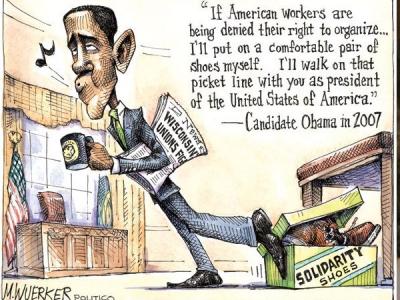
Sixteen months ago the eyes of the nation and the world were on Madison, Wisconsin. Crowds in the tens of thousands surrounded, occupied and refused to leave the state capitol building. Local cops ignored orders to disperse them, and when authorities finally evicted protesters from hallways, offices and legislative chambers, their numbers grew, reaching the hundreds of thousands multiple times before the crisis was over. Local schools were shut down because teachers called in sick en masse. For a short while a general strike, localized in Madison, but with wide and visible support around the state and country seemed a real possibility.
Thousands of Americans from surrounding states converged upon Wisconsin to join the throngs around the state capitol. Thousands in those crowds, and countless others watching from far and near began to realize this was a unique political moment. They were at a place well outside the prescribed steps of America’s political dance. It was a moment in which the elite politicians, the media pundits, the bosses and the billionaires were not the only or even the decisive shot callers. The next move was truly in the hands of those tens and hundreds of thousands of working people in motion, the people in the streets.
What we saw coming together on Wisconsin street corners and in the wave of state and nationwide public support behind them was an authentic mass movement being born. We know that’s what it was because it contained, all at the same time, what we identified back in 2005 as the five necessary characteristics of such things;
Mass movements have political demands anchored in the deeply shared values of their core constituencies.
Mass movements look to themselves and their shared values for legitimacy, not to courts, laws or elected officials. A mass movement consciously aims to lead politicians, not to be led by them.
Mass movements are civilly disobedient, and continually maintain the credible threat of civil disobedience. They inspire and embolden large numbers of ordinarily nonpolitical souls to engage in personally risky behavior in support of the movement’s political demands.
Mass movements are supported by lots of vertical and horizontal communication reinforcing its core values.
Mass movements capture the energy, enthusiasm and risk taking spirit of youth. Nobody ever heard of a mass movement of old or even middle aged people.
Fox News and right wing pundits spread panicky lies. Republicans denounced Democrats and defamed protesters. Some Democrats hesitated before tepidly endorsing the protests. Some smarter Democrats tried to pretend they were among its leaders. But these were bit players, working from the outside. It fell to labor union leaders, whose political strategy for more than a generation has been to uncritically funnel their members volunteer energies and union dues into uncritical support for Democratic politicians whether they come through or not, to bring those hundreds of thousands in uncontrolled, unpredictable political motion back inside the law, back within the two-party elite consensus, back into the well-worn dance steps of the election cycle.
Thus it was union leaders who damped down the calls for, and explicitly repudiated talk of a general strike. To be fair, under present federal and state laws, a union official who even calls for, let alone is part of pulling off a general strike is probably guilty of multiple felonies and conspiracies to commit, perhaps even RICO and terrorist prosecutions if judges and district attorneys are feeling ambitious. Such an official also risks confiscation of union funds and assets, either outright in a hurry or after prolonged expensive litigation. But that’s what people involved in movements do — they take individual and collective risks and they violate laws for the cause, whatever that happens to be.
So there was no general strike. Union leaders ran as fast as they could in the other direction. They summoned their institutional resources, their organizers and media spokespeople, and their funding. They turned a nascent movement into a series of electoral campaigns, first against a handful of state senators in 2011 and then the statewide recall campaign that ended in defeat this week. They turned the movement into a campaign, and then managed to lose the campaign.
Political campaigns are pretty much where movements go to die, get betrayed or are stillborn because turning a movement or near movement into a campaign robs it of the very specific features we’ve already mentioned, the features which make movements potent and often unpredictable political actors. When movements become campaigns their participants lose their independence and initiative. Instead of being ready and willing to act outside the law, they become its most loyal supporters. And instead of looking to their own shared values, they look to political candidates and elected officials who must remain inside the elite-defined rules of political decorum and law to preserve their candidacies and/or careers.
The campaigns that come out of movements still retain and utilize lots of horizontal communication. But instead of that chatter reinforcing the independence and dynamic energy and the risk-taking spirit of youth, it becomes all about the political processes and compromises needed to win the next election. And when a movement’s core values are no longer the gold standard, there are lots of compromises to be made. It can be a pretty quick slide from hard hitting demands like full employment with a living wage, Medicare for all, free quality education as a human right, stopping the bailouts, guaranteeing union rights for everyone and ending the imperial wars to electing the candidate that sucks the least, even only a little less.
When would-be movements sideline the youthful risk-taking initiative and egalitarian core values that might have sustained them to become political campaigns, they generally don’t even run good campaigns. The crowds on the sidewalks and parking lots in Madison were conducting anti-racism seminars and study groups. But the electoral campaign the whole thing was turned into, even though they had a whole year to plan, neglected to do the labor-intensive ground game of massive voter registration in poor and minority communities. They spent their relatively scarce dollars on media instead, and pursued the easy consultant-class strategy of pursuing the “frequent voters” alone. They didn’t talk about the poor and renters, of which there are many in Milwaukee, Wisconsin’s largest city. They only talked about the middle class. They didn’t talk much about mass incarceration either, even though Wisconsin and Milwaukee consistently have the highest rates of black imprisonment in the US, higher than Louisiana, Georgia or Mississippi.
They came up with a black candidate for lieutenant governor. But mostly they went from hundreds of thousands of people shivering in the cold, standing outside the people-proof, democracy-proof cages of elite consensus and two-party politics and beginning to feel their own power to decide what to do next to folks campaigning for the candidate and the slate that sucked less.
If the leaders of organized labor were teachable there would be lots of lessons here. But these are folks who’ve learned nothing and forgotten nothing, and whose job is making sure most of us don’t learn much new either. For them, the lesson is that turning aside a general strike situation and making it into a political campaign can drag their careers out a few more years. For the rest of us, the 99%, there are other lessons. What we’ve seen in Wisconsin is what happens when you stifle a mass movement at birth and turn it into a political campaign.
You always lose the movement. You usually lose the campaign. And you always lose the initiative. Labor leaders handed the ball to elected Democrats, to campaign consultants and media hacks. They took the struggle from the street, where they had the advantage, to the TV and radio airwaves and in social media, where the unlimited spending allowed recent court decisions and corporate control over mass media made all the difference.
In theory, it might be possible to get some other result from turning movements into campaigns. But in the real world, this is the way it’s worked out so far.
If turning movements into campaigns is bad business, what about building movements out of campaigns?
Using campaigns to spark movements hasn’t worked well either, though it gets talked about a lot. You can sometimes get young people excited for a while in a political campaign too. Millions of youth gave freely of their time to help elect Obama in 2008. But the day after election day they were sent home. No movement there. A generation earlier folks who walked the precincts for Jesse in 84 and 88 promised to build a lasting movement out of their networks. It didn’t happen then either, and almost never does.
When we bear in mind again the unique characteristics of a movement it’s easy to see why. Political campaigns, even successful ones, don’t teach risk-taking. Political campaigns don’t prepare you to operate outside the law or how to discredit and de-legitimize unjust law.. Campaigns won’t show you how to make the politicians follow you, instead of you following the politicians, the judges, the pundits and that whole elite crowd. Real change comes from movements, not from campaigns. The only thing that makes the politicians follow you is a mass movement, a movement that does everything political campaigns don’t.
The only worthwhile political campaigns are ones that utilize public receptivity to discussions around issues to present and make popular accurate analyses of the world the way it is, and compelling visions of the world the way we want it to be. Not the candidate that sucks least. Win or lose, these are the only campaigns that empower people, the only ones worth pouring your energy into, the only ones that build, rather than strangle and discourage mass movements.
Right to Life planning to challenge GR City Commission on Public Employee Health Benefits issue
It’s bad enough that in the past few years, public employees have had their health benefits attacked and retirement benefits decreased because of the austerity measures being imposed on Grand Rapids City employees.
Now, Right to Life is planning on pressuring the Grand Rapids City commission to not allow health benefits to cover women’s reproductive rights.
The Grand Rapids Right to Life is planning on coming to the next City Commission meeting on June 12 to propose a resolution that would ban the use of public funds to pay for abortions for city employees and their dependents – in short, denying medical care to its employees.
Here is a copy of an e-mail message sent to area Right to Life supports about this campaign to attack women’s health:
Dear ProLife Supporter,
This is a call to “spring to action!”
With your help, we have now obtained the attention of elected officials!
On June 12, the Grand Rapids City Commission will vote on the resolution to ban the use of public funds to pay for abortion coverage for city employees and their dependents.
It is now time for a critical step: apply much public pressure on the elected officials.
Two important things that you can do to help are:
1. Contact all seven elected officials, mayor and all the commissioners, and ask to vote in favor of the resolution (see below contact information).
2. Attend the city commission meeting:
When: Tuesday, June 12, at 7:00pm, promptly.
Location: Mulick Park Elementary School, 1761 Rosewood SE, Grand Rapids.
People involved in organizing the Stop the War Against Women Rally on May 24 are calling on people to either attend the June 12 City Commission meeting to counter the Right to Life point of view or contact the City Commissioners and tell them you support women’s reproductive rights and do not want them to give in to the Right to Life pressure.
Your voice is needed at the Grand Rapids City Commission meeting on June 12 at 7:00 pm at Mulick Park Elementary School, 1761 Rosewood SE.
Mayor George Heartwell: 456-3168 or 742-0693 mayor@grcity.us
David Shaffer: 456-5337 or 724-4732 dshaffer@grcity.us
Walt Gutowski: 456-3035 waltgutowski@grcity.us
Rosalynn Bliss: 456-3035 rbliss@grcity.us
Ruth Kelly: 456-3035 rkelly@grcity.us
Elias Lumpkins: 456-3035 or 340-5361 elumpkins@comcast.net
James White: 456-3035 jwhite@grcity.us
Earlier today, MLive ran a brief article about what is being called a Rally for Religious Freedom.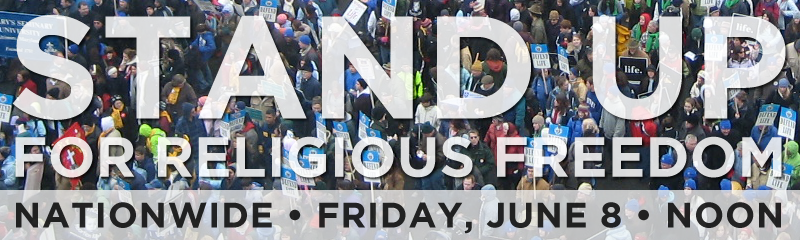
The article states that the rally will involve members of the local Tea Party, have voter registration tables and information against Obamacare. The reporter also juxtaposes this event with the War Against Women Rally held at Rosa Parks Circle on May 24.
According to the Grand Rapids Right to Life website, the rally on Friday will feature the following speakers:
- Fr. Robert Sirico, Founder of the Acton Institute
- Sheryl Siegel, Member of Temple Emanuel and Ahavas Israel
- Col. Denny Gillem, Retired Soldier
- Dr. Meg Edison, Pediatrician and member of Physicians for Patient Care
- Paul Miller, Right to Life of Michigan PAC Director

- Mike Koelzer, Pharmacist and Owner of Kay Pharmacy
- Richard Thompson, Thomas More Law School
- Brad Snavely, Executive Director at Michigan Family Forum
- Pete Hoekstra, Former U.S. Congressman and candidate for U.S. Senate
- Rev. Mark Gurley, Serves on the Board of the Michigan Capital House of Prayer
- Steve Redmond, Closing Remarks

It follows that there are people from Right to Life and the Michigan Family Forum, but it is interesting to note the likes of Col. Denny Gillem, Pete Hoekstra and Fr. Robert Sirico.
Gillem and Hoekstra seem to be making the round at far right rallies in Grand Rapids. Hoekstra and Gillem both spoke at a Pro-Israel Rally last year in Grand Rapids and Gillem spoke at a Pro-Capitalist Rally in December as a counter to the Occupy Movement.
Fr. Sirico is the founder and President of the Acton Institute, a pro-capitalism think tank that has been funded by the DeVos family and received funding from Exxon-Mobil to claim that global warming is a hoax.
It will be interesting to see how much coverage this rally gets and whether or not the local news media will provide any background information on the speakers and their politics.
Earlier today, MLive ran a brief article about what is being called a Rally for Religious Freedom.
The article states that the rally will involve members of the local Tea Party, have voter registration tables and information against Obamacare. The reporter also juxtaposes this event with the War Against Women Rally held at Rosa Parks Circle on May 24.
According to the Grand Rapids Right to Life website, the rally on Friday will feature the following speakers:
- Fr. Robert Sirico, Founder of the Acton Institute
- Sheryl Siegel, Member of Temple Emanuel and Ahavas Israel
- Col. Denny Gillem, Retired Soldier
- Dr. Meg Edison, Pediatrician and member of Physicians for Patient Care
- Paul Miller, Right to Life of Michigan PAC Director
- Mike Koelzer, Pharmacist and Owner of Kay Pharmacy
- Richard Thompson, Thomas More Law School
- Brad Snavely, Executive Director at Michigan Family Forum
- Pete Hoekstra, Former U.S. Congressman and candidate for U.S. Senate
- Rev. Mark Gurley, Serves on the Board of the Michigan Capital House of Prayer
- Steve Redmond, Closing Remarks
It follows that there are people from Right to Life and the Michigan Family Forum, but it is interesting to note the likes of Col. Denny Gillem, Pete Hoekstra and Fr. Robert Sirico.
Gillem and Hoekstra seem to be making the round at far right rallies in Grand Rapids. Hoekstra and Gillem both spoke at a Pro-Israel Rally last year in Grand Rapids and Gillem spoke at a Pro-Capitalist Rally in December as a counter to the Occupy Movement.
Fr. Sirico is the founder and President of the Acton Institute, a pro-capitalism think tank that has been funded by the DeVos family and received funding from Exxon-Mobil to claim that global warming is a hoax.
It will be interesting to see how much coverage this rally gets and whether or not the local news media will provide any background information on the speakers and their politics.
Stenographers for Power: MLive and the DeVos Family
Yesterday, MLive once again demonstrated how they acts as stenographers for the local power structure, by using the occasion of a corporate awards ceremony to let members of the DeVos family have an uncontested opportunity to present their own narrative on the history of Amway.
The MLive story focuses on Dick and Doug DeVos, both of whom were inducted into the Direct Selling Association Hall of Fame at an event held in Dallas, Texas. However, Rich DeVos, who was also at the event, was sought ought by the MLive reporter for additional comments about the family business.
There was some mention in the article about how when Rich DeVos was inducted into the same Hall of Fame in 1979, it “came on the heels of an investigation by the Federal Trade Commission into the company’s practices and compensation structure that concluded Amway was not a pyramid scheme.” Beyond this bit of information there in no deviation from the DeVos family and Amway narrative.
The MLive article allows the DeVos family to spin their own Horatio Alger myth about the family’s humble beginnings in their home to a global company that generates billions in annual sales. The DeVos/Amway narrative is best reflected in the headline, which reads, “From clearing plates to leading a company: How the DeVos brothers grew up to change Amway.”
To further demonstrate the stenographic role that MLive played with the DeVos brothers, the article includes a link to 6 video excerpts with Doug and Dick DeVos talking about the business, their dad and ArtPrize. It is impossible to know how the questions were framed, but each of the video responses are very short with no challenging questions from the reporter. In one of the videos, Dick DeVos says that his dad is a person who is quick to offer encouragement and affirmation to people, but does that mean all people or just those he agrees with. I mean, Rich DeVos has demonstrated over the years that he has no problem funding campaigns to suppress opposing views by attacking unions, the LGBT community and supporting domestic and foreign policy that is repressive.
The most recent example is Rich DeVos’ $250,000 contribution to Wisconsin Governor Scott Walker for his successful bid to win re-election in a recall effort. MLive did report on the donation by DeVos, but they don’t include any investigation into why the elder DeVos would give such a large sum to Walker, nor do they ask this kind of question when they have his two sons on camera.
The MLive reporter also decided not to pursue any discussion with either Dick or Doug DeVos around the economic and political power they wield in West Michigan. Not that we expect that MLive would do that, but this would be at least be a more honest function of journalism, to actually challenge power.
It would be useful information for the general public for the local news media to make the links between the DeVos involvement in entities like the West Michigan Policy Forum, One Kent Coalition, Grand Action, the Grand Rapids Chamber of Commerce, the Econ Club of Grand Rapids, the Acton Institute and the Mackinac Center for Public Policy.
It would also be useful for the general public to know more details on what entities the DeVos family has funded over the years, particularly the groups that suppress rights or promote far right values such as the American Family Association or their funding of efforts to privatize public education. Hell, even regular updates on how much money they donate to candidates would be useful information for the public, but this is not what stenographers do. Stenographers don’t ask questions, and when it comes to the DeVos family, MLive might as well by called the Stenographers of Power.
Occupy Grand Rapids Spring Training set for June 16
In preparation for the July 4 re-occupation action, Occupy Grand Rapids is hosting a Spring Training on June 16. Here is what their announcement says:
“MoveOn’s 99% Spring co-optation effort got ya down? Or just want to learn some mad skillz? Then come out to Occupy Grand Rapid’s Spring Training.
On Saturday, June 16 at 12pm, we’ll be making our triumphant return to Ah-Nab-Awen Park (the site of last fall’s occupation) for an afternoon of workshops and discussions aimed at increasing our collective knowledge base to get ready for our re-occupation.

We’ll be talking about all sorts of practical, hands-on stuff that anyone participating in an occupation or any activist project would likely need to know: basic legal and “know your rights” info, how to work or not work with the media, direct action (different tactics, why use direct action, etc), health and safety, and more surprises TBA.”
Occupy GR Spring Training
June 16
Noon
Ah-Nab-Awen Park in downtown Grand Rapids
For more information, check out their facebook event page.
 Grand Rapids Institute for Information Democracy