Amway/Alticor is donating to Obama’s re-election campaign
When people hear the corporate name Amway, all sorts of images and labels come to mind, but one label that doesn’t usually come to mind is “supported of Democrats.”
It is true that the Amway Corporation has traditionally funded the Republican Party as has the DeVos and Van Andel Families. We noted back in July that the DeVos family had already donated over a half a million dollars to the Republicans so far in the 2012 election cycle.
Since 1990, Amway/Alticor had contributed roughly $8,000 to Democrats prior to 2012, but have thus far contributed $46,800 to Democrats in the current election cycle. Comparatively, the Republican Party has received $390,900 from Amway/Alticor in the 2012 election cycle, which demonstrates where the bulk of their paying for political influence has gone.
The Democrats who have received funding from Amway/Alticor so far this year have been Congressional candidates David Wu from Oregon ($2,500) and Daniel Adler from California ($3,500). However, what might come as a surprise to some is that President Barack Obama has received $10,000 from Amway/Alticor in his bid to be re-elected, according to the Center for Responsive Politics. Comparatively, Amway/Alticor has only given $12,750 to Republican Presidential candidate Mitt Romney so far.
The reason why Amway would give money to Democrats and specifically President Obama, depends on how one views electoral politics in the US. Thos who think it is purely ideological might be confused by this data, but if one sees electoral politics purely in terms of power, then Amway’s donation to Obama and other Democrats makes complete sense.
Corporations give money to candidates primarily to buy access and to influence policy. That Amway gave money to Obama’s re-election campaign reflects that they want some access if he is re-elected. This is the nature of electoral politics in the US, which is why the corporations that much of the public loathes, such as Goldman Sachs, JP Morgan Chase, Comcast, BP, Coca Cola give to both political parties. These companies, along with most, donate to both parties because they want access and the ability to influence policy no matter who controls the White House or Congress.
Yesterday, I attended the annual Labor Day event in Grand Rapids, held at Ah Nab Awen Park in downtown Grand Rapids.
The annual event had moved to this location a few years ago, after decades of hosting the event at John Ball Park on the Westside. I used to attend those Labor Day celebrations, with substantial crowds and lots of local labor unions with food tents set up, providing refreshments to their members and families.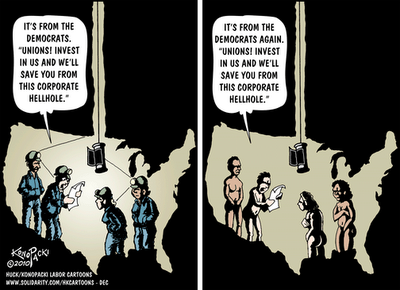
The Westside event also included a parade from downtown Grand Rapids to the park, with people lined up along the route to catch candy being thrown by union members, along with trucks and floats that brought cheers from the crowds.
There was also a detestable element to this annual event, at least detestable to this writer. Joining the parade were local politicians trying to present themselves as advocates for working class people.
When the parade reached John Ball Park, there would be music and some recognition of local labor people, but the bulk of the stage time that wasn’t music consisted of politicians pimping for votes.
The parade and the candy no longer exists, now that the event is held downtown, but one thing that is still highly visible during the West Michigan Labor Fest is the presence of politicians and partisan politics.
There are aspects to Labor Fest that still honors working class people and their families. Some of the local unions provide rides for kids, there was plenty of food and the beer tent is the largest on site. There were craft vendors, a classic car presence and a few of the unions had booths with free stuff.
However, what dominated the events were the presence of politicians and booths for the Democratic Party and their local candidates. I sat through 30 minutes of praise from local labor people about the Democratic candidates and their commitment to organized labor and the “middle class.”
Absent from the event and the praise for Democratic candidates was hard evidence that these candidates or the Democrats have actually done anything for working people. That is partly due to the fact that they have done much and are not offering much in the upcoming election. Here is what Steve Pestka, candidate for the 3rd Congressional seat, has to say about creating jobs:
Getting a good job is crucial to strengthening our families and the middle class. Steve Pestka recognizes that we need to continue building a diverse economy with good-paying jobs in West Michigan. We need leaders in Washington who will embrace policies that support Michigan’s employers and which lead to higher wages, better jobs, and a more educated and stronger workforce.
Seems like a whole lot of nothing to me. Not only does Pestka not provide any clear plan for defending and advocating for the rights of working people, he has no sense of or is not willing to even acknowledge that we have an economic system that benefits the rich at the expense of working people.
On top of the fact that the West Michigan Labor Fest was really a Democratic Party love-in, there was not a word about the current labor organizing campaigns in West MI. Nothing was said about the Grand Rapids Gravel Workers and their ongoing strike against a company that wants to cut their wages by $6 an hour, nor was there mention that the company had hired an out of town company to find scab workers and private security to harass and intimidate striking workers. With no evidence of the Grand Rapids Gravel workers getting their jobs back soon, why wouldn’t the Labor Fest organizers have striking workers there to inform people and recruit people for solidarity actions?
Maybe it is because the local unions have lost their sense of history and what tactics unions used to actually win rights on the job, through wildcat strikes, sit ins, pickets, boycotts, worker solidarity and recruiting new members. Labor rights and worker justice has never really come about through partisan elections, but through direct action and grassroots organizing.
Despite this being a Presidential Election year, the attendance was sparse and them demographic was disproportionately older. If the local labor unions don’t change their tactics and their focus, they might well be a thing of the past.
The Bloom Collective to host A Grand Rapids Power Analysis this Saturday
Every community has its own power structure, made up of individuals, families and entities that wield a significant amount of power over the lives of people who live and work in those communities.
Providing a power analysis is critical for those who want to understand and challenge power in their own communities.
This Saturday, the Bloom Collective will provide a Power Analysis of Grand Rapids. Their facebook event page states:
Join us for an investigation and discussion about who has power in Grand Rapids, both political and economic power. We will present information on individuals and organizations, as well as look at the inter-locking systems of power between private wealth, political associations and who is connected to what organizations. The Bloom
Collective believes that without such analysis, no real organizing for social justice can occur in Grand Rapids.
A Grand Rapids Power Analysis
Saturday, September 8
Noon
The Bloom Collective
671 Davis NW – in the lower level of the Steepletown Center
Suggested donation of $3
The Bloom Collective will provide some food, but feel free to bring a dish to pass.
A Call for Solidarity
Editor’s note: The following article should be viewed as an opinion piece, and the views expressed in it belong to the solely to the author, and do not necessarily represent GRIID as a whole. The purpose of this publishing is to encourage local community members to come together and work for their collective liberation, nothing more or less. Interested parties may contact the author at shawn.g.ferguson@gmail.com
I moved to Grand Rapids completely politically unaware in 2002, the midst of the second Bush administration. The kickoff to the Iraq war which soon followed brought me out of the slumber which many Americans continue to find themselves in. I knew next to nothing about the world (or even my community), but I knew I didn’t support what was happening and what my tax dollars were going towards. I quickly found myself marching with hundreds of others down Fulton Avenue, carrying a sign and being told to “get a job!”. I met people on the streets then that I still organize with today. I had no idea at the time, but it was the beginning of my new life.
In those “early years” the protests were very diverse. Even my untrained eye could see the difference between the middle-aged, “peace loving”, capital “D” Democrats, and the adolescent, crust-punk, “black-bloc”, circle “A” Anarchists. While the two were marching together and chanting some of the same slogans, I could tell neither would be seen in public with the other under different circumstances. It appears “preemptive” war was a force strong enough to bring us all together, at least while Bush was still president. We don’t even see anti-war demonstrations in Grand Rapids anymore, let alone this type of solidarity. As a matter of fact, in recent years horizontal hostility has been on the rise among the already insufficient radical community in Grand Rapids.
One wiki states horizontal hostility is when “individuals direct the resentment and anger they have about their situation onto those who are of equal or lesser status”. If I were to ascribe my personal definition to the term (though I think the one above is pretty good), it would be something like, “when those who could most benefit from working together against a common enemy or foe instead work against one another, or otherwise obstruct the work of those that have common aims”. Essentially, horizontal hostility is the opposite of solidarity.
This parasitic phenomenon is particularly common among nurses. Studies have been done on the subject (also equated with bullying) and have shown that “HH” contributes to “diminished productivity and increased absenteeism”. It doesn’t take long to see how horizontal hostility could be devastating to an already repressed and fatigued political community working for such lofty goals as ending oppression, instituting equality, and perhaps even “smashing the state”. I struggle to think of anything more damaging the radical community could do to itself, except maybe mass suicide.
My political journey has been a long one since those early protests, moving quickly from “independent”, to capital “D” Democrat, to Marxist (and almost a card-carrying socialist), to what most of my former comrades would refer to as an “anarchist”[1], but I tend to refer to as a “radical”. Connecting the dots between war, oppression, capitalism, and civilization has been a sharp, though liberating, philosophical plummet. I can only assume that this process has been equally as difficult, and alienating at times, for others as it has for me. It is not uncommon for those with such experiences to galvanize together as a result. This is not what I have experienced since becoming a radical in Grand Rapids.
Anarchists have a reputation for being exclusive and judgmental is this town. Thus, before anyone even considers moving beyond the left/right paradigm they have to contend with the idea that they will be judged for not being hardcore enough. This is not a abstract concept for me, as it was my experience, and it has been for many of my contemporaries as well. While I did not allow such a petty thing to discourage me from realizing my own political expression, it certainly has the potential to close the door for others (and may have already).
After breaching that initial barrier, I discovered deep rifts within the radical community in this otherwise conservative town. Those with the same enemies (war, oppression, the two party system, hierarchy) and nearly identical philosophies (“anarchism”) were not on speaking terms. And as far as all those on the “left” working together, Democrats and anarchists marching together in solidarity against a single issue, forget about it. I found that radicals regularly participated in horizontal hostility against one another, typically under the guise of “loving” criticism of actions or statements not radical enough, however at times much more devastating. I have seen projects sabotaged, radical institutions and actions boycotted, confrontations during public discussions, anonymous comments on blogs and websites, scathing editorials published in local zines (one about “building community” in a great twist of double-think), and (of course) good old fashioned word of mouth back biting.
What I’ve not seen a lot of is anarchists being supportive of each others projects (unless they’re just right), positive or motivating internet comments, or anything constituting the “love” the above hostility is supposedly coming from. I, like many others, was raised around twisted and damaging ideas of love, and to be rediscovering them in an environment which prides itself on it’s “safe spaces” and claims to be a thorn in the side of abusers and the powerful, was dismaying to say the least. While this dynamic has certainly done irreparable harm to personal relationships, more significantly it has driven a wedge between would be political allies.
Those of us fighting for equality and justice (“anarchist” or not) have a long history of losing battles to power. We often cite all the dirty tricks they like to use to keep us down, not the least of which is “divide and conquer”, the masterful technique of turning the underlings against one another, thus enabling the elite to simply sit back and enjoy the chaos and infighting they’ve created amongst all their would-be enemies. By utilizing the tactic of horizontal hostility, the radicals and anarchists in Grand Rapids have been doing much of the elite’s oppressive work for them. The powerful here on the West Side don’t even have to bother with sabotaging the opposition, we doing it to ourselves.
If seeing the horizontal hostility in action hasn’t been proof enough, I’ve seen the evidence of it’s destructiveness as well (aside from broken relationships and hurt feelings). There are no more events that utilize the energy of both liberals and radicals. The only anarchist institution in town, an infoshop, has teetered on the edge of closure. Radical organizations were feared by local police in years past, even infiltrated (a sure sign that you’re doing something right as an opposition group); white supremacists groups targeted them. Such reactions are now unheard of, laughable even. In short, they’ve won.
Grand Rapids certainly needs to build a much stronger radical community if local power is going to be overturned or even threatened, there is absolutely no doubt of that. The first step is to rediscover what solidarity means; we must put an end to the hostility among allies. We have already seen “diminished productivity and increased absenteeism” in our groups and meetings, and we can afford no more. We must grow our numbers, build upon our existing relationships, and give the authorities something to really be worried about, something to fear, again.
[1] I hesitate in using that label not because I have found any inconsistencies in what I have read and understood to be anarchism and my own beliefs, but because of the flak I have seen others receive after using the label in ways that other anarchists more devoted (or dare I say more “pure”) have deemed unfit.
Drought Devastates U.S. Corn Crop, Spikes Worldwide Food Prices
This article is re-posted from EcoWatch.
This summer, many parts of the U.S. are in the grips of an unrelenting record heat wave exacerbating drought conditions throughout most of the nation. Yesterday, a report by the U.S. Energy Information Administration (EIA) detailed the significant effects drought is having on corn production.
The U.S. Drought Monitor, a joint publication of U.S. Department of Agriculture (USDA) and the National Oceanic and Atmospheric Administration (NOAA), is currently reporting that large areas of the Midwest and Great Plains regions, which are substantial corn-producing areas, are experiencing significant drought conditions. Analyzing Drought Monitor data, the USDA’s Agricultural Weather and Drought Update for Aug. 16 reported that 85 percent of the U.S. corn crop is located within a drought area, with nearly half of the crop area experiencing extreme or exceptional drought levels, their most severe designations. The map below illustrates the location of U.S. drought areas superimposed on major and minor corn-growing areas.

Initially, the USDA predicted this year would see the largest corn harvest in history. However, due to the extreme drought conditions in the corn belt some estimate that the actual yield of the U.S. corn crop will be as much as 30 percent lower than was initially forecast.
Though 98 percent of the U.S. corn crop is not consumed directly by humans, but is instead used for animal feed, ethanol production and other industrial uses, a huge amount of is consumed indirectly worldwide through beef, pork, poultry and dairy consumption. The U.S. corn crop accounts for 40 percent of the global harvest and an increase in the price of U.S. corn will be felt with an increase in food prices worldwide. These effects will especially be felt by poor people worldwide who subsist mostly on grain and eat little animal protein or dairy, because an upward spike in corn prices also leads to an increase in the price of the other “great grains” including rice and wheat.
Fear that higher food prices worldwide will lead to greater global political instability has led many to call for an end to U.S. government mandated policy that 40 percent of the U.S. corn crop must be diverted to ethanol production. Mandates to use corn as fuel heighten rises in food prices. The World Bank blamed expanded biofuels production as being one of the main causes of the global food crisis of 2008.
Most climate change experts predict that we are in for a future of more and more severe drought which will in turn lead to higher and higher food prices. What’s more, according to a recent scientific study the severe drought conditions themselves inhibit carbon uptake, thereby worsening climate change, a vicious cycle. The five year drought from 2000 to 2004 in Western North America, the worst of its kind in 800 years, inhibited carbon uptake, contributing to global warming conditions, but scientists say that that may turn out to be among the wetter time periods compared to the climate of the recent of the 21st century.
A National Wildlife Federation report this week detailed the many ways in which climate change made its presence felt during this record hot summer. In addition to problems such as disease outbreaks and devastating wildfires, one of the main problems associated with climate change is drought. Some of the most dramatic effects of drought have been felt in the global food system.
Chicago Teachers Draw A Line
This article by Lee Sustar is re-posted from Socialist Worker. Editor’s note: This is an important struggle, not just for the Chicago Teachers Union, but for teacher unions everywhere that are under constant threat of cut backs and privatization of eduction.
CAN THE scrappy band of outsiders that now heads the Chicago Teachers Union (CTU) lead the kind of high-stakes fight that most labor unions have ducked?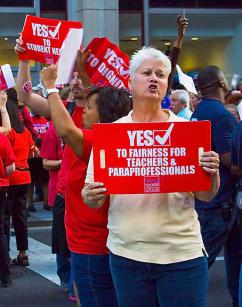
That question looms large–not just for the city’s teachers, students and their parents, but for the entire labor movement. Because while both private- and public-sector unions are taking a pounding across the U.S. with layoffs, pay cuts and pension rollbacks, the CTU is gearing up for a showdown with America’s most politically connected mayor, Rahm Emanuel–and it will come to a head in September.
At a time when most union officials are shamefacedly selling concessions as “the best we can do,” Chicago teachers are defiant. Just ask anyone who encountered the giant inflatable rat that accompanied the spirited CTU picket outside the Chicago Public Schools (CPS) offices August 22 a few hours before a school board meeting.
“We would like to have a fair compensation package that includes acknowledgement of our teachers’ experience and their educational attainment,” CTU President Karen Lewis said at a press conference after the picket. “That’s number one. Number two, our health care that they’re asking us will eat up the little bitty, tiny, miniscule raise that they’re offering.”
An arbitrator earlier this year recommended a pay increase of 14.85 percent, much closer to the union’s initial demand for a 30 percent raise to cover the additional hours teachers were expected to work in the new longer school day. CPS, however, has offered only a 2 percent raise, which doesn’t even make up for the teachers’ previously negotiated 4 percent raise that was cancelled by the board last year.
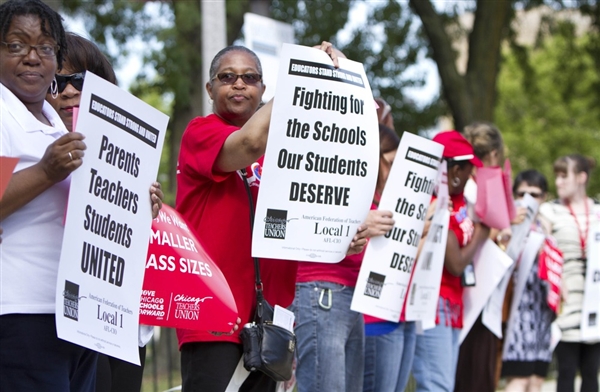
Later on August 22, CTU delegates held a meeting at a high school where they picked up freshly printed picket signs and got a sober update on contract negotiations.
While CPS and Emanuel bowed to a union demand in July to hire nearly 500 more teachers to staff a longer school day, school negotiators have refused to budge on what the union considers to be strike issues. Those include merit pay, the cancellation of raises based on seniority, and higher health insurance costs.
The city’s aggressive posture led to a strong turnout for informational picket lines at CPS’s early-start schools, about one-third of the more than 600 in the system. While some pickets were modest, many more were large and spirited, and most got strong support from parents and community members.
– – – – – – – – – – – – – – – –
THE MOBILIZATION is quite an achievement for the CTU leadership, which took office in June 2010 on the slate of the Caucus of Rank-and-File Educators (CORE). Taking over a budget-strapped and dysfunctional union machine, the new leadership began by cutting officers’ pay and putting the money into organizing.
In its first round of negotiations, the CTU leadership spurned the usual union strategy of taking pay cuts to avoid layoffs, arguing that concessions would lead to only further concessions. The new CTU also plunged into the fight against school closures despite the small chance of prevailing in that struggle. Win or lose, the CTU was determined to deepen the union’s connection to the wider fight for education justice in the city.
In April 2011, the CTU leadership overcame an internal crisis over whether to support an anti-union law known as SB 7, which requires 75 percent of all union members to vote to authorize a strike. Little more than a year later, nearly 90 percent of all CTU members–and 98 percent of those who cast a ballot–supported giving union leaders strike authorization.
That vote–which followed an inspiring May 23 rally of more than 5,000 union members–showed the city that the CTU was mobilizing its members not simply through the union’s organizational machinery, but as part of a wider working-class movement to defend public education from corporate-backed education reformers and charter school operators.
What began as a vision of a small group of CORE activists a few years earlier had come to life in a fighting CTU, a union that embodies the best hopes not only for teachers’ unions, but all of organized labor.
The stakes are high for Rahm Emanuel, too. The former White House chief of staff under Barack Obama got his political start as an operative for former Mayor Richard M. Daley, and now, he wants to make his own mark as the city’s boss.
But where Daley and his father, Richard J. Daley, used patronage jobs to bind labor to the Democratic machine, Emanuel wants to gut public-sector unions while dangling jobs to keep others on board. Emanuel’s message to union leaders: Do it the easy way by selling concessions to your members, or expect the hard way, where City Hall proceeds to crush you.
As a result, most Chicago unions have already rolled over for Emanuel without a fight. For example, the Teamsters, who backed Emanuel for mayor, signed off on the mayor’s privatization of waste collection, bought off by a promise that their lower-paid union members at private companies would get the work.
The building trades are on board with Emanuel’s Infrastructure Trust plan to fund public works, even though it will put the city in hock to big banks at unspecified rates of interest for decades to come. And the Chicago Federation of Labor signed on to Emanuel’s “wellness” plan that empowers monitors to track city employees’ weight loss, smoking habits and other personal information–and raises their health insurance costs by $600 per year if they don’t sign up for the program.
Next, Emanuel’s operatives at CPS moved to drive a wedge between the CTU and the other main unions that represent school employees. Service Employees International Union (SEIU) Local 73 and UNITE HERE Local 1–usually seen as progressive within the local labor movement–signed early contracts with the school board.
This could set the stage for SEIU and UNITE HERE members being contractually forced to cross teacher picket lines and staff proposed “student centers” that CPS plans to run in case of a strike, at a cost of $25 million. The International Union of Operating Engineers, whose members keep the school buildings running, also cut a separate deal.
Emanuel’s latest effort to isolate the CTU is an early contract with the faculty at the city’s community colleges, who belong to a sister union to the CTU.
The deal, which is being pushed to a ratification vote on a week’s notice, is made to City Hall’s specifications–it eliminates raises based on experience and education, establishes the principle of merit pay, and includes the onerous wellness program. Those are precisely the concessions that Emanuel wants to impose on the CTU.
– – – – – – – – – – – – – – – –
BUT DESPITE Emanuel’s efforts to peel away Chicago labor leaders, backing for the CTU is strong among union members and at least some officials.
AFSCME Council 31, which tangled with Emanuel to defend library jobs and other public employees, has endorsed a CTU Labor Day march that will conclude with protesters joining hands around City Hall.
And support for Chicago teachers goes far beyond the ranks of organized labor.According to a Chicago Tribune opinion poll in May, far more people trust the CTU on education issues than Rahm Emanuel.
That’s in part because the mayor overplayed his hand over the course of this year, ramming through the closure and “turnaround” of 17 schools, while pushing a longer school day without adequate funding. A City Hall-connected effort to pay preachers to organize pro-Emanuel protests backfired when the media caught wind of the scheme.
In recent weeks, the CTU has been holding public meetings in neighborhoods around the city to receptive audiences. Community alliances forged by CORE to fight an earlier round of school closings years ago laid the basis for a strong CTU alliance with key community organizations in African American and Latino communities. A CTU float at this year’s Gay Pride march got big cheers. The union has also backed the effort byCommunities Organized for Democracy in Education to replace Emanuel’s handpicked school board with an elected one.
More recently, the Chicago Teachers Solidarity Campaign (CTSC) was launched to bring together a range of labor and social movement activists, linking ongoing battles over public education in the city with the CTU’s struggle. The solidarity campaign is building a August 29 town hall meeting to bring together the CTU’s allies, as a possible strike looms.
Thus, while Emanuel will try to portray the CTU’s struggle as one of greedy teachers versus needy kids, there’s a growing movement to defend public education that sees justice for teachers as essential for the education of Chicago’s children.
– – – – – – – – – – – – – – – –
WHILE THE CTU is resolved to do what it takes to win–including a strike–questions remain over the role of its parent union, the American Federation of Teachers (AFT).
The AFT convention in Detroit held in July gave a powerful statement of solidarity for its members in Chicago. Delegates also gave backing to AFT teachers in Douglas County, Ariz., where school authorities have imposed a contract on the union, as well as Detroit, where an emergency financial manager unilaterally cut pay by 10 percent on top of previous rounds of concessions and job losses.
Michael Mulgrew, president of the United Federation of Teachers in New York City,captured the mood when he said, “You come after one of us, you deal with all of us.”
But the union’s policies of collaboration, highlighted earlier in convention proceedings, undermined that call to action.
For example, the AFT affiliate in Cleveland worked with anti-union Republican Gov. John Kasich to craft a contract eliminating seniority protection in layoffs while backing legislation that allows charter schools to compete with traditional schools for taxpayer dollars. Instead of pointing to the agreement as a disastrous setback, AFT President Randi Weingarten portrayed it as a gain in her opening speech.
In fact, Weingarten, who two years ago proposed a strategic retreat for the union by announcing a partnership with school reformers like Bill Gates, now finds herself presiding over a rout of the union in some of its historic bastions, such as Philadelphia, where the mayor and school officials are in the process of turning over the entire school system to academic institutions and charter school management organizations.
As a result, the convention proceedings veered between sober recognition of the scale of the assault and the high-production videos and feel-good presentations typical of U.S. unions at their stage-managed meetings–crowding out any lengthy discussion of the major issues facing teachers.
The resolution books were skimpy for a union that claims 1.5 million members–a figure that includes retirees–and largely avoided mention of issues like merit pay, which the AFT folded on years ago. Also largely ignored was the union’s surrender on job security based on tenure–a posture that has only encouraged the school reform crowd to step up their attacks.
AFT delegates did pass resolutions with policies well to the left of mainstream Democratic Party election programs. But those feel-good votes gave way to practical politics when Weingarten welcomed Vice President Joe Biden to the podium, despite the Obama administration’s anti-union Race to the Top legislation.
Notably, CTU President Karen Lewis refused to join the other AFT vice presidents on stage to greet Biden, and the Chicago delegations made a point of wearing their red union t-shirts rather than the Obama-Biden ones handed out by AFT officials.
The result was a convention in which the AFT came across as progressive in general political terms, but at best incoherent on the bread-and-butter issues dear to teachers–a union unable or unwilling to take a consistent stand on what had been fundamental union positions.
That’s why the CTU’s struggle in Chicago is so important. Four years after the financial crash of 2008, politicians and employers are still using high unemployment and tight budgets to try to permanently cripple organized labor while dismantling what remains of decent social services–and public education is in the crosshairs.
High-stakes battles that put the union on the line are inevitable. The Chicago Teachers Union is stepping up to that challenge–and it deserves our full support.
Israel’s Policy of Displacement: An Infographic
This information is re-posted from Visualizing Palestine. Editor’s note: The ongoing repression of Palestinians by the State of Israel has been supported by both Democrats and Republicans. There has been no fundamental difference, beyond rhetoric, between either party when it comes to policy or funding the ongoing repression.
Since 1967, the Israeli government has destroyed over 25,000 Palestinian homes in Gaza and the West Bank. In this time, Israeli policies such as home demolitions have internally displaced at least 160,000 Palestinians. The Israeli Committee Against House Demolitions (ICAHD) with the help of Visualizing Palestine tells the devastating history in graphic detail.

U.S. is the Worst Police State in the World – By the Numbers
This article by Glen Ford is re-posted from Black Agenda Report.
When U.S. corporate media operatives use the term “police state,” they invariably mean some other country. Even the so-called “liberal” media, from Democracy Now to the MSNBC menagerie, cannot bring themselves to say “police state” and the “United States” without putting the qualifying words “like” or “becoming” in the middle. The U.S. is behaving “like” a police state, they say, or the U.S. is in danger of “becoming” a police state. But it is never a police state. Since these privileged speakers and writers are not themselves in prison – because what they write and say represents no actual danger to the state – they conclude that a U.S. police state does not, at this time, exist.
Considering the sheer size and social penetration of its police and imprisonment apparatus, the United States is not only a police state, but the biggest police state in the world, by far: the police state against whose dimensions all other police systems on Earth must be measured.
By now, even the most insulated, xenophobic resident of the Nebraska farm belt knows that the U.S. incarcerates more people than any country in the world. He might not know that 25 percent of prison inmates in the world are locked up in the U.S., or that African Americans comprise one out of every eight of the planet’s prisoners. But, that Nebraska farmer is probably aware that America is number one in the prisons business. He probably approves. God bless the police state.
For the American media, including lots of media that claim to be of the Left, it is axiomatic that China is a police state. And maybe, by some standards, it is. But, according to United Nations figures, China is 87th in the world in the proportion of its people who are imprisoned. China is a billion people bigger than the United States – more than four times the population – yet U.S. prisons house in excess of 600,000 more people than China does. The Chinese prison population is just 70 percent of the American Gulag. That’s quite interesting because, non-whites make up about 70 percent of U.S. prisons. That means, the Black, brown, yellow and red populations of U.S. prisons number roughly the same as all of China’s incarcerated persons. Let me emphasize that: The American People of Color Gulag is as large as the entire prison population of China, a country of nearly 1.4 billion people.
However, police states must be measured by conditions behind the bars, as well as raw numbers of inmates. And, by that standard, the American Gulag is even more monstrous.
Civilized people now recognize that solitary confinement is a form of torture. The United Nations Special Rapporteur on Torture, Juan Mendez, reports that solitary confinement beyond 15 days at a stretch crosses the line of torture, yet, as Al Jazeera recently reported, it is typical for hundred of thousands of U.S. prisoners to spend 30 or 60 days in solitary at a stretch. Twenty thousand are held in perpetual isolation in so-called supermax prisons – that is, they exist in a perpetual state of torture. Studies now show that, all told, 80,000 U.S. prisoners are locked up in solitary on any given day.That’s as many tortured people as the entire prison system of Germany, or of England, Scotland and Wales, combined.
If that is not a police state, then no such thing exists on planet Earth.
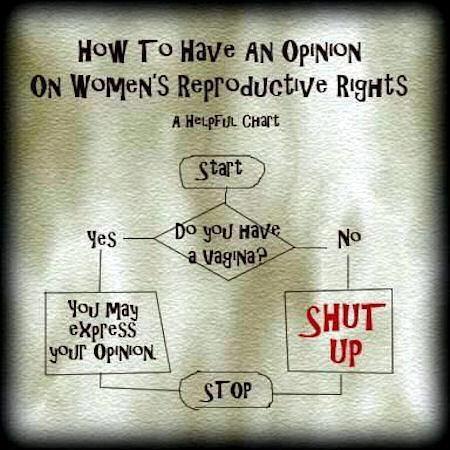
How to have an opinion on women’s reproductive rights
This article is re-posted from PR Watch. For those interested in opposing fracking in West Michigan you can contact Mutual Aid GR grpeoplesassembly@gmail.com and http://banmichiganfracking.org/.
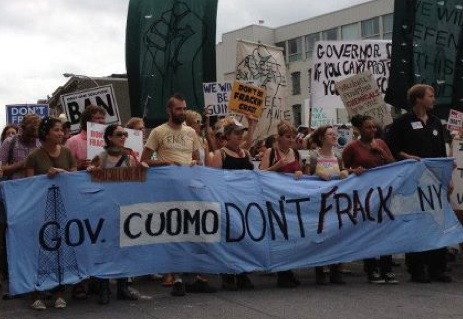
The future of New York’s water supplies and the health of its millions of citizens hang in the balance as Governor Andrew Cuomo decides whether to end the state’s moratorium on new wells to drill for “natural” gas through the controversial industrial process of hydraulic fracturing or “fracking.” Activists estimated that over two thousand concerned citizens joined the march in Albany Monday to try to persuade Cuomo not to lift the moratorium — statewide or in some counties — a decision expected to be announced some time after Labor Day.
The process of fracking involves pumping large quantities of fresh water, along with chemicals and sand, into shale formations in order to crack the rock and extract gas. The “proprietary” blend of chemicals used by corporations in this process is largely kept hidden from the public, but the formulae that have been analyzed have been revealed to contain numerous toxic substances, including known carcinogens and volatile organic compounds (VOCs).
Fracking has the documented potential to contaminate drinking water sources, and has been shown to contaminate both water and land — in addition to spoiling millions of gallons of fresh water as part of the drilling process. Fracking has rapidly expanded across the U.S. as new technology has allowed the drilling to cost companies less money, plus the relative lack of regulation has also allowed corporations to tap some aquifers and rivers without paying any usage fees, and some drillers cheaply “dispose” of the resulting contaminated water by injecting it into the ground, a practice that a new study suggests can cause earthquakes. New York has been heavily targeted by the industry because the state sits atop a piece of the Marcellus Shale formation.
As part of a growing global resistance movement to fracking, New Yorkers marched Monday to the state capitol building and the New York Department of Environmental Conservation (DEC). Protestors also delivered a pledge, signed by thousands, calling for a ban to fracking in New York. The pledge — which noted that any approval of fracking would go against the advice of numerous scientists, economists, and medical professionals — stated that the risks associated with fracking cannot be mitigated through regulation. Those who signed the pledge promised to engage in non-violent acts of protest in the event that the Cuomo’s administration allows new wells to be fracked in the state.
Industry Calls Protestors “Extreme Fringe,” a Claim Sen. Avella Rejects as “Laughable”
The expected decision from state officials will conclude a regulatory and environmental review, which has been heavily criticized by state residents who accuse government regulators of having an overly cozy relationship with the gas industry. One example of this collusion came from emails obtained by the Environmental Working Group (EWG), which found that the New York Department of Environmental Conservation gave the industry early access to a set of proposed permit and regulations for fracking last year, access that was not given to the general public to weigh in on and help shape.
In an article by a local news outlet, an industry spokesperson, John Conrad, labeled Monday’s protestors as part of an “extreme fringe.” Conrad operates a consulting firm, Conrad Geoscience Corp., and is a member of the “Independent Oil and Gas Association of New York.”
New York state Sen. Tony Avella, who has pushed for a ban on fracking in the Empire State, told the Center for Media and Democracy that Conrad’s claim was “laughable” and that there “is nothing fringe about the everyday citizens, neighbors, farmers, scientists and environmentalists” who have expressed their legitimate concerns about fracking.
John Armstrong, of the organization “Frack Action,” one of the 60-some organizations that organized the demonstration, said that the state’s review has neglected to take into account independent reviews of the environmental and health risks that fracking poses. “There is nothing radical about citizens aligning themselves with groups like the New York Breast Cancer Network and American Nurses Association, some of the major groups which have come out against fracking,” he said.
The protest, which included street theatre and an effigy of Cuomo with an angel and devil on either shoulder, came on the heels of other recent demonstrations directed at the governor. Hundreds of concerned residents showed up at a policy summit Cuomo recently held in New York City and at “Governor’s Day” at the State Fair, both last week.
Industry Front Group Called “Energy in Depth” Attacks Critics
As the gas industry touts the number of jobs it claims it will create in New York, in neighboring Pennsylvania an estimated 70 percent of gas rig jobs are going to people from out of state, according to Laura Fisher, senior vice president of the Allegheny Conference on Community Development.
But with its deep pockets, the industry has been able to push its talking points not just on its economic claims but also on its assertion that fracking is “clean” and “safe.” One of the ways they have done this is through Energy in Depth (EID), a front group for gas companies that is connected to the “American Petroleum Institute” and the “Independent Petroleum Association of America.”
As documented by blogger Dory Hippauf, EID consists of several interrelated fronts in several states, with ties to various PR firms, gas companies, and political lobbyists. The group has worked extensively to try discredit those who express concerns about fracking, which has included targeting the New York Times and the Oscar-nominated documentary film “Gasland,” and its director Josh Fox.
Fox recently released a new short film that exposes oil and gas industry internal documents which show that some companies have privately expressed concerns about well safety and water contamination, despite the industry’s PR campaign to claim the public’s concerns are misplaced. In response, EID attacked the film, but failed to address the leaked documents. Fox has compared EID to an “attack dog” that “drank too much Red Bull.” Fox was at Monday’s rally, along with other well-known individuals such as environmentalist Bill McKibben and actress Debra Winger.
EID’s tactics in its efforts to discredit concerned citizens were highlighted by one of the speakers at the rally, acclaimed author and ecologist Sandra Steingraber who has been a leading voice on the risks that fracking presents to New York communities. In its blogs, EID has made personal attacks on Steingraber, for example, calling her the “most emotional of all anti-natural gas opponents on the battlefield,” and commenting on her prior cancer diagnosis, the fact that she wears makeup, and the size of her home, as well as mocking her last name, in addition to other comments irrelevant to the scientific studies she uses to defend her concerns about fracking.
“Hey, gas industry: I am not afraid of you. And that’s not because I’m fearless. It’s because I am so scared for the future of my children on a fracked-up planet that I have no fear left over for you,” Steingraber said.
In her speech, Steingraber called the growing resistance towards fracking the “greatest human rights movement in New York State since abolition and suffrage” and said that “I choose to believe in a vision of an unfractured New York that turns its back on nineteenth-century thinking and fossil fuels and leads the world in the creation of a clean energy economy.” Sandra held a sign made by her son which read “I Don’t Want to Move to Vermont,” a neighboring state that has banned fracking, like Germany and France. Steingraber is author of “Raising Elijah: Protecting Our Children in an Age of Environmental Crisis.”
Resistance to Fracking Is Growing and Some Turn to Direct Action
Monday’s demonstration in Albany is part of a widespread, global movement against fracking that is gaining momentum. In June, Pennsylvania citizens occupied a mobile home camp to temporarily stave off eviction of families that were told their land was being sold to a private water corporation which will pump millions of gallons of water from the Susquehanna River to be used in fracking. In July, Ohio citizens blocked access to a fracking injection well, shortly after 1,000 gallons of chemical-laden fracking wastewater spilled along five miles of road in a nearby residential area. In the same month that activists blockaded entry to a drill site in a Pennsylvania state forest, UK residents chained themselves to the fence surrounding an exploratory drilling site in Chesterfield, among other actions.
This summer, Yoko Ono and Sean Lennon also launched “Artists Against Fracking,” which includes over 130 artist who have called on Cuomo to ban fracking, including Leonardo DiCaprio, Julianne Moore, Alec Baldwin, Lady Gaga, Zooey Deschanel, The Strokes, The Flaming Lips and Beastie Boys.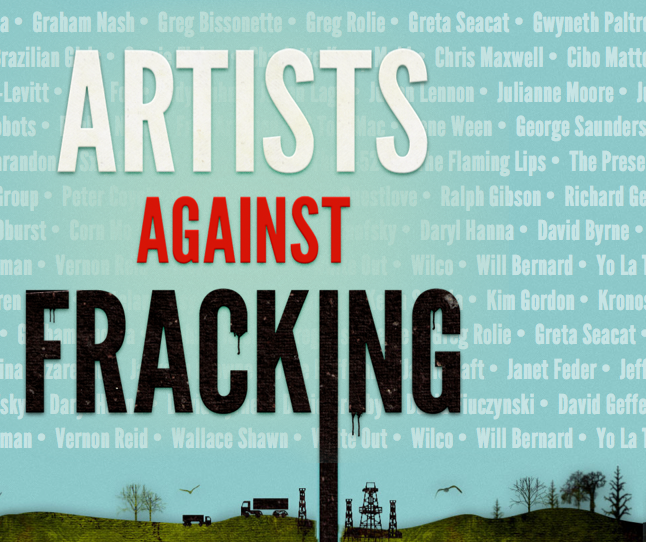
In an op-ed published in the New York Times Tuesday, Lennon highlights the disinformation campaign funded by the oil and gas industry, noting that America’s Natural Gas Alliance has spent $80 million in PR campaign that includes the help of Hill and Knowlton, a PR firm that in the 1950s and 1960s tried to convince Americans that tobacco had no links to cancer.
“Natural gas has been sold as clean energy. But when the gas comes from fracturing bedrock with about five million gallons of toxic water per well, the word ‘clean’ takes on a disturbingly Orwellian tone. Don’t be fooled. Fracking for shale gas is in truth dirty energy. It inevitably leaks toxic chemicals into the air and water. Industry studies show that 5 percent of wells can leak immediately, and 60 percent over 30 years. There is no such thing as pipes and concrete that won’t eventually break down. It releases a cocktail of chemicals from a menu of more than 600 toxic substances, climate-changing methane, radium and, of course, uranium,” Lennon said in his op-ed titled “Destroying Precious Land for Gas.”
 The Possibility of Political Consequences for Giving In to the Industry
According to one of the organizers of Monday’s demonstration in New York, Corinne Rosen with Food and Water Watch, fracking fluid and its waste are not only laden with toxics but a decision by the governor to approve fracking in the state could be toxic to Cuomo’s reputation, who is an otherwise generally popular governor.
“People are going to hold the governor accountable for this decision. The fact that he sees people coming to these rallies, and calling his office may be why the decision has not yet been made,” Rosen said. “You see regular New Yorkers, who might not be typically involved in these types of issues, standing up because the health of their families is at stake.”

