This article by Julien Lalonde is re-posted from Toward Freedom.
In a recent series of direct actions resisting the path of the Keystone XL pipeline in Texas, environmental activists have deployed ingenious configurations of tree-houses, platforms, ropes and banners erected and organized in an almost ‘Ewok-style’ resistance. These remarkably well-organized actions have created enthusiasm and inspiration for many.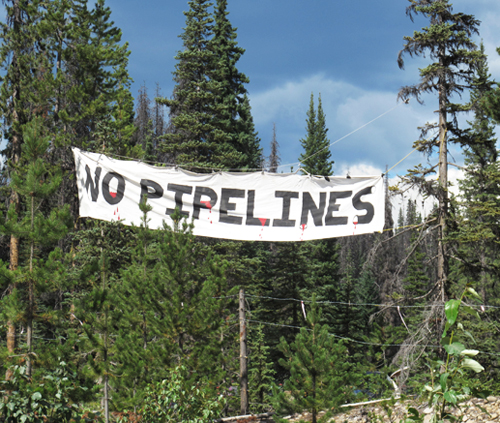
These eco-warriors were able to delay for two days loggers clearing the right-of-way for the Keystone XL pipeline. After they were removed and arrests handed out, they returned further up the route and set up the tree resistance yet again to force industry and police to go through the same process of removal a few days later. This way the delays and the complications continue for industry, and so does the necessity to dispense time, money, and resources time and again to remove the disruptions. If these efforts continue and multiply themselves in frequency and into different areas, it gets more and more difficult for industry to operate. With environmentalists, and more prominently and importantly indigenous communities resisting on the frontlines, industry is forced to employ either private security contractors or to turn to the state in order to remove the activity disrupting business. This gradually begins to affect industry’s bottom-line, and as for the state, it is forced into the uncomfortable and politically precarious position of having to use repression against “citizens.” Eventually the cumulative impacts of this resistance will begin to show results and become a deterrent to the further expansion of industrial infrastructure.
For its part, the state is now bracing for increased opposition and resistance to industrial and extraction projects. The Canadian government’s new deal with China, the Canada-China version of FIPA (the Foreign Investment Protection Agreement) effectively guarantees China’s investments. Those investments are in the form of natural resource extraction in the north, namely in Quebec and British Columbia, and in oil and gas flowing to the west coast via the would-be Northern Gateway and Pacific Trails Pipelines. China does not have direct investment in Northern Gateway and Pacific Trails, although much of that oil and gas will be going to Chinese markets. It is, however, invested in a consortium of companies called LNG Canada including Shell Canada, KoreaGas, Mitsubishi corporation and PetroChina for an LNG (Liquid Natural Gas) processing plant in Kitimat, BC, and a pipeline called the Coastal Gas Link project to be built by the now notorious TransCanada corporation, the same company contracted to build the Keystone XL.
Through FIPA amongst other measures, the Canadian government is building justification in the name of economic stability and the rule of law and setting the framework for the increased criminalization and repression of internal dissent. Under this new set of draconian circumstances the government guarantees itself the right, the privilege, and the obligation to suppress environmental and native resistance to extraction projects and industrial infrastructure. The Canadian state is further institutionalizing the rights of profit-making and corporations over the rights of people and the environment. The increased militarization of the state worldwide, therefore, is not a measure of security against outside threats, but rather a very deliberate act to exert force and control within its own borders.
Last year in November, president Obama denied an application for the 1,700 mile long Keystone XL Pipeline that would bring Tar Sands oil from Alberta, to Texas refineries on the Gulf Coast. In December, I wrote on Rabble.ca, “having too much faith that the U.S. government will make the right decision on an environmental matter, and being under the illusion that the decision will be subject to a thorough scientific review and ‘truly public input process’ would be a mistake. Celebrating a perceived victory which is actually closer to a setback is not a good idea…. And finally, the only reason why the Keystone XL decision has been postponed is because Obama and company don’t want it to be an issue come election time in 2012…Those from the ENGO community overreacting to the Keystone XL postponement as a victory, misinterpreting the situation, are actually doing the climate justice movement a considerable disservice.” Now, with the clearing of the right-of-way for the pipeline moving full steam ahead, the so-called “Keystone XL victory” is, quite predictably, rearing its ugly head.
In the US, before the election, the Republicans promised that if elected the Keystone XL would be approved immediately. TransCanada corporation, for its part, anticipates approval of the presidential permit application, which is required only as the pipeline crosses the Canada/U.S. border, in the first quarter of 2013. Even though it is unlikely that the pipeline will be that far along by April of next year, it is clear that industry is using loopholes and sheer insolence to force through industrial projects even though it still does not have full approvals. This is an indication that industry is trying to ram through the final phase of industrial capitalism and the destruction of the earth, with or without the state’s approval. What remains of the life systems of this planet, the ecological world, is now ground zero for the unchecked expansion of industrial infrastructure.
It is under this context that Damien Gillis and the team for the documentary film Fractured Land recently named the threatening advances of industry in northern BC, and other provinces, as “Canada’s Carbon Corridor.” I will add to that Canada’s ‘Colonial’ Carbon Corridor because environmental racism and the exploitation of indigenous peoples has always been a central feature of the Canadian state’s application of the industrial capitalist economy. What is meant by ‘Carbon Corridor’ is the expanded and systematic industrialization and exploitation of the Canadian North; the integrated impacts of industry from all of mining, oil and gas, fracking, logging, hydro-electric damming, new highways, etc. A major component of capitalism’s plan moving forward is the transformation of entire zones into industrially-facilitated natural resource reservoirs.
It is from this brazen devastation of nature that the need arises for something just as audacious to counter it. We must put life and creativity in the place of aggression and destruction. On Wet’suwet’en territory in what is colonially known as northwest British Columbia, grassroots community members of the Cilhts’ekyu (Unis’tot’en), and Likhts’amisyu clans have re-occupied their traditional unceded territory to resist the Pacific Trails pipeline. Their means of resistance has been community-building.
The Pacific Trails Pipeline (PTP) is the intended trailblazer of a prospective ‘energy corridor’ that would see multiple dual pipelines stretch 463km from fracking fields in eastern and northeastern BC, all the way to the Douglas Channel on the west coast. Like the Coastal Gas Link project the Pacific Trails pipeline would carry shale gas and would also target LNG processing terminals in Kitimat and tankers bound for Asian markets. PTP could be as much as three kilometers wide and threatens ecological damage along a trail of wetlands, streams, forests, native communities and farmland along the way.
As such, the grassroots Wet’suwet’en have committed that no pipelines will cross through their territory. But what is now unfolding on their land is not simply resistance to a pipeline and the defense of a territory, but the building and rebuilding of a radical alternative and traditional living. That is why such a strong emphasis at camp has been placed on community building and empowerment so that organizing and resistance can be integrated into the spaces of everyday life. This is pre-figurative organizing that confronts an injustice by counteracting it with a direct alternative. The resistance community, therefore, is the illustration that building and creating is the most comprehensive form of resistance, that there is no separation between life, and the defense of life.
The extraction and industrial development boom in the north is really a strategic plan of components where inter-industry cooperation sees a combined effort, for example, that would see LNG flowing via westbound pipelines and condensate flowing back east as a petro-chemical dilutant for tar sands bitumen, hydro dams providing energy for mining and oil and gas extraction, highways being built for all of industry, etc. That is why all these struggles and resistance fronts cannot be understood separate of each other, and why the collective response must leave no community behind along the pipeline routes and the path of industry. These resistance communities can be effective by operating through a well-coordinated and well-organized network. This network should link anarchists, permaculturalists, native and farming communities alike on a basis of trade, collective support, and mutual aid. Set up these established and organized communities who are all working together in mutual defense, and have the state and industry face the same time-and-resource-consuming challenges every few kilometers, over and over again. Community is attrition against the privatization and enclosure of territories.
Where industry says it will build energy corridors we will build community corridors in its place. The movement must move from isolated blockades and direct actions, as bold as they may be, to actively building radical alternative communities, resistance communities, directly in the path of extraction and industrial infrastructure. Environmentalists, with indigenous communities in the lead, must collaborate to establish fully permanent communities, self-sustaining and autonomous from the industrial system in order to be genuinely effective in resisting it. Where the Northern Gateway pipeline seeks to pass, where the Kinder Morgan, the Coastal Gas Link, the Pacific Trails, the Keystone XL and all other pipelines seek to cross, the movement must build community corridors in their paths. The resistance spokes cannot be simply passive and sparse direct action blockades, but rather fully intentional and deliberate permanent communities everywhere. Let us saturate the pipeline routes with radical community all along the corridor, at every kilometer, at every turn. Stop the industrial veins and the black blood of the capitalist economy will not flow.
Education for Profit in Detroit
This article by Tolu Olorunda is re-posted from CounterPunch.
“Here is a fruit for the crows to pluck.” Billie Holiday, “Strange Fruit”
It seemed like a scene from an auction block. This past Tuesday at the House of Representatives in Lansing, MI, the education committee held a hearing on a bill (HB 6004) which would help drive a deeper stake into the heart of public education in Detroit, transferring absolute power to the Education Achievement Authority (EAA), a “public body corporate,” as its chancellor, John Covington, defined during his testimony, which currently occupies over 15 (9 elementary/middle, 6 high) Detroit Public Schools (DPS) and services 10,000 students. It is a bill aimed, in plain terms, at shipping off larger swaths of Detroit’s kids (worth $7,000/yr, roughly $42 /day) into a private system.
The hearing room was packed full and overflowed: mainly from a coalition of Detroit activists, public school teachers and board members, lawyers, journalists, professors, parents and students who had come—some by bus. some by cars—to Lansing to plow through the avalanche of myths and lies which filled up the four-hour hearing. Beyond Covington, other testifiers included EAA parents, principals, teachers and students, all singing the same tune about “changing the culture of the schools.”
The EAA is, in theory, a bidder on the block, merely a contractor seeking to eradicate its main competitor, Detroit Public Schools (along with the elected school board), thereby gaining strong territorial and financial control over a 50,000-student district—a predominantly poor and Black, severely at-risk district, a blight-drenched district undergoing (much like New Orleans post-Katrina) disaster capitalism, absolved of all electorally bestowed power and subject to the whims of a sorely-hated emergency financial manager. The EAA is, as well, a for-profit industry, which like any other is ever-expanding, or at least seeking to.
Covington explained his Detroit office is a measly 13-person staff with limited budget, 74% of which goes to paying salaries; at the helm is a chancellor, redesign officer, and a CEO (or, as Covington wishes he/she be known, “regional director”) who reports to an 11-member non-elected board and would “help us expand across the state.” The EAA, which had a proposed $96 million budget for the 2012-2013 year, was recently granted $35 million by the Department of Education to expand statewide. But this move would run against the comfort of certain empowered communities in the greater Michigan which voted down (77 out of 83) the emergency financial manager law (Public Act 4) almost as resoundingly as the Detroit community (82%) last Tuesday.
The EAA was formed last year, August 2011, through a partnership between Eastern Michigan University’s board of regents and DPS, at the behest of Michigan’s CEO governor, Rick Snyder, who appointed a former GM executive to “manage” the school system. (The Dean of Eastern Michigan University’s College of Education seats on the 11-member EAA board, whose chairman is the ex-DPS emergency financial manager, Roy Roberts—his tenure was called to an end on election day.
The EAA currently operates the “lowest-achieving” 5% of schools in the city; lately rebranded “priority schools,” prior to that “failing schools.” The EAA brands itself a “different system for a better outcome.” It is in design a corporate district which siphons public funds and outsources various educational services to its clients. High performance is the promise, “student-centered curriculum” is the package, technology is the teacher, and “failing” children are the products.
The EAA is unabashedly market-driven, in logic and language (Covington: “we’re looking at the data to make data-informed decisions”). In addition to being state and federally funded, the EAA is also foundation-funded, amongst its benefactors Skillman and Kellogg, as well as Bill and Melinda Gates, the charter-crazy couple deeply invested in blowing open the education market. The EAA is religious, as the Gates are, about “teacher incentive pay,” a seductive scheme to de-skill teachers into test score generators.
Covington called for an end to the old order, the “horse-and-buggy” system, which fails, he said, to take into account the individuality of each child. He offered the EAA model as refreshing against a stale system delivering “curriculum disconnected from student’s histories.” Absurdly, he also drew from Jonathan Kozol’s classic 1991 text, Savage Inequalities, to give a dramatic address defending the dignities of failing children who, yes, need saving. Invoking one of the children captured on the cover, he stared deeply at the committee members before asking rhetorically: “What is it about me that you can’t teach?” And then answered: “absolutely nothing.” He said to not intervene, as the EAA is, constitutes a “crime against children.”
The EAA model is based on the novel idea that every child learns at different speeds and should advance accordingly. And so each child is subscribed to a computerized, individualized lesson plan. This is meant to emphasize “mastery” over “seat time.” And so children in the same classroom are allowed to be isolated into individual learning silos, and progress is charted through the lesson plans in personal netbooks given to each student. “Our platform is very dependent on the use of technology,” Covington explained. The children have to “master content” before “we move them,” from level to level. This is to put students “in charge of their learning” and get them “college, career, and workforce ready.”
The EAA is also based on the notion that kids must be trapped in school for longer hours and longer days than those in the traditional system, to “compete” with national and international peers. EAA schools, overseen by “management providers,” warehouse students longer one hour (daily) and 40 days (yearly).
The EAA “curriculum framework,” which was lauded as “innovative” and “engaging,” is “very dependent on the use of technology,” even though several committee members noted how unreliable technology generally is.
The darker side, of course, is the permanent replacement—eerily, as with the auto plants which betrayed Detroit—of bodies with machines. Across the city, veteran, community teachers are being laid off in droves, stifled with unemployment checks or if lucky enough paid measly wages while working semester contracts as subs, to make room for the classroom of the future: where no teacher would be needed because the computer would be able to interact with each student, individually, 100 times more efficiently than any human being ever could. (And with performance as the end goal of education, the grand bargain would be made.) Such a classroom would still have teachers, but of a different kind, playing more supervisory roles, more managerial and technical; this workforce would not need teaching certificates, experience, or education, rather the ability to operate computer software, essentially knowing where the on and off buttons are.
At the hearing, four EAA teachers testified, two young white females and two young Black males. One of the white teachers touched on her role in the classroom; she explained it as identifying “years of bad habit and breaking that for them.” The other told a wild story of a delinquent, violent kid whose life was magically transformed by the EAA model. There were also two Black male teachers who chanted the same mantras—of making kids “stakeholders” in curriculum, giving them “ownership of education.” One suggested the EAA’s cyber pedagogy (“online platform”) is actually a move from the didactic form, where teacher is dispenser of knowledge and student the passive vessel, or what Paulo Freire identified as the banking model (Pedagogy of the Oppressed, Chp. 2). He said the EAA model, which offers a shopping mall style of education, is ideal because kids get to choose in the classroom what and how they want to learn. For example, as one of the white teachers explained, if a kid likes basketball, she would tailor his math lesson plan to include some basketball references.
As expected, there were three very young student testifiers, two of which were on “Level 17.” All spoke glowingly of the EAA, saying unlike their experiences in the DPS system, “students are not in hallways, they’re in classrooms,” their peers are “learning faster” and hitting the “learning targets.” When asked by a representative what makes this system so special, one of the students explained: “That’s the thing about the EAA. You have a special bond with your teachers.”
There were also two parents present to recycle the same endless bromides that the EAA is innovative and life-saving; that it “works better,” enabling formerly lagging students to proceed at a “faster pace”; that EAA teachers are “more into the children.” It was all very revealing when one of the parents shared her observations of the culture inside her kid’s school. “It’s like they’re more calm,” she said. Students “line up to go to the bathroom. They’re a lot quieter, there’s no running in the hallway.”
And yet, within the suffocating fog of lifeless language and market slogans, refreshing was the strong voice of state Board of Education member, Marianne McGuire, who in the brief moments she spoke questioned an unaccountableeducation authority which “travels in its parallel universe,” defying community-elected school boards and occupying public school buildings; she spoke against the brazen “taking of local resources.” In most places, she quipped, “that would be called stealing.”
By this point, time had been bled out to accommodate the EAA fanfare, denying any members of the Detroit delegation time to tell a different story (they were asked, and plan, to return next Monday).
One who had gone to tell a different story was Helen Moore, long-time education activist in Detroit who had brought with her a framed copy from the Thursday, Sept. 4, 1997, edition of The Detroit News, which held a front page headline: “Detroit’s state school test scores soar.” Moore had planned to ground the alleged decline of DPS in historical context, as a direct consequence of the 1999 state takeover which systematically drained out and wrecked a once-vibrant public school district.
In June 2010, Education Secretary Arne Duncan had said “the best thing that happened to the education system in New Orleans was Hurricane Katrina” because it offered the “chance to create a phenomenal school district” out of the ashes of displaced families and abandoned communities. In Detroit, as is often said, the disaster wasn’t natural but man-made, strategic and calculated. The neoliberal response, however, is no different than New Orleans post-Katrina: market forces (foundations, non-profits included) have descended just as viciously to buy out bodies they consider disposable from communities they consider uneducated.
And just as in New Orleans, throughout the City of Detroit, from the South West to the East Side, community coalitions are gathering and task forces are forming to fight out this battle for the soul of public education—a fight, no doubt, for the long haul.
Israeli is once again engaged in a brutal assault of Gaza, killing civilians, while justifying their actions as “self-defense”
There has been very good reporting on this issue and we wanted to present a variety of sources that are in stark contrast to the US media coverage and the position of the Obama administration.
Belen Fernandez has an excellent piece that dismantles the claim that the israelis are acting in self-defense. Fernandez states in part:
Israel’s exclusive rights to the term “self-defence” and institutionalised habit of inverting logic have resulted in the construction of a narrative according to which the fatal bulldozing of American peace activists in Gaza and the murder in international waters of Gaza-bound humanitarian workers armed with construction tools, marbles and a metal pail are excused as defensive maneuvers.
As always, Electronic Intifada has some of the best reporting about what is taking place in the occupied territories. Ali Abunimah reported yesterday that an Israeli official has called for the army to bomb Gaza until the population flees en masse into Egypt’s Sinai peninsula, and for water and electricity supplies to be cut, a clear case of incitement to war crimes.
Electronic Intifada (EI) has also posted a series of photos to demonstrate the real human casualties in these most recent Israeli attacks, such as this one of a family morning the death of an eleven-month old.
In addition, EI has a story from long time Middle East reporter Jonathan Cook talking about why the Obama administration will do nothing to hold the Israeli government accountable. Cook states:
Obama may not have to worry about re-election but he will not want to hand a poisoned legacy to the next Democratic presidential candidate, nor will want to mire his own final term in damaging confrontations with Israel. Memories are still raw of Bill Clinton’s failed gamble to push through a peace deal — one that, in truth, was a far-more generous to Israel than the Palestinians — at Camp David in the dying days of his second term.
And whatever his personal antipathy towards the Israeli prime minister, Obama also knows that, the Israeli-Palestinian conflict aside, his policies in the Middle East are either aligned with Israel’s or dependent on Netanyahu’s cooperation to work.
Glen Greenwald also critiques the Obama administration support for Israel and make the argument that because of the Obama kill list, the US administration has to support the Israeli attacks.
Extra-judicial assassination – accompanied by the wanton killing of whatever civilians happen to be near the target, often including children – is a staple of the Obama presidency. That lawless tactic is one of the US president’s favorite instruments for projecting force and killing whomever he decides should have their lives ended: all in total secrecy and with no due process or oversight. There is now a virtually complete convergence between US and Israeli aggression, making US criticism of Israel impossible not only for all the usual domestic political reasons, but also out of pure self-interest: for Obama to condemn Israel’s rogue behavior would be to condemn himself.
Fairness & Accuracy in Reporting continues to document the extremely pro-Israeli coverage in the US media, with their most recent article, Justifying Certain Acts of Violence.
The Palestinian BDS National Committee, which has been calling for a Boycott, Divestment and Sanctions Campaign against Israel for several years now, believes this current Israeli attacks on Gaza needs to motivate all of us to be part of their campaign.
The 1.6 million Palestinians in Gaza have endured the worst of Israeli impunity and violence including being placed under a medieval siege, being subjected to deliberately created food insecurity and frequent acts of Israeli state terrorism. It is the duty of all supporters of international law and universal human rights to hold Israel accountable through effective measures, such as those called for in the global, Palestinian-led Boycott, Divestment and Sanctions (BDS) movement.
Lastly, here is a video interview with author Vijay Prashad, discussing the US, the United Nations and the Israeli assault on Gaza.
Chemicals, Wartersheds & Maps: More Tools for the Anti-fracking Movement
It seems that every week there is new information on the dangers of hydraulic fracturing. We have seen a massive uprising to oppose this latest form fossil fuel extraction from the oil & gas industry and grassroots activists are doing their own research to counter the claims of the fossil fuel industry.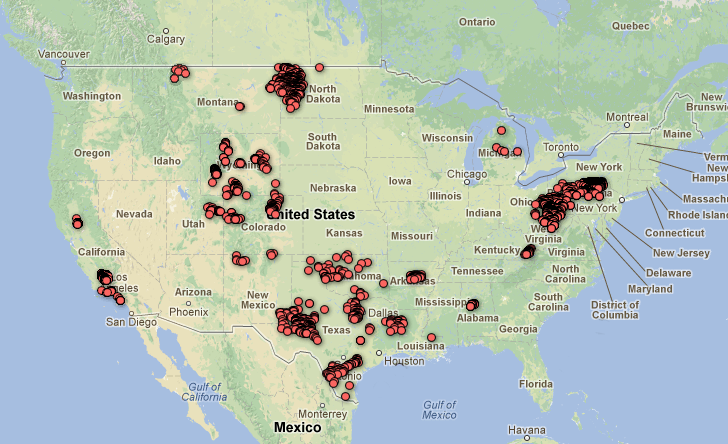
We reported a month ago about a forum held in Kent County, where the DEQ representative gave out a source dealing with what chemicals were used in fracking. The source, Frac Focus, is an industry website, where the companies involved in fracking are supposed to “self-report” on what chemicals they are using.
As a counter to this source, a new chemical fracking disclosure database has been created by the group, SkyTruth. Using the data from Frac Focus, SkyTruth is taking the information further and making it more accessible to the public.
Responding to public calls for greater transparency Texas, North Dakota, Pennsylvania and five other states require disclosure via FracFocus. But with the limited tools provided by FracFocus, data aggregation and analysis is impossible. Despite these and other critical shortcomings, the White House has suggested FracFocus is a suitable platform for public disclosure.
More states are considering relying on FracFocus to address increasing public pressure for disclosure. The Bureau of Land Management is finalizing new rules for fracking that will apply to drilling on millions of acres of public land, and may be on the verge of designating FracFocus as the public disclosure platform. But we think the data must be much more accessible, shareable, and useable for the public to be adequately informed about the types and amounts of chemicals used in fracking operations.
“The intelligible disclosure of industry information and data through this SkyTruth action will make the task of research on the effects of fracking much easier,” said Dr. Tony Ingraffea, professor of Civil and Environmental Engineering at Cornell University. “This large and ever-expanding dataset is invaluable for cross-referencing with other datasets such as health and environmental quality.”
Fracking and Watersheds
A report commissioned by citizens opposed to hydraulic fracturing has identified grave public health and environmental risks in plans to lease public land for fracking near Muskingum Watershed Conservancy District (MWCD) reservoirs in Ohio. The report, written by Paul Rubin, a high-profile New York Hydrogeologist and president of HydroQuest, warns of toxic water contamination sources which will be created by fracking near and underneath the lakes.
The report was sent to the MWCD along with a demand letter that there be an immediate moratorium of indefinite length imposed upon hydraulic fracturing on any MWCD lands and underneath all MWCD reservoirs, and further, that there be a permanent policy to not sell reservoir water for fracking.
Rubin’s report focuses on Seneca Lake, Ohio’s second-largest freshwater lake, as an example of a Muskingum reservoir case study. He concludes that leasing for widespread gas and oil drilling is a “present worst-case scenario” because:
- Gas and oil wells, some drilled more than half a century ago, have weak or failing plugs of questionable integrity. The ability of aging, incomplete and absent well sealant (i.e., plug) materials to keep toxic contaminations out of freshwater aquifers, reservoirs and waterways is poor and short-lived.
- Cement sheaths, steel casing and clay plugs of known wells are failing or will fail within anywhere from a few years to decades, thereby creating new pathways for explosive methane gas and fracking poisons to flow into drinking water sources. Huge fracking pressures will blow out weak clay plugs in old wells, many beneath reservoirs. Earthquakes will further shorten the limited durability and life span of well sealant materials.
- Repeated hydraulic fracturing will result in interconnecting natural and created fractures and old, poorly plugged, gas and oil wells, allowing upward contaminant migration into drinking water supplies, including reservoirs.
- Toxic hydrofracking fluids injected deeply in the ground will move with groundwater flow systems, eventually moving upward into freshwater aquifers, reservoirs and waterways. Permitting of horizontal gas wells proximal to reservoirs will needlessly jeopardize water quality.
Fracking sites in Michigan
Lastly, a Michigan anti-fracking activist sent us the most current map of where high pressured hydraulic fracturing is taking place in Michigan. There are 40 well permits (for vertical and horizontal fracking) and 15 pending in the state.
As you can see from the map, most of the fracking is taking place north of Kent County, but since mineral rights have been purchased in Kent, Allegan and Barry County over the past 6 months, we can expect to see new fracking sites in West Michigan.

“One Big Progressive Cluster-F–k”
This article by The Insider is re-posted from CounterPunch. Editor’s note: It is important that people understand that the Democratic Party has a long history of co-opting social movements, as is well documented in Lance Selfa’s book, “The Democrats: A Critical History.”
President Barack Obama was elected merely a week ago in a presidential campaign that ran a bill of $6 billion.
“Campaign Season,” as its called by the electioneering professionals and most journalists, has officially come to an end in the eyes of most citizens and the press, both mainstream and “independent media” alike. For the “Professional Left” though, “campaign season” never actually ends, which explains why they refer to their form of activism as “campaigns.” It’s truth in advertising, at last!
The newest “campaign” in town is being run by….wait for it….a MoveOn.org offshoot in the form of “Movement Strategy Brunches” being held nationwide on Nov. 17-18.
“Drink Mimosas”
On Nov. 8, writing to a confidential email list, Liz Butler, a “Senior Fellow and Network Organizing Project Director” of the Movement Strategy Center, declared,
“We are asking you to set up a Movement Strategy Brunch – an informal, low-key way to bring together you and other local grassroots people at the local level to reflect, drink mimosas (or healthy green smoothies) and talk about the future. Sound fun? It’s supposed to be! After so much hard work, it’s nice to be able to kick back, drink some orange juice, and munch on a flaky croissant.”
The Movement Strategy Center is the Fiscal Sponsor for Van Jones’ Rebuild the Dream, according to Rebuild the Dream‘s website. Jones’ front group for the Democratic Party set up shop in June 2011 when MoveOn.org gave $348K to Rebuild the Dream in start-up capital, according to its most recent Internal Revenue Service (IRS) 990 form.
Rebuild, as regular CounterPunch readers will likely recall, was responsible for the attempt to co-opt the Occupy movement not once, but twice – once in the fall of 2011 and once again in the spring of 2012.
Butler oversaw the “99 Spring,” the front operation for both MoveOn.org and the Democratic Party. Prior to her current stint at the Movement Strategy Center in April 2012, Butler worked for 3.5 years as the Campaign Director for 1Sky, which in April 2011 merged with 350.org, currently in the throes of its “Do the Math” campaign.
The email was co-signed by Billy Wimsatt, a Fellow at the Movement Strategy Center, as well as an employee of Rebuild the Dream, two outfits that are interchangeable and one-in-the-same. A WhoIs.net search shows Wimsatt registered the website for the “Movement Strategy Brunches” on Oct. 16, a few weeks ahead of the Nov. 6 election.
“Consensual Domination”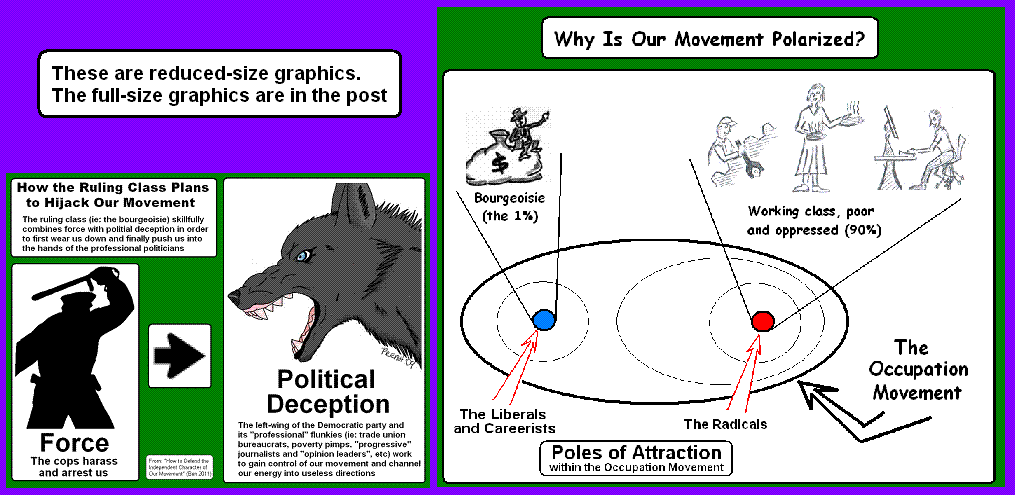
Like its cousin the 99 Spring, the ”Movement Strategy Brunches” give well-meaning grassroots activists the illusion of having full control of things at the local level. “YOU organize it,” shouts its website.
Yet again, it’s the same players managing a brand new version of what University of California-Santa Barbara Sociology Professor William I. Robison refers to as “consensual domination” in his classic book, “Promoting Polyarchy: Globalization, US Intervention, and Hegemony.”
“The Gramscian concept of hegemony as ‘consensual domination’ exercised in civil and political society at the level of the individual nation (or national society) may be extended/applied to the emergent global civil and political society,” he wrote in the book’s introduction. “The emergence of ‘democracy promotion’ as a new instrument and the orientation in US foreign policy in the 1980s represented the beginnings of a shift – still underway – in the method through which the core regions of the capitalist world system exercise their domination over peripheral and semi-peripheral regions…”
The tools of imperialism have come home to the core of the empire, as they always do. This time, like the many times before, it’s in the form of “consensual domination” on the part of citizens who partake in “activism” that’s nothing more than freshly installed astroturf for the Democratic Party disguised as “democracy promotion.”
“These pseudo-revolutionaires no doubt believe their own propaganda, or their ‘memes,’ as they prefer to call them. But these liberal cultists are nothing more than convenient lap dogs for the ‘progressive’ millionaires who fund them and the Democrats,” said John Stauber, author of the book Toxic Sludge is Good for You and Founder of the Center for Media and Democracy. ”They are well fed, they groom each other, they regurgitate the same talking points, and they consistently accomplish nothing in the real world except to push a false hope that they are leading a real Movement. In other words, it’s a classic form of cooptation, which is both made possible by the severe limitations of the political process and of course serves to limit it further. It is essential to maintaining a status quo that benefits the 1%. Follow the money, this is one big progressive cluster-fuck.”
Talking about Transgender Tuesdays: An interview with Mark Freeman and Kelly Kelly
Earlier this week, the LGBT Resource Center at GVSU hosted a screening of the film, Transgender Tuesdays.
The film is about the lives of eight of the patients who came to the Transgender Tuesdays clinic starting in 1993. Their stories reach back to some of the “bad old days” of the 1950s, recalling the sexual freedom movement of the 1960s, drug ravages of the ’70s, Women’s and GLB (and finally T) Liberation in the ’80s, and the HIV epidemic and queer activism of the ’90s.
These true tales reveal what transgender life was like over those decades on the streets of San Francisco and around the country — and make it clear that it is still no bed of roses today. Clinic staff and stars of the community make cameo appearances. But it is the lives of these transgender heroes (often unknown even by younger trans folk today) that provide pride in the present and hope for the future.

On Wednesday, we were fortunate to be able to sit down and talk with the producer of the film, Mark Freeman, and one of those people profiled in the film, Kelly Kelly.
The interview is in two parts. In Part I, we asked both Mark and Kelly to talk about what brought them to the Tom Waddell Health Center. We also asked them about how this film came to fruition and the importance of sharing the powerful stories of the individuals in the film. Lastly, in Part I, we asked both of them what impact the clinic and the film is having across the country.
In Part II, we asked Mark and Kelly to talk about how this film can be an organizing tool to address larger Transgender rights issues in the country. In the last question of the interview, we asked them to speak to the idea of revolutionary love, which is something that Che Guevarra talked about as something that should be central in the lives of all revolutionaries.
The DC-based group Food & Water Watch has released a new report that questions the claim from the oil & gas industry that fracking will make the US more energy independent.
Just as people have exposed the Tar Sands project as a false energy independence plan, we now have more evidence that the rush to frack for natural gas across the country is primarily a means for exporting and greater profits.
Briefly, Food & Water Watch finds that:
- The popular claim that the United States has 100 years worth of natural gas presumes not only that no place would be off-limits to drilling and fracking, but also that highly uncertain estimates of domestic natural gas resources are accurate;
- Even assuming that the industry’s dreams of unrestricted drilling and fracking for natural gas come true and that resource estimates prove accurate, plans to increase the rate of consumption of U.S. natural gas easily cut the claim to 50 years, well within the lifetime of college students today;
- Among these plans are 19 proposals, as of October 26, 2012, to sell U.S. natural gas on foreign markets to maximize oil and gas profits. Combined, these proposals alone mean that annual natural gas exports could reach the equivalent of over 40 percent of total U.S. consumption of natural gas in 2011; and
- Even if the highly uncertain estimates of “tight oil” reserves prove accurate, and even if the oil and gas industry wins unrestricted access to drill and frack for oil, the estimated reserves would amount to a supply of less than seven years.
The report also states:
The threat is that the fossil fuel industry — empowered by its deep pockets, armed with increasingly intensive extraction methods and bolstered by entrenched infrastructure and demand for its product — will succeed in delaying the necessary transformation for decades, just to protect its bottom line. Now is the time for the United States to declare independence from the oil and gas industry.
Food & Water Watch also offers up some recommendations, which we find to perpetuate the current economic system. The failure to discuss climate change, the US military industrial complex and the need for a drastic reduction in carbon emissions is most unfortunate and ultimately will mean that there might not be a real sustainable future for humanity.
However, beyond the significant short-comings of the report, the information is useful for the anti-fracking movement and should be used for that purpose.
Transgender Day of Remembrance this Sunday in Grand Rapids

Last year we reported on the Transgender Day of Remembrance event at Plymouth UCC in Grand Rapids and this Sunday people will gather to participate once again in this important event.
The Facebook event page for this event states:
Come join Transgender Education Collaboration, Plymouth UCC, and the rest of our community remember those who were taken away from us in the last year because they didn’t fit neatly in expected gender roles. Also, share in the hope and joy that comes for the amazing talents that shines within the diversity among us.
Grand Rapids’ Transgender Day Of Remembrance service
Sunday, November 18
6:00PM
Plymouth United Church of Christ
4010 Kalamazoo SE, Grand Rapids
10 Myths About Obama and the Democrats
This article by Jason Hirthler is re-posted from CounterPunch.
As we head into The Chosen One’s second term, it might be useful to explode a few of the chronic myths that cling to the man more tightly than his shadow. Myths that have helped liberal intelligentsia justify its enthusiastic support for this lesser of two evils. Here are the myths as articulated by a young, imaginary, and starry-eyed Obama progressive, momentarily detached from the stampeding liberal herd, just long enough to have a conversation with a leftist on the political fringe…
Myth 1. Now look, Obama wants nothing more than global peace, but Iran is a nation of madcap mullahs looking to nuke Tel Aviv. We have to do something.
Obama is definitely not a peace advocate—unless by peace you mean: peace on our terms. That means a disarmed, defanged, and docile Iran with mullahs in exile and puppet doyen in ascendancy. We take with Iran the same line that Israel takes with the Palestinians. Sure, we want peace—on our terms. Meaning the less Arabs in Jerusalem the better. Meaning a Bantustan province with notional national status. A series of tidy little prison camps strung together by gauntlets of IDF troops. So peaceful at night you can hear the safety switches at the security checks clicking off.
The administration’s posture on Iran has already violated international law—using open threats and coding a few others. (Everybody knows what “all options are on the table” means.) Our sanctions amount to economic warfare visited on little children who can’t define the word sanction. Iran has done nothing wrong. They are within their IAEA rights. There isn’t a shred of evidence they are using nuclear for anything outside the purposes of civilian power. Yet the U.S. and Israel are nuclear states, signatories and serial violators of the Non Proliferation Treaty. Israel has 200 nukes. We have more. Iran has none and they know they would be instantly vaporized if they bombed either Israel or us. They don’t have a death wish. But we are openly threatening to bomb them. We have already carried out acts of war within Iran, including cyber-warfare and assassinations. If Iran had done either inside the United States we would have invaded them instantly and reduced Tehran to rubble. Palestine is so bad there’s not enough space to get into it. And on a side note, we’re rapidly surrounding China militarily, and we’ve infuriated Russia by building a defense shield on its doorstep. There are two kinds of people that claim to crave peace. Those that want peace and those that want peace on their terms. Obama is the latter.
Myth 2. You seem to forget that Obama decided to end the Iraq war and brought all our troops home.
Actually, George Bush did. The man we know as Dubya actually pushed through and signed the SOFA agreement that called for the troop removal. He actually tied off his own war. In fact, Obama pushed hard for a revised agreement that would allow troops to stay on in Iraq, but the Iraqis rejected his efforts. So he’s taking credit for something he didn’t do; he wanted to do the opposite. But we are still leaving tens of thousands of military contractors—mercenaries paid for by our government—behind just to reassure the Iraqi people of our benign intentions. What country wouldn’t want the illustrious Blackwater roaming its streets in blacked-out SUVs, cigar-chomping sociopaths from Texas at the wheel? And don’t forget the Green Zone, that billion-dollar, taxpayer-funded Fortress-on-the-Tigris. Hard to miss from a satellite.
Myth 3. But he ended torture, rendition, and closed Guantanamo!
Regarding Guantanamo, it is still open for business. Obama supposedly didn’t close it because of Congressional resistance, the legal issues involved with bringing ‘enemy combatants’ into the states. I guess even the Department of Justice sometimes stumbles its own nebulous doublespeak. Rendition is still an active program, although it is being—ahem—more closely monitored to avoid prisoner abuses. (I almost used the not-so-laughable euphemism ‘detainee’ by accident.) But that is really beside the point since we’ve created a mirror image of Guantanamo at Bagram in Afghanistan, except that it is larger. Sixty thousand square feet of detention dementia in the heart of opium country.
Myth 4. Let’s not forget that he liberated Libya and wholeheartedly supported the Arab Spring?
He bombed Libya into the dark ages, much like Bush did in Iraq, all in the name of democracy. Since Congress wasn’t awakened from its dogmatic slumbers long enough to rubber stamp the attack, the action violated the War Powers Act of 1973. But no matter, the bombing helped remove the inimitable Colonel Gaddafi. But Libya is now more dangerous than it was under Gaddafi, and is turning into a bloodbath that would make Quentin Tarantino rush out the door with a Super 8. As for Egypt, a look back at the record will confirm that the administration supported Mubarak for years up until the very moment when the tide turned and it became clear he was going to be ousted. Then we took the position of the people and hailed a new democracy. That is not our preference, however, in the Middle East. In country after country, both Democrats and Republicans have supported and continue to support repressive regimes. As well in Latin America and Asia. There is actually a study by Edward Herman that shows a clear correlation between an increase in human rights violations and an increase in American aid.
Myth 5. Besides, Obama must know something we don’t, so we probably shouldn’t question the war on terror.
I think this argument, that the government may know something we don’t, so he gets the benefit of the doubt, has always been a Republican response to liberal criticism of illegal wars. It’s a dangerous position to take. There’s an international protocol, within the UN and NATO, for situations of unavoidable state violence. We don’t follow it. We act with impunity when we violate the sovereignty of other nations on a regular basis in Pakistan, Libya, Afghanistan, Yemen, Iran, and Syria. We do as we please because might makes right. A good way to think about it is to ask yourself whether you would be okay with Iraq bombing Washington to take out a terrorist we were harboring? We harbor plenty, including Bush, who has been convicted in a war crimes court, and to whom Obama has granted immunity by ending torture investigations. There was a moral standard set at the Nuremberg Trials called the principle of universality, that you should apply to yourself the same principles you apply to criminals. That’s the moral foundation for all our international conventions. But we don’t follow it.
Myth 6. Obama just can’t get anything done because the Republicans won’t let him!
The argument that Obama doesn’t do more because the Republicans won’t let him is unconvincing and doesn’t fit the facts. The Democrats had four years of Congressional majorities where they controlled the budgets, including two years under Obama. Their budgets reflected the neoliberal consensus—heavy war spending, small-scale social spending or regressive social policy. He could have pushed through so many progressive measures with budgets and executive orders, and if he were truly progressive, he would have. As many diehard liberals claim, he may be progressive at heart, but that doesn’t matter much if his policies are firmly neoliberal. In fact, they always have been, as was laid bare before his 2008 election by authors like Paul Street. Also, budgets can’t be filibustered.
Myth 7. But he means well.
The evidence that I’ve seen—his actions—overwhelmingly shows that the Obama administration is on balance moving us in the wrong direction. If you want to roll in arguments about improvements in the racial mood and self-belief of the country, there may be truth in that, but those are intangible factors that can’t be measured. The actual policies are a different story altogether. Neoliberal economics and imperial foreign policies are a radically regressive force in the world—studies of nation after nation show their negative effects. See Naomi Klein’s Shock Doctrine and Chalmers Johnson’s Sorrows of Empire for a nice recap. Not content to be one or the other, Obama has proven to be a neoliberal imperialist, as opposed to your garden-variety fascist. It’s not really a question of opinion, unless you introduce intangibles, which I’m not discounting because I do believe the fact of a black president matters, and is in itself positive, despite the kind of pandering Obama had to do to make himself acceptable to our moneyed and pale-cheeked elites.
Myth 8. Poor people support him. He must be doing something right!
He did well in the election with African-Americans and Hispanics, minorities often facing brutal economic realities. It is a shame he won their vote again, because their interests are not being served. The thirty-year trend in this country of declining wages and offshoring of jobs continues apace. His jobs bill at best addressed 1/24th of the unemployed. One twenty-fourth. His housing help was about as bad. He even rejected McCain’s request to release $300 billion in funds to help underwater homeowners. Even as he took $13 trillion in toxic mortgages onto government books as part of a bailout of about $24 trillion to banks. If that doesn’t convince you where his loyalties lie, nothing will. In any case, the jobs that have vanished—through either offshoring or the meltdown—have not come back. Many were good middle class jobs. What jobs are being created, if any? Low-income jobs. Most pay between $7 and $13 dollars an hour. Not even a living wage. The only real jobs being created are those that can’t be exported. Service industry jobs: waiters and bartenders or social service people who help care for the elderly. Cashiers at Best Buy. Servers at Ruby Tuesday. So the stimulus of $700 billion, although woefully inadequate by design, was better than nothing, but can’t be said to be the right decision when so much more was—and is—needed.
Myth 9. Still, things are getting better.
The fact is, half of all Americans—half of us—are now either low income or poor, according to the Census office. Forty million people rely on food stamps. Those numbers are increasing, not decreasing.
The government—at the behest of its finance patrons—is deliberately creating a large, low-income labor pool. Exactly what capital wants in a neoliberal system. Cheap labor. Macroeconomic policy used to aim at full employment. Neoliberal economics instead demands a focus on controlling inflation—largely to protect finance capital. Again, you can see who is being protected at whose expense. So when Obama stimulates 10,000 new manufacturing jobs, it provides positive press that helps him get re-elected, but it doesn’t begin to stem the tide of millions of better jobs that have flown out the door. And when you export production, you often find that product development and production design work follows in short order. Like Bob Dylan sardonically sings, “They say low wages are a reality/if we want to compete abroad.” A false storyline peddled to millions by The New York Times’ Tom Friedman and his ilk, that roving clan of Panglossian optimists. It’s surprisingly easy to be a globalization triumphalist when you sit atop a media empire, your telescope trained on exotic Asia, and your handlers feeding you juice and nuts while you dictate your latest bestseller. By the way, unemployment stats are skewed. They no longer count you if you’re out of work and haven’t looked for a job in four weeks. A terrific little perversion of reality that one might call ‘Friedmanesque.’
Obamacare won’t help, either. Low-income debt slaves won’t be able to afford it and, even if they could, wouldn’t want to pay for a policy that doesn’t provide adequate coverage. They will be taxed instead, which they won’t pay because they don’t have the money. So they will be government debtors, which will then have the right to garnish their wages and unemployment checks. There are sadly no serious cost constraints in the Affordable Care Act. Instead, it hands $447 billion to the insurance companies that are the actual cause of spiraling costs. When Bill Clinton said during the Democratic Convention speech that he was so lauded for, that healthcare costs were dropping, he was diddling the numbers. Healthcare costs always drop during a recession, as do other costs. So he used the lousy economy to argue that Obamacare was working. Kind of Orwellian, if you pause to think about, which you probably shouldn’t. Watch what happens if the economy recovers.
Myth 10. Well, if we could just get rid of the Tea Party fanatics and other Republican radicals, things would return to normal.
The further radicalization of Republicans is more symptom than cause. At a macro level, I think we’re seeing a war of finance capital against labor and industry. Capital—in the neoliberal model—pushes hard for deregulation, privatization, and downsizing. It’s been implemented for 30 years in the third world by the International Monetary Fund (IMF) and World Bank through austerity bailouts, all with disastrous consequences (although not for American finance and multinationals). Now the model is being applied in the first world for the first time. It was only a matter of time. The Democrats and Republicans have jointly adopted its prototypical narrative—of cutting public spending and reducing government. Another false narrative. The deficits went up when the economy went down, as they always do. They’ll go down again when the economy goes up. We can and should be deficit spending our way out of this recession, but the administration sticks to the required talking points about the fiscal cliff and the horrors of debt. As if the American public needs to be reminded.
The real goal is to eliminate the social safety net. So, finance capital moves aggressively against labor with the goal of erasing the New Deal and Great Society. With those onerous programs gone and healthcare shifted onto the back of the individual courtesy of Obamacare, big business can truly earn the kind of astronomical profits it fantasizes about. To help, the Democrats can soften the harsh edge of austerity in a way Republicans can’t. That’s their doctrinal role now that they’ve been bought by finance. And they can always count of the votes of the unions and the poor because, as Clinton famously put it, “They have nowhere else to go.”
Yesterday, the New York Times published a story about the market in downtown Grand Rapids, which is currently under construction.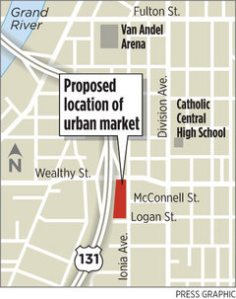
The NYTs piece does what most local news coverage has done with this story so far, presented it as a wonderful thing. The Times piece talks about public/private partnerships, the benevolence of local philanthropists, the growing local food interest and how the market is one piece in the ongoing development of downtown Grand Rapids.
The only sources cited in the article are David Frey, a member of Grand Action, the entity that made the proposal; a representative from Rockford Construction, which is the primary construction company on this project; and the person who was hired to manage the market.
Excluded from the article are voices and perspectives that see this project through a much different lens.
For example, Our Kitchen Table, a local grassroots group working on food justice, had this to say about the New York Times article:

While it’s nice to see Grand Rapids receive national recognition, access to fresh, nutritious food in Grand Rapids’ neighborhoods remains a privilege reserved for those who can afford higher prices and transportation outside of the city’s food desserts. Our Kitchen Table works to address this injustice through food gardening programs and the Southeast Area Farmers’ Market. However, as government policies do not favor the small farmer, we have a hard time finding vendors who can afford the small returns our market brings them. In addition, existing philanthropic efforts to feed the hungry more often fill bellies with low-nutrient, high sugar, processed foods that only exacerbate medical issues caused by malnutrition: obesity, asthma, diabetes, heart disease and behavioral problems. While food industry donors get write offs, lower income families are written off. Furthermore, we do not believe the new Downtown Market will do anything to improve access to healthy foods for the Grand Rapids families who need it most.
Such a statement speaks to why this blog has been critical of the proposal from the beginning. We pointed out in an April 2010 article that the project was not just a farmers market, but a larger food complex that will serve an upscale population. In May of 2010, we posted a second article that provided a summary from a meeting where area residents and food activists raised questions about the proposal, stating that many who live in the Heartside area and south and south east of the market site were not included in any discussions about the project.
The project was approved despite the lack of public input and since then has been receiving millions of dollars in public funding. Is this what is meant is meant by public private partnership? The private sector benefits, while the public foots the bill?
We reported in a December 2011 article that the amount of public funds for this project are substantial. The Michigan Economic Growth Authority (public money) gave the project a $4.5 million grant, the DEQ (public money) gave a $1 million grant for demolishing the previous building on site and the DDA (public money) has also provided the project with over $1 million and is committing an additional $75,000 annually for the next 20 years.
Imagine if that kind of monetary commitment was given to groups like Our Kitchen Table, we might actually be able to eliminate malnourishment in Grand Rapids. Too bad that is not anywhere near the goal of the soon to be open downtown market.

