Tar Sands Blockade Calls For Solidarity Actions November 19th
This article is re-posted from Earth First News.
Alright, eco-warriors, consider yourselves on notice. Tar Sands Blockade is stepping our game up, and we’re calling on you to do the same.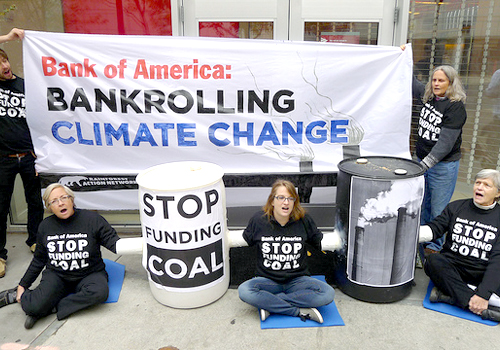
We’ll be throwing down in a big way next Monday, November 19th, somewhere near Nacogdoches, Texas, the heart of outlaw territory in this region for hundreds of years, and we want you to do the same. If you’re close enough or able to travel, of course we’d love to have you here with us, but we also want to see communities rising up and defending their homes from the wanton destruction of extractive industry everywhere.
TSB is dedicated to fighting this tar sands pipeline running through our collective backyard (or front yard, as the case may be), but we recognize the heart of the issue. We know that resource extraction is the lifeblood of the machine, the foundation of the crisis known as capitalism, and that only by building communities of resistance can people opt out of the system and watch it return to dust. So we call on the radical environmental community to show solidarity with the struggle against the tar sands, recognizing that our struggle is just a piece of the larger struggle against extraction and that you need to do what makes sense for your community.
Our message is simple: climate catastrophe is social injustice manifest and nothing less than a slow but sure genocide of the have-nots perpetrated by those with extraordinary privilege. The only way to survive climate chaos is by building community resiliency across all boundaries based on mutual aid and respect. The community that resists together persists together, so join with your neighbors and defend your homes from the onslaught of resource extraction.
The state, knowing that they can no longer ignore or mock us, has escalated its fight back against our campaign. At our last action, the two blockaders arrested had their phones stolen by police while they seek subpoenas for records, but they don’t scare us. 350.org believes the state can correct the error of its ways and embrace an outlook of environmentalism, and they are hosting a stand in the park rally on November 18th in hopes of convincing the state to do so. Let’s school them on why direct action gets the goods with an eruption of community resistance against tar sands and all the other fucked up extractive industries nestled in our backyards.
Check out this page for suggestions on targets and action ideas, but recognize that you know best about what your community needs. When you get your action planned, let us know about it and send any media you have to kxlblockade@gmail.com so we can spread the word far and wide. There are already 22 solidarity actions planned for November 14th through 20th, let’s keep that number growing and blow the lid off this thing all over the world.
Finally, thanks for the ongoing love and support. The day-to-day work here is a constant struggle, but knowing that y’all got our backs makes it easier to push on through and focus on what matters.
Loving and raging for the wild,
– Tar Sands Blockader
Bloom Collective to screen film on US policy towards Native Americans this Saturday
This Saturday, the Bloom Collective will host a screening of the documentary, The Canary Effect: Kill the Indian, Save the Man.

From multi-award winning directors Robin Davey and Yellow Thunder Woman, comes this ‘Illuminating Documentary.’ Delving deeply into the often misunderstood and frequently over looked historic realities of the American Indian, The Canary Effect follows the terrifying and horrific abuses instilled upon the Indigenous people of North America, and details the genocidal practices of the US government and its continuing affects on present day Indian country.
Featuring interviews with the leading scholars and experts on Indian issues including controversial author Ward Churchill, the film brings together the past and present in a way never before captured so eloquently and boldly on film.
According to the Facebook event page, the Bloom Collective says: Join us for a viewing and discussion of the film as we prepare to venture into the Thanksgiving season. Following the film there will be a discussion, donations accepted.
The Canary Effect
Saturday, November 17
2:00PM
671 Davis NW, Grand Rapids – lower level
New Media We Recommend
Below is a list of new materials that we have read/watched in recent weeks. The comments are not a “review” of the material, instead sort of an endorsement of ideas and investigations that can provide solid analysis and even inspiration in the struggle for change. All these items are available at The Bloom Collective, so check them out and stimulate your mind.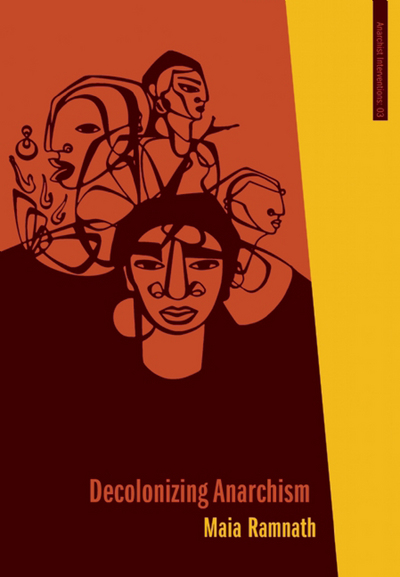
Decolonizing Anarchism, by Maia Ramnath – In this fabulous written book, which is part of the Institute for Anarchist Studies, Maia Ramnath provides us with both a rich history of anti-colonialist resistance in India and a new framework for how allies can think and act about global resistance movements. Ramnath covers a great deal of ground and looks at numerous anti-colonial movements and theorists in India, to demonstrate that there has been tremendous diversity in how Indian people dealt with the British occupation. I also found the analysis of Gandhi to be refreshing, in that it wasn’t so dismissive of his contributions to the liberation struggle that one might get from some anarchist circles. For those of us living in the US and committed to support global liberation movements, Decolonizing Anarchism is an extremely useful tool since it challenges not only our notion of solidarity, it challenges the rigid anti-nationalist position that many anarchists in the west take, while sitting in our position of privilege. Ramnath presents readers with the reality that it is extremely difficult for liberation movements to not operate with nationalistic boundaries, both in terms of physical space, but also because of the backlash by centers of power. An important contribution in anarchist analysis that should be widely read.
Don’t Leave Your Friends Behind: Concrete Ways to Support Families in Social Justice Movements and Communities, edited by Victoria Law and China Martens – For those who have been involved in activists circles, one thing that is generally an obstacle for some people to participate in radical change is the lack of solidarity with people who have children. Don’t Leave Your Friends Behind is a wonderful collection of essays, interviews and stories from parents and children, about how we need to continue to figure out ways to create spaces and engage in a process that is both welcoming to parents with children and nurturing for them. There are lots of good concrete examples and lists of suggestions on ways to be in solidarity with parents/children, but the aspect of this book I found most delightful was the personal stories. The stories provide a rich diversity of opinions and experiences and they can challenge us to take serious the need to support families in social justice movements.
101 Changemakers: Rebels and Radicals Who Changed US History, edited by Michele Bollinger and Dao X. Tran – Unlike many large picture books, 101 Changemakers is not intended to be a coffee table book. This collection of brief bios on 101 radicals and rebels in US history is a fabulous tool for not only learning about some amazing people in US history, it would be an excellent educational tool for teachers, parents and young activists. The book follows a chronological timeline of US radicals and rebels, beginning with Crispus Attucks, an early revolutionary, and ending with Constance McMillen, a young Lesbian who challenger her school district by bringing her girlfriend to their high school prom. While the biographical information is brief, it does demonstrate a rich history of radicals and rebels in US history and each biography comes with a set of questions for discussion and suggestions of book, documentaries and websites to explore the individuals and movements they were a part of.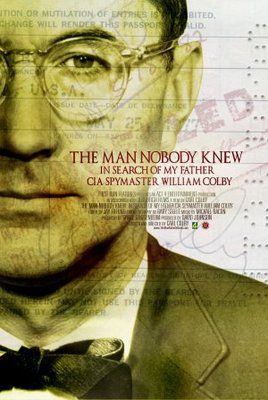
The Man Nobody Knew: In Search of My Father CIA Spymaster William Colby (DVD) – This documentary is an interesting investigation into the career of former CIA Director William Colby. Told through the eyes of former colleagues and his son Carl, The Man Nobody Knew is like watching a documentary version of the Hollywood film The Good Shephard. Colby was part of one of the CIA’s first campaigns, the undermining of the pro-democracy movement in Italy in 1948. However, Colby’s real legacy was in role in the US against Southeast Asia, particularly as head of the Phoenix Program, a CIA assassination campaign against Vietnamese dissidents and Viet Cong supporters. Some might criticize this film as humanizing Colby too much, since it relies on his ex-wife and son so heavily, but the humanizing of Colby demonstrates that people who carry out policy are not psychopaths, they are people who follow orders and have an allegiance to existing power structures. A useful film for those who care to investigate the brutality of US foreign policy.
WOOD TV 8 gave the DEQ a platform to respond to the Fracktivism forum, even though they were not present – updated
Earlier today, we posted a story about the Fracktivism forum that took place in Allegan last night.
We noticed that there were at least two area TV stations present and we also checked various local news sites to see if anything else had been posted about the forum.
There was nothing on WZZM 13, WXMI 17, MLive or the Allegan County News. The Allegan County News did post a story on Thursday about the amount of land that was leased at the October 24 DNR land auction in Lansing, but it is unfortunate that they didn’t send a reporter to last nights event to see how people might respond to the increased amount of leases given to oil & gas companies.
Both WMMT (channel 3) and WOOD TV 8 had camera crews there last night and we found a story posted on the WOOD TV site and the WWMT Channel 3 site.
The channel 8 story was not bad for broadcast news, in that they provided an overview of the issue, talked about the recent land auctions in Michigan and then gave a summary of the forum, with comments from two different people.
However, during the story, the WOOD TV reporter stated that the DEQ regulates the fracking wells throughout the state and said, “there has been no adverse environmental effects from the process.” This is a clear example where the reporter does not do anything to verify such a claim from the DEQ. Two of the presenters at last night’s forum pointed out the bias of the DEQ and their limited regulatory capabilities, plus the fact that what the forum presenters were pointing out last night was that there is a difference between the traditional fracking process and the high pressured horizontal hydraulic fracking, which is what is now happening across the state and the country.
In addition, the written version of the WOOD TV 8 story, not only mimick’s the broadcast story, they add more commentary from the DEQ. Here is what was added to the written version:
The Michigan Department of Environmental Quality regulates fracking activity. Communications Director for the DEQ Brad Wurfel said the oil and mineral auctions are nothing new. The DEQ has authorized 12,000 wells over the past 50 years and says there have been no adverse affects on the environment.
Wurful challenged the organizers of Monday’s meeting to come up with concrete evidence to the contrary. He says good regulation by the state over the past six decades has prevented any environmental side effects from fracking.
“If the industry were hurting the environment, we would ban it,” he said.
While it is standard journalistic practice to seek out another voice on the issues of the day, the same usually doesn’t happen when the DEQ or DNR host a forum and are generally presented as “experts.”
We need to demand from the local news agencies that they seek out various opinions and voices when reporting on fracking, but they also need to engage in the practice of verifying claims made from anyone cited in the story.
The WMMT story did not seeking the DEQ or the DNR for a response to the comments made at the forum, but they did state that they would seek all government documents concerning the possible fracking on public land in counties in West Michigan. The reporter also stated that they would be monitoring to see if the State of Michigan will be responding to the lawsuit filed by the Michigan Land, Air and Water Defense group, a lawsuit that seeks to ban fracking in Barry and Allegan counties.
Fracktivism forum in Allegan generates lively discussion, but not enough concrete action
Nicole Berens-Capizzi contributed to this story.
Last night about 150 people came to the Griswold Auditorium in Allegan to be part of a forum to discuss the practice of hydraulic fracturing, also known as fracking. The forum was co-sponsored by Michigan Land, Air and Water Defense Committee, FLOW and Food and Water Watch.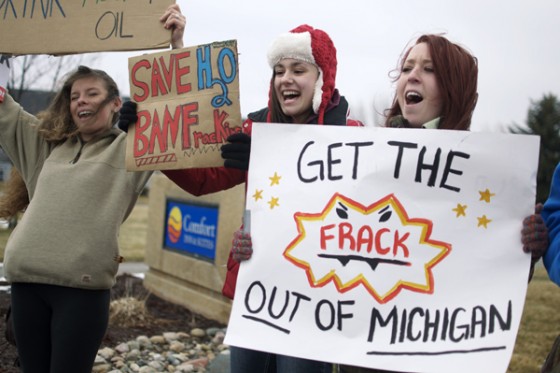
Three speakers addressed those in attendance, with the first speaker being Maryann Lesert, a professor of environmental studies at GRCC and one of the leaders in the anti-fracking movement in Michigan.
The focus of Maryann’s presentation was on the important of writing to generate awareness that truly matter. She talked about her own investigation and research on this issue throughout the state, which included meeting with grassroots groups, local stories and public meetings, most of which have been organized with a pro-fracking bias. One example of such a meeting was the one we attended in Rockford last month.
One issue the Maryann said was seriously lacking in these “public” meetings was the environmental impact of fracking. She said that when the DNR had announced the public land auction, which would include land in Barry County, this raised the level of urgency. Maryann and others created a press release and a document that the public and news agencies could use on as a resource to question the practice of fracking.
Maryann then talked about ways to connect with local media on this issue, whether that was formal news agencies, blogs, environmental and conservation groups. Maryann also addressed other tactics that could be useful for connecting with the news media and getting the world out.
Having a media strategy can lead to other organizing opportunities, which since this began last spring it has led to additional actions, protests and groups being formed across the state. Maryann herself said that this work has led to her being asked to do lots of fracking presentations, in a variety venues.
Maryann then showed a series of pictures she has taken from fracking locations across the state, images that helped provide visual clarity about the real environmental impact of fracking.
Maryann again emphasized the importance of what she called “writing out,” which was documenting and disseminating information about the ongoing resistance to fracking.
The second speaker was Jim Olson, an attorney is with FLOW, which previously challenged Nestle North America when the company began stealing ground water to sell under the brand name of Ice Mountain.
Water should be held in the public trust and that private interests should not override the public good. This is the basic principle which guides the work of FLOW.
He then spoke about the fact that there is a massive push for energy around the water, most of it in an unsustainable fashion. In addition, there is a global push for access to water, which presents its own problems. The when you mix the burning of fossil fuels with water one realizes that in addition to the contamination of water, there is an increase in water evaporation, which leads to more intense dry spells.
Jim then talked about the ecological impact of hydraulic fracturing, which includes not just the drilling, but the construction of the gas pumping plants, deforestations, road construction and water diverting that takes places when the drilling process begins.
Olson then made the point that each community needs to address this, since the federal law doesn’t stop fracking and the state regulations are not adequate to address the risks. Olson suggested that local communities need to pass local ordinances. While local communities can not ban drilling, they can ban certain kinds of industrial activity, land use, chemical use and wastewater disposal. Olson contended that local communities need to try any and all possible regulatory possibilities through ordinances.
Olsen thon said that communities can file lawsuits, what he called Citizen Suits, to require environmental assessment and disclosure of water baseline and chemicals. Ultimately, what Olson was wanting people to take away from his presentation, was that local communities can organize to challenge fracking through legal and regulatory means, since both state and federal law does virtually nothing to prevent horizontal hydraulic fracturing in communities.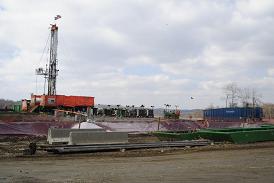
The last speaker was Wenonah Hauter, the Executive Director of Food & Water Watch. She began by talking about the recent elections and said that Obama was re-elected by a progressive mandate, even though she provided no evidence of such a mandate. In fact, one could argue that Obama’s re-election was based on the “lesser of evils” political philosophy. Hauter also said that the oil & gas industry was not able to buy every vote, but that they did spend $200 million to influence the elections.
She then talked about the media influence of the oil & gas industry money and cited a study done by fair, which showed that the major TV networks have not given much attention, but that the oil & gas industry ran lots of ads on those networks during this same period of time, thus influencing public opinion on the issue of fracking.
Hauter then discussed aspects of the environmental impact of fracking and the industry arguments about the “benefits” of fracking. While some of this information may be useful in motivating people to oppose fracking, it shifted the focus away from action onto just what is “wrong with fracking.”
There was some time for Q & A at the end. One audience member asked about House Bill 5565 and whether or not the speakers thought we could influence the passage of this bill. Jim Olson didn’t believe it would pass with the “current political climate” in the state and that he doesn’t see “regulation going anywhere.” He also said that even if the bill does pass, chemicals used in the process will still be considered trade secret.
Maryann Lesert echoed a similar idea and stated that chemicals still won’t be disclosed with this legislation. She also mentioned that no part of the bill says that doctors are required to disclose anything (about frack chemicals, etc.) to patients who see them and believe they are sick because of fracking. Wenonah Hauter mentioned that so many people have gotten sick because of fracking and have sued (in PA) that the industry is trying to silence individuals through bills such as these.
Ellis Boal questioned Food and Water Watch on their “grassroots” efforts and their lack of support for the Committee to Ban Fracking, even something as simple as including a link for Committee to Ban Fracking on their (FWW’s) website. He also questioned Jim’s comments on local ordinances and said that the DEQ isn’t interested in zoning issues. He said there’s already a ban in Charlevoix, but the township won’t recognize it.
Wenonah said that organizations (such as FWW) have to decide how to spend resources and won’t participate in initiatives unless they have done the leg work themselves and believe it will pass. She used Prop. 37 in CA and big money from pro-GMO companies having more power in the election (through advertising) and citizens not being educated enough on the topic (so big money won over). Her point was that people won’t vote in their own self-interest unless they have been educated to do so, otherwise money from companies spent in advertising/lobbying will win over. Lastly, she said she didn’t believe it was “strategic” to have it on the ballot.
LuAnne from the Committee to Ban Fracking tried to comment and give a general update on the campaign (which is still going on) and was repeatedly interrupted by Wenonah, Tia, and Jim who didn’t want to give her the opportunity to give an update but move on to other questions instead. The audience pushed for the speakers to allow LuAnne the opportunity to speak. LuAnne pointed out that the petition campaign was doing what’s not being done by the state: bringing the issue to the voters. The campaign also served as a protest. She encouraged everyone to check out the website for the campaign and stay involved.
Maryann stated that as of September, there are 40 well permits (for vertical and horizontal fracking) and 15 pending in the state.
The last question they took was from a young man who said he supported all action but didn’t hear anything in the presentation on nonviolent civil disobedience and asked the speakers if they thought this would play in role in anti-fracking actions.
Wenonah said she supports all forms of activism, but direct action/nonviolent civil disobedience has to be more than “just walking out and getting arrested”, it has to be part of a larger strategy. She said we may not always agree on strategy and tactics, but we have to work together. Maryann said she wasn’t trying at all to diminish the importance of protests and believes this is an extremely important part of the process.
Several other groups such as Kent County Water Conservation and Mutual Aid GR were present and the representative from Mutual Aid GR encouraged all who were interested in direct action to talk to them afterwards.
It was unfortunate that time was not set aside to discuss tactics and strategies, as well as ways that people from Kent, Ottawa, Allegan and Barry County could collaborate and building solidarity to fight fracking in each of these counties.
If you have come to help me, then you are wasting your time. But if you have come because your liberation is bound up with mine, then let us work together.
Australian aboriginal woman
The LGBT Resource Center at GVSU is still accepting applications for the social justice trainings they offer in a program called Change U.
Change U has two levels of trainings and the Change 1.0 applications are due this Friday for anyone interested in participating in these social justice training sessions.
Change U 1.0 involves 8 weeks of 3 hour sessions that present social justice information from an intersectional perspective – looking at how race, gender, class, sexual orientation, disability rights, the environment, war and all forms of oppression intersect.
There are guest speakers for each 8 week session and this year one of those speakers will be anti-racists author and activist Tim Wise.
Change U 1.0 also provides an opportunity to discuss these critical issues with other participants, to make connections and to find out more about social justice is being practiced here in West Michigan and around the world.
This project is open to GVSU students, faculty, staff and anyone from the greater Grand Rapids area.
Change U 1.0 sessions begin On January 10. You can check out the entire schedule, download the application and read more about this project online at http://www.gvsu.edu/socialjustice/.
Grand Rapids City Commission likely to vote on Wage Theft tomorrow night – updated
Tomorrow night (Tuesday, November 13), the Grand Rapids City Commission is expected to vote on the issue of adopting a wage theft ordinance for Grand Rapids.
Wage Theft is a serious problem in the US, where workers are not regularly paid for the amount of hours they actually put in.
According to the Interfaith Worker Justice Center, “Wage Theft is the illegal underpayment or non-payment of workers’ wages. It affects millions of workers each year, often forcing them to choose between paying the rent or putting food on the table.”
Because of the growing awareness around Wage Theft, some communities have begun campaigns to both educate the public and get municipal governments to pass a Wage Theft ordinance. You can see which states and cities have adopted or are working to adopt such an ordinance across the country.
We asked Wage Theft organizer Jordan Bruxvoort a few questions about the campaign.
1) If adopted, what will a wage theft ordinance do for working people
in Grand Rapids? If adopted, our wage theft proposal will create a means by which businesses that have contracts with the city and commit wage theft will face meaningful penalties (such as not being paid by the City until all workers who were victims of wage theft by that company are fully compensated and then being suspended from applying for City contracts for two years). It will also help ensure that City contracts go to businesses that have a clean record on wage theft (City contracts will stipulate that businesses certify that they have not engaged in for the last two years).
2) How will the City enforce the wage theft policy? The Micah Center will be in conversation with the Michigan wage and hour division and the federal wage and hour division to report back to the City the findings of these agencies regarding local companies that have City contracts to the City’s Office of Diversity and Inclusion who will then take the specified actions against offending businesses (withholding payment and/or suspending businesses from applying for contracts).
The group behind the Wage Theft campaign in Grand Rapids has a Facebook event page encouraging people to come to the City Commission meeting and show “collective strength.”
City Commission Vote on Wage Theft
Tuesday, November 13
7:00PM
City Hall – 300 Monroe Ave – 9th Floor
For anyone who wants more information on the Grand Rapids Wage Theft Campaign and how they can get involved they should contact Jordan Bruxvoort, Associate Director of the Micah Center at: jordan.bruxvoort@gmail.com.
On Race, Redistribution of Resources Still Divides Liberals, Radicals
This article by Howard Winant is re-posted from Political Research Associates.
“Race” as an idea barely existed before the Enlightenment and the onset of modernity in the West. Today, many dismiss the race-concept as an illusion, arguing that “there is no such thing as race;” or in more universalist terms, “there is only one race: the human race.” Yet race continues to demarcate and stratify all the world’s peoples in striking ways. Race remains a peculiar and unstable concept; racism has been upgraded, but it is still violent, coercive, and omnipresent.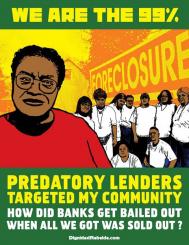
The United States is undergoing a significant racial shift. Massive migration and a demographic transition to a “majority-minority” nation are shifting the meaning of race once again. Is race an illusion or an objective reality? Is American and worldwide structural racism a holdover from an earlier epoch of conquest, empire, capitalism, and slavery–all of which are still racially ordered–or is it a more-or-less permanent means of organizing inequality and domination on both a local and global scale? Why is the race-concept so implacably situated at the crossroads of identity and social structure? How permanent is the “color line”?
Few doubt that the civil rights movement achieved substantial democratic reforms. Putting an end to the state-based and legally sanctioned racial despotism that governed the United States for centuries marked a real, if partial, democratization. Yet the movement failed to uproot the deep structure of racism. Consider: the Civil War ended slavery and killed 750,000 Americans in the process, at a time the national population was less than 50 million. Add to that racial upheaval the brief Reconstruction period that followed the war, and note that even these cataclysmic events could not end racism! So why should we think that the 1960s movement could have accomplished that task, even with the expense of blood, sweat, and tears?
The partial victories of the civil rights movement were achieved by a tactical alliance of mass movements on the one hand and elite national interests on the other, brokered by racial “moderates.” This accommodation to the demands of a mass movement too wide and too deep to be resisted any longer involved more than legislated and judicial reforms. Negotiation, compromise, and political incorporation were also required. So was “elite recruitment” of political and cultural activists and intellectuals, as well as a large-scale cultural reorientation. The civil rights movement made race and racism into far more public matters than they had ever been before, even under slavery and after emancipation. It demonstrated to the world that racism and democracy were incompatible.
Yet in the aftermath of the civil rights reforms, the forces of racial reaction–largely but not only based in the South–also regrouped. The old verities of established racism had been officially discredited, not only in the United States but fairly comprehensively across the globe. While White supremacy had been somewhat shaken, it had hardly been destroyed. The Right Wing therefore attempted to tap into repressed but still strong currents of racism in order to counter the civil rights movement’s egalitarian thrust.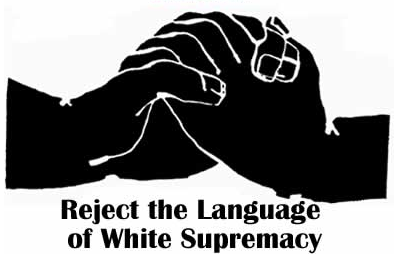
Combining organized political campaigns with the free-floating racism that permeates the United States–in culture, economic practices, spatial segregation, profiling, crime, and punishment, health… the list goes on and on–has undoubtedly increased racial tension. Obama’s presidency is also a more volatile enterprise because of race and racism.
The racial reaction was an uneasy alliance between the New Right and neoconservatives. The New Right cultivated race. Its strategy was born in the campaigns of George Wallace and Richard Nixon; they mobilized “coded” White resentments of Blacks, and later women and gays. Neoconservatism downplayed race by reducing it to ethnicity. Neocons were willing to dispense with the outright institutionalized prejudice and discrimination of Jim Crow. They seized upon the most “moderate” and integrationist dimensions of the civil rights movement. To them, “integration” meant ignoring race: “the content of their character, not the color of their skin,” was their message, adopting Dr. King’s words but not his meaning. In practice, this amounted to a denial of the significance of race in American life.
Reformist Strategies and Structural Change
At its heart, the civil rights movement was a radical democratic initiative. This is what explains its influence beyond its core Black adherents. The New Left, feminism, Black power (and Brown power, Red power, and Yellow power, too), and even the later queer and environmental movements were all influenced by it.
As movement demands were translated into law, they were attenuated through compromise. For example, during negotiations in the Senate over the 1964 Civil Rights Act, centrists (mainly Republicans) approved only weak civil remedies against discrimination, rather than criminalizing it. Since the Democrats were split, civil rights law retains that character.
Black “entrism” into government at all levels, where numerous movement activists won electoral and appointed positions inside local and federal governments, also provided a substantial moderating force. It offered a counter-narrative to more radical demands. Activists who remained outside the state apparatus also acted as mediating forces. Working in community organizations and other NGOs, they provided contacts between state officials and the community. [Full disclosure: this is my background. I come out of 1960s community-based service and advocacy work.] Another moderating force was the middle classes of color who rejected Black power, Brown power, etc. These were the people who stood to gain the most from moderate civil rights reforms.
Civil rights measures were thus a mixed bag. Undeniable victories, such as voting rights and immigration reform, stood alongside many losses, such as activists’ unmet demands for redistributive policies and broader social rights. The assassinations and repression of the 1960s were devastating, especially for more radical groups. Reforms provided a counter-narrative to COINTELPRO and the murder of Panthers, AIM activists, and others, and defused political opposition by permitting the reassertion of a certain broad-based racial stability.
Nonetheless, it is important for those working for social change to recognize that to be “free at last” ultimately means something deeper than the gaining of partial access–principally by favored minority elites–to key social and political institutions. It means more than limited reforms and palliation of the worst excesses of White supremacy. It requires a substantive reorganization of the American social system. It means political implementation of egalitarian economic and democratizing political measures. It means social democracy, “a Marshall Plan for the Ghetto and Barrio,” human rights, and social citizenship for people of color.
It is this last issue–redistribution of resources–that seems to be the dividing line between liberal and radical demands. This is the continuing threat to the right-wing racial regime that continues to rule, even with a Black man in the White House. What threat exactly? That of a working and poor people’s alliance, race-conscious but transracial, and feminist and queer as well. We can see inklings of that “dream” yesterday in the Poor People’s Movement that Dr. King was trying to organize when he was killed, in the peace movement, and today in Occupy.
Beyond Obama Nothing symbolizes the unresolved dilemmas of race more acutely than the election of Barack Obama. A few years earlier, the idea of a Black president appeared to be the stuff of purest fantasy, or at best a Hollywood conceit (see: Chris Rock in “Head of State” or the series “24,” among others). Although the 2008 election briefly appeared transformational, to paraphrase George Clinton, the White House has not yet become a Black House.
Obama is manifestly unable–especially in a chronic recession–to address a severe heightening of racial inequality. Structural racism lives on. The massive increase in Black and Brown incarceration, the growing disparities in Black-White (and Latino-White) inequality, and the resurgent, somewhat race-driven U.S. imperialism in the Middle East and elsewhere, all demonstrate the failure of sustained efforts to institutionalize “colorblindness” as the new racial common sense. In addition, a decades-long series of Supreme Court decisions has attempted with increasing absurdity to redefine racism as a problem chiefly suffered by Whites. The claims of a “post-racial” order were premature.
The Continuing Political Project and the New Coalition
The United States’ Right Wing may speak the language of “colorblindness,” but it unhesitatingly uses race to rule: to manipulate elections, justify foreign wars and nativism, organize repression and incarceration at home, and to assault social and human rights. Racial profiling is not gone; indeed it is more embedded than ever in such arenas as immigration, where all Latino@s are presumed to be undocumented. Profiling is also visible in the “homeland security” targeting of Muslims but not White terrorists like Timothy McVeigh or the White assassins of abortion providers.
There’s resistance out there. Our movement challenges racism mainly through the targets it chooses and the people it mobilizes. Immigration, education, health, incarceration, police violence, labor, and many more issues are being confronted by people at the grassroots, and by community organizations. Movement people and movement groups today have an awareness of racism and a racial diversity that was not present in previous waves of American protest. Occupy, immigrants rights, antiwar, opposition to profiling and police violence, feminist, and queer movements, all have significant anti-racist dimensions.
Occupy has not been sufficiently understood in terms of race. Where Occupy has succeeded, it has directly addressed the needs of poor people and people of color: feeding and talking with the homeless in Zuccotti Park was not easy, but it was vital. Voices of color were heard in the General Assemblies. Resisting foreclosures and evictions and occupying banks have been recognized as anti-racist actions. Occupy is the prototype of a new direct-action, nonviolent, and somewhat anarchist-oriented political approach. It is a radical democratic project. Given that the structural racism at the heart of the Right Wing is fundamentally despotic and anti-democratic, Occupy offers an alternative. Direct democracy must be antiracist.
Activists for racial justice must come to understand race and racism, as well as a wide range of other political themes, as everyday encounters between despotic and democratic practices. As individuals and groups confronted by state power and entrenched privilege, but not entirely limited by those obstacles, we must choose to take part in a constant anti-racist “reconstruction” both of everyday life and of the state itself.
GVSU to host screening of “Transgender Tuesdays” film on November 13
On Tuesday, November 13, the LGBT Resource Center at GSVU will host a screening of the Transgender Tuesdays.
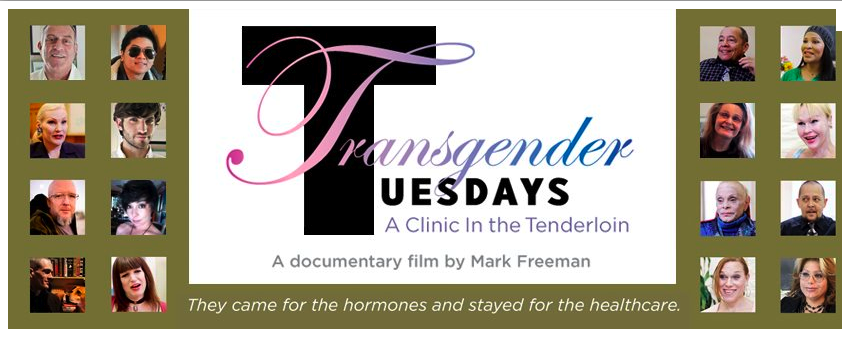
Viewers of the film will hear about the lives of eight of the patients who came to the Transgender Tuesdays clinic starting in 1993. Their stories reach back to some of the “bad old days” of the 1950s, recalling the sexual freedom movement of the 1960s, drug ravages of the ’70s, Women’s and GLB (and finally T) Liberation in the ’80s, and the HIV epidemic and queer activism of the ’90s.
These true tales reveal what transgender life was like over those decades on the streets of San Francisco and around the country — and make it clear that it is still no bed of roses today. Clinic staff and stars of the community make cameo appearances. But it is the lives of these transgender heroes (often unknown even by younger trans folk today) that provide pride in the present and hope for the future.
In addition to the screening, the director of the film Mark Freeman and one of the people featured in the film, Kelly Kelly, will be at the screening and part of a discussion following the film.
Transgender Tuesdays
Tuesday, November 13
4:00PM
GVSU Allendale – 2250 Kirkhof Center, Grand River Room
This event is free and open to the public.
Indigenous Protestors Against Guatemala Energy Company Targeted
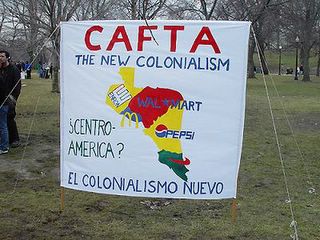
This article by Jennifer Kennedy is re-posted from CorpWatch. Editor’s Note: This most recent violence should take into account the ongoing economic pressures for Guatemala to privatize public services, which is a clear outcome of adopting the Central American Free Trade Agreement with the US in 2006. Also, it should be noted that this type of targeted killing is reminiscent of the 1979 Panzos massacre, which many historians identify as the beginning of the worst years of genocidal violence against the indigenous people of Guatemala.
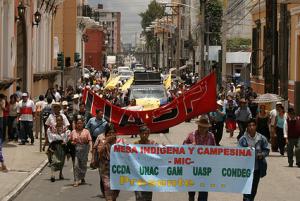
Six demonstrators were killed and dozens injured when the Guatemalan military fired into a group of indigenous Maya-K’iche’ gathered on the Inter-American highway to protest rising electricity charges from Energuate, a major national power company owned by a private equity firm created by the UK government.
The demonstrators, who had gathered on the highway some 170 kilometers west of Guatemala City, were from Totonicapán, one of Guatemala’s most impoverished departments (provinces). Malnutrition is widespread and the price of electricity is prohibitively expensive in the region. The World Bank estimates 75 percent of Guatemalans live in poverty with 58 percent of the population living in extreme poverty.
“We were protesting right next to [the military] when they opened fire on us,” Rolando Carrillo, a 25 year old demonstrator with injuries to his hand and his face that he claimed were sustained during the protest, told the Associated Press news agency. Juana Celestina Batz Puac, another demonstrator, who witnessed the shootings told the Guardian that “our demands need to be listened to … As indigenous people we are consuming their energy, but [Energuate] are getting rich off the people.”
Privatizing Energy in Guatemala
Energuate first came into existence as Unión FENOSA in 1999 when Guatemala privatized the state energy company and established two subsidiaries, Distribuidora de Electricidad de Occidente (DEOCSA) and Distribuidora de Electricidad de Oriente (DEORSA) Following privatization, thousands of consumers filed complaints against Unión FENOSA “about the quality and excessive costs of the service – over 90,000 between January and May 2009 and popular discontent rose,” according to Guatemala Solidarity Network, a UK non-profit.
Indeed monthly energy bills in the region have more than doubled for some customers because of how tariffs are currently set – some rural customers are paying for public street lighting even though they live in areas where there is none. Excessive electricity charges are affecting “the fragile financial situation of the indigenous and rural population of Totonicapán,” stated the mayors of the 48 communities in Totonicapán in a press release dated October 4, the day of the killings.
Unión FENOSA was acquired by UK-based Actis Capital LLP, a private equity firm, when it bought a majority stake in the company in May 2011 from its Spanish owners. Actis then renamed the company Energuate, stating that it “looks forward to building upon the work of FENOSA and delivering a world class service to customers while operating to the highest environmental, safety, and governance standards.”
Actis itself has roots in the Commonwealth Development Corporation (CDC), a UK government entity that was created in 1948 to invest in developing economies, following the retreat of the British empire from many of its colonies. The Actis private equity arm was set up by CDC in 2004 with UK government money.
It was fully privatized in May 2012 by Andrew Mitchell, the UK Secretary of State In charge of international development at the time. (The sale netted the taxpayer £8.37 million or $13.4 million plus as much as £62 million in future profits)
Trade Unionists Killed
Activists have been targeted in acts of violence and impunity that have plagued Guatemala for many years, even though a 36 year civil war in Guatemala between the government and a variety of leftist rebel groups supported by indigenous communities and poor farmers officially came to an end with the signing of the 1996 peace accords. “On terms of impunity of the wealthy and powerful sectors linked to the economic elite and the military, fundamentally little has changed since the 1954 military coup,” Grahame Russell, a Guatemala expert at Rights Action, a U.S. based human rights group, told CorpWatch.
For example, in 2010, Friends of the Earth called for international solidarity in the wake of three assassinations of activists in San Marcos, a department neighboring Totonicapán, who were “believed to have been shot for their work in exposing the abuses against the population committed by DEOCSA.” Just two months after Actis acquired Union FENOSA, Lesbia Xurup, a 33 year old trade unionist, member of Communities in Resistance against Unión FENOSA, and active against alleged company abuses, was hacked to death on July 21, 2011 with a machete.
Union leaders in the UK have reacted strongly to these incidents. The UK General Union (GMB) called on Actis to take action regarding Xurup’s assassination. “Tragically Guatemala is now the second most dangerous country in the world in which to be a trade unionist,” said Brendan Barber, the general secretary of the Trade Union Congress (TUC) in the UK.
The source of these violence acts has been hard to verify. But the direct role of the Guatemalan military in the October 4 killings of Maya-K’iche’ has struck fear in the hearts of many Guatemalans who recall the civil war years. In reaction to last month’s violent protest, Energuate told the Guardian that the company was not responsible for bringing about the conflict and shifted responsibility to the government for the high electricity rates.
“Very distressed by these recent incidents. Like others, we believe that the current system of paying for street lighting through a flat charge on customers’ energy bills is unfair,” Actis told the newspaper. “We continue to lobby the Guatemalan government to change it. Actis made a significant investment in the energy sector in Guatemala in May 2011. We are committed to providing high quality reliable electricity to customers at the right price.”
An investigation into the events of October 4 is underway. So far Juan Chiroy Sal, an army colonel, together with eight soldiers have been arrested and charged with the Totonicapán killings. But the violence continues: on November 1, Mario Itzep of the National Indigenous Observatory, who filed a lawsuit with the Prosecutor’s Office for Human Rights against the military for the massacre, said two men on a motorbike opened fire on him in Guatemala City.

