
Last night, Grand Valley State University hosted a talk by nationally known environmental author and activist Bill McKibben. McKibben is the author of numerous books, most recently Eaarth: Making Life on a Tough New Planet. The talk was done via Skype, in the Eberhard Center on the downtown campus of GVSU.
McKibben began by talking about how long he has been writing about global warming and that based on the age of the audience, his first book came out before many of them were born. His first book was The End of Nature, which was first published in 1989.
The author/activist then talked about the seriousness of the crisis by talking about what is happening now in the Arctic Circle and the drastic changes to that ecosystem. However, McKibben take the opportunity to talk about the proposed drilling by oil companies in that part of the world or the resistance by groups like Greenpeace and the Sea Shepherd.
Another major change for those of us in the US is that the climate is actually much wetter than before, which means that more water evaporates to create drought conditions and when it does rain it tends to be more intense than what we have traditionally known.
McKibben said that the urgency of the climate crisis is not just the assessment of environmentalists, even insurance agencies are acknowledging major changes in the climate that must be due to global warming.
In Michigan, McKibben noted that the early frost destroyed a great deal of the fruit grown in the state. Other states out west were engulfed by wildfires and yet other states have been confronted by high winds, which compounded the drought conditions. One result of this years’ climate has been a 65% increase in the price of basic grains, which for many around the world is devastating.
“The scientific community is now telling us that if we do not end our use of fossil fuels like coal, oil ad natural gas there is no way to avoid a catastrophe for life on this planet.”
McKibben then talked about the creation of the group 350.org, which in many ways was based on the research of NASA scientist James Hansen. 350 comes from the idea that “to preserve our planet, scientists tell us we must reduce the amount of CO2 in the atmosphere from its current level of 392 parts per million (“ppm”)to below 350 ppm. But 350 is more than a number—it’s a symbol of where we need to head as a planet.”
The group, which was made up mostly of college students, also made it a goal for their effort to be a global campaign. McKibben talked about the first major action, which consisted of nothing more than groups all around the world making statements or images reflecting the message of 350.org. Grand Rapids participated in this symbolic action in 2009.
The educational efforts, according to McKibben, were not enough however, “so we knew that we needed to up the ante and take more action.” 350.org organized a massive action of civil disobedience last fall in front of the White House to pressure the US government to not support the Keystone XL Pipeline, what are known as the Tar Sands.
McKibben said that they result was that the Obama administration said they would not make a decision until after the election. The people at 350.org took it as a victory, but they recognize that they don’t know how this will “play out.”
The next major effort they plan to engage in is a 20 – day tour across the country, beginning the day after the election, called the Do the Math Tour. The goal of this tour is to educate people about the power that the fossil fuel industry has. The want to take on the industry and expose them for the amount of influence they have had on the energy policy of this country.
McKibben said that this tour will target universities and colleges, since he believes that young people will be the leaders of this movement for climate justice.
He ended his talk by saying that despite all the efforts of recycling, biking, LEED certified buildings, etc, all of which is good, it’s not enough to avoid catastrophe. We need to make structural change and that means to dismantle the fossil fuel industry. He referred to his Rolling Stone article and the harsh data it contained, which stated that the crisis is even greater than what was believed in previous years in terms of how serious global warming truly is.
There was a brief Question and Answer period, but what was worth noting to this writer was McKibben’s support for energy efficiency in the form of newer cars coming out of Detroit. It doesn’t seem that continued support of the auto industry will seriously challenge the fossil fuel industry’s power, but McKibben also acknowledged that there is no “silver bullet” or easy answer to surviving the climate crisis.
After McKibben signed off there were some brief presentations from local environmental groups, a GVSU student group, Ban Fracking Michigan and Mutual Aid GR.
Eight Blockaders Start Indefinite Tree Sit to Stop Keystone XL Pipeline Construction
This article is re-posted from EcoWatch.
This morning eight people climbed 80 feet into trees in the path of Keystone XL construction, and pledged not to come down until the pipeline is stopped for good. Construction cannot proceed until tree-sitters descend as TransCanada clear-cuts through hundreds of trees to make way for the toxic tar sands pipeline.
The blockade is carefully organized to ensure that everyone sitting in the trees can remain safe as long as TransCanada does not attempt to continue clear-cutting the trees. These ardent advocates of landowner’s rights and climate justice have the safety equipment and food supplies to last indefinitely.
“Today I climbed a tree in the path of Keystone XL to demand TransCanada stop construction of this dirty and dangerous pipeline. This pipeline is a disaster for everyone it touches, from the cancer tar sands extraction is causing indigenous communities to the water poisoned by inevitable tar sands spills to the landowners whose land has been seized and to everyone that will be affected by climate change,” said Mary Washington, one of the Tar Sands Blockade members sitting in a tree.
It’s not easy to see our friends disappear up a tree, exposed to the elements and not know when we will see them again. But knowing what this pipeline is doing to our neighbors and the planet, we are more resolved than ever to keep fighting this pipeline by whatever means we can.
This blockade is a continuation of an unprecedented summer of actions against fossil fuel infrastructure across America, from Montana to Ohio to New York. As a record heat wave baked the country, Americans stood up in unheard of numbers to oppose fossil fuels that are contributing to climate change.
Climate change killed half a billion trees in Texas last year, and if TransCanada cuts these down, than the dirty oil they send down the pipeline will trigger yet more out-of-control warming,” said climate activist Bill McKibben, who helped lead huge protests in Washington, DC against the pipeline last fall.
Tar Sands Blockade has already successfully shut down Keystone XL construction for about two-and-a-half days in Livingston, Saltillo and Winnsboro.
“Today’s bold action by these eight brave people demonstrates their resolve to stop this dirty and dangerous pipeline. They understand the severity of the threat and that taking action is less risky than doing nothing,” said Ron Seifert, a spokesperson with Tar Sands Blockade. “We are defending our homes, our communities clean drinking water, our land rights and a stable, livable climate.”
MLive article provides a platform for Emergency Financial Management Law supporters
Earlier today, MLive posted an article with the headline, “Gov. Snyder’s emergency manager law can change public-spending culture, Grand Rapids-area leaders say.”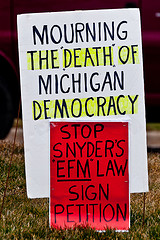
The headline doesn’t make it clear how the states Emergency Financial Manager EFM) law will change public-spending culture, whether that is a benefit to communities or a detriment.
However, it is clear from the MLive article that it would be a benefit, at least that is the perspective provided. The reporter only provides to direct sources in the article, someone with the Grand Valley Metro Council (Michael DeVries) and the Mayor of Grand Rapids, George Heartwell.
Both Heartwell and DeVries endorse the Emergency Financial Manager law, because they believe it makes municipalities fiscally responsible. Heartwell is quoted as saying:
Where cities are not succeeding because they’ve been poorly managed or they’ve made commitments in previous generations of political leadership that they can’t hope to meet today, it may be that the financial manager is the only way that they can survive as a city. I look at the cities that are under financial management and I do not believe that any of those cities could have survived without the strong arm of a financial manager.
What Heartwell fails to acknowledge in his comments and what the MLive story fails to communicate is that the EMF law is not just about fiscal responsibility. Gov. Snyder made it clear what this law would do when he visited Grand Rapids in March of 2011 to announce the then proposed law. Snyder said the EMF law would reward municipalities that had “best practices” in three areas – accountability, service consolidation and employee compensation. Translated this means that municipalities that are willing to privatize services, consolidate with area governments and eliminate pensions and benefits from city employees would get funds from the state.
This is exactly what Grand Rapids has been doing in recent years as a response to poor financial management from the state. Grand Rapids has privatized some services, is constantly looking for ways to consolidate services with other area municipalities and has downsized its responsibility to city employees and retirees, by slashing health benefits and pensions.
The MLive article at the very end does acknowledge that there is significant opposition to the EMF law and that according to a recent poll most Michigan voters don’t like it.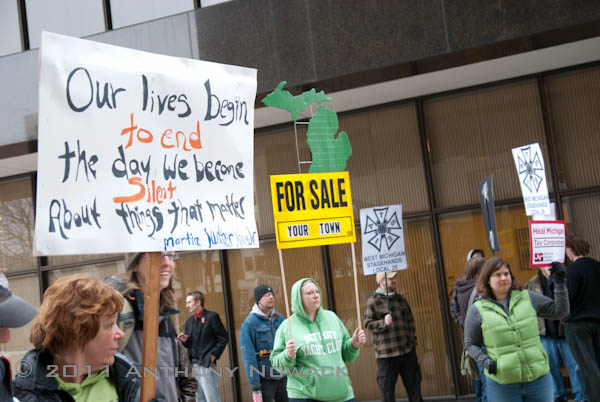
Unfortunately, none of the Michigan voters who oppose the EMF law are sought out by MLive to provide a comment about why the law is bad for Michigan and bad for local municipalities. There has been plenty of resistance to this issue across the state, which is exactly why it is on the November ballot as Proposal 1. The fact that MLive did not use or seek out a perspective critical of the Emergency Financial Management law is revealing and demonstrates a clear bias.
15 Issues This Election is Not About
This article by Bill Quigley is re-posted from CounterPunch.
Neither candidate is interested in stopping the use of the death penalty for federal or state crimes.
Neither candidate is interested in eliminating or reducing the 5,113 US nuclear warheads.
Neither candidate is campaigning to close Guantanamo prison.
Neither candidate has called for arresting and prosecuting high ranking people on Wall Street for the subprime mortgage catastrophe.
Neither candidate is interested in holding anyone in the Bush administration accountable for the torture committed by US personnel against prisoners in Guantanamo or in Iraq or Afghanistan.
Neither candidate is interested in stopping the use of drones to assassinate people in Afghanistan, Pakistan, Yemen or Somalia.
Neither candidate is against warrantless surveillance, indefinite detention, or racial profiling in fighting “terrorism.”
Neither candidate is interested in fighting for a living wage. In fact neither are really committed beyond lip service to raising the minimum wage of $7.25 an hour – which, if it kept pace with inflation since the 1960s should be about $10 an hour.
Neither candidate was interested in arresting Osama bin Laden and having him tried in court.
Neither candidate will declare they refuse to bomb Iran.
Neither candidate is refusing to take huge campaign contributions from people and organizations.
Neither candidate proposes any significant specific steps to reverse global warming.
Neither candidate is talking about the over 2 million people in jails and prisons in the US.
Neither candidate proposes to create public jobs so everyone who wants to work can.
Neither candidate opposes the nuclear power industry. In fact both support expansion.
Skill-share, “Canning Applesauce & Brewing Herbal Teas for the Cold Season” this Saturday
 Our Kitchen Table hosts the last in its 2012 series, Preserving the Harvest, with a skill share on Canning Applesauce & Brewing Herbal Teas for the Cold Season. Co-sponsored byThe Bloom Collective, the event takes place upstairs from The Bloom space in the kitchen of Steepletown Center, 671 Davis NW (corner of 5th) this Saturday, Sept. 29 from 2 – 4 p.m.
Facilitated by Jeff Smith, from The Bloom Collective, and Stelle, from The Bloom and OKT, the skill-share is free and open to everyone. OKT will provide fruit and jars.
OKT initiated the Preserving the Harvest series not as a way to jump on board the current “canning bandwagon,” but as part of its efforts to build an alternative food system within Grand Rapids’ neighborhoods. Canning your own food is easy and cheaper – you end up with a superior product when it comes to nutrition and flavor.
In addition, canning your own locally grown food takes you a step away from the industrial food system, a food system that is environmentally unsustainable, nutritionally bankrupt and profits by underpaying farmers and farm workers.
Are you one of the millions of Americans without health insurance? Brewing your own cold season remedies can provide you a gentle, inexpensive alternative to often dangerous prescription and over the counter remedies. We will look at simple teas that help relieve symptoms of sinus congestion, sore throat, cough and tummy troubles. If you have your own remedies, please bring them along to share.
GVSU to host 2012 Great Lakes History Conference October 12 – 13
The Women’s and Gender Historians of the Midwest (WGHOM) and Grand Valley State University’s History Department will host the Great Lakes History Conference, which began in 1975.
The focus for much of the conference this year is on women and women’s struggles. The description of the conference theme and information on both Friday and Saturday night’s keynote speakers is as follows:
“Born in Revolution”: History, Gender and the Power of Conflict
Where else can you see previews of a new documentary about the 97-year old Detroit-based activist/philosopher Grace Lee Boggs by its award-winning filmmaker and a keynote on the history of healthcare reform in the US by its leading historian all in one weekend? Join us for this year’s Great Lakes History Conference, October 12th and 13th, Eberhard Center, Pew Campus, Grand Valley State University.
Friday, October 12th, 7:30 p.m.. Eberhard Center, 2nd Floor, Pew Campus. This event is free and open to the public.
Director Grace Lee will present highlights from “American Revolutionary: The Evolution of Grace Lee Boggs.” The biographical work-in-process film explores the life and work of centenarian Grace Lee Boggs, Detroit activist and feminist.
Saturday, October 13th, 12:30-1:45, Eberhard Center, 2nd Floor, Pew Campus
Dr. Beatrix Hoffman (Northern Illinois University) will speak about her forthcoming book, Health Care for Some, that investigates the history of health care in the United States in a talk entitled “Health Care for All! Women, Activism, and the Human Right to Health“.
If you would like to attend this keynote and/or panels, please contact Gretchen Galbraith at galbraig@gvsu.edu so that we may put you on our special guest list. For details on all the panel discussions go to this link.
2012 Great Lakes History Conference
October 12 – 13
GVSU – downtown campus – Eberhard Center
For details http://www.gvsu.edu/history/module-spotlight-view.htm?entryId=9BD8F75D-D47C-9B41-9673D3766E56E44B
Photo bomb challenges the politics of ArtPrize , with online campaign
Last year we posted a two-part piece on the political economy of ArtPrize. In part II, we identified ArtPrize sponsors, based on the 990 records they submitted to the federal government, which lists the ArtPrize budget, expenses and sponsors and how much they gave.
The article from last year talked about some of the sponsors and the hateful campaigns they have funded, particularly anti-LGBT campaigns.
Some of this funding has gone to support efforts to defeat marriage equality and domestic partner benefits or to religious groups, which preach that, “homosexuality is a sin.” Despite this kind of homophobic policy funding, I have seen nothing in writing or heard anyone discussing these issues while ArtPrize has been going on. Look at it this way, what if neo-Nazi groups or the KKK were sponsors of ArtPrize? Do you think there would be some discussion of this, maybe even rage? Do you think that the African American community and its allies would be avoiding or even calling for a boycott of ArtPrize? Sure seems likely. So why is it that when institutions that make it a priority to deny people who identify as LGBTQ their basic rights, why are people not outraged? Just because the foundations that fund anti-gay policies don’t wear white hoods, doesn’t mean they don’t do harm to vulnerable population.
Starting today, a group of local activists are now trying to shed light on the anti-LGBT funding from some of the ArtPrize sponsors. Using public information, the activists have found a few examples of anti-LGBT funding and are posting photos and information at a Facebook page called ArtLies.
For example, the Edgar & Elsa Prince Foundation gave $75,000 to the 2004 Anti-Gay Marriage Amendment in Michigan. Edgar and Elsa Prince are the parents of Erik Prince and Betsy DeVos. The Edgar & Elsa Prince Foundation gave $450,000 to California’s Prop 8 to ban Gay Marriage, in 2008.
The Richard and Helen DeVos Foundation donated $100,000 to the Florida4Marriage campaign in 2008, to defeat a campaign to get marriage equality in Florida.
More recently, the Doug & Maria DeVos Foundation donated $500,000 to the National Organization on Marriage for its efforts across the country to defeat Marriage Equality. This large amount of money to defeat Marriage Equality across the country has led to a campaign to Boycott Amway, since Doug DeVos is the current President.
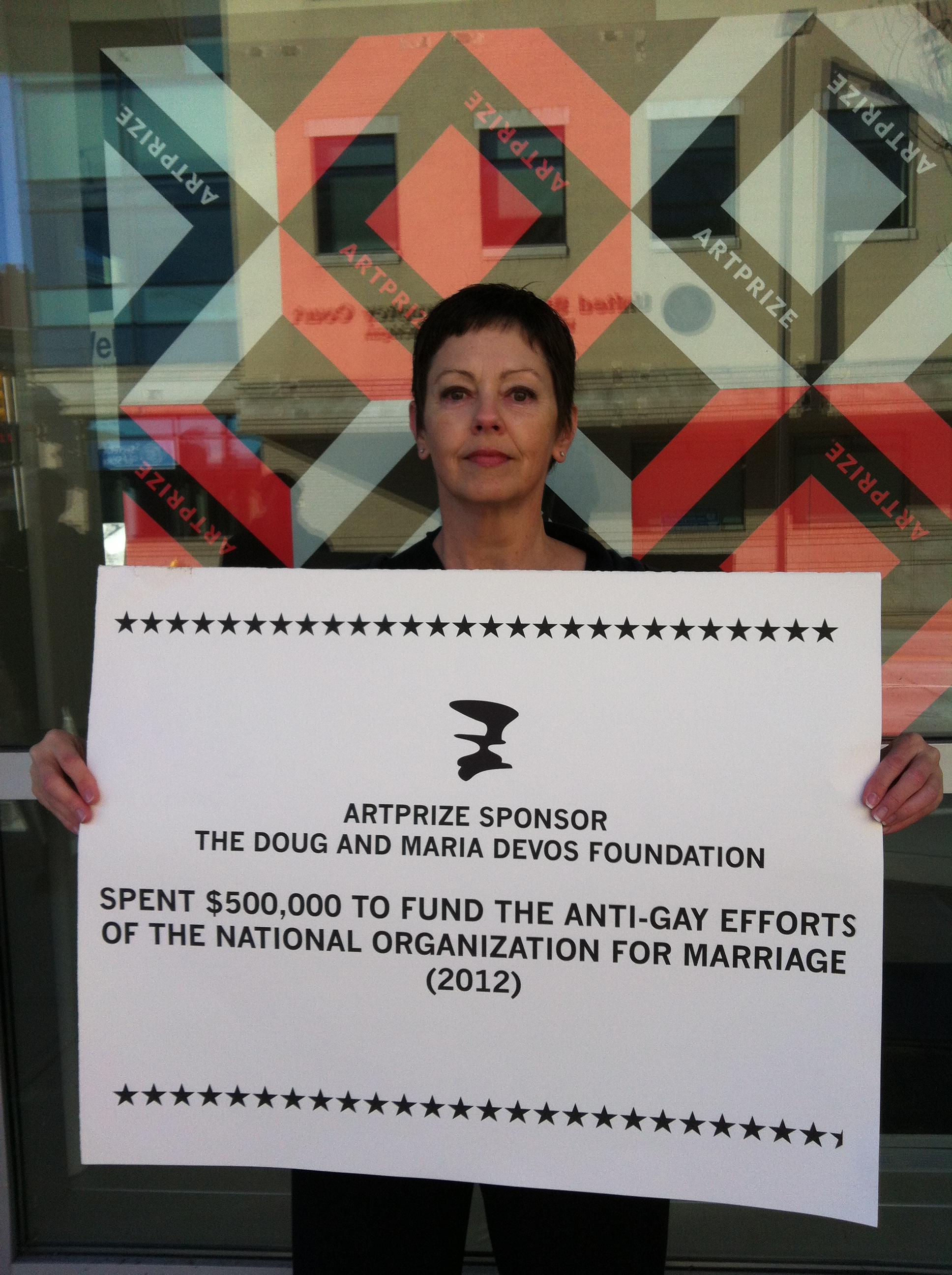
In addition, the local activists pointed out with some signs in their visual campaign other funding issues with some of the ArtPrize sponsors. For example, Richard DeVos contributed $250,000 to Wisconsin Governor Scott Walker to defeat the recall campaign earlier this year, since Walked has been attacking working people and labor policies in that state.
Another issue one of the signs points to is the funding that the Dick and Betsy DeVos Foundation and the Edgar & Elsa Prince Foundation have given the Mackinac Center for Public Policy. The Mackinac Center is a far right think tank that supports Right to Work laws, privatizing public services, privatizing public education and deregulation of any restrictions put on the private sector by the state. The Dick & Betsy DeVos has given $80,000 between 2002 – 2009 to the Mackinac Center for Public Policy and the Edgar & Elsa Prince has provided $195,000 during the same time period.
Lastly, the activists point out in one sign that the Dick and Betsy DeVos foundation has contributed millions of dollars to promote the privatization of education, which undermines public education funding across the country. One researcher even refers to Betsy DeVos as the 4 – star general of the pro-school privatization movement.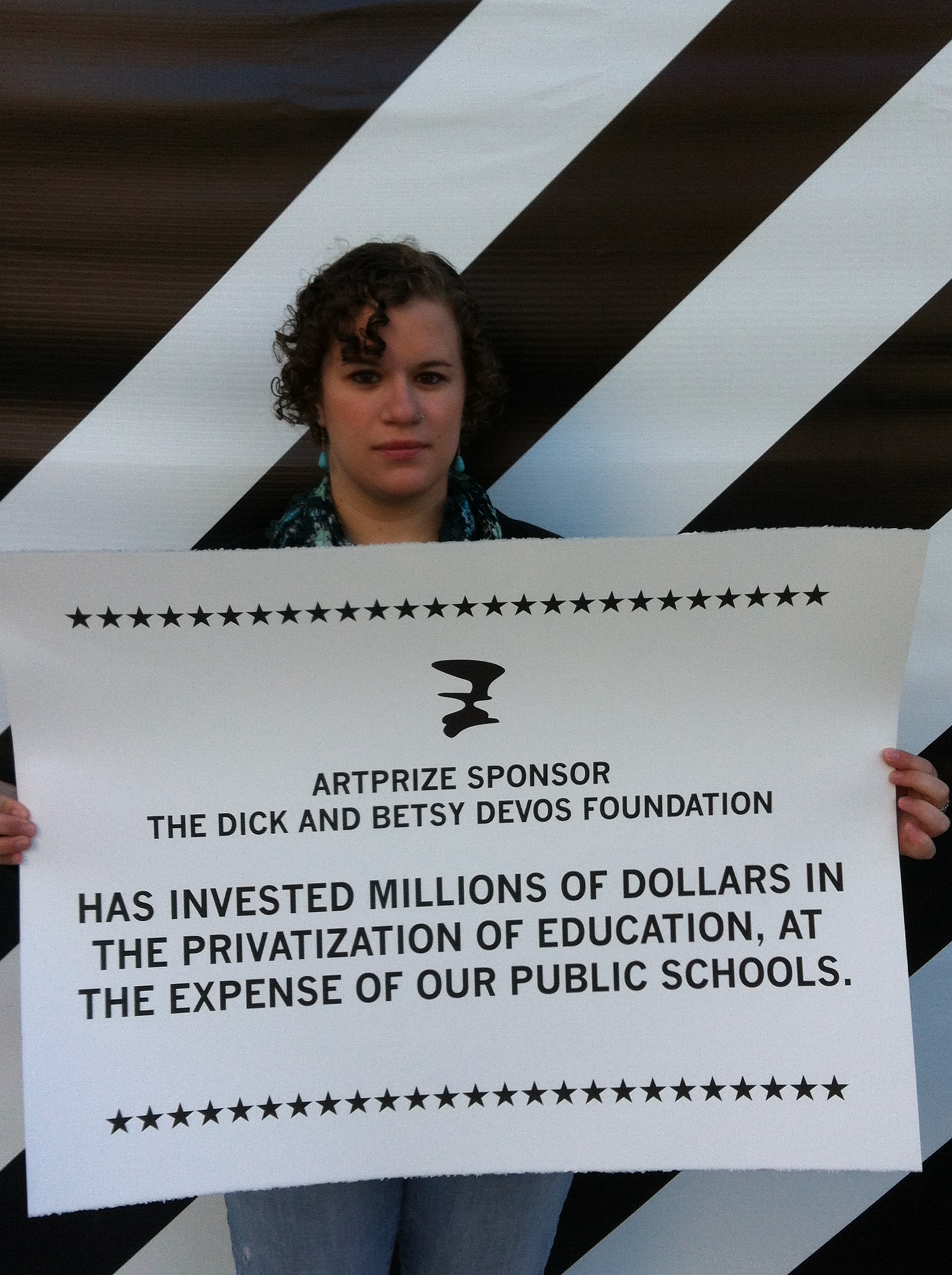
In their photo bomb action today, some of the activists even stood next to one of the WOOD TV 8 signs by the Grand Rapids Art Museum, where the channel 8 station has been broadcasting live since ArtPrize began this year. They stood their with these illuminating signs about ArtPrize sponsors to make the point that commercial media in this community has ignored the politics of the ArtPrize sponsors.

The Forgotten Palestinians
This video is re-posted from ZNet.
Celebrated Israeli historian, Ilan Pappe who wrote “The Ethnic Cleansing of Palestine” that documented the 1948 removal of 700,000 Palestinians from their lands, has now written about “The Forgotten Palestinians”.
In the book, and at this September 16 community meeting at Sydney University, Pappe reveals the situation for the Palestinians who still live within Israel’s borders.
This was the first event of Professor Pappe’s 2012 Australian lecture tour. It was hosted by the Sydney Peace Foundation at the University of Sydney with the Coalition for Justice and Peace in Palestine and Leichhardt Friends of Hebron. Professor Pappe is in Australia as the guest of AFOPA to deliver the annual Edward Said Memorial Lecture at the University of Adelaide.
Climate Justice advocate Bill McKibben to be part of forum at GVSU – September 25
Author, activist and co-founder of 350.org, Bill McKibben will be part of a forum at the downtown campus of GVSU on Tuesday, September 25.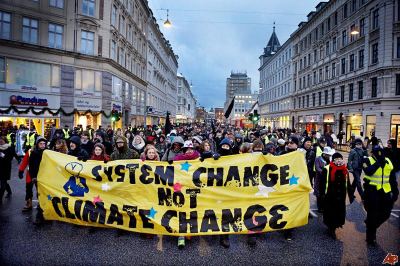
McKibben, who’s most recent book is Eaarth: Making Life on a Tough New Planet, will speak to an audience gathered at GVSU via Skype. The title of the forum is Building a Movement to Save the Climate.
McKibben will speak first, followed by brief comments from several local groups, including Food & Water Watch, GVSU Student Environmental Coalition and Mutual Aid GR. Each organization will also have an information table with educational resources and information on local campaigns related to Climate Justice.
Bill McKibben – Building a Movement to Save the Climate
Tuesday, September 25
7:00 – 9:00 PM
Downtown GVSU Campus – Eberhard Center Room 215
Campus Sustainability Spotlight Event
This event is free and open to the public.
For more information contact Andrea Marz at marzan@gvsu.edu.
Video of anti-fracking action at Wolverine Oil & Gas
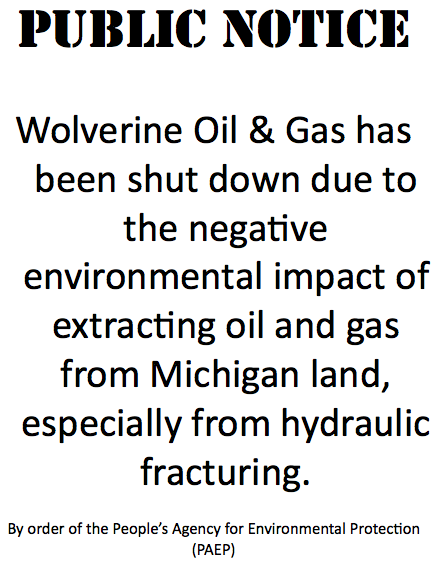
Here is a more detailed video of yesterday’s action at Wolverine Oil & Gas, which includes footage of the march, the statement by those being arrested, interaction with a representative from Wolverine Oil & Gas, protestors in the lobby and the eventual arrest.
Those of us who occupied the office went in representing the People’s Environmental Protection Agency and we charged Wolverine Oil & Gas with crimes against the environment and sought to shut them down.
Thanks to several people who documented the action and put together this video!
 Grand Rapids Institute for Information Democracy