Local International Day Against Fracking protesters issue statements, three arrested
The Grand Rapids group Mutual Aid GR organized a downtown Grand Rapids march as part of the International Day Against Fracking. This statement was released to media prior to the action:

A participant in the action related the following about the event:
We know that hydraulic fracturing is bad for Michigan because it:
• Contaminates ground water and soil with toxic chemicals
• Contributes to the pollution and contamination of fresh water, which is one of the things that make Michigan such a magical place to live.
• Fracking poisons plants, animals and humans.
• Fracking is accelerating around the country and in Michigan and is contributing to the most urgent crisis of our time, global warming.
• Lastly, fracking for natural gas reduces the need to seek truly sustainable and renewable forms of energy.
Therefore, we occupy Wolverine Oil & Gas to say no to contaminating Michigan water; no to practices that significantly contribute to global warming; and no to companies that profit from environmental destruction.
We are occupying Wolverine Oil & Gas to demand that they release all information about the type and amount of chemicals they have used in fracking to date and the amount of water used; to release information on the location of all oil and gas wells they own and operate in Michigan, and to stop the practice of fracking where ever they engage in this practice.
Advanced Placement: The Chicago Teachers Union is poised to lead in the next school-reform fights
This article by Micah Uetricht is re-posted from the American Prospect.
Chicago Public School teachers and students were back in classrooms Wednesday morning after union delegates voted Tuesday to end their seven-day strike. The union won a number of significant victories—including a provision that student test scores will count for no more than 30 percent of a teacher’s evaluation and another that will give teachers more pay for longer school days and years. The proposed contract should be finalized and approved in the coming weeks. By almost all accounts, though, in its fight with Mayor Rahm Emanuel, the union is emerging as the clear winner.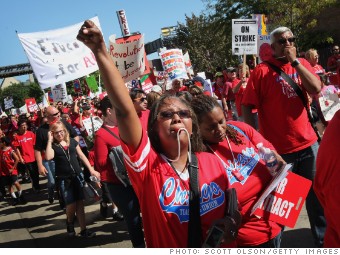
One of the sticking points in negotiations was over teacher evaluations and the role students’ test scores play in them. Emanuel is one of a number of national reformers who see unions as a roadblock to improving student performance and who subscribe to the philosophy that what poor, underperforming school districts need most are better teachers. Chicago teachers have emphasized throughout this fight that they want to weigh in on the education-reform debate and that their mission to do so extends far beyond an individual contract.
With a newly mobilized membership, widespread relationships with community groups, and much of the public’s trust, the Chicago Teachers Union has positioned itself to play a leading role in the debate in their city, which has an education system highly stratified between well-funded public magnet and private schools and crumbling, neighborhood-based schools—where more than 91 percent of public-school students are children of color, more than 90 percent attend hyper-segregated schools, and 82 percent are poor enough to qualify for free or reduced-cost lunch. Their efforts could lead the way for teachers in other cities to organize in the same way.
As union delegates streamed out of their meeting Tuesday evening, many said they were elated to return to work. Teachers embraced one another in the parking lot, and supporters chanted while holding signs reading “We’re Proud of You, CTU.” Teachers also immediately began talking about how to translate the momentum from the contract victory into a broader movement. These teachers want to refocus an education-reform debate that has centered on teacher performance to one that addresses structural barriers to student achievement, including the vastly unequal resources allocated to poor students and students of color in public schools throughout the country. Education reformers have cast teachers’ unions as a problem for urban public-school students; the Chicago union wants to present itself as a solution.
Parents had been on the teachers’ side in large numbers during the fight. They formed a support organization, Parents 4 Teachers, in early 2012 to back the teachers’ contract goals and show that they did not view teachers and their union as enemies. An active Chicago Teachers Solidarity Campaign mobilized community members who weren’t parents to support the union. Community groups like the Kenwood-Oakland Community Organization and the Grassroots Collaborative took key roles in organizing marches and town-hall meetings.
These relationships were not hastily thrown together to give a veneer of neighborhood-based union support. They were based on long-term relationships developed since the Congress of Rank and File Educators (CORE) took control of the union’s leadership in 2010 and emphasized in their platform opposition to school closures and encroaching privatization through the opening of new charter schools—reforms pushed for years under Mayor Richard M. Daley and former Chicago Public Schools CEO (now Secretary of Education) Arne Duncan—and strong relationships with community and parent organizations. While the teachers are legally limited to striking over economic issues, Karen Lewis and the rest of the union’s leaders insisted from the beginning of the contract negotiations that their fight extended past what could be won in a contract.
“That contract only governs a portion of what we’re fighting for. We’re fighting for public education itself,” says Eric Skalinder, a delegate and music teacher at Kelly High School in Brighton Park, a poor, mostly Mexican neighborhood on Chicago’s Southwest Side. Skalinder is looking to the union’s allies for direction in the union’s next fights. “These community partners and parent alliances are new,” he says. “We’ve never been more mobilized or unified. We have to focus that energy on fighting privatization, advocating for neighborhood schools, all of it.”
It’s school closures, in particular, that union delegates and community organizations are concerned about. Mayor Emanuel has proposed closing 80 to 120 public schools and opening 60 charter schools in their stead, seen by many as a not-so-subtle scheme to weaken teachers unions and push privatization. Outside the union hall in an industrial district of Chinatown where delegates met, Kirstie Shanley, an occupational therapist at Walt Disney Magnet School, says the end of contract negotiations should lead to a quick shift in the mobilization to fight those closures.
“The community, clinicians, parents, teachers—they all need to be there when there’s a closing,” Shanley says. “Rahm and [Chicago Public Schools CEO Jean-Claude] Brizard have to be aware that every time they announce a school closing to turn it into a charter, we’re ready to mobilize and fight back.” She says there is also significant movement on a referendum calling for an end to what she calls the “abuses” of the city’s unelected school board.
Whatever their next battle, the 26,000 teachers seem ready, as a text alert circulating among them late Tuesday night suggested: “CTU ALERT: Wear red Wednesday. Meet in your parking lot before swiping in. Everyone walks in TOGETHER. This is the beginning.”
MLive Media Group property Bay City Times is a cheerleader for the pro-fracking companies
Yesterday, the editorial board of Bay City Times (part of the MLive Media Group conglomerate), posted an editorial opinion piece in favor of the expansion of hydraulic fracturing for natural gas in Michigan.
The opinion piece starts off by stating that hydraulic fracturing is growing in the Great Lakes Region and “we would be foolish to stop it before it even starts.”
The Bay City Times opinion piece says that proponents of fracking claim it,“will extend the domestic natural gas supply by more than 100 years and help keep energy prices relatively stable.” By proponents, they mean the oil & gas and energy industry, which has been making a major push to justify the use of fracking for natural gas as a response to the growing public opposition to it.
The Bay City Times opinion piece also states that opponents, “point to the very few regulations of the chemicals injected into the ground.” While this is an important issue of concern it is not the only one. In addition to chemicals used in fracking there is also the amount of water used in the process, what happens to the contaminated water used in the drilling process, contamination of ground water, long-term impact on human health and ecosystems and that advocating for expansion of natural gas will making a serious push towards the use of renewable energy a fading reality.
The editorial board piece goes on to say:
Banning fracking completely would be a knee-jerk response. While restrictions are low, the Department of Environmental Quality frequently tests areas where fracking occurs and has not uncovered any issues. House Democrats are pushing for stricter rules for hydraulic fracturing, something we think needs to be explored without imposing unnecessary red tape that would make it impossible for energy companies to move in this direction.
The key statement here is their calling a ban on fracking a “knee-jerk response.” The editorial board at the Bay City Times should know better to use such language, without backing it up with some data and research. None of this can be found in the opinion piece, just an appeal for expanding fracking because Michigan faces the issue of energy costs.
The Bay City Times editorial board does say upfront that their opinion is based upon an 8-part series of stories they ran on the issue of hydraulic fracturing for natural gas. Of those eight articles only one has a source that is critical of the expansion of natural gas exploration through the use of fracking. However, in all eight articles the Bay City Times uses industry sources such as Midland Cogeneration venture, DTE, Consumers Energy, Dow Chemical, the American Natural Gas Alliance and Friends of Natural Gas Michigan.
Of course companies like Consumers Energy, DTE and Dow would be in favor of fracking and their support seems pretty obvious. The 8-part series in the Bay City Times does not give any background information on the American Natural Gas Alliance or Friends of Natural Gas Michigan.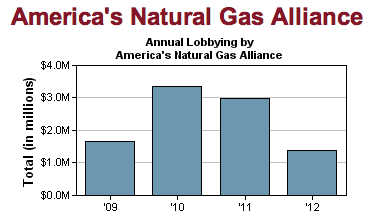
The American Natural Gas Alliance is a fairly recent creation, but has already spent nearly $10 million dollars lobbying the federal government since 2009. This alliance represents dozens of companies seeking to expand profits from hydraulic fracturing. The Vice President of Strategic Communications at the American Natural Gas Alliance is Dan Whitten, who also happens to be the spokesperson for Friends of Natural Gas Michigan.
The Bay City Times 8-part series on this critical issue is so biased towards the industry side that it begs the question of how much advertising money these companies spend with the news agency. The 8-part series and the editorial board opinion piece is a clear indication that the Bay City Times engages in a brand of journalism that not only avoids challenging power, it actually colludes with it.
Hollywood Film Pushes Flawed Corporate Education Agenda
This article by Mary Bottari and Sara Jerving is re-posted from PRWatch.
Well-funded advocates of privatizing the nation’s education system are employing a new strategy this fall to enlist support for the cause. The emotionally engaging Hollywood film “Won’t Back Down” — set for release September 28 — portrays so-called “Parent Trigger” laws as an effective mechanism for transforming underperforming public schools. But the film’s distortion of the facts prompts a closer examination of its funders and backers and a closer look at those promoting Parent Trigger as a cure for what ails the American education system.
While Parent Trigger was first promoted by a small charter school operator in California, it was taken up and launched into hyperdrive by two controversial right-wing organizations: the American Legislative Exchange Council (ALEC) and the Heartland Institute.
ALEC brings together major American corporations and right-wing legislators to craft and vote on “model” bills behind closed doors. These bills include extreme gun laws, like Florida’s “Stand Your Ground” law implicated in the Trayvon Martin shooting, union-busting legislation, Arizona style anti-immigrant legislation and voter suppression laws that have sparked lawsuits across the nation. The organization’s agenda is so extreme that in the last few months 40 major U.S. companies, including Wal-Mart, Coca-Cola, Kraft, and General Motors, have severed ties with ALEC.
Similarly, the Heartland Institute recently suffered an exodus of corporate sponsors after it launched a billboard comparing those who believe in the science behind global warming to the Unabomber, Ted Kaczynski.
As the movie’s stars take to the airwaves this week to promote the film, it is unlikely they will discuss the agenda of the film’s billionaire backers or the right-wing politicians and for-profit firms who are promoting the Parent Trigger idea, the purpose of which is to promote the transformation of the American public school system into a for-profit enterprise. We provide a primer below.
Hollywood Fiction vs. the Facts on Parent Trigger
What is a Parent Trigger law? The proposals have varied from state to state, but they generally allow parents at any failing school, defined by standardized testing, to sign a petition to radically transform the school using any of four “triggers.” Parents can petition to: 1) fire the principal, 2) fire half of the teachers, 3) close the school and let parents find another option, or 4) convert the school into a charter school. While the details of how the school can be “restructured” vary from state to state, the charter school option is always present. Charter schools are privately managed, taxpayer-funded public schools which are granted greater autonomy from regulations applicable to other public schools, ostensibly in exchange for greater accountability for results, but they have been criticized for uneven and mediocre track records.
The film, starring Oscar nominee Viola Davis and Maggie Gyllenhaal, reportedly portrays the struggle of a teacher and a parent who work to transform a low-performing Pennsylvania school, despite resistance from the local union — cast as the enemy of reform. Together, the African American teacher and the white, single mom unite to overcome hurdles and go door-to-door convincing parents to sign a petition to trigger a transformation.
While in reality most teachers do not sign the petitions and teachers are likely to get fired under Parent Trigger laws, “Won’t Back Down” has teachers uniting with parents to sign the petition and transform the school. Eventually, 50 percent of teachers sign as well as parents and the intrepid duo finally turns the school into a charter school run by the Viola Davis character.
The film portrays Parent Trigger laws as a successful way of inspiring and uniting teachers and parents and the community. The real life history of Parent Trigger is quite different. Only two school districts, both in California, have used the petition mechanism: Compton Unified School District and Adelanto School District. In Compton, a new group called “Parent Revolution” founded by a charter school operator paid individuals to collect signatures to hand the school over to a charter school operator, but the courts threw out the petitions.
In Adelanto, parents first signed petitions, then had second thoughts. The school board rejected the petition after parents withdrew their support, resulting in a lawsuit. The courts ruled that parents could not rescind their signatures. The parents had advocated for a turning the school into a charter school, a plan which was rejected by the school board. Instead, an advisory panel was created and headed by the superintendent. The legal battles are continuing.
Instead of prompting reform-minded unity, both petition drives have been criticized for creating “chaos and division” in the community. Charges of fraud and intimidation abound. “This is destroying friendships and all relationships,” one Adelanto parent, Chrissy Guzman-Alvarado, told The New York Times. “With our school divided, parents are scared to speak out or sign anything, and our community is falling apart. All for what?” she asks.
ALEC Spreads Parent Trigger Nationwide
The first Parent Trigger law was enacted in 2010 in California and, with an assist from Heartland and ALEC, the idea is rapidly spreading.
The California law was based on a proposal from Ben Austin, a policy consultant for a small non-profit education organization called Green Dot Public Schools, which manages charter schools for the city of Los Angeles. Austin subsequently formed Parent Revolution, which promotes these laws across the country. But this is not your local PTA. Parent Revolution is backed by big money, including receiving funding from the conservative Walton Family Foundation (think Wal-Mart), which has spent over a billion to promote school privatization.
The rabid pro-privatization Heartland Institute quickly took up the Parent Trigger idea in 2010. The Heartland version of the bill (PDF) went a step further and gave parents the authority to trigger a school’s restructuring regardless of whether it is “failing” or not. Heartland’s version of the bill also calls for a “school voucher” option, which allows students to receive a monetary voucher to attend another private or public school. Voucher or “choice” schools have been criticized for diverting funds from public schools to unaccountable private schools, including for-profit religious and virtual schools.
 When a new wave of school choice supporters were swept into power at the state level in November 2010, Heartland saw an opportunity to put the Parent Trigger idea on steroids by bringing it to ALEC, the controversial corporate “bill mill.”
While ALEC has a governing board of state legislators it also has a governing board of corporations, packed with tobacco firms, giant pharmaceutical firms, and energy companies like Exxon Mobil. The ultra-conservative, billionaire Koch Brothers, have had a representative on the board for years and Koch-controlled money has funded ALEC to the tune of at least $1 million, according to estimates calculated by the Center for Media and Democracy (CMD).
The ALEC Education Task Force voted to approve the “Parent Trigger Act” (PDF) at their critical December 2010 strategy meeting in Washington, D.C., and the idea quickly spread. According to CMD’s analysis, ALEC members introduced or cosponsored various versions of the bill in 17 states.
At the time, ALEC’s education task force was chaired by the for-profit education firm Connections Academy, which specializes in K-12 online education. Others on the task force include tech companies, testing companies and higher-education diploma mills like Bridgepoint Education and Corinthian Education, both of which are under investigation by state Attorneys General for aggressive recruiting policies that leave too many students in debt with no degree.
We have seen this pattern before. When the NRA finally succeeded in getting its first “Stand Your Ground” gun law passed into law in Florida, a law implicated in the tragic Trayvon Martin killing, its next step was to bring the bill to ALEC which helped it spread to two dozen other states in short order.
Parent Trigger and ALEC were a match made in heaven. ALEC’s education bills encompass more than 30 years of effort to privatize public education through an ever-expanding network of school vouchers, an idea first advocated by economist Milton Friedman in the 1950s. ALEC bills also allow schools to loosen standards for teachers and administrators, exclude students with physical disabilities and special educational needs, eschew collective bargaining, and experiment with other pet causes like merit pay, single-sex education, school uniforms, and political and religious indoctrination of students.
Parent Trigger “A Clever Way to Trick Parents”?
But does it work? The support for Parent Trigger, according to University of Illinois Professor Christopher Lubienski, is based more on ideology than empirical data. Lubienski is an Associate Professor in the Department of Educational Organization.
“There is not good evidence that the options given [after the trigger is pulled] improve student achievement. The goal has more to do with changing school governance and giving opportunities for some of these organizations to get control of the public dollar,” Lubienski said. “Policymakers need to look at the factors that actually influence student achievement.
“Unfortunately, that points to a lot more difficult issues than simply changing the structure of a school. It’s relatively simple to fire the staff and bring in a charter operator. It’s more important that kids are getting proper medical attention before they are born, that their mothers are getting the right nutrition at that time, that kids are read to at home, and that they are raised in an environment that values education. This is much more difficult to influence through policy.”
The data shows that the conversion to charter schools, which Lubienski said is the constant theme running throughout the “Parent Trigger” legislation passed in states, has not shown to be effective in improving student outcomes. A study conducted at Stanford University’s Hoover Institution presents evidence that students in only 17 percent of charter school show greater improvement in math and reading than students in similar traditional public schools, whereas 37 percent, deliver learning results that are significantly worse than the student would have realized had they remained in public schools. However, the conversion to charter schools has proven profitable to many U.S. firms such as ALEC member National Heritage Academies, a for-profit charter school management organization operating in eight states, and K-12, Inc., which promotes “virtual” charter schools as well as “virtual” voucher schools. K-12, Inc. is under investigation in Florida for improperly certifying teachers and asking them to cover it up.
In short, Parent Trigger laws are a “clever way to trick parents into seizing control of their schools and handing it over to private corporations,” according to Diane Ravitch, an education historian and former U.S. Assistant Secretary of Education in the first Bush Administration.
Philip Anschutz, Right-Wing Billionaire, Owns Production Company
“Won’t Back Down,” is a production of Walden Media, owned by billionaire investor and right-wing extremist Philip Anschutz. Anschutz participates in the Koch brothers’ secretive political strategy summits and funds David Koch’s Americans for Prosperity group, which backed Wisconsin Governor Scott Walker‘s union busting proposal and is working to defeat Barack Obama and other Democratic candidates across the country.
Anschutz bankrolls ALEC and ALEC member groups. In 2010, The Anschutz Foundation, gave ALEC $10,000 and his Union Pacific firm was an ALEC sponsor the following year. The Foundation funded three ALEC members who sat on the ALEC Education Task Force which approved the Parent Trigger Proposal: The Independence Institute, Center for Education Reform, and Pacific Research Institute.
Anschutz has also supported the National Right to Work Legal Defense Foundation, which backs legislation designed to cripple unions; the Discovery Institute, which seeks to get creation “science” accepted in public schools; and the Mission America Foundation, whose president considers homosexuality to be a “deviance.” He also owns the conservative magazine, the Weekly Standard.
Walden Media was one of the producers of the pro-charter documentary film “Waiting for ‘Superman’.” This film was criticized by Diane Ravitch as propaganda and as “a powerful weapon on behalf of those championing the ‘free market’ and privatization.”
Rupert Murdoch, Media Mogul and Owner of Education Testing Company, Distributes Film
 The film is being distributed by 20th Century Fox, owned by News Corp. and media mogul Rupert Murdock. News Corp. owns Fox News, the Wall Street Journal and the New York Post. Murdoch formerly owned the British newspaper News of the World, which imploded once it was revealed that reporters hacked into the cell phones of the family of a murdered child, as well as the cell phones of the royal family, politicians and celebrities. The paper’s top editors and reporters were arrested although Murdoch himself has not been charged.
As CMD previously reported, News Corp. has been a member of both ALEC’s Education Task Force and Communications and Technology Task Force. Wall Street Journal editorial board member Stephen Moore, is an ALEC “scholar” and both the Wall Street Journal and Fox News have gone to bat for ALEC as member corporations began to flee earlier this year. What is less well known is that News Corp. owns Wireless Generation, a for-profit online education, software, and testing corporation, acquiring it in 2010 for $360 million. Wireless Generation is also an ALEC member. Apparently, Murdoch was anxious to get a piece of the nation’s education system, which he describes as a “500 billion sector in the U.S. alone that is waiting desperately to be transformed.” News Corp’s senior Vice President in charge of its education division is none other than former Chancellor of New York City Schools, Joel Klein, who promoted a corporatist model of education reform.
Lubienski, for one is skeptical of “self-proclaimed experts on the topic of education” like Murdoch who “aren’t accountable to the public” and who have a profit motive coupled with a political agenda of widespread privatization.
Michelle Rhee, Former D.C. Chancellor of Schools, Pushes Parent Trigger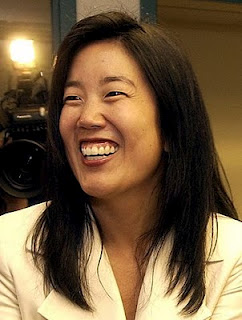
The film is being promoted by former Washington, D.C., public schools Chancellor Michelle Rhee. Rhee spoke at both the RNC and DNC screenings of “Won’t Back Down,” and her involvement underscores what is often the bipartisan nature of the modern “school reform” movement.
Her tenure as the head of the D.C. school system was so controversial, she is widely credited with losing D.C. Mayor Adrian Fenty’s reelection campaign. She was credited with greatly improving test scores in Washington, D.C. schools, but this accomplishment was cast into doubt by a USA Todayinvestigation that suggested that test score gains during her term may have been the result of cheating on the part of school officials. The report found extremely high erasure rates that were statistically anomalous.
After resigning from her position in 2010, Rhee went on to start StudentsFirst, a 501(c)4 non-profit organization planning to engage in “direct and grassroots lobbying” on education issues including Parent Trigger. Derrell Bradford, a state director for StudentsFirst, spoke on “Enacting a Comprehensive K-12 Education Reform Agenda” at the 2011 ALEC annual meeting.
Rhee’s group receives funding fromMurdoch, who “has pledged to spend more than $1 billion to bring for-profit schools, including virtual education, to the entire country by electing reform-friendly candidates and hiring top-notch state lobbyists.” New Corp’s Joel Klein serves on her organization’s board. Other supporters include New Jersey hedge funder manager David Tepper, and Alan Fournier (reportedly big backers of Romney).
Rhee was also featured in Anschutz’s film “Waiting for ‘Superman’.”
Reform or Russian Roulette?
The movie ends when the hard work of turning around a struggling school begins. The Hoover Institution study discussed above shows that only 17 percent of charter schools do a better job educating students.
With no data backing the benefits of the Parent Trigger proposal, many doubt that throwing a school system into chaos is the best way to improve troubled schools. Chaos does however give the privatizers and the profiteers starring roles in the ongoing debate over the future of the American educational system.
Rahm Emanuel: Point Man For Obama’s Bipartisan Pork Barrel Pedagogy
This article by Bruce A. Dixon is re-posted from Black Agenda Report.
By early this week, the truth was hard to avoid and impossible to deny. The Chicago Teachers strike threatened to expose the vast gulf between some of the president’s rhetoric about preserving public education and protecting teachers, and the savagery of the Obama administration’s Race To The Top initiative, which ties federal education funding to how many public schools are closed and privatized, how many public school teachers fired, and how many of those remaining are evaluated according to business-friendly norms like test scores.
“I want you to understand, the president has weighed in,” Emanuel said. “Every issue we’re talking about regarding accountability of our schools, quality in our schools to the education of our children, is the core thrust of Race to the Top.”
Emanuel added that the “notion” of the teacher evaluations he proposed came from Race to the Top.
“In that sense there couldn’t be a bigger push for the president,” Emanuel insisted.
Emanuel also thanked Mitt Romney for his statement of support.
Besides the president, Rahm Emanuel had every newspaper and radio station in town, the Commerce Club and all the billionaires, scores of well-funded charter school operators and their contractors and hedge fund backers. He even had fake citizen groups like Democrats for Education Reform, which used money donated by its billionaire backers to run deceptive radio and TV ads (still running as of Tuesday night) aimed at inciting parents against the people who teach their children. Illinois is also one of twenty or so states that have passed corporate inspired “school reform” testing and curriculum measures into law, and drastically limited the issues over which teachers can negotiate along with the their right to strike.
But one of the signs carried by striking teachers told it all. It said “our working conditions are your child’s learning conditions.” The Chicago Teachers Union had prepared months in advance for the strike by reaching out to and working with organized parents around the city and enlisting them behind its basic demands to keep schools open and well-funded, and keeping them informed on and involved in activities that fought the creeping privatization of public education in Chicago. While Rahm had the media the billionaires, armies of hired stooges and the president, the teachers enjoyed broad support among parents and the public.
Even with Chicago’s corporate working hard to blur connections between the bipartisan agenda of dismantling public education, the president who calls the shots and the mayor who enforces them, the act was getting thin. With the presidential election less than two months away, the White House couldn’t afford to have its own policies exposed to its base voters. It’s likely therefore, that the White House privately needed Emanuel to settle the strike while doing nothing to back down from the presidential policies that caused it.
With last year’s “Waiting For Superman” and this year’s “Won’t Back Down”, the elite bipartisan campaign to privatize inner city public education is bound to continue. Romney and Obama, Democrats and Republicans agree on that much, so on this issue as so many others there is no question of greater and lesser evils. But Romney or Jeb Bush or some other Republican were in the White House, Democrats of many stripes wouldn’t hesitate to connect a sitting president with presidential policies aimed at privatizing education. With a Democrat, especially a black Democrat in the White House, black political opportunists see their careers threatened by any criticism of the president, his party, his policies or what he had for breakfast, and can draw soft-headed or lazy thinkers with them in the name of racial solidarity to protect the black president. So when it comes to school privatization, a black corporate Democrat, whether in City Hall or the White House is the more effective evil.
In the months leading up to the strike, Chicago’s Public School officials fired thousands of teachers and closed dozens of schools, often with little or no notice. Some of the school closings appeared to coincide with efforts to gentrify Chicago neighborhoods, and most of them were met with outrage from local communities. They avoided many public meetings and walked out of many private meetings, refusing to bargain with teachers. According to Substance News, the Chicago Public Schools “…tried to gut the entire contract throughout most of the ten months of negotiations, retreating from many of their most serious demands only after the strike threat became credible…”
The fight isn’t over. The Chicago Tribune is already calling for teacher strikes to simply be made illegal, and the functionaries at places like the Chicago Public Schools headquarters are beneath contempt and beyond shame. CPS head honcho Jean Brizzard gets paid $250K per year, more than any other school “CEO” in the nation. But, Substance News tells us, he has not been present at a single one of the last 70 negotiating meetings. He may be on the way out with the standard golden parachute, to be replaced by a functionary from Detroit, where the takedown of public education has been largely completed already.
For those paying attention, there are lessons here. Teacher unions till now have adopted a mostly passive and defeatist attitude toward fighting privatization, and uncritically supported Democrats with their members dues money, regardless of their positions on charters and privatizaion. But unions are pretty useless without the possibility of strikes. Strikes with public support make a big difference. The picket lines were in Chicago, but the impact of Chicago’s parents and communities who stood behind their teachers is being felt nationwide. The fight against pork barrel pedagogues who prescribe corporate school reform as the cure for inner city schools is entering a new phase.
Public Hearing on amending the Elliot Larson Act sparsely attended in Grand Rapids
This was the fourth hearing across the state this year by the Michigan Civil Rights Commission to gather input on whether or no Amend the state’s Elliot Larson Civil Rights Act to include LGBT rights.
In June, this writer attended the hearing in Holland, which drew roughly 250 people to that gathering, with both sides arguing passionately on the issue. When the hearing began in Grand Rapids only a dozen people were present.
The first speaker was a woman from the ACLU Western Michigan Branch. Her emphasis was that if Michigan changes the law to provide more rights and equal rights to those who identify as LGBT or Q so that people will stay in the state, thus retaining and attracting talent in order to make Michigan a more thriving economic state.
The second speaker identified as Transgender, who also is faced with physical disabilities. Rhonda told the audience that she has had numerous experiences in job applications, not because of her education background (she has several Masters Degrees), but because she did not look like the person in her ID looks like a man.
A young African American man then addressed the commission and said that he was born in 1994, the year that Grand Rapids passed an LGBT inclusive ordinance. This young man said he has not personally experienced much discrimination, but he knows of many people who have.
The next speaker began by saying he was not a homophobe, but then went on to say that the state law should not be amended to include LGBT rights in the Elliot Larsen Act. He said that he believed that this effort is about promoting the LGBT lifestyle, which he called a tyranny being imposed on communities and agencies. He also stated that churches are being forced to perform same sex marriages, citing Denmark churches as an example.
Because there were so few people in attendance (roughly 15), the commission allowed people to speak more than once. Both Rhonda and the young African American man responded to the comments by the person who said that the LGBT community was imposing a tyranny of rights on churches. Rhonda said that she has a long history of involvement in the Lutheran Church and disagreed with the belief that “gays are imposing their will on churches.”
It was frustrating that so few people attended the hearing considering the level of discrimination that exists against the LGBTQ community, both in Grand Rapids and around the state.
We know about the Kent County Sheriff Department’s practice of targeting Gay men in parks and the recent threats made against women the LGBT folks at the Gay Day event held in the East Hills Neighborhood. However, in talking to one of the commissioners, they stated that there were already 100 written submissions sent in, just from Grand Rapids. They will be accepting written testimony for a few more months, just send calcagnor@michigan.gov.
Hip-hop artist Invincible, Complex Movements in GR for performance & dialogue with area community organizers
Complex Movements presents…
 Beware of the Dandelions:
Connecting Grassroots Communities in Detroit and Grand Rapids.
at SiTE:LAB
(Old Public Museum 54 Jefferson)
Saturday Sep 22 6pm-9pm
REFLECT on the ways we approach the work of transforming ourselves, our communities, and the world
ENGAGE in conversation about networks, new forms of organization and leadership, drawing lessons from quantum physics, emergence, and other complex science theories
REDEFINE change from critical mass to critical connections, from growing our economy to growing our souls, from representative democracy to participatory self-governing communities
CONNECT communities working for change within Detroit and Grand Rapids to one another, and to communities around the world
Complex Movements collective member and Detroit hip-hop artist and activist Invincible will facilitate a workshop on these topics featuring community workers from Heartside Gallery, GRIID, Our Kitchen Table, The Bloom Collective, 4TLOHH and beyond. Participants will create the opportunity draw connections between small scale deep rooted community movement building happening in Grand Rapids and Detroit, through the lens of complex science and social movements.
An excerpt of Complex Movements installation performance piece “Three Phases” will also be presented as part of the workshop.
This event is FREE, ALL AGES, and ANTI-DISPLACEMENT
‘Complex Movements’ is a Detroit based artist collective composed of graphic designer/fine artist Wesley Taylor, music producer/filmmaker Waajeed, and hip-hop lyricist/activist Invincible. Their multimedia performance installations, hand crafted songs, and trans-genre experiments explore the relationship between complex science and social change movements. ‘Complex Movements’ is a recipient of the 2012 MAP Fund grant and Michigan ArtServe’s CSA grant. They have presented their work at The Detroit Science Center for Kresge’s Art X Detroit festival, Re:View Gallery, Network of Ensemble Theater’s Microfest, and Cranbrook Art Museum. They are joined at this installation by jeweler Tiff Massey, as well as creative technologists AJ Manoulian and Carlos (L05) Garcia.
New Media We Recommend
Below is a list of new materials that we have read/watched in recent weeks. The comments are not a “review” of the material, instead sort of an endorsement of ideas and investigations that can provide solid analysis and even inspiration in the struggle for change. All these items are available at The Bloom Collective, so check them out and stimulate your mind.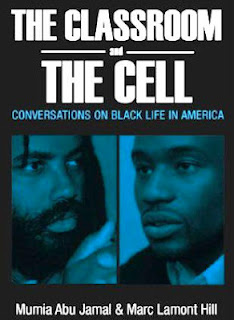
The Classroom and The Cell: Conversations on Black Life in America, Mumia Abu- Jamal & Marc Lamont Hill – Marc Lamont Hill has been visiting political prisoner Mumia Abu-Jamal for years. During that time they have had conversations about the prison industrial complex, activism, education, Hip Hop, Black Leaders, Black Masculinity and race in the age of Obama. This book is a transcription of those conversations. With passion, compassion and rage, these two Black men provide readers a cornucopia of insights into reality for Black Americans today. In addition, Hill and Abu-Jamal challenge the assimilation of their fellow Black Americans and the complacency of White Americans who have yet to come to terms with their privilege within the dominant culture. This collection of conversations is both delightful and compelling. Highly recommended.

Hooded Americanism: The History of the Ku Klux Klan, by David Chalmers – The public image of the KKK is vague and somewhat misunderstand. The history of the KKK, as presented by David Chalmers, is something that more Americans should become familiar with. Chalmers not only provides an excellent investigation into the origins and evolution of the KKK, he highlights their existence in many states across the country. The author makes it clear that while much of the activities of the Klan over the past one hundred and fifty five years have been directed at Black Americans, the Klan also has a long history of anti-Semitism, anti-Catholicism and anti-immigration. Another aspect of Chalmers book is the information on the Klan’s relationship to organized religion and the state, without which the Klan would never have been effective as it was in their campaigns of terror across the country. Hooded Americanism is an invaluable resource for those who want to come to terms with one of the most violent expressions of White Supremacy in the US.
The American Crucible: Slavery, Emancipation and Human Rights, by Robin Blackburn – Robin Blackburn has devoted much of his life to studying and writing about slavery worldwide. In The American Crucible, Blackburn provides us with another gem. This 500-page investigation into the institution of slavery in the Americas is equaled by its treatment of the various abolition movements throughout the Western Hemisphere. Building on his previous works, Blackburn provides us with a detailed history of slavery in the Americas, who the players were and how deeply entrenched their were within the formation and growth of many countries in both North and South America. At the same time Blackburn then presents readers with information on the varying abolitionist movements in the Americas and how many of those movements became the seed for continued struggles around human rights, many of which continue today. Blackburn demonstrates that the value of understanding history can be seen in what we do with that information today. One of the best books on slavery and abolition in the America.
Agrofuels: Starving People, Fueling Greed (DVD) – This 28 minute film takes an important look at the human and ecological impact that the increased production of agrofuels are having around the world. The film interviews people who have been impacted from agrofuel production, biologists and activists who have been resisting the agrofuel industry. The film covers all the important areas of agrofuel production, such as the impact on indigenous populations, workers, the destruction of forests, diversion of water and its contribution to global warming. The short documentary also includes a section on resistance to demonstrate that there is a growing international movement to stop the production of agrofuels. An important film about an urgent issue………..highly recommended.
Amy Goodman in Grand Rapids: Media that doesn’t cover the critical issues of the day is a disservice to democracy
Jeff Smith also contributed to this story.
Democracy Now show host Amy Goodman and her colleague Dennis Moynihan, co-authors of the new book, The Silenced Majority: Stories of Uprising, Occupations, Resistance and Hope, spoke in Grand Rapids yesterday to an audience at noon in the Wealthy Theater.
Goodman began her talk by reflecting on when she was in Haiti and got the call from Democracy Now to host the daily news show. She was in Haiti covering the election that was won by Aristide, where 90% of Haitian population voted even though many of them risked their lives to do so. She remembers it being the same time that Clinton was elected in the US the first time and how so few people turned out to vote in the US.
Goodman said that things in the electoral arena have changed a great deal since then and that covering the Democratic and Republican Conventions has become quite instructive in terms of where we are as a country. She remembers going to the Democratic National Convention in 2008, where there were war protestors, people opposing both the Iraq and Afghanistan wars. She remembers then Sen. Obama who said he would filibuster a bill to stop the AT&T/Verizon telecom spying, but when he became a nominee he changed his mind and voted for the legislation that would give the telecom companies retroactive immunity. The gratitude from the telecom companies could be seen, Goodman said, with AT&T logos on delegate bags, lanyards and a big soiree by ATT for “thanking the Democrats for getting them out of jail free.”
At the RNC in 2008 it was even more intense, with the city highly militarized and reporters being arrested, which included Goodman and two of her Democracy Now crew. Goodman was arrested, she said, just for demanding that her colleagues be released. It is true that numerous journalists were arrested at the RNC, but Goodman failed to mention that hundreds of activists were arrested, physically assaulted and detained in harsh conditions. Goodman also failed to mention that the FBI had infiltrated the group organizing the counter-RNC actions and were facing years in prison just for planning and coordinating actions.
A few days later back to convention center, some of the networks wanted to interview Goodman. One NBC reporter said, “ I didn’t get arrested.” Goodman responded by saying, “I don’t get arrested in a skybox either.” At another press conference, the St. Paul police chief said he would love to see reporters embedded with law enforcement. The next day Goodman saw a Fox reporter embedded with this moving police escort. The embedding of journalists has brought journalism to an all time low, according to Goodman.
The Democracy Now host then said that in this hi tech digital age all we get is “static, distortions and half truths. What we need is a media that covers power not covers for power.”
The theme of the responsibility of the media was what Goodman emphasized most. She made the point that, “if the news media does not cover the critical issues of the day, then they do a disservice to our democracy.” Unfortunately, this is the kind of news media we have in the US.
Goodman did refer to the victory of Barack Obama in November 2008 as historic, but she went on to say that so many of the issues the people who elected Obama cared about were not changed but intensified in the wrong direction. Goodman cited Guantanamo not being shut down, the Afghanistan war, the attack on government whistleblowers, immigrants and the increase in government surveillance.
Goodman then went on to talk about how social movements, such as the abolition, civil rights, suffrage, and anti-war movements are what made the US a great nation. Such comments echo the work of radical historian Howard Zinn who always emphasized that it was social movements and not voting that has made the difference on major issues.
Goodman spoke about Rosa Parks, Martin Luther King Jr and A Phillip Randolph and many other unsung heroes of the civil rights movement. She talked about how the news media misrepresented Rosa Parks as being a tired seamstress who didn’t have the energy to give up her seat on the bus. This is such a distortion, since Parks had been part of the NAACP for more than a decade and part of an effort to challenge the racist segregation of the bus system and the sexist treatment of women for years.
The Democracy Now co-host also talked about brutal murder of Emmett Till at the hands of a white. Mamie Till, being incredibly courageous, asked that there be an open casket so the world could see the ravages of racism. Mamie Tll had an important lesson for the press of today…..Show the pictures. “If we saw the pictures of war every day above the fold a baby dead on the ground, every story referred to a dead soldier or a woman with her legs blown off by a cluster bomb, in just a week the American people would say no war.”
By way of wrapping up, Goodman cited the former Dean of Communications at the University of Pennsylvania, George Gerbner. Gerbner said that the media “has nothing to tell and everything to sell.” “This is exactly why we need an independent news media in this country if change is going to take place,” said Goodman.
Civil Rights and Press Freedom One Year After Occupy
This article by Josh Stearns is re-posted from Free Press.
One year ago the Occupy movement took root in a small square in New York City. From there it would ripple out across the nation over a matter of weeks and months.
A week after that initial occupation the first reporter, John Farley from local PBS station WNET Thirteen, was arrested by the NYPD. Like the occupations, the press suppression and journalist arrests spread throughout the U.S.
As press and protesters headed back to Zuccotti Park this weekend, reports suggest that three more journalists were arrested, bringing the total number of journalists arrested while covering Occupy Wall Street and other U.S. protests in the last year to well over 90, almost half of which were in New York City. Credentialed mainstream reporters, citizen journalists, freelancers and live-streamers all ended up behind bars over the course of the year. Today, remarkably, a number of those journalists are still facing charges.
Across the country, the response to the arrests varied city by city. Press freedom groups sent letters and held meetings with police departments, 40,000 people contacted their mayors calling for stronger protections for the First Amendment, and 16,000 people sent messages of support to the arrested journalists.
The attacks on press were troubling on many levels but particularly because media making was such a central part of the Occupy movement. From tweets to blog posts, pictures to streaming video, Occupy made strategic use of the Web from day one and inspired a new generation of activist journalists who chronicled the movement. While covering the NATO protests this summer in Chicago, Laurie Penny tweeted that “In 2012, youth power’s equivalent of the peace v-sign is the camera phone held aloft.”
The threats that those covering Occupy faced remind us that when anyone can commit acts of journalism, we need everyone to be advocates for press freedom. Matt Taibbi points to the University of California Davis police officer who pepper-sprayed a group of students on campus during a peaceful protest as evidence of what is at risk if we don’t fiercely defend our rights. He writes that:
“What happened at U.C. Davis was the inevitable result of our failure to make sure our government stayed in the business of defending our principles. When we stopped insisting on that relationship with our government, they became something separate from us.”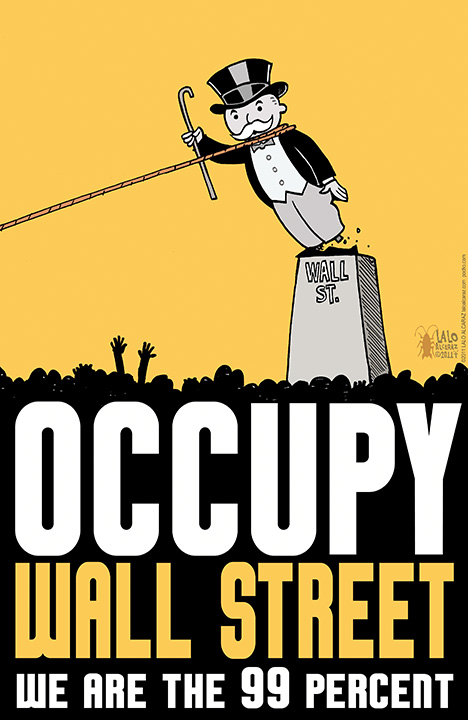
Occupy Wall Street has helped highlight this divide, especially as it applies to press freedom. The almost weekly journalist arrests put First Amendment rights in the spotlight at a moment when journalism was (and continues to be) in a state of profound change. For the most part, when we talk about the fundamental changes happening in the media, we focus on business models or modes of production and distribution. Indeed, on Twitter and Storify, via live-stream and even in print publications like the Occupied Wall Street Journal journalistic experimentation and a robust hacker culture was alive and well around Occupy.
Citizen journalism in its current form has been around for well over a decade, but Occupy help legitimize it as citizens reported with independence, tenacity and honesty from the streets. Live-streamers were profiled by mainstream media and their footage carried on news websites from NBC to the Washington Post.
However, Occupy also illustrated that as the media models change, our law enforcement agencies and institutions are struggling to catch up. New questions were raised about press credentialing laws and the wisdom of allowing police departments to define who is and who is not considered a member of the press. Too often, in the heat of the moment when police were surrounded by cameras, police took an “arrest now and ask questions latter” approach. Meanwhile city officials relied on old definitions of journalists, or tried to rewrite history entirely.
Back in December, Robert Stolarik, a photographer for the New York Times, caught an NYPD officer on video as he tried to stop Stolarik from photographing the arrest of citizen journalists at an Occupy protest. Last month, Stolarik was arrested again while working at a crime scene. According to a report in the Times, officers “took his cameras and dragged him to the ground,” and “he said that he was kicked in the back and that he received scrapes and bruises to his arms, legs and face.” Many other journalists covering Occupy walked away bruised and bloodied by police this year.
Occupy Wall Street, along with tragic incidents in Mexico, Syria and around the world, reminded us that many journalists put their bodies and their freedom on the line when they seek to bear witness to civil unrest. When we put our bodies on the line, they not only become symbols but also targets.
Writing about Occupy Glenn Greenwald argues, “If a population becomes bullied or intimidated out of exercising rights offered on paper, those rights effectively cease to exist.” Thankfully, even in the face of arrest and harassment, night after night, journalists and live-streamers, bloggers and photographers are back on the streets, covering the protests. If the past year teaches us anything about the future of journalism, it is that the First Amendment depends on all of us.
Photo credit: Courtesy of yfrog.com
 Grand Rapids Institute for Information Democracy