This article/video is re-posted from the Indigenous Environmental Network.
The Mending News released a 7:25 minute video on the basics of an international carbon offset mechanism called REDD (Reducing Emissions from Deforestation and Forest Degradation) and its link to California’s cap and trade regulations that currently include a “placeholder” to allow sub-national REDD carbon credits to enter into its cap and trade system.
A Governor’s Forests and Climate Task Force is working with several states/provinces – most notably Chiapas, Mexico and Acre, Brazil – to potentially supply California with REDD credits. Some NGOs are saying this California REDD project will become a model for implementing REDD internationally. IEN and other groups in California support California’s greenhouse gas reduction goals, but REDD credits should not be accepted into California’s carbon trading system.
The film makes note that: REDD credits lack environmental integrity; REDD projects pose high risks to Indigenous Peoples and forest dependent communities; and REDD offsets are risky in terms of fraud, land grabs, evictions and human rights abuses.
Watch the video to get the real story of REDD, the deceptive climate ‘solution’ being proposed in California and being implemented within the UN climate negotiations and the World Bank. It sounds good on paper, but the reality is that REDD enforces the global colonization of Mother Earth; allows the polluting industry to expand its toxic emissions creating local toxic hotspots in faraway places; and creates a stolen future for Indigenous peoples, local forest dependent communities, communities living next door to a fossil fuel polluting industry, and a stolen future for the environment and all life.
New Media We Recommend
Below is a list of new materials that we have read/watched in recent weeks. The comments are not a “review” of the material, instead sort of an endorsement of ideas and investigations that can provide solid analysis and even inspiration in the struggle for change. All these items are available at The Bloom Collective, so check them out and stimulate your mind.
The Beginning of the American Fall: A Comics Journalist Inside the Occupy Wall Street Movement, by Stephanie McMillan – Comic strip creator, author and activist Stephanie McMillan combines her talents in this new book from Seven Stories Press. Using comic strip illustrations and prose, McMillan uses her own journey of activism and organizing to offer up some useful insights into the Occupy Movement and the state of organizing in the US. McMillan takes on politics as process, consensus, racism, leadership and what kind of spaces Occupy has opened for insurgent movements and political analysis. McMillan also includes a written and visual account of a presentation she gave at the Earth at Risk conference in 2011, a presentation which demonstrates how well the author understands both power dynamics and how urgent the need for direct action is around issues like climate change. A delightful read that with both entertain and educate.

The Changing Face of Empire: Special Ops, Drones, Spies, Proxy Fighters, Secret Bases, and Cyberwarfare, by Nick Turse – One of the best young writers on US foreign policy, this new collection of essays by Nick Turse just adds to his credibility as a solid critic of how the US military functions in the 21st Century. Most of these essays have previously appeared on Tom’s Dispatch, but putting them in one volume makes it easier to see the complexity of US militarism and the breadth of Turse’s analysis. The author covers a great deal of ground, as is reflected in the book’s title. However, what makes this book so useful is that in addition to all the data on US militarism, Turse puts in very plain terms the significance of US military trends and its relationship to social movements globally. The author makes it clear that the US military reach is far and wide, with particular growth in the Middle East and Africa. For those who wish to understand the role the US military plays in the world today and who don’t want to be duped by the claims of humanitarianism from the Obama administration, The Changing Face of Empire is a must read.
Gender, by Jamie Heckert – Another solid zine from the Institute for Anarchist Studies Lexicon Series. This zine looks at the concept of gender and how it is fundamentally a social construct that not only leads to tremendous harm, particularly for those who are gender non-conforming, but how our limited views of gender can prevent us from truly being free in our own bodies in the world. Jamie Heckert does a fabulous job in this short zine of not only deconstructing gender norms, but if looking at gender norms and how it relates to other systems of oppression and how we can engage in resistance. As the author says, “Gender can be a pattern of control, violence, and domination. Or it can be just another way of talking about the beautiful diversity of human existence.”

Surviving Progress (DVD) – Ronald Wright, whose best-seller, “A Short History Of Progress” inspired this film, reveals how civilizations are repeatedly destroyed by “progress traps” — alluring technologies serve immediate needs, but ransom the future. With intersecting stories from a Chinese car-driving club, a Wall Street insider who exposes an out-of-control, environmentally rapacious financial elite, and eco-cops defending a scorched Amazon, the film lays stark evidence before us. In the past, we could use up a region’s resources and move on. But if today’s global civilization collapses from over-consumption, that’s it. We have no back-up planet.
Earlier this week energy profiteers Consumers Energy announced that they have plans to build a $750 million dollar natural gas powered energy plant.
The proposed facility will be built in Thetford Township, about 20 miles northeast of Flint. The only potential roadblock is if the Michigan DEQ does not grant the company an air quality permit, which seems unlikely since the DEQ is supportive of the current levels of natural gas extraction, particularly through horizontal hydraulic fracturing, as we have witness at public forums.
It is also likely the energy company will get what they want considering how much money they spent lobby and influencing politicians at both the federal level and state level. According to the Michigan Campaign Finance Network, the group CMS Energy Employees for Better Government had contributed $305,730 in PAC money in Michigan in 2012.
According to one news source, John Russell, the president and CEO of Consumers Energy, said development of a major new natural gas power plant is consistent with the company’s Balanced Energy Initiative, a comprehensive plan to meet the energy needs of Consumers Energy’s customers over the next 20 years.
Russell doesn’t say if the new plant will rely on natural gas from hydraulic fracturing, but it seems likely this will be the case, since companies have been purchase oil & gas leases from the state and purchasing access to natural gas deposits by buying access to private land as we have noted in Kent County over the past year.
Consumers Energy currently provides electricity to about two thirds of Michigan’s 10 million residents, in addition to thousands of businesses across the state.
Such an announcement from Consumers Energy means that the energy giant is committed to extracting and burning natural gas in order to generate more profits from electricity sales in the state.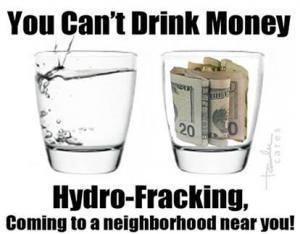
As we noted in an article looking at the Holland announcement to build a natural gas burning power plant, Consumer’s Energy announcement is a serious blow to efforts to protect the environment since it means a greater push for horizontal hydraulic fracturing.
With a growth of horizontal hydraulic fracturing will come the following:
- The use of toxic chemicals (often undisclosed) in the fracking process, chemicals which cause cancer.
- The use of millions of gallons of water, which will not only mean water diversion from lakes, streams and underground aquifers, but the disposal of this water, which will be contaminated with chemicals. Where will they dispose of this toxic water?
- New roads or the widening of roads will take place, especially in more rural and environmentally sensitive areas, causing more environmental destruction – deforestation, run-off and impacting wildlife.
This new announcement from Consumers Energy should be a wakeup call to environmental groups and activists that the fight against fracking is heating up and that there is little time to resist the direction that the power companies want to take that we can no longer afford to accept.
154.3 million spent on ballot proposals in Michigan this year
This information was re-posted from the Michigan Campaign Finance Network.
Michigan ballot committees smashed all previous records for fundraising and spending in 2012. In aggregate, the 2012 ballot committees raised $154.3 million. All six proposals lost at the polls on November 6th.
The spending in three of the ballot contests – Proposal 2, 3 and 6 – broke the previous record of $27.4 million for spending on a single ballot proposal, set in the campaign for the 2004 constitutional amendment setting terms for future expansion of casino gaming.
The ballot committees’ total of $154.3 million is 43 percent more than the spending in 2010 for all Michigan’s state campaigns. Spending last election cycle for governor, attorney general, secretary of state, state senate, state house, statewide education boards, supreme court, court of appeals, trial courts and a single ballot question was $107.6 million.
Proposal 1 - Proposal 1 was a referendum on whether to adopt the Emergency Manager Act. The proposal was defeated and the law was effectively repealed.
The proponent of Prop 1, Stand Up for Democracy, raised $1,995,466. American Federation of State County and Municipal Employees (AFSCME) Michigan Council 25 gave $1,829,000, or 91 percent of that amount. AFSCME Oregon Council 75 gave $50,000, as the second biggest donor.
There was no focused financial opposition to Proposal 1 after it survived a legal challenge put forth by Citizens for Fiscal Responsibility.
The Emergency Manager Act has been rewritten in the lame duck legislative session and it will be signed into law by the Governor.
Table of leading donors to committees concerned with Proposal 1.
Proposal 2 - Proposal 2 was the most expensive ballot question in 2012. Prop 2 would have guaranteed collective bargaining in the Michigan Constitution. It lost at the polls by a wide margin.
The main proponent of Prop 2, Protect Working Families, raised $23,660,772. Its major donors included the United Auto Workers National Civic Action Program, $3,555,763; the Michigan Education Association, $2,685,675; the AFL-CIO State Unity Fund, $1,836,561; the National Education Association, $1,500,000, UAW Solidarity House, $1,028,480; the American Federation of Teachers, $1,002,427; and the MEA’s USO Crisis Fund, $1,000,000.
The direct opponent of Prop 2, Protecting Michigan Taxpayers, raised $23,175,994. Its leading donors included the Michigan Chamber of Commerce, $9,213,325; The Michigan Alliance for Business Growth, $5,540,000; Sheldon and Miriam Adelson, $2,000,000; and the DeVos Family, $2,000,000.
Table of leading donors to committees concerned with Proposal 2.
Proposal 3 - Proposal 3 was a proposed constitutional amendment to require 25 percent renewable energy by 2025. The proposal lost by a wide margin.
Proponents of Prop 3 raised a net total of $14.5 million through several committees, mainly Michigan Energy, Michigan Jobs. Leading financial supporters of Prop 3 included the Michigan League of Conservation Voters, $3,125,188; Green Tech Action Fund, $2,843,000; the national League of Conservation Voters, $2,489,007; Blue Green Alliance, $1,421,172; American Wind Energy Association, $1,062,644; and Julian H. Robertson, Jr., $1,000,000.
The opponents of Prop 3, Clean Affordable Renewable Energy (CARE) for Michigan, raised $25,281,104. Its major donors were Consumers Energy, $12,213,929; and DTE Energy, $11,892,623.
Table of leading donors to committees concerned with Proposal 3.
Proposal 4 - Proposal was a constitutional amendment to establish a guarantee of unionized home health care workers. It was defeated at the polls.
The proponent of Prop 4, Citizens for Affordable Quality Home Care, raised $9,360,437. All contributions to the ballot committee ran through the 501-c-4 corporation Home Care First, Inc. Service Employees International Union contributed $5,570,000. Other donors are not identifiable.
There was no committee in opposition just to Prop 4. Citizens Protecting Michigan’s Constitution opposed all the constitutional amendments, particularly Proposals 2, 3 and 4.
Proposal 5 - Proposal 5 was a proposed constitutional amendment that would have required a legislative supermajority or a vote of the citizens to approve any state tax increase. The proposal lost by a margin of more than two-to-one.
Two committees supported Prop 5, both of which were supported mainly by the financial holdings of Ambassador Bridge owner Matty Moroun. Americans for Prosperity Michigan Ballot Committee raised $1,512,703. The Detroit International Bridge Company gave $1,213,014, through the Prop 6 ballot committee, People Should Decide. Americans for Prosperity contributed $299,689.
Michigan Alliance for Prosperity had $3,755,138 in support of Prop 5. Moroun’s Liberty Bell Insurance Agency gave 99.6 percent of that money.
The opponents of Prop 5, Vote No on 5 – Defend Michigan Democracy, raised $2,090,546. Its top donors included: Michigan Health and Hospital Association, $410,000; National Education Association, $400,000; Michigan Municipal League, $269,000; and American Federation of Teachers, $250,000.
Proposal 6 - Proposal 6 was a proposed constitutional amendment that would have required voter approval for any new international bridge or tunnel. The proposal was defeated by a wide margin.
The proponent committee, The People Should Decide, raised $33,541,060, almost entirely from Matty Moroun’s Detroit International Bridge Company. Moroun’s Central Transport chipped in $100,000 of in-kind support.
Opponents to Prop 6 raised $1,719,350 through the committee Taxpayers Against Monopolies. Its top donors included: Fund for Michigan Jobs, $565,000; General Motors, $500,000; and DTE Energy Corporation, $250,000.
Table of leading donors to committees concerned with Proposals 4, 5 & 6
Multi-Tasking Committees Citizens Protecting Michigan’s Constitution opposed all five constitutional amendments, particularly, Proposals 2, 3 and 4. The committee raised $8,675,491. Its top donors were the Michigan Chamber of Commerce, $1,982,811; the Michigan Republican Party Administrative Account, $1,500,000; the Prop 2 opponent, Protecting Michigan Taxpayers, $941,000; the Michigan Chamber’s ballot PAC, $900,000; and the Michigan Health and Hospital Association, $750,000.
Michigan League of Responsible Voters opposed Proposals 1 and 5, and supported Proposals 2, 3 and 4. It raised $875,744, and its donors were the National Education Association, $585,000; the UAW, $100,744; SEIU, $100,000; and the MEA, $90,000.
Table of leading donors to committees concerned with multiple proposals
Failed Proposals A proposal to expand casino gaming was denied certification for the ballot. The proponent committee, Citizens for More Michigan Jobs, raised $3,466,500. Partners in the limited liability company contributed the cash.
Two committees sponsored by existing casino owners opposed the expansion proposal. Protect MI Vote raised $1,949,680, and Protect MI Constitution raised $555,858.
Finally, a proposal for a constitutional amendment to require “corporate accountability” was withdrawn almost as soon as it was announced. Right to Know Committee raised $73,452. The Michigan Democratic Party contributed $69,500 of that amount.
One Michigan Undocumented Youth file lawsuit against Secretary of State Ruth Johnson over Driver’s Licenses
The undocumented immigrant movement continues to put pressure on the state government over the issue of having the right to obtain a drivers license in Michigan.
We reported on an action in early November where several hundred immigrants and allies came to Lansing to confront Gov. Snyder on the position that Secretary of State Ruth Johnson has taken and we reported on a packed Grand Rapids City Commission meeting where the immigrant community once again was putting pressure on government officials to support their desire to have access to a Michigan drivers license in early December.
Yesterday, the group One Michigan for Immigrant Rights sent out the following press release with details of a lawsuit filed against Secretary of State Ruth Johnson.
One Michigan for Immigrant Rights will be represented by the American Civil Liberties Union (ACLU) in a lawsuit against Michigan Secretary of State Ruth Johnson challenging the ban on driver’s licenses for recipients of the Deferred Action for Childhood Arrivals (DACA) program.
As an undocumented youth-led organization, members of One Michigan were excited about the doors that DACA opened for them, including the opportunity to work, attend school, and obtain identification. This past summer, in a coordinated effort with other national partners such as the National Immigrant Youth Alliance (NIYA), we were instrumental in pushing for DACA program announced by President Obama on June 15, 2012. On October 8, Johnson announced that the state would deny driver’s licenses and personal identification cards to those authorized to live and work in the United States under DACA, reestablishing many of the barriers placed before undocumented youth in our state. In response to this policy, One Michigan in conjunction with the ACLU and other DACA-eligible individuals filed a lawsuit on December 19, 2012 with the U.S. district court to ensure immigrant youth authorized to work in the U.S. can drive. 
One Michigan member Xochitl Cossyleon, 19, of Detroit, MI was devastated when she found out about Johnson’s policy, and felt like DACA was pointless without being able to drive to work and school. For Xochitl, getting a driver’s license was the main point of applying for DACA.
This policy has been extremely detrimental to the immigrant community in Michigan, because it has discouraged many DACA eligible candidates from applying and becoming productive tax-paying residents of the State of Michigan. This has caused organizations like One Michigan to divert their attention from offering workshops for DACA applicants to organizing to reverse Ruth Johnson’s illegal policy.
It is the hope of One Michigan and their partners in this lawsuit that Ruth Johnson will recognize that allowing DACA recipients to obtain driver’s licenses and identification cards is not only the right thing to do, but her obligation under the law. We will not rest until this policy is reversed, our community is safe, and the undocumented youth of our state are able to work, go to school, and support our families.
The Real And Racist Origins of the Second Amendment
This article by Bruce Dixon is re-posted from Black Agenda Report.
Why does the US Constitution guarantee a right “to keep and bear arms”? Why not the right to vote, the right to a quality education, health care, a clean environment or a job? What was so important in early America about the right of citizens to have guns? And is it even possible to have an honest discussion about gun control without acknowledging the racist origins of the Second Amendment?
The dominant trend among legal scholars, and on the current Supreme Court is that we are bound by the original intent of the Constitution’s authors. Here’s what the second amendment to the Constitution says:
Clearly its authors aimed to guarantee the right to a gun for every free white man in their new country. What’s no longer evident 230 years later, is why. The answer, advanced by historian Edmund Morgan in his classic work, American Slavery, American Freedom, the Ordeal of Colonial Virginia, sheds useful light on the historic and current politics and self-image of our nation.
Colonial America and the early US was a very unequal place. All the good, cleared, level agricultural land with easy access to transport was owned by a very few, very wealthy white men. Many poor whites were brought over as indentured servants, but having completed their periods of forced labor, allowing them to hang around the towns and cities landless and unemployed was dangerous to the social order. So they were given guns and credit, and sent inland to make their own fortunes, encroaching upon the orchards, farms and hunting grounds of Native Americans, who had little or no access to firearms. The law, of course did not penalize white men who robbed, raped or killed Indians. At regular intervals, colonial governors and local US officials would muster the free armed white men as militia, and dispatch them in murderous punitive raids to make the frontier safer for settlers and land speculators.
Slavery remained legal in New England, New York and the mid-Atlantic region till well into the 1800s, and the movements of free blacks and Indians were severely restricted for decades afterward. So colonial and early American militia also prowled the roads and highways demanding the passes of all non-whites, to ensure the enslaved were not escaping or aiding those who were, and that free blacks were not plotting rebellion or traveling for unapproved reasons.
Historically then, the principal activities of the Founding Fathers’ “well regulated militia” were Indian killing, land stealing, slave patrolling and the enforcement of domestic apartheid, all of these, as the Constitutional language declares “being necessary to the security of a free state.” A free state whose fundamental building blocks were the genocide of Native Americans, and the enslavement of Africans.
The Constitutional sanction of universally armed white men against blacks and Indians is at the origin of what has come to be known as America’s “gun culture,” and it neatly explains why that culture remains most deeply rooted in white, rural and small-town America long after the end of slavery and the close of the frontier. With the genocide of Native Americans accomplished and slavery gone, America’s gun culture wrapped itself in new clothing, in self-justifying mythology that construes the Second Amendment as arming the citizenry as final bulwark of freedom against tyranny, invasion or crime. Embracing this fake history of the Second Amendments warps legal scholarship and public debate in clouds of willful ignorance, encouraging us to believe this is a nation founded on just and egalitarian principles rather than one built with stolen labor on stolen land.
Maybe this is how we can tell that we are finally so over all that nasty genocide and racism stuff. We’ve chosen to simply write it out of our history.
A Holiday Message from Rep. Agema

On Monday, MLive invited Rep. Dave Agema an opportunity to write a guest Column to justify his arrogant stance on Right to Work legislation that is now law in Michigan.
In his column, Agema smugly dismissed working class and union concerns about what Right to Work will do to families in Michigan. Agema also uses the column as an opportunity to affirm his recent Facebook remarks, where he took joy in seeing riot cops pepper spray and assault workers during the December 11 anti-Right to Work protest in Lansing.
As we have noted with numerous postings in the past, Agema has been one of the most reactionary politicians in Michigan, introducing legislation that is anti-worker/anti-union, anti-LGBTQ, anti-immigrant and anti-Muslim.
Agema is now term limited, but he will still be heavily involved in Michigan politics in a leadership position within the Republican Party.
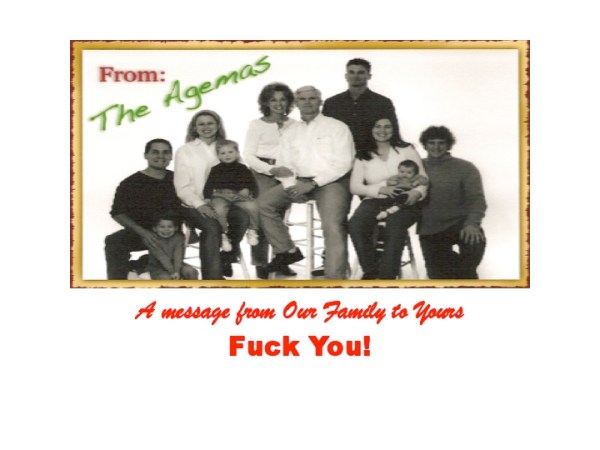
As a gesture in the holiday spirit, we share with you his family’s Christmas Card.
Senator Levin continues to push corporate welfare for the war industry in Michigan
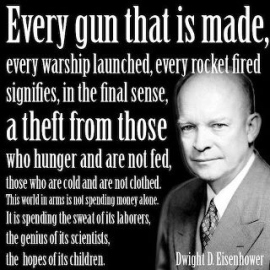
As we have pointed out on previous occasions, Michigan Senator Carl Levin, in his role as Chairmen of the Armed Services Committee, has worked hard to get public tax dollars to fund the military industrial complex.
In a statement he released yesterday on the National Defense Authorization Act (NDAA) for Fiscal Year (FY) 2013, Levin said:
“This bill fulfills our obligations to defend our nation and to provide for our troops and their families, and I’m proud Michigan will make a major contribution to that effort. Our state’s manufacturing, science and engineering strengths have long helped keep our nation safe, and that legacy continues with this bill.”
The bill includes $173.5 million dollars alone for Army combat vehicle research at the TARDEC facility in Warren, Michigan.
The bill also includes a total of $200.0 million for the Department of Defense’s Rapid Innovation Program (RIP). Funding authorized for the RIP could provide significant opportunities for Michigan companies, universities, and other organizations to further research and development efforts with the Department of Defense.
Levin’s statement also said that the bill would bring $2 billion to universities in Michigan to do research for the Department of Defense, although no universities are indentified in the statement.
All of this funding combined is just another example of how much the US economy is dependent on the military industrial complex. It also demonstrates Senator Levin’s continued commitment to being a champion of US imperialism by making sure that the US government outspends every nation in the world for military purposes, in order to maintain the thousands of bases and US troop deployments all over the globe.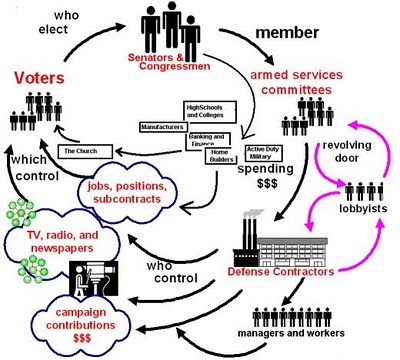
Here is a more detailed list of which Michigan companies get a free ride in the latest Defense Bill:
- $374.3 million for the Family of Medium Tactical Vehicles (FMTV). Meritor of Troy, AAR Mobility of Cadillac, and a number of other Michigan companies are involved in the production of FMTVs.
- $347.7 million for the Army’s Stryker armored vehicle. General Dynamics Land Systems of Sterling Heights is the prime contractor for the Stryker armored vehicle. Many Michigan companies serve as suppliers in support of this program.
- $271.0 million for High Mobility Multipurpose Wheeled Vehicle (HMMWV) recapitalization. Many Michigan companies support the HMMWV program as suppliers.
- $339.5 million for the Abrams Main Battle Tank program, including $136.0 million above the budget request for tank upgrades and to mitigate risk in the armored vehicle industrial base. General Dynamics Land Systems of Sterling Heights is the prime contractor for the Abrams program and more than 200 Michigan companies serve as suppliers.
- $31.7 million for the Lightweight 155mm Howitzer. Howmet Castings of Whitehall is a major contractor for the Lightweight 155mm Howitzer program.
- $54.9 million for the Family of Heavy Tactical Vehicles. Detroit Diesel manufactures and supplies the engine for this program.
- $927.4 million for Mine Resistant Ambush Protected (MRAP) vehicle modifications. Spartan Chassis of Charlotte, Meritor of Troy, and Demmer Corporation of Lansing and many other Michigan companies are involved in this program.
- $288.2 million for Bradley Fighting Vehicle upgrades modifications, including $140.0 million above the budget request to accelerate Bradley modifications included in the approved engineering change proposal and to assist with the mitigation of risk in the armored vehicle industrial base. L-3 of Muskegon is a major contractor for the Bradley program.
- $169.9 million for the M88A2 Improved Recovery Vehicle, including $62.0 million above the budget request. L-3 of Muskegon is a major contractor for the Improved Recovery Vehicle program.
- $1.8 billion for Littoral Combat Ship (LCS) construction, supporting the Navy’s acquisition strategy. Marinette Marine, just across the Michigan border in Wisconsin, is one of two shipyards building LCS and employs several hundred Michigan residents and relies on many Michigan suppliers.
Banks Are “Where the Money Is” In The Drug War
This article by Bill Conroy is re-posted from Narco News.
Citigroup, JP Morgan Chase & Co., Wachovia (acquired by Wells Fargo in 2009), HSBC Holdings, ING Bank, Standard Chartered, American Express Bank International, and not a few others, have a common bond beyond ranking among the largest banks in the world.
All have been accused within the past five years (and several this year) of failing to comply with US anti-money laundering laws — thereby enabling, collectively, hundreds of billions of dollars worth of suspicious transactions to move through the banking system absent adequate monitoring or oversight.
Yet not one these banks, nor any of their top executives, has been hit with criminal sanctions.
All, with the exception of Britain’s HSBC (which is still under investigation), have agreed to pay fines for their alleged transgressions after being served cease-and-desist orders or have entered into so-called deferred-prosecution pacts — under which a lender agrees to pay a fine and to comply with the law going foward in exchange for dismissal of all charges at the end of a specified government monitoring period.
But again, not one bank has been charged with a crime nor have any top executives been forced to do the perp walk, bound by handcuffs, in front of the adoring media throng.
Imagine if you or I were pulled over by the cops while transporting in the trunk of our car even $10,000 in bills that traced back to individuals suspected of being involved in illegal activities, such as narco-trafficking. What are the odds that we would walk away with only a traffic ticket?
That’s essentially what is happening in these cases involving big banks, who, for all practical purposes, are allowing their money transportation systems to be rented, for a fee, by criminals, while the banks’ leadership pleads ignorance: “I didn’t know that money was in the trunk. I’ll have to look into that.”
Now, if you take that same $10,000, or even millions of dollars, and put it inside an armored car under contract to a big bank, suddenly the dirty money gains the presumption of legitimate commerce, and is likely to have a police escort as opposed to being subjected to a police inspection.
“All financial crime has a money laundering component,” says Charles A. Intriago, president of the Miami-based Association of Certified Financial Crime Specialists. “… If you’re an individual, and get caught, you get hammered.
“But if you’re a big bank, and you’re caught moving money for a terrorist or drug dealer, you don’t have to worry. You just fork over a monetary penalty, and then raise your fees to make up for it.
“Until we see bankers walking off in handcuffs to face charges in these cases, nothing is going to change,” Intriago adds. “These monetary penalties are just a cost of doing business to them, like paying for a new corporate jet.”
Broken System
The world’s financial system is incredibly complex and capable of moving trillions of dollars in many directions, across multiple borders, with the push of a button in our digital age, making it difficult for banks to truly know their customers in all cases.
Still, the law demands that they do just that, and have systems in place to assure against money laundering.
From the regulators’ perspective, suspecting that a transaction is dirty is not the same as proving it is so. Financial crimes, by design, are hard to track and involve a considerable expenditure of law enforcement resources to investigate and litigate.
Bryan Hubbard, a spokesman for the US Office of the Comptroller of the Currency (OCC), which regulates national banks, when interviewed by Narco News, stressed that his office is charged with enforcing a wide range of legal and regulatory matters, and has a number of enforcement actions underway at any given time, but it does not have a “special focus” on money laundering — though, he adds, the OCC is committed to enforcing anti-money laundering laws.
Given the reality of scarce resources, anti-money laundering laws depend, in large measure, on having the banks police themselves — by assuring that suspicious activity reports are filed with regulators when transactions exceed certain monetary thresholds or don’t pass the smell test, or that compliance departments are well-staffed and on top of their systems.
The problem, however, is that there are many holes in that system, due, in large measure, to lax enforcement by overworked or even incompetent regulators — with the added problem that some of those regulators see the lenders they regulate as potential future employers.
For example, there’s the case of HSBC (the subject of a recent US Senate investigation focused on suspected money-laundering activities). One of the former chief compliance officers for the lender’s US subsidiary (called HBUS) served previously as a bank examiner for the OCC, US Senate records show. In addition, two of HBUS’ past Anti-Money Laundering directors worked previously for the US government — one as a federal prosecutor and the other as a US Treasury official.
And, in equal measure, similar power-relationship problems exist within bank compliance departments, whose employees can put at risk millions of dollars in revenue if they aggressively pursue money-laundering suspicions — with another downside being that if they are wrong, they risk angering powerful bank customers as well as their bosses.
It is that cycle of disincentives that makes it far easier for crooks to get in the door in the first place, because the risk of a bank getting caught violating anti-money laundering laws simply doesn’t seem to outweigh the benefits of looking the other way.
This past August, Standard Chartered agreed to pay a $340 million fine to get a New York bank regulator off its back after the British lender was accused of illegally concealing billions of dollars worth of transactions related to Iranian interests, in violation of US laws.
“That fine of $340 million represented only 4.5 percent of Standard Chartered’s profits in 2011,” Intriago points out. “It’s chump change to the bank.”
Repeating History
But Standard Chartered isn’t alone in standing accused of using the US banking system to move money for shady characters. In the 1990s, Raul Salinas de Gortari, the brother of former Mexican President Carlos Salinas, tapped US-based Citibank to help transfer up to $100 million out of Mexico and into Swiss bank accounts. Although US authorities investigated the suspicious money movements, ultimately no charges were brought against Raul Salinas or Citibank — a Citigroup Inc. subsidiary.
Again, in January 2010, Citigroup popped up on banking regulators’ radar, this time in Mexico, when a Mexican judge accused a half dozen casa de cambios (money transmitters) of laundering drug funds through various banks, including Citigroup’s Mexican subsidiary. In that case, Citigroup again was not accused of violating any laws.
However, in April of this year, a US bank regulator, the OCC, issued a cease-and-desist order against Citigroup due to the lender’s “internal control weaknesses, including the incomplete identification of high-risk customers in multiple areas of the bank.”
Again, Citigroup was not charged with any criminal violations and also did not admit or deny any wrongdoing, but promised to institute reforms.
Narco News is well aware of Citigroup’s banking history, particularly in Mexico.
Narco News publisher Al Giordano and Mexican journalist Mario Menendez, publisher of the Mexican daily Por Esto!, stood as defendants in libel litigation filed in 2000 against them by the powerful lender Banco Nacional de Mexico S.A.(Banamex). At the time, Banamex was controlled by banker Roberto Hernandez Ramirez.
At the heart of the litigation, filed in New York state court, was the following claim, spelled out in a Dec. 5, 2001, New York Supreme Court ruling that dismissed the case against Giordano and Menendez in a major victory for Internet publications’ First Amendment rights:
“Plaintiff [Banamex] alleges that defendants [Giordano and Menendez] made accusations that Mr. Hernandez Ramirez is involved in criminal drug trafficking and specifically, the Colombian drug trade.”
While the litigation against Giordano and Menedez was still underway, Citigroup struck a deal, announced in May 2001, to acquire Banamex, then Mexico’s second largest bank, for some $12.5 billion in cash and stock.
To read the entire article, click here.
Misdiagnosing the Culture of Violence
This article by Mike King is re-posted from Counter Punch.
A gunman entering a Newtown, Connecticut school and killing 20 children and six adults after killing his own mother has captured almost everyone’s attention in the U.S. As people try to make sense of this act of mass violence, questions arise with no clear answers: What kind of person does something like this? Why have these types of mass killings become so common? What can be done to prevent horrific acts like this in the future? It is hard enough trying to trace the origins of, and propose viable solutions to, more easily understood problems. With an event like this, that difficulty is compounded. However, it is clear that the “solutions” that have been emerging in the last few days lack both practical understanding of some essential causes of crimes such as this and foresight about problems likely to emerge from these solutions. In our political culture atrocities and crises become exploitable opportunities leading to legislation that usually ends up punitively targeting completely different populations while atrocities like Newtown, Virginia Tech, and Columbine keep happening as we invest unending faith in the government in responding to any matter framed as a “security issue.”
Mass killings have gone from extremely rare (a couple every decade until 1980) to common (a couple every year since 2000). It should not be surprising that at the intersections of guns and the law – against a backdrop of a culture of violence and widespread personal anguish and alienation – all that government agencies and the media can muster are narrow discussions of gun control and mental health care. These discussions are taking place upon an imposed political and historical blank slate that ignores histories of racist gun control and persistent psychiatric abuses of vulnerable populations, and poses solutions to mass killings being prescribed before we determine their causes. These prescribed solutions have predictable “side effects” that many seem more than ready to swallow without reading the label. If we actually care about addressing the symptoms of what is an exponential increase in mass killings over the last thirty years, we will need to shed some light on the blind spots of the gun control debate and peek inside the closet where we have hidden the history of the treatment of the mentally ill. The kids who died last week – for no reason whatsoever – deserve that we have a grown up debate about this.
When G.I. Joe Comes Home to Roost
“War is the health of the State.” – Randolph Bourne (1918)
“Do as I say, not as I do.” – unknown hypocrite
American culture is a violent culture; it has always been a violent culture. There is a smorgasbord of partial explanations for why this is. I will address gun control and mental health below, but the culture of violence in which they are embedded consistently evades serious discussion. A sick society produces sick people. A society in which many forms of violence are valorized will produce many incarnations of violence that are not. This does not excuse the killer’s actions, or rationalize his motivations, but it is an honest assessment of factors which produce such behavior and which legislation and medicalization will not succeed in muffling.
Limiting “violent media” made CNN’s list of 10 solutions, but conspicuously absent was any mention of the violent state. The state educates the society it governs, not merely in a paternalistic or ideological sense, but by example, through its behavior. It is an indicator of our humanity, and not a slight to these 20 dead children, to ask, “Why is it only the unwarranted killing of young and mostly white American children that merits our outrage?” There is a direct connection between what is done to others in our name in other parts of the world (or in many parts of this country) and our tacit complicity with those “other” atrocities , and what happened in Newtown, Connecticut. The massacre in Panjwai, Afghanistan this past March left 7 civilian adults and 9 children dead, killed by the U.S. Army. For an attack that numerous witnesses and press reports indicate involved as many as twenty soldiers, Sergeant Robert Bales, currently awaiting a verdict, was the only person punished or charged. This is but the latest of many war crimes –Haditha and Abu Ghraib in Iraq, and the continued and intensified drone bombings and soldiers killing civilians for fun, collecting their fingers as souvenirs, in Afghanistan and Pakistan.
In a classic study of the relationship between war and violence within war-making societies, Dane Archer uses historical, cross-national data to demonstrate how war making produces significant and consistent elevations in homicide rates among ordinary citizens. The legitimation and sanctioning of murder, atrocities and the targeting of civilians in war causes an increase in murder at home. I am not trying to suggest that the fact that the shooter was dressed in camouflage indicates he was directly emulating Sergeant Bales, but we live in a violent culture that certainly does not begin and end with violent video games and Quentin Tarantino movies. Dehumanization of others (real people who bleed, not computerized images on a screen) creates the ability to do monstrous things like kill twenty kids, whether it is in an Iraqi prison or a Colorado movie theater, in an Afghan village or a Connecticut elementary school. Criminalizing all those labeled as mentally ill or (attempting) to make guns harder to get will not change that basic universal precursor to all atrocious acts – that of seeing other people as not worthy of life.
Gun Control: Profiling the “Angry White Man” or a New Wave of Targeting the “Usual Suspects” (of Color)?
The knee-jerk, liberal reaction for more gun control is plagued by the same inability to understand the fundamental nature of the problem at hand coupled with a perpetual, short-sighted faith in the inherent justness of well-meaning legislation. The state does not solve social crises, the state uses social crises to reinforce a range of social relationships and control certain populations. The history of gun legislation in the last century and a half is one of black criminalization. From the Black Codes that barred freed slaves from owning guns, to the criminalization of open-carry in California targeting the Black Panthers, to more modern mandatory sentences for gun possession and gun enhancements primarily utilized against blacks and Latinos, gun laws (like most criminal law) have a significant and measurable racial bias in application. Blacks are over five times more likely to be arrested for gun possession than whites. In the context of mass shootings, white people commit 77% of all mass murders in the U.S. In keeping with the U.S. commitment to racial profiling and the new federal policing brand “Smart on Crime,” why is there no clarion call for the targeted enforcement of existing gun law on those who commit the overwhelming majority of these crimes, specifically white, middle-class men with ages ranging from young adult to middle-aged?
One might argue that this is a cynical way to view the government, or that the inherent racial bias in the application of criminal law is somehow a side issue when discussing criminal law. A common response in the gun control debate is that “simply getting guns off the street and placing restrictions on legal purchase” will surely help mitigate atrocities like the one that took place last week. That would be all well and good if more than a fraction of guns used in the commission of a crime were bought from legitimate gun sellers. The Bureau of Justice Statistics reports that less than 15% of gun purchases made by people currently convicted of weapons charges were bought from some form of legitimate dealer (i.e. gun show, dealer, store, pawn shop) – the most common place people got guns from was family members. Bearing in mind many of these young, white mass shooters got their guns through their families, what statistical indicators do we have that criminalization in the suburbs (as if that is going to happen) will actually limit the physical availability of guns? The government can’t regulate what they do not currently control. This is not to be brazen about the fact that we live in a society saturated with guns and violence, and ideally things would not be this way. But half-baked solutions to half-understood problems and a populous that gets their marching orders from either FoxNews or CNN does not have a long history of creating logical political policy or just social outcomes.
“We’ve Got a Pill for That:” Medicalization as Social Placebo
The other major node in the discussion of causes and solutions pertaining to the massacre in Newtown is an ill-defined push for “more mental health care.” As with criminal law, psychiatry reform has been a long series of often well-meaning demands that do not address the root of the problem and have no vision of justice let alone a plan to achieve it. In a country that sees an estimated 45,000 people die every year due to lack of healthcare, and in the context of Obama’s meager healthcare bill watered down even further before being signed into law, this call for more mental health care is puzzling. A call for preventative mental health treatments in the context of a major criminal act, and the obvious further pathologizing of those labeled mentally ill in this process, should raise some serious concerns. Psychiatry, like the law, reproduces social inequality (race, gender, sexuality) and is designed to control and manage rather than create just outcomes. Psychiatric abuse did not end when the “Nurse Ratcheds” of the world had to find a new job; ask the hundreds of thousands of kids misdiagnosed with ADHD and pumped full of drugs like Ritalin in the last twenty years. Indeed, poorly tested and easily approved psychiatric medications themselves should be considered as a potential causal factor in mass killings, rather than a solution, as numerous mass killers in the last decade have had psychiatric medications in their system and many of these drugs have poorly studied violent side effects. In trying to formulate tailored solutions to the problem of mass murder, the government’s ability to regulate prescription drugs that contribute to violent behavior far exceeds it ability to control guns. The fact that challenging the damage done to our society by pharmaceutical corporations is an unthinkable thought in this debate, while opening the door to even more widespread over-medication of our youth is common sense, indicates the extent to which we have a very limited vision of what security means.
Looking back to the 1960s, well-meaning reforms in the sphere of psychiatry have a sordid history as well. In the 1950s, at the height of the institutionalization of those determined to be mentally ill, there were over 500,000 people in mental hospitals. Rightfully, people pushed to have almost all of these institutions closed because they were inhumane and, for most patients, unnecessary, remnants of a eugenicist past that should be left behind. Even in the heyday of Keynesianism – in the years right before Nixon would put forward a healthcare bill that would make him look like Hugo Chavez in relation to Barack Obama – the foresight, funds and coordination to ensure successful reentry and social support for the deinstitutionalized was not provided. Those days of (still spotty) social welfare have been replaced by carceral neoliberalism, where the mentally ill are more than likely to be sleeping on the streets or incarcerated. Human Rights Watch estimates that there are 1.25 million people with diagnosed mental illnesses currently incarcerated in U.S. prisons and jails. In this context – where hundreds of thousands of people carrying the label of mentally ill have gone from one abominable institution to another, and the events precipitating this concern with the mentally ill just happen to be mass murders – what exactly are the mental health services we are going to make available to every maladjusted kid that we pathologize into a ticking time-bomb?
From mental institutions to decarceration to homelessness and re-incarceration in jail and prison: this is loosely the arch of government mental health policy. Why exactly are progressive people calling for “mental health care” in this context? People who need and want mental health care should have access to it. But, as with gun control: does that solve the problem? What else might that lead to? Is the issue simply serious mental illness?
Just as more government regulation of firearms makes little sense when the overwhelming majority of guns used in crimes are not legitimately sold, the further profiling, medicalization and criminalization of those diagnosed as severely mentally ill also misses the mark, before even introducing questions of social justice into either discussion. In a statistical study of the predictors of mass killers cited by Psychology Today, the most significant predictor of someone becoming a mass killer is drug and alcohol abuse. Those simply diagnosed with serious mental illnesses, with no serious drug abuse, show no greater likelihood of mass violence than the general population. So are we to intensify gun control, profile more troubled kids as threats to society, and restart prohibition while we are at it so when these types of atrocities keep happening we can say we did all that we could? Admittedly it is hard to solve a problem whose causes most people cannot fathom, but demanding more legislation, surveillance, medicalization and criminalization both creates unjust “side effects” and fails to properly diagnose the problem or seriously evaluate what might be necessary to mitigate it.
Before asking the government or psychiatry to solve this problem with more of their failed policies and practices, we may want to examine an entire population whose healthcare is the purview of the federal government, a population that has higher than normal rates of mental illness, gun ownership, and experiences with violence – U.S. veterans. While veterans have their own particular sets of problems around violence and mental health, the government also has a long history of failing to deal with these mental health issues. (How many decades did it take for veterans to receive recognition of PTSD?). Why should we expect them to fare better with our children, most of whom can only be diagnosed with major mental illnesses because of diagnostic changes in the DSM that emerged in the Ritalin-era? Before we hand our kids over to federally-funded school psychologists we may want to take a look at how the government has fared in its treatment of veterans – a group of scarred, at-risk members of our society almost wholly under government mental health oversight.
In the first six months of this year there was an average of one suicide per day among activity-duty military. Among male veterans aged 17-60, the rate of deaths by suicide is almost three times higher than the general population (20% compared with 7% of the population as a whole). The homicide rate among veterans also went up 89% in the six years after the invasion of Afghanistan when compared with the six years prior. The government perpetuates atrocities all over the world, reproducing a culture of violence that glorifies or rationalizes killing civilians: that, literally, is the textbook definition of a sociopath. Veterans left with trauma from what they have seen and been a part of are met with V.A. psychiatry and medications, with the poor outcomes noted above.
Like taking a second medication solely to counteract the side effects of the original prescription, calls for gun control and medicalization are failing to diagnose the underlying disease behind the symptoms. Our inability to imagine and fight for a healthy, truly secure and just society, and our knee-jerk reaction to expect the government to “solve the problem” – as if there were a simple solution, as if the government would be inclined to solve a problem rather than exploit it, as if they were even capable of solving it if they were so inclined – is the extent to which these types of atrocities continue to happen as we create new state-sponsored atrocities through our good intentions.

