New Media We Recommend
Below is a list of new materials that we have read/watched in recent weeks. The comments are not a “review” of the material, instead sort of an endorsement of ideas and investigations that can provide solid analysis and even inspiration in the struggle for change. All these items are available at The Bloom Collective, so check them out and stimulate your mind.
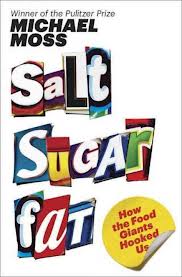
Salt, Sugar, Fat: How the Food Giants Hooked Us, by Michael Moss – The title of this book might give one the impression that it is just about how bad the American diet is. While diet is certainly discussed, this new book by Michael Moss is a fabulous expose of the corporate food industry and how they have not only hijacked our food, but deliberately made us unhealthy. Salt, Sugar, Fat takes you inside the corridors of the food industry, where the author talks with researchers and food marketers about how they intentionally make food that is unhealthy and addictive, because it is more profitable to do so. This is the conclusion one walks away with after reading this compelling book and why we need to fight for food justice and food sovereignty.
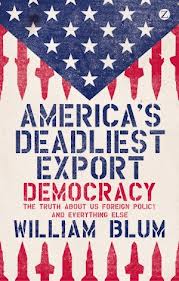
America’s Deadliest Export Democracy: The Truth About US Foreign Policy and Everything Else, by William Blum – Bill Blum is a former US government insider who has written some of the best books on the real inner workings of US foreign policy. In his most recent collection of essays, Blum tackles everything from Iraq, Afghanistan, terrorism, Cuba, Wikileaks, torture, the US media, Capitalism and dissent. Many of these essays have been written since Barack Obama was first elected in 2008 and Blum demonstrates with endless sources and sometimes brutal sarcasm that US foreign policy continues its imperialist run despite the claims of the liberals who voted for the country’s first Black President. A fabulous collection that is must reading for anyone seriously concerned about understanding US foreign policy.
Dreams, by Derrick Jensen – Jensen’s furthest-reaching book yet, Dreams challenges the “destructive nihilism” of writers like Richard Dawkins and Sam Harris who believe that there is no reality outside what can be measured using the tools of science. He introduces the mythologies of ancient cultures and modern indigenous peoples as evidence of alternative ways of understanding reality, informed by thinkers such as American Indian writer Jack Forbes, theologian and American Indian rights activist Vine Deloria, Shaman Martin Prechtel, Dakota activist and scholar Waziyatawin, and Okanagan Indian writer Jeannette Armstrong. He draws on the wisdom of Dr. Paul Staments, author of Mycelium Running: How Mushrooms Can Help Save the World, sociologist Stanley Aronowitz, who discusses science’s lack of accountability to the earth, and many more. As in his other books, Jensen draws heavily from his own life experience living alongside the frogs, redwoods, snails, birds and bears of the upper northwest, about which he writes with exquisite tenderness.
The Invisible War (DVD) – Focusing on the powerfully emotional stories of rape victims, The Invisible War is a moving indictment of the systemic cover-up of military sex crimes, chronicling the women’s struggles to rebuild their lives and fight for justice. It also features hard-hitting interviews with high ranking military officials and members of Congress that reveal the perfect storm of conditions that exist for rape in the military, its long-hidden history, and what can be done to bring about much-needed change.
Factivism’ and Other Fairytales from Bono
This article by Harry Browne is re-posted from CounterPunch.
It had been just about possible to ignore Bono’s TED talk about the imminent eradication of extreme poverty, delivered in California a few weeks ago. Ignore it, that is, despite the heavy worldwide media coverage and all the tweeting and retweeting by the likes of Bill and Melinda Gates, the Irishman’s chief patrons. But then he turned up making many of the same points on Irish national radio, spoiling a perfectly good (cold, damp) St Patrick’s weekend, in an interview that was fawning even by the elevated standards to which Bono is accustomed. Interviewer Aine Lawlor, a respected radio journalist, actually finished the stultifying 16 minutes by saying to Bono, “Thank you, love”.
So what on earth is the Beshaded One talking about this time? Only the TED blurb (almost certainly penned by the man himself) can begin to do justice to Bono’s message: “Human beings have been campaigning against inequality and poverty for 3,000 years. But this journey is accelerating. Bono ‘embraces his inner nerd’ and shares inspiring data that shows the end of poverty is in sight… if we can harness the momentum.”
Bono, who is accelerating humanity toward the end of its long anti-poverty journey, allegedly loves data. He called his first lobbying organisation DATA (Debt Aids Trade Africa), and told the appreciative California audience that he’s a “factivist” who gets sexually aroused by numbers. But Bono’s “inner nerd” really needs to meet my outer skeptic, because in fact his optimistic message about the trajectory of poverty eradication, and the reasons for it, is a flimsy tissue of truths, half-truths and statistics, conveniently skewed to suggest that he and his Western partners in Africa (governments, corporations, foundations) have been doing a great job entirely.
About those statistics: most of them are compiled by the World Bank, which can scarcely be regarded as a neutral arbiter of the question of how its programme of neoliberalism has been treating the world’s people. And even assuming the best will in the world, the stats are, in the words of Prof William Easterly, “based on a firm foundation of wet sand”.
For the purposes of assessing Bono’s claims, however, let’s momentarily share his assumption that the World Bank number-crunchers have given us something accurate and meaningful, that we can say with some certainty that, for example, the global percentage of people in “extreme poverty”, defined as living on less than $1.25 each per day, roughly halved from 1990 to 2010, to about 21%. That’s a rate of decline that would get the percentage down, as all the Bono-inspired headlines claimed, to zero by about 2030.
But does that claim make any sense when you take a closer look? Do the statistics Bono presented, and others besides, really tell the story of a millennia-old anti-poverty project nearing its end, as he tried to lay it out in his self-congratulatory 12-minute talk? On the contrary: while some of the news is genuinely good, and some of the rhetoric superficially uplifting, Bono’s message is flawed (to put it too politely) on a number of crucial grounds.
The Equality Bait and Switch
In a rhetorical tactic of stunning cynicism, Bono frames his talk by suggesting that what he’s presenting has something to do with the principle of human equality. That idea, he says, began 3,000 years ago in Egypt (“civilisation just getting started on the banks of the Nile”) when Jewish slaves told Pharoah that “our holy book” said they were his equal (we await chapter and verse on that); and then the idea returned to Egypt in 2011, he said, via another book (heh-heh), Facebook. Bono, a well-known investor in the social-media website, doesn’t explain how software that counts the number of your friends, that constantly devises and adjusts algorithms to determine who is more important, and that now charges money to “promote” your posts is a veritable Bible of Egalitarianism, but there you are.
It’s not just Bono’s own unimaginable riches and his dubious versions of ancient and recent history that make his “equality” talk so sickeningly misdirected. It’s that, whatever the precise facts about extreme-poverty reduction, we know for certain that the recent history of the world is a story of dramatically increasing inequality. Four out of five people live in countries that are becoming more unequal in terms of income. For Bono, “equality” is just another feel-good word, a warm set of syllables to be deployed even to describe its exact opposite.
Extrapolating into the Future
Although he offers a caveat about maintaining anti-poverty “momentum”, Bono clearly suggests that bringing extreme poverty to zero is just a matter of keeping up the good work to maintain the trend. We’ll look below at some of the other flaws in this reasoning, but for a start it is simply a dumb, wishful deployment of statistical trend-reading about something with such complex manifestations and causes as extreme poverty. In fact, there are indications in the data that the rate of decrease of extreme poverty may well be slowing – not surprisingly, given the crises in global finance and food that have shaken so many countries in recent years. Bono’s 2010 figure is probably on even wetter sand than the ones that precede it: the World Bank itself still only presents a full set of data up to 2008, before those crises had fully taken hold, and last year said its 2010 numbers were “preliminary”. while admitting that “the food, fuel and financial crises over the past four years had at times sharp negative impacts on vulnerable populations”.
Extrapolating into the Past
Okay, like the Good Lord says, the poor we have always with us, but does it make any sense to treat a two-decade decline as the culmination of a millennia-long battle against poverty? Have we simply been witnessing a period of some slightly benign statistical adjustment after the worst excesses of imperialism and neoliberalism beggared half the world? Were more than 40 per cent of the world’s population “extremely poor” by some sensible measure in the time of the Pharoahs? Of Jesus? Of the conquistadores? The World Bank can’t tell us that.
Bono’s economic guru, Jeffrey Sachs, has written that “a few generations ago, almost everybody was poor”. But that’s ahistorical, at best, because the term “poor” there only makes sense when set against later standards of living. Is it really poverty if “almost everybody” shares it? “Extreme poverty” as a concept surely exists partly because we can set it against the extreme wealth of the man on a stage in California presenting a high-tech talk about it.
Which brings us back to inequality. As Philippe Diaz’s superb film The End of Poverty? tells us, in 1820, the per capita wealth gap between the poorest and richest countries was three to one; in 1950 it was 35 to one; in 1997 it was 74 to one. You don’t have to romanticise the pre-colonial lives of the world’s subsistence majority to recognise that those two centuries witnessed a monstrously accelerated appropriation of their resources, and disruption of their lives. Today’s aid to the “developing” world represents the tiniest fractional giving-back of what continues to be taken.
‘Knowing’ What Works
When Bono trumpets the global fall in poverty, he declares, “we know what works”. As he spells it out, it is exactly the program that he and others in the West have promoted over the last decade or two, and he lists elements of it: aid, good governance, and foreign direct investment (he rarely mentions the trade liberalisation and privatisations that facilitate FDI) . No one could possibly mistake Bono’s TED talk for anything other than a claiming of the credit for the improvement he cites.
But even the most cursory reading of the main findings from the World Bank’s Global Poverty Update last year completely demolishes that claim. It’s east Asia and an utterly Bono-free approach that dominates these improved figures. Incredibly, China alone accounts for more than 100% of the decline in number of the extremely poor. (The World Bank conveniently gives an “excluding China” figure, and it was 13 million more people in extreme poverty in 2008 than in 1981.)
In fact, how about this for an ugly statistical comparison for Bono et al: in 1981, 10.5% of the world’s extremely poor lived in sub-Saharan Africa; in 2008, that number was 30%. If you were going to look for evidence that one or another approach to eradicating poverty was “working”, would you look to Bono’s Africa, or would you look to East Asia and the Pacific, where the number of extremely poor fell by almost three-quarters between 1981 and 2008? Or to Latin America and the Caribbean, where the number fell, incredibly, by more than 40% just between 2002 and 2008? Might that, just possibly, have something to do with countries resisting the Washington/Bono Consensus, rather than going along with it?
In sub-Saharan Africa, where Bono’s agenda has been concentrated, the absolute numbers below every poverty threshold have skyrocked since 1981, with the number of extremely poor rising from 205 million to 386 million in 2008; at the below-two-dollar-a-day threshold the sub-Saharan numbers have almost doubled in the same period, to 562.3 million. This is in the context of a large population rise, of course: the percentages of the population in these poverty categories have risen and fallen in the sub-Saharan region – much of the 1990s and early 2000s seems to have been particularly catastrophic there – and those percentages are more or less to back where they started in 1981. So much for “momentum”.
Setting the Lowest Possible Threshold
Globally, and again assuming accurate and meaningful data, it is true that there has been a half-billion-plus decline in the number of extremely poor people. But it’s clear that those people have remained very poor indeed. As the World Bank acknowledges: “There has been less long-run progress in getting over the $2 per day hurdle.” The number of people in this category remains, after three decades, around 2.5 billion.
Slide the threshold slowly upwards and you very quickly embrace the majority of the world’s people – 80%, for example, living on less than $10 a day.
And even the slight upward movement at the bottom may not tell us very much about how people live, since recent decades have seen massive population displacements from rural areas into urban slums, where you might be be a lot hungrier on the notional $2 a day than you were on half that money in the countryside.
Overselling the African ‘Lions’
You might imagine someone from Ireland, where the Celtic Tiger has been well and truly eviscerated and whose head is now just another trophy above the mantlepiece of financial capitalism, would be cautious about making great claims based on rapid economic growth in a particular set of countries. Not Bono. As far as he is concerned, the apparent success of some sub-Saharan countries (the “Pride of Lions”, cherrypicked for their good data from an otherwise disastrous region) represents his vindication. Never mind that a report just last year from the UN Conference on Trade and Development, another body that might be expected to try to put the best face on such matters, declared that “the current pattern of growth is neither inclusive nor sustainable” – that the growth is, in short, unequally shared and largely fuelled by the extraction of quickly depleting natural resources.
There are all sorts of reasons, positive and negative, why global poverty statistics have been changing. Rapid growth in Asia, increased integration of the world’s economy, intensive environmentally unfriendly resource extraction, urbanisation and the creation of NGO-led aid-dependencies in various poor countries are all likely to have an effect on the data. So indeed will a set of Latin American governments that actually are oriented toward the poor.
And lest there be any doubt: there is some good news indeed in Bono’s statistics, with especially welcome changes in terms of children’s health outcomes, thanks in part to effective, albeit hugely insufficient interventions against malaria and AIDS. There are other good numbers that Bono doesn’t cite. The ones, for example, that show a continuing slow rise of per capita calorie intake all over the world – not just in the increasingly obese West – is throwing another generation of Malthusian calculations into the waste-basket (though again the sub-Saharan Africa numbers have not been especially pretty). Despite the Gates/Bono push for more high-tech, foreign-owned agriculture in Africa, the hungry world evidently has a distribution problem, not a production problem.
Like so much of his work, Bono’s idea of “good news” is a distraction, deliberate or otherwise, from the sort of radical redistribution of resources that would lead us toward a world where equality, justice and the genuine eradication of poverty were really imminent possibilities.

Today, about 15 students in the newly formed United Students Against Sweatshops (USAS) chapter at GVSU, marched, chanted, participated in a flash mob and met with a university administrator presenting their demand that the college sever its contract with global footwear giant Adidas.
Students met in Kirkhof first to go over the plans for the day and then marched to the Vice President’s office in the lower level of the library.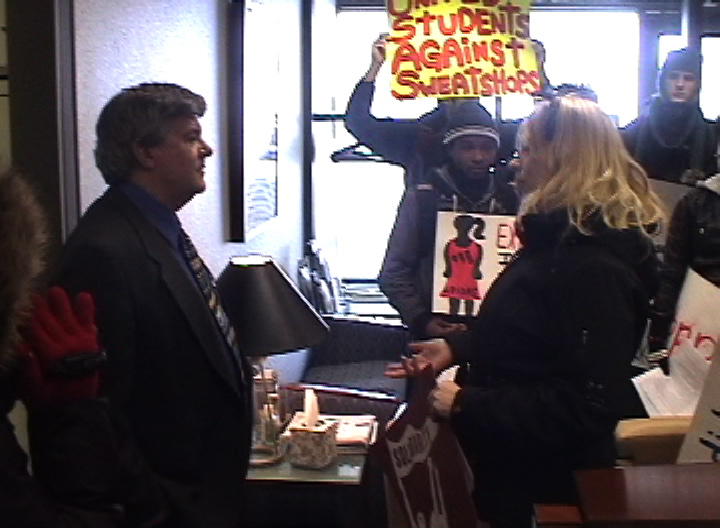
When they arrived in the reception area, the Vice president greeted them, but declined to meet with all the students present, instead agreeing to a small delegation to meet with him privately.
After about 20 minutes the students emerged from the office and the group headed back up to Kirkhof to participate in a brief flash mob action.
Students then marched through campus chanting and engaging other students on the campaign to end the university’s contract with Adidas, a contract worth over a million dollars.
The first video is footage of the students marching and the flash mob, while the second video is a brief interview with two GVSU USAS members.

According to the online source Right Wing Watch, a spokesperson for the National Organization for Marriage, Thomas Peters, said that regardless of all the pro-Gay Marriage propaganda, humans know in their heart that Gay Marriage is not right.
Peters was on a radio show and also said the following:
I’d say that the two big steps to getting to that message, of course, are fighting against the intolerance and hatred that is directed against us, especially in schools. You have a lot of pro-marriage people my age and younger in schools right now and they don’t feel safe right now in sharing their pro-marriage convictions on that vast majority of college and high school campuses. That is something that has got to end. We’ve got to figure out how to break down this ostracizing of pro-marriage viewpoints.
And second of all, we have to continually talk to people about how being pro-marriage is not anti-gay and that there is simply nothing discriminatory about seeing the love of a man and a woman as unique and special and worth protecting.
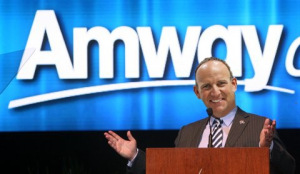
Apart from the fact that his statement is delusional, it should be pointed out that the current President of Amway, Doug DeVos, is a major funder of the National Organization for Marriage.
As we have noted recently in our local Foundation Profiles, the Doug and Maria DeVos Foundation has contributed $500,000 to the National Organization for Marriage.
Such a large donation to an anti-Gay Marriage organization prompted one group to organize a boycott of Amway, since Doug DeVos is the current President. The Boycott is national and has the support of celebrities like Jane Lynch.
It is important for people who support LGBTQ equality to not only understand what role the DeVos’s play in this issue, but that we make it part of our work for LGBTQ justice.
Rev. Naim Ateek shares personal and political analysis of Israeli/Palestinian conflict at GVSU
Yesterday, about 40 students and some faculty attended a presentation by Rev. Naim Ateek at the GVSU campus in Allendale.
The event was co-sponsored by several GVSU departments and student organizations, along with the Grand Rapids based group, Healing Children of Conflict.
Rev. Ateek addressed several issues in his presentation, beginning with the realities of the Israeli occupation. The Palestinian minister talked about how Israeli settlements have been expanding and the hostility that Israeli settlers demonstrate against Palestinian villagers. This hostility is manifested in numerous ways, but most vividly in the destruction of the Palestinian’s olive trees, which Ateek said have been destroyed by the thousands.
Rev. Ateek also talked about the religiously motivated racism that Palestinians must face on a daily basis, a racism that is rooted in Zionism. However, despite the entrenched racism, there is a great deal of collaboration being done between Muslims, Christians and Jews.
The Palestinian speaker, who has written numerous books on Liberation Theology, emphasized the importance of the ecumenical efforts to promote justice and reconciliation. Indeed, Rev. Ateek believes that it is necessary if there is going to be a viable future for Arabs and Jews who live in that part of the world.
The speaker talked about the importance of Israeli journalists, like Gideon Levy, who are exposing the hypocrisy of Israeli policy in publications like Haaretz. He also discussed his support for the international Boycott, Divestment & Sanctions (BDS) campaign that seeks to pressure Israel to end its illegal occupation through economic means. While talking about the BDS campaign he named the Caterpillar company, which sells bulldozers to the Israeli military for the purpose of destroying Palestinian homes.
However, maybe the most impressionable thing that Rev. Ateek talked about was his family’s experience of being forced from their home and village in 1948 by the Israeli military. As a child, Rev. Ateek remembers when he and 6,000 people from Galilee (Beisan) were ethnically cleansed by Zionist forces in 1948. He said that his family had to flee so quickly that they could only take what they could carry in their arms.
After the presentation, I had a chance to do a short interview with Rev. Ateek on camera.
The Bloom Collective will host a screening of a new documentary that investigates the issue of rape in the US military.
The issue of rape in the US military is not new, but the amount of rape has increased as more and more women have enlisted. According to the Facebook page event:
The Invisible War, a groundbreaking investigative documentary about one of America’s most shameful and best kept secrets: the epidemic of rape within the U.S. military. The film paints a startling picture of the extent of the problem—today, a female soldier in combat zones is more likely to be raped by a fellow soldier than killed by enemy fire. The Department of Defense estimates there were a staggering 22,800 violent sex crimes in the military in 2011. 20% of all active-duty female soldiers are sexually assaulted. Female soldiers aged 18 to 21 accounted for more than half of the victims.
Following the screening, we will have a discussion about this topic within the framework of an anti-militarism, feminist lens.
This film is free and open to the public, but we will be asking for donations to help us continue to host these kind of events.
The Invisible War
Tuesday, March 26
7:00 PM
The Bloom Collective
8 Jefferson SE, Grand Rapids
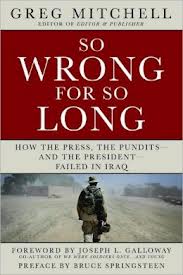
This week marks the 10th anniversary of the US invasion/occupation of Iraq. This is the first of a three-part series, where we will look at the media’s role in the invasion/occupation, the imperialist nature of the US invasion/occupation and the current status of Iraq and its people.
The role the US commercial media played in the lead up to and during the US invasion/occupation of Iraq cannot be understated. Most US commercial media outlets either acted as stenographers for US policy, often championing the invasion, or they promoted misinformation and lies about what was actually happening just prior and during the ongoing US occupation of Iraq.
As is expected, there are numerous articles appearing on the 10th anniversary of the US invasion/occupation of Iraq. One excellent piece is by Greg Mitchell, who wrote a whole book about the complicity of the US media in regards to the Iraq war. Mitchell’s article looks at sixteen major media outrages that occurred in the US during the early months of the war, such as the statement from MSNBC’s Chris Matthews who said, “we are all neocons now.”
We conducted our own monitoring of Grand Rapids-based media during this time and produced a documentary and report entitled, Searching for the Smoking Gun: Local News Coverage of the US War in Iraq.
In our report of local news coverage (which included the Grand Rapids Press, WOOD TV 8, WZZM 13 and WXMI 17), we discovered that the local news media:
- Relied almost exclusively on US government officials and US military personnel as sources for reporting on the US invasion/occupation
- All four news outlets acted as a conduit for the US State Department Position
- None of the major claims by the US government or military were questioned or verified by the four local news agencies
- All four news stations took a public supportive position on the war
- Once the US invasion/occupation began, anti-war voices significantly diminished
- All four local news agencies almost exclusively focused on US military casualties and rarely reported on Iraqi civilian casualties.
The overall tone and content in the local news reporting was so much in line with the US government position, one would have thought they were being told what to report. And here is the sad reality. The local news media, just like the national press, was not being told what to report, which is what makes their complicity in promoting lies and misinformation so incredible.
Of course the major lies and misinformation mostly focused around the US State Department claim that Iraq possessed Weapons of Mass Destruction (WMDs). This was simply not true and no WMDs were ever found, despite the US administration’s constant claim to the contrary.
This claim was completed embraced by the US media, that when former US Secretary of State Colin Powell went before the United Nations in February of 2003, they did not question his presentation that proved Iraq was in possession of WMDs. Powell himself, once out of the government, admitted his presentation was false and that it was the lowest point of his political career.
Powell’s mea culpa aside, the US media’s failure to verify and to essentially cheerlead the US invasion/occupation led to massive war crimes in Iraq, with over 1 million Iraqi civilian deaths, according to one source.
Despite the massive human rights violations committed by the US in Iraq, no major US news media outlet admitted it was consistently complicit in these crimes. The same goes for the local news agencies based on what we documented early on in the US invasion/occupation of Iraq, nor years later in the subsequent studies we conducted in 2004, 2005 and 2007.
This was and is not merely nationalistic allegiance, it is gross complicity in the massive deaths and destruction wrought from the US invasion/occupation of Iraq. The US media is indeed partly responsible for these war crimes and needs to be held accountable for that role.

There are three organizations that are collaborating to host a public forum on fracking in Kent County, scheduled for next Monday, March 25.
The groups collaborating are, Kent County Water Conservation, Mutual Aid Grand Rapids and Citizens for Responsible Resource Management.
For several months these groups have been meeting to organize next Monday’s educational event. The groups plan to provide important information about fracking in Kent County, along with concrete things that residents can do to challenge and fight the fact that fracking will be coming to this area.
At the last Michigan DNR land auction held in Lansing in October, oil & gas companies bid on hundreds of plots of land in Kent County for future oil & gas exploration.
You can see from the map included here that land was leased by the DNR in Kent County, with concentrated areas being along the White Pine Trail, the Rogue River State Game Area and the Cannonsburg State Game Area. (the darkest areas on this map)
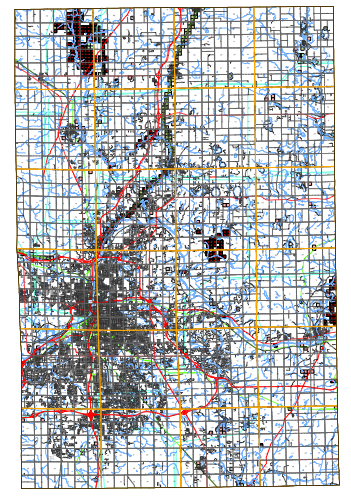
This forum is also to counteract the one that was held in Kent County last fall, when State Rep. MacGregor had DNR and DEQ representatives present on fracking and make the claim that it was completely safe.
For the March 25 forum the three groups have invited Maryann Lesert to give a presentation entitled, Fracking in the Forest, followed by information on ways that people can challenge and resist fracking coming to Kent County, along with time for questions.
Before and after the forum, the co-sponsoring groups will have information tables, where those in attendance can access more information on the dangers of fracking and ways to get involved in the international campaign to fight horizontal hydraulic fracturing in Kent County and across Michigan.
For more information or inquires go to the Facebook event page.
Fracking in Our Back Yard
Monday, March 25
7:00 PM (with doors and info tables ready at 6:30 PM)
Rockford High School cafeteria
4100 Kroes St. NE Rockford MI
NAFTA at 20: The New Spin
This article by Manuel Perez-Rocha and Javier Rojo is re-posted from Foreign Policy in Focus.
Only a few years ago, analysts were warning that Mexico was at risk of becoming a “failed state.” These days, the Mexican government appears to be doing a much better PR job. 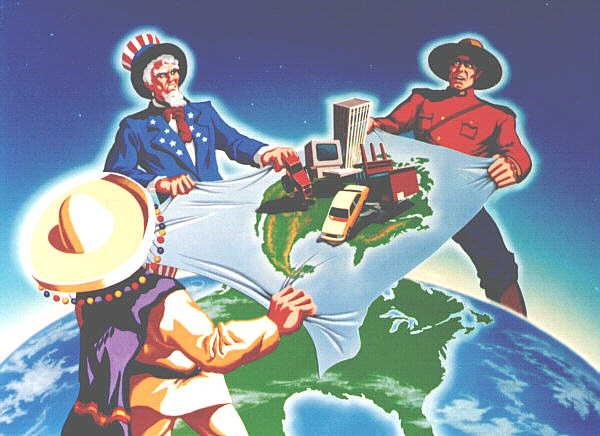
Despite the devastating and ongoing drug war, the story now goes that Mexico is poised to become a “middle-class” society. As establishment apostle Thomas Friedman put it in the New York Times, Mexico is now one of “the more dominant economic powers in the 21st century.”
But this spin is based on superficial assumptions. The small signs of economic recovery in Mexico are grounded largely on the return of maquiladora factories from China, where wages have been increasing as Mexican wages have stagnated. Under-cutting China on labor costs is hardly something to celebrate. This trend is nothing but the return of the same “free-trade” model that has failed the Mexican people for 20 years.
The North American Free Trade Agreement (NAFTA), which was ratified in 1993 and went into effect in 1994, was touted as the cure for Mexico’s economic “backwardness.” Promoters argued that the trilateral trade agreement would dig Mexico out of its economic rut and modernize it along the lines of its mighty neighbor, the United States.
The story went like this:
NAFTA was going to bring new U.S. technology and capital to complement Mexico’s surplus labor. This in turn would lead Mexico to industrialize and increase productivity, thereby making the country more competitive abroad. The spike in productivity and competiveness would automatically cause wages in Mexico to increase. The higher wages would expand economic opportunities in Mexico, slowing migration to the United States.
In the words of the former President Bill Clinton, NAFTA was going to “promote more growth, more equality and better preservation of the environment and a greater possibility of world peace.” Mexico’s president at the time, Carlos Salinas de Gortari, echoed Clinton’s sentiments during a commencement address at MIT: “NAFTA is a job-creating agreement,” he said. “It is an environment improvement agreement.” More importantly, Salinas boasted, “it is a wage-increasing agreement.”
As the 20th anniversary of NAFTA approaches, however, the verdict is indisputable: NAFTA failed to spur meaningful and inclusive economic growth in Mexico, pull Mexicans out of unemployment and underemployment, or reduce poverty. By all accounts, it has done just the opposite.
The Verdict Is In
Official statistics show that from 2006 to 2010, more than 12 million people joined the ranks of the impoverished in Mexico, causing the poverty level to jump to 51.3 percent of the population. According to the United Nations, in the past decade Mexico saw the slowest reduction in poverty in all of Latin America.
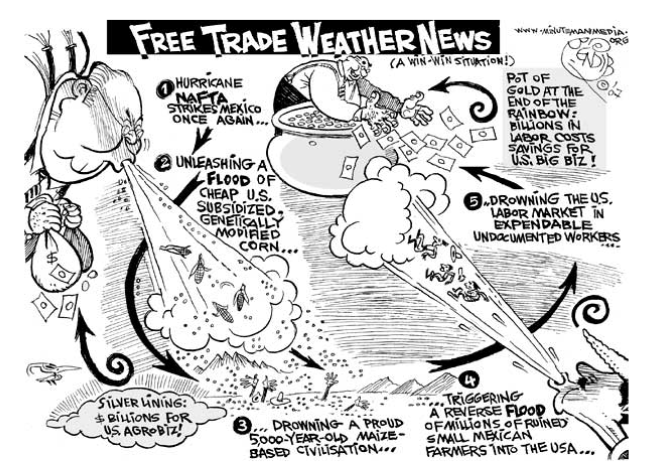
Rampant poverty in Mexico is a product of IMF and World Bank-led neoliberal policies—such as anti-inflationary policies that have kept wages stagnant—of which “free-trade” pacts like NAFTA are part and parcel. Another factor is the systematic failure to create good jobs in the formal sectors of the economy. During Felipe Calderon’s presidency, the share of the Mexican labor force relying on informal work—such as selling chewing gum and other low-cost products on the street—grew to nearly 50 percent.
Even the wages in the manufacturing sector, which NAFTA cheerleaders argued would benefit the most from trade liberalization, have remained extremely low. According to the Bureau of Labor Statistics, Mexican manufacturing workers made an average hourly wage of only $4.53 in 2011, compared to $26.87 for their U.S. counterparts. Between 1997 and 2011, the U.S.-Mexico manufacturing wage gap narrowed only slightly, with Mexican wages rising from 13 to 17 percent of the level earned by American workers. In Brazil, by contrast, manufacturing wages are almost double Mexico’s, and in Argentina almost triple.
Mexico’s stagnant wages are celebrated by free traders as an opportunity for U.S. businesses interested in outsourcing. According to one report by the McKinsey management consulting firm, “for a company motivated primarily by cost, Mexico holds the most attractive position among the Latin American countries we studied. … Mexico’s advantages start with low labor costs.”
But even as the damning evidence against NAFTA continues to roll in, entrenched advocates of the trade agreement have been busy crafting new arguments. In his recent book, Mexico: A Middle Class Society, NAFTA negotiator Luis De la Calle and his co-author argue that the trade agreement has given rise to a growing Mexican middle class by providing consumers with higher quality, U.S- made goods. The authors proclaim that “NAFTA has dramatically reduced the costs of goods for Mexican families at the same time that the quality and variety of goods and services in the country grew.”
Most of the economic indicators included in the book conveniently fail to account for the 2008-2009 financial crisis, which hit Mexico worse than almost any other Latin American country. The result has been skyrocketing inequality. As the Guardian reported last December, “ever more Mexican families have acquired the trappings of middle-class life such as cars, fridges, and washing machines, but about half of the population still lives in poverty.”
The indicators of consumption that suggest the rise of Mexico’s middle class also exclude the dramatic increase in food prices in recent years, which has condemned millions of Mexicans to hunger. Twenty-eight million Mexicans are facing “food poverty,” meaning they lack access to sufficient nutritious food. According to official statistics, more than 50,000 people died of malnutrition between 2006 and 2011. That’s almost as many as have died in Mexico’s drug war, which dramatically escalated under Calderon and has continued under President Enrique Peña Nieto.
The food crisis has coincided with the “Walmartization” of the country. In 1994 there were only 14 Walmart retail stores in all of Mexico. Now there are more than 1,724 retail and wholesale stores. This is almost half the number of U.S. Walmarts, and far more than any other country outside the United States. The proliferation of Walmart and other U.S. big-box stores in Mexico since NAFTA came into effect has ushered in a new era of consumerism—in part through an aggressive expansion built on political bribes and the destruction of ancient Aztec ruins.
The arguments developed prior to the signing of NAFTA focused primarily on the claim that the trade agreement would make Mexico a nation of producers and exporters. These initial promises failed to deliver. Throughout the NAFTA years, the bulk of Mexico’s manufacturing “exports” have come from transnational car and technology companies. Not surprisingly, Mexico’s intra-industry trade with the United Sates is the highest of any Latin American country. Yet the percentage of Mexican companies that are actually exporters is vanishingly small, and imports of food into Mexico have surged.
Same Snake Oil, Different Pitch
Because their initial promises utterly failed to deliver, the NAFTA pushers are now hyping “consumer benefits” to justify new trade agreements, including the Trans-Pacific Partnership. One of the most extreme examples of this spin is an article in The Washington Post that celebrates a “growing middle class” in Mexico that is “buying more U.S. goods than ever, while turning Mexico into a more democratic, dynamic and prosperous American ally.” Devoid of all logic, it goes on to say that “Mexico’s growth as a manufacturing hub is boosted by low wages.” How can low wages make people more prosperous?
The Post also boasts that in “Mexico’s Costco stores, staples such as tortilla chips and chipotle salsa are trucked in from factories in California and Texas that produce for both sides of the border.” Is this something to celebrate? The influx of traditional Mexican food staples, starting with maize, and goods from the United States has displaced and dislocated millions of Mexican small-scale farmers, producers, and small businesses. And not only that, Mexicans’ increasing consumption of processed foods and beverages from the United States has made the country the second-most obese in the world.
In essence, NAFTA advocates have been reduced to saying: “so maybe NAFTA didn’t help Mexico reduce poverty or increase wages. But hey! At least it gave it Walmart, Costcos, and sweat shops.”
The bankruptcy of NAFTA’s promises is only compounded by the poverty of this consolation.
GRIID classes for Spring 2013
This spring we are offering yet again two brand new classes, one on Indy Media Production and the other on Institutional Racism in Grand Rapids.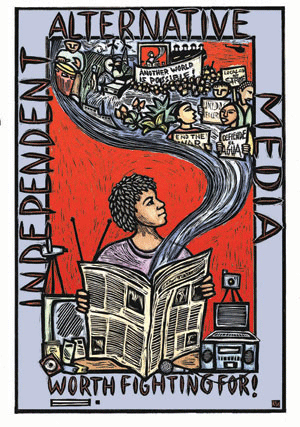
It is painfully clear from years of local news monitoring and analysis that there has been a decline in the level of journalism in West Michigan. The Indy Media Production class is being offered as an opportunity for people to learn independent journalism skills, media analysis and independent media production. For people wanting to be part of a growing movement of independent journalists, videographers, documentary makers, podcasters, zine makers or street media, then this class is for you.
This GRIID Class will primarily be project focused, and the group will be asked to work together to create local Indy media. The nature of this media, the form that it takes, the audience it speaks to, and so on, will be determined by the group. We will do a brief intro looking at the state media locally and nationally before beginning on the project.
The Indy Media Production class will take place on Mondays from 6 – 8pm, starting on Monday, April 8 and will last 7 weeks, ending on May 20.
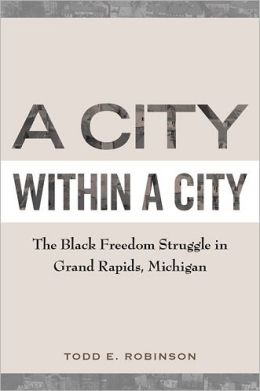
The second class we are offering, Institutional Racism in Grand Rapids, is an investigation into the function of institutional racism in Grand Rapids. We will be reading the recently released book, A City Within a City: The Black Freedom Struggle in Grand Rapids, MI, which covers the period from WWII through the early 1970s. The author of this book, Todd Robinson, names the institutional racism in Grand Rapids as a form of managerial racism.
In addition to using A City Within a City, we will investigate how institutional or managerial racism functions in Grand Rapids today, by looking at the economic, political and social condition of communities of color, as well as how White Supremacy is manifested in power structures.
The Institutional Racism in Grand Rapids class will take place on Wednesdays, from 7 – 9pm, beginning April 10 and will last 7 weeks, ending on May 22nd.
We are asking $20 for each class (does not include the cost of the book), but we will not turn anyone away for lack of funds. To sign up for either class, send an e-mail to jsmith@griid.org. Location for these class will be provided to those who sign up.
 Grand Rapids Institute for Information Democracy