Obama Comes to Bless Israel’s Government of Settlers
This article by Jonathan Cook is re-posted from Dissident Voice.
Those who hoped that Barack Obama would be arriving in Israel to bang Israeli and Palestinian heads together, after four years of impasse in the peace process, will be sorely disappointed.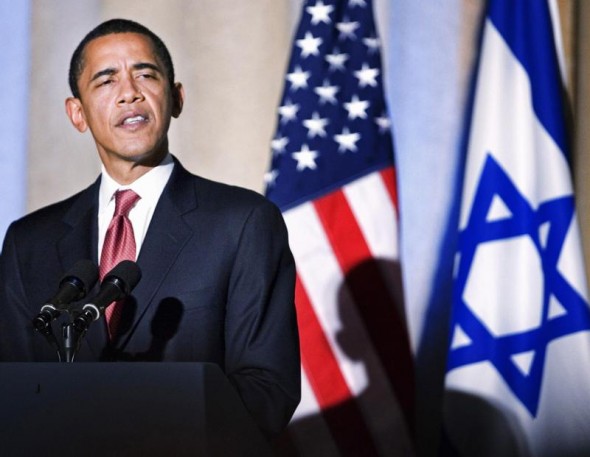
The US president’s trip beginning today may be historic – the first of his presidency to Israel and the Palestinian territories – but he has been doing everything possible beforehand to lower expectations.
At the weekend, Arab-American leaders revealed that Obama had made it clear he would not present a peace plan, because Israel has indicated it is not interested in an agreement with the Palestinians.
Any lingering doubts about Israel’s intentions were removed by the announcement of a new cabinet, hurriedly sworn in before the president’s visit. This government makes Benjamin Netanyahu’s last one, itself widely considered the most hardline in Israel’s history, look almost moderate.
Ynet, Israel’s popular news website, reported that settler leaders hailed this as their “wet dream” cabinet.
Zahava Gal-On, leader of the opposition Meretz party, concurred, observing that it would “do a lot for the settlers and not much at all for the rest of Israeli society”.
The settlers’ dedicated party, Jewish Home, has been awarded three key ministries – trade and industry, Jerusalem, and housing – as well as control of the parliamentary finance committee, that will ensure that the settlements flourish during this government’s term.
There is no chance Jewish Home will agree to a settlement freeze similar to the one Obama insisted on in his first term. Rather, the party will accelerate both house-building and industrial development over the Green Line, to make the settlements even more attractive places to live.
Uzi Landau, of Avigdor Lieberman’s far-right Yisraeli Beiteinu party, has the tourism portfolio and can be relied on to direct funds to the West Bank’s many Biblical sites, to encourage Israelis and tourists to visit.
The new defence minister, who oversees the occupation and is the only official in a practical position to obstruct this settler free-for-all, is Likud’s Moshe Yaalon, a former military chief of staff known for his ardent support of the settlements.
True, Yair Lapid’s large centrist party Yesh Atid is represented too. But its influence on diplomacy will be muted, because its five ministers will handle chiefly domestic issues such as welfare, health and science.
The one exception, Shai Piron, the new education minister, is a settler rabbi who can be expected to expand the existing programme of school trips to the settlements, continuing the settlers’ successful efforts to integrate themselves into the mainstream.
Far from preparing to make concessions to the US president, Netanyahu has all but declared his backing for Jewish Home’s plan to annex large parts of the West Bank.
The only minister with any professed interest in diplomatic talks, and that mostly driven by her self-serving efforts to stay popular with the White House, is Tzipi Livni. She is well aware that opportunities for negotiations are extremely limited: the peace process received just one perfunctory mention in the coalition agreement.
Obama, apparently only too aware he is facing an Israeli government even more intransigent than the last one, has chosen to avoid addressing the Knesset. Instead he will direct his speech to a more receptive audience of Israeli students, in what US officials have termed a “charm offensive”.
We can expect grand words, a few meagre promises and total inaction on the occupation.
In a sign of quite how loath the White House is to tackle the settlements issue again, its representatives at the United Nations refused on Monday to take part in a Human Rights Council debate that described the settlements as a form of “creeping annexation” of the West Bank and East Jerusalem.
Obama’s hands-off approach will satisfy his constituency at home. A poll for ABC-TV showed this week that most Americans support Israel over the Palestinians – 55 per cent to 9 per cent. An even larger majority, 70 per cent, think the US should leave the two sides to settle their future for themselves.
Ordinary Israelis, the US president’s target audience, are none too keen on his getting involved either. Recent survey data show that 53 per cent think Obama will fail to protect Israel’s interests, and 80 per cent believe he will not bring progress with the Palestinians over the next four years. The mood is one of indifference rather than anticipation.
These are all good reasons why neither Obama nor Netanyahu will be much focused on the Palestinian issue over the three-day visit. As analyst Daniel Levy observed: “Obama is coming first and foremost to make a statement about the US-Israel bond, not the illegal occupation.”
That is also how it looks to most Palestinians, who have grown increasingly exasperated by US obstructionism. US officials who went to Bethlehem in preparation for Obama’s visit on Friday found themselves caught up in anti-Obama demonstrations. More are expected today in Ramallah.
Other Palestinians protested his visit by establishing today a new tent community on occupied Palestinian land next to Jerusalem. Several previous such encampments have been hastily demolished by Israeli soldiers.
The organisers hope to highlight US hypocrisy in backing Israel’s occupation: Jewish settlers are allowed to build with official state backing on Palestinian land in violation of international law, while Palestinians are barred from developing their own territory in what is now considered by most of the world as the Palestinian state.
The unspoken message of Obama’s visit is that the Netanyahu government is free to pursue its hardline agenda with little danger of anything more than symbolic protest from Washington.
The new Israeli cabinet lost no time setting out its legislative priorities. The first bill announced is a “basic law” to change the state’s official definition, so that its “Jewish” aspects trump the “democratic” elements, a move the Haaretz newspaper termed “insane”.
Among the main provisions is one to restrict state funding to new Jewish communities only. This points to a cynical solution Netanyahu may adopt to placate the simmering social protest movement in Tel Aviv, which has been demanding above all more affordable housing.
Snyder’s Coup
This article by Mike Whitney is re-posted from Counter Punch.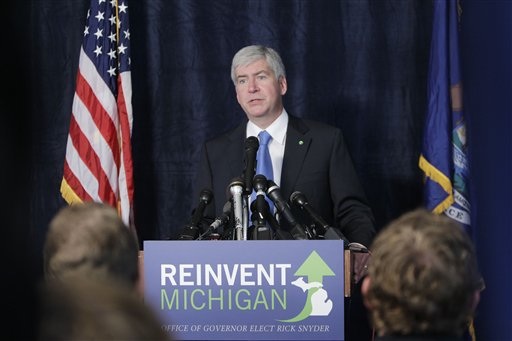
Far-right Governor Rick Snyder has ignored Michigan voters and installed Washington DC attorney Kevyn Orr as Detroit’s emergency financial manager (EFM), a position that will give Orr sweeping powers to tear up labor contracts, slash pensions, cut public services, and privatize city-owned assets. From March 28–the date when Public Act 436 kicks in –Orr will make the decisions that would normally be decided by elected officials, primarily the mayor and the city council. In other words, Detroit will become the first city in the US to have its democratically-elected government replaced by a financial dictator.
According to Firedog Lake’s Lindsay Beyerstein, Detroit’s emergency manager will have “virtually unlimited power to reorganize every aspect of city business, including dissolving the city entirely. The emergency manager even has the power to terminate collective bargaining agreements.” (Firedog Lake)
The elites who support this blatant evisceration of the democratic process, are confident that Orr will serve the needs of their primary constituents; businessmen, Wall Street speculators and bondholders. Accordingly, Detroit’s red ink will be shunted onto working people via pay cuts, high unemployment, and reduced social services even though they are in no way responsible for Detroit’s $300 million budget deficits. Here’s an excerpt from an article in the NYT:
“Despite Mr. Orr’s legal background, he said he hoped the city would not ultimately need to file for bankruptcy. Municipal bankruptcies are rare, but it was lost on no one that the state had selected an expert in bankruptcy law for Detroit, as opposed to a financial accountant, former city manager or elected official.
Under Michigan law, a city can file for bankruptcy only under certain conditions, including if an emergency manager has attempted other measures and concluded that such a move is needed.” (“Bankruptcy Lawyer Is Named to Manage an Ailing Detroit”, New York Times)
Orr will avoid bankruptcy at all cost, mainly because bankruptcy would mean losses for banks and bondholders which is a big no-no. Instead, he will balance the budget on the backs of teachers, firefighters and other public employees who will either get their pink slips or see their weekly paychecks shrivel to paupers wages. Elites in the Eurozone followed the same basic script when they installed their “technocrats” in Athens and Rome in the early rounds of the EU debt crisis. These faux prime ministers excuted a well-rehearsed looting operation that thrust the continent into severe recession. Orr will follow the same strategy; crushing the unions, reducing elderly pensioners to destitution, and auctioning off valuable city assets at firesale prices, all under the banner of austerity. According to SEP presidential candidate Jerry White:
“Orr is threatening to carry out a “managed bankruptcy” of Detroit to extract unprecedented concessions from city workers. “I am hopeful to engage in fruitful and productive discussions without the need to resort to bankruptcy,” Orr said last Thursday, adding that, “One thing everybody needs to know, if you go into bankruptcy, Chapter 9 of the bankruptcy code is weighted toward the municipality.”
In other words, if the unions prove unable to force city workers to accept savage wage and benefit cuts, then the bankruptcy court will impose this and much more on workers, retirees and city residents. “I don’t want to pull that cudgel out unless I have to,” Orr said. “I’d prefer to pursue a consensual resolution…Don’t make me go to bankruptcy court. You won’t enjoy it.” (“The managed bankruptcy of GM and Chrysler: A model for the assault on Detroit”, Jerry White, World Socialist Web Site)
Wall Street and the media have been overwhelmingly supportive of Snyder’s move to suspend democracy in the name of fiscal consolidation. S&P credit analyst Jane Hudson Ridley summed it up like this, “The appointment of an EM allows the city to move forward in a more efficient manner.” Indeed, financial elites don’t really care whether the appearance of democracy is maintained or not. What matters is the continued upward distribution of wealth. To that end, Orr’s task is to make sure that the losses are assigned to those who can least afford the cost, working people.
Snyder’s coup d’etat in Detroit is a test-case for a more ambitious plan to install Wall Street’s proconsuls in struggling cities across the country. If Orr is able achieve his objectives in Motor City, then the same strategy will be applied elsewhere.
10 Years Since the US Invasion/Occupation of Iraq: Part II – Iraq was not a mistake, but part of the Imperial Plan
This is the second article in a series of three centered around the 10th anniversary of the US Invasion/Occupation of Iraq. The first article dealt with media lies and misinformation.
There has been a fair amount of stories on liberal news blogs about the 10th anniversary of the US invasion/occupation of Iraq. In most of these articles, along with numerous memes, the pattern has been to call Iraq the worst crime the US has ever committed and to lay the blame at the feet of Bush/Cheney/Rumsfeld.
First, lets be clear, US foreign policy is riddled with a whole array of brutality, including torture, murder, occupation and even genocide. There is a long list of evidence to support such crimes, but I will limit that documentation to a few books and declassified US government documents.
There are several books by Noam Chomsky that I would recommend, but perhaps a recent book that deals with US war crimes and US imperialism is Hegemony or Survival: America’s Quest for Global Dominance. Another excellent book is by foreign policy analyst William Blum, Killing Hope: U.S. Military and C.I.A. Interventions Since World War II. Along with books likes these I would highly recommend the declassified US government documents collected and analyzed by the National Security Archive, which provides a look at what US policy planners have said about US foreign policy for decades. There is plenty of declassified documentation as it relates to Iraq, even documents on Iraq and WMDs.
Secondly, while the Bush administration did push for the US invasion/occupation of Iraq beginning in 2002, they were only able to complete this goal because of the overwhelming support by the Democratic Party.
Many Democrats also voted for initial legislation in October of 2002 and while many have objected to the misinformation on WMDs, virtually all of them continued to vote for annual funding for the US occupation of Iraq. For example, Michigan Senator Carl Levin, while critical of the Bush plan early on, voted for every funding bill on Iraq after the invasion/occupation began.
The larger issue that we ought to focus on for the 10th anniversary of the US invasion/occupation of Iraq are both the crimes committed and the imperialist nature of the US plan.
Brutalizing Iraq
In order to look at the totality of the 2003 invasion of Iraq and subsequent occupation, we need to first provide some historical context. The US supported Iraq with weapons during the Iran – Iraq war between 1980 – 1988. This was took its toll on the Iraqi people and the economy, with thousands of lives lost.
In January of 1991, the US began a bombing campaign against Iraq that devastated much of Iraq’s infrastructure, killed thousands more and was followed by the most severe form of international sanctions ever imposed on a country. The sanctions were so severe that the United Nations estimate that roughly 500,000 Iraqi children died during the sanctions years (Clinton years) from preventable causes. Former US Secretary of State Madeleine Albright, when asked whether the death of half a million Iraqi children was worth it, she said, “we think it was worth it.”
Now that we have established that Iraq had been suffering in part from US policy for nearly two decades before the 2003 invasion/occupation, we can more honestly assess the human and monetary cost of this policy.
The US invasion and occupation was devastating to Iraqi civil society in ways that numbers cannot fully reflect. However, statistically, the human cost of the US invasion/occupation has been catastrophic.
Number of Iraqi dead – the numbers vary depending on which sources one looks at, but the number is somewhere between 190,000 (Brown University report) or over 1 million.
Number of Iraqi Wounded – this number has been hard to quantify, since people are still being wounded at high levels, from unexploded bomblets that the US used during the invasion/occupation. Most of the wounded have been children.
Number of Iraqis Displaced – millions of Iraqis were displaced throughout the US invasion/occupation, with some returning once the occupation decreased, but one source puts the number of displaced at this moment to be 2.8 million.
In addition to the human cost of the war, the economic cost has been tremendous. Iraq may never recover from the devastation and has been left in a state of chaos. On the US end, we know that the cost of the war has been astronomical, based on the research by the National Priorities Project (NPI). The NPI puts the current cost at over 812 billion dollars, but the new report from Brown University puts the cost at $2.2 Trillion.
Iraq: Part of the Imperial Plan
Many US politicians refer to Iraq as a “mistake,” which is a constant term that President Obama uses to describe what happened. However, such a term is not only inaccurate, it is dishonest.
The US invasion/occupation of Iraq was not about WMDs, getting rid of Saddam or bringing democracy to that country. The US invasion/occupation of Iraq was about geo-political and economic hegemony in the Middle East.
Besides the human cost of the invasion/occupation, the US plan from very early on was to engage in an economic restructuring of Iraq. Within months of the occupation, the US had plans to restructure the economy of Iraq, by rewriting the country’s constitution, which would allow for more foreign investment and privatization of previously public services. This push to implement a neoliberal economic plan for Iraq is well documented in Naomi Klein’s book, Shock Doctrine. Part of this Shock Doctrine was to have US-owned reconstruction companies get the Pentagon contracts to “re-build” Iraq, even though much of that money was wasted and redirected due to corruption.
However, the largest benefit to restructuring Iraq’s economy was the push to privatize Iraq’s oil reserves, which was successful and open the floodgates for foreign oil companies to take over, as you can see from this map.

Lastly, it is important to note that the US occupation of Iraq is not over. The SOPA agreement worked out by the Bush administration and put into effect under the Obama administration would allow for 20,000 US troops to remain in Iraq, along with the tens of thousands of private mercenary forces that are being employed to protect US interests. The US also maintains numerous military bases in Iraq and is not likely to dismantle those, considering the geo-political importance of Iraq, particularly as the US continues to be antagonistic towards Iraq.
While it is understandable and easier to lay the blame for the US “war” in Iraq at the feet of the Bush administration, it completely ignores the bi-partisan nature of US imperialism and hides the fact that the US occupation and exploitation of Iraq continues.

New Report looks at the Far Right’s “religious liberty” campaign as nothing more than an anti-LGBTQ tactic

This article is re-posted from Political Research Associates. Editor’s Note: The argument that doing certain things would be an infringement on the religious beliefs of people that is dealt with in this article has been seen in the West Michigan area with Autocam CEO John Kennedy (who is Catholic), who has publicly stated he will not comply with the new government healthcare policy because it would violate his personal religious beliefs. The Grand Rapids-based Acton Institute is also profiled in the report from PRA.
Consider the following situation: Because of her religious beliefs against same-sex marriage, a New Mexico photographer refuses to shoot a lesbian couple’s wedding. The photographer claims taking the pictures would infringe on her religious liberty. The couple, on the other hand, faces discrimination based on sexual orientation. Who is in the right?
Given New Mexico’s anti-discrimination law, the couple clearly is. Yet conservative Christian groups often invert the narrative by framing religious people as the true victims of discrimination. A new report by PRA Religious Liberty Fellow Dr. Jay Michaelson, Redefining Religious Liberty: The Covert Campaign Against Civil Rights, examines the growth of recent movements against same-sex marriage and reproductive rights on the basis of “religious liberty.”
Being a (conservative) Christian does not permit the photographer to ignore state anti-discrimination laws, much in the same way she cannot ignore environmental and labor laws. She, as an individual, may value her beliefs over the civil rights of others, but her business does not have that luxury. Furthermore, the court found that the simple act of taking photos of a same-sex wedding, as a professional photographer, did not truly “infringe upon freedom of speech or compel unwanted expression.”
The report analyzes this case and others in which the Christian Right has painted itself as the victim of women and LGBTQ individuals asserting their rights. Invariably, in these arguments, “religious freedom” includes the freedom to discriminate.
Michaelson points out that the Right’s religious liberty rhetoric is entrenched in a history of marginalization: “Then as now, the Christian Right turned antidiscrimination arguments on their heads,” he writes. “Instead of African Americans being discriminated against by segregated Christian universities, the universities were being discriminated against by not being allowed to exclude them.”
At least nine state legislatures currently hold “religious liberty caucuses” to redefine what America means by religious liberty and carve out wider and wider arenas that would not be protected under discrimination law. An increasingly popular right-wing cause, religious liberty was even one of Mitt Romney’s rallying points in the 2012 presidential debate.
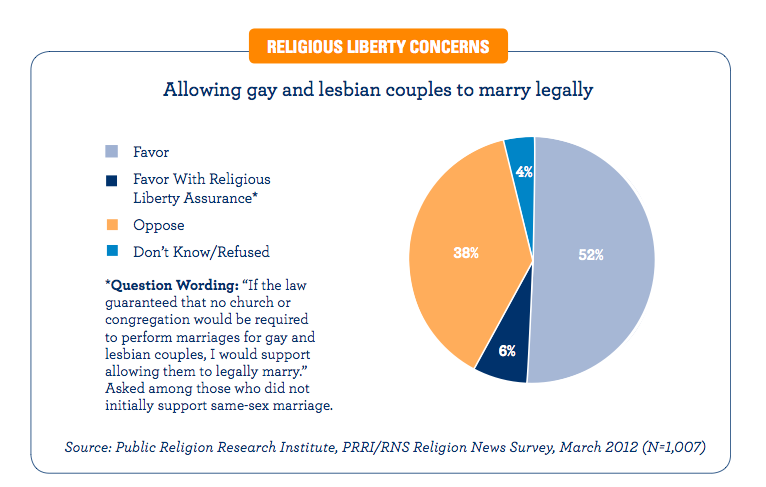
Freedom of religion is ultimately not under attack in the United States. Federal courts already give wide scope to religions to discriminate when hiring clergy or in their religious practices. Legalizing same-sex marriage in civil law would require not one Christian minister to marry LGBTQ couples. These facts, however, does not stop right-wing lobbyists from suggesting that new laws might do exactly that to stir up fear and outrage.
New Media We Recommend
Below is a list of new materials that we have read/watched in recent weeks. The comments are not a “review” of the material, instead sort of an endorsement of ideas and investigations that can provide solid analysis and even inspiration in the struggle for change. All these items are available at The Bloom Collective, so check them out and stimulate your mind.
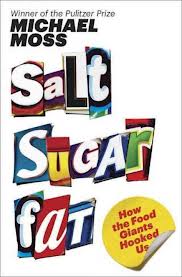
Salt, Sugar, Fat: How the Food Giants Hooked Us, by Michael Moss – The title of this book might give one the impression that it is just about how bad the American diet is. While diet is certainly discussed, this new book by Michael Moss is a fabulous expose of the corporate food industry and how they have not only hijacked our food, but deliberately made us unhealthy. Salt, Sugar, Fat takes you inside the corridors of the food industry, where the author talks with researchers and food marketers about how they intentionally make food that is unhealthy and addictive, because it is more profitable to do so. This is the conclusion one walks away with after reading this compelling book and why we need to fight for food justice and food sovereignty.
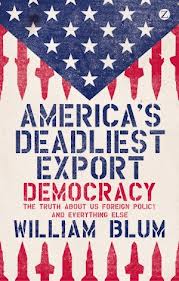
America’s Deadliest Export Democracy: The Truth About US Foreign Policy and Everything Else, by William Blum – Bill Blum is a former US government insider who has written some of the best books on the real inner workings of US foreign policy. In his most recent collection of essays, Blum tackles everything from Iraq, Afghanistan, terrorism, Cuba, Wikileaks, torture, the US media, Capitalism and dissent. Many of these essays have been written since Barack Obama was first elected in 2008 and Blum demonstrates with endless sources and sometimes brutal sarcasm that US foreign policy continues its imperialist run despite the claims of the liberals who voted for the country’s first Black President. A fabulous collection that is must reading for anyone seriously concerned about understanding US foreign policy.
Dreams, by Derrick Jensen – Jensen’s furthest-reaching book yet, Dreams challenges the “destructive nihilism” of writers like Richard Dawkins and Sam Harris who believe that there is no reality outside what can be measured using the tools of science. He introduces the mythologies of ancient cultures and modern indigenous peoples as evidence of alternative ways of understanding reality, informed by thinkers such as American Indian writer Jack Forbes, theologian and American Indian rights activist Vine Deloria, Shaman Martin Prechtel, Dakota activist and scholar Waziyatawin, and Okanagan Indian writer Jeannette Armstrong. He draws on the wisdom of Dr. Paul Staments, author of Mycelium Running: How Mushrooms Can Help Save the World, sociologist Stanley Aronowitz, who discusses science’s lack of accountability to the earth, and many more. As in his other books, Jensen draws heavily from his own life experience living alongside the frogs, redwoods, snails, birds and bears of the upper northwest, about which he writes with exquisite tenderness.
The Invisible War (DVD) – Focusing on the powerfully emotional stories of rape victims, The Invisible War is a moving indictment of the systemic cover-up of military sex crimes, chronicling the women’s struggles to rebuild their lives and fight for justice. It also features hard-hitting interviews with high ranking military officials and members of Congress that reveal the perfect storm of conditions that exist for rape in the military, its long-hidden history, and what can be done to bring about much-needed change.
Factivism’ and Other Fairytales from Bono
This article by Harry Browne is re-posted from CounterPunch.
It had been just about possible to ignore Bono’s TED talk about the imminent eradication of extreme poverty, delivered in California a few weeks ago. Ignore it, that is, despite the heavy worldwide media coverage and all the tweeting and retweeting by the likes of Bill and Melinda Gates, the Irishman’s chief patrons. But then he turned up making many of the same points on Irish national radio, spoiling a perfectly good (cold, damp) St Patrick’s weekend, in an interview that was fawning even by the elevated standards to which Bono is accustomed. Interviewer Aine Lawlor, a respected radio journalist, actually finished the stultifying 16 minutes by saying to Bono, “Thank you, love”.
So what on earth is the Beshaded One talking about this time? Only the TED blurb (almost certainly penned by the man himself) can begin to do justice to Bono’s message: “Human beings have been campaigning against inequality and poverty for 3,000 years. But this journey is accelerating. Bono ‘embraces his inner nerd’ and shares inspiring data that shows the end of poverty is in sight… if we can harness the momentum.”
Bono, who is accelerating humanity toward the end of its long anti-poverty journey, allegedly loves data. He called his first lobbying organisation DATA (Debt Aids Trade Africa), and told the appreciative California audience that he’s a “factivist” who gets sexually aroused by numbers. But Bono’s “inner nerd” really needs to meet my outer skeptic, because in fact his optimistic message about the trajectory of poverty eradication, and the reasons for it, is a flimsy tissue of truths, half-truths and statistics, conveniently skewed to suggest that he and his Western partners in Africa (governments, corporations, foundations) have been doing a great job entirely.
About those statistics: most of them are compiled by the World Bank, which can scarcely be regarded as a neutral arbiter of the question of how its programme of neoliberalism has been treating the world’s people. And even assuming the best will in the world, the stats are, in the words of Prof William Easterly, “based on a firm foundation of wet sand”.
For the purposes of assessing Bono’s claims, however, let’s momentarily share his assumption that the World Bank number-crunchers have given us something accurate and meaningful, that we can say with some certainty that, for example, the global percentage of people in “extreme poverty”, defined as living on less than $1.25 each per day, roughly halved from 1990 to 2010, to about 21%. That’s a rate of decline that would get the percentage down, as all the Bono-inspired headlines claimed, to zero by about 2030.
But does that claim make any sense when you take a closer look? Do the statistics Bono presented, and others besides, really tell the story of a millennia-old anti-poverty project nearing its end, as he tried to lay it out in his self-congratulatory 12-minute talk? On the contrary: while some of the news is genuinely good, and some of the rhetoric superficially uplifting, Bono’s message is flawed (to put it too politely) on a number of crucial grounds.
The Equality Bait and Switch
In a rhetorical tactic of stunning cynicism, Bono frames his talk by suggesting that what he’s presenting has something to do with the principle of human equality. That idea, he says, began 3,000 years ago in Egypt (“civilisation just getting started on the banks of the Nile”) when Jewish slaves told Pharoah that “our holy book” said they were his equal (we await chapter and verse on that); and then the idea returned to Egypt in 2011, he said, via another book (heh-heh), Facebook. Bono, a well-known investor in the social-media website, doesn’t explain how software that counts the number of your friends, that constantly devises and adjusts algorithms to determine who is more important, and that now charges money to “promote” your posts is a veritable Bible of Egalitarianism, but there you are.
It’s not just Bono’s own unimaginable riches and his dubious versions of ancient and recent history that make his “equality” talk so sickeningly misdirected. It’s that, whatever the precise facts about extreme-poverty reduction, we know for certain that the recent history of the world is a story of dramatically increasing inequality. Four out of five people live in countries that are becoming more unequal in terms of income. For Bono, “equality” is just another feel-good word, a warm set of syllables to be deployed even to describe its exact opposite.
Extrapolating into the Future
Although he offers a caveat about maintaining anti-poverty “momentum”, Bono clearly suggests that bringing extreme poverty to zero is just a matter of keeping up the good work to maintain the trend. We’ll look below at some of the other flaws in this reasoning, but for a start it is simply a dumb, wishful deployment of statistical trend-reading about something with such complex manifestations and causes as extreme poverty. In fact, there are indications in the data that the rate of decrease of extreme poverty may well be slowing – not surprisingly, given the crises in global finance and food that have shaken so many countries in recent years. Bono’s 2010 figure is probably on even wetter sand than the ones that precede it: the World Bank itself still only presents a full set of data up to 2008, before those crises had fully taken hold, and last year said its 2010 numbers were “preliminary”. while admitting that “the food, fuel and financial crises over the past four years had at times sharp negative impacts on vulnerable populations”.
Extrapolating into the Past
Okay, like the Good Lord says, the poor we have always with us, but does it make any sense to treat a two-decade decline as the culmination of a millennia-long battle against poverty? Have we simply been witnessing a period of some slightly benign statistical adjustment after the worst excesses of imperialism and neoliberalism beggared half the world? Were more than 40 per cent of the world’s population “extremely poor” by some sensible measure in the time of the Pharoahs? Of Jesus? Of the conquistadores? The World Bank can’t tell us that.
Bono’s economic guru, Jeffrey Sachs, has written that “a few generations ago, almost everybody was poor”. But that’s ahistorical, at best, because the term “poor” there only makes sense when set against later standards of living. Is it really poverty if “almost everybody” shares it? “Extreme poverty” as a concept surely exists partly because we can set it against the extreme wealth of the man on a stage in California presenting a high-tech talk about it.
Which brings us back to inequality. As Philippe Diaz’s superb film The End of Poverty? tells us, in 1820, the per capita wealth gap between the poorest and richest countries was three to one; in 1950 it was 35 to one; in 1997 it was 74 to one. You don’t have to romanticise the pre-colonial lives of the world’s subsistence majority to recognise that those two centuries witnessed a monstrously accelerated appropriation of their resources, and disruption of their lives. Today’s aid to the “developing” world represents the tiniest fractional giving-back of what continues to be taken.
‘Knowing’ What Works
When Bono trumpets the global fall in poverty, he declares, “we know what works”. As he spells it out, it is exactly the program that he and others in the West have promoted over the last decade or two, and he lists elements of it: aid, good governance, and foreign direct investment (he rarely mentions the trade liberalisation and privatisations that facilitate FDI) . No one could possibly mistake Bono’s TED talk for anything other than a claiming of the credit for the improvement he cites.
But even the most cursory reading of the main findings from the World Bank’s Global Poverty Update last year completely demolishes that claim. It’s east Asia and an utterly Bono-free approach that dominates these improved figures. Incredibly, China alone accounts for more than 100% of the decline in number of the extremely poor. (The World Bank conveniently gives an “excluding China” figure, and it was 13 million more people in extreme poverty in 2008 than in 1981.)
In fact, how about this for an ugly statistical comparison for Bono et al: in 1981, 10.5% of the world’s extremely poor lived in sub-Saharan Africa; in 2008, that number was 30%. If you were going to look for evidence that one or another approach to eradicating poverty was “working”, would you look to Bono’s Africa, or would you look to East Asia and the Pacific, where the number of extremely poor fell by almost three-quarters between 1981 and 2008? Or to Latin America and the Caribbean, where the number fell, incredibly, by more than 40% just between 2002 and 2008? Might that, just possibly, have something to do with countries resisting the Washington/Bono Consensus, rather than going along with it?
In sub-Saharan Africa, where Bono’s agenda has been concentrated, the absolute numbers below every poverty threshold have skyrocked since 1981, with the number of extremely poor rising from 205 million to 386 million in 2008; at the below-two-dollar-a-day threshold the sub-Saharan numbers have almost doubled in the same period, to 562.3 million. This is in the context of a large population rise, of course: the percentages of the population in these poverty categories have risen and fallen in the sub-Saharan region – much of the 1990s and early 2000s seems to have been particularly catastrophic there – and those percentages are more or less to back where they started in 1981. So much for “momentum”.
Setting the Lowest Possible Threshold
Globally, and again assuming accurate and meaningful data, it is true that there has been a half-billion-plus decline in the number of extremely poor people. But it’s clear that those people have remained very poor indeed. As the World Bank acknowledges: “There has been less long-run progress in getting over the $2 per day hurdle.” The number of people in this category remains, after three decades, around 2.5 billion.
Slide the threshold slowly upwards and you very quickly embrace the majority of the world’s people – 80%, for example, living on less than $10 a day.
And even the slight upward movement at the bottom may not tell us very much about how people live, since recent decades have seen massive population displacements from rural areas into urban slums, where you might be be a lot hungrier on the notional $2 a day than you were on half that money in the countryside.
Overselling the African ‘Lions’
You might imagine someone from Ireland, where the Celtic Tiger has been well and truly eviscerated and whose head is now just another trophy above the mantlepiece of financial capitalism, would be cautious about making great claims based on rapid economic growth in a particular set of countries. Not Bono. As far as he is concerned, the apparent success of some sub-Saharan countries (the “Pride of Lions”, cherrypicked for their good data from an otherwise disastrous region) represents his vindication. Never mind that a report just last year from the UN Conference on Trade and Development, another body that might be expected to try to put the best face on such matters, declared that “the current pattern of growth is neither inclusive nor sustainable” – that the growth is, in short, unequally shared and largely fuelled by the extraction of quickly depleting natural resources.
There are all sorts of reasons, positive and negative, why global poverty statistics have been changing. Rapid growth in Asia, increased integration of the world’s economy, intensive environmentally unfriendly resource extraction, urbanisation and the creation of NGO-led aid-dependencies in various poor countries are all likely to have an effect on the data. So indeed will a set of Latin American governments that actually are oriented toward the poor.
And lest there be any doubt: there is some good news indeed in Bono’s statistics, with especially welcome changes in terms of children’s health outcomes, thanks in part to effective, albeit hugely insufficient interventions against malaria and AIDS. There are other good numbers that Bono doesn’t cite. The ones, for example, that show a continuing slow rise of per capita calorie intake all over the world – not just in the increasingly obese West – is throwing another generation of Malthusian calculations into the waste-basket (though again the sub-Saharan Africa numbers have not been especially pretty). Despite the Gates/Bono push for more high-tech, foreign-owned agriculture in Africa, the hungry world evidently has a distribution problem, not a production problem.
Like so much of his work, Bono’s idea of “good news” is a distraction, deliberate or otherwise, from the sort of radical redistribution of resources that would lead us toward a world where equality, justice and the genuine eradication of poverty were really imminent possibilities.

Today, about 15 students in the newly formed United Students Against Sweatshops (USAS) chapter at GVSU, marched, chanted, participated in a flash mob and met with a university administrator presenting their demand that the college sever its contract with global footwear giant Adidas.
Students met in Kirkhof first to go over the plans for the day and then marched to the Vice President’s office in the lower level of the library.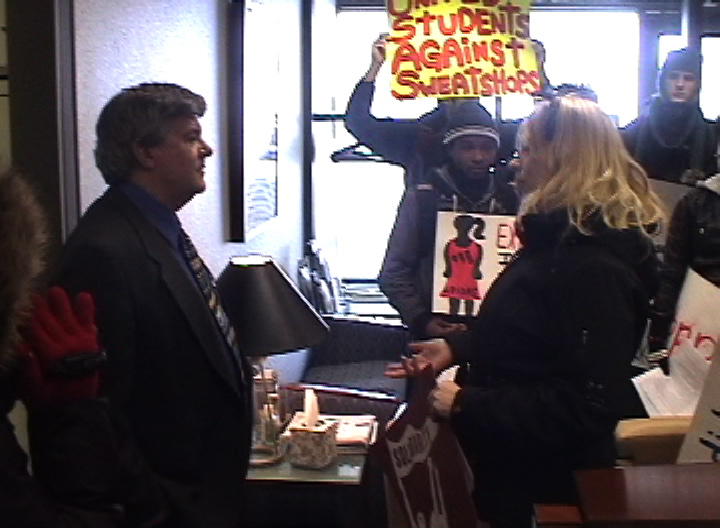
When they arrived in the reception area, the Vice president greeted them, but declined to meet with all the students present, instead agreeing to a small delegation to meet with him privately.
After about 20 minutes the students emerged from the office and the group headed back up to Kirkhof to participate in a brief flash mob action.
Students then marched through campus chanting and engaging other students on the campaign to end the university’s contract with Adidas, a contract worth over a million dollars.
The first video is footage of the students marching and the flash mob, while the second video is a brief interview with two GVSU USAS members.

According to the online source Right Wing Watch, a spokesperson for the National Organization for Marriage, Thomas Peters, said that regardless of all the pro-Gay Marriage propaganda, humans know in their heart that Gay Marriage is not right.
Peters was on a radio show and also said the following:
I’d say that the two big steps to getting to that message, of course, are fighting against the intolerance and hatred that is directed against us, especially in schools. You have a lot of pro-marriage people my age and younger in schools right now and they don’t feel safe right now in sharing their pro-marriage convictions on that vast majority of college and high school campuses. That is something that has got to end. We’ve got to figure out how to break down this ostracizing of pro-marriage viewpoints.
And second of all, we have to continually talk to people about how being pro-marriage is not anti-gay and that there is simply nothing discriminatory about seeing the love of a man and a woman as unique and special and worth protecting.
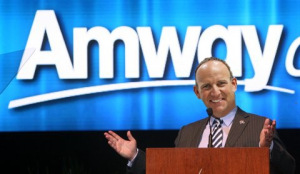
Apart from the fact that his statement is delusional, it should be pointed out that the current President of Amway, Doug DeVos, is a major funder of the National Organization for Marriage.
As we have noted recently in our local Foundation Profiles, the Doug and Maria DeVos Foundation has contributed $500,000 to the National Organization for Marriage.
Such a large donation to an anti-Gay Marriage organization prompted one group to organize a boycott of Amway, since Doug DeVos is the current President. The Boycott is national and has the support of celebrities like Jane Lynch.
It is important for people who support LGBTQ equality to not only understand what role the DeVos’s play in this issue, but that we make it part of our work for LGBTQ justice.
Rev. Naim Ateek shares personal and political analysis of Israeli/Palestinian conflict at GVSU
Yesterday, about 40 students and some faculty attended a presentation by Rev. Naim Ateek at the GVSU campus in Allendale.
The event was co-sponsored by several GVSU departments and student organizations, along with the Grand Rapids based group, Healing Children of Conflict.
Rev. Ateek addressed several issues in his presentation, beginning with the realities of the Israeli occupation. The Palestinian minister talked about how Israeli settlements have been expanding and the hostility that Israeli settlers demonstrate against Palestinian villagers. This hostility is manifested in numerous ways, but most vividly in the destruction of the Palestinian’s olive trees, which Ateek said have been destroyed by the thousands.
Rev. Ateek also talked about the religiously motivated racism that Palestinians must face on a daily basis, a racism that is rooted in Zionism. However, despite the entrenched racism, there is a great deal of collaboration being done between Muslims, Christians and Jews.
The Palestinian speaker, who has written numerous books on Liberation Theology, emphasized the importance of the ecumenical efforts to promote justice and reconciliation. Indeed, Rev. Ateek believes that it is necessary if there is going to be a viable future for Arabs and Jews who live in that part of the world.
The speaker talked about the importance of Israeli journalists, like Gideon Levy, who are exposing the hypocrisy of Israeli policy in publications like Haaretz. He also discussed his support for the international Boycott, Divestment & Sanctions (BDS) campaign that seeks to pressure Israel to end its illegal occupation through economic means. While talking about the BDS campaign he named the Caterpillar company, which sells bulldozers to the Israeli military for the purpose of destroying Palestinian homes.
However, maybe the most impressionable thing that Rev. Ateek talked about was his family’s experience of being forced from their home and village in 1948 by the Israeli military. As a child, Rev. Ateek remembers when he and 6,000 people from Galilee (Beisan) were ethnically cleansed by Zionist forces in 1948. He said that his family had to flee so quickly that they could only take what they could carry in their arms.
After the presentation, I had a chance to do a short interview with Rev. Ateek on camera.
The Bloom Collective will host a screening of a new documentary that investigates the issue of rape in the US military.
The issue of rape in the US military is not new, but the amount of rape has increased as more and more women have enlisted. According to the Facebook page event:
The Invisible War, a groundbreaking investigative documentary about one of America’s most shameful and best kept secrets: the epidemic of rape within the U.S. military. The film paints a startling picture of the extent of the problem—today, a female soldier in combat zones is more likely to be raped by a fellow soldier than killed by enemy fire. The Department of Defense estimates there were a staggering 22,800 violent sex crimes in the military in 2011. 20% of all active-duty female soldiers are sexually assaulted. Female soldiers aged 18 to 21 accounted for more than half of the victims.
Following the screening, we will have a discussion about this topic within the framework of an anti-militarism, feminist lens.
This film is free and open to the public, but we will be asking for donations to help us continue to host these kind of events.
The Invisible War
Tuesday, March 26
7:00 PM
The Bloom Collective
8 Jefferson SE, Grand Rapids
 Grand Rapids Institute for Information Democracy