Worthy Victims, US Imperialism and the Paris Attacks
A few days have past since over 100 civilians were killed in the attacks in Paris. In the past 48 hours it has become increasingly clear that the reaction to these attacks within the US reflects the deeply held view that some lives are more worthy than others.
People have been asking others to pray for Paris, while others have been calling for an increased war in Islamic groups. In Michigan, Governor Snyder has suspended a project that would have offered hospitality to Syrian refugees. However, the most common response from people is for them to change their Facebook status to one with the French flag.
The social media response is instructive on many levels and has already been remarked on by numerous sources. Why is it that so many people are changing their Facebook status in light of the Paris attacks, yet these same people rarely do the same when other parts of the world experience the same kind of violence, often in greater numbers?
In the 1980s, Edward Herman and Noam Chomsky co-authored the book, Manufacturing Consent: The Political Economy of the Mass Media. In that scholarly work, the authors make the point that the US media, in tune with US foreign policy, often demonstrated that there were “worthy and unworthy victims.” For Chomsky and Herman, in the 1980s the US media would give a tremendous amount of attention to violence perpetrated by the Soviet Union, but rarely to foreign governments that were US allies, many of which received military aid and training. Chomsky and Edwards demonstrated that there was more media coverage of the murder of one catholic priest in Poland than the murder of dozens of priests and other religious workers in Latin America. In this case, the Polish priest was a worthy victim, while the religious workers and priests in Latin America were unworthy victims.
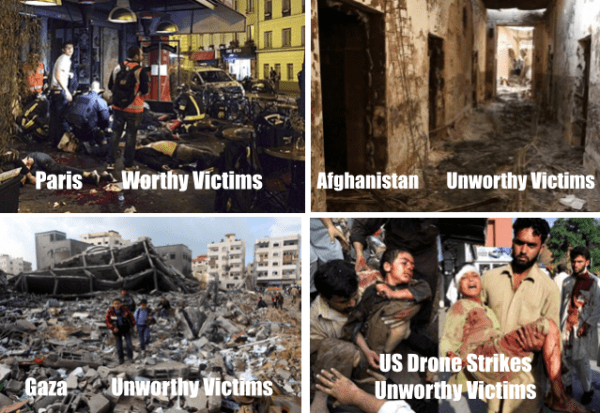
The same could be said of the attacks in Paris, especially when juxtaposed with attacks in Gaza, Afghanistan and US drone strike deaths. How is it that so many people have changed their Facebook status so reflexively in recents days to empathize with France, but so few did the same thing when the US bombed a hospital in Afghanistan recently, when Israel bombed Gaza last year or the cumulative deaths of civilians in US drone strikes in recent years?
For Chomsky and Herman, this is a direct result of how the US media reports on US foreign policy. However, it is also the result of how many Americans internalize the racist practices of US imperialism.
People have already been pointing out how Facebook itself has engaged in a double standard by encouraging people to stand with Paris, while ignoring Beirut. However, some people still say there is nothing wrong with showing sympathy for those who have died in Paris. Maybe so, but if one seriously reflects on the reactions to recent events, it becomes clear that this is about more than sympathy. In fact, the reaction from Americans is a lesson in US imperialism and the shallowness of social media activism.
When violence happens on a large scale it is a normal human reaction to become upset and to empathize with the victims. However, if one is really moved to honest empathy, one will be moved to want to do something to minimize or prevent such actions from happening again. Taking action requires agency and we are more effective in area where we actually have agency.
In the case Paris, there is little that people in West Michigan can do short of making donations to the Red Cross. However, in the case of the attack on the Afghani hospital, the 2014 Israeli assault on Gaza or the civilian deaths from drone strikes, there is a whole lot more that we can do, since these civilian deaths are all the direct result of US military activity. In this case, we can prevent further violence, by changing US military policy, by attacking the military industrial complex and by engaging in counter-military recruitment work. Each of these activities are a real demonstration of empathy, unlike the changing of our Facebook status, which is ultimately just symbolic and only meant to make us feel good about ourselves.
The Missouri Victory for Racial Justice is just the most recent example of the intersection of sports and politics
Editors Note: This article will focus on how the struggle for racial justice has intersected with organized sports. We in no way want to downplay or minimize the role that students and faculty played in the victory at the University of Missouri. We want to focus on the power and possibility of using sports as a context for radical organizing by looking at examples from history, particularly around racial justice struggles.
Organized people can defeat organized money. The recent victory at the University of Missouri is a powerful one. Students, faculty and the Black members of the football team all engaged in a campaign to get the school’s president to resign over racist practices on campus.
It’s a powerful victory and should be seen as a clear example of how we can effect change and even take on powerful institutions. Granted, before we get too excited, we’ll have to wait to see what the longterm outcome is with the resignation of University of Missouri President Tim Wolfe.
However, we should celebrate the victory and recognize the power of students and faculty engaging in an organized campaign to demand racial justice on campus. Students in particular laid the ground work to make space for both faculty and football players to increase the national profile of demands. When ESPN makes this the lead story on TV and online, you know it is a serious issue. Not that ESPN is a terribly credible news source, but they do represent a part of mainstream culture which means that they reach lots of people who might not normally think about racial politics. Indeed, there were two main factors that led to the eventual resignation of University of Missouri President Tim Wolfe. One was the deep commitment that students had around this campaign. The other one was the growing national awareness of the racist practices that are taking place on campus. Both of these factors threatened the financial well being of the University of Missouri, which ultimately was the bottom line for any action being taken. This is precisely why we need to learn from the rich history of athletes using sports as a platform to fight for larger social justice issues.
A People’s History of Sports in America
I highly recommend the book by left sports writer Dave Zirin, A People’s of Sports in the United States. Zirin also has a radio show, blog and has written several other books dealing with sports and politics.
We have a rich tradition in this country of athletes challenging systems of power and oppression; athletes such as Jesse Owens, Wilma Rudolph, Billy Jean King, Arthur Ashe, Jackie Robinson, Curt Flood, Roberto Clemente, Jack Johnson, Martina Navratilova, Jim Thorpe and a whole host of other sports figures.
However, if we limited our investigation of this history to those athletes that were involved in political struggle during the peak of the Black Freedom Movement, we can see the clear lineage between the student athletes at the University of Missouri and those that preceded them.
In 1967, then heavyweight boxing champion Muhammad Ali refused induction into the US Army draft. Ali was stripped of his boxing crown on the grounds that he would not fight in the Vietnam war, since it was a violation of his religious beliefs. However, upon closer examination, Ali made it clear that his objection to the war was also based on racial politics. When Ali first spoke to the media after his refusal to be drafted, he was famously quoted as saying:
My conscience won’t let me go shoot my brother, or some darker people, or some poor hungry people in the mud for big powerful America. And shoot them for what? They never called me nigger, they never lynched me, they didn’t put no dogs on me, they didn’t rob me of my nationality, rape and kill my mother and father.
Ali understood well how Black people were brutalized by the system of White Supremacy in the US and how it would be hypocritical of him to participate in a war that was targeting poor people color in Southeast Asia.
Stripped of his crown, Ali then spent the next several years fighting against White Supremacy and US Imperialism. With no income from boxing, Ali supported his family by speaking at campuses all across the country denouncing the US war in Vietnam and the US war against Black people at home. Ali’s global popularity provided the perfect opportunity to bring the messages of the Black Freedom and Anti-War movements to the masses of Americans who otherwise might have ignored them.
Then in 1968, at the Summer Olympics in Mexico City, Tommy Smith and John Carlos did something that further rocked the sports world. While taking the medals stand after the 200 meter race, Smith and Carlos raised their fists in protest during the playing of the national anthem. In addition, they wore beads that symbolized the history of lynching and no shoes to draw attention to the poverty that millions of people of color experienced in the US.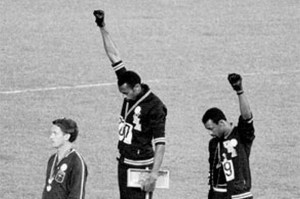
Carlos and Smith were stripped of their medals and were the recipients of death threats and harassment for years afterwards. However, it is important to note that Carlos and Smith did not act alone. The two great Olympic athletes were part of a larger group called the Olympic Project for Human Rights (OPHR), which had formed in 1967, under the leadership of sociologist Harry Edwards.This group of Black athletes also included the likes of Jim Brown, Lew Alcindor and Bill Russell. Their goal was to bring the following list of grievances to the 1968 Olympics:
South Africa and Rhodesia should be uninvited from the Olympics (both countries were under white minority rule at the time).
- Restoration of Muhammad Ali’s world heavyweight boxing title
- Boycott of the New York Athletic Club
- Avery Brundage to step down as president of the International Olympic Committee
- Hiring of more African-American assistant coaches
- The complete de-segregation of the New York Athletic Club
With these two examples, one can see the rich history of athletes using their status to raise awareness and affect change. What the football players at the University of Missouri have done is not only contribute to challenge institutionalized racism and White Supremacy, but have also provided us with an opportunity to learn about how sports has played a vital role in the social movements that have been at the center of the struggle for social justice in this country.
Here is a video interview with Olympic great Dr. John Carlos and left sports writer Dave Zirin when they spoke in Grand Rapids a few years ago.
The Prison Industrial Complex in West Michigan

After attending the forum last week on policing in Grand Rapids and coming away feeling like there was little new information, little challenge to the function of policy locally, no mobilization of people to organize against police violence and no serious discussion of root causes or systems of oppression, it seems appropriate to push some of those ideas.
It is also something that has been part of ongoing study, reflection, discussion and brainstorming about how to deal with police violence and the larger prison industrial complex, since GRIID has been hosting a class on the history of policing in the US, using Kristian Williams book, Our Enemies in Blue: Police and Power in America.
This will be the first in a series of articles in response to the larger, more structural issues surrounding policing and the prison industrial complex in West Michigan. For a good article that critiques the GRPD in recent months, we recommend the article, Controlling the Narrative, Controlling the Streets. What we will present in this article is some understanding of what the Prison Industrial Complex looks like in West Michigan.
As writers, activists and organizers have been saying for years, police violence and police repression must be seen as part of a larger system of oppression that is called the Prison Industrial Complex (PIC). The PIC has many components, which are summarized here. These components are not listed in any particular order, but represent a larger inter-locking system of oppression. For the purposes of this article, we are mainly looking at data from Kent County.
Law Enforcement – In Kent County, there are several law enforcement agencies that police our communities on a daily basis, such as the GRPD, the police departments from surrounding municipalities in Kent County, the Sheriff’s Department, the Michigan State Police and several federal agencies like Homeland Security and Immigration and Customs Enforcement (ICE). All of the law enforcement agencies are made up of several thousand people who spend the bulk of their time policing people who are experiencing poverty, from communities of color or immigrant communities. The collective budgets of these agencies are astronomically high and should give us an indication of what the priorities are of government. For instance, according to the Grand Rapids City Budget for 2015, the GRPD consume $55 Million in public funds , while the Kent County Sheriff’s Department consumes a little over $56 Million of public funds. 
The legal system – Once people are arrested they end up in the legal system, which involves judges, attorneys, probation officers, and a whole slew of people that “manage” those whom the system has no decided to punish. Going before a judge is often a very demeaning process, especially for marginalized populations. When looking at the cost of just the local Circuit and District Courts, that adds another $31 million dollars of public money supporting the PIC.
Incarceration – If you have been charged with a crime and are unable to pay fines or can’t afford a lawyer, you might have to spend time in the Kent County Jail or the Kent County Juvenile Detention Facility. The Kent County Jail, according to their own reporting, has 1,147 beds and is now listed as one of the “top one hundred jails in the country.” The budget for operating the Kent County Jail for fiscal year 2015 is $35 Million, which is part of the $56 million budget of the Sheriff’s Department.
Normalizing Street Crime/Criminalizing Communities – There are numerous entities in our society that contribute to the criminalization of certain communities, particularly communities of color and those experiencing poverty. Some of those entities are organized religion, educational system and the dominant commercial culture. However, more than any other entity, news agencies overtly perpetuate the criminalization of certain communities on a daily basis. For years we logged the racial make up of those  accused of crime in the local news media and communities of color were always disproportionately represented. This criminalizing of people of color is the result of how news agencies function. They emphasize urban crime over rural crime and they emphasize street crime over corporate crime. The cumulative effect of people seeing images like the one featured here to the right, that appeared on MLive today (11/4/2015).
Social Services, Social Management – When people end up in the PIC, their family members often must interact with the social service system. Social Service agencies might
provided needed services to people caught up in the PIC, but often they perpetuate harm and prop up the very function of the PIC by not challenging the root causes of why people are caught up in the PIC to begin with. In many ways, social service agencies act as a buffer between systems of power and marginalized communities, wherein they can redirect public rage against the injustice of the PIC to focusing on individual behavior.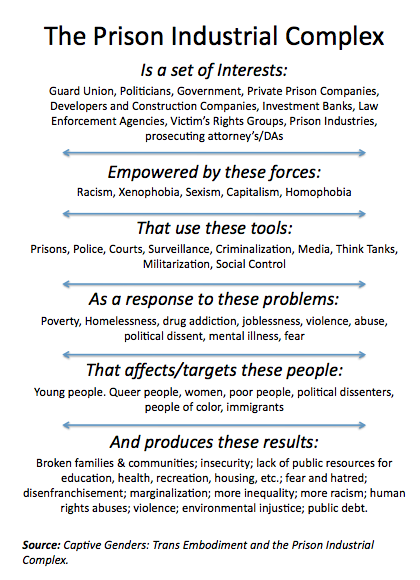
Systems of Oppression – Lastly, it is important that we acknowledge the major role that various systems of oppression play in the creation and perpetuation of the Prison Industrial Complex. Capitalism creates tremendous economic disparities, White Supremacy informs and enforces the normalization of a disproportionate number of people of color who end up in the PIC. (a point which Michelle Alexander makes in her book The New Jim Crow) Patriarchy plays a vital role in the PIC by promoting gender violence and then using more violence to “teach perpetrators a lesson.” This violence deeply impacts both women and men. Heterosexism is also a system of oppression at play in the PIC, which is why there is a disproportionately high rate of queer youth and those who identify as transgender in the PIC. Lastly, US Imperialism plays a major role in the PIC, since many people who come to the US as immigrants are fleeing political and economic violence often driven by US imperialism. And since the US is deeply stricken with xenophobia, immigrants are highly suspect and targeted by law enforcement, resulting in millions of immigrants in detention across the US.
If we are serious about addressing the role and function of policing in West Michigan, then we have to not only have to understand the interlocking systems within the Prison Industrial Complex, we need to creatively engage in radically new ways of addressing root causes of problems that are currently dealt with through arrest and incarceration.
Buying State Policy: A more honest assessment of the DeVos family political influence
Two days ago MLive ran a story that names the DeVos family as the largest single donor to Michigan electoral politics for the 2013-2014 cycle. 
The article was prompted by a new report from the Lansing-based watchdog group Michigan Campaign Finance Network (MCFN). The report, authored by MCFN director Rich Robinson, is a clear indictment of how money dictates electoral outcomes. The cover of the report (shown here) is pretty clear about what happens to democracy with the financial power of families like the DeVos family.
However, even though the MLive article has a hyperlink to the report, they only include part of the title, which says “a citizen’s guide to the cycle.” The MLive reporter omits the part of the report title that says, “Big Money Dominates Michigan Politics.” This is a subtle point, but relevant nonetheless, since the MLive story just presents a simple data overview of the report without any real analysis of what the implication are for individuals or individual families spending millions of dollars to influence the outcome of elections throughout the state.
The MLive reporter does the obligatory quote from the report’s author, but the one sentence is just a restating of the obvious. “The DeVos family doesn’t have a peer among individual donors, or as far as interest groups go,” said Robinson.
Comparatively, the MLive writer asked for a response from the DeVos camp and gave them significantly more print. The response come from Greg McNeilly, who ran Dick DeVos’ failed campaign for the Governor of Michigan in 2006. McNeilly continued to work as a DeVos operative, when he became the Windquest Group’s Chief Operating Officer in 2012. McNeilly also runs one of the DeVos state policy front groups, the Michigan Freedom Fund.
Here is the full MLive quote from McNeilly:
“Political speech is the most protected form of speech, and we need more people participating at higher levels. We should applaud anyone who is leading on that dimension and try to encourage greater participation in our great American experiment.”
Buying State Policy
The larger problem with the MLive article is the utter failure to even follow the money trail to see how the money that spent at the state level impacts election results and policy decisions.
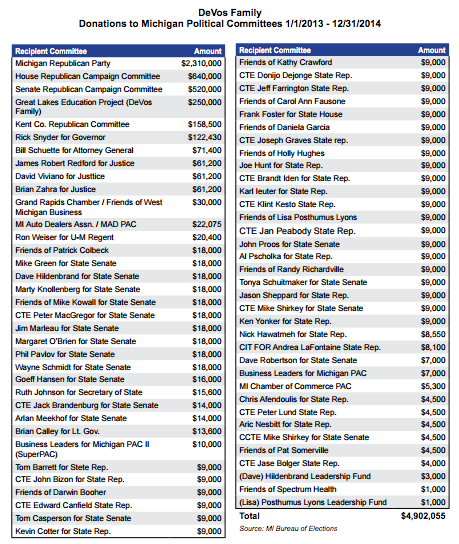
The DeVos family political contributions have had clear results in recent years in Michigan. Their totals for the 2013-2014 cycle were $4,902,055. Most of that money went to the Michigan Republican Party, with smaller amounts going to individual candidates and other state groups that would lobby on their behalf. Lets take a look at a couple of examples of how this plays out.
This past June, Governor Snyder signed into law HB 4052, a law that takes away local control. Why is this relevant, because powerful entities like the DeVos family do not want local communities adopting policies like a living wage, regulations against wage theft or adopting anti-discrimination ordinances that would include or add anti-discrimination protections for the LGBT community.
HB 4052 was introduced by Rep. Earl Poleski (R) and then went to the Committee on Commerce & Trade, which is chaired by Joseph Graves (R). Graves received $9,000 from the DeVos family for his re-election bid in 2014, along with several other members of the Committee on Commerce and Trade. This committee recommended that HB 4052 be adopted and then it was put before the Michigan Senate. The Michigan Senate sent the bill to the Competitiveness Committee chaired by Mike Shirkey (R). Rep. Shirkey received $4,500 from the DeVos family for his re-election bid in 2014, as did several other members of this committee.
Some of the groups that lobby hard for this bill were also recipients of DeVos family money, such as the Michigan Chamber of Commerce ($5,300) and the Grand Rapids Chamber of Commerce ($30,000). The Michigan Freedom Fund was a major proponent of the legislation and they were funneling money through the Foundation for Michigan Freedom to run paid political ads in favor of HB 4052. The bill was signed into law in June of this year.
A second example would be the recent bill that was also signed into law this summer, HB 4188. This legislation, often framed as a religious freedom bill, would allow adoption agencies in Michigan the ability to deny LGBT couples/partners/families from adopting.
HB 4188 was introduced by Rep. Andrea LaFontaine (R). Rep. LaFontaine received $8,100 in campaign contribution in 2014 from the DeVos family. Many of the cosponsors of this bill were also recipients of DeVos family funding.
The largest adoption agency in the state of Michigan is Bethany Christian Services. Bethany has been a major recipient of funding from the various DeVos family foundations. For instance, the most recent 990 documents (2013) for the Richard & Helen DeVos Foundation show that they contributed $250,000 to Bethany Christian Services. The Dick & Betsy DeVos Foundation provided $25,000 to Bethany in 2013.
When we look at specific policy outcomes, it becomes clear that the amount of money that families like the DeVos family spend on influencing public policy negatively impacts the lives of millions throughout the state.
West Michigan Political Power 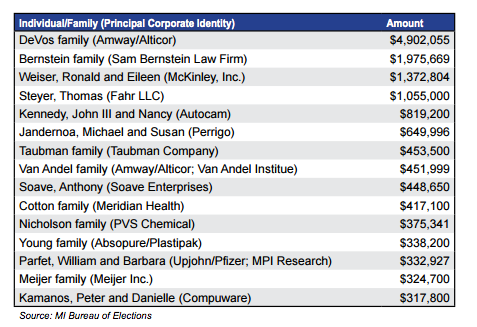
It is also worth noting that of the top 15 financial contributors to Michigan politics in the 2013-2014 cycle, five of them are from Grand Rapids. In addition to the DeVos family, there is Michael & Susan Jandernoa, John & Nancy Kennedy, the Van Andel Family and the Meijer Family.
These families are also connected in other ways, serving on numerous boards together and influencing policy in West Michigan. They collaborated, along with other powerful people a few years ago, to form the West Michigan Policy Forum, which has led the way on numerous state policy changes such as Right to Work, the elimination of business tax and more recently the Michigan road funding issue. This West Michigan connection is also not part of the MLive article, even though it seems like it would be an easy connection to make. But then again, Mlive is not in the business of conducting any kind of substantial power analysis, let alone holding power accountable.
Surviving State Repression, Fighting for Freedom: A Review of the Film The Black Panthers: Vanguard of the Revolution
Yesterday, I went to UICA to see the film The Black Panthers: Vanguard of the Revolution. The film is very rich, from the interviews with former members of the Black Panther Party for Self Defense, to archival footage and the powerful use of music throughout the film.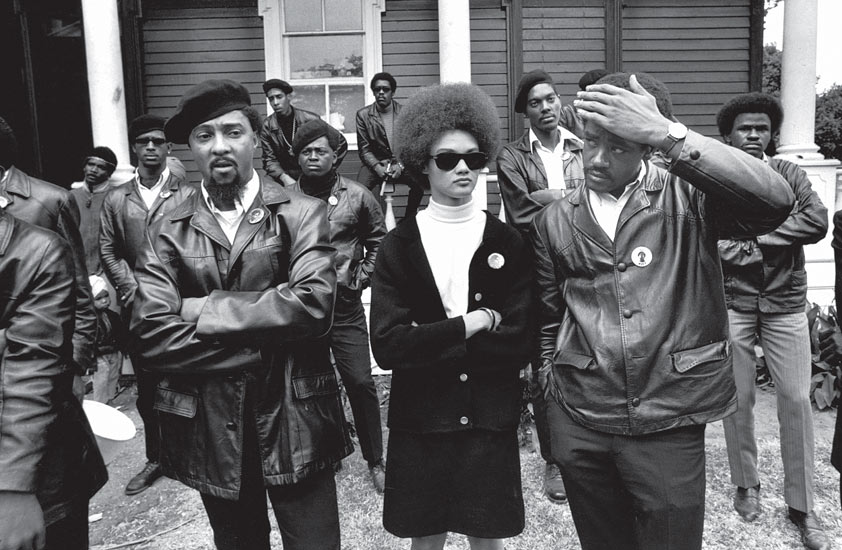
So much could be said about the film, this history and its lasting impact on movements for liberation today. My interest in writing about the film is less of a critique and more of a highlighting of themes and lessons learned. No film, documentary or otherwise, could fully encapsulate the richness and the complexity of this one organization within the larger Black Freedom Movement, but the film makers do a pretty damn good job covering a lot of ground in just under two hours.
It was very encouraging to see the film place the birth of the Black Panther Party for Self Defense within the context of a global revolutionary movement. To ignore the influence that insurgent, revolutionary movements around the world had on the Black Panthers, would do a tremendous disservice to the memory of this urban insurgency. One recent book that provides even more details about the Black Panthers within the larger global revolutionary struggle is Black against Empire: The History and Politics of the Black Panther Party.
One aspect of the Black Panthers that could have been made more explicit, was their decision to engage in self-defense. There was very little presented in the film about the level of police brutality that African Americans were experiencing across the country. Spending more time on this point would have made the film even more relevant for what for the current uprising within the Black community over police violence and state repression.
In addition, an honest exploration of the decision amongst the youthful Black Panthers to take up arms, would also have revealed that they were not the only African Americans who decided that self-defense was a legitimate position to take. The fact is that there were thousands of Black people across the country who had been engaged in self-defense politics for decades, way before the Black Panther Party for Self Defense came on the scene. Originating in the south, there were groups of African Americans calling themselves the Deacons for Defense, which used guns as a defensive tool against klan and police brutality. This history is beautifully captured in the book, The Deacons for Defense: Armed Resistance and the Civil Rights Movement. Another, more recent book, on Black insurrection is, Dixie Be Damned: 300 Years of Insurrection in the American South, which chronicles the tactical use of arms uprising from slave revolts to the present.
 In other words, the decision by the Black Panthers to take up arms in self defense was not new, a point made by a participant in the Black Freedom Movement, Charles Cobb, in his book, This Nonviolent Stuff’ll Get You Killed: How Guns Made the Civil Rights Movement Possible. By not placing the Black Panther’s decision to engage in a politics of self-defense within the larger history of armed rebellion, further marginalizes their memory within the dominant culture as a legitimate organization and it prevents any serious discussion on any contemporary use of armed insurgency as a political tactic.
Another important aspect of the film was the simple fact that this movement was made up of really young African Americans. Most of the active members of the Black Panther Party for Self-Defense were in their teens or their twenties. This importance of this point was made so clearly near the end of the film by a former member of the Black Panthers, when he said, that the youthfulness was both its strength and its weakness. It’s strength could be seen in the fire of young revolutionaries like Huey Newton, Elaine Brown, Bobby Seale, Kathleen Cleaver and Fred Hampton. You could hear the fire in their voices, the conviction and the vision for what kind of world they wanted to live in. Who could doubt that listening to Fred Hampton didn’t want to make you go out and join a revolutionary movement for liberation?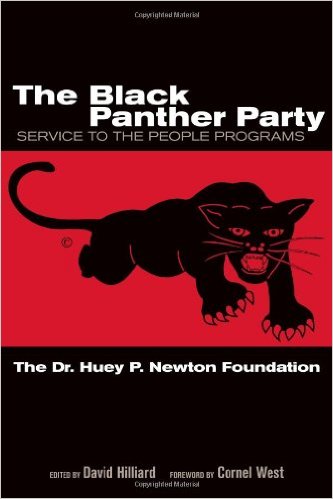
The film also does a pretty good job of looking at the kinds of programs the Black Panthers initiated that would serve very concrete needs in their communities. They were a revolutionary movement in the truest sense, in that they not only wanted to overthrown the system of oppression that kept their people in poverty, they also tried to practice liberation by serving the people through programs like the free breakfast program and the clinics. More could have been said about these programs and others, like the revolutionary drug treatment programs they developed that continue to have tremendous impact. It is safe to to that had the Black Panthers not developed radical drug treatment programs, organizations like the Red Project might not exist today. One book that provides a solid investigation of these revolutionary programs developed by the Black Panther Party for Self Defense is, The Black Panther Party: Service to the People Programs. There is also a chapter in an anthology edited by Eric Holt-Gimenez on the food justice movement, which looks at what we can learn from the Black Panthers about the role of food in community organizing. The book is Food Movements Unite and the chapter is entitled, Survival Pending Revolution: What the Black Panthers Can Teach the US Food Movement.
One area of the film that was so encouraging to see was the kind of organizing that was taking place in cities like Chicago, where young revolutionaries from all communities were coming together to form a coalition. This was one of the strengths of Black Panther organizers like Fred Hampton, who understood the need to bring together sectors of the community which shared a common lived experience of oppression from White Supremacy and Capitalism.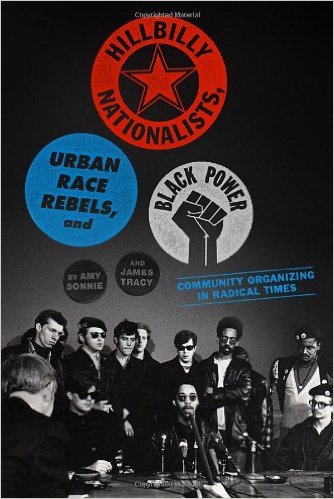
There was that seen where this bourgeoning coalition was in its infancy in Chicago, with Black, Puerto Rican and White radicals coming together to form a united front. This coalition is explored in the little known book, Hillbilly Nationalists, Urban Race Rebels, and Black Power: Community Organizing in Radical Times.
A more sobering aspect of the film was the brutal ways in which state repression was used against the Black Panther Party for Self-Defense. The film does a solid job of using archival footage and interviews to expose the level of state violence, particularly by looking at specific instances of repression during the years the Black Panthers operated. The film talked a little bit about the FBI’s COINTELPRO, the program that was used to undermine any and all revolutionary efforts within the United States. The film even notes that of all the various projects initiated under COINTELPRO, roughly two thirds of them were targeted at the Black Panthers.
The assassination of Fred Hampton in Chicago that was explored in the film, in many ways showed the depth of the insidiousness of the state repression against the Black Panthers. How could one not be enraged by the level of brutality used against this young man who so loved his people? The FBI led-murder of Fred Hampton is the topic of the powerful book, The Assassination of Fred Hampton: How the FBI and the Chicago Police Murdered a Black Panther and another documentary film The Murder of Fred Hampton.
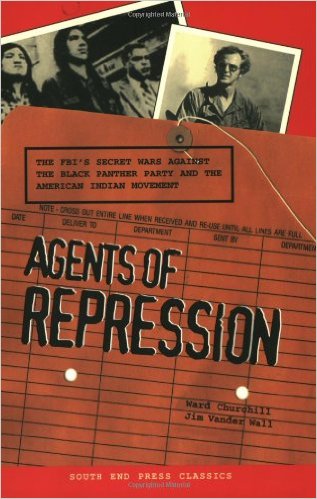
We would all do well to have a deeper understanding of the FBI’s COINTELPRO and what impact it had on the revolutionary movements in the US from the 1950s through the 1970s. One of the best books to explore this history, with the use of declassified documents is Agents of Repression: The FBI’s Secret Wars Against the Black Panther Party and the American Indian Movement. Another important book on the topic, from an insider who was featured in the film (M. Wesley Swearingen), is FBI Secrets: An Agents Expose.
Lessons Learned
I have already highlighted many of the main threads of the film up to this point, but it is also important to think about what we can learn from the Black Panther Party for Self Defense, especially those interested in fighting for revolutionary change today.
It is obvious from the film that there were serious organizational problems, such as how the organization was structured and group dynamics. The level of misogyny in the Black Panther Party was made apparent in the film and in no way should it be minimized. However, many revolutionary groups at the time were also engaged in sexist behavior, a reality that led many feminists of the 60s and 70s to develop a more radical critique of patriarchy that went beyond gender equity. This was especially the case for feminists of color who began to develop a more intersectional critique of social injustice and social movements. We are all the beneficiaries of this analysis and we need to make sure that the same kind of misogynistic practices do not infest our movements today.
Another lesson we can learn is that hierarchical models have no place in our movements today. Again, this was not unique to the Black Panthers, but the film makes it clear the dangers of having decisions made by a few “leaders.” We need to adopt organizational models that are horizontal, transparent and ones that use consensus as often as possible.
There was another point made in the film when one of the former Black Panthers was speaking about how there was no real scrutiny of new members coming in. Those involved in movement building today might call this security culture, but the point is that there needs to be a process to incorporate new people into our work that is not naive, keeps us safe and builds capacity. This is particularly important when considering how the state or other repressive systems will do whatever they think necessary to undermine our movements, which includes infiltration. We CANNOT be naive about the fact that if we are engaged in revolutionary politics, we can expect to meet state repression. This is maybe one of the most important lessons we can learn from the Black Panther Party for Self Defense.
By way of ending I also think it is important that we learn from the Black Panthers or at least are reminded by them to always be passionate, to love ferociously, to serve the community, to take young people seriously, to build alliances with other revolutionary groups and to practice radical self love.
If you haven’t seen the movie, it will be playing a few more days this week at UICA. Go see it and take your friends!
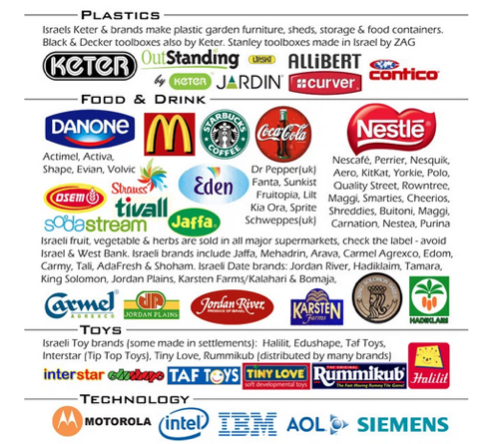
(In this interest of transparency, GRIID has been an active member of HCC and an active participant in the local BDS campaign)
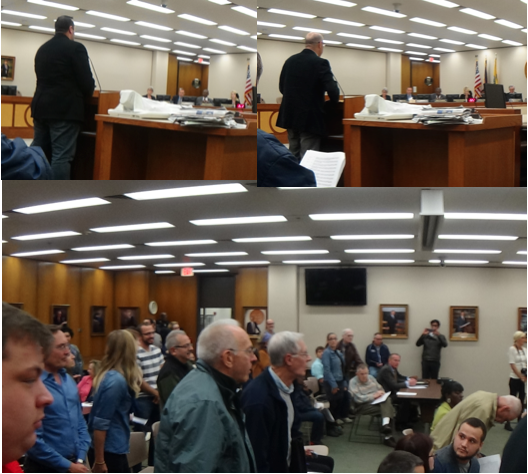
Last night about 75 people attended the Grand Rapids City Commission meeting in support of a divestment campaign initiated by the local group Healing Children of Conflict (HCC).
The divestment proposal is part of the 10 year long Boycott, Divestment & Sanctions (BDS) campaign begun by Palestinian civil society and modeled after the South African Anti-Apartheid campaign.
Nineteen people spoke on behalf of the divestment proposal, with the organizers from Healing Children of Conflict going first. Those who spoke covered of broad range of issues related to why the BDS campaign was vital for Palestinian justice. Some speakers addressed the level of suffering that Palestinians endure on a daily basis by the Israeli occupation. The most powerful statements came from Palestinians themselves, some of which have families that lost land and suffered loss of family members due to the Israeli occupation.
Other speakers addressed the violence and repression caused by the most recent Israeli assault on Gaza, where civilians (particularly children) were the target of bombing. Nearly 500 Palestinian children died from the Israeli missile attacks in 2014 and thousands more were displaced and left homeless. One speaker even talked about how kindergarden schools were targeted by the Israeli assault on Gaza.
In addition, there were speakers who talked about the connection between the Palestinian BDS campaign and the South African Anti-Apartheid Divestment Campaign. One of the strongest voices for BDS today are Black South Africans who see a direct correlation between what they experienced under South African Apartheid and what Palestinians are experiencing under Israeli Apartheid. The most visible South African voice is Archbishop Desmund Tutu who states:
“I have witnessed the systemic humiliation of Palestinian men, women and children by members of the Israeli security forces.Their humiliation is familiar to all black South Africans who were corralled and harassed and insulted and assaulted by the security forces of the apartheid government.
In South Africa, we could not have achieved our democracy without the help of people around the world, who through the use of non-violent means, such as boycotts and divestment, encouraged their governments and other corporate actors to reverse decades-long support for the apartheid regime. The same issues of inequality and injustice today motivate the divestment movement trying to end Israel’s decades-long occupation of Palestinian territory and the unfair and prejudicial treatment of the Palestinian people by the Israeli government ruling over them.”

Several speakers addressed how the City of Grand Rapids was asked to pass a similar resolution against South African Apartheid in 1982, a campaign that involved some of the same people who addressed the City Commission last night. The City of Grand Rapids did pass a divestment resolution in 1982 and then divested a few years later. You can read all of the letters sent to the City Commission in 1982 and the resolution language by going to the Grand Rapids People’s History Project.
There were several clergy who also addressed the City Commission last night, invoking strong words on standing with victims and standing up for justice. In fact, several congregations sent letters of endorsement, including Plymouth UCC and St. John’s UCC.
There were also a few speakers who identified as Jewish and spoke about how Israeli’s treatment of Palestinians is not a reflection of true Judaism. Other spoke about how even though the Israel/Palestine issue is often framed as a religious conflict that it was really about state repression by the Israelis against a mostly civilian Palestinian population. 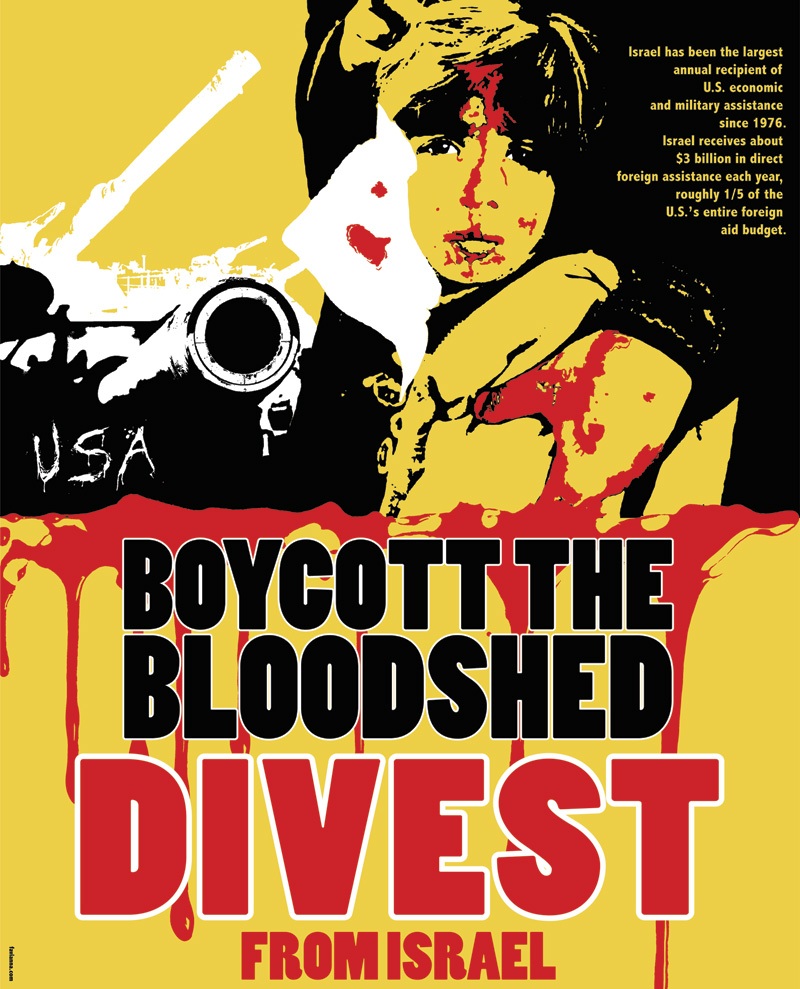
Local non-profit groups also addressed the City Commission in support of the divestment resolution proposal. A representative from GVSU’s United Students Against Sweatshops spoke and told the commission that their membership endorses the campaign and urged the them to adopt a resolution of divestment to take a stand against exploitation. Other non-profit and grassroots groups that had members speak were the Institute for Global Education and the Society for Economic Equality.
Towards the end the commission heard from one young Palestinian woman who during her comments became quite emotional. It was hard not to be moved by how deeply this issue impacted her, her family and her community. Her comments made it clear to the commission that this issue is not just about something happening half way around the globe, but that it impacts people right here in West Michigan.
Healing Children of Conlfict provided each of the commissioners a packet with background information about the BDS campaign, the Israeli occupation, copies of letters of support for the HCC campaign, information about the 1982 City Commission’s Divestment Resolution and information about companies and financial institutions the city may have an economic relationship with.
The HCC campaign was going to involve asking the city of Grand Rapids to end its contract with the French multi-national corporation Veolia, but because of the international BDS campaign, Veolia ended all business contracts within Israel just weeks ago. This speaks to the power of the BDS campaign.
It was noted in the packet of information provided by HCC that there are several known connections to Israeli companies in West Michigan or companies doing business with Israel. Cascade Engineering has a partnership with Dolav Plastic Products, a company based in Israel. There are also two Israeli military contractors with factories in West Michigan, Elbit Systems of America and Plasan, which was recruited by The Right Place Inc. to come to the area. Lastly, the global private security company G4S, operates in Grand Rapids and is a major target of the international BDS campaign. So, as you can see there are lots of BDS connections in Grand Rapids and West Michigan.
Healing Children of Conflict will be meeting with Grand Rapids City officials soon to further discuss a divestment resolution and if you want to support this effort, you can contact the Grand Rapids City Commissioners here. If you are interested in attending a Grand Rapids BDS meeting or want to be on an update list for local BDS organizing, send Healing Children of Conflict an e-mail at healingchildrenofconflict@gmail.com.
White Supremacy and Columbus Day: A Proposed Agenda for White People to Practice Racial Justice
As Native American peoples in this red quarter of Mother Earth, we have no reason to celebrate an invasion that caused the demise of so many of our people, and is still causing destruction today.”
Suzan Shown Harjo – Creek & Cheyenne
Earlier this week, the City of Portland, Oregon passed a resolution that outlawed Columbus Day and put in its place Indigenous People’s Day. This kind of action has been taking place in several cities across the country in recent years, as Native communities and their allies have raised the issue and accurately called out Columbus Day as an ongoing manifestation of White Supremacy. Challenging the legitimacy of Columbus Day is an important anti-racist act, but it must be seen in the larger context of challenging White Supremacy.
It is increasingly imperative that we come to terms with the function that Columbus played in the European conquest/colonization of the what we now call the Americas. Columbus was commissioned by the Spanish Crown and sanctioned by Catholic Church (through a 1493 Papal Bull) to conquer new lands and extract resources to benefit Spain. Therefore, Columbus not only is the primary symbol of the 500 years of genocide and slavery that has plague the western hemisphere, he is the symbol of political, religious, social and cultural imperialism that continues to the present by a White Supremacist system of Capitalism.
I don’t want to spend much time further exploring these historical dynamics, as I want to get to what it is that White people should be doing confront the legacy of Columbus Day. However, there are a few resources that I would highly recommend for people who want to investigate this history. (See Resources listed at the end of this article.)
Undoing White Supremacy: A Proposed Agenda
The list that follows includes not only some clear principles of Racial Justice, but are directed specifically towards White people who inhabit what we refer to as Michigan. These are proposed actions and are meant to create discussion, while ultimately leading to concrete action for those of us who have White privilege.
Grand Rapids was founded on Settler Colonialism – As a foundational framework, it is vital that we come to terms with the fact that Grand Rapids, like virtually all US cities were founded on what Native scholar Roxanne Dunbar Ortiz calls Settler Colonialism. Settler Colonialism in West Michigan is the result of a larger White Supremacist strategy that included legal means (treaties), forced relocation, spiritual violence (role of churches) and cultural imperialism, most radically seen with the policy of putting Native children in boarding schools with the goal of, “Killing the Indian, Saving the Man.”
Get the City of Grand Rapids to denounce Columbus Day – Force those of us who claimed to be  against White Supremacy and want to engage in acts of racial justice, here is a concrete action to organize around. The fact that the City of Grand Rapids still recognizes Columbus Day means they support the White Supremacist narrative of Settler Colonialism and what was done/is being done to Native people in this area. We need to organize to end Columbus Day in Grand Rapids. If the Native community wants them to rename October 12 Indigenous People’s Day, we should support that, but that is a decision for Native people to make.
Resist Economic Policies that Negatively Impact Native People – Over the next several days there will be Columbus Day sales, which would be equivalent to Himmler Day sales in Germany. This is low hanging fruit, but we should not shop at stores having Columbus Day sales, but we should be protesting them. More importantly we need  to find out how larger economic policies, particularly extractivist policies impact Native communities. The extraction of oil and gas worldwide disproportionately impacts Native people, which is why Native communities are at the forefront of campaigns to resist projects like the Alberta Tars Sands and all the pipelines connected to such projects. Groups like Idol No More and the Indigenous Environmental Network are groups that we need to be in solidarity with by providing whatever support they are asking for. Nuclear energy should also be resisted, since uranium mining in the US happens on or adjacent to Native land. (see If You Poison Us: Uranium and Native Americans)
Demand that Land be Given Back to Native Nations – As the map here illustrates, the amount of land that was inhabited by Native people before the European Conquest was massive. The US government and State governments have violated virtually all treaties signed with Native Nations (remember, treaties can only be signed between nations) and one of the major aspects of the Native Sovereignty Movement in the US is to reclaim some of the land taken in the process of Settler Colonialism. What this would look like in West Michigan is for Native people to decide, but those of us who claim to support racial justice must make this a priority. Land is justice.
End Native Cultural Appropriation – We have to stop appropriating Native culture and Native spirituality in all its forms. White people are notorious for appropriating Native traditions and making them their own and this has to STOP. Whether we are talking about sports mascots, sweat lodges or any other Native cultural and spiritual traditions, we have to stop appropriating them and challenge other people from doing the same.
While this list is short it provides White people with a lot of opportunities to practice racial justice and confront White Supremacy. This has to be our work. In the same way that men have to make the end of rape culture a priority, White people have to make the end of White Supremacy a priority. Let’s get to it. Who wants to organize with me?
Some Resources:
The Canary Effect (film) https://www.youtube.com/watch?v=lD7x6jryoSA
An Indigenous People’s History of the United States, by Roxanne Dunbar Ortiz
All Our Relations: Native Struggles for Land and Life, by Winona LaDuke
The 500 Years of Resistance Comic Book, by Gord Hill
Custer Died for Your Sins, by Vine Deloria Jr.
A Little Matter of Genocide: Holocaust and Denial in the Americas 1492 to the Present, by Ward Churchill
For years now, we have been making the point that since ArtPrize is bankrolled annually by the parents of Rick DeVos – Dick & Betsy – and the major players from the capitalist class in West Michigan, that ArtPrize serves as both a great PR tool for the DeVos family and a mechanism to generate even greater political and economic clout for the major sponsors. 
ArtPrize founder Rick DeVos has gone to great lengths to deny that the annual event is in any way politically motivated. In fact, in an article that was critical of ArtPrize and the DeVos family politics that appeared in GQ Magazine in 2012, Rick DeVos was quoted as saying, “I don’t even want to weigh in on any of the political stuff. I just prefer to stay away from that.”
Artist Steve Lambert, who entered ArtPrize last year with the piece Capitalism Works for Me, also challenged DeVos around the political nature of the event, specifically the funding coming from people who have historically funded anti-LGBT campaigns.
Now there is new evidence that Rick DeVos does walk in the same political circles as his parents and grandparents. I wrote yesterday about how I was denied entry to a Right Wing Think Tank Conference being held in Grand Rapids and provided some information on the State Policy Network and its affiliate groups, like the Acton Institute and the Mackinac Center for Public Policy.
While looking at the agenda for the SPN conference, I was intrigued by a session that was being offered to. The title of the session is ArtPrize: Unorthodox, Highly Disruptive, and Undeniably Intriguing, presented by Rick DeVos and sponsored by the National Review Institute. (The National Review Institute is a political advocacy group committed to the legacy of William F. Buckley, who was an apologist for Capitalism and US Imperialism.)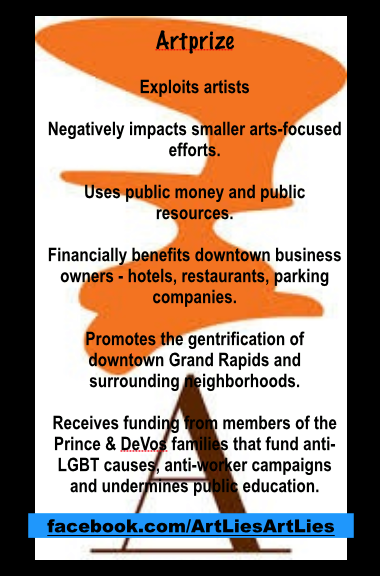
So, here is Rick DeVos, who claims to stay away from politics, speaking at a conference that is dedicated to strategizing around political issues. Here is a rundown of the political agenda being discussed at the conference that DeVos is part of:
- Get States to pass Right to Work Legislation
- Get States to adopt austerity measures that will hurt workers, the public sector and public services
- Attack Public Education by redirecting more public funds to Charter Schools and other “Schools of Choice.”
- Privatize Higher Education
- Promote more Ag-Gag laws, which attack community based efforts around food production and silences animal rights groups challenging the industrial animal industry.
- Attacks on Green Energy Legislation
This is not simply some guilt by association argument, rather it further demonstrated that Rick DeVos is welcomed by and part of a larger movement that his family has been invested in that promotes reactionary politics that are specifically harmful to workers, the LGBTQ community, immigrants, women and those who identify as secular.
Rick DeVos and his supporters can say that giving a talk on ArtPrize at the State Policy Network Conference doesn’t mean he endorses their politics. However, such a claim would be disingenuous. Do you think that an artist or non-profit that presented at a conference around women’s reproductive rights, for example, could claim that their presence in no way endorsed the politics of the conference? I think not.
Rick DeVos can come up with catchy titles for his presentation on ArtPrize that uses terms like unorthodox and disruptive, but the truth is that his event, his funders and his family are only interested in disrupting the lives of people that stand in their way to greater wealth accumulation.
Yesterday I was Told I Was Not Welcomed at a Right Wing Think Tank Conference in Grand Rapids
Have you ever heard of an organization called The State Policy Network? My suspicion is that you probably haven’t and that is not any fault of your own. The State Policy Network is just good at operating outside of the public eye.
Beginning yesterday, September 29, the State Policy Network was holding its annual meeting right here in Grand Rapids at the Amway Grand. Hundreds of people and dozens of organizations will be meeting through Friday to discuss strategies and tactics that will push their agenda through at the state level.
What is their agenda you ask? Well, first it’s important to know that the State policy Network (SPN) is a national organization that brings together state-based right wing think tanks and advocacy groups to influence policy at the state level. The State Policy Network is one of the biggest allies in doing the work of the American Legislative Exchange Council (ALEC), the Koch brothers funded entity that is seeking to privatize the country, amongst other things.
- So, the agenda of the SPN and its member groups is to do some of the following:
- Get States to pass Right to Work Legislation
- Get States to adopt austerity measures that will hurt workers, the public sector and public services
- Attack Public Education by redirecting more public funds to Charter Schools and other “Schools of Choice.”
- Privatize Higher Education

- Promote more Ag-Gag laws, which attack community based efforts around food production and silences animal rights groups challenging the industrial animal industry.
- Attacks on Green Energy Legislation

Those of us who reside in Michigan know what this look and feels like, as the state has adopted greater austerity measures in recent years, passed Right to Work legislation and has been exploring Ag-gag laws and cutting more funding from public education. Some of the State Policy Network partners from Michigan are, The Mackinac Center for Public Policy and the Acton Institute.
You can see some of the sessions that that are taking place over the next few days, by going to the SPN Annual meeting Agenda. For a more detailed examination of the work of the State Policy Network, I highly recommend a report from the Center for Media & Democracy, entitled, Exposed: The State Policy Network. Below is a screen shot of several of the major sponsors of the State Policy Network Conference being held in Grand Rapids.

I was told I was not welcomed at the SPN Conference
A few weeks ago I was contacted by folks from Political Research Associates, a group which monitors to activity of the religious and political right in the US. They asked if I would be willing to attend the State Policy Network Conference in Grand Rapids and write some articles for them on the current and future agenda of the State Policy Agenda and its members groups across the country. They offered to pay the conference fee and since I hate to miss any opportunity to see what the Political and Religious Right are up to, I said yes.
Yesterday, I went to register for the conference at the Amway Grand Plaza Hotel. Since I was not pre-register, I was directed to a separate table in the registration area. The person who greeted me asked if I was with any particular group. I replied that I was not a member of any of the SPN’s affiliates, just someone from Grand Rapids who was interested in state policy issues.
Then I was asked if I had a business card, to which I responded, “No, I was not a business person or professional, just someone interested in state policy issues.” This person said they would be right back and 2 minutes later they returned with a very large man who said he was the head of security for this event. I said I didn’t understand why security was called. I just wanted to register for the conference. The security guy asked to see some ID, so I gave him my drivers license.
He left and walk across the display tables area to talk with two other people, who were no doubt conference organizers. They looked at my ID, then both proceeded to get on their mobile phones and do what appeared to be some searching. After 5 minutes the security guard returned and said that he was told that, “I was not welcomed, especially after looking at my website.” I said, which website? This only seemed to aggravate the security guy. I then said, pointing to the conference brochure, (which says Experience Freedom) why I was not allowed to participate in a conference that purported to promote freedom? He was not amused and said that I needed to leave.
In some ways I was not surprised that I was asked to leave, but it certainly underscores the secrecy and exclusivity of the political and religious groups, like the State Policy Network.
What do you do when your government is corrupt? It’s an important question, and depending on who you ask, you’ll get very different answers.
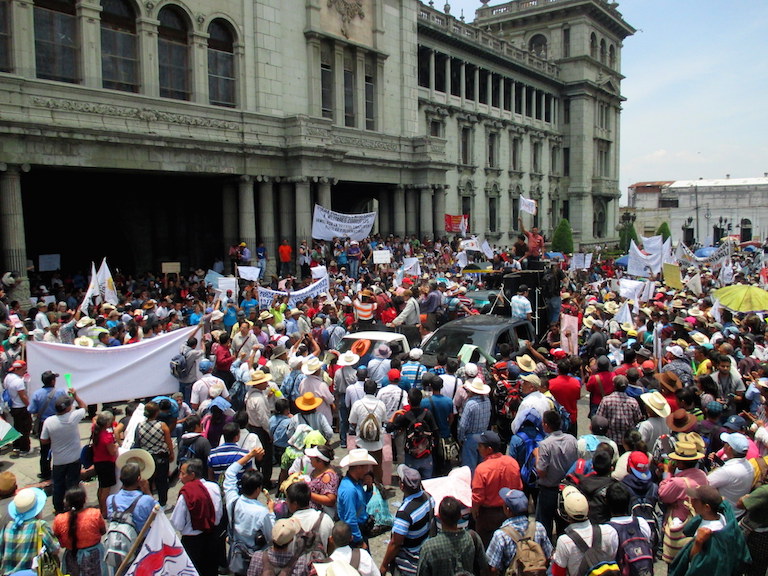
Over the past month, civil society in Guatemala has done what many people in the US can hardly imagine. The popular movements of Guatemala have forced the President of Guatemala from office, resulting in his arrest and imprisonment.
Guatemalan President Otto Pérez Molina was forced from office a month ago by a massive uprising of civil society that is tired of corruption and impunity. Molina and some of his cabinet members had pillage an estimated $100 million dollars from the government treasury to finance their lavish lifestyles. Guatemala civil society had known about this corruption for some time and did what they have done so many times in the past, they took to the streets.
Thousands of Guatemalans are protesting government corruption and they have not stopped protesting, despite Molina being behind bars. New elections have been held, but Guatemalan civil society is not putting their hopes in the electoral process, since the leading political parties are run by the wealthy sectors of the country, along with former military personnel. Guatemalans are well aware of the fact that there needs to be systemic change, especially for the majority indigenous population.
A great deal can be said about the ongoing efforts to create justice in Guatemala, but that is not the point of this article. For those who want more details on the uprising in Guatemala, I recommend the following online resources: Guatemalan Human Rights Commission, Upsidedown World, Washington Office on Latin America and the Latin America Working Group.
Having participated in international solidarity work in Guatemala on numerous occasions since the late 1980s, it is always inspiring to me to see how courageous and powerful the popular movements are in that tiny Central American nation. What I want to do in this article is to talk about why those of us who live in Grand Rapids should care about what is happening in Guatemala and what it is that we can learn from the grassroots organizing being done there.
What is the Grand Rapids connection to Guatemala?
Grand Rapids is currently home to an estimated 4,000 Guatemalans. Most of the Guatemalan diaspora that calls West Michigan home, are of Mayan decent and speak Mam, Quiche or Qanjobal. Many of them are migrant workers, work in one of the service industries or own small businesses. There are even Guatemalan soccer teams that exist in Guatemala. But what brought these people to Grand Rapids?
Guatemala has been dealing with colonialism, racism and war ever since Europeans first invaded the Mayan world in the early part of the 16th century. The United States government has had a particular interest in Guatemala since the late 19th century, mostly for economic reasons, with US-based multinationals like Chiquita owning a tremendous amount of land.
Guatemalans overthrew the US-backed dictatorship in 1944 and began an experiment with participatory democracy that was too much for Washington and the capitalist class to the north. The CIA orchestrated a coup in 1954 and put in place another military dictatorship to support the wealthy elites, which are the true ruling power in Guatemala. After decades of a brutal counterinsurgency war that was funded by the US, Guatemala was able to have a ceasefire in 1996. However, the social inequities and systems of oppression that caused many to take up arms remained, despite the legal end to the war.
During the counterinsurgency war, many Guatemalans fled to Mexico. Many stayed there, while others continued north and entered the US, often as undocumented political refugees. Some of the first Guatemalans to come to Grand Rapids, were part of the Central American Sanctuary Movement. As the repression continued, others came north and the Guatemalan community created informal networks to house new refugees and find work for each other.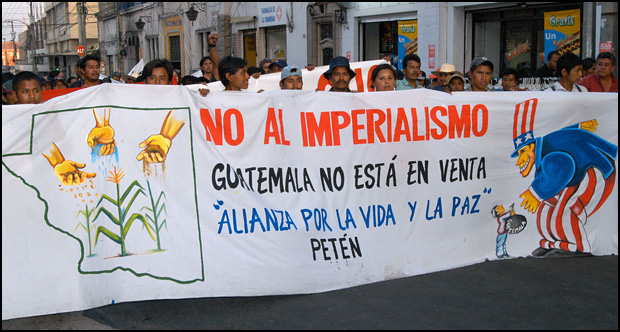
Even after the 1996 Peace Accords were signed in Guatemala, thousands were fleeing the country annually, since the Guatemalan economy was devastated from decades of repression, racism and ongoing exploitation. In 2005, the Guatemalan government, along with other Central American nations, signed a trade agreement with the US, known as CAFTA. Modeled after the North American Free Trade Agreement (NAFTA), CAFTA created new opportunities for foreign investors to exploit the resource rich nation. The gap between the wealthy and the poor grew and out of desperation, many Guatemalans continued to come to the US to find work, often where other Guatemalans resided.
Therefore, it is important that we recognize that the Guatemalans that reside in Grand Rapids are here because of the direct result of US military and economic policies. In fact, not only should we welcome these political and economic refugees, we should support the popular movements in Guatemala, which seeks to dismantle the systems of oppression that would prevent more forced migration to cities in the US like Grand Rapids.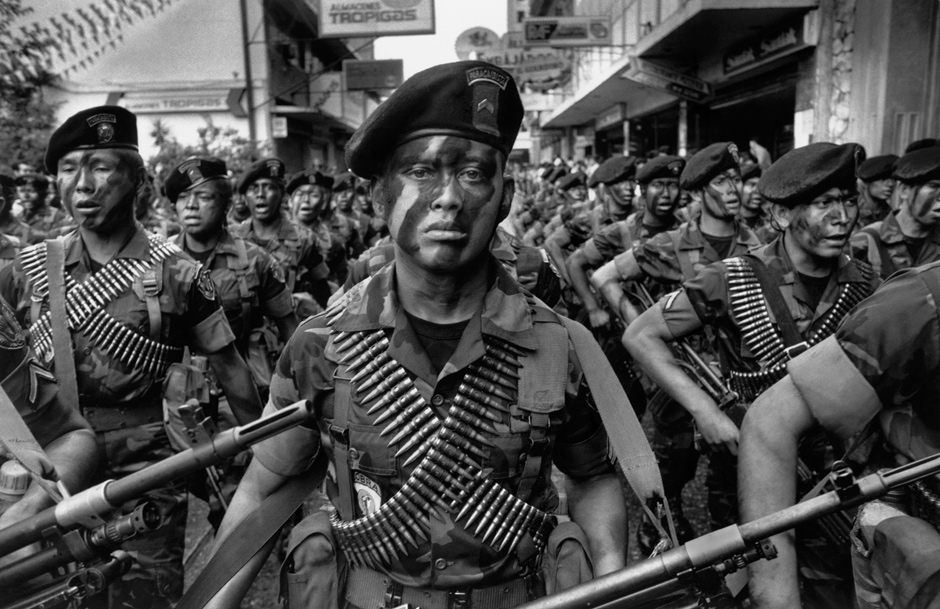
Another connection between Grand Rapids and Guatemala is rooted in longstanding US policy. One of the demands of the current uprising in Guatemala is that the US government also be held accountable for its role in the military repression and economic exploitation of their country. For example, the ousted President Molina was a military leader in the 1980s, during the most violent years of the US-backed counterinsurgency campaign. Guatemalans want US heads of state to be held accountable for their role in the murder, torture and disappearance of hundreds of thousands of their family members, neighbors, co-workers and friends.
Participating in solidarity with Guatemalans does not just mean we morally support their struggle, it means providing the kind of support they are asking of us, which is to demand accountability for past crimes and to work towards ending military and economic policies that continue to do harm.
What We Can Learn from Guatemala
Once we have owned the role the US government has played in creating violence, exploitation and forced displacement in Guatemala, we need to pay attention to how Guatemalans organize themselves. Here are a few things we can learn from Guatemalans that might actually create the change we want to see here in Grand Rapids.
 Call for Systemic Change – The popular movement in Guatemala isn’t calling for some quaint reforms of the existing system, they are calling for systemic change. Guatemalans aren’t calling for a renegotiation of CAFTA, they are calling for an end to CAFTA. The popular movement in Guatemala wants political and economic autonomy, something the Mayan people haven’t enjoyed since the European Conquest. People in Grand Rapids talk about buying local, which is often just another repackaging of capitalism, plus it doesn’t examine how local companies exploit the resources and labor of Guatemala. Sure, I can feel better about getting coffee from Kava House than Starbucks, but the coffee is still being grown in countries like Guatemala and Guatemalans are experiencing massive rates of hunger and poverty, because so much of the agriculture is devoted to exports.
Take it to the Streets – With growing corruption at the highest levels of the Guatemalan government, people did not circulate more online petitions, they took to the streets. And taking to the streets in Guatemala does not mean getting a permit to march, it means taking over the streets and shutting down business as usual. Systems of power will not be negatively impacted unless there is a cost. Also, taking to the streets is not just the choice of young anarchists, rather it is what all sectors participate in – unions, students, feminist groups, indigenous organizations, farmers, teachers, etc. Guatemalans understand that direct action is what is necessary to create real change, change that benefits the most marginalized, not those with privilege.

Elections are just a tactic – The popular movements in Guatemala have attempted to create and support more independent political parties, but they only see elections as one possible tactic for change. In the US, we are constantly being told that if we don’t drop everything and vote for this candidate or that political party. In Guatemala, they understand that the forces in power have always corrupted the political process, just like what happens here in the US. The Guatemalan popular movements many participate in elections, but they also never stop directly resisting the forces of exploitation and oppression in their communities, plus they are always working on creating new forms of community that compliment the resistance efforts. For example, while fighting the current exploitation of US and Canadian mining companies, communities are creating worker run co-ops or occupying land to create more autonomy.
In my book, Sembramos, Comemos, Sembramos: Learning Solidarity on Mayan Time, I shared a story about what a group of Guatemalan women had told us one night, while we were providing international accompaniment for their organization, which was being targeted by the military. These women told us that they were grateful for our solidarity work and providing them some space to do the work they needed to do. However, as the night wore on, they told us that the most important thing we Americans could do, was to go back to our country and change the system their, because US policy had such a negative impact on their country. They told us that they would take care of Guatemala, but that we needed to fight for liberation in our country. In other words, their liberation was directly connected to ours and our liberation was directly connected to their.
La Lucha Sigue en Guatemala and Grand Rapids!
 Grand Rapids Institute for Information Democracy