GRIID Fall 2017 Class: Learning from Social Movements in US and Grand Rapids History
 What can we learn from the history of social movements? What tactics and strategies have been effective in order for people to overcome systems of oppression?
This is the focus of the Fall 2017 GRIID class. Over an 8-week period, we will explore the power of social movement in US history, using the book, A People’s History of the United States by Howard Zinn. From Zinn’s book we will explore the abolition movement, the Black Freedom movement and the labor movement during the later part of the 19th century and early part of the 20th century. For those who don’t have a copy of Howard Zinn’s book, there is a PDF version online at this link.
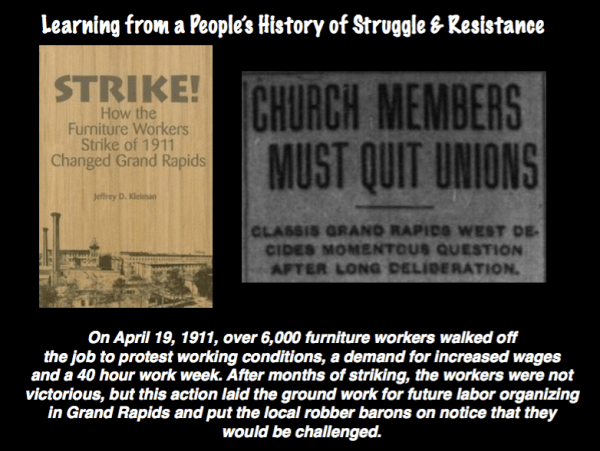
In addition, we will explore social movements in Grand Rapids history, focusing on the early labor movement and the civil rights movement. We will be reading a section from Jeffrey Kleiman’s book, Strike!: How the Furniture Workers Strike of 1911 Changed Grand Rapids and a chapter from Todd Robinson’s book, A City within a City: The Black Freedom Struggle in Grand Rapids, Michigan. In addition, we will be using some additional research done through the Grand Rapids People’s History Project. GRIID will provide a PDF version of the chapters we will be using for this class from the two books about Grand Rapids.
The class begins on Monday, September 25 and goes for 8 weeks ending on November 13. Class will meet from 6:30 – 8:30pm at take place at St. Andrew’s Episcopal Church 1025 3 Mile Rd NE, Grand Rapids, MI 49505 (lower level – enter off the parking lot) The class cost is $25, but we will not turn anyone away who is unable to pay. To sign up send an e-mail to jsmith@griid.org.
Is Fighting Fascism really an American Tradition?
 There have been a great deal of memes floating around on social media in the past week, many of them in response to the White Supremacist violence that took place in Charlottesville.
Many of these memes address white supremacy and fascism. However, as is the case with most memes, they tend to oversimplify reality and sometimes distort reality.
Take the meme here on the right. It says, Anti-Fascists disrupting a large gathering of white supremacists. The image clearly is from WWII, with the US military deploying troops, getting ready to do battle with Nazis. Now, it is possible that many US soldiers who were drafted into WWII, believed that they were fighting fascism, but that does not necessarily mean that the military and political leadership in the US was deeply committed to fighting fascists and disrupting white supremacy.
It is important for us to critically look at this history and investigate what exactly the US was committed to before, during and after WWII, particularly as it relates to fighting fascism.
Did the US Fight Fascism in Germany?
In Christopher Simpson’s little known book, The Splendid Blonde Beast: Money, Law and Genocide in the Twentieth Century, the author makes it clear that US financial institutions played a major role in rebuilding Germany after WWI. Entities like J.P. Morgan & Co., National City Bank, Brown Brothers, Lehman Brothers, Goldman Sachs and the Bankers Trust Company all provided significant loans and made major investments in the German economy.
Simpson also notes that there were several law firms that played a major role in facilitating the financial transactions that US banks made with Germany during the 1920s and 30s. One of the most notable law firms was Sullivan & Cromwell. Sullivan & Cromwell was a major player, not only with relations between the US government and the German government, the law firm dealt with numerous other governments the US had relations with, so much so, that Sullivan & Cromwell became known as the revolving door with the US State DePartment. Many of the Sullivan & Cromwell lawyers either transitioned into positions in the US State Department or began in the State Department and then entered the law firm.
Two of the most notable lawyers who got their start at Sullivan & Cromwell, were brothers Allen and John Foster Dulles. Throughout the 1920s and 30s, the Dulles brothers played a major role in building relationships with Nazi Germany and after WWII they were rewarded positions in the Eisenhower administrations as Secretary of State (John Foster Dulles) and the Director of the CIA (Allen Dulles).
The relationships that the Dulles brothers developed with Nazi Germany would pay off after WWII, since they would recruit hundreds of Nazi scientists, military leaders and intelligence agents to come work for the US. Christopher Simpson documents this history in his ground-breaking book, Blowback: The First Full Account of America’s Recruitment of Nazis, and its Disastrous Effect on Our Domestic and Foreign Policy. One of the highest ranking former Nazi Generals to be recruited by the CIA, was Reinhard Gehlen. Gehlen was recruited specifically because he was one of the Nazi Generals in charge of the Eastern Front and had a great deal of intelligence on the Soviet Union. You can read all the details about this dynamic in Mary Ellen Reese’s book, General Reinhard Gehlen: The CIA Connection.
Doing Business with Fascists instead of fighting them
Another major reason to be critical of the claim that the US was committed to fighting fascists during WWII was based on the fact that many major US corporations were operating factories in Nazi Germany or manufacturing products to sell to Nazi Germany. One such company was IBM, which contracted with Nazi Germany to develop a punchcard system that was used to track Jews and other prisoners in concentration camps.
Edwin Black (who appeared in the video clip above), in his book the, Nazi Nexus: America’s Corporate Connections to Hitler’s Holocaust, cites a 1945 US Army report, which called the Ford Motor Company, “the arsenal of Nazism” with the full consent of the automotive company based in Dearborn, Michigan.
The Ford Motor Company operated factories throughout Germany during WWII, for both automobile manufacturing and for the production of munitions for the Nazi army. (Nazi Nexus) In addition, the Ford Motor company was manufacturing vehicles that were used by the Nazi military up until at least 1944, mostly at their facilities in Detroit/Dearborn. This dynamic is also well documented in Charles Higham’s important book, Trading with the Enemy: The Nazi-American Money Plot 1933 – 1949.
Fighting Fascism means fighting White Supremacy
A third important dynamic that we need to come to terms with is that the US government was not really interested in what was happening to the Jews in Nazi Germany. The US had its own brand of anti-Semitism that was growing during the 1930s. This anti-Semitism impacted policy at the highest level, especially when it came to how the US government responded to the Jews who were attempting to flee Nazi Germany.
The US government ultimately denied entry to Jews we were fleeing Nazi Germany. The US literally turned away a ship of 900 German Jews in the late 1930s and shortly afterward, it rejected a proposal to allow 20,000 Jewish children to come to the US for safety.
In David Wyman’s book, The Abandonment of the Jews: America and the Holocaust 1941 – 1945, the author makes it clear that the US did very little to actually prevent what Nazi Germany was doing to the Jews. In addition to not taking in Jews who had already fled Nazi Germany, the US did not intervene directly to put a stop to the death camps. US knowledge of the concentration camps was made clear by at least 1942, yet there was no strong effort to bomb the rail lines leading into the camps, the very same rail lines that were used to bring millions of Jews to work or be exterminated in camps all over Germany and German occupied territory. This failure on the part of the US political and military leadership to prevent the deaths of millions of Jews is well documented in Raul Hilberg’s book, Perpetrators, Victims and Bystanders: The Jewish Catastrophe 1933 – 1945. Many US troops were certainly appalled to learn what was happening in the German concentration camps near the end of the war, but dismantling those camps was never a priority of the US political and military establishment.
A few other important points to raise in regards to the question of whether or not Americans have a strong history of fighting fascism are as follows: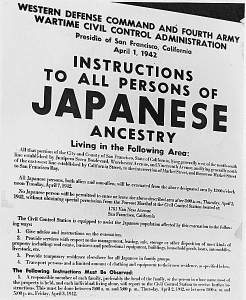
- After the Fascists were defeated in Germany, Italy and France, the US military often suppressed the anti-fascist forces in those countries and replaced them with the fascist collaborators that the resistance forces were attempting to defeat. Part of the reason the US military was ordered to restore power to fascist collaborators was because they did not want the resistance forces to take power, since the resistance forces were often made up of communists, socialists or anarchists.
- While the US did round up roughly 11,000 German Americans during WWII and put them in internment camps, that number pales in comparison to the 120,000 Japanese Americans that were forces into internment camps. This disparity reflected to racial politics of the US government, which was much more interested in punishing people of Japanese descent than German descent.

- Cherokee scholar Ward Churchill, in his book, A Little Matter of Genocide: Holocaust Denial in the Americas 1492 to the Present, refers to the Nazi concept of Lebensraum, which means living space. Churchill argues that the forces removal of Native nations in the US is what influenced Hitler in his adopt his racial policies towards Jews that ultimately led to their extermination.
- After WWII, the US initiated the Marshall Plan as a form of economic recovery for Germany. However, as Michael Zezima, author of the book, Saving Private Power: The Hidden History of the Good War, notes, the Marshall Plan was really a massive subsidy to US corporations and former Nazi companies, so that they could continue to expand their influence in Europe.
While a great deal more can be said to challenge the claim that the US has a strong tradition of fighting fascists, this brief summary should be enough to get you to question this claim.
However, one should follow up with the books that are cited in this post and we certainly encourage you to do your own investigation into this matter.
If you wanted an actual example from this time period where Americans really fought against fascism, check out the Abraham Lincoln Brigade.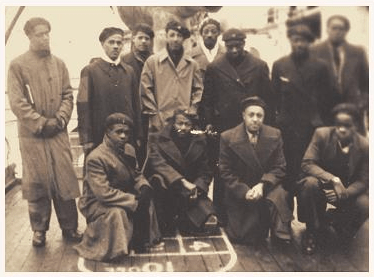
The Abraham Lincoln Brigade were some 2,800 US volunteers that participated in fighting against the fascist forces during the Spanish Civil War (1936 – 1939). These men and women were part of an effort that included forty thousand other men and women from 52 countries that fought against fascism in Spain. You can see from the photo here, that many African Americans were part of the effort to fight fascists in Spain in the late 1930s. This is the history we need to reclaim. This is the history we need to teach.
The honest Legacy of Congressman Vern Ehlers
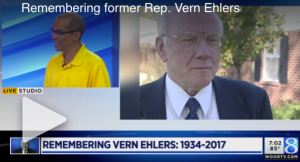 On Tuesday, former US Congressman Vern Ehlers passed away at the age of 83.
In the past few days there has been a number of news stories reflecting on the life of the former Congressman, with virtually every story communicating nothing but respect and admiration for Vern Ehlers.
One article on MLive just listed the comments from local politicians, both current and former, such as Senator Debbie Stabenow, Rep. Bill Huizenga, current Secretary of Education Betsy DeVos and Grand Rapids Mayor Rosalynn Bliss.
A WOOD TV 8 story provides significant time to Ehler’s former press secretary Chris Barbee, but also included commentary from additional politicians like Rep. Justin Amash, Gov. Rick Snyder and Rep. Fred Upton.
An earlier story on MLive provided some background on Ehlers’ political career from Kent County Commissioner to Congressman. In addition, some of the news coverage highlighted certain policies that the former Congressman had “championed,” such as Great Lakes Restoration and STEM Education.
Some of the themes that are reflected in the news coverage of Ehlers’ passing is that he was, “respected on both sides of the aisle,” that he had a great sense of humor and served the 3rd Congressional District well. Some of the reporting talked about his Christian faith and several respondents said that “we needed more politicians like Vern.”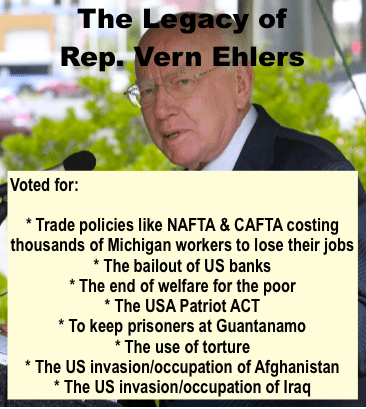
It is always interesting to observe how the news media deals with the death of a politician, regardless of party affiliation. Congressmen Ehlers, like Congressman Paul Henry (whom Ehlers replaced) are almost canonized in the news coverage without any critical perspective on what these politicians stood for, not what their track record looked like.
Congressman Ehlers took over for Paul Henry as the Representative for the 3rd Congressional district in 1993, when Henry was diagnosed with a brain tumor. This means that Ehlers was Congressman during the Clinton administration, the Bush administration and the first 2 years of the Obama administration. Ehlers left office in January of 2011.
From 1993 through 2011, anyone in Congress would have had to deal with major policies that impacted millions in the US and millions more worldwide. Former Congressman Vern Ehlers voted on trade policies, domestic economic policies, war and military budgets and the aftermath of September 11, 2001 terrorist attacks in the US.
I was personally involved in numerous campaigns to challenge and confront Congressman Ehlers during his time in Congress and was even arrested on a few occasions at his office in the Grand Rapids Federal Building.
Ehlers, like most politicians, practiced business as usual politics. On the economic front, Ehlers consistently voted to continue massive corporate subsidies that were in the billions, while millions of families were struggling to make ends meet. Ehlers voted for the Clinton administration’s policy to end welfare as we know it and he voted for the massive bailout of banks after the economic collapse of 2007 – 2008.
These policies expanded the gap between rich and poor in the US and had devastating consequences particularly on women and communities of color.
Congressman Ehlers voted in favor of the North American Free Trade Agreement (NAFTA) and the Central American Free Trade Agreement (CAFTA). These trade policies had devastating effects on US workers and resulted in the elimination of thousands of manufacturing jobs being lost in Michigan alone.
After the September 11, 2001 attacks, Ehlers voted for the Patriot Act and everyone of the subsequent policies after that to renew or expand domestic US government surveillance programs. The Patriot Act targeted the Arab American and Muslim American communities and should be seen as what it is, a racist policy.
Congressman Ehlers voted to in support of the US military assault and then subsequent military occupation of Afghanistan in 2001. Ehlers also voted for the US invasion and occupation of Iraq in 2003 and continued to voted in favor of military spending in Iraq, the use of private contractors and the use of torture by US military personnel in Iraq.
In March of 2007, several hundred people went to the home of Vern Ehlers to protest his ongoing support of the US occupation of Iraq, as you can see in this video:
Again, in 2008, Ehlers was confronted about his support for the US occupation of Iraq, when he was attending an event at the Women’s City Club in Grand Rapids:
Additionally, in the early months of the US military occupation of Iraq in 2003, members of the People’s Alliance for Justice and Change organized the Trial of Vern Ehlers as a dramatic depiction of the then documented US war crimes being perpetrated in Iraq, which Congressman Ehlers supported. You can read the transcript of the trial here or watch a video version of the trial.
So, despite the glowing news coverage of the passing of this former US Congressmen, some of us will remember him as a supporter of economic policies that supported the rich, devastating trade policies, US militarism, war crimes and torture. But hey, he was respected on both sides of the political aisle.
WOOD TV8 allows local leader of White Supremacist group to lie
 Yesterday, WOOD TV8 ran a story headlined, Leader denies group is neo-Nazi: ‘Witch hunt’.
Taking advantage of the national media attention from the White Nationalist/White Supremacist violence in Charlottesville, the channel 8 story used a Southern Poverty Law Center hate map to identify hate groups in West Michigan and chose to speak with the leader of a White Supremacist group.
However, the channel 8 piece, ultimately provided a platform for Mike Peterson, also known as Ragnar, to say that his group, the Gallows Tree Wotansvolk Alliance, is nothing more than a religious group. The WOOD TV 8 reporter can only respond by showing one picture of Mike Peterson to challenge his identity with White Supremacy. This kind of weak and lazy journalism is not what people need, especially in light of the White Supremacist violence in Charlottesville last weekend. One more indication that commercial media outlets are more interested in ratings than doing real journalism.
Gallows Tree Wotansvolk Alliance IS a White Supremacist group
There are numerous online sources that have actually done some investigation on who Mike Peterson is and what the Gallows Tree Wotansvolk Alliance actually is.
Southside Chicago Anti-Racist Action states:
First off is Michael Peterson of the Grand Rapids metro area. You may remember him as Ragnar, mocked intensely as a divider of the white pride movement and possible undercover ZOG agent on Patrick Langballe’s classic video “Juliet is a pig 88”, Juliet being his kid’s mother who has cheated on him with other men in the ‘movement’. You might have even seen him in pictures of this year’s Hitler Birthday Celebration in Chicago (he’s the one furthest to the left). He is a Nazi that spent nine years in federal prison and now blogs, paints dolls and figurines, fights with his own community on the internet, writes about mead on the internet and attends school at Grand Rapids Community College for writing and journalism. On top of this, he is a leader of the Gallows Tree Wotansvolk Alliance, a culty religious group that blends Norse Paganism with white supremacy and forbids its members to be part of any other organizations. This outfit organized the Jackson, Michigan White Pride World Wide march March 22 last year.
Now simply exposing Michael for his fascist activism (usually carried out by the name Ragnar Whiteson, Ragnar Odinson, or Wotansvolk) would be enough, but it gets far juicier. Early last year, a White Culture Club attempted (and failed) to start up at Grand Rapids Community College. On the Gallows Tree Forum Michael owns up to the fact that he and other Gallows Tree members started the White Culture Club to help promote the religion he leads. But look up earlier on the thread at the article by the name of “White culture club tries GRCC”. It ran in the Collegiate, GRCC’s student newspaper, at the beginning of the controversy. And its author: Mike Peterson, Collegiate Staff Writer. That’s right, an active Nazi got to write THE FIRST ARTICLE about the group he helped start FOR THE PURPOSE OF BRINGING NEW MEMBERS into his own organization, and quite possibly got paid for it.

Around the same time that Peterson was at GRCC, he worked at the downtown bar J. Gardellas Tavern. Several people connected to Anti-Racist Action (ARA) in Grand Rapids at the time found out he worked there and exposed him to the owner. Shortly after Peterson was exposed, he was fired.
However, before he was fired, he and other members of his group were making threats against the former owner of Bartertown Diner, since that person used to organize punk shows in GR. Several members of the ARA and some Wobbly members responded and as soon as they showed up the White Supremacists fled.
Another online source states: 
Peterson’s activities means everyone around him, be it directly or indirectly, have to deal with whatever it is he brings around. That could mean at the restaurant he works at called Dee-Lite in Grand Haven, MI, or it could especially mean at his home in Allendale, MI where he holds his Gallows Tree gatherings that he calls blóts, which were old Nordic pagan sacrifices to the gods. He has held several there, and it is possible any neighbors or even his landlord do not know what he has been bringing to the neighborhood.
This may be the most recent piece written on Ragnar, aka Mike Peterson, since as the WOOD TV8 story confirms that Peterson lives in Allendale. There is also this scary video, which has Peterson in it several times. There are definitely several people in the video with White Supremacist symbols, so don’t believe his bullshit lies.
Peterson also has a Facebook page, so make sure that you don’t friend him and make sure others know who this White Supremacist piece of shit is. Shine the light on him and all White Supremacists!
Last night I attended a neighborhood church festival to table for the Rapid Response to ICE grassroots organizing group.
The church festival was hosted by Lee Street Christian Reformed Church in the southwest part of Grand Rapids. Those of us working with Rapid Response to ICE were contacted by one of the pastors at Lee Street CRC during the recent ICE raids, because a member of his congregation had been picked up by ICE and put into detention.
The church festival was typical of many festivals, with lots of good food, music, a large play area for kids and information tables. I sat for about 2 hours and talked with mostly Cuban, Dominican, Mexican and Guatemalan people from the neighborhood. I had cards out with information on What to Do if ICE comes to your door and signage in Spanish about an upcoming training that the Rapid Response to ICE team was hosting next week.

Every single one of the people who were from recent immigrant communities all knew someone who has been targeted by ICE and shared their stories of the horrors that family members have faced. People also talked about the constant fear that they and some of the neighbors face, since they never know when government agents or local police will stop them. This is their lived experience and the reality they must face everyday. Despite the fear they face, these people were welcoming to me, they took cards about ICE to share with friends and they offered thanks for the work that the Rapid Response to ICE was doing.
This was in sharp contrast to the reaction I got from several white people who also attended the festival.
 As I said, on our table was mostly signage in Spanish, with a stack of cards about what to do it ICE comes to your door, with the Spanish information side up. One white woman was looking at the information and said, “where is the English information?” I said that on the other side of the cards, the information was in English. She then grabbed a bunch of the cards and flipped them over to put the English side up. I told her that this information was for people from communities were the primary language was Spanish, therefore the Spanish side up. This white woman said that “they need to learn English.” I responded by saying that our goal was to provide information that may be critical to their safety in a language they are most comfortable with. I also told her that her statement was racist and that she needed to stop demanding anything from immigrant communities. At this point she walked away.
Then an older white man approached the table and asked what the Rapid Response to ICE was all about. I explained it to him and then he said, “but the problem is that they are here illegally and are a drain on our welfare system.” I responded by saying that people are not illegal and that people who are in the US that are undocumented are fleeing political and economic violence and that it is our obligation to welcome them here and fight against government repression. I also said that the claim that immigrants are a drain on the welfare system was just a lie perpetrated by anti-immigration groups like the Federal for American Immigration Reform and that the US economy would come to a halt if the millions of undocumented people were all detained or deported and not able to do the work that most of us in the US are unwilling to do. This guy also promptly left.
One other encounter I had was with another white guy who was also a member of the church hosting the event. He said that he has seen the cards we are distributing before and that he had a lot of problems with what they said. I asked what was problematic about providing information to people that could keep them from being arrested, detained and deported. He responded by saying, “these people needed to come to the US legally.” I responded by saying this was a highly privileged response and that what needed to change is the immigration policy of this country. He said we can’t take all of them. I responded by saying, “they took your family and mine, so why not all immigrants.”
I then said that your church pastors support this work and are even considering becoming a sanctuary church. He then spoke against sanctuary churches and said it would be wrong if that happened. I asked him if it was a christian mandate to welcome the stranger and he said, “only if they are refugees and not illegal.” He then walked away.
Tabling at this event was highly instructive and also reflected the very real divide in the US between those in the immigrant communities who are directly impacted from US policies and the general white supremacist attitudes and beliefs of millions of people in this country. In the end it was important for us to be there to provide information and to let people from impacted communities know that we are offering solidarity and support to them. It was also important to be able to confront and challenge those who wanted to hold on to their white supremacist values.
Who owns Representatives Amash and Huizenga?
The mid-term elections are over a year away, but politicians never wait around to raise money to keep their seats in Congress.
The Center for Responsive Politics now has the most recent FEC filings for the 2018 election, since the end of June. It’s always instructive to see who is funding candidates. In fact, one could say that those who currently contribute the most to political candidates essentially own them.
Campaign funds are not just to get politicians into office, they are a means to have access and to get politicians to decide on policy that is in the best interest of those making the contributions.
We looked at the current political contributions in the 2nd and 3rd Congressional races and here is what we found.
Representative Bill Huizenga, the incumbent, is running against Rob Davidson. According to the most recent data, Davidson has raised only $8,923, compared to Huizenga, who has raised $548,232. This is a seat that the Republicans have controlled for a long time and the 2018 election will not likely alter that reality.
Huizenga sits on the Capital Markets, Securities, and Investment Subcommittee and the Monetary Policy and Trade Subcommittee. Therefore, it is not surprising that the primary contributors to his current election campaign are entities from the banking and financial sectors. 
Representative Justin Amash, in the 3rd Congressional District, is being challenged by Jeff Thomas. However, it isn’t much of a challenge, since Thomas has only raised $3,541, compared to the $140,160 that Amash has raised.
Unlike Rep. Huizenga, Rep. Amash receives a significant amount of contributions from more ideologically driven entities. One of the largest contributors is the DeVos-owned entity known as the WindQuest Group. Other groups on the list are Young Americans for Liberty, the Cato Institute and the DKT Liberty Project.
It seems clear that since there is no parity in fundraising between Thomas and Amash, that Amash is assured to maintain his seat for the 3rd Congressional District. As they say in the political world, campaign contributions are the mother’s milk of electoral politics.
We recently conducted an interview with artist Richard Kooyman, someone who has been critical of ArtPrize from the very beginning. Richard and his partner began a campaign to boycott ArtPrize, a campaign which you can find at this link https://www.facebook.com/groups/600028213541598/.
What made you decide to want to organize such a campaign?
ArtPrize/DeVos Resistance was organized by myself and Melanie Parke after the election of Donald Trump. We began the group when Betsy DeVos, one of ArtPrize’s founders choose to work for Trump, but our objection to the ArtPrize model began the very first year after it was announced.
As artists we felt boycotting an art event involving Betsy DeVos is an important political statement and it’s something artist’s could easily do. We started a Facebook page and a Twitter account. Both of these were blocked right away by ArtPrize.

We are calling for a boycott of ArtPrize by artist and viewers. We feel that if more people know about the connection of the DeVos’s to ArtPrize they wouldn’t want to attend an event that ultimately benefits the pocket book and cultural cache of Betsy DeVos and her family. Boycotting is a direct action that can have an important effect and it doesn’t cost you time or money. In fact, boycotting ArtPrize will save you time and money!
As an artist, what do you find objectionable about ArtPrize?
There are two heads to this snake called ArtPrize. One is the politics of the people behind ArtPrize and their view of Art, and the other is the event model itself. The two are intimately ensnarled.
The history of Dick and Betsy DeVos’s political activism is both religious and capitalist. There has been a lot written about them online. Janet Reitman wrote a great piece for Rolling Stone where she unpacks this really well.
There is this thread of privatization running through all of their political agenda. They have this belief that anything will be better off if it can be taken out of the governmental realm and privatized. The DeVos’s see the privatization of everything from schools to culture as an economic opportunity but also a way to control these things and to profit from them in the process. From the start ArtPrize was promoted as a return to “democracy” in the arts. They even called it “part social experiment”. The Grand Rapids Press quotes Betsy Devos as saying, “Dick and I share our son’s vision for encouraging everyone to explore the arts in a truly democratic way.”
From the onset that just smelled wrong to me. There is no inherent democratic quality to art. Art just is. You don’t “democratically” experience art. You experience it. It’s important to note that people like the DeVos’s aren’t advocating for “democracy” in banking or real estate or even when it comes to voting, so it beg’s the question why are they so concerned with “democracy” in the Arts? I can only guess that to the DeVos’s there is an element of controlling culture in the ArtPrize model which they liked. Culture like political opinion can be controlled if you have enough money and power and dictate the terms of engagement. And I think they didn’t want Institutions like the NEA, which they have wanted to eliminate for years, setting the narrative for culture. They want to set the narrative and they want to make money in the process.
The other head of the snake is the event model itself. It’s unsustainable for artists. It’s a pay -to -play model that takes advantage of artists as free content to capitalize off of. Let’s be honest, the real purpose behind ArtPrize isn’t Art, it’s the economic development of Grand Rapids businesses, many of which are owned by the DeVos family. I don’t think the DeVos’s really are interested in Art. They want to use artists to make money. Rick DeVos said as much. He once said that initially he wanted to have a film festival but realized it would be too expensive to put on so he decided to do an art competition. After ArtPrize8 the ArtPrize team televised a wrap up of the event and the first thing they started talking about was that ArtPrize made a record $28 million dollars. It seems it’s the most important selling pitch to them. ArtPrize has charts and diagrams that can tell you how many people came, and how far they walked, and how many hamburgers they ate, but they never tell you how much it costs the average artist to do ArtPrize.
ArtPrize makes $28 million dollars and yet they have the audacity to charge artist an application fee. ArtPrize will brag how they give out almost $200,000 in grants to artists but just do the math. $28 million vs. $200,000. The NY artist John Powers once called ArtPrize a “scrum for a prize”, which it is. It dangles this big carrot in front of artists, who have a hard enough time surviving in the world. It’s a model that uses us for their own financial gain and it’s not right.
Some people argue that since it is so successful, the majority of people really must love it. How do you respond to this?
It doesn’t really matter if a lot of people like it. In Spain lot’s of people like bullfighting, but that doesn’t make it right. Lot’s of people voted for Trump. That doesn’t mean they made the right choice.
ArtPrize is an example of the success of today’s neoliberal politics. ArtPrize is bright and shiny. You can buy swag. It has large crowds. It feels like something big is going on. It’s got that perfect aesthetic balance of cutting edge along with soft puppy dogs. But like most neoliberalism the harsher realities behind the scene aren’t always visible. Most people walking around don’t realize that these artists paid to apply, paid to make the work, ship their work, paid to be in GR for 19 days, and then had to ship it all home again, all while area businesses made $28 million dollars. People don’t see that aspect of ArtPrize.
There is this long standing myth that visual artists should be willing to show there work for free because it’s good exposure. That is changing. Organizations like Working Artist and the Greater Economy (W.A.G.E.) are arguing that visual artists need to be paid for what they provide society. Doctors, realtors, even politicians don’t work for free so why should artists. The people that attend ArtPrize for the most part are not an art buying crowd so ArtPrize should be more sensitive to the fact that they are getting all this content for free.
The other thing I hear over and over is how great ArtPrize is for children’s art education. How ironic, that the DeVos’s, who are the main driving force behind the destruction of our children’s public education, which includes art education, now proudly boast how great it is that a school class gets to spend one day looking at art downtown as a class trip. It’s sick. It’s an example of them controlling culture for their personal gain.
What are some of the important things that you think people should know about the DeVos Family?
A lot of artists and people who go to ArtPrize just don’t know about the political activism of the DeVos family and terrible things they have done to our society. More and more people are becoming aware now that Betsy DeVos is Secretary of Education but many don’t realize the millions of dollars these people have poured into political campaigns and PAC’s that want to eliminate a women’s right to choose, or their long term attack on public education, unions, and environmental regulations. The poisoning of the Flint water system happened because Rick Synder became governor put there by the DeVos’s. Betsy DeVos’s parents were the driving money behind California’s Prop 8. Her brother is the corporate mercenary Eric Prince, founder of BlackWater.

And the majority of people have no idea that Dick and Betsy DeVos gave a bunch of money to start the DeVos Institute of Arts Management which is now at the University of Maryland. Why does a extremely evangelical couple who made billions of dollars selling soap want to start an institute on the east coast that trains people in the administration and management of our arts institutions? I contend it’s about controlling culture.
Also the death of the NEA can be traced back to the DeVos family. For years they backed Peter Hoekstra as congressional representative in their district. They also backed Rep. Dick Armey from Texas. Both of these men were the driving force behind the campaign to eliminate the NEA back in 1996. And they have succeeded. We have basically no meaningful public support of the arts today because of the political influence of the DeVos family.
One claim that ArtPrize makes is that they make art more democratic with their voting system and that they have brought art to the masses. What is your take on this point?
Well the funny thing about ArtPrize’s initial “social experiment” is that it didn’t take them long to realize it wasn’t working too well for them and they were forced to change it. I think ArtPrize saw this populist idea of a public vote as a way of snubbing their noses at the his/herstorians, art writers, artists, and curators who spend their lives studying and working in the field of art. You don’t just wake up one day as an artist or an art historian or art writer. It takes a life time of knowledge building. ArtPrize wanted people to believe that Joe the plumber’s opinion on art was just as valid as all of the knowledge that experts have. The DeVos’s political activism doesn’t like experts. They don’t like expert scientists or expert historians. It’s too hard to push your own religious and economic agenda through if you have to deal with someone who is an expert. It’s too difficult to tear down environmental regulations aimed at corporate pollution if you have scientific experts to deal with. It make it more complicated to push your belief that a viable life begins at the moment of conception if you have those pesky scientific experts telling you it doesn’t.
The problem in ArtPrize’s “social experiment” came when a 13ft mosaic of Jesus with buffed up abdominal muscles won the grand prize. In the larger art world ArtPrize was seen as a bit of a joke because the public picked a horrendously schmaltzy piece as the grand prize. ArtPrize realized that if they really wanted to build a internationally recognized art event that maybe this public vote thing wasn’t the best idea after all. So
the next year they came up with this whole new narrative about exploring the “tension” between the public and a new juried vote. I’m thinking it pained the DeVos’s to have to do that. It went against everything ArtPrize was sent up to be about in the beginning.
I remember it being a pretty funny night on social media when Jesus won the grand prize.
Now ArtPrize seems to want it both ways. On one hand they create this narrative that your opinion is the most important thing and all you need to do is come to downtown and vote your feelings. And yet they also have been adding these educational aspects to the event to help people become better educated and to be able to think and converse better about art. This public vote thing is just a great big marketing pitch to get people to show up by creating this false affect of empowerment.
Why do you think so many artists chose to buy into an event like ArtPrize?
I don’t think that many artist do buy into it. I’m hoping the number who don’t will increase as more and more learn about the embedded interdependence between ArtPrize and The DeVos’s. I think this year the number of applicants is down to around 1400. That’s really not that many considering all the artists around the country.
Those that do attend may just not be aware of the political marriage between the DeVos’s and ArtPrize. I still get local artists who insist that the DeVos’s politics and ArtPrize are completely separate. That’s just not true. ArtPrize is listed as the primary project of the Dick and Betsy DeVos Family Foundation. Betsy listed it as her project on her personal foundation before she went to work for Trump and she served as a Director on the AP board until she went to Washington. The DeVos family still gives a lot of money to ArtPrize.
I believe in artists. I believe in their good hearts and I think that if most artists really knew about the DeVos’s and the facts, they wouldn’t apply.
What role(s) do you see art play in society and how does ArtPrize undermine these roles?
This is an important question to me. It’s the driving force behind why I have devoted so much time and attention watchdogging ArtPrize.
Art provides society with new ideas and it asks both new and age old questions. It is
the purest human action we create. When you come to a work of art, whether that is a painting or a dance performance, it’s not about you. It’s really about surrendering yourself, if only for a moment, to what the artist has done. T.S Eliot said art isn’t about self expression, it’s about the extinction of the self. You are getting the self and all your baggage out of the way, to be able to have this profound aesthetic experience.
ArtPrize could have decided to put on a purely aesthetic experience for people. And they could have decided they would pay artists to do this. Dick and Betsy could have afforded to do this without any outside help. If that was the case I would have less of a problem with the event.
But they don’t do that. Not only do they use artists for their financial gain but they intentionally scheme an aesthetics that resembles and extols corporate culture. They are saying don’t surrender yourself by learning from the artist. They are saying your personal opinion, is more important than what the artist wants you to think. From the beginning ArtPrize wasn’t about the pleasure of experiencing art, it was about saying everyone is going to be the judge of art. They are advocating not to surrender yourself to art, but to assert your personal opinion over art. Rick DeVos intentionally made a for profit contest, a commercial game, a circus, out of the aesthetic experience. That’s a shameful and ignorant handling of something that is very important and special to me.
Giving us the government take: MLive essentially copies what Homeland Security had to say about ICE raids in Grand Rapids this week
 As many of you know, there were numerous arrests made in the Grand Rapids area by ICE agents, targeting the undocumented community.
MLive ran a story yesterday, noting that a total of 33 arrests were made since last Sunday. Well, at least we were all led to believe it was a story. What MLive posted yesterday, was essentially a re-print of a US Department of Homeland Security News Release on the 33 ICE arrests that took place in the Grand Rapids area this week.
Below, we put side by side the text of the US Department of Homeland Security news release (on the left) and the MLive article (on the right) to show how similar they are. The MLive story did not use all of the text from the Homeland Security office news release and they did move some things around, but MLive essentially did no reporting on this story and no verification of claims made in this article. It is difficult enough for people to trust the government, but here is an example of why you shouldn’t trust corporate media either.



 Since at least last Sunday, Immigration & Customs Enforcement (ICE) officers have been engaged in what they refer to as Fugitive Operations. Fugitive Operations is when ICE agents have a list of people they want to target who are undocumented, often with minor offenses like driving without a license.
These Fugitive Operations create a climate of terror in the immigrant community, which always experiences tremendous amount of fear. Some people don’t want to leave their homes for fear of being picked up by ICE agents. Parents fear that ICE agents will take them, leaving their children to come home and not knowing where there parents are.
I work with the Rapid Response to ICE team in Grand Rapids. We have been made aware of at least 6 cases of ICE agents taking people throughout the greater Grand Rapids area.
On Sunday, ICE agents attempted to apprehend a man on the northwest side of Grand Rapids. Fortunately, he knew not to open the door and then contacted people to come to his aid. For now, he and his family are safe, but they live in constant fear that ICE agents will find them.
Over the next few days, the Rapid Response to ICE team received several more calls about ICE agents taking people from their families and putting them in detention in Calhoun County at the Battle Creek Detention Facility.
Some people can request a bond to get their family member out, but the bond is usually set at $5,000. The Rapid Response to ICE team has been asked to help raise funds for some of these families.
Yesterday, I received a call from a pastor of a church in the Wyoming area. Another immigrant had been taken by ICE agents and his wife, who is also undocumented, now fears for her life. Fortunately, the church had volunteers stay at the home with this woman, so that she would not be alone and at risk of being taken by ICE.
The same pastor told me of several other cases in his congregation of immigrants who have either had a family member taken in the past week or have been given orders to appear in court for their check-in. If people don’t go to their check ins, they put themselves at greater risk of being detained and deported. However, we know that at more and more places around the country, when people do court check-ins, they are often being apprehended by ICE agents right after going to their appointment.
The immigrant community in Grand Rapids is under siege right now and we can not sit by idly and do nothing. There are numerous ways that people can be in solidarity with those most at risk of being targeted by ICE agents.
- You can be part of the Rapid Response to ICE. To be part of this effort, you need to attend a training. The next training is Tuesday, August 22nd from noon til 2pm at Plymouth UCC, located at 4100 Kalamazoo SE. Here is a link to the next next Rapid Response to ICE Training on Facebook, which provides more details.
- You can help us distribute these cards, which are in Spanish and English and provides information on what to do if ICE Agents show up at your door. Cut and paste this jpeg version of what we are handing out. If you want hard copies of the card, contact me at jsmith@griid.org.

- You can help us distribute these cards throughout the community and have conversation with your family, friends, co-workers and neighbors about the fact that every day people are being picked up by ICE agents, taken from their families and being out into detention.
- You can do what the pastor of the church in Wyoming is doing, which is to build relationships with immigrants and offer solidarity when you can, like the example of volunteers staying with the woman who was vulnerable to ICE agents. We need to look out for each other.
- You can offer hospitality or sanctuary for people who are being targeted. This is a big issue that we are facing is finding a safe place for people to stay, even if it is just for a few days. Talk to people in your congregation about becoming a sanctuary church in order to prevent more people from being taken by ICE.
- You can donate money to support legal fees, to help cover rent, groceries and other basic necessities for families that are being threatened by ICE agents. If you want to know where to send me, just ask me and I can share that information.
- You can also check out resources, like this Defense Against ICE Raids and Community Arrests Toolkit.
For those of us who are not at risk of being detained or deported, we need to step up and stand alongside those who are at risk and say, if you take them you are going to have to take us as well.
Media Questions directed at Betsy DeVos demonstrates that commercial news agencies really are stenographers to power
 It is well known that politicians, and often those deeply involved in partisan politics, are trained to deal with the news media. Quite often public relations firms or consultants will provide training and offer ongoing advise on how to deal with controversial matters, how to respond to questions from the public or how not to respond to questions from the public, at least how not to respond to questions directly.
Politicians are often the masters of double speak, at least those that are well trained and know how to maintain control in circumstances that could be potentially disastrous.
Betsy DeVos has been around politics for most of her life. She was the chair of the Michigan Republican Party for many years, has been involved in numerous political campaigns and has sat on numerous boards for organizations that have state and national affiliation. She knows how to deal with the news media and has perfected the art of political double speak.
Yesterday, MLive posted an article with the headline, Watch Betsy DeVos weigh in on LGBTQ rights, budget cuts and protesters.
The post was based upon a “media session,” where Betsy DeVos answered questions from several Grand Rapids news agencies during her visit to Grand Rapids on Tuesday. The questions primarily had to do with current issues her office is dealing with and one that was completely independent of education issues. There are two questions/responses that I wanted to address, since they are both rather instructive in terms of how politicians respond to reporters.
The first response I want to look at has to do with the education budget and how or if DeVos would intervene if LGBTQ students were discriminated against.
As you can see, Betsy DeVos responded by saying that the education budget would “support the most the most vulnerable students.” The essentially repeats that the budget will focus on supporting students with the greater need, but never clarifies or provides examples of what that would look like. She then emphasizes the states role in making decisions on how best to use the dollars provided by the federal government.
It is hard to know whether or not the reporter who asked this question asked a follow up question or contested the Education Secretary’s response, since the MLive videos are cut off right after her responses. However, it is fairly common for commercial news reporters to not ask challenging questions and to often act as stenographers for those in power.
We do know that the education budget would negatively impact many vulnerable students, particularly Native Hawaiian, Alaskan students and some Special Education programs, which are to be eliminated. If the reporter knew this fact and if they practiced sound journalism, they would have challenged the Education Secretary on her response. A competent reporter would also know that the Every Student Succeeds Act was essentially crafted by the American Legislative Exchange Council (ALEC).
The last thing about this response from Betsy DeVos is that she makes sure NOT to respond to the question asked about whether or not she will intervene if states discriminate against LGBTQ students. This is particularly where the PR/double speak training comes in. Don’t respond to questions you don’t want to answer, particularly questions that could lead to providing a mechanism for the public to hold politicians accountable.
This second video is really an example of a reporter internalizing the values of systems of power. The reporter does what real journalists should never do, which, in this case is to praise the DeVos Family for all they have done for Grand Rapids and West MI. The reporter also asks her about how it makes her feel when there are people in the streets protesting her. Wow! Talk about showing your bias.
The response that Betsy DeVos gives is also a great example of double speak. She frames the public protest of her policies as “people resisting change” and that what she is doing is to remain focused on doing what is best for all students. This response deserves an Orwellian award, since she not only refuses to acknowledge that there is significant public opposition to what she is doing as Secretary of Education, she took a potentially volatile question and stuck to her mantra of claiming to fight for all students.
In the end, both of these video responses provide us with invaluable examples of political double speak and they demonstrate that commercial news media is in no way interested actually practicing sound journalism.
 Grand Rapids Institute for Information Democracy


