The Black Panther Movie gives us an opportunity to talk about Colonialism, the African Independence Movement and US Imperialism

This post is primarily for White people. It is for White people who have seen Marvel’s Black Panther movie. Black Panther is an important film for a variety of reasons, many of which have been written about, but it is also an important film because it can help us to expand our radical imagination.
When I say the film can expand our radical imagination, what I mean is that the Black Panther movie can be a mechanism for us, especially for White people, to come to terms with the history of Colonialism in Africa, the African independence movement and the role of US imperialism throughout the continent of Africa.
Colonialism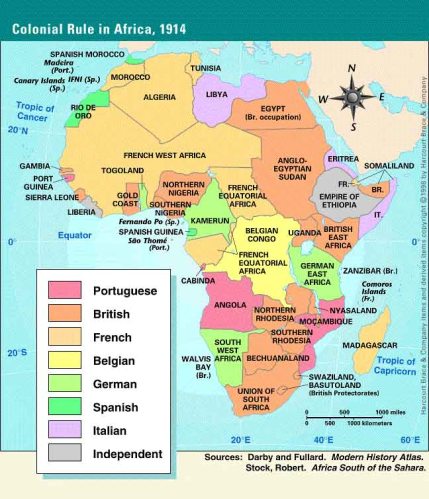
The great African writer Walter Rodney, published in 1973, his powerful book, How Europe Underdeveloped Africa. In Rodney’s book, he lays out an important framework for how European colonialism undermined Africa.
So many of us White people have grown up with images of Africa that were dominated by starving children and those damn religious commercials trying to appeal to our guilt about the awful poverty that existed throughout Africa. What those images and commercials never told us was that African wealth and African resources were being extracted to benefit people living in Italy, France, Belgium, England, Spain, Portugal and Germany, along with the Europeans who were occupying African land as colonizers overseeing this massive resource extraction.
This massive extraction of resources from Africa were in the form of diamonds, oil, cocoa, coffee, wood, animals and of course African labor. The South African Anti-Apartheid movement did a great deal to make us aware of the massive levels of wealth extraction and which companies were profiting from structural racism & apartheid.
Imagine the millions of lives that were lost from colonial violence and exploitation. Imagine how many lives were ruined, how many families were torn apart and how much knowledge and creativity was stolen from African people. Also, it must be said that the massive wealth extraction from Africa and the brutality of European colonialism was all sanctioned by the christian church.
Lastly, just think of the incredible amount of cultural artifacts that were also extracted from Africa, only to end up in European museums without any acknowledgement of the colonial violence perpetrated to steal so much culture from Africa.
African Independence Movement
Like most of the Global South, many Africans grew tired of living under the boot of Colonialism and began to organize independence movements. After WWII, there was tremendous hope that Africa could once again be for Africans.
Anti-Colonial organizing in Africa had begun at the same time that European colonizers began their campaigns of conquest. The anti-colonial movements in Africa often began small, but continued to gain momentum over the centuries. These anti-Colonial movements took many forms, such as the formation of political parties, labor organizing and various manifestations of Pan-African campaigns to unite common struggles.
WWI and WWII greatly weakened many of the European powers and the anti-Colonial movement took advantage of this weakness, particularly after WWII. Anti-Colonial movements were begun in countries like Ghana, Kenya, the Congo, South Africa, Algeria, Namibia, Angola and Nigeria.
We know a great deal about these movements because of the relationship that people in the African American community had with those fighting for justice throughout Africa. Malcolm X had traveled to African in 1959, visiting several countries in an attempt to plan a tour by the head of the Nation of Islam, Elijah Muhammad. Malcolm X later went to Africa in 1964, in two separate trips, where he met with many independence leaders. In fact, Kwame Nkrumah of Ghana, Gamal Abdel Nasser of Egypt, and Ahmed Ben Bella of Algeria had all invited Malcolm X to serve in their governments.
However, some European countries and the United States were not happy about Africans wanting to their own independence. The US in particular was involved in several campaigns to undermine African independence movements, such as the US role in assisting the French battle for control of Algeria, the Congo independence movement and the assassination of Patrice Lumumba, Ghana in 1966, Angola in the 1970s and 80s, putting Mobuto in power in Zaire, destabilizing Libya during the Reagan years, support for the dictatorship in Uganda and the continually siding with the South African government right up until the system of Apartheid could no longer be saved.
The US government spent billions of dollars to destabilize much of Africa, provided arms to dictatorships and refused to support any African independence movement.
US Imperialism in Africa today
The focus on the part of US policy in Africa has been an extension of European Colonialism or as some scholars would say, a form of Neo-Colonialism. Since the end of the Cold War, where Communism was no longer the primary justification for US intervention, you can see a rhetorical shift for US foreign policy, where the justification is now anti-terrorism, radical Islam or even humanitarian intervention.
Since the collapse of the former Soviet Union in the early 1990s, the US has directly intervened militarily (sending troops, missile strikes, sending arms, training, drone attacks) in Africa on the following occasions:
- Somalia 1992 – troops
- Rwanda 1994 – weapons sales
- Sudan 1998 – missile strike
- Congo continuously – weapons sales
- Uganda continuously – weapons sales
- Kenya continuously – weapons sales
- Egypt continuously – weapons sales
- Morocco continuously – weapons sales
- AFRICOM 2007 – Expanding US military bases, training, drone strikes, etc
- Libya 2011 – direct military intervention
One of the most important developments in US Foreign Policy in Africa, is the creation and expansion of AFRICOM, The United States Africa Command. Established in 2007, AFRICOM really took off during the Obama administration and has been involved in expanding the US military footprint throughout Africa. This has meant more US military training of soldiers from African countries and training non-governmental forces who have been instrumental in creating destabilization throughout the region.
Nick Turse, writing for TomDispatch.com has been reporting on AFRICOM for years, with articles like this one from 2014. Turse, also has a book published on the subject of AFRICOM entitled, Tomorrow’s Battlefield: U.S. Proxy Wars and Secret Ops in Africa.
Another person who has been providing important analysis on AFRICOM, is Margaret Kimberley, who writes for Black Agenda Report. She was recently interviewed about AFRICOM. To listen to that interview click here.

This post is just an overview of Colonialism in Africa, the the African Independence Movement and US Imperialism in Africa. There is a whole lot more we need to investigate and come to terms with as White people, who have knowingly or unknowingly been complicit in the colonial and imperialist violence that has been committed and continues to be committed in Africa.
We all have to do the work of learning this history and then providing support and solidarity to the current African movements that are still fighting for liberation. Going to see the Black Panther movie is an important introduction, but it is not enough. White people can’t claim some sort of empathy for Black Africans, just because we saw a movie. We have to come to terms with Colonialism and White Supremacy. Making a Facebook post about going to see the film doesn’t mean much if we don’t work to end US Imperialism in Africa.
Making English the Official Language in Michigan, racism, anti-immigration groups and the DeVos Family connection
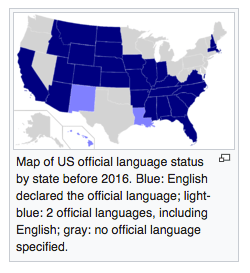 Last Thursday, the Michigan House of Representatives voted to make English the official language for the State of Michigan. The measure passed by a 62 – 46 vote, mostly along party lines, with the majority of Republicans voting in favor of the legislation.
The language of House Bill 4053 can be found here, which basically makes English the official language in terms of state government functioning; including meetings, documents, the public record, etc.
The bill was introduced last year by Rep. Tom Barrett, with Triston Cole, Aaron Miller, Gary Glenn, Lana Theis, Peter Lucido, Shane Hernandez, Lee Chatfield being co-sponsors. Those giving the most to the campaigns of these state representatives can be found on the Michigan Campaign Finance Network link on donor tracking.
We found that most of the state representatives that sponsored the English only bill have primarily funded the bulk of their own campaigns. The exception is Rep. Tom Barrett, who introduced the bill. You can see below how much money they have received from primary funders.
Rep. Tom Barrett House – Republican Campaign Committee, $448,009,
Rep. Tristin Cole – self-funded $10,170
Rep. Aaron Miller – self-funded $8,370
Rep. Gary Glenn – self-funded $119,720
Rep Lana Theis – self-funded $40,000
Rep Peter Lucido – self-funded $236,000
Rep. Shane Hernandez, Sydesign – self-funded $10,580
Rep. Lee Chatfield – self-funded $78,000
There is no record of a public hearing, so we don’t know if there were any organizations or individuals who lobbied for or against this legislation. The bill was sent to the Government Operations Committee in June, which is chaired by Rep. Lee Chatfield and includes Rep. Tom Barrett, both co-sponsors of the HB 4053.
It is unfortunate that there is no record of a public hearing, as we don’t know if there were groups pushing to get this legislation passed. We do know that there are organizations, which have been advocating for English as the official language of states and the entire country, particularly the group US English.
 US English regular updates from states where there is current legislation around making English the official language and the section under Latest News has an update on Michigan, which states:
Like other Official English legislation enacted over the years, H.B. 4053 is a common sense measure meant to reinforce English as our common language and to set a standard of expectation that Government and society will do more to encourage and enable the learning of English for residents. Far from an exclusionary measure, H.B. 4053 simply makes it clear that English is the sole language that must be used and available for all Government business, official acts and public records. Clear common sense exceptions are made for consistency with all federal law, teaching in language classes, the promotion of commerce, tourism, sporting events and public events, and occasions where “public safety, health and justice” would be served by the use of a language other than English at the discretion of state and local agencies.
This language might sound benign, but if you look closer at the history of US English tells us a different story.
US English was founded by anti-immigration activist John Tanton and Senator S. I. Hayakawa in 1983. John Tanton, a known white supremacist is also founder of groups like the Federation for American Immigration Reform and Center for Immigration Studies . Both of these organizations are known anti-immigration groups that support closed borders.
According to SourceWatch, “In 1988, a set of internal memoranda from John Tanton to staff at the Federation for American Immigration Reform and U.S. English was leaked to the press. In them, Tanton warned of a coming “Latin onslaught,” questioned whether Latinos were as “educable” as others, and worried that Latinos were outbreeding whites.”
 In looking at the major donors to US English it lists the Richard and Helen DeVos Foundation, which has contributed $248,000 over the following years: 1998, 2000-2001, 2003-2008. Looking at recent 990s from the Richard and Helen DeVos Foundation, there is no current funding to US English, however, the US English website still lists Mrs. Richard DeVos as a member of its Advisory Board (listed above on the right).
HB 4053 is clearly a racist piece of legislation that will only solidify White Supremacy into law. It is also clear that the DeVos Family has a history of funding the largest group in the country that promotes the idea that English should be the official language of states and the federal government. Add this to the long list of reasons why the DeVos Family should be viewed as imposing far right values and laws on the rest of us, values and laws that should be resisted.
GRPD shows up at Cosecha Press Conference, intimidates organizers, then waits in the parking lot for an hour to change the news coverage narrative
Yesterday, the immigrant justice group, Cosecha GR, held a press conference to call out law enforcement agencies on their behavior during a January 19 action in downtown Grand Rapids.

The demonstration took place near the Federal building, where those engaged in the action shut down traffic during rush hour. However, during the protest a motorist hit two people and in the aftermath of that violence the GRPD, the Kent County Sheriff’s Department and at least two federal marshals did nothing to pursue the motorist who hit those demonstrating or prevent further violence against those protesting in the street, which we reported on previously.
Before the Press Conference, Cosecha GR received a request from a reporter with MLive to “embargo” the video and allow him to vet it for legitimacy. The MLive reporter wanted Cosecha GR to send the video to MLive only and the vetting of the video was likely to go through the GRPD.
Such suspicion was verified, when this writer showed up before the noon time press conference and saw two GRPD cruisers in the parking lot of the Micah Center. Inside the building there were two officers with the GRPD, who were asking if Cosecha GR, “needed any help with their event.” A rather curious question, considering that this was a press conference, so why would the police be there, let alone ask if there assistance was needed?
Organizers of the Cosecha GR press conference asked the officers to leave and the press conference proceeded with news agencies from MLive, WZZM 13, Fox 17 and La Poderosa Radio.
The local news media received the following press release (posted below), which is the same message that Cosecha GR provided during the press conference, including several eye witnesses.

After the press conference, while walking out to the parking lot of the Micah Center, we could see the GRPD being interviewed by the three English language media outlets. Apparently, the GRPD waited around for an hour in order to tell “their side” of the story to the news media. This leads us to ask the question, did the GRPD show up at the Cosecha GR press conference because they were tipped off by the news media or because they are monitoring the communications between Cosecha GR members?
How the News Media Framed the issue
 Despite the efforts of Cosecha GR to tell their story about what happened at the January 19 DACA protest, the local news media changed the narrative. The most egregious example, was what MLive posted. You can see the headline here, which frames it as protestors in the middle of the street, instead of referencing the time honored tradition of blocking traffic, as was mentioned in the Cosecha GR press release, which refers to the example of the 1963 march in Selma.
The MLive article then goes on to give the GRPD plenty of opportunities to respond to the claims of Cosecha GR. Here is one of the more ridiculous responses:
“You know what would solve this whole problem?” the officer said in response. “Not impeding traffic.”
Again, a complete lack of understanding about the tactic of shutting down traffic, in order to make the point that Cosecha GR made during the Press Conference and at all of their protests, which says, “we will stop interrupting your lives when you stop interrupting ours.” As long as ICE agents and local law enforcement arrest, detain and deport immigrants, Cosecha GR will resist this.
The GRPD also states in the MLive article that they come to protests to keep people safe, which was not the case in this instance, and that people need to request a permit to have these kinds of actions. The city of Grand Rapids wants people to get permits to protest, since it costs money and it allows the police to know what groups are doing. However, the organizers of the protest on January 19 did not request a permit, since they believe that they do not need permission to fight for justice, plus their choice to be in the street blocking traffic was because they were intending to engage in civil disobedience.
You can watch the coverage on WZZM 13 and WXMI 17, which also provides plenty of airtime to the GRPD.
Ultimately, what happened yesterday was that the GRPD, by showing up at the Cosecha Press conference was to: 1) intimidate those fighting for immigration justice, and 2) attempt to discredit the efforts of Cosecha GR by changing the narrative about what happened during the January 19 protest.
MLive eulogy for Billy Graham ignores the role the preacher played in supporting US Foreign Policy
 Today, MLive ran a brief article on the passing of longtime TV evangelist Billy Graham. The article notes that Graham’s first “crusade” took place in 1947, in Grand Rapids.
The MLive reporter cites a previous interview with a Hudsonville couple, which attended to event with Graham in 1947, but beyond that the article provide little information, simply praise of how many souls Billy Graham touched.
What we offer as a counter to this narrative, is a book review previously published on Media Mouse, where this writer used to contribute.
In recent decades when people think of religious right leaders that have garnered public attention, names like Falwell, Robertson, and Haggard. Often the media attention given to these religious leaders is due to scandalous sexual behavior, as in the case of Haggard, or for unacceptable comments, such as when Falwell and Robertson both blamed 9/11 on the country’s tolerance of gays, feminists and abortionists. After reading The Prince of War: Billy Graham’s Crusade for a Wholly Christian Empire
Billy Graham came from a racially and economically privileged life near Charlotte, North Carolina. His father owned a substantial amount of land and used his wealth to broker deals that afforded Graham extra privileges as a youth. In the late 1930s, Graham became active in the church and even attended Bob Jones University, but when WWII came he switched schools and went to Florida under the pretenses that his health was bad. The author suggests that Graham may have done this to avoid being drafted by the military–both with his health issues and studying for the ministry–but there is not adequate documentation to make a strong case for this assertion.
In 1940 Graham again transferred schools and went to Wheaton College. There he met his future wife, the daughter of a wealthy businessman and “one of the most powerful men in the Christian missionary world, Dr. L. Nelson Bell.” Bell was also leader of the John Birch Society in the Chicago area. In 1943 Graham began his first ministry at a church just outside of Chicago, with a congregation of about 35 parishioners. Graham also founded a Professional Businessmen’s Club that boasted membership of around 300. Bothwell says that Graham’s nurturing of relations with the business community was a constant throughout his life as a religious leader. In 1944 Graham joined the military and became a Chaplin stateside, and when his orders to go overseas came through he again argued that his health prevented him from doing so. Graham quickly received a discharge and went to Florida where he was hired as a full time employee of Youth for Christ. It was in this capacity that Graham learned his trade and developed his decades long style of preaching that mixed scripture with bits of information of current events. With increasing popularity Graham, in 1950, founded the Billy Graham Evangelistic Association in Minnesota.
Graham was one of the first religious leaders who not only used media to his advantage; he understood the importance of owning media. Graham had purchased radio stations and formed a film company. Other media owners soon took note of Graham and media baron William Randolph Hearst soon invited Graham for a personal meeting. What impressed Hearst the most was Graham’s rabid anti-communist stance. Soon, with the assistance of Hearst, Graham was preaching to audiences of 350,000. Coupled with his growing popularity and his public stance against communism, Graham found an avenue to the White House that has spanned six decades.
According to Bothwell, the most consistent message that Graham brought to his relationships with US presidents was that the US needed to remain strong and he endorsed every war this country has engaged in since WWII. In 1950, Graham sent Truman a telegram counseling him to go to war in Korea:
“Millions of Christians praying God give you wisdom in this crisis. Strongly urge showdown with Communism now. More Christians in Southern Korea per capita than any part of the world. We cannot let them down.”
After Eisenhower was elected in 1952, Graham took a more active role in his support for the war by visiting troops in Korea. When he preached at his arena evangelistic crusades, Graham became one of the best US assets in its war on communism. In 1953 he said, “Communism is a supernatural power and gets its power from the Devil. Christianity is a supernatural power too, and gets its power from the Lord.” Graham–more than any preacher of his day–popularized the notion that we were living in apocalyptic times. He affirmed this idea as he developed his theological attacks during the Cold War. Graham said, “Communism could well be setting the stage for the anti-Christ that’s spoken of in the Bible. There have been anti-god movements but never one on the scale of communism.”
As Graham’s popularity grew with politicians, it continued to gain the admiration of businessmen. Graham befriended a wealthy oilman named Russell Maguire, an anti-Semite who began to subsidize part of Graham’s ministry. In 1956 he began to publish Christianity Today, one the most influential religious publications of the 20th Century. Graham hired, as it’s first editor, father-in-law and John Bircher, Dr. Bell. By this time Bell had developed a close relationship with the Rockefellers and other oil barons who were increasingly interested in oil discoveries in Latin America. The only problem was that most of the oil was on indigenous land. Graham was on the board of the Wycliffe Bible Translators (WBT), an organization that assisted oil companies in gaining access to indigenous lands, often with the help of military dictatorships.
While not a fan of Kennedy, Graham continued is White House connection during the Johnson years, but found his biggest ally in Richard Nixon. More than any other US president, Nixon used Graham as an ambassador abroad. Graham was sent to Israel, China, and all over Latin America, working often in conjunction with Secretary of State Henry Kissinger. In 1969, Graham sent a 13-page letter to Nixon with his own plan for “ending the war in Vietnam.” In this plan, Graham advocated that Nixon bomb the dikes in the north to ruin the economy. Apparently, Graham didn’t know that this is a violation of International Law and would constitute a war crime. Graham not only was consistently in support of the war in Vietnam, he publicly denounced as anti-war protestors whom he said “gave comfort to the enemy.” This support for war was maintained through the Reagan/Bush/Clinton and current Bush administrations.
The other area of the book that deserves attention is how Bothwell juxtaposed the positions of Graham and another religious leader of his era, Martin Luther King Jr. While King denounced the war in Vietnam, Graham continued to lend his support and even criticized those who engaged in civil disobedience by saying, “I do believe we have the responsibility to obey the law. No matter what the law may be – it may be an unjust law – I believe we have a Christian responsibility to obey it. Otherwise you have anarchy.” This glaring difference between King and Graham was also evident in their stance on segregation and racial justice. Graham did not de-segregate the seating for his crusades until the later part of the 1970s and even responded to King’s 1963 “I Have a Dream” speech by saying, “Only when Christ comes again will the little white children of Alabama walk hand and hand with little black children.” Graham also suggested that the timing of the Civil Rights movement was questionable and Graham suggested that, “blacks and whites alike would benefit from a period of quietness in which moderation prevails.” King took notice of Graham’s denunciations and wrote to him in 1963 while sitting in a Birmingham jail. King wrote, “You deplore the demonstrations taking place in Birmingham. But your statement, I am sorry to say, fails to express a similar concern for the conditions that brought about the demonstrations.” Bothwell also notes that after the Watts rioting in 1965, Graham announced that the rioters were “being exploited by a small, hard core of leftists,” and he called on Congress to pass “new tough laws to curb this kind of thing.”
In The Prince of War, the author makes a strong case that Graham has been a priest of the powerful. This book is important not only because it provides a counter position to the imminent accolades that are sure to come once Graham dies, more importantly, it provides amble documentation that shows what role the religious right has played in American politics since WWII.
Cecil Bothwell, The Prince of War: Billy Graham’s Crusade for a Wholly Christian Empire
Grand Rapids Chamber of Commerce members see Skilled Labor and Low Cost Labor among the top concerns for 2018
 The Grand Rapids Chamber of Commerce, which just celebrated 130 years as an organization, asked its members to take a survey to determine the top obstacles to business growth in Grand Rapids. Here is the list, along with the percentage of members who ranked these obstacles.
Labor issues dominate the list of obstacles for the Grand Rapids business community, which comes at no surprise, since businesses rely on the labor of workers in order for them to make profits.
Availability of low cost labor underscores the business communities need to take advantage of people by only paying them minimum wage or less, as in the case of those who work for tips. The business community always needs cheap labor for doing the hard work of cleaning hotel rooms, washing dishes, waiting/busing tables and taking care of people that the dominant culture sees as disposable members of society – the elderly and those with disabilities.
However, what dominates the list for the GR Chamber members is the availability of skilled labor and then the retention of talent, which are both inter-connected. The business class is willing to pay more for people who have certain skills sets, but they also want those people who they deem as “talent,” to stay in the area, so that their skills and talent can be accessed. Within a capitalist economy, whether you are in the category of skilled labor or low cost labor, you are still vulnerable to the whims of the business class.
Talent Retention
Here is what the Grand Rapids Business Journal wrote about the GR Chamber member survey on January 19:
Andy Johnston, the chamber’s vice president of government affairs, said the chamber is working to advance legislation to close the talent gap.
Some of this legislation includes flexibility to the Michigan Merit Curriculum that would allow students to pursue skilled trades, as well as legislation to help students exit high school with some documentation of their skills.
“We’re going to continue to support the collaboration between the business community and the education community so there’s an understanding of what jobs are out there and what skills are needed,” Johnston said.
What is important about this excerpt from the article is the point about the relationship between the business community and the education community. The business community has always played a significant role in influencing educational institutions. At the university level, the business class makes sizable donations, which the public often sees as a rich person’s name on a building. However, financial contributions from the business class to universities and colleges always comes with strings attached, whether it is influencing the curriculum to be favorable to business interests or to get education administrations to put pressure on dissident educators and student groups, as is well documented in Henry Heller’s recent book The Capitalist University: The Transformations of Higher Education in the United States, 1945-2016. We also document this dynamic at GVSU in our document, What’s in a Name: A Popular Guide to Wealth and Influence at GVSU.
In addition, the business class works to lobby and influence state legislators and get them to pass laws that are beneficial to their long-term interests. We can see this dynamic at work in an upcoming Grand Rapids Chamber of Commerce event entitled, Solutions Summit.
The March 23 event is for the business class and how they can influence K-12 education, is being held at New Vintage Place, just around the corner from NexTech High School, both of which are on the westside of town.
The Grand Rapids Chamber of Commerce is partnering with the Center for Michigan, which is hosting forums across the state, to set and amplify a substantive, nonpartisan, issue-driven tone for the 2018 statewide elections.
Beyond the Chamber of Commerce, another organization that seeks to influence education in West Michigan is the group called Talent 2025. Their mission is:
Talent 2025 is a catalyst working to ensure an ongoing supply of world-class talent for West Michigan. Composed of over 100 CEOs from the region, Talent 2025 illuminates gaps, evaluates leading practices, and advocates for the implementation of those leading practices to make West Michigan a top 20 employment region by the year 2025.
To be clear, Talent 2025 is not interested in making West Michigan a top 20 education region by the year 2025, but a top 20 employment region. This is made painfully clear by looking at the list of 100 CEOs who make up the group, which essentially is a list of the West Michigan power structure.
Talent 2025 is made up of a eleven working groups, all with a focus on education that benefits future labor needs of the business class.
One addition group that we all should pay attention to is the group Believe 2 Become. Believe 2 Become has been a DeVos funded project within the Grand Rapids Public Schools, which also seeks to influence public education locally to mold students for the interests of the business class.
Last year, Believe 2 Become published a report entitled, Workforce Opportunity in West Michigan:Connecting a Qualified Workforce to High-Growth Opportunities, which demonstrates that the local power structure sees students primarily as workers they can make money off of.
The contemporary business community uses terms like talent management and workforce development, but these are essentially modern terms for what 19th century writers would refer to as wage slaves.
Look at these comments from Business Leaders and you can see how they view students:
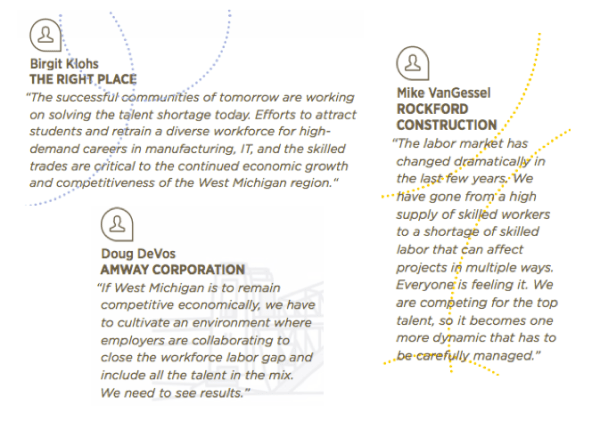
For those who value education in liberatory education, we need to pay attention to the business class and how they want to influence both higher education and K-12 school systems. We also need to resist the business class and their desire to see students as nothing more than profit making talent.
Betsy DeVos Watch: 2019 Education Budget request and the expansion of the Neoliberal agenda
 Last week, Secretary of Education Betsy DeVos released the following statement:
“The president’s budget request expands education freedom for America’s families while protecting our nation’s most vulnerable students,” said Secretary of Education Betsy DeVos. “The budget also reflects our commitment to spending taxpayer dollars wisely and efficiently by consolidating and eliminating duplicative and ineffective federal programs that are better handled at the state or local level. I look forward to working with Congress to pass a budget that puts students first and returns power in education to where it belongs: with states, districts and families.”
This statement by DeVos, provides us with a clear framework for how the current administration plans to move forward on education. When Betsy DeVos says “education freedom,” it is fundamentally code for defunding public education while directing more funds to charter and private schools.
When DeVos says that the education budget will spend taxpayer money to, “ wisely and efficiently by consolidating and eliminating duplicative and ineffective federal programs that are better handled at the state or local level,” she means that she wants to continue to implement a Koch-funded/American Legislative Exchange Council’s states rights policy on education.
Devil’s in the Details
The 2019 Education Budget document is not particularly long, nor is it a comprehensive look at what is actually being proposed. However, there are certainly things we can take away from the document that point out specific trends in what the current administration has in mind for education that expands the neoliberal economic model.
The proposed 2019 Federal Education Budget includes the following:
- $1 billion for a new Opportunity Grants program that would expand both private and public school choices, particularly for students from low-income families or attending schools identified for improvement under the Elementary and Secondary Education Act.
- $500 million for the Charter Schools program to strengthen State efforts to start new charter schools or expand and replicate existing high-performing charter schools, while providing up to $100 million to meet the growing demand for charter school facilities.
- $20 million to support innovative Career and Technical Education programs in STEM fields, including computer science, through awards to consortia of secondary and postsecondary providers that would work with employers and local workforce agencies to ensure that these programs are aligned with regional workforce and labor market needs.
- Expanding the Pell Grant program to cover short-term programs. The Department’s fiscal year 2019 Budget proposes to expand Pell Grant recipients’ eligibility to include high quality short-term programs that provide students with a credential, certification, or license in an in-demand field, with sufficient guardrails in place to balance students’ needs with protecting taxpayers’ interests.
- $12.8 billion to maintain the Federal investment in the Individuals with Disabilities Education Act State formula grant program to help offset the cost of providing special education and related services to approximately 6.8 million children with disabilities.
 These five 2019 Education Budget programs are not the only ones included in the proposed budget, but they are the main budgetary items.
Points 1 and 2 are pretty straight forward, with a redirecting of public money to more privately controlled educational systems, an area which Secretary DeVos has been working on for several decades now.
Points 3 and 4 increases the amount of public tax dollars to push a business class agenda, with an emphasis on creating a labor force for that meets specific needs of the business class. Note the language used when it says, “would work with employers and local workforce agencies to ensure that these programs are aligned with regional workforce and labor market needs.”
While it is important to provide adequate funding for students with disabilities (Point 5), it seems rather contradictory, considering the administration’s attack on the American’s With Disabilities Act. What will it mean for students with disabilities, who upon entering the workforce or just trying to access businesses facilities, is that those businesses can get away with not complying with or delaying their having to provide full access to people with disabilities.
Lastly, the 2019 proposed Federal Education Budget also calls for a $25 million reduction in funds designated for national school safety activities, compared with 2017. President Donald Trump’s budget would eliminate altogether a $400 million grant program that districts can use, for example, to prevent bullying or provide mental health assistance. Sort of a slap in the face, considering the most recent school shooting in Florida.
Grand Rapids and Balanced Lifestyles is really code for Whiteness
 Grand Rapids loves to be on lists……well, some lists. If the list makes the city look good, then people love it. For example, take the most recent list that named Grand Rapids the number one city where people have the most balanced lifestyles. This new ranking, comes from the financial site, MagnifyMoney.
In a blog post on MagnifyMoney, they write:
Residents of Grand Rapids work a little harder for their money than those at other top cities on our list, but that money seems to work a lot harder for them, too. Generally, housing only costs 18% of income, commutes are under 22 minutes, prices on consumer goods are about 5% lower than the national average, and income inequality is relatively low. Maybe that’s why 56% of the population are reported to be in very good health (the ninth highest), even though 14 other cities have fewer sleep-deprived citizens. Of course, we might expect denizens to be made of hearty stock, given all the opportunities for outdoor activity for those who can make it through the notoriously harsh winters.
The methodology for how MagnifyMoney came up with this ranking can be found here. We take issue with the information provided by MagnifyMoney, so lets unpack their claims.
First, the percentage of how much people spend on housing costs (18%) is wildly misleading. Perhaps for those who make a six-figure salary, housing costs might only be 18% of one’s income, but for those who make minimum wage, the percentage of what people pay on housing is closer to 35% – 40% and in some cases higher.
Second, commute times might be under 22 minutes for people who live and work downtown, but for many who ride the bus to work, the commute is considerably longer. Even if you own a car, the commutes can be lengthy. Ask people who are often stuck in traffic on 131 or 196 during morning or afternoon rush hour, if they can safely plan to get to work in under 22 minutes.
Third, when MagnifyMoney says that, “income inequality is relatively low,” what exactly do they mean? Besides, the notion that income inequality is relatively low in Grand Rapids, flies in the face of recent data from the Economic Policy Institute, which shows that the Grand Rapids area has the highest wealth gap of any city in Michigan. In addition to conflicting data, just open your eyes and look around the city, where there are significant incomes disparities throughout virtually all neighborhoods.
Fourth, MagnifyMoney states that 56% of the population in Grand Rapids are reported to be in very good health. Ok, so what about the other 44%. We know that heart disease , diabetes and infant mortality rates are disproportionately higher in the African American and Latinix communities. And we also know that these health disparities are connected to income inequality and what percentage of people’s income goes towards housing.
All four of these points, in many ways, highlight the reality that some Grand Rapidians are living “balanced lifestyles,” but those that are, tend to be members of the white professional class. In essence, the MagnifyMoney ranking about people in Grand Rapids living balanced lifestyles is really code for whiteness and White Supremacy.

Just look at who promotes these rankings. Experience GR has a whole section on their website, called Way to Go Grand Rapids, which highlights many of the recent GR rankings that are positive. The Right Place Inc, which tries to attract new businesses to set up shop in Grand Rapids, also plugged the MagnifyMoney ranking just a few days ago , plus they also have their own rankings section.
However, think about the black family that is facing eviction, because they can’t afford the increasing cost of rent in Grand Rapids. Think about black youth that are constantly being harassed and threatened by the GRPD. Think about immigrant families, who are visited by ICE agents who arrest and detain a parent. Think about people who ride the bus or walk to jobs that pay minimum wages, those that clean the hotels and bus tables in restaurants. Do you think these people have balanced lifestyles?
 Grand Rapids loves to consider itself a liberal or even a progressive city. However, it is rare to find white liberals who are critical of the structural racism that exists in Grand Rapids. People might condemn individual racism or discrimination, but are hesitant to call out the system of White Supremacy that permeates much of Grand Rapids and West Michigan Nice.
It is precisely the white liberal and white moderate that Dr. Martin Luther King Jr. stated he had the most frustration with. While sitting in a Birmingham jail cell April of 1963, Dr. King wrote a letter to White Christian leaders, in order to challenge them and white moderates. Dr. King states:
“First, I must confess that over the past few years I have been gravely disappointed with the white moderate. I have almost reached the regrettable conclusion that the Negro’s great stumbling block in his stride toward freedom is not the White Citizen’s Council-er or the Ku Klux Klanner, but the white moderate, who is more devoted to “order” than to justice; who prefers a negative peace which is the absence of tension to a positive peace which is the presence of justice; who constantly says: “I agree with you in the goal you seek, but I cannot agree with your methods of direct action”; who paternalistically believes he can set the timetable for another man’s freedom; who lives by a mythical concept of time and who constantly advises the Negro to wait for a “more convenient season.” Shallow understanding from people of good will is more frustrating than absolute misunderstanding from people of ill will. Lukewarm acceptance is much more bewildering than outright rejection.”
Writing whatever they say: MLive and Amway
On Monday, MLive ran what I hesitate to call a piece of journalism. The posting on February 12, was entitled, Amway’s 2017 revenues show sales on ‘right track,’ say leaders.
The posting is based on an “interview” that MLive reporter Shandra Martinez did with the Amway co-CEOs Steve Van Andel and Doug DeVos.
A second posting was also done on February 12, entitled, How Amway is appealing to a younger generation.
This second MLive posting, was rather brief and included a 1minute and 31 second interview with the heads of Amway, Steve Van Andel and Doug DeVos, which you can watch below. In fact, the posting essentially regurgitates what Van Andel and DeVos had to say in what MLive refers to as an “interview.”
MLive repeated this process in a posting from February 13, entitled, 50 percent of Amway’s revenues now come from e-commerce.
In fact, MLive will no doubt post 2 additional pieces based on the same “interview” that MLive reporter Shandra Martinez conducted with the second generation Amway CEOs, based on these other videos from the same “interview.”
https://www.youtube.com/watch?v=v9pHYcjbluc
https://www.youtube.com/watch?v=_SjvyuGqX0A
After watching the four videos, it is painfully clear that MLive fundamentally is acting solely as a stenographer, simply writing what the Amway executives have to say. There is only once instance, where the MLive reporter can be heard asking a question, which is a softball question, about what Van Andel and DeVos thought about the new corporate tax breaks.
Imagine what a serious journalist would have asked? Imagine what information or insight would have been gained from a serious, investigative article? Imagine what impact that might have on the public’s view of the the Amway corporation and the DeVos and Van Andel families that are plastered on every other building in downtown Grand Rapids? Well, you will have to keep imagining, since the MLive reporter failed to practice anything that remotely resembled journalism, which we will elaborate on here.
First, it is important to ask ourselves how MLive can claim these postings are anything that resembles journalism. It’s as if the MLive reporter just sat down with the Amway CEOs and said, “what would you like to tell our readers?”
Second, if you are serious about practicing journalism, you don’t interview some of the wealthiest people in West Michigan (who also happen to make it their business to finance political candidates to make sure policies are passed that support their ideological worldview and expand their financial interests), without asking hard, probing questions. The former editor of the GR Press, Mike Lloyd once told me that is was the duty of the Press to, “comfort the afflicted and afflict the comfortable.” This in not practiced at MLive.
Third, based on the commentary from the original article posted early Monday morning, the MLive reporter could have asked some important questions, about why Amway sales have increased in countries like China, South Korea, Japan, Thailand, Taiwan, India, Russia, Malaysia and Hong Kong. More importantly, the MLive reporter could have asked those same question to people who didn’t have the wealth and power that Van Andel and DeVos hold or the reporter could have conducted their own investigation as to why Amway is experiencing these trends.
Fourth, in the video where DeVos and Van Andel talk about the new tax benefits for corporations that the Trump administration passed, any competent reporter would have asked follow up questions, sought out addition sources and even conducted their own analysis of what the recent tax policy of the Trump administration means for the US, who it benefits and who it impacts negatively.
These are not radical notions, this is simply journalism 101. Instead, once again, MLive demonstrates that they rarely practice journalism, especially when it reports on those with wealth and power, like the Amway heirs.
For more on the history of the DeVos Family, check out our 350-page document on the most powerful family in West Michigan, by going to this link.
A Bi-Partisan Betrayal of Dreamers: A Bi-Partisan vote for militarism
 In the very early morning hours of last Friday, Congress passed a two-year budget bill, but completely left Dreamers out of the equation.
In total, 36 Democrats in the Senate and 73 in the House joined the Republican majority in voting for the so-called Bipartisan Budget Act. Among the Democratic Senators to vote against having a Clean Dream Act, were Michigan Senators Gary Peters and Debbie Stabenow.
Those organizing to get a Clean Dream Act passed, have been meeting with Senator Stabenow and her staff in Michigan and in Washington. In addition, the mostly DACA recipients, engaged in a sit-in in Senator Stabenow’s office just a few weeks ago and were given assurances that the Senator would support the Dreamers.
Some people are referring to the Democrats failure to support the Dreamers as an act of betrayal, while others are stating that they “threw the Dreamers under the bus.”
Greisa Martinez Rosas, Advocacy Director for United We Dream, stated: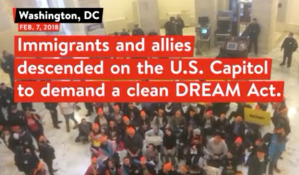
“Today, the world can legitimately wonder whether an opposition to Trump’s racist agenda exists in Congress. Democrats and moderate Republicans had leverage to protect immigrant youth but instead of protecting us, they used our suffering as a bargaining chip to get more dollars for other projects.
The backstabbing by Chuck Schumer, betrayal by 73 House Democrats and Paul Ryan’s cruel games leave me, my sisters, and millions of immigrant youth at greater risk of being dragged to detention camps and deported. Speeches, crocodile tears and Facebook posts will not save a single life.
Yesterday, over a hundred immigrant youth marched through the halls of Capitol Hill, visiting 240 House Democrats and moderate Republican offices for 14 hours to share our stories and demand permanent protection that does not harm our families and other immigrants.”
However, there is another way to look at the outcome of the vote last Friday, where a Dream Act was not included in the vote. The budget bill that was voted on included a ton of money for the Pentagon and US militarism. One could certainly argue that these are the real constituents of those who occupy seats in Congress. Most Senators and Representatives have military contractors in their districts, which means jobs. Are they really going to piss off those companies and the people they employ?
Here is what Senator Gary Peters tweeted about the budget deal, “The budget deal offers certainty to our military and addresses many outstanding funding priorities.”
Senator Peters sits on the Armed Services Committee and the Homeland Security and Government Affairs Committee. He receives campaign contributions from the military industrial complex and is lobbied directly by the defense industry.
Senator Stabenow, while not directly connected to the Pentagon, has also been a devout supporter of the annual US military budget since taking office in 2000. In addition, Senator Stabenow is up for re-election this year and she doesn’t want to alienate those in the military industrial complex who have contributed to her campaign before.
Remember, this is the so-called Resistance, that those in the Democratic Party like to call themselves these days. Ironically, this is not the only time that Senator Peters and Stabenow have voted with President Trump. You can follow the their votes in The Age of Trump, for both Senator Peters and Senator Stabenow.
Despite the failure of the Democrats to pass a Clean Dream Act, those on the ground who are organizing, the immigrant youth who forced then-President Obama to pass an initial Dream Act, are not giving up and will continue to resist.

Dreamers will be walking from New York to Washington DC, starting February 15 and arriving on March 1st. According to the website for the march, the organizers state:
With the vote count on the Spending bill we have seen once again the lack of courage from Democratic Party members. House Democratic members had the power and leverage to stand up to the hateful anti-immigrant Republican Party leadership to force the Dream Act to be included in the spending bill but decided against standing up for undocumented youth. The Seed Project, along with allies, will be embarking on a walk of hope. The Walk to Stay Home will be starting on February 15, consisting of 11 full time walkers and 15 support members who will be walking from New York City to Washington D.C, where they will be organizing a mass protest when walkers arrive at The Capitol. The Walkers will show members of congress they are not alone and will not accept excuses while being used for achieving higher approval ratings and winning elections. The Walkers demand a clean Dream Act that would grant permanent protection and they demand it now.
La Lucha Sigue!
People from West MI who have contributed the maximum amount to Michigan’s Gubernatorial candidates
 Michigan will be deciding who the next Governor will be this coming November and there has been plenty of money contributed to a variety of candidates running for that office.
According to the Michigan Campaign Finance Network, 318 donors have already given the maximum amount of money allowed under current campaign finance rules.
In addition, there has already been $16 million raised by the eight Gubernatorial candidates, 4 from the GOP and 4 from the Democrats. Of the candidates that have donors who have contributed the maximum amount of $6,800, there are three Republicans and two Democrats.
GOP Candidates who have donors contributing the maximum:
- Bill Schuette has 97 donors who have given the maximum
- Brian Calley has 80 donors who have given the maximum
- Pat Colbeck has 14 donors who have given the maximum
Democratic Candidates who have donors contributing the maximum:
- Abdul El-Sayed has 40 donors who have given the maximum
- Gretchen Whitmer has 80 donors who have given the maximum
West MI Donors who have given the maximum
It is important that we know who the following people are, who have contributed the maximum amount of money to at least one of the candidates for Governor. It’s important because, those who can at the drop of a hat donate $6,800 are part of the capitalist class that too often determines the outcome of elections and influences policy.
It doesn’t matter which candidates they are giving money to, since those who have wealth always want to keep it and increase it. Those who can contribute $6,800 essentially undermine the very notion of democracy and one vote, one person. It is also important to acknowledge that this is how the system of voting is DESIGNED to function. The voting process is not broken, it works quite well for those who have power and want to maintain it.
There is one example you will see below, where someone has donated the maximum amount allowed under current campaign finance laws and given $6,800 to two different candidates. John & Nancy Kennedy have each contributed $6,800 to both Brian Calley and Bill Schuette, thus making sure that they will have access to the two leading Republican candidates.
Bill Schuette Campaign:
- Daniel Bowen DDS $6,800
- William Currie Universal Forrest Products $6,800
- Janice Currie Currie Holdings LLC $6,800
- Mary Ann Keeler $6,800
- John Kennedy AutoCam Medical Corp $6,800
- Nancy Kennedy $6,800
- Joan Secchia $6,800
- Margaret Thompson MSU $6,800
- Jerry Tubergen RDV Corp $6,800
- Marcia Tubergen $6,800
- Lynn White $6,800
Brian Calley Campaign:
- Daniel Bowen Dempsey Ventures $6,800
- Sam Cummings CWD Real Estate $6,800
- Karen DeBlaay Fred Hansen Corp. $6,800
- Dan DeVos DP Fox Ventures $6,800
- Pam DeVos Pamela Roland $6,800
- Sidney Jansma Jr. Wolverine Worldwide $6,800
- John Kennedy AutoCam Inc $6,800
- Nancy Kennedy $6,800
- Dave Killoran ODL Inc $6,800
- Jeffrey Padnos Pandos Corp $6,800
- Richard Riley Grand X-Rays Supply Co. $6,800
- Robert Roth Roman Manufacturing $6,800
- Jim Williams Williams Distributing Co $6,800
Pat Colbeck Campaign:
Todd Van Dyke OVD $6,800
Abdul El-Sayed Campaign:
None from West MI
Gretchen Whitmer Campaign:
- Elizabeth Barton $6,800
- Jim Barton $6,800
- Steve Peska H & H Management $6,800
- Peter Steketee $6,800
- Joan Steketee $6,800
- Kate Wolters Kate Richard Wolters FND $6,800
 Grand Rapids Institute for Information Democracy