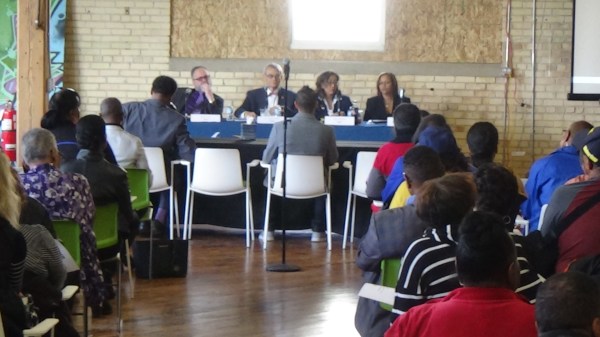
The following statements are based on the afternoon session from the Michigan Civil Rights Department hearing in Grand Rapids on Thursday, March 28.
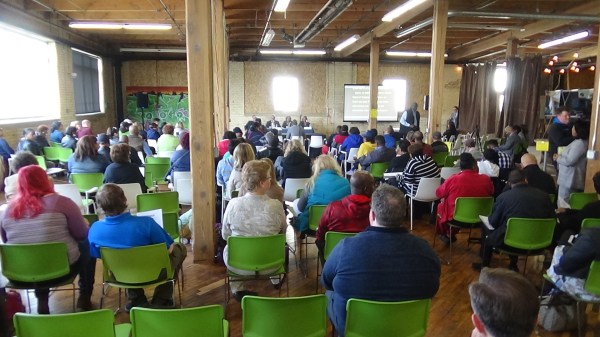
Cle Jackson, with the NAACP, opened up the hearing, referencing recent incidents with the two latino youth and the black motorist who was punched some 30 times. These are however, on two cases that make up dozens of other documented incidents with the GRPD. Jackson, also said that this kind of police abuse & violence directed at black and brown communities, has been happening for decades, and it needs to stop.
A staff member of the Michigan Civil Rights Department (MCRD) then spoke and laid out both the process for those who wanted to speak and somewhat of a framework. The MCRD spokesperson did say that the framework for determining whether civil rights have been violated is the Elliot Larsen Civil Rights Act, which currently does not include the rights of the LGBTQ community.
Depending on the testimony provided, the MCRD may begin an investigation of the GRPD. In addition, it was stated clearly that the MCRD will not tolerate any retaliation against those who speak out, and they specifically mentioned retaliation from an employer, an elected official or anyone else in a position of power against those who offer testimony.
At the very beginning, when people started giving testimony at 1:30pm, there were an estimated 200 people in the room. The people who spoke, filled out a sheet of paper and were called forward to address the MCRD.
- The first speaker was a lawyer with the ACLU, who recently moved to Grand Rapids, specifically the Heritage Hill neighborhood. She shared her experience where the GRPD followed her home in a cruiser, while she and her son were walking home. Then suddenly, a black man was walking in the other direction and the GRPD stopped that man. She ended by saying Grand Rapids is a great place to live, if you are white.
- The second speaker, also with a non-profit advocacy group, addressing two specific cases of police abuse in Grand Rapids, the two latino youth who were held at gunpoint in the southwest part of GR and the black man who was punched nearly 30 times while driving on the westside.
- A black man, who had two relatives who were police officers, said those officers told him that the GRPD is a racist city. He then talked about the two boys who were arrested for walking in the street. He said that, “students from a local high school in his neighborhood always walked in the streets and the track team always ran in the streets, so why were the two latino boys treated the way they were?”
- Another black man spoke, who said he was arrested this past Tuesday by the GRPD. He said there were three police cruisers involved in his arrest. They made him take a sobriety test and one officer said that he appeared to “be on something.” He was detained for 7 hours, since that is the time length to sober up, even though he was not high and never has been.
- A black woman then talked about an incident from February of 2018. She lives in the Adams Park area. A white woman was drinking in her car and making a great deal of noise and this woman and another neighbor asked for her to keep the noise down. This woman called the police and when the police arrived they spoke with the white woman first who told the officer that the woman who called was the problem. The GRPD officer yelled at the black resident, who also said at this point that she felt her safety was in jeopardy. She called 911 a second time and said the officer didn’t even speak with the her, but the response from the dispatcher was to make her feel like she was the problem.
- Another lawyer from the ACLU then spoke, specifically about the GRPD’s relationship with ICE. She read a statement that was released earlier in the day by the ACLU, along with numerous other documents to support their position on several other cases involving Captain Kurt VanderKooi.
 Another black man shared his story about how the GRPD came to his house and one officer forced his way into this man’s house, resulting in his eye being split open. The GRPD tried to get him to not pursue the complaint against them. He also said that bad cops needed to be weeded out and then says that he think there are some good officers.
 - A black man who is a small business owner, then spoke about a friend of his who was harassed, intimidated and accused of being part of a murder. He said he was tired of this happening over and over again, where the GRPD harasses and intimidates people. He said because he has spoken out, he has been stooped by the GRPD 106 times in recent years.
- A black women then shared a story about being intimidated as well. She feels that the GRPD always wants to justify whatever they do and that the black and brown communities feel this is nothing short of abuse. She also brings up the two youth who were stopped for walking in the street and said that there are so many neighborhoods where it is not safe to walk on the sidewalks.
- Another black woman then spoke, sharing stories about a race relations forum in 1991, but felt like nothing good came out of it. She is a criminal justice major and has been pulled over numerous times, for what she stated was “just being black.” The GRPD does not follow their own policy and she shared numerous examples of use of force. For instance, she saw a guy in his wheelchair, who was stopped by the GRPD and forced out of his chair and searched. She also addressed the GRPD pulling of guns on youth in this community.
- A black woman spoke, who lives in Grand Rapids and has raised her kids in this community and feels that they are at risk from the GRPD. She said that body cameras do not work for the public. The GRPD is racially profiling people, and acknowledges that she doesn’t know what to do to keep her children safe.
- A white woman then speaks about what has happened to her. She owns a business on the westside and has witnessed members of the GRPD that has removed people from her store. The GRPD always treated people fairly, no matter who they were. This woman was defending the GRPD. One guy sitting next to me said, she’s at the wrong meeting and numerous people who visibly angered that this white woman not only ignored the previous testimony, but that she felt so entitled to come for the purpose of defending the police. This woman’s testimony was the perfect example of white privilege and white arrogance.
- Another black woman then spoke and said she does not feel safe and has never felt safe whenever interacting with the GRPD. She called the GRPD when she thought someone was trying to break into her home. When the cop arrived she felt unsafe and like he was questioning her, instead of empathizing with her concerns. She recently called the police after her granddaughter had been abused by her daughters boyfriend. The GRPD wanted her to call Children Protective Services and seemed disinterested in the violence against her granddaughter.
- A black man then shares his story about something that happened in the Madison neighborhood. He has been pulled over numerous times and been told by the GRPD that they have been waiting to pull him over with no clear reason. He owns rental property in the neighborhood and that the GRPD has intimidated him, frisking him and physically threatened him, sometimes trying to provoke him so that they could use force. He then told a story that about being given a ticket by the GRPD, and while he was in court to pay a fine, the judge said he swore in the courtroom. When this man said he didn’t and that could he play the courtroom recording back and the judge said no and sentenced him to 10 days in jail.
- A white woman spoke next, sharing two incidents in the past month in the Roosevelt Park neighborhood. The first incident dealt with someone blowing their horn and a neighbor had to move his car. A GRPD officer came and pulled the woman’s neighbor out of the car by force and was then detained by the cops because of how disrespectful he spoke to the cops. The GRPD then dropped the charges and said that their body cam footage was deleted. In the second incident, there were 5 cops with guns pointed at 2 black teenagers.
- A latino man spoke about how his experience with the GRPD is that they want to escalate the situation, not de-escalate. The GRPD was called by his ex-girl friend, even though he had not harmed her, but the GRPD said in these cases, “someone has to go to jail.”
- Another older black man spoke and began by stating that he didn’t think this hearing will result in anything. He wanted to see change and not just a fact finding opportunity. “Nothing has changed over the years,” he said.
- Another black man spoke about a department of justice case, which he believes the charges were completely fabricated. He said he is moving soon and will never live in Grand Rapids ever again.
- A black woman who is a member of Messiah Missionary Baptist Church in the SE part of town, spoke next. In recent weeks, members of her church have been targeted by the GRPD for parking violations, in a neighborhood with numerous churches that have high attendance. Just a few blocks away where there are white churches, where members park on both sides of the street and no one is getting a ticket. The same thing is the case, “with the white gentrified area on Wealthy St, where there are always lots of people parking on the street, but these people are not being targeted for parking violations by the GRPD.”
- A 65 year old black man then talks about it being 2019 and this stuff is still going on. An incident he mentions was in the Oakdale neighborhood, where a car crash had taken place. He says there was clear discrimination. His wife has a nice car and she is always being stopped by the GRPD in the area, “so you can’t have a nice car in this neighborhood without being pulled over? The GRPD has no respect for our community. We pay their salaries. They don’t know us and don’t even try to know us.”
- Another black man who has lived here for 70 years, then spoke about a lack of representation and no organizational representation for black people. He was critical of the NAACP, since he doesn’t think it works for them. He says he is tired of seeing black kids having guns pulled on them, especially since he never sees this happening to white kids. “This is not gonna change until a white kid gets killed by the GRPD.” This guy is a truck driver and he says that truck drivers call this city Racist Rapids.
- A black woman makes the observation that on the same day this hearing is being held, the racist President is in town. She doesn’t take shit from people, so she knows that as a confident black woman she will be targeted by the GRPD. She spoke about having the GRPD called on her in certain businesses. For example, she was arrested in the front of her home, with three cruisers being called and then pulling her out of her car and arrested for no apparent reason. The charges were later dropped, but the damage had been done, especially since her daughter witnessed this abuse.
- Another black woman, who is a retired court magistrate, talked about in her work experience of people of color being arrested for walking in the street. People should not be afraid to just walk around. During her 23 years on the job she, never heard of a white person being arrested for walking in the street.
If people were unable to attend either the afternoon or evenings sessions they can submit written statements electronically now, through 1 p.m. on Friday, April 5, 2019. Statements must include a name, address and a telephone number or email address for contact. Statements can be emailed to Community Engagement Liaison Gwendolyn Moffitt at MoffittG@Michigan.gov.
Michigan Senator Gary Peters uses the same lie about BDS that the Israeli government does
 In 2017, Michigan Senator Gary Peters co-sponsored a bill that would essentially criminalize the BDS movement in the US.
The Israel Anti-Boycott Act (S. 720) was introduced a few months ago and was drafted with input from the American Israel Public Affairs Committee (AIPAC).
The ACLU has sent a letter to the Senators who co-sponsored this legislation stating, “We urge you to refrain from co-sponsoring the legislation because it would punish individuals for no reason other than their political beliefs.”
I sent a message to Senator Peters recently, asking him to vote no on the anti-BDS legislation. Here is part of his response:
On February 5, 2019, the Senate passed the Strengthening America’s Security in the Middle East Act. This bill is a combination of several key U.S. foreign policy initiatives, including authorizing security assistance to Israel, imposing new sanctions on Bashar al-Assad’s regime in Syria, and extending the United States’ existing security partnership with Jordan. Although I had concerns about certain provisions in this bill, I voted in support of it because it will help advance several critical national security priorities. We must make it clear the United States stands with its allies in the Middle East that are confronting violent extremist groups throughout the region.
The bill clarifies U.S. law with regards to the ability of state and local governments to divest from or limit contracting with entities engaged in boycott, divest, and sanction (BDS) campaigns targeting Israel. The underlying purpose of BDS activities is to delegitimize Israel’s sovereign right to exist as a country. I do not support these campaigns, which single out Israel and in effect undermine the prospect of direct peace negotiations to solve territorial disputes.
What Senator Peters says about BDS is the exact same thing that the Israeli Prime Minister Benjamin Netanyahu says and it is a lie.
According to the BDS movement site, their goal is as follows:
Boycott, Divestment, Sanctions (BDS) is a Palestinian-led movement for freedom, justice and equality. BDS upholds the simple principle that Palestinians are entitled to the same rights as the rest of humanity.
Israel is occupying and colonizing Palestinian land, discriminating against Palestinian citizens of Israel and denying Palestinian refugees the right to return to their homes. Inspired by the South African anti-apartheid movement, the BDS call urges action to pressure Israel to comply with international law.
BDS is now a vibrant global movement made up of unions, academic associations, churches and grassroots movements across the world. Eleven years since its launch, BDS is having a major impact and is effectively challenging international support for Israeli apartheid and settler-colonialism.
The fact that Senator Peters voted for the anti-BDS legislation is not surprising, since he , like most of the US Senate receive substantial funding from the Israel Lobby, according to Open Secrets.
In fact, US support for Israel has been a bi-partisan affair since the US began providing billions of dollars in aid to Israel in the mid 1970s.
Another GRPD Press Conference to justify the use of force
 Yesterday, the GRPD once again held a press conference in order to respond to another violent incident involving members of the African American community. You can view the video at the GRPD Facebook page.
The Press Conference lasted just over 7 minutes, with Interim Chief Kiddle making a statement, followed by a few questions from reporters. This most recent Press Conference was no doubt organized to respond to a particular incident, but also because someone had recorded what had happened.
Interim Chief Kiddle and other police officers have made it a point to say that the public recordings of police violence “distorts the public perception” of police actions. No shit, because the videos from residents often conflicts with the narrative that the GRPD wants to provide. And the narrative from yesterday’s GRPD Press Conference was the same as it has been in the past few months – the police officers involved acted appropriately and did things they were trained to do.
This was one of the questions asked by a reporter during the Press Conference, about why the police officer kicked the man. Kiddle responded by saying, “kicking is a police maneuver, a distraction and pain technique, intended to try get someone under control who is resisting arrest.”
If you kick someone, you could be charged with assault, but if the GRPD does it to you, it is simply a technique to get someone under control. Does anyone else see the irony in such a statement coming from the GRPD?
Just within the last month, the GRPD has held two Latino youth at gunpoint for walking in the street, punched a black man at least 30 times, while his child is in the back seat of the car, and in this most recent incident, the GRPD officer pull a man out of the car and kick him because he was resisting arrest.
As someone said during the City Commission meeting last night, “How many more incidents are there of the GRPD using force against residents that are not being recorded by people?”
Coalition of groups hold Press Conference to issue demands in light of increased GRPD and ICE violence
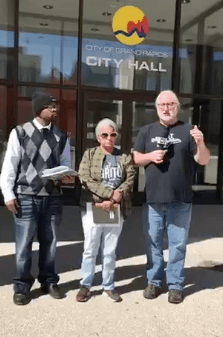 Earlier today, members of Movimiento Cosecha GR, GR Rapid Response to ICE and the group 360 GR Movement, held a press conference in front of City Hall to address recent violence against the Black, Latino/Latinx and immigrant communities in Grand Rapids.
It has been a month since members of Movimiento Cosecha GR and GR Rapid Response disrupted the City Commission meeting, particularly in response to the GRPD’s role in contacting ICE against Jilmar Ramons-Gomez.
Since that late February Grand Rapids City Commission meeting, the GRPD union has attempted to present activist groups as mobs and suggest that the GR City Commission has “caved” to the demands. The reality is that the city only responded to one of the demands presented in February, which was calling for Captain VanderKooi to be fired for his role in contacting ICE. The other demands – 1) the City of Grand Rapids should use no resources to support ICE and not cooperate with ICE violence against the immigrant community and 2) the City of Grand Rapids should endorse Movimiento Cosecha GR’s Drivers License for All campaign; these demands have been completely ignored.
Those who spoke at the Press Conference held earlier today not only addressed the fact that the City of Grand Rapids has ignored the previous demands, they responded to recent incidents of police violence against members of the black and brown communities, which we have written about as well.
Now these three groups have added to their demands and will present them at the Grand Rapids City Commission meeting tonight (March 26). What follows is a list of the new set of demands that was put together by the 360 GR Movement, Movimiento Cosecha GR and GR Rapid Response to ICE.
- Fire Captain Curt VanderKooi and the unnamed officer who beat the young man in the car. VandeKooi has a long history of discrimination based on race and he is not safe for our neighborhoods.
- Stop all cooperation with ICE and use no city resources to do the work of ICE. There should be no police role of “ICE liaison.”
- Support Driver’s Licenses for All in the State of Michigan.
- Release the code of conduct for officers and the track record of each officer in following this code of conduct, including complaints against them. Release the reports of their investigations so that the public can track their accountability processes. Create an accountability reprimand policy for all officers that stand by during instances of beatings or other harm.
- Create subpoena powers and investigative powers for our Civilian Appeals Board.
- Give a vote of No Confidence to Acting Chief Kiddle.
- Create a program whereby GRPD pays for at minimum 5 years of trauma-related therapy especially for any youth interaction deemed inappropriate regarding harassment, profiling, excessive force etc.
- Appropriate the million dollars a year that the city has set aside to deal with community police relations directly to the community instead of it just standing by while police incidents continue to separate our community. The community knows best what to do with that money to make our neighborhoods safer.
Besides attending the Grand Rapids City Commission meeting to present these demands, the three groups will be speaking to these demands at the Michigan Civil Rights Commission public hearing this Thursday, hearing that are being held because of the recent documented GRPD acts of violence against communities of color.
The Language of Capitalism in Grand Rapids
 I recently got a copy of the new book, Keywords: The New Language of Capitalism, by John Patrick Leary.
Leary’s book is delightful to read, but also serves as an important guide for how to think about how the system of capitalism has co-opted, even transformed the language we use to describe things.
The author states in his introduction that, “A notable feature of contemporary capitalist discourse is its embrace of what earlier ruling classes never hesitated to repress: dissent and heterodoxy, the stuff of innovation in the old, seventeenth-century sense.”
Just think about the terms that capitalism has created or transformed in recent years to give it an edgy, almost counter-cultural feeling. Words like place making, robust, stakeholder, thought leader, creative class, human capital, curator, best practices and empowerment. All of these words used to mean something else, but now they are used by the capitalist class as the language that best describes what it is they seek to achieve.
Leary also makes the point that, “the managerial tenor of the terms in this book, also reflect s the way that capitalist ideology renders labor invisible, just as it has always done.”
What I would like to do in the coming weeks and months, is to use some of the words found in Keywords: The New Language of Capitalism, and apply them to organizations and structures in Grand Rapids. This is an important task, since the application of language and analysis is particularly relevant when we can use it in our own locale, to name and identify that which we are most familiar with.
Therefore, we will take one of capitalist words included in Leary’s book and use it to describe an organization, an entity or a system in Grand Rapids that embraces capitalist on neoliberal capitalist values.
Today’s capitalist word is, accountability.
This is what Leary says about the word accountability:
Accountability is a term that has exploded in popularity over the last five decades after remaining relatively consistent for centuries. It shares with innovation a deep and mostly forgotten religious background. With the combination of moral responsibility it retains from its Christian origins and the now dominant meaning of task-based counting, accountability captures the popular fantasy of quantifying virtue.
There are plenty of organizations or systems of power that the capitalist use of the word accountability would apply to in Grand Rapids. However, considering what has been happening in the past few years and even the past few weeks, maybe the word accountability would best fit with the GRPD.
Now, many people would think that “holding the GRPD accountable” is a good thing. But what exactly does that mean? Policing scholar Alex Vitale, in his most recent book, The End of Policing, states:
“accountability measures, like body cameras and civilian complaint boards, are not only subject to the authority of the police – who can turn off the camera or stonewall the board – but also leave intact the basic institutional functions of the police, which have never really been about public safety or crime control.”
 Indeed, the GRPD union has been making the claims that the public video taping of their actions against people of color in recent weeks has “altered public perception.” Of course it has, because it is in direct conflict with the GRPD version of what happened. More importantly, as Vitale points out, accountability with the GRPD is near impossible when the police are allowed to police themselves, when they use one-third of the City’s budget and when the police union contract allows them to remove formal complaints from individual officer files.
The notion of accountability with the GRPD is almost a joke. What is needed, is not accountability, but a completely different conversation on the fundamental nature of policing and whether or not its primary functions is to protect systems of power and to manage certain populations, specifically communities of color and any communities of dissent.
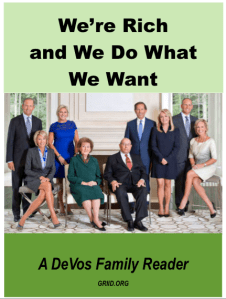 Anyone who is familiar with the DeVos family, knows that the two central ideological pieces their family embraces are, Christianity and Capitalism.
To be clear, the kind of Christianity that the DeVos family practices is a mix of Calvinism and Christian Reconstructionism. Calvinism is evidenced by their, “we are part of the chosen, therefore God has blessed us with great wealth,” and Christian Reconstructionism can be seen in their desire to put biblical law over US Constitutional law. For more on the family’s history see our DeVos Family Reader: We’re Rich and We Do What We Want.
Within the past two weeks, with two separate announcements, Secretary of Education Betsy DeVos, put God and the Market as talking points for recent policy decisions.
On March 11, DeVos made this announcement:
The U.S. Department of Education, in consultation with the U.S. Department of Justice, determined the statutory provisions in Section 1117(d)(2)(B) and 8501(d)(2)(B) of the Elementary and Secondary Education Act (ESEA) that require an equitable services provider to “be independent of … any religious organization” are unconstitutional because they categorically exclude religious organizations based solely on their religious identity.
DeVos went on to say:
“The Trinity Lutheran decision reaffirmed the long-understood intent of the First Amendment to not restrict the free exercise of religion. Those seeking to provide high-quality educational services to students and teachers should not be discriminated against simply based on the religious character of their organization.”
So much of constitutional law comes down to interpretation, but what is really at issue here is not the discrimination of religious educational institutions, but the use of public funds for said institutions.
The second major announcement came on March 21st, with Betsy DeVos’ statement on the Trump administration’s Executive Order on higher education.
We believe that these important reforms, along with the Department’s ambitious negotiated rulemaking agenda, will make college more affordable, break down barriers to innovation in higher education, and encourage new approaches and new partnerships for the benefit of students.
While this Executive Order does deal with tuition costs and loan payments, the important point to note in the statement above is “new partnerships for the benefit of students.”
 What Betsy DeVos means when she talks about new partnerships, is specifically partnerships with the private sector – the corporate and business community. This focus, from the Secretary of Education was reflected a few days earlier, on March 18, when Betsy DeVos was speaking at a meeting for the National Council for the American Worker.
Here Betsy DeVos is very clear about what the objective of higher education should be, when she says:
“To meet the needs of our nation’s students and our growing economy, we must rethink higher education. Right now, there are 7.3 million unfilled jobs in the United States, yet too many Americans remain out of the workforce because they lack the skills necessary to seize these opportunities. We must do better for our students and workers.”
In many ways, these two major announcements, which have occurred within the past two weeks, are a clear indication of Betsy DeVos’ desire to make God and the Market central aspects of the US education system.
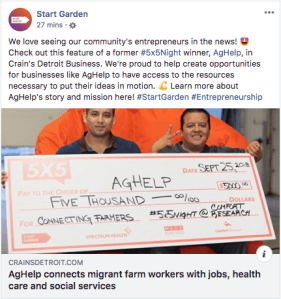 Last week, the DeVos-created org Start Garden, posted a story from Crain’s Detroit Business, about two guys who received funding from Start Garden’s 5×5 event.
The article tells the story about two siblings who were migrant workers with their parents in various parts of the country, who eventually made their way to Michigan. Michigan has one of the largest migrant worker populations in the country.
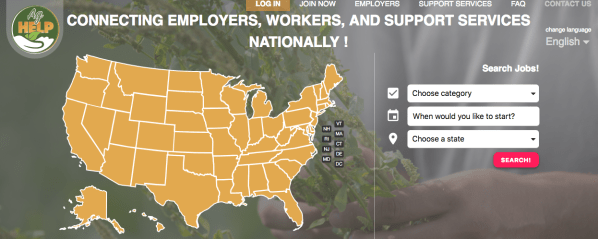
The Paredes brothers won $5,000 from the 5×5 event to help support their new project called AgHelp. The brothers have also won other funding sources, notably from the American Farm Bureau Federation, which is the largest agribusiness organization in the country.
The Crain’s Detroit Business article also stated:
Michigan relies on more than 94,000 migrant farm workers to hand-harvest more than 40 different crops, Feliciano said. It’s typical for the state’s farmers to lose millions in unharvested crops because of a shortage of workers, or to have to mow millions of pounds of asparagus that are rotting in the field.
Heeren Brothers of Comstock Park, near Grand Rapids, turned to AgHelp to ease some of those challenges. Heeren has a large apple orchard, a packing facility that serves apple growers from around the state, a produce distribution operation and a warehouse in Iowa.
So here is the thing. While this story might seem like a feel good story, it omits a great deal about the realities of those who work as migrant farmworkers. As was mentioned above, the agribusiness sector is constantly looking for migrant farmworkers to do the hard labor of harvesting their crops. US immigration policy, which is never mentioned in the Crain’s Detroit Business article, makes it increasingly difficult for undocumented immigrants (which make up a large portion of migrant farmworkers) to work in the agribusiness sector, since Immigration & Customs Enforcement (ICE) has created a climate of fear within the undocumented community.
In addition, there is nothing said about the wages and living conditions of migrant farmworkers, which is one of the lowest paying jobs in the country. In fact, farms that employ migrant farmworkers don’t have to pay them minimum wages, since migrant farm work was never included in the federal minimum wage guidelines. Migrant farmworkers often get cheated on their wages and there is not much they can do, unless they are unionized.
 The United Farm Workers and the Farm Labor Organizing Committee are two of the largest migrant worker unions in the country. These migrant worker unions began organizing because farmworkers were underpaid, worked in dangerous conditions and lived in substandard housing, often on the farms they worked on. What each of these migrant farmworker unions will tell you is that unless there is a union to represent the migrant farmworker interests, migrant farmworkers will be exploited. There are also groups like the Coalition of Immokalee Workers, which is a workers center that also fights for issues of migrant farmworker rights.
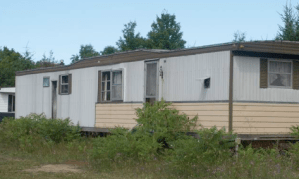
For example, according to a Michigan Civil Rights Commission report from 2010, the working and living conditions for migrant farmworkers was as bad, if not worse, then it was in the 1960s. (see photo on the right of the type of housing they are forced to live in.)
The Michigan Civil Rights Commission published an update in 2017, to see what improvements had been made since the 2010 report was issued. There were some improvement, but many urgent issues had not been addressed.
In contrast, the DeVos-created org Start Garden saw fit to invest money into AgHelp, which while it connects the agribusiness sector to migrant labor and social services, does nothing to challenge the deeply exploitative dynamic that exists within the agribusiness sector’s treatment of migrant farmworkers. However, there is no money to be made in unionizing migrant farmworkers, so it makes complete sense that Start Garden would financially invest in a project that perpetuates the exploitation of migrant farmworkers.
When white people defend the actions of the GRPD
 (This post was updated with new information at 12:23pm on March 20.)
Yesterday we shared some observations about the GRPD press conference that was held on Monday, a press conference that was held to respond specifically to the arrest of two Latino youth and a separate arrest involving an African American motorist.
People in the black and latino/latinx community have responded with outrage, frustration and more calls for police accountability. This reaction is completely understandable, considering the 2017 report demonstrating that the GRPD engages in the racial profiling of black and latino/latinx motorists at a disproportionately high rate. In addition, the black and latino/latinx community has been deeply impacted by numerous high profile cases involving the GRPD, with black youth being held at gunpoint in recent years, immigrants being arrested because of the GRPD’s cooperation with ICE, and now the most recent incidents.
The response from many white people has been just the opposite. There is a Facebook page called Friends of GRcops. There are over 1,700 people who follow the page. There are people from all walks of life who follow the page, several local politicians and even community organizers. The group even has a website, that pretty much mirrors the Facebook page, with commentary supportive of the GRPD, with regular sharing of posts from the Grand Rapids Police Officers Association.
The Friends of GRCops was started by Ed Kettle. On Kettle’s website he states, “I am presently working with the Grand Rapids Police Officers Association to build their community and political profile. I formed Friends of GRCops, essentially a social media effort, to help solidify public support for our police officers and to create opportunities for public dialogue.”
 The Friends of GRCops posted the following on Monday, in reaction to the GRPD press conference:
Interim Chief Kiddle did a great job handling the latest encounter incidents. He’s a by the book guy and stuck by his officers regarding the two young guys walking in the street and ignoring a direct order to stop and give their names. He also stood firm on best practices and behavior regarding the speeder pulled over and resisting arrest. Only those on site know what actually happened, but until all that is sorted out Kiddle presented the best possible response. The loyal opposition responded as expected. An earlier story regarding the young guys by Barton Dieters began with a description of the various conditions in that neighborhood. High crime, drug activity and gang tagging among others. What the ACLU and NAACP seems to forget is that there are hundreds of families and people who live in that area who are afraid for their children and the value of their property. Nothing happens in a vacuum. It would be nice if the opposition could take a broader view of what police actually deal with every day.
This response is not surprising, but it is instructive in terms of who they define as the “loyal opposition,” mainly the ACLU and NAACP.
Then there was the comments. There were a few that didn’t fully agree with the above statement, but there were specific comments in support of the GRPD’s treatment of the two recent cases (the black motorist and latino/latinx youth), and those people were white.
One white guy wrote:
If these kids would keep their mouths shut and do what the cop asks their wouldn’t be such a problem. If I had talked back to anybody of authority I’m sure my punishment from my folks would be much worse than any I’d get elsewhere.
Another white person wrote:
I was also impressed by the Interim Chief’s response. He described the mutual responsibility of the officers and the community. I do believe the situation with the drivers arrest would have been much different if the driver had cooperated with the instructions given by the officers, but it also troubles me that one officer decided to continue to punch the driver. The other officers did not intervene, so I am unclear as to why that occurred. In the situation with the teens who refused to cooperate and follow directions, I fully support the officer. His safety is more important to me than the feelings of the teens who refused to follow simple instructions. They can complain after the fact if they feel they weren’t treated fairly, but instead they chose to create a dangerous situation for all. At the end of the day, we will only have the type of law enforcement that we accept. This community needs to step up and understand the men and women in these uniforms are human beings and they deserve respect…as does the community.
One last comment from a white guy stated, So good to see he stood by the Cop’s! Wait till City Hall back’s away though!!
In the first two longer comments and the original post, you can see the themes of obeying authority or obeying the cops would have resulted in no harm done to those involved in these two incidents.
The post I cited above had received 109 likes as of last night, with most of those liking the comment being white.
So what is it about white people defending the GRPD? Of course, such a question always results in an element of speculation. However, there are some things we can say that begin to answer the question. First, the reality is that for most white people, their lived experience tends to be one that falls on the more positive side of interacting with the police. This is in sharp contrast to black and brown communities, which have a very negative lived experience of police in the neighborhoods they are part of.
Second, there is a great deal of systemic and structural racism in Grand Rapids. From the founding of the city – with the theft of native land – to the red-lining and apartheid practices of discrimination and the exclusion of black and brown people, to the outright targeting of black and brown neighborhoods by the GRPD – Grand Rapids practices what Todd Robinson identifies as Managerial Racism. The same kind of defense of the police was reflected by white residents during the 1967 uprising, as we noted in the comments from the Grand Rapids Press at that time.
Lastly, it must be pointed out that the pushback from black & brown residents of Grand Rapids (including some white allies) receives even more animosity from the systems of oppression, like the GRPD, and their supporters, which are disproportionately white. This push back from black and brown communities is necessary and important, because it will force white people to have to chose sides, thus often illuminating what Dr. King said in a 1967 speech entitled, Which Way Its Soul Shall Go:
I am sorry to have to say that the vast majority of white Americans are racists, either consciously or unconsciously.
Yesterday, Interim Chief of Police David Kiddle addressed reporters after two high profile incidents in the community, where people of color were arrested by the GRPD.
My take on why the GRPD was holding a press conference was simply to respond to two separate incidents that were also video taped by residents in the neighborhoods where the arrests were made. Both of these videos have generated a great deal of attention on social media, so the GRPD wanted to formally respond to “public concerns.”
In fact, Interim Chief Kiddle even stated during the press conference that, “Public videos were release and have created a narrative of public concern.”
We are posting the video of the press conference, so people can make up their own minds about what the GRPD are saying, but people are warned that the Press Conference does include footage of the arrest of two Latino youth from last week, footage people might find disturbing.
Interim Chief Kiddle essentially repeats GRPD report findings, saying that the arresting officers actions were appropriate in both instances. Furthermore, Interim Chief KIddle stated, “these are not racialized incidents.” Alex Vitale, in his important book, The End of Policing, states: Well-trained police following proper procedure are still going to be arresting people for mostly low-level offenses, and the burden will continue to fall primarily on communities of color because that is how the system is designed to operate – not because of the biases or misunderstandings of officers.
During the Q & A portion of the press conference, Kiddle was asked by a reporter, “was it appropriate to use pepper spray with an infant in the car?” Kiddle responded by saying, “Yes, it was appropriate.”
Another question asked during the press conference was, how these incidents could have avoided officers using force or guns and Interim Chief Kiddle said that in both cases, residents demonstrated a “complete defiance of authority. If they had obey the officers, none of this would have happened.”
 This last comment from Interim Chief Kiddle is particularly instructive. Most of us have been conditioned from early in life to obey authority. We are told to obey elected leaders, religious leaders, even police officers. However, it is vitally important for us to as ourselves, where has obedience got us. The late radical historian Howard Zinn, author of A People’s History of the United States, once said:
As soon as you say the topic is civil disobedience, you are saying our problem is civil disobedience. That is not our problem…. Our problem is civil obedience. Our problem is the numbers of people all over the world who have obeyed the dictates of the leaders of their government and have gone to war, and millions have been killed because of this obedience.
Now, I am not suggesting that the African American motorist or the two Latino youth should have disobeyed the cops, because that could have resulted in the police shooting them. What I am saying is, is that the police are not really here to protect us. The primary function of law enforcement is to protect systems of power and oppression. For instance, when a corporation fires hundreds of people and relocates to another country, leaving workers and their families economically devastated. Then those same workers want to confront the corporation at their headquarters over their loss of jobs, the police will always be there to defend the corporation and arrest workers who do anything to threaten the power of that corporation.
Next week, President Trump comes to Grand Rapids to hold a rally, a president who has repeatedly lied to the public and has encourage his supporters to act on their White Supremacist beliefs. When people show up to protest Trumps visit, who do you think the police will be protecting? Of course, the police will always say they are protecting our right to protest, but only if we protest in a manner that doesn’t challenge those in power.
Maybe it is time that we see that the GRPD and any law enforcement agency for what they really are. Maybe we need to learn from what the Black Panther Party for Self-Defense understood, when they said that the police were an armed occupying force in their communities. In the case of the GRPD, it sure seems like this is the case.
How many more incidents of police abuse must we put up with before we take action and resist this state-sponsored violence? How long must we wait before we defy their authority?
Media Bites: Biopharmaceutical ads talk innovation, but ignore that greed of pharmaceutical companies
There are millions of people in the US who cannot afford health insurance, nor the outrageously high costs of medicine produced by the pharmaceutical industry. Millions of people have to chose between buying prescription drugs and paying the rent or having enough food in the house.
Millions of Americans cannot afford health care costs, while the health insurance industry and pharmaceutical companies are making record profits. This is why the last round of commercials that are circulating on traditional media and digital media, from the biopharmaceutical industry, are nothing short of offensive.
One example of these commercials from the biopharmaceutical industry (shown above) presents us with a montage of people who represent researchers in the biopharmaceutical industry. The people depicted in the commercial are supposedly finding cures for cancer or helping people to restore their site.
 Towards the end of the commercial it says, America is the leader in medical innovation. While this might be true, it completely ignores the fact that the companies that are engaged in “medical innovation” are massive Fortune 500 companies that are driven by larger and larger profits. These massive profits are made by the biopharmaceutical industry, while millions are dying from treatable disease or cannot afford the necessary medicines because of the high cost of pharmaceuticals.
Then at the very end of the commercial we seen a several dozen corporate pharmaceutical company names or logos, which are apparently those who make up the biopharmaceutical industry the commercial is referring to.
Several of the companies that appear at the end of the commercial made it on the Fortune 500 Global list. Within the US, many of these pharmaceutical companies contribute massive amounts of money to influence the outcome of elections. According to OpenSecrets.org, the pharmaceutical industry contributed roughly $400 million to candidates since 1990.

In addition, the pharmaceutical industry has spent on average some $240 million on lobbying each year to influence health-related policies that Congress is voting on, as you can see in the graphic above.
Lastly, if we wanted to see which political party was most guilty of accepting money from the pharmaceutical industry, we can see that it is pretty much even. There is, and has been, a bipartisan consensus about maintaining a health care system that is highly profitable, while millions of families are suffering from poor health and lack of access to affordable treatment or medicine.
We should not be fooled by these new commercials from the biopharmaceutical industry. Medical innovation means nothing if profits come before the welfare of the people.

