GRIID End of the Year in Review: Part IV – Documenting Social Movements in Grand Rapids
In Part I of the GRIID End of the Year Review, we looked at all the commercial news stories that we deconstructed in 2021, and in Part II, we look back at our coverage of what the Far Right in West Michigan was up to over the past year. In Part III, we examined what we identify as the Grand Rapids Power Structure. In today’s post we are sharing our coverage of the work of social movements in Grand Rapids during 2021.

Historical Movements in Grand Rapids
There were four posts about previous social movements in Grand Rapids, which are always important to remember and to learn from. On January 6th, we wrote an article for the 30th anniversary of the anti-war movement in Grand Rapids that was resisting what was called the US War in the Gulf.
A second historical social movement in Grand Rapids that we wrote about was a more recent movement, the movement to End the Contract with ICE in Kent County. We wrote this piece, not only to document that movement, but to respond to local politicians who wanted to claim that they had ended the contract.
A third historical movement we documented was the Anti-Nuclear Movement, which existed in Grand Rapids from the late 1970s through the mid-1990s. One last historical movement we wrote about was for the 10th anniversary of the Occupy Wall Street Movement, which also existed in Grand Rapids.
Current Social Movements in Grand Rapids
The first social movement we wrote about was a movement that is doing Mutual Aid work, known as the Grand Rapids Area Mutual Aid Network (GRAMAN). GRAMAN began at the beginning of the COVID pandemic, since there have been thousands of individuals and families in Grand Rapids that have been deeply affected by the virus. GRAMAN is an autonomous group that raises funds for those most affected during the pandemic, the BIPOC communities. GRIID conducted an interview with them in mid-February.
Another social movement that has been active since 2020, is a movement to remove a confederate statue in Allendale. The Allendale Township has refused to remove the statue, despite ongoing resistance. In 2021, that resistance took the form of charges against activists for altering the statue, a boycott of a summer concert series organized by the Michigan Association of Civil Rights Activists, and a lawsuit by activists who have been trying to get the Confederate statue removed from Allendale, The lawsuit is about free speech or the lack thereof in Allendale.
Formed in 2017, the immigrant-led movement known as Movimiento Cosecha GR, which has been fighting for immigrant justice, continued to organize in 2021. Shifting from previous May Day actions they have done in Grand Rapids, the movement went to Washington, DC in 2021 to make their demands known to the Biden Administration. In addition, Movimiento Cosecha GR, along with other Cosecha groups in the state, continued to organize to win driver’s licenses for undocumented immigrants in Michigan. They organized actions in communities all across the state, then hosted a larger action at the Lansing State Capitol to pressure state officials at a public hearing. At the last minute, state officials canceled the public hearing on driver’s licenses, most likely to prevent Movimiento Cosecha from having a say at the hearing.
The last movement we documented in 2021, was the movement to confront the GRPD, which also involved an effort to Defund the GRPD. The two primary entities involved in this work was Defund the GRPD and Justice for Black Lives (JFBL).
In early March, 8 JFBL activists were arrested during a march they organized that coincided with the trial against the cop that murdered George Floyd. JFBL organized a Press Conference the following day, which we attended and video taped.
In April, JFBL organized another protest march, this time for Daunte Wright, another Black man who was killed while in police custody. Three days later, the City of Grand Rapids released a statement that essentially threatened people who would be protesting the outcome of the Derek Chauvin trial.
In May, the group Defund the GRPD was organizing to pressure the City of Grand Rapids to not only reduce funding for the GRPD, but to allow more public input on how public money would be used in the City Budget for 2022. In early May, the City held a one hour virtual town hall meeting on the 2022 Budget, which was an insult to those who have been organizing around how public money would be used. Defund the GRPD had posted their own demands on what they wanted to see happen with the funds, as well as the process for determining the 2022 City Budget. Defund the GRPD also organized people to call in during the City Commission meeting later in May, right before they voted on the 2022 Budget.
In July, the GRPD arrested another JFBL organizer for using a megaphone during a peaceful protest in downtown Grand Rapids. It was at this time that the City began allowing in person meetings for the City Commission, where JFBL activists have spoken at for the past several months.
In November, at a protest following a not guilty verdict for Kyle Rittenhouse, several JFBL activists were arrested again, after the protest had finished. Once again, JFBL held a press conference to respond to the arrests and to counter the claims made by the GRPD.

There were certainly other actions organized in Grand Rapids during 2021, but the ones we documented were from movements that have been able to sustain their resistance throughout the year. It is our belief that these movements, and others like them, are critical for any lasting or systemic change to occur. GRIID has been proud to document these movements.
GRIID End of the Year in Review: Part III – Monitoring the Grand Rapids Power Structure
In Part I of the GRIID End of the Year Review, we looked at all the commercial news stories that we deconstructed in 2021, and in Part II, we look back at our coverage of what the Far Right in West Michigan was up to over the past year.
In today’s post, we want to look at the Grand Rapids Power Structure, which we define as the individuals, organizations and institutions that have tremendous influence over the lives of people in Grand Rapids, while maintaining systems of power and oppression to their benefit.
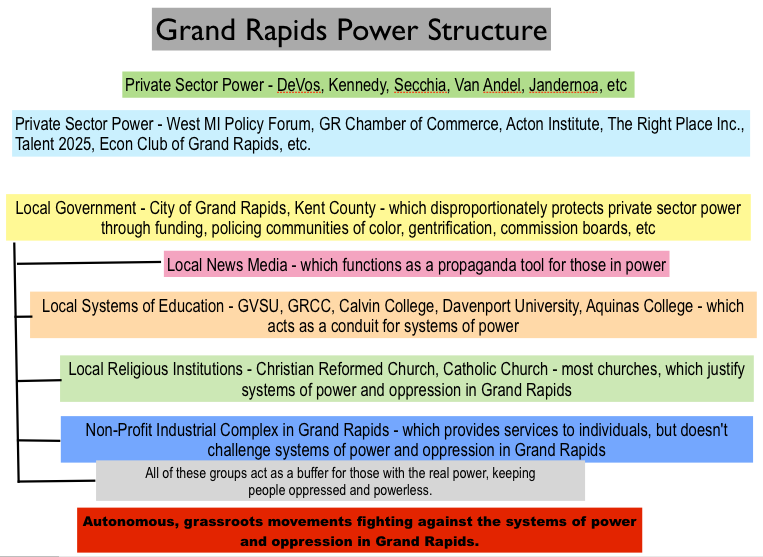
There are several themes we wrote about over the past year as it relates to the Grand Rapids Power Structure, but let’s begin with the issue of development projects/budgets, which rely on lots of public money.
Most of the development projects we looked at were being spearheaded by Grand Action 2.0. The first one we looked at was their plan to re-develop the area along the Grand River, which is essentially another land grab in a long history of land theft along the river.
In a second article we wrote about Grand Action 2.0 development project, we asked the question…..how do groups like Grand Action 2.0 get away with what they do? The short answer is the fact that they get the right people to sit on committees and boards, people who represent the interests of the Grand Rapids Power Structure, along with pushing the whole Public/Private partnership plan, which means the public pays while the private sector pockets the money. We then posted a second story in May, about this same dynamic.
In June, we wrote about the ongoing development of the proposed downtown Amphitheater project, which is also a Grand Action & DeVos family pet project. We discussed how the City was willing to spend millions to relocated offices, while continuing to ignore the housing crisis and disinvest in the Black community. Then in September, we took a critical look at 12 projects the GR Power Structure is pushing for, calling them the Transformational 12.
The last major development project-related post was a look at a video created by the Johnson Center at GVSU, which was advocating for Inclusive Growth. GRIID responded by saying, “Instead of calling for inclusive growth, we should be demanding economic and racial justice. Now, these terms don’t sound as sexy, but they more honestly center the notion of justice, which means changing power dynamics and taking collective ownership for the harm that has been done by those with power and concentrated wealth.”
Another major theme we looked at in regards to the Grand Rapids Power Structure, is centered around public policy. One of the organizations that makes up the GR Power Structure, is the West MI Policy Forum. In January, they were encouraging people to mask up, primarily because they want their businesses to remain open and for people to go out and spend money. We also pointed out that the WMPF has been opposed to Gov. Whitmer’s Stay at Home policies from the beginning.
In March, we discussed how GOP legislators in Lansing were proposing anti-Trans legislation and how much campaign money the DeVos family had contributed to every Republican who co-sponsored the anti-Trans legislation.
In April, the West Michigan Policy Forum held an event around the theme of criminal justice reform, with one of the major speakers being from the Koch-funded group, Americans for Prosperity. We shouldn’t be fooled by what the West Michigan Policy Forum group is up to, since they, like the Koch Industries, has not come out and publicly condemned the police murder of Black people in recent years, they have not challenged the function of policing in the US and they certainly have not come out in support of the Movement for Black Lives, with the strong calls for prison abolition and the defunding of police departments.
In July, we wrote a piece about the thousands of dollars that members of the Grand Rapids Power Structure contributed to Mark Huizenga, who was running for State Senate. This, once again demonstrates one of the ways that the local power structure maintains their power.
This last major policy piece influenced by the Grand Rapids Power structure that we posted for 2021, was an article in late October about Betsy DeVos finally getting her wish on a defacto education voucher policy passed in the Michigan legislature. In that post we lay out 4 tactics that DeVos has used to push her education agenda in Michigan.
We also looked at the theme of wealth and the wealth gap in Grand Rapids area. Most of the pieces we wrote had to do with the massive increase of wealth by Doug & Hank Meijer. There were three article in 2021 about the Meijer brothers wealth growth, with the last one in early October, which made the point that their wealth had increased $6.7 Billion in the first 18 months of the pandemic.
We also wrote stories using the most recent 990 documents for foundations that are run by members of the Grand Rapids Power Structure, specifically members of the DeVos family, but also the Prince family, which you can link to here.
Lastly, we continued to update our document on the most powerful family within the Grand Rapids Power Structure, the DeVos family. We call the document, We’re Rich and We Do What We Want: A DeVos Family Reader, which is the first link on this page.
In Part IV, we will provide an overview of the groups/organizations that are doing transformative and radical organizing work in Grand Rapids. One of the most important things we have been doing at GRIID is to document these social movements, along with articles that provide some a history of previous social movements in this community.
GRIID End of the Year in Review: Part II – Monitoring the Far Right in West Michigan
In Part I of our End of the Year post, we examined the local commercial news coverage of critical issues in 2021. Today, we want to provide an overview of GRIID reporting on the Far Right in West Michigan.
One element of the Far Right in West Michigan that we wrote about over the past year, is the West Michigan connection to the January 6th insurrection in Washington, DC. The Far Right Think Tank, the Acton Institute, was featured on a TV show in mid-January, essentially blaming the political left for the January 6th insurrection.
In late January, we posted a story about how the co-founders of the American Patriot Council, which had been one of the main anti-lockdown groups in the state, had participated in the January 6th insurrection as well. Both Jason Howland and Ryan Kelley were caught on camera at the January 6th insurrection in DC, and for sure Howland went into the US Capitol. Ryan Kelley announced just weeks after January 6th insurrection, that he was running for Governor in Michigan.
Just days after Kelley announced his candidacy for Governor, the American Patriot Council posted an article on their blog claiming that the real terrorists in the US are antifa and the Black Lives Matter protesters.
In early April, the Acton Institute condemned anti-racism author Ibram X. Kendi for suggesting that Jesus was a revolutionary, then turned around and stated that a far right darling, Ayn Rand, was someone who was sincere in her search for God.
In early May, the founder (J.C. Huizenga) of the far right for profit Charter School company, the National Heritage Academies, was caught on tape as saying he didn’t know what the term BIPOC was. Equally outrageous was the fact that Huizenga admitted this at a meeting where he is a board member of The Grand Rapids Promise. The Grand Rapids Promise is using foundation money to create opportunities for students to go to college for free.
Beginning in late June, GRIID wrote a 3-part series on the history of the KKK in Grand Rapids. The first piece was about the 1925 parade the Klan held in Grand Rapids, with several thousand marching in the parade. The second story was about a Klan rally held just South of Grand Rapids at a farm in 1970. A third article took a look at a Klan rally held in front of the court house in downtown Grand Rapids in 1995.
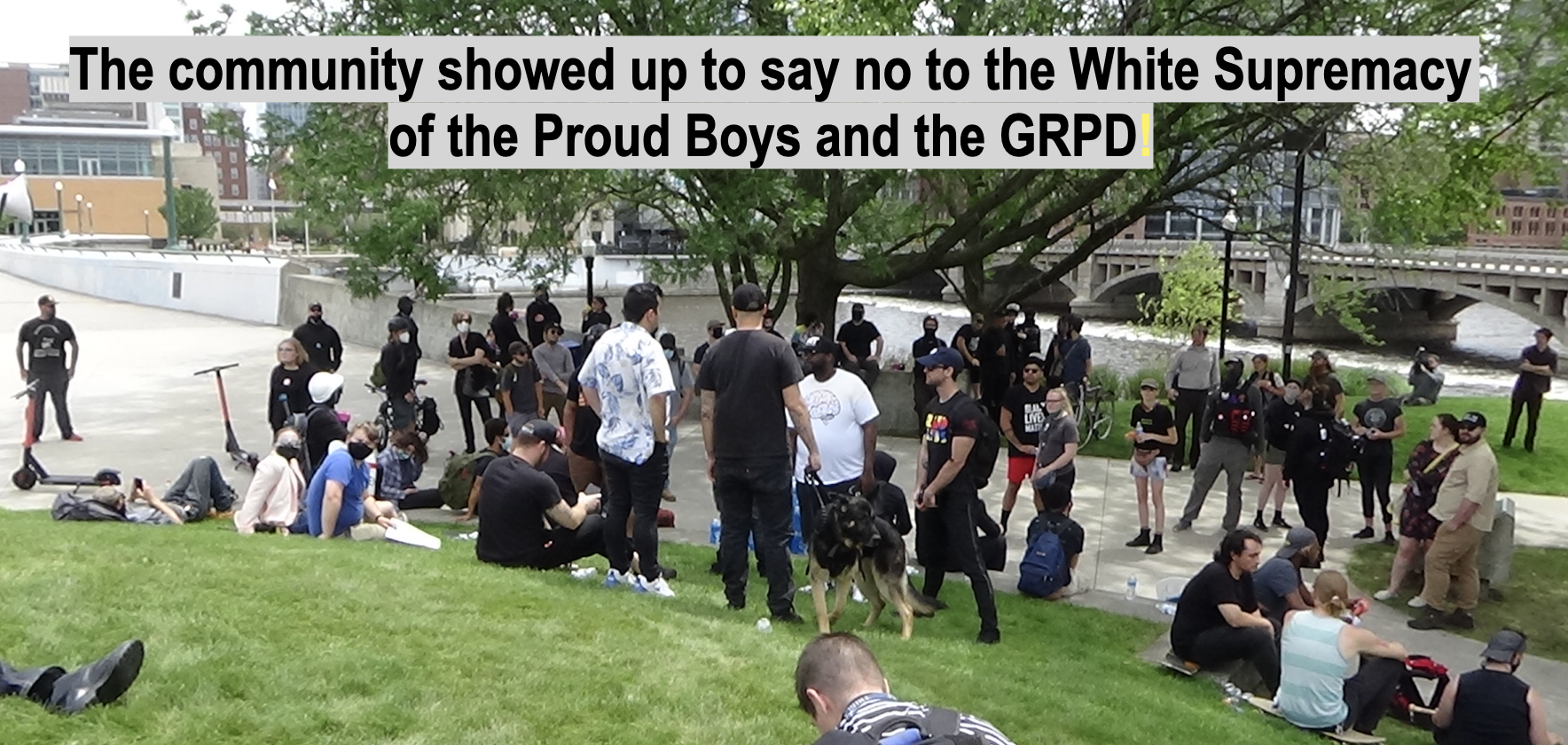
In the second week of July, it was announced that the Proud Boys would be coming to Grand Rapids for a rally, so several groups organized a counter-action, which essentially prevented the Proud Boys from bring their message of hate to Grand Rapids.
In late August, the pro-cop group, Voice for the Badge, was once again posting misinformation on their blog. We critique their commentary, which was claiming that the news media in West Michigan was anti-cop. Not only is this patently false, the local news media often act as a public relations wing of the GRPD.
When schools were getting ready to open again this year, the far right was out in numbers to condemn the school boards, county commissioners and even the Health Department. In fact, the Kent County Health Department had been receiving threats. In September, a group of Republican legislators in Michigan were calling for the Health Department Director to step down or face the consequences. We wrote about those GOP lawmakers and who has been financially backing them for years.
In mid-October, we looked at several far right rallies that were being held in the West Michigan area. These rallies were a mix of the political and religious right, with both rallies being organized by groups that are touring the US.
In late October, Ryan Kelley’s campaign for Governor released its first political ad. GRIID provides a deconstruction of the ad, which not only critiques Kelley’s platform, it demonstrates that he has a penchant for lying.
In mid-November, we wrote a piece that identifies another pro-cop organization in Grand Rapids, the iCI Nation.
Lastly, in mid-December, we posted a critique of an Acton Institute blog article that was essentially creating a false narrative about Kyle Rittenhouse, also making claims that the justice systems works, since Rittenhouse was found not guilty of murdering 2 people.
There were many more article about the Far Right in West Michigan, but this post provides a useful summary, In Part III of our End of the Year series, we will look at our reporting of the Grand Rapids Power Structure in 2021.
GRIID End of the Year in Review for 2021: Part I – Monitoring the Grand Rapids News Media
 GRIID has been doing news media monitoring and deconstruction, since we started in 1998. While we don’t do long studies on local news coverage, we continue to monitor and deconstruct local news, particularly around critical issues that are relevant for people in West Michigan.
For the year 2021, we deconstructed forty-one separate local news media stories, with numerous cases of deconstructing multiple media outlets on one story. Several of the stories we deconstructed were also based on blog posts from various far right or politically conservative entities, which we will look at in Part II of our End of the Year Review.
A great deal of the local news stories that we did deconstruct, focused on local government actions or local government agency actions. For instance, WOODTV8 ran a fluff piece about Grand Rapids City Manager Mark Washington in February, The channel 8 piece did not provide any critical assessment of Washington’s role as City Manager and the TV station did not seek out members of the community who had been challenging Washington since he was hired as City Manager.
Then there was coverage of the 2020 racial justice uprising in Grand Rapids, what the news media loves to refer to as a riot. In early March, MLive ran an article about some of the people facing charges for vandalism, without providing any real context for the uprising.
There was a second “riot” story on WXMI 17, just one week after the MLive story. In the channel 17 story, they interview the GRPD, business owners and a museum curator, but completely left out people who organized or participated in the May 30th uprising, particularly those that have still be organizing.
Closer to the one year anniversary of the May 30th uprising, WOODTV8 aired 6 separate stories, all of which continue to hijack a narrative away from Black Lives Matter and a narrative that centers whiteness.
Another major issue that the local news reported on had to do with the far right/reactionary right in Michigan. In mid-January, we wrote about how all 4 of the major daily news outlets, essentially provided the far right with a platform to communicate their misinformation and hate.
In late March, after a Holland restaurant owner was arrested for violating COVID Health protocols, far right supporters held a rally. The local news media reported on the rally, but instead of verifying or challenging their message, they simply provided a platform to present their ideologically-driven misinformation.
In August there was an anti-vaccine rally in Lansing, which was reported on by MLive and WOODTV8. Unfortunately, both media outlets failed to even look into which groups were behind the rally.
In late August, a group called Moms for America, held a Press Conference in Grand Rapids to denounce all the back to school mask requirements. Again, the local news provided no background on who these moms were.
One last theme we looked at in our critique of local news media, looks at how the commercial media news agencies not only act as a PR front for the GRPD and other law enforcement agencies, they report on cops by framing them as a necessary and important institution of public safety. We posted several articles that looked at how the local news media was reporting on policing and police funding:
Is it possible to get the local news media to really question the GRPD?
There were other topics that the local news media miserably failed on challenging or questioning, like what the local power structure was up to during 2021. This is a theme we will explore in Part III of our End of Year Review. In Part II, we will explore our coverage of the far right in West Michigan.
Peters and Stabenow voted in favor of the $786 Billion US Military Budget for 2022, which is a vote in favor of US militarism and US Imperialism
 On late Wednesday, the US Senate voted 88 – 11 in favor of the National Defense Authorization Bill, which will cost taxpayers $786 Billion dollars.
As reported earlier this week, the House of Representatives overwhelmingly voted in favor of the massive US Military budget for 2022, which included 3rd Congressional District Rep. Peter Meijer.
In the Senate vote, there were only 3 Republicans voting against the 2022 US Military budget, while 7 Democratic Senators also voted no. Both Michigan Senators Gary Peters and Debbie Stabenow voted for the massive US military budget, as they have in every military budget voted since they both have been in the US Senate.
Both Senator Peters and Stabenow used the occasion of the vote in support of the massive US military budget, to tout their support for Michigan military facilities and Michigan-based military contractors.
What Peters and Stabenow don’t acknowledge is that their vote for the US Military Budget will continue to support:
- 800 US military bases around the world, which are strategically located in places to deploy US troops when they chose to, to protect US economic interests abroad, and to threaten and intimidate other countries who challenge US hegemony.
- Direct US military intervention through the use of soldiers, advisors, and other personnel to support dictatorships or governments with atrocious human rights records.
- Weapons sales to dozens of countries, with a recent example being Saudi Arabia.
- Continued US support for Israel’s illegal occupation of Palestinian land.
- US military destabilization efforts in countries like Cuba, Venezuela and Iran.
- Massive taxpayer subsidies to US military contractors, who manufacture the weapons used by the US Military and many other countries because of US weapons sales. According to the National Priorities Project, US Military Contractors have made $3.4 Trillion over the past 10 years.
- Choosing US Military spending as a priority instead of funding housing, health care, education, or investing in the fight against the Climate Crisis in the US.
In response to the Senate passage of the massive US Military budget, Lindsay Koshgarian, program director of the National Priorities Project at the Institute for Policy Studies stated:
“Where is all the hand-wringing over the $786 billion military bill that we’ve seen over Build Back Better, which costs less than a quarter as much annually? Congress has completely abdicated their responsibility for the Pentagon budget. They may as well hand over a blank check. Families will stop receiving child tax credit checks next month unless Congress finally passes the Build Back Better Act, but the flow of dollars to stockholders for Pentagon contractors will go on, uninterrupted.”
Peters and Stabenow voted to prioritize militarism over human needs.
It is a morally bankrupt form of Class Warfare for Grand Rapids City Officials to receive significant salary increases while so many fight to survive
 In the midst of a pandemic, with thousands of families struggling to make ends meet, a serious housing crisis, and the Michigan minimum wage set to increase from an insulting $9.65 to a still insulting $9.87, some Grand Rapids City officials will see a significant increase in their already well compensated salary.
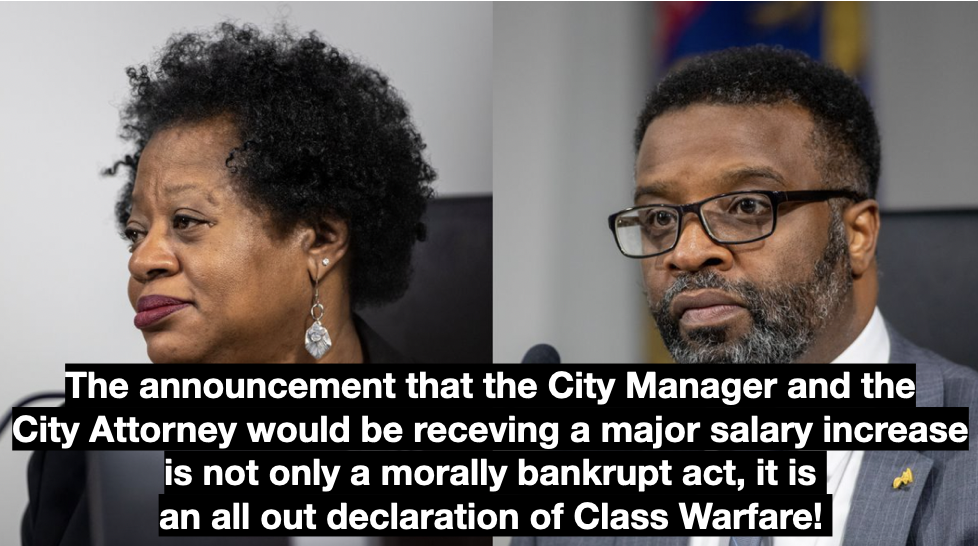
MLive reported that both City Manager Mark Washington and City Attorney Anita Hitchcock will see their salaries increase. The MLive article stated:
If the pay range changes are approved, Washington’s current salary would place him at the fourth step of the pay schedule, with increases to $287,032 and finally $303,196 still ahead.
As for Hitchcock, she would get a bump up to at least the first and lowest level of the new pay range, $169,096. She would then have increases of $176,276, $183,456, $190,636, $197,816 and finally $204,996 ahead.
To add insult to injury, the Fiscal Committee approved the salary increases, with City Commissioners expected to have approved the salary increase at last night’s City Commission meeting.
Such a move by City Officials is unconscionable, especially considering how many people in this community are being subjected to live in poverty.
- Thousands of Grand Rapidians are facing eviction.
- Tens of thousands are experiencing food insecurity.
- BIOPC communities continue to experience significant disinvestment in Grand Rapids.
- Thousands of families are having to chose between paying heating bills or pay health care expenses.
- Grand Rapids is in the midst of a housing crisis.
- The COVID rates in Michigan are the highest in the country and Kent County is one of the worst.
On top of all of this, City Manager Mark Washington and City Attorney Anita Hitchcock were the two primary actors who blocked a proposal in July of 2020 by some City Commissioners, a proposal that would reduce police funding to the 1995 City Charter mandate level. Equally important is the fact that the community groups that were calling for defunding the GRPD, were also demanding that the money cut from the GRPD would go directly to Black and Brown residents in Grand Rapids. We have been hearing over and over again, how the southeast part of Grand Rapids has been deliberately ignored when it comes to investment from the City of Grand Rapids.
It is completely baffling that City officials would agree to these salary increases while so many people can’t find work and businesses are closing at an alarming rate. Maybe we expect too much from City officials or maybe we expect Grand Rapids City Officials to serve the public interest. Whether we feel let down or deceived, the reality is that this announcement that City officials will be receiving a substantial salary increase is not only morally bankrupt, it is class warfare, plain and simple.
GRIID 2022 Winter Class: The Function of Policing in the US and how we can work towards a world Without Police
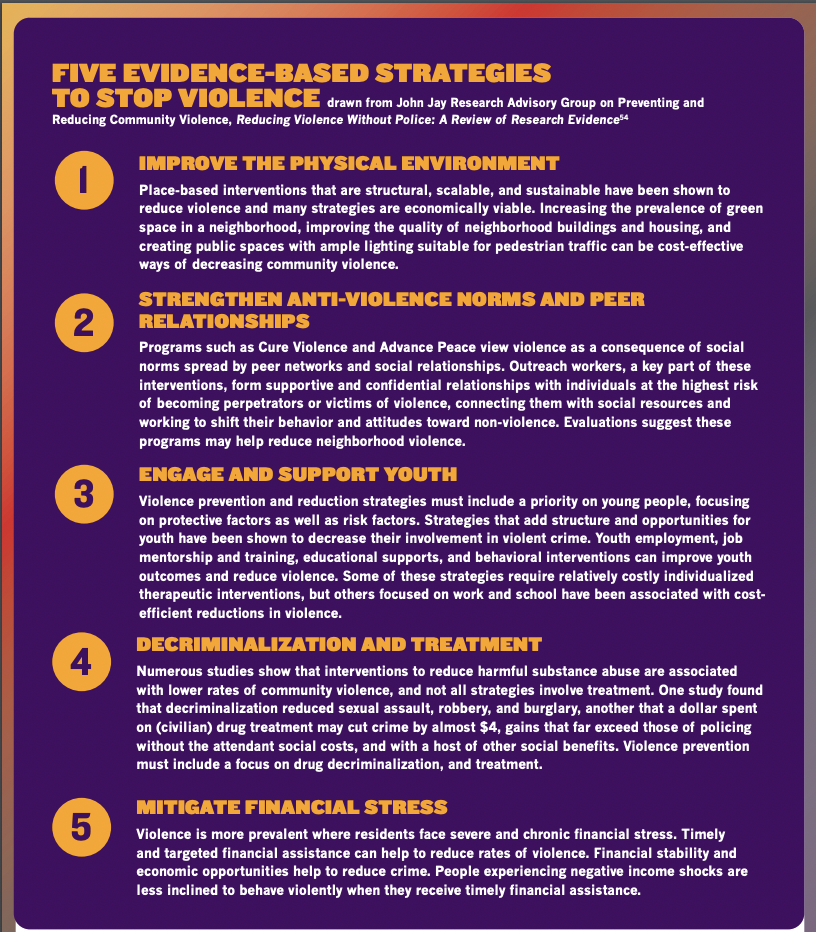 In this 8-week class, we will explore the history of policing in the United States, its role in maintaining structural racism and how it has been used to suppress social movements.
We will also look at more contemporary dynamics with policing, investigating the notion of community policing, the practice of counter-insurgency by police departments, and the bi-partisan support for increased funding for policing.
Lastly, we will look at the movement to defund the police, using numerous writings from activists coming out of the abolitionist tradition, a discussion about the Movement for Black Lives Defund the Police toolkit and several other recent reports that challenge the dominant narrative that society needs police and that they keep us safe.
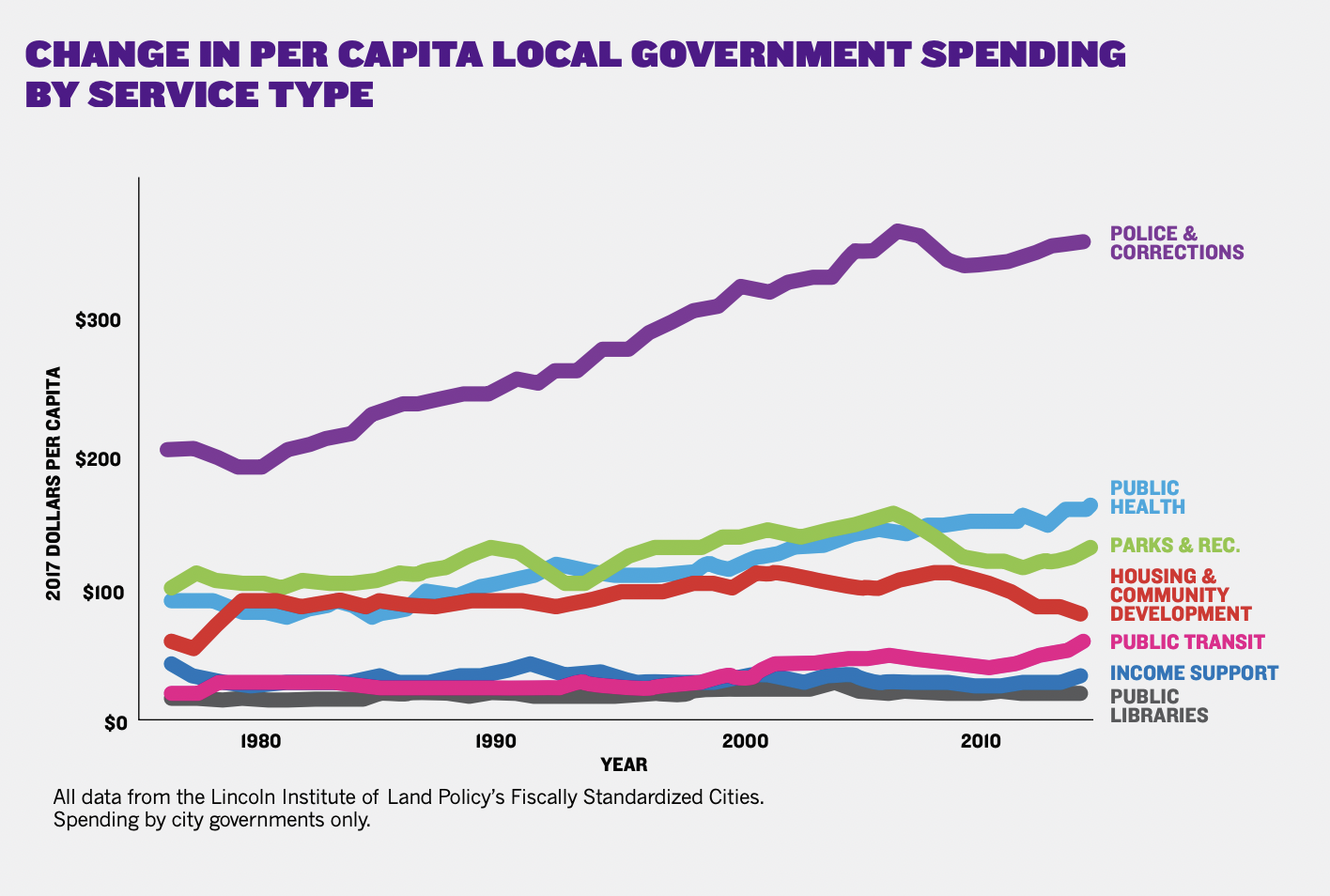
This will be a great opportunity to develop critical thinking skills and respond to all those liberal memes, like this one.
This class will take place on Monday evenings, from 6:30 – 8:30pm, beginning on Monday, January 17. The class will be held for 8 consecutive weeks, ending on Monday, March 8.
GRIID is asking for a $25 suggested donation for the class and will be re-directly the funds raised to groups working on defunding the GRPD. However, you will not be turned away if you can’t contribute financially.
If you are interested in signing up, please send an e-mail to jsmith@griid.org. There will be a 15 person limit for the class, which will be conducted virtually.
Once again the Acton Institute sides with White Supremacy, justifying the outcome of the Kyle Rittenhouse verdict
On Saturday, Acton Institute researcher, Dan Hugger, post an article entitled, What the Kyle Rittenhouse trial taught America about assumptions, keeping peace.
This Acton Institute post, like so many of their posts, attempts to use fancy academic terminology, a little bit of Old Testament scripture and a quote from their organization’s namesake, all to justify a political system that is rooted in White Supremacy.
The Acton writer early on states:
Lord Acton once wrote that the chief difficulty of the study of history is that “common report and outward seeming are bad copies of the reality, as the initiated know it.”
Using Lord Acton’s cryptic language, the Acton writer makes the claim that journalists, pundits, and public servants gave us the wrong narrative about what happened in Kenosha, Wisconsin, both with Jacob Blake and Kyle Rittenhouse. In this process, the Acton writer never provides us with an example of the wrong narrative, but then he proceeds to provide us with the “unbiased narrative,” which included the claim that Kyle Rittenhouse was in Kenosha merely to protect a car dealership from vandalism.
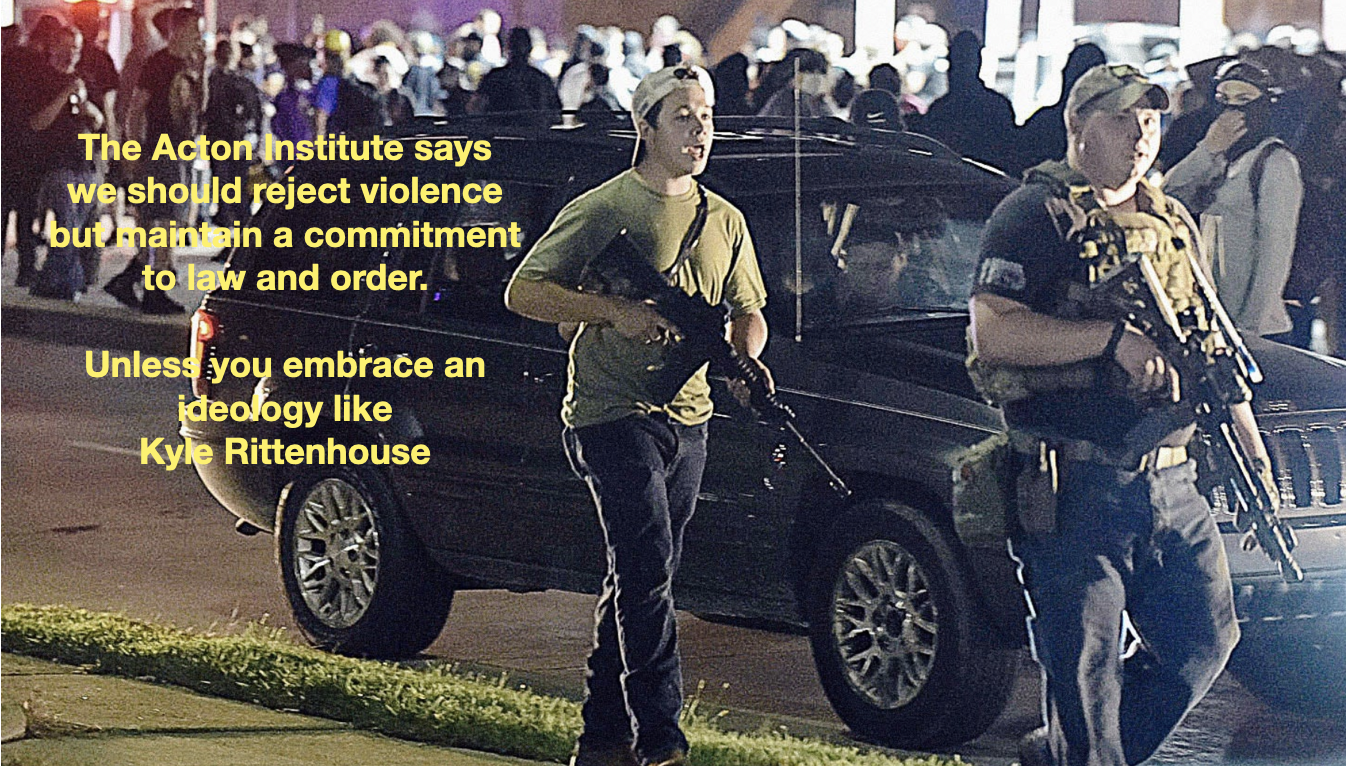
Dan Hugger, then tells us:
The questions of whether Kyle Rittenhouse lawfully possessed the firearm with which he fatally shot two and injured another and if he acted in self-defense has been settled by a jury of his peers in a court of law, which found him not guilty on all counts.
Ah, well, if the jury found Rittenhouse not guilty, then he must not have been guilty……sarcasm dripping.
What is instructive about the Acton Institute article are the following:
- There are no sources to substantiate any of the claims made in this article.
- None of the 3 people that Kyle Rittenhouse are named in the article, making it easier to accept the so-called self defense claim. Their names are Joseph Rosenbaum, Anthony Huber and Gaige Grosskreutz.
- There is no acknowledgement of the deep bias from the Judge in the Rittenhouse case.
- There is no acknowledgement that Trump officials provided talking points to reporters & elected officials, talking points that were sympathetic to Kyle Rittenhouse.
- In contrast to the Acton article’s claim about media bias, here is what the national media watchdog group FAIR had to say about the national news media handled the trial.
Towards the end of the Acton article, Dan Hugger provides us with the main point of the article, which is also rather instructive, when talking about what we should do:
This involves a rejection of violence by citizens and a commitment to maintain law and order by those in political authority.
This is the perfect response from those who want to protect systems of power. The public should reject violence, those in power should maintain law and order. We shouldn’t ever take to the streets, fight the system or use direct action to dismantle the very system that protects power and privilege, while punishing those who resist.
In contrast to the Acton Institute article, here is an excerpt from Margaret Kimberely’s response to the Rittenhouse verdict on Black Agenda Report:
Kyle Rittenhouse is obviously a white supremacist, but so is Joe Biden, who received 90% of the Black vote. White supremacy is a job requirement for the presidency and Barack Obama signed on to that agreement just as much as his predecessors did. Biden was seen as a savior who would rescue the nation from Donald Trump, who is portrayed as the only racist who ever served as president when he was one of just 46 who fit the description. Biden wasn’t particularly concerned about the verdict and his initial bland comment is proof. “Well look, I stand by what the jury has concluded. The jury system works and we have to abide by it.”
Biden’s nonchalant response is in keeping with his political history. After all he is the man who shepherded the 1994 Crime Bill through congress and bragged, “We do everything but hang people for jaywalking in this bill.” Biden is consistent, angrily blurting out in a meeting last year, “If it doesn’t count for y’all to hell with y’all!,” when he was asked for the bare minimum of using executive orders to thwart republicans, the people we are otherwise told to view as mortal enemies.
This is exactly why we should look to those from the Black Radical tradition to gain insight into what the significance of current events are, especially since this tradition always provides a systems critique.
Rep. Meijer votes for $778 Billion US Military Budget, which was passed with overwhelming Bipartisan support
 Last week, 3rd Congressional Representative, Peter Meijer, voted to for the National Defense Authorization Act (NDAA) for Fiscal Year 2022, which passed the House by a vote of 363-70.
The 2022 US Military Budget is $778 billion, which is $25 billion more than what the Biden Administration originally asked for. Now the Senate needs to approve the 2022 US Military Budget, which seems to be but a foregone conclusion.
This makes the 2022 US Military Budget larger than the one in President Trump’s last year, despite the fact that the Biden Administration has formally ended the 20 year US military occupation of Afghanistan. The US Military occupation of Afghanistan cost billions over the past 20 years, which has been part of the larger so-called US War on Terror, which has cost US taxpayers $21 Trillion since September 11, 2001.
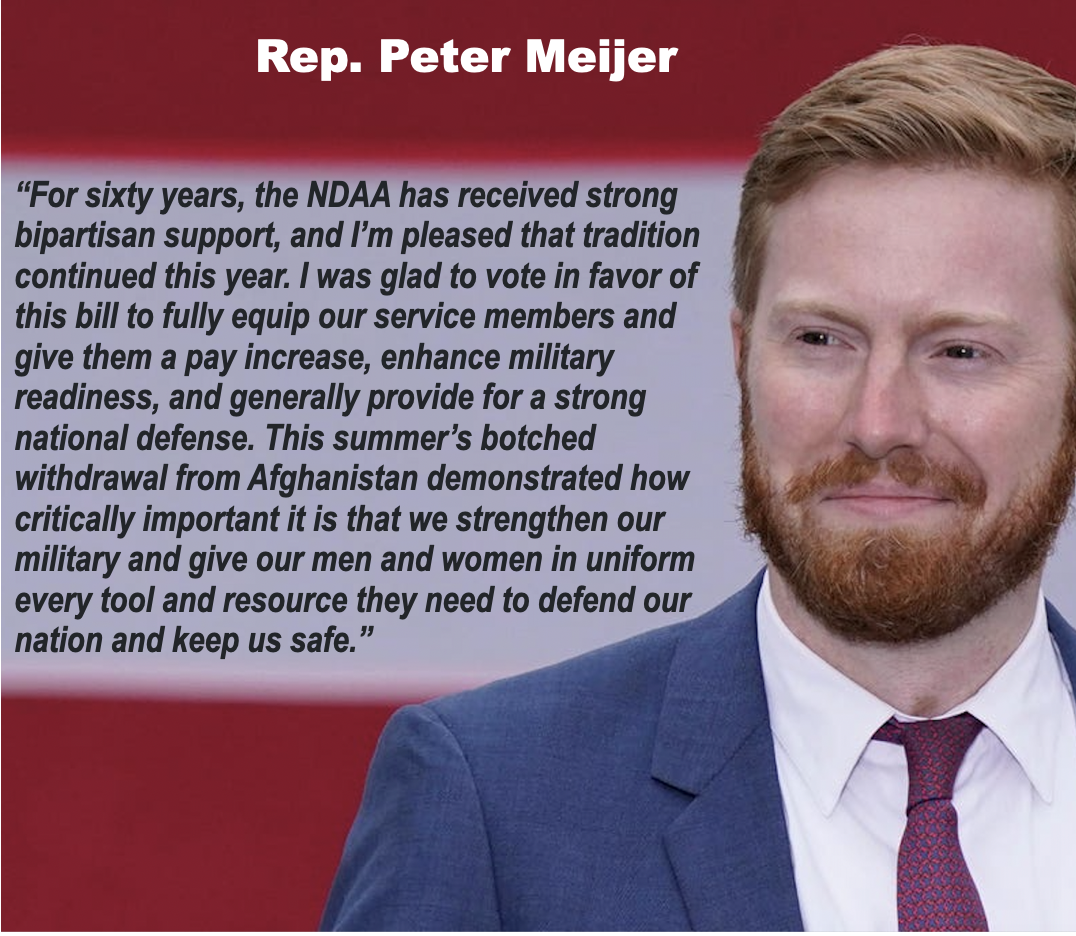
Rep. Peter Meijer released the following statement on his vote in favor of the massive US Military Budget:
“For sixty years, the NDAA has received strong bipartisan support, and I’m pleased that tradition continued this year. I was glad to vote in favor of this bill to fully equip our service members and give them a pay increase, enhance military readiness, and generally provide for a strong national defense. This summer’s botched withdrawal from Afghanistan demonstrated how critically important it is that we strengthen our military and give our men and women in uniform every tool and resource they need to defend our nation and keep us safe. After months of debate and compromise, I was happy to see the House and Senate come to a bipartisan agreement that prioritizes our military and does not include any poison pills, including any ‘red-flag’ provisions. Last night’s passage signals to our adversaries that the U.S. remains ready and equipped to respond to threats at home and abroad. I was proud to support this bill, I hope the Senate does their part to pass it quickly.”
Rep. Meijer claims that the US withdrawn from Afghanistan was botched, yet he says nothing about the disastrous twenty year US occupation of that country, the thousands of Afghani deaths, the several thousand US military personnel that died, nor all the other disastrous consequences of that occupation.
However, Rep. Peter Meijer does accurately use the term bi-partisan support for the 2022 US military budget, and he rightfully acknowledges that this bi-partisan support has existed for sixty years. My own read of the bi-partisan nature of US Militarism and US Imperialism is that it has last longer than 60 years. In fact, one could argue that there has fundamentally been bipartisan support for US militarism throughout the entire history of the United States of America.
This bipartisan support of US Militarism over the past 60 years has translated into the following:
- Bipartisan support for US Wars of Aggression in places like Vietnam, Grenada, Panama, Somalia, Kosovo, Iraq & Afghanistan.
- Bipartisan support for US military aid to other wars/repression by other countries, specifically illegal wars/acts of aggression, based on United Nations rulings, such as Israel, Egypt, Indonesia, El Salvador, Guatemala, Angola, just to name a few.
- Bipartisan support for weapons sales to dozens of countries, with a recent example being Saudi Arabia.
- Bipartisan support for massive taxpayer subsidies to US military contractors, who manufacture the weapons used by the US Military and many other countries because of US weapons sales. According to the National Priorities Project, US Military Contractors have made $3.4 Trillion over the past 10 years.
- Bipartisan support for continuing to spend Trillions on militarism instead of funding housing, health care, education, or investing in the fight against the Climate Crisis.
This Bipartisan support for US militarism is addressed in a recent article by the Feminist and Anti-war group Code Pink, which writes:
Let’s make no mistake about this: Congress’s choice to keep investing in a massive, ineffective and absurdly expensive war machine has nothing to do with “national security” as most people understand it, or “defense” as the dictionary defines it.
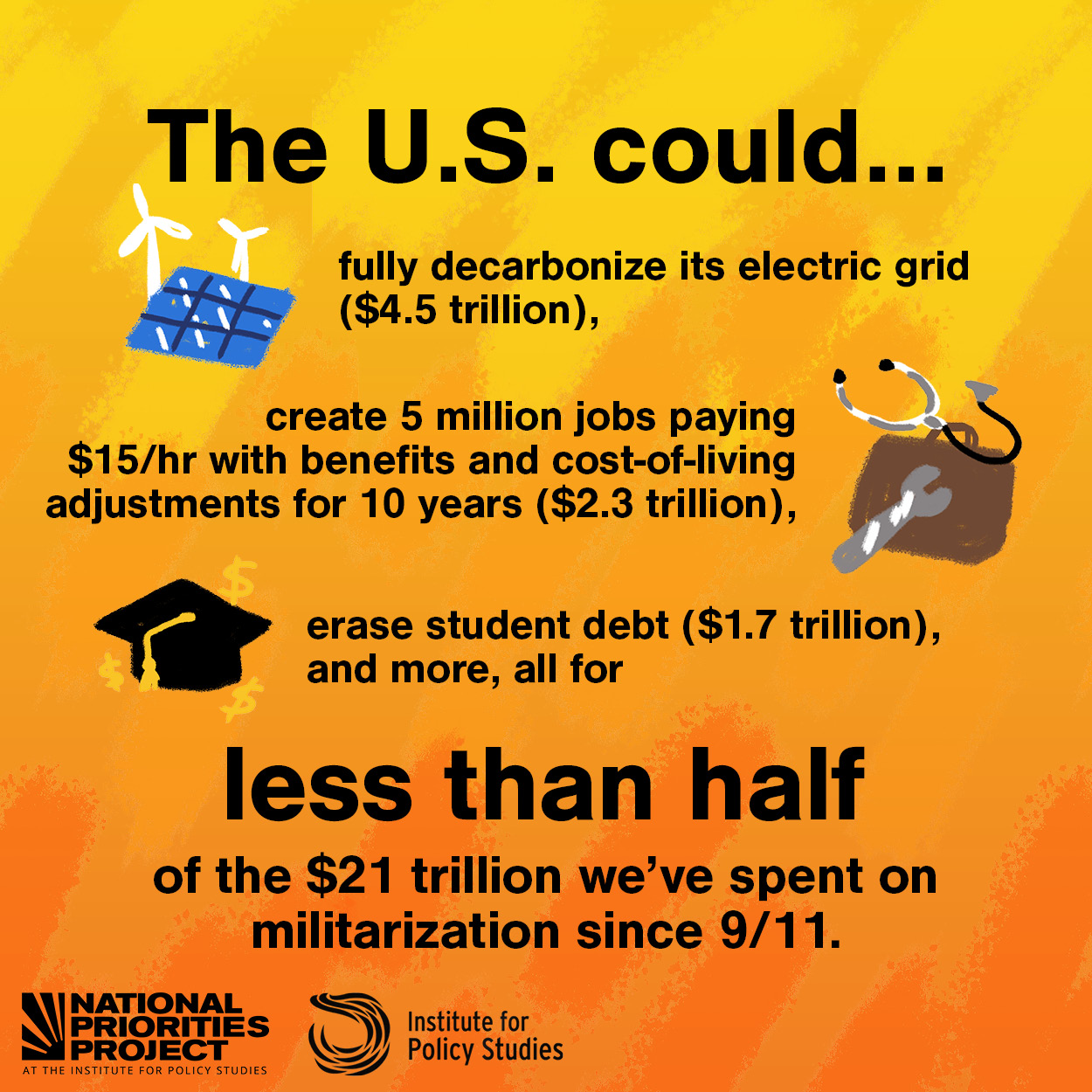 U.S. society does face critical threats to our security, including the climate crisis, systemic racism, erosion of voting rights, gun violence, grave inequalities and the corporate hijacking of political power. But one problem we fortunately do not have is the threat of attack or invasion by a rampant global aggressor or, in fact, by any other country at all.
Maintaining a war machine that outspends the 12 or 13 next largest militaries in the world combined actually makes us less safe, as each new administration inherits the delusion that the United States’ overwhelmingly destructive military power can, and therefore should, be used to confront any perceived challenge to U.S. interests anywhere in the world—even when there is clearly no military solution and when many of the underlying problems were caused by past misapplications of U.S. military power in the first place.
I wholeheartedly reject and oppose Rep. Peter Meijer’s vote to keep funding US Militarism, but he is correct when he says that this effort has been Bipartisan for decades.
 On Tuesday, the City of Grand Rapids discussed updating the GRPD surveillance policy during the Committee of the Whole meeting. MLive devoted a whole article to it, noting that City Manager Mark Washington is “expected to be approved by City Manager Mark Washington on Jan. 3, 2022.”
The MLive article does provide a decent overview of the updated draft of the City’s surveillance policy, ending with a bullet point list of issues that the updated policy would address. The article also notes that the City of Grand Rapids partnered with the NAACP and the ACLU to refine the policy. Both entities are legitimate entities, but they do not speak for the entire community.
There are numerous things that are problematic about the updated draft of the City’s surveillance policy, issues that the MLive article does not really address.
First, the updated draft of the City’s surveillance policy is not hyperlinked in the article. This is always critical, since any one of us can bring our own interpretations to the table when looking at policy language, and MLive is no exception. Here is a link to the updated draft City Surveillance policy, as was discussed during the Committee of the Whole meeting, specifically pages 4 – 15.
Second, the MLive article says that the changes to the City’s Surveillance policy was driven by the public opposition to the ShotSpotter technology that the GRPD wanted last year. What the MLive article fails to mention, is that there was a well organized campaign to oppose the ShotSpotter technology, from a coalition of groups, who produced a statement (linked here) with several of the groups circulating an online action alert that hundreds responded to and some of the coalition member groups did actions outside the homes of several City Commissioners to pressure them to vote no.
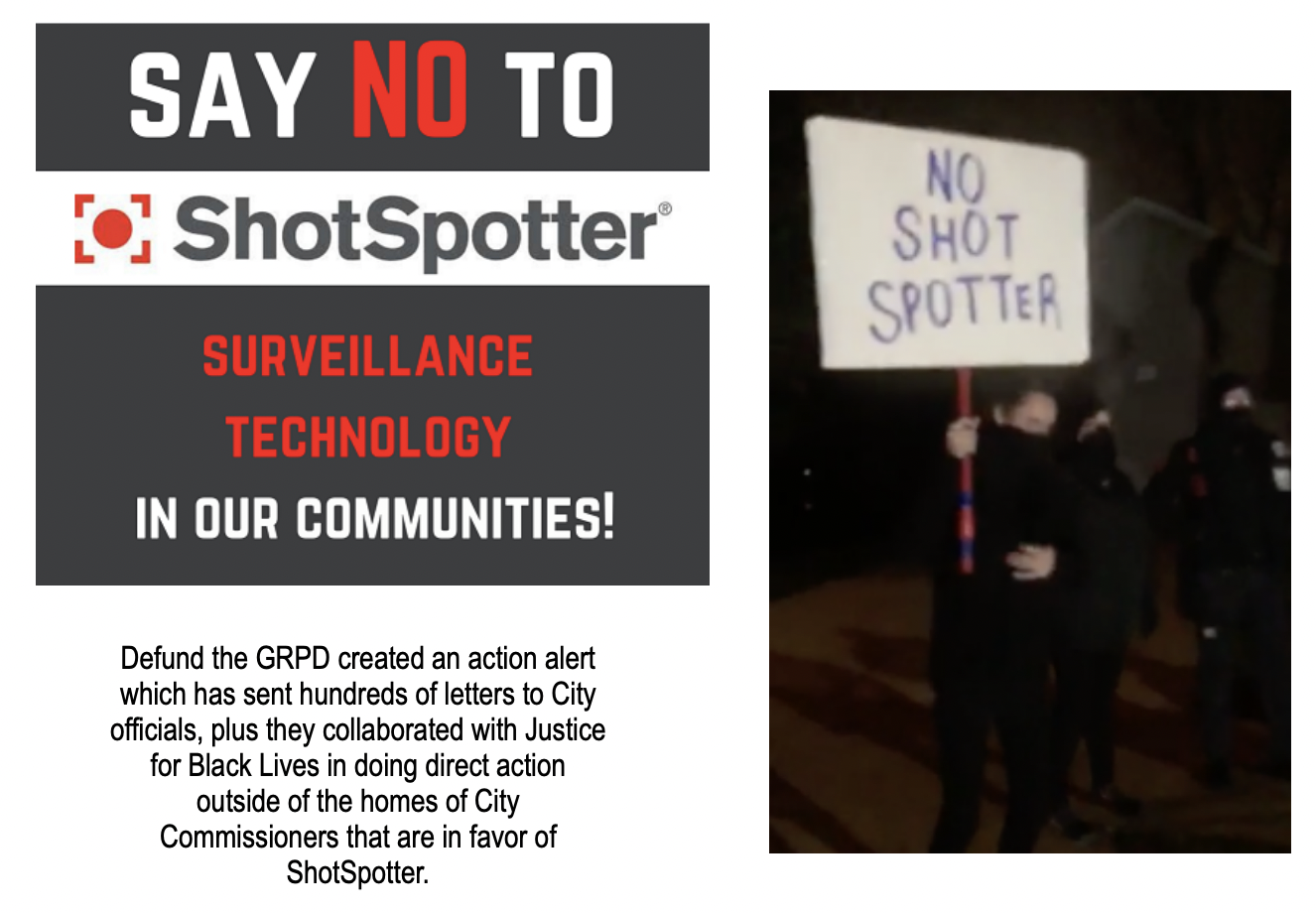
Third, there is mention in the MLive article that when the GRPD wants to use new surveillance technology, the City will have to a public hearing for approval. This is certainly a step in the right direction, but why is there no scheduled public hearing on the adoption of the updated City Surveillance policy itself? Also, why is there no transparency on the existing surveillance practices and technology that the GRPD currently uses? I sent a letter to the City of Grand Rapids about this very issue one month ago, with no response from the City Commissioners, the Mayor or the City Manager.
Lastly, the language of the draft of the City’s Surveillance policy is vague enough, so that the GRPD and the City could justify using surveillance technology whenever they determine. Here is the language:
“Extenuating circumstances” means incidents involving a good faith belief that an imminent danger to individual safety or public health is likely.
“Imminent danger” means a hazard exists which could reasonably be expected to cause death or serious physical harm immediately or before the imminence of such hazard can be eliminated through normal compliance enforcement procedures.
If recent history has taught us anything, then we should all be well aware of the fact that the laws currently in place overwhelmingly are in favor of protecting the police. In the past 18 months in Grand Rapids, we have seen the City Attorney and the City Manager stop any efforts to reduce funding for the GRPD, with vague language about “what is legal.” We have seen the GRPD repeatedly harass, intimidate and arrest Justice for Black Lives members, always justifying the arrests with their interpretation of the law or their selective enforcement of City ordinances. We have also seen numerous efforts to obtain GRPD documents through Freedom of Information Act (FOIA) requests, where the information is highly redacted.
Considering the history and the bad faith efforts of the City of Grand Rapids around policing issues, the public should be highly skeptical of the City’s updated Surveillance policy.

