The Acton Institute despises the Movement for Black Lives, but they love it when Black people embrace Capitalism
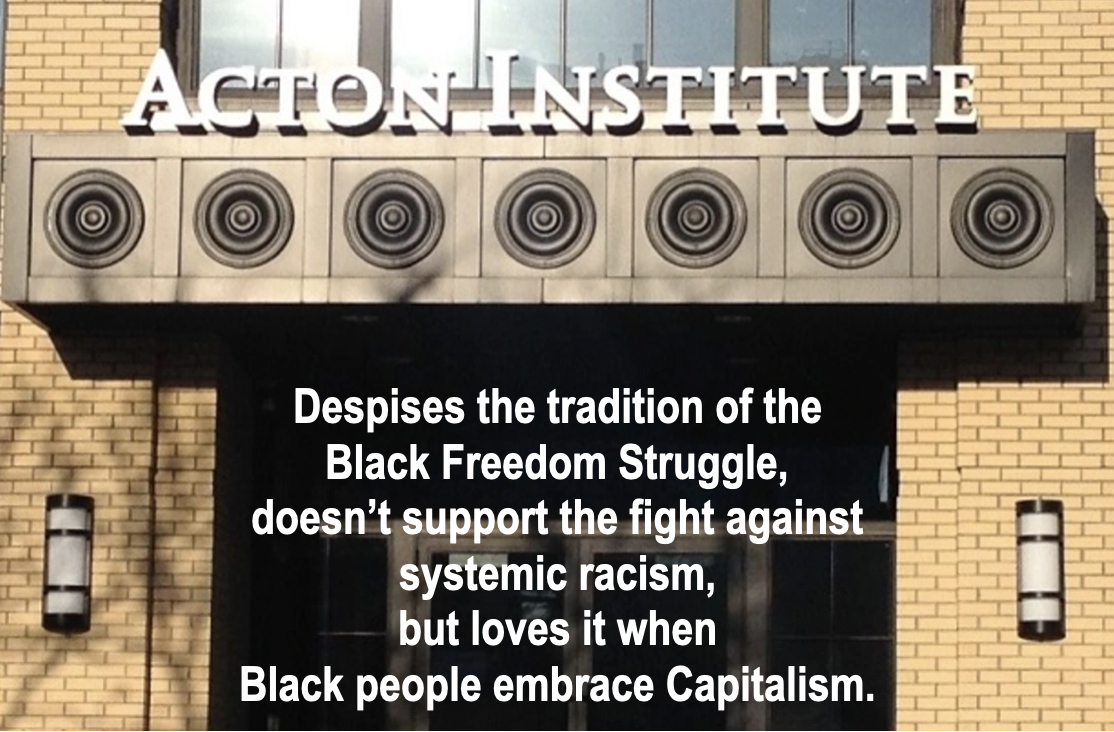 Ever since the Black-led international uprising in response to the police murder of George Floyd, the Acton Institute for the Study of Religion and Liberty has gone out of its way to denigrate the Movement for Black Lives.
GRIID has been documenting Acton’s position on BLM since June of 2020 and their overt support of White Supremacy. Here are links to several posts calling them out on their anti-Black Lives Matter stance:
The Grand Rapids-based Acton Institute has essentially declared war on the Movement for Black Lives
Acton Institute refers to BLM as a cult
Acton claims that the 2020 uprisings hurt Black people
Acton condemns Black author Ibram X. Kendi
In November of 2021, the Acton Institute once again attacks the Movement for Black Lives during the Kyle Rittenhouse trial
Black Freedom and Free Market Capitalism
Now that we have made it clear that the Acton Institute despises the Movement for Black Lives, they demonstrate their own White Supremacist arrogance by invite a white professor and author to do a lecture on how Black people can flourish by embracing Free Market Capitalism.
Rachel Ferguson, who is a professor at Concordia University Chicago, and the author of the forthcoming book, Black Liberation Through the Marketplace, was invited to speak during an Acton Institute lecture series. Two weeks later, Ferguson was the guest on the Acton Institute’s radio show, Acton Line, to discuss her new book and how Black people can flourish in the market place. Ferguson’s basic argument is that the most effective way for Black people to respond to structural racism is to become get access to capital, become an entrepreneur and to create wealth.
Now, I am all in favor of Black people getting access to capital in the current Neoliberal Capitalist economy. However, having access to capital is not enough. Becoming entrepreneurs is not enough, especially since not everyone can be a business owner. Black people and Black families need to be able to earn a Living Wage, no matter what kind of work they do. More importantly, Black people deserve reparations. Black people deserve reparations for the centuries long harm that Structural Racism has done to them.
If Black families are earning a Living Wage and if reparations are honored, then the whole issue of access to capital becomes less of an issue. You see, Rachel Ferguson and the Acton Institute only like Black people who buy into Black Conservatism. The Acton Institute is not decrying the structural racism that Black people face on a daily basis and when Black people make demands in the tradition of the Black Freedom Struggle, like the Movement for Black Lives, the Acton Institute calls them terrorists and blames them for the economic condition of poverty.
What is instructive about this dynamic of eschewing the Black Freedom Struggle and advocating for Black access to capital, is that there are groups in this community that also despise the Black Freedom Struggle and promote Black economic conservatism. Of course the Acton Institute does this, but they are a think tank and promote policy. When it comes to the issue of Black people gaining access to capital and eschewing the Black Freedom Struggle, there are two DeVos-created entities that come to mind.
Start Garden and AmplifyGR, both created by and funded by the DeVos family, push the idea of wealth creation and access to capital for Black people, while simultaneously distancing themselves from the tradition of the Black Freedom Struggle. In fact, both of these groups, like their funding source, the DeVos family, are historically antagonistic towards the tradition of the Black Freedom Struggle, as is currently being practiced by the Movement for Black Lives.
This should come as no surprise, since the DeVos family has also been a major funder of the Acton Institute, as well as having numerous family members serve on Acton’s Board of Directors.
Money can be very seductive, but it is also a tool that the DeVos family, the Acton Institute and faux intellectuals like Rachel Ferguson use to present themselves as a friend of the Black community. The reality is that those with political and economic power have always used that power to manipulate and control the Black community. In fact, this is exactly what Todd Robison names as Managerial Racism in his book, A City Within a City: The Black Freedom Struggle in Grand Rapids, Michigan.
Editor’s note – Rachel Ferguson spoke to a mostly white audience when speaking at the Acton Institute lecture series in December. She is scheduled to speak to a mostly white audience again, when she presents the thesis of her book at Hope College on February 7th. This makes sense, since white people love white authors who don’t challenge them with issues like white privilege and complicity in white supremacists policies.
Why are Senators Stabenow and Peters supporting military aid that could lead to war?
 Last week, the US Senate proposed S.3488, a bill that would provide a significant amount of funding to Ukraine and NATO allies against Russia.
The language of the proposed funding states:
To counter the aggression of the Russian Federation against Ukraine and Eastern European allies, to expedite security assistance to Ukraine to bolster Ukraine’s defense capabilities, and to impose sanctions relating to the actions of the Russian Federation with respect to Ukraine, and for other purposes.
A few days later, the US House of Representatives submitted their own proposal to provide funding that would lead to war.
According to a recent article in The Intercept:
House Speaker Nancy Pelosi, D-Calif., told members on a caucus call Tuesday that she’s looking to skip marking up the bill and move it straight to the House floor, setting up the possibility of a vote as soon as early next week, two congressional sources told The Intercept. The sources spoke on the condition of anonymity because they’re not authorized to talk to the press. Pelosi’s office did not immediately reply to a request for comment.
“This is how the space for nonmilitary options gets slowly closed off in Washington, without any real debate,” one of the sources, a senior Democratic aide, told The Intercept.
The Intercept article went on to state:
The legislation would send $500 million from the Foreign Military Financing program to Ukraine for 2022. That amount would have made Ukraine the third-largest recipient of funding from the State Department’s FMF account in 2020, surpassed only by $3.3 billion to Israel and $1.3 billion to Egypt. (That year, the FMF program gave Ukraine $248 million.)
Other sources of independent media have also been providing important information and analysis of why the US government’s rush to provide weapons and funding for Ukraine are a potentially catastrophic decision. Common Dreams reported:
As the New York Times reported Tuesday, the U.S. “has authorized Estonia, Latvia, and Lithuania to send Stinger anti-aircraft missiles to Ukrainian forces, augmenting the Javelin anti-tank missile deliveries to Ukraine that Britain began this month.”
Such developments in recent days have intensified concerns that the U.S. is on the verge of embarking on yet another military intervention that could have devastating human consequences.
Warning against military action and pressing all parties to engage in diplomatic talks, Bridget Moix of the Friends Committee on National Legislation said Tuesday that “war represents a calamitous failure of governments to do their most basic job of keeping their people safe.”
Joseph Gerson, who is the President of the Campaign for Peace, Disarmament and Common Security, also provides important analysis in an opinion piece that was posted on Common Dreams on Monday:
This has been a totally unnecessary crisis, fueled in large measure by U.S. insistence on maintaining NATO’s “open door” policy, when the reality is that there is no way that France or Germany will agree to Ukraine becoming a NATO member state. Resolution of the crisis could be hastened were Biden or Blinken to state the obvious: “We understand there are deep insecurities on all sides. Given that our allies are in no hurry to welcome Ukraine into NATO, we propose a moratorium on new NATO memberships. Beyond that, we look forward to a range of constructive negotiations to establish an enduring Eurasian security framework for the 21st century.”
So why are US politicians, like Michigan Senators Gary Peters and Debbie Stabenow, so quick to want to support militarism as a response to this potentially disastrous situation? Part of the issue is that the US weapons industry has been spending on average $100 Million a year since 2000, to lobby members of Congress, according to OpenSecrets.org.
A second reason that the Congress is so quick to support military solutions, has to do with the long-standing role that weapons manufacturers play in campaign contributions. Again, according to OpenSecrets.org, in the 2020 Election cycle alone, the top 20 weapons contracts contributed a little over $47 Million to political candidates. It is also important to acknowledge that this campaign funding from weapons contractors is bi-partisan, with Republicans holding an ever so slight edge on campaign contributions in the 2020 Election cycle.
When it comes to Michigan Senators Gary Peters and Debbie Stabenow, we can see that they too have received lots of funding from US weapons manufacturers. This is especially the case when facing re-election. For example, in 2018, the last time that Senator Stabenow was up for re-election, she received $70,301 from weapons contractors. When Gary Peters was running for re-election in 2020, he was the recipient of $208,387 from companies that make weapons for the US military. None of this should come as a surprise to those who actually follow the money when it comes to politicians.
What is always instructive is how the bi-partisan consensus on US militarism stands in stark contrast to the message of people like Dr. Martin Luther King Jr. Just days after the federal government celebrated to birthday of Dr. King, they jump at the chance to push more policies that essentially promote militarism and imperialism. Senator Peters, like so many members of Congress, posted a commemorative video for MLK Day, yet when it comes to actually honoring the legacy of Dr. King, Peters and most of his colleagues shit on his grave.
“A nation that continues year after year to spend more money on military defense than on programs of social uplift is approaching spiritual death.” Dr. Martin Luther King Jr.
GRIID Class – The Function of Policing in the US and how we can work towards a world Without Police: Part II
 For the second session, we read chapters 4 and 5 from Kristian William’s important book, Our Enemies in Blue: Police and Power in America.
Chapter 4 is entitled, Cops and Klan, Hand in Hand, which deals with the historical legacy of the relationship between cops and White Supremacist groups. This chapter begins right after the Civil War, with the creation of groups like the KKK, which were a direct response to the efforts during the Reconstruction era.
Williams looks at how the former slave patrols were now formalized police groups that did whatever they could to prevent the Black community from gaining any kind of legal and economic rights. The author also presents how state legislators passed Black Codes, which were designed to “regulate” those formerly enslaved and to impose segregationist policies. Williams offers numerous examples of riots that were organized by white people against Black populations, seeking to intimidate, harass and do direct bodily and economic harm to the Black community. In some cases the police did nothing to intervene, and in most cases the police led the riots against Black people.
In the 20th Century, this relationship between the KKK and the police was revived with the second wave of the Klan beginning in the 1920s. This relationship flourished during the Civil Rights era, as cops in both the north and the south were active members in the Klan, with the author giving examples from Alabama, Mississippi, and Michigan. In numerous instances, the FBI even used KKK informants to gather information of Civil Rights activists.
In another part of Chapter 4, the author shows how the practice of racial profile by police, became even more institutionalized means of monitoring, harassing and arresting a disproportionately hight number of Black and Brown community members.
Chapter 5 is entitled, The Natural Enemy of the Working Class, deals with how police forces have always been used to not only policy working class people, but have been used by the Capitalist Class to suppress worker demands and worker uprisings.
This chapter makes it clear that with the industrial revolution in the US, with more and more factory workers or workers in the mining sector, police and other security forces were used to suppress worker demands and worker-led strikes. Williams makes it clear that law enforcement agencies targeted labor organizers and always worker in cooperation with the Capitalist Class to suppress any kind of labor uprisings. The author gives examples of the IWW, the Bread & Roses campaign, the 1934 strike wave and many others, always demonstrating how cops worker in the service of capital.
Even though most labor unions became more business-friendly throughout the 20th Century, there were always insurgent worker movements, like the United Farm Workers and those that became more radicalized after the passage of NAFTA and other trade policies. The anti-Globalization Movement was also targeted by the cops, especially during the late 1990s through 2001, before the movement was derailed because of 9/11.
In week 3 of the class, we will finish our reading and analysis of what the US system of policing does to suppress movement work in general, using several different readings. One important reading we will be using is an essay about how US police agencies adopted a counter-insurgency model used by the US State Department and applied it to insurgent movements in the US.
Taxing the Rich isn’t enough: Working towards an anti-Capitalist strategy to reduce human and ecological harm
 Yesterday, we posted an article about the death of Lena Meijer and how the response to her death continues to demonstrate that the news media will not challenge or question the wealthiest families in West Michigan.
Today, we want to continue looking at members of the Capitalist Class, but on a much larger scale.
About a week ago, the international group OXFAM, published a report entitled, Inequality Kills. In the summary of the report it states,
A new billionaire has been created every 26 hours since the pandemic began.6 The world’s 10 richest men have doubled their fortunes, while over 160 million people are projected to have been pushed into poverty.7 Meanwhile, an estimated 17 million people have died from COVID-19—a scale of loss not seen since the Second World War.
The OXFAM report is filled with details, data and analysis on how the wealthiest people on the planet are causing irreparable harm, both to human life and to the natural world. The report makes it very clear that inequality does indeed kill:
We estimate that inequality is now contributing to the deaths of at least 21,300 people each day—or one person every four seconds.This is a highly conservative estimate for deaths resulting from hunger in a world of plenty, the denial of access to quality healthcare in poor countries, and gender-based violence faced by women and rooted in patriarchy. We also provide estimates for the deaths resulting from climate breakdown in poor countries.
 The graphic here in the right, reflects the Grand Canyon-like chasm that exists between between the world’s wealthiest people and the rest of us, interns of who is responsible for producing more carbon.
This new report from OXFAM provides us with the latest data and analysis on how devastating inequality is. However, the overall analysis of inequality, the wealth gap or more accurately, the economic system of Capitalism is not new. We have known this for the better part of two centuries, that Capitalism causes inequality, thus Capitalism kills.
The more important concern for all of us is, what do we do about it? Last week, there was a post on the progressive blog, Common Dreams, entitled, 100+ Ultra-Rich People Warn Fellow Elites: ‘It’s Taxes or Pitchforks’. The article begins by stating:
A group of more than 100 millionaires and billionaires on Wednesday presented fellow members of the global economic elite with a stark choice: “It’s taxes or pitchforks.”
In an open letter published amid the corporate-dominated virtual Davos summit, 102 rich individuals—including such prominent figures as Disney heiress Abigail Disney and venture capitalist Nick Hanauer—warned that “history paints a pretty bleak picture of what the endgame of extremely unequal societies looks like.”
In a moment of honesty, some members of the Capitalist Class acknowledge that if they don’t allow their wealth to be taxed, the public might come for all of our wealth. Now, taxing the wealthy is a useful tactic, but it will do very little to actually close the wealth gap. More importantly, the mantra of “Tax the Rich” distracts us from and ignores the more fundamental problem of the economic system of Capitalism.
Again, I support taxing the rich, but that is just one tactic to be used in a much larger strategy to dismantle Capitalism. Plus taxing the rich means that the government still gets to decide what to do with that money, which often means that it will go to support other projects that the Capitalist Class endorses and often benefits from.
So, moving beyond the tactic of taxing the rich, what would a more robust strategy to dismantle capitalism look like:
Undoing the harm of the Capitalist Class would first require that they be held accountable for the harm they have caused, both legally and economically. People are members of the Capitalist Class always exploit the real wealth creators – workers, plus they exploit the use of natural resources, while at the same time producing massive amounts of toxins, pollution, carbon and other ecological catastrophes.
Acknowledging this harm cannot just be a moral stance, but have real legal and economic consequences. Workers should be paid massive back wages, which were taken from them by members of the Capitalist Class. In addition, the richest people on the planet should pay massive fines for the ecological harm done to all of us.
Secondly, members of the Capitalist Class should be required to pay massive reparations to Black, Indigenous and other Communities of Color for discrimination, exploitation and other forms of structural racism they have perpetrated for centuries. These reparations could take the form of giving land back, monetary reparations and giving over other assets to those they have caused harm to for centuries.
Now, the existing forms of representative democracy that we have in the US, at the federal, state and local level, will never embrace such a strategy, no matter who is elected. What we need to make the dismantling of Capitalism a reality will not be easy, but then again revolutionary work never is.
On organizational approach I would suggest, is what environmental strategist Stephen D’Arcy lays out for us in his essay, Environmentalism as if Winning Mattered: A Self-Organization Strategy.
D’Arcy suggests a two-pronged strategic approach, the Resistance Phase and a Transition Phase. Keep in mind that D’Arcy is focusing on environmental outcomes, but he also makes clear that his approach is fundamentally an anti-capitalist strategy.
The Resistance Phase would include some of the following strategic objectives:
- To construct an anti-corporate alliance of Indigenous communities, workers’ organizations, and environmental protest groups, based on a serious, sustained commitment to practical solidarity at the grassroots level.
- To build cost-raising protest movements, directed against all forms of environmental destruction, framing these struggles whenever possible as struggles for environmental justice, including Indigenous self-determination, economic justice and public welfare.
- To promote prefigurative community-based alternatives to capitalist production that model sustainability, solidarity, popular autonomy, and environmental justice.
- To re-establish vital currents of ecologically oriented anti-capitalist radicalism, for instance, eco-socialism, anarcho-Indigenism; social ecology; left eco-feminism; and so on.
The Transition phase would also have four strategic objectives:
- To organize anti-capitalist environmentalists into a common front of radical community organizations (SMOs, CCOs, PAOs), capable of tactical concentration for united action;
- To establish the hegemony of the anti-capitalist common front within the mass environmental movement, so that it exercises a consensual, acknowledged leadership role in pointing the way forward for large sections of the broader movement;
- To gain for the common front and its allies a degree of community-based “social” power, resting on the capacity to deploy general strikes, mass protest, and mass civil disobedience campaigns, on such a scale that the community-based opposition constitutes a community-based counter-power that can effectively challenge the economic power of corporations and the coercive power of the state;
- To secure the transfer of ever more extensive governance functions to community-based self-organization (SMOs, CCOs, PAOs), so that “social” sector institutions ultimately displace — rapidly whenever possible, gradually whenever necessary — both “private” and “state” sector institutions from their role in running the economy, the healthcare and education systems, providing social services, etc.
D’Arcy lays out a more detailed explanation of what this two-pronged strategy will look like. Of course, this is just one approach to dismantling capitalism and we should be looking at many, many more. However, the point is, that as long as the Capitalist Class exists, simply taxing the rich will not do much to address the multi-level global scale crises we currently face.
Re-Thinking the Life of Lena Meijer and her Billionaire family: On why we need to develop a real Class Consciousness
It has been just over a week now that Lena Meijer, the wife of Fred Meijer, passed away.
Once again, the local news media had nothing but positive and glowing commentary about someone who was part of the Grand Rapids Power Structure. The local news media did the same thing about Fred Meijer, when he passed away in 2011.
A WOODTV8 story uses the headline, Fred and Lena Meijer remembered for ‘belief in community’. GVSU also released a statement that wants us all to believe that Lena Meijer made an impact on the lives of students.
An MLive headline read, Lena Meijer remembered as caring, community advocate with ‘a wonderful heart.’ In that article there are comments from the Meijer family attorney, the CEO of Frederik Meijer Gardens & Sculpture Park, the vice president of university relations at GVSU, and the following statement from the DeVos Family:
“Lena Meijer was a quiet force of nature in our community. She had a warm and giving spirit, that was evident from the moment she walked in any room. She was a friend and partner to our parents / grandparents, as she was to us, and a steadfast supporter of her husband, her family and all of West Michigan. We smile as we think of Lena’s love of flowers and how the Meijer Gardens shares that passion with so many others. Lena lived generously and her legacy will live on through the countless lives she touched.”
The comments from the DeVos Family are completely expected, since this is one family within the Grand Rapids Power Structure speaking well of another member of the Grand Rapids Power Structure. People who have economic and political power will almost always look out for other people who have economic and political power. They do this because they do not want the public to think about how they became so rich and powerful.
Let’s take the Meijer Family. This is a family business that made their wealth by exploiting the workers in their stores, by benefiting from the exploitation of the workers in an unjust food system – farmworkers, for example – and by not having to pay for the consequences of benefitting from an unsustainable and exploitative retail system. Many of the items that are sold in the Meijer stores rely on workers who pick food or manufacture clothing, etc., workers who make poverty-level wages. On top of that, most of the items that are sold in Meijer stores travel thousands of miles, thus relying heavily on the burning of fossil fuels, which have contributed significantly to Climate Change.
Lena Meijer is fondly remembered for the monetary contributions she and her family have made over the years, but there is no honest discussion or investigation into how the Meijer family became billionaires. People don’t get rich because they are hard workers, they get rich by exploiting people and resources. But this is the con. Lena Meijer is remembered for making contributions to things like the Civic Theater, the Frederick Meijer Gardens, local colleges, etc., all of which do nothing to disturb the oppressive and exploitative economic systems that exist in West Michigan. This is why Meijer and DeVos, and the other members of the Grand Rapids Power Structure, get their names on buildings, because we as a society do not have sufficient class consciousness. We see the Lena Meijers of the world as being generous, when in fact we should be seeing their philanthropy as a PR scam, a diversion from having to actually look hard at how they made their wealth.
The MLive article quote the Meijer family attorney who stated that lena Meijer preferred to remain in the background, and to council members of her family. Do you think for a moment that Lena Meijer was counseling her sons Hank & Doug Meijer to pay the workers at Meijer stores a livable wage? No, she chose to not question how her son’s wealth went from $10.2 Billion at the beginning of the pandemic, to $16.9 Billion after the first 18 months of the pandemic. This means that the Meijer family business increased their wealth by $6.7 Billion, while Meijer workers couldn’t afford health care or pay their rent, and while thousands of families in West Michigan were suffering during the COVID 19 pandemic.

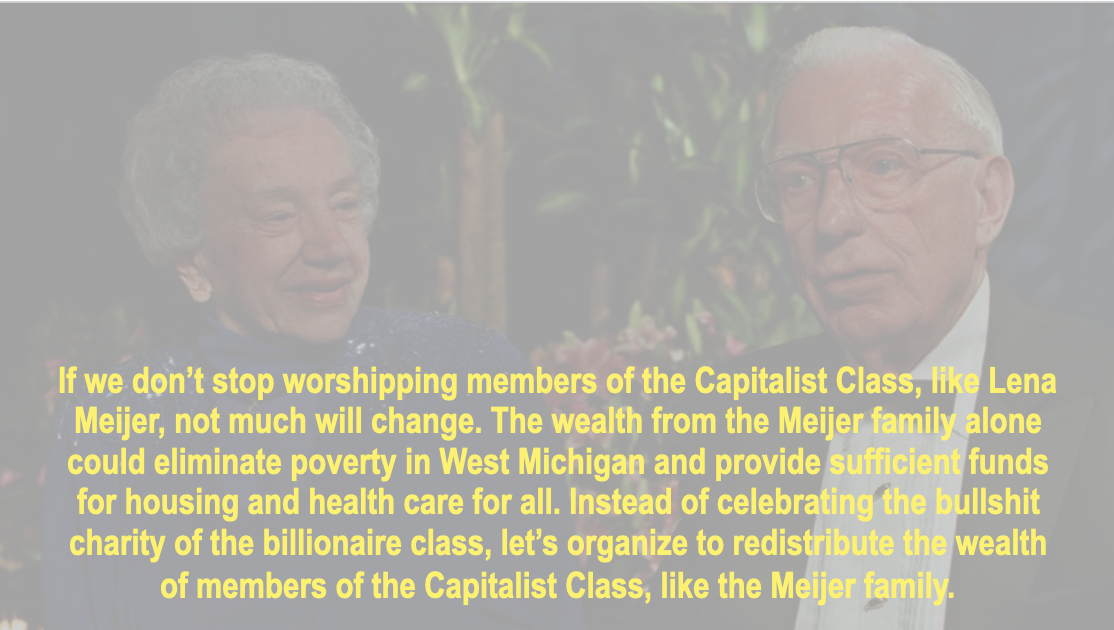
If we don’t stop worshipping members of the Capitalist Class, like Lena Meijer, not much will change. The wealth from the Meijer family alone could eliminate poverty in West Michigan and provide sufficient funds for housing and health care for all. Instead of celebrating the bullshit charity of the billionaire class, let’s organize to redistribute the wealth of members of the Capitalist Class, like the Meijer family.
New Report demonstrates that Schools across the country and in Michigan, fail when teaching about the Black Freedom Struggle
A new report released by the Zinn Education Project, says that State standards are failing to teach the truth about the Reconstruction era in US history.
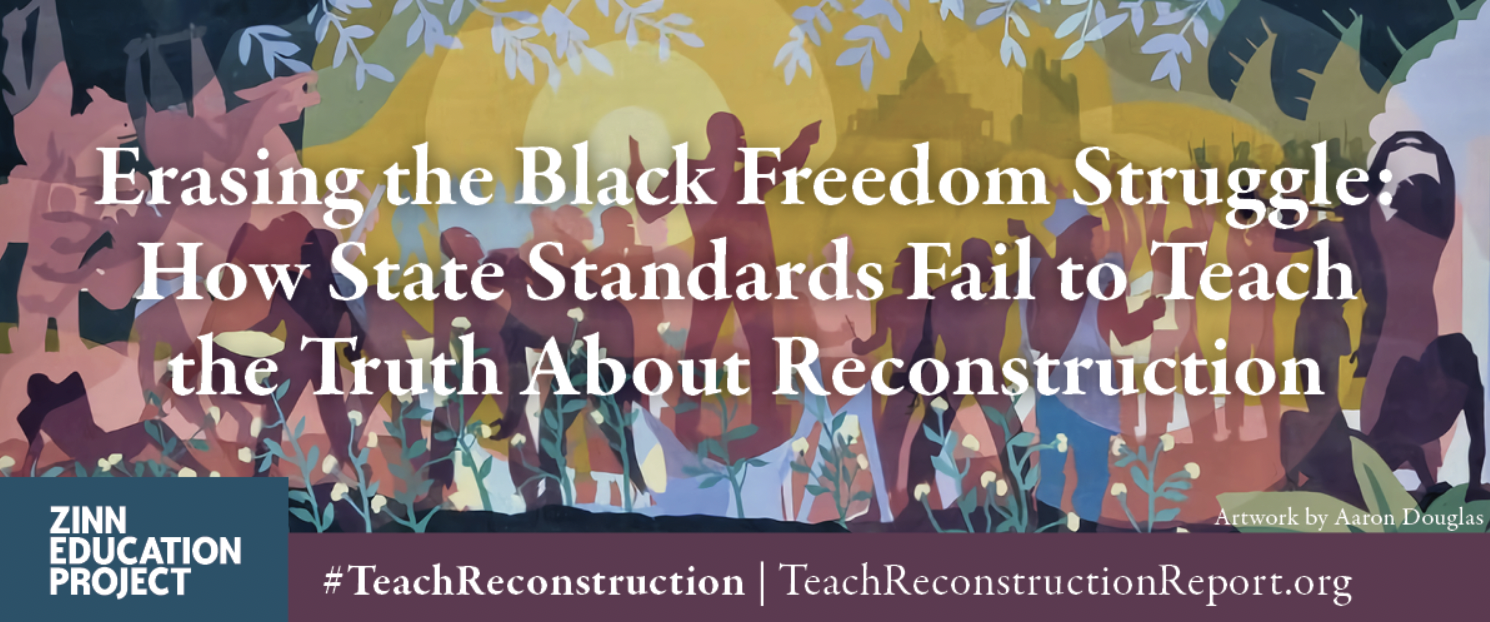
The report, entitled, Erasing the Black Freedom Struggle, has several key findings:
- Emphasize a top-down history of Reconstruction focused on government, politics, and policy with little emphasis on ordinary Black people and their organizing strategies.
- Still promote an inaccurate history of Reconstruction influenced by the Dunning School.
- Rarely name or contend with white supremacy or white terror.
- Do not provide clear and consistent definitions of Reconstruction.
- Limit the significance of Reconstruction to Southern states.
- Do not address the enduring legacies of Reconstruction or make connections to the present day.
In addition, the report provides a grade for each state as it relates to how well or how poorly they teach the Reconstruction era. Here are the findings for Michigan:
The coverage of Reconstruction in Michigan’s standards is partial, and their content is subpar. The Michigan Department of Education adopted the current social studies standards in 2019. Reconstruction is covered in grade 8. Although the high school history course begins in the late 19th century, Reconstruction is not included in the standards as a topic to cover.
Grade 8
Reconstruction is part of the final unit of the grade 8 U.S. history course. Broadly, the standards ask students to “develop an argument regarding the character and consequences of Reconstruction” and emphasizes “how various Reconstruction plans succeeded or failed.”
The standards include Black people as one of the groups/individuals whose “different positions” on reconstructing Southern society students should learn. They also contain specific references to the Freedmen’s Bureau, Black participation in government, the Reconstruction Amendments, and racial segregation, the Black Codes, and the KKK.
However, the standards do not mention white supremacy, framing the actions of the KKK and other groups opposing Reconstruction as part of an undefined “national and regional resistance” to the “change” of Black people’s political rights. The narrative of Reconstruction concludes with the Compromise of 1877, with students tasked with explaining “the decision to remove Union troops from the South in 1877 and investigate its impact on Americans.”
The section on Michigan also includes the following:
In May 2021, Republican legislators in the state Senate introduced SB0460, a bill that would prohibit the inclusion of “anti-American and racist theories” in curricula. They identify the 1619 Project and critical race theory among these prohibited subjects. In Nov. 2021, the Michigan House of Representatives passed HB5097, a law designed to ban “any form of race or gender stereotyping or anything that could be understood as implicit race or gender stereotyping” in classrooms. Several respondents to our survey expressed concern about the possible chilling effects on classroom education that such bills may have around the country, particularly on discussions of the history and legacies of Reconstruction.
While the information in this report is not surprising, it is clear that public schools in Michigan are failing to teach about a critical part of the Black Freedom Struggle. There is value in working to push the public school system in this state to do better on these topics, but we should not miss any opportunities to create other forms of popular education around the Black Freedom Struggle, in order to provide vitally important information on one of the most important social justice movements in US history.
The Zinn Education Project already provides solid popular education materials, but we can solicit local educators and organizers to create material that is specific to our communities as well.
DeVos created/connected groups are criticizing the number of public schools that are not going back to in person learning due to the COVID virus
 The COVID pandemic has been used by political groups and those of various ideological persuasions to pit people against each other or to attack institutions like government and education.
The attacking has been very visible on the matter of public school closings because of the COVID pandemic. On January 7th, the DeVos-funded group, the Michigan Freedom Fund, post a piece entitled, Governor Whitmer’s Silence is Deafening. The post attempts to not only lay the blame at the feet of Gov. Whitmer for some school districts shift to virtual learning, but also blames “union bosses and school bureaucrats.” There is also a Michigan Freedom Fund created video that just edits together a series of people stating that the best place for kids to be is in schools and that Gov. Whitmer is silent on the issue.
On that same day, January 7th, the right wing think tank, the Mackinac Center for Public Policy, posted a piece entitled, School Districts Shut Down Classrooms Again. The Mackinac article provides a more data-driven response than the Michigan Freedom Fund post, but it also uses the opportunity to criticize Gov. Whitmer. The Mackinac article then states:
Many school districts, along with private schools, have found a way to remain open. Admittedly, school systems are struggling with a host of challenges after the prolonged impacts of COVID-19. Those challenges include everything from difficulties finding substitute teachers and bus drivers to shifting requirements for virus testing and quarantine procedures. In some cases, there are enough students absent and quarantined to cancel class.
This paragraphed is certainly more nuanced and it does acknowledge the complications around what has been causing some school districts to close, such as having too many students and staff with COVID. This was certainly the case with a school in Grand Rapids, where COVID and staff shortages led to the decision to go to virtual learning, as reported on by MLive.
The Mackinac article also provides a link to private schools finding ways open safely, but the link that the article provides is from March of 2021, some 10 months ago. If there is anything that we have learned during the pandemic is that nothing stays the same, with COVID cases spiking and new variants emerging all the time. It also happens that the link that was included is from the same Mackinac Center for Public Policy writer Ben DeGrow, who writes exclusively for Mackinac around education issues, where he consistently attacks public education and advocates for privatization.
There is a third DeVos connected entity, the Great Lakes Education Project (GLEP), which also attacks Gov. Whitmer in their January 10th post, entitled, Gretchen Whitmer’s War Against Kids. The GLEP article also blames “bureaucrats and union bosses,” but little substance to back up their claims. This is standard operating  procedure, since GLEP was created by Betsy DeVos and one of its board members is Greg McNeilly, who not only runs Dick & Betsy DeVos’s Windquest Group, but is the President of the Michigan Freedom Fund.
Just a few days ago, the Great Lakes Education Project posted an additional attack against Gov. Whitmer and the Democratic Party, this time using the claim that Michigan Democrats don’t think that parents should have a say in what public schools teach. This response from GLEP was based on a meme posted by the Michigan Democratic Party, shown here on the right. There was so much backlash against this, that the Michigan Democratic Party removed the meme from their Facebook page. On Monday, according to the Detroit News, the Michigan Democratic Party made the following statement:
“Parents need to have a say in their children’s education, end of story. The post does not reflect the views of Michigan Democrats and should not be misinterpreted as a statement of support from our elected officials or candidates.”
 Getting beyond the often banal partisan politics involved, what seems to be missing in much of the criticism about public schools that are shifting to virtual learning again is the realities of what has been happening with COVID in recent months, particularly with the omicron variant.
On January 13, MLive reported another record breaking day of new COIVID cases in Michigan, with an average of of 16,000-plus cases a day.
In regards to schools, the data is also fairly alarming. MLive reported on January 11th:
In total, health officials are aware of 225 active school-related outbreaks affecting at least 5,706 students and staff, according to a report published by the state Monday, Jan. 10.
The January 11 MLive article also provides detailed information on reported COVID cases by schools across the state, with a searchable database that is 63 pages long.
 One last component that is also omitted from the larger discussion of public school and COVID polices/closings, is the fact that there is now a growing number of student-led strikes/walkouts across the US that is directly because more and more students don’t feel safe in schools.
One example is from Okemos, Michigan, where students walked out of school over COVID and other issues. The Lansing-based TV station, WLNS 6, also includes a student created flyer that is calling for an addition Sit-Out, as seen here.
It is understandable that parents are upset about how schools are responding during the pandemic. All of our lives are in an upheaval because of the pandemic, but policy makers and partisan politics are generally not making things easier for the public, for parents, and definitely not for students during this crisis.
GRIID Class – The Function of Policing in the US and how we can work towards a world Without Police: Part I
 For the first session, we read chapters 2 and 3 from Kristian William’s important book, Our Enemies in Blue: Police and Power in America.
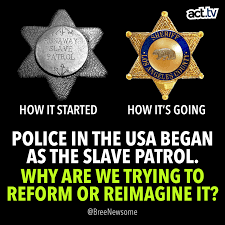
Chapter 2, entitled, The Origins of American Policing, provides readers with a broad overview of policing models that existed in Europe centuries ago. The author presents this information to not only demonstrate how much the idea of policing and public safety has evolved over the centuries, but to make the point that the US has had a fairly distinct model that is rooted in the system of slavery.
Williams talks about the origins of the Slave Codes, which were legislative acts throughout the US in the late 18th Century and 19th Century, as a mechanism of controlling Black people, especially those who were enslaved. After a period of Slave Codes, Slave Patrols were introduced, which the author believes is part of what the current US model of policing was based on.
In Chapter 3, The Genesis of a Policed Society, Williams then shifts his focus to what was happening in the northern cities, like New York and Boston. Slavery was outlawed in the North, even though the North still profited from Chattel Slavery. What was unique about the early formations of policing in Northern cities was what the author refers to as political machines. Williams uses Tammany Hall as an example of the political machine that used police officers to engage in corruption, to intimidate electoral outcomes and to maintain political power.
The author makes the point that during this period there was the development of the notion of “dangerous classes,” a reference to groups of people who were to be demonized, along with the demand for order. The demand for order can be seen in how the political machines used their police forces to control gambling, alcohol and the sex trade, both by profiting from it and using it to extort funds from political opponents. In addition, the policing of vice industries also justified a massive increase in arrests, thus making the argument that cops were necessary to “protect society.”
As always these class discussion are quite lively and there is never enough time to fully explore all of the aspects and nuances of these topics.
Next week, we will be reading more from Our Enemies in Blue: Police and Power in America, specifically chapters 4 and 5. Chapter 4 is entitled, Cops and Klan, Hand in Hand, which deals with the historical legacy of policing’s relationship to White Supremacist groups. Chapter 5, The Natural Enemy of the Working Class, deals with how police forces have always been used to not only policy working class people, but have been used by the Capitalist Class to suppress worker demands and worker uprisings.
Is there really any benefit to holding a public forum for the next chief of police, when the public doesn’t get to decide?
On Wednesday, there is a community forum from 6:30 – 8:30pm in the Grand Rapids City Commission chambers, a forum designed to allow the public to ask questions of the three finalists for the new Grand Rapids Chief of Police. Even if you are unable to attend the event in person, there are opportunities to ask question online, at this link.
Wednesday’s public forum is presented as a form of community engagement, because it provides the public an opportunity to ask questions. However, we should not fool ourselves into thinking that this will really mean anything, since the process to hire the next Grand Rapids Chief of Police is anything but democratic.
The firm that was hired to find the next Chief of Police, Public Sector Search & Consulting, is a California-based firm that specializes exclusively on “recruiting police executives.” This means that the company that the City of Grand Rapids hired to assist them in finding the next Chief of Police makes their money off of finding police leaders.
Equally important is how the paid consulting firm is presenting what Grand Rapids is like, based on their own police chief search application. The 14 page document paints Grand Rapids as the ideal city, with great public/private partnerships and a great place to raise a family. The page on the GRPD has no language that is critical of the department nor any reference to recent examples of how the police target Black and Brown communities. Oh, and the document also presents Grand Rapids as a city that is vibrant and rich in culture.
Since Public Sector Search & Consulting was hired by Grand Rapids, they held 4 virtual meetings that were poorly attended, plus they hosted 26 different Grand Rapids stakeholder input sessions. These “stakeholder” session were by invite online, which means that City official chose who to invite, plus none of this has been transparent, meaning the public does not know who was invited to these stakeholder meetings.
The local news media has been promoting Wednesday’s public forum, essentially using the same language that the City’s Press Release included, as we noted in a recent post. Since then, MLive has also written a story about the forum, with no significant improvement in the coverage.
It is important to point out that while we have known for a week about the public forum with the three police chief finalists, only WXMI 17 has produced a story that goes beyond the announcement of the forum. (as of January 16 when I wrote this) However, the Fox 17 story only provides further information, based upon what City Manager Mark Washington had to say and what each of the police chief candidates had to say. In other words, there was no critical investigation of the three police chief candidates.
The City of Grand Rapids does provide a brief bio for the candidates, but that information also includes no real assessment of their previously held positions, nor does it provide any insight into what community-based groups, from each of the cities they have worked in, think about these men.
So what we are ultimately left with is the following:
- Very little information about who the three police chief candidates are and their records around civil and human rights violations in the communities that have previously hired them.
- No transparency on the 26 different community stakeholder input meetings, both who was in attendance and what feedback was given.
- Only one public opportunity for people to ask questions of the already selected three candidates who will be making presentations, the fielding questions during the span of a brief 2 hours.
- No discussion from the City of Grand Rapids, nor the company hired by the City to conduct the police chief search, around the issues of how policing in Grand Rapids targets Black and Brown communities, racial profiling, or the GRPD’s targeting of organized groups who are demanding greater accountability and defunding of the Grand Rapids Police Department.
In addition, there is no discussion or questioning why City Manager Mark Washington gets to make the final decision about who will be the next chief of police. This means that Washington, who holds an unelected position of power in Grand Rapids, will get to decide on the next police chief, another position of power, which is also an unelected position. For those of us who are in favor of abolishing the GRPD, the move to make it a position where candidates would be elected is not a terribly appealing prospect, but it might provide more public scrutiny for anyone who was running for the position.
A more honest celebration of Dr. Martin Luther King Jr.
 As we celebrate one of the great leaders in the Black Freedom Struggle, it is important that we familiarize ourselves with the real Dr. King and not the one that is promoted in commercial media or by organizations that have their own agendas.
Like most people, Dr. King was not a static person and was not part of a static movement. He evolved over time and continued to sharpen his own view of the world as he moved beyond a civil rights view to a more global liberationist view. Dr. Martin Luther King Jr. also matured in his use of tactics and strategies when dealing with systems of oppression.
What follows are resources that we encourage people to investigate, so as to drawn your own conclusions about who Dr. King was, what he preached and practiced before he was assassinated over 50 years ago.
One good sources is The King Center Archive, which can be found online at http://www.thekingcenter.org/archive. The archive contains nearly 1 million documents associated with the life of Dr. King.
Another great source is a collections of King’s writings published in 1963 called, Why We Can’t Wait. This collection of writings includes his famous Letter from a Birmingham Jail.
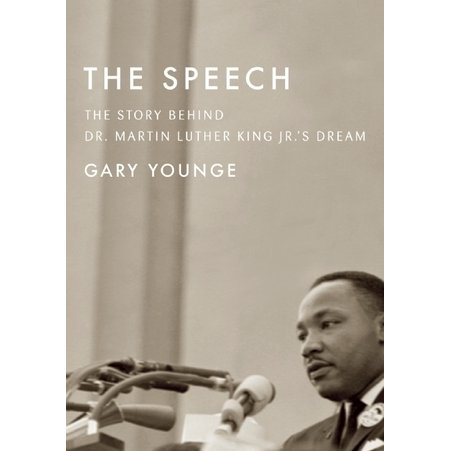 Of course, there is the I have a Dream Speech, which give delivered in Washington, DC in 1963 at one of the largest civil rights demonstrations in US history. Some great sources to accompany that speech are Gary Younge’s book, The Speech: The Story Behind Dr. Martin Luther King Jr.’s Dream and Nobody Turn Me Around: A People’s History of the 1963 March on Washington, by Charles Euchner.
 It is also important to know that Dr. King did not limit himself to challenging institutionalized racism, he also spoke out and organized around economic exploitation. Michael Honey’s book, All Labor Has Dignity, is a collection of writings and speeches that Dr. King gave that challenged economic injustice and well as demonstrating his relationship to organized labor groups in the US.
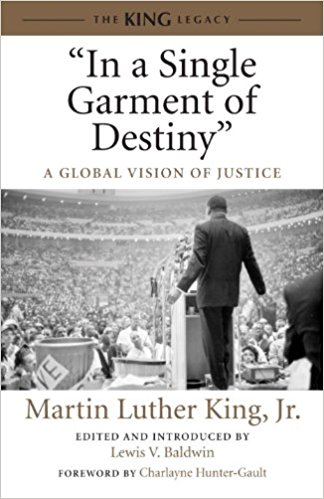 In a Single Garment of Destiny: A Global Vision of Justice, edited by Lewis Baldwin, you will find an amazing collection of writings and speeches by Dr. King that not only explored the issue of global poverty, but makes clear the tremendous understanding Dr. King had of US foreign policy and global solidarity. Included in this collection is King’s famous speech, Beyond Vietnam, which contains not only his denunciation of the US as the “Greatest purveyor of Violence in the world today,” it contains Kings naming the Evil Triplets of Racism, Militarism and Capitalism as the greatest threats to humanity.
 As King’s vision of liberation became more radical, he began to name systems of oppression and to call out the unjust US war in Vietnam and the violence perpetrated against the black community in the US. In a little know book entitled, The Trumpet of Conscience, there are 5 lectures that King delivered on the Canadian Broadcasting System in 1967. These are some of the most powerful articulations of King’s vision and makes clear why he was such a threat to those in power.
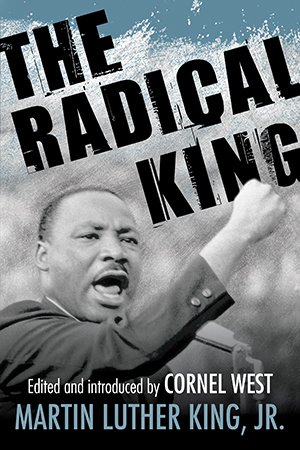 The further radicalization of King is also capture well in another collection of King’s work, edited by Dr. Cornel West, entitled, The Radical King.
One of the last campaigns that Dr. King was involved in was The Poor People’s Campaign, which began in the summer of 1968, months after he was assassinated. This campaign was originally designed to have thousands of people set up a tent city in Washington DC until their demands were met around racial and economic justice, what King called a Bill of Rights for the Disadvantaged.
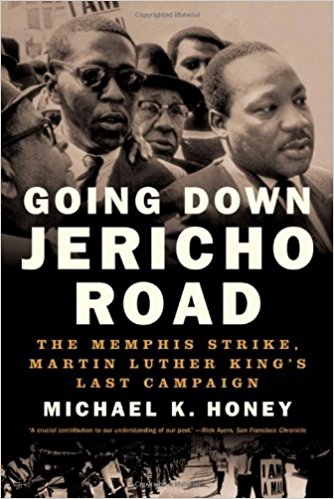 During the same time, the Memphis sanitation workers were organizing a strike for better wages and working conditions, Dr. King went to Memphis to support the strike and lend his solidarity to their struggle. The sanitation worker’s strike and King’s visit is well documented in the book, Going Down Jericho Road: The Memphis Strike, Martin Luther King’s Last Campaign, by Michael Honey.
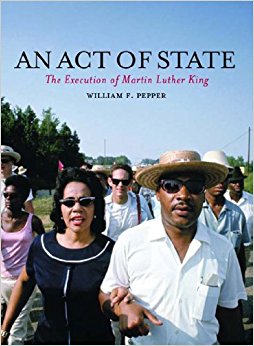 Memphis is where King was assassinated, on April 4 of 1968. King’s assassination is the subject of two important books. One book is Michael Eric Dyson’s book April 4, 1968: Martin Luther King Jr’s Death and How It Changed America. A second book, written by William Pepper, explores who was actually involved in King’s assassination and what role local, state and federal authorities played in the shooting of Dr. King. Pepper’s book is entitled, An Act of State: The Execution of Martin Luther King.
 It is also important to understand that the FBI had been monitoring Dr. King’s activities for years, making threats against him and wire tapping his phones. One book, which documents the FBI monitoring of King (with actual documents), is the book by Michael Friedly and David Gallen, Martin Luther King Jr: The FBI File.
 There are other important scholarly works on the message and person of Dr. King. Three books in particular are worth mentioning. The first is by John Ansbro, entitled, Martin Luther King Jr.: The Making of a Mind. The second scholarly book is by Michael Eric Dyson, entitled, I May Not Get There With You: The True Martin Luther King Jr. Lastly, no investigation of Dr. King is completed without the great Black Theologian James Cone’s book, Martin and Malcolm and America: A Dream or a Nightmare.
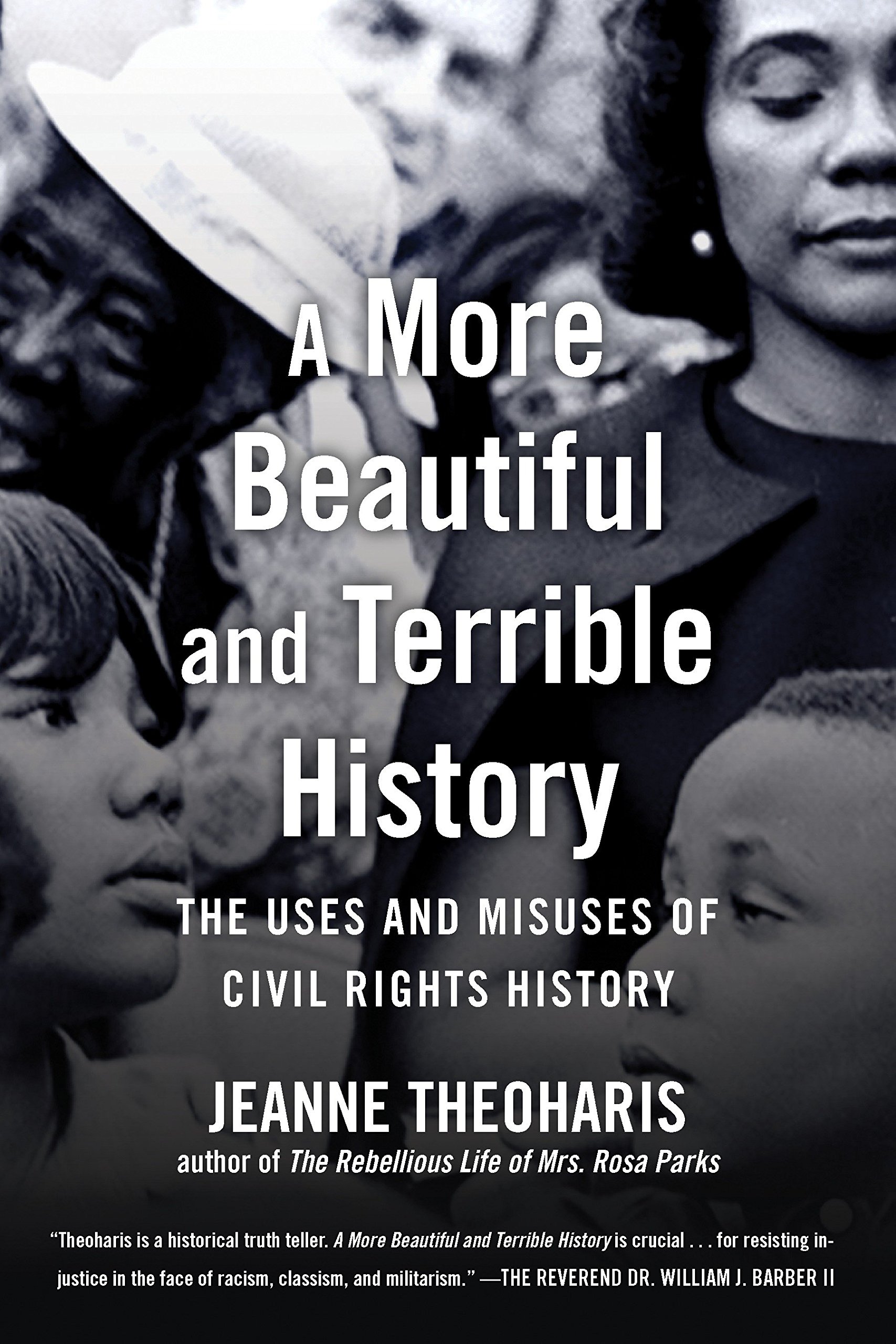 One additional book that is worth reading, which is about how the Black Freedom Struggle/Civil Rights Movement are often misrepresented, is Jeanne Theoharis’s book, A More Beautiful and Terrible History: The Uses and Abuses of Civil Rights History.
 In addition to these books, speeches and essays by and about Dr. King, there are some great films about King and this time period. The PBS series Eyes on the Prize, provides wonderful visual documentation of the black liberation movement and Dr. King. However, a film that deals more directly to the message and person of Dr. King is Citizen King, which deals particularly with the last few years of his life, his vision and the state repression against him and his family.
 A more recent documentary that I highly recommend, is a film that deals with the last three years of Dr. King’s life, particularly after he moved to Chicago and began to critique the US in much more profound ways. The film is called, King in the Wilderness. King in the Wilderness chronicles the final chapters of Dr. Martin Luther King Jr.’s life, revealing a conflicted leader who faced an onslaught of criticism from both sides of the political spectrum. While the Black Power movement saw his nonviolence as weakness, and President Lyndon B. Johnson saw his anti-Vietnam War speeches as irresponsible, Dr. King’s unyielding belief in peaceful protest became a testing point for a nation on the brink of chaos.
All of these resources are important, especially if we want to resist how government, non-profit or political groups present Dr. King, often hijacking the message and role that Dr. Martin Luther King Jr. played in the Black Freedom Struggle.

