MLive uncritically presents development projects as transformational, but fails to ask who really benefits
Last Thursday, MLive posted an article entitled, 12 ‘transformational’ projects identified by Grand Rapids economic development group. In the second paragraph of the article it states:
Working with city, business and tourism leaders, The Right Place identified 12 “transformational” projects. The projects, some of which have been discussed for years, would benefit Grand Rapids, and build on its reputation as a city where people want to live, work and visit, officials say.

The primary sources used in the article are spokespersons from both the Right Place Inc. and the Grand Rapids Chamber of Commerce. These two groups are both private sector entities that make up part of what GRIID identifies as the Grand Rapids Power Structure. What we mean by Grand Rapids Power Structure, is that there are organizations and individuals that wield tremendous political, economic, social and cultural power in this community, most often without the public’s consent.
Then there is the issue of MLive using the term transformational to describe these so-called development projects. Transformational or transformative often means, causing a marked change in someone or something. Thus the use of the term is not inaccurate. However, what critical aspect of what the MLive article fails to address, something that journalism should always do, is to always ask the question, who benefits? We all should be asking ourselves: 1) Who will be the primary beneficiaries from these 12 projects, 2) how much money, both public and private, will be used for these projects, and 3) what could that money be used for that would be truly transformational for communities most affected by the constant emphasis on Neoliberal Capitalism, development and entrepreneurial ventures in this city?
The MLive lists the 12 “transformational projects, with a brief description. We will list the 12 projects and provide a brief counter analysis of each.
- Convention Center Expansion and Hotel – This project will primarily benefit those who own and operate the downtown hotels, parking lots, bars, restaurants and entertainment spaces. People will often say, like they do during ArtPrize, that those who do most of the work in these spaces – parking attendants, wait staff, those who clean hotel rooms, line cooks, dish washers, valets, etc, will also benefit. The truth is that those who do the hard work do not make a living wage, many pf them do not have good benefits, work long hours and are deeply undervalued. In contrast, those who own the hotels and other businesses in the downtown will continue to reap huge profits from the Convention Center Expansion and Hotel.
- Countywide Affordable Housing – MLive does not clearly define what this means or who is behind such a plan, but I believe it is the Housing Kent project that is facilitated through KConnect. You can read their 50-page strategic plan here. This item has the potential to be transformative, but some of the people involved and those funding the strategy are also members of the Grand Rapids Power Structure, which should raise red flags for those most affected.
- Downtown Post Office Relocation – Those who own and control a great deal of the property in the downtown area have been wanting the post office relocation for the better part of two-decades. While relocating the post office might make sense, it will free up real estate that those who are part of the local power structure will definitely benefit from.
- Grand Rapids Aquarium – This project is seen as working to make GR a more attractive tourist destination, which it no doubt would. However, who will own and operate the aquarium, and which businesses already benefit from tourism in this city?
- Grand River Greenway Initiative – This project intends to create a waterfront area into a 5-mile outdoor recreation corridor. This project will primarily benefit the businesses along the waterfront, plus it will disproportionately attract communities who have more mobility and more privilege for recreating along the Grand River. Also, see our post from last year about the development project along the Grand River.
- Grand Rapids Community College Public Safety Training Center – Lets call this what it is, a center that will primarily train people to be cops. Public safety has nothing to do with it.
- Gerald R. Ford International Airport Control Tower Relocation – This project will just expand the amount of air travel to and from Kent County. The increased air travel primarily benefits members of the business/Capitalist Class and has significant ecological consequences, particularly around escalation of Climate Change.
- Grand Valley State University Digital Learning Epicenter – When has a GVSU project really been a benefit to those most affected by structural racism or poverty? This will primarily benefit the business class, by developing future skilled laborers with Digital skills.
- Market Avenue Gateway – This project is directly connected to the Grand Action 2.0 Outdoor Amphitheater proposal, which is definitely happening. The area between Fulton and Wealthy Streets along the Grand River will be of massive benefit to the already grotesquely rich, like the DeVos family. This whole effort has seen the City of Grand Rapids spend millions of public dollars to benefit yet another private venture.
- Outdoor Amphitheater – As was just mentioned above, but see the following link for more analysis.
- Michigan State University Innovation Center Campus Expansion – The claim is that this project will address health disparities and health equity, but more research pointing out what we already know will not actually address health disparities, not while the Medical Industrial Complex is controlled in large part by hospital conglomerates, the Insurance Industry and the Pharmaceutical Cartel.
- Soccer Stadium – This is another Grand Action 2.0 effort that is being led primarily by Dick DeVos and Carol Van Andel. How much public money be spent on such a construction project, while the team will likely be owned privately?
Now, all of these projects combined will cost hundreds of millions of dollars. Imagine for a moment, what hundreds of millions of dollars could do to alleviate poverty in this city and provide a guaranteed living wage to all those families currently experiencing poverty. Imagine how those hundreds of millions of dollars could be used to build good housing for the thousands of families who are experiencing housing insecurity in this city. Imagine if the City invested millions into urban agriculture, that would provide healthy produce to thousands of families experiencing food insecurity. Imagine if hundreds of millions of dollars were invested in dismantling Structural Racism, which could lead to abolishing the Prison Industrial Complex in Kent County.
Again, we have to always ask who benefits from these so-called development projects, plus we have to radically imagine what would truly be transformational in this city. Remember, it is not a question of there being insufficient funds to address the serious social problems we face, it is always a matter of priorities. Those who run the City of Grand Rapids currently prioritize profit making over ending poverty, expanding their own wealth over dismantling Structural Racism.
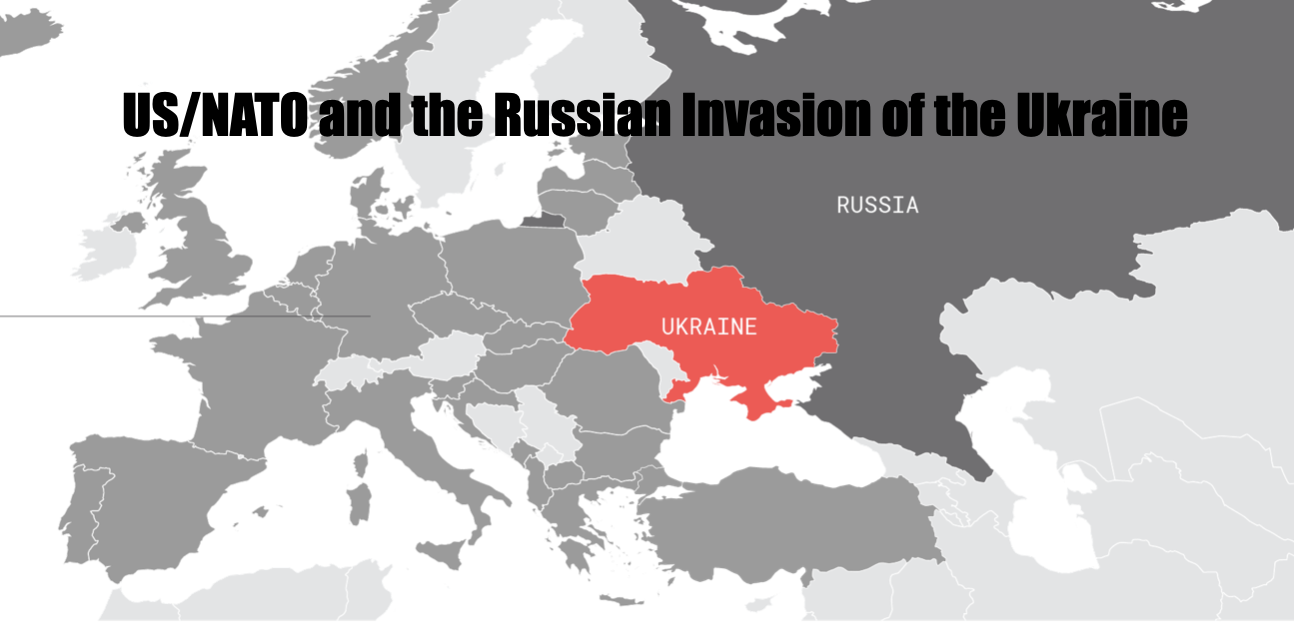
(In the coming weeks, GRIID will be providing a series of posts covering a broad range of issues as it relates to the US, NATO, Russia and the Ukraine.)
“In war, truth is the first casualty.” Aeschylus, the ancient Greek playwright.
Just days before the Russian invasion of the Ukraine, Patrick Cockburn, an author and longtime journalist that specializes on covering issues related to the Middle East, but has also covered Washington and Moscow, wrote an important article entitled, Russia-Ukraine is an Information War, So Government Intelligence Needs More Scrutiny Than Ever.
The point I want to make is not so much that the evidence for Russia plots to provide a casus belli is shaky, but that intelligence service information is often dubious, and always partisan. The bias is in-built because intelligence agencies are, first and foremost, a component of the government machine and they forget this at their institutional peril.
Pundits occasionally say in shocked tones that intelligence has been “politicized”, but this is automatically correct on all occasions. Yet intelligence sources are often cited as if they were to be held to academic standards of objectivity and are not pursuing some personal, institutional or national aim.
It takes a high degree of naivety not to realize that this must be the case and information wars are always part of cold wars and shooting wars.
As someone who has been monitoring the local news coverage of the 1980s US Wars in Central American, the 1990 US bombing of Panama, the 1991 Gulf War, the War in former Yugoslavia, the US invasion of Afghanistan and the 2003 US War against Iraq, the bias, sourcing and framing of the coverage is awful. For example, you can watch a documentary GRIID produced in 2003, which was based on the local news media coverage of the Iraq War for the first six weeks. GRIID also conducted a 100 day study of the Grand Rapids Press coverage of Afghanistan in 2009.
Studies that have been done by groups like the Center for Media & Democracy, have also demonstrated that the more that people in the US relied on the mainstream commercial news media around war coverage, the less they really knew, particularly about the larger context of any given war.
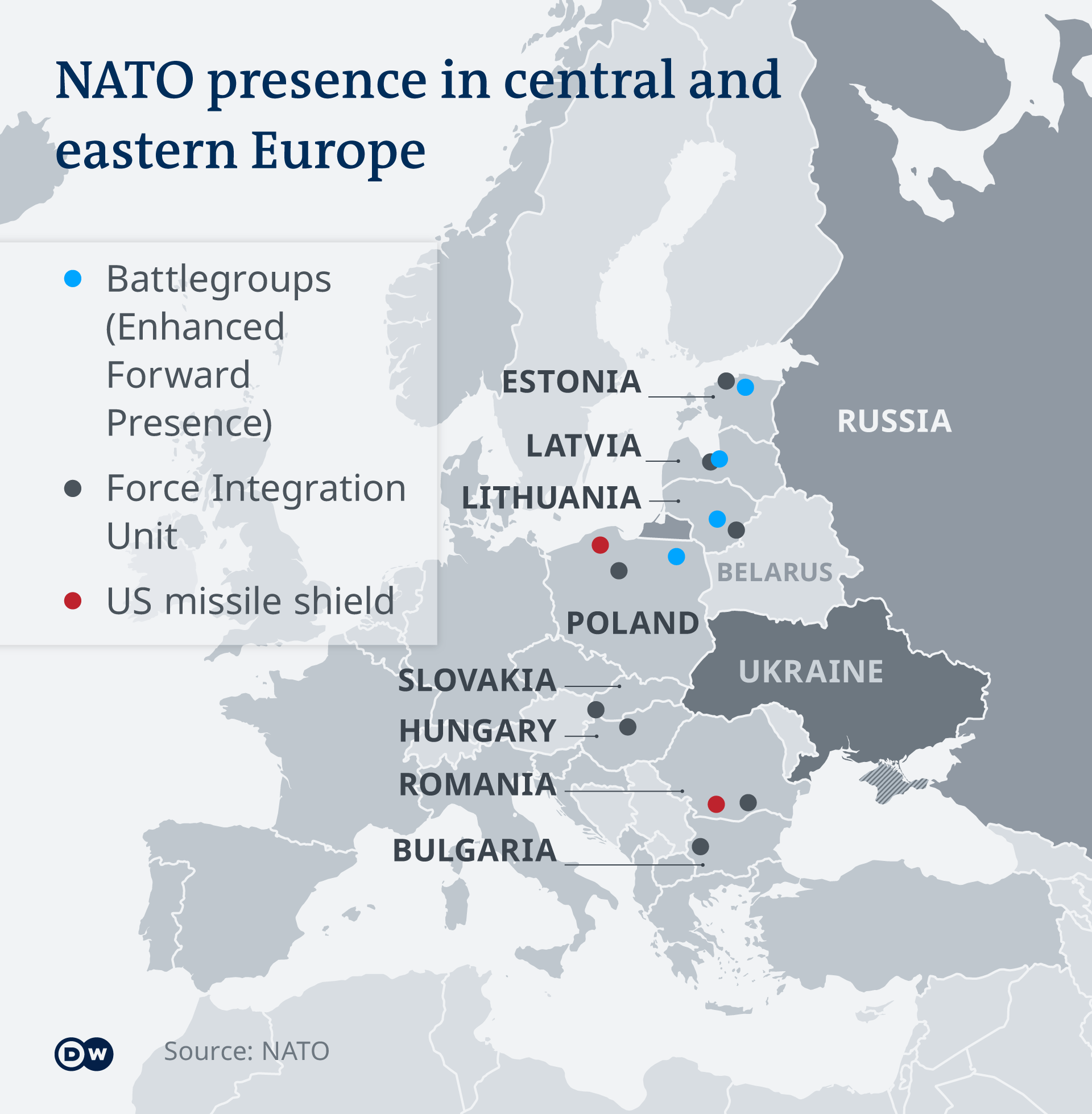 The dominant US commercial news media relies almost exclusively on US government sources and former US military personnel, without providing a counter perspective or verifying the validity of the government information.
The local news media will also tend to run stories that are either a lazy form of journalism, journalism that is sensationalized or journalism that perpetuates a government narrative. For example, MLive has run several stories in the last week, stories which illustrate this type of reporting. On February 24, MLive posted a story about Michigan State lawmakers views about the Russian invasion of Ukraine. It is worth asking here, why does what state lawmakers, who make no decisions about US foreign policy, why their opinion should matter.
On February 25th, MLive posted a story with the headline, Congressman Fred Upton calls Putin a ‘thug,’ supports sanctions as Russia invades Ukraine. The article doesn’t provide any information that would challenge or counter Upton’s point of view. Also, the headline supports the dominant narrative, since you did not find a headline in US commercial media during the George W. Bush years referring to Bush as a thug, even though in both cases – with Putin and Bush – they invaded a sovereign nation.
Then there was the MLive post from February 24, where a Grand Rapids Bar owner pulled some brands of vodka from the bar in protest of the Russian invasion of the Ukraine. l The article even acknowledges that the brans are no longer Russian owned, so why post such a story when it is simply a knee-jerk position to take that is not based in fact.
On the national news front, thankfully there are groups like Fairness & Accuracy in Reporting (FAIR) , which has been acting as a media watchdog since the 1980s. Here are four articles that FAIR ran just prior to the Russian invasion, which demonstrates the US media bias and over-reliance on government sources for stories.
https://fair.org/home/bryce-greene-on-ukraine/
https://fair.org/home/western-media-fall-in-lockstep-for-neo-nazi-publicity-stunt-in-ukraine/
https://fair.org/home/what-you-should-really-know-about-ukraine/
https://fair.org/home/hawkish-pundits-downplay-threat-of-war-ukraines-nazi-ties/
It is also worth looking at the link on FAIR that focuses on how the US media has reported on Russia over the past four decades.
Moving forward it is imperative that we have well sourced, well documented news and information that is independent of commercial influences, over-reliance on government sources and internalizing pro-USA narratives. If people are not clear what I mean by pro-USA or dominant narratives, here is an excellent post from Paul Street, entitled, 15 Bad Ukraine Narratives.
In addition, below are a few sources I have found to provide solid analysis and use sources that are not motivated by partisan politics, sources to read and then compare to the dominant commercial media coverage.
Like his father, Doug DeVos wants us all to just Believe: A member of the Grand Rapids Power Structure and his Podcast
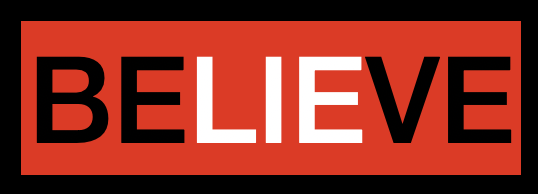 In early December, Doug DeVos, the head of Amway and RDV Corp, announced that he was going to host a podcast. The name of the podcast would be called Believe!
Calling his podcast Believe! Is a nod to his deceased father who wrote a book by the same title in 1975. Richard DeVos Sr. wrote Believe!, according to the publishers blurb, “as a fresh and much-needed reaffirmation of the tried and true traditional values that can make you the success you want to be.” The tried and true traditional values of which the DeVos patriarch spoke of was his brand of Conservative Christianity and a deep belief in the system of free market Capitalism.
The DeVos belief in Capitalism has worked out well for the family, initially with the creation of the pyramid scheme known as Amway and it’s cult-like approach to selling products. The DeVos family has since diversified, adding new companies, creating a massive investment portfolio to go along with the numerous family foundations – another scheme to hide some of their wealth from being taxed and to engage in social management of populations that are in need of their philanthropy, since they have spent millions of dollars to influence public policy that has created a massive wealth gap over the past 50 years.
Doug DeVos says that he was starting this podcast to talk about his values, to inspire people to Believe, and to communicate the idea that anyone can do anything if they set their mind to it. Ok, so why is it that people, especially rich bastards, always have such a perky optimism? And I don’t mean the perky optimism of Mrs. Maisel, I mean the kind of optimism that is born out of class privilege, where you see the world as something to conquer no matter how many lives you destroy in the process.
Anyway, Doug DeVos’ podcast has produced 4 episodes as of this writing. The first episode doesn’t seem to count, since Doug is interviewed by two of his children. However, the next three episodes provide us with a clear indication of what this show is really about.
Episode #2 features Alan Smolinsky, who is identified as a serial entrepreneur and the owner of the Los Angeles Dodgers professional baseball team. The theme of that conversation centers around the question, “What is the American Dream?” So, episode #2 is two rich guys talking about the American Dream, while the majority of the people who live in this country are experiencing what Malcolm X referred to as the American Nightmare.
Episode #3 features Blake Masters, who is identified as a Tech Entrepreneur and a Senate Candidate in Arizona. Doug and Blake talk about silicon valley, the future of tech and entrepreneurism in the US. Also, Blake Masters is exactly the kind of candidates that the DeVos family likes to make massive campaign contributions to. For those who are interested, Blake Masters wants secure borders, believes that police are under attack, that crime is out of control, opposes Critical Race Theory, and believes that public schools for progressive indoctrination.
Episode #4 features Michael Anton, a research fellow at the hyper-conservative Hillsdale College. Anton also writes for the Claremont Institute, which is a far right think tank. One of his more recent articles is entitled, The Case for Trump, which makes complete sense, since Anton was a national security official in the Trump administration.

I remember an interesting observation from the late John Trudell, the former national spokesperson for the American Indian Movement, who was also a poet and a musician. Trudell once said that those in power always want us to believe in lies they tell. They want us to believe in a Western, Christian world view which has taken our land from us. Ironically, Trudell says, that the word Believe itself contains the word lie within it.
The Believe! Podcast from Doug DeVos has so far featured people who are aligned with his religious views, other members of the Capitalist Class and those who defend the far right ideological values that are the very embodiment of the DeVos family. So, instead of blindly believing anything that people like Doug DeVos have to say, lets adopt solid critical thinking skills, skills which will allow us to see through the lies those in power want us to BeLIEve!
GRIID Class – The Function of Policing in the US and how we can work towards a world Without Police: Part VI
 For week #6, we finished our conversation on the vision document that was created by the Movement for Black Lives in 2015.
The conversation on the 2015 vision document centered mostly around how these demands would be beneficial to most people, except for those with the most political and economic power, since they would have to give up that power and influence. In addition, there was discussion and exploration around what real community control would look like, as well as a shift from representative democracy, to full participatory democracy.
We also read and discussed the Movement for Black Lives Defund the Police Toolkit, which was created in 2020, while millions across the country and the world were engaged in an uprising against more police murders of Black people and the carceral state in general.
The toolkit provides not only some clear and concrete steps on how to Defund your local Police Department, it provides a clear narrative and framework upfront about what the Movement for Black Lives means when they say Defund the Police. Here is one powerful sentence from that introduction:
It is a demand to #DefendBlackLives by shutting off resources to institutions that harm Black people and redirecting them to meeting Black communities’ needs and increasing our collective safety.
Such a statement clearly defines what is meant by Defund the Police, along with dismantling all the liberal “re-interpretations” of what Defunding the Police means to those who have by en large refused to listen to Black-led movements and haven’t even bothered to read the toolkit on Defunding the Police. Last year, we posted one of the “this is what defunding the police really means” memes, then dissected it to demonstrate that what they think it means is not at all what the Movement for Black Lives is calling for.
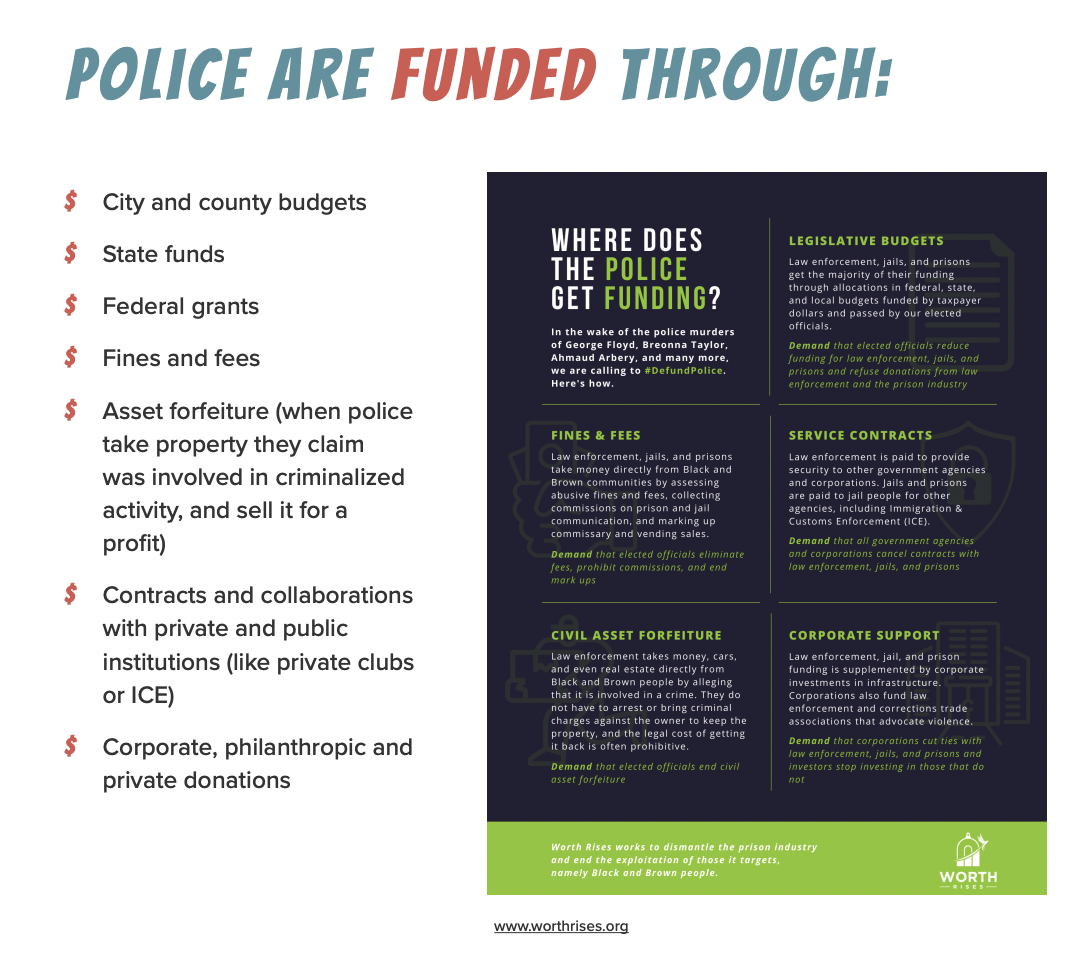
We also discussed the useful way that the creators of the toolkit provided language around ways to discuss what defunding the police means, which often means talking about things like how to police department even generate funding, as can be seen on this graphic from page 6 of the toolkit.
We ended the class with discussion of page 7 from the toolkit, which has 10 clear things we can do to Defund the Police. As always, there was great conversation, lots of questions and the benefits of collective learning, where people felt challenged to expand their thinking without being judged.
For week #7, we will continued to discuss the DeFund the Police Toolkit, along with some other documents that deconstruct how Police don’t actually prevent crime, along with an example from Los Angeles of a People’s Budget.
Books about Black History that have informed who I am today: Part III
Books are a lifeline for me. I read as much as I can, to challenge my own understanding of the world, to gain insight into and analysis about how systems of oppression work and to be inspired by those who have come before me.
The books about Black History that have informed and formed who I am today, will be in three categories: 1) books about Slavery and the Abolitionist Movement; 2) books about the larger Black Freedom Struggle up to and including the Civil Rights Movement, and 3) book that have been written in the past 50 years, books that have expanded my understanding of the Black Freedom Struggle and why we need to dismantle the system of White Supremacy!
Two weeks ago, we posted a list from category #1. Last week we posted a list of books about the larger Black Freedom Struggle up to and including the Civil Rights Movement. Today, we are sharing the the list of books that have been written in the past 50 years, books that have expanded my understanding of the Black Freedom Struggle. These books primarily deal with how Structural Racism and the system of White Supremacy continues to morph into new ways, always defending the system of White Supremacy, especially since the Neo-Liberal push back against the gains made by the Black Freedom Struggle in the 1950s through the late 1970s.
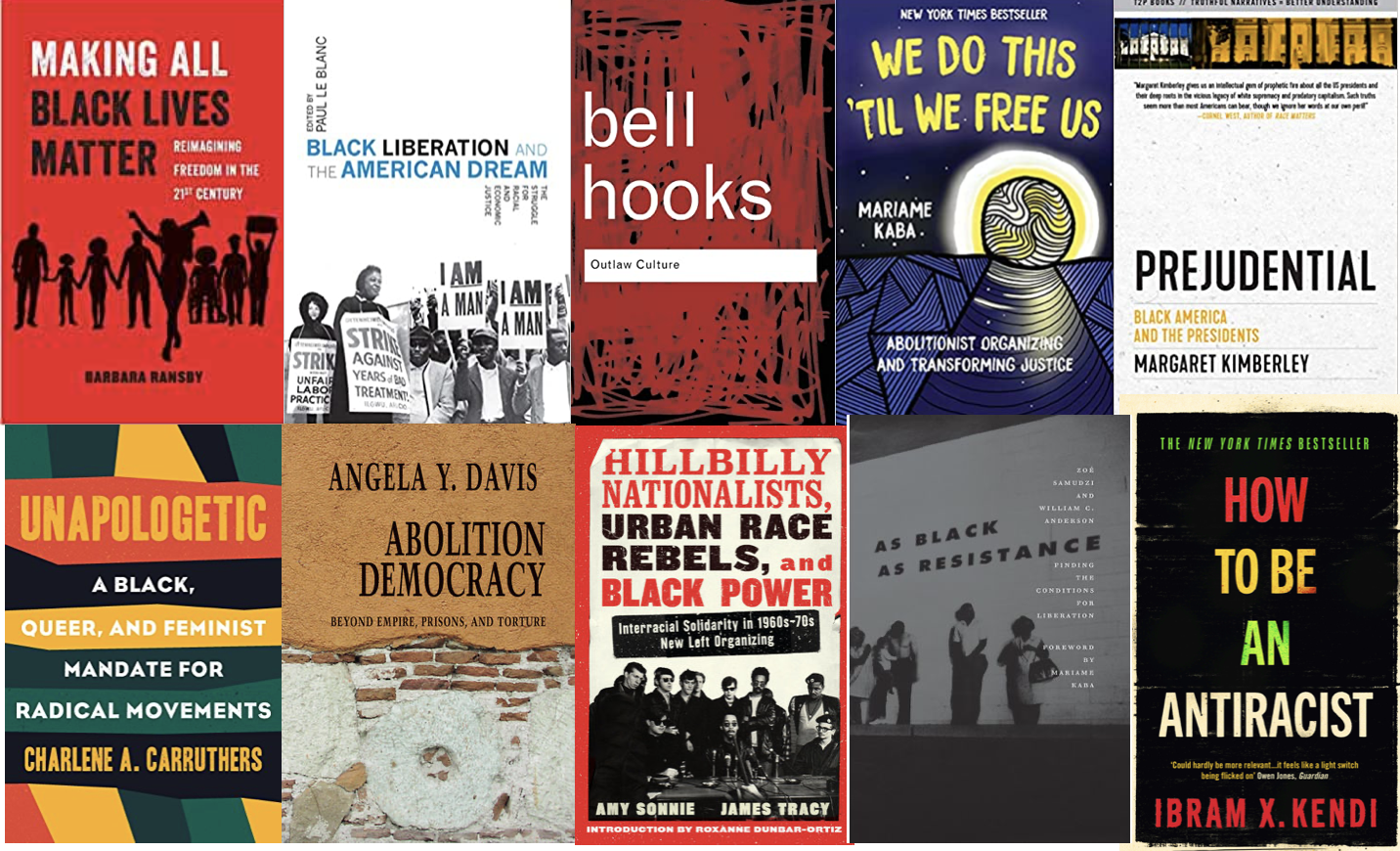
Black Liberation and the American Dream: The Struggle for Racial and Economic Justice, edited by Paul Le Blanc
Black Looks: Race and Representation, by bell hooks
Outlaw Culture: Resisting Representations, by bell hooks
Hillbilly Nationalists, Urban Race, and Black Power: Interracial Solidarity in 1960s – 70s New Left Organizing, by Amy Sonnie and James Tracy
Resisting State Violence: Radicalism, Gender and Race in US Culture, by Joy James
Prisons Make Us Safer: And 20 Other Myths About Mass incarceration, by Victoria Law
Abolition Democracy: Beyond Empire, Prisons and Torture, by Angela Davis
Making All Black Lives Matter: Reimagining Freedom in the 21st Century, by Barbara Ransby
The New Jim Crow: Mass Incarceration in the Age of Colorblindness, by Michele Alexander
The Meaning of Freedom and Other Difficult Dialogues, by Angela Davis
The Nation of No Map: Black Anarchism and Abolition, by William Anderson
The Second: Race and Guns in a Fatally Unequal America, by Carol Anderson
White Reconstruction: Domestic Warfare and the Logics of Genocide, by Dylan Rodriquez
A Field Guide to White Supremacy, edited by Kathleen Belew and Ramon Gutierrez
Unapologetic: A Black, Queer, and Feminist Mandate for Radical Movements, by Charlene Carruthers
How to Be Less Stupid about Race, by Crystal Fleming
As Black as Resistance: Finding the Conditions for Liberation, by Zoe Samudzi and William Anderson
Presidential: Black America and the Presidents, by Margaret Kimberely
Nobody: Casualties of America’s War on the Vulnerable, from Ferguson to Flint and Beyond, by Marc Lamont Hill
How to Be an AntiRacist, by Ibram X. Kendi
Begin Again: James Baldwin’s America and Its Urgent Lessons for Our Own, by Eddie Glaude Jr.
We Do This ’Til We Free Us: Abolitionist Organizing and Transforming Justice, by Mariame Kaba
Financial Literacy alone is a False Solution for BIPOC families becoming homeowners in Grand Rapids
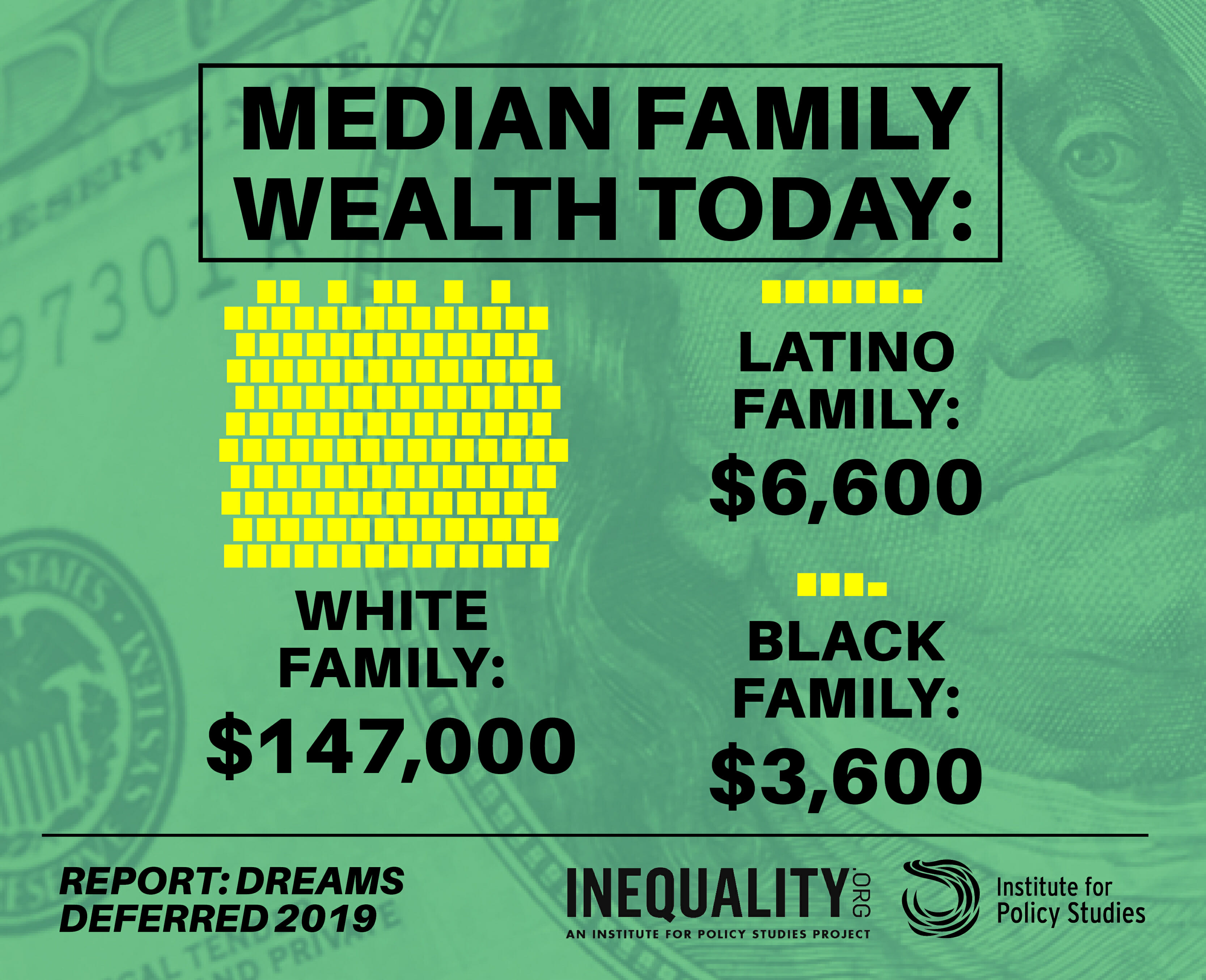 “Over the past 30 years the average wealth of white families has grown by 84%—1.2 times the rate of growth for the Latino population and three times the rate of growth for the black population. If that continues, the next three decades would see the average wealth of white households increase by over $18,000 per year, while Latino and Black households would see their respective wealth increase by only $2,250 and $750 per year.” Institute for Policy Studies
Last week, WZZM 13 did a story that began with this sentence, “There’s a new initiative in Grand Rapids to help 1,000 families of color become homeowners over the next three years.” Sounds like an important project.
The initiative is being led by two groups, 1000 Families of Color, Inc. and Project Green.
 According to Project Green’s website, there are three major goals: Financial Capability, Fair Lending, and Advocacy. The paragraph that accompanies Advocacy states:
You have the power to change systems! We just want to encourage you to use it. And we will stand with you as you do. That’s what advocacy is. Project GREEN stands with our fellow citizens to remove barriers that keep them from reaching their financial goals. We train, coach, and equip everyday people to bring about changes that will help the broader community in the area of economic stability and fair lending. This advocacy team focuses on community-centered initiatives that destroy systemic barriers to economic success – so all of us have equal opportunities to thrive.
Upon further investigation of the Project Green website, the only systemic barrier they identify are lending agencies. Beyond that, it seems that most of what Project Green does is to teach people how to manage their money better and improve their credit score.
The WZZM 13 story says that the groups will partner with Realtors, Lenders, Churches and other non-profits, “to provide the education and resources needed to make becoming a homeowner a reality.”
Hey, I’m all in favor of people learning financial skills and I support people being a homeowner, but why is it that these groups avoid the obvious when it comes to real advocacy?
Families of Color are not poor simply because of financial management, they are poor and can’t afford a house because:
- Most people are priced out of the current housing market, because the housing market is driven by profits and going to the highest bidder.
- Structural Racism is a major factor for Families of Color, with banks and other financial institutions disproportionately unwilling to provides loans.
- Most BIPOC families don’t earn a Living Wage.
- There is a lack of generational wealth, with Black and other communities of color suffering from Structural Racism, with less access to education, along with the economic legacies of Slavery and Jim Crow policies.
If Project Green really wants BIPOC families to own homes, then they need to push for a Living Wage, put an end to Structural Racism, advocate for the regulation of the housing market, plus acknowledge and dismantle the historical legacies of Structural Racism and Jim Crow policies that continue to prevent BIPOC families from obtaining economic justice.
New housing project will not stop displacement in the Belknap Neighborhood, since displacement has been happening for decades to residents of that area
 Last week, MiBiz posted a story with the headline, $12.2M Belknap Lookout affordable housing project aims to stop displacement in neighborhood.
The article focuses on a project by Dwelling Place of Grand Rapids, which intends to build 52 affordable apartments in the Belknap Neighborhood. The article does not provide any information on the cost of said affordable apartments, but states:
The apartments will have a range of affordability, including for households earning 10 to 20 percent of the area median income on the low end.
Later in the article one of the developers is quoted as saying, “We’re trying to stop gentrification in an area going through a lot of redevelopment right now, but most of that has been higher residential projects.” Several paragraphs later we getting a contradicting comment from the Executive Director of the Neighbors of Belknap, Elianna Bootzin, who states:
“We are seeing residents being priced out of the neighborhood. We have some learning to do on what all of our options are for offering affordable housing.”
While the MiBoz article presents both the developer point of view and the Neighborhood Association point of view, they miss on providing substantial context to what has been happening in the neighborhood in recent decades.
In the 1990s, there was a major push on the part of Spectrum Health to transform the area to what is now know as the Medical Mile.
Just a few years ago, when GVSU announced it wanted to expand their presence near their Michigan Street facility, the most recent wave of gentrification hit the area.
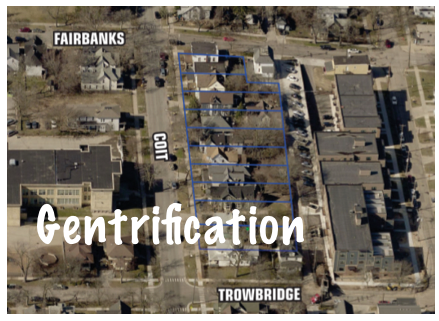
In the Spring of 2016, the Grand Rapids City Commission approved a major condo project, in what was to be known as the Coit Square Project. The site If the River Swells, provided an important analysis of the Coit Square Project, primarily through a class lens.
Then in the Fall of 2016, the physical changes to the neighborhood could be seen with the demolition of some 20 homes in order to make way for the new GVSU building. We took pictures of the demolition at the time and raised questions about the demolition as a form of displacement.
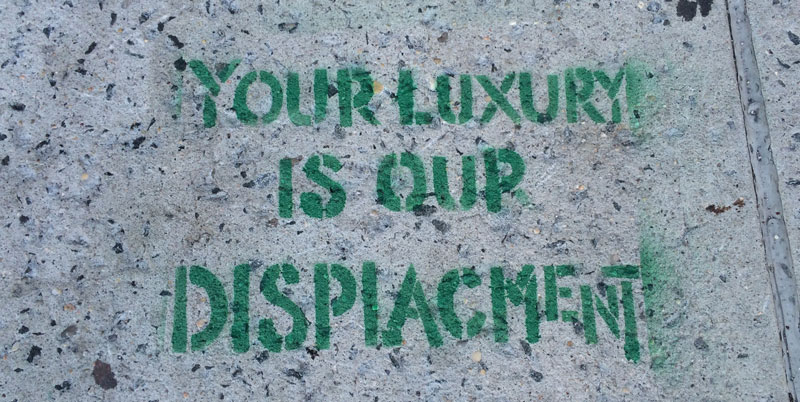
In September of 2016, just on the other side of the highway across from the Belknap Neighborhood, another development project tore down dozens of houses, occupied by working class families, only to construct 287 Market-rate apartments, which included a 4 story, 334 car parking garage. In this case displacement was a harsh reality for the families that were evicted from the rental units that ended up being bulldozed.
The MiBiz article also doesn’t include any information or discussion on the new GVSU construction, which often results in landlords shifting from families housing to student housing. GVSU even signed a Memorandum of Understanding about what they were hoping to avoid, even though in my opinion they have not really honored an agreement they knew would mere pacify residents who voiced concerns about the university’s development plans in that neighborhood. Lastly, there is no information on why there was significant concern on the part of residents of the Belknap Neighborhood over fears of displacement and being priced out, which is exactly what the source from the Belknap Neighborhood voiced concern over.
There has been gentrification in the Belknap Neighborhood, which will likely continue, unless there is a clear shift away from housing as a commodity to housing as a basic, fundamental right that everyone and every family should have.
Always Follow the Damn Money: How the Grand Rapids Power Structure looks out for their own economic interests
Last Tuesday, the Michigan Senate passed legislation that would provide major tax breaks to corporations.
Senate Bill 0768 was pass in the Michigan Senate completely on partisan lines, with 22 Republicans voting for the bill, while all 16 Democrats voted against.
Not surprising, this legislation was supported by the Michigan Chamber of Commerce and other business associations. What is particularly relevant for those of us who live in West Michigan, is to see how much money members of the Grand Rapids Power Structure have contributed to each of the 22 Senators. We will be using data from the 2018 election, since Senate races happen every 4 years, the same time that the Governor races take place. Not all of the data is in for the 2022 election, so we are limiting this investigation to contributions up to and including the 2018 Elections.
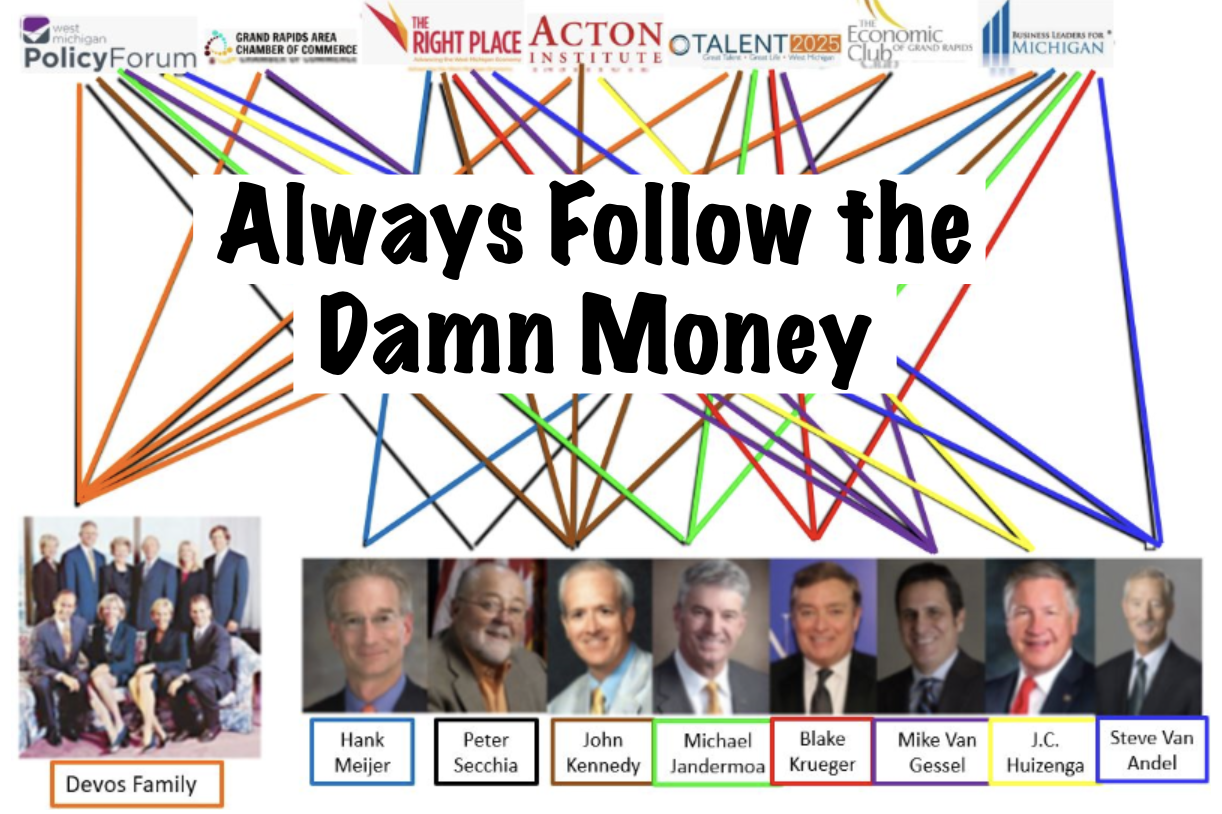
People will often say that this information is “not surprising.” While it isn’t surprising, it is important to know how much influence members of the Grand Rapids Power Structure have on public policy, which includes how much money they have provided candidates in order to pass legislation that benefits them and other members of the Capitalist Class.
Combined, the Grand Rapids Power Structure has contributed $35,863,214 to the current GOP State Senators, in order to pass legislation that will be favorable to their business interests.
We will be looking at the Republican Senators who were elected in 2018 and in alphabetical order, listing members of the Grand Rapids Power Structure who contributed to their campaign and how much in 2018, from FollowtheMoney.org
Senator Tom Barrett
Rich DeVos – $4000
Dick DeVos – $4000
Doug DeVos – $4000
Dan DeVos – $4000
Maria DeVos – $4000
Cheri DeVos – $4000
Betsy DeVos – $2000
Helen DeVos – $2000
Michael Jandernoa – $2000
Pam DeVos – $2000
John Kennedy – $2000
JC Huizenga – $1500
Senator John Bizon
Dick DeVos – $4000
Doug DeVos – $4000
Dan DeVos – $4000
Maria DeVos – $4000
Cheri DeVos – $4000
Rick DeVos – $4000
Betsy DeVos – $2000
Micheal Jandernoa – $2000
JC Huizenga – $2000
Helen DeVos – $2000
Pam DeVos – $2000
Susan Jandernoa $1000
Peter Secchia – $1000
Jon Bumstead
Dick DeVos – $2000
Doug DeVos – $2000
Dan DeVos – $2000
Maria DeVos – $2000
Cheri DeVos – $2000
Rick DeVos – $2000
John Kennedy – $2000
Micheal Jandernoa – $1000
Kevin Daley
Doug DeVos – $2000
Dan DeVos – $2000
Maria DeVos – $2000
Cheri DeVos – $2000
Rick DeVos – $2000
John Kennedy – $2000
Kenneth Horn
Michael Jandernoa – $4750
Doug DeVos – $2250
Dan DeVos – $2250
Maria DeVos – $2250
Cheri DeVos – $2250
Rick DeVos – $2250
Susan Jandernoa – $1500
Betsy DeVos – $1250
Mark Huizenga
JC Huizenga – $3650
Michael Jandernoa – $3600
Doug DeVos – $3150
Dan DeVos – $3150
Maria DeVos – $3150
Cheri DeVos – $3150
Pam DeVos – $3150
Dick DeVos – $2100
Betsy DeVos – $2100
David Van Andel – $2100
Carol Van Andel – $2100
Ruth Johnson
Dick DeVos – $35,363,233
Betsy DeVos – $133,996
Dan DeVos – $15,135
Pam DeVos – $13,600
Michael Jandernoa – $12,200
Rick DeVos – $10,200
JC Huizenga – $10,050
Stephen Van Andel – $9800
Peter Secchia – $8800
Kim LaSata
Rick DeVos – $4000
Doug DeVos – $2000
Dan DeVos – $2000
Maria DeVos – $2000
Cheri DeVos – $2000
Peter Secchia – $2000
John Kennedy – $2000
Michael Jandernoa – $1000
JC Huizenga – $1000
Dan Lauwers
Michael Jandernoa – $1000
Michael MacDonald
Dick DeVos – $2000
Doug DeVos – $2000
Dan DeVos – $2000
Maria DeVos – $2000
Cheri DeVos – $2000
John Kennedy – $2000
Ed McBroom
Michael Jandernoa – $1000
Dick DeVos – $500
Betsy DeVos – $500
Doug DeVos – $500
Dan DeVos – $500
Maria DeVos – $500
Helen DeVos – $500
Aric Nesbitt
Michael Jandernoa – $3000
Susan Jandernoa – $1000
Rick DeVos – $1000
Rick Outman
Michael Jandernoa – $1500
Jim Runestad
Dick DeVos – $2000
Doug DeVos – $2000
Dan DeVos – $2000
Maria DeVos – $2000
Cheri DeVos – $2000
Rick DeVos – $2000
Peter Secchia – $2000
John Kennedy – $2000
Wayne Schmidt
Doug DeVos – $4250
Dan DeVos – $4250
Maria DeVos – $4250
Cheri DeVos – $4250
Rick DeVos – $4250
Michael Jandernoa – $3500
Dick DeVos – $3250
Betsy DeVos – $3250
Mike Shirkey
Rick DeVos – $4000
Doug DeVos – $3250
Dan DeVos – $3000
Maria DeVos – $3000
Cheri DeVos – $3000
Dick DeVos – $2000
Betsy DeVos – $2000
Peter Secchia – $2000
Jim Stamas
Michael Jandernoa – $2250
Lana Theis
Dick DeVos – $2000
Doug DeVos – $2000
Maria DeVos – $2000
Cheri DeVos – $2000
Peter Secchia – $2000
Helen DeVos – $1000
Pam DeVos – $1000
Rick DeVos – $1000
Michael Jandernoa – $1000
Curt VanderWall
Dick DeVos – $1000
Betsy DeVos – $1000
Doug DeVos – $1000
Dan DeVos – $1000
Maria DeVos – $1000
Cheri DeVos – $1000
Pam DeVos – $1000
Helen DeVos – $1000
Rick DeVos – $1000
Peter Secchia – $1000
Michael Jandernoa – $900
Roger Victory
0
Doug Wozniak
0
Dale Zorn
Michael Jandernoa – $2000
Susan Jandernoa – $1000
Of course, this is just one example of how members of the Grand Rapids Power Structure influence public policy for their own benefit. They are willing to spend money to buy political influence, which results in protecting and expanding their wealth, at the expense of the public.
GRIID Class – The Function of Policing in the US and how we can work towards a world Without Police: Part V
 For week 5 of the class on Policing in the US, we read and discussed three more essays from the book, Abolition for the People. All three essays were focused on the importance of an abolitionist approach to policing, with a great deal of emphasis on radically re-imagining our world, our community without police and the carceral state.
The first essay was by Andrea Ritchie, and was entitled, Ending the War on Black Women: Building a World Where Breonna Taylor could live. In this essay, the author challenges us around the idea of accountability and punishment. Ritchie argues that if we demand the punishment and imprisonment of the cops who killed Breonna Taylor, we end up perpetuating the system that caused her death to begin with. It is understandable that people want to some form of justice when their family members are murdered by the police, but what this essay challenges us to think about is how do we dismantled there very system that produces cops who kill and punish Black people? We cannot simply mimic the very system we are hoping to abolish.
The second essay we discussed was co-written by Dan Berger and David Stein, with the title, What Is & What Could Be: The Policies of Abolition. In this essay the authors write:
While Republicans and Democrats may use different talking points, state spending demonstrates their shared commitment to preserving racist social control through police and prisons. Whether speaking the language of authoritarianism10 or professionalism,11 both Donald Trump and Joe Biden responded to the summer 2020 uprisings by pledging additional funding and support to police. That is why abolitionist campaigns to defund the police and decarcerate prisons are so transformative: they approach local and national budgets with necessary urgency as a venue in which the status quo can be either reinforced or remade. It is both a defensive posture and a visionary one. It’s a three-pronged strategy that the abolitionist organization Critical Resistance has summarized as Dismantle, Change, Build.
In addition, the essay looks at numerous previous movements that have practiced abolition, such as the Black Panther Party for Self-defense, SNCC, the National Alliance Against Racist and Political Repression and Critical Resistance, to name a few. The authors also ask the important question, which speaks to the need to radically imagine a different world:
The upheaval and crackdown of the 2020 protests prompts the question of the last half-century and earlier: What type of protest movements could be built if communities were freed from the violence of policing and incarceration?
The 3rd and final essay we discussed was from Miriam Kaba, The Journey Continues: So You Are Thinking about Becoming an Abolitionist. Kaba provides 4 important steps for those wanting to become abolitionists:
First, when we set about trying to transform society, we must remember that we ourselves will also need to transform. Our imagination of what a different world can be is limited. We are deeply entangled in the very systems we are organizing to change. Second, we must imagine and experiment with new collective structures that enable us to take more principled action, such as embracing collective responsibility to resolve conflicts. Third, we must simultaneously engage in strategies that reduce contact between people and the criminal legal system. Abolitionists regularly engage in organizing campaigns and mutual aid efforts that move us closer to our goals. Fourth, as scholar and activist Ruth Wilson Gilmore notes, building a different world requires that we not only change how we address harm, but that we change everything.
In addition to these essays, we read and discussed the Movement for Black Lives vision document that was developed in 2015. This document provides a robust set of demands, with powerful vision, as can be viewed in the graphic here on the right.
For week #6, we will be reading and discussion the Movement for Black Lives Defund the Police Toolkit.
Books about Black History that have informed who I am today: Part II
Books are a lifeline for me. I read as much as I can, to challenge my own understanding of the world, to gain insight into and analysis about how systems of oppression work and to be inspired by those who have come before me.
The books about Black History that have informed and formed who I am today, will be in three categories: 1) books about Slavery and the Abolitionist Movement; 2) books about the larger Black Freedom Struggle up to and including the Civil Rights Movement, and 3) book that have been written in the past 50 years, books that have expanded my understanding of the Black Freedom Struggle and why we need to dismantle the system of White Supremacy!
Last week, we posted a list from category #1. Today’s post will books about the larger Black Freedom Struggle up to and including the Civil Rights Movement.

Radio Free Dixie: Robert F. Williams & the Roots of Black Power, by Timothy Tyson
When Affirmative Action Was White, by Ira Katznelson
Many Minds, One Heart: SNCC’s Dream for a New America, by Wesley Hogan
Going Down Jericho Road: The Memphis Strike, Martin Luther King’s Last Campaign, by Micheal Honey
A More Beautiful and Terrible History: The Uses and Misuses of Civil Rights History, by Jeanne Theoharis
Black Power: The Politics of Liberation in America, by Stokely Carmichael and Charles Hamilton
Nobody Turn Me Around: A People’s History of the 1963 March on Washington, by Charles Euchner
The Black Panthers Speak, by Philip Foner
Lessons from Freedom Summer: Ordinary People Building Extraordinary Movements, edited by Kathy Emery, Linda Reid Gold and Sylvia Braselmann
Detroit I Do Mind Dying, by Dan Georgakas and Marvin Surkin
Creating a Movement with Teeth: A Documentary History of the George Jackson Brigade,edited by Daniel Burton Rose
Groundwork: Local Black Freedom Movements in America, edited by Jeanne Theoharis and Komozi Woodard
We Will Return in the Whirlwind: Black Radical Organizations 1960 – 1975, by Muhammad Ahmad
The Deacons for Defense: Armed resistance and the Civil Rights Movement, by Lance Hill
Hillbilly Nationalists, Urban Race Rebels, and Black Power: Interracial Solidarity in the 1960s-70s New Left Organizing, by Amy Sonnie and James Tracey
Race for Profit: How Banks and the Real Estate Industry Undermined Black Homeownership, by Keeanga-Yamahtta Taylor
From the War on Poverty to the War in Crime: The Making of Mass Incarceration in America, by Elizabeth Hinton
The Condemnation of Blackness: Race, Crime and the Making of Modern Urban American, by Khalil Gibran Muhammad
Malcom X: The Final Speeches
Malcolm X: By Any Means Necessary
Sundown Towns: A Hidden Dimension of American Racism, by James Loewen
The Radical King: Martin Luther King Jr., edited by Cornel West
The Young Crusaders: The Untold Story of the Children and Teenagers Who Galvanized the Civil Rights Movement, by V.P. Franklin
How We Get Free: Black Feminism and the Combahee River Collective, edited by Keeanga-Yamahtta Taylor
America on Fire: The Untold History of Police Violence and Black Rebellion Since the 1960s, by Elizabeth Hinton
The Speech: The Story Behind Dr. Martin Luther King Jr.’s Dream, by Gary Younge
Martin & Malcolm in America: A Dream or a Nightmare, by James Cone
How Long? How Long?: African-American Women in the Struggle for Civil Rights, by Belinda Robnett
Truth and Revolution: A History of the Sojourner Truth Organization 1969-1986, by Michael Staudenmeier
Living for the Revolution: Black Feminist Organizations, 1968-1980, by Kimberly Springer
The Blood of Emmett Till, by Timothy Tyson
I May Not Get There With You: The True Martin Luther King Jr., by Michael Eric Dyson
Ella Baker & the Black Freedom Movement: A Radical Democratic Vision, by Barbara Ransby
In Part III, I will share the books that have been written in the past 50 years, books that have expanded my understanding of the Black Freedom Struggle and why we need to dismantle the system of White Supremacy!
 Grand Rapids Institute for Information Democracy