Since Howard Zinn wrote A People’s History of the United States, there have been numerous books that have used his model to address the history of events of specific groups of people, but always on a national level.
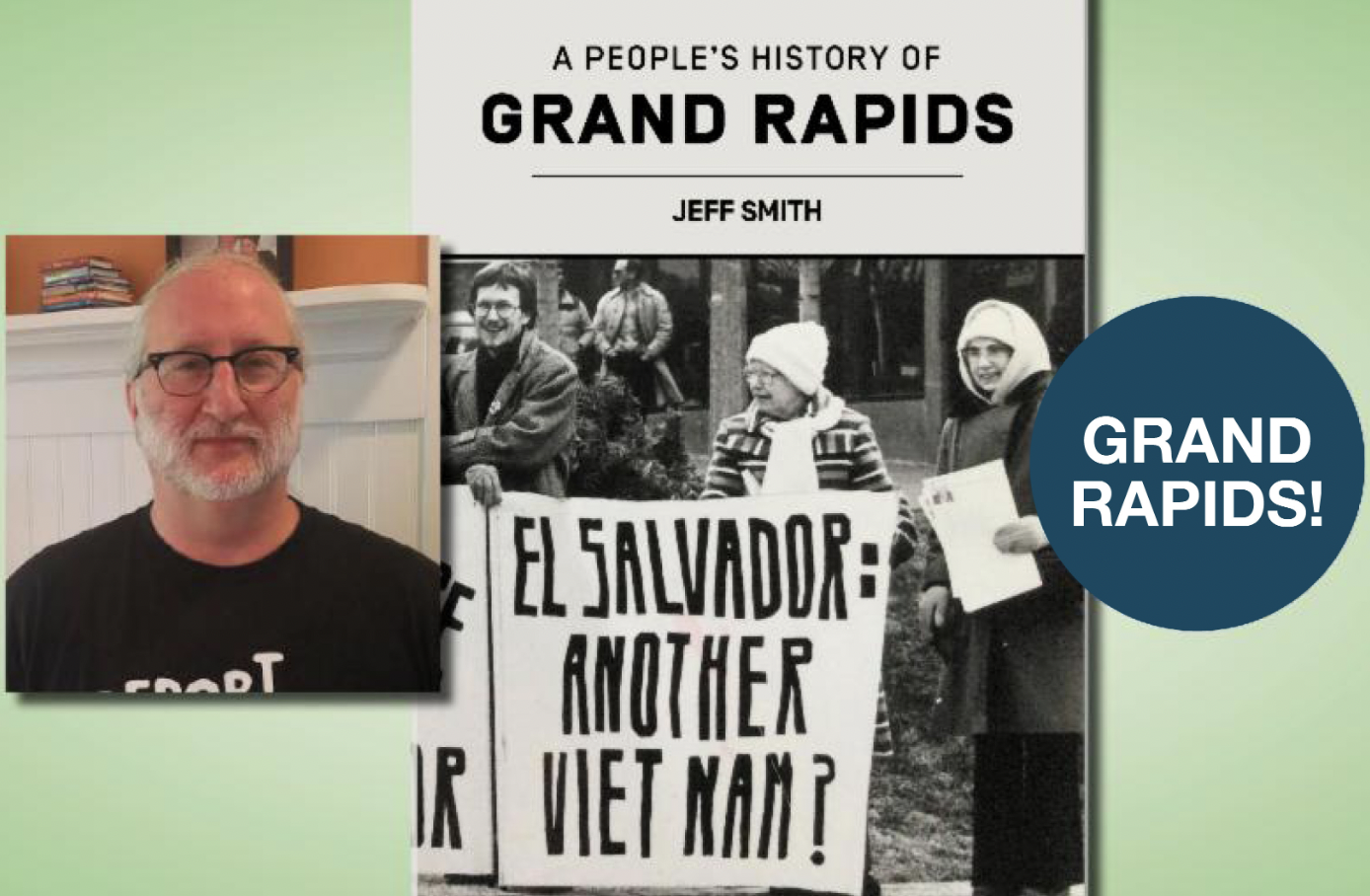
A People’s History of Grand Rapids is one of the first books that applies a history from below for a specific community. In Smith’s book, people will learn about the struggle of Indigenous, Black and immigrant communities in Grand Rapids, and the organized efforts by workers, women and the LGBTQ community to win greater freedoms and equality. In addition, there are chapters that inform readers of movements against war, environmental destruction, the exploitation of animals and police repression, along with movements for global solidarity.
A People’s History of Grand Rapids presents readers with a rich tradition of social movements in West Michigan and properly frames their struggles against the systems of power and oppression that each movement was up against. A People’s History of Grand Rapids is a book that counters the official narrative about this community, and it can inspire people by seeing that they have not been alone in the fight for justice where they live.
I will be talking about my book on Tuesday, April 11th, 6:30pm, at the Schuler Books on 28th Street in Grand Rapids. This is a free event and open to the public. You can also purchase a copy of the book that night. Here is a link to more details for the April 11 event at Schuler Books.
You can also purchase a copy of A People’s History of Grand Rapids directly from me. Just send me an E-mail (sjeff987@gmail.com) if you want to swing by a pick up a copy in person or if you want a copy mailed to you. I also have a PDF version of the book available for $10.
Dissecting the Grand Rapids State of the City speech
If you want to read the text of the Mayor’s State of the City speech, WGVU posted it. You can also watch the speech, which in many ways provides details the public would miss by just reading what was said.
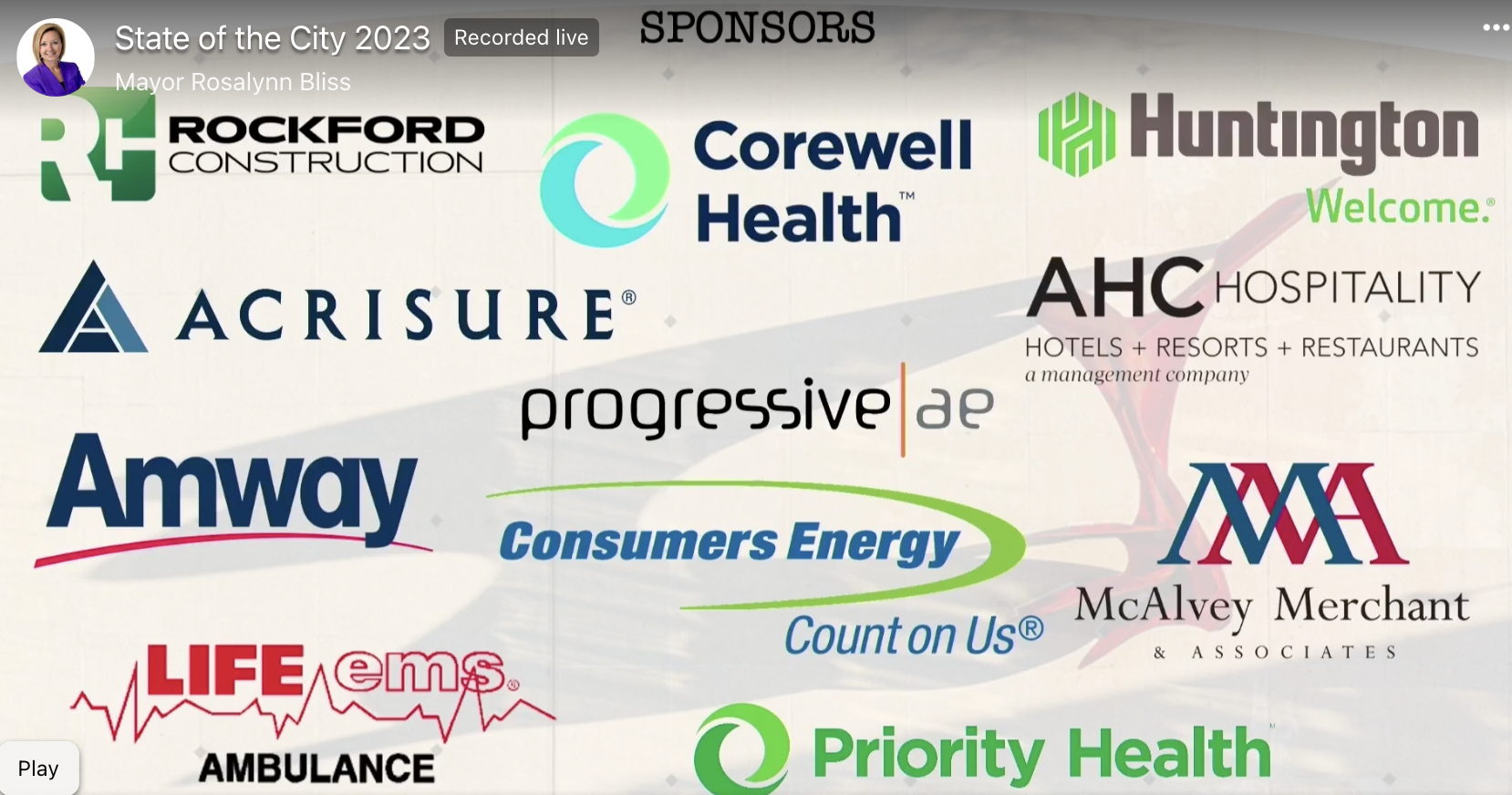
Before we hear from the MC or the Mayor, the video version of the speech has three slides that repeat for 5 minutes. One slide just says, The State of the City 2023, but the other two slides (shown here above and below) are lists of corporate sponsors for the event. Now, why does the City even need corporate sponsors for the event? Maybe it was to cover the cost of renting the venue and the cost of refreshments to this invitation only event. It used to be that anyone from the public was invited, but is recent years it has become an invitation only, which means that those invited are in full support of what the City is doing. It also means that any dissenting voices are NOT invited, which also means any chance to question or confront City policies are eliminated.

Even if the corporate sponsors are meant to cover the costs, it sets a bad tone for the entire event. First, it gives a free pass to those companies, since they are now seen as “friends” of the city. Second, it raises questions about what kind of relationship the City has with these corporations, corporations which have a history of exploitation and political manipulation. Third, there are four companies that benefit from the construction boom addressed in the Mayor’s speech – Rockford Construction, Triangle Construction, Diversco Construction and Progressive AE. Then there are three DeVos owned entities listed as sponsors – Amway RDV Corp and AHC Hospitality. I don’t think I need to argue why partnering with the DeVos family is problematic, but you can always look at The DeVos Family Reader for details.
Kent County Commissioner Tony Baker acted as the MC and asks elected officials to stand up during his opening comments. I’m always confused as to why elected officials are given that kind of recognition at these events. Aren’t they supposed to be there on behalf of the residents? I mean, no one else was asked to stand up, not health care workers, neighborhood organizers, teachers, mental health workers or volunteers of any kind, which as we know, are often the very people who make things happen.
Eventually Mayor Bliss comes to the podium and begins with the obligatory thanks, then begins by stating, Over the past year we continued to make considerable progress toward this next version of Grand Rapids. The Mayor then gives a list of several items, even naming several new neighborhood businesses that have opened. There was lots of economic rhetoric, such as economic growth, industrial growth, opportunities, transformative civic projects, and employment and wages are expected to grow locally. Does this mean that businesses will start paying a living wage so people can afford rent or even a home mortgage? Does thus mean that industrial growth doesn’t mean exploiting workers or the environment? Are the transformational civic projects going to lift up the most marginal in this city?
The Crisis of Policing
Mayor Bliss then thanks Police Chief Winstrom, by saying, “It was also almost a year ago that Patrick Lyoya was tragically killed.” He wasn’t tragically killed, he was murdered, shot in the back of the head by a GRPD cop who was sitting on top of Patrick while he was lying face down on the ground.
Chief, we are deeply grateful for your leadership this past year and your ability to listen, build accountability, trust and meaningful partnerships to ensure Grand Rapids remains one of the safest cities in America.
In October, GRIID wrote a response to this claim of Grand Rapids being the safest city in Michigan, a claim made by the group Wallethub. In that GRIID post I wrote:
In the Home & Community Safety category, the only reference to policing is, “Law-Enforcement Employees per Capita.” The WalletHub survey completely ignores anything about how local police departments target certain populations or what the public thinks about the role of policing in their community.
Mayor Bliss then brags about the fact that there are now social workers and mental health workers who respond to calls with cops. Some cities are actually just sending out social workers and mental health workers, without cops. More importantly, we need to really think through and be critical of this practice of pairing cops with social/mental health workers. The national organization Interrupting Criminalization has great resources and a toolkit, providing critical analysis in response to what Grand Rapids is doing, particularly with their report, Beyond Do No Harm Principles.
 Interrupting Criminalization also provides monthly trainings entitled, “Building Coordinated Crisis Response: A Learning Space for groups and organizations responding to crisis without police.” You can register for those trainings online at this link.
The Mayor went on to say, “The best response to violence is to stop it before it starts.” While I would agree with this sentiment, the Mayor’s notion of violence is limited to physical violence, or what the GRPD would identify as “criminal.” However, violence is also structural. When people don’t make enough money to support themselves or their families – like a living wage – then that is violence. When people can’t afford rent in the current housing market, then that is violence. When people who identify as trans are confronted by constant harassment, intimidation and transphobia, that is violence. This is where the real prevent starts, is to address structural violence, which is often the root causes of people engaging in street level violence.
The Housing Crisis
The Mayor then shifted her comments around housing, “I mentioned last year, we are in a housing crisis because we have more people than homes. And our population is growing fast.” While this statement might be true, it doesn’t address two fundamental aspects. First, the real housing crisis that exists for thousands in this community is affordability. When people don’t make a living wage, they can’t afford to either purchase a home or they can’t afford to pay rent. The second issue is whether or not growth is fundamentally a good thing. Now, within the framework of free market Capitalism, growth is always encouraged, but growth also means a burden on ecosystems, plus it increases the likelihood of creating more social and economic problems. Lastly, I think more housing units will be great for construction companies, developers, realtors and landlords/property management companies. It will not be beneficial to lots of residents who are being priced out of the housing market. Until we make sure that the thousands of people who can’t afford housing in this market, we will continue to displace people and push some sectors of the population out of the city, which has already been happening since the 2008/2009 economic crash.
Now, Mayor Bliss goes on to say that the City of Grand Rapids currently has more than 1,000 affordable homes and apartments in the development pipeline, but many of these new “affordable housing units” are not truly affordable. First, many of the new housing units that are apartments will cost more than many people can afford, regardless of the fact that they are calling it affordable housing. Second, most of these “affordable” housing units have been subsidized by public tax dollars that will fund the building of the units, meaning the money will go to developers, construction companies and non-profit housing entities. This is a temporary solution. We need to make sure that everyone makes a living wage – which would be a minimum of $25 an hour – for people to be able to afford rent or mortgage payments.
Mayor Bliss then states, “In 2022 we seeded the fund with 5 million dollars that will be dispersed yet this year. This year we will grow the fund by another 10 million dollars.” If the City of Grand Rapids was serious about re-directing money to fund truly affordable housing, then they could do what people have been demanding since June of 2020. People have demanded that the City reduce the GRPD budget to the 1995 City Charter mandated level of 33%, which would free up about $10 million every year. Imagine home much new housing could be built for that and how much in would benefit tenants who can’t afford rent right now?
Lastly, when the Mayor names private and non-profit developers as central players in the current housing crisis, it limits our ability to radically imagine other ideas, ones that are not driven by Market Capitalism. On February 19, GRIID wrote a response to the Chamber of Commerce created Housing Next plans, which included the following ideas for how to address the housing crisis.
- Paying people a livable wage, which right now would be $25 an hour minimum
- Reducing the wealth gap in Kent County, where there are over 600 millionaires, but 25% of the population subjected to poverty.
- Government regulated rent control
- The creation of Tenant Unions to support tenant struggles and to develop tenant power in the face of landlord/Property Management housing, which is about maximizing profits, not the well being of tenants
- Stop the influence peddling from Real Estate and Rental Property Associations, especially during election cycles, as we documented in 2022.
- Re-direct part of the massive GRPD budget to go towards housing, and redirect past of the massive US Military Budget ($858 Billion for 2023) and use it to provide housing for people, particularly the most marginalized communities.
- Practice Radical Hospitality, particularly in the faith communities. Imagine home many people who are currently housing insecure, could benefit from the resources and hospitality of the faith communities.
- Limit large corporate property management companies or real estate investors from operating in Grand Rapids/Kent County.
- End government subsidies/tax breaks for developers.
- Promote cooperative housing and Community Land Trusts.
Mayor Bliss then shifts gears by saying, “We are seeing an explosion of entrepreneurship across our City,” when talking about neighborhood development. She lists several neighborhood businesses in the process. The Mayor then began to talk about the City’s “campaign to revitalize the Grand River corridor.” This of course is a campaign centered on developments projects, not on environmental sustainability, plus it re-affirms the City’s Settler Colonial history.
The Mayor then wraps up her State of the City speech by saying things like, “From policing – to housing – to our economy and environment, we are genuinely addressing root causes of issues that have simmered under the surface for generations. We are not doing it by hastily pushing top-down solutions.” Um, yes, you are. The City’s community engagement process is weak, and most times laughable, as we recently saw with the Public Safety meetings held in Grand Rapids last week. Plus, there are so many people who are invited and then appointed to various boards, most of which are people who work with or are representing members of the Grand Rapids Power Structure, as we noted in an October 2020 article.
The Mayor of Grand Rapids then ends with lots of lofty language, positive language about progress and diversity, but even with all of the rhetoric, it is impossible to ignore all of the serious social problems this city faces. Personally, I do not trust the City of Grand Rapids, nor it’s corporate partners to do what is right, especially for the most marginalized in our city. I trust grassroots and autonomous projects and movements that not only pressure local government, they create and implement projects that do not rely on systems of power and oppression, like corporations and cops.
43 years ago the US financed Salvadoran Death Squads murdered Archbishop Romero: We Must Never Forget!
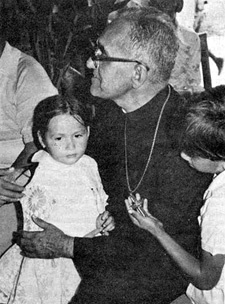 In January of 1992, just days before the cease-fire in El Salvador, I was sitting in the Central Plaza watching the crowds of people with my traveling partners. We noticed a large crowd in the center listening to a man speaking in English who was accompanied by a translator. I decided to walk over to investigate what was going on when I realized that the man speaking was a preacher from the US. No sooner did I realize this that I turned around and rejoined my friends shaking my head in disgust.
When the crowd finally dispersed I noticed that the street preacher was headed in our direction. Right away he began to speak to us in English and inquired about our being in El Salvador. We told him we were tourists because one never knows when there are people listening in on your conversations. Before we could say any more this guy began asking us if we had “come to know the Lord.” We all said no, much to his disappointment, but we were curious enough to know what he was doing here. He said “to spread the Gospel and to win souls for Christ.” We asked him if he was doing anything for these people in the way of food, housing, jobs, ect. He told us no and that those things were not relevant as long as people saved their souls.
At that point I remember telling him that he was no different than the long line of Christians who had come here to impose their will on these people. I said if you wanted to preach religion, maybe he might want to follow the model of the late Archbishop Oscar Romero. Looking at me with a confused expression, our missionary friend simply said, “Who was he?”
The above was taken from my book, Sembramos, Comemos, Sembramos: Learning Solidarity on Mayan Time. That book is about how the people of Central America and Chiapas, Mexico had transformed my life and helped me to come to the realization that real solidarity takes place when we accompany people who are fighting for liberation from oppression.
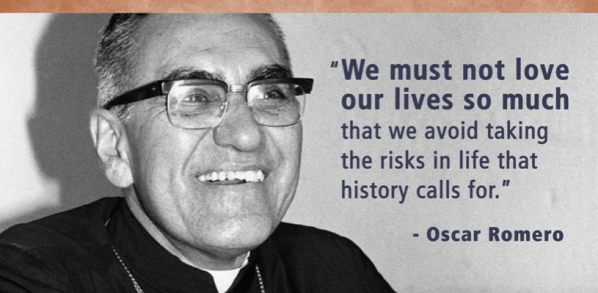
I also shared this story about the US missionary in El Salvador, because it demonstrates how arrogant and clueless most people in the US are when it comes to the life and commitment of the late Archbishop of El Salvador, Oscar Romero. In El Salvador, people affectionately referred to Romero as Monsenor, because Romero had demonstrated his commitment to the people of El Salvador towards the end of his life. And Romero had primarily demonstrated his commitment to the people because he accompanied them in their struggle, walking with them and making the church in El Salvador their church of the poor and oppressed.
Before Romero was chosen as the new Archbishop of El Salvador, he was a quiet and conservative bishop. Romero was even a member of the Opus Dei, a movement within the Catholic Church that began in Spain in the early part of the 20th century and supported the dictatorship of Franco.
However, Romero was a close friend of Fr. Rutillio Grande, a priest in one of El Salvador’s rural communities. Grande was a proponent of Liberation Theology and when he was assassinated for serving the poor and challenging the wealthy oligarchy in El Salvador, Romero began to see the light. This moment of transformation is what Jesuit scholar Jon Sobrino called “Rutillio’s Miracle,” because it was the catalyst that transformed Romero into the Voice of the Voiceless.
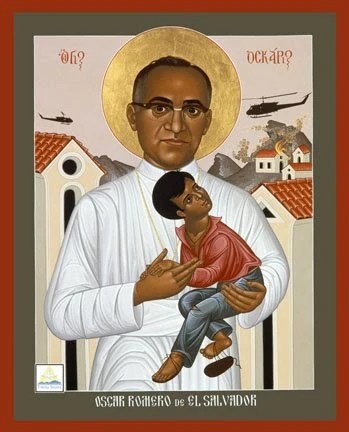 Quickly Romero began to not only speak out on behalf of the poor, he began acting in such a way that soon thousands of Salvadorans would come to call him simply “Monsenor.” Romero turned the facilities at the cathedral into a space for people to come for relief, food and medical assistance. Romero also began hearing the stories of countless Salvadorans who told him how their family members were disappeared, tortured and killed.
Romero then began to challenge the power structure in El Salvador, mostly through his Sunday sermons and his weekly radio broadcast. Romero understood all to well that the poverty and violence that people endured was because of the unjust economic power that the country’s wealthy possessed.
Romero also understood that the political violence that was terrorizing the country’s poor and working class people was a direct result of US military aid to El Salvador. Five weeks before Romero was assassinated he wrote a letter to then US President Jimmy Carter. He asked Carter that if the US really wanted to support justice in El Salvador that the US should stop sending weapons to his country and that the US should not directly intervene in any way into the political, economic, military or diplomatic affairs of El Salvador.
Noam Chomsky writes in the book Manufacturing Consent, that after Romero sent the letter to Carter, the Carter administration put pressure on the Vatican to try and curb the activities of the archbishop. The Vatican did not try to silence Romero for his critique of US imperialism, but they also did nothing to challenge the Salvadoran military to cease their threats against Romero and other religious workers in the tiny Central American country. This fact alone, makes you wonder, why is the Vatican now canonizing Romero as a Saint, when they were complicit in many ways in the US-back counterinsurgency campaign that resulted in tens of thousands of deaths in the 1980s?
How Romero Transformed my life
In March of 1980, when Oscar Romero was assassinated, I was completely oblivious to what was happening in El Salvador. However, within a few short years, my world was opened to the realities of US-sponsored terrorism in Central America.
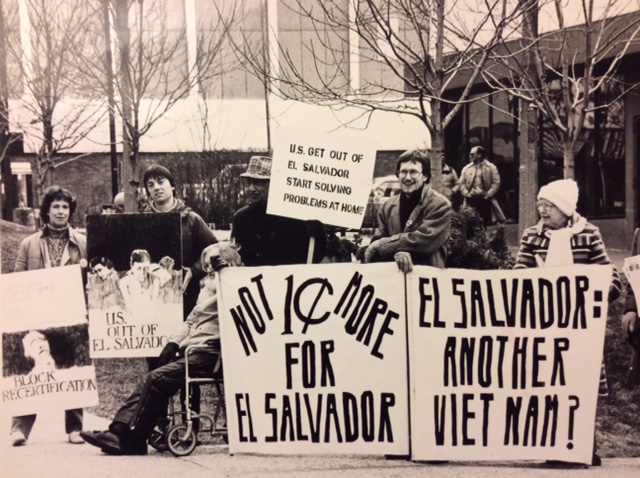
When I first moved to Grand Rapids in 1982, I quickly came in contact with folks who were doing weekly vigils for Central America on the Monroe Mall. The picture shown above, was part of that ongoing consciousness raising work around Central America when the US was supporting counter-insurgency wars in El Salvador and Guatemala, the Contra War in Nicaragua and had turned Honduras into a massive US military base.
When I was in the seminary in 1983/84 and studying at Aquinas College, a student group that I was part of continued to hold vigils, hand out literature and invite speakers to campus. We hosted a Salvadoran labor organizer who had survived a bombing of her labor hall earlier that year.
After I had left the seminary and helped to found the Koinonia House, we continued organizing around Central American solidarity issues, but it never felt like it was enough. Then in 1986, our community house on LaGrave, decided to take the next step and declare ourselves a sanctuary for Central American political refugees. It was this decision that led me down the path of living and working in Central America, making 13 trips between 1988 and 2006, doing primarily accompaniment work.
According to Staughton Lynd’s book, Accompanying: Pathways to Social Change, the Salvadoran Archbishop was the first person to use the term accompaniment. Romero practiced accompaniment in two important ways.
First, the Salvadoran Archbishop practiced accompaniment by speaking out against injustice. Romero spoke out against the injustice in El Salvador, because that is what the people told him to do. Romero did this in his sermons, in his letters and on his radio show.
In his Third Pastoral Letter as Archbishop, Romero stated, “The most acute form in which violence appears in Latin America, is structural, or institutionalized violence, in which the socioeconomic and political structures operate to the benefit of a minority with the result that the majority of people are deprived of the necessities of life.” This is why in the same pastoral letter, Romero denounces Capitalism.
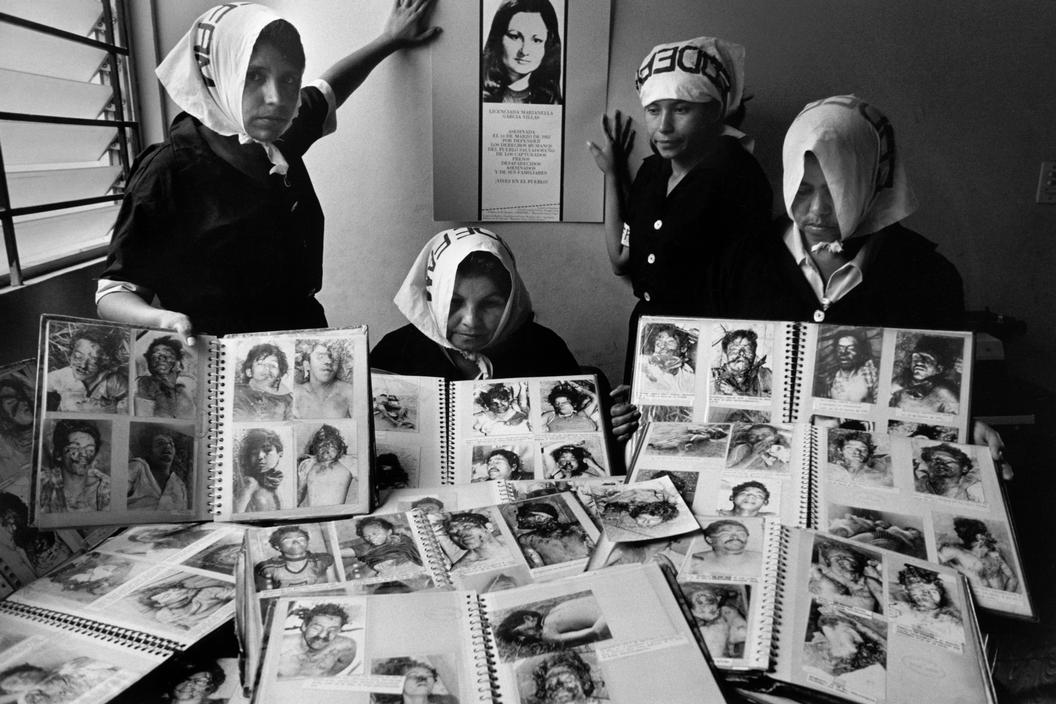
However, the second, and most important form of accompaniment that Romero practiced, was walking with the people. Romero made it a point to visit communities all over El Salvador, to listen to them and to learn from them in their struggle.
This was the most important lesson I learned from Romero. I learned to walk with people, to listen and to accompany them even if it meant putting my life at risk.
When I was in El Salvador during the cease fire in 1992, the women from the grassroots organization COMADRES (an organization founded as a result of the assassination of Archbishop Romero), had invited us to stay at their offices, because it would help keep them safe. What these Salvadoran women meant was that the presence of gringos would provide them with some extra space to do what they needed to do and maybe it would mean they would be able to stay alive for another day.
COMADRES, like so many other Salvadoran groups were constantly receiving death threats and having members of their organization disappear or end up murdered by the Salvadoran army. The four of us who stayed at their office were honored that they would ask us to have a presence with them and we delighted in the opportunity to sleep on the floor.
Because the cease fire had begun, there was a massive demonstration planned a few days later in San Salvador, where hundreds of thousands of people would converge on the capitol and celebrate the end of the counter-insurgency war that Romero and so many others fought against. Again, the women at COMADRES asked us to accompany them in the march and to even make our own banner expressing our solidarity with the Salvadoran people.
The march and celebration was amazing and lasted all day, all night and into the following morning. It is hard for those of us who have not grown up in a war torn country to understand the emotional and psychological relief that people were experiencing during the celebration that took place right next to the Cathedral that Romero had preached at while he was the Archbishop.
I’m still not sure how I feel about the Vatican’s decision to canonize Monsenor Romero, since for me and for most Salvadorans, Romero did not need to be validated by the Catholic hierarchy. Romero found his validation in the work of accompaniment. We shouldn’t need to feel validated by awards or recognition, rather our validation should come from those we accompany on the road to collective liberation. Viva Monsenor Romero!
Movimiento Cosecha action targets Senator Winnie Brinks in Lansing around Driver’s Licenses
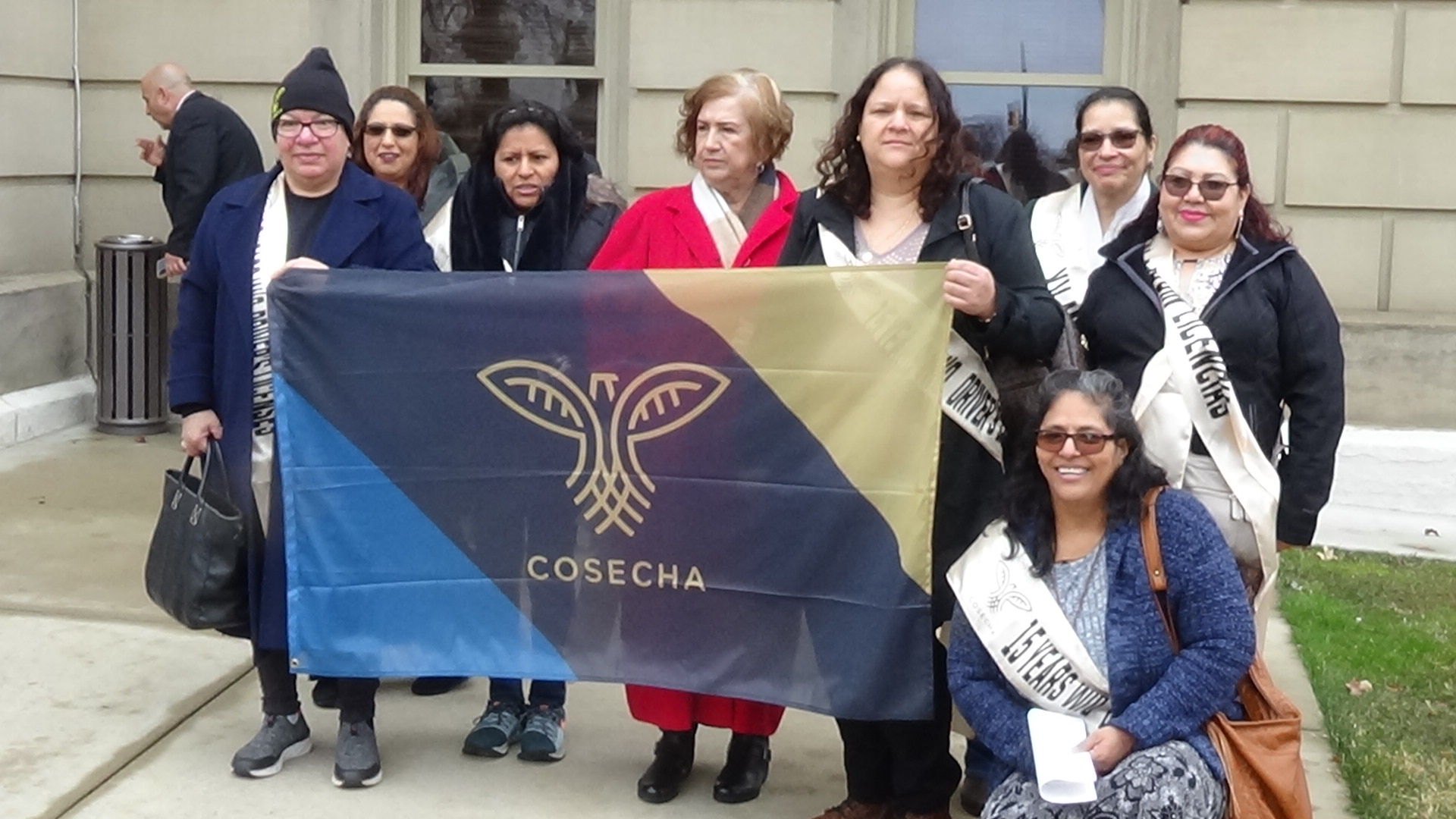
On Thursday about 10 members of Movimiento Cosecha Michigan went to the Lansing State Capitol, to continue their push to win Driver’s Licenses for All.

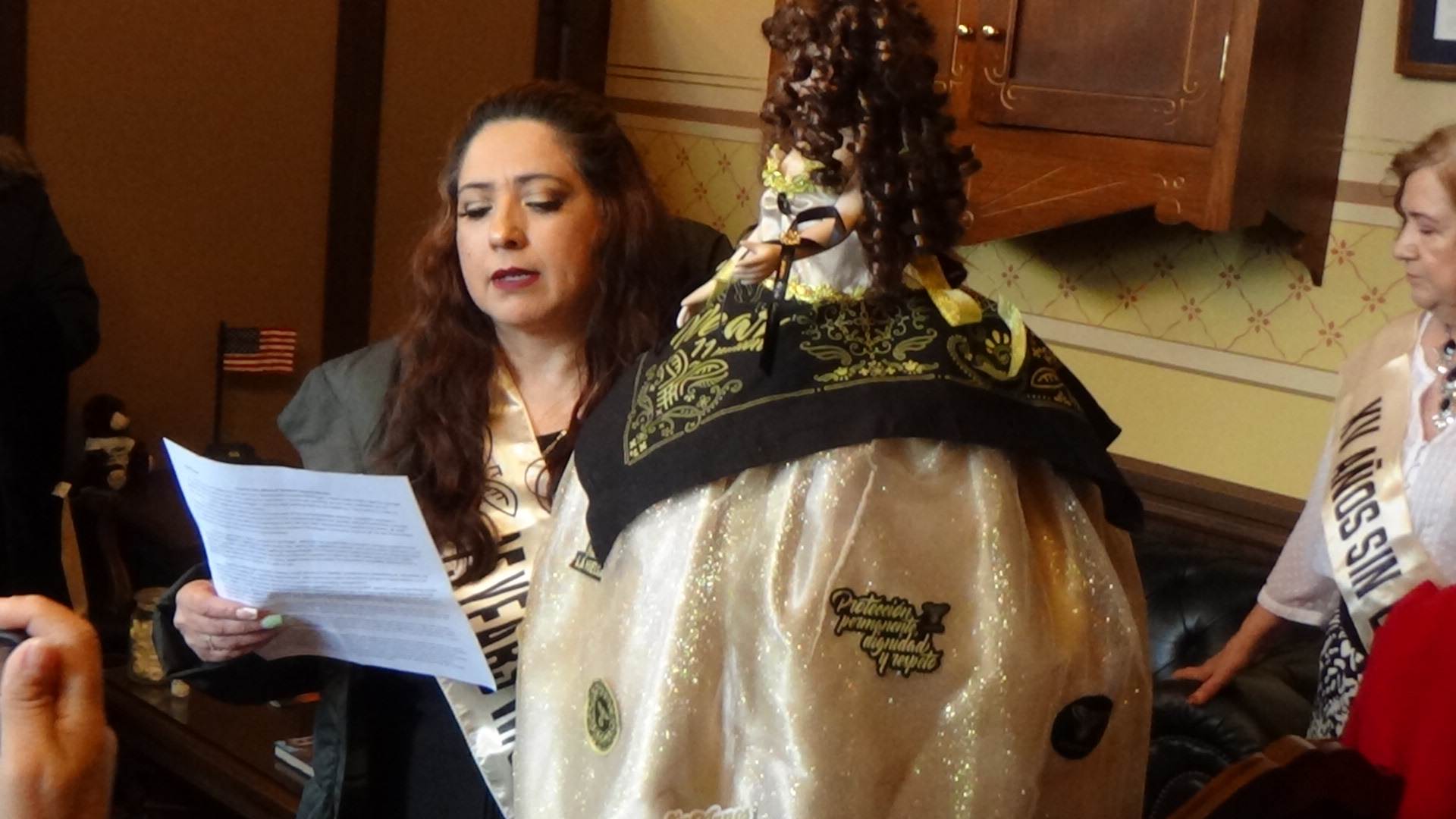
The Cosecha activists were all wearing sashes that said “15 years without Driver’s Licenses.” The sashes went with a quinceañera theme, where families celebrate the 15th year of their daughter. Cosecha was using the quinceañera theme to make a point about the fact that undocumented immigrants have not been able to obtain Driver’s Licenses for 15 years. They were also saying that there has been a 15 year period where the children of immigrant families may have endured trauma, because a family member was detained by police for not having a Driver’s License, which often led to ICE taking them to a detention facility and possibly deporting them.

In a Press Release sent out by Cosecha Michigan, it read in part:
“We are here because Sen. Brinks has introduced the Licenses for All bill in the past but it has never gone anywhere. Now that Senator Brinks is the majority leader, we here constituents are demanding that she prioritize and pass the bill right away. Fifteen years driving with the constant fear of being stopped by police is too much, 2023 is the year to finally change this” said Gabby, an immigrant organizer with Cosecha Michigan.
“Michigan cannot be falling behind the rest of the country,” Gabby continued, “because our state is already benefiting from the labor of undocumented workers. In the time of the pandemic we were classified as essential workers but without any benefit. With the new Democratic majority in the state legislature, now is the time to finally follow through on the promises to support immigrant workers and families in our state.”
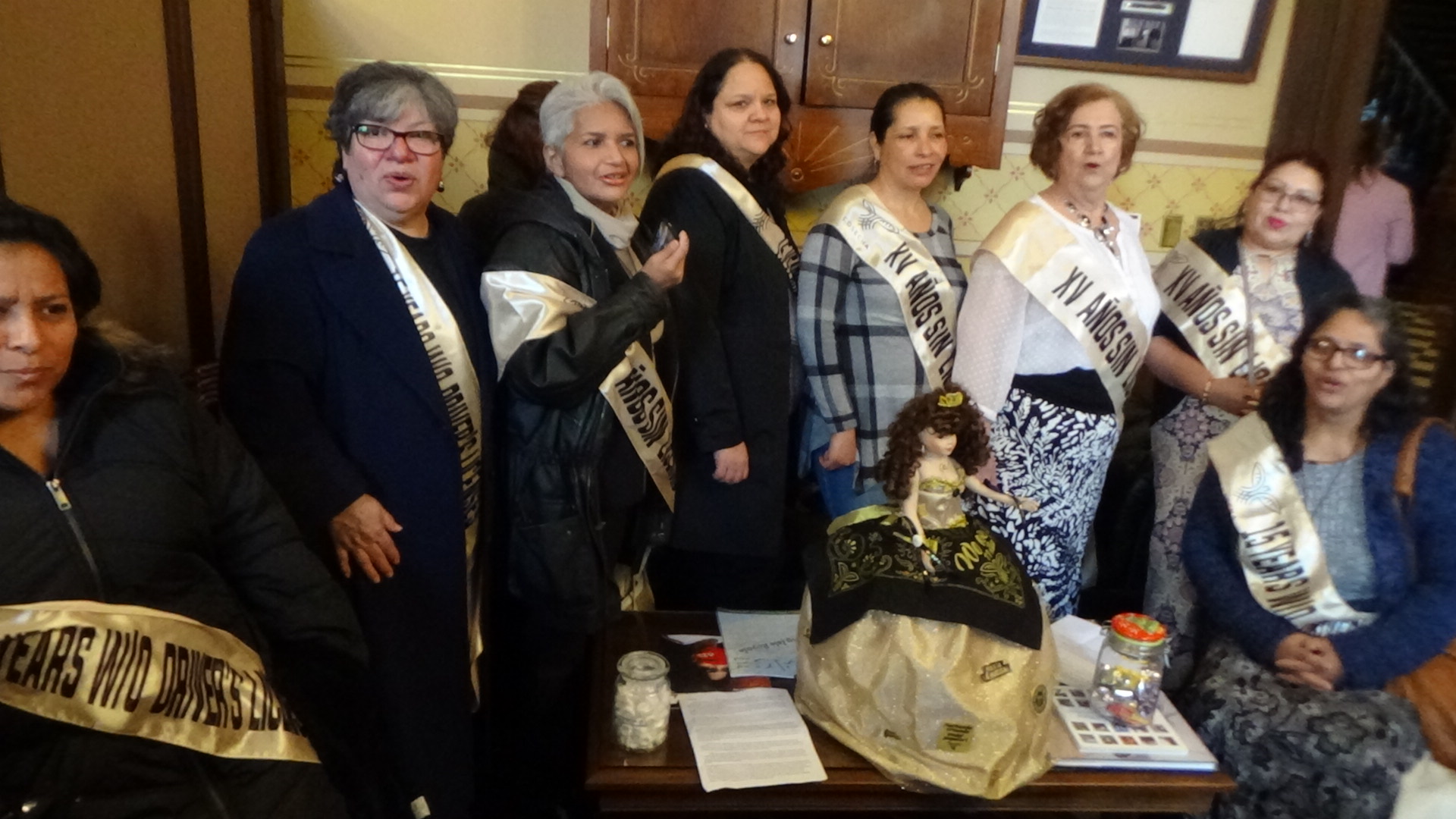
While the Cosecha Michigan activists were in the office of Senator Brinks, there were two staff people they interacted with. When asked about how the Senator’s staff responded to their presence, they said that “it felt as if we were an inconvenience.” Another person thought that the staff was “condescending” towards them. One would think that as people who have been directly affected by not being able to obtain a Driver’s License, which puts them and their families at risk, the Senator’s staff would have responded with, “Please come in and have a seat. How can we assist you or be supportive of your struggle.” Unfortunately, that was not the case.
After Cosecha Michigan activists read statements in Spanish and in English, they left the 15 years without a Driver’s License quinceañer doll with Senator Brinks, as a reminder of the urgency with which they are demanding that Driver’s Licenses for All now!
As the Cosecha Michigan activists were heading outdoors to talk about what happened and to speak with someone from the Lansing News Media, I couldn’t help but think about how quickly the Democrats were able to repeal the Right to Work law that was put in place in 2012, by then Governor Rick Snyder. I certainly think that repealing Right to Work was a good thing, since it was an attack against labor unions and working families in general. However, one fundamental difference with undocumented immigrants not being able to obtain a Driver’s License, their lives are literally at risk of being arrested, detained and possibly deported. Being detained and deported means family separation, which is a greater consequence than what the Right to Work law imposed on workers. The question is, will the Democrats make passing a Driver’s Licenses for All bill as quickly as they did the repeal of Right to Work or not. Time will tell, and it will tell us something potentially about which lives the Democrats value more.
One of the campaign promises that the Biden candidacy put forth in 2020, was that US immigration policy would be more humane and just. In fact, the Biden campaign borrowed from the Obama campaign stating that there would be “Comprehensive Immigration Reform.”
More than two years into the Biden Administration and there is little Comprehensive Immigration Reform, plus the overall immigration policy on the ground is anything but humane.

Below are a collection of 35 different articles and reports since the beginning of 2021, documenting the harsh realities of the Biden Administration’s immigration policy and practice. These articles and reports talk about human rights abuses to adults and children alike, the ongoing detention of immigrants, the brutality of US Customs and Border Patrol, the Administration’s use of private detention facilities, resuming construction of the Border Wall and the systematic denial of asylum to those who come to the southern border of the US through Mexico.
In many ways, the very same xenophobic, White Supremacist, anti-immigration policies that were so maligned during the Trump Administration are continuing under the Biden Administration.
What we haven’t seen happen, especially from white liberals, those that identify as progressives, and as members of the Democratic Party, is the same kind of outrage they displayed during the Trump years.
I remember attending several meetings in Grand Rapids right after the 2016 elections, where people were scrambling to organize against the rhetoric and then punitive anti-immigration policies of the Trump Administration. White liberal were coming to events organized by Movimiento Cosecha GR and GR Rapid Response to ICE, wanting to be part of the solution and wanting to respect the dignity of immigrants who were coming to the US, primarily because of the US economic and military policies in Latin America, which has exasperated the Climate Crisis, displacing even more people from that region.
It was always encouraging to see people show up for trainings with Cosecha and Rapid Response to ICE, take part in online action alerts, have discussions about offering sanctuary and participating in protests, marches and other forms of Direct Action.
So, where are these people now? Why are the public actions organized by Movimiento Cosecha to sparsely attended? Why does GR Rapid Response have difficulty raising Mutual Aid funds to support people impacted by ICE violence and other unjust immigration policies? Where is the outrage that we saw when immigrant children were in cages?
The only conclusion I can draw is that people really believe that because a Democrat sits in the White House that immigrants are no longer being abused, denied asylum or dying in the desert after crossing into the US. The only fundamental difference I can see, which is also documented in the 35 articles & reports linked below, is that the Biden Administration doesn’t use the same anti-immigration rhetoric that the Trump Administration did. What is painstakingly similar between the two administrations, is the immigration policy.
Lastly, it is also important to note that besides a Democrat in the White House since the beginning of 2021, the Democrats controlled the House and the Senate in those first two years, yet the immigration policy remained unjust and brutal. Again, I ask, where is the outrage, especially from white liberals?
(Note: the following linked articles and reports on US immigration policy in the Biden years, are listed from the most recent to the beginning of the Biden Administration in January of 2021.)
Left to Die: Border Patrol, Search and Rescue, & the Crisis of Disappearance
Joe Biden’s New Immigration Policy Is a Boon to Right-Wing Xenophobia
The Border Industrial Complex Goes Big Time
Biden Administration Takes Fresh Steps to Limit Access to Protection in the United States
Supreme Court Keeps Title 42, Causing Rise in Deadly Human Trafficking & Blocking Asylum Seekers
Number of Immigrants Under Punitive Surveillance Quadrupled on Biden’s Watch
BORDER WALL CONSTRUCTION RESUMES UNDER PRESIDENT JOE BIDEN
The Border Patrol Has Vast, Largely Unchecked Powers That Are Expanding
In New Jersey, Activists Are Learning What “Abolish ICE” Means in the Biden Era
San Antonio’s Mass Migrant Deaths Are a Logical Outcome of Joe Biden’s Anti-Immigrant Policies
Tragedy in Texas: 46 Found Dead in Suspected Smuggling Attempt Amid Biden’s Harsh Border Enforcement
Biden Is Locking Up Thousands of Immigrants in For-Profit Detention Centers
Beyond the Enforcement Paradigm
Biden FY 2023 Budget Maintains Trump-Era Spending on ICE and CBP
JOE BIDEN DETAINED TENS OF THOUSANDS OF ASYLUM-SEEKERS IN THE LAST YEAR
After Two Years and Over 1 Million Expulsions, Advocates Demand Biden End Title 42 Deportations
AMAZON CO-OWNS DEPORTATION AIRLINE IMPLICATED IN ALLEGED TORTURE OF IMMIGRANTS
‘Act of Cowardice’: Biden Pulls Out of Negotiations Over Compensation for Separated Families
Human Rights Defenders Warn Biden Border Policy ‘Quickly Transforming Into Trump 2.0’
Haitian Asylum Seekers Held Under Del Rio Bridge Now Face Inhumane Conditions in New Mexico ICE Jail
Joe Biden Beat Donald Trump — Then Stole His Immigration Policy
BIDEN’S PICK TO LEAD CBP SUPPORTS TWO OF TRUMP’S MOST CONTROVERSIAL BORDER INITIATIVES
‘Vile’: Biden DHS to Turn Away Migrant Families Under ‘Expedited Removal’ Policy
Free the Children: Advocates Demand Biden Close Fort Bliss Detention Center Holding 800 Migrant Kids
ICE DISCUSSED PUNISHING IMMIGRANT ADVOCATES FOR PEACEFUL PROTESTS
THE BIDEN ADMINISTRATION IS ROUTINELY SENDING MEXICAN CHILDREN BACK TO DANGER, REPORT FINDS
BIDEN’S BORDER AGENDA COLLIDES WITH THE REALITIES OF MEXICO’S VIOLENCE
ICE SUBVERTING BIDEN’S PRIORITIES FOR DETENTION AND DEPORTATION
NEW REPORT DOCUMENTS NEARLY 500 CASES OF VIOLENCE AGAINST ASYLUM-SEEKERS EXPELLED BY BIDEN
As Biden Continues Trump’s War on Asylum, Danger Mounts in the Deadly Sonoran Desert
BIDEN’S JUSTICE DEPARTMENT IS DEFENDING A TRUMP RULE THAT RESTRICTS OPTIONS FOR IMMIGRATION RELIEF
Despite Immigration Pledges, Biden Admin Detains Thousands of Unaccompanied Migrant Children
On Migrant Rights, Joe Biden Still Has a Long Way to Go
I attended the 2nd meeting hosted by the City of Grand Rapids this morning, the meeting which focused on public safety and public health in the wake of the GR Chamber of Commerce proposal that would have criminalized the unhoused.
I wrote about these forums on March 12 (with hyperlinks to the GR Chamber of Commerce proposal and the 120 businesses that signed on in support), where I questioned the process and what might happen with the information collected.
I want to talk about the process of this meeting that was listed as being from 10am til 12pm, followed by who was in the room, the questions that participants were asked and the very brief discussion at the end about “solutions.”
First of all, the meeting ended at 11:30am and once you factor in the time that organizers spoke, there was only about an hour for people to have conversations about public safety and public health.
I noticed the Spark sisters were there – Monica Sparks, who is a Kent County Commissioner and her sister, who is a City Commissioner in Kentwood. At some point it was revealed that the Candied Yam, which is owned by Jessica Ann Tyson (who is the Kentwood City Commissioner) provided refreshments for this forum, which meant the City of Grand Rapids had contracted with them for the event.
On top of that, as I mentioned in the March 12 article, the primary facilitators were representatives of the Civic League, which also meant that they were paid to be there. Lastly, each table had a facilitator and note taker, all of which were representatives of Global Bridge Builders, which is run by Skot Welch, a person who makes money off of DEI work, mostly for the corporate world and is a person who does not threaten the existing systems of power in Grand Rapids. Global Bridge Builders was also likely contracted for this event, which means there were likely three separate entities that were contracted to make this forum happen.
Who was in the room?
The Civic League representative asked if there were elected officials in the room and if there were City staff, with a few people putting up their hands as either elected officials or City staff. However, no other group was acknowledged, like working people, students or people who were unhoused. I say this because it is condescending to only acknowledge elected officials and government staff as present and not people with other vocations, etc. I also bring up this point, because there were more than a dozen people in the room who said they were unhoused, and I was told by someone who was unhoused that there were probably twice that number of people who are currently unhoused.
GRPD Police Chief Eric Winstrom popped his head in the meeting before it got started, but I don’t think he stayed around fo the discussion. At the table that I was seated at, not including the facilitator and the note taker, there were 2 high school students who were there just to observe, someone who works with youth who are unhoused, a person who lives in East Grand Rapids, but had a very critical view of what was happening with public safety in the downtown area, plus a young trans person who has also been unhoused.
What questions were participants asked to answer?
Before we provide the four questions that dictated the conversations around all fo the tables at this forum, there was never any discussion or clarifying terms around what public safety is. There were no definitions or real world examples provided, therefore, it was most often limited to the notion that public safety was something that the cops provided, as opposed to a more comprehensive view of public safety as when people have all of their needs met.
Therefore, the dominant culture notion of what public safety is – what cops do – didn’t provide the necessary space for a more expansive view of what a more honest notion of what public safety can be.
- Question #1 – What brought you here today? What makes this topic important to you?
- Question #2 – What does it mean for you to feel safe as you are out and about in GR?
- Question #3 – What did you hear from others that you want to know more about or discuss further in your groups?
- Question #4 – How can we collectively create a safer Grand Rapids Community?
You can see from the questions, which are vague and do not name or provide space to talk about structural issues or root causes of the problem(s) that brought about these meetings in the first place. What if there was a more expensive notion of what community safety is or what are the root causes of people feeling unsafe or why there are unhoused people in Grand Rapids?
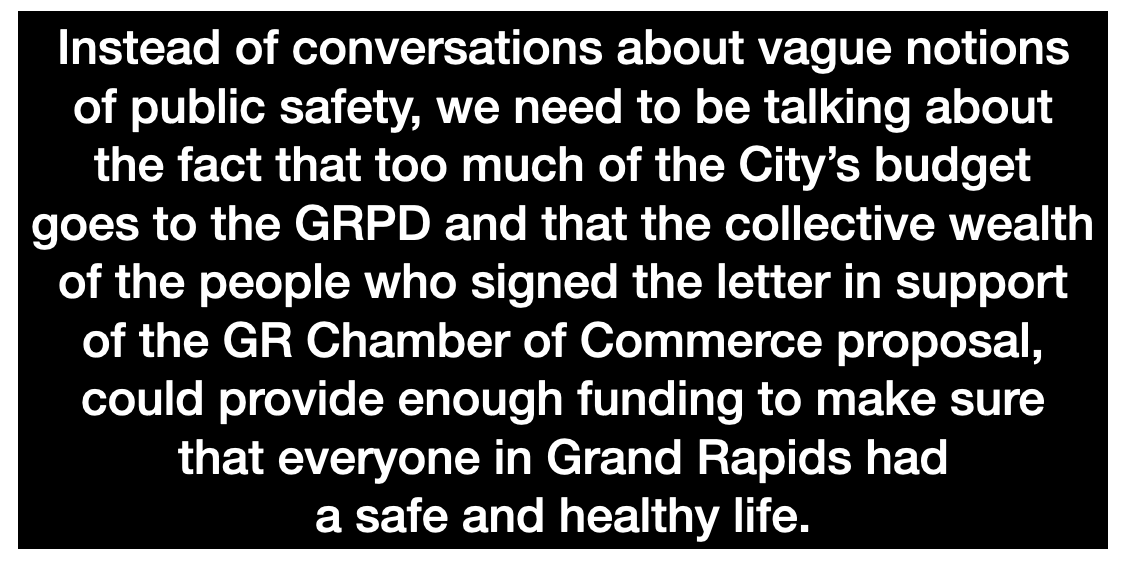
Fortunately, the table I was seated at, there was a round Black man who worked directly with unhoused youth and who had a deep understanding of the root causes, plus a young trans person who was unhoused and now does advocacy and organizing work around this issue. They both understood well what the larger issues were, which were identified as lack of funding. When they said lack of funding, they meant that the real needed of those who were unhoused were directly tied to the fact that Grand Rapids spends about 40% of the City’s budget on policing rather than on meeting basic needs of the most vulnerable residents.
Our table did make it clear that re-directing funding from the police budget to meet basic needs of the community was a necessary step and an important solution that addressed question #4. However, when the facilitator at our table relayed the larger sentiment of our group, nothing was said about funding priorities or about the over funded GRPD.
Now, the notetaker did write that information down, but I would be curious to know if that information makes its way to the Public Safety Committee, which is supposed to have the information/ideas shared by the community for their April meeting. This is why having these discussions exclusively in small groups is so problematic, since it prevents people in the room from hear perspectives and ideas that they have never heard or considered, particularly ideas that challenge systems of power instead of focusing just on those affected by systems of power.
While I was glad I attended and met the people at my table, I left the forum feeling like there was little possibility for systemic change, which is often the case when governments control the narrative and dictate the terms for how these issues get discussed. All the more reason why we need lively social movements that are rooted in collective liberation.
DeVos Family expands their wealth, thus allowing them to increase their influence politically, socially and culturally in Michigan
When Rich DeVos and Jay Van Andel started the Amway Corporation, they had no idea what it would mean decades later in terms of the influence they would have in West Michigan and beyond.
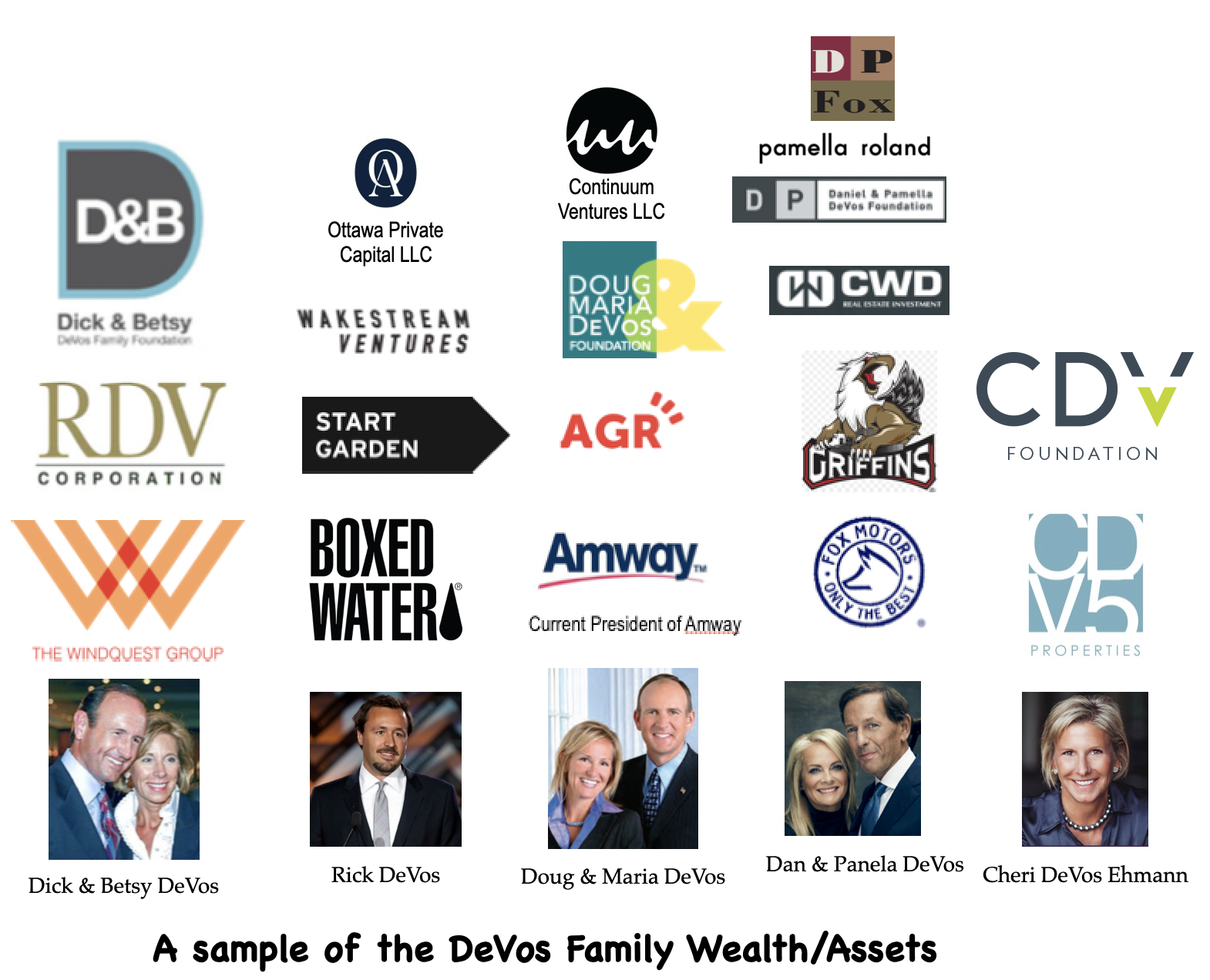
Rich DeVos became a major player in the Religious Right beginning in the 1970s, then in the 1980s his role in the Republican Party was elevated, not just because of his campaign contributions, but in how he was able to normalize Religious Right values into the party, resulting in having a say in policy, like his appointment to President Reagan’s AIDS Commission in 1987.
The next generation of the DeVos family saw a significant evolution, not that the family’s values changed, nor their commitment to Capitalism, but how the children of Rich DeVos began to diversify the wealth of the family.
The Amway Corporation gave birth to RDV Corporation, which was run by Doug DeVos. Dick and Betsy DeVos built the Windquest Group, Dan DeVos took control of the family’s sports teams and built Fox Motors, and Cheri DeVos Ehmann developed what became CDV5. All of this diversification began in the late 1980s and continues to expand right up to the present.
For instance, within the past few weeks, the DeVos family has expanded their wealth in several of the areas listed above. According to an article in MiBiz, Fox Motors Group LLC has widened it’s reach in the southeast part of Michigan, acquiring three new dealerships and a collision center in metro Detroit. “With the latest deal, the Fox Motors portfolio includes 43 locations in Michigan and Illinois, representing 48 automotive and powersports brands.”
Just last week it was announced that Doug and Maria DeVos bought a majority stake in boat dealership of which they have been longtime patrons. Here MiBiz reported, “The Doug and Maria DeVos family office Continuum Ventures LLC, based in the Grand Rapids suburb of Ada Township, on Friday closed on a majority investment in Hudsonville-based Action Water Sports.”
Then on March 3rd, it was announced that the DeVos family has sold the Peninsular Club building in downtown Grand Rapids for $6.4 Million. The sale of this building made complete sense, especially since the DeVos family has moved most of the business operations into the old Fifth Third Bank building on the corner of Monroe and Lyon in downtown Grand Rapids. This includes Ottawa Private Capital LCC, which is the families major investment firm, plus they moved all of the family foundations into the same location.
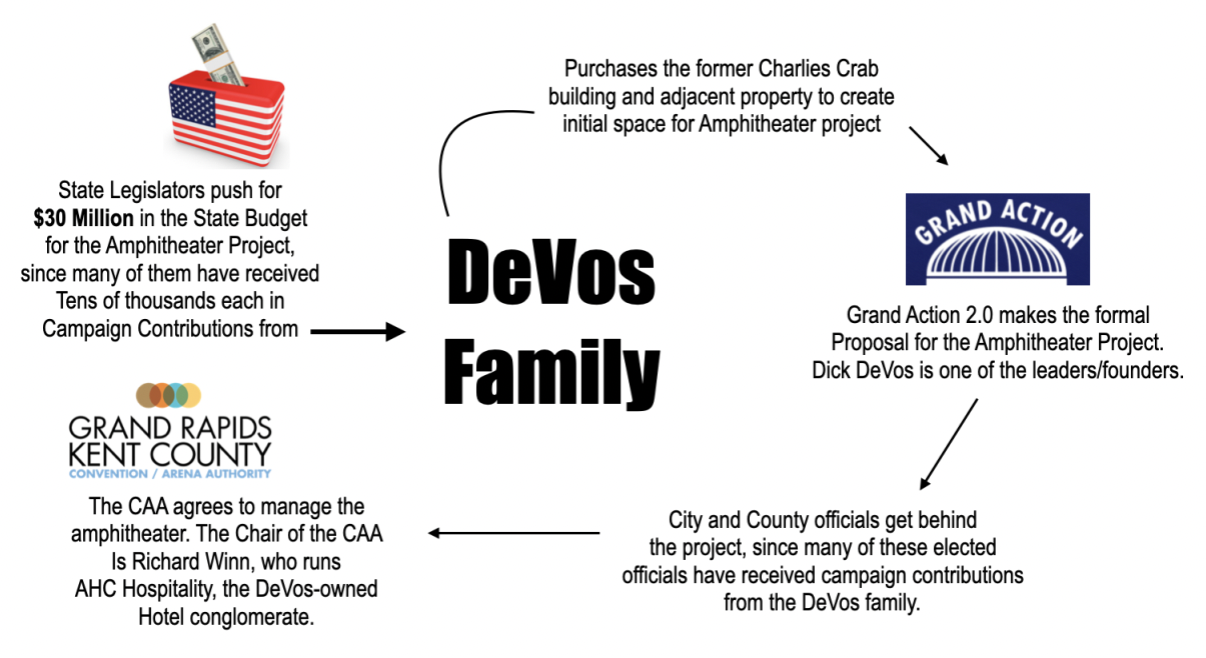
All of this is on top of the DeVos family’s role in other major development projects in Grand Rapids over the past year. For instance, the new outdoor amphitheater project is dominated by the DeVos family, which will be built along the Grand River in the near future. Also within the last year, it was announced that there is a new proposed soccer stadium in downtown Grand Rapids, which has involved a land deal with the DeVos family. One last DeVos-led development project example, has to do with a proposed housing project in the northeast part of Grand Rapids, off of Diamond Street, which is being managed by CDV5 Property Management.
Now, all of this diversification of the DeVos family wealth, apart from expanding their billions, plays a critical role in their ability to influence government policy, social outcomes, especially through the non-profit world, along with their cultural influence. Let’s look at their political influence first.
DeVos Family Political Influence
The DeVos family has been the single largest donor to the Republican Party in Michigan since the late 1980s, according to the Michigan Campaign Finance Network. Just within the last two election cycles, which included the 2020 and 2022 elections, the DeVos family contributed just short of $25 million – $12.7 million in the 2020 elections and $12 million in the 2022 elections. These campaign contributions include federal candidates, state candidates, county candidates, City Commission candidates and ballot initiatives.
In addition to using their money to buy politicians, the DeVos family members often sit at the table of organizations that also work to influence public policy. These organizations include the West Michigan Policy Forum, the Right Place Inc. or the Grand Rapids Chamber of Commerce, the DeVos family, but it also involved DeVos family representatives who sit on the Convention Center Board, DGRI, the Downtown Development Authority, the Action Institute Board, Talent 2025 and a whole array of organizations and committees that influence public policy.
DeVos Family Social Policy Influence
When it comes to social policy or social outcomes, here is where the DeVos family uses its considerable wealth that has been channeled into the various family foundations. There is the Richard and Helen DeVos Foundation, the Dick and Betsy DeVos Foundation, the Doug and Maria DeVos Foundation, the Dan and Pamela DeVos Foundation and the CDV5 Foundation. All of these foundations have millions of dollars in assets, which is a great way to avoid paying taxes, plus it gives them considerably control over social policy and social outcomes, particularly their contributions to non-profits.
The various DeVos Family Foundations influence social policy and social outcomes in two major ways. First, they use foundation money to finance groups like the Acton Institute, the Mackinac Center for Public Policy, the American Enterprise Institute, Focus on the Family, and dozens of education institutions, where they influence an emphasis on promoting entrepreneurial Capitalism. The other way the DeVos Family Foundations influence social outcomes is through their funding of non-profits like Start Garden, AmplifyGR, the Education Network of Greater Grand Rapids, ICCF, Family Promise, and a whole array of non-profits, some that also promote entrepreneurial Capitalism and others provide individualized social services. What this does is that it creates a culture of collusion and silence. When non-profits take money from DeVos foundations they are colluding in pushing entrepreneurial Capitalism, plus they buy the silence of groups that provide social services. When I say they buy the silence of social service non-profits I mean their grant money to social service groups keeps these groups from speaking out on how the DeVos political contributions influencing public policy, which widens the wealth gap, while their foundation money them provides temporary relief to social service non-profits to serve people who are impacted by the public policy imposed on society by the DeVos family and other members of the Capitalist Class.
DeVos Family Religious/Cultural/Entertainment Influence
The third and last area of influence that the DeVos family has in West Michigan are the areas of Religious, Cultural and Entertainment arenas, which sometimes are intertwined. The Religious influence can be seen in how much money they contribute to religious groups and institutions. Then there is the overall religious influence, which permeates everything they do, thus inserting their brand of Christianity into all arenas of life. The Cultural influence is felt with projects like ArtPrize, Start Garden and AmplifyGR, which weaves religious and entrepreneurial Capitalism to make justify wealth accumulation and to allow them to say that people who are not successful in life, it’s because they don’t Be-lie-ve!
The Entertainment influence can certainly be seen in some of the areas of religious and cultural arenas mentioned previously, but it is most prominent in their ownership of sports teams and their control over venues like the Convention Center, the Arena, the Grand Rapids Art Museum, previously held influence over UICA, Artprize, and what is likely to become the new outdoor amphitheater. Of course the beauty of all of these projects is that they get the public to subsidize or underwrite a great deal of the cost, while the DeVos family gets to pocket a great deal of the profits from all of the spectator based, consumer culture endeavors they have their fingers in.
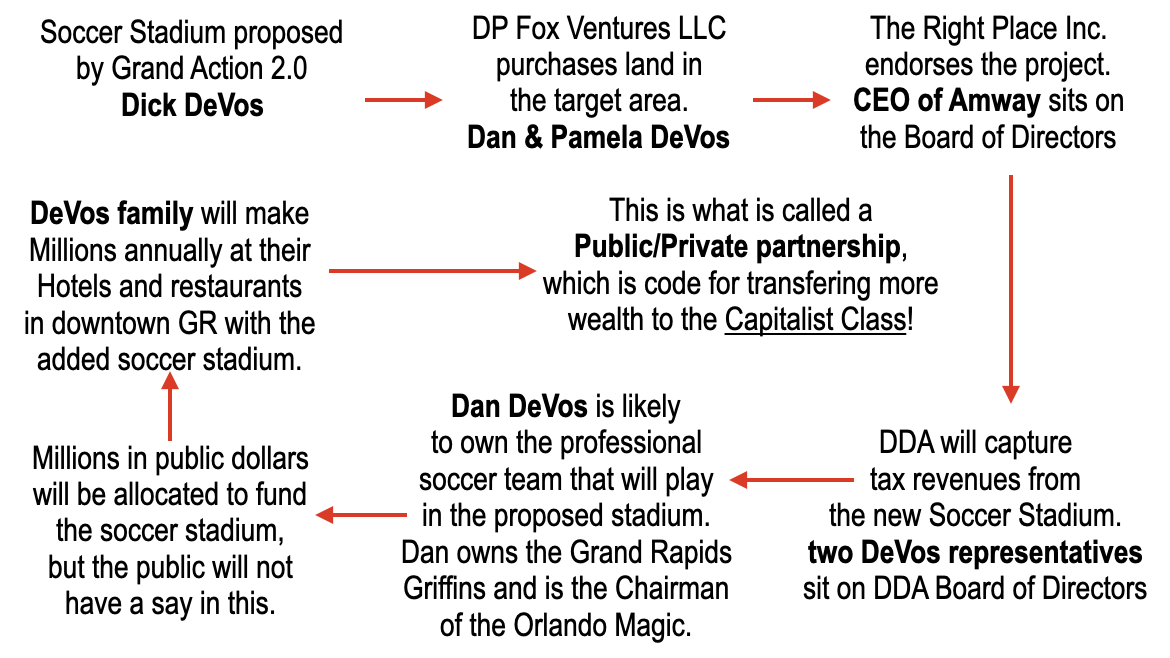
Thus you can see how the DeVos family expansion of their wealth, allows them to influence elections, which influence public policy, which allows them to expand their wealth. Then you can see how the DeVos family wealth expansion allows them to influence social policy and social outcomes, which also provides a buffer for them to minimize and manage potential public outrage against their wealth expansion. Lastly, you can see how the DeVos family wealth expansion influences Cultural/Entertainment aspect of our community, sort of a Bread & Circuses approach to social control, plus it provide yet the last full circle of wealth expansion, since all of their cultural/entertainment projects are often subsidized by public money and have built-in money making components, which make for more profits and expanded wealth.
Michigan Legislators vote to repeal Right to Work, but the Far Right in Michigan has other plans that MLive doesn’t tell us about
On Tuesday, March 14th, MLive posted a story entitled, Michigan’s ‘right to work’ is at death’s door. What will its legacy be?

The MLive article, which is much longer than post articles, cites labor union representatives who support the repeal of Right to Work, plus the obligatory pro-Right to Work position from a few politicians and a spokesperson for the Mackinac Center for Public Policy, which is a Far Right Think Tank.
In addition, there were three university professors cited in the article, all of which claimed that Right to Work was good for workers, along with an “economist” with The W.E. Upjohn Institute for Employment Research, who leaned toward supporting Right to Work, thus MLive provided more pro-Right to Work voices than labor voices.
More importantly, there is no real discussion about the legacy of Right to Work in the article, as was stated in the headline. There was some data and a few graphics presented, but no real analysis of what impact the Right to Work Law has had on Michigan between the time it was adopted in December of 2012 through the present.
The MLive article also had three accompanying photos with the article, two of which showed a sea of people outside the capital holding signs and banners in support of unions. The third photo showed State Police officers standing in front of the State House chambers, preventing people who were attempting to go in and possibly disrupt. Unfortunately, the mLive article doesn’t explore the tactical and strategic actions of organized labor that day in December of 2012, especially since most of the 10,000 who came to protest Right to Work remained outside with only a small contingent of 300 choosing to go inside with the intent of shutting the government down. I know, as I was a participant inside that tried to shut things down, something I wrote about on December 11, 2012. You can also watch the short video I shot on the occupation of the Capitol building in Lansing.
What is omitted from the MLive article
One thing that is not explored in the MLive article, are the plans that the pro-Right to Work forces are organizing around in response to the current repeal of Right to Work.
According to an article from the Center for Media & Democracy, posted on March 10, the Mackinac Center for Public Policy (which was cited in the MLive article):
In this heated context, the Mackinac Center for Public Policy, a right-wing think tank that was instrumental in getting the anti-union legislation passed, announced the creation of a new spin-off last month that is legally able to raise and spend unlimited amounts of dark money to influence legislation and ballot measures.
Known as the Mackinac Center Action, the new advocacy group is a 501(c)(4) nonprofit, which means that it will not have to adhere to the lobbying limits and ban on electoral activity that apply to its 501(c)(3) parent organization. And, unlike super PACs, Mackinac Action will not be required to disclose who funds its operations.
Fueled by Koch, the Bradley Foundation, and other right-wing billionaires and foundations, the Mackinac Center is a powerful force in Michigan that has long led the charge to break the back of organized labor in the state.
Now, we don’t know for sure of this new PAC from the Mackinac Center will be raising money for pro-Right to Work candidates to re-take the State Legislature in 2024, if they will being organizing a Right to Work ballot initiative, or both. Whatever this PAC is going to do, this is the real legacy of 10 years of Right to Work, a legacy that all people who believe in the power of organized labor should be paying attention to.
In Part I of our series looking back at the 20th anniversary of the public resistance to the US invasion/occupation of Iraq in 2003, we focused on early organizing efforts to build an anti-war movement before the US war on Iraq even began. In Part II, we looked at the protest when President’s Bush’s visited Grand Rapids the day after his State of the Union address and the GRPD’s response during that protest.

In Part III, we looked at the Women in Black actions, the global protest against the war march that took place in Lansing, along with the People’s Alliance for Justice & Change workshops on civil disobedience that were offered to a growing number of people who wanted to do more than just hold signs. Part IV focused on student organizing against the imminent US war against Iraq, along with civil disobedience that was done at Rep. Ehlers office before the war began. And, in Part V, we looked back on some of the plans that anti-war organizers had put in place once the US invasion/occupation of Iraq began, along with increased GRPD surveillance.
In today’s post we will focus on what actions took place once the US war/occupation of Iraq had begun, along with the increased intensity of GRPD surveillance and repression against anti-war organizers.
On March 20th, the US War/Occupation of Iraq had begun
The US military began its bombing campaign of Iraq on March 20th, 2003. As was previously decided, anti-war activists would meet at the Federal Building in downtown Grand Rapids. It was raining that day, but there were still about 100 people that showed up. In addition, there were a handful of pro-war people who came and stood across the street on Michigan Ave, right in front of the old GR Press building. In addition, there were GRPD cops, along with undercover cops who were trying to pass themselves off as protesters, even though many of us knew exactly who they were.
The group People’s Alliance for Justice & Change had planned to hold a meeting at the office of the Institute for Global Education (IGE) on the evening of March 20th, specifically to plan the next several actions, talk about tactics and strategies for increasing anti-war activity.
We know that the GRPD were planning on increasing the surveillance of anti-war activities, based on the FOIA documents we were able to obtain months later. In the FOIA documents that dealt with the beginning of the war, there was an e-mail they included from the Grand Rapids City Manager to City employees telling them to bring IDs to work that day, there was a copy of a flyer announcing a protest at GVSU that was organized by students, and there was a brief noted (with some information redacted) that said that the Kent County Sheriff’s Department would have extra officers assigned the GVSU. However, the most revealing FOIA documents had to do with the GRPD’s undercover cops who were present during the anti-war meeting at IGE on the evening of March 20th and subsequent protests.
As was already mentioned the meeting at IGE on March 20 was to discuss upcoming actions. The GRPD had send both undercover cops and cops in uniform to that meeting to attempt to intimidate people and to gather intelligence. Here is an excerpt from the GRPD perspective on what was happening.
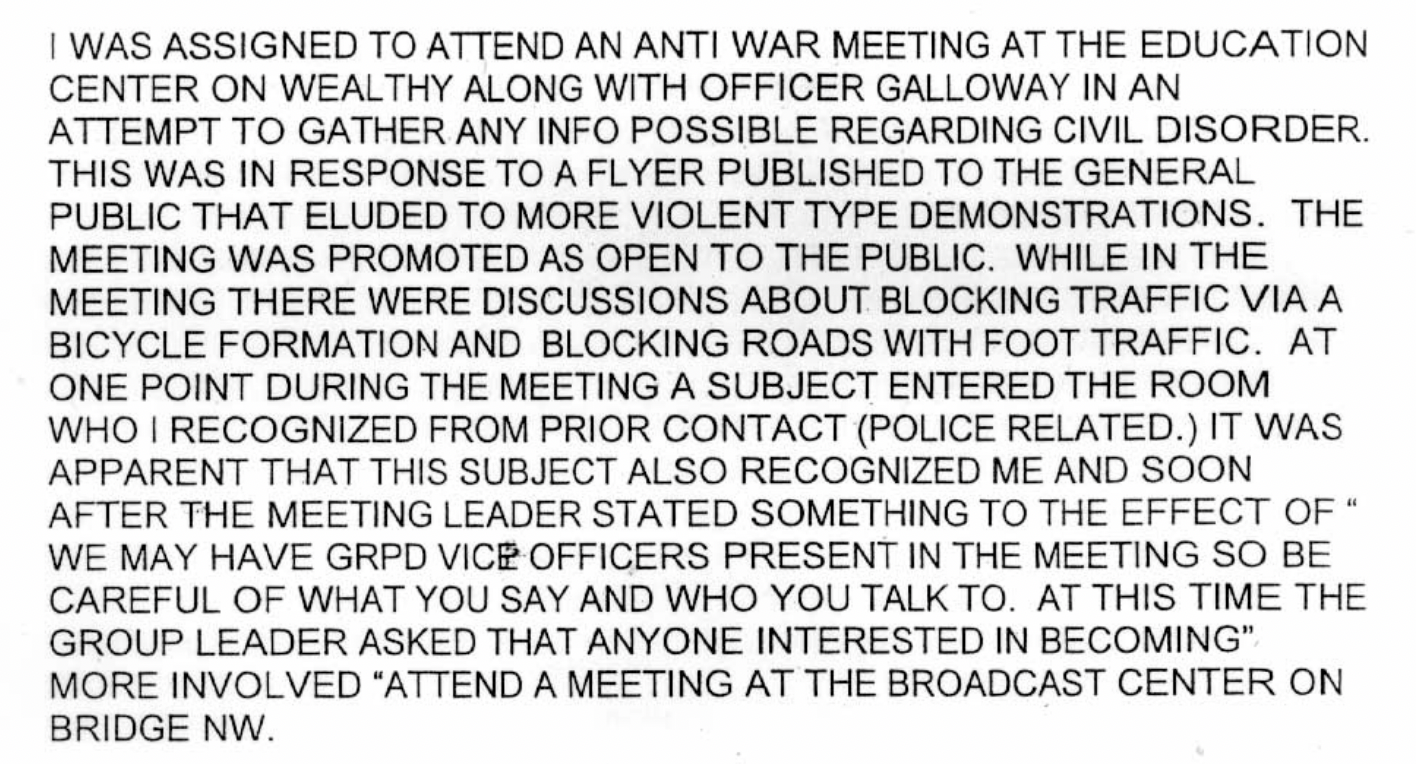
During the March 21st protest it became clear that the GRPD undercover cops were privy to what we had planned, which was to shut down traffic on Michigan Ave by the Federal Building using a slow-down cross-walk technique, where people would walk in pairs slowly and then turn right on the next cross walk, thus stopping traffic going two way initially, then 3 ways and then altogether. However, since the GRPD knew we were doing this, they made it difficult, by threats with arrest, for us to shut down more than one of the cross walks.
On that same day, there were other GRPD cops who were undercover and attempting to pass themselves off as anti-war protesters, even carrying signs. What they did not expect was that one of the anti-war protesters, who was also a translator in the District Court, recognized some of the undercover cops because they were with the vice squad. Here is a GRPD document dated March 26th, that was a result of what happened on March 21st, where the GRPD undercover cops were outed.
 What we didn’t know at the time is that after the undercover cops were pointed out to us, those same cops that were with the vice unit, stopped the person who at outed them and made threats against her for pointing them out to organizers, as was stated in the FOIA document. In fact, this issue was happening all across the country with cops infiltrating anti-war demonstrations, which was the subject of an article on salon.com in February of 2004, titled, A thousand J. Edgar Hoovers. Several people from Grand Rapids were interviewed for that story, which was later picked up by the GR Press making it known in West Michigan that the GRPD was engaged in COINTELPRO-like activities.
One thing became clear after the US Military War/Occupation of Iraq had begun, was that the numbers of those protesting had dwindled (unless a high ranking US official was in town). This was probably one of the results of the GRPD surveillance and repression of anti-war activists, but it also was a reflection of the bi-partisan support for the war and war funding, once the war had begun, which meant that many white liberals who identified as Democrats no longer were resisting the war since the Party’s leadership was behind it.
In our next post looking back at the 20th Anniversary of the US war in Iraq, we will look at how the Grand Rapids-based news media was reporting on the war, local war activity and even providing a platform for pro-war voices.
Last year during Black History month, I made three posts about books dealing with the Black Freedom Struggle that influenced how I saw the world. Now that we are in Women’s History Month, I want to do the same thing in regards to books by women, particularly feminists that influenced my understanding of the world.
I say feminist writers, as Women’s History month has evolved to the point where it is centered on identity politics, rather than the being rooted in the origins of International Women’s Day.
Last week, in Part I, I shared the titles of books that I read in the 80s and early 90s that challenged my understanding of myself and the world around me. In today’s post, most of these books are from the late 1990s and early 2000’s.

Feminist Freedom Warriors: Genealogies, Justice, Politics, and Hope, edited by Chandra Talpade Mohanty and Linda E. Carty
Global Obscenities: Patriarchy, Capitalism, and the Lure of Cyberfantasy, by Zillah Eisenstein
All Our Relations: Native Struggles for Land and Life, by Winona Laduke
Ecofeminism and the Sacred, edited by Carol Adams
Feminism is for Everybody: Passionate Politics, by bell hooks
The Checkbook and the Cruise Missile, Conversations with Arrundhati Roy, Interviews by David Barsamian
The Revolution Will Not be Funded: Beyond the Non-Profit Industrial Complex, Edited by INCITE! Women of Color Against Violence
Globalization & Militarism: Feminists Make the Link, by Cynthia Enloe
Talking Back: Thinking Feminist, Thinking Black, by bell hooks
Policing the National Body: Race, Gender, and Criminalization, Edited by Joel Sillman and Anannya Bhattacharjee
 Grand Rapids Institute for Information Democracy