Virtually every politician you know will misrepresent and bastardize the legacy of Dr. King today
Today we honor the legacy of the great civil rights leader, Dr. Martin Luther King Jr. Well, some of us will try to honor this legacy. However, the reality is that most people who have economic and political power will not authentically honor Dr. King. In fact, most of them will misrepresent his legacy to fit their own political agenda or worse, they will bastardize his legacy in the most banal ways.
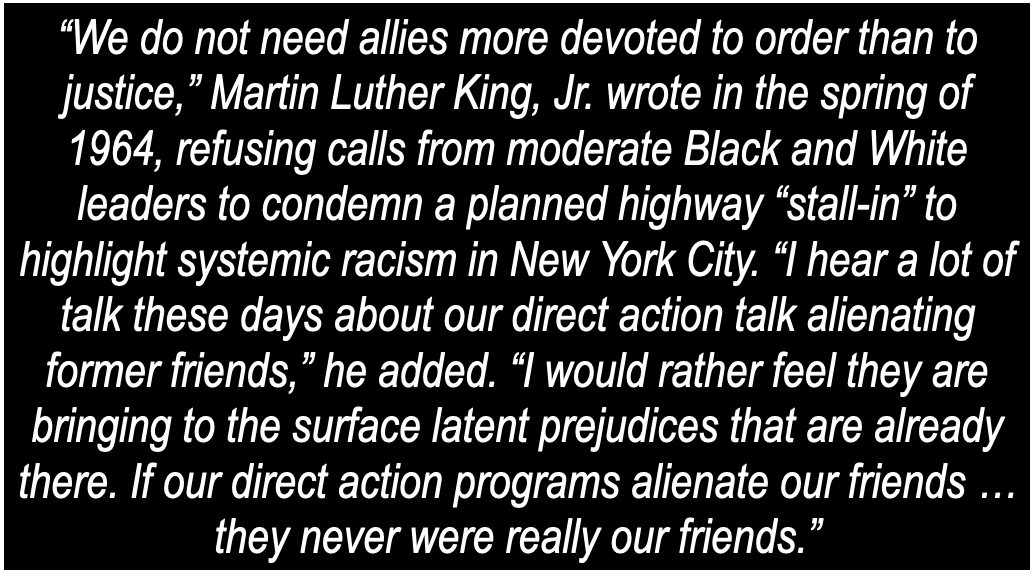
For example, on Friday, January 12th, Michigan Senator Gary Peters released a video statement ahead of the federally recognized holiday Dr. King, which is today, January 15th. Here is what Sen. Peters says in this video statement:
“As we celebrate the life and legacy of Dr. Martin Luther King, Jr., it’s an important time to honor and reflect on the causes he dedicated his life to. Through his words and in his actions, Dr. King led a movement across America, inspiring us to stand up to injustice and live a life of service to others. Despite every obstacle, he held an enduring love for his country, and he believed in a better future for America. Dr. King’s lessons continue to be just as relevant today. As we live through another period in which basic rights and freedoms are under attack, we must always remember to lead by his example. On this MLK Day, let’s recommit ourselves to his cause by doing what’s right: taking action, serving our communities, and standing up for the rights of all people.”
Like virtually all politicians, Peters uses words like justice, rights, freedoms and service to others. These are warm and fuzzy words, but they are meaningless unless they are attached to actions and context, which Senator Peters fails to address. In fact, the only thing that Senator Peters provides a definitive statement about regarding Dr. King is this, “Despite every obstacle, he held an enduring love for his country, and he believed in a better future for America.”
This is a perfect example of what I mean by the bastardization of Dr. King’s message. Peters makes it seem as if after everything the civil rights leader endured – the persecution, the beatings, the arrests, the constant death threats, government surveillance, jailing and his eventual assassination, that Dr. King was committed to loving the USA. Therefore, what I would like to do is a simple comparison to what Dr. King was all about in words and in actions, then compare that to what Senator Peters is all about in words and actions, by looking at major themes that both men were committed to.
Militarism
Dr. King was fundamentally opposed to militarism and violence. In his famous 1967 speech at Riverside Church, he came out against the US war in Vietnam, stating: “As I have walked among the desperate, rejected, and angry young men, I have told them that Molotov cocktails and rifles would not solve their problems… But they asked, and rightly so, ‘what about Vietnam?’ They asked if our own nation wasn’t using massive doses of violence to solve its problems, to bring about the changes it wanted. Their questions hit home, and I knew that I could never again raise my voice against the violence of the oppressed in the ghettos without having first spoken clearly to the greatest purveyor of violence in the world today: my own government.”
Senator Peters is deeply committed to militarism. He sits on the Senate Armed Forces Committee, has voted for every Department of Defense Budget since he became a Senator, has unconditionally supported the US sending billions to Ukraine since the Russia invasion, and has unconditionally supported the US role in perpetuating the Israeli occupation of Palestine, along with the current genocidal campaign against Gaza and the West Bank. These are just two examples of US militarism that Senator Peters supports, although the list is much longer.
Capitalism
Dr. King’s view of Capitalism evolved during his lifetime, especially after he shifted his emphasis from the South to the North, moving to Chicago. While working on a housing campaign in Chicago, Dr. King stated:
“You can’t talk about solving the economic problem of the Negro without talking about billions of dollars. You can’t talk about ending the slums without first saying profit must be taken out of slums. You’re really tampering and getting on dangerous ground because you are messing with folk then. You are messing with captains of industry. Now this means that we are treading in difficult water, because it really means that we are saying that something is wrong with capitalism.”
In addition, it is important to note that Dr. King always discussed economic priorities and structural poverty. In his Beyond Vietnam Speech, Dr. King stated the following two points:
“A nation that continues year after year to spend more money on military defense than on programs of social uplift is approaching spiritual death.”
“On the one hand we are called to play the good Samaritan on life’s roadside; but that will be only an initial act. One day we must come to see that the whole Jericho road must be transformed so that men and women will not be constantly beaten and robbed as they make their journey on life’s highway. True compassion is more than flinging a coin to a beggar; it is not haphazard and superficial. It comes to see that an edifice which produces beggars needs restructuring.”
Senator Peters is fundamentally committed to defending the system of Capitalism, by supporting the massive tax breaks for the billionaire class, by supporting corporate welfare/subsidies, and by not fighting to pass a livable wage law in the US. Sure, Senator Peters has provided moderate support to some of the more mainstream unions, but that support has been primarily rhetorical and he has no problem accepting campaign contributions from rich people and private corporations that exploit the working class.
Policing in the US
Dr. King was often the subject of arrests, based on the number of marches, sit-ins and other protests he engaged in over the years, from the Montgomery Bus boycotts of the late the 1950s through his support of the Memphis Sanitation workers strike. Dr. King was arrested dozens of time for deliberately violating laws that protected and propped up systems of oppression. During his 1963 March on Washington Speech, King said, “We can never be satisfied as long as the Negro is the victim of the unspeakable horrors of police brutality.” While sitting in a jail in Alabama, Dr. King also made an astute observation about the function of policing, stating, “ It is true that the police have exercised a degree of discipline in handling the demonstrators. In this sense they have conducted themselves rather “nonviolently” in public. But for what purpose? To preserve the evil system of segregation.”
Senator Peters has always been a defender of policing in the US, even after the massive national uprising against policing in the summer of 2020, culminating in the riots after the police murder of George Floyd. In 2021 and 2022, Senator Peters pushed for legislation that would provide more funding to police departments across the country, along with incentives for police recruiting. Senator Peters had the full support of the National Fraternal Order of Police, one of the largest and most notorious police unions in the country.
How to work for change?
From the Montgomery bus boycotts right up to his assassination, Dr. King put most of his emphasis on how to make change by active participation in social movements. Dr. King historically centered his work within what is often called the Civil Rights Movement or the Black Freedom Struggle, but he also was part of the economic justice and the anti-war movements as well. Dr. King engaged in marches, sit-ins, boycotts, worker strikes, civil disobedience and numerous ways of disrupting business as usual, even shutting down highways.
For Senator Peters, as a politician, primarily has focused on encouraging people to vote and to make campaign contributions.
As you can see, just from the examples I have provided here, there are virtually no similarities between Senator Peters and Dr. Martin Luther King Jr. We should put all politicians to the test and make comparisons to what they say and do, with what Dr. King did and said, especially beyond the I have a Dream rhetoric.
Palestine Solidarity Information, Analysis, Local Actions and Events for the week of January 9th
 It has become clear that the Israeli government will continue their assault on Gaza and the West Bank. The retaliation for the October 7 Hamas attack in Israel, has escalated, therefore, GRIID will be providing weekly links to information and analysis that we think can better inform us of what is happening, along with the role that the US government is playing. We will also provide information on local events and actions that people can get involved in. Lastly, it is important to note that this is one of most important and urgent human rights issues that those of us in the US can impact. Get informed and take action!
Information
US uses humanitarian aid to prolong Gaza genocide https://electronicintifada.net/blogs/maureen-clare-murphy/us-uses-humanitarian-aid-prolong-gaza-genocide
It’s Not Just Bullets and Bombs. https://znetwork.org/znetarticle/its-not-just-bullets-and-bombs/
A ‘Genocidal Maniac’: What is Netanyahu’s Ultimate Goal in the Middle East?
Biden’s selective humanity https://electronicintifada.net/content/bidens-selective-humanity/43521
STATE DEPARTMENT: ISRAEL “MUST NOT” PURSUE “MASS DISPLACEMENT OF PALESTINIANS FROM GAZA” https://theintercept.com/2024/01/03/state-department-mass-displacement-palestinians/.
500 Jewish Californians and Allies Shut Down the State Capitol, Demanding Ceasefire in Gaza
Suppliers of the Israel Defense Forces Are Doing Profitable Business Throughout the US https://jacobin.com/2024/01/idf-arms-suppliers-contractors-bds-gaza
Biden Sticks by Israel as Bloody War on Gaza Threatens to Expand https://truthout.org/articles/biden-sticks-by-israel-as-bloody-war-on-gaza-threatens-to-expand/
Analysis & History
Palestine, the Harvard Controversy, and Attacks on Academic Freedom https://znetwork.org/zvideo/palestine-the-harvard-controversy-and-attacks-on-academic-freedom/
The myth of Israel’s ‘democracy’ w/Ilan Pappé | The Chris Hedges Report https://www.youtube.com/watch?v=L1PKlV1JMBU
Local Events and Actions
See graphic included in this post.
Direct Action/Civil Disobedience Training for Gaza, Sunday, January 21st, beginning at 2pm. Details in the link. https://www.facebook.com/events/3625704801046874?ref=newsfeed
West Michigan group to host Palestinian Speaker Series
The Holland-based group Kairos USA is hosting three Palestinian speakers virtually, specifically to address the current Israeli assault on Gaza and the larger context of the Israeli occupation of Palestine.

The three speakers are:
Mustafa Barghouti, a Palestinian physician, activist, and politician who serves as General Secretary of the Palestinian National Initiative (PNI). He has been a member of the Palestinian Legislative Council since 2006 and is also a member of the Palestine Liberation Organization (PLO) Central Council. In 2007, Barghouti was Minister of Information in the Palestinian unity government. January 11, 2024, at 1:00 p.m.
Register Here For Mustafa Barghoti (Deadline January 9)
(Registrants will receive a link on January 10.)
Omar Razzaz, a Jordanian politician who served as the 42nd Prime Minister of Jordan from June, 2018 to October 12, 2020. Born in Al-Salt, Razzaz began his schooling in Amman, later continuing his studies abroad. He has been director of several national and international institutions and Minister of Education before his designation as Prime Minister. January 17, 2024, at 1:00 p.m.
Register Here For Omar Razzaz (Deadline Jan. 15 -Registrants will receive a link on January 16.)
Dr. Hanan Ashrawi, a former member of the PLO’s Leadership Committee, serving as the official spokesperson of the Palestinian delegation during the Madrid Peace Conference of 1991. In 1996, she was appointed as the Palestinian Authority Minister of Higher Education and Research. Hanan was elected to the Palestinian Legislative Council representing Jerusalem in 1996 and was re-elected in 2006. She was elected as member of the Executive Committee of the Palestine Liberation Organization (PLO) in 2009 and 2018, becoming the body’s first female member. January 18, 12 Noon
Register Here for Dr. Ashrawi (Deadline Jan. 16)
(Registrants will receive a link on January 17.)
GRIID received the images used in this post by an anonymous source. Both of the messages emphasize the message of Free Palestine, with one of them calling for a Ceasefire Now!
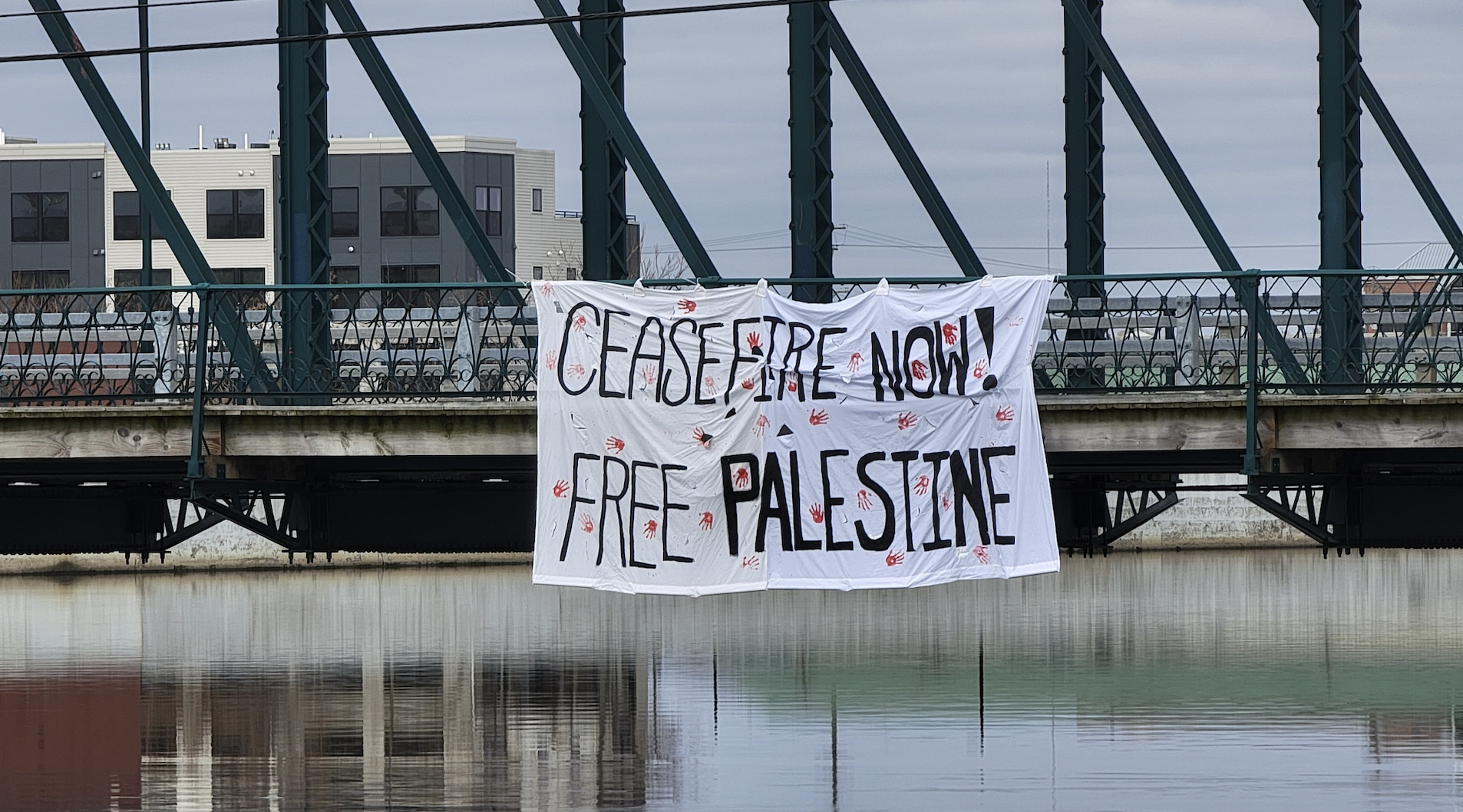
Israel has been brutally assaulting Gaza and the West Bank since the Hamas attacks on October 7, with more than 20,000 Palestinian deaths, over 8,ooo of which are children.
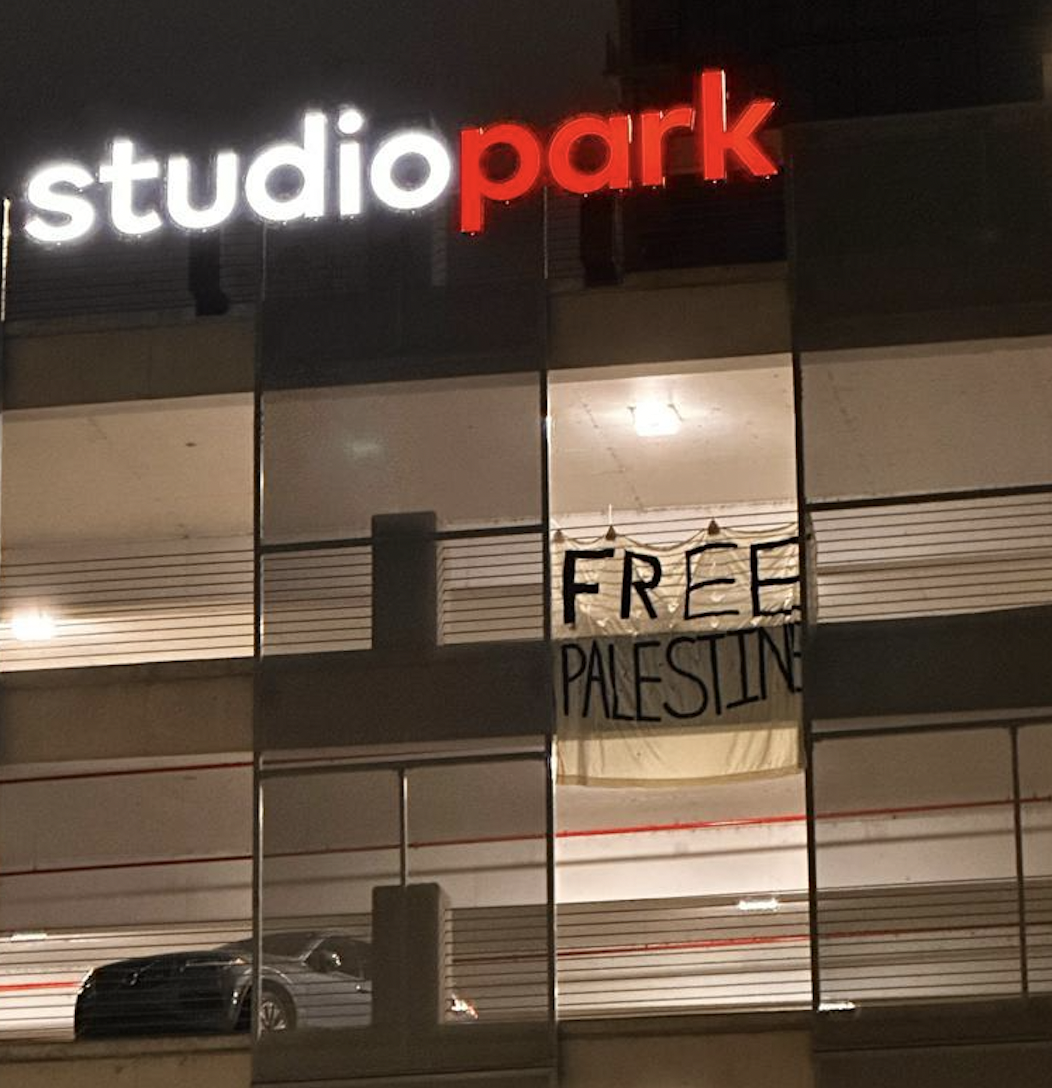 The anonymous photos also came with a statement:
“During the National Week of Action for Palestine, the People of Grand Rapids refuse to be complicit in genocide. Two banners of solidarity were flown this week to demand that the city of Grand Rapids adopt a resolution calling for a permanent ceasefire in occupied Palestine and an end to US military and financial aid to the Israeli government.”
Such messages, specifically the banners, are important, since the local news media has done a poor job of reporting on the significant public opposition to the Israeli assault on Gaza.
The banner drop at the top appears to be at the 6th Street Bridge.
I was fined by the courts for non-violently resisting US complicity in Israeli’s war crimes against the Palestinians
 On November 7th, I and two of my fellow resisters, went to Rep. Scholten’s office in the Gerald R. Ford Federal building to demand that the Congresswoman call for an immediate ceasefire with in Gaza and vote no of any future US military aid to Israel. ($3.8 billion annually).
The three of us were arrested and charged with trespassing. I have been posting updates of my court case on social media, where our three cases have been separated, even though we originally wanted to be tried in court together. Despite our desires to be tried collectively, the court decided to deal with me separately and had me attend a settlement proceedings on December 27th, followed by another court appearance this morning.
Since the court would not allow me to enter a motion for consolidation of our cases, and because I did not want to seek a jury trial alone, I plead guilty this morning to the trespass charge.
The Judge ruled that I am to pay a fine of $375. Therefore, I have to pay $375 because I sat in Rep. Scholten’s office, had a conversation with her staff about the brutal Israeli assault on Gaza, then refused to leave because she would not meet out demands. Rep. Scholten’s failure to meet our demands means that she is complicit in Israel’s war crimes, since she has repeatedly refused to call for an immediate ceasefire and will not opposed any future US military aid to Israel. The killing of civilians is a clear violation of the Geneva Convention.
There is a certain sense of irony, where I get arrested and then have to pay a fine for simply trying to prevent Israeli war crimes, which Rep. Scholten has repeatedly supported. Trying to stop the killing of civilians, including children, is a crime, while providing diplomatic and military support for Israel’s war crimes are protected within the US legal system.
Of course, none of this is surprising, since the US was founded on genocidal policies against Indigenous people, which included the theft of their land, along with the other foundational piece upon which this country was founded, chattel slavery. I mean, I was arrested in the Gerald R. Ford Federal building and Gerald R. Ford was complicit in numerous war crimes as a member of Congress, as the Vice President and as President – Vietnam, Chile, Cambodia, Argentina and East Timor, just to name a few.
Therefore, we should not be surprised by these facts, but we sure as hell need to start acknowledging them, and then resisting the perpetuation of US Imperialism and its commitment to Neoliberal Capitalism and White Supremacy. The system is working exactly the way it was designed to. #ceasefirenow #freepalestine
Palestine Solidarity Information, Analysis, Local Actions and Events for the week of January 3rd
 It has become clear that the Israeli government will continue their assault on Gaza and the West Bank. The retaliation for the October 7 Hamas attack in Israel, has escalated, therefore, GRIID will be providing weekly links to information and analysis that we think can better inform us of what is happening, along with the role that the US government is playing. We will also provide information on local events and actions that people can get involved in.
Information
Palestinians Say Netanyahu ‘Confessions’ Reveal Truth of ‘Genocidal War’ in Gaza
Israeli Ministers’ Comments About Mass Evictions in Gaza Alarm Observers
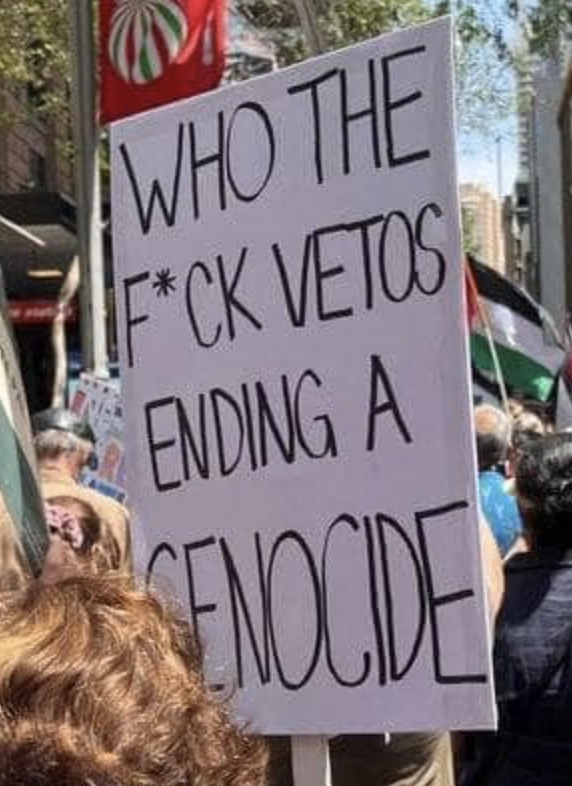
As US Veto Power Enables Genocide, There Are Still UN Options to Protect Gaza
Israeli Bombing of Gaza Ranks Among ‘Most Devastating’ in History
Israeli Killing of West Bank Children Hits ‘Unprecedented Levels’ in 2023
Analysis & History
Analyzing Israel’s Disproportionate Response to Hamas’s October 7 Attack
‘We Will Come to You in a Roaring Flood’: The Untold Story of the October 7 Attacks
Israel’s Long History of Ethnic Cleansing
Local Events and Actions
Teach-In: U.S. funded apartheid in occupied Palestine
Saturday, January 6 at noon – Kava Kasa GR, details here.
A New Year Without “Israeli” Genocide in Gaza: Rally & March
Sunday, January 7th at 2pm – Monument Park. See Facebook event page for more details.
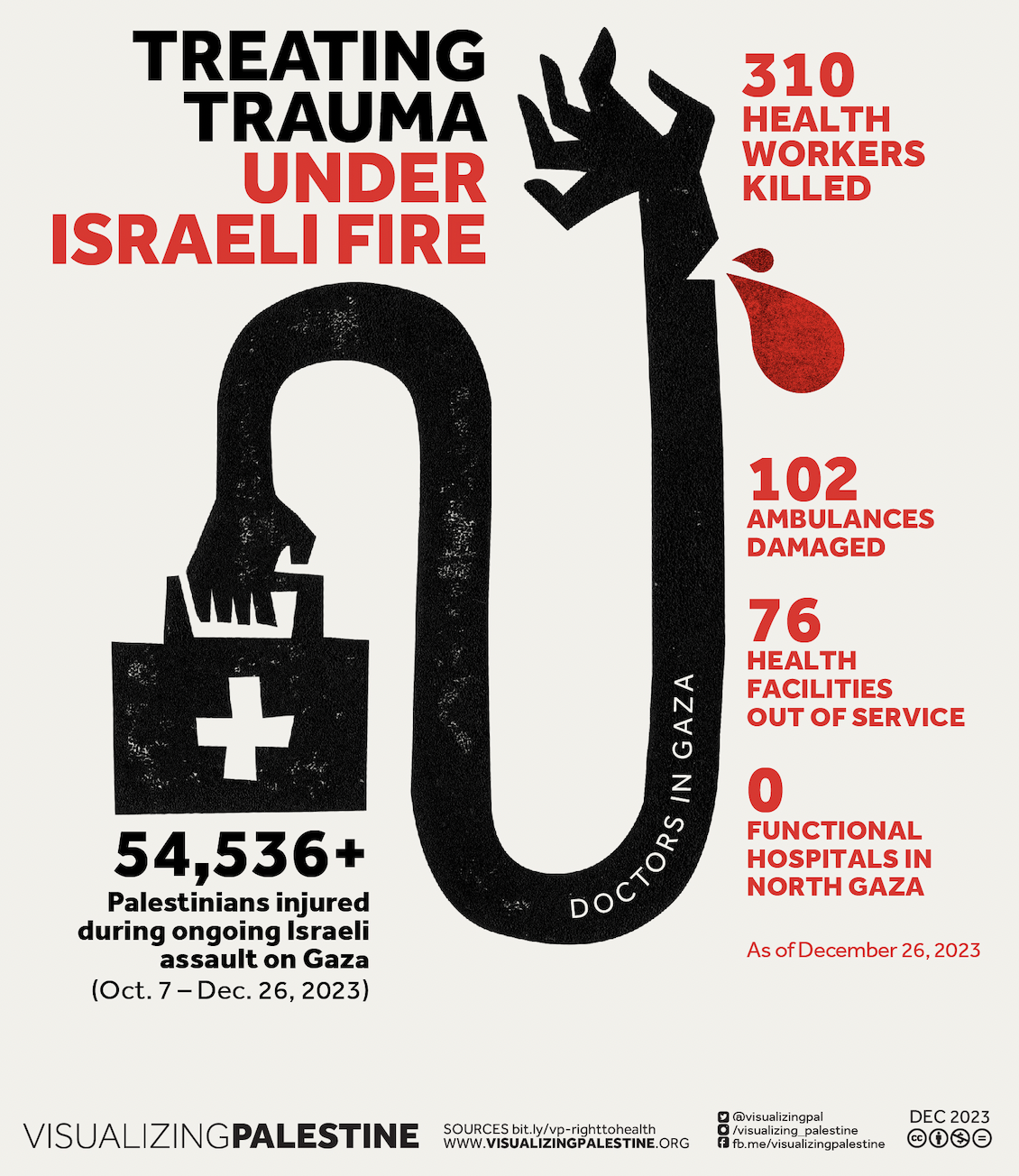
Graphic included in this post is from https://visualizingpalestine.org/visuals/treating-trauma-dec-2023
GRIID will be posting fewer stories while I finish up another book on GR People’s History
 Over the next several weeks, GRIID will be posting fewer stories. GRIID will still be writing about Grand Rapids movement work, monitoring the local news media and critiquing the Grand Rapids Power Structure, but I need to invest some focused time on another book.
The book I am working on will be sort of a companion book to my, A People’s History of Grand Rapids, which has so far sold roughly 600 copies. If any of you have spoken with me about my recent book or have attended one of the presentations I have done since last April, you know that I have repeatedly said that one of the hardest things about A People’s History of Grand Rapids, was what not to include in the book. I really grappled with not wanting to put too much into the book, so the new book will compliment the one I published last year.
I hope to have the book put together and ready for publication this Spring. I will certainly announce something about the book on the GRIID site, as well as https://grpeopleshistory.org/, and on social media.
Amazon is also profiting off of the Israeli occupation of Palestine and the current assault on Gaza
About 4 years ago, organizers with Grand Rapids Rapid Response to ICE held a protest at an Amazon Distribution Center in Walker, Michigan. Amazon and one of its subsidiaries Palantir were providing tech support and data to Immigration and Customs Enforcement (ICE) to track down and deport immigrants. The protest in 2019, involved a blockade and shut down the ability of Amazon drivers to make delivers for about 2 hours.

Activists and organizers have now discovered that Amazon works with the State of Israel. According to a recent action done by organizers in Puget Sound, Washington, which also produced research, as was reported on It’s Going Down:
Amazon supplies the tech infrastructure for Israel’s Project Nimbus via a 1.2 billion dollar contract to both Amazon and Google to provide cloud infrastructure, machine learning and artificial intelligence for both governance and military capabilities to prop up the apartheid state and ultimately more efficiently engage in ethnic cleansing and genocide of the Palestinian people.
This research is supported by the Palestinian Boycott, Divestment and Sanctions Campaign (BDS), which states:
In 2021, while apartheid Israel was carrying out yet another massacre in Gaza and pushing Palestinian families from their homes in Jerusalem, Amazon Web Services and Google Cloud signed a $1.22 billion contract to provide cloud technology, called Project Nimbus, to the Israeli government and military. Through this contract, the two companies are enabling apartheid and entrenching the oppression of Palestinians. They are supporting more surveillance, more military assaults, more home demolitions, more checkpoints and racist population databases- essentially supporting the ongoing Nakba of Palestinians, 75 years and counting.
Thus, the amazon Distribution Center, of which there are now two in the Greater Grand Rapids Area, could also be targets of a campaign in solidarity with the Palestinians. Check out the international BDS Campaign to see what other organized efforts there are to boycott or divest from corporations that are profiting from the Israeli assault on Gaza and the ongoing Israeli occupation.
Palestine Solidarity Information, Analysis, Local Actions and Events for the week of December 26th
 It has become clear that the Israeli government will continue their assault on Gaza and the West Bank. The retaliation for the October 7 Hamas attack in Israel, has escalated, therefore, GRIID will be providing weekly links to information and analysis that we think can better inform us of what is happening, along with the role that the US government is playing. We will also provide information on local events and actions that people can get involved in.
Information
Legendary Warsaw Ghetto and Anti-Apartheid Fighters Support the Palestinian Resistance!
Report back on blockade of Amazon distribution center for their role in support the ongoing genocide in Palestine https://itsgoingdown.org/lacey-wa-report-back-from-blockade-the-genocide-action/
Meet the Companies Profiting From Israel’s War on Gaza https://www.commondreams.org/news/weapons-used-by-israel
Gaza starves as death toll climbs past 20,000 https://electronicintifada.net/blogs/maureen-clare-murphy/gaza-starves-death-toll-climbs-past-20000
JOE BIDEN IS DRIVING THE U.S. INTO ISOLATION TO DEFEND ISRAEL’S WAR CRIMES https://theintercept.com/2023/12/21/joe-biden-un-resolution-gaza-delay/
EXCLUSIVE: ISRAELI MILITARY CENSOR BANS REPORTING ON THESE 8 SUBJECTS https://theintercept.com/2023/12/23/israel-military-idf-media-censor/
Court victory for activists who disrupted Israel’s weapons trade https://electronicintifada.net/content/court-victory-activists-who-disrupted-israels-weapons-trade/43111
Analysis & History
WATCH: A CONVERSATION ON THE HORRORS IN GAZA WITH JEREMY SCAHILL AND SHARIF ABDEL KOUDDOUS https://theintercept.com/2023/12/20/gaza-israel-palestine-jeremy-scahill/
Black/Palestinian Solidarity Toolkit. Check out the amazing resources put together that link Black and Palestinian struggles together. https://docs.google.com/document/d/1oV6xXlFs3oaMy8fFBLQDRlNLVN7jmDLNGX2D7zCTDdg/edit
The Labor Movement’s History of Backing Israel—and the Changing Climate Amid the War on Gaza https://inthesetimes.com/article/palestine-gaza-labor-unions-israel
Local Events and Actions
Check the FB page for Palestine Solidarity Grand Rapids for updates on actions/events. https://www.facebook.com/PalestineSolidarityGR
We now know that a military contractor in the Grand Rapids area is providing military assault vehicles to Israel, enabling them to commit war crimes
In early November, GRIID reported that there is an Israeli military contractor that is located in the Greater Grand Rapids Area. Plasan North America, is a subsidiary of Plasan Sasa Ltd, which has a facility just two miles from the Lebanon border in northeastern Israel. According to Plasan Sasa Ltd, “Its people have been working “flat out” since the Hamas attacks.”

Indeed, all of the Plasan factories have been busy since early October and we now know that some of the military vehicles and other military items that Plasan makes at their Walker, MI plant is being used in the Israeli ground assault on Gaza.
A new report from the American Friends Service Committee (AFSC), documents how many US-based military contractors have been providing weapons and military vehicles for the Israeli Defense Forces (IDF). According to the AFSC report:
The scale of destruction and war crimes in Gaza would not be possible without this continued flow of weapons from the U.S. Despite massive public protests, the Biden administration has been working to give Israel over $14 billion to buy more weapons. This is on top of the $3.8 billion the U.S. already gives to the Israeli military annually. Israel is required to use this money to buy U.S.-made weapons. This is a form of corporate welfare for the largest weapon manufacturers, like Lockheed Martin, RTX, Boeing, and General Dynamics, which have seen their stock prices skyrocket, but also for companies that are not part of the weapon industry, such as Caterpillar, Ford, and Toyota.
One of those companies that is making it possible for the Israeli military to commit war crimes in Gaza and the West Bank is Plasan North America, based right here in Walker, MI. What follows the content on Plasan North American that is included in the American Friends Service Committee report.
Plasan North America
- A private Israeli military vehicle manufacturer that makes the SandCat light armored vehicle for the Israeli military. At least some of these vehicles are manufactured at the company’s factory in Grand Rapids, Michigan.
- Since Oc. 7, Plasan has delivered dozens of SandCat Tigris armored vehicles to the Israeli military and has produced “hundreds of ballistic plates every day” for its use.
- The company also makes the armor for Oshkosh’s Joint Light Tactical Vehicles (JLTVs). According to the section in the AFSC report – “In October, Israel requested to purchase 75 Oshkosh Joint Light Tactical Vehicles for its 2023 attack on Gaza.” In addition, Plasan makes AM General’s Humvees and JLTVs, which are included in the AFSC report. The Israeli military has used all of these vehicles in its 2023 attacks on Gaza.
- On Dec. 6, a U.S. cargo plane delivered Plasan-armored Humvees to Israel.
This information should help those resisting the Israeli war crimes being committed right now in Gaza, for two reasons.. First, this information should tell us something about the local commercial news media that is not reporting on the fact that a company in Walker, MI is manufacturing military equipment that is being used by the Israeli military in their assault on Gaza.
The other thing we all need to think about is the fact that in most of the anti-war/anti-US intervention campaigns since the brutal US war in Vietnam, military contractors have been targets of resistance, We have already seen this kind of resistance happening with US complicity in Israeli war crimes, where military contractors are being targeted. Who will step up to organize a campaign here in Grand Rapids?

