Last week, Senator Bernie Sanders introduced an amendment to the National Defense Authorization Act for Fiscal Year 2024, to reduced the US military budget by 10%. The Senate voted against the proposal, with 88 Senators voting no, 11 voting yes and 1 choosing to not vote.

This a similar proposal that Senator Sanders introduced in 2021, also resulting is a defeat. The 2024 US Military Budget, which has yet to be adopted, is currently $886 Billion dollars, which is the largest US military budget ever.
The 2023 US Military Budget is $877 Billion, and according to the National Priorities Project, the US Military Budget is larger than the 10 next largest military budgets combined, which includes China, Russia, India, Saudi Arabia, the UK, Germany, France, South Korea, Japan and the Ukraine, seen in the graph here below.
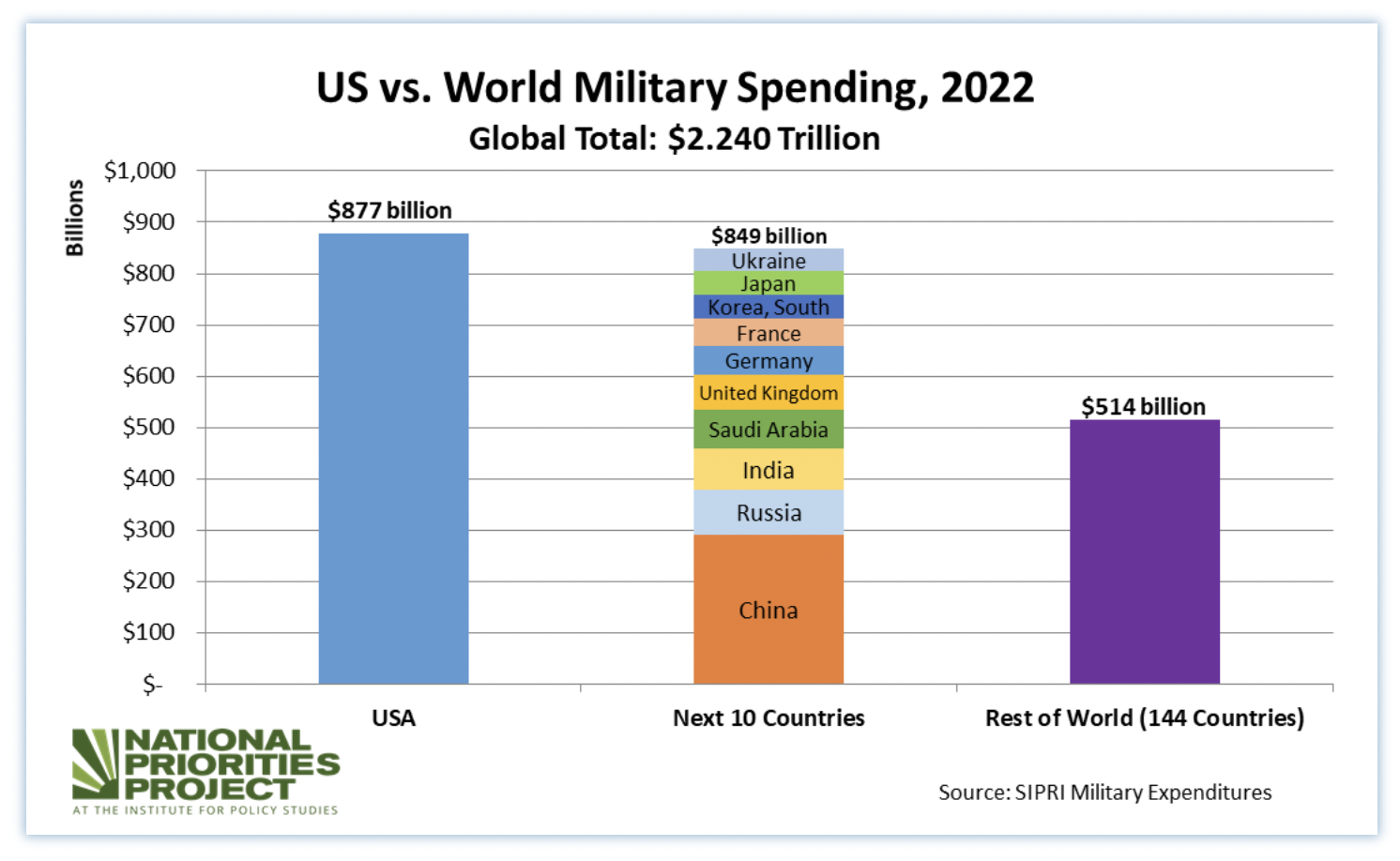
Now, if the US were to reduce the military budget by ten percent, for 2024, that would be a reduction of $88.6 Billion, leaving the US with $800 Billion, which would be slightly less than the 10 next largest military budgets combined, which is $849 Billion. The US would still be the most powerful US military force in the world and now the US could divert $88.6 Billion to things like the construction of affordable housing, health care, the creation of more renewable energy systems, paying off student debt or any number of other things that would greatly benefit people living in the US.
In addition, a reduction in the US military budget by $88.6 Billion, would mean that the US military would have to cut some existing programs, such as the purchase of certain weapons systems, like cluster bombs, which the most of the world has agreed are illegal.The US could also close several overseas military bases, which to be honest, most of those bases, if not all, have been used to control resources, repress civilian uprisings, provide support for dictatorships and to constantly threaten other nations with military intervention. (See David Vine’s book, Base Nation: How U.S. Military Bases Abroad Harm America and the World) A reduction of US military bases would also greatly benefit civilians all over the globe.
A third major reason why reducing the US military budget would be a benefit for humanity, is that it would reduced the burning of fossil fuels, thus the impact of Climate Change. I first came across this link when I read the book, The Green Zone: The Environmental Costs of Militarism, published in 2009. There has been so much more investigation into the link between US military spending and Climate Change, such as the recent report, No Warming, No War: How Militarism Fuels the Climate Crisis – and Vice Versa. Here are the key findings of this report:

- The Pentagon is a major polluter. U.S. Militarism degrades the environment and contributes directly to climate change. The Pentagon is the world’s largest institutional user of petroleum; just one of the military’s jets, the B-52 stratofortress, consumes about as much fuel in an hour as the average car driver uses in seven years. Plans to confront climate change must address militarization, but “greening the military” misses the point entirely. Militarism and climate justice are fundamentally at odds.
- The United States has a well-known history of fighting wars for oil. The fossil fuel industry relies on militarization to uphold its operations around the globe. Oil is the leading cause of war: An estimated one-quarter to one-half of all interstate wars since 1973 have been linked to oil. And all over the world, those who fight to protect their lands from extractive industries are often met with state and paramilitary violence.
- Climate change and border militarization are inextricably linked. It is clear that on a warming planet, cross-border migration will rise. Estimates project that around 200 million people will be displaced by the middle of century due to climate change. As the U.S. continues to ramp up border security, so do threats to all people’s freedom to move and stay. Immigrant justice is climate justice, and challenging militarism is critical to achieving both.
- Over-investment in the military comes at the high cost of under-investing in other needs, including climate. For decades, the U.S. has invested in military adventurism and prioritized military threats above all over threats to human life. Compared to the $6.4 trillion spent on war in the past two decades, the cost of shifting the U.S. power grid to 100% renewable is an estimate $4.5 trillion. The bloated U.S. war economy presents an opportunity to redirect significant military resources, including money, infrastructure, and people, toward implementing solutions to climate change.
- Workers need a way out. The fossil fuel and military sectors mirror each other in the way that workers frequently end up funneled into lethal work due to limited options. We need a Just Transition for workers and communities in both sectors. In order to rapidly transition to a green economy, we must fund millions of jobs in the green economy. Funding the green economy instead of a bloated military budget would be a net job creator; for the same level of spending, clean energy and infrastructure create over 40% more jobs and energy efficiency retrofits create nearly twice the level of job creation.
- Racism and racial oppression form the foundation for both the extractive fossil fuel economy and the militarized economy. Neither could exist without the presumption that some human lives are worth less than others, and racial justice would undermine the foundations of both.
The fourth, and last reason why the recent Senate vote against reducing the US military budget is fundamentally flawed, because more military spending does not make people safer. William Hartung, who has been writing about US Military spending for several decades, recently released a report entitled, More Money, Less Security: Pentagon Spending and Strategy in the Biden Administration. Here is part of the introductory comments from this report:
These enormous sums are being marshaled in support of a flawed National Defense Strategy that attempts to go everywhere and do everything, from winning a war with Russia or China, to intervening in Iran or North Korea, to continuing to fight a global war on terror that involves military activities in at least 85 countries. Sticking to the current strategy is not only economically wasteful, but will also make America and the world less safe. It leads to unnecessary conflicts that drain lives and treasure and too often contribute to instability in the regions where those conflicts are waged, as occurred with the wars in Iraq and Afghanistan. In addition, elevating open–ended military commitments over other security challenges, from climate change to pandemics, risks intensifying the human and security consequences of those threats by reducing the resources available to address them.
Michigan Senators Peters and Stabenow also voted for more militarism instead of human needs
As was mentioned at the beginning of this post, the majority of the US Senate voted against the proposal to reduce US military spending by 10%. Both of Michigan’s Senators, Senator Debbie Stabenow and Senator Gary Peters voted no on cutting the US military budget.
Last week, Senator Peters sent out a Press Release on why he voted to support the $886 Billion US Military Budget. Peters provides several reasons, but two of his talking points are worth noting here, since they are the dominant arguments for a bloated US military budget – investing in Michigan Military Installations and Supporting Michigan’s Defense Sector.
Investing in Michigan Military Installations means that Senator Peters would rather spend $96 Million on two Michigan Military installations than provide critical relief to people who are housing insecure, people who are suffering from Climate Change, people who can’t afford heath care and families who are food insecure.
Supporting Michigan’s Defense Sector means that Senator Peters would rather provide massive Corporate Welfare to military contractors in Michigan, companies that pocket millions to make weapons and weapons systems, while hundreds of thousands of families in Michigan experience the brutality of poverty. Senator Peters supporting Military contractors makes sense, especially since he has been the recipient of $450,838 in campaign contributions from the weapons contractor sector.
In the end, the majority of members of the US Senate would rather see an increase in US Militarism, US Imperialism, the human suffering of war, all while the planet is burning and becoming hotter with Climate Change. You can’t separate US military spending from the human cost of war and the human cost of not having basic needs met. As Dr. Martin Luther King Jr. stated in his Beyond Vietnam speech in 1967, “A nation that continues year after year to spend more money on military defense than on programs of social uplift is approaching spiritual death.”

Senator Gary Peters, bailing out the airline industry, failing to tax Private Jet users
Last week, I posted a response I received from Senator Debbie Stabenow, when I sent her an action alert message asking that she endorse the “FATCAT Act” (standing for Fueling Alternative Transportation with a Carbon Aviation Tax), which would hike fuel taxes on private jets from the current 22 cents a gallon to $1.95 per gallon.

The response from Stabenow had nothing to do with my message to her about supporting the proposed bill to tax Private Jet users. Today, I received a similar response from Senator Gary Peters. Senator Peters also either refused to respond to my asking him to support the FATCAT Act or his response was merely a canned response to any message they receive having to do with the aviation industry. Here is Senator Peters’ response:
Thank you for contacting me regarding our nation’s aviation policy and related infrastructure and services. I appreciate you taking the time to express your views. Hearing directly from Michiganders like you helps inform me of the issues that matter to our state. I’m so grateful for your input.
Our aviation sector is incredibly important to Michigan and to our nation’s economy. Having robust aviation services and workforce enables the movement of goods and people around the United States and the world, and helps keeps us competitive in the global economy. As Chair of the Senate Committee on Homeland Security and Governmental Affairs, as well as a member of the Senate Committee on Commerce, Science and Transportation—which has jurisdiction over the Federal Aviation Administration (FAA)—I am committed to ensuring the safety and success of our nation’s aviation sector.
In 2018, I helped pass the FAA Reauthorization Act of 2018, which made critical investments in airport infrastructure, increased safety in the national airspace system, and strengthened customer service practices across the commercial aviation sector. The legislation also delivered strong support to rural areas in Michigan and across the nation by continuing the Essential Air Service (EAS) Program, which helps ensure there is commercial air service in smaller communities. Furthermore, this bill authorized a new aviation workforce development program to support the education and recruitment of workers in the aviation industry, including pilots and aviation maintenance technical workers. In addition, the bill updated the FAA’s oversight of Unmanned Aerial Systems, also known as drones, to promote safety while also fostering technological innovation.
More recently, I was proud to support the American Rescue Plan, which was signed into law on March 11, 2021 and helped our aviation industry respond to the COVID-19 pandemic. Specifically, this bill provided $8 billion in funding to help airlines and airports keep operating and keep workers employed. The FAA issued grants to all airports that are part of our national airport system, including all commercial service airports, all reliever airports, and some public-owned general aviation airports. In addition, I was proud to help pass the Infrastructure Investment and Jobs Act, a bipartisan bill that made historic investments in our nation’s infrastructure. This legislation provided $25 billion in funding for airports and air traffic control infrastructure to ensure they are equipped for the future of the aviation industry. The law also supports research into clean energy and sustainable aviation fuels, which are critical for reducing harmful emissions and combatting climate change. The Infrastructure Investment and Jobs Act was signed into law by President Biden on November 15, 2021.
 As you can see, Senator Peters never actually responds to my message, which again, was about proposed legislation that would tax Private Jets users. Instead, Senator Peters rambles on about how he helped bail out the airline industry during the pandemic, a bailout that had a $25 Billion price tag.
So, Senator Peters brags about providing bailout money to the airline industry, which means the public is bailing them out, but says nothing about supporting the increased taxation of private jet users. I thought Democrats were all in favor of taxing the rich, but it seems this is not the case, since the proposed legislation that promoted me to send a message to Senator Peters, doesn’t even seem to be on his radar. So much for taxing the rich.
 Last Friday, I came across a Paid Ad on Facebook (shown here on the right), by a group I have never heard of called, Protect Grand Rapids. The text that accompanies the sponsored ad reads:
Grand Rapids City Commissioners have delivered common-sense solutions that will help ensure a clean, safe and healthy city for all. Click the link below to THANK THEM for leading with GRit!
When you click on the link in the ad it takes you to the website https://protectgrandrapids.com/. At this website, there is a slight variation of the Paid Ad text which reads:
Grand Rapids City Commissioners’ thoughtful work has led to the adoption of new ordinances that will help ensure a clean, safe and healthy city for all. Fill out the form below to THANK our City Commissioners for putting PEOPLE FIRST!
Putting PEOPLE FIRST! That is rich. Actually, to clarify, I think what Protect Grand Rapids meant to say was, putting RICH PEOPLE FIRST! Or putting those who make you RICH FIRST! The truth is that unless you are coming to downtown Grand Rapids to spend money, to shop, spend money in the bars, restaurants, entertainment venues, or cough up cash for parking, you are not really welcome in downtown Grand Rapids.
In a recent GRIID post, we noted that one of the ordinances passed last Tuesday, was revised to read:

Apparently, we need to have a purpose to be downtown, so we can’t just “hang around.” Of course, by purpose, the City’s ordinance means that you have to spend money in some capacity. Resting is not a purpose, day dreaming is not a purpose, listening to the birds is not a purpose, nor is people watching. You have to spend money!
The https://protectgrandrapids.com/ page only has the pre-crafted message for you to send to Grand Rapids City Commissioners. This pre-crafted message reads:

Who is behind the Protect Grand Rapids group and their Social Media Ad?
Not surprising, there is no way to know who created the Protect Grand Rapids website, since there is nothing more than the pre-crafted massage for City Commissioners. In fact, there is no About section or a way to contact those involved. Protect Grand Rapids also has a Facebook page, but the only information there says that it is a Political Organization and that the content was all created on July 20th, five days before Grand Rapids City Commissioners voted to adopt the ordinances that will further punish and criminalize the unhoused.
My suspicion is that the website and Facebook page for Protect Grand Rapids was created by the Grand Rapids Chamber of Commerce. Remember last summer, when the group SafeGR went public with attacks ads and billboards saying that Grand Rapids has a crime problem? Josh Lunger, who is Vice President of Government Affairs at Grand Rapids Chamber, says he was merely doing some volunteer work for the SafeGR group. And according to MLive, He (Lunger) said the Grand Rapids Chamber as well as the chamber’s political action committee have not had any involvement with Safe GR.
Josh Lunger was the person who sent the initial proposed ordinance to the City of Grand Rapids last December, writing as a staff member of the Grand Rapids Chamber of Commerce. Lunger later lobbied the City to adopt the two ordinances in July, and he attended both the July 11th Public Hearing and the July 25th City Commission meeting (where the ordinances were adopted), one could reasonably draw the conclusion that the Grand Rapids Chamber of Commerce is behind Protect Grand Rapids.
The fact that there is no transparency with Protect Grand Rapids, is also another reason to believe that the Chamber of Commerce is behind it, since transparency is not a high priority for the GR Chamber, an organization that serves the interests of the most powerful businesses in this city.
Always Follow the Money: Campaign Finances for Grand Rapids Mayoral Candidate David LaGrand
In late May, for State Legislator David LaGrand had announced that he was running for Mayor of Grand Rapids. LaGrand is the only candidate to announce for the Mayoral seat in Grand Rapids, since Mayor Bliss is term limited and will serve as Mayor until the end of 2024.
The first batch of campaign finance data are now available through Access Kent at this link. Just type in the name of the candidate and you will see that David LaGrand already has 29 pages of campaign finance information for this quarter, which you can see here.
With less than two months of fundraising, LaGrand already has raised $16,329.37. LaGrand had 81 different people contribute to his campaign so far, ranging from $25 to several thousand. Here is a list of people who made contributions of $250 or more:
- Sam Cummings (President of Second Story Properties) – $2,450
- Scott Bowen (Lawyer) – $2,250
- Christopher LaFleur (Executive at LaFleur Marketing) – $1000
- Steven Pestka (President H & H Management & Development Co.) – $1000
- Jeff Shutz (Retired) – $1000
- Anita Eerdmans ( Owner Eerdmans Publishing Company) – $500
- Clay West (17th Circuit Court Judge) – $500
- Aaron Jonker (Consultant) – $500
- Donald Bartel (Retired) – $500
- Gary De Kock (Retired) – $353.45
- Michelle Bartel (Pastor at First Presbyterian Church) – $258.32
- Hal Ostrow (Lawyer with Rhoades McKee) – $258.32
- Richard Stevens (Retired) – $258.32
- Chris Nienhuis (Sales Manager Alta Equipment Company) – $258.32
- Cary Fleischer (Retired) – $250
- Larry Willey (Lawyer with Willey & Chamberlain) – $250
- Kirk Dornbush (Consultant with Elevator Resources) – $250
- Judy Freeman (Consultant with Education Consulting Practice) – $250
- Richa – $250
Now, on LaGrand’s campaign website, he states, “I do not and will not accept money from corporations.” However, it is clear that from his first reporting of campaign finances as a candidate for Mayor of Grand Rapids, that LaGrand will take money from people who own corporations.
Maybe the most egregious example of someone who owns a corporation and has contributed to LaGrand’s campaign is Sam Cummings. The Campaign Finance report says that Cummings is President of Second Story Properties, but Second Story Properties is nothing more than a subsidiary of CWD Real Estate Investment. CWD stands for Cummings, Wierda and DeVos.
GRIID has written about Sam Cummings and CWD in past postings, such as:
CWD and the West MI Power Structure: Part II
One of the biggest looters in Grand Rapids has a problem with the recent protests
In addition, Cummings was a signatory to the Grand Rapids Chamber of Commerce ordinance proposal that would criminalize the unhoused and just during the July 11th Public Hearing at City Hall, Cummings endorsed the City’s version of 2 separate ordinances that would also criminalize the unhoused. At that Public Hearing Cummings said, “up until recently he was referred to as one of this city’s greatest champions. Now I’m greedy, cruel, mean spirited, I’m a looter.” Sam went out of his way to say hi to me during the Public Hearing, no doubt because I am the person who named him as a looter, especially after he made some ridiculous claims after the 2020 uprising in downtown Grand Rapids.
Now, we don’t know where LaGrand stood on the most recent vote by City Commissioners to adopt the ordinances that will punish and criminalize the unhoused, but it is clear that he has taken money from a member of the Capitalist Class that fully endorsed it.
The short list of campaign contributors above is also reflective of a more privileged class of people, such as business owners, lawyers and consultants. The short list above consists of 19 people, who combined contributed just over $12,000 of the $16,329.37 that the Mayoral candidate has raised.
Now, campaign finances aren’t the only thing we should be looking at, but those with deep pockets don’t contribute without expecting something in return. As a State Representative, LaGrand was the recipient of Chamber of Commerce money, so it will be interesting to see of the Chamber backs him for Mayor. GRIID will continue to report on campaign financing for City, County and State races, since following the money can tell us an awful lot about politicians.
Last night I sat through another Grand Rapids City Commission meeting, specifically because they would be voting on two proposed ordinances that would further criminalize the unhoused. You can relive the drama by watching the meeting at this link.
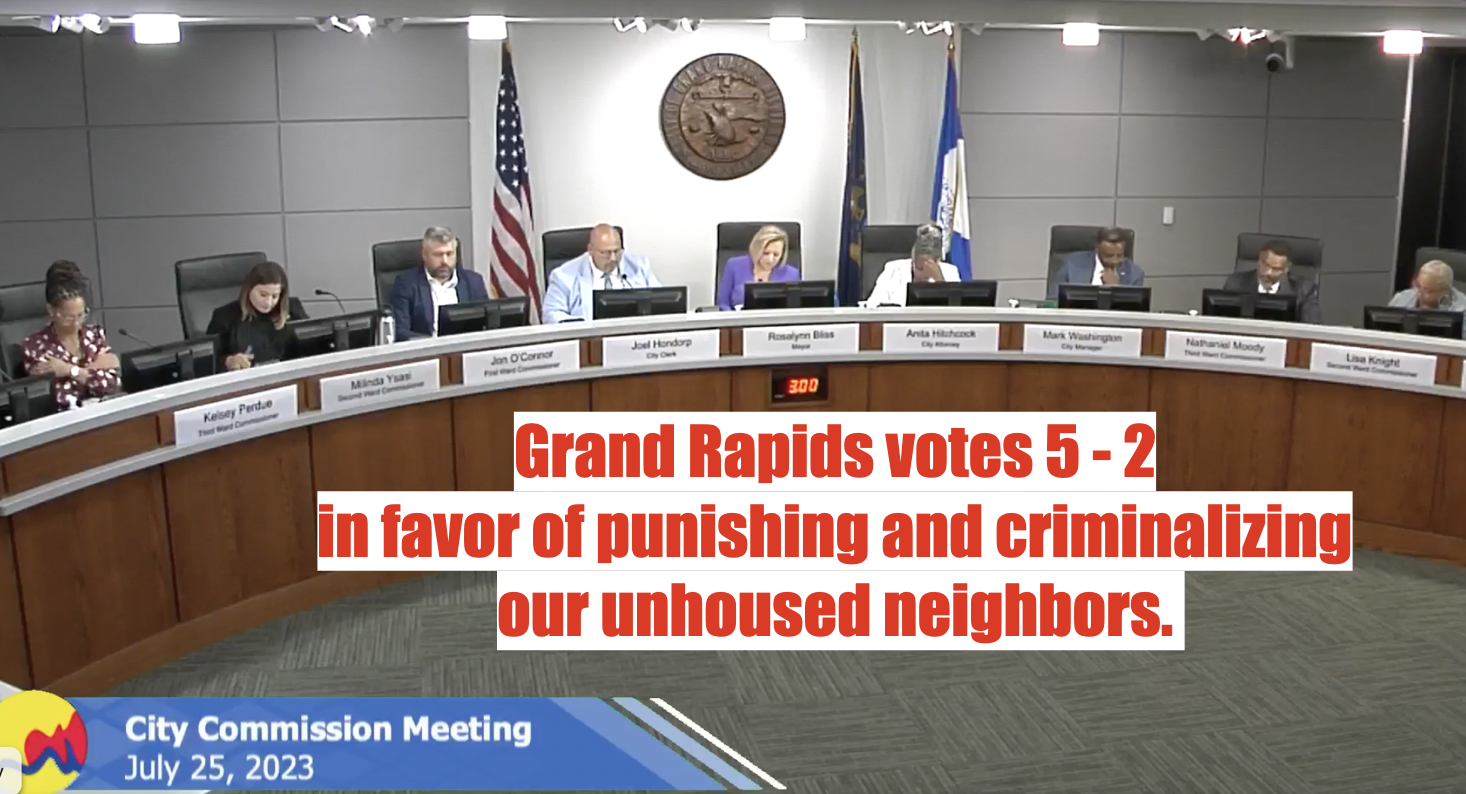
I don’t have much more to say on all of this, as I am tired, angry and completely disillusioned with the so-called democratic process. What follows will not be the usual analysis we try to provide here at GRIID, rather just a few observations on last nights Grand Rapids City Commission spectacle.
- There were four white dudes who spoke in favor of the ordinances, 2 were people who did not live in Grand Rapids, who were likely Chamber of Commerce members. One of the two non-GR residents said that his female co-workers are constantly receiving cat calls from men who are on the street. I wonder if he was referring to all of the businessmen who frequent plethora of bars in downtown GR, those who objectify women and engage in various forms of assault on those with less privilege?
- Josh Lunger, the chamber’s vice president of government affairs, who presented the initial proposal last December to punish the unhoused, also spoke. Lunger praised City Commissioners and gave them a patronizing pat on the head, especially since the Commissioners had to endure people “yelling at them.”
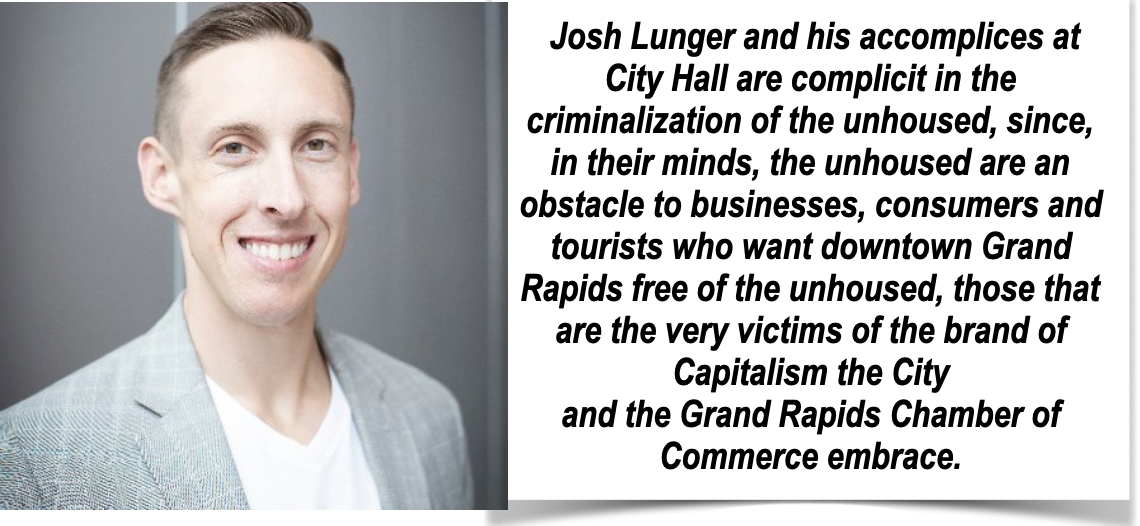
- And lastly, Chase Bolger, a former GOP State Legislator, who started his own consulting firm, Tusker Strategies LLC. Bolger rambled on about the “workshop” that was held during the 10am Committee of the Whole meeting. I can just see it now, where Chase Bolger was palm pressing with GR City officials and making sure they were committed to adopting these ordinances at the meeting where all the decision are made, before participating in the public commission meeting in the evening, which is increasingly just a formality in the pseudo-democratic process.
- There was a 7 – 1 ratio of people who opposed the ordinances that spoke last night, but since they were all people who didn’t make substantial contributions to elected officials and weren’t members of the Chamber of Commerce, their voices just don’t fucking matter.
- Black women were constantly being chastised, threatened and silenced throughout last night’s meeting.
- The only 2 Commissioners that voted against adopting the ordinances, were both Black women.
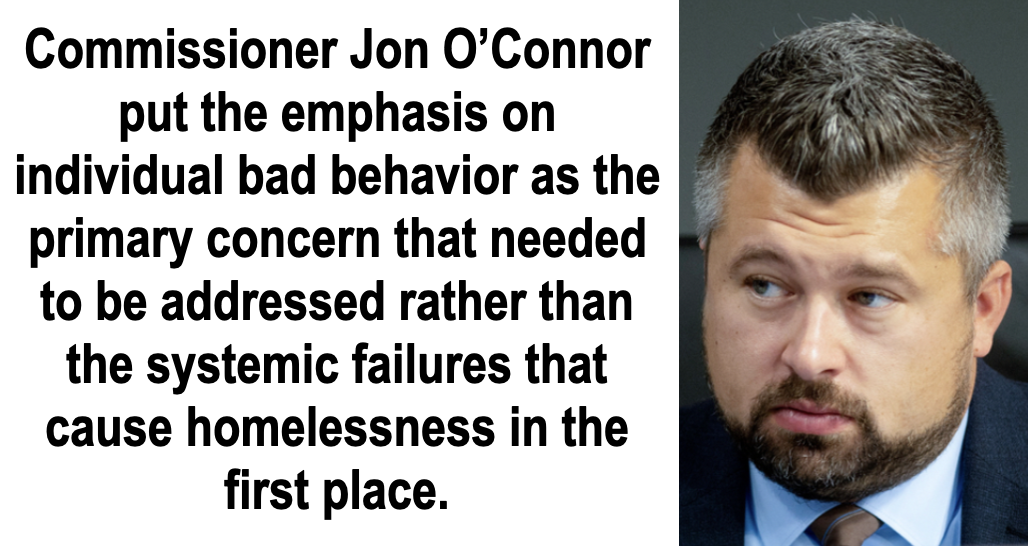
- 4 of the 5 commissioners that did vote to adopt the two ordinances that will punish and criminalize the unhoused, have all receive campaign contributions from the Grand Rapids Chamber of Commerce. Commissioner O’Connor $750, Commissioner Ysasi $1250, Mayor Bliss $1350, and Commissioner Robbins $10,500.
- Right after the vote to adopt the criminalizing ordinances, I got up to leave. Sitting two rows behind me was Rockford Construction’s CEO Mike VanGessel. VanGessel was sitting with another white guy and I just simply said, “well boys, you got what you wanted and what you paid for.” VanGessel is part of the Chamber of Commerce and is the chair of the municipal council, which represents 130 businesses downtown. VanGessel didn’t bother to speak during public comment, as he would prefer to let his money speak for him.
Commissioner Moody, who voted to adopt the ordinances that will punish the unhoused, said that he expects there to be some backlash over this vote. In fact, there will be consequences. If you are interested in applying some pressure against the 5 commissioners that voted to adopt these ordinances, contact the Grand Rapids Area Tenant Union, either on their Facebook page or via their Email. gratunion@gmail.com.
Last week, the US House of Representatives passed a resolution stating:
(1) the State of Israel is not a racist or apartheid state;
(2) Congress rejects all forms of antisemitism and xenophobia; and
(3) the United States will always be a staunch partner and supporter of Israel.

The vote was 412 for, 9 against and 1 present, demonstrating once again that if you are a member of Congress, one cardinal sin is to speak ill of the State of Israel. Just ask Rep. Pramila Jayapal, who, on July 16th, had called Israel a racist state. The backlash against the US Representative from Washington was swift and harsh.
The national media watchdog group, Fairness & Accuracy in Reporting (FAIR) looked at the news coverage after Rep. Pramila Jayapa made her comment and it is pretty astounding how the mainstream commercial news media is essentially an echo chamber for the decades long US support for Israel. What is equally astounding is the fact that none of the national news coverage ever bothered to verify if the State of Israel is racist. The FAIR article provides ample evidence that the claim that Israel is a racist or an Apartheid State is well founded, citing several human rights reports, such as:
In 2021, Human Rights Watch (4/27/21) published a lengthy report spelling out its determination that Israel had committed crimes of apartheid against Palestinians, which is defined under international law as an intent to maintain a system of domination by one racial group over another; systematic oppression by one racial group over another; and one or more inhumane acts, as defined, carried out on a widespread or systematic basis pursuant to those policies.
HRW explained, for those inclined to split hairs, that this applies to Palestinians because under international law, “race and racial discrimination have been broadly interpreted to include distinctions based on descent, and national or ethnic origin, among other categories.”
Earlier the same year, Israeli human rights group B’Tselem (1/12/21) released a report declaring Israel an “apartheid regime.”
Amnesty International (2/1/22) followed the next year, publishing a 280-page report titled “Israel’s Apartheid Against Palestinians” that declared that
Amnesty International concludes that the State of Israel considers and treats Palestinians as an inferior non-Jewish racial group.
These reports came about after Israel in 2018 passed a law with constitutional status that declares Israel is the “nation-state of the Jewish people,” and that “the right of national self-determination in the state of Israel is unique to the Jewish people”—in other words, that Israel is not a nation-state for its Palestinian residents, whether accorded citizenship or not, and that Palestinians subject to Israel’s control have no right to self-determination.
As B’Tselem explained in its report:
It is true that the Israeli regime largely followed these principles before. Yet Jewish supremacy has now been enshrined in basic law, making it a binding constitutional principle—unlike ordinary law or practices by authorities, which can be challenged. This signals to all state institutions that they not only can, but must, promote Jewish supremacy in the entire area under Israeli control.
Despite these reports by reputable human rights organizations, the US media didn’t bother to question the “special relationship” that the US has had with Israel for more than 50 years. In fact, this “special relationship” means that the US has made Israel the number one recipient of military aid for decades, with the current annual amount at $3.8 Billion.
In addition to the near unanimous US House resolution in support of Israel, the US Congress hosted Israeli President Herzog, with only a few Democrats chasing to boycott the Israeli leader’s address last week. The 3rd Congressional District Representative, Hillary Scholten, got in line to support the Bi-partisan support for Israel.

In her weekly newsletter, Rep. Scholten wrote:
We also had the honor of hosting Israeli President Herzog to address the House for a joint session of Congress this week. In a time of rising anti-Semitism at home, and increasing instability in the Middle East, it was so important to stand together as a Congress and listen to President Herzog’s words, and discuss how we can work for more peace and justice in the region. I’m looking forward to being able to visit Israel twice in the next year to learn and also serve as an ambassador for West Michigan.
 Ok, so it was an honor to host the President of a country that practices apartheid? For those who are unfamiliar with the claim that Israel practices apartheid, I would suggest they read the educational material on the site of the Boycott, Divestment and Sanctions (BDS) campaign, which is a global campaign. Israel does not provide stability in the Middle East, rather they act more as a cop to prevent popular revolt, plus they are the only nuclear weapons power in the region. For background on Israel’s role in the area, read Phyllis Bennis’s Understanding the Palestinian-Israeli Conflict: A Primer, Jonathan Cook’s Disappearing Palestine: Israel’s Experiments in Human Despair, or Apartheid Israel: The Politics of an Analogy, by Jon Soske and Josh Jacobs. Another excellent resource on the US relationship with Israel, is documentary film Peace, Propaganda & the Promised Land.
Also, if Rep. Scholten is planning on visiting Israel, they should meet with the Israeli Human Rights group, B’Tselem, along with spending time at Israeli check points, Israeli prisons and the Israeli Settlements, which the United Nations have deemed as illegal. In fact, the only two countries that consistently vote against claiming that the Israeli occupation of Palestinian land, are the US and Israel. The rest of the world supports the claims of the Palestinians.
Lastly, it is worth noting that Rep. Scholten, like most members of Congress, has received campaign contributions from Pro-Israeli groups, as is documented by Open Secrets, show here below. While Rep. Scholten is not one of the top recipients of Pro-Israel money, like Michigan Senator Gary Peters, she has only been in the House of Representatives since the beginning of this year.

On the front page of the July 24th print edition of Crain’s Grand Rapids Business, one headline reads, Tighter public nuisance rules create tension, with a subheading that said, Business, civic leaders torn on latest proposals to curb downtown panhandling.

The article, written by Kate Carlson, was in response to the July 11th Public Hearing on the two proposed ordinances from the City of Grand Rapids, ordinances that target the unhoused. The Crain’s article states early on, “Public hearings on the proposals drew a mix of opinions from residents, business owners and local advocates on how the city should proceed in addressing a rise in claims about aggressive panhandling and public clutter caused by the unhoused population.”
The Carin’s article is framed in such a ay as to suggest that there were equal amounts of people in favor of the ordinance proposals and those against. However, the fact was that there were at least a 5 to 1 ratio against the two proposals. Unfortunately, the business press didn’t communicate that reality. Instead, the Crain’s writer interviewed several business owners to get their take on the ordinance proposals, beginning with Rockford Construction CEO Mike VanGessel, who said, “Our city is at a critical point. As chair of the municipal council, which represents 130 businesses downtown, I’m concerned about our future. Businesses and residents are now considering the value of our city as a proposition where they relocate. This is not a simple issue with the unhoused. … The challenges are complex so the solutions are not simple.”
The article does cite one business owner who opposes the ordinance proposals, but it was the owner of Lantern Coffee Bar and Lounge, which doesn’t have anywhere near the leverage that people like VanGessel or CWD Real Estate Investment LLC partner, Sam Cummings. “This isn’t about where people live,” Cummings said in an interview. “It’s about how people behave. We have a group of folks that are making it difficult for everybody to use public infrastructure because they’re making people feel unsafe, they are threatening and overtaking public infrastructure by camping on it.”
While highly privileged people like Cummings complain about a group of people they can’t even name, the unhoused, the poor, they not only don’t offer any real solution to dealing with the root causes of the issues that the unhoused face, they fail to see that their lust for wealth and their financial backing of local and state policies have actually contributed to the current housing crisis.
Of course, none of these systemic issues are explored in the Crain’s article, because the journalist does not and will not question the interests and the actions of the business class in Grand Rapids, nor will they try to make sense of why Grand Rapids has the largest wealth gap in the state. What the debate around the ordinances has exposed is the fact that there is a class war going on in Grand Rapids and the Capitalist Class is winning.
In May, GRIID posted an article about the Billionaire class, their use of private jets and the impact it is having on Climate Change. The article included information about the DeVos/Amway private jets, which are numerous.
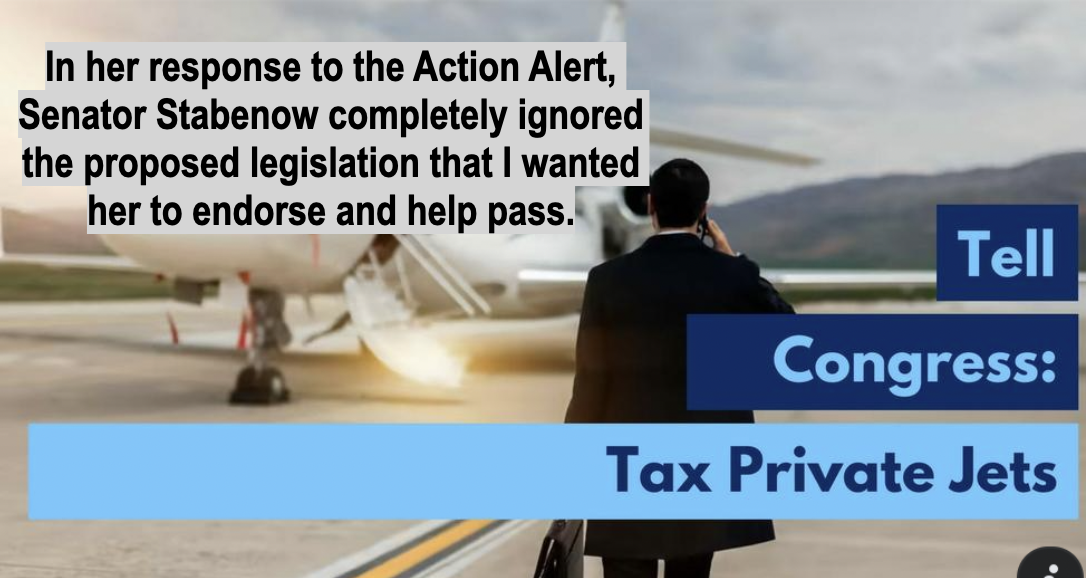
The Institute for Policy Studies had released a new study entitled, High Flyers 2023: How the Ultra-Rich Private Jet travel costs the rest of us and burns up the planet. Here are some of the major findings in that report:
- Private jets emit at least 10 times more pollutants than commercial planes per passenger.
- Thousands of municipal airports in the U.S. are funded by the public, but many primarily serve private and corporate jets.
- Since the start of the pandemic, private jet use has increased by about a fifth and private jet emissions have increased more than 23 percent, according to a recent study.
Last week, the Institute for Policy Studies were inviting people to send an Action Alert to members of Congress, specifically to the people who represent Michigan. The Action Alert stated:
This month, Senator Ed Markey of Massachusetts introduced legislation that would raise the tax on private jet fuel, generating $1.3 billion a year to fund sustainable transit for the rest of us. Ask your representatives to sign on to sponsor this legislation. Click ‘START WRITING’ to send a direct message to your representatives now. We provide a message you can customize, and we’ll deliver it once you’re done! You can also read more about the bill here.
 I signed the Action Alert on July 20th, and then received a response from Senator Stabenow on July 21st. Here is Senator Stabenow’s response:
Thank you for contacting me to express your support for policies that advance clean energy, promote conservation, and address the climate crisis. I share your commitment to protecting our environment, and I am grateful for your strong advocacy.
The science is clear: Global climate change poses a real threat to Michigan and our world. That’s why I proudly supported the Inflation Reduction Act (P.L. 117-169), the strongest federal climate legislation in U.S. history. This historic legislation puts the country on track to reduce emissions by about 40% over the next 8 years. Paired with funding from the bipartisan Infrastructure Investment and Jobs Act (P.L. 117-58), this legislation will lower energy costs, create good-paying jobs, and invest in our nation’s most vulnerable communities.
As a member of the Senate Finance and Environment and Public Works Committees, I have authored legislation to bring clean-energy vehicles to market, spur investments in renewable energy sources, and ensure our nation leads in clean energy technology manufacturing. I remain laser-focused on advancing these policies, and will continue to lead efforts to eliminate taxpayer subsidies for the oil and gas industry.
You can count on me to keep fighting for climate policies that combat harmful emissions, create good-paying American jobs, and ensure an equitable transition to a clean economy.
While the response from Senator Stabenow affirms my stance and has all the right rhetoric, she never acknowledges, nor commits to supporting the “FATCAT Act” (standing for Fueling Alternative Transportation with a Carbon Aviation Tax), which would hike fuel taxes on private jets from the current 22 cents a gallon to $1.95 per gallon. This would effectively increase the cost to $200 per metric ton of private jet CO2 emissions.
Senator Stabenow is term limited, so she has nothing to lose by supporting legislation that would tax the Billionaire Class that has their own private jets. Instead she spends most of her Email response by telling me what she has done, which has nothing to do with the Action Alert I sent her. I shouldn’t be surprised, since the response I received was probably a pre-written response to people writing about Climate Change issues. Reason number 57 for why I don’t put my faith in electoral politics.
This Tuesday makes it two weeks after the Public Hearing the Grand Rapids City Commission held on July 11th regarding the proposed ordinances that many people, community-based groups and the ACLU believe would further criminalize the unhoused.

At the upcoming Committee of the Whole meeting on Tuesday, Grand Rapids City officials will be discussing some slight revisions to the language of the proposed ordinances. According to the Committee of the Whole Agenda Packet – page 7 – the language now reads:
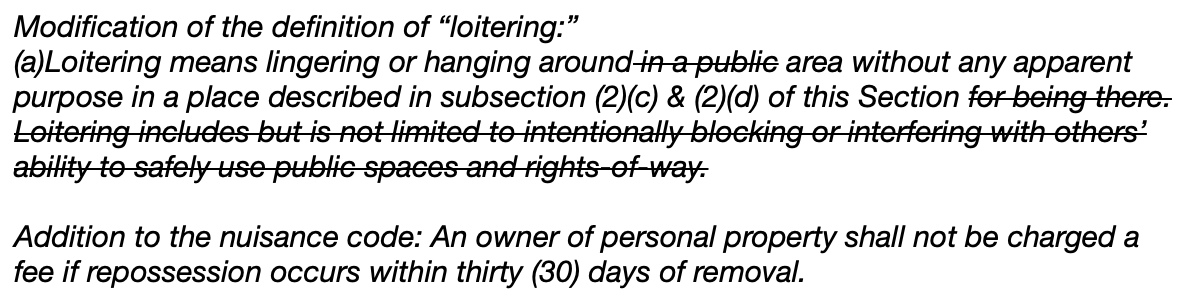
Note that the wording changes are both the result of push back from the community, but these ordinances will still negatively impact the unhoused who are not welcome in downtown Grand Rapids.
Grand Rapids Capitalist Class endorses the proposed ordinances – Profits over People
Included in the Agenda Packet for the July 25th Grand Rapids City Commission meeting, are numerous communications both for and against the proposed ordinances in question. As we reported during the July 11th Public Hearing, the overwhelming majority of those who spoke were opposed to the two ordinances.
In the July 25th Agenda Packet (beginning on page 59) there are several letters from those who support the two proposed ordinances. Not surprising, those who endorse the ordinances are either members of the Grand Rapids Power Structure or representatives of this elitist group. Here is a list of those elitists:
- Nick Wasmiller – RDV Corp, which is a DeVos-owned company.
- Michael Nelson – Chief Operating Officer for the Amway Corporation
- Robb Mungerm – CEO of the Exodus Place, which we wrote about last week.
- Michael Ellis – President of Ellis Parking, which has made millions from the public and has significantly benefitted from the ongoing transformation of the Grand Rapids downtown to a tourist destination.
- Thomas Tooley – Ghafari Associates is a global architecture, engineering, and consulting firm that only moved into Grand Rapids in 2018, when they acquired Concept Design Group.
- Paul W. Boehms – Executive Director for Warner Norcross + Judd LLP, which is the preferred law firm for the rich and powerful in Grand Rapids.
- Paulus C. Heule – CEO Eenhoorn, LLC, which is a Property Management Company that owns Real Estate in 6 states, including Michigan.
- Greg Schierbeek – President/CEO of Eikenhout Inc., a building materials supplier with 10 locations in Michigan, including Grand Rapids.
- Jerry Kooiman – who works for Michigan State University’s Grand Rapids location, also a former GOP State Legislator, GOP Kent County Commissioner and former staff worker for Rep. Pete Hoekstra and Rep. Paul Henry.
It should also be noted that most of the people on the list above or the organization(s) they represent, also signed onto the letter in support of the Grand Rapids Chamber of Commerce cruel and criminalizing ordinance proposal presented last December.
There were also several letters opposing the two proposed ordinances, along with a list of names (118) that sent digital letters to Grand Rapids City Officials on pages 98 – 101 of the July 25th City Commission Meeting Agenda Packet.
Grand Rapids City Commissioners WILL Vote on the two proposed ordinances endorsed by local elites and opposed by working class people
In looking through the Grand Rapids City Commission Meeting Agenda Packet for July 25, it seems pretty clear that there will be a vote on the two proposed ordinances. 0n page 4 of the Agenda Packet it states clearly – Ordinances to be Adopted, which include the two that were part of the July 11 Public Hearing, identified here with Red Stars.

What seems pretty damn clear from the information that the City has sent out before the Tuesday, July 25th Grand Rapids Commission Meeting, is that not only are they going to adopt these ordinances that will further criminalize the unhoused, they are doing so at the behest of the members of the Grand Rapids Power Structure and members of the Capitalist Class, who in no uncertain terms do not want their ability to make money threatened by people who are unhoused and those who are the victims of Capitalism.
In Howard Zinn’s monumental book, A People’s History of the United States, he constantly juxtaposes the amazing things that people did to fight for liberation and the people behind the systems of oppression that social movements were fighting against.

This is exactly why I have spent years monitoring, investigating and critiquing the DeVos Family. They are the most recognizable and powerful manifestation of the systems of power and oppression in West Michigan. Now, I know there are plenty of people who share the belief that without the DeVos Family, Grand Rapids wouldn’t be where it is today. I fully agree with that belief, but for reasons that are the exact opposite of those who hold the most powerful family in West Michigan in high regard.
 Three times a year we try to update our DeVos Family Reader, a collection of articles that looks at the family’s history, the influence on election & public policy, their foundations, how they are reported on in the news media, ArtPrize and the section entitled Betsy DeVos Watch.
This updated version of the DeVos Family Reader includes information and analysis on a variety of topics, since our last update, which was 5 months ago. There have been a total of 11 new articles included in the DeVos Family Reader, including pieces on the outdoor amphitheater, DeVos foundations, their wealth expansion, and an article on what Presidential candidate that the DeVos family might be endorsing.
The DeVos Family Reader is now up to 725 pages of history, analysis and information about the most powerful family in West Michigan.
 Grand Rapids Institute for Information Democracy