Palestine Solidarity Information, Analysis, Local Actions and Events for the week of August 4th
It has been 10 months since the Israeli government began their most recent assault on Gaza and the West Bank. The retaliation for the October 7 Hamas attack in Israel, has escalated to what the international community has called genocide, therefore, GRIID will be providing weekly links to information and analysis that we think can better inform us of what is happening, along with the role that the US government is playing. We will also provide information on local events and actions that people can get involved in. All of this information is to provide people with the capacity of what Noam Chomsky refers to as, intellectual self-defense.

Information
“Ethnic Cleansing Tactics”: 86 Percent of Gaza Is Under Evacuation Orders
‘Cruel and Dangerous’: Netanyahu Delays Evacuation of Sick Children From Gaza
The US Is Backing Israel’s Systematic Killing of Journalists
Israel Has Damaged or Destroyed 85 Percent of Schools in Gaza
What Does Arming Israel Cost Us?
Analysis & History
VIDEO: Netanyahu’s Political Survival Depends on “War Continuing Forever”
Local Events and Actions
Power to Palestine: Weekly Rally in Grand Rapids
Wednesday, August 7th, 6 – 7pm, Rosa Parks Circle
Image used is from https://visualizingpalestine.org/visual/30-days-at-sde-teiman-israels-torture-camp/
Follow the Money: State House Races in West Michigan with lots of corporate PAC money
All week long I have been providing documentation on campaign finances around candidates for political races in Grand Rapids and Kent County, along with the group behind the Hotel Tax ballot initiative, the Destination Kent Committee. I even posted a piece about how West MI dominates funding to the House Republican Campaign Committee and the Senate Republican Campaign Committee. Today I want to look at campaign contributions to the 10 different State House races in West Michigan.
State Representative – 78th District
Christine M. Terpening (D) – no campaign finance data available
Gina Johnsen (R) – Raised over $50,000, from numerous members of the Capitalist Class, like the DeVos family, etc. https://cfrsearch.nictusa.com/documents/565659/details/filing/contributions?schedule=*&changes=0&page=1
Jon Rocha (R) – Raised roughly $30,000, with Rocha providing the the largest portion of campaign finances. https://cfrsearch.nictusa.com/documents/566080/details/filing/contributions?schedule=*&changes=0&page=1
State Representative – 79th District
Jason Rubin (D) – Raised just over $70,000, with almost all of the money coming from Rubin himself. https://cfrsearch.nictusa.com/documents/565693/details/filing/contributions?schedule=*&changes=0&page=1
Angela Rigas (R) – Raised less than $10,000 from 29 different contributors. https://cfrsearch.nictusa.com/documents/565839/details/filing/contributions?schedule=*&changes=0&page=1
State Representative – 80th District
Phil Skaggs (D) – Raised roughly $25,000, with most of it coming from Corporate and Union PACs. https://cfrsearch.nictusa.com/documents/565796/details/filing/contributions?schedule=*&changes=0&page=1
Bill Sage (R) – no campaign finance data available
State Representative – 81st District
Stephen Wooden (D) – Raised over $50,000 from 389 contributors, with the largest from the Kent County Democrats ($7000) and Climate Cabinet PAC ($6000). https://cfrsearch.nictusa.com/documents/565797/details/filing/contributions?schedule=*&changes=0&page=1
Jordan Youngquist (R) – no campaign finance data available
State Representative – 82nd District
Kristian Grant (D) – Raised about $30,000 with $6000 from the Grand Rapids Firefighter Union PAC, $5000 from the Michigan Manufactured Housing, RV, and Campground Association and $3500 from the Michigan Realtors PAC, all of which is important since Rep. Grant is the chair of the Housing Committee. https://cfrsearch.nictusa.com/documents/564788/details/filing/contributions?schedule=*&changes=0&page=1
Ryan Malinoski (R) – no campaign finance data available
State Representative – 83rd District
John Fitzgerald (D) – Raised over $100,000 from numerous PACs and individuals who gave $1000 or more. https://cfrsearch.nictusa.com/documents/565701/details/filing/contributions?schedule=*&changes=0&page=1
Tommy Brann (R) – Raised around $40,000, with contributions from many of the members of the Grand Rapids Power Structure. https://cfrsearch.nictusa.com/documents/565856/details/filing/contributions?schedule=*&changes=0&page=1
State Representative – 84th District
Carol Glanville (D) – Raised over $100,000 with big contributions from numers Democratic Party PACs, Union PACs and several corporate PACs. https://cfrsearch.nictusa.com/documents/565759/details/filing/contributions?schedule=*&changes=0&page=1
Justin Rackham (D) – no campaign finance data available
Ben June (R) – no campaign finance data available
State Representative – 89th District
Lois E. Maassen (D) – Raised around $5000, with no large donors. https://cfrsearch.nictusa.com/documents/564883/details/filing/contributions?schedule=*&changes=0&page=1
Luke Meerman (R) – Raised around $10,000, with a few $1000 or more contributors. https://cfrsearch.nictusa.com/documents/564853/details/filing/contributions?schedule=*&changes=0&page=1
State Representative – 90th District
William J. Higgins (D) – no campaign finance data available
Bryan Posthumus (R) – Raised nearly $25,000, with lots of corporate PACs. https://cfrsearch.nictusa.com/documents/565045/details/filing/contributions?schedule=*&changes=0&page=1
State Representative – 91st District
Jason A. Dillingham (D) – Raised less than $10,000, with a few $1000 or more donors. https://cfrsearch.nictusa.com/documents/565277/details/filing/contributions?schedule=*&changes=0&page=1
Pat Outman (R) – Raised nearly $30,000, with numerous corporate PACs. https://cfrsearch.nictusa.com/documents/565740/details/filing/contributions?schedule=*&changes=0&page=1
In the case where there is no campaign finance data available, it means that those candidates are merely a name on the ballot, but likely to lose. There was significant corporate PAC contributions to both Democratic and Republican candidates, which means they hope to influence public policy to protect their interests. There were also a few examples where members of the Grand Rapids Power Structure contributed to candidates, those who best represent their interests.
West Michigan donors make up half of the top 25 contributors to the Michigan Republican House and Senate Committees
All week long I have been providing documentation on campaign finances around candidates for political races in Grand Rapids and Kent County, along with the group behind the Hotel Tax ballot initiative, the Destination Kent Committee.

I will be posting campaign finance data for State House races that are in West Michigan as well, but before I add that piece, I wanted to share some very interesting data as it relates to West Michigan and the GOP campaign contributions for the entire state.
There are two GOP groups that are consistently the largest recipients of campaign contributions during elections cycles, the House Republican Campaign Committee and the Senate Republican Campaign Committee.
According to data from the site https://www.transparencyusa.org/, the top 25 contributors to both of the Republican groups mentioned above are contributors from West Michigan during election cycles from 2017 to the present. What follows is the data for the top 25 contributors to the House Republican Campaign Committee over the last 8 years. I will highlight the people/orgs that are from West Michigan.
- Maria & Doug DeVos – $691,300.00
- Wentworth Majority Fund – $603,530.82
- Matt Hall PAC – $590,100.00
- Daniel DeVos – $345,650.00
- John Kennedy III – $345,650.00
- Nancy Kennedy – $345,650.00
- Richard DeVos Jr. – $345,650.00
- Suzanne Cheryl DeVos – $345,650.00
- J. C. Huizenga – $335,650.00
- Mary Whiteford – $327,620.00
- Michigan Beer and Wine Wholesalers State PAC – $309,200.00
- Republican State Leadership Committee – $305,650.00
- Ron Weiser – $303,675.00
- Matthew Hayworth – $293,875.00
- Michigan Realtors SuperPAC – $287,225.00
- Richard Hayworth – $274,875.00
- Pamella DeVos – $265,650.00
- Blue Cross Blue Shield of Michigan PAC – $260,475.00
- Michigan Republican Party – $250,850.00
- Matthew Moroun – $247,825.00
- DTE Energy PAC – $246,975.00
- Meijer PAC – $236,975.00
- Michael Jandernoa – $236,875.00
- Luke Meerman – $233,500.00
- James Nicholson – $228,950.00
You can see that there are 14 of the top 25 contributors to the House Republican Campaign Committee that are from West Michigan.
Now let’s look at the data for the top 25 contributors to the Senate Republican Campaign Committee over the last 8 years. I will highlight the people/orgs that are from West Michigan.
- Maria & Doug DeVos – $593,550.00
- Aric Nesbitt – $543,025.00
- Compete Michigan PAC – $415,089.68
- James Stamas – $337,950.00
- Richard DeVos Jr. – $336,775.00
- J C Huizenga – $335,650.00
- John Kennedy III – $301,700.00
- Daniel DeVos – $296,775.00
- Suzanne Cheryl DeVos – $296,775.00
- Blue Cross Blue Shield of Michigan PAC – $283,975.00
- DTE Energy PAC – $280,000.00
- Michigan Beer and Wine Wholesalers State PAC – $272,925.00
- Michigan Realtors SuperPAC – $267,950.00
- Ron Weiser – $262,000.00
- Meijer PAC – $251,975.00
- Nancy Kennedy – $241,700.00
- Matthew Moroun – $238,950.00
- Wayne Schmidt – $236,550.00
- Heather and Ronald Boji – $230,000.00
- Michael Jandernoa – $228,000.00
- Curtis VanderWall – $222,325.00
- Pamella DeVos – $216,775.00
- Stephen Ehmann – $216,775.00
- Growing Michigan Majority Fund – $212,550.00
- Republican State Leadership Committee Michigan PAC – $207,750.00
Here you can see that there are 12 of the top 25 contributors to the House Republican Campaign Committee that are from West Michigan, just shy of half.
What we can clearly see is that in terms of campaign contributions to the two largest Republican committees in Michigan, the House Republican Campaign Committee and the Senate Republican Campaign Committee, those from West Michigan dominate in terms of money. Sort of adds another layer to the notion of West Michigan Nice!
Follow the Money: Kent County Commission races that are backed by big donors and the usual suspects
Yesterday I posted an article about how the rich and powerful are funding the campaigns for the Kent County Prosecutor, the Kent County Clerk, the Kent County Sheriff and the the Kent County Treasurer. Today, I want to look those same donors are with regards to the Kent County Commission races.

Kent County Commissioner District 1
Jerry Berta (D) – no funding
Ben Greene (R) – Raised $4925.00 and backed by the rich and powerful, such as: Dab Burrill $1250.00, Dan DeVos $1225.00, Dick DeVos $1,225.00, Doug DeVos $1225.00 and many more, according to the campaign finances documents 1 and 2. https://campaignfinance.us/docs.kent.mi/19666.PDF https://campaignfinance.us/docs.kent.mi/20330.PDF
Kent County Commissioner District 2
Russell C. Yonkers (D) – no funding
Joel J Langlois (R) – raised $10,000.00, but it was all self-financed. https://campaignfinance.us/docs.kent.mi/20480.PDF
Elizabeth Morse (R) – Raised $6050.00, with top donors being Maintain Our Majority $4,000.00, Richard and Melinda Gorski Trust $1,000.00, Friends of West Michigan Business PAC $500.00, Jeffrey Vanderwerff $250.00, Melinda Gorski $200.00. https://campaignfinance.us/docs.kent.mi/21538.PDF
Kent County Commissioner District 3
Jenn Merchant (R) – Raised $500.00 from the GR Chamber PAC.
Kent County Commissioner District 4
Judy A. Wood (D) – Raised $1500.00 from Judy Wood $1,000.00 and Kent County Democratic Party $500.00. https://campaignfinance.us/docs.kent.mi/20977.PDF
Kathy J. Clark (R) – Raised $5108.00, with top donors being Margaret Potter $1000.00, Norma Vankuiken $1000.00, Yvonne Curtis $500.00, Joan Mitchell $300.00, Duane Ritter $250.00. https://campaignfinance.us/docs.kent.mi/21660.PDF
Katie DeBoer (R) – no funds raised
Kent County Commissioner District 5
Vanessa E. Lee (D) – no funds raised.
Dave Hildenbrand (R) – Raised $4200.00, with top donors being Dan DeVos $1225.00, Doug DeVos $1225.00, Richard DeVos $1225.00, and the Grand Rapids Chamber PAC $500.00. https://campaignfinance.us/docs.kent.mi/20243.PDF
Kent County Commissioner District 6
Nicholas VanderVeen (D) – $5369.00, with top donors being Kent County Democratic Party $3000.00, Nicholas Vander Veen $1,692.00, Patrick Miles $500.00, Brennen Gorman $250.00, and Jai Maw $100.00. https://campaignfinance.us/docs.kent.mi/20217.PDF
Stan Stek (R) – Raised $26,075.00, with top donors being Grand Rapids Chamber PAC $7000.00, Betsy DeVos $1225.00, Daniel DeVos $1225.00, Doug DeVos $1225.00, and Maria DeVos $1225.00. https://campaignfinance.us/docs.kent.mi/20288.PDF
Kent County Commissioner District 7
Sonia Riley (D) – no funds raised.
Stan Ponstein (R) – Raised $1000.00, with top donors being Commercial Alliance of Realtors PAC $500.00 and Stan Ponstein $500.00. https://campaignfinance.us/docs.kent.mi/20099.PDF
Kent County Commissioner District 8
Chris Herweyer (D) – Raised $19,103.80, with the top donors being Kent County Democratic Party $3000.00, Climate Cabinet PAC $2000.00, Michigan LCV PAC $1500.00, Joshua Ferguson $1225.00, and Tracy Dobson $800.00. https://campaignfinance.us/docs.kent.mi/20278.PDF
Dan Burrill (R) – Raised $30,500.00, with the top donors being The Friends of West Michigan Business PAC $7000.00, Mark Bissell $1225.00, Betsy DeVos $1225.00, Dan DeVos $1225.00, and Doug DeVos $1225.00. https://campaignfinance.us/docs.kent.mi/20148.PDF
Kent County Commissioner District 9
Matt Kallman (R) – no funds raised.
Kent County Commissioner District 10
Roslund Harris (D) – Raised $1080.00, with the top donors being Kent County Democratic Party $500.00, Paul Kearny $200.00, Johnny Know $100.00, Christopher Polzin $100.00, and Angela Bunn $50.00. https://campaignfinance.us/docs.kent.mi/20761.PDF
Bill Hirsch (R) – Raised $6806.31, with the top donors being Christine Guitierrez $1000.00, Dennis Heffron $1000.00, Anna Timmer $1000.00, Eric Fouch $500.00, and Tim Zanderberg $500.00. https://campaignfinance.us/docs.kent.mi/20145.PDF
Robin Halsted (R) – Raised $42,476.91, with the top donors being Maintain Our Majority $10,000.00, John/Nancy Kennedy $2450.00, Grand Rapids Chamber PAC $2000.00, Mark/Mary Bissell $1225.00, and Betsy DeVos $1225.00. https://campaignfinance.us/docs.kent.mi/20678.PDF
Kent County Commissioner District 11
Alyssa Joy Arnemann (D) – no funds raised
Lindsey Thiel (R) – Raised $44,520.00, with the tops donors being TGIF Victory Fund $12,250.00, Sidney Jansma Jr $2450.00, Grand Rapids Chamber PAC $1500.00, Mark Bissell $1225.00, and Betsy DeVos $1225.00. https://campaignfinance.us/docs.kent.mi/20327.PDF
Steve Kenyon (R) – no funds raised
Kent County Commissioner District 12
Monica Sparks (D) – Raised $1750.00, with the top donors being Realtors Political Action Committee of Michigan $500.00, Kent County Democratic Party $500.00, Grand Rapids Chamber PAC $250.00. https://campaignfinance.us/docs.kent.mi/20604.PDF
H. Lee White (R) – no funds raised.
Kent County Commissioner District 13
Michelle McCloud (D) – Raised $4255.00, with the top donors being Michelle McCloud $3000.00, Kent County Democratic Party $500.00, and the Grand Rapids Chamber PAC $250.00. https://campaignfinance.us/docs.kent.mi/20415.PDF
Nick Prill (R) – no funds raised.
Kent County Commissioner District 14
Carol M. Hennessy (D) – Raised $750.00, with the top donors being Kent County Democratic Party $500.00, and the Grand Rapids Chamber PAC $250.00. https://campaignfinance.us/docs.kent.mi/20409.PDF
Catherine Edwards (R) – no funds raised
Kent County Commissioner District 15
Lisa S Oliver-King (D) – Raised $2185.00, with the top donors being Kent County Democratic Party $500.00, and the Grand Rapids Chamber PAC $250.00. https://campaignfinance.us/docs.kent.mi/20425.PDF
Alexa Otte (R) – no funds raised.
Kent County Commissioner District 16
Melissa LaGrand (D) – Raised $2395.00, with the top donors being Kent County Democratic Party $500.00, Robert VanStright $500.00, Grand Rapids Chamber PAC $250.00, Isabelle Selles $250.00, and Judy Freeman $100.00. https://campaignfinance.us/docs.kent.mi/20379.PDF
Emil Savoy (R) – no funds raised.
Kent County Commissioner District 17
Tony Baker (D) – Raised $12,270.00, with the top donors being Jim Williams $1000.00, Robert Wolford $1000.00, Tony Baker $800.00, Paul Boyer $500.00, and McCalvery Merchant PAC $500.00. https://campaignfinance.us/docs.kent.mi/20412.PDF
Robert Womack (D) – Raised $3750.00, with the top donors being Ven Johnson $1200.00, Robert Womack $1000.00, Wayman Britt $300.00, Richard Thrush $300.00, and Johnathan Veldt $300.00. https://campaignfinance.us/docs.kent.mi/21769.PDF
Jason Gillikin (R) – no funds raised.
Kent County Commissioner District 18
Steve Faber (D) – Raised $25,740.00, with the top donors being Steve Faber $10,124.34, Taggert Town $1225.00, Lisa Town $1225.00, James Williams $1225.00, and the Grand Rapids Chamber PAC $1000.00. https://campaignfinance.us/docs.kent.mi/20353.PDF
Dan Hesse (D) – Raised $10,059.02, with the top donors being Kathryn Smith $1225.00, Angelyn Royce $500.00, Dan Hesse $485.00, Richard Maycroft $450.00, and Duncan McCleod $420.00. https://campaignfinance.us/docs.kent.mi/20404.PDF
James R. Rinck (D) – Raised $22,620.64, with the top donors being James Rinck $22,500.00, Mike Koelzer $97.07, Tom Trzybinski $23.84, and Ryan Wieland $.73. https://campaignfinance.us/docs.kent.mi/20738.PDF
Josie Kornev (R) – Raised $2788.59, with the top donors being Anna Timmer $500.00, Michael Dubiel $300.00, Duane Gritter $260.59, Martha Schaut $200.00, and Barbara & Dave Agema $100.00. https://campaignfinance.us/docs.kent.mi/20236.PDF
Tim Allen (R) – no funds raised.
Kent County Commissioner District 19
Kris Pachla (D) – Raised $1850.00, with the top donors being Friends of West Michigan Business PAC $500.00, Kent County Democratic Party $500.00, Johnathan Vandenberg $250.00, Mark Pachla $200.00, and Kathleen Underwood $150.00. https://campaignfinance.us/docs.kent.mi/20422.PDF
Karen G. Machiorlatti (R) – no funds raised.
Kent County Commissioner District 20
Nancy L. Morales (D) – Raised $2015.00, with the top donors being Kent County Democratic Party $1000.00, Nancy Morales $300.00, Mark McClain $100.00, Dale Hurst $100.00, and Ericka Lozano-Buhl $100.00. https://campaignfinance.us/docs.kent.mi/21486.PDF
Derek Anderson (R) – Raised $2820.00, with the top donors being Norma Vankuiken $1000.00, Derek Anderson $500.00, Marty Shaut $220.00, Bonnie Burke $240.00, and Adlai Brown $200.00. https://campaignfinance.us/docs.kent.mi/21719.PDF
David Lee Boelkes (R) – no funds raised.
Kent County Commissioner District 21
Walter Bujak (R) – Raised $1225.00. https://campaignfinance.us/docs.kent.mi/20376.PDF
As you can see for yourself, there are certain names of Political Action Committees and individuals that are the primary donors to campaigns for Kent County Commission. Some districts are sacrificed, since candidates have not raised any money. Like the previous posts I have done about campaign financing in Kent County and in the City of Grand Rapids, those with deep pockets are likely to get their candidates elected, which often means that policies at the city and county level will not challenge systems of power and oppression.
Follow the Money: In Kent County the Prosecutor, Clerk, Sheriff, and Treasurer are largely funded by the rich and powerful
There are elected positions in Kent County that are often overlooked during election cycles. These positions wield tremendous power in this area around issues such as policing, transparency, mass incarceration, and finances, yet they rarely get scrutinized.
I am talking about the Kent County Prosecutor, the Kent County Sheriff, the Kent County Clerk, and the Kent County Treasurer.

Besides not talking about this position, we often overlook at their campaign finances during election cycles, which are quite instructive. Leading up to the August 6th Primary, here is how much the incumbents have raised for these Kent County positions:
- County Clerk: Lisa Postumus Lyons – $133,682.37
- County Prosecutor: Chris Becker – $112,656.39
- County Sheriff: Michelle LaJoye-Young – $121,531.39
- County Treasurer: Peter MacGregor – $176,136.32
What is even more instructive is the list of top contributors to each of these incumbents.
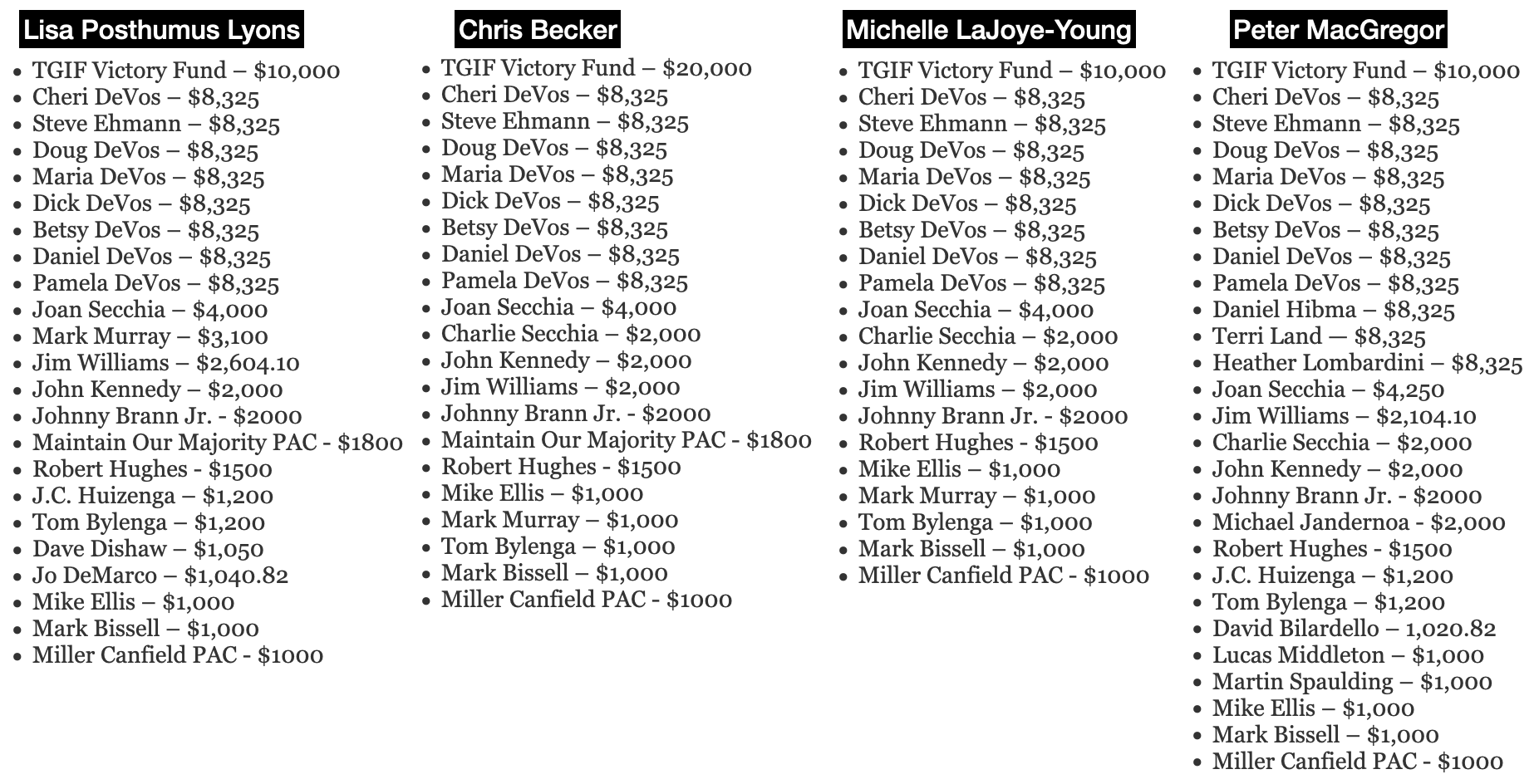
These lists are nearly identical. It’s as if all the people on these lists got together to conspire. Not really, this is just how systems of power and members of the Capitalist Class operate. They want to control us in every way possible. Until we come to terms with these dynamics things will not fundamentally change. No I’m not talking about running candidates against them, I’m talking about dismantling these systems and creating a more humane, a more just and a more joyful way of coexisting in this community. Another World is Possible!
Follow the Money: Big money donors are backing candidates in the 1st and 3rd Ward Grand Rapids City Commission races
Just as I noted in the mayoral race for Grand Rapids, members of the Grand Rapids Power Structure and numerous political action committees (PACs) are hoping to influence the outcome of the races for Grand Rapids City Commission in the 1st and 3rd Wards.

Money influences in the Grand Rapids First Ward City Commission race
There are four candidates for the seat that Jphn O’Conner will be vacating at the end of 2024. However, there is just one candidate that has raised more than 5 times the amount of money that the other 3 candidates have raised……combined.
Alicia Marie Belchak has raised a total of $4756 from 57 different contributions.
Melanie Droski has raised $2,800 from just 2 contributors.
Mike Fassbender has raised $3,022.50 of which he donated.
However, 1st Ward candidate Dean Pacific has raised a total of $63,809.20. Not only has he far out raised the other candidates, he has received major contributions from the following organizations and individuals:
- Grand Rapids Police Officer’s Association PAC – $12,500
- Grand Rapids Chamber of Commerce PAC – $,5000
- Grand Rapids Firefighters Union PAC – $2,500
- John Brann – $1,225
- Johnny Brann – $1,225
- Christian Meyer – $1,225
- Richelle Krueger – $1,225
- Thomas Krueger – $1,225
- Timothy Schowalter: Pioneer Construction – $1,225
- Sidney Jansma: Wolverine Oil & Gas – $1,225
- Joan Secchia – $1,225
- Mark Murray – $1,225
- Mike VanGessel: CEO Rockford Construction – $1,225
- Kevin Polakovich – $1,225
- Kristin Polakovich – $1,225
- Daniel Meyering: CEO Trillium Investments – $1,225
- Madolyn Bryant – $1,225
- Charlie Secchia: President of SIBSCO – $1,225
- J.C. Huizenga: Huizenga Group – $1,225
- John Kennedy: CEO Autocam Medical – $1,225
- Nancy Kennedy – $1,225
- Mark Bissell: CEO Bissell Inc. – $1,225
- Michael Jandernoa: $1,225
- Blake Krueger – $1,225
- Mary Krueger – $1,225
- Sandra Brann – $1,225
- Thomas Brann – $1,225
- Jim Williams – $1,200
- Janet Pacific – $1,000
- Frederick Pacific – $1,000
- Thomas Bylenga – $1,000
- Realtors Political Action Committee of Michigan – $1,000
Money influences in the Grand Rapids Third Ward City Commission race
There are six candidates running for the Third Ward Grand Rapids City Commission race. As I write this post (July 28th) Al Willis, Joyce Priscilla Gipson and Reggie Howard have not filed a campaign finance report.
Bing Goei has raised a total of $26,300 from just 9 contributors. His top contributors are:
- Bing Goei $25,000
- Aileen Antonio $250
- Senita Lenear $250
- Charissa Huang $200
- Bruce Neckers $200
Marshall Kilgore has raised a total of $13,135 from a total of 106 different contributors. Here are some of the top campaign donors:
- Climate Cabinet PAC – $2000
- Tina Kilgore – $1225
- Anthony Welch – $1000
- Kent County Democratic Party – $550
- Bob Johnson – $500
The top fundraising candidate for the seat in the 3rd Ward is John Krajewski. Krajewski has raised a total of $70,982.99. Like Dean Pacific in the 1st Ward race, Krajewski has received campaign money from members of the Grand Rapids Power Structure and numerous PACs. Here is a list of those large donors:
- Grand Rapids Police Officer’s Association PAC – $12,500
- Grand Rapids Chamber of Commerce PAC – $12,500
- Grand Rapids Firefighters Union PAC – $2500
- Mark Bissell: CEO of Bissell – $1225
- John Brann: Owner of Brann’s – $1225
- Kevin Polakovich – $1,225
- Kristin Polakovich – $1,225
- Joan Secchia – $1,225
- Sidney Jansma JR: Wolverine Oil & Gas – $1,225
- Mark Murray – $1,225
- Daniel Hibma: Land & Co. – $1,225
- Sidney Jansma – $1,225
- Daniel Meyering: CEO Trillium Investments – $1,225
- Charlie Secchia: President of SIBSCO – $1,225
- Jeremy Scully: JL Rental Group – $1,225
- Lindsay Scully: RE/MAX of Grand Rapids – $1,225
- J.C. Huizenga: Huizenga Group – $1,225
- John Kennedy: CEO Autocam Medical – $1,225
- Nancy Kennedy – $1,225
- Michael Jandernoa: $1,225
- Sandra Brann – $1,225
- Thomas Brann – $1,225
- John Brann – $1,225
- Johnny Brann – $1,225
- Mary Krueger – $1,225
- Thomas Bylenga – $1,000
- Mark Mason: Pacific Source – $1.000
- Dan Bowen: Dempsey Ventures – $1,000
- Charlie Ferro – $1,000
It is interesting that the list of big donors that Krajewski has is very similar to the list for Dean Pacific in the 1st Ward. It is also worth noting that besides the $12,500 from the Grand Rapids Police Officer’s Association PAC to Pacific and Krajewski, they also received significant financial backing from the Brann family, which started the GRPD apologist group Voice for the Badge Thus, it is instructive to note that the Capitalist Class and the apologists for the GRPD want to influence the outcome of Grand Rapids politics and policy.
Follow the Money: The race for Mayor in Grand Rapids
On July 12, MLive posted an article profiling the four candidates running for Mayor of Grand Rapids.
The profile piece was not very compelling, with two people running who had never run for office previously and two candidates that have been elected to multiple positions over the years, David LaGrand and Senita Lenear. The 4 questions posed to the candidates, were the same 4 questions that MLive asked all local candidates in Grand Rapids and Kent County, questions that were vague, resulting in no challenging questions from reporters or verification of claims made by candidates.
Besides that lack of reporting on the critical issues facing Grand Rapids, there also hasn’t been any coverage of campaign financing for Mayoral candidates, with the most recent quarterly reports due on July 25.
Always Follow the Money
Hailey Lynch‐Bastion did not report any money raised for his campaign for Mayor of Grand Rapids and Steve Owens only had three contributors to his campaign, with Owens himself as the largest contributor giving $2,740.90, followed by Republican businessman Dan Hibma who contributed $1000.
Former 3rd Ward Grand Rapids City Commissioner raised a total of $26,775.80 and spent $22,772.10, according to their most recent campaign contribution filing. Lenear received 181 distinct contributions and here are some of the larger contributors to their campaign:
- Christopher Sain $2,500
- Nina Thompson $1,500
- Nicole Thompson $1,030
- Brian Ellis $1,000
- Will Blackmon $1,000
Former State Rep. David LaGrand out raised everyone, with $141,826.41 in campaign contributions from 483 distinct contributions. Here are some of the larger contributor, those that gave $1000 or more:
- Michigan Laborers Political League PAC $10,000
- Michigan Regional Council of Carpenters PAC $10,000
- Grand Rapids Firefighters Union PAC $7,500
- Michigan LCV PAC $2,585.25
- Kent County Democratic Party $2,500
- Sam Cummings: CWD Real Estate Investment – $2,450
- Jeff Shutz – $2,450
- Johnny Brann Jr.: Branns – $2,450
- Kevin Toler: Hill Island Financial – $2,450
- Joseph Trudeau – $2,450
- Scott Bowen: Lawyer – $2,250
- Robert VanStright – $2,000
- Climate Cabinet PAC – $2,000
- Steve Pestka: President H & H Management & Development Co. – $1,900
- Gary De Kock – $1,653.45
- Ron DeWaard: Lawyer – $1,516.45
- Alicia Pestka – $1,500
- Teamsters Local 406 PAC – $1,500
- Andrew DeBoer – $1,500
- Donald Taylor – $1,432.48
- Gaetan Gerville-Reache: Lawyer – $1,250
- Tami Vandenberg: business owner – $1,000
- John Hunting – $1,000
- Stacy Van Dyken: Lawyer – $1,000
- Steve Heacock: Executive Grand Rapids Whitewater – $1,000
- Bradley Thomas: CEO of Progressive AE – $1,000
- Michael Jandernoa: Executive at Perrigo – $1,000
- James Nelson – $1,000
- Marlin Feyen – $1,000
- Chris Guis: Staffing Solutions Inc. – $1,000
The list of $1000 or more contributors is 30, with a combined total of more than half of the $141,826.41 LaGrand had raised. Many of the names on this list are part of the Grand Rapids Power Structure or close associates of those in the local power structure. In addition, despite the fact that this is a non-partisan race, not only did the Kent County Democrats contribute, most of the PACs and labor groups primarily contribute to Democratic Party candidates.
Based on the campaign finance data, LaGrand raised roughly six times more than Lenear did, which does not guarantee he will win, but makes it more likely. Looking at the endorsements that LaGrand has is not only a long list, but people who are part of the political and business establishment, which means that LaGrand is likely to be a business as usual Mayor.
Lastly, in a recent WXMI profile, LaGrand said that GRPD Chief Winstrom “was great” and that “Policing issues often boil down to what your policies are, your training, your hiring practices, and your leadership.” LaGrand also talked the need for more affordable housing, but was never specific on what affordable means, plus he never suggested that people should be making a living wage to be able to afford actual housing costs.
Palestine Solidarity Information, Analysis, Local Actions and Events for the week of July 28th
It has been more than 9 months since the Israeli government began their most recent assault on Gaza and the West Bank. The retaliation for the October 7 Hamas attack in Israel, has escalated to what the international community has called genocide, therefore, GRIID will be providing weekly links to information and analysis that we think can better inform us of what is happening, along with the role that the US government is playing. We will also provide information on local events and actions that people can get involved in. All of this information is to provide people with the capacity of what Noam Chomsky refers to as, intellectual self-defense.
Information
Oxfam: Israel Has Reduced Water Access in Gaza by 94 Percent Since October
Israel massacres at least 70 people in Khan Younis
META’S POLICY ON ZIONISM EXPOSED: CYBERWELL SCRAMBLES AFTER ISRAEL TIES REVEALED
Unions Representing Six Million Workers Demand an End to All U.S. Military Aid to Israel
Netanyahu’s Speech Is a Gift to Future Genocide Historians
Analysis & History
“Unspeakable”: Doctors Back from Gaza Say Death Toll “Much Higher,” Push Harris, Biden for Ceasefire
Local Events and Actions
Demand the City Divests NOW!
Tuesday, July 30th 7pm GR City Commission meeting, which is
At the Gerald Ford Academic Center 851 Madison Ave SE, Grand Rapids
https://www.facebook.com/events/873441771295236?ref=newsfeed
Power to Palestine: Weekly Rally in Grand Rapids
Wednesday, July 31st, noon – 1pm, Monument Park
https://www.facebook.com/PalestineSolidarityGR
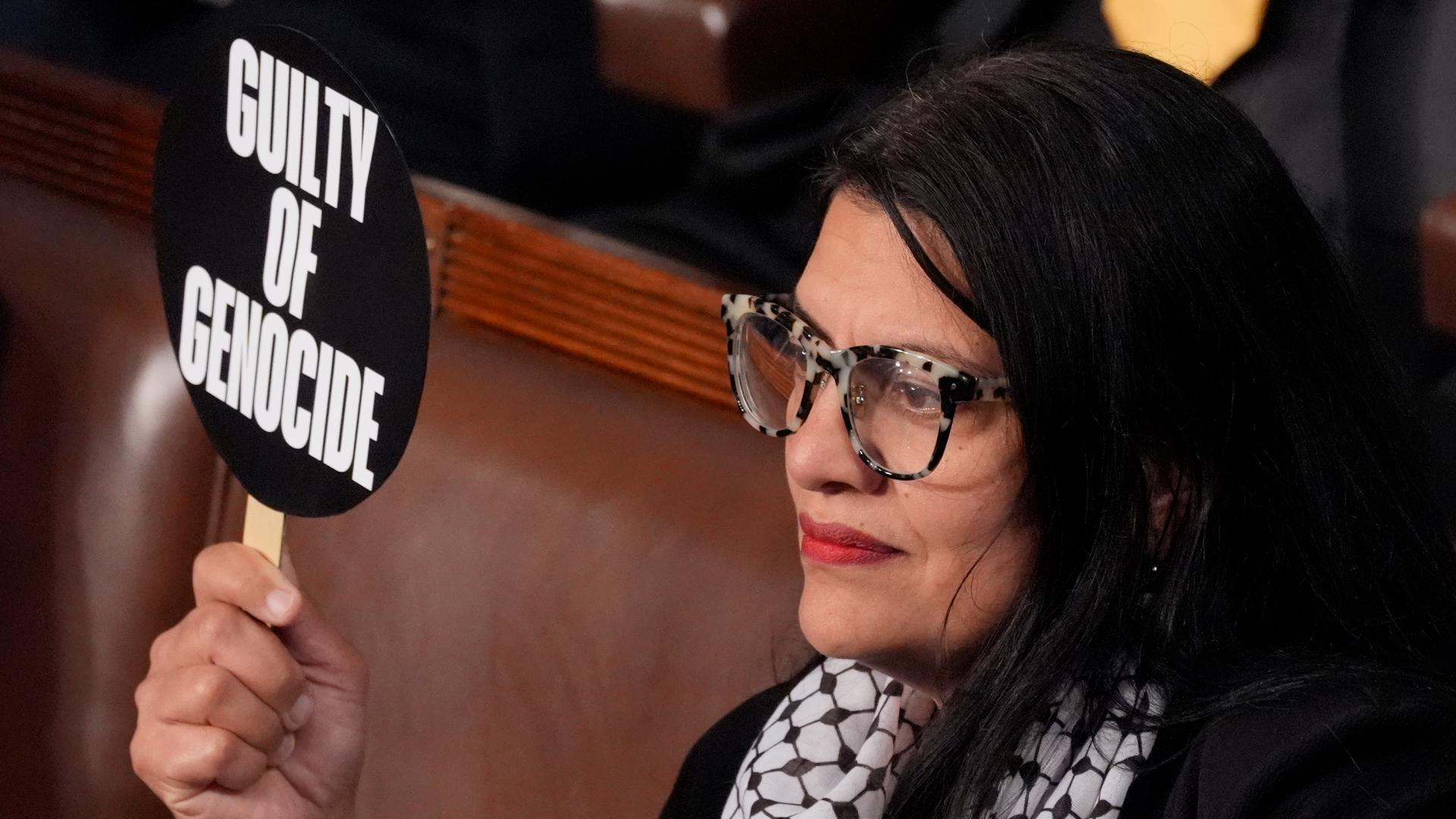
Imagine used is Rep. Talib holding sign up during Netanyahu’s speech. On the other said it said War Criminal!
GRIID has been tracking the hotel tax ballot issue since it was approved by the Kent County Commissioners just a few months ago. I posted a recent article looking at the kinds of mailers they have sent out and which members of the local power structure are involved in the project.
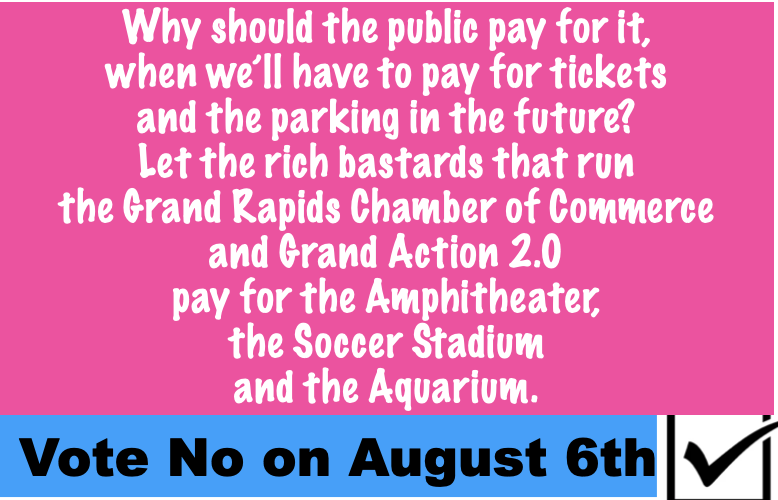
Campaign Finance data was just made public yesterday and here is what I found out about the amount raised by the Destination Kent Committee, the entity that has been coordinating the hotel tax ballot initiative.
According to the Kent County Clerk’s office, there were two campaign finance documents filed. The first document was the standard campaign finance record for the Destination Kent Committee, and the second document was a late contribution report.
There were not a large number of contributors, since those involved were almost exclusively people and organizations with deep pockets. Here is the list of campaign contributors from the largest to the smallest amounts:
- Grand Action 2.0 – $300,000.00
- GR Area Chamber Ballot Committee – $50,000.00
- Acrisure LLC – $25,000.00
- Amway Corporation – $25,000.00
- Amway Grand Plaza – $25,000.00
- Corewell Health – $10,000.00
- Pioneer Incorporated $5,500.00
- Progressive AE – $5,000.00
- Michael Jandernoa Trust – $5,000.00
- Chris VanBergen (Rockford Construction) – $5,000.00
- Gordon Food Service – $5,000.00
- Tower Pinkster – $2,500.00
- Todd Custer (CEO of Custer) – $2,000.00
- Benjamin Wickstrom (President of Erhardt Construction) – $1,500.00
- Sable Developing Inc. – $1,000.00
- David Leonard (Corewell) – $500.00
- Rosalynn Bliss – $250.00
- Michael Sytsma – $100.00
- William Brennan – $100.00
Total raised – $468,450.00
You can see that the largest contributor was Grand Action 2.0, which is behind the Amphitheater and Soccer Stadium projects, but is made up of members of the Grand Rapids Power Structure.
The Grand Rapids Chamber of Commerce is second on the list, which is no surprise, since they are primarily interested in expanding the wealth of certain businesses in this city and several of their staff members have been the sources for news stories on the hotel tax ballot initiative.
Acrisure LCC makes sense, since they bought the naming rights to the Amphitheater. Amway, both the Corporation and the Hotel, will benefit from bringing more tourists to GR.
Then there are the developers and construction companies involved – Rockford Construction, Erhardt Construction, Pioneer Construction, Tower Pinkster, Progressive AE. In addition, there are major employers, Corewell Health, Custer and Gordon Foods. All of these entities stand to get contracts for the upcoming development projects or potentially additional projects that will be created from the current ones that will be funded by the hotel tax increase.
As I have been saying all along, if these few entities can generate nearly a half a million dollars in just a few months to convince voters to support an increase in the hotel tax, why don’t they just pay for these projects themselves. Collectively these business and families are worth more than $10 Billion. However, getting the public to pay a large percentage of these projects is exactly how these people and these companies became millionaires and billionaires in the first place. Vote NO on the Hotel Tax on August 6th!
Always Follow the Money: Michigan Realtors PAC, influence peddling and the cost of housing
As anyone who has lived in Michigan over the past 20 years knows, the housing market has skyrocketed.
Too many people are being priced out of the ability to even buy a home, and rental costs are also out of reach to thousands of families and individuals. While housing costs have gone up, income and wages for most have stagnated or have not increased anywhere near the increase in housing.
None of this matters to the Real Estate industry, which is why the Realtors PAC of Michigan continues to make significant amounts of campaign contributions to both Republicans and Democrats across the state.
According to the most recent campaign contribution data from the State of Michigan, the Realtors PAC of Michigan has made contributions to 206 different candidates. Here are some of the larger contributions Realtors PAC of Michigan has made:
- House Republican Campaign Committee – $32,875.00
- Michigan House Democratic Fund – $22,875.00
- Senate Republican Campaign Committee – $15,000.00
- National RPAC – $11,400.00
- Transformational Leadership Fund – $10,000.00
There are also a fair amount of contributions to candidates from Kent County and Grand Rapids, particularly those who are on the August 6th Primary Ballot:
- Fitzgerald for Michigan PAC – $2,500.00
- Committee to Elect Kristian Grant – $2,000.00
- Friends of Bryan Posthumus – $1,500.00
- Friends of Phil Skaggs – $1,500.00
- Friends of John Fitzgerald – $1,250.00
- Committee to Elect Gina Johnsen – $1,250.00
- Friends of Stephen Wooden – $1,000.00
- Robin Halsted for Kent County Commissioner – $1,000.00
- Lindsey Thiel for Kent County Commissioner – $1,000.00
- John Krajewski 3rd Ward Grand Rapids City Commissioner – $1,000.00
- Dean Pacific 1st Ward Grand Rapids City Commissioner – $1,000.00
- Dan Burrill or Kent County Commissioner – $750.00
- Committee to Elect Angela Rigas – $750.00
- Brinks Majority Fund – $500.00
- Citizens for Stan Ponstein – $500.00
- David LaGrand for Mayor of Grand Rapids – $500.00
- Stan Stek for Kent County Commissioner – $500.00
- Ben Greene for Kent County Commissioner – $500.00
- Monica Sparks for Kent County Commissioner – $500.00
- Katie DeBoer for Kent County Commissioner – $300.00
It is rather instructive to see how many local State Legislators, Kent County and Grand Rapids candidates received funds from a statewide Political Action Committee. You can bet that the Realtors PAC of Michigan wants to make sure that candidates from Grand Rapids and Kent County don’t make social housing or even truly affordable housing a reality. Always follow the money!
 Grand Rapids Institute for Information Democracy