Event to focus on the history of the Grand Rapids Public Schools
 On Saturday, October 26th, the community is invited to attend a 2 hour event that will shed some light on part of the history of the Grand Rapids Public Schools.
Join historians & guests from the GRPS Uncovered podcasts. This FREE workshop & lunch will explore the impact of history on community needs.
The event takes place on October 26th from 11am – 1pm, at 415 Martin Luther King Jr. Street SE Grand Rapids, MI 49507. To register for this free event go to this link.
Participants are encouraged to listen to podcasts ahead of the event. If you attended or worked at GRPS, feel free to bring in memorabilia such as trophies, yearbooks, graduation programs, photos, jerseys or uniforms, school event tickets, etc. for a gallery walk.
We are recommending attendees to preview the GRPS Uncovered podcasts prior to attending the event. You may access them by clicking the link below:
West Michigan Foundation Watch: The Jandernoa Foundation
Foundations are a way for members of the Capitalist Class, which made their wealth by exploiting workers, to hide some of their wealth from taxation, only to then turn around and use foundation funds to undermine social movements and generate positive PR for themselves.
“In any case, the hidden hand of of foundations can control the course of social change and deflect anger to targets other than elite power.”
– Joan Roelofs, Foundations and Public Policy
Jandernoa Foundation
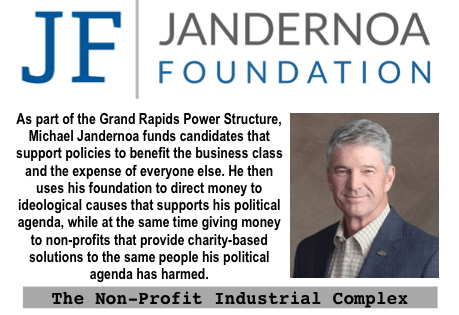
GRIID has always begun our Foundation Watch work by looking at the foundations associated with the most powerful family in West Michigan, the DeVos family. GRIID has already looked at the Dick and Betsy DeVos Foundation, the Doug and Maria DeVos Foundation, the Dan and Pamela DeVos Foundation, and finally the CDV5 Foundation. Last week, we also look at the other Amway fortune family, with a focus on the David and Carol Van Andel Foundation and the Steve and Amy Van Andel Foundation. Today, I want to look at another member of the Grand Rapids Power Structure, Michael Jandernoa and his foundation.
I am using the data from the foundation’s 990 document for 2022, which is the most recent year that is available. The Jandernoa Foundation has significantly smaller amount of assets, specifically $4,383,771 in the foundation’s account, which is just another way that members of the Capitalist Class to be able to hide their money from taxation.
Before I dive into how the Jandernoa Foundation distributed their funds, I wanted to point out that the foundation pays William Lawrence $163,214.00 to be the Executive Director, and they pay $253,487.00 for management/investments to 42 North Partners, which is a company owned by Michael Jandernoa.
The Jandernoa Foundation made contributions to dozens of entities in 2022, but there are some clear categories of groups they contributed to, such as the Religious groups, political organizations, Education-centered groups, and social service entities, to name a few. Below is a listing of each from these categories, with a dollar amount.
Religious Groups
- Degage Ministries – $100,000
- Diocese of Grand Rapids – $40,000
- Help Pregnancy Aid – $100,000
- Mel Trotter Ministries – $62,5000
Political Organizations
- Michigan Colleges Alliance – $40,000
- Gerald R Ford Foundation – $30,000
Education-centered groups
- Catholic Central High School – $2,400,000
- Davenport University – $300,000
- San Juan Diego Academy – $100,000
Groups receiving Hush $
- Feeding America – $200,000
- Heart of West Michigan United Way – $509,350
- Women’s Resource Center – $50,000
The Jandernoa Foundation provided funding to numerous Catholic entities, not only because Jandernoa is Catholic, but also because he supports the Catholic Church’s anti-Abortion stance, which is why the foundation gave money to Help Pregnancy Aid.
You will also notice that the foundation contributed to the Michigan Colleges Alliance, which is a group that support private colleges in Michigan and pushes for public money to go to private education. The foundation contribution to the Michigan Colleges Alliance compliments the work that Michael Jandernoa has done with the West Michigan Policy Forum, specifically to influence education policy in the state, as I noted in an article from 2019.
Lastly, none of the groups receiving hush money listed above challenge systems of power, nor do they seek to address the root causes of societal problems like housing insecurity or food insecurity.
In addition, the Jandernoa Foundation gets to buy their silence, making it very improbable that these groups will speak out against the public policy decisions that are adopted by the politicians that Jandernoa and other members of the Grand Rapids Power Structure are funding. In fact, according to FollowtheMoney.org, Jandernoa has given $4,716,171 to 346 different filers spanning 29 years, mostly to GOP candidates. Like most private foundations, their owners create social problems through exploitation and buying politicians, then turn around and contribute to charity groups that serve the very same people harmed by their wealth.
Elections and political party machines in Grand Rapids
I was out and about recently when I cam across the political yards signs shown here below. One is for David LaGrand, who is running to be the Mayor of Grand Rapids, and the other one is for Richard Williamson, who is running for a seat on the Grand Rapids Public School Board.
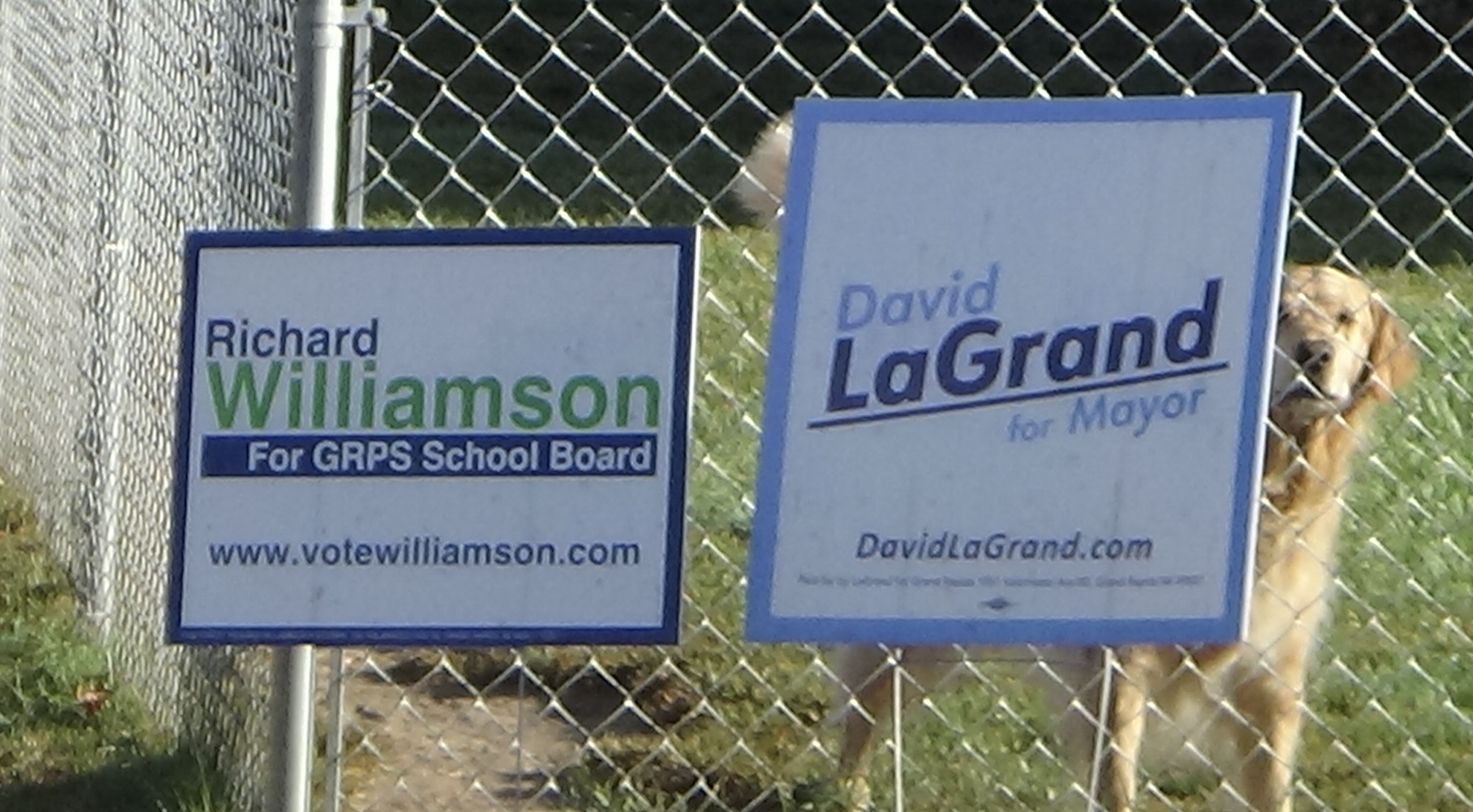
There were no other political signs at the residence, just these two candidates. It made me curious, so I started to look at both candidates and found out that it was no coincidence that these two yard signs were next to each other.
Both LaGrand and Williamson began their campaigns way before anyone else in their respective races, with LaGrand submitting paperwork with the County Clerk in May of 2023, and Williamson submitted paperwork in April of this year.
What is instructive is that Richard Williamson is the treasurer for David LaGrand. In fact, Williamson has a history with LaGrand, since he was his campaign director in 2021-22, when LaGrand was running for a State Senate position. Since then, Williamson has been a legislative aide for Rep. John Fitzgerald, worked for the Michigan Senate Democrats as Legislative Director and is currently the Deputy Finance Director for the Michigan Senate Democrats.
The treasurer for Richard Williamson is Max Aulbach. Aulbach is the Legislative Director for the 82nd District State Representative Kristian Grant.
If we look at endorsements for both LaGrand and Williamson, we see lots of similarities. Both have numerous endorsements from Democratic Elected officials and numerous labor groups that have a history of providing lots of campaign funding to Democrats. However, LaGrand also has the endorsement of a few overtly far right people, such as the notorious Grand Rapids Capitalist Sam Cummings and Pro-Cop business people Johnny Brann Sr. and Johnny Brann Jr.
On the matter of campaign finances, David LaGrand has received funding from some of the usual Democratic Party elites and the business community, as we noted in July of 2023, November 2023, and in July of 2024. We don’t have campaign finance data for Williamson as of yet, since his campaign didn’t report anything in the last campaign deadline cycle in July, but I will post his campaign finance information in late October, when the Kent County Clerk’s office makes that information available. Only then can we determine if there are similarities between LaGrand and Williamson in regards to campaign contributions.
However, what seems clear is that both LaGrand and Williamson are backed by the Democratic Party establishment, since both have been involved in Democratic Party politics in Grand Rapids, Kent County and at the state level. Both David LaGrand and Richard Williamson have been endorsed by the Kent County Democrats, despite the fact that both are running for non-partisan positions.
The question I have for voters is, since both LaGrand and Williamson are part of the Democratic Party machine, will that translate into supporting business as usual politics if elected or will they really listen to the community, especially BIPOC and other marginalized communities, that have been most impacted by business as usual politics that both the Democrats and Republicans have supported in Grand Rapids?
5 anti-Capitalist things to know about the new DeVos/Van Andel downtown development project
As a follow up to my last post, headlined, Billionaire families announce new development project in GR, wants $544 million in public funding, I thought it would be useful to do the same thing that MLive did.
MLive did a follow up to the announcement about the new DeVos/Van Andel development project in downtown Grand Rapids, even though the follow up article didn’t really provide any new information than their initial post. I want to provide five points that we all need to be talking about, especially if we want to take away some of the power that the co-founding families of Amway have in this city.
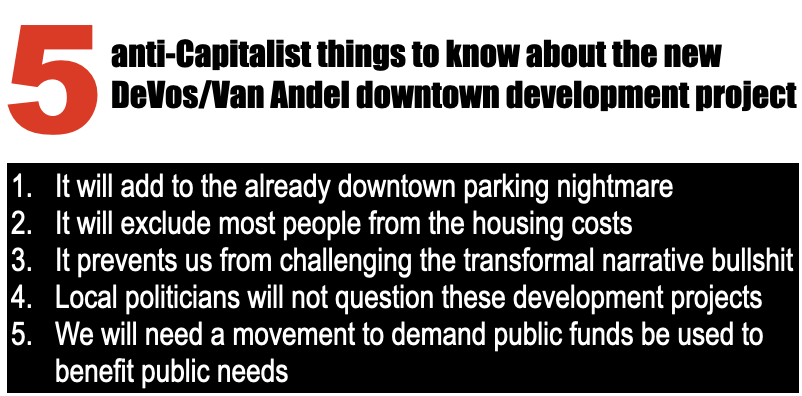
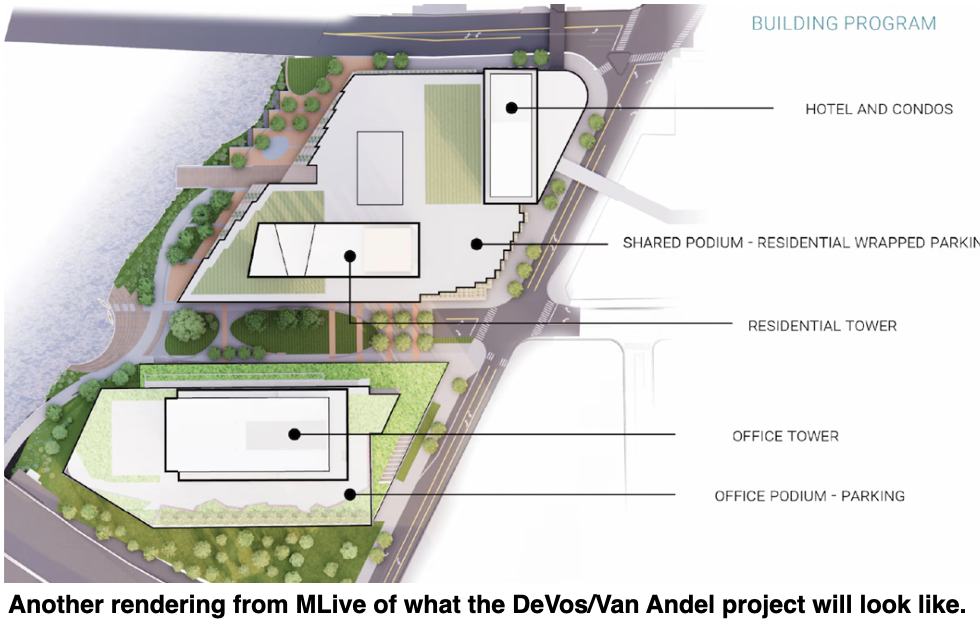
First, even though it may not be the sexist thing to talk about, Grand Rapids has a serious issue around parking. I have already seen people on various social media platforms respond to the news about the new DeVos/Van Andel project on the corner of Fulton and Market regarding parking. People, especially those that live on the near westside of Grand Rapids are very concerned about the lack of parking in downtown Grand Rapids and their fear of having to pay for street parking in front of their own homes. Now, it is true that the initial MLive article about the new DeVos/Van Andel project did mention that it would include up to 2,500 parking spaces. However, there was no clarification if these spaces would be public or private, especially considering that there will be 130 hotel bedrooms, 76 condos and 595 market-rate (expensive) apartments.
Add the lack of parking to the fact that Grand Rapids and Kent County officials are hell bent on attracting as much tourism to downtown as possible. Tourism will bring even more cars to an area where parking is difficult to find, with the added dynamic that Grand Rapids just upped the cost of parking, which also included extending the hours for parking and increasing rates for events.
Second, the cost of housing with the DeVos/Van Andel project is all market driven, which means it excludes the majority of people already living in Grand Rapids. This project will include a 130 unit hotel, with rooms starting at $400 a night. There will also be 76 condos, but we don’t know the prices for those as of yet. However, after doing a search for the average price of a condo in downtown Grand Rapids I found $389,950.00 as the average.
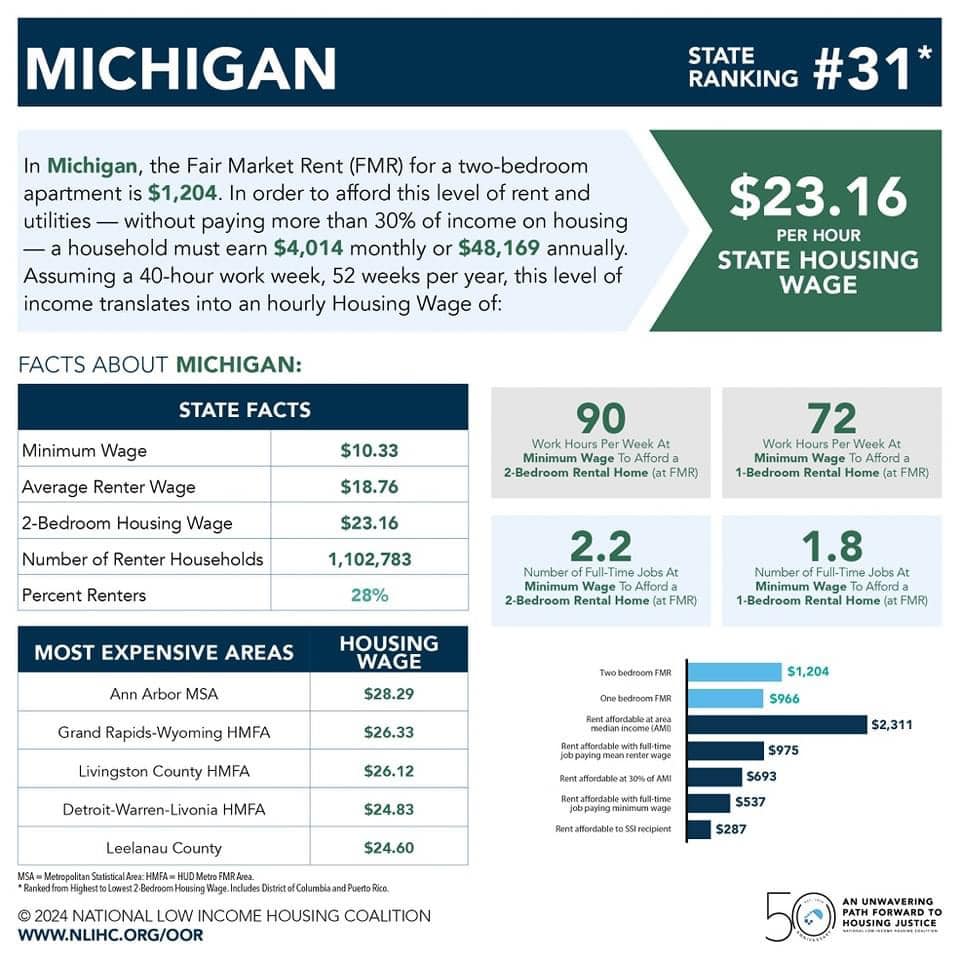
Then there is the cost of the 3 types of 595 apartments that will be part of the DeVos/Van Andel project. The cost of these apartments are: for a studio apartment, that would be $2,643 per month, $2,833 for a one-bedroom, and $3,401 for a two-bedroom. According to the National Low Income Housing Coalition, the average cost of rent for a 2 bedroom apartment in Michigan, based on the Fair Market Rate, is $1,204. However, the cost is higher in Grand Rapids, and according to the National Low Income Housing Coalition, for someone to afford the average cost of a 2 bedroom apartment in Grand Rapids, they would have to make $26.33 an hour. Most people I know do not make that kind of a wage.
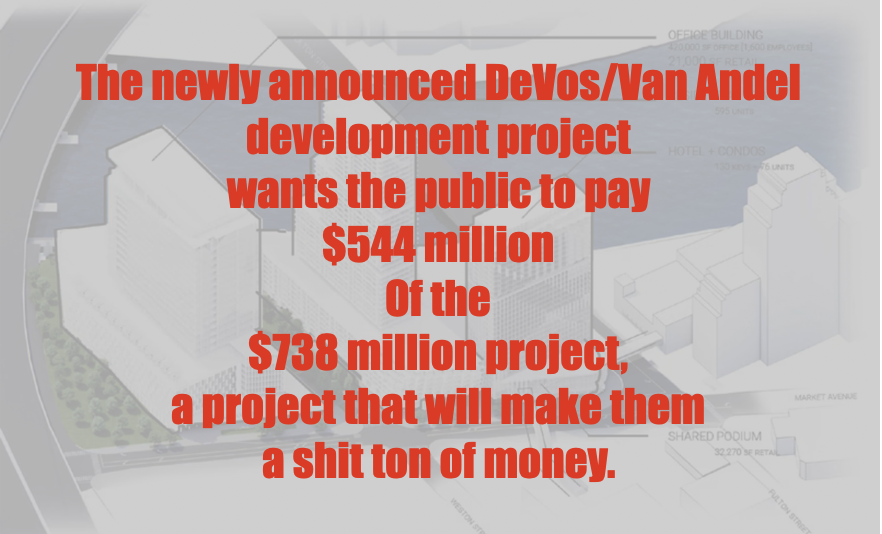
Third, we all have to stop buying into the narrative that these projects are transformational, or to more accurately put it, such projects are transformational for those who already control most of the land and other assets in downtown Grand Rapids, such as the DeVos and Van Andel families. As I stated in yesterday’s post, the DeVos/Van Andel project is requesting $544 million in financial incentives, for a $738 million project cost. This means that the DeVos/Van Andel project people are asking for roughly 75% of the cost of this project to be picked up by the public sector.
Beyond this, imagine how much money the DeVos/Van Andel people will make off of the 130 unit hotel, the 76 condos and the 595 apartments. These families will be making millions on a regular basis, not the people who will clean and maintain those properties or provide security for those buildings. It is likely that those workers would not be able to even afford to stay in the hotel rooms, plus they certainly will not be able to afford the cost of any of the 76 condos, nor the 595 apartments. These spaced are reserved for the business class and those that make 6 figure salaries and up.
Fourth, it is not likely that we will see any local politician – city, county or state elected official question or challenge the new DeVos/Van Andel project. These issues are not part of the candidate platforms for those running for Mayor of Grand Rapids in November, for Grand Rapids City and Kent County Commission seats, or those that represent Grand Rapids in the State Legislature.
Politicians and candidates will not speak out against the use of public funding/financial incentives for the DeVos/Van Andel project or any other major downtown development project because they will not publicly challenge the members of the Grand Rapids Power Structure. When was the last time you heard a local politician publicly challenge the power of families like the DeVos and Van Andel families? These politicians and candidates do not have the guts to do so, plus most of them actually believe that the DeVos/Van Andel project and those like it are transformational.
For example, the legislation that allowed for the increased in the hotel tax in Kent County that was voted on in August, was based on House Bill 5048 of 2023, which was sponsored by House Democrat John Fitzgerald (District 83). The Democrats in the State House and Senate unanimously voted for it, with some Republicans joining them. Here is what that legislation said about how the hotel tax could only be used:
Generally, a county must use the revenue from the imposed excise tax to pay for specified items, including the administration and enforcement of the tax ordinance, the financing of convention and entertainment facilities, and the promotion of tourist and convention business in the county. Under the bill, these requirements would apply to revenue from a local unit of government’s imposed excise tax.
Based on this recent example, the question is, why aren’t politicians, and especially Democrats, creating policies that re-directs the kind of funds generated by the hotel tax in Kent County ($24 million annually) going to fund housing and other basic needs of the people whom they claim to represent? Because they are cowards and because they embrace business as usual politics.
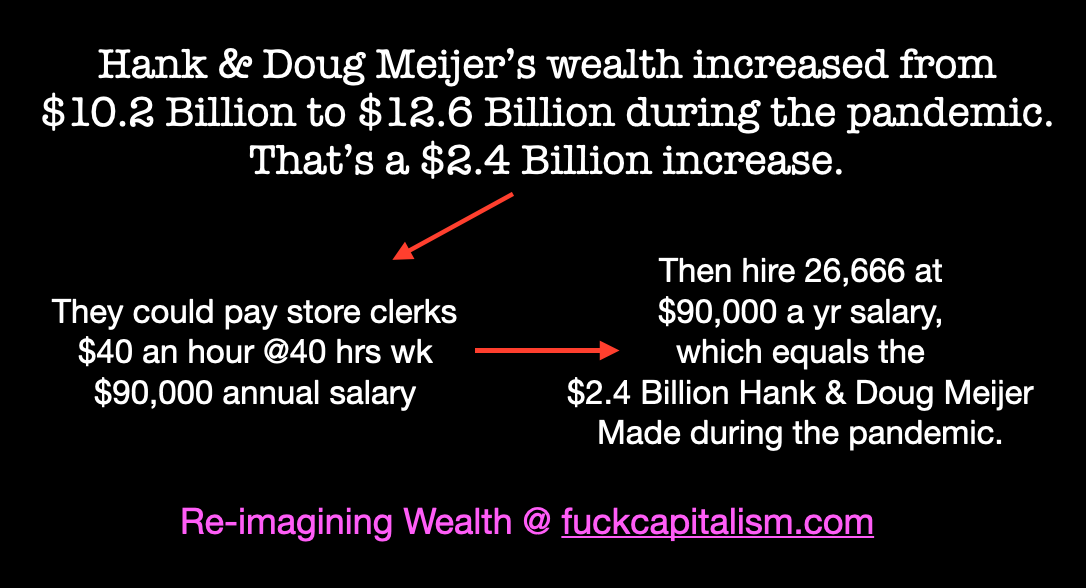
Lastly, since we can’t rely on local politicians to represent the interests of of the major of Grand Rapids and Kent County, it will be necessary to build a movement that not only demands that the public has a say in how public funds are used, but to make demands on using the disgustingly larger amount of wealth from the small number of billionaires and millionaires in Kent County for real community needs – housing, food, transportation, health care, renewable energy, etc. Imagine how many lives would be improved if the public had control over public funding. Imagine if there was a movement to demand that the wealthiest members of this community should give that money to the people who made their wealth through their labor – a point I made about the Meijer family wealth increasing during the pandemic. Who wants to be part of such a movement?
Billionaire families announce new development project in GR, wants $544 million in public funding
MASSIVE news for GR! Check out this article highlighting a historic development project that will transform our skyline and enhance our community.
The above comment is what the Grand Rapids Chamber of Commerce posted on their Facebook page over the weekend, a comment that was attached to a post from MLive about the new DeVos/Van Andel development plan.
Such a comment is no surprise coming from the Grand Rapids Chamber of Commerce, especially considering ht close relationship that that organization has had with the DeVos and Van Andel families over the years. The GR Chamber has endorsed every DeVos and Van Andel development project ever since the DeVos family decided to purchase the Pantlind Hotel in downtown Grand Rapids and re-named it the Amway Grand Plaza.
This symbiotic relationship with the GR Chamber at the co-founding Amway families has also been seen in the Chamber’s unconditional support in the history of Grand Action 2.0 (which began with using millions in public dollars to build the Van Andel Arena) and every project since then, leading up to the 12,000 seat outdoor Amphitheater and the Soccer Stadium. The DeVos/Van Andel relationship has also been central to the creation of the West Michigan Policy Forum, which was an outgrowth of the GR Chamber of Commerce in 2008, and has been pushing neoliberal capitalist policies ever since.
Local News coverage of DeVos/Van Andel development announcement
It is also not surprising how the local news had reported on the announcement about the new development venture involving the Amway co-founding families. In fact, the coverage once again demonstrates the subservience of both MLive and WOODTV8 to the DeVos and Van Andel families. To be frank, I believe that the local news agencies are essentially lapdogs to power, especially when it comes to the DeVos and Van Andel families.
The MLive headline read, DeVos, Van Andel families plan massive ‘skyline defining’ project in Grand Rapids, while the channel 8 online headline stated, Plan for old Charley’s Crab site would be ‘skyline-defining,’ firm says.
The idea that such a project will be “skyline defining” is based solely on the words of the firm that has been hired by the DeVos/Van Andel families, specifically Progressive Companies, known by most as Progressive AE. The CEO and President of Progressive Companies was quoted in both news sources, which confirms the subservience of the local news to these two families.
According to MLive, the DeVos/Van Andel project is being handled by:
The Fulmar Property Holdings, a company comprised of members of the DeVos and Van Andel families. The families own the 500-space parking lot at the corner of Fulton Street and Market Avenue, just north of Acrisure Amphitheater, where the project would be built.
The same article states that the project will include, “mixed-use development with three high-rise towers containing up to 671 high-end apartments and condos, a hotel, office tower and retail.”
Besides Progressive Companies and Fulmar Property Holdings, the project includes Michigan Growth Advisors, which will be taking the lead on efforts to secure federal, state and municipal financial incentives – tax breaks, subsidies – which means the millions in public funding will likely go to a project that is being championed by two multi-billionaire families.
The MLive article states that the project’s price tag is an estimated $738 million, but the “developers are eyeing a big public subsidy — a $544 million Transformational Brownfield plan.” Thus, the two billionaire families are seeking to use public incentives to cover the cost of three quarters of the total development project costs.
What makes this all the more absurd and infuriating is that the development will include 76 condos – which will no doubt only be affordable to those with deep pockets and a 130-room hotel, with rates that start at $400 a night. But wait, it gets even more disgusting. There will be 595 market-rate apartments that will cost the following:
For a studio apartment, that would be $2,643 per month, $2,833 for a one-bedroom, and $3,401 for a two-bedroom.
Much of the remaining portion of the MLive article is dedicated to how this DeVos/Van Andel project will utilize public funding to create an even larger playground area for the business class and their friends in downtown Grand Rapids. The MLive article also states that the project deal will be sweetened because, “Fulmar Property Holdings is proposing to access the bigger subsidy by providing an $8.5 million payment to the Grand Rapids Affordable Housing Fund over a 20-year period.”
Ok, so just to be clear, the DeVos/Van Andel project will provide $8.5 million over a 20 year period to the Grand Rapids Affordable Housing Fund, and in return, the two billionaire families hope to get $544 million Transformational Brownfield plan (Public Money). Welcome to the world of NeoLiberal Capitalism, where the billionaire class will receive $544 million to develop a project that will make them countless millions over the years and we are supposed to be excited that some of the wealthiest families in the area will contribute $425,000 a year for 20 years to the City’s Affordable Housing Fund. $425,000 a year for the DeVos and Van Andel families is like most working class people contributing $50 a year. It’s chump change for these rich families.
To add insult to injury, MLive ran a second article on Saturday with the headline, 5 things to know about the massive, skyline changing Grand Rapids riverfront project. This second article was essentially a summary of the initial post from Friday.
Again, the subservience of MLive to the DeVos/Van Andel families is demonstrated. Instead of providing even more Press Release journalism, MLive might want to actually ask people who have been dealing with gentrification, displacement and housing insecurity in recent years. There are groups in this city that would certainly have something to say about billionaires using $544 million in public incentives to expand their wealth and create a downtown district that will be their playground, but the local news doesn’t care what the public thinks about how public funding is used.
Palestine Solidarity Information, Analysis, Local Actions and Events for the week of September 22nd
It has been more than 11 months since the Israeli government began their most recent assault on Gaza and the West Bank. The retaliation for the October 7 Hamas attack in Israel, has escalated to what the international community has called genocide, therefore, GRIID will be providing weekly links to information and analysis that we think can better inform us of what is happening, along with the role that the US government is playing. We will also provide information on local events and actions that people can get involved in. All of this information is to provide people with the capacity of what Noam Chomsky refers to as, intellectual self-defense.

Information
Israelis Must Ask Themselves if They’re Willing to Live in a Country That Lives on Blood
US students, faculty fight silencing of anti-genocide protests
Israel Admits It Probably Killed Israeli Hostages in Gaza Airstrike in November
U.N. Experts Accuse Israel of “Starvation Campaign” in Gaza & Demand End to Western Complicity
MOST OF THE WORLD AGREES ISRAEL’S OCCUPATION OF PALESTINE MUST END. THE U.S. IS FINE WITH IT.
450 Wounded, 14 Dead After Lebanon Hit With Second Wave of Device Explosions
‘Horrific’ Video Shows Israeli Soldiers Pushing, Kicking Palestinian Bodies From Rooftop
Analysis & History
Palestinians in Occupied Palestine: Defying Zionism and Imperialism
‘Genocide Can and Should Never Be Just a Normal Story’
BDS impacts in times of genocide
Local Events and Actions
Power to Palestine: Weekly Rally in Grand Rapids
Wednesday, September 25th, noon – 1pm, Corner of Pearl St and Monroe in downtown GR.
Image used in this post is from https://visualizingpalestine.org/.
West Michigan Foundation Watch: Steve and Amy Van Andel Foundation
Foundations are a way for members of the Capitalist Class, which made their wealth by exploiting workers, to hide some of their wealth from taxation, only to then turn around and use foundation funds to undermine social movements and generate positive PR for themselves.
“In any case, the hidden hand of of foundations can control the course of social change and deflect anger to targets other than elite power.”
– Joan Roelofs, Foundations and Public Policy
Steve and Amy Van Andel Foundation
GRIID has always begun our Foundation Watch work by looking at the foundations associated with the most powerful family in West Michigan, the DeVos family. GRIID has already looked at the Dick and Betsy DeVos Foundation, the Doug and Maria DeVos Foundation, the Dan and Pamela DeVos Foundation, and finally the CDV5 Foundation. Last week, we also look at the other Amway fortune family, with a focus on the David and Carol Van Andel Foundation.
I am using the data from the foundation’s 990 document for 2022, which is the most recent year that is available. The Steve and Amy Van Andel Foundation has $97,836,676.00 of assets in the foundation’s account, which is just another way that members of the Capitalist Class to be able to hide their money from taxation.
Before I dive into how the Steve and Amy Van Andel Foundation distributed their funds, I wanted to point out that Steve Van Andel is the co-chair of the board of directors of Amway, located in Ada. In addition it is important to point out that the Steve and Amy Van Andel Foundation provided Amy Van Andel a $150,000.00 salary for being the Executive Director of the foundation, along with paying Debrah Rushlo $67,677.00 in her role as Executive Assistant.
The Steve and Amy Van Andel Foundation made contributions to dozens of entities in 2022, but there are some clear categories of groups they contributed to, such as the Religious Right, Think Tanks, Education-centered groups, and social service entities, to name a few. Below is a listing of each from these categories, with a dollar amount.
Religious Right
- Bethel Community Education – $100,000
Think Tanks/Far Right Policy organizations
- American Enterprise Institute – $20,000
- The Heritage Foundation – $10,000
- The George W Bush Foundation – $4,000,000
Education-centered groups
- Cornerstone University – $15,000
- Davenport University – $25,000
- Grand Rapids University Preparatory Association – $10,000
- Hillsdale College – $7,200,000
- Potters House – $25,000
Van Andel-owned, created or connected groups
- Van Andel Research Institute – $10,000
- West Michigan Aviation Academy (DeVos run) – $50,000
Groups receiving Hush $
- Baxter Community Center – $30,000
- Family Promise of Grand Rapids – $50,000
- Grand Rapids Public Museum – $100,000
- Kids Food Basket – $50,000
One recipient of funding from the Steve and Amy Van Andel Foundation that stands out is Hillsdale College ($7.2 Million). Hillsdale College is know for being part of the larger Charter School movement that opposes Public Education and is on the advisory board of Project 2025.
Hillsdale College has a long history of practicing and promoting far right values. The former President of Hillsdale College, George Roche, was also on the advisory board of the US affiliate of the World Anti-Communist League, according to Scott and Jon Lee Andersen’s book, Inside the League: The Shocking Expose of How Terrorists, Nazis, and Latin American Death Squads Have Infiltrated the World Anti-Communist League.
Hillsdale College has hosted forums over the years with speakers such as Manuel Ayau, a member of Guatemala’s Amigos del Pais, a group linked to the death squads in Guatemala. Hillsdale also houses the late John Bircher Clarence Manion’s tape collection, with lectures from former Nicaraguan Dictator Anastasio Somoza Hillsdale’s magazine, Imprimis, which provides a forum for anti-minority views.
In another book by Russ Bellant, The Coors Connection: How Coors Family Philanthropy Undermines Democratic Pluralism, the author writes:
“Longtime Hiilsdale President Roche is opposed in general to social engineering plans, among which he includes affirmative action and public education. Roche has attacked the Civil Rights Restoration Act as frightening federal intervention. He calls affirmative action “the putrid backwash of all the tired social engineering schemes and complains that its advocates are so hypersensitive that a school’s unwillingness to set up advanced bongo drum programs is called racist.”
Bellant goes on to say:
“The selection of contributors for Hillsdale’s monthly magazine, Imprimis, also relfects the school’s far right political views. In one issue, Gerda Bikales, a founder and former executive director of the English Only organization, US English, condemned the advocates of cultural diversity and bilingual education. She attacked the skilled language planners and other militant advocates who promote bilingual education, as well as those who aggressively pursue diversity and cultural pluralism.”
However, don’t just take the word of Bellant, even a recent article in the New York Times made it clear that the politics of Hillsdale College are reactionary and far right.
Because Hillsdale College does not accept federal money, they do not have to follow federal policy, like Title IX. As a result, the college does not follow Title IX guidelines on sex discrimination and the handling of sexual assault cases and it has refused to engage in the otherwise required reporting on student race and ethnicity, let alone develop an affirmative action plan. Not surprisingly, the school’s “race blind” admissions policy results in an overwhelmingly white student body.
In 2013, Dr. Arnn was castigated by Michigan legislators when, during testimony against the Common Core, he made a remark about officials who questioned Hillsdale’s racial record. Years before, he said scornfully, Michigan officials had come to the campus with clipboards, trying to count faces and prove, he said, that the college “didn’t have enough dark ones.” He later issued a barbed apology: “No offense was intended by the use of that term except to the offending bureaucrats.”
The New York Times article goes on to say:
It is no coincidence that Justice Clarence Thomas, an advocate of strict “originalist” interpretation of the Constitution, delivered the commencement address last spring, likening Hillsdale to a “shining city on a hill” for its devotion to “liberty as an antecedent of government, not a benefit from government.”
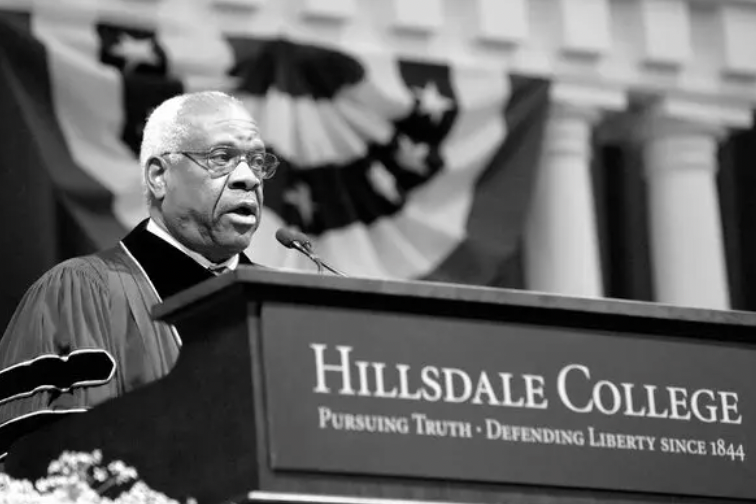
On a recent episode of Doug DeVos’ podcast Believe, GRIID provided some analysis on the comments from the current Hillsdale College President, Dr. Larry Arnn, which are here below.
The President of Hillsdale College engages in what most scholars refer to as American Exceptionalism. American Exceptionalism is the idea that the US as a country is unique and special and should be seen as a model for the rest of the world. This sentiment is reflected in the conversation between Dr. Arnn and Doug DeVos, since neither of them mention anything about the US genocidal policies directed at the First Nation’s people that lived here way before the Europeans invaded these lands.
The Hillsdale President does acknowledge slavery, but just in passing. Interestingly enough, Dr. Arnn then spends a great deal of time talking negatively about the 1619 Project, stating:
You know, the New York Times has done that frightful 1619 Project. And they claim that the movement of the founding of America from the colonies forward was in the direction of perpetuating slavery.
The President of Hillsdale College then cites Gordon Wood as the leading US Historian, so as to contradict the claims made by the 1619 Project. This theme is not really explored by DeVos or his guest, since both are not interested in a serious exploration of the more honest history that the 1619 Project explores, particularly as it related to the centuries long practice of systemic racism in the US and how it has impacted the Black community in particular.
While DeVos and his guest make backhanded comments about Critical Race Theory, they fail to mention that Hillsdale College has developed their own curriculum to counter the 1619 Project. The Hillsdale project is called The Hillsdale 1776 Curriculum, which is a very sanitized and whitewashed version of US history.
Hillsdale College is also smack dab in the middle of the Charter School debate in the US, providing curriculum resources and a cadre of ideological apologists for far right values. In fact, a recent investigation by NewsChannel5 in Tennessee, “discovered new evidence that reveals the true Hillsdale connection, including more hidden-camera video from the reception hosted by Hillsdale president Larry Arnn for Lee.
That’s the same video where Arnn famously declared that public school teachers come from “the dumbest parts of the dumbest colleges.”
Following the release of that controversial video, three Tennessee school boards voted down applications from the Hillsdale-affiliated American Classical Education to open charter schools in their districts.
All of this is to show that, like so many other wealthy families from West Michigan, the Van Andel family has a long history of funding far right causes and institutions, like Hillsdale College. This example demonstrates once again, that philanthropic contributions are not simply charitable gifts, the foundations of wealthy families are designed to channel massive funds to promote their ideological interests.
Grand Rapids Area Tenant Union confronts landlord that assaulted tenant and is now threatening to evict the tenant
Several members and supporters of the Grand Rapids Area Tenant Union (GRATU) showed up at the home Darcy Carter last night. This landlord had recently assaulted one of their tenants, which then lead to the tenant contacting GRATU.
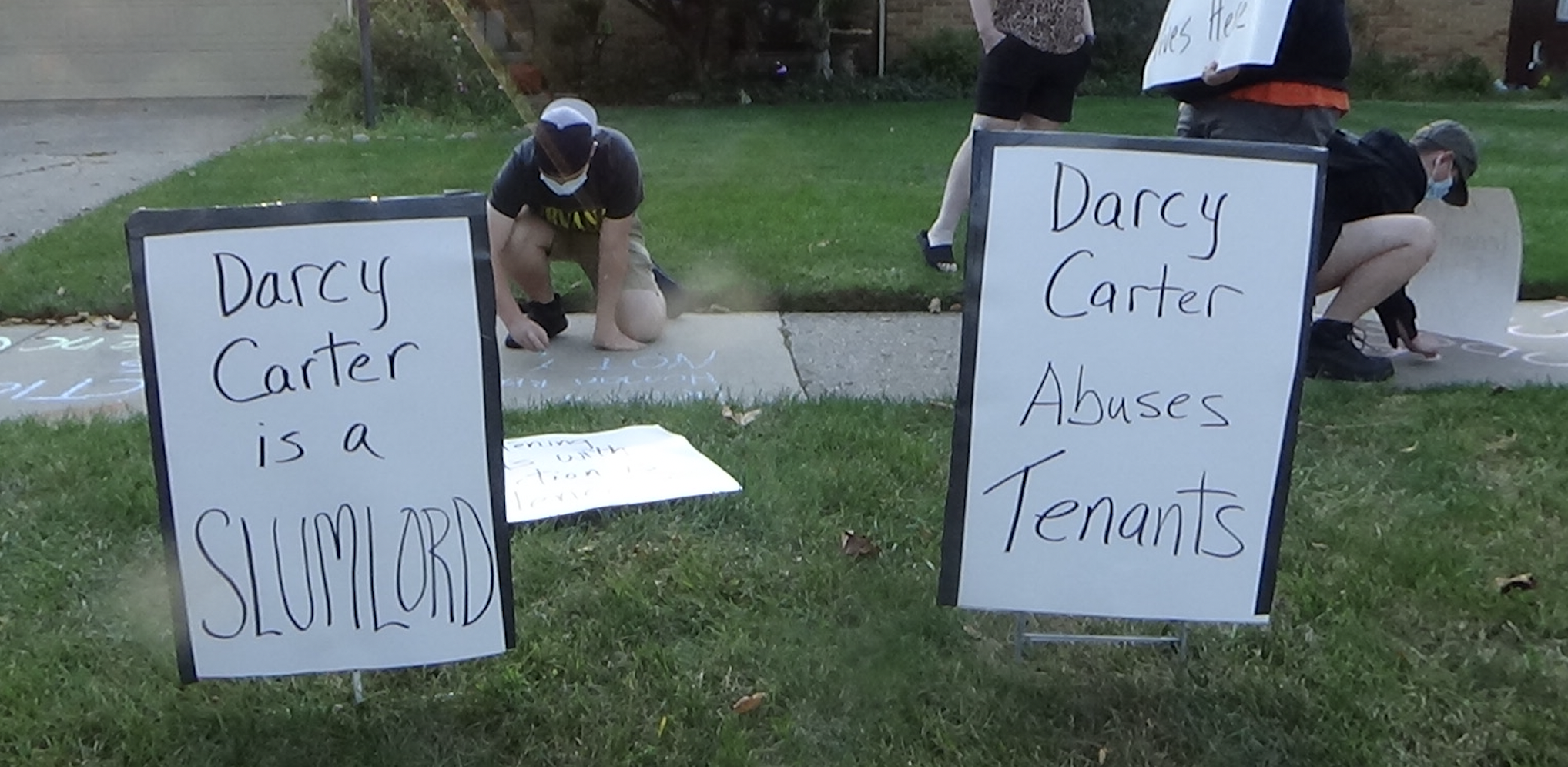
This same landlord came to the last tenant union meeting, demanding that the group remove information about the assault, claiming it was false. One member of the tenant union escorted the landlord out of the meeting, since the group does not allow landlords, property managers or cops in their meetings. The tenant who was assaulted came to the tenant meeting and asked GRATU for support. GRATU has been doing an online pressure campaign for the past week, but the tenant also decided they wanted to do the protest at the landlord’s home.
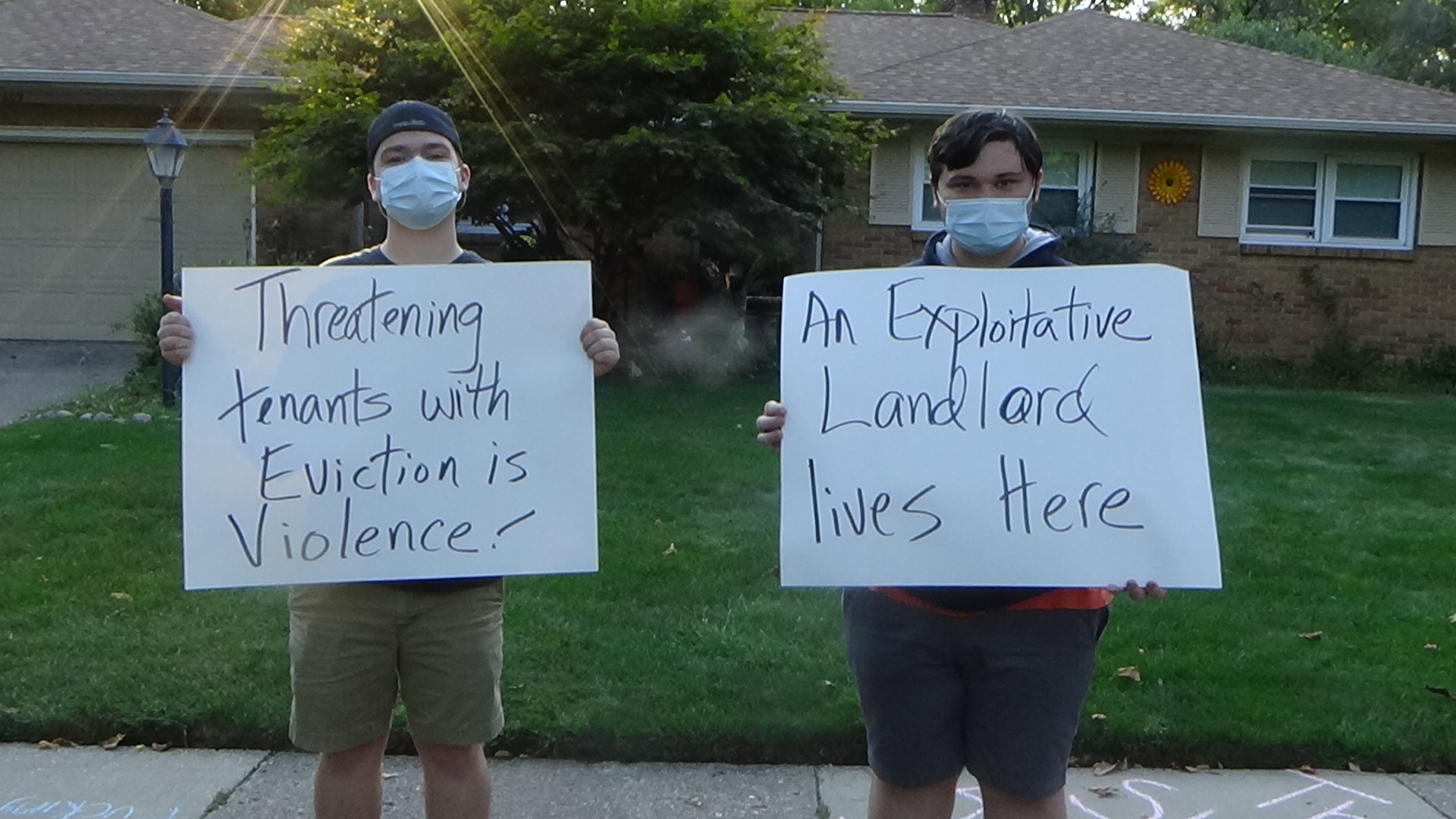
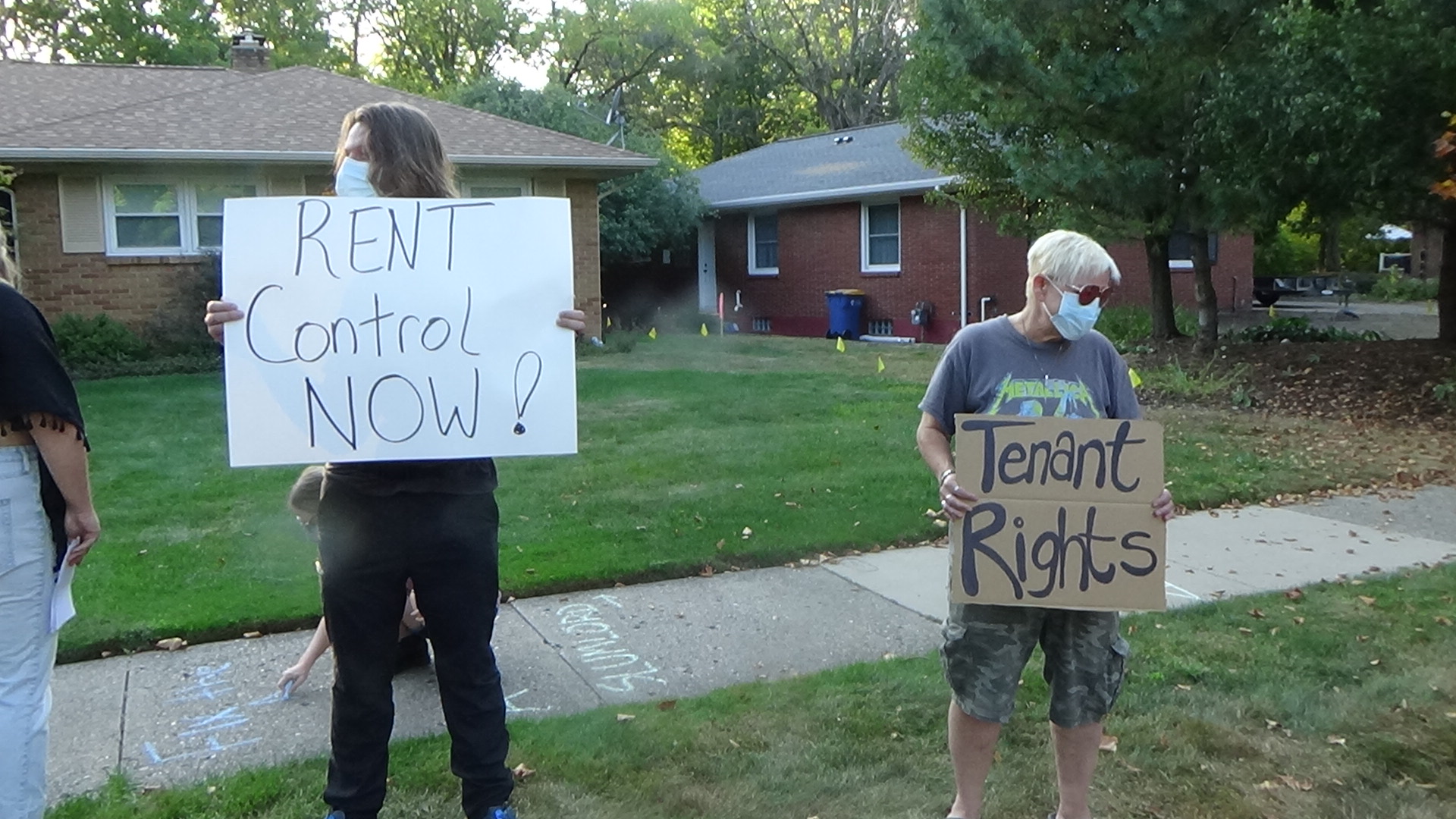
At the protest people placed makeshift yard signs in the ground, held signs, and wrote messages to the landlord on the sidewalk with sidewalk chalk. The landlord didn’t appear to be at home, but was later spotted coming home in their car. The landlord then backed up and went around the block and parked in a spot where they could see the protest.
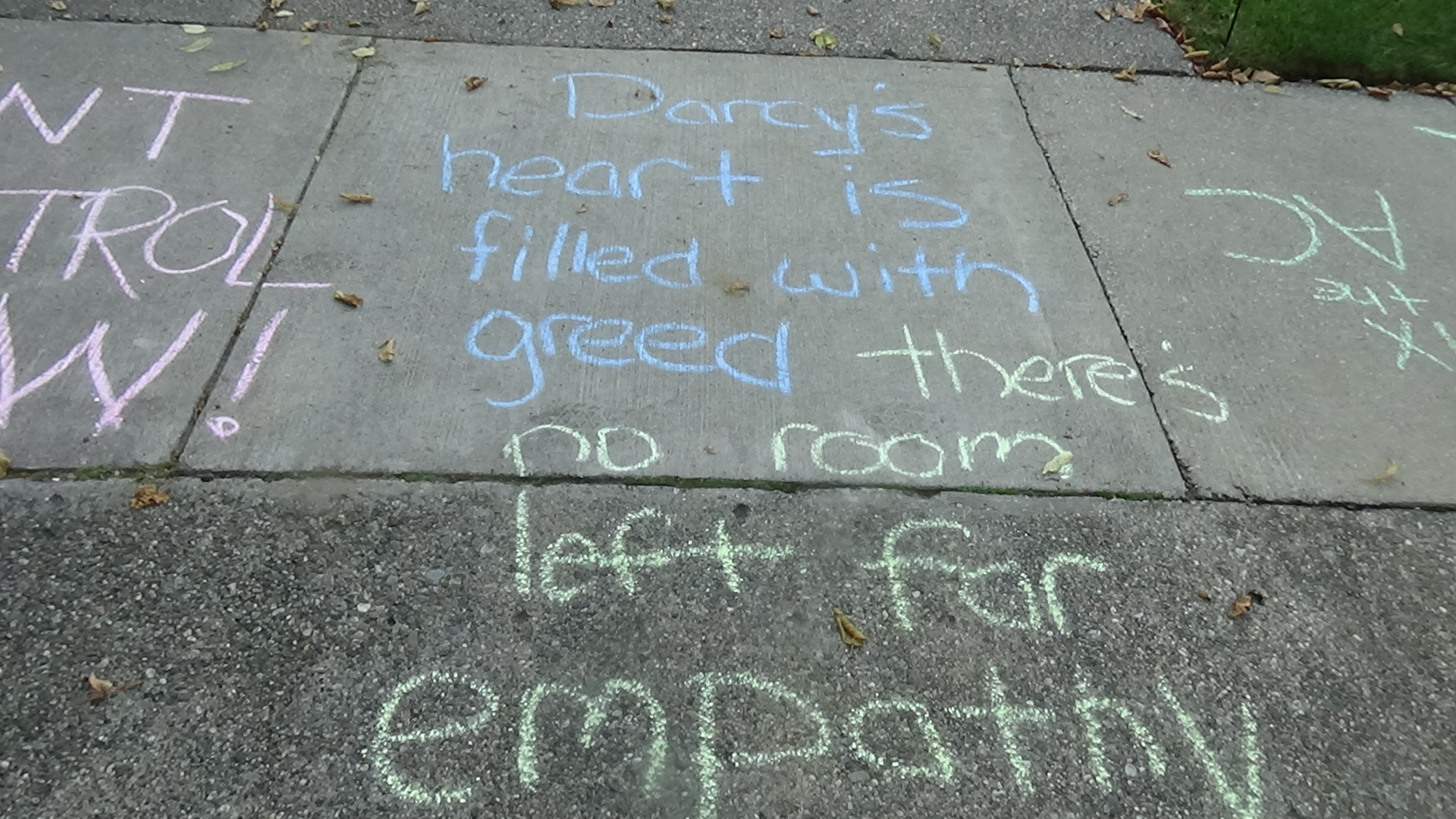
The tenant union also made up a flyer to distribute to the landlord’s neighbors. There were some people who were also walking in the neighborhood and stopped by to inquire as to what the protest as all about.
However, there were some neighbors who did not appreciate the protest. One man who lived right next to the landlord’s home came out with a garden hose and decided to hose some of the sidewalk chalk messages of the part of the sidewalk that was on the border of his property. Another neighborhood resident made accusations against those who were protesting in an attempt to get in an argument and potentially escalate things. That neighbor eventually walked away saying that he “didn’t care why people were protesting.”
The tenant who was assaulted also received an eviction notice from the landlord, which means that there will be a court hearing to determine whether or not the landlord has legal grounds to evict the tenant. GRIID was able to do a short interview with the tenant here below. If you are a tenant or know someone who is a tenant who has issues with their landlord or just want to be involved in the Grand Rapids Area Tenant Union you can contact them through their Facebook page or by Email gratunion@gmail.com.
Understanding the GR Power Structure – Part X: Why need need autonomous social movements if we want to challenge the local power structure
In Part I of this series I began an updated version of a Grand Rapids Power Analysis, which lays out the ground work for what the Grand Rapids Power Structure looks like and what it means for this community.
When I use the phrase, the Grand Rapids Power Structure and who has power, it is important to note that I mean power over. A local power analysis is designed to investigate who has power over – who oppresses, exploits and engages in policy that benefits them to the exclusion of everyone else – the majority of people living in Grand Rapids.
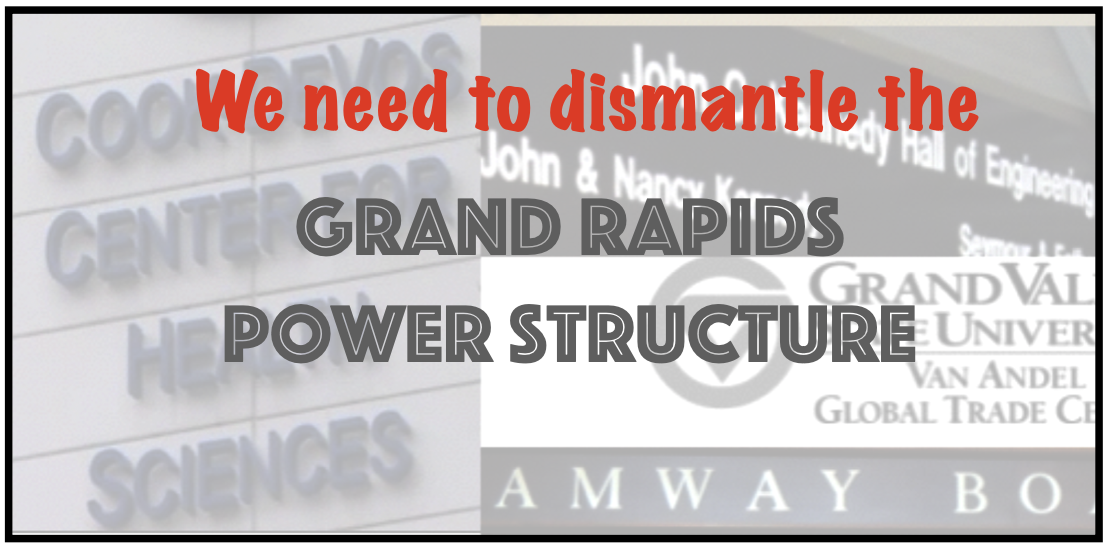
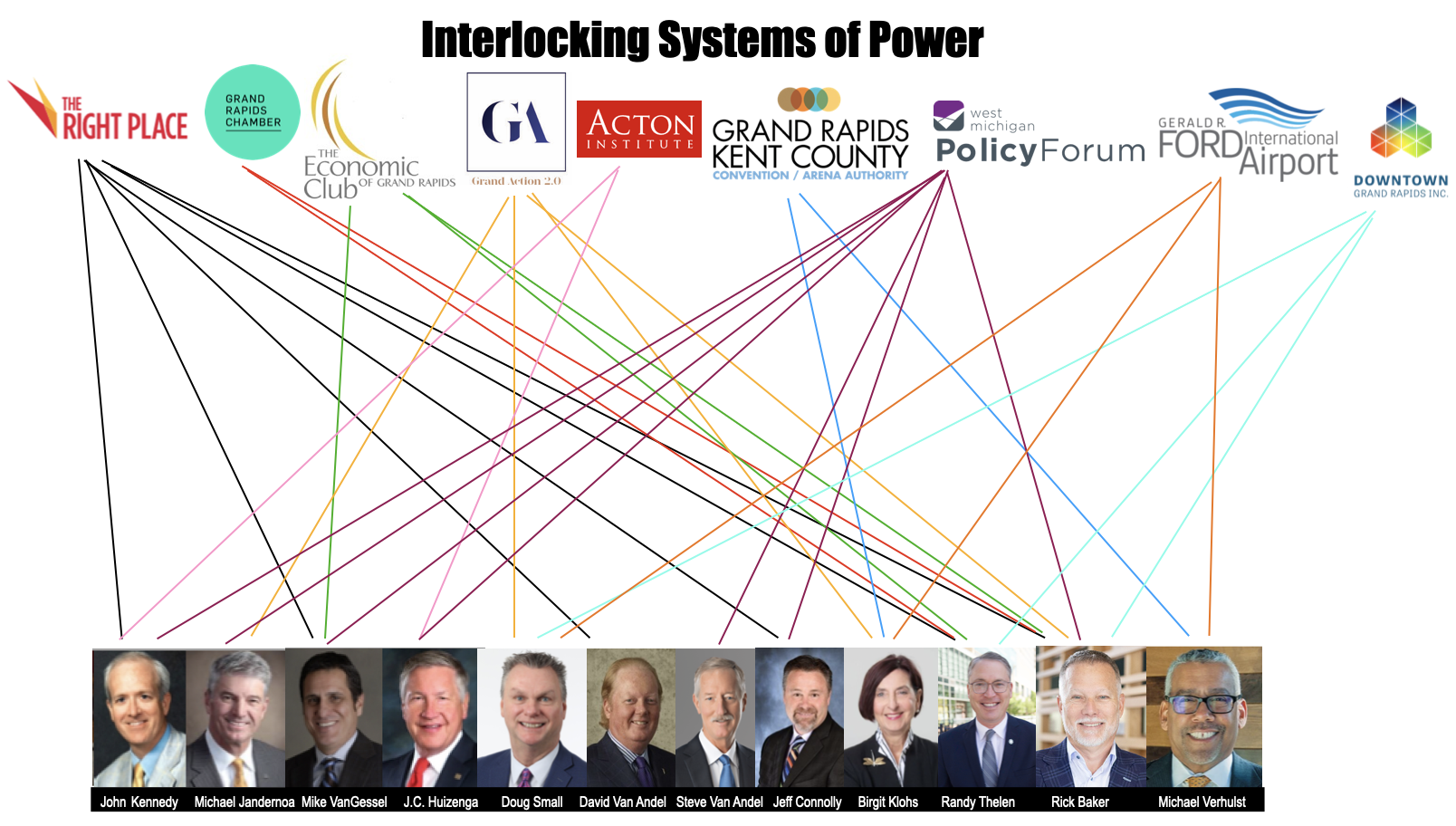
In Part II of this series on the Grand Rapids Power Structure, I looked at the DeVos family, which I argue is the most powerful family in this city, in terms of economics, politics, social and cultural dynamics. In Part III of this series I looked at some of the other families and individuals that also wield tremendous power in this city, economically, politically and socially. In today’s post I will focus on the private sector organizations that also have tremendous power and influence on daily life in Grand Rapids.
In Part IV, I focus on private sector organizations, many of which have individuals who are part of the Grand Rapids Power structure sitting on their boards. These private sector organizations serve a vital role in dictating local policy, which primarily benefits their own interests. Part V took a critical look at the role that the Grand Rapids City Commission and the Kent County Commission play in representing the interests of the private power sector, along with how they use fear and violence against residents who are actively challenging the local power structure.
In Part VI, I looked at how the major daily local news agencies normalize systems of oppression that protect and expand the Grand Rapids Power Structure. Then in Part VII, I discussed the role that local colleges and universities play when it comes to the Grand Rapids Power Structure. Part VIII focused on religious organizations in Grand Rapids and their relationship to the local power structure. In last week’s post, which was Part IX, I discussed the function of the Non-Profit Industrial Complex and how it primarily acts as a buffer in order to prevent people from organizing to challenge the Grand Rapids Power Structure and work towards collective liberation.
In today’s post, which will be the last in this series on the Grand Rapids Power Structure, I want to look at the existing grassroots and autonomous movements in this city over the past 5 years.
Reformism vs Systemic Change
There is a whole litany of groups working on issues from a reformist perspective in Grand Rapids. Many of these groups are advocating for electoral reform or supporting particular policies that could be adopted through the electoral process. While I think that voting can be a useful tactic in bringing about some form of social change, historically it has not created the kind of changes necessary for systemic and structural transformation.
Those who are part of autonomous movements and fighting for collective liberation are always confronted by those who think that electoral politics is where people need to put their energy. This happens during electoral cycles and it was in full effect during the 2020 election cycle and it is happening right now as we are less than 2 months before the November Election.
In addition to wanting autonomous movements to drop everything and get the “right” people elected, those who believe in electoral politics don’t want grassroots groups to criticize “their” candidates, and are often told to wait until after those candidates are in office. This is non-sensical logic, since the best time to pressure political candidates and political parties is before the elections. Once politicians are elected they are less interested in fighting for the issues that autonomous groups are organizing around.
Grand Rapids does have a rich history of people and movements being involved in direct action, the kind of action that challenges power. There are the examples of the 1911 Furniture Workers Strike, the Socialists who resisted during WWI in Grand Rapids, the Central American Solidarity Movement, the South African Anti-Apartheid Movement to the various forms of black resistance to White Supremacy over the years, as has been documented in Todd Robinson’s book, A City Within a City, and my book, A People’s History of Grand Rapids.
Since 2018, when I first wrote the ten-part series on the Grand Rapids Power Structure, I have annually been documenting social and autonomous movement work in Grand Rapids. From 2019 through 2023, I have provided an overview of the autonomous social movement work in Grand Rapids, which I will include here in chronological order.
2019 Social Movement work in Grand Rapids
2020 Social Movement work in Grand Rapids
2021 Social Movement work in Grand Rapids
2022 Social Movement work in Grand Rapids
2023 Social Movement work in Grand Rapids
I don’t want to rehash the work of all the autonomous groups in Grand Rapids during the past 4 years, which is why I have included these links. I highly encourage people to read all of the links, primarily because there has been a great deal of important work that has been done, along with the relationships that have been built and the collaborative dynamics that has happened.
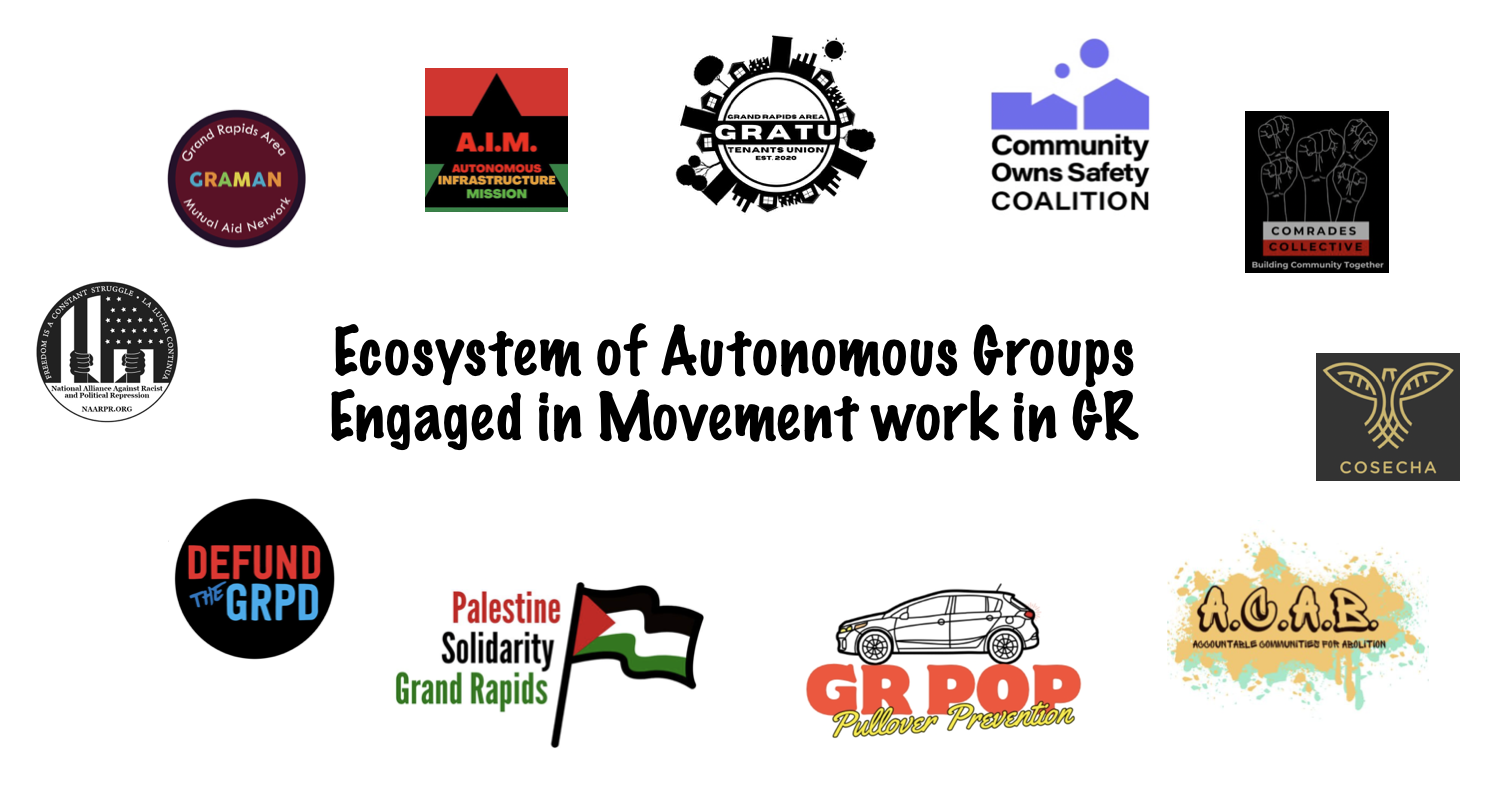
Right now, the groups included in the graphic above, are the primary autonomous groups doing movement-based organizing. It should be noted that there is also lots of less informal organizing that is taking place as well, even if there is no organization name attached to it. However, for the groups that are listed here, I would encourage people to get involved with them, as they are doing vitally important work, work that is not only issue based, but predicated on abolition, on building relationships, collaboration and working towards a world of collective liberation.
Lastly, I wanted to include some final thought about the power of social movements and what lessons I have learned about them over the years. The following comments are included in the epilogue of my book, A People’s History of Grand Rapids.
Lessons Learned from Social Movements
“Nobody in the world, nobody in history, has ever gotten their freedom by appealing to the moral sense of the people who were oppressing them.” Assata Shakur
Direct Action – taking collective action to change our circumstances, without handing our power to a middle person – elected officials, NGOs or political parties.
Horizontal organizing – organizing that is not hierarchical, that tries to build capacity for new “leadership” and believes that all roles in organizing should be shared.
Practices prefigurative politics – which means you want to practice the kinds of equity and relational organizing that doesn’t perpetuate racism, homophobia, ablism, etc., plus it means you want to practice what you preach. If you are organizing against homelessness, you need to practice radical hospitality and offer safe places for people to stay.
Mutual Aid – providing material, financial or emotional support to people who have a need, without perpetuating White Saviorism, policing of people or any other patronizing ways that non-profits often practice.
Abolitionist vision – to get to the root cause of systemic problems and abolish systems of power and oppression, as opposed to trying to “reform” them.
Radical Imagination – imagining that another world is possible, that we don’t have to settle for what systems of power and oppression give us. As the great Puerto Rican poet, Martin Espada once said, “No change for the good ever happens without it being imagined first, even if that change seems hopeless or impossible in the present.”
I wanted to end by saying that over the past four decades of being part of social movements and researching this two century history in Grand Rapids, that when injustice exists, there are always people who will rise up to fight it. I have also seen long lasting relationships blossom between people who have engaged in these struggles for liberation. While at times it may seem like we are not making the necessary changes to create more freedom and justice and equity, please know that you are part of a long standing tradition of fighting for collective liberation, even when we don’t see an immediate outcome.
People I have met in the struggle for justice want to win, but what I have witnessed is that when people engage in these struggles they are transformed because of the struggle. While I was in Chiapas, a young Mayan told me, “my people have not only endured 500 years of oppression, we have never lost sight of who we are as a people.” In the end, maybe that is enough.
“It is better to die on your feet fighting, than to live on your knees in submission.” Emiliano Zapata
The DeVos family has already contributed over $2 million in 2024 to GOP Committees and and Conservative PACs outside of Michigan
In early August, I posted several articles about which candidates running for office in West Michigan had received campaign contributions from the DeVos family. There was an article about DeVos funding in key Kent County races, state house races, and the DeVos money going to the Republican House and Senate Committees in Michigan.
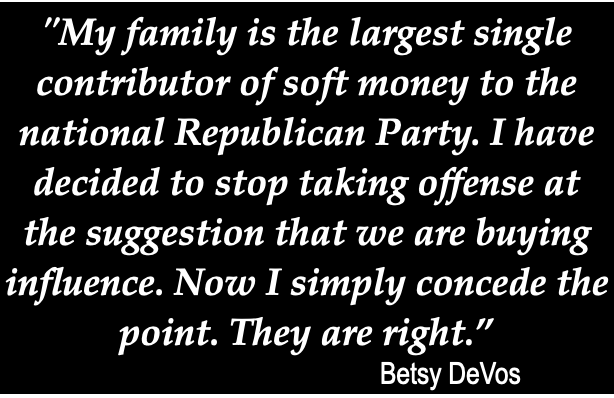
Today, I want to shine some light on the money they have already contributed in 2024 to Republican organizations and PACs outside of Michigan. All of the information provided is sourced on OpenSecrets.org, specifically the Donor Look link https://www.opensecrets.org/donor-lookup.
Dick DeVos
- Eighteen Fifty-Four Fund – $62,500
- Big Sky Opportunity PAC – $5,000
- Common Sense Conservative Values PAC – $5,000
- National Republican Senatorial Committee – $41,300
- Project Rescue America – $12,500
- Sentinel Action Fund – $125,000
- Keystone Renewal PAC – $62,500
Betsy DeVos
- Big Sky Opportunity PAC – $5,000
- Common Sense Conservative Values PAC – $5,000
- National Republican Senatorial Committee – $41,300
- Project Rescue America – $12,500
- Congressional Leadership Fund – $25,000
Doug DeVos
- Sentinel Action Fund – $125,000
- Keystone Renewal PAC – $62,500
Maria DeVos
- National Republican Senatorial Committee – $41,300
- Big Sky Opportunity PAC – $5,000
- Common Sense Conservative Values PAC – $5,000
- Keystone Renewal PAC – $62,500
- Sentinel Action Fund – $125,000
- Congressional Leadership Fund – $25,000
Dan DeVos
- Eighteen Fifty-Four Fund – $62,500
- Big Sky Opportunity PAC – $5,000
- Common Sense Conservative Values PAC – $5,000
- Project Rescue America – $12,500
- Common Sense Conservative Values PAC – $5,000
- National Republican Senatorial Committee – $41,300
- Keystone Renewal PAC – $62,500
- Sentinel Action Fund – $250,000
- Congressional Leadership Fund – $25,000
- National Republican Senatorial Committee – $289,100
- Mission First People Always PAC – $5,000
Pamela DeVos
- Congressional Leadership Fund – $25,000
- Keystone Renewal PAC – $62,500
Suzanne (Cheri) DeVos
- Eighteen Fifty-Four Fund – $62,500
- Big Sky Opportunity PAC – $5,000
- Common Sense Conservative Values PAC – $5,000
- Project Rescue America – $12,500
- National Republican Senatorial Committee – $41,300
- Keystone Renewal PAC – $125,000
- Sentinel Action Fund – $250,000
- Congressional Leadership Fund – $50,000
If you add up all of the money that the DeVos family members are contributing to Republican Committees and Political Action Committees that are outside of Michigan, the total is $2,255,600.00. If you have been paying attention to the DeVos family, then these amounts of money are no surprise. What is unfortunate is the fact that rarely does the commercial media in Grand Rapids or Michigan in general, report on how influential the DeVos family is during election cycles around the country.
 Grand Rapids Institute for Information Democracy